





























initial
12 months by now
2,800 grafts
FUE method
City Medical Centre
FUE · DHI
from $2,200
Review and the figure — $0.
Real result
initial
12 months by now
FUE method, no scalpel and no sutures. Graft count and forecast gone over and nothing owed — before you decide.
Free online consultation · Reply within 15 minutes
Nothing is owed, no surgery booking required
Message our coordinator
Free online consultation · Reply within 15 minutes
Message us on TelegramMessage us on WhatsAppBy messaging us, you agree to our Privacy Policy
Hair transplant for patients from Naples at City Medical Centre starts at €2,000 (from $2,200). The first online consultation is free; the doctor names the final price and it is fixed in the contract.
How it works · Hair transplant prices
Information current as of 5 November 2026
results
Photographs show people treated at our clinic.
initial
12 months by now
2,800 grafts
FUE method

initial
12 months by now
3,500 grafts
FUE method

initial
12 months by now
2,600 grafts
FUE method

initial
12 months by now
3,000 grafts
FUE method

initial
12 months by now
2,700 grafts
FUE method

initial
12 months by now
3,300 grafts
FUE method

initial
12 months by now
2,900 grafts
FUE method

initial
12 months by now
2,500 grafts
FUE method

initial
12 months by now
3,400 grafts
FUE method

initial
12 months by now
2,500 grafts
FUE method

initial
12 months by now
3,100 grafts
FUE method

initial
12 months by now
3,600 grafts
FUE method

initial
12 months by now
4,000 grafts
FUE method

initial
12 months by now
3,200 grafts
FUE method

initial
12 months by now
3,000 grafts
FUE method

initial
12 months by now
3,700 grafts
FUE method

initial
12 months by now
2,700 grafts
FUE method

initial
12 months by now
3,800 grafts
FUE method

initial
12 months by now
3,300 grafts
FUE method

initial
12 months by now
2,800 grafts
FUE method

initial
12 months by now
2,500 grafts
FUE method

initial
12 months by now
3,900 grafts
FUE method

initial
12 months by now
3,500 grafts
FUE method

initial
12 months by now
3,800 grafts
FUE method

initial
12 months by now
2,900 grafts
FUE method

initial
12 months by now
3,600 grafts
FUE method

initial
12 months by now
2,600 grafts
FUE method

initial
12 months by now
2,700 grafts
FUE method

initial
12 months by now
3,700 grafts
FUE method

initial
12 months by now
3,200 grafts
FUE method

initial
12 months by now
3,000 grafts
FUE method

initial
12 months by now
2,800 grafts
FUE method

initial
12 months by now
4,000 grafts
FUE method

initial
12 months by now
3,400 grafts
FUE method

initial
12 months by now
2,900 grafts
FUE method

initial
12 months by now
3,100 grafts
FUE method

initial
12 months by now
2,600 grafts
FUE method

initial
12 months by now
3,300 grafts
FUE method

initial
12 months by now
3,900 grafts
FUE method

initial
12 months by now
3,500 grafts
FUE method

initial
12 months by now
2,700 grafts
FUE method

initial
12 months by now
3,800 grafts
FUE method

initial
12 months by now
3,200 grafts
FUE method

initial
12 months by now
3,000 grafts
FUE method

initial
12 months by now
2,800 grafts
FUE method

initial
12 months by now
3,100 grafts
FUE method

initial
12 months by now
3,600 grafts
FUE method
Comparison
We use three technologies to transfer grafts: classic FUE, suture-free DHI and a combined protocol. Compare the implantation technique, the tissue trauma and the graft survival, and choose knowingly.
Classic technique without incisions or stitches

$2,200
$2,700
Graft implantation technique
ForcepsGraft trauma
MinimalA natural angle for hair
NaturalGraft survival
98–100%Suitable for
Androgenetic alopeciaImplantation with a Choi pen, no sutures

$2,500
$2,900
Graft implantation technique
DHI pen, Choi implanterGraft trauma
MinimalA natural angle for hair
NaturalGraft survival
98–100%Suitable for
DensificationExtraction by FUE, DHI implant

$2,700
$2,900
Graft implantation technique
Extraction by FUE, DHI implantGraft trauma
MinimalA natural angle for hair
NaturalGraft survival
98–100%Suitable for
Androgenetic alopecia and densificationThe numbers for survival and trauma are averaged for each method and given as a guide: exact values depend on the transplant area and the patient's individual features and are clarified by the doctor at consultation.
Have a consultation


















about the clinic
Modern equipment, comfortable rooms and care for the patient

Send us your questions and we will agree a convenient appointment time
TelegramMessage us on TelegramMessage us on Telegram Message us on WhatsApp Leave a requestA straight verdict comes at the consultation, and sometimes that verdict is that no operation is needed and no money need be spent. Below you will find the situations where a transplant genuinely works.
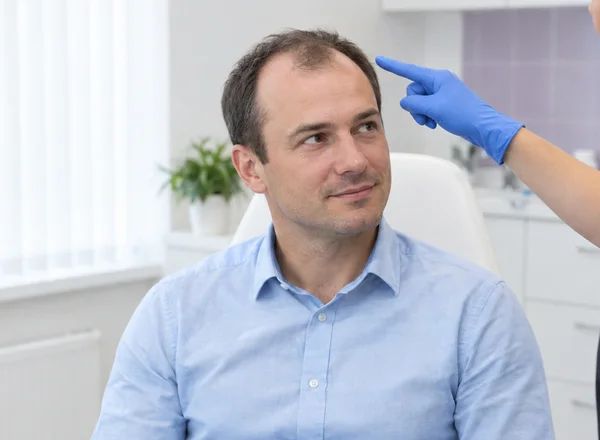

Leave your number and a coordinator will ask for photos in a messenger; the doctor answers whether a transplant helps. Free, no booking.

services
Grafts are counted free of charge, the price follows, and the contract makes it binding.
suture-free graft extraction

$2,200$2,700
Review and the figure — $0.
Hold the priceimplantation without channels

$2,500$2,900
Review and the figure — $0.
Hold the pricecombined technique

$2,700$2,900
Review and the figure — $0.
Hold the price| Your first meeting | Free |
|---|---|
| Eyebrow transplant, FUE | |
| Beard transplant, FUE | |
| Hair trichopigmentation | |
| PRP therapy / session | $200 |
all included
The run-up to the operation plus 12 months of care.
Nothing extra is charged on the day of surgery.
two further spots
A hair transplant is not only for the scalp. Same grafts from the back of the head, same FUE method — only the area changes.
FUE, no incisions and no stitches

We take grafts from the donor area at the back of the head and move them through micro-punctures of about 1 mm — no scars remain. Before the operation the doctor agrees the shape with you, taking your facial features into account. Transplanted hair grows for life: the beard is trimmed and styled as usual.
$2,800$3,000
Review and the figure — $0.
Hold the priceFUE, no incisions and no stitches

Drawing the shape is the surgeon's first step at the initial appointment: references are compared side by side and your facial proportions settle the design. Angling every hair along its natural growth keeps the brows convincing at any distance. It also helps brows that stopped growing after years of plucking.
$1,600$1,700
a procedure you go home from, numbed locally
Hold the priceThe doctor studies the donor zone, settles on a graft number and shows what outcome it will give. Pricing follows straight after, and the contract keeps it unchanged.

Message our coordinator
Free online consultation · Reply within 15 minutes
Message us on TelegramMessage us on WhatsAppBy messaging us, you agree to our Privacy Policy
Process
From consultation to going home — all in one day

Patients in Naples start with a free consultation, where the doctor explains the FUE and DHI methods, answers questions, and builds a personalized surgical plan.

The date gets reserved through a deposit payment, made either by card at the clinic or online, with the full terms laid out in a medical services contract.

Preparation for the surgery includes a set of tests, and the clinic makes the process easy with a full list and instructions.

Local anaesthesia is used throughout, keeping the surgery painless from start to finish.

This step collects grafts from the donor zone — the back of the head or the temples — using a scarless technique.

At this point, the grafts are implanted into the balding area by the surgical team.
Recovery is supported by the clinic, which supplies all necessary items and full instructions.

Scabs disappear, the swelling goes down, the skin returns to normal

Nothing to fix: hair is shed, but follicles are not

New hairs emerge gradually, the result shows

The hair becomes thicker, the main volume and contour show

At this point the thickness and the hairline are set

Free, before the operation, with no obligation.
Have a consultationdoctors

Hair transplant doctor, trichologist, surgeon

Dermatovenereologist, trichologist, surgeon
11 years of experience

Plastic surgeon
9 years of experience

Plastic surgeon
9 years of experience

Assistant
9 years of experience
The doctor judges the donor zone, puts a figure on the grafts and sets out the outcome you can expect.
Have a consultationcoordinators
Every patient has a coordinator of their own, from first contact until recovery is done.

Your care coordinator
Is on hand through preparation and healing
Runs the paperwork and keeps your diary
Your care coordinator
Is on hand through preparation and healing
Runs the paperwork and keeps your diary

Your care coordinator
Is on hand through preparation and healing
Runs the paperwork and keeps your diary
Your care coordinator
Is on hand through preparation and healing
Runs the paperwork and keeps your diary













Send us your questions and we will agree a convenient appointment time
TelegramMessage us on TelegramMessage us on Telegram Message us on WhatsApp Leave a requestReviews
I was having trouble with my hair. I came here and got a hair transplant. The results was awesome thank you
Review on Google
І experienced hair loss due to COVID and turned to this clinic; they helped me and performed a hair transplant, moving hair from the back of my head to my temples. Thank you.
Review on Google
I traveled to City Medical Centre, where they helped me overcome hair loss through a transplant to the balding areas of my scalp. I am grateful to the doctors for performing the procedure painlessly.
Review on Google
I am sharing my experience, because before the operation I went through a pile of reviews myself and was looking for real stories. I had a beard transplant six months ago. Honestly, in the first days after the procedure I felt a little jittery: my face looked unfamiliar, there was slight swelling and small scabs. In the first couple of months the hair partly fell out, as the doctor had warned. But now the result truly makes me very happy) From about the 4th month active, even growth began. The transplanted hair took very well, the beard now looks as natural as possible, no bald patches are left. The beard became much thicker and denser, with the shape I had thought about for a long time. All in all, I recommend the clinic, the doctor was polite and explained everything 👍 The result is definitely worth it!
Review on Google
I traveled to this clinic and do hair transplant, very good quality and cheap. Good doctors
Review on Google
I do hair transplant here very good doctors!!
Review on Google
Questions we get
People often say hair implants, but no artificial hair is used. In a hair transplant the doctor moves your own follicles (grafts) from the donor area to thinning or bald areas using FUE or DHI.

Yes — City Medical Centre regularly treats patients from other cities and countries, starting with an online consultation.
FUE: $2,200 (≈ €2,000). DHI: $2,500 (≈ €2,250). Combined: $2,700 (≈ €2,450). A free consultation and graft count gives you the final, contract-fixed price with no hidden extras.
The procedure is completed within a single day, after which you head home.
It helps with stable pattern hair loss and a receding hairline when there are enough donor grafts. Some types of alopecia need treatment first; the doctor checks this at the consultation.
No — local anaesthesia keeps the whole procedure pain-free.
With FUE, grafts are taken by tweezer with no incisions. With DHI, grafts are implanted directly using a Choi pen, without pre-made channels. The combined method mixes FUE harvesting with DHI implantation.
At the free consultation, the doctor counts the grafts you need according to your donor area.
The timeline is: 0–10 days healing, 2–4 weeks shedding (normal), 3–4 months new growth, 6–9 months visible density, and 12–18 months for the final result.
A contract-backed, lifetime guarantee of hair growth comes with every procedure.
The clinic has a medical licence and provides care to the standards and clinical guidelines
of Ministry of Health.

Qualification papers open to anyone who asks
Look at the documentsAKC POMOSHCH LLC
the clinic's legal name
1057746096924
OGRN
7728536872
INN
What makes FUE and DHI right for a patient in Naples is how gentle they are: no incisions, no stitches, only local anaesthesia, and one day from the first graft to the last.
You send photos, the doctor looks and counts the grafts, and the consultation costs nothing at all in Naples. The clinic stays in touch 24/7, which means a question asked in your evening still gets a proper answer that evening.
The scalp heals across 0-10 days. A shedding of transplanted hairs follows at 2-4 weeks and is a normal stage rather than a complication. Growth begins at 3-4 months and carries on without help.
Prices are in US dollars; the amount in brackets is an approximate conversion to EUR at the rate of 02.10.2026. The final price is fixed in your contract.
By messaging us, you agree to our Privacy Policy
Written by Anastasia A. Kolesnik, plastic surgeon, hair transplant doctor
Medically reviewed by Ellina V. Goncharova, dermatovenereologist, trichologist, surgeon. Review date:
How we prepare and review medical content · Medical disclaimer
Well-known people who spoke openly about this operation, in their own words.
 Did Andrea Zelletta have a hair transplant? Yes, and he explained whyAndrea Zelletta had a hair transplant in November 2025 and explained why on Instagram. What he said, how the procedure works and how results develop.
 Francesco Chiofalo and his beard transplant: what he said on BelveFrancesco Chiofalo listed a beard transplant among the cosmetic procedures he discussed on Belve. What he said, and how a beard transplant works today.
 Francesco Facchinetti and his hair transplant: what he saidFrancesco Facchinetti said his hair transplant was very painful and the hair fell out after years. What he said, and how transplants work today.
 Did Matteo Diamante have a hair transplant? Yes — and he explained whyThe Italian reality star lost his hair at 23 for health reasons and had a transplant. His quotes on the decision, the family and the recovery.
Italian doctors are registered through provincial orders, which a decree of 1946 required in every province, and above them stands a national federation, the FNOMCeO. Each order keeps its professional register, looks into the conduct of its members, organises continuing education and is able to impose sanctions; the federation, for its part, writes the national code of medical ethics. Naples has an order of its own, and member search is one of the services listed on its website.
A second route runs through the national level. The FNOMCeO site directs visitors to a search of professionals in the unified national registers, where a surgeon's degree and registration can be looked up. Anyone who presents himself or herself as a doctor registered in Italy can be asked for a full name, and the name can be typed into one of these two searches in a minute or two.
The Italian society of plastic surgery, SICPRE, published advice for people choosing a surgeon for cosmetic procedures. Its points include the specialisation in plastic, reconstructive and aesthetic surgery, which follows five further years of study after the medical degree, and a check of the doctor's degree on the FNOMCeO search page. Ask whether the premises are authorised. Ask who administers the anaesthetic, where the operation is carried out and what happens if something goes wrong. SICPRE adds that a professional who gives no serious, complete and reasoned answers should be struck off your list.
The clinic names three kinds of specialists: a trichologist surgeon who does the hair work, a dermatovenereologist who is also a trichologist, and a plastic surgeon. Their diplomas, like the medical licence of the clinic, can be inspected, and whoever greets you at the consultation is the same person who will stand in the operating room. Collect these papers first, before any money moves, and file every reply in one folder.
Naples, as a comune within its administrative limits, counts 905,050 residents in the 2026 figure. The first step needs only a phone: photographs of the thinned places go to a coordinator over WhatsApp or Telegram; a doctor examines them and states whether a transplant could be of use. The free online consultation promises a reply inside 15 minutes. Nothing is charged and no date is held at this point.
The doctor's real material is the donor zone, behind the ears and across the nape or at the temples. Once that area has been examined, the grafts are counted and an achievable outcome is described. Treat the number as the foundation. Request it as a line in the contract rather than a remark in a chat, because a count that lives only in conversation cannot be held against what you later receive.
Price comes after the count, never before it. It is fixed in the contract, and the sum agreed holds on the day of surgery. Ask the clinic to itemise that sum. As the clinic words it, the sum runs from preparing for surgery up to the twelve-month follow-up and includes bandages, healing inspections, a plan of care for the planted and the harvested zones, advice on washing the hair, on sleeping and on headgear, a timetable for returning to training and hair care, personal contact with a coordinator who watches your photos, and five scheduled inspections.
Holding a date takes a deposit, paid by card at the clinic or through an online transfer, and the paper that records the terms is a contract for medical services. The clinic also spells out which tests must be finished before the operation and gives instructions for them. Ask for that list at the outset; learning about a test in week one costs less than learning about it on the eve of the date.
Three techniques are in use. With FUE, forceps lift grafts out of the donor area, leaving neither cuts nor sutures. DHI works in a single movement: a Choi pen implants every graft, so the preliminary cutting of channels is skipped. The third option joins the two, harvesting by FUE and placing by DHI, and is mentioned for densifying thinning caused by androgenetic alopecia.
Survival and trauma percentages arrive as averages given per method, a rough guide only. The real numbers hang on the zone that receives the grafts and on your own features, and the doctor lays them out at the consultation. So do not memorise the averages. Ask for your numbers, in writing, for your zone.
A sensible way to run that conversation is to put one question three times, once per technique: what would this change in my case, and what would it cost me in healing? A doctor who has to reply separately about each of them is forced to reason about your head and not about a menu. The day itself is the same in every variant: local anaesthesia, one day in the clinic, home afterwards.
The clinic says plainly that a doctor has no interest in sending anyone to theatre needlessly. Androgenetic or diffuse alopecia and bald areas are the reasons that speak for a transplant. The exclusion list falls into groups. Behaviour and self-image: pulling out your own hair (trichotillomania) and body dysmorphic disorder. Age: under eighteen. General health: cancer, epilepsy, diabetes mellitus, a pacemaker, pulmonary embolism, hepatitis B or C, HIV/AIDS, serious heart disease and intolerance of anaesthetics.
The clinic's list of cases where a transplant is not the answer goes further: a naturally high frontal edge, too little hair density, growth patterns set by genetics, scarring left by a burn or an injury, and shedding that came after an illness or from a hormonal imbalance. Read the entire list, then write to the coordinator about every line that touches you, and ask the doctor to confirm in writing which lines apply.
Useful questions at this stage are short: what is my diagnosis, what happens if I do not operate, and which part of my loss will a transplant leave untouched? Honest answers to those three are worth more than any promotion.
Memory of how the scalp looked in the second month is unreliable, so write it down. Day 0 to day 10 is the soothing stage: crusts come off, the swelling retreats and the area calms. Weeks 2 to 4 are when the implanted hairs drop out, which is an ordinary stage with the follicles staying put. Months 3 to 4 deliver the first new hairs, months 6 to 9 the return of thickness, and months 12 to 18 the full volume with a natural edge.
Five inspections are planned: after the first month, then at the third, sixth, ninth and twelfth. Photograph the same angles every time, date each file and pass the set to your coordinator, who accompanies you from the first enquiry until the end of recovery. Jot down what you heard about washing, sleep, headgear and sport, plus every question you forgot to ask. When a friend remarks in month five that nothing seems to have happened, the notebook can answer for you.
The provincial order of physicians, surgeons and dentists for Naples keeps the professional register and offers a member search online. The national federation, the FNOMCeO, points to a search of professionals in the unified national registers.
Whether the facility is authorised, who gives the anaesthetic, where the operation takes place and how a problem would be handled. The society also advises checking the surgeon's specialisation.
No. Pictures reach a doctor through the coordinator, and the doctor says whether a transplant would help. That first look is free, no date is booked, and writing in the middle of the night is fine.
The donor zone, behind the ears and across the nape or at the temples. The doctor studies it, counts the grafts and explains what result is realistic.
Bandages and healing inspections, the care plan for both zones, advice on washing, sleep and headgear, the timetable for returning to training and hair care, coordinator contact with photo exchange, and the five inspections between month 1 and month 12.
Yes, and the clinic openly says so. If a transplant would not help, or an item of the exclusion list applies, you hear it at the consultation instead of being given a surgery date.
Keep dated photographs of identical angles, the dates of the five checks and a note of every instruction you were given. Share the photographs with your coordinator as things change.

 Forceps
 Minimal


