





























pre-op
just 12 months on
2,800 grafts
FUE method
City Medical Centre
FUE · DHI
from $2,200
Advice, then the price — $0.
Honest case
pre-op
just 12 months on
No cuts, no sutures — the FUE method. Grafts and the forecast estimated and not billed — before you decide.
Free online consultation · Reply within 15 minutes
No fee at all, no surgery booking required
Message our coordinator
Free online consultation · Reply within 15 minutes
Message us on TelegramMessage us on WhatsAppBy messaging us, you agree to our Privacy Policy
Hair transplant for patients from Helsinki at City Medical Centre starts at €2,000 (from $2,200). The first online consultation is free; the doctor names the final price and it is fixed in the contract.
How it works · Hair transplant prices
Information current as of 5 November 2026
results
All cases come from real CMC patients.
pre-op
just 12 months on
2,800 grafts
FUE method

pre-op
just 12 months on
3,500 grafts
FUE method

pre-op
just 12 months on
2,600 grafts
FUE method

pre-op
just 12 months on
3,000 grafts
FUE method

pre-op
just 12 months on
2,700 grafts
FUE method

pre-op
just 12 months on
3,300 grafts
FUE method

pre-op
just 12 months on
2,900 grafts
FUE method

pre-op
just 12 months on
2,500 grafts
FUE method

pre-op
just 12 months on
3,400 grafts
FUE method

pre-op
just 12 months on
2,500 grafts
FUE method

pre-op
just 12 months on
3,100 grafts
FUE method

pre-op
just 12 months on
3,600 grafts
FUE method

pre-op
just 12 months on
4,000 grafts
FUE method

pre-op
just 12 months on
3,200 grafts
FUE method

pre-op
just 12 months on
3,000 grafts
FUE method

pre-op
just 12 months on
3,700 grafts
FUE method

pre-op
just 12 months on
2,700 grafts
FUE method

pre-op
just 12 months on
3,800 grafts
FUE method

pre-op
just 12 months on
3,300 grafts
FUE method

pre-op
just 12 months on
2,800 grafts
FUE method

pre-op
just 12 months on
2,500 grafts
FUE method

pre-op
just 12 months on
3,900 grafts
FUE method

pre-op
just 12 months on
3,500 grafts
FUE method

pre-op
just 12 months on
3,800 grafts
FUE method

pre-op
just 12 months on
2,900 grafts
FUE method

pre-op
just 12 months on
3,600 grafts
FUE method

pre-op
just 12 months on
2,600 grafts
FUE method

pre-op
just 12 months on
2,700 grafts
FUE method

pre-op
just 12 months on
3,700 grafts
FUE method

pre-op
just 12 months on
3,200 grafts
FUE method

pre-op
just 12 months on
3,000 grafts
FUE method

pre-op
just 12 months on
2,800 grafts
FUE method

pre-op
just 12 months on
4,000 grafts
FUE method

pre-op
just 12 months on
3,400 grafts
FUE method

pre-op
just 12 months on
2,900 grafts
FUE method

pre-op
just 12 months on
3,100 grafts
FUE method

pre-op
just 12 months on
2,600 grafts
FUE method

pre-op
just 12 months on
3,300 grafts
FUE method

pre-op
just 12 months on
3,900 grafts
FUE method

pre-op
just 12 months on
3,500 grafts
FUE method

pre-op
just 12 months on
2,700 grafts
FUE method

pre-op
just 12 months on
3,800 grafts
FUE method

pre-op
just 12 months on
3,200 grafts
FUE method

pre-op
just 12 months on
3,000 grafts
FUE method

pre-op
just 12 months on
2,800 grafts
FUE method

pre-op
just 12 months on
3,100 grafts
FUE method

pre-op
just 12 months on
3,600 grafts
FUE method
Comparison
You have three graft transfer technologies to choose between: classic FUE, suture-free DHI and a combined protocol. They differ in implantation technique, tissue trauma and graft survival.
Classic technique without incisions or stitches

$2,200
$2,700
Graft implantation technique
ForcepsGraft trauma
MinimalThe natural growth angle
NaturalGraft survival
98–100%Suitable for
Androgenetic alopeciaNo-stitch implantation with a Choi pen

$2,500
$2,900
Graft implantation technique
DHI, a Choi implanterGraft trauma
MinimalThe natural growth angle
NaturalGraft survival
98–100%Suitable for
DensificationFUE for extraction, DHI implant

$2,700
$2,900
Graft implantation technique
FUE extraction with DHI implantGraft trauma
MinimalThe natural growth angle
NaturalGraft survival
98–100%Suitable for
Densification for androgenetic alopeciaFigures for survival and trauma are method averages and serve as a guide: the exact numbers rest on the transplant area and the patient's individual features, and the doctor explains them at the consultation.
Discuss your options


















about the clinic
Comfort in the room, quality equipment, attention to the patient

Our coordinator explains everything and books the appointment when you are free
TelegramMessage us on TelegramMessage us on Telegram Message us on WhatsApp Ask us a questionA straight verdict comes at the consultation, and sometimes that verdict is that no operation is needed and no money need be spent. Below you will find the situations where a transplant genuinely works.
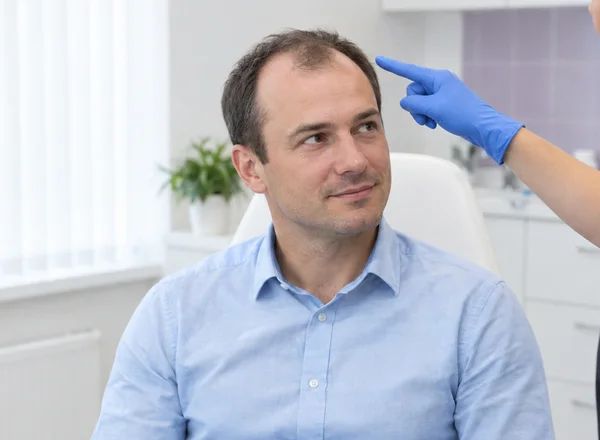

Leave a number to start. A coordinator asks for photos of the thinning area in a messenger, a doctor studies them and tells you whether a transplant would help you. Free, and no operation is booked.

services
Once the grafts have been counted at the free consultation, the price is announced and entered in the contract.
suture-free graft extraction

$2,200$2,700
Advice, then the price — $0.
Nail down the priceimplantation without channels

$2,500$2,900
Advice, then the price — $0.
Nail down the pricecombined technique

$2,700$2,900
Advice, then the price — $0.
Nail down the price| Your first meeting | Free |
|---|---|
| Eyebrow transplant, FUE | |
| Beard transplant, FUE | |
| Hair trichopigmentation | |
| PRP therapy / session | $200 |
all included
From preparation for the operation to 12 months after.
Nothing more to pay on the day of surgery.
two added zones
Grafts from the back of the head and the FUE method apply beyond the scalp, with only the zone changing.
FUE, no incisions and no stitches

Grafts are taken at the back of the head, from the donor area, and moved through micro-punctures of about 1 mm — scars are not left. The shape is worked out with the doctor before the operation, with your facial features in mind. Transplanted hair grows for life: the beard can be trimmed and styled as usual.
$2,800$3,000
Advice, then the price — $0.
Nail down the priceFUE, no incisions and no stitches

The surgeon draws the brow outline at the very first consultation: you look over sample images together, and your face shape decides the design. Every hair is placed to follow the angle of natural growth, which keeps the result believable. Brows thinned by years of plucking are helped too.
$1,600$1,700
a day-clinic operation, the scalp numbed first
Nail down the priceThe doctor will evaluate your donor area, count the grafts and show what result your case allows. The cost is named at the consultation and fixed in the contract.

Message our coordinator
Free online consultation · Reply within 15 minutes
Message us on TelegramMessage us on WhatsAppBy messaging us, you agree to our Privacy Policy
Process
From consultation to going home — all in one day

The first step is a free, no-obligation consultation where the doctor explains how FUE and DHI work, answers whatever you ask, and creates a plan tailored to your case.

This step reserves your surgery date through a deposit, paid by card at the clinic or online, with terms captured in a medical services contract.

The clinic outlines exactly what tests are needed before the operation and gives instructions to help you complete them.

With local anaesthesia used, the surgery causes no pain for the patient.

The donor area, located at the back of the head or the temples, provides the grafts, collected without any stitching.

Grafts are placed into the area of hair loss during this stage of the procedure.
This step supports fast healing, with the clinic providing all the necessary items and full instructions.

Crusts fall off, swelling goes down, the area heals step by step

A normal stage. Hairs fall out, the follicles stay where they are

Young hairs push through, the change becomes noticeable

Density improves, the main volume and hairline are apparent

The hair comes to full volume with a natural front line

Free, before surgery and leaving you free to decide.
Discuss your optionsdoctors

Hair transplant doctor, trichologist, surgeon

Dermatovenereologist, trichologist, surgeon
11 years in practice

Plastic surgeon
9 years in practice

Plastic surgeon
9 years in practice

Assistant
9 years in practice
The doctor will check your donor area, count the grafts and say what result is achievable.
Discuss your optionscoordinators
You are given a personal coordinator who guides you from the first enquiry to recovery.

Patient liaison officer
Will see you through before and after surgery
Manages all your documents and your slots
Patient liaison officer
Will see you through before and after surgery
Manages all your documents and your slots

Patient liaison officer
Will see you through before and after surgery
Manages all your documents and your slots
Patient liaison officer
Will see you through before and after surgery
Manages all your documents and your slots













Our coordinator explains everything and books the appointment when you are free
TelegramMessage us on TelegramMessage us on Telegram Message us on WhatsApp Ask us a questionReviews
I was having trouble with my hair. I came here and got a hair transplant. The results was awesome thank you
Review on Google
І experienced hair loss due to COVID and turned to this clinic; they helped me and performed a hair transplant, moving hair from the back of my head to my temples. Thank you.
Review on Google
I traveled to City Medical Centre, where they helped me overcome hair loss through a transplant to the balding areas of my scalp. I am grateful to the doctors for performing the procedure painlessly.
Review on Google
I am sharing my experience, because before the operation I went through a pile of reviews myself and was looking for real stories. I had a beard transplant six months ago. Honestly, in the first days after the procedure I felt a little jittery: my face looked unfamiliar, there was slight swelling and small scabs. In the first couple of months the hair partly fell out, as the doctor had warned. But now the result truly makes me very happy) From about the 4th month active, even growth began. The transplanted hair took very well, the beard now looks as natural as possible, no bald patches are left. The beard became much thicker and denser, with the shape I had thought about for a long time. All in all, I recommend the clinic, the doctor was polite and explained everything 👍 The result is definitely worth it!
Review on Google
I traveled to this clinic and do hair transplant, very good quality and cheap. Good doctors
Review on Google
I do hair transplant here very good doctors!!
Review on Google
What people ask
People often say hair implants, but no artificial hair is used. In a hair transplant the doctor moves your own follicles (grafts) from the donor area to thinning or bald areas using FUE or DHI.

Yes — City Medical Centre regularly treats patients from other cities and countries, starting with an online consultation.
The base prices are $2,200 (≈ €2,000) (FUE), $2,500 (≈ €2,250) (DHI) and $2,700 (≈ €2,450) (combined). The precise cost is determined at a free consultation and graft count, then fixed in your contract.
The surgery takes a single day, and you go home the same day.
It helps with stable pattern hair loss and a receding hairline when there are enough donor grafts. Some types of alopecia need treatment first; the doctor checks this at the consultation.
It's a painless procedure, carried out under local anaesthesia.
With FUE, grafts are taken by tweezer with no incisions. With DHI, grafts are implanted directly using a Choi pen, without pre-made channels. The combined method mixes FUE harvesting with DHI implantation.
At the free consultation, the doctor counts the grafts you need according to your donor area.
Healing takes 0–10 days. Transplanted hair sheds at 2–4 weeks, which is normal. New growth starts at 3–4 months, with noticeable density at 6–9 months and the final result at 12–18 months.
The clinic provides a lifetime guarantee on hair growth, stated in the contract.
A medical licence, and care provided to the standards and clinical guidelines
of the Ministry of Health.

Certificates of the doctors who perform the operation
Read the papersAKC POMOSHCH LLC
our clinic's legal entity
1057746096924
OGRN
7728536872
INN
FUE and DHI both work for a patient in Helsinki. The skin is not cut open, there is nothing to stitch, local anaesthesia covers the session on its own, and the operation ends on the same day it began.
For Helsinki the entry point is simple and free: an online consultation where the doctor reviews photos of the thinning area and counts the grafts you would need. The clinic answers 24/7, so a message never sits overnight.
The first 0-10 days are for healing; at 2-4 weeks the transplanted hairs leave, which is the normal course; growth comes back at 3-4 months, density at 6-9, the final look at 12-18. Control visits at 1, 3, 6, 9 and 12 months, photos with a personal coordinator, growth guaranteed for life.
Prices are in US dollars; the amount in brackets is an approximate conversion to EUR at the rate of 02.10.2026. The final price is fixed in your contract.
By messaging us, you agree to our Privacy Policy
Well-known people who spoke openly about this operation, in their own words.
 Did Paulus Arajuuri have a hair transplant? Yes, and he wants men to stop feeling ashamedFormer Finland vice-captain Paulus Arajuuri spoke openly about his hair transplant. What he said, how the procedure works and how results develop over time.
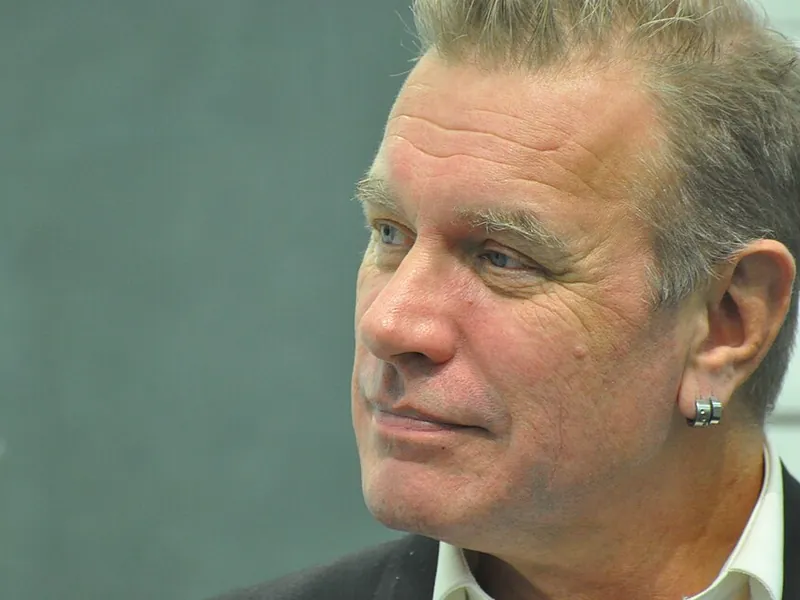 Did Tauski have a hair transplant? Yes, and he talked about it with humourFinnish singer Tauski told Iltalehti in 2020 that he had a hair transplant on the crown. What he said, how the procedure works and how results develop.
Written by Anastasia A. Kolesnik, plastic surgeon, hair transplant doctor
Medically reviewed by Ellina V. Goncharova, dermatovenereologist, trichologist, surgeon. Review date:
How we prepare and review medical content · Medical disclaimer
Helsinki ended 2025 with 694,392 inhabitants; the urban area counted 1,360,075 and the metropolitan area 1,623,283. A decision about hair surgery rests better on a method than on stories heard second-hand, and the method here is to hold three separate conversations and write down the answers: one about your diagnosis, one about the technique, one about money and paperwork. Keep them apart, because mixing them is how a sales talk sneaks in.
The first conversation is about the cause of the thinning. Pictures of the affected zones reach a coordinator through WhatsApp or Telegram, and a doctor gives a view on whether grafting is realistic. You supply a phone number and the images; nothing is booked. A firm answer is useful in either direction, whether it is a yes or a no. Take the pictures in daylight from above, the front, both sides and the back, and add one line about when the thinning started and whether relatives had it.
The second is about the technique. Forceps extraction with no incisions and no stitches is FUE. DHI uses a Choi pen to place each graft and skips the preparation of channels. A hybrid harvests the first way and implants the second way. Ask the doctor why one of these suits your donor zone better than another, then ask that the choice be written down.
The third concerns what the sum buys and who stands behind it. The clinic fixes the sum only after the grafts have been counted and then enters it in the contract. A deposit holds the date and may be paid by card or online. Ask for the full contract early, so that reading it does not have to happen in a hurry.
Finnish law keeps a central register of licensed health care professionals called Terhikki, and the name and qualification of anyone entered in it are public. The Finnish Supervisory Agency, named in the official guide to health care supervision as the body that grants permits to private health care companies, also maintains a provider register called Soteri. The same guide adds that providers hold the primary responsibility for supervising their own activities.
Put to work, this becomes a short routine. Get the full name and specialty of whoever will operate, then ask which professional register lists that person and under what entry, and compare it with what you were told. The clinic holds a medical licence, and its doctors' diplomas and certificates can be examined before any payment. Request copies in a message, so that a trace stays in your phone and a second reader can check it later.
Add the entity behind the care to your notes. Medical services are delivered by a registered legal entity that holds the licence, and its name and registration numbers should appear on the contract. A mismatch between the name on the contract and the name on the licence is a reason to stop and ask.
One more habit helps: for every promise, ask for the document behind it, and compare the document with the promise.
Treat the register as a tool for questions and not as a verdict. An entry in a register of this kind shows that the person is licensed; it does not say how many hair transplants that person has done, or what the person recommends for your head. Those answers have to come from the doctor in the consultation, preferably in a message you can reread. If the reply is vague, say so politely and ask again with a narrower question.
Kela's page on private medical care speaks of reimbursing a share of what a private doctor charges for illness, pregnancy or childbirth, and its guide to private dental care places cosmetic procedures, such as tooth whitening, among costs that are not reimbursed. The sensible reading for Helsinki is cautious: plan to pay for the operation from your own funds, and put the question to Kela if you believe your case is special.
With the money private, the contract becomes the document of record. Hold its lines against the list of inclusions: dressings and healing checks, a plan of care for the transplanted and the donor areas, guidance on washing, on sleeping and on headwear, a programme for returning to sport and caring for the hair, a personal coordinator who receives your photographs, and visits at 1, 3, 6, 9 and 12 months within a twelve-month follow-up. A line that is absent from the paper is a question for the clinic.
If you use them, ask for the terms on a separate sheet that states the number of payments and what happens if you stop, and keep it with the contract.
Last, write down a date before which you will not sign anything. A deadline set by you, and shared with the coordinator, leaves no room for urgency that comes from the other side.
No messenger can give a graft count; it comes from a hands-on look at the donor zone, which is the back of the head or the temples, where hair is taken by a technique that leaves no scars. Surgery fits into a single day under local anaesthesia. The sum agreed earlier stands on the day, and the doctor you met at the consultation stands at the table.
Good grounds for proceeding are loss of the androgenetic or diffuse type, and bald areas next to a receding frontal edge. Doubtful cases are a frontal edge set high, a donor zone of low density, damage from a burn or injury, and hair that left after an illness or because of hormones. Outright stops: anyone under 18, cancer, a pacemaker, epilepsy, diabetes mellitus, a serious heart condition, pulmonary embolism, hepatitis B or C, HIV, trichotillomania, body dysmorphic disorder, and intolerance of anaesthetics.
For FUE the clinic quotes graft survival of 98–100 percent, and it describes the figures given per method as averages for guidance. What happens in your case depends on the area being treated and on your own features, which the doctor sets out at the consultation. Ask for numbers that belong to you, not to the average, and ask that they be recorded.
Four more questions are worth asking the doctor. Where exactly will the hair come from, and will the donor zone look different afterwards? What density is realistic for my frontal area, and in how many stages? What would you advise if I wait a year before deciding? Which of my medicines should I mention before the day of surgery? An answer that arrives in writing can be compared with a second one.
A transplant reveals its shape slowly. The healing stage covers 0–10 days. From the second to the fourth week the grafted hairs drop out while the follicles stay put, a normal stage. New hair shows at 3–4 months, thickness comes back at 6–9 months, and the end result settles at 12–18 months.
A diary makes the wait bearable. On the day of surgery, put the check-up dates into a calendar. At each stage, photograph the same zones from the same angles, name the file with the date and send the set to your coordinator, who replies at any hour. Add a line about what you were told at the visit.
If doubts arise in month five, open the diary and compare. It is quicker than a phone call and calmer than a late-night search.
In Terhikki, the central register of licensed health care professionals, where the name and qualification of anyone entered are public information.
The Finnish Supervisory Agency, which also maintains the provider register Soteri. Providers keep primary responsibility for supervising their own operations.
Kela describes reimbursing part of private doctor visits for illness, pregnancy or childbirth, and it names cosmetic procedures among non-reimbursed dental costs. Hair restoration is not mentioned, so plan to pay yourself and ask Kela about your case.
What is the cause of my thinning, which technique suits my donor zone and why, and what exactly does the sum in the contract include.
Send dated photographs of the same zones whenever something changes, at any hour, and ask the questions you wrote in your diary.
Stop and ask the coordinator in writing which entity delivers the care. Do not pay a deposit until the names agree.
Payment is made in full before the procedure. If you would like to spread the cost, you can take out a loan with your own bank and pay the full amount with it.

 Forceps
 Minimal


