
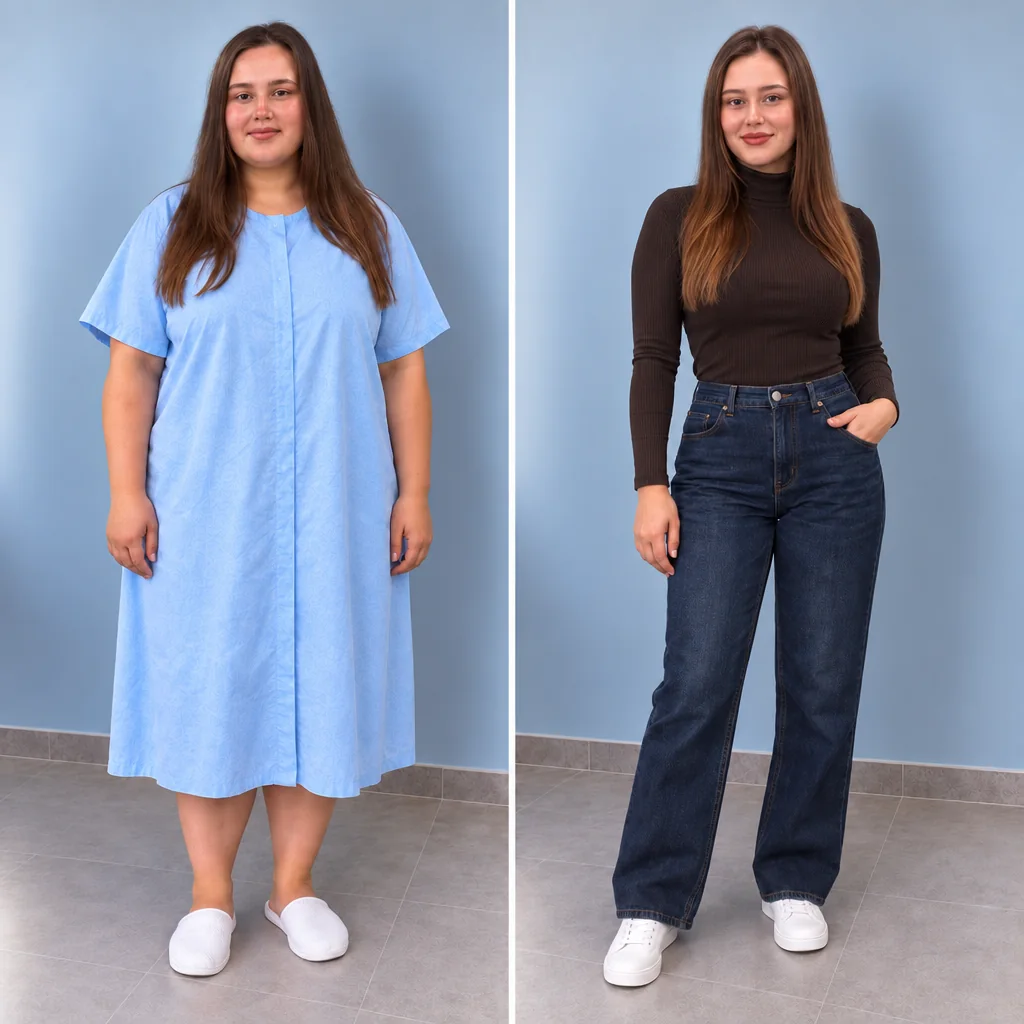
 beforeafter
Irina, 26
Bariatric surgery
Bariatric surgery
$3,600
$4,800 · First consultation — Free
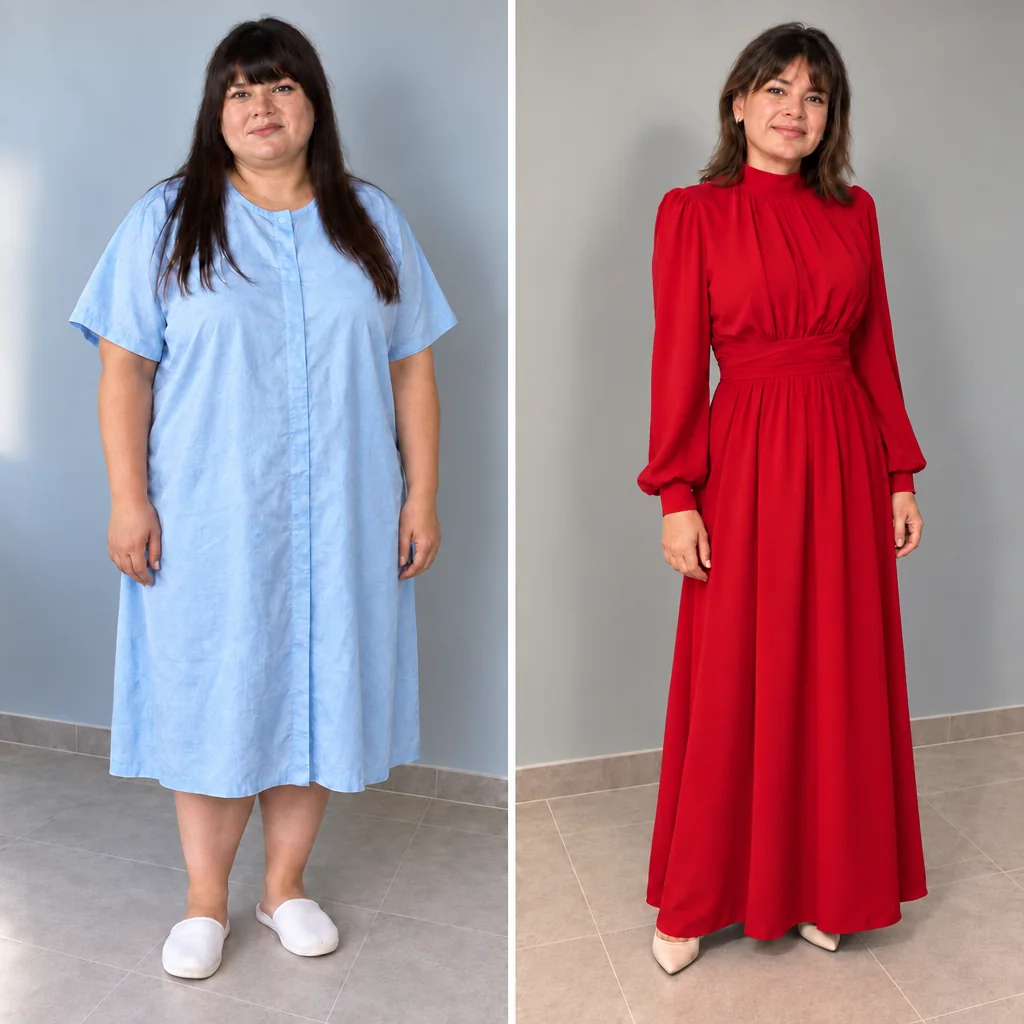 before
after
Message our coordinator
Free online consultation · Reply within 15 minutes
Message us on TelegramMessage us on WhatsAppBy messaging us, you agree to our Privacy Policy
Results
Only real clinic patients appear here.
beforeafterBariatric surgery
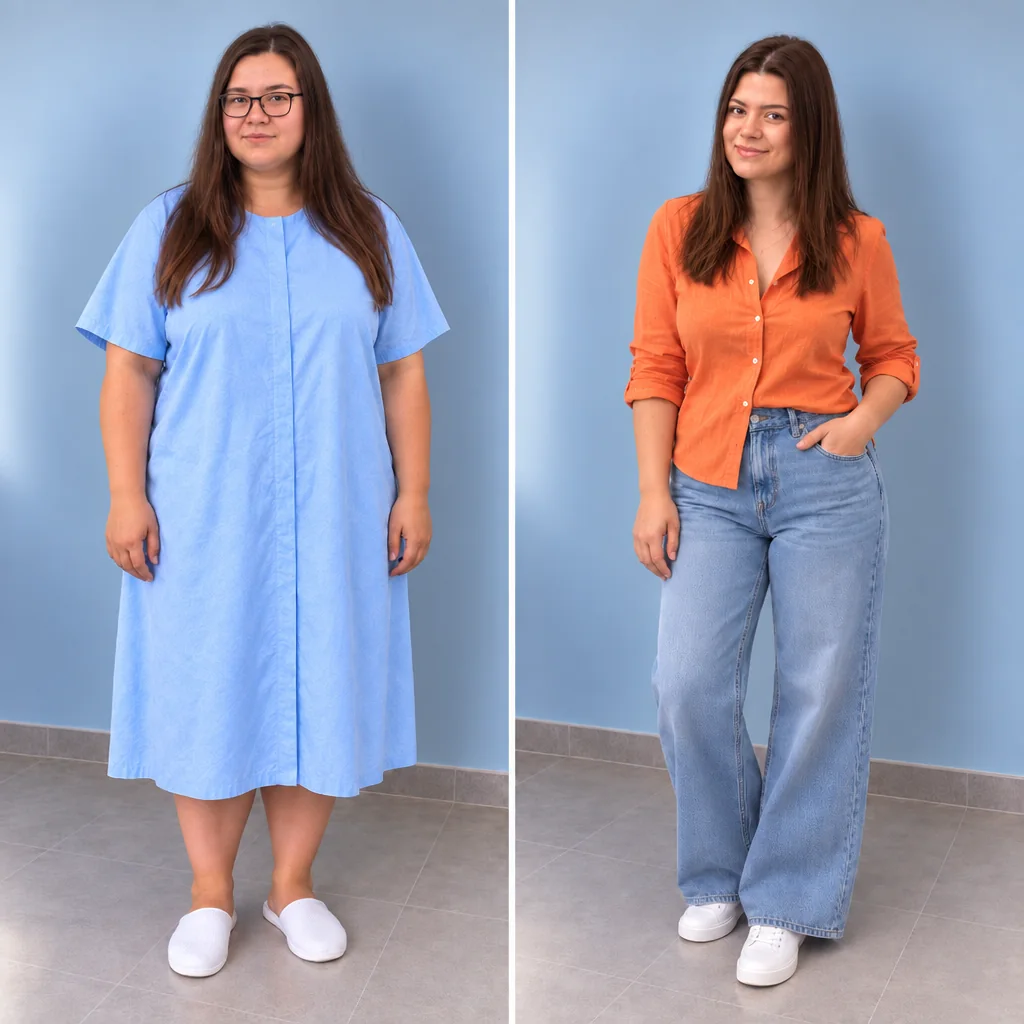 beforeafter
Bariatric surgery
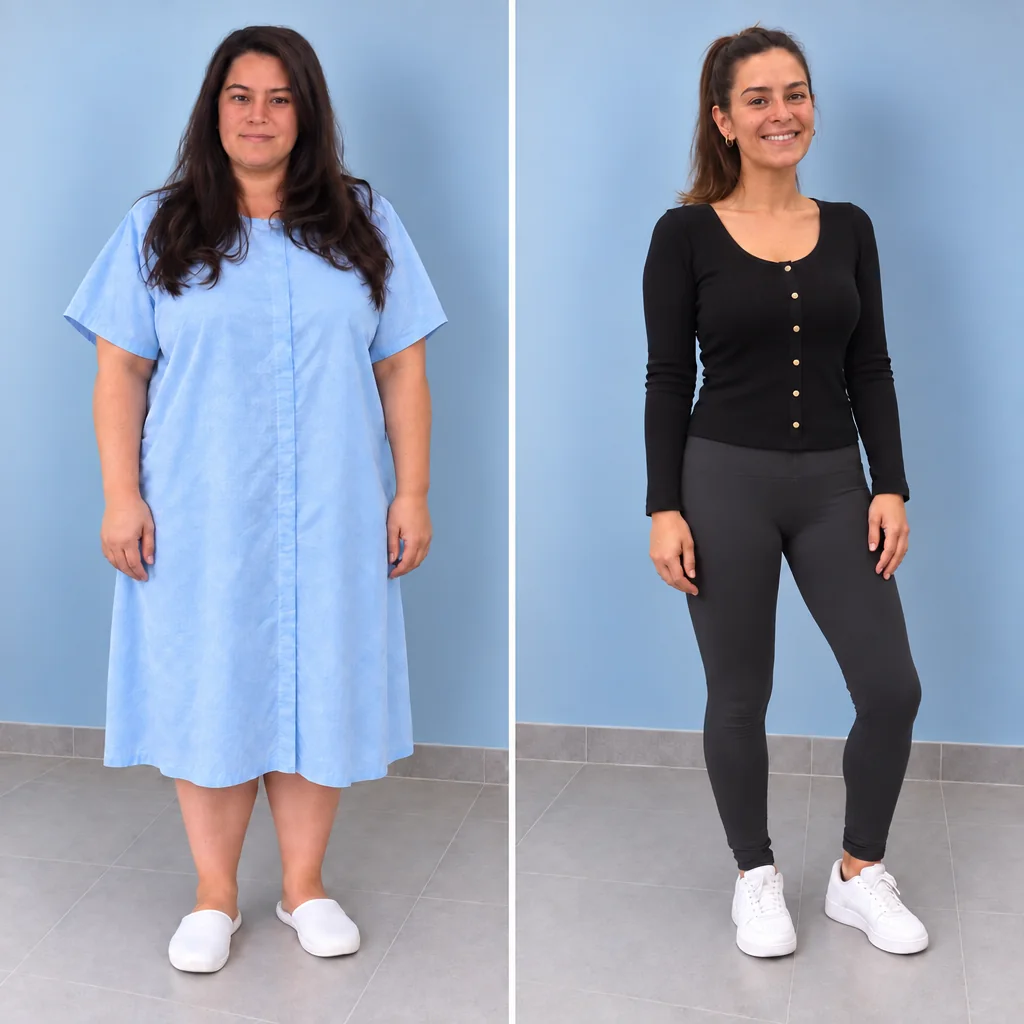 beforeafter
Bariatric surgery
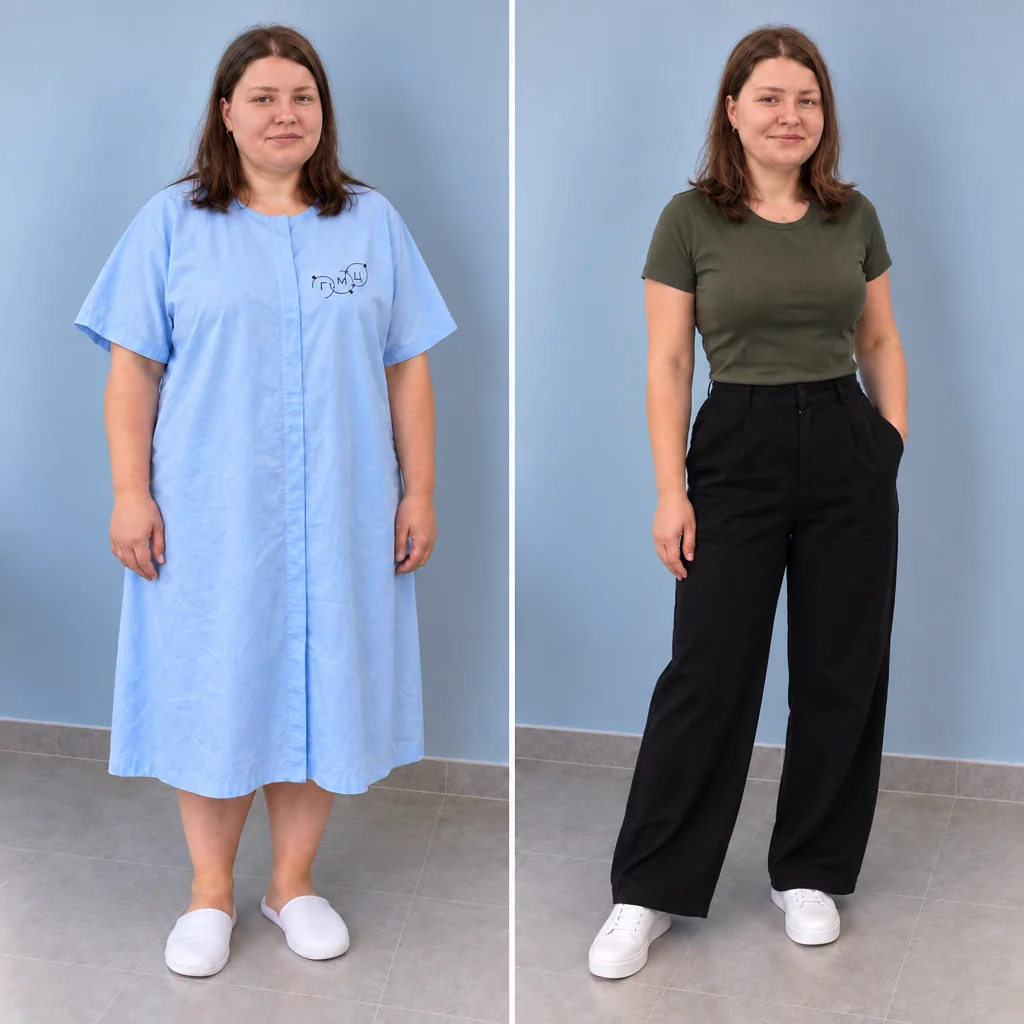 beforeafter
Bariatric surgery
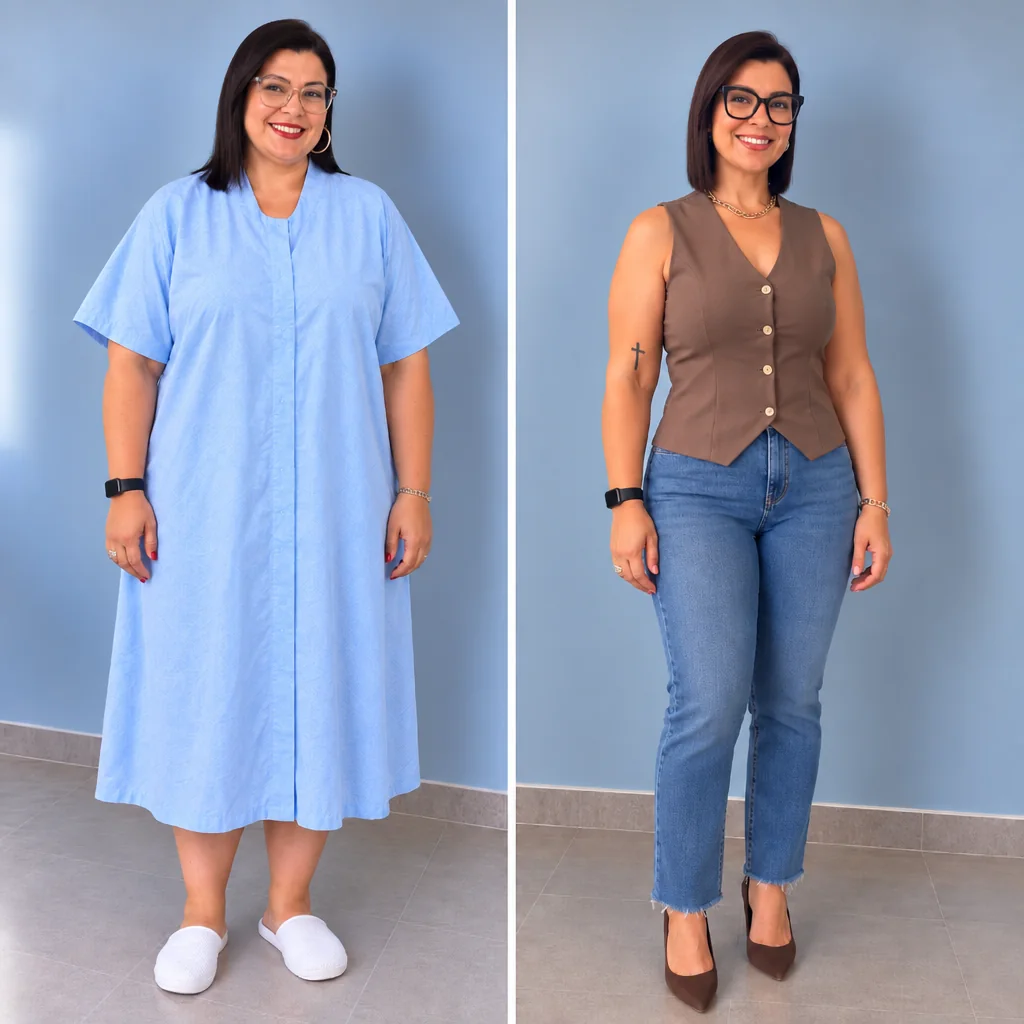 beforeafter
Bariatric surgery
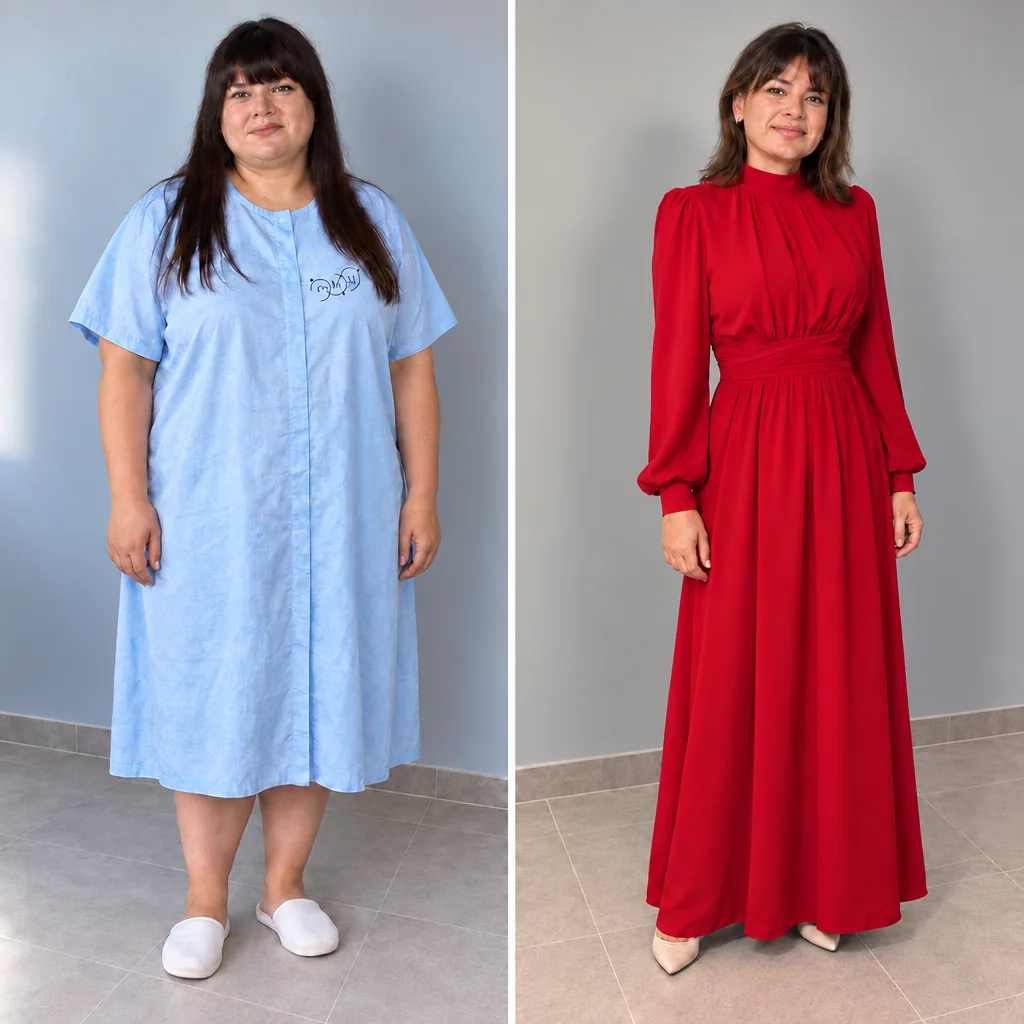 beforeafter
Bariatric surgery
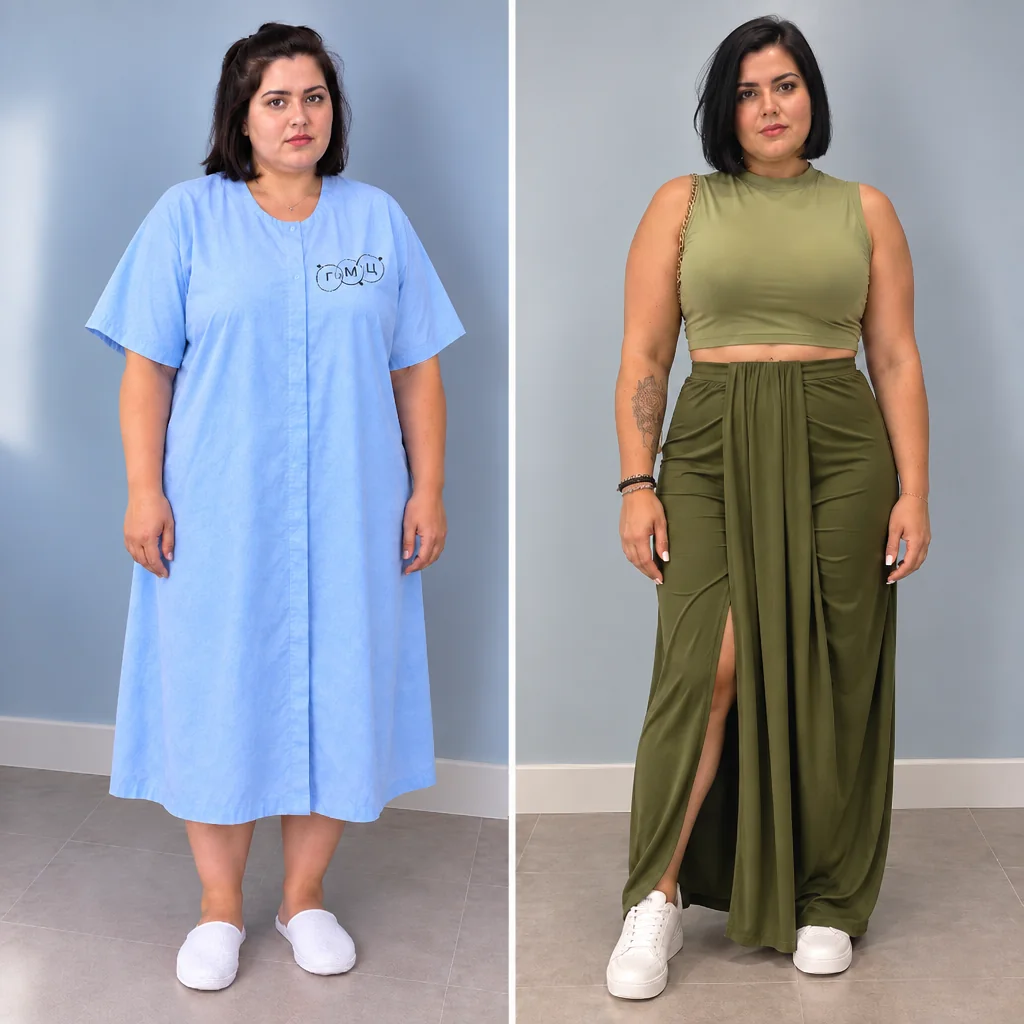 beforeafter
Bariatric surgery
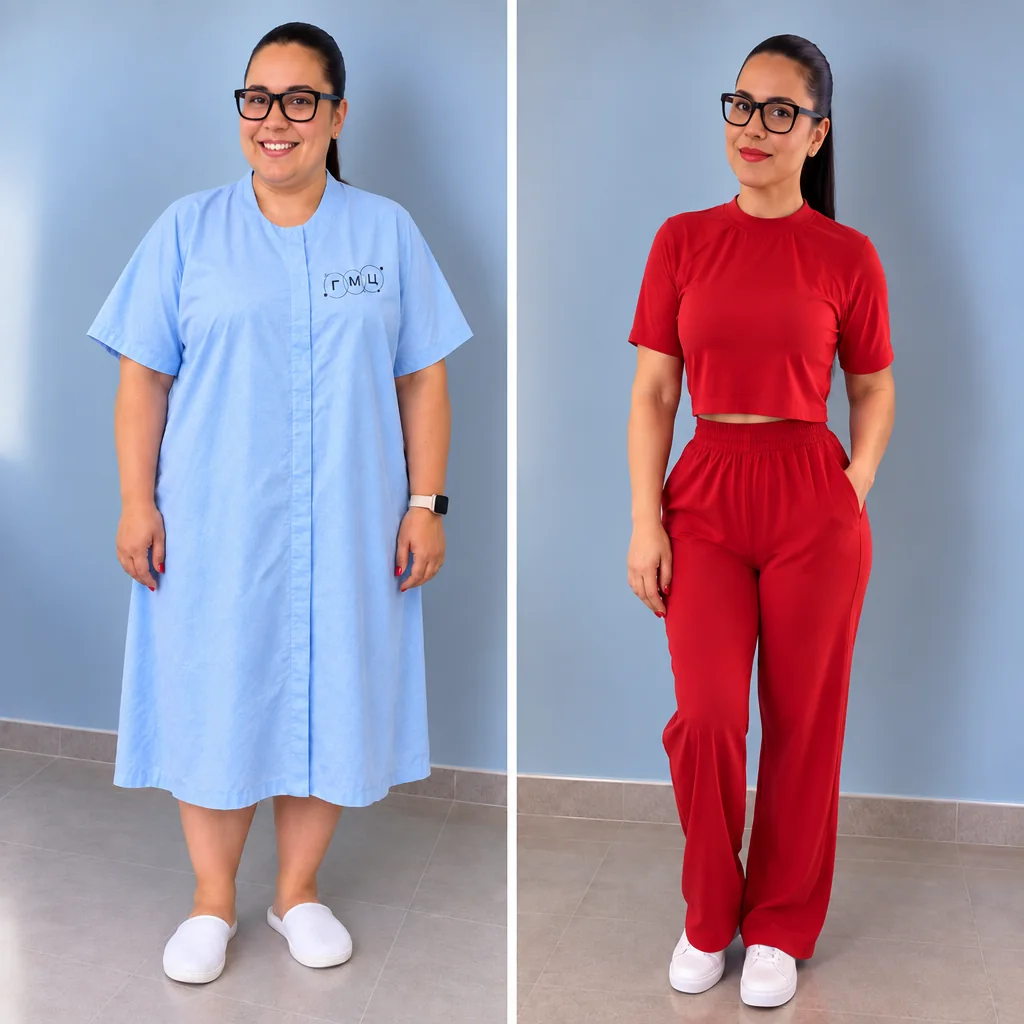 beforeafter
Bariatric surgery
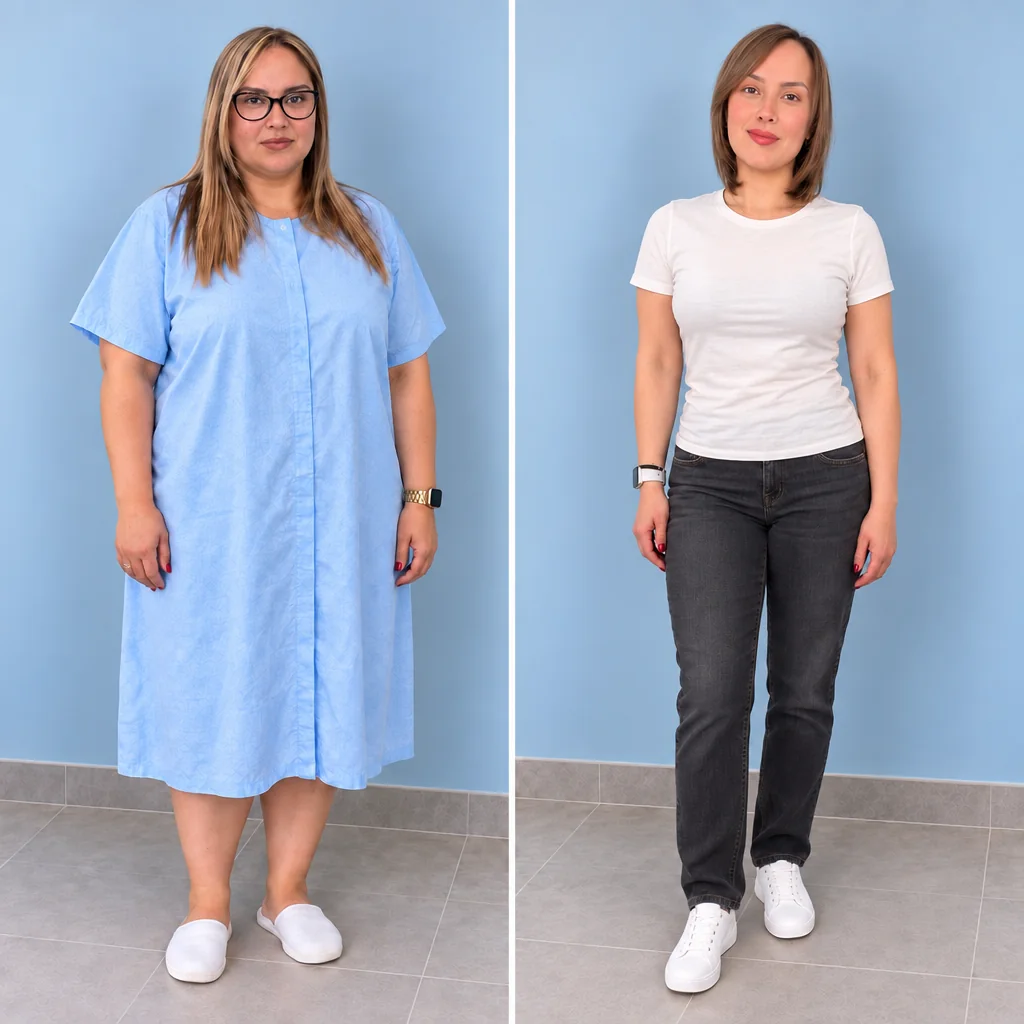 beforeafter
Bariatric surgery
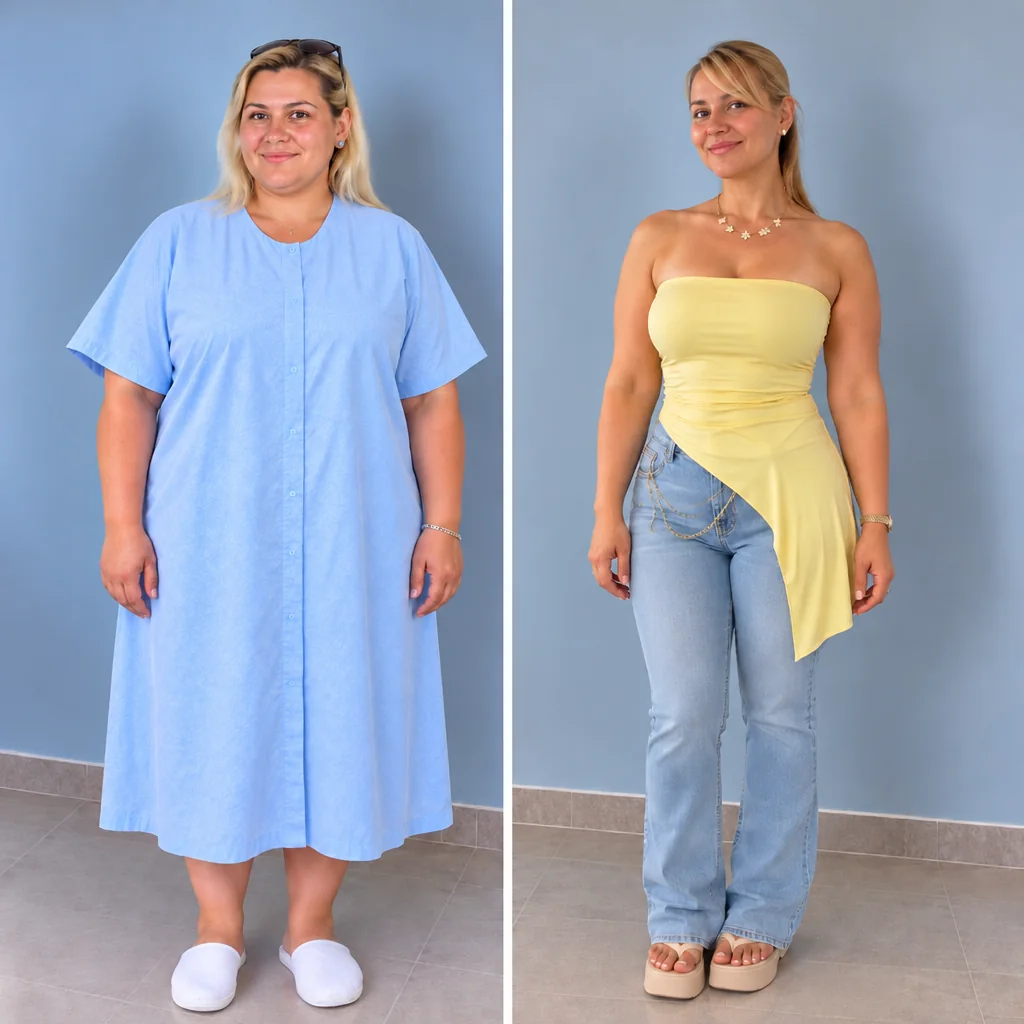 beforeafter
Bariatric surgery
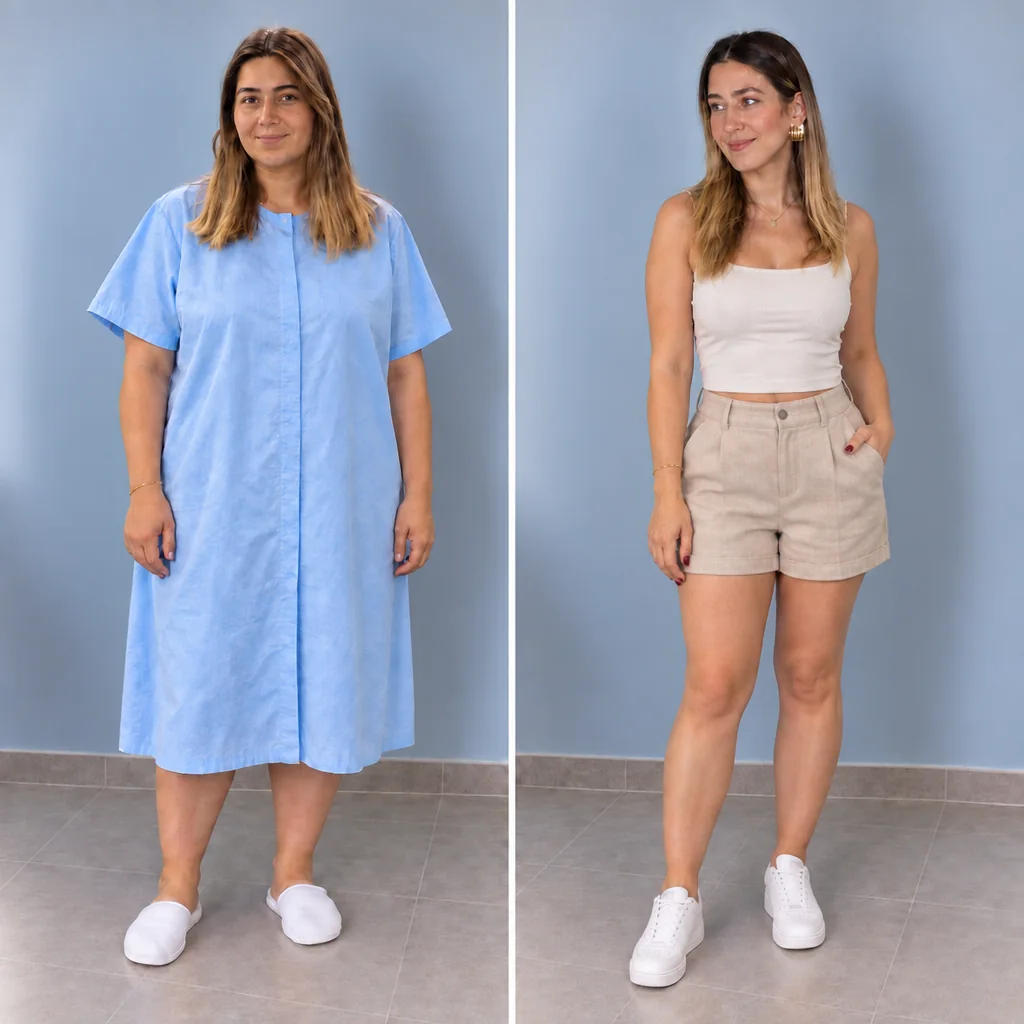 beforeafter
Bariatric surgery
Comparison
Two main bariatric operations are available: sleeve gastrectomy and gastric bypass. Study how they work, what they are meant for and when they apply, then choose confidently.
Reducing the stomach volume
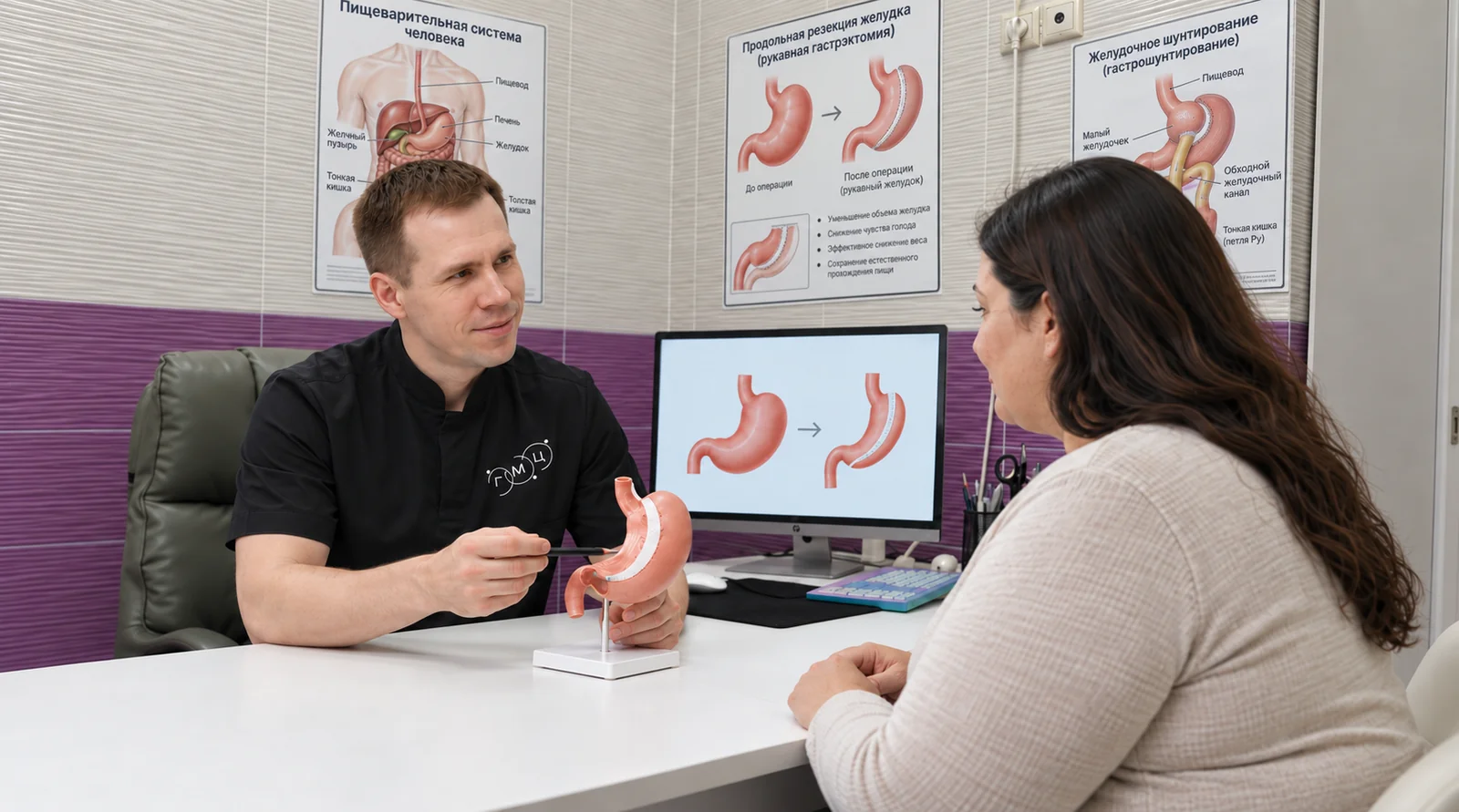
Discounted price
$3,600 $4,800
Reducing the stomach volume and rerouting food
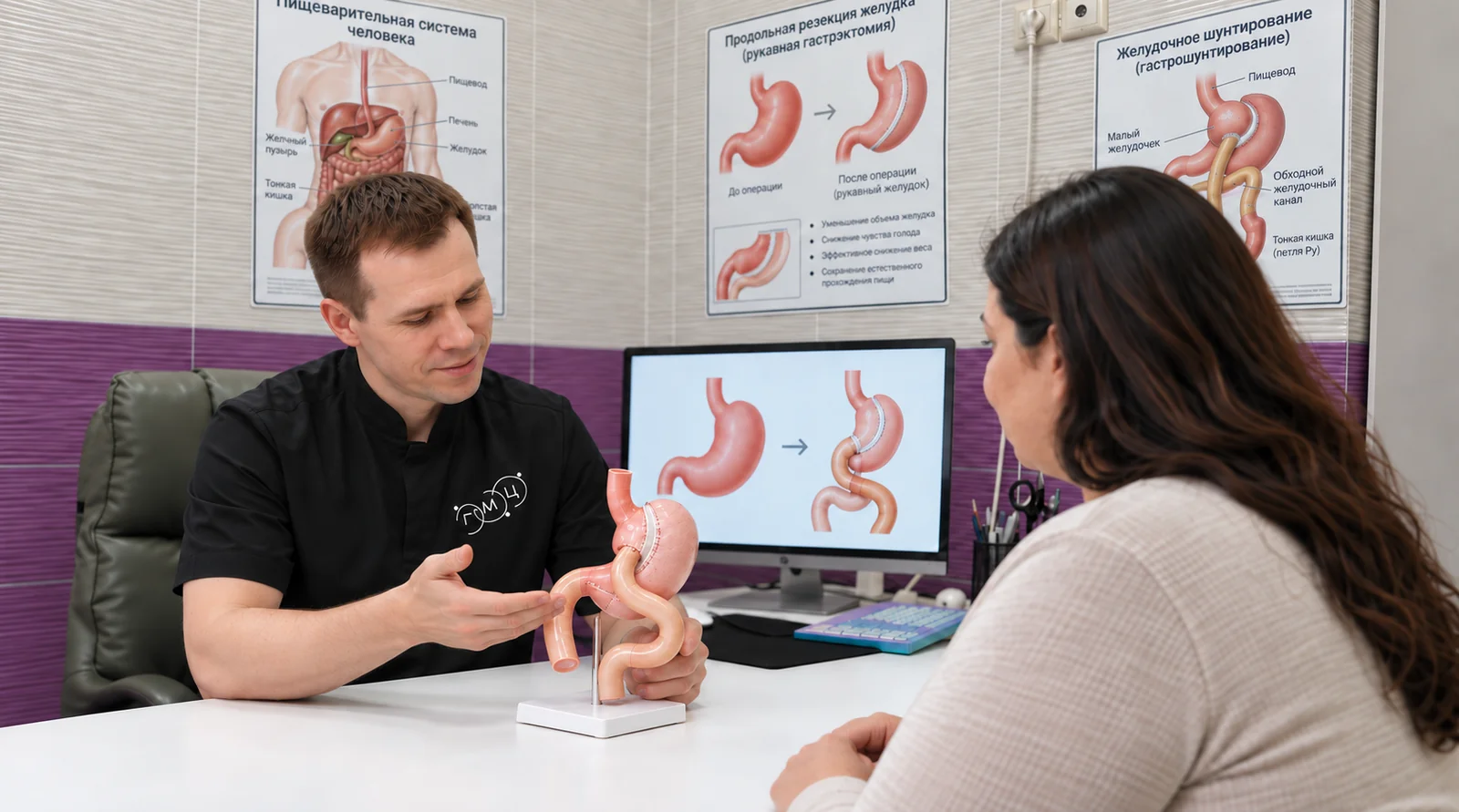
Discounted price
$4,000 $5,200
All benefits and recovery periods listed are averages per method, for guidance only. The extent of surgery and recovery vary with your anatomy and individual traits and are confirmed by the surgeon at the consultation.
Book a consultationAbout us
Comfortable rooms, modern equipment and care for each person
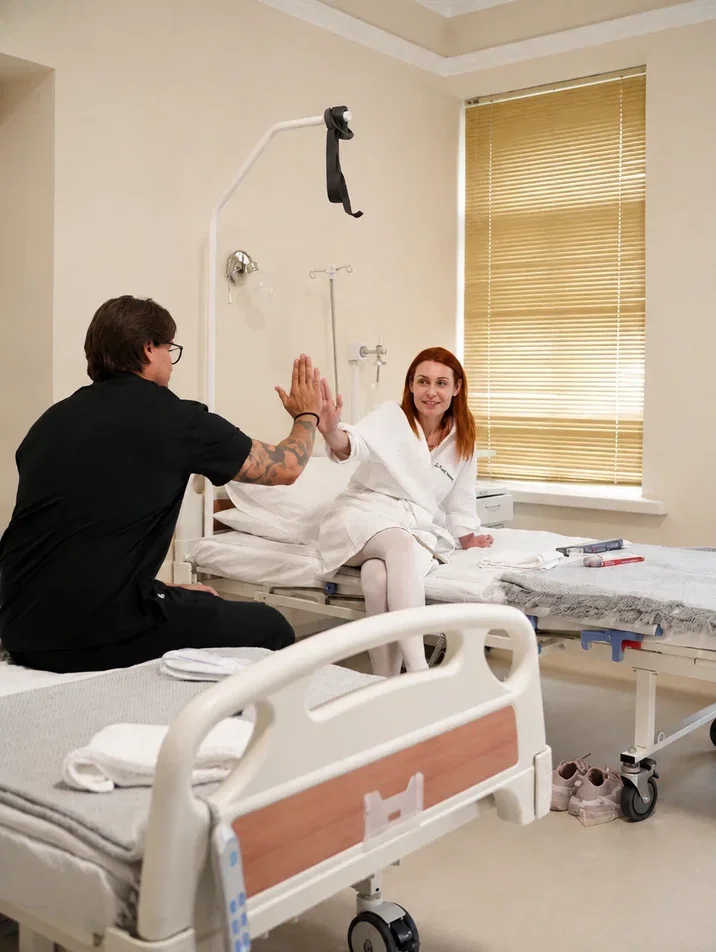
Ask us anything, and we will arrange a consultation at a time that suits you
Get a consultationA consultation and check-up come first; then you and the surgeon decide on surgery together.
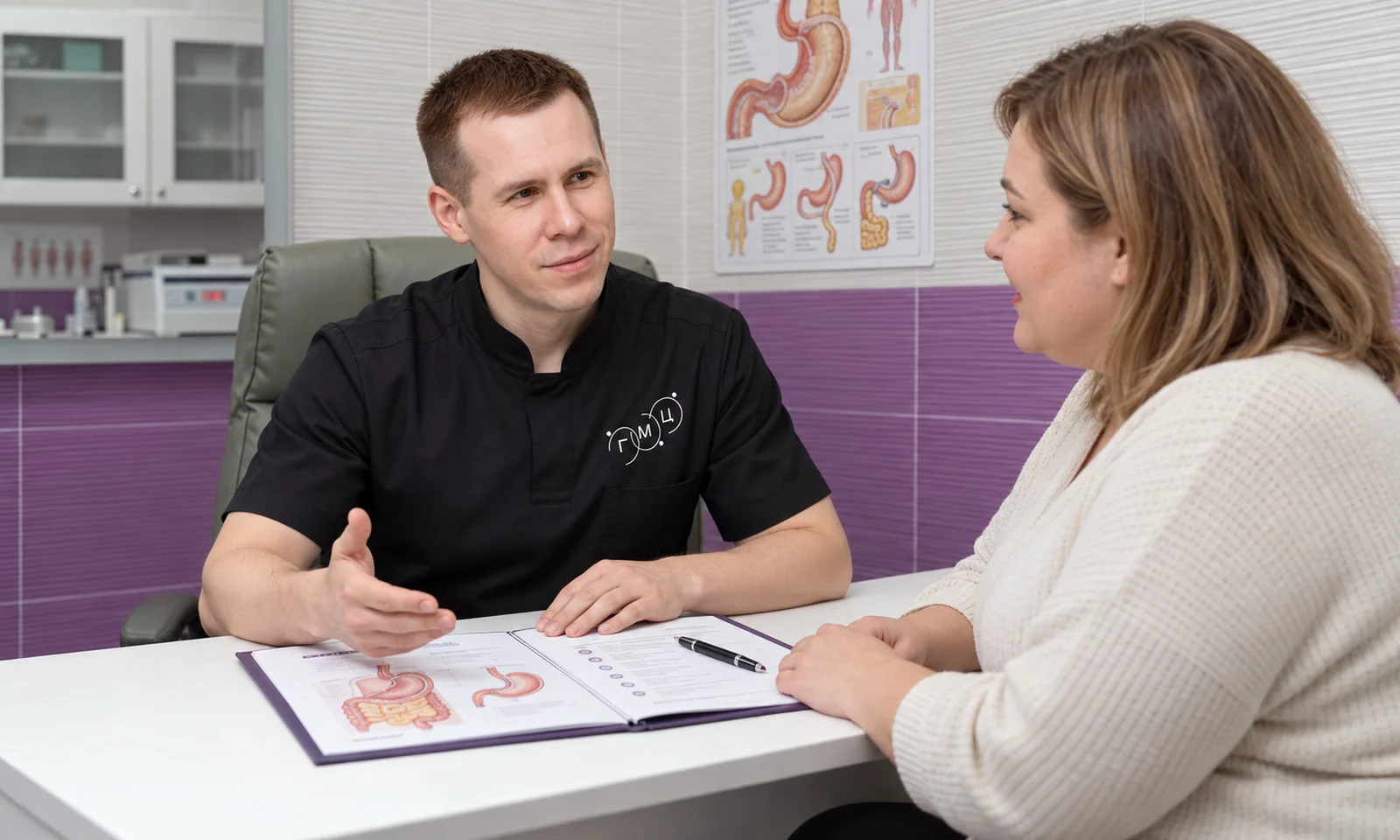
Can't tell which column fits your case?
Write to us on Telegram and our coordinator will tell you whether bariatric surgery is suitable. Your surgeon consultation is free and carries no commitment to surgery.
Find out if it suits me
Prices
You learn the cost at the consultation once your plan is ready, and it is fixed in the contract.
Discounted price
Reducing the stomach volume
$3,600$4,800
Discounted price
Weight loss and a new route for food
$4,000$5,200
Free
A treatment plan after the surgeon's examination

Free
you are told the cost of surgery
and it is fixed in the contract
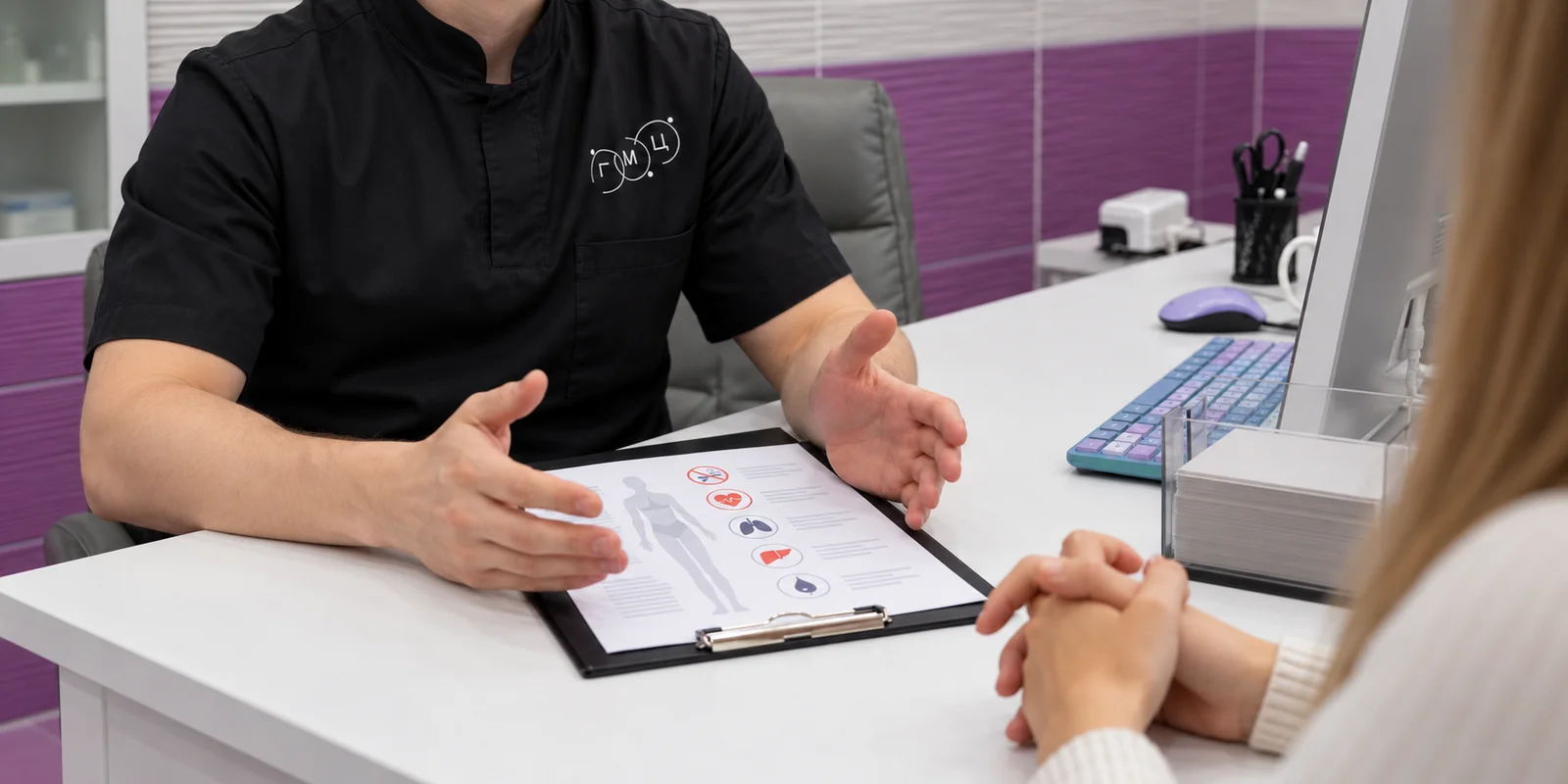
The doctor checks your health, goes over your goals and chooses a suitable bariatric surgery method. The cost is stated at the consultation and fixed in the contract.
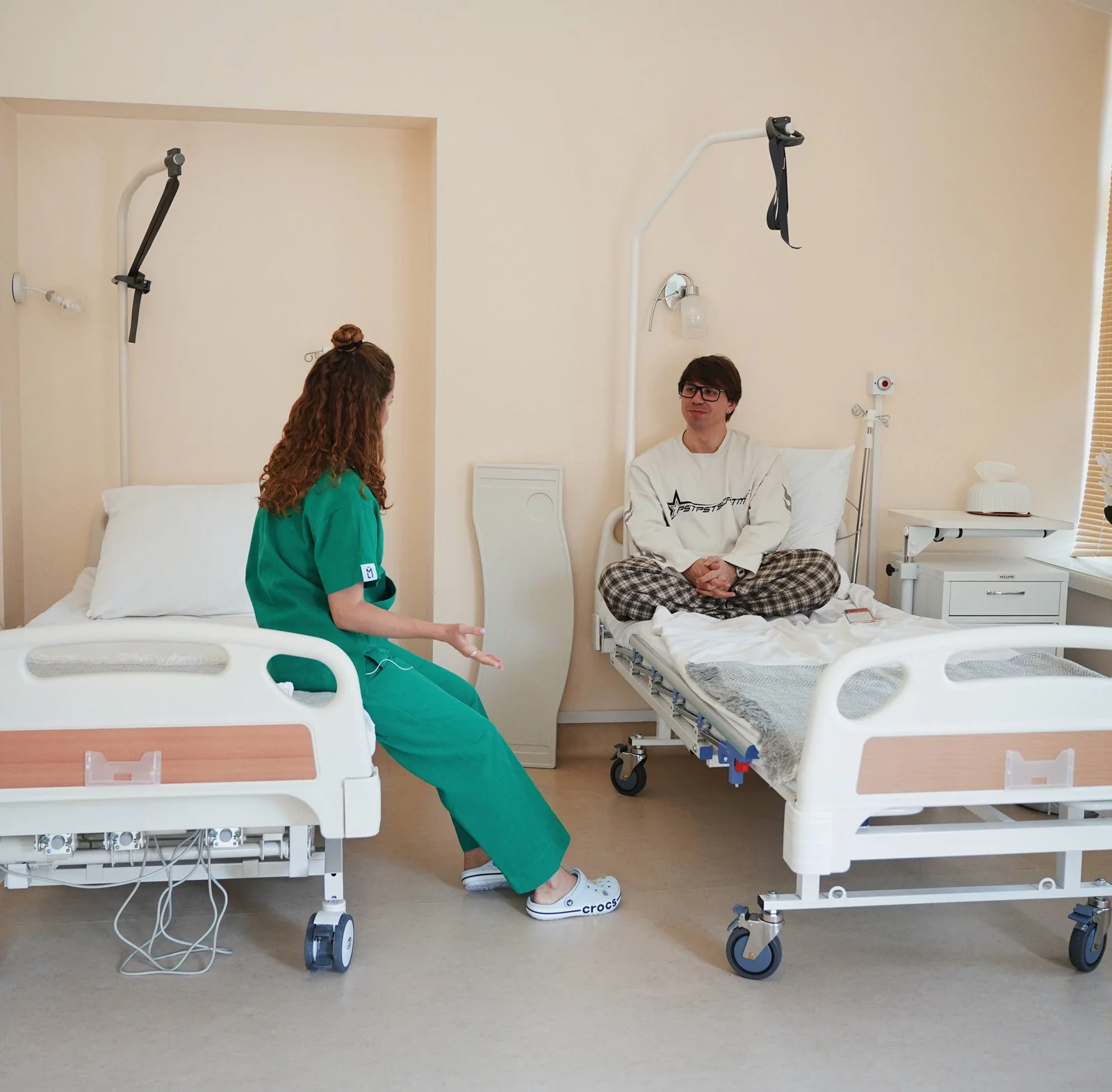
Message our coordinator
Free online consultation · Reply within 15 minutes
Message us on TelegramMessage us on WhatsAppBy messaging us, you agree to our Privacy Policy
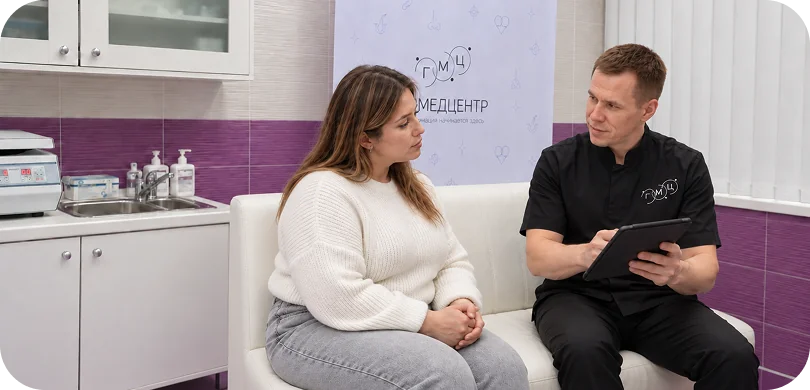
price
No extra charges: one package takes you from preparation through 12 months of support.From getting ready for surgery
to 12 months of support.
Step by step
Hospital monitoring, a treatment plan agreed with you and a year of support.
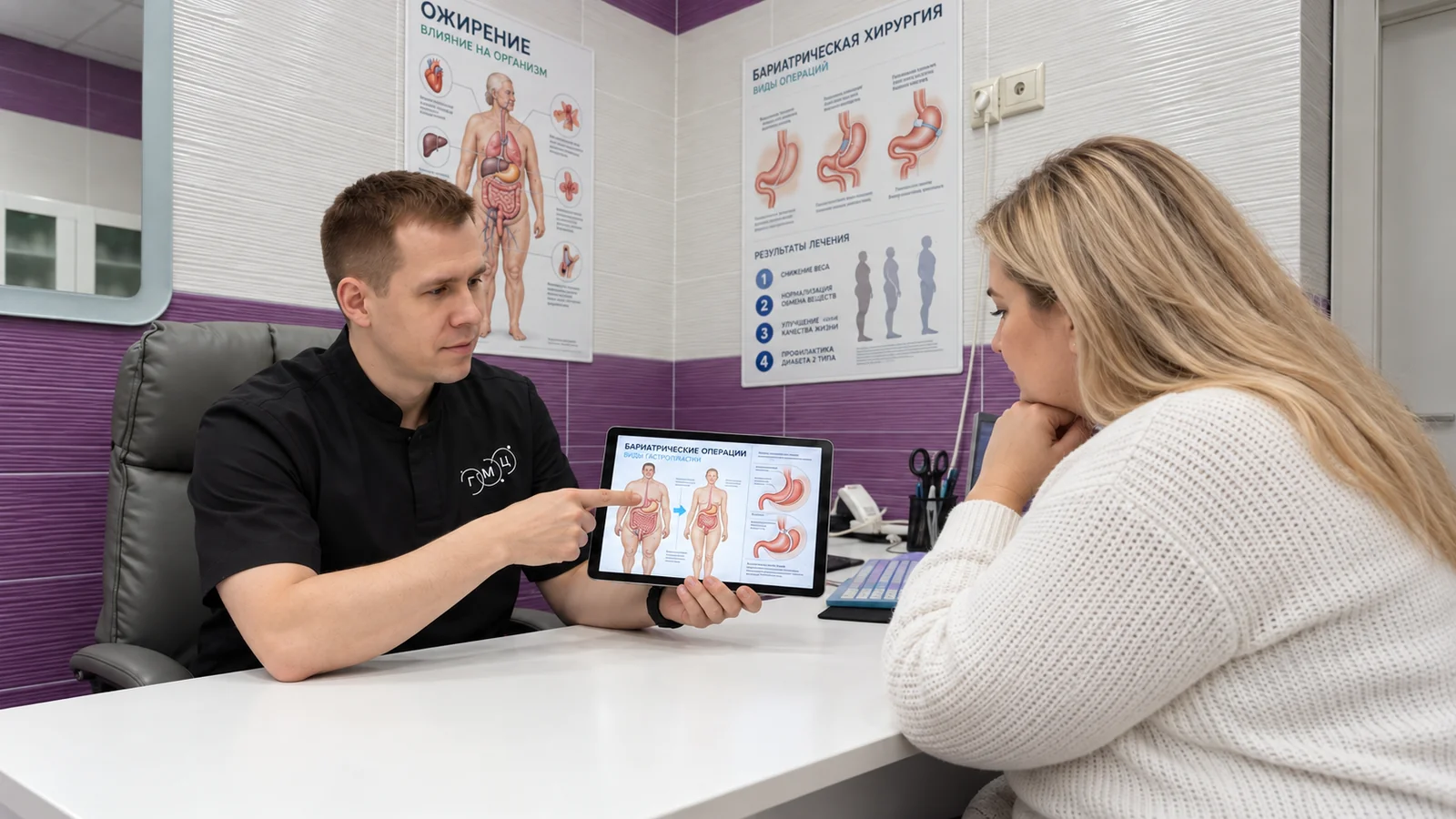 1
The doctor checks your health, goes over your goals and arranges the tests needed to choose a suitable bariatric surgery method.
2We set aside a surgery date for you — the deposit is paid by card at the clinic or online by bank transfer, and the terms are fixed in the contract for medical services
 3
Pre-operative checks include blood and urine tests, an ECG, an ultrasound, a gastroscopy and specialist visits; your exact list comes from the doctor at the consultation.
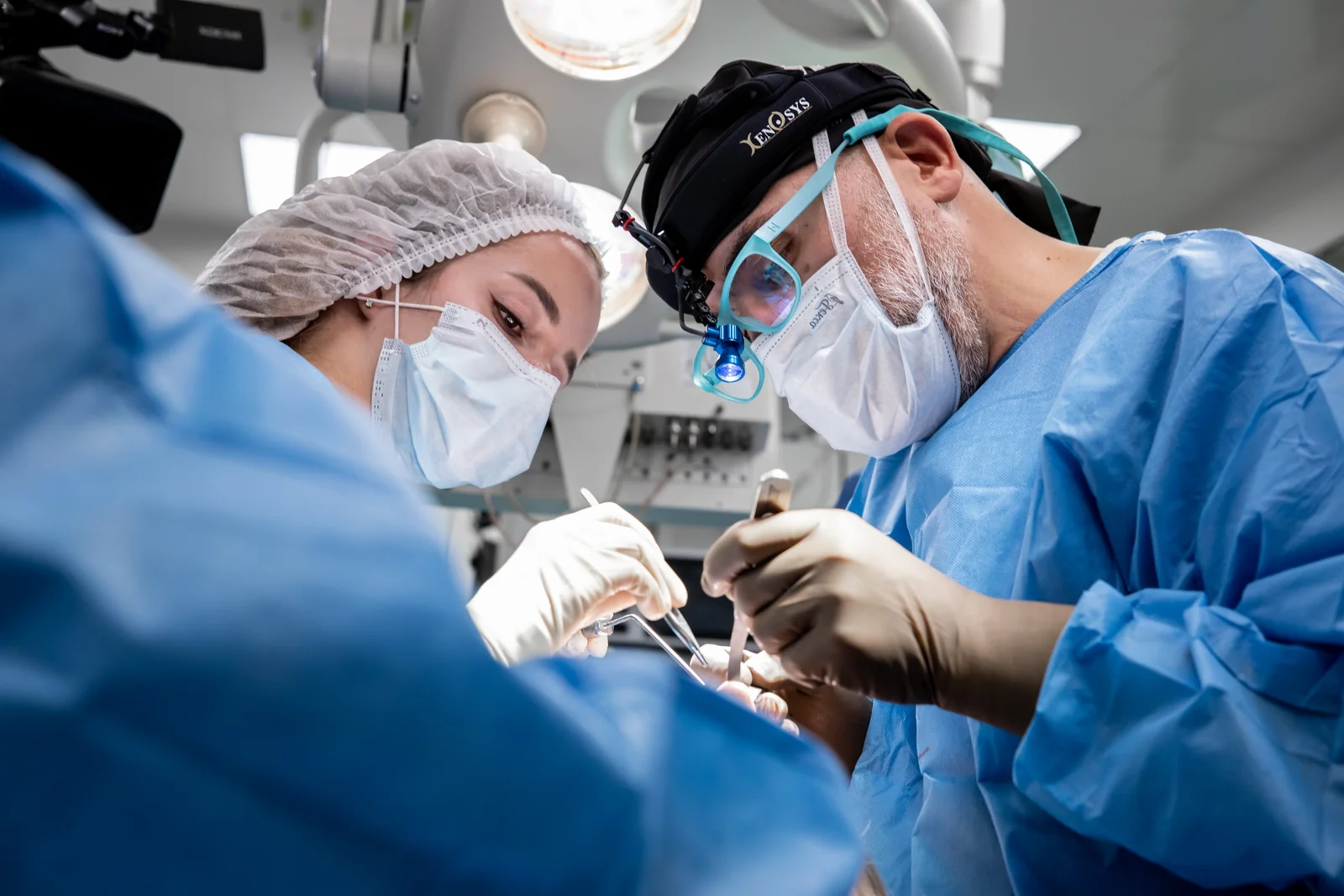 4
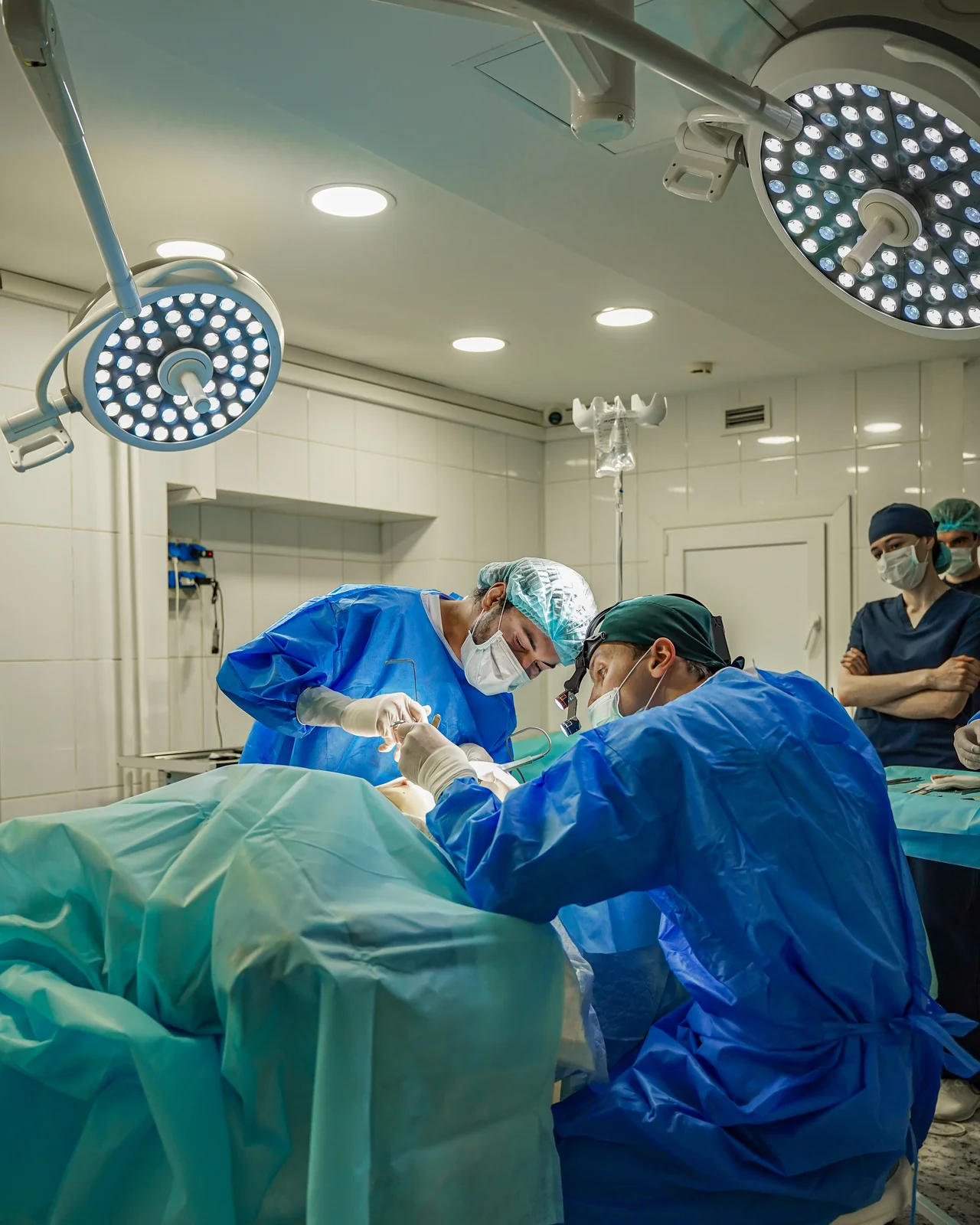
The surgeon performs the bariatric procedure by the chosen method under general anaesthesia, and the medical team then monitors the patient after surgery.
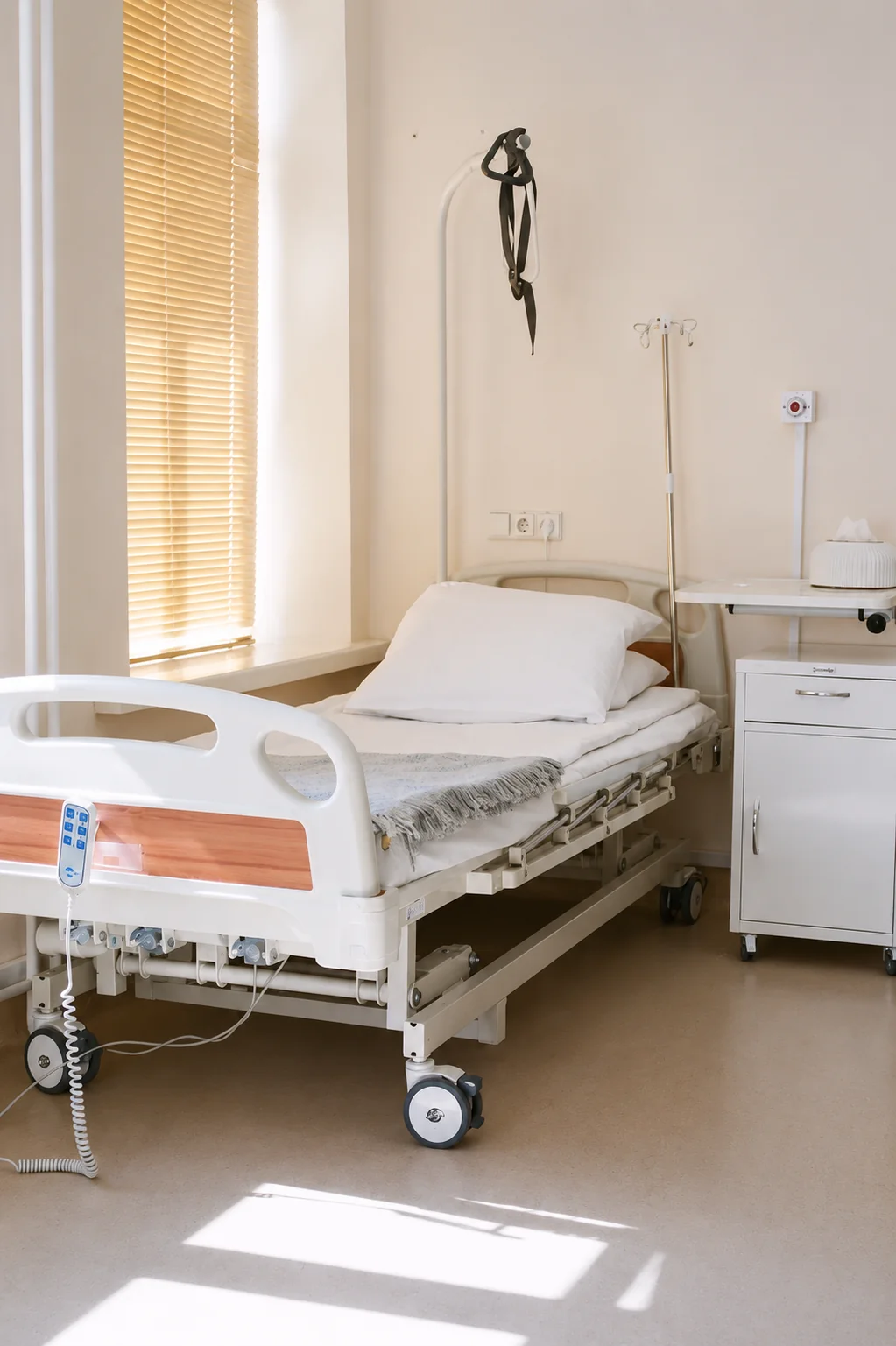 5
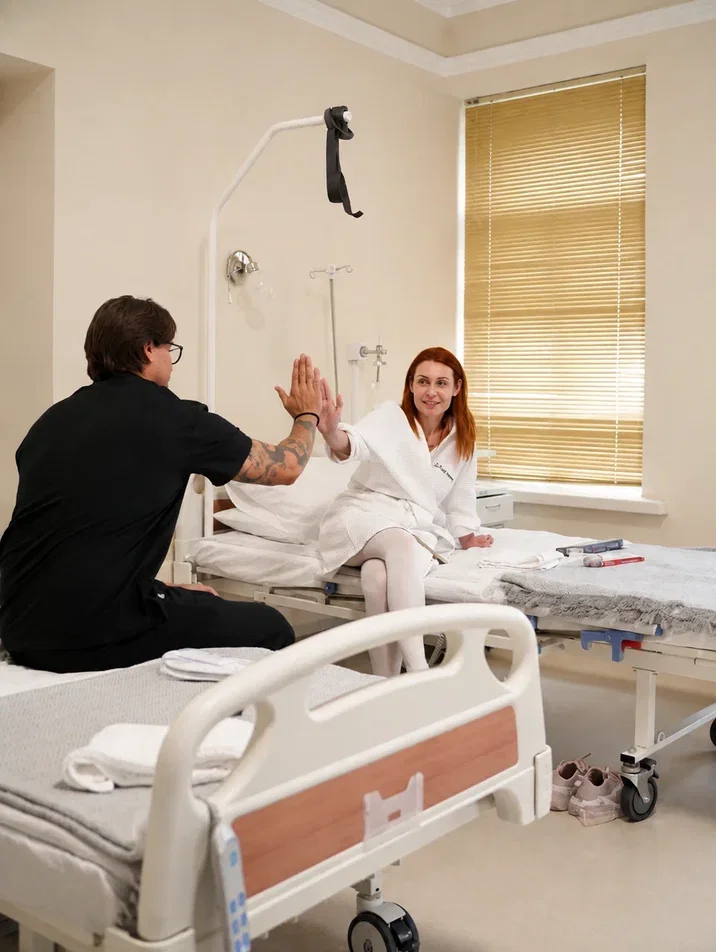
After surgery you stay in hospital under doctors' supervision. The stay lasts from 1–3 to 4–5 days, depending on the complexity of the operation and how you feel.
 6
The clinic team supports you for a year after discharge: you get advice on diet and recovery, and scheduled check-ups track your well-being, weight and test results.
The doctor draws up a plan at the consultation and explains how the surgery will go
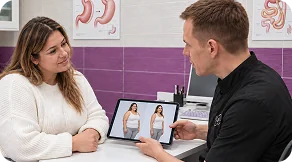
The consultation is free, before surgery and with no obligation.
Book a consultationDoctors
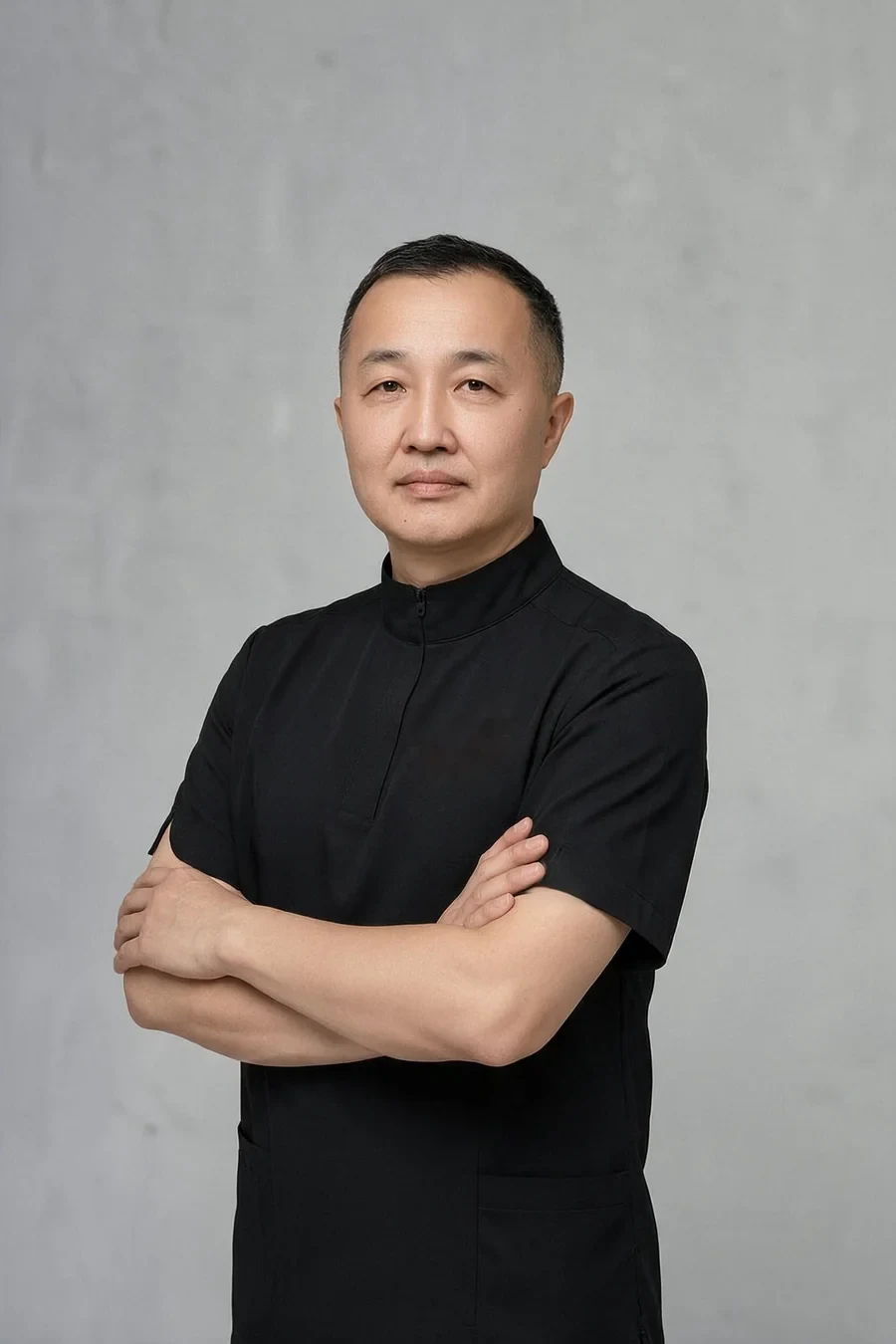
27 years of experience
Senior bariatric surgeon
Surgeon
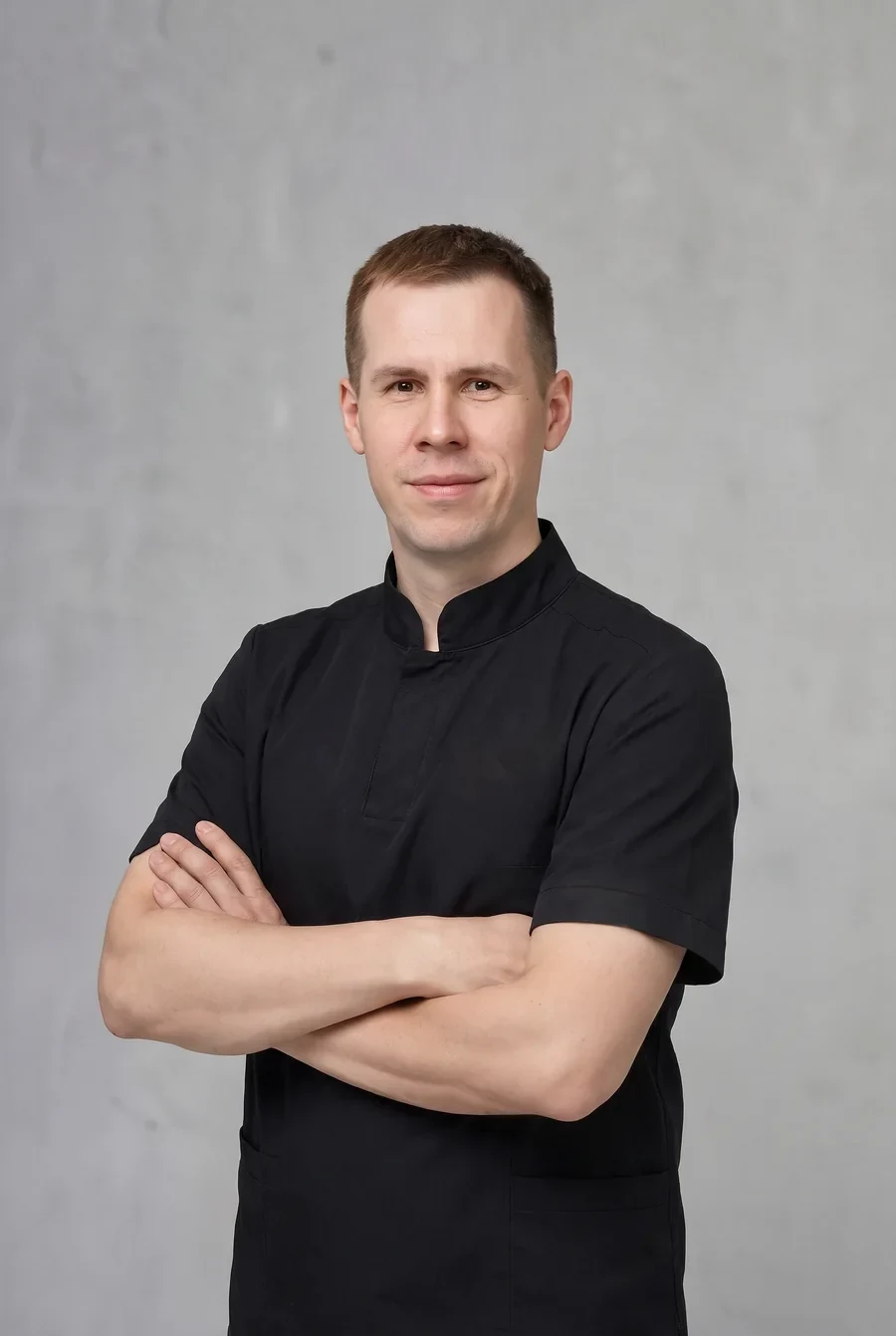
9 years of experience
Bariatric surgeon
Surgical oncologist
Your surgeon does the operation and follows your progress from the first consultation to the result.
Your first step is a consultation with our patient care manager: BMI calculation, an explanation of the methods and booking with the surgeon. Free of charge.
Book a consultationCoordinators
We support you at every stage

Your first point of contact at the clinic, from your first message to the consultation
Patient support specialist
Answers any questions before your first consultation and helps you choose a suitable date

By your side before and during your stay, from booking to discharge
Patient support specialist
Guides your preparation for surgery and stays in contact while you are at the clinic

With you all through recovery, from discharge to the final check-up
Patient support specialist
Keeps in touch as you recover and books your surgeon follow-up visits
Advantages
We find the best method for your health, lifestyle and goals. All the way through, our team is with you.
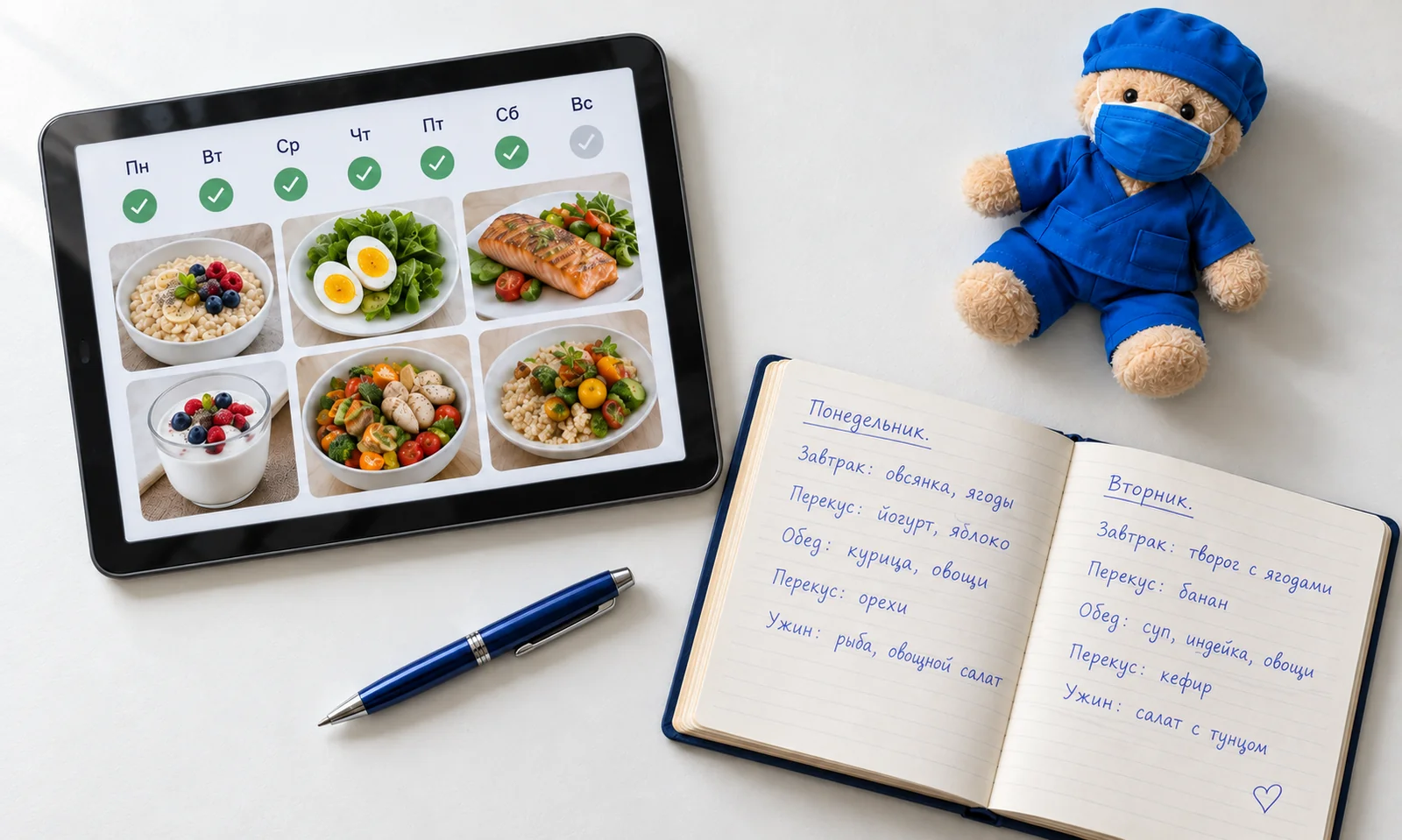
With our help you adapt to new eating habits, track your results and sustain them.
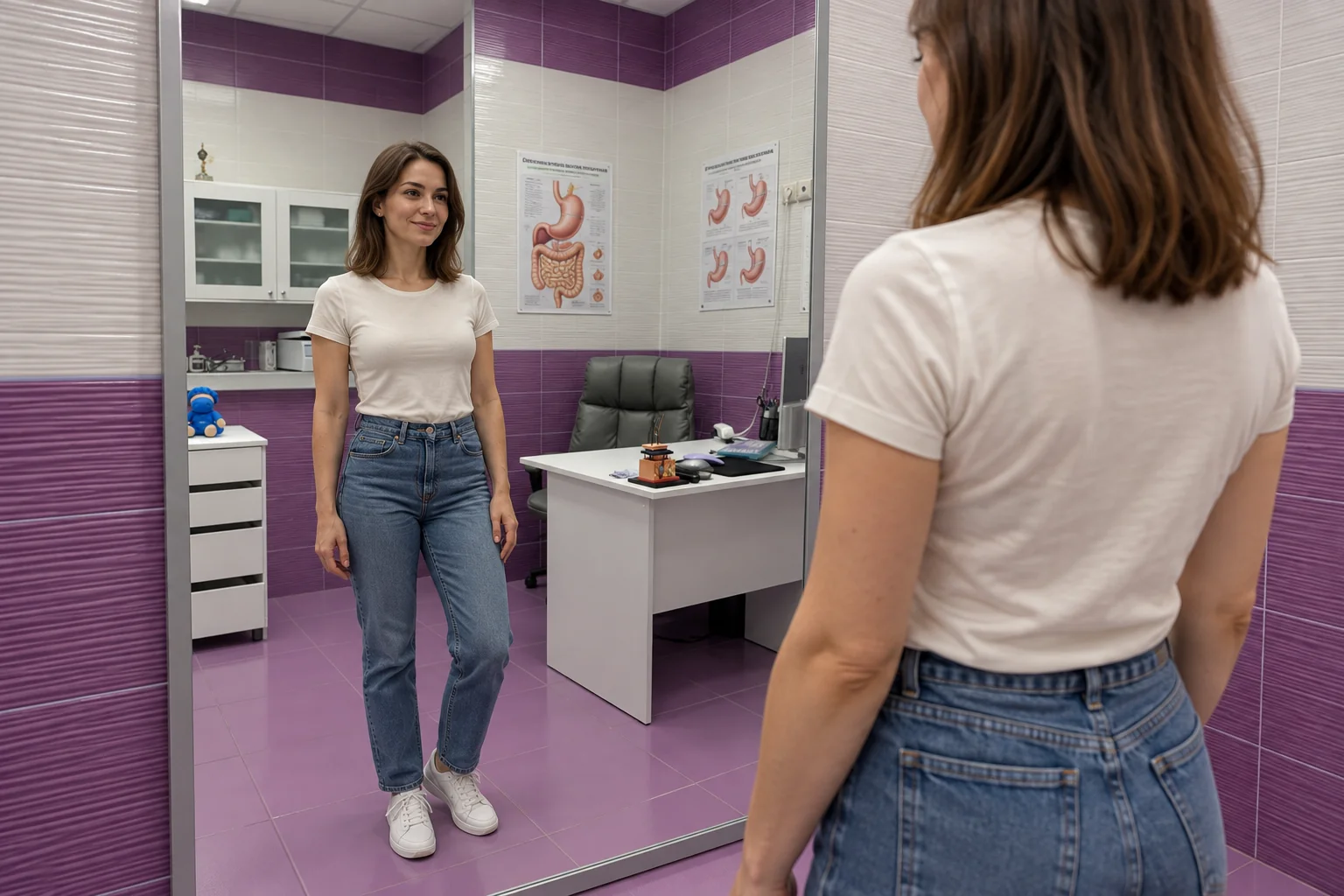
Better well-being, steady weight loss and a higher quality of life.
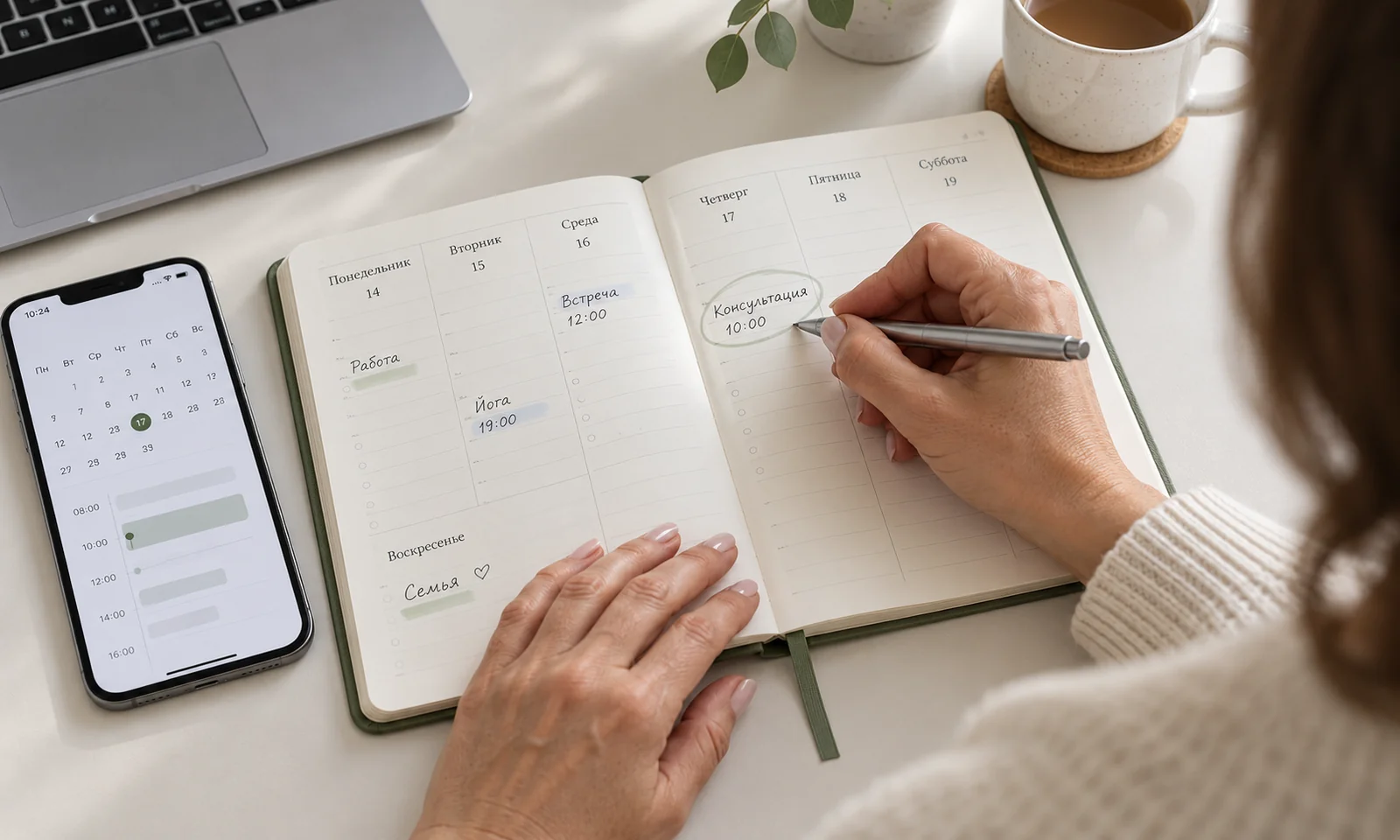
Respecting your time, we are available 24/7, offer easy booking and a personal approach, and adapt to your pace.
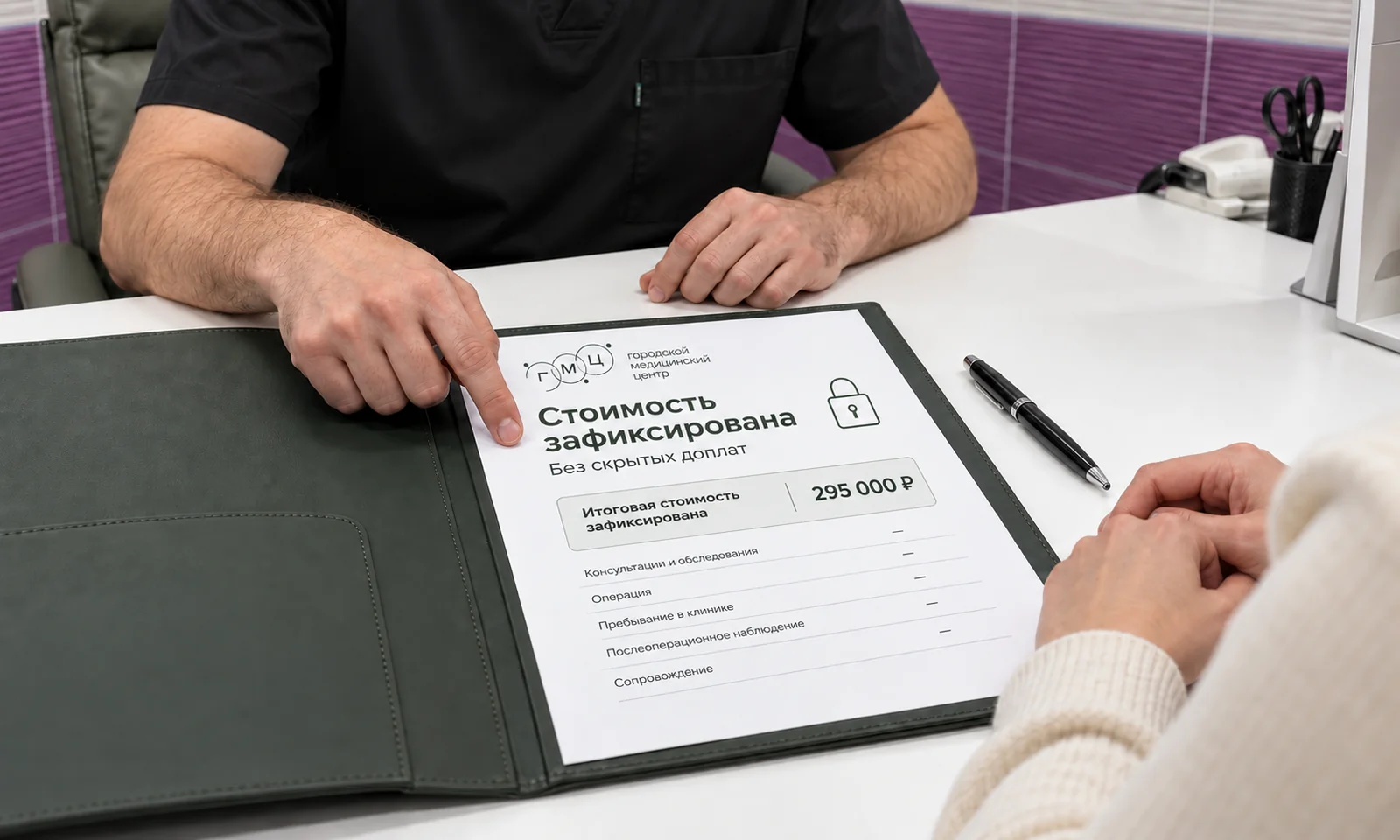
You get a clear price after the consultation, when the surgeon chooses the method: no hidden fees and no surprises along the way to your result.
FAQ
At the clinic, bariatric operations are carried out by experienced bariatric surgeons:
Send us a message to have our coordinator contact you shortly and book your consultation; the bariatric surgeon consultation costs nothing.
Surgery is prescribed only when clear criteria are met
BMI is the main tool for assessing the degree of obesity. It is calculated by dividing body weight (kg) by height squared (m²). Surgery is usually justified with a BMI above 40, or above 35 with serious related conditions. In some cases surgery is considered at lower values too — if non-surgical approaches have failed.
Many people confuse them, but the goals are fundamentally different. Bariatric surgery is a medical way to treat obesity and related diseases. It changes how the digestive tract works, getting at the causes of excess weight and metabolism. Plastic surgery only reshapes the body's outer contours; it does not treat obesity or affect metabolism.
There are four main types of bariatric surgery at City Medical Centre: sleeve gastrectomy, Roux-en-Y gastric bypass, mini gastric bypass (MGB) and SADI-S duodeno-ileal bypass. BMI, related conditions and the patient's goals guide the individual choice of method.
Our approach is modern laparoscopic technique: 4 small punctures of 5 to 15 mm. We use cosmetic sutures, so the marks turn almost invisible after healing.
Your recovery depends on your activities. Office work: in 2–4 weeks. Physical work: in 1.5 months. Sport and activity: swimming after 30 days, with other exercise introduced gradually as weight drops. Travel and holidays: plan them a month or more after surgery.
Stage by stage, you move from liquid food to soft and then solid. Priority goes to protein, and high-calorie, fatty food is limited.
Pregnancy is an option after bariatric surgery, but doctors advise waiting at least 12–18 months. By then the body has stabilized, weight has reached target values and nutritional status has normalized.
Yes, after bariatric surgery vitamins cannot be skipped. As the digestive anatomy changes, some nutrients are absorbed less well, making regular vitamin and mineral supplements a permanent feature of the patient's life.
Regain after bariatric surgery is possible, but very unlikely if you follow the doctor's advice. Proper nutrition, no high-calorie drinks and regular follow-up visits with City Medical Centre specialists make the difference.
Prices are in US dollars; the amount in brackets is an approximate conversion to TZS at the rate of 02.10.2026. The final price is fixed in your contract.
Prices start from $3,600 (≈ TZS 9,600,000). The surgeon sets the final price at the free consultation, and it is fixed in the contract, with no hidden extras.
General anaesthesia, a personal coordinator from day one, monitoring in the hospital and support for one year.
The hospital stay is 1–5 days, depending on the method and how you feel. Office work is possible after 2–4 weeks.
Yes. The first consultation is free and does not oblige you to anything. You can start online by sending a message to the coordinator.
Message us on WhatsApp or Telegram using the buttons below. A coordinator will answer your questions and book a free consultation where the doctor names the exact price.
By messaging us, you agree to our Privacy Policy
Why do diets fail? The body fights back: metabolism slows, appetite grows, and lost kilos return. When diet changes and medication cannot fundamentally improve the situation, surgery becomes the effective way out. Dar es Salaam residents who have tried diets, fasting and pills for years without a lasting result are exactly the patients for whom bariatric operations are intended.
A personal coordinator is assigned from day one, so no one goes through the process alone. After the first examination, each patient gets an individual diagnostic programme to identify every disorder in the body. Then the surgeon selects the method and performs the laparoscopic operation, and a doctor stays nearby 24/7. That is the sequence for everyone from Dar es Salaam.
Before spending on another diet, get a professional assessment. A short no-cost talk with the surgeon, about a quarter of an hour, shows whether your BMI and related conditions justify surgery. If they do, one package takes you through tests, the operation, care in the ward and follow-up, with the weight loss result set in a contract. Residents of Dar es Salaam can apply online.
What patients write after this operation. Reviews are translated from the original language.
Irina, 26
For a long time I doubted whether to go ahead with surgery, but after the consultation I felt much calmer. Andrey Georgievich explained in detail how gastric bypass is done, what to expect after the operation and how recovery would go. I especially liked that they talked to me calmly and without pressure. I am now gradually getting used to my new way of life and I am very glad I took this step.
Bariatric surgery
Doctor: Andrey G. Ugay
Angelina, 22
For me the hardest part was deciding to have the operation. At the consultation Ruslan Sergeyevich answered all my questions in detail and explained the specifics of sleeve gastrectomy and recovery. After the operation I always understood what I was doing and why. Thank you to the doctor and the whole team for their attentiveness.
Bariatric surgery
Doctor: Ruslan S. Menzulin
Anna, 31
For a very long time I tried to deal with my excess weight on my own, but I did not get the result I wanted. After the consultation with Andrey Georgievich I finally understood what to do next. I came through the operation well, and my recovery was supervised by the doctors. It was important for me to feel that I was not left alone after surgery.
Bariatric surgery
Doctor: Andrey G. Ugay
Veronika, 25
Before the operation I had many fears, mostly of the unknown. Ruslan Sergeyevich explained every stage of treatment in detail and answered even the simplest questions. Thanks to that I felt much more confident. I keep following the recommendations and I am gradually seeing the changes I had the operation for.
Bariatric surgery
Doctor: Ruslan S. Menzulin
Valentina, 23
The decision to have bariatric surgery was not easy for me. I worried both about the operation itself and about how my life would change afterwards. At the consultation Andrey Georgievich explained everything in detail, so little by little my fear turned into confidence. What matters most to me now is the result and the chance to treat my health and lifestyle differently.
Bariatric surgery
Doctor: Andrey G. Ugay
Anna, 27
I am very grateful to Ruslan Sergeyevich for his attentiveness. Before the operation I had a huge number of questions, and I got a clear answer to every one of them. After the operation it was also clear which recommendations to follow and how to eat. It was important to me that the doctor stayed in touch and I felt supported at every stage.
Bariatric surgery
Doctor: Ruslan S. Menzulin
Page medically reviewed by Andrey G. Ugay, lead bariatric surgeon. Review date: .
Dar es Salaam is the largest city and financial hub of Tanzania, set on a natural harbour of the Indian Ocean on the Swahili coast. It is a city of commerce, media, fashion and finance, and many of its residents live fast, busy lives with long working days and a lot of time spent on the move. For people in this rhythm, a decision about bariatric surgery (sleeve gastrectomy or gastric bypass) is rarely made quickly. It is usually the result of years of trying diets, exercise and medical advice without a lasting change.
The city is described as having a population of over 7 million people, and it is one of the fastest-growing cities in the world. A city of this size means that almost everyone knows someone who has struggled with weight, diabetes or blood pressure. Patients in Dar es Salaam often start by asking relatives and colleagues what the experience was like, and then look for a clear, medically led explanation of what the operation involves.
City Medical Centre offers a free online consultation to patients in Dar es Salaam. Coordinators are available 24/7 on WhatsApp and Telegram, so you can ask your first questions in the evening after work or early in the morning before the traffic starts, and a coordinator will call you back 24/7.
BMI is the main tool for assessing the degree of obesity. It is calculated by dividing body weight in kilograms by height in metres squared. Surgery is usually justified with a BMI above 40, or above 35 with serious related conditions. In some cases surgery is considered at lower values too, if non-surgical approaches have failed.
The World Health Organization treats obesity as a chronic condition linked to other illnesses, which is why the surgeon looks at the whole picture and not at one number only. Type 2 diabetes, high blood pressure, sleep apnoea and joint problems all matter when the doctor decides whether the operation suits you. The surgeon confirms this at the consultation.
In Dar es Salaam, many people are active on their feet all day, working as traders, drivers or office staff, and they notice the effect of extra weight on their knees, back and breathing. Describe these everyday limits to the surgeon. They help to show how obesity affects your life and not only your measurements.
General contraindications are assessed individually. Serious untreated illness, an unstable general condition or an unwillingness to follow the dietary rules after surgery can all change the recommendation. Be honest about your medical history during the online consultation, because it directly affects the plan.
Both operations are done with modern laparoscopic technique. The operation is performed through 4 small punctures of 5 to 15 mm. Cosmetic sutures are used, so after healing the marks are barely visible. For many patients in a coastal city where light clothing is worn most of the year, this is a reassuring detail.
Sleeve gastrectomy reduces the size of the stomach. Gastric bypass changes the route food takes through the digestive tract as well. The choice depends on your BMI, your related conditions, your eating habits and your goals, and it is made together with the surgeon, not in advance by the patient.
Ask the surgeon how each method would affect your usual eating, which vitamins and minerals you would need to monitor, and what the follow-up looks like. The programme runs from preparation to 12 months of support, all in one package. No added fees.
The operation is under general anaesthesia, and the hospital stay is 1–5 days, depending on the method and how you feel.
Food in Dar es Salaam is varied and social. The city has long trading ties with the Middle East and the Indian subcontinent, and this is reflected in what people eat at home, at work and at celebrations. Street food, shared dishes and family meals are part of daily life, and a change in how you eat touches the whole household.
Before surgery, talk to your family about what will change. After the operation, portions become much smaller and the order of what you eat matters. It helps if the person who cooks at home understands the plan. Ask the surgeon and the dietitian how to adapt familiar local dishes instead of trying to avoid social meals altogether.
Many residents are Muslim, and the city has a strong calendar of religious and family occasions with shared meals. Plan the operation so that the first weeks of recovery do not fall in the middle of a major celebration. During recovery you will eat small portions and slowly, and a festive table can be hard to manage in the early period.
Your coordinator can help you build a preparation schedule that fits your work and family calendar, from tests to the dietary steps your doctor requires.
Dar es Salaam has a tropical savanna climate, hot and humid through much of the year because of the warm Indian Ocean and the closeness of the equator. There are two rainy seasons: the long rains in April and May, and the short rains in November and December.
Heat matters for recovery. Fluid intake is a central part of life after bariatric surgery, and a humid city makes it easy to feel thirsty and tired. Ask the surgeon how to drink small amounts regularly through the day, not in large gulps, and how to recognise signs of dehydration. Wear light, loose clothing over the small wounds and keep them clean and dry.
In the rainy months, humidity and heavy traffic can make short outings tiring. Plan visits to follow-up appointments or online calls so that you do not have to spend long hours in congested transport while you are still weak.
As for swimming, the coast and the beaches of Msasani and Kigamboni are tempting, but swimming is allowed after 30 days. Wait until the doctor confirms that the wounds have healed.
Recovery time depends on the activity. Office work: after 2–4 weeks. Physical work: after 1.5 months. The hospital stay is 1–5 days, depending on the method and how you feel. In a business city where many people work in offices, banks, trade and services, these dates help you talk to your employer in advance.
Public transport in Dar es Salaam includes minibus dala dala, motorcycle taxis known as bodaboda, and bajaj. Crowded minibuses and bumpy motorcycle rides are not ideal in the first weeks after surgery, when you should avoid strain and jolts. Arrange a private car or a lift from a relative where possible, and ask the surgeon when it is safe to resume your normal commute.
Traders, drivers and others who work on their feet need a more careful plan than office staff. If your job is physical, agree on a gradual return and tell your employer that you may need lighter duties at first.
The city also has occasional power rationing and infrastructure challenges. Keep a supply of drinking water and suitable food at home so that your recovery does not depend on a perfect day.
Sport and activity: swimming is allowed after 30 days, and other exercise is gradually added as weight goes down. Walking is the natural start, and in Dar es Salaam early mornings and evenings are cooler for it. Avoid the hottest hours of the day.
The result develops slowly. The final result is usually seen 18–24 months after surgery. Weight loss is not a straight line, and there will be weeks when the scale hardly moves. Follow-up support for 12 months helps you stay on track and ask questions as they arise.
Team sport, gym and weekend football are popular, but return to them step by step and only with the surgeon's approval. As you lose weight, your capacity changes, and what felt impossible at first becomes comfortable.
Before it carried its present name, the settlement was Mzizima, a Swahili name meaning healthy town, a coastal fishing village on the edge of Indian Ocean trade. Around 1865 or 1866 Sultan Majid bin Said of Zanzibar began building a new town nearby and called it Dar es Salaam, commonly translated as abode of peace. The city later became the administrative and commercial centre of German East Africa, then of Tanganyika, and then of Tanzania. People who grew up here are used to seeing everything around them change, and many take the same practical attitude to their own health: if something must change, plan it step by step.
The population figures show how fast this happened. The city was estimated at 20,000 people in 1900, 93,000 in 1957 and 273,000 in 1967, and the 2012 census counted 4,364,541 residents, about ten percent of the country. Household size was 3.9 persons against 4.7 nationally, and the literacy rate was 96%. A well-read city asks detailed questions. Patients thinking about sleeve gastrectomy or gastric bypass often arrive at the online consultation with a written list, and that is a good habit: write down your questions about the operation, the diet and the follow-up before the call.
A decision about surgery is easier when the whole household understands it. With smaller households than the national average, many families in the city make the decision together, and it helps to invite a spouse or an adult relative to join the video call with the surgeon.
The region has five districts. Kinondoni in the north is the most populated and houses half of the city's residents. Ilala in the centre holds the government offices and the Central Business District. Ubungo and Temeke lie in the south, and Kigamboni sits in the east across the Kurasini estuary. Where you live shapes your recovery plan more than people expect, because the daily distance to work, to the market and to a quiet place to rest differs from one district to another.
Someone living in Mbezi Beach or Mikocheni has a different daily rhythm from someone in Mbagala, the largest suburb of Temeke, or in Kigamboni, where the ferry and the Kigamboni Bridge connect the peninsula with the centre. Ferry queues and bridge traffic can lengthen a day, and in the first weeks after the operation long waiting and standing are tiring. Ask your employer whether you can work from home during the first part of the 2–4 weeks before an office return.
Msasani, Masaki and Oyster Bay are known for beachfront living and a quieter pace, while Sinza, Kijitonyama, Magomeni and Mwenge are more mixed and busier. Whichever area is yours, choose one calm room at home, keep water and suitable food within reach, and tell a neighbour or relative that you will be recovering after discharge from the 1–5 days in hospital.
Kariakoo is the shopping district of the city, where traders sell everything from foodstuffs to hardware, and its market is the major supply point of the food eaten by Dar es Salaam residents. Kivukoni is home to the Magogoni fish market and the financial institutions of the Central Business District. For a person preparing for bariatric surgery, these places are where the new diet actually begins, because the quality of what you buy decides what ends up on your plate.
Fish is part of the city's coastal life and is an easy answer to a common question: what will I eat? Ask the surgeon and the dietitian which kinds of protein suit the early stages and how they should be cooked and portioned. After the operation the portions are small and eating is slow, so plan simple preparations at home and avoid improvising at a busy stall when you are hungry.
Kariakoo is crowded and loud, and the first weeks of recovery are not the time for long walks through it. Do the main shopping before the operation, or ask a relative to do it, and keep a short list of the foods your dietitian approved.
Indian, Arab and local coastal traditions meet in the downtown food scene, which grew out of old trading ties with the Middle East and the Indian subcontinent. Do not remove this variety from your life. Instead, ask how to keep familiar flavours while changing portion size, speed of eating and the order of the meal.
Dar es Salaam is Tanzania's most important city for business and government. The Central Business District, made up of Kisutu, Kivukoni, Upanga and Kariakoo, holds the Bank of Tanzania, the Dar es Salaam Stock Exchange and the PSPF Towers and TPA Tower. Many people in these offices sit for long hours, eat at their desks and rely on quick meals, and this routine is exactly what the surgeon will ask about. Office work is possible after 2–4 weeks, which is easy to explain to a manager in a financial or administrative job.
Temeke is the main industrial district, with heavy and light manufacturing, and it holds the Port of Dar es Salaam in Kurasini, where port officials and police officers live. Ubungo has the Urafiki textile industry and institutes such as the National Institute of Transport. For work in a port, a factory or a depot, the guidance is different: physical work is possible after 1.5 months. Bring this figure to your supervisor and ask for lighter tasks at the start.
Students at the University of Dar es Salaam, at the Dar es Salaam University College of Education in Chang'ombe or at the National Institute of Transport face a different question: exams and deadlines. If you study, choose a date for the operation with the academic calendar in mind, and ask the surgeon how soon you can sit through long lectures and written tests.
Dar es Salaam is the sports centre of Tanzania. The National Stadium holds up to 60,000 people and hosts the Young Africans and Simba clubs, and Chang'ombe also has Uhuru Stadium. Azam Complex Chamazi belongs to Azam Football Club. Match days are a social ritual, with crowds, snacks and long hours, so a supporter who is planning the operation should think ahead about both the food and the heat of the stands.
The Gymkhana courses near Kivukoni offer golf, tennis, squash and a fitness club, and the city also has Mama Africa, a school that trains acrobats, and a popular boxing scene. Swimming is allowed after 30 days, and other exercise is added gradually as weight goes down. Golf and walking come back more easily than contact sport, and boxing or acrobatics need a direct answer from the surgeon about timing.
If you play with a local team, tell your teammates what to expect. Many men and women in the city find that the support of a training group makes the first months easier. Start with walking in the cooler hours, add light exercise, and return to matches only when the doctor agrees.
Getting pregnant after bariatric surgery is possible, but doctors advise waiting at least 12–18 months, so the body can stabilize, weight can reach target values and nutritional status can normalize. If you are planning a family, raise this at the first conversation.
Doctors supervise you in hospital after surgery for a stay of 1–3 to 4–5 days, depending on the complexity of the operation and how you are feeling. Afterwards, you stay in contact with the team for 12 months.
The online consultation works from home or from your office in Dar es Salaam. You write to a coordinator on WhatsApp or Telegram, send your medical history and your height and weight, and arrange a video call with the surgeon. We work 24/7: booking is easy, the approach is personal and we adapt to your pace.
Prepare a list of questions in advance: which operation suits me, what tests are needed, how long will I be under observation, when can I return to work, what will my diet look like, and how will follow-up be organised.
Usually a BMI over 40, or over 35 with related health conditions. The surgeon confirms whether surgery suits you at the consultation. In some cases surgery is considered at lower values too, if non-surgical approaches have failed.
Divide your body weight in kilograms by your height in metres squared. It is the main tool for assessing the degree of obesity, and the surgeon looks at it together with your other health conditions.
The operation is under general anaesthesia. The hospital stay is 1–5 days, depending on the method and how you feel, and you are under observation during this time.
The operation is performed through 4 small punctures of 5 to 15 mm. Cosmetic sutures are used, so after healing the marks are barely visible.
Office work is possible after 2–4 weeks. Physical work: after 1.5 months. If your job involves long hours of standing or lifting, agree on a gradual return.
Swimming is allowed after 30 days. Other exercise is added gradually as weight goes down, with the surgeon's approval.
The result is usually seen 18–24 months after surgery. Follow-up support for 12 months helps you in the meantime.
It is possible, but doctors advise waiting at least 12–18 months, so the body can stabilize, weight can reach target values and nutritional status can normalize.
The consultation is free. Write to a coordinator on WhatsApp or Telegram at any time, since coordinators are available 24/7, send your details and agree on a video call with the surgeon. A coordinator will call you back 24/7.
From preparation to 12 months of support, all in one package. No added fees.
The online consultation works the same from every district. What differs is daily life during recovery: ferry or bridge traffic from Kigamboni, distances in Temeke or Kinondoni. Plan a quiet room at home and arrange help for the first days after the 1–5 days in hospital.
Kariakoo supplies much of the food eaten in the city, and the Magogoni fish market near Kivukoni sells fish. Ask the dietitian which products suit each stage, buy them before the operation or ask a relative to shop, and avoid crowded markets in the first weeks.
Physical work is possible after 1.5 months. Office work is possible after 2–4 weeks. Agree on a gradual return with your supervisor and mention lighter duties at first.
Swimming is allowed after 30 days, and other exercise is added gradually as weight goes down. Start with walking, and ask the surgeon before returning to matches, boxing or other contact sport.