City Medical Centre · multi-specialty surgery clinicOpen 24/7

Tummy tuck

Abdominoplasty (Tummy Tuck) in Tamale

Free consultation

Price at consultation

The price is fixed in the contract before surgery
Real case
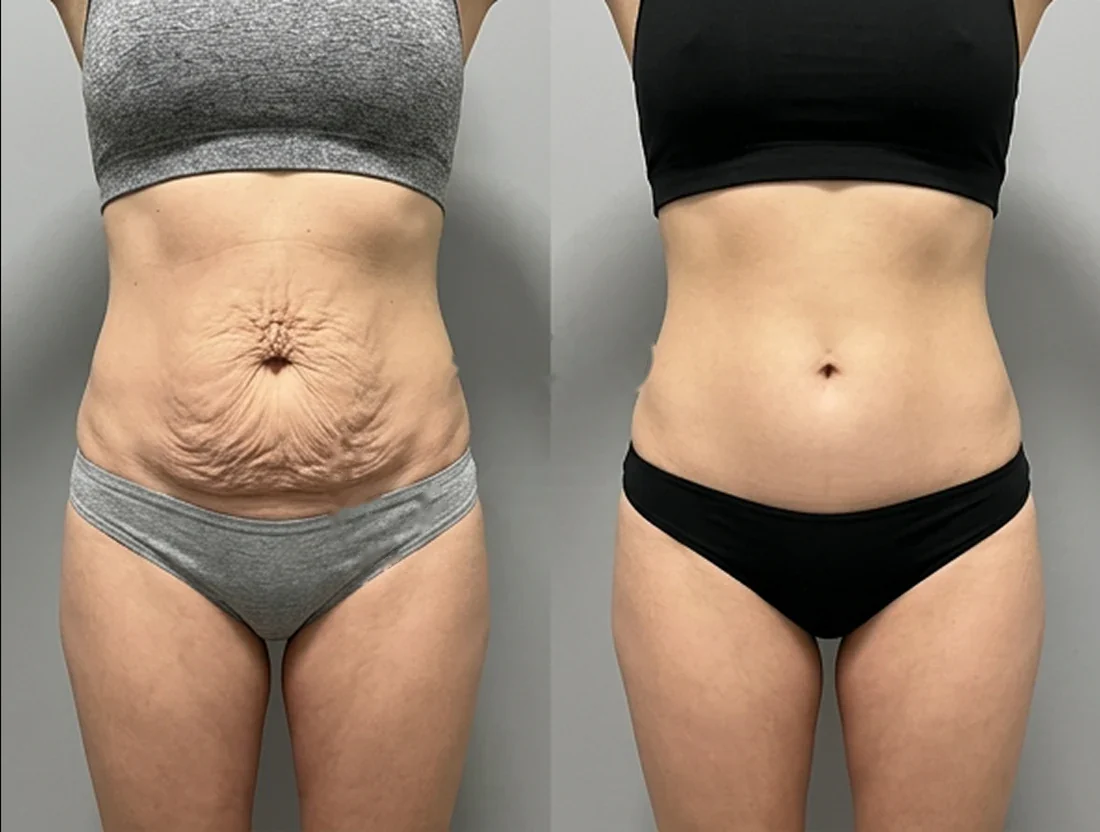
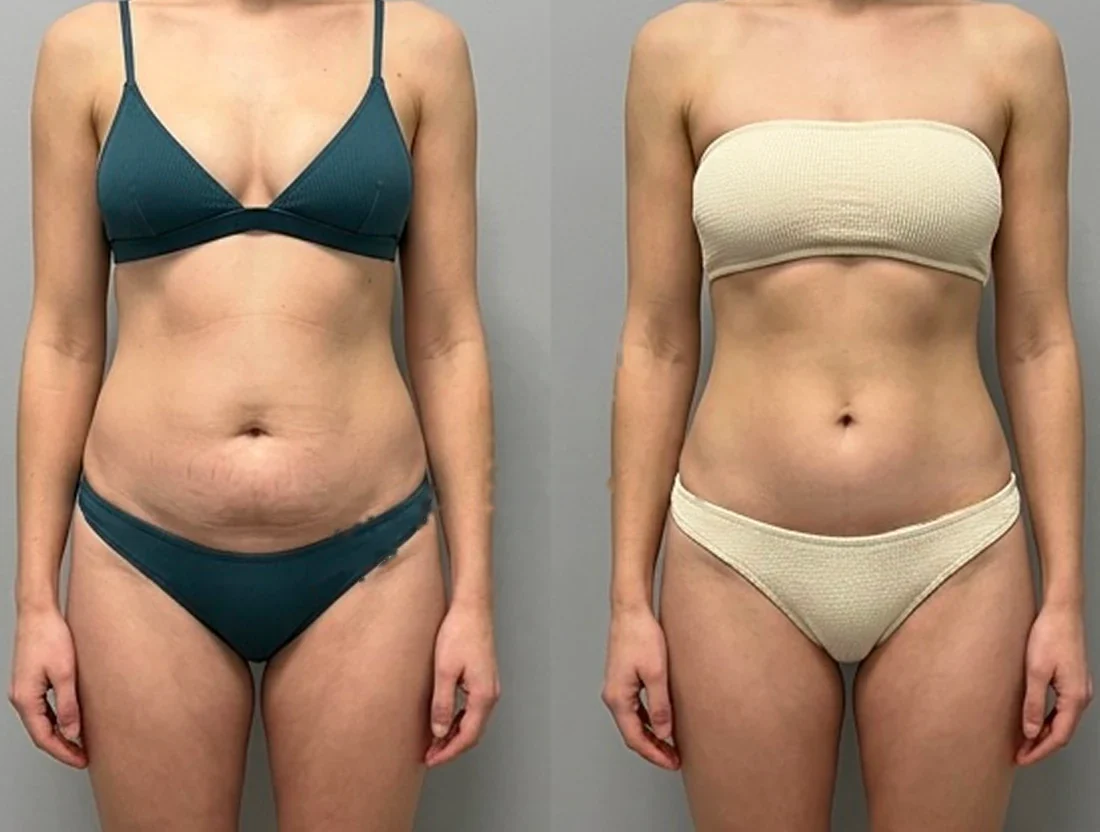
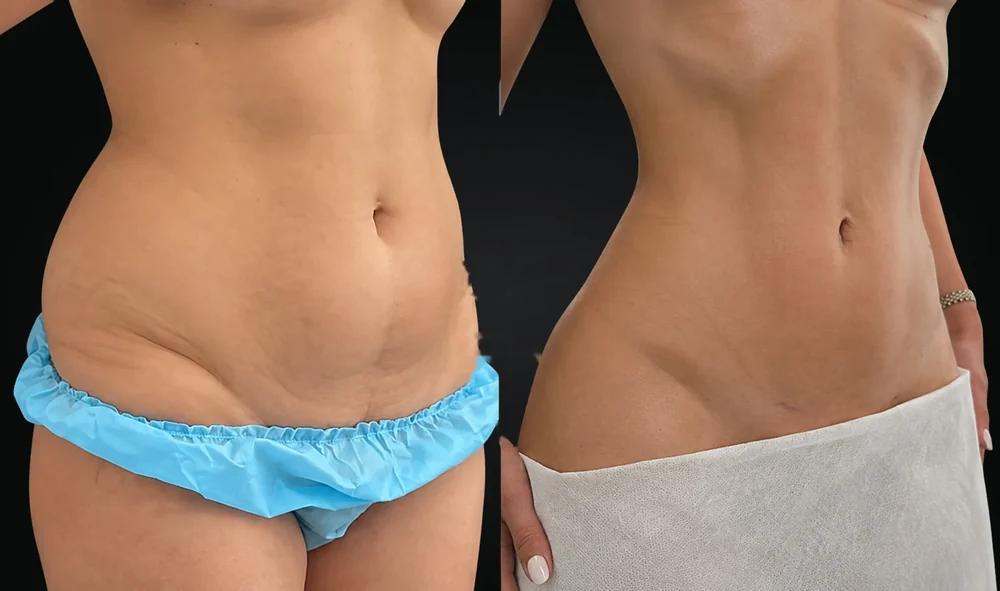
Tummy tuck: a patient's abdomen before and after surgery before after
A flat tummy and a toned silhouette in one operation. Your individual surgical plan and the expected result are discussed at the consultation

Message our coordinator

Free online consultation · Reply within 15 minutes

Message us on Telegram

By messaging us, you agree to our Privacy Policy

Results

Tummy tuck results
of our patients

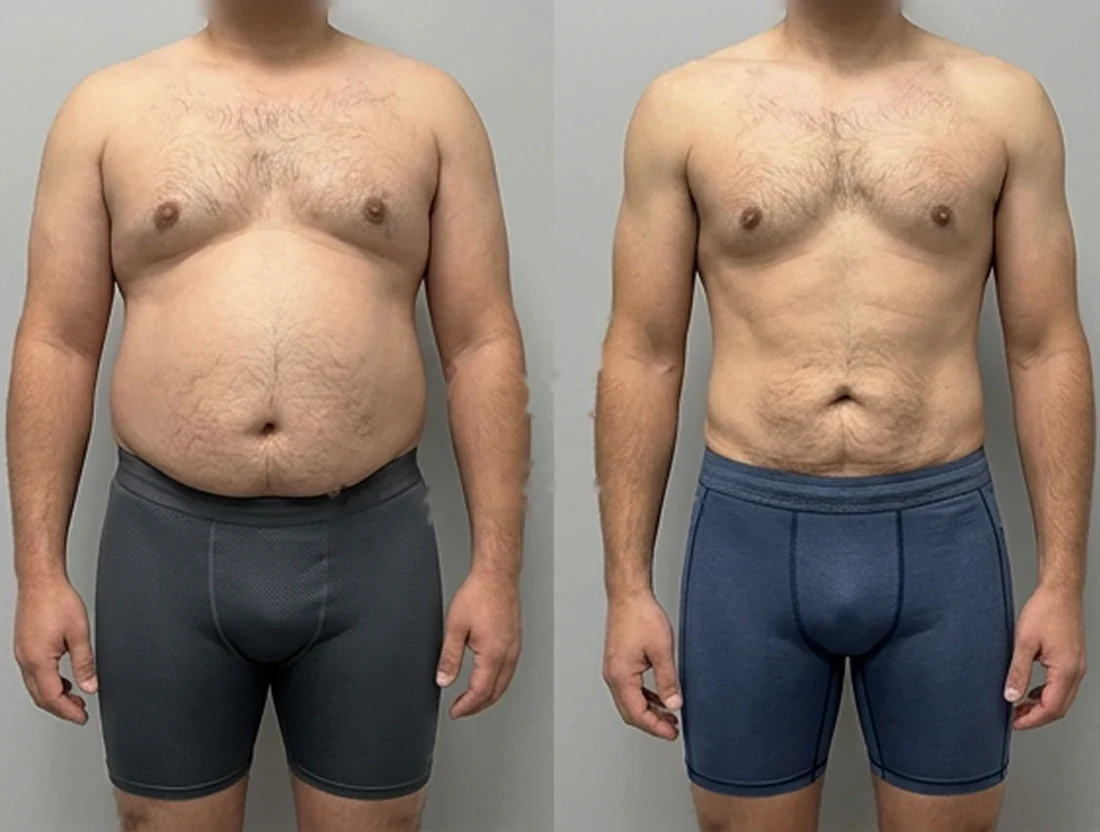
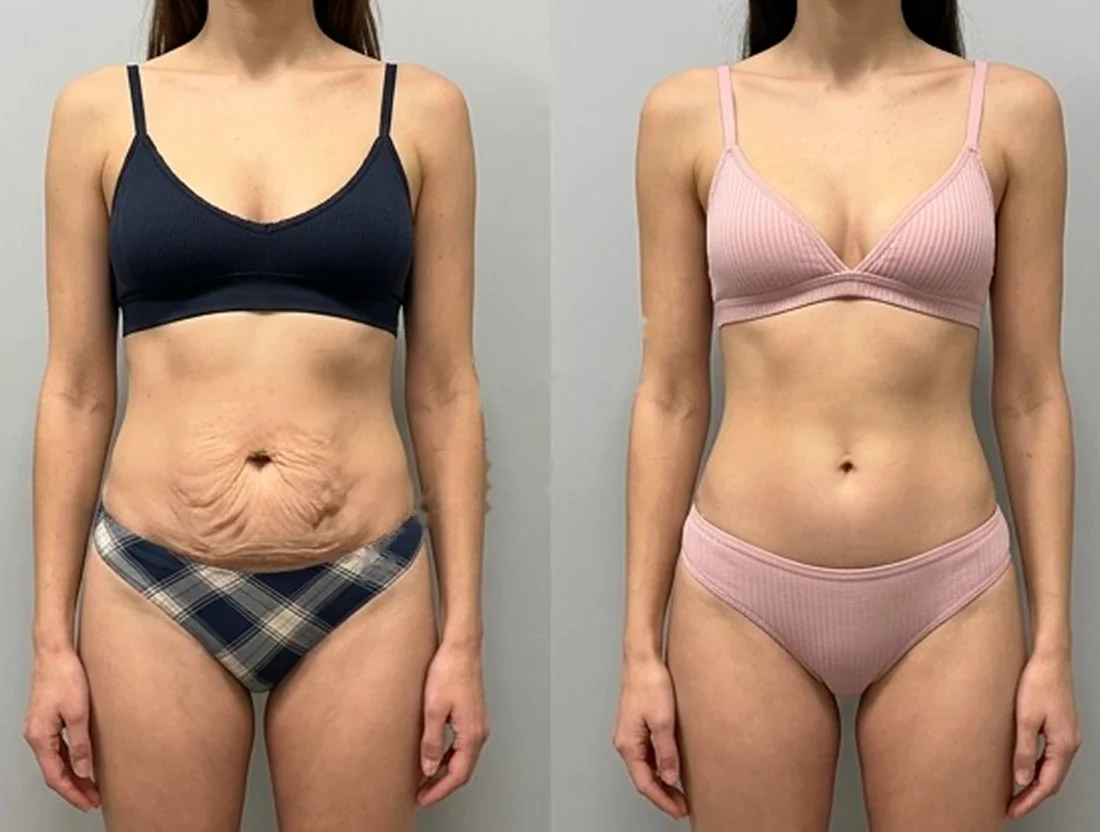
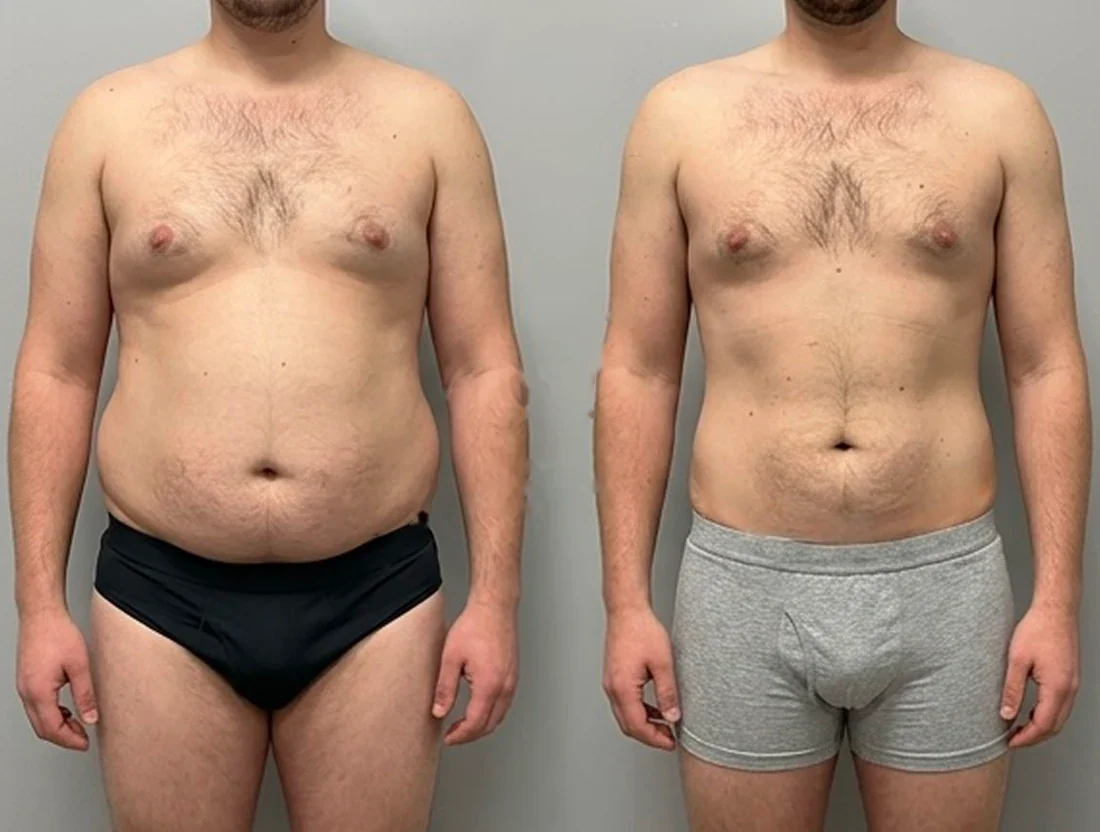
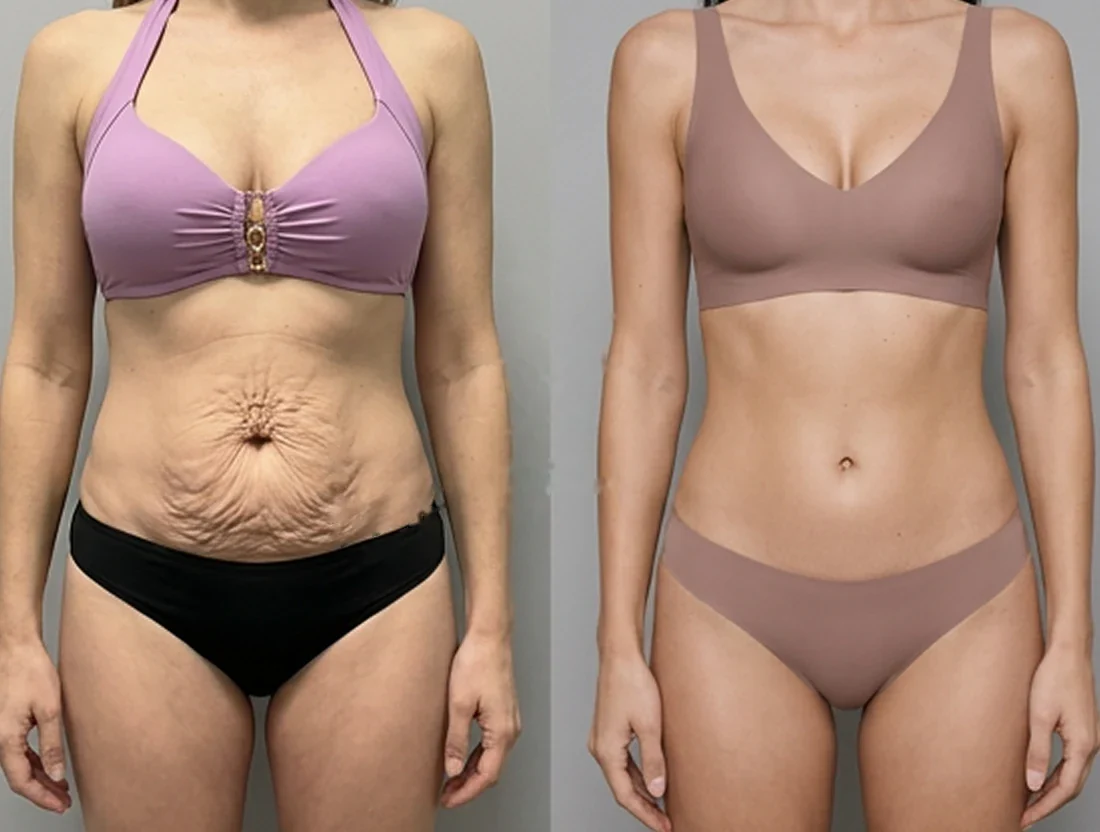
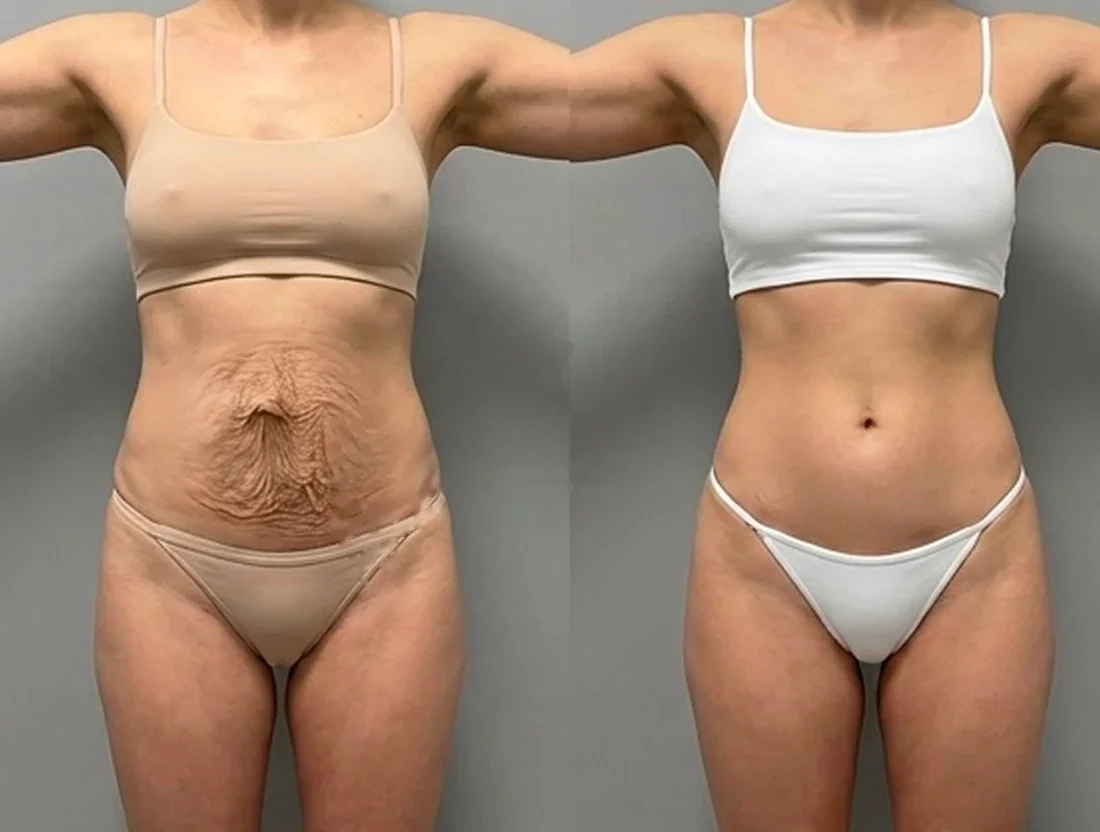
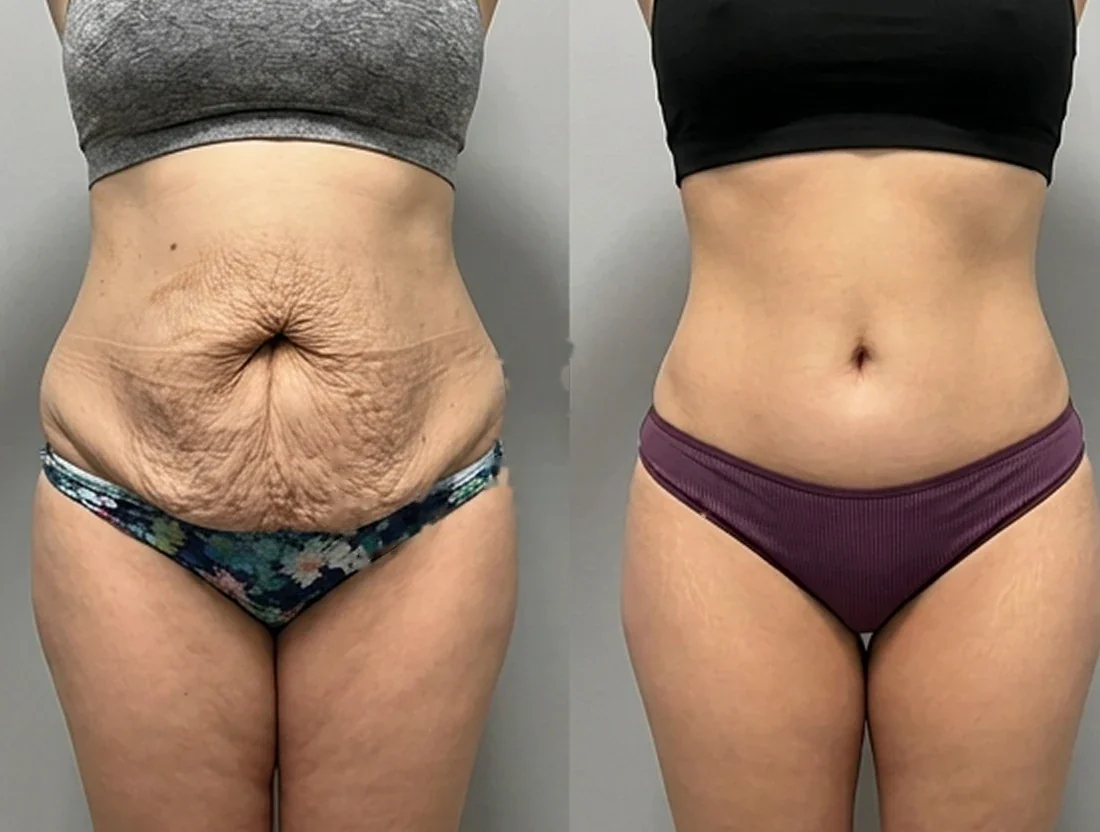
All cases are real patients. Faces and identifying details are hidden.

Tummy tuck: a female patient's abdomen before and after surgerybeforeafter
Tummy tuck: a male patient's abdomen before and after surgerybeforeafter
Tummy tuck: a female patient's abdomen before and after surgerybeforeafter
Tummy tuck: a male patient's abdomen before and after surgerybeforeafter
Tummy tuck: a female patient's abdomen before and after surgerybeforeafter
1 of 8

Comparison

Tummy tuck techniques

A tummy tuck is done as a full (classic) or mini operation, or combined with liposuction as lipoabdominoplasty. Compare the scope of surgery, the indications and the expected results to choose the right technique together with your surgeon.

Tummy tuck

Removal of excess skin, abdominal muscle tightening
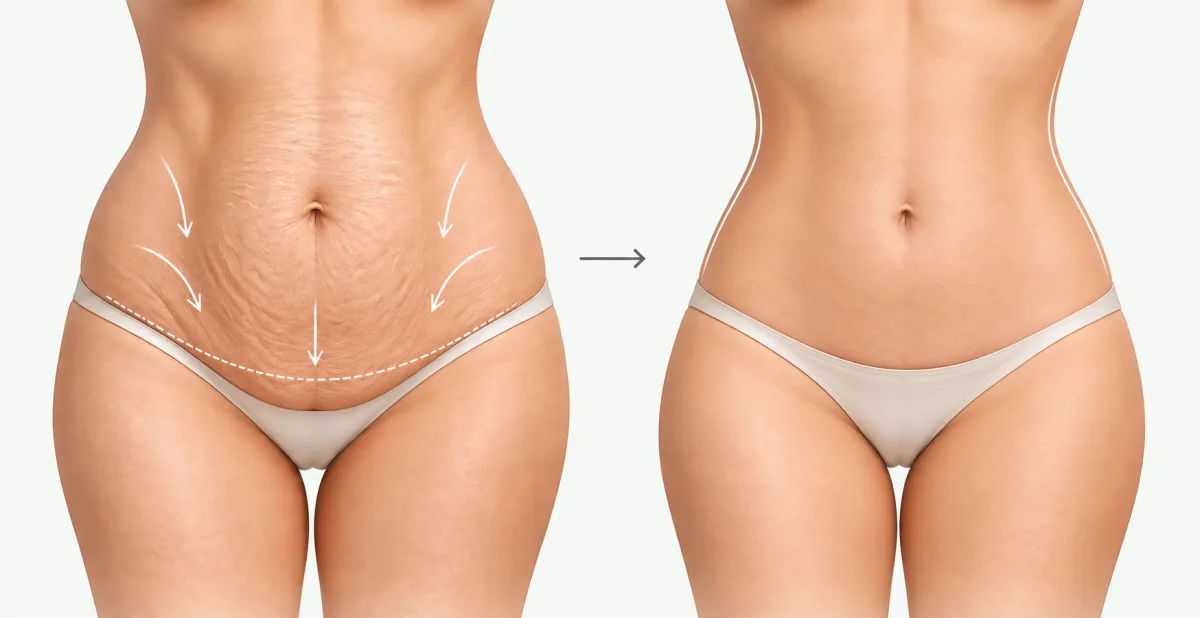
Tummy tuck diagram: the abdomen before surgery with the incision line, and the result
Main goal
Removal of excess skin, diastasis repair
When it is done
Excess skin after childbirth or weight loss
Anaesthesia and stay
General anaesthesia, up to 3 days in hospital

Lipoabdominoplasty

Tummy tuck with added liposuction
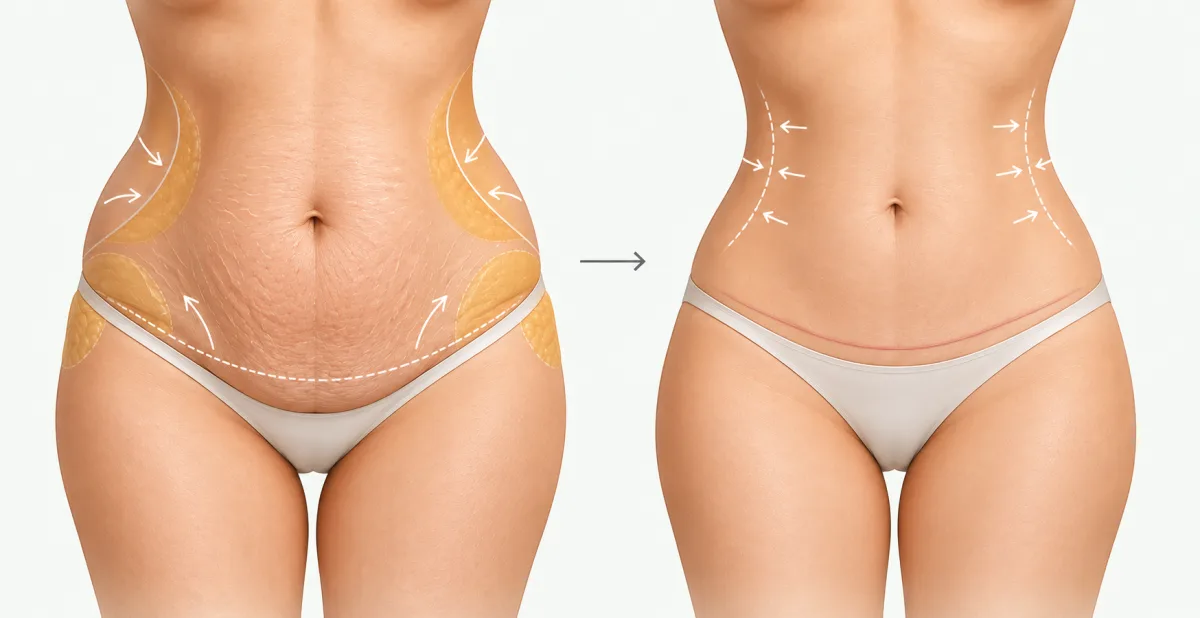
Lipoabdominoplasty diagram: the abdomen with fat on the flanks before surgery, and the result
Main goal
Tummy tightening and waist contouring
When it is done
For fat deposits on the flanks and waist
Anaesthesia and stay
General anaesthesia, up to 3 days in hospital

The benefits and recovery times shown are averaged for each technique and given for guidance: the scope of correction and rehabilitation depend on your anatomy and individual features, and the surgeon confirms them at the consultation.

At the consultation the surgeon draws up a plan for your case and explains how your tummy tuck will go.

Free, before surgery and with no obligation.

Book a consultation

Tummy tuck from the inside

About the clinic

A clinic where you can feel at ease

Modern equipment, comfortable rooms and care for every patient
A doctor and a patient in a clinic ward

Contact us the way that suits you

We will answer your questions and find a convenient time for a consultation

A tummy tuck is not for everyone

If your case can be solved without surgery, the doctor will tell you so at the consultation — and you will not spend money for nothing.

Suitable
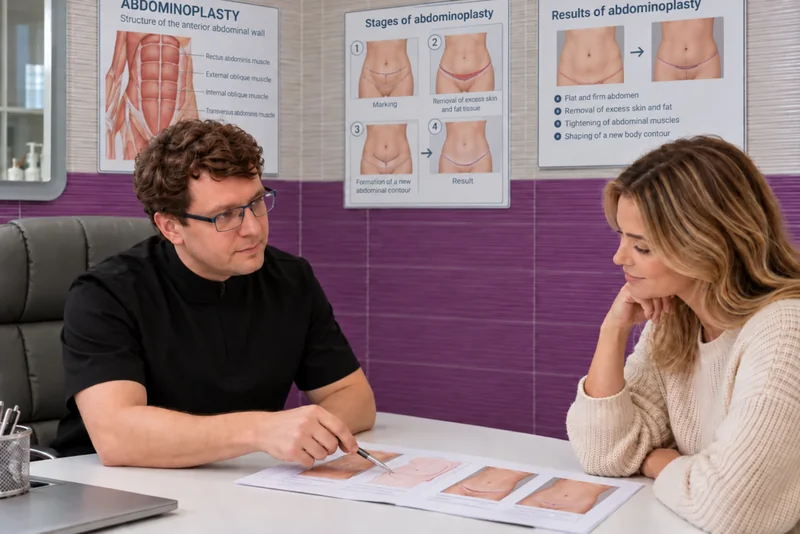
A surgeon shows a patient on a model and a monitor how the abdominal contour changes after a tummy tuck
  • Rectus abdominis diastasis
  • Skin folds after weight loss
  • Loose abdominal skin
  • Stretched skin after pregnancy
  • A distorted abdominal contour

Not suitable
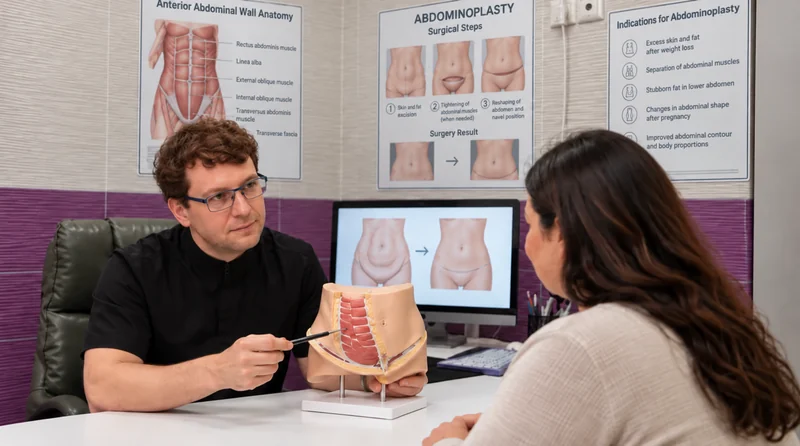
A surgeon discusses the indications and contraindications for a tummy tuck with a patient
  • Acute infections
  • Severe heart, kidney or liver disease
  • Blood clotting disorders
  • Age below 18
  • Decompensated diabetes
  • Cancer
  • Skin inflammation in the surgical area
  • Being pregnant or breastfeeding

Not sure the surgery is right for you?

Message us — the coordinator will ask for your photos in the messenger, and the surgeon will tell you whether a tummy tuck suits you. No surgery booking needed.

Find out if it suits me
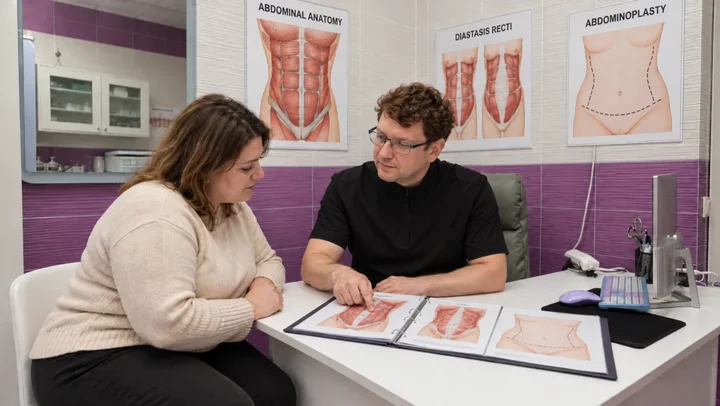
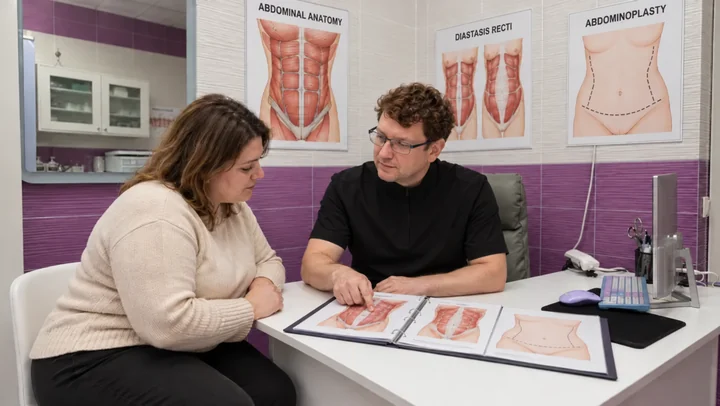
A surgeon goes through a tummy tuck diagram with a patient at the consultation

Prices

You know the price
before surgery

The price is set at the consultation and fixed in the contract.

Other services

  • First consultationFree
  • Liposuction of the abdomen and flanksfrom $1,700
Book a consultation

Find out your tummy tuck plan and price

The surgeon assesses your abdominal skin and muscles, listens to your wishes and chooses the right correction technique.
The price is set at the consultation and fixed in the contract.
A nurse talks to a patient in a clinic ward

Message our coordinator

Free online consultation · Reply within 15 minutes

Message us on Telegram

By messaging us, you agree to our Privacy Policy
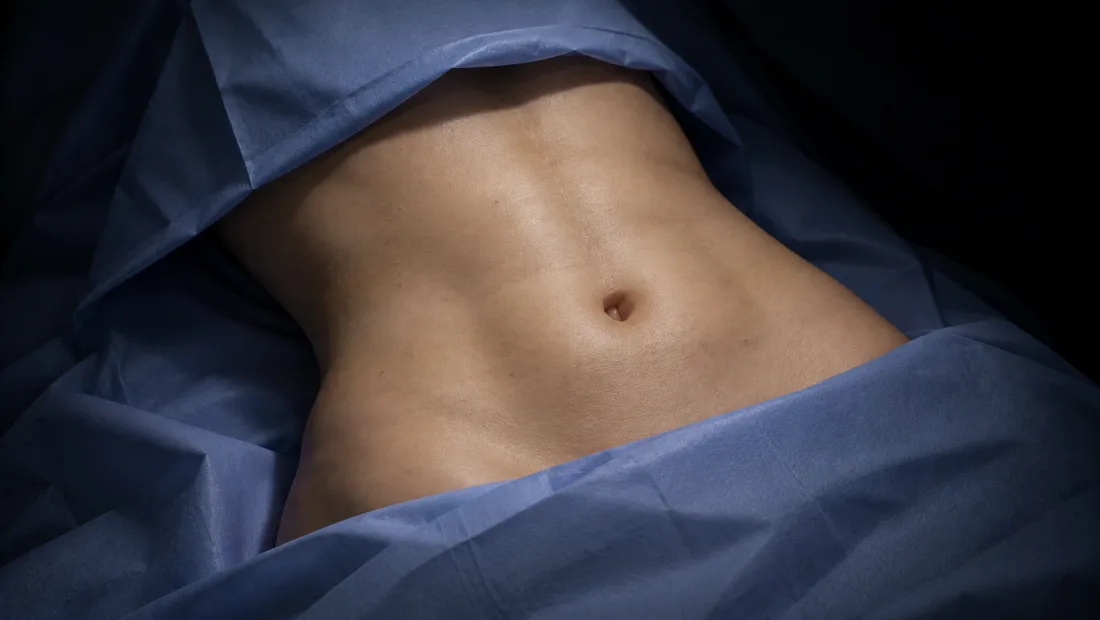
A patient's abdomen before a tummy tuck in the operating room

all inclusive

What the price includes

From preparation for surgery
to post-op check-ups.

  • All scheduled dressings
  • Scheduled post-op check-ups
  • A personal coordinator on call
  • Compression garments fitted on the day of surgery
  • A stay in a comfortable
    hospital ward with meals
  • Individual recommendations
    for recovery
  • Remote progress monitoring
    by photos

How it works

Three days at the clinic —
from preparation to discharge

An agreed correction plan, inpatient observation and post-op check-ups.
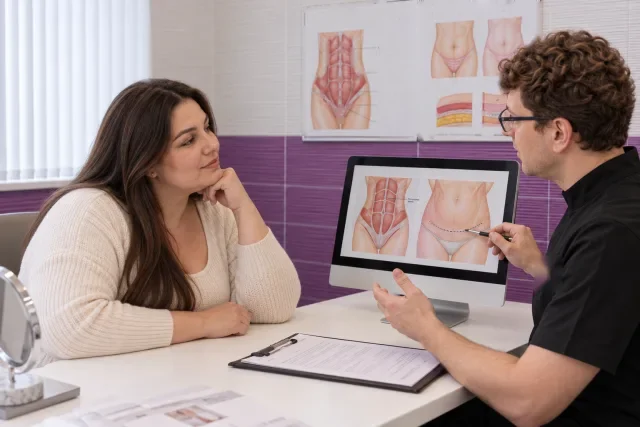
A doctor shows a patient a tummy tuck diagram on a monitor1

Consultation
and the surgical plan

The surgeon assesses your abdominal skin and muscles and checks for diastasis, listens to your wishes and chooses the right correction technique.

Paying the deposit by card at the clinic reception2

Booking the date
of surgery

We reserve a surgery date for you: the deposit can be paid by card at the clinic or online by bank transfer. The terms are fixed in the contract for medical services
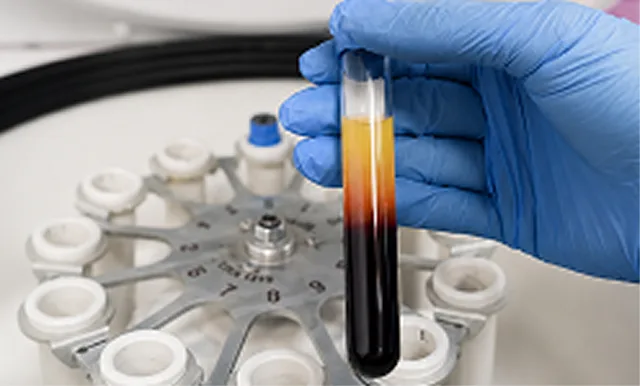
A blood sample tube for tests before a tummy tuck3

Check-up before
surgery

Before surgery you complete a full lab check-up: blood tests, an ECG, a chest X-ray and reports from the required specialists.
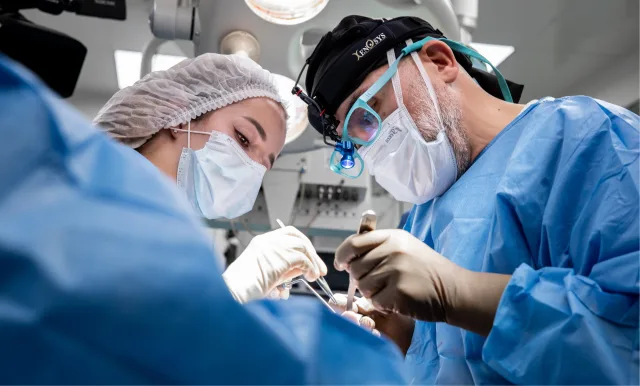
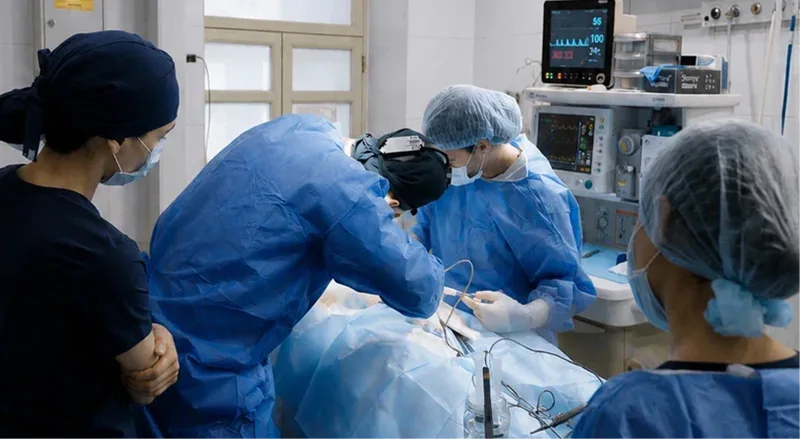
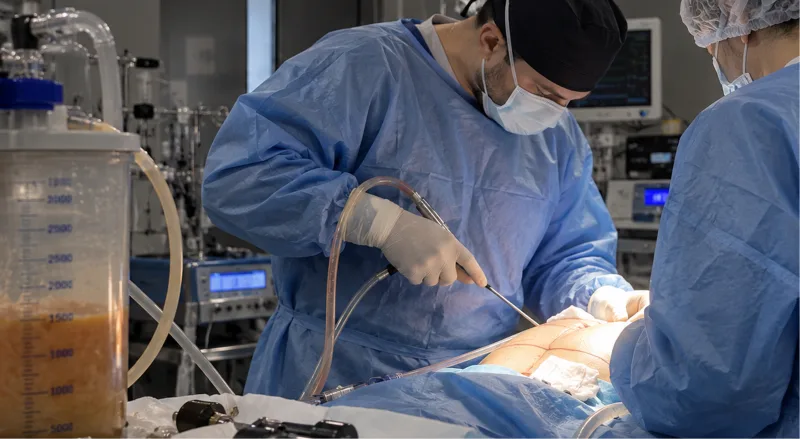
The surgical team during the operation4

Surgery

The surgeon performs the tummy tuck with the chosen technique, repairs diastasis if needed and shapes a firmer abdominal contour.
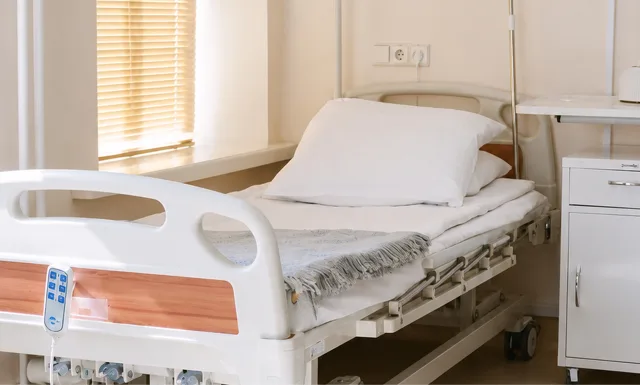
A hospital ward at the clinic5

Inpatient stay

After surgery the patient stays for 1–3 days in a comfortable hospital ward with meals, under medical supervision.
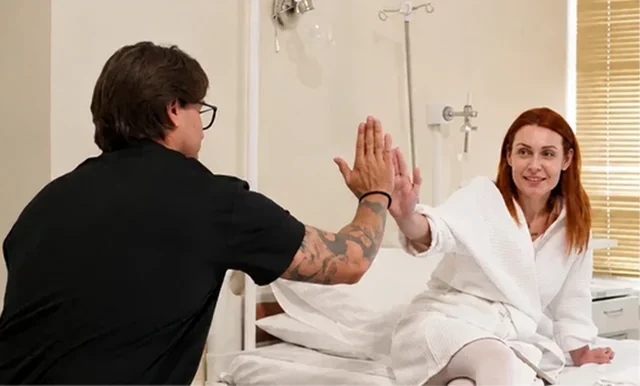
A surgeon and a patient in the ward during recovery6

Recovery

After surgery you get a recovery programme. Check-ups at 7 days, 3 and 6 months help track your recovery.
Book a free consultation — the surgeon will plan every step with you.

A doctor discusses the tummy tuck plan with a patient
Book a consultation
A doctor discusses the tummy tuck plan with a patient

How it really happens

After a tummy tuck: recovery

Straight after surgery the patient spends 1–3 days in hospital under medical supervision. Drains are usually removed on day two, and stitches after 7 days. A compression binder is worn for 1.5–2 months — it supports the abdominal wall and shapes a smooth contour. Most swelling resolves within 30 days, and office work resumes after 2–3 weeks. Sports, sauna and heavy lifting are off-limits for 2–3 months, and sleeping on your back with knees bent is advised at first. The scar matures fully by 12 months, fading and becoming barely noticeable.

Post-op check-ups

After 7 days, at 3 months and at 6 months. Until the end of the year, get a post-surgery consultation with your surgeon to review results and get more information, at the clinic's expense

Advantages

Reasons to choose City Medical Centre
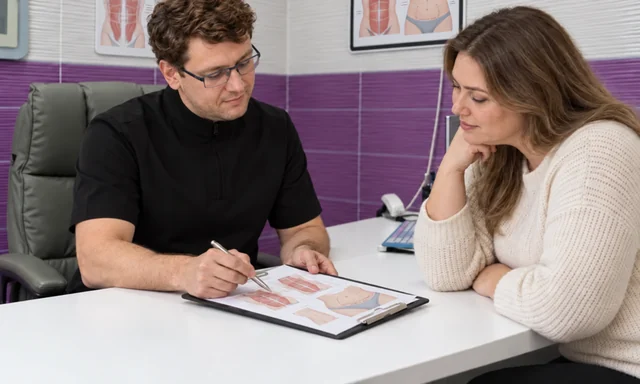
A surgeon discusses the tummy tuck plan with a patient at the consultation

Just find out — you lose nothing

At the consultation we discuss your wishes and assess your abdominal skin and muscles. The surgeon explains what changes are possible, chooses the correction technique and answers your questions.
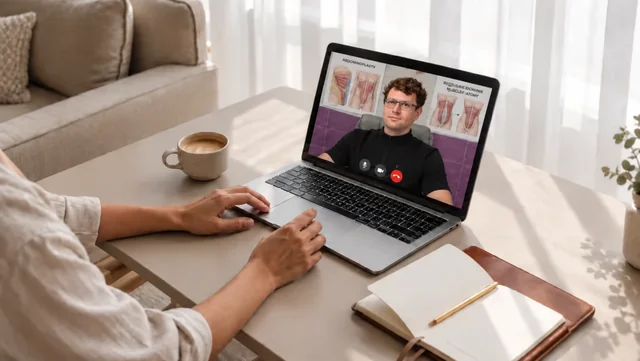
A surgeon on a video call with a patient after surgery

We stay with you after surgery

The surgeon follows your recovery and the changing abdominal contour at check-ups after 7 days, 3 and 6 months. Check-ups, dressings and aftercare advice are already included in the price of surgery.
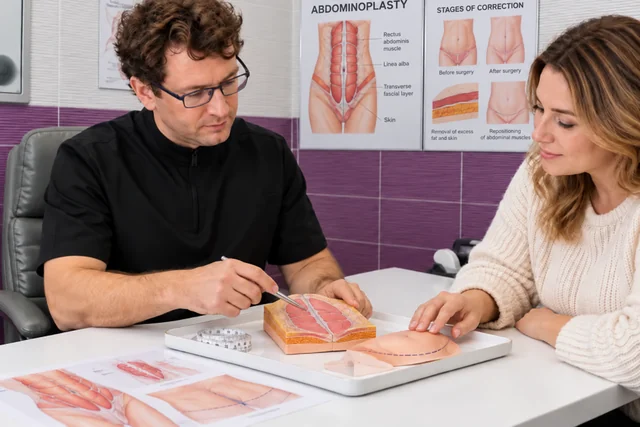
A surgeon shows a patient a model and tummy tuck diagrams

A beautiful contour that fits your figure

We choose the correction technique based on your skin, muscles and figure. Our aim is a harmonious abdominal contour that keeps the natural proportions of your body.

A patient writes down a convenient visit time in her planner

Your schedule is our priority

We respect your time: we work 24/7, with easy booking and a personal approach — we adapt to your pace.
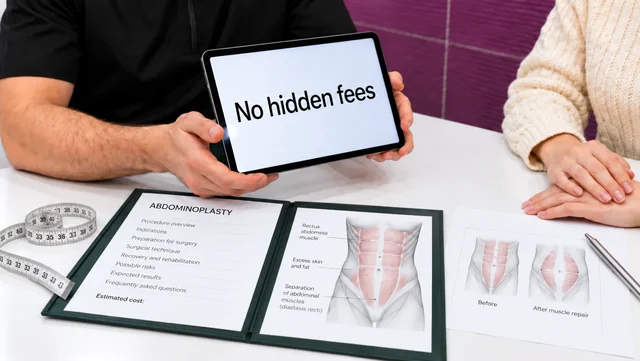
A surgeon shows a patient the fixed price of surgery with no extra charges

Fixed prices

After the consultation the surgeon defines the extent of correction, and you get a clear price for the surgery — no surprises on the way to the result you want.

A surgeon visits a patient in the hospital ward after surgery

Round-the-clock care after surgery

Recovery starts in a comfortable hospital ward under round-the-clock nursing care. The stay and meals are already included in the price.

FAQ

We answer what
people ask before booking

Choosing abdominoplasty in Tamale

Who is a candidate? Adults aged 18 and over with no contraindications; there is no upper age limit, and each case is considered after an examination. Surgery is done at a stable weight and is not performed during pregnancy or breastfeeding. Contraindications also include decompensated diabetes, blood clotting disorders, cancer and serious heart, kidney or liver disease. Tamale patients get a personal assessment.

Is it painful? During the procedure you feel nothing, since a tummy tuck is done under general anaesthesia. Tightness and soreness appear in the first days and are relieved with painkillers prescribed by the doctor; by the end of the first week the discomfort eases noticeably. For people from Tamale, the first visible changes appear about two weeks after surgery, when the main swelling subsides.

There is no single price for abdominoplasty, since a mini tummy tuck and a classic operation with diastasis repair differ in scope. What stays constant is the approach: the surgeon names the cost after an in-person examination, and it is fixed in the contract without surprises. Tamale residents can apply before the end of the year and get the consultation at the clinic's expense.

Tamale and why a tummy tuck is planned here with extra care

Tamale is the capital of the Northern Region of Ghana and the country's third largest city, with a population of 374,744 people as of the 2021 population census. It sits in the Kingdom of Dagbon and has grown from a small village into a trading and administrative centre. Its residents include Dagombas, Gonja, Mamprusi, Nanumba, Konkomba and Akan families, and this mix shapes daily routines, family obligations and the way people talk about their bodies and their health.

A tummy tuck (abdominoplasty) removes excess skin and fat from the lower abdomen and tightens the abdominal wall where it has loosened. Many people in Tamale who ask about it are women after one or several pregnancies, people who have lost a lot of weight, and those whose skin no longer follows the shape of the body. The operation is not a way to lose weight. It is a contouring procedure for people who are already in a stable condition and want the abdomen to look and feel different.

A city with a farming and trading economy, where many people work on their feet, in markets or in the fields around town, needs a realistic recovery plan. This text goes through the climate, the calendar, work, family life and food in Tamale and shows how each of them affects the weeks before and after surgery. It also explains how the consultation with City Medical Centre works from your own home.

The savanna climate of Tamale and its effect on recovery

Tamale has a tropical savanna climate with a single rainy season each year. Average monthly temperatures are around 34 °C, while the lowest monthly temperatures are around 23 °C. For someone recovering from abdominoplasty this means that heat is the main everyday factor for most of the year. A compression garment worn around the clock in the first 3–4 weeks can feel warm in this weather, so soft, breathable clothing over it and a cool, shaded room at home make a real difference.

Humidity changes through the year. It is usually lowest between December and March, at about 30%, and highest around August, at about 70%. The dry months bring dusty air and strong sun. Dust should be kept away from dressings and the skin around the wound, and windows and doors in the recovery room are better kept closed during dusty periods. In the humid months the main task is keeping the skin under the garment clean and dry, following the surgeon's instructions on washing and on changing the garment.

The rainy season brings heavy thunderstorms and short tropical showers. Wet roads and crowded transport are a poor match for the first days at home, when sudden movements and heavy lifting are not allowed. Heatwaves, which have become more common in the region, call for the same caution: drink enough, avoid being outdoors in the strongest midday sun, and do not walk long distances in the early weeks. Direct sun on fresh scars is best avoided, and the surgeon will explain how to protect the skin later on.

Choosing the season for the operation

There is no single perfect month in Tamale, only a month that suits your own life. The cooler, drier part of the year from December to March has the lowest humidity, which makes a compression garment easier to tolerate. The trade-off is dust and strong sun, so you will want to stay indoors and keep the room clean. The humid months around August are more tiring in a garment, but the rainy season often means fewer outdoor obligations for those not working in the fields.

If you or your family depend on farming, remember that the rainy season is the time of the heaviest field work. Physical exertion, heavy lifting and sudden movements are out for the first 2–3 weeks, and sport is resumed gradually and only with the surgeon's approval. Planning the operation outside the peak of planting or harvest lets you rest without pressure to return to the land early.

Religious and family calendars matter as well. In Tamale, about 90.5% of residents are Muslim according to the 2010 census, and festivals such as Eid ul-Fitr and Eid Adha, along with Damba and Bugum chugu, bring large gatherings, visits and long hours of standing and hosting. It is sensible to schedule surgery so that the first weeks of recovery do not fall on a major festival. Ask the coordinator to help you build a calendar that fits these dates.

Work, study and household duties in Tamale

Most people in Tamale work in agriculture, trading, teaching or manufacturing. After a tummy tuck, return to work is possible after 2–3 weeks if the work is office-based. Teachers who stand for long periods, traders who lift goods and farmers who do heavy physical work should plan a longer, gradual return and discuss it with the surgeon in advance. Heavy lifting and sudden movements stay off the list during the first 2–3 weeks for everyone.

Tamale is also the educational hub of Northern Ghana, with many schools and colleges. Students and teachers can usually arrange the operation during a break in the school calendar. For students the same rule applies: carrying a heavy bag, long periods on crowded transport and sports lessons need to wait until the surgeon allows them.

Household duties deserve as much planning as work. Carrying water, lifting children, cooking over a low fire and bending to clean floors all strain the abdomen. Before surgery, arrange for a relative or friend to take over these tasks for the first weeks, set up the bed and the most-used items at a comfortable height, and prepare simple food in advance. A calm first fortnight at home is a medical need, not a luxury.

Food, fasting and everyday habits around the operation

Food is central to life in Tamale, from home-cooked family meals to shared dishes at celebrations. Before the operation the surgeon will give exact rules on eating and drinking on the day of surgery, because it is performed under general anaesthesia. Follow them strictly. Heavy, spicy or very oily meals in the days around the operation can make you uncomfortable, so a lighter diet is a sensible choice.

In hospital, the patient stays for 1–3 days in a comfortable ward with meals, under medical supervision. At home, ask your family to prepare light, balanced food that is easy to digest, with enough fluids, especially in the hot months. Constipation and bloating are unpleasant after abdominal surgery, and straining is not desirable, so discuss diet with the surgeon.

If you observe fasting, for example during Ramadan, plan the operation well away from it. Recovery needs regular fluids, nutrition and medication, and these are hard to combine with fasting in the first weeks. Alcohol and smoking are out for at least a month after the operation, and you stop them 7–10 days before surgery. A talk with the coordinator and the surgeon will help you find the right timing for your religious and family calendar.

Preparation: examinations and tests you can arrange in Tamale

Preparation is a must. Stop smoking, drinking alcohol and taking medicines that affect blood clotting 7–10 days before the operation, and tell the surgeon about every medicine and supplement you use, including traditional remedies, so that nothing interferes with clotting or anaesthesia.

The pre-surgery check-up covers blood tests, ECG, leg vein ultrasound and consultations with a GP and an anaesthetist. The usual list includes blood and urine tests, a coagulation panel, biochemistry, infection tests, a chest X-ray and a GP's report. The exact list comes from the surgeon at the consultation, and tests usually stay valid for 10–14 days. Arrange them in advance, not the day before, so that any finding can be dealt with calmly.

Tamale's healthcare network serves the whole Northern Region and includes a large teaching hospital that also trains doctors and nurses, so residents have access to laboratories and imaging for most of these tests. Keep all results in one folder, make photographs of the documents, and send them to the coordinator on Telegram or Telegram so that the surgeon can review them before the decision on the date.

How the online consultation works from Tamale

The first step is a free online consultation. You write to the coordinators of City Medical Centre on Telegram or Telegram, and they are available 24/7. This suits a city where working days, school hours, prayer times and family duties leave little free time: you choose the moment, whether early morning, after work or late evening, and we adapt to your pace.

In the conversation you describe your goals, your health history, previous pregnancies and operations, and send photographs as the coordinator requests. The surgeon assesses whether a classic tummy tuck or a mini tummy tuck is more suitable, explains the stages of the operation and the recovery, and tells you which tests to complete. Booking is simple, and the approach is personal.

You need a stable internet connection or mobile data. If the signal is weak in your part of Tamale, send photographs and documents first and agree on a voice message or a call at a convenient moment. Write down your questions beforehand, because it is easy to forget them during the conversation. No decision is required during the first consultation; take the time you need and discuss it with your family.

Hospital stay, check-ups and the recovery programme

The operation is performed under general anaesthesia, with up to 3 days in hospital. A classic tummy tuck means 1–3 days under medical supervision; for a mini tummy tuck, one day is usually enough. After surgery you receive a recovery programme, and recovery continues at home under the surgeon's supervision.

Check-ups are scheduled at 7 days, 3 months and 6 months, so that the surgeon can follow your recovery and the changing contour of the abdomen. Dressings, check-ups and aftercare advice are already included in the price of surgery. Until the end of the year you can also get a post-surgery consultation with your surgeon to review the results and ask further questions, at the clinic's expense. In Tamale this schedule is easy to remember if you mark the dates in your phone and ask a relative to remind you.

The rules after surgery are the same for everyone. For the first 2–3 weeks you avoid physical exertion, heavy lifting and sudden movements. Sauna, steam bath, pool, tanning beds, alcohol and smoking are out for at least a month. Sport is resumed gradually, only with the surgeon's approval. In Tamale, where football is a popular pastime and a source of local pride, players and fans should remember that kicking a ball or playing with friends has to wait for the surgeon's permission.

Compression garment, swelling and the stages of the result

The compression garment is a requirement: recovery is worse without it, because it supports the tissues and reduces swelling. For the first 3–4 weeks it stays on around the clock, then during the daytime for roughly a month more. Your operating surgeon will name the exact period, and in general the garment is worn for another 4–8 weeks. In Tamale's heat, choose a seamless cotton layer underneath, keep a spare garment so that you can wash and dry one while wearing the other, and avoid direct sun on the skin.

Three milestones mark recovery. After 2–3 weeks you can do office work. By 1.5–2 months swelling and tightness pass. At 6–12 months, with the tissues fully adapted, the final result and scar are assessed. The first changes appear 2 weeks after surgery as the main swelling subsides, followed by two checkpoints: the interim result at 1.5–2 months and the final contours at 6–12 months.

Be patient with the mirror. The abdomen can look swollen and feel tight in the first weeks, and this is normal. If a wedding, naming ceremony or festival is coming up, remember that the final contours are assessed only at 6–12 months, and plan clothing that is loose and comfortable in the meantime.

Tamale's markets, transport and the first days at home

Tamale grew from a small village into an important economic centre, and trading is still part of everyday life. Many families are connected to market work in some way, whether they sell, buy, carry goods or help a relative at a stall. After a tummy tuck this matters because the first 2–3 weeks are a time without physical exertion, heavy lifting and sudden movements. If your income or your household depends on daily market activity, agree in advance who will take over, so that you are not tempted to return early.

Public transport in the city includes the bus rapid transit system, tro-tro minibuses, MetroMass and other private bus companies. Crowded vehicles mean jolts, pushing and long periods of standing, which do not suit a fresh abdominal wound. For your check-ups and any necessary tests in the early period, ask a relative to arrange a calmer ride, sit upright, support the abdomen gently as the surgeon advises, and avoid carrying bags.

Prepare the house before the operation. Place water, medicines, the spare compression garment and light snacks within easy reach. Arrange a firm seat of comfortable height. Plan who will answer the phone, handle visitors and cook. These small steps keep the first days at home calm, and the coordinators on Telegram or Telegram are available 24/7 if a question arises in the evening.

Weight, body shape and what the operation can and cannot do

People in Tamale often ask whether a tummy tuck can replace weight loss. It cannot. The World Health Organization describes overweight and obesity as abnormal or excessive fat accumulation that may impair health, and a tummy tuck is a contouring operation, not a treatment for excess weight. A stable weight before surgery supports a more reliable assessment of the result, and the surgeon will discuss this honestly at the consultation.

The operation works best for people whose abdomen has changed through pregnancy, large weight loss or loosened skin and muscles. A classic tummy tuck and a mini tummy tuck are different operations: the second is used for a smaller correction, and its hospital stay is usually one day. Which one suits you is decided by the surgeon after reviewing your photographs, your history and the examination.

Be realistic about the scar. It lies low on the abdomen, and the final scar is assessed at 6–12 months, once the tissues have fully adapted. Ask the surgeon to show you where it will lie and how clothing, including the loose garments commonly worn in Tamale, can cover it during the healing period.

Family support and conversations at home in Tamale

In a city where extended families and close community ties shape daily life, a decision about surgery is rarely made alone. Many women prefer to speak with a spouse, a sister or an older relative before booking. It helps to explain the plan clearly: the operation is under general anaesthesia, up to 3 days in hospital, the first 2–3 weeks are quiet, and check-ups are set at 7 days, 3 and 6 months.

Choose one person who will be your main helper in the first weeks. This person should know the schedule of the garment, the rules on washing, the signs that require an immediate call to the coordinator, and the dates of the check-ups. If you have small children, arrange who will lift them and carry them, because this is the most common difficulty in the early period.

Privacy is also a personal choice. Some patients share their plans widely, others tell only close family. Either is fine. What matters is that someone near you is informed, can help in an emergency and can remind you of the surgeon's advice when you feel tired or impatient.

Candidates, contraindications and questions for the surgeon

You must be at least 18, with no contraindications. No upper limit exists, and at our clinic each case is considered individually, after an examination and health assessment. A stable weight before the operation helps the result. Smoking, uncontrolled chronic disease, and plans for further pregnancies are topics to discuss openly with the surgeon.

Questions worth asking: which type of tummy tuck suits my body; where the scar will lie and how it can be hidden by clothing; how long I must wear the garment; when I can lift my child; when I can return to my kind of work; which signs after surgery require an immediate call; and how the check-ups at 7 days, 3 and 6 months will be arranged for someone living in Tamale.

Bring up your own situation too: heat at home, the need to work on your feet, a large family, religious preferences for modesty and the choice of a female or male medical team where relevant. A good consultation covers all of these, and the coordinators are available 24/7 to continue the conversation whenever new questions come up.

How do I start a consultation from Tamale?

Write to the City Medical Centre coordinators on Telegram or Telegram. They are available 24/7, and the online consultation is free. You describe your goals and health history, send photographs, and the surgeon explains which type of tummy tuck may suit you.

When can I go back to work after a tummy tuck?

Return to work is possible after 2–3 weeks for office work. If your job in Tamale involves standing for long hours, lifting goods or farming, discuss a gradual return with the surgeon, because heavy lifting and sudden movements are not allowed in the first 2–3 weeks.

Is the heat of Tamale a problem during recovery?

Average monthly temperatures are around 34 °C, so the garment can feel warm. Wear breathable clothing over it, keep a spare garment, stay in a shaded, cool room, drink enough, and avoid direct sun on the skin and scars. Follow the surgeon's advice on washing and drying.

Which season is better for the operation?

It depends on your life. December to March is the driest part of the year, with about 30% humidity, but it is dusty. Around August humidity is about 70%. Avoid weeks with major festivals, such as Eid or Damba, and the busiest farming weeks.

How long will I stay in hospital?

The operation is under general anaesthesia, with up to 3 days in hospital. A classic tummy tuck means 1–3 days under medical supervision; for a mini tummy tuck, one day is usually enough. Recovery then continues at home.

What tests do I need before surgery?

Usually blood and urine tests, a coagulation panel, biochemistry, infection tests, ECG, chest X-ray, ultrasound of the leg veins and a GP's report. The exact list comes from the surgeon, and tests usually stay valid for 10–14 days. Arrange them in advance.

When can I play football or exercise again?

Physical exertion is avoided for the first 2–3 weeks. Sport is resumed gradually, only with the surgeon's approval. Sauna, steam bath, pool, tanning beds, alcohol and smoking are out for at least a month.

How long must I wear the compression garment?

The first 3–4 weeks it stays on around the clock, then during the daytime for roughly a month more. Your operating surgeon will name the exact period. Recovery is worse without the garment.

When will I see the final result?

The first changes appear 2 weeks after surgery as the main swelling subsides. The interim result comes at 1.5–2 months and the final contours and scar are assessed at 6–12 months.

Who is not suitable for a tummy tuck?

You must be at least 18, with no contraindications. There is no upper age limit, and each case is considered individually after an examination and health assessment. The surgeon will also talk about weight stability, smoking and plans for future pregnancies.

Can I carry my child or shopping after a tummy tuck?

Not in the first 2–3 weeks. Heavy lifting and sudden movements are avoided in this period. Arrange help at home for children, water and shopping, and ask the surgeon when each activity can be resumed.

Does a tummy tuck replace weight loss?

No. It is a contouring operation, not a way to lose weight. A stable weight before surgery is useful, and the surgeon will assess your situation individually during the consultation.

How should I get to check-ups in Tamale during early recovery?

Choose the calmest option available, ideally a ride arranged by a relative. Avoid crowded vehicles, jolts and carrying bags, sit upright and follow the surgeon's advice on supporting the abdomen.