



beginning
12 months after
2,800 grafts
FUE method
City Medical Centre
0% instalments
from $367/mo
Review and the figure — $0.
Honest case
beginning
12 months after
FUE method, neither scalpel nor sutures. Grafts counted, result forecast checked over at no charge — before you decide.
Costs nothing, no surgery booking required
Message our coordinator
Free online consultation · Reply within 15 minutes
Message us on TelegramMessage us on WhatsAppBy messaging us, you agree to our Privacy Policy
results
Whoever you see here was treated at CMC.
beginning
12 months after
2,800 grafts
FUE method

beginning
12 months after
3,500 grafts
FUE method

beginning
12 months after
2,600 grafts
FUE method

beginning
12 months after
3,000 grafts
FUE method

beginning
12 months after
2,700 grafts
FUE method

beginning
12 months after
3,300 grafts
FUE method

beginning
12 months after
2,900 grafts
FUE method

beginning
12 months after
2,500 grafts
FUE method

beginning
12 months after
3,400 grafts
FUE method

beginning
12 months after
2,500 grafts
FUE method

beginning
12 months after
3,100 grafts
FUE method

beginning
12 months after
3,600 grafts
FUE method

beginning
12 months after
4,000 grafts
FUE method

beginning
12 months after
3,200 grafts
FUE method

beginning
12 months after
3,000 grafts
FUE method

beginning
12 months after
3,700 grafts
FUE method

beginning
12 months after
2,700 grafts
FUE method

beginning
12 months after
3,800 grafts
FUE method

beginning
12 months after
3,300 grafts
FUE method

beginning
12 months after
2,800 grafts
FUE method

beginning
12 months after
2,500 grafts
FUE method

beginning
12 months after
3,900 grafts
FUE method

beginning
12 months after
3,500 grafts
FUE method

beginning
12 months after
3,800 grafts
FUE method

beginning
12 months after
2,900 grafts
FUE method

beginning
12 months after
3,600 grafts
FUE method

beginning
12 months after
2,600 grafts
FUE method

beginning
12 months after
2,700 grafts
FUE method

beginning
12 months after
3,700 grafts
FUE method

beginning
12 months after
3,200 grafts
FUE method

beginning
12 months after
3,000 grafts
FUE method

beginning
12 months after
2,800 grafts
FUE method

beginning
12 months after
4,000 grafts
FUE method

beginning
12 months after
3,400 grafts
FUE method

beginning
12 months after
2,900 grafts
FUE method

beginning
12 months after
3,100 grafts
FUE method

beginning
12 months after
2,600 grafts
FUE method

beginning
12 months after
3,300 grafts
FUE method

beginning
12 months after
3,900 grafts
FUE method

beginning
12 months after
3,500 grafts
FUE method

beginning
12 months after
2,700 grafts
FUE method

beginning
12 months after
3,800 grafts
FUE method

beginning
12 months after
3,200 grafts
FUE method

beginning
12 months after
3,000 grafts
FUE method

beginning
12 months after
2,800 grafts
FUE method

beginning
12 months after
3,100 grafts
FUE method

beginning
12 months after
3,600 grafts
FUE method
Comparison
Three technologies transfer the grafts: classic FUE, suture-free DHI and a combined protocol. Study the implantation technique, the tissue trauma and the graft survival, and make an informed choice.
Classic technique without incisions or stitches

$2,200
$2,700
Graft implantation technique
ForcepsGraft trauma
MinimalA natural angle for hair
NaturalGraft survival
98–100%Suitable for
Androgenetic alopeciaNo-stitch implantation with a Choi pen

$2,500
$2,900
Graft implantation technique
DHI pen, Choi implanterGraft trauma
MinimalA natural angle for hair
NaturalGraft survival
98–100%Suitable for
DensificationFUE extraction, DHI pen implant

$2,700
$2,900
Graft implantation technique
FUE extraction plus DHI implantGraft trauma
MinimalA natural angle for hair
NaturalGraft survival
98–100%Suitable for
Androgenetic alopecia and densificationThe survival and trauma numbers are averaged per method and act as a guide: exact values depend on the transplant area and the patient's individual features, and the doctor specifies them at the consultation.
Learn more


















about the clinic
Everything in the room is set up for the patient's comfort

Your questions will be answered and a convenient consultation time found
Message us on WhatsApp Send your detailsIf an operation is not needed for your case, the doctor will say so right at the consultation — and you will not waste your money. Below are the conditions where a transplant works.
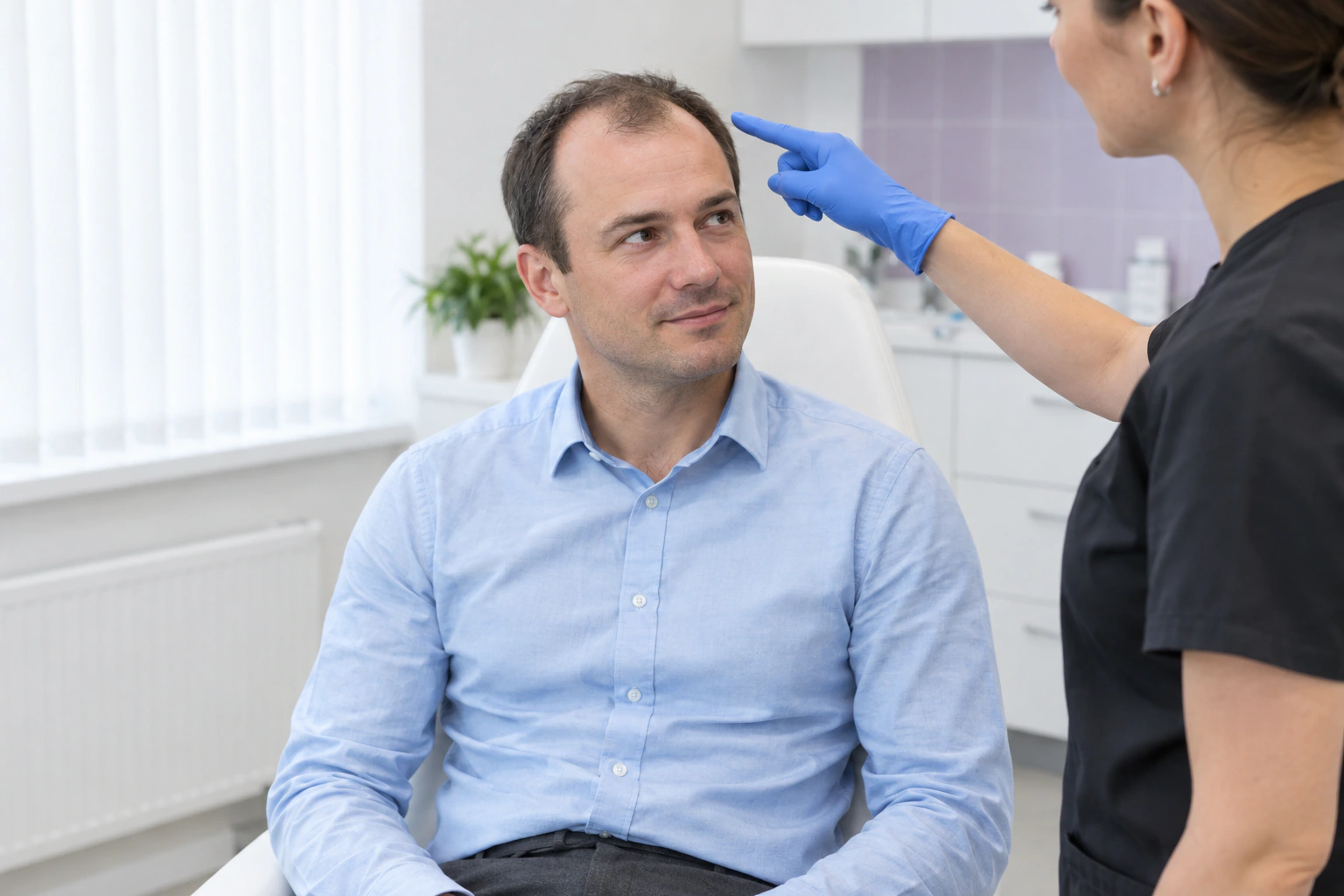

Number first, pictures second: the coordinator asks for photos of the thinning area in a messenger, then a doctor answers whether a transplant would help you. Free of charge, no operation scheduled.

services
Your price comes from the graft count made at the free consultation and is recorded in the contract.
suture-free graft extraction

$2,200$2,700
or $367/mo — 0% instalments for 6 months
Pin the price downimplantation without channels

$2,500$2,900
or $417/mo — 0% instalments for 6 months
Pin the price downcombined technique

$2,700$2,900
or $450/mo — 0% instalments for 6 months
Pin the price down| Your case reviewed | Free |
|---|---|
| Eyebrow transplant, FUE | |
| Beard transplant, FUEinstalments $467/mo | |
| Hair trichopigmentation | |
| PRP therapy / session | $200 |
all included
From preparation for surgery up to 12 months after.
On surgery day no extra charges come up.
two further spots
A hair transplant is not about the scalp alone. Same grafts from the back of the head, the same FUE method — only the area changes.
FUE method, no cuts or stitches

Grafts are collected from the donor area at the back of the head and moved through micro-punctures of about 1 mm, which leaves no scars. The doctor discusses the shape with you before the operation, taking your facial features into account. Transplanted hair grows for life and can be trimmed and styled as usual.
$2,800$3,000
or $467/mo — 0% instalments for 6 months
Pin the price downFUE method, no cuts or stitches

The brow contour is the surgeon's work at the first appointment: references are compared with you, and your facial proportions decide the design. Hairs implanted at the growth angle give brows that hold up close. Where tweezers have stopped the growth over the years, it works.
$1,600$1,700
a day-case operation done under local anaesthesia
Pin the price downThe doctor looks over your donor zone, works out the number of grafts and shows the result you can realistically expect. The price is set at the consultation and written into the contract.

Message our coordinator
Free online consultation · Reply within 15 minutes
Message us on TelegramMessage us on WhatsAppBy messaging us, you agree to our Privacy Policy
Process
From consultation to going home — all in one day

For patients in Tamale, the starting point is a talk about DHI and FUE, answers to their questions, and an examination of the donor zone.

Leave a deposit and the date stops being available to anyone else. Cards are taken at the clinic, and online payment is possible too.

Medical tests are part of getting ready. A full list comes from the clinic, along with directions on completing it.

Patients in Tamale are given a local anaesthetic, so the surgery brings no pain.

At this stage, grafts are taken from the donor area — back of the head or temples — through a stitch-free method.

Surgeons install each extracted graft in the part of the scalp lacking hair.
The clinic makes sure you have the necessary items and understand precisely how recovery works.

Scabs fall, swelling calms, and the skin gradually gets back to itself

An expected phase. What is shed is hair, not follicles

Growth comes on steadily, and the change becomes clear

Hair thickens, and the main volume and contour become visible

The final density and natural hairline come through

Free, before the operation, with no obligations.
Learn moredoctors

Hair transplant doctor, trichologist, surgeon
10 years in practice

Dermatovenereologist, trichologist, surgeon
11 years in practice

Plastic surgeon
9 years in practice

Plastic surgeon
9 years in practice

Assistant
9 years in practice
The doctor examines your donor zone, counts the grafts and explains the likely result.
Learn morecoordinators
You are assigned a personal coordinator to guide you from first enquiry to recovery.

Personal care manager
Supports you before and after the surgery
Covers the paperwork and the scheduling

Personal care manager
Supports you before and after the surgery
Covers the paperwork and the scheduling

Personal care manager
Supports you before and after the surgery
Covers the paperwork and the scheduling
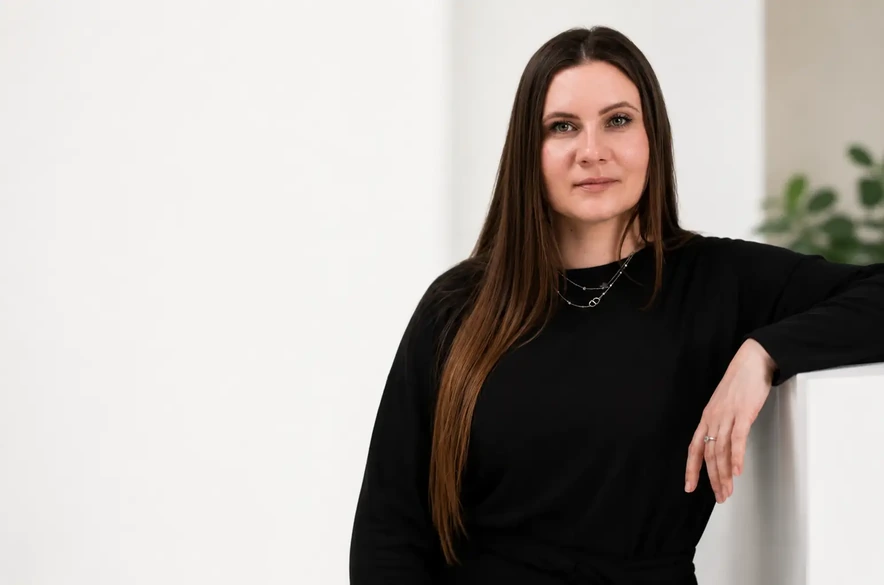
Personal care manager
Supports you before and after the surgery
Covers the paperwork and the scheduling













Your questions will be answered and a convenient consultation time found
Message us on WhatsApp Send your detailsQueries we hear

Yes, no difficulty at all. City Medical Centre treats patients from assorted cities and countries, and a consultation over the internet can be set up.
FUE: $2,200 (≈ GHS 25,500). DHI: $2,500 (≈ GHS 29,000). Combined: $2,700 (≈ GHS 31,500). A free consultation and graft count gives you the final, contract-fixed price with no hidden extras.
The operation needs a day, and you are released home after.
No — the treated zone is numbed, so nothing painful reaches you.
In FUE, grafts are harvested with a tweezer, no cuts or stitches involved. In DHI, a Choi pen implants grafts without opening channels first. The combined method pairs FUE harvesting with DHI implantation.
Your donor area decides it, and the precise figure comes from the doctor at a consultation with no fee.
Healing completes in 0–10 days. Transplanted hair sheds at 2–4 weeks, which is normal. Regrowth appears at 3–4 months, fullness at 6–9 months, and the final result settles at 12–18 months.
Hair growth is covered by a lifetime guarantee, fixed in the signed contract.
We hold a medical licence, and care is provided to the standards and clinical guidelines
per Ministry of Health.

The credentials of everyone involved in your operation
Open the paperworkAKC POMOSHCH LLC
our clinic's legal entity
1057746096924
OGRN
7728536872
INN
A patient in Tamale will find the requirements modest: FUE and DHI ask for no cuts, no stitches and no more than local anaesthesia, and the whole operation is behind you by the end of one day.
Nobody in Tamale pays for the first step. The consultation happens online, the doctor sees photos of the thinning area and gives the graft count from them. The clinic is reachable 24/7, which is a normal part of the day there.
Healing is a matter of 0-10 days, the transplanted hairs shed at 2-4 weeks and that is expected, growth resumes at 3-4 months, density is obvious at 6-9 and the result is complete at 12-18. The clinic checks in at 1, 3, 6, 9 and 12 months by photo, and the growth guarantee lasts a lifetime.
Prices are in US dollars; the amount in brackets is an approximate conversion to GHS at the rate of 02.10.2026. The final price is fixed in your contract.
By messaging us, you agree to our Privacy Policy
What patients write after this operation. Reviews are translated from the original language.
Andrey M.
I had the operation a month ago. Before and after surgery they were always in touch and helped with questions about my tests. The operation itself went wonderfully, the staff are polite and masters of their craft, you feel you are in safe hands. I am recovering now, and they answer all my questions. I am happy and I recommend them!
DHI hair transplant
Pavel Sinitsyn
The best clinic of all the ones I was choosing from. No regrets at all! The result is simply amazing, I am thrilled. I recommend it to everyone: these people do great work and make people happy. Once again, a huge thank you to everyone. Roman, the head of the clinic, is the best: he was personally in touch with me and looked after my recovery. Thank you for making my dream come true.
FUE hair transplant
Maria Akopyan
I thought about an eyebrow transplant for a long time and finally went for it. At first I was afraid the result would look unnatural, but when I saw my new eyebrows I was delighted! They came out full and in harmony with my face. I can hardly believe that now I just wash my face and go, I have never felt so free. For anyone tired of constant make-up, a transplant is a real lifesaver!
Eyebrow transplant (FUE)
Alexander M.
I really wanted a thick beard, but I had problems with it. I tried every home remedy and minoxidil, and nothing helped. After a long search for the best clinic I settled on this one. Thank you so much for the service, I liked everything and now I am happy! I had the beard transplant 10 months ago and I am very pleased with the result. By the way, the music in the clinic was great, as far as I remember. A friend of mine has already come to you for a transplant on my advice and was also happy with the result. I wish you every success!
Beard transplant (FUE)
Vladimir Z.
I went to the clinic to see a trichologist and had a hair transplant. I really liked the doctor's approach, and all the recommendations helped. I want to point out that nobody tries to sell you extra services: they tell you things as they are, and if some treatment is not needed, they do not push it. Cosy and clean.
DHI hair transplant
Artem Popov
This may sound obvious, but a head of hair really changes everything in your life. You feel much more confident and go through life like a winner. And it is all thanks to the doctor at this clinic and to the staff who take care of their patients. Many thanks to the clinic for a happy life with new hair, for the comfortable conditions and for the professionalism during the hair transplant.
FUE hair transplant
Tamale is the capital of the Northern Region of Ghana and the country's third largest city, with a population of 374,744 people as of the 2021 population census. It has also been described as the fastest-growing city in West Africa. For many residents, a hair transplant is a considered decision that sits next to work, family and community obligations, and it deserves the same careful planning as any other important step.
The city lies in the Kingdom of Dagbon, the oldest kingdom in Ghana, and is home to Dagombas, Gonjas, Mamprusis, Nanumbas, Konkombas and Akan communities. Appearance, grooming and a neat beard or hair line matter at festivals, weddings and religious occasions, so patients in Tamale often ask how soon they can appear in public after FUE or DHI and how the first weeks will look.
City Medical Centre works with patients from Tamale through a free online consultation. A coordinator is available 24/7 on Telegram and Telegram, so you can send photos, ask questions in the evening after work and receive a clear plan without leaving your city.
Grafts are taken from the back of the head, the donor area, and moved through micro-punctures of about 1 mm, so nothing scars over. In FUE the channels are opened first and the grafts are then placed; in DHI the grafts are placed with a special implanter pen. Which method suits you depends on the area to be covered, your hair type and your goals, and the doctor decides this after reviewing your photos.
The doctor discusses the shape with you before the operation, taking your facial features into account. This matters for the frontal hair line, the temples and the beard alike. A natural result is built on a design that suits your face, not on a copied template.
Transplanted hair grows for life: trim and style the beard as usual. For a man in Tamale who keeps a groomed beard for religious or social reasons, this is a practical point, because the transplanted area can be shaped with a trimmer in the normal way once healing is complete.
Tamale has a tropical savanna climate. Mean monthly temperatures are on average around 34 °C, while minimum monthly temperatures are around 23 °C. Strong heat and sun are the main practical factors for the first days after surgery, when the scalp is sensitive. Plan to spend the early period indoors in the shade, avoid long exposure to direct sun and ask your surgeon exactly when and how you may wear a loose, clean, breathable head covering.
Sweat and dust are the second concern. Heat makes you sweat, and the dry season brings dust to the streets. Keep the head clean according to the washing schedule you are given, avoid touching the grafts with unwashed hands and do not rub or scratch the area. If the donor area is also healing, sleep on a clean cover and keep your head slightly raised as advised, which also helps with swelling.
Humidity changes through the year: it is usually lowest between December and March at around 30%, and highest around August at about 70%. In the humid months the scalp may feel stickier and more uncomfortable, so cleanliness and light, airy bedding become more important. Ask the surgeon how to adapt care to the weather in your own week of recovery.
Tamale usually has one rainy season a year, with heavy thunderstorms and tropical showers. The mean monthly rainfall is about 89 mm within 95 days of rainfall. Rain itself does not rule out surgery, but getting around in a downpour, wet head coverings and crowded transport are things to consider in the first days, when you should not expose the scalp to dirt or rub it.
The drier months from December to March have the lowest humidity, but they are also hot and dusty. Neither period is perfect, so the better question is where you can arrange calm, shaded rest at home. The best date is the one that leaves you a quiet first week and no major event during the early shedding stage.
Climate change has made droughts, floods and heatwaves more common in the area. If a heatwave is forecast around your planned date, discuss with the coordinator whether to move the date by a few days. This is a practical decision about comfort and care, not a medical rule.
Most people in Tamale work in agriculture, trading, teaching and manufacturing. If your work is outdoors, in fields or markets, your exposure to sun, dust and sweat is higher, and you should plan your return with the surgeon. Office, school and teaching work is easier to combine with the first days, but you still need to protect the scalp from knocks and avoid crowded, dusty commuting.
The healing timeline gives you a framework: 0–10 days for healing, 2–4 weeks for normal shedding of transplanted hair, 3–4 months for new growth to start, 6–9 months for real density, and 12–18 months for the final result. Students and teachers can use this to choose a break between terms, so that the visible early stage falls outside important public moments.
Tamale has a strong sporting culture, with Real Tamale United and the Aliu Mahama Sports Stadium. If you play football or train, ask the surgeon when contact, heavy sweating and head-covering gear such as caps or helmets are acceptable. Do not return to sport on your own schedule; follow the plan agreed with the doctor.
Festivals such as Damba, Bugum chugu, Eid ul-Fitr and Eid Adha are important in the city's calendar. If you want to attend with a settled look, leave a margin, because 2-4 weeks is the time when transplanted hairs let go, as expected. A date well before or well after a festival is more comfortable than one right beside it.
Daily life in Tamale centres on family meals, shared dishes and hospitality. In the first days, keep your routine simple: eat regular meals, drink enough water in the heat and follow the doctor's instructions on alcohol and smoking. Large gatherings and long hours in a hot kitchen or by an open fire are better postponed while the scalp is healing.
Body weight and general health also matter for any surgery. The WHO describes obesity and overweight as a significant health issue, and a doctor will want to know about chronic conditions, medicines and allergies before planning. Be honest in the questionnaire; it helps the team choose safe and sensible steps.
Good sleep, balanced food and calm after the operation support recovery. Tell the coordinator about your daily schedule, such as night work, early prayers or long drives, so that the care instructions fit your real life.
A good candidate usually has stable hair loss, enough healthy hair in the donor area and realistic expectations. Younger patients with fast-changing loss may be advised to wait or to start with medical treatment. The doctor can only judge this after seeing clear photos from several angles and hearing your history.
Caution is needed with uncontrolled chronic illness, active scalp infection or inflammation, blood-clotting problems, certain autoimmune conditions or unrealistic demands about density. These are general points and the final decision is always individual. Some patients are advised to treat the underlying problem first.
If you want to restore a beard, moustache or eyebrows rather than the scalp, the same logic applies: the donor area, skin quality and design of the shape are assessed before any plan is made.
The first step is free and online. You write to the coordinator on Telegram or Telegram, send photos of the front, top, sides and back of the head, and describe your history. The doctor reviews them and proposes a method, a design and a realistic expectation of the result.
We stay with you from pre-op planning to 12 months later. Check-ups at months 1, 3, 6, 9 and 12 let you and the doctor compare progress with your starting photos. A coordinator will be on the phone 24/7, so a question about swelling, itching or heat does not have to wait for the morning.
Prepare your questions in advance, and keep a list of your medicines. Good photos in daylight, without a cap and with wet or combed-back hair, make the assessment more accurate.
Tamale grew from small villages under the Kingdom of Dagbon, in an area that was a popular destination of cattle trails. In 1907 the British chose it for administrative headquarters with the help of the Dakpema, and in 1960 it became the capital of the Northern Region. A city built on trade and steady growth has a practical habit: people here weigh a decision, ask around and then act. A hair transplant fits that habit well, because the best results come from a calm, planned process rather than a rushed one.
The road nicknamed the 'Great North Road', added in 1920, turned Tamale into an important business centre. Many traders and drivers who still live along the main highway spend long hours in dust, heat and wind. If your day looks like this, tell the coordinator in the first message. The surgeon can then plan your first days of rest so that you are not exposed to the road, and can advise when you may return to it.
Tamale Central Market is the centre of everyday trade, and crowds, heat and dust are part of daily life there. In the early healing period, keep away from packed market aisles, where people brush against your head and sweat and dirt are hard to avoid. Ask a relative to do your errands until the surgeon says the scalp is ready.
Motorbikes are the most used means of transport among locals, and the yellow tricycles known as 'Mahama-Cambuu' or 'yellow-yellow' are also common. A helmet presses on the grafted area and the donor area at the back of the head, so ask the surgeon exactly when a helmet is acceptable and what to do until then. Plan the first days so that a family member drives you, or arrange to stay at home, rather than riding on your own.
Tamale became the educational hub of Northern Ghana, and Education Ridge packs many schools into a small area of 3 km2. Teachers and students form a large part of the city. Because a teacher stands before a class every day, the visible early stage matters: the 2-4 weeks when transplanted hairs let go, as expected, is best placed in a school break, so you are not asked about it in front of pupils.
The Tamale Teaching Hospital serves the whole region and trains doctors, nurses and nutrition specialists. Patients here are used to medical language and often arrive with sensible questions. Bring them to the online consultation, and keep your local health records at hand, such as past illnesses and medicines, so the surgeon has a full picture before planning.
Damba, Bugum chugu, Eid ul-Fitr and Eid Adha fill the Tamale calendar, and the Baamaya and Tora dances bring crowds together in a lively setting. Dance means heat, sweat and close contact. After a transplant, avoid energetic dancing and dense crowds during the early healing period of 0–10 days, and ask the surgeon when normal activity is safe.
About 90.5% of residents are Muslims, so prayer and head coverings are part of daily life for many. Ask the surgeon in advance how to keep prayer routines during healing, and which cap or cloth is clean and loose enough to wear. Agree this before the operation so that you are not improvising on the day.
Ask who performs each stage of the operation, how many grafts are planned and why, and whether FUE or DHI is better in your case. Ask how the donor area will look afterwards and how the frontal hair line will be designed for your face.
Ask what care is needed in hot weather, how to wash the scalp, when you may wear a cap and when you may return to work, sport and prayer routines. Ask what to do if a crust, redness or unusual swelling appears.
Ask what is normal at each stage. For example, 2-4 weeks is when transplanted hairs let go, as expected; 3-4 months is when hair comes back; 6-9 months is when it is visibly thicker; 12-18 months is the settled look.
Yes. The consultation is free and online. You send photos to the coordinator on Telegram or Telegram, and the doctor reviews them and suggests a plan.
Heat and sun call for care in the first days. Stay in the shade, avoid sweating heavily, keep the scalp clean and ask the surgeon when you may wear a loose head covering.
Transplanted hairs let go after 2-4 weeks, as expected. Hair comes back at 3-4 months, becomes visibly thicker at 6-9 months and reaches a settled look at 12-18 months.
The initial healing takes 0–10 days. The full result takes 12–18 months after surgery.
In both methods grafts are taken from the donor area at the back of the head. In FUE the channels are opened first and then filled, while DHI uses an implanter pen. The doctor chooses the method after assessing your photos.
Grafts are moved through micro-punctures of about 1 mm, so nothing scars over. The donor area is discussed in detail during the consultation.
Yes. Transplanted hair grows for life: trim and style the beard as usual once the doctor allows it.
Yes, but leave a margin. Shedding of transplanted hair happens at 2-4 weeks, so choose a date well before or after the event.
We stay with you from pre-op planning to 12 months later, with check-ups at months 1, 3, 6, 9 and 12. A coordinator will be on the phone 24/7.
People with unstable hair loss, scalp infection, uncontrolled chronic illness or unrealistic expectations may be advised to wait or treat the problem first. The doctor decides individually.
A helmet presses on the grafted and donor areas, so ask the surgeon when it is acceptable. In the first days it is safer to be driven by a relative or stay at home.
Yes, in the early healing period. Crowds, dust, heat and sweat are not good for a healing scalp, so ask someone to shop for you until the surgeon allows it.
A school break is a good choice, so the 2-4 weeks when transplanted hairs let go, as expected, falls outside the classroom. Discuss the dates with the coordinator.
Not during the early healing period of 0–10 days. Heat, sweat and crowding are best avoided, and the surgeon will tell you when you can return to normal activity.
Page medically reviewed by Anastasia A. Kolesnik, hair transplant doctor. Review date: .

 Forceps
 Minimal


