


























 beforeafter
Liposuction
Belly and flanks
from $1,200
The price is fixed in the contract before surgery
Message our coordinator
Free online consultation · Reply within 15 minutes
Message us on TelegramMessage us on WhatsAppBy messaging us, you agree to our Privacy Policy
Results
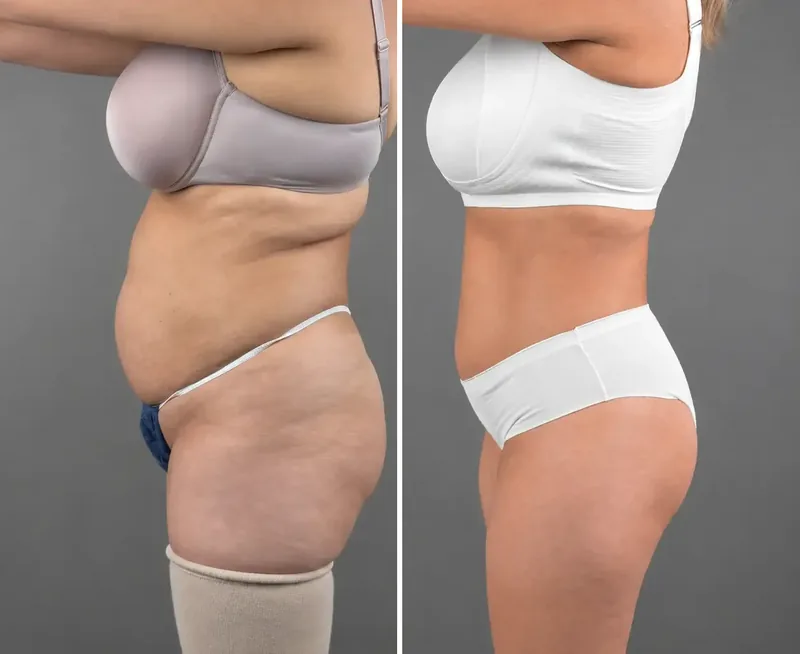
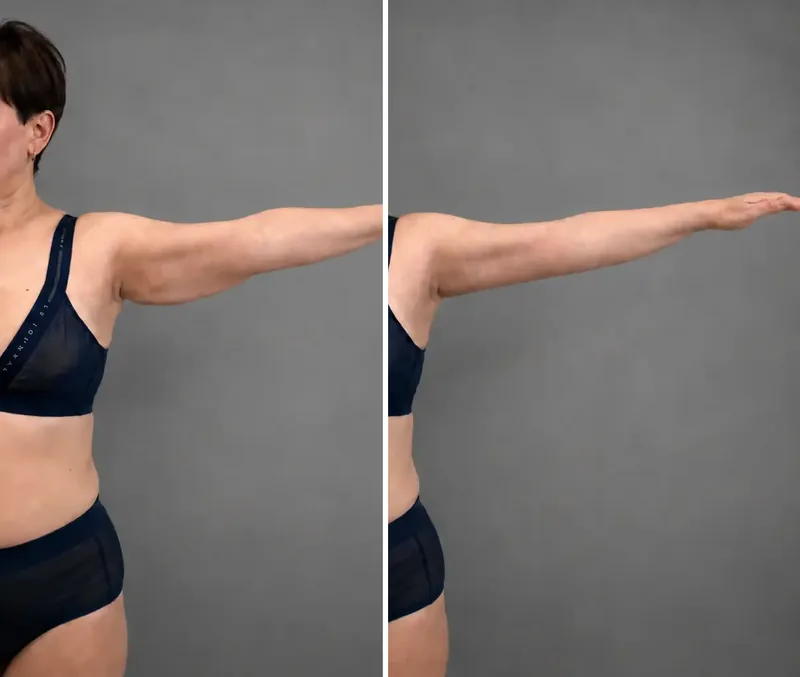
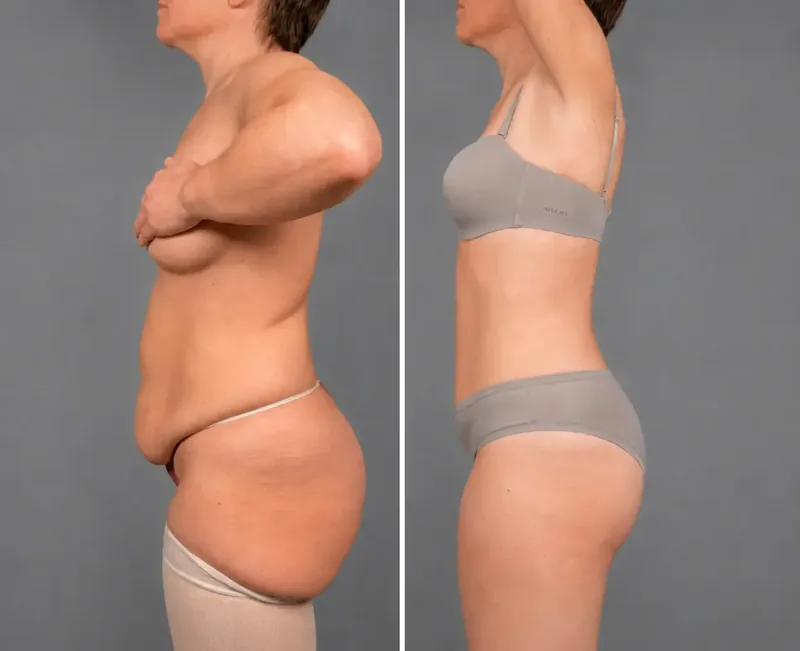
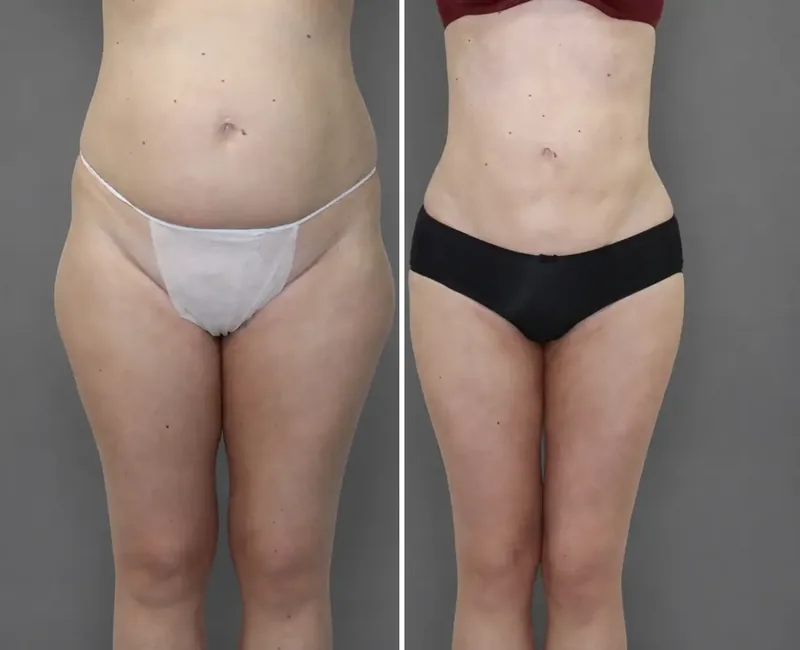
All cases are real patients. Faces and identifying details are hidden.
beforeafterBelly and flanks
 beforeafter
Arms
 beforeafter
Belly and flanks
 beforeafter
Abdomen and thighs
 beforeafter
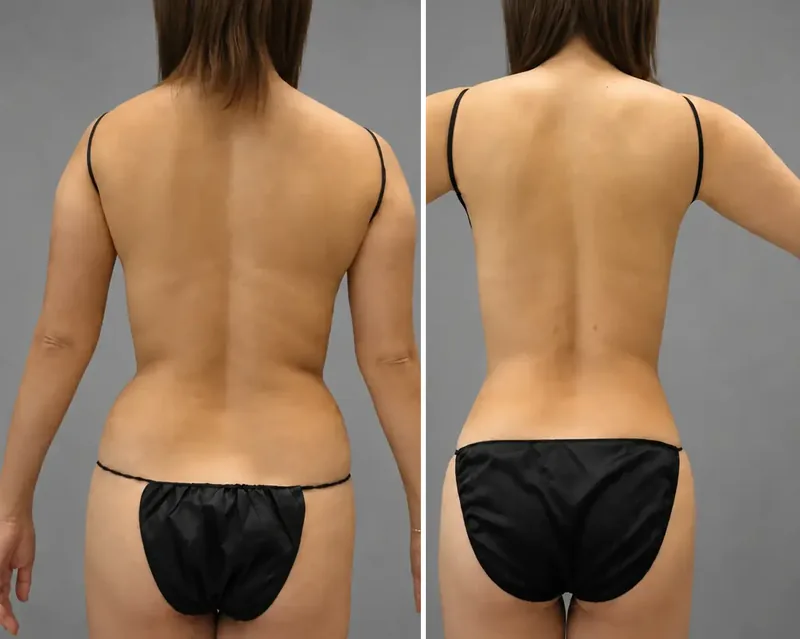
Back and flanks
 beforeafter
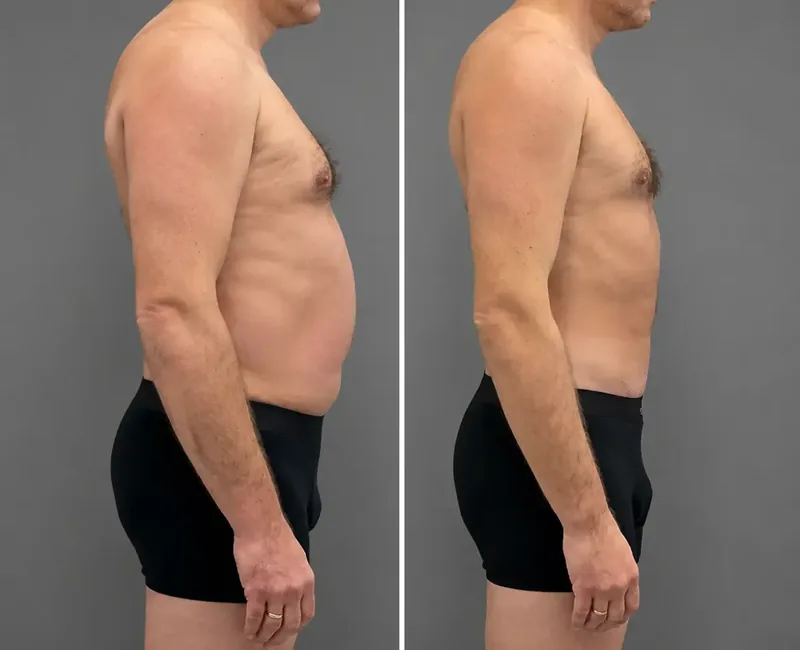
Male abdomen
 beforeafter
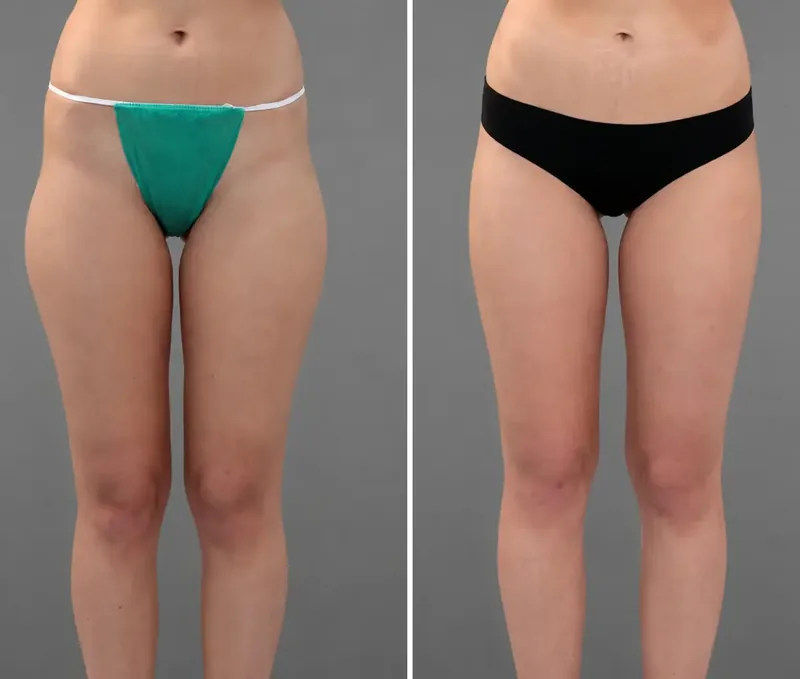
Inner thighs
 beforeafter
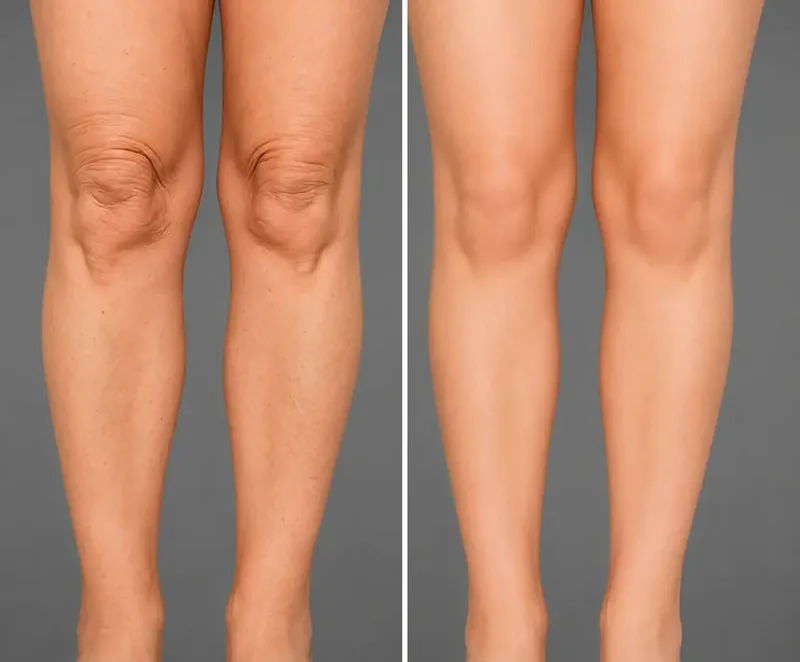
Knees
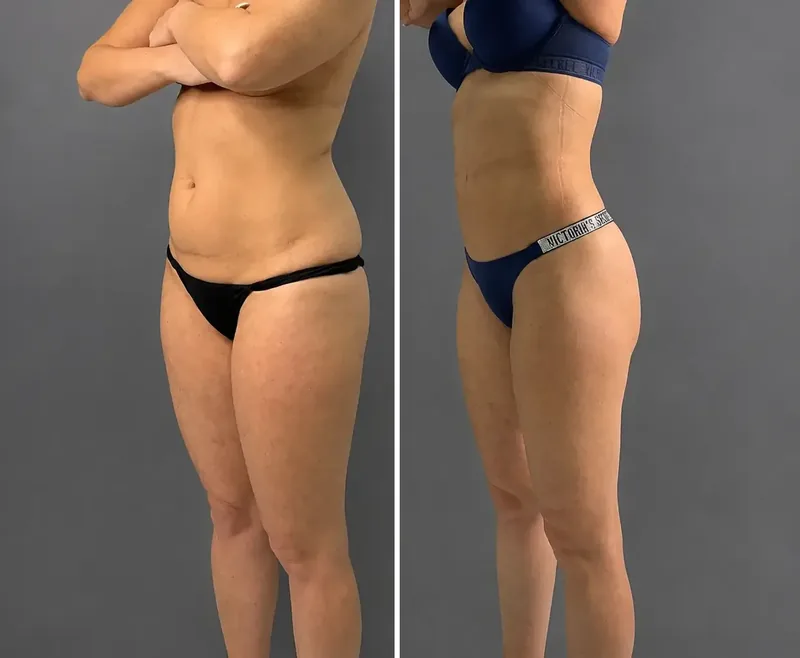 beforeafter
Belly and flanks
Comparison
We use two liposuction techniques: tumescent (classic) and VASER (ultrasound). Compare the goal, the indications and the anaesthesia to choose the right technique together with your surgeon.
A special solution loosens fat for removal through a thin cannula
from $1,200
Ultrasound breaks down fat cells before vacuum removal
Price at consultation
The benefits and recovery times shown are averaged for each technique and given for guidance: the scope of correction and rehabilitation depend on your anatomy and individual features, and the surgeon confirms them at the consultation.
At the consultation the surgeon draws up a plan for your case and explains how your liposuction will go.
Free, before surgery and with no obligation.
Several areas can be treated in one operation — this saves recovery time and budget
The most requested area for women and men, often combined with abdominoplasty
Fat that doesn't respond to exercise
Back rolls that disrupt the silhouette
A cosmetic concern that shows in warm weather
Small volume and a fast-appearing result
A delicate area that needs precise work
Gynecomastia, pseudogynecomastia — the fat component
About the clinic
Modern equipment, comfortable rooms and care for every patient

We will answer your questions and find a convenient time for a consultation
If your case can be solved without surgery, the doctor will tell you so at the consultation — and you will not spend money for nothing.


Not sure the surgery is right for you?
Leave your number — the coordinator will call you back, and the surgeon will tell you whether liposuction suits you. No surgery booking needed.
Find out if it suits me
Prices
The final price is calculated individually after an examination and fixed in the contract.
The most requested area — treated in one operation

Contouring of the front abdominal wall

The surgeon assesses the fat deposits and skin tone, listens to your wishes and chooses the right technique.

Message our coordinator
Free online consultation · Reply within 15 minutes
Message us on TelegramMessage us on WhatsAppBy messaging us, you agree to our Privacy Policy

all inclusive
From preparation for surgery
to post-op check-ups.
from $1,200
Book a consultationHow it works
An agreed treatment plan, careful monitoring after surgery and post-op check-ups.
 1
1The surgeon listens to your wishes, assesses the fat deposits and skin tone and rules out contraindications. A hormonal screening is also ordered — it helps predict the long-term result.
 2
2We reserve a surgery date for you: the deposit can be paid by card at the clinic or online by bank transfer. The terms are fixed in the contract for medical services
 3
3Blood tests (complete count, coagulation panel, biochemistry, infections), an ECG, a chest X-ray and, if needed, a GP consultation. All tests can be done at the clinic with no waiting.
 4
4Marking the areas and fitting compression garments. Under local or general anaesthesia the surgeon removes fat through 3–5 mm micro-punctures — from 1 hour for small areas to 3–4 hours for a combined procedure.
 5
5With local anaesthesia you go home 3–4 hours after surgery; with general anaesthesia you stay one day in a comfortable ward under medical supervision.
 6
6Compression garments for 30–45 days. First changes show at 2 weeks, once swelling subsides; the final result forms in 3–6 months. Check-ups at 7 days, 3 and 6 months.

After tumescent liposuction, recovery is much shorter than after a conventional procedure. Most patients return to work within 7–10 days. In the first week, mild swelling and a raised temperature are possible — a normal response to surgery. Compression garments are worn for 30–45 days: they fix the new contours and speed up tissue recovery. In the first month, bathhouse, sauna, pool and intense sport are off-limits. For the best result and faster recovery we recommend lymphatic drainage massage, pressotherapy and a gradual return to activity. First visible changes show 2 weeks after surgery, when the main swelling subsides; the final result forms in 3–6 months.
After 7 days, at 3 months and at 6 months. Until the end of the year, get a post-surgery consultation with your surgeon to review results and get more information, at the clinic's expense.
Advantages

At the consultation we discuss your wishes and assess the fat deposits and skin tone. Before surgery an endocrinologist rules out hormonal causes of the fat deposits — this improves the long-term result.

The surgeon follows your recovery and the new body contour at check-ups after 7 days, 3 and 6 months. Check-ups, dressings and aftercare advice are already included in the price of surgery.

Tumescent and VASER techniques, micro-incisions of 3–5 mm and precise volume control. Our aim is a smooth contour that keeps the natural proportions of your body.

We respect your time: we work 24/7, with easy booking and a personal approach — we adapt to your pace.
After the consultation the surgeon defines the areas and the scope of surgery, and you get a clear price fixed in the contract — no hidden extras.

With general anaesthesia recovery starts in a comfortable hospital ward under round-the-clock nursing care. The stay and meals are already included in the price.
FAQ
Yes, it is common practice. Patients seldom treat just one area; more often they combine several problem zones, for example abdomen and flanks, or inner and outer thighs. Our surgeons will help you choose the optimal scope of surgery at the consultation, based on your health and desired result.
No. Liposuction won't make you lose weight. Its aim is to remove local fat that resists diet and exercise and to reshape your contours. If your weight is not stable, see a nutritionist or endocrinologist beforehand.
The surgery is done through punctures only 3–5 mm across — they usually need no stitches. Once healed, the marks are barely visible. With proper care during recovery they fade completely.
Before the operation, the surgeon always assesses skin tone, elasticity and turgor. If the skin is in good condition, it tightens on its own around the new contours. For reduced tone or stretch marks, our specialists recommend preparatory treatments to improve the skin in advance.
No. Anesthesia — local or general depending on the scope — is used for the procedure. After surgery you might feel mild discomfort, which is relieved with painkillers prescribed by your doctor.
For the first 7 days — no physical exertion or heavy lifting. For 4–6 weeks wear compression garments and avoid bathhouse, sauna, pool and active sport. Alcohol and tanning beds are off-limits for at least a month. Your surgeon gives all individual recommendations after surgery.
The surgery is for patients aged 18+ without contraindications. As for an upper limit, there is none: we decide individually after an examination and health check.
Not directly. It removes fat tissue without changing the skin structure that causes cellulite. Still, improved contours make cellulite visibly less noticeable.
Most patients get back to their usual routine and work in 7–10 days. Swelling and bruising clear by weeks 4–5. The final result forms in 3–6 months, once the tissues have fully adapted.
A strict diet isn't necessary, though nutrition is important to maintain the result. The fat cells removed won't return, but those left can enlarge if you put on weight. A balanced diet and regular physical activity keep the result lasting.
Yes. For 7–10 days before liposuction, no smoking, no alcohol and no medications that affect blood clotting (aspirin, etc.). Pre-operative tests are required too — blood tests, ECG, ultrasound, GP and anesthesiologist consultations. You receive all instructions after the first consultation.
2 weeks after surgery the main swelling subsides and first changes show. The interim result is assessed at 1.5–2 months, and the final contours take shape in 3–6 months.
Prices are in US dollars; the amount in brackets is an approximate conversion to IQD at the rate of 02.10.2026. The final price is fixed in your contract.
Prices start from $1,200 (≈ IQD 1,600,000) per area. The surgeon sets the final price at the free consultation, and it is fixed in the contract, with no hidden extras.
The operation under local or general anaesthesia and the surgeon's support throughout recovery. The price is per area and fixed in the contract.
Message us on WhatsApp or Telegram using the buttons below. A coordinator will answer your questions and book a free consultation where the doctor names the exact price.
By messaging us, you agree to our Privacy Policy
The aim is not a smaller number on the scales but a better shape. Liposuction targets saddlebags, back rolls, a belly that will not flatten and fat on the arms, chin or knees. For patients from Samawah, the result depends on one key fact: removed fat cells do not return, while the remaining ones can still grow with weight gain, so a balanced diet keeps the contour for the long term.
It starts with a surgeon consultation: the doctor listens to your wishes, assesses the fat deposits and rules out contraindications, and a hormonal screening is ordered to predict the long-term result. Patients from Samawah then take pre-operative tests — blood count, coagulation panel, biochemistry, infection screening, ECG and chest X-ray — which can all be done at the clinic with no waiting.
If you are comparing liposuction prices in Samawah, check what the figure depends on: the number of zones, their size and the chosen technique. Here the starting price is $1,200 (≈ IQD 1,600,000), the final sum is set after an examination and nothing hidden is added. Hormonal screening before surgery and surgeon support through recovery are part of the approach. Book a free consultation to get your plan.
Samawah lives by its seasons: dates picked in autumn, citrus gathered through winter, truffles dug from the plains in late winter, and yet even among people this active, firm deposits settle at the waist, the belly or the flanks and ignore every diet thrown at them. Liposuction exists exactly for these zones: it contours particular areas at a stable body weight, and it is not a method for lowering the number on the scales, a difference the surgeon examines carefully before agreeing to anything.
An assessment begins at home with a single message: a description of the areas that bother you, daylight photographs from the front and side, and a short note on whether your weight has held steady across recent months or swung with the seasons, because a surgeon needs to know the weight is settled before he draws any new lines. Send it all to the Telegram and Telegram coordinators who stay reachable day and night, and the first reply will say whether your case suits the procedure and which zones it would include.
Bodies differ between a shopkeeper standing all day in Suq Al Masgoof and a worker on the kiln shifts at the edge of town, so bring photographs of the relevant areas together with a tape-measure note of your waist if you can, and mention whether the deposits sit in one zone or in several. That single detail, the number of zones, changes everything downstream, from how long the operation lasts to which anaesthesia is chosen, as the next section shows.
Four bridges cross the Euphrates at the centre of the city, and nobody steps onto one without a destination already fixed, which is precisely how an operation day should work: a clear map of zones drawn at the consultation before any session happens. Prepare your questions in writing, ask what the surgeon proposes to treat and why those areas first, and let the assessment move at the pace of paper and photographs rather than of a hurried hallway conversation.
The length of the procedure follows the volume of work rather than anyone's preference: a single small zone may finish in about an hour, while combining several areas in one session pushes the time to three or four hours, and the anaesthesia moves with it, from local to general, according to the extent the surgeon sets after examining the tissues. Ask for the proposed list of zones in writing before you discuss anything else, because that list is the master switch for the whole day.
The path home differs with the anaesthesia: under local anaesthesia for small areas you leave for home three to four hours after the surgery ends, while general anaesthesia for broader work keeps you one day in hospital under observation. In either case arrange who accompanies you and who drives you back, never take the wheel yourself that day, and pick loose front-buttoned clothes because the first thing you will pull on over the treated areas is a compression garment.
Workers on the cement shifts and in the railway workshop know exactly what arranging leave means: agree specific days with your supervisor well in advance for the operation and the rest that follows, and fix who covers your shift, because an early return to heavy lifting can erase part of what was sculpted. Shopkeepers around the old market usually arrange cover among relatives for three or four days, which is generally enough for the quietest stretch of recovery before a gradual, gentle return.
The bag for the operation day is packed the night before: the compression garment exactly as the surgeon specified, bought early in your size rather than guessed at later, loose clothing, a large bottle of water because the dry air of this region turns drinking into a daily duty after surgery, and a charged phone with the coordinator chat on Telegram or Telegram left open for any question that surfaces in the first minutes.
The compression garment is part of the recovery plan, with its duration and wearing schedule set by the surgeon, and in a city whose average highs touch 43.4C in July and 43.7C in August the wearing itself needs management: a thin cotton layer under the garment absorbs sweat, the room stays on moderate air-conditioning through the day, and any errand during the burning midday hours waits. The garment does not quarrel with the city's heat; careless handling of it does.
Winter flips the picture entirely: the mean January low sits at 5.0C and most of the city's 106 mm of yearly rain falls between December and February, so the garment becomes a welcome warm layer rather than a burden, and anyone recovering in those months benefits from short walks in the midday sun while skipping the freezing early mornings. Whichever season it is, follow the written schedule for removing, washing and refitting the garment literally, because that discipline is what keeps the new lines smooth.
Movement returns by degrees and never all at once: begin with calm walking inside the house in the first days as the surgeon allows, then take short evening strolls among the palms along both banks of the river, the gentlest hours a Samawah day offers in summer, and widen the distance week by week. Gym sessions and anything that raises pressure inside the belly wait for explicit permission from the surgeon, because the muscles beneath the treated skin need time to quiet down.
Heavy loads head the postponement list: sacks of dates in their season, crates at the market, heavy housework, all of it passed to relatives or colleagues during the first weeks, together with a delay for swimming pools, hot baths and any sitting under the noon sun directly on the small incisions. Anyone working at the brick kilns or unloading goods should plan a longer cover, because dust, heat and lifting together form the worst possible trio for freshly contoured areas.
The final shape of the contoured areas appears between the third and sixth month, once the tissues have adapted completely, and before that the skin passes through a phase of swelling and contraction in which nobody should judge the lines. Do not rush a verdict in the second week and do not measure yourself against anyone faster, because the speed of skin contraction differs from body to body with age and elasticity, and all of it is explained on your own body by the surgeon, not on generic pictures.
Keeping the result is a matter of a stable weight more than anything else: the seasonal table of Samawah homes is rich with dates, winter sweets and truffle dishes in late winter, and all of it is fine in its place, but a noticeable weight gain after contouring redistributes fat and can blur lines that cost real effort. Keep a glass of water permanently at hand, since the dry regional air hides thirst, and turn the short daily walk into a lifelong habit rather than a temporary phase that ends with the result.
Photograph your own progress: one picture each month of the same areas, in the same daylight and the same pose, stored in a private phone album, because monthly change is quiet and the daily eye misses it, while a month-against-month comparison shows the contraction curve clearly and brings you to follow-up visits with specific questions instead of a general anxiety. Students of Al-Muthanna University, already used to documentation, take to this method faster than most.
Follow-up visits are part of the operation, not an optional tail: ask at the first consultation how many visits the plan includes, when the first one falls after surgery, and who answers between visits if something urgent appears, knowing that the Telegram and Telegram coordinators reachable day and night are the standing channel for any note between two appointments. Keep every paper in a single folder together with your monthly photographs, so the surgeon reads your whole story at each visit instead of starting from zero.
Checking the surgeon is a straightforward Iraqi step: the Ministry of Health, established in 1920, regulates the country's health work and runs an inspection department that monitors governmental and non-governmental facilities, with its official site at moh.gov.iq, so request the surgeon's registration number and specialty and confirm them yourself before any appointment. A documented number, not a phrase about twenty years of experience without one, is what turns pleasant talk into accountable responsibility you can actually question.
Understand the limits of this sculpting before you dream with it: liposuction redraws contours at a stable weight and treats neither general obesity nor any lifestyle, and it carries a safety ceiling on the fat volume treated per session that the surgeon sets for reasons of health, not aesthetics. Anyone whose weight still swings with the seasons is better off settling it first through a food programme and then returning to contouring, and you should ask the surgeon to say so plainly if it applies to you, because an honest surgeon declines work that will not serve you.
Compare more than one offer with pen and paper: which zones are proposed and why, which anaesthesia is expected for that scope, how many follow-up visits are included, and who answers between them through which channel. Beware anyone pushing you to decide within the first session or promising lines copied from other people's photographs, because your own body sets its boundaries, and a respectful offer gives you reading time and the agreement in writing rather than verbal promises that evaporate on the doorstep.
Make the decision unhurried from your home in Samawah: gather the papers and written answers into one file, send whatever questions remain to the coordinators on Telegram or Telegram at any hour that suits you, and then choose on your own clock, not under pressure. A town whose folk song grew out of its palm groves knows that fruit takes a whole season, and the lines you want to keep for years deserve the same calm arithmetic of a considered decision rather than a week's enthusiasm.
Liposuction sits at the lighter end of aesthetic surgery: most patients are back at work within seven to ten days, the first changes show at about two weeks and swelling and bruising clear by weeks four and five. Yet the compression garment stays on for 30 to 45 days, and the bathhouse, sauna, pool and intense sport wait for the first month, with active sport held back for four to six weeks. That is roughly six weeks in which the weather matters, so it is worth reading the monthly climate table of Samawah before you fix a date. There is no medical rule about the season, and the final word belongs to the surgeon.
Autumn offers a comfortable window. October in Samawah has a mean high of 34.6C and a mean low of 17.1C, with only 3 mm of rain in the whole month, and November eases to 25.6C by day and 10.9C by night. An operation in the second half of October puts most of the garment weeks into the cooling months, and the interim assessment at one and a half to two months falls in a mild December, when the mean high is 18.3C and the first winter rain has arrived.
Late winter and early spring work well too. February averages 18.6C by day and 7.3C by night, March 24.6C and 11.2C with 9 mm of rain, and April 31.0C and 16.1C. A date in mid February takes you through 30 to 45 days of garment wear before the afternoons turn properly hot, and the three-month check-up falls around May, when the mean high is 37.8C and you can already walk outside in the early morning without a second thought.
If life forces a date in the hot months, remember that June reaches 41.7C and September 41.4C, with no rain at all between June and September. Ask the surgeon whether a second garment is advisable so that one is always washed and dry, since dry air dries fabric quickly, and keep the wearing schedule exactly as written. Plan the rest around the heat too: the treated areas deserve shade and a cool room, and a long day outdoors can wait until the swelling has cleared and the surgeon allows it.
About 23 km west of Samawah lies Sawa Lake, a closed saline lake of roughly 4.6 square kilometres, up to 4.74 km long and 1.77 km wide, with no river flowing in and none flowing out. It was fed from beneath by karst groundwater, and it was entered in the Ramsar list of wetlands of international importance on 3 March 2014. The lake is a fitting image for liposuction: what you see on the surface changes slowly and is shaped by something happening beneath it, and nothing about it responds to hurry.
Another salt lake, Bahr al-Milh, lies about 20 km to the south-west of the city and supplies industrial salts, a reminder that this region works with patient, mineral time rather than the quick turn of a season. Apply the same temper to contouring. The skin passes through swelling and contraction, the final lines form between the third and sixth month, and a verdict passed in the second week is as unreliable as a verdict on the lake passed after one dry afternoon.
The city also teaches medicine at home. Al-Muthanna University, founded in 2007 in the north of Samawah, opened its College of Medicine on 26 May 2008, so doctors trained in the governorate are part of the local picture. For a patient, that makes questions about training, specialty and registration feel natural rather than awkward. Ask for the surgeon's registration number, ask which zones he proposes and why, and ask what happens if the volume of fat he may treat in one session turns out to be less than you hoped.
On the east bank stands the Saray, a building from the Ottoman period that served as a seat of authority, and across the river the old covered market keeps trade in motion from the same era. Both stand for a city accustomed to written arrangements and seals on paper. Carry that habit into your own plan: a written list of zones, a written statement of the anaesthesia, a dated schedule of the check-ups at seven days, three months and six months, and a named person who answers between them.
Imagine, as an illustration and not as a real person, a shopkeeper in his forties from the old town of Samawah. His weight has held steady for more than a year, but firm deposits remain at the waist and flanks whatever he eats or how far he walks. He sends daylight photographs from the front and side to the coordinators on Telegram or Telegram, who reply at any hour, together with a line saying that he wants contouring, not weight loss, and the first reply tells him whether he fits the procedure.
His question sheet is short. Which zones will be treated, and in what order? How long will the operation last, from about an hour for a small area to three or four hours for a combined one? Will the anaesthesia be local, which means home three to four hours after surgery, or general, which means one day under observation? Which garment, in which size, for how many days? When are the check-ups, and who answers a message between them? He confirms the surgeon's registration number and specialty before he books anything.
Then he organises the weeks. A relative covers the shop for the first days, nobody lifts crates for him in the first week, he skips sport, bathhouse and pool for the first month, and he keeps one photograph a month from the same angle. He expects to be back at the counter within seven to ten days, with the contour judged only between the third and sixth month. The point of this picture is the order of things: the paper and the questions come first, the date comes second, and the operation third.
Liposuction contours specific deposits at a stable body weight and is not a method for general slimming, nor a substitute for diet, and it carries a safety ceiling on the fat volume treated per session that the surgeon sets. If your weight swings with the dates and citrus seasons, settling it first is wiser; discuss your case through the day-and-night coordinators on Telegram or Telegram before anything else.
With local anaesthesia for small areas you leave for home three to four hours after the surgery finishes, while general anaesthesia for broader work keeps you one day in hospital under observation. In both cases arrange an escort and never drive yourself that day, and prepare loose front-buttoned clothes plus the house in advance so the day arrives with nothing left hanging.
The number of zones does: a single small area may finish in about an hour, while combining several areas in one session stretches the time to three or four hours, and the anaesthesia moves from local to general with that extent, fixed by the surgeon's examination of the tissues. Ask for the proposed zone list in writing, because it is the master switch for the whole day.
With an average August high of 43.7C in Samawah, keep the room on moderate air-conditioning, wear a thin cotton layer under the garment to absorb sweat, and skip errands in the burning midday hours, following the written schedule for removing and refitting it exactly. In winter the picture reverses: a January mean low of 5.0C makes the garment a welcome warm layer rather than a burden.
Most patients return to office-type work within seven to ten days according to the surgeon's instructions, while heavy loads such as date sacks in season or market crates stay postponed until he gives explicit permission, because an early return to lifting can erase part of the sculpting. Arrange cover for your shift or your shop for at least three or four days before the operation day.
Between the third and sixth month, once the tissues have adapted completely; before that the skin passes through swelling and contraction in which no verdict should be made. Photograph yourself monthly in the same daylight and pose and compare albums rather than mirrors, and attend every follow-up so the surgeon reads the contraction pace of your own skin, which varies with age and elasticity.
The lines persist with a stable weight and an active routine, while a noticeable weight gain after contouring redistributes fat and can blur the result. The seasonal table of the city, its dates, winter sweets and truffle dishes, is fine in its place and without excess, the short daily walk between the palms should become permanent, and you can ask the team for a written maintenance plan rather than general advice forgotten within a week.
Iraq's Ministry of Health, formed in 1920, regulates the country's health work through structures including an inspection department, and its official site is moh.gov.iq, so request the surgeon's registration number and specialty and verify them yourself before any commitment. Send the rest of your questions about zones, anaesthesia and the visit plan to the coordinators on Telegram or Telegram at any hour, and ask for the answers in writing.
There is no medical rule about the season. Late October to November and mid February to March keep the 30 to 45 garment days in mild weather, while June to September, with highs from 41.4C to 43.7C and no rain, calls for a cool room and a spare garment if the surgeon agrees. The surgeon sets the date after examining you.
No. The bathhouse, sauna, pool and intense sport stay off the list for the first month, and active sport is held back for four to six weeks while the garment is worn, with the first seven days free of any physical exertion or heavy lifting. Ask the surgeon for the exact dates in writing.
The first changes show at about two weeks, once the main swelling subsides, swelling and bruising clear by weeks four and five, an interim result is assessed at one and a half to two months, and the final contours form between the third and sixth month. Photograph the same areas each month in the same light rather than judging in the mirror every day.
Stop smoking, alcohol and medicines that affect blood clotting, such as aspirin, 7 to 10 days before, and complete the pre-operative tests: blood tests, ECG, ultrasound and consultations with a general practitioner and an anaesthetist. The surgeon gives you the exact list after the first consultation, so do the tests in good time, not on the day before.
Well-known people who spoke openly about this operation, in their own words.
 Amy Schumer's liposuction: “thanks for helping me get my strength back”Amy Schumer revealed her liposuction on Instagram in 2022 and explained why. Her words, how liposuction works today and what recovery looks like.
 Brooks Nader and her liposuction regret: what she actually saidModel Brooks Nader told People she regrets a past liposuction, saying it left dimples and ripples. What she said, how liposuction works, and recovery.
 Stacey Silva's liposuction: what was reported, and what wasn'tStacey Silva and her twin Darcey had liposuction on a 2021 trip to Turkey, reported by Showbiz Cheat Sheet. What was said, how the procedure works and recovery.
 Did Tara Reid have liposuction? Yes — and she told the whole storyThe American Pie star had liposuction and breast surgery in 2004; both went wrong. Her honest quotes on the damage and the repair.
 Did Wendy Williams have liposuction? Yes — and she paid a price for saying soThe talk-show host had full-body liposuction and breast implants in 1994 and says she was 'vilified' for admitting it. Her quotes and what lipo involves.
 Did Josie Gibson have liposuction? Yes, and she explained whyJosie Gibson had liposuction and skin removal on her arms in 2026 because of lipoedema. Her own words, how liposuction works and what recovery involves.