


























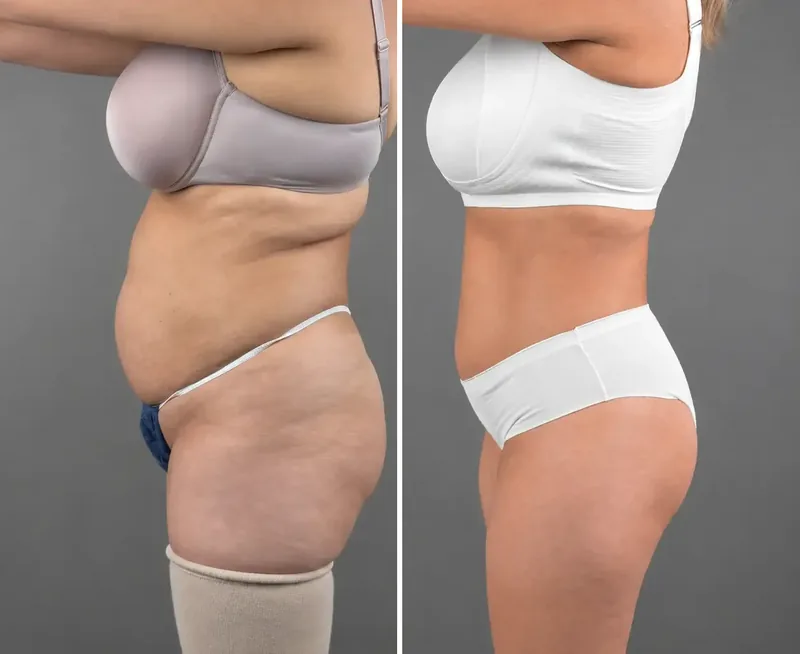
 beforeafter
Liposuction
Abdomen and flanks
from $1,200
The price is fixed in the contract before surgery
Message our coordinator
Free online consultation · Reply within 15 minutes
Message us on TelegramMessage us on WhatsAppBy messaging us, you agree to our Privacy Policy
Results
All cases are real patients. Faces and identifying details are hidden.
beforeafterAbdomen and flanks
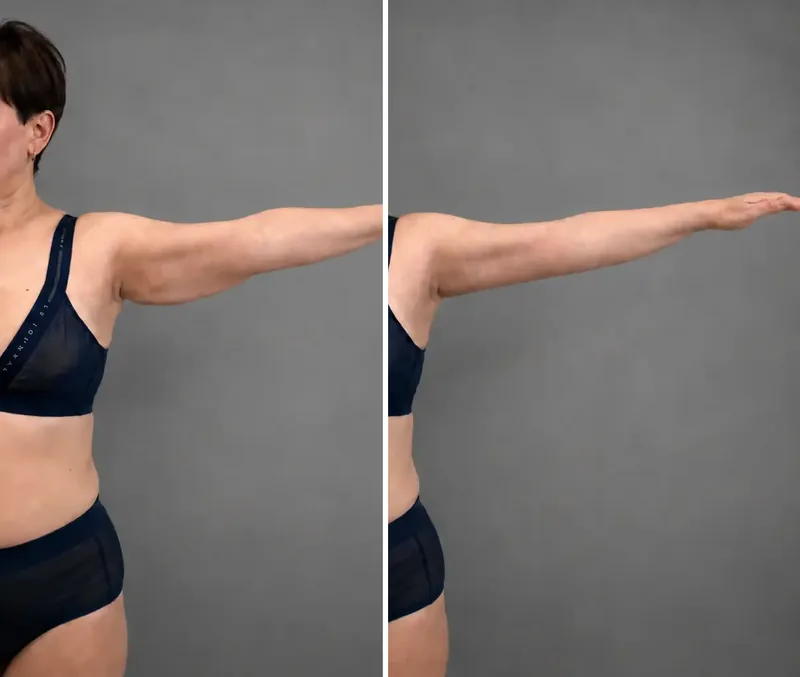 beforeafter
Arms
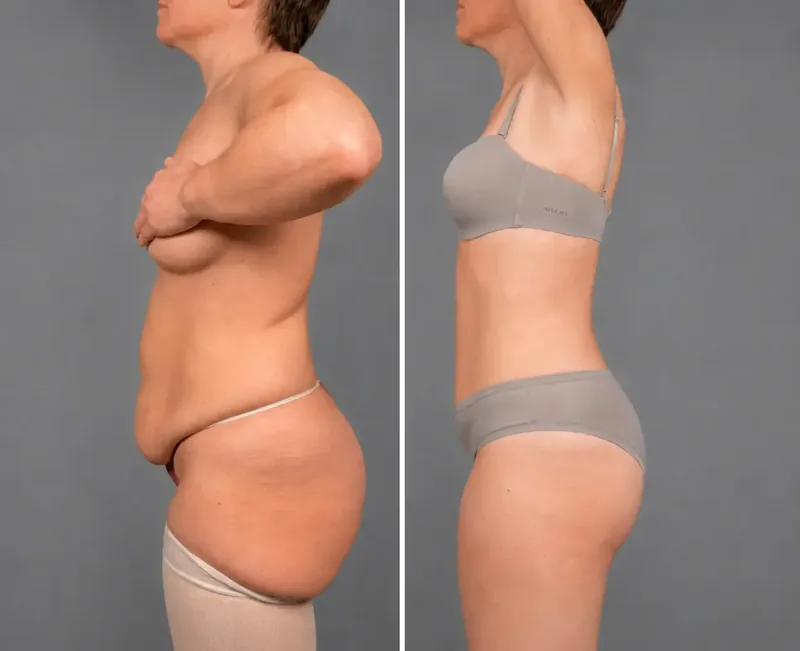 beforeafter
Abdomen and flanks
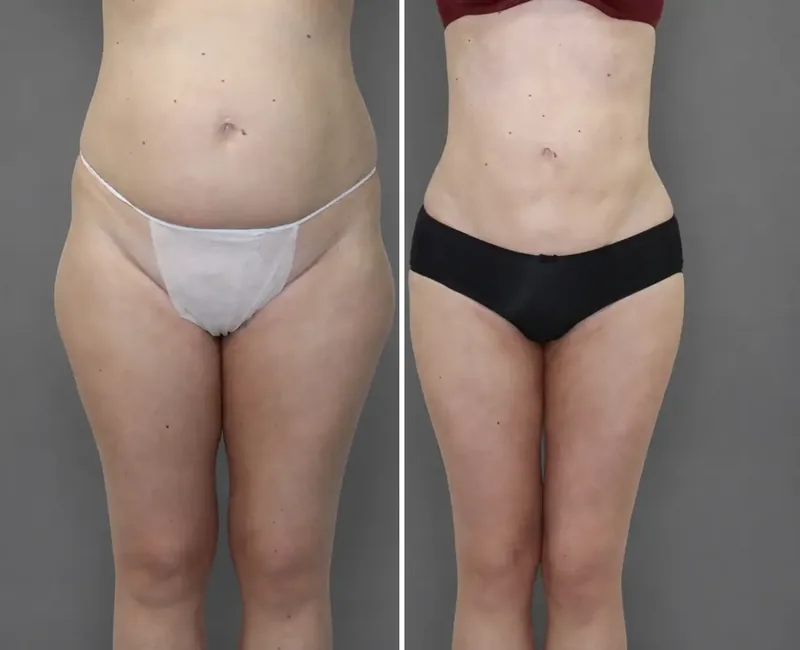 beforeafter
Abdomen and thighs
 beforeafter
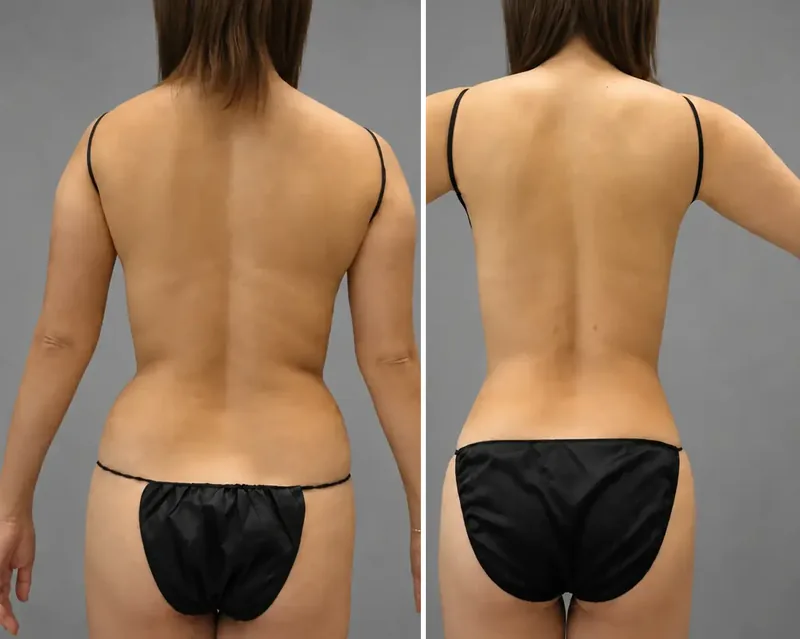
Back and flanks
 beforeafter
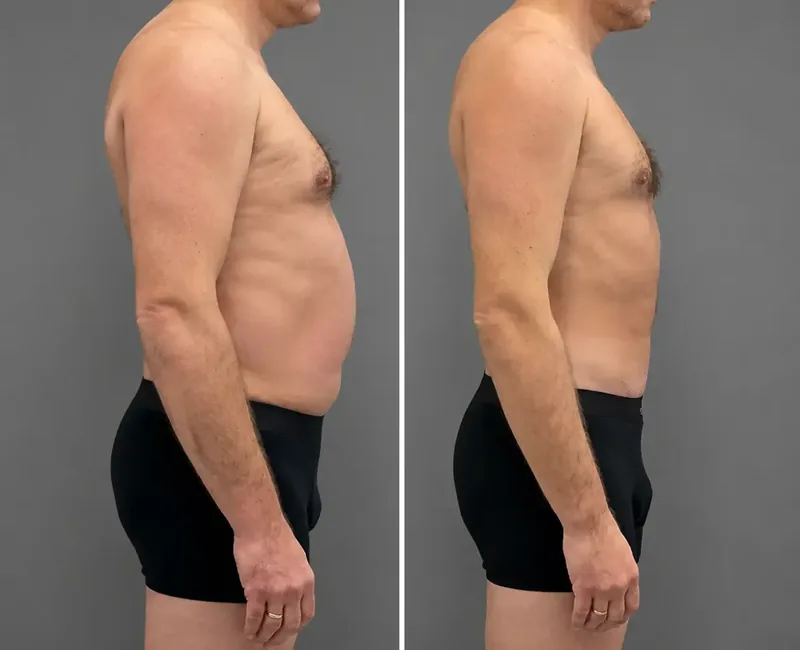
Male abdomen
 beforeafter
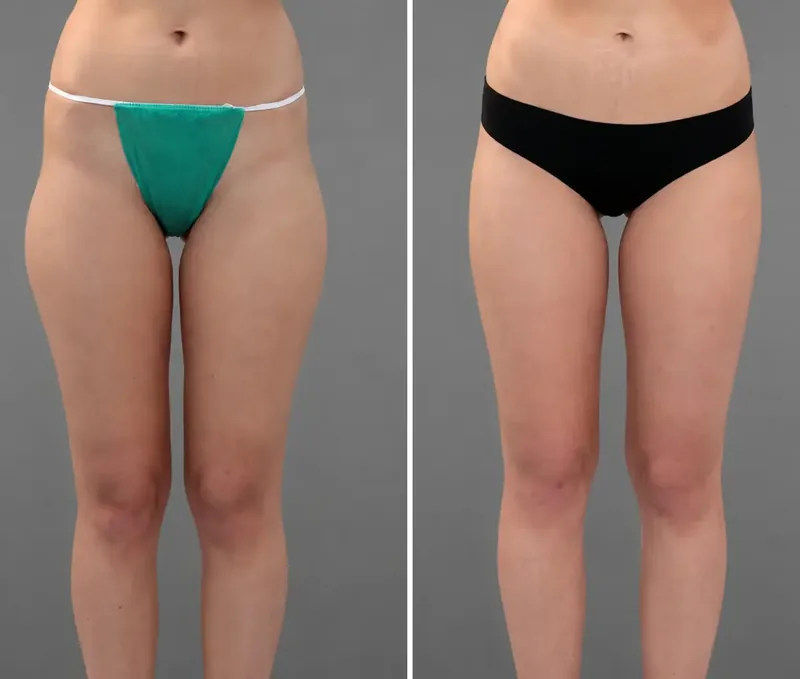
Inner thighs
 beforeafter
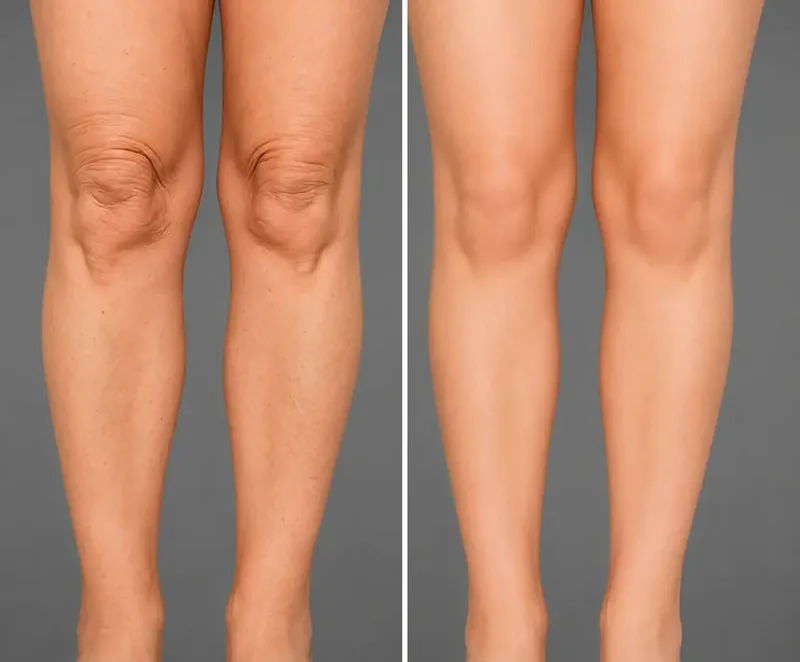
Knees
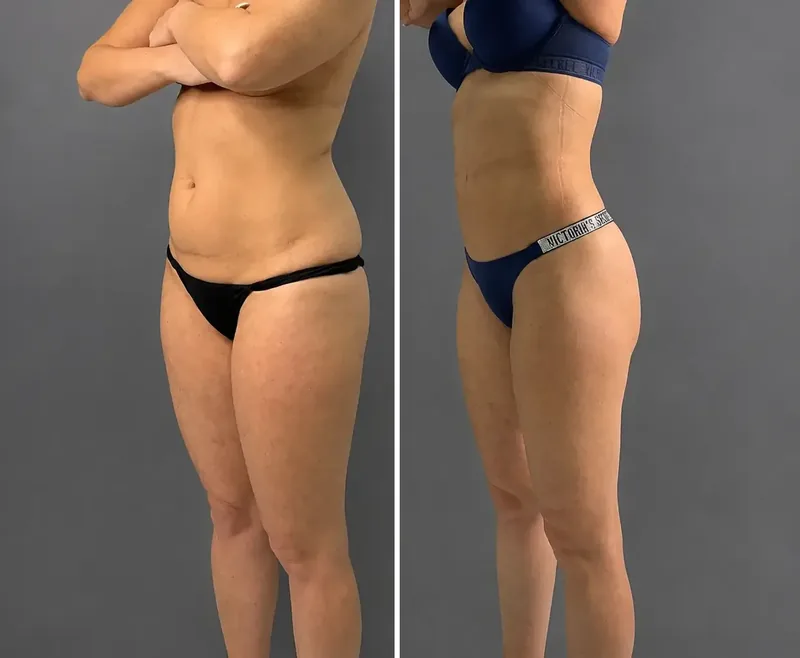 beforeafter
Abdomen and flanks
Comparison
We use two liposuction techniques: tumescent (classic) and VASER (ultrasound). Compare the goal, the indications and the anaesthesia to choose the right technique together with your surgeon.
A special solution loosens fat for removal through a thin cannula
from $1,200
Ultrasound breaks down fat cells before vacuum removal
Price at consultation
The benefits and recovery times shown are averaged for each technique and given for guidance: the scope of correction and rehabilitation depend on your anatomy and individual features, and the surgeon confirms them at the consultation.
At the consultation the surgeon draws up a plan for your case and explains how your liposuction will go.
Free, before surgery and with no obligation.
Several areas can be treated in a single operation, saving both recovery time and budget
The most requested area for women and men, often combined with abdominoplasty
Fat that doesn't respond to exercise
Back rolls that spoil the silhouette
A cosmetic issue seen in warm weather
Little volume, a quick visible result
A delicate spot that requires precision
Gynecomastia, pseudogynecomastia — the fat component
About the clinic
Modern equipment, comfortable rooms and care for every patient

We will answer your questions and find a convenient time for a consultation
If your case can be solved without surgery, the doctor will tell you so at the consultation — and you will not spend money for nothing.


Not sure the surgery is right for you?
Leave your number — the coordinator will call you back, and the surgeon will tell you whether liposuction suits you. No surgery booking needed.
Find out if it suits me
Prices
The final price is calculated individually after an examination and fixed in the contract.
The most requested area — treated in one operation

Contouring of the front abdominal wall

The surgeon assesses the fat deposits and skin tone, listens to your wishes and chooses the right technique.

Message our coordinator
Free online consultation · Reply within 15 minutes
Message us on TelegramMessage us on WhatsAppBy messaging us, you agree to our Privacy Policy

all inclusive
From preparation for surgery
to post-op check-ups.
from $1,200
Book a consultationHow it works
An agreed treatment plan, careful monitoring after surgery and post-op check-ups.
 1
1The surgeon listens to your wishes, assesses the fat deposits and skin tone and rules out contraindications. A hormonal screening is also ordered — it helps predict the long-term result.
 2
2We reserve a surgery date for you: the deposit can be paid by card at the clinic or online by bank transfer. The terms are fixed in the contract for medical services
 3
3Blood tests (complete count, coagulation panel, biochemistry, infections), an ECG, a chest X-ray and, if needed, a GP consultation. All tests can be done at the clinic with no waiting.
 4
4Marking the areas and fitting compression garments. Under local or general anaesthesia the surgeon removes fat through 3–5 mm micro-punctures — from 1 hour for small areas to 3–4 hours for a combined procedure.
 5
5With local anaesthesia you go home 3–4 hours after surgery; with general anaesthesia you stay one day in a comfortable ward under medical supervision.
 6
6Compression garments for 30–45 days. First changes show at 2 weeks, once swelling subsides; the final result forms in 3–6 months. Check-ups at 7 days, 3 and 6 months.

After tumescent liposuction, recovery is much shorter than after a conventional procedure. Most patients return to work within 7–10 days. In the first week, mild swelling and a raised temperature are possible — a normal response to surgery. Compression garments are worn for 30–45 days: they fix the new contours and speed up tissue recovery. In the first month, bathhouse, sauna, pool and intense sport are off-limits. For the best result and faster recovery we recommend lymphatic drainage massage, pressotherapy and a gradual return to activity. First visible changes show 2 weeks after surgery, when the main swelling subsides; the final result forms in 3–6 months.
After 7 days, at 3 months and at 6 months. Until the end of the year, get a post-surgery consultation with your surgeon to review results and get more information, at the clinic's expense.
Advantages

At the consultation we discuss your wishes and assess the fat deposits and skin tone. Before surgery an endocrinologist rules out hormonal causes of the fat deposits — this improves the long-term result.

The surgeon follows your recovery and the new body contour at check-ups after 7 days, 3 and 6 months. Check-ups, dressings and aftercare advice are already included in the price of surgery.

Tumescent and VASER techniques, micro-incisions of 3–5 mm and precise volume control. Our aim is a smooth contour that keeps the natural proportions of your body.

We respect your time: we work 24/7, with easy booking and a personal approach — we adapt to your pace.
After the consultation the surgeon defines the areas and the scope of surgery, and you get a clear price fixed in the contract — no hidden extras.

With general anaesthesia recovery starts in a comfortable hospital ward under round-the-clock nursing care. The stay and meals are already included in the price.
FAQ
Yes, this is standard practice. A single area on its own is rarely treated — patients more often combine several problem zones, such as the abdomen and flanks, or inner and outer thighs. At the consultation our surgeons help define the best scope of surgery for your health and the result you want.
No. Liposuction is not a weight-loss method. Its purpose is to remove local fat deposits that resist diet and exercise and to reshape body contours. If your weight is unstable, first see a nutritionist or endocrinologist.
The surgery is done through punctures only 3–5 mm across — they usually need no stitches. Once healed, the marks are barely visible. With proper care during recovery they fade completely.
The surgeon always checks skin tone, elasticity and turgor before the operation. When the skin is in good condition, it tightens on its own along the new contours. If tone is lower or stretch marks are present, our specialists suggest preparatory treatments to improve the skin in advance.
No, it doesn't hurt: the procedure is under anesthesia (local or general, depending on the scope). Mild discomfort after surgery can occur and is relieved with painkillers the doctor prescribes.
For the first 7 days — no physical exertion or heavy lifting. For 4–6 weeks wear compression garments and avoid bathhouse, sauna, pool and active sport. Alcohol and tanning beds are off-limits for at least a month. Your surgeon gives all individual recommendations after surgery.
We perform it for patients 18+ who have no contraindications. No upper age limit exists — the decision is individual, following an examination and health assessment.
Not directly. Liposuction takes away fat, not the skin structure responsible for cellulite. However, the improved body contours visibly reduce its appearance.
In 7–10 days most patients return to work and their normal routine. Swelling and bruising resolve by weeks 4–5, and the final result forms in 3–6 months as the tissues fully adapt.
A strict diet isn't required, but nutrition matters for keeping the result. Removed fat cells don't come back, but the remaining ones can grow if you gain weight. For a lasting result we recommend a balanced diet and regular physical activity.
Yes. Stop smoking, alcohol and medications affecting blood clotting (aspirin, etc.) 7–10 days before liposuction. Pre-operative tests are also needed: blood tests, ECG, ultrasound and consultations with a GP and anesthesiologist. All instructions are given after your first consultation.
2 weeks after surgery the main swelling subsides and first changes show. The interim result is assessed at 1.5–2 months, and the final contours take shape in 3–6 months.
Prices are in US dollars; the amount in brackets is an approximate conversion to MAD at the rate of 02.10.2026. The final price is fixed in your contract.
Prices start from $1,200 (≈ MAD 12,000) per area. The surgeon sets the final price at the free consultation, and it is fixed in the contract, with no hidden extras.
The operation under local or general anaesthesia and the surgeon's support throughout recovery. The price is per area and fixed in the contract.
Message us on WhatsApp or Telegram using the buttons below. A coordinator will answer your questions and book a free consultation where the doctor names the exact price.
By messaging us, you agree to our Privacy Policy
Which zones can be treated? The abdomen and flanks are the most requested, for women and men alike. Thighs (outer and inner), back and lower back, arms and shoulders, chin and neck, knees and the male chest are also corrected. Several areas can be done in one operation, saving recovery time and budget, which is why patients from Mohammedia rarely limit themselves to a single zone.
It starts with a surgeon consultation: the doctor listens to your wishes, assesses the fat deposits and rules out contraindications, and a hormonal screening is ordered to predict the long-term result. Patients from Mohammedia then take pre-operative tests — blood count, coagulation panel, biochemistry, infection screening, ECG and chest X-ray — which can all be done at the clinic with no waiting.
The cost is built around your zones: from $1,200 (≈ MAD 12,000) for the most compact area, rising for larger combinations such as the torso or the abdomen with flanks. Nothing is added later, because the contract fixes the price. Mohammedia residents can split payment into interest-free instalments and begin with a free surgeon consultation, booked through the form on the page.
Well-known people who spoke openly about this operation, in their own words.
 Amy Schumer's liposuction: “thanks for helping me get my strength back”Amy Schumer revealed her liposuction on Instagram in 2022 and explained why. Her words, how liposuction works today and what recovery looks like.
 Brooks Nader and her liposuction regret: what she actually saidModel Brooks Nader told People she regrets a past liposuction, saying it left dimples and ripples. What she said, how liposuction works, and recovery.
 Stacey Silva's liposuction: what was reported, and what wasn'tStacey Silva and her twin Darcey had liposuction on a 2021 trip to Turkey, reported by Showbiz Cheat Sheet. What was said, how the procedure works and recovery.
 Did Tara Reid have liposuction? Yes — and she told the whole storyThe American Pie star had liposuction and breast surgery in 2004; both went wrong. Her honest quotes on the damage and the repair.
 Did Wendy Williams have liposuction? Yes — and she paid a price for saying soThe talk-show host had full-body liposuction and breast implants in 1994 and says she was 'vilified' for admitting it. Her quotes and what lipo involves.
 Did Josie Gibson have liposuction? Yes, and she explained whyJosie Gibson had liposuction and skin removal on her arms in 2026 because of lipoedema. Her own words, how liposuction works and what recovery involves.
Mohammedia is a town that exercises. The golf course, the tennis club, the fishermen at Manesmane and the joggers on the corniche all belong to the same picture, and that picture explains most of the messages we receive about liposuction from here. People who already move, eat sensibly and sleep regularly still find that a few pockets of fat stay exactly where they are: flanks, the lower abdomen, the inner thighs, the chin, the upper arms. Liposuction is the procedure for that specific frustration, and it is not a substitute for training.
The honest starting point is therefore a question about what has already been tried. During the online consultation the surgeon looks at photographs taken standing, from the front, the side and the back, in daylight and in underwear, and asks about your weight history, your training habits and any earlier operations. The aim is to separate stubborn local fat, which responds to surgery, from general excess weight, which needs a different plan and sometimes a different specialist.
The consultation is free and runs over Telegram and Telegram, with coordinators answering around the clock. For a city with three industrial zones and a busy port, where plenty of people work evening or night shifts, being able to send the photographs at two in the morning and get a written opinion later in the day is worth more than any waiting room.
Liposuction is performed through tiny punctures of 3 to 5 mm, and they usually need no stitches. Under local or general anaesthesia the surgeon removes the fat after marking the areas, and you are fitted with compression garments. Small zones take from one hour; a combined procedure on several areas can take 3 to 4 hours. The team uses tumescent and VASER techniques with precise control of the volume removed, because the target is a smooth contour that keeps your natural proportions rather than a dramatic hollow.
The choice between local and general anaesthesia depends on the extent of the work and on your preference. With local anaesthesia you go home 3 to 4 hours after surgery. With general anaesthesia you stay one day in a comfortable ward under medical supervision. In both cases the marks left by the punctures are barely visible once healed, and with proper care during recovery they fade completely.
Age matters less than health. We operate from 18 years old if there are no contraindications, and there is no upper limit: after an examination and a health assessment the decision is individual. What does not change from one patient to the next is preparation. Smoking, alcohol and medicines that affect clotting, aspirin among them, are stopped 7 to 10 days before the operation, and the pre-surgery tests include blood tests, an ECG, an ultrasound and consultations with a GP and an anaesthesiologist.
The first week is deliberately quiet: no physical exertion and no heavy lifting for 7 days. Most patients are back to their usual routine and work in 7 to 10 days. For 4 to 6 weeks you wear compression garments and stay away from the bathhouse, sauna, pool and active sport, and alcohol and tanning beds stay off the list for at least a month. Compression garments are worn for 30 to 45 days in total, and your surgeon gives the individual recommendations after the operation.
Mohammedia helps here more than a hot inland city would. The Atlantic keeps the temperature moderate: the yearly average is about 22 degrees at the high and 14 at the low, with January the coolest month and July and August the driest. A tight garment is much easier to wear in a cool October than in a heatwave, which is one reason patients from the coast often schedule the operation for autumn or winter. The rain between November and April is light and usually not an obstacle to short walks, which the surgeon will encourage.
Swelling and bruising clear by weeks 4 to 5. The first changes in the contour show at 2 weeks, when the main swelling has subsided; the interim result is assessed at 1.5 to 2 months, and the final contours form in 3 to 6 months once the tissues have fully adapted. Check-ups happen at 7 days, 3 months and 6 months, and until the end of the year you can have a post-surgery consultation to review the result at the clinic's expense.
The seafront at Mohammedia has been laid out for walking since the days of Fedala, when the Esplanade was built in 1938 and the coast became a place for leisure as well as cargo. Walkers on the corniche today see the same view that the town was planned around, and they are not the only ones: the city sits next to Casablanca, the country's commercial heart, and a good share of its residents spend working days in offices, banks and logistics firms. Long hours at a desk are a main reason people feel their waist and abdomen have changed.
The Moroccan working week runs from Monday to Friday, so a typical patient arranges the operation to start a free weekend and ends up with a week of rest before the first return to the office. That plan fits the 7 to 10 days most patients need. If your work involves lifting or long periods of standing, say so at the consultation, because the 7-day limit on exertion and the weeks without active sport apply to everybody.
Students and young professionals from the faculty and the city's other higher-education institutions often ask whether the examination calendar allows for it. As with everything else, the answer depends on the dates, and the coordinators will help you count back from the day you must be fully active again.
Think of the process as four short stages. First, photographs and questions go to the coordinators, and within a day the surgeon has read them and replied. Second, you agree which areas are treated, whether the plan fits one session, and which anaesthesia you prefer. Third comes the pre-operative preparation: the tests, the pause on smoking, alcohol and aspirin, and the purchase of the compression garments you will wear for the next weeks. Fourth is the operation itself and the first days afterwards.
On the day, the areas are marked while you stand, because the body looks different upright than lying down. The garments go on at the end of the procedure. If you chose local anaesthesia, the afternoon is spent at home; if you chose general anaesthesia, the night is spent in the ward, where staff check how you are feeling. The first walk is short and slow, and many patients take it in the cool of the evening along a quiet street near home.
Mohammedia's mixture of sea air, parks and wide pavements suits those early walks. The Twin Towns Park and the seafront give flat, shaded stretches where you can move for ten or fifteen minutes without strain. Moving a little each day supports circulation, but the rules on exertion, on sport and on heat still stand: no strain for 7 days, and no sauna, pool or active sport for 4 to 6 weeks.
Golfers and tennis players ask the same thing in different words: when can I swing again? The surgeon answers in terms of the rules above, because every patient follows the same restrictions, and he will say whether your particular areas need longer. Do not rush the return to sport; a garment worn for the full period and a gradual comeback give the tissues time to adapt.
Others ask about the sea. Swimming belongs with the pool in the restricted list for 4 to 6 weeks, so a winter operation is the natural way to have the water ready in summer. And people who spend days on the beach ask about tanning: tanning beds are off-limits for at least a month, and your surgeon will give guidance on sun exposure for the healing marks.
Finally, there are those who work shifts in the port or in manufacturing and want to know whether the operation will cost them a pay period. For most patients the answer is a return to the usual routine and work in 7 to 10 days, but the coordinators will go through your actual duties and propose dates that match them.
The abdomen and flanks come up most often, particularly among people who sit for long hours in offices around the port and the business districts. Here the surgeon distinguishes fat lying under the skin, which liposuction can reduce, from fat deeper inside the abdomen and from loose skin or separated muscles, which it cannot treat. If the photographs show lax skin after pregnancy or weight loss, a different operation may be the better answer, and you will hear that before anything is booked.
Thighs and hips are the second group. Women in particular describe a disproportion between the upper and lower body that no amount of exercise changes, and the aim there is a continuous line from waist to knee, with the hips neither hollowed nor left heavy. The surgeon plans the treated zones as a whole shape, not as isolated spots, because an uneven result is far more noticeable on a beach than a modest one.
Smaller areas such as the chin, the neck, the inner knees and the upper arms are treated in a shorter session, from about one hour. They are popular with people who want a quick, quiet change before an event. Even then the same preparation, the same garments and the same check-ups apply, because small does not mean casual.
Mohammedia receives about 432 mm of rain a year, nearly all of it between November and April, with November the wettest month. Summer is dry, with July and August almost without rain, and the Atlantic keeps the heat moderate. For a procedure that asks you to wear a compression garment for 30 to 45 days and to avoid the sauna, the pool and active sport for 4 to 6 weeks, the cool season is the easy choice, and the surgeon will happily plan the dates with you.
Summer operations are possible, and some patients prefer to be done before a long holiday. Then the schedule needs more care. The garment remains on during warm days, activity stays limited, and the sea stays out of reach for the first weeks. Think about what the weeks ahead contain, whether a family event, a wedding or a long shift pattern, and tell the coordinator, who will check the dates against the recovery milestones: 2 weeks for the first changes, 1.5 to 2 months for the interim result, 3 to 6 months for the final contour.
Whichever season you choose, keep the later check-ups in your diary. The visits at 7 days, 3 months and 6 months are where the surgeon sees the new contour and decides whether anything needs adjusting, and the dressings and aftercare advice that go with them are already part of the programme.
Nobody should judge liposuction in the first fortnight. The treated areas swell, the garment compresses them, and the skin may look uneven or darker where bruises gather. Those changes are expected, and they clear by weeks 4 to 5. When the first contours appear at 2 weeks, they are a preview, not a verdict.
At 1.5 to 2 months the interim result is assessed. Most of the volume change is visible, the garment has done its work, and the surgeon can see whether the skin is retracting evenly. The final contours form in 3 to 6 months, once the tissues have fully adapted. A patient who understands this timetable at the beginning is far less likely to panic in week three or to rush back to training too early.
What keeps the result is stable weight and moderate habits. Fat cells removed from a zone do not come back to that zone, but the remaining ones can still grow if the body gains weight overall. People in Mohammedia, with a city planned around walking, sport and sea air, have an advantage here: healthy movement is easy to build into an ordinary day.
Photographs taken before the operation and again at each visit make the change much easier to judge. Take them under the same light and in the same pose, as you did for the first consultation, and send them to the surgeon with your questions.
Daily life in the city is built around short distances: the market, the seafront, the station area near the Kasbah and the university faculty are all places where people walk. That is useful after liposuction, because gentle walking is encouraged once the first quiet days have passed, while errands that involve carrying bags or climbing stairs with a load are better left to someone else for the first week.
Think about clothing in advance. The compression garment has to be worn under everyday clothes for several weeks, so choose looser trousers and tops with enough room, and keep a spare garment so that one can be washed. Warm sea air in summer makes tight layers uncomfortable, while on the cool, damp evenings of December a garment feels like a welcome extra layer.
Finally, arrange who will answer the phone and who will sit with you on the first evening after a general anaesthetic. A relative or friend nearby makes the first night easier, and the coordinators remain available around the clock in Telegram and Telegram if a question comes up that cannot wait until morning.
Every doctor practising in Morocco, in the public or the private sector, has to be registered with the Conseil National de l'Ordre des Médecins. The Order's website, cnom-maroc.com, does not offer a public lookup on its front page, so ask the surgeon to state the registration and the specialty in writing. A surgeon who is comfortable with the request is a good sign.
Bring practical questions: which areas are realistic in one session, which technique is proposed and why, which anaesthesia suits you, what the garment schedule looks like, and when the check-ups will take place. Ask also what would change the plan, for example a significant weight change before the operation. The answers form a useful file to compare at home.
It is not a weight-loss method and it does not replace a diet or a training plan. It reshapes local deposits, and the long-term outcome depends on keeping a steady weight. It is also not an instant result: the swelling hides the contour for weeks, and patience through the first months is part of the process. Patients in a sporty city tend to understand this quickly, because they are used to progress measured in weeks rather than days.
If the consultation shows that your goal is better served by another procedure, such as a tummy tuck for loose skin after pregnancy or bariatric surgery for a high body mass index, the surgeon will say so. Hearing that early saves months, and the same coordinators can open that conversation for you.
A remote assessment is only as good as the pictures behind it, and most delays come from images that cannot be read. Choose a plain wall, switch off the flash and stand in front of a window so that daylight falls on you evenly. Wear underwear that does not squeeze the skin, keep your arms slightly away from the body, and ask a family member to hold the phone at waist height rather than taking selfies from above, which flatten every curve.
Take the same set each time: front, both sides, back, and a three-quarter view from each direction. Add one picture with the muscles relaxed and one with a gentle pinch of the area you want treated, because the way tissue folds tells the surgeon more about the fat layer than a still pose does. Label the files with the date, and write down your height, your current weight and the lowest and highest weights of the last few years.
Keep this folder. It is the baseline you will compare against months later, and it is also the document you can show to a second surgeon if you want another opinion. Patients who build it carefully usually receive a more specific reply, because the surgeon is not forced to answer in generalities. The coordinators can look at the set before it goes to the surgeon and tell you which angle is missing.
When two proposals for the same body area arrive with very different tone, the first thing to check is whether they describe the same operation. Look for the technique named in plain words, the areas included, the type of anaesthesia, the number of sessions, the garment, and the follow-up visits. A letter that is full of enthusiasm but silent on these points tells you little about what will actually happen on the day.
A useful habit is to make a small table at home with one column per proposal and one row per question. Where a row stays empty, go back and ask. If one clinic treats three zones and another only one, the comparison is not between like and like, and the second is not automatically the cheaper or the lighter choice. Equally, be wary of anyone who promises a particular number of centimetres or a particular silhouette before seeing you in person.
Good surgeons talk in ranges and conditions: what is likely, what depends on skin quality, what could change the plan. That vocabulary is a sign of experience. If you have been given such an answer through the online consultation, you already have a reference point, and any other proposal can be measured against it.
Liposuction is a short operation but it asks for a quiet week afterwards, and the people around you should know that in advance. Tell the household which days you will move slowly, who will take over lifting and carrying, and who will collect the children from school if that is part of your routine. In a town where many families live close to each other, a short family conversation beforehand removes most of the friction later.
At work, a clear plan is easier than an improvised one. Decide with your manager which tasks can be passed on, whether part of the work can be done from home in the first days, and when you expect to be back at the desk. People with shift patterns or physical work should say so during the consultation, because the surgeon will want to advise on the order in which you resume your tasks.
Prepare the bedroom as well. A second pillow, a bedside table with water and the medicines you were given, a phone charger within reach, and a loose set of clothes laid out in advance make the first nights calmer. These small things rarely appear in brochures, yet they are what patients mention when they look back and say what helped.
The first days are about rest broken by short, regular walks around the flat or the garden. Walking keeps the circulation moving and eases the stiffness, while long periods of sitting or lying in one position do the opposite. Drink water steadily, eat light meals, and follow the instructions on the garment and the dressings exactly as the surgeon wrote them.
The Atlantic air on this stretch of coast is usually mild, so overheating is less of a problem than in inland cities, but a sunny afternoon behind glass can still be warm. Dress in breathable cotton over the garment, avoid direct sun on treated skin, and keep to shaded routes if you go out. Swelling tends to look worse in the evening and better in the morning; that rhythm is normal and not a reason for alarm.
Write down questions as they occur, and send them to the coordinators rather than searching forums. Short messages with a photo are usually enough for the team to pass them on to the surgeon, and the answer comes back in writing so that you can read it again when you are tired. Following the sequence you were given, instead of rushing back to old habits, is what protects the final contour.
In a city known for its golf and tennis, the question of when to play again comes up early. The honest answer is that the body sets the pace and the surgeon confirms it at the check-up. Light walking comes first, then gradual return to normal activity, and only later sport that loads the trunk or involves sudden movement. The restrictions listed in the questions below remain the reference.
Plan the return in steps. Start with shorter sessions than usual, keep the garment on while you train for as long as you were told to, and stop if an area becomes hot, hard or unusually painful. Take photographs every few weeks under the same light, so that you can see progress that the mirror hides from day to day.
Many patients find that the months after surgery change how they train: more attention to posture, a calmer approach to dieting, and a clearer sense of which areas respond to exercise and which do not. That is a good outcome in itself, because the result is easier to maintain when the habits around it are realistic.
Not every consultation ends in a booking, and it should not. Some people discover that their goal is smaller than they thought, others that the timing is wrong, and a few that they would rather try another route first. A good assessment leaves you better informed whether or not you proceed, and nobody at the other end of the chat should rush you.
If you feel uncertain, say which part troubles you: the anaesthesia, the time away from family, the scars, the expectations. Each concern has a concrete answer, and the surgeon would rather resolve it now than meet it for the first time on the day of the operation. Taking a week to think, or asking for a second opinion, is a normal part of a serious decision.
Keep the written answers you receive. If you decide to wait, you can return to the same file in a few months with new photographs and a clearer mind, and the conversation continues from where it stopped instead of starting again from zero.
The most common mistake is choosing on enthusiasm alone: a warm message, a striking before-and-after picture, a promise of a specific silhouette. Pictures can be flattering for many reasons, and no two bodies respond in the same way. Ask what was done in the case shown, how long ago the picture was taken and what the person did afterwards.
The second mistake is hiding information. Past surgeries, regular medicines, a smoking habit, a recent change in weight, a tendency to bruise easily: all of them matter, and none of them will make the surgeon think less of you. Concealing them only moves the problem to a moment when it is harder to solve.
The third is impatience afterwards. Tight garments feel uncomfortable, the first photographs look puffy, and some patients stop following the plan too early or compare themselves with a friend who healed differently. Keep to the schedule, use the photo diary, and give the contour time to settle. Questions during that period are what the round-the-clock chat is for.
Yes. It is online and free. Send standing photographs in daylight, your weight history and your training habits through Telegram or Telegram; coordinators reply around the clock and the surgeon gives an opinion.
The surgery is done through punctures of 3 to 5 mm, which usually need no stitches. Once healed, the marks are barely visible.
With local anaesthesia you go home 3 to 4 hours after surgery. With general anaesthesia you stay one day in a comfortable ward under medical supervision.
From 1 hour for small areas to 3 to 4 hours for a combined procedure.
Most patients return to their usual routine and work in 7 to 10 days. For the first 7 days there is no physical exertion or heavy lifting.
For 30 to 45 days. For 4 to 6 weeks you also avoid the bathhouse, sauna, pool and active sport; alcohol and tanning beds are off-limits for at least a month.
The first changes appear at 2 weeks, an interim result is assessed at 1.5 to 2 months, and the final contours form in 3 to 6 months. Swelling and bruising clear by weeks 4 to 5.
Stop smoking, alcohol and clotting-related medicines such as aspirin 7 to 10 days before. The tests include blood tests, an ECG, an ultrasound and consultations with a GP and an anaesthesiologist.
At 7 days, 3 months and 6 months, plus a post-surgery consultation with the surgeon until the end of the year at the clinic's expense.
Front, both sides, back and three-quarter views in daylight, in underwear, with arms slightly away from the body. One extra picture with a gentle pinch of the area helps the surgeon judge the fat layer.
Yes, and it is a sensible step. Keep the written answer from the first assessment and compare which technique, areas and follow-up each proposal describes.
That is a normal outcome. The assessment is free, and you can return to the same photo file later with fresh pictures and continue the conversation.
The coordinators answer in Telegram and Telegram around the clock and pass medical questions to the surgeon.