


























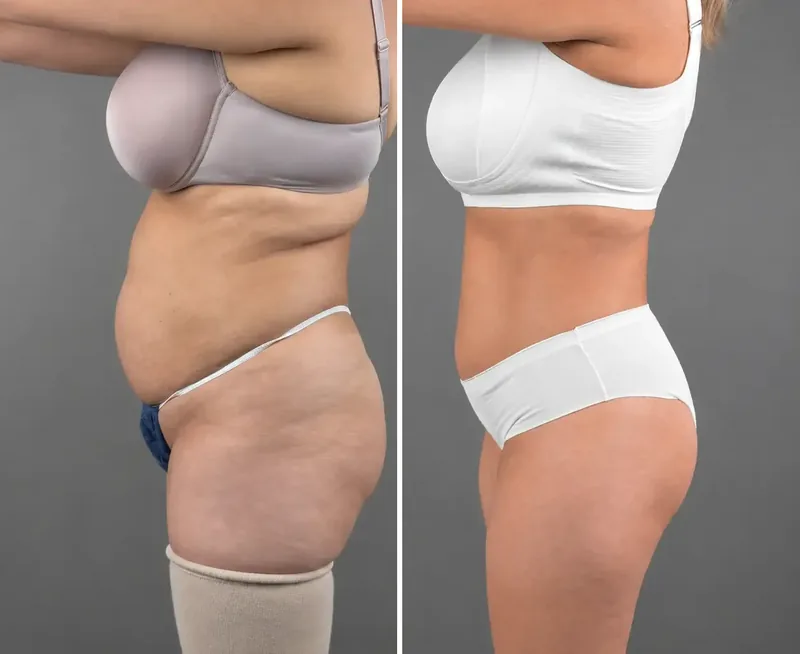
 beforeafter
Liposuction
Abdomen and waist
from $1,200
The price is fixed in the contract before surgery
Message our coordinator
Free online consultation · Reply within 15 minutes
Message us on TelegramMessage us on WhatsAppBy messaging us, you agree to our Privacy Policy
Results
All cases are real patients. Faces and identifying details are hidden.
beforeafterAbdomen and waist
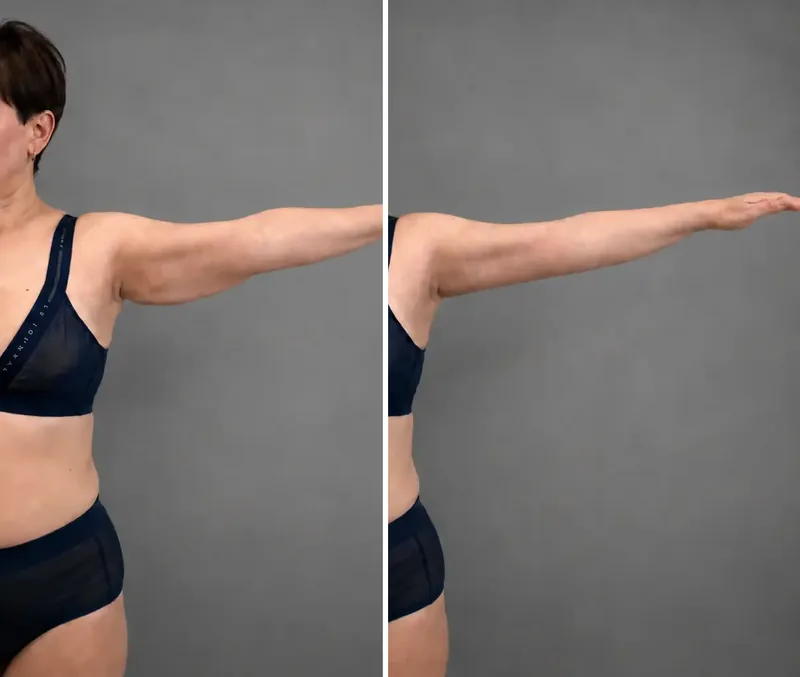 beforeafter
Arms
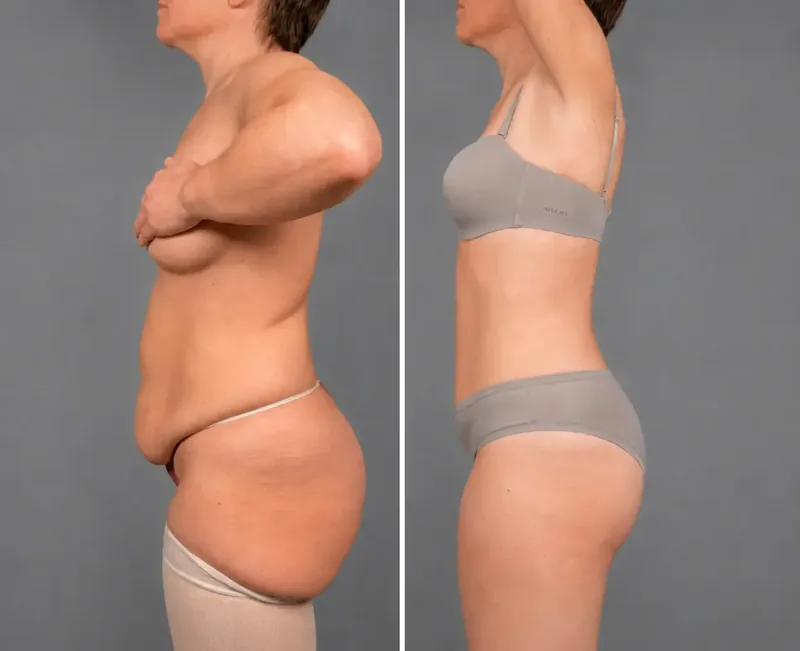 beforeafter
Abdomen and waist
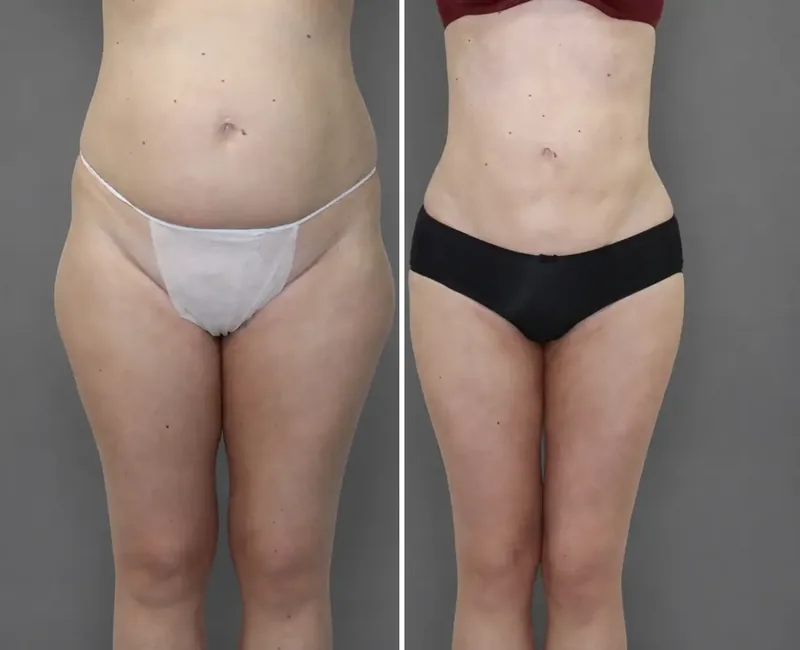 beforeafter
Abdomen and thighs
 beforeafter
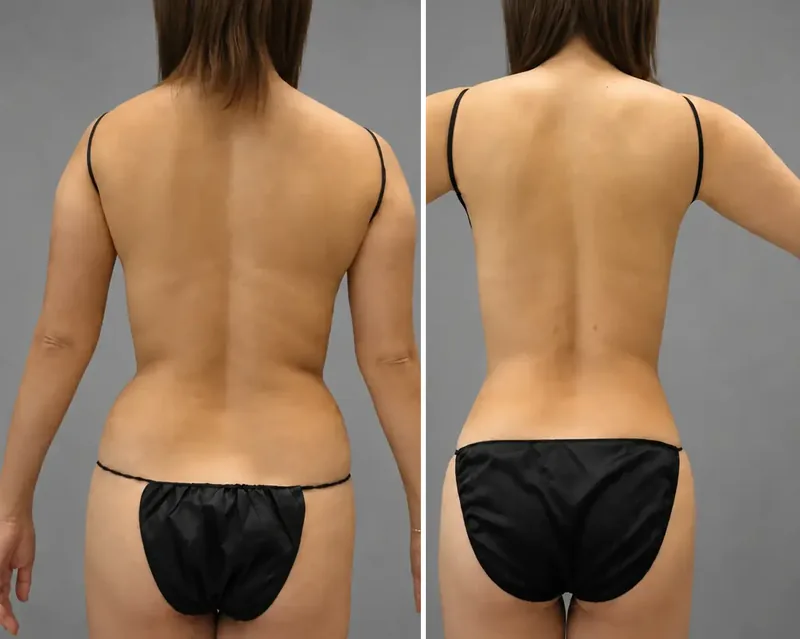
Back and flanks
 beforeafter
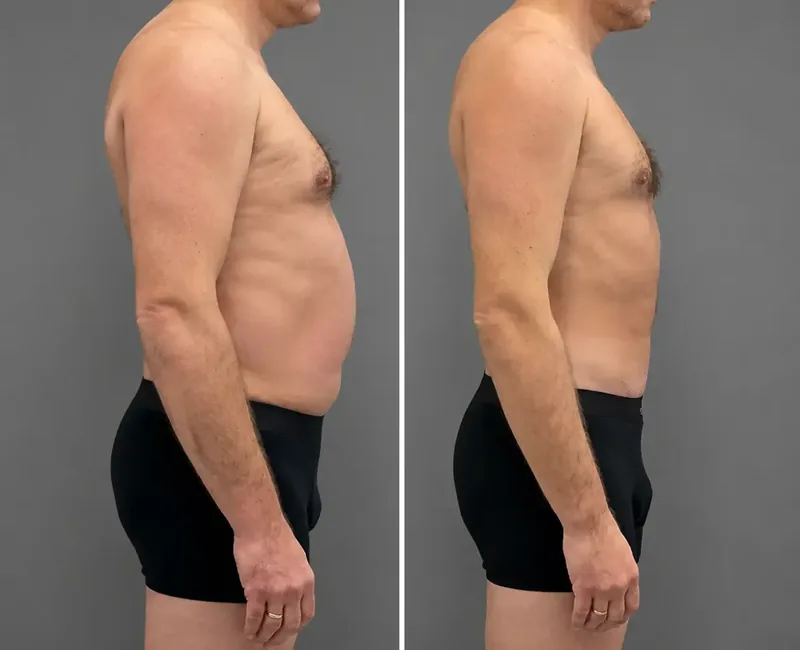
Male abdomen
 beforeafter
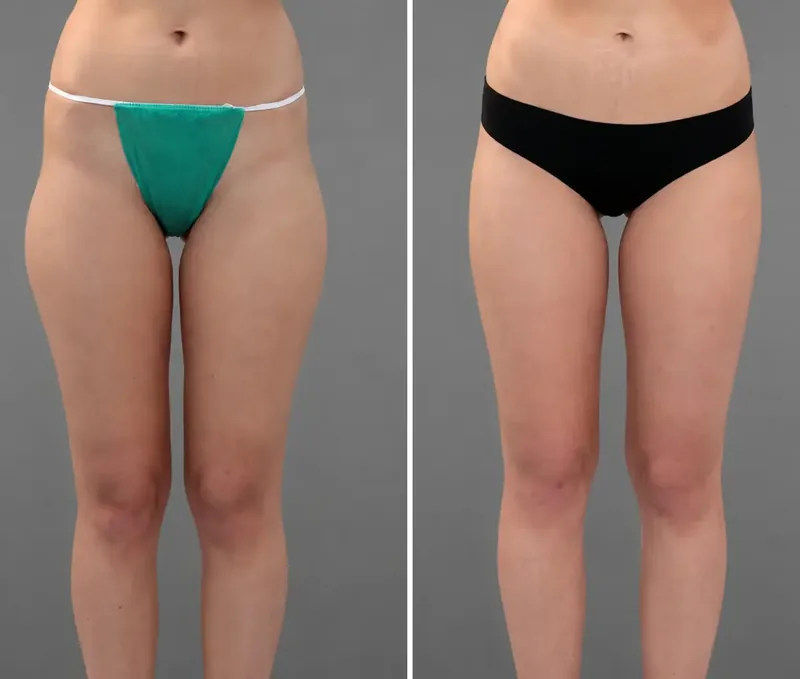
Inner thighs
 beforeafter
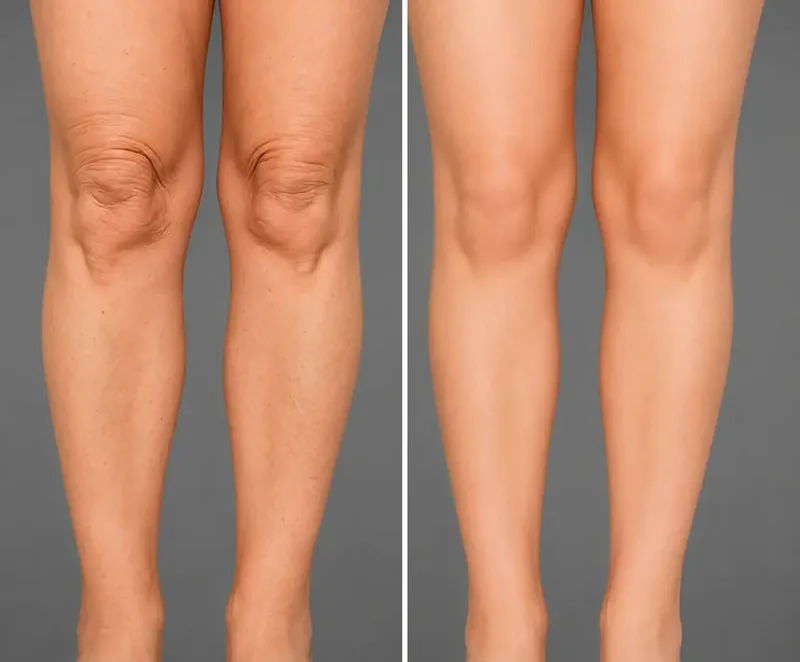
Knees
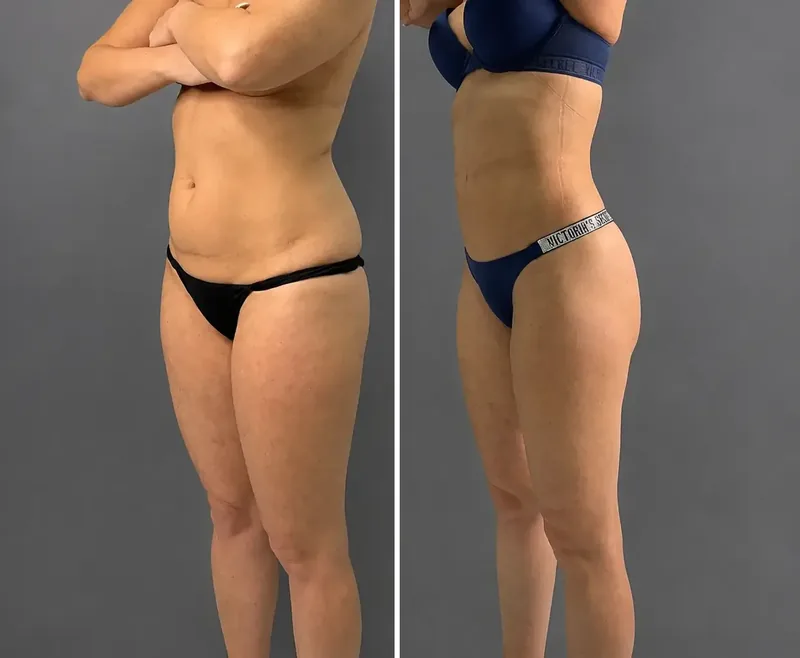 beforeafter
Abdomen and waist
Comparison
We use two liposuction techniques: tumescent (classic) and VASER (ultrasound). Compare the goal, the indications and the anaesthesia to choose the right technique together with your surgeon.
A special solution loosens fat for removal through a thin cannula
from $1,200
Ultrasound breaks down fat cells before vacuum removal
Price at consultation
The benefits and recovery times shown are averaged for each technique and given for guidance: the scope of correction and rehabilitation depend on your anatomy and individual features, and the surgeon confirms them at the consultation.
At the consultation the surgeon draws up a plan for your case and explains how your liposuction will go.
Free, before surgery and with no obligation.
Several areas can be treated in a single operation, saving both recovery time and budget
The most requested area for women and men, often combined with abdominoplasty
Fat deposits exercise doesn't reach
Rolls on the back that affect the silhouette
A cosmetic issue seen in warm weather
Little volume, a quick visible result
A delicate spot that requires precision
Gynecomastia, pseudogynecomastia: the fat part
About the clinic
Modern equipment, comfortable rooms and care for every patient

We will answer your questions and find a convenient time for a consultation
If your case can be solved without surgery, the doctor will tell you so at the consultation — and you will not spend money for nothing.


Not sure the surgery is right for you?
Leave your number — the coordinator will call you back, and the surgeon will tell you whether liposuction suits you. No surgery booking needed.
Find out if it suits me
Prices
The final price is calculated individually after an examination and fixed in the contract.
The most requested area — treated in one operation

Contouring of the front abdominal wall

The surgeon assesses the fat deposits and skin tone, listens to your wishes and chooses the right technique.

Message our coordinator
Free online consultation · Reply within 15 minutes
Message us on TelegramMessage us on WhatsAppBy messaging us, you agree to our Privacy Policy

all inclusive
From preparation for surgery
to post-op check-ups.
from $1,200
Book a consultationHow it works
An agreed treatment plan, careful monitoring after surgery and post-op check-ups.
 1
1The surgeon listens to your wishes, assesses the fat deposits and skin tone and rules out contraindications. A hormonal screening is also ordered — it helps predict the long-term result.
 2
2We reserve a surgery date for you: the deposit can be paid by card at the clinic or online by bank transfer. The terms are fixed in the contract for medical services
 3
3Blood tests (complete count, coagulation panel, biochemistry, infections), an ECG, a chest X-ray and, if needed, a GP consultation. All tests can be done at the clinic with no waiting.
 4
4Marking the areas and fitting compression garments. Under local or general anaesthesia the surgeon removes fat through 3–5 mm micro-punctures — from 1 hour for small areas to 3–4 hours for a combined procedure.
 5
5With local anaesthesia you go home 3–4 hours after surgery; with general anaesthesia you stay one day in a comfortable ward under medical supervision.
 6
6Compression garments for 30–45 days. First changes show at 2 weeks, once swelling subsides; the final result forms in 3–6 months. Check-ups at 7 days, 3 and 6 months.

After tumescent liposuction, recovery is much shorter than after a conventional procedure. Most patients return to work within 7–10 days. In the first week, mild swelling and a raised temperature are possible — a normal response to surgery. Compression garments are worn for 30–45 days: they fix the new contours and speed up tissue recovery. In the first month, bathhouse, sauna, pool and intense sport are off-limits. For the best result and faster recovery we recommend lymphatic drainage massage, pressotherapy and a gradual return to activity. First visible changes show 2 weeks after surgery, when the main swelling subsides; the final result forms in 3–6 months.
After 7 days, at 3 months and at 6 months. Until the end of the year, get a post-surgery consultation with your surgeon to review results and get more information, at the clinic's expense.
Advantages

At the consultation we discuss your wishes and assess the fat deposits and skin tone. Before surgery an endocrinologist rules out hormonal causes of the fat deposits — this improves the long-term result.

The surgeon follows your recovery and the new body contour at check-ups after 7 days, 3 and 6 months. Check-ups, dressings and aftercare advice are already included in the price of surgery.

Tumescent and VASER techniques, micro-incisions of 3–5 mm and precise volume control. Our aim is a smooth contour that keeps the natural proportions of your body.

We respect your time: we work 24/7, with easy booking and a personal approach — we adapt to your pace.

After the consultation the surgeon defines the areas and the scope of surgery, and you get a clear price fixed in the contract — no hidden extras.

With general anaesthesia recovery starts in a comfortable hospital ward under round-the-clock nursing care. The stay and meals are already included in the price.
FAQ
Yes, this is standard practice. A single area on its own is rarely treated — patients more often combine several problem zones, such as the abdomen and flanks, or inner and outer thighs. At the consultation our surgeons help define the best scope of surgery for your health and the result you want.
No, liposuction is not a way to lose weight. It removes local fat deposits resistant to diet and exercise and reshapes body contours. With an unstable weight, you should first see a nutritionist or endocrinologist.
The surgery is done through punctures only 3–5 mm across — they usually need no stitches. Once healed, the marks are barely visible. With proper care during recovery they fade completely.
Before the operation, the surgeon always assesses skin tone, elasticity and turgor. If the skin is in good condition, it tightens on its own around the new contours. For reduced tone or stretch marks, our specialists recommend preparatory treatments to improve the skin in advance.
No — the procedure is performed under anesthesia, either local or general depending on the scope. Afterwards mild discomfort is possible and is relieved by doctor-prescribed painkillers.
For the first 7 days, no physical exertion or heavy lifting. For 4–6 weeks, wear compression garments and avoid the bathhouse, sauna, pool and active sport. Alcohol and tanning beds are off-limits for at least a month. Your surgeon gives all individual recommendations after surgery.
We perform the surgery for patients aged 18+ with no contraindications. There is no upper age limit — the decision is made individually after an examination and health assessment.
Not directly. Fat tissue is removed, but the skin structure that causes cellulite stays the same. Even so, its appearance is visibly reduced by the better contours.
Most patients return to their usual routine and work in 7–10 days. Swelling and bruising resolve by weeks 4–5. The final result forms in 3–6 months, once the tissues fully adapt.
A strict diet is not required; still, nutrition matters if you want to keep the result. Removed fat cells never return, but remaining ones can expand when you gain weight. A balanced diet and regular physical activity are our recommendation for lasting results.
Yes. You need to stop smoking, alcohol and medications that affect blood clotting (aspirin, etc.) 7–10 days before liposuction, and pass pre-op tests: blood tests, ECG, ultrasound, GP and anesthesiologist consultations. All instructions are provided after your first consultation.
When the main swelling subsides, 2 weeks after surgery, the first changes become visible. The interim result is assessed at 1.5–2 months and the final contours form in 3–6 months.
Prices are in US dollars; the amount in brackets is an approximate conversion to DZD at the rate of 02.10.2026. The final price is fixed in your contract.
Prices start from $1,200 (≈ DZD 165,000) per area. The surgeon sets the final price at the free consultation, and it is fixed in the contract, with no hidden extras.
The operation under local or general anaesthesia and the surgeon's support throughout recovery. The price is per area and fixed in the contract.
Message us on WhatsApp or Telegram using the buttons below. A coordinator will answer your questions and book a free consultation where the doctor names the exact price.
By messaging us, you agree to our Privacy Policy
The aim is not a smaller number on the scales but a better shape. Liposuction targets saddlebags, back rolls, a belly that will not flatten and fat on the arms, chin or knees. For patients from Annaba, the result depends on one key fact: removed fat cells do not return, while the remaining ones can still grow with weight gain, so a balanced diet keeps the contour for the long term.
Inside the operating room the process is gentle. With the tumescent method a solution of saline, lidocaine and adrenaline is injected into the area, loosening the fat and narrowing vessels. The fat emulsion is then removed by vacuum through a thin cannula. With VASER, ultrasound breaks down fat cells first. Either way, patients from Annaba get micro-incisions that are barely visible later.
How much is liposuction in Annaba? Prices start at $1,200 (≈ DZD 165,000), depending on the zone and the scope of surgery. Treating several areas in one operation often saves both recovery time and budget. The exact cost is confirmed once the surgeon has examined you, and it is then fixed in the contract. Start with a free consultation by sending a request or messaging us.
Well-known people who spoke openly about this operation, in their own words.
 Amy Schumer's liposuction: “thanks for helping me get my strength back”Amy Schumer revealed her liposuction on Instagram in 2022 and explained why. Her words, how liposuction works today and what recovery looks like.
 Brooks Nader and her liposuction regret: what she actually saidModel Brooks Nader told People she regrets a past liposuction, saying it left dimples and ripples. What she said, how liposuction works, and recovery.
 Stacey Silva's liposuction: what was reported, and what wasn'tStacey Silva and her twin Darcey had liposuction on a 2021 trip to Turkey, reported by Showbiz Cheat Sheet. What was said, how the procedure works and recovery.
 Did Tara Reid have liposuction? Yes — and she told the whole storyThe American Pie star had liposuction and breast surgery in 2004; both went wrong. Her honest quotes on the damage and the repair.
 Did Wendy Williams have liposuction? Yes — and she paid a price for saying soThe talk-show host had full-body liposuction and breast implants in 1994 and says she was 'vilified' for admitting it. Her quotes and what lipo involves.
 Did Josie Gibson have liposuction? Yes, and she explained whyJosie Gibson had liposuction and skin removal on her arms in 2026 because of lipoedema. Her own words, how liposuction works and what recovery involves.
Most people who ask about liposuction describe the same thing: a stubborn pocket that survives diets and long walks. It may sit on the flanks, under the chin, on the inner thighs or just below the navel. In Annaba the walk along the Cours de la Révolution is a daily habit for many, and those who walk it faithfully and still see the same outline are exactly the people for whom a surgeon might discuss removing localised fat.
Liposuction removes fat, not loose skin, and not general weight. It suits someone whose weight is steady, whose skin has reasonable tone and who has a specific area that refuses to change. If your main concern is a hanging apron of skin after pregnancies, or a large overall weight to lose, the better conversation may be about another operation. Naming your actual concern in the first message spares everyone a wasted round of replies.
Take photographs in daylight, standing relaxed: front, both sides and back, with the area clearly visible and no flattering pose. Add your height, your steady weight over the last year, and any earlier operations. Send everything to the coordinators, who forward it to the surgeon. There is no booking attached, and since they answer around the clock, a message sent after the late evening meal gets read before you wake.
Annaba had 464,740 inhabitants in 2019 in the city itself and about a million in the wider agglomeration, so the question is a common one and rarely discussed openly. People often prefer to ask a screen rather than a neighbour. Treat that privacy as an advantage: write down your questions calmly, compare the replies, and keep the whole conversation in one place so that nothing gets lost between messages.
Be wary of a promise that fits every body. A responsible plan states which areas will be treated, whether the work is likely to be small or combined, what anaesthesia is proposed and how the stay is organised. If a message tells you what the result will be before anyone has seen photographs or asked about your health, that confidence is a reason to look elsewhere, not a reason to hurry.
Seasons shape the question more than people admit. In winter, January highs of about 16.5 °C and lows near 7.0 °C hide everything under coats, and many people postpone the thought until spring. In the long warm months, with August nights still around 20.4 °C, the same body is on display every evening. Many enquiries arrive in March and April for that reason, which also fits the garment period well.
Fat distribution is partly inherited, and you may notice the same outline in a mother or a brother despite very different habits. This is not a failing on your part. Mention any family pattern in your first message, because it helps the surgeon understand what can reasonably be expected from the treated zone and where the limits of the operation lie.
The old name of the city, Bône, still turns up in family stories, and so does the nickname the pearl of the East. People raised on that kind of civic pride tend to dress carefully and to notice a change in the mirror before a friend does. If that sounds like you, write down in one sentence what bothers you and where, then show it in photographs rather than explaining at length. A clear sentence and clear pictures save the first conversation from drifting into general talk about weight.
Walking along the Cours de la Révolution in the evening is an ordinary habit here, and many people say the pocket stays no matter how many laps they do. Treat that as useful information rather than as failure. Reducing fat from one chosen spot through exercise alone is unreliable, and a surgeon needs to know how long you have been active and how steady your weight has been, so keep a short note of both before you message anyone.
Expect the time on the table to scale with the plan: a short session for one small zone, a long one when several zones are done together. That wide range is the honest picture: treating a pair of flanks is not the same as treating the abdomen, flanks and thighs in one sitting. Ask the surgeon to state in writing which areas are planned and how long the plan is expected to take, and plan your day around the longer figure.
Anaesthesia is local or general depending on the scope of the work. A small, well-defined area may be handled with local anaesthesia, while a larger combined plan usually calls for general anaesthesia. The choice belongs to the surgeon and the anaesthetist after they have read your history, so mention every medicine, allergy and past reaction. Do not choose by preference alone, since comfort and safety have to be balanced.
Hospital stay follows the anaesthesia. With general anaesthesia you stay for one day under observation, while with local anaesthesia discharge comes three to four hours after the surgery. That difference matters for planning: a patient discharged within hours needs a companion and a ride home that same afternoon, while one who stays a night needs help arranged for the morning after.
Pack a short bag and prepare the room you will rest in. Loose clothing that opens in front, a few pillows, water within reach and a charger by the bed make the first evening easier. A relative who knows your medicine times is more useful than three who visit. Agree on one person to contact the coordinators so news reaches the family from a single source.
In the days before the date, avoid last-minute changes. Do not begin a new supplement, a crash diet or a strenuous programme, because the surgeon assessed the body you have now. Keep your weight steady. If something changes, a cold, a skin irritation near the planned area, a new medicine, tell the coordinators at once instead of waiting for the morning of the operation.
A word about expectations on the day itself. You will be marked while standing, photographed, asked to confirm which areas are included and invited to ask last questions. Use that moment. Bring your written list and do not feel rushed. If something on the paper differs from what you discussed with the coordinators, say so before you are anaesthetised, not afterwards, when changing the plan is no longer possible.
Decide before the day who will accompany you in the first hours after discharge and who will message the coordinators if you cannot. Write one sheet with medicine names and times, contact details and what you may eat or drink. Tiredness after anaesthesia can make you forget simple things, and the sheet works as a backup memory for you and whoever is with you.
Plan the day before like a small household project. Decide what is cooked and frozen, which clothes are washed, and which phone numbers are written on paper. With general anaesthesia you spend one night under observation, and with local anaesthesia you may be discharged three to four hours after the procedure; either way a prepared home removes a surprising amount of worry from the evening you return.
Ask the team to describe the sequence of the day in order: fasting, marking, photographs, anaesthesia, the procedure, the waking period and the first meal. Relatives waiting in a corridor cope better when someone has told them roughly how long each stage lasts, so give them the range of one to four hours and tell them it depends on how many areas are treated.
Typically people are back at work in a week to ten days. That is an average, not a promise, and it depends on the size of the treated area and the nature of your job. A teacher or administrator can often manage the lower end of the range, while someone who stands, lifts or walks all day may need the upper end. Say frankly what your day involves so the surgeon can advise you in realistic terms.
The local economy is built on the port, on phosphate processing, food production and the steel complex at El Hadjar. Shift workers and technicians in those sectors often have rigid rotas. If you are one of them, plan the operation around a break in the schedule, and ask the surgeon for a short written note about the recovery period. A paper in your hand is easier for an employer to accept than a verbal explanation.
Algeria's weekend is Friday and Saturday, so a Sunday return gives you a full working day followed by two days to rest. Many patients like that structure for the first week back. If your employer allows a lighter schedule for a few days, accept it without embarrassment. The first day back always tires you more than expected, and a quiet evening afterwards is part of the plan.
Compression is part of these weeks, and the climate shapes how it feels. In August the average high is 31.8 °C and nights hover around 20.4 °C, so a close garment on warm skin needs a spare and regular washing. In winter, with January highs near 16.5 °C, it passes unnoticed under clothes. Ask the surgeon how long to wear it and do not change the routine on your own.
Small comforts help: short walks indoors several times a day, a favourite chair that does not require bending, light meals, plenty of water. Heavy exercise, swimming and the gym wait for the surgeon's permission. If you notice unusual swelling on one side, increasing pain or redness, send a photograph to the coordinators instead of waiting. A quick message costs nothing and often settles the worry.
Students and staff of Badji Mokhtar University, which counted more than 40,000 students in 2004, usually plan around term calendars and exam periods. Count the first week as fully reserved for rest, the second as a gentle return, and avoid scheduling presentations or long standing hours too early. A student who plans around the recovery instead of squeezing it between obligations will feel more comfortable and report fewer anxieties to the coordinators.
If your job requires a neat appearance in front of people, such as teaching, reception or sales, think about how the garment will sit under your clothes in the early days. Loose dark-coloured cotton helps. Do not try to wear what you wore before the operation, since swelling temporarily changes your sizes. Ask for the garment details in writing.
February is nearly as cold as January in Annaba, with highs near 16.7 °C and lows around 6.8 °C, and that carries a quiet advantage: a garment worn under winter clothes goes unnoticed. If your recovery weeks fall then, plan a long cardigan and trousers with a soft waist, and leave the tight jeans in the cupboard until the team says otherwise.
July brings almost no rain, 2.6 mm on average, and highs near 30.9 °C, so the discipline of the garment becomes a question of sweat and skin comfort. Keep a spare, wash it by hand as instructed and dry it in the shade, and ask what to do if the skin under the fabric becomes irritated. Small habits like these decide whether the weeks feel bearable.
Port and steel families know the value of a roster. Put your own recovery week on paper in the same way: who takes the school run, who collects the medicine, who stays with you on the second evening. Households in El Bouni and El Hadjar that work shifts often have to arrange this days ahead, which is exactly why writing it early works.
Give the tissues three to six months to settle completely before judging the outline. In the first weeks the area is swollen and sometimes uneven, and that is normal. The urge to judge the outcome in the mirror at week two is strong, yet it tells you almost nothing. Instead, photograph the area weekly in the same light and from the same angles, and look at the series, not at single days.
Fat does not disappear from a body that goes on to gain weight in the same area, and the remaining cells can still enlarge. A stable weight and ordinary activity protect what the operation achieved. Talk about this early with the surgeon, and think about the habits at home: the kitchen, the evening snacks, the walks. A result that lasts depends on small habits more than on any single appointment.
Rain returns in autumn and winter: November is the wettest month at 126.2 mm and January brings about 100.4 mm, while July is nearly dry at 2.6 mm. For a patient in recovery, rainy weeks mean fewer reasons to go out and fewer temptations to overdo things. Use dry afternoons for gentle walks on level ground, and keep the rest of the time quiet. Annual rainfall of 772.9 mm falls over only 84 days.
The city itself offers calm goals for later weeks: the basilica linked to Saint Augustine, the ruins of Hippo Regius, the slopes of the Edough massif and the banks of the Seybouse. Ask the surgeon when longer walks are suitable and treat the first one as a milestone. Seeing a familiar place after a quiet period is a fine way to mark the progress that photographs cannot always show.
Keep a simple record: the date of surgery, the areas treated, the garment instructions, the date of each follow-up message and the photographs. Should you ever want a second opinion, or a touch-up discussed after the months have passed, that record saves time and avoids mistakes. The coordinators can reread the thread with you whenever you wish, at whatever hour suits you.
Some patients ask whether a second session will be needed. That depends on the area, the amount treated and the way your tissues respond, and it cannot be decided in the first weeks. A responsible surgeon will discuss the possibility honestly during the planning stage, not as a surprise later. Write the answer in your notes, together with any touch-up conditions, so you know in advance what the plan includes.
Avoid weighing yourself repeatedly in the early weeks. The scale may stay level or rise slightly because of swelling, and this says nothing about the success of the operation. You are looking at shape and lines, not a number, and weekly photographs are more honest than the scale. If a particular number worries you, tell the coordinators along with the photographs.
A year in Annaba brings about 84 rainy days and 772.9 mm of rain, with the annual average high near 23.5 °C. That is mild enough to plan a gentle outing in most months, even while the garment is still on. Choose short, flat, dry routes in the early weeks, lengthen them as the team permits, and note each walk in your record so the follow-up conversation has real material.
Photograph your progress against a fixed background, such as a plain wall at home, in the same clothes and from the same distance each time. The comparison at later checks will be more honest than memory, and it gives the doctors something concrete to answer rather than a vague worry. Send the sets in order and label them with the week.
Annaba has a long relationship with records, from the Roman city of Hippo Regius to the port ledgers of today. Apply that instinct to your surgeon. In Algeria no one may practise medicine without being entered on the Tableau, the official register kept by the Order of Physicians. The national council works through twelve regional councils. A qualified surgeon states the registration and the specialty openly and puts them in writing.
Do not assume a ready online directory exists: it has not been confirmed that the national council offers a searchable list. The more reliable path is to contact your regional council and ask how they confirm enrolment, then compare the name on the document with the name on the written plan. It is a short exercise, and it answers the question that matters more than any brochure.
Compare offers by their paperwork. Ask for the list of areas, the anaesthesia, the length of the stay, the garment period, the follow-up arrangements and who you can reach in the second week if something worries you. Put two plans side by side and mark each line. The plan that answers every line in plain words is usually worth discussing further, whatever the tone of the conversation.
Family questions are natural and deserve calm answers. A mother may ask whether the operation is a diet substitute, a husband may ask how long help is needed, and a friend may repeat a story from the market. Gather them in one list and send it to the coordinators together, so the replies arrive as a clear set that the whole household can read and then put aside.
Finally, give yourself time. A decision made after a week of reading, comparing and asking is a decision you will still recognise next year. There is no cost to taking an extra few days, and no good plan disappears because you asked for clarification. If a message pushes you to decide within hours, treat the pressure itself as information about whom you are dealing with.
The Seybouse and the Edough massif are part of Annaba's character, but so is the port, which exports iron, zinc, cork, livestock and cereals. Cities with trade in their bones tend to value a clear contract. Treat your own plan the same way: items listed, responsibilities named, follow-up defined. If any element is missing from the paper, ask for it before your decision, because a clear contract protects both sides.
Do not forget to ask about follow-up: who sees you, when, how you reach them and what happens if you need advice months later. A plan that speaks only about operation day is incomplete. Ask to know the whole route, from the first message to the last photograph sent in the sixth month, and keep the answer in your notes.
Put each offer on its own sheet of paper with the same headings: areas, anaesthesia, stay, garment, follow-up, and who answers messages. A blank heading is information in itself. Two offers that look equal in conversation often look different on paper, and that difference is the one worth discussing with your family.
When relatives ask whether the operation is safe, answer with what you were told in writing rather than with reassurance borrowed from someone else's case. Read them the explanation of risks, and let them note their own questions so that everything goes to the coordinators in one organised message.
Someone with a steady weight, reasonable skin tone and a specific area that does not respond to diet and exercise. Liposuction removes fat, not loose skin or general weight. Send daylight photographs of the area, your height and your steady weight, and the surgeon will say whether it fits.
A single small zone can be a matter of an hour, whereas a combined plan stretches to three or four hours. The surgeon can confirm the expected time only after seeing your photographs and agreeing the areas, so plan your day around the longer figure.
It is local or general depending on the scope of the work. Small areas may be treated under local, larger combined plans usually need general. The surgeon and anaesthetist decide after reading your history, so mention every medicine and allergy.
With general anaesthesia you stay one day under observation. If local anaesthesia was used, you are sent home some three to four hours later. Arrange a companion and a ride home in either case.
A week to ten days is the usual return. Desk jobs usually fit the lower end, while standing or lifting work may need more time. Describe your daily tasks to the surgeon and ask for a written note for your employer.
Give the tissues three to six months to settle completely before judging the outline. Early swelling and unevenness are normal. Photograph the area weekly in the same light and judge the series, not a single day.
Short indoor walks several times a day, plenty of water, light meals and the garment worn as instructed. Heavy exercise and swimming wait for permission. If swelling grows on one side, pain increases or redness appears, send a photograph to the coordinators.
A doctor in Algeria must be on the Tableau kept by the Order of Physicians, whose national council works through twelve regional councils. Ask the surgeon for the registration and specialty in writing, and ask your regional council how it confirms enrolment.