
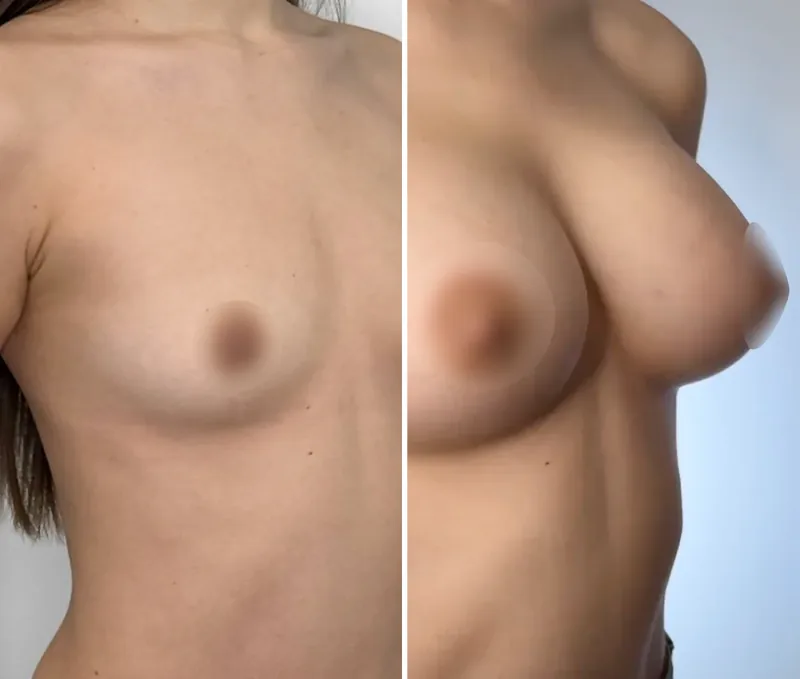
 beforeafter
Mammoplasty
Method: implants
Breast augmentation
$4,700
$5,900 · First consultation — Free
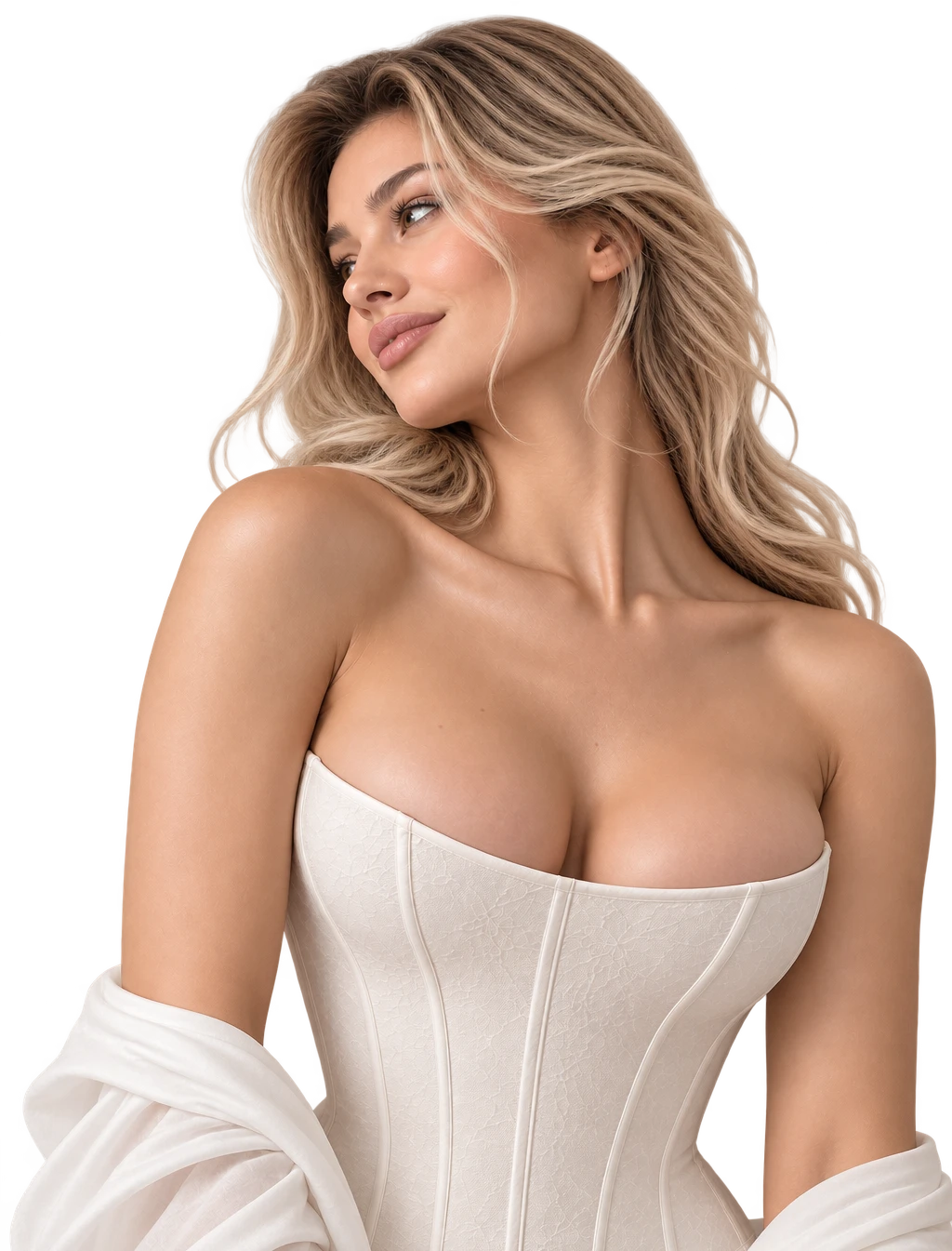
Message our coordinator
Free online consultation · Reply within 15 minutes
Message us on TelegramMessage us on WhatsAppBy messaging us, you agree to our Privacy Policy
Results
Each case belongs to a real clinic patient; faces and identifying details are not shown.
beforeafterMethod: implants
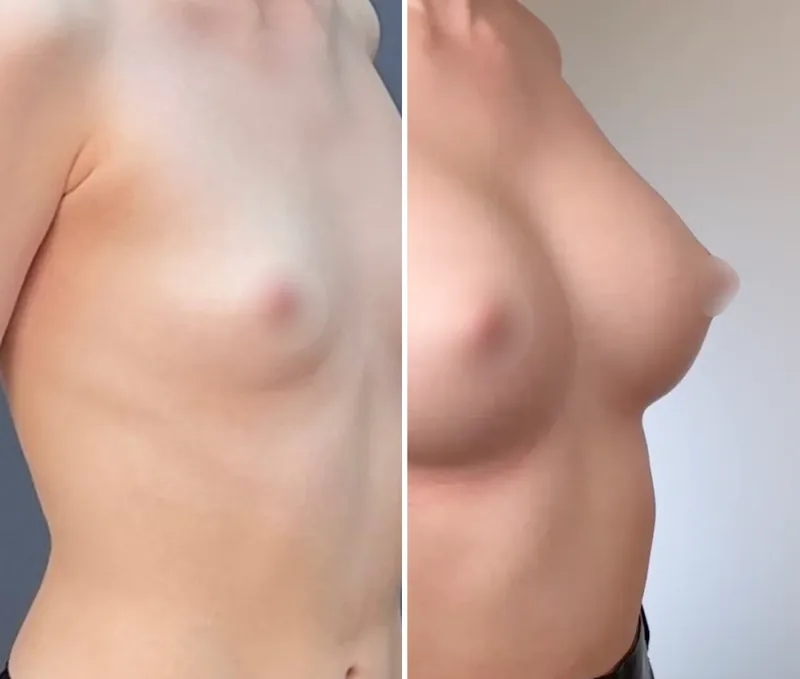 beforeafter
Method: implants
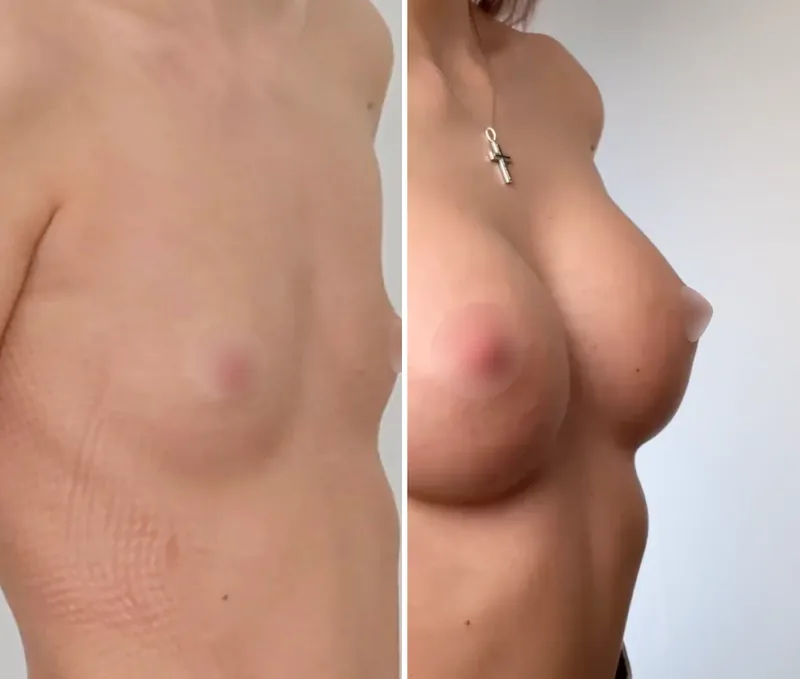 beforeafter
Method: implants
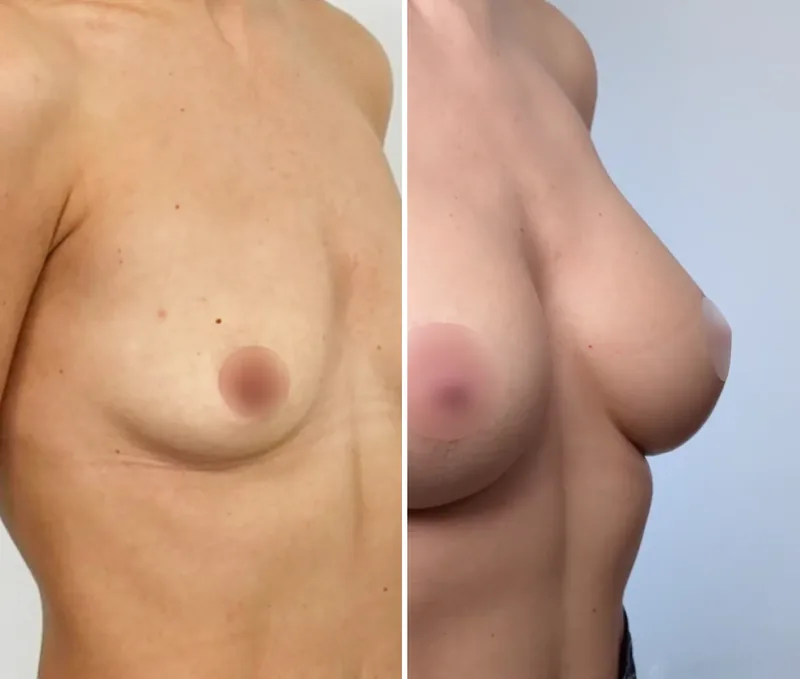 beforeafter
Method: implants
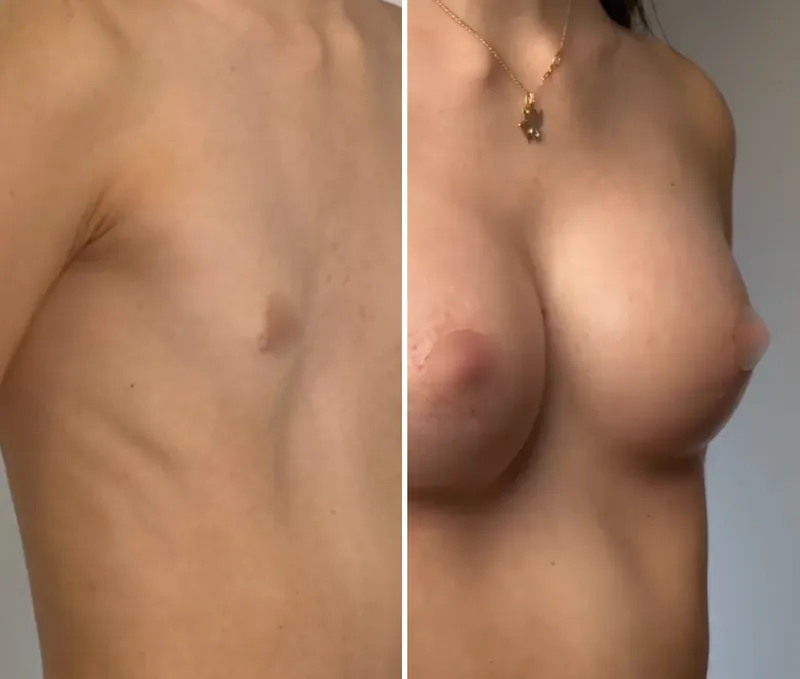 beforeafter
Method: implants
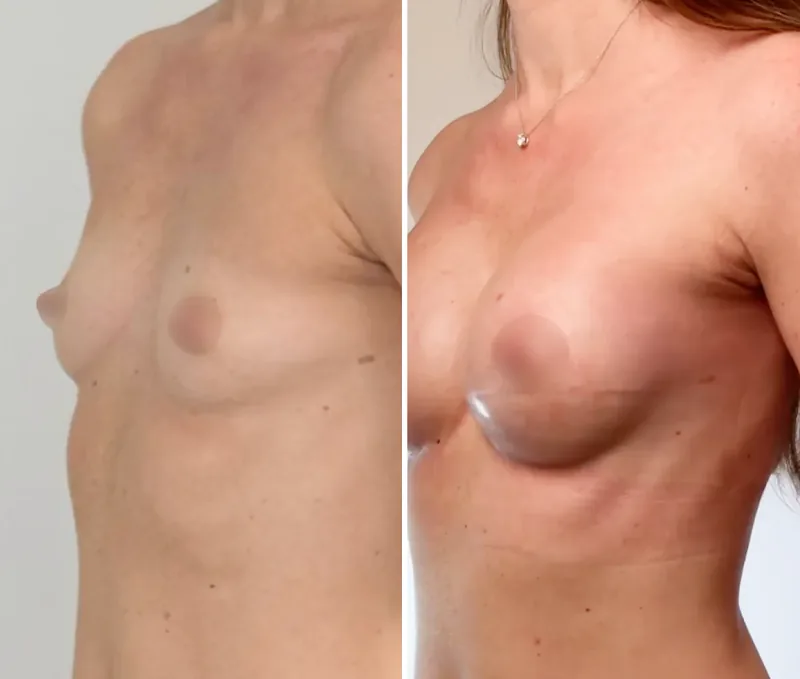 beforeafter
Method: implants
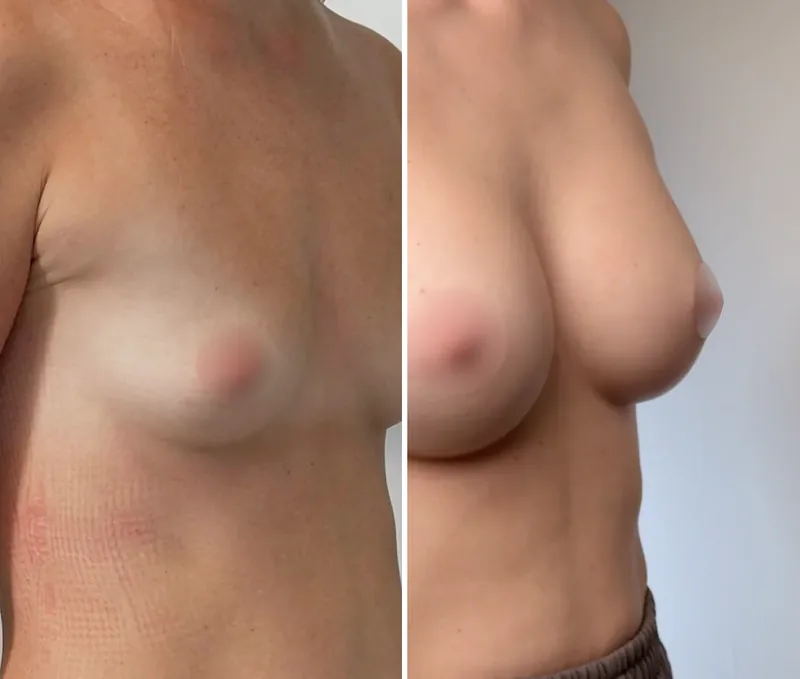 beforeafter
Method: implants
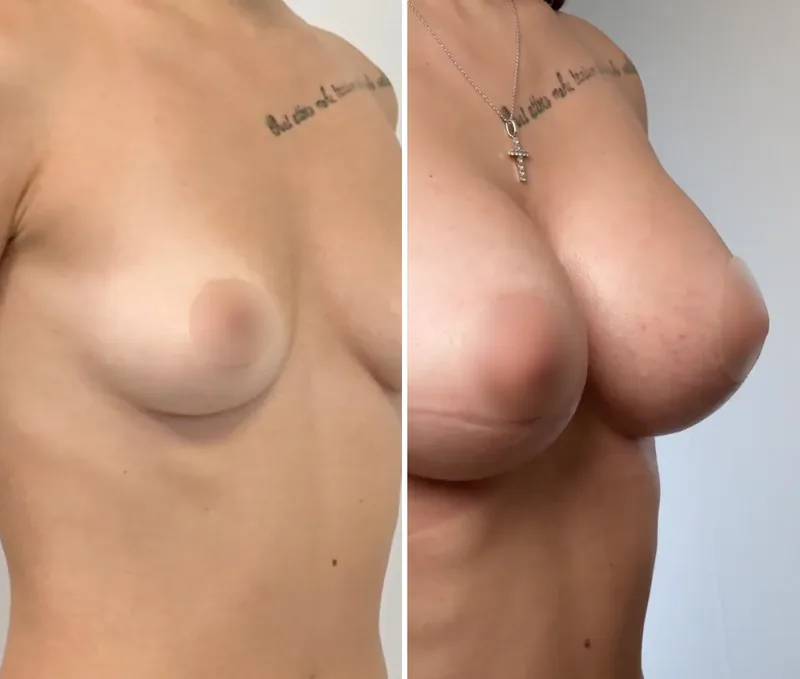 beforeafter
Method: implants
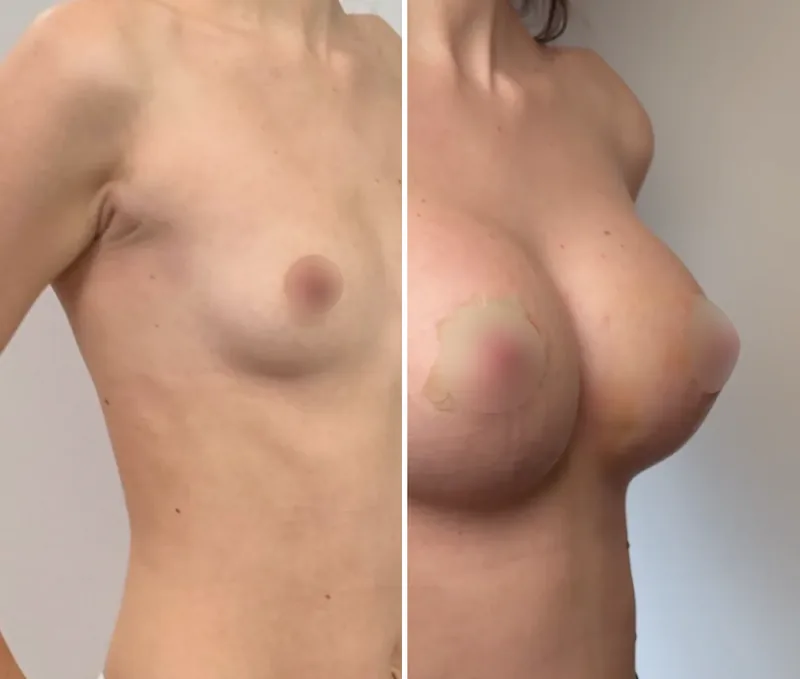 beforeafter
Method: implants
Comparison
There are two main ways we correct the breasts: augmentation and reduction. Compare their goal, how precise the correction is and who they suit, and choose your method with confidence.
Size and shape correction with implants
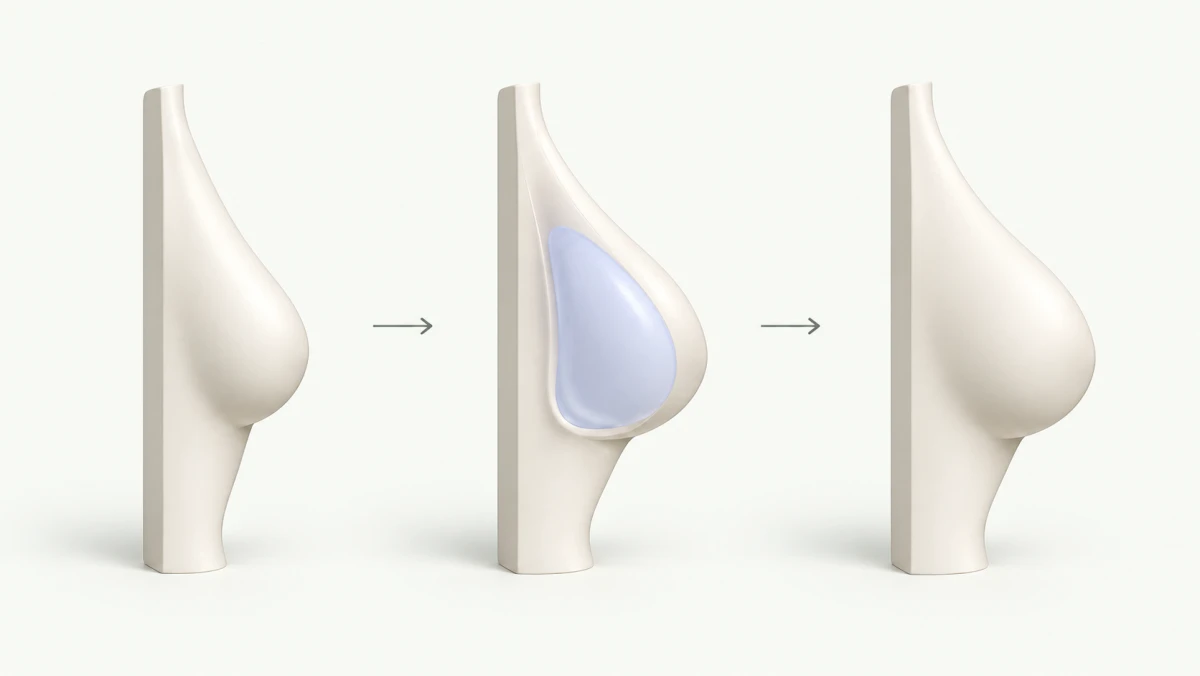
Discounted price
$4,700 $5,900
Breast size correction through reduced volume and weight
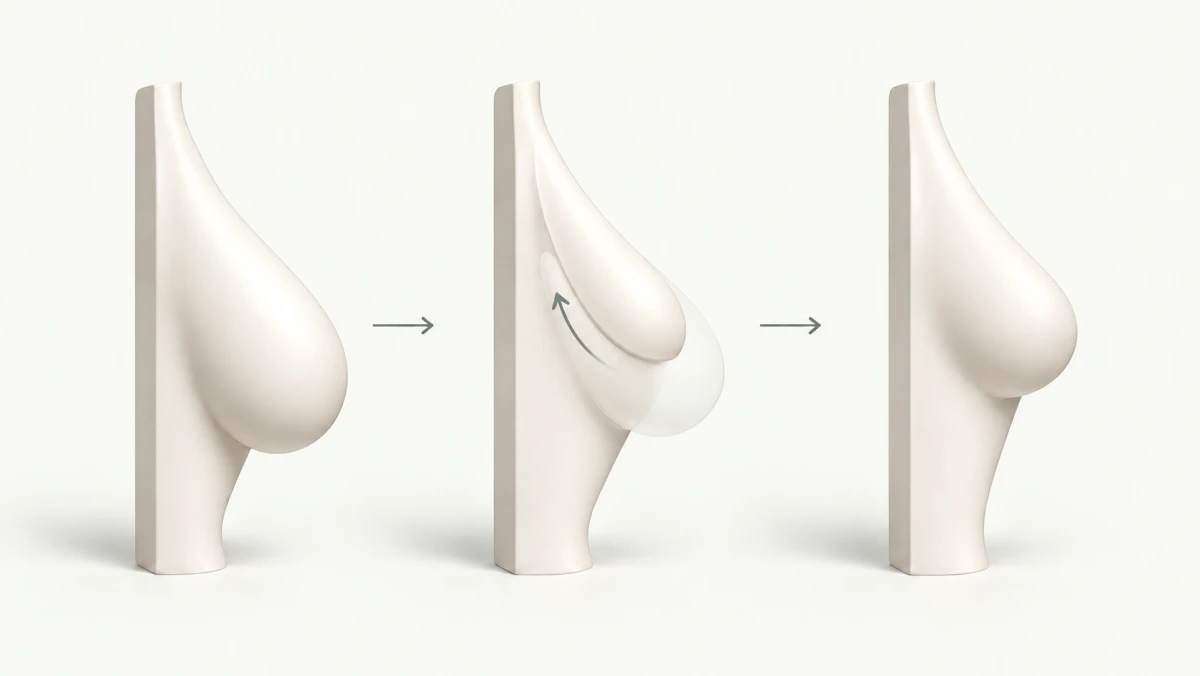
Discounted price
$4,700 $5,900
At your consultation the surgeon looks at the shape and proportions of your breasts, talks through what you want and recommends the best mammoplasty option.
The consultation is free, before surgery and with no commitment.
Comparison
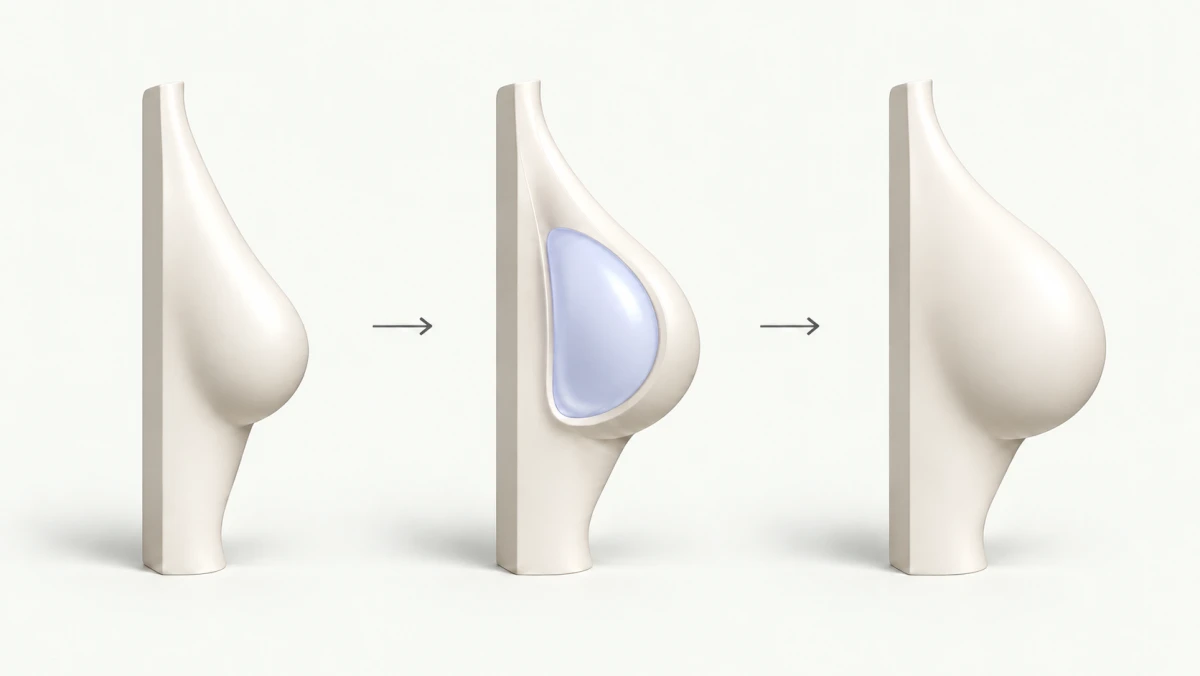
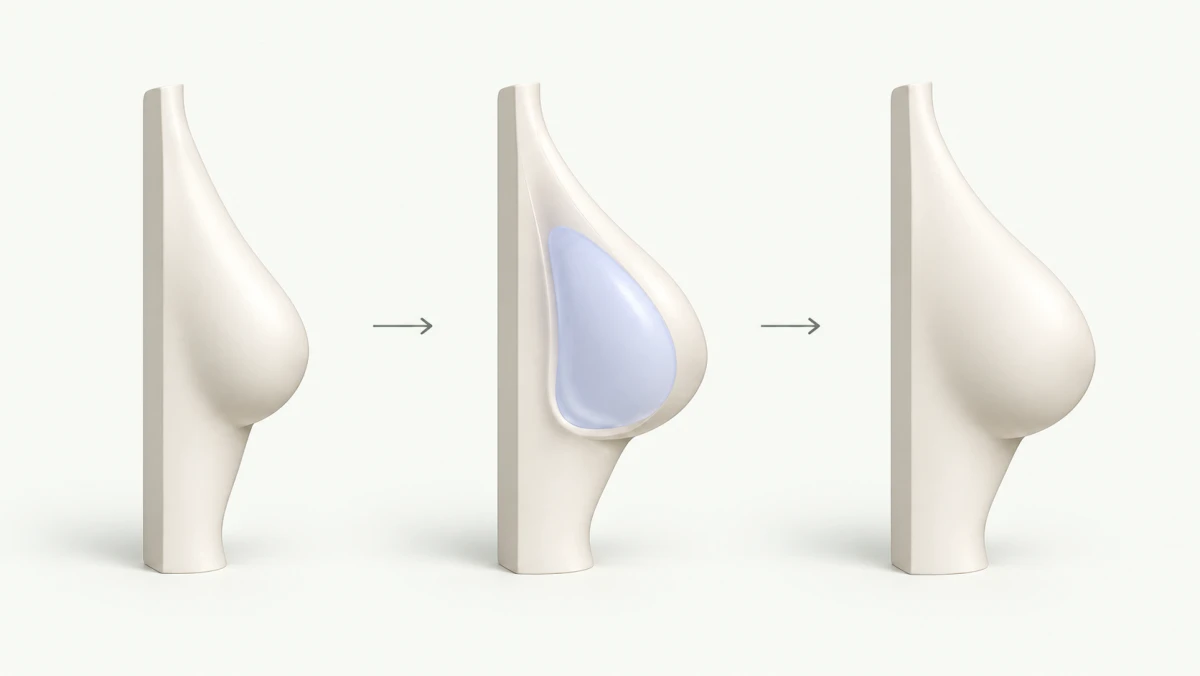
Round and anatomical implants are the two main types we work with. Each adds volume and corrects the shape, but the form and the final look differ.
Even volume with more fullness at the top
A soft teardrop shape with a natural slope
The surgeon will help you choose the implant shape and volume.
Our clinic
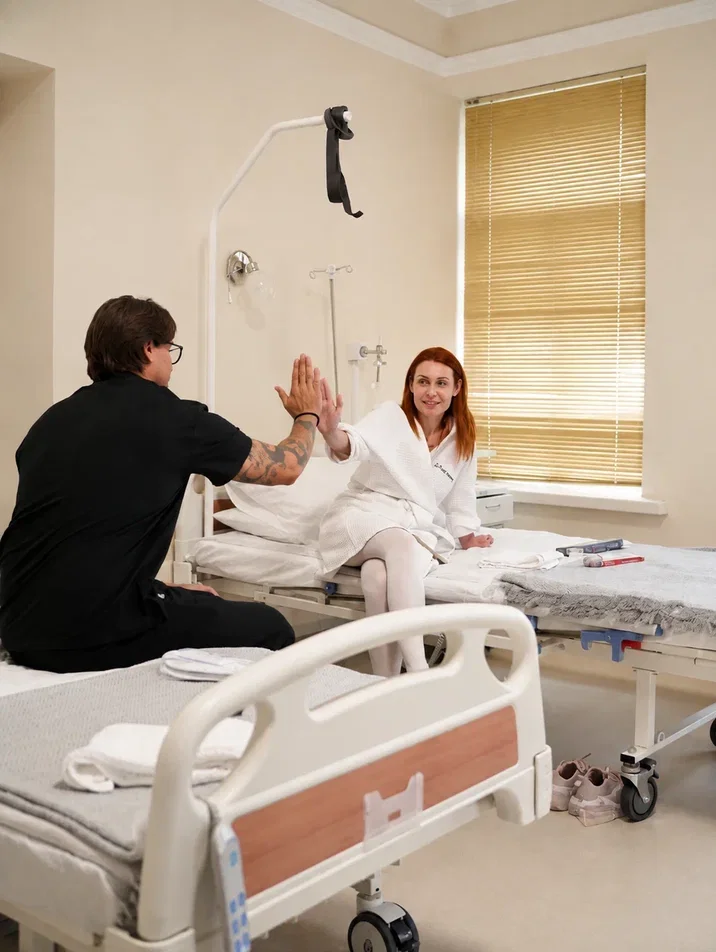
Modern technology, cosy rooms and personal attention for every patient
We will answer your questions and find a convenient time for a consultation
If your concern can be addressed without an operation, the doctor will say so at the consultation, so you do not pay for surgery you do not need.

Not sure whether surgery is right for you?
Send us a message — the coordinator will ask for a few photos in a messenger, and after reviewing them the surgeon will tell you if mammoplasty is right for you.
Find out if it suits me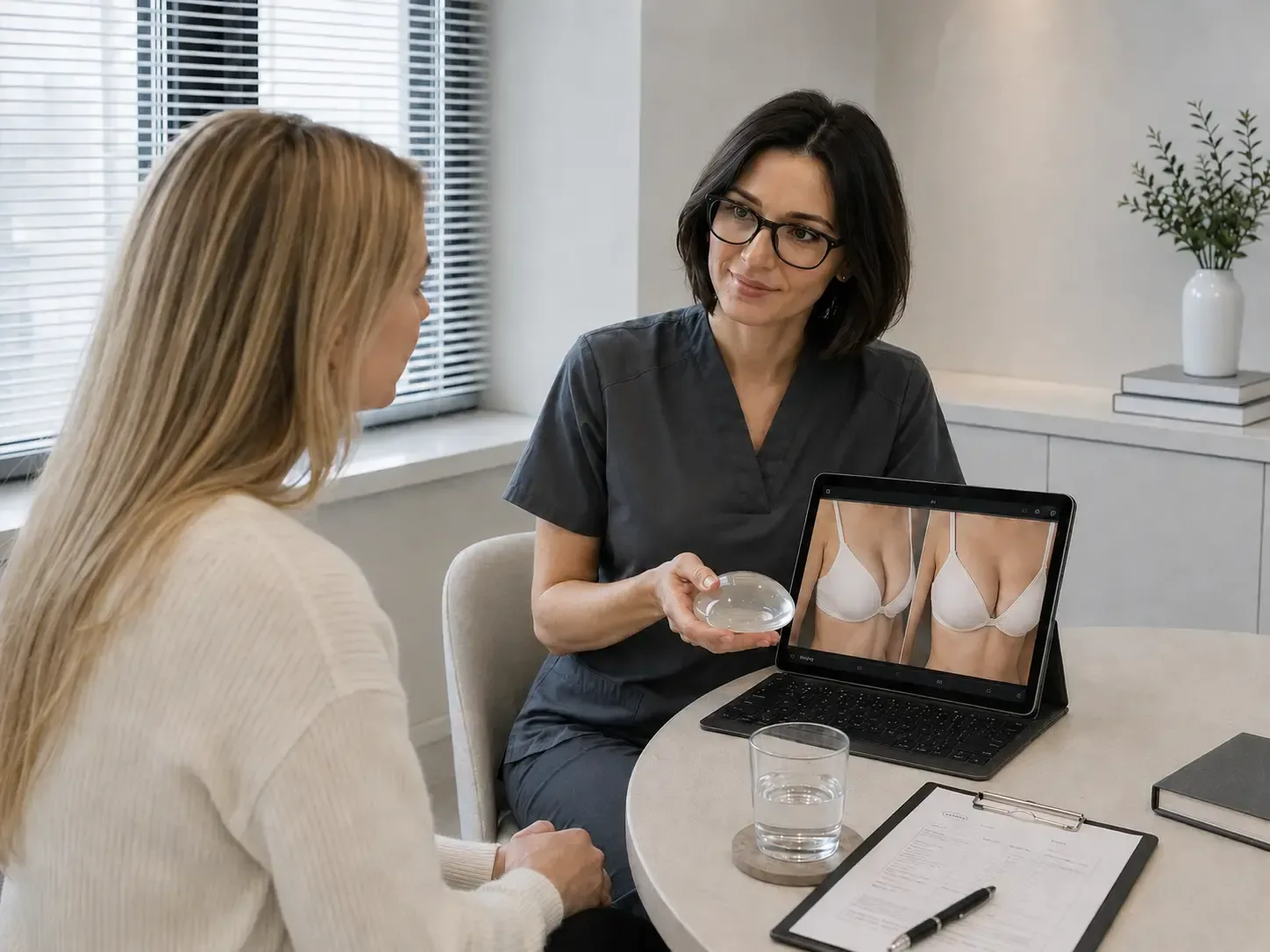
Prices
The price is set at the consultation and fixed in the contract.
Discounted price
Size and shape correction with implants
$4,700$5,900
Discounted price
Reducing the volume and weight of the breasts
$4,700$5,900
Breast restoration after mastectomy
The price is set at the consultation and fixed in the contract.
Get a consultationAfter assessing your breast anatomy and proportions and listening to your wishes, the surgeon chooses the appropriate correction method.
The price is set at the consultation and fixed in the contract.
Message our coordinator
Free online consultation · Reply within 15 minutes
Message us on TelegramMessage us on WhatsAppBy messaging us, you agree to our Privacy Policy
all inclusive
Starting with preparation for surgery
and ending with support for 12 months.
Discounted price
$4,700$5,900
Step by step
An agreed plan for correction, hospital observation and a year of recovery monitoring.
 1
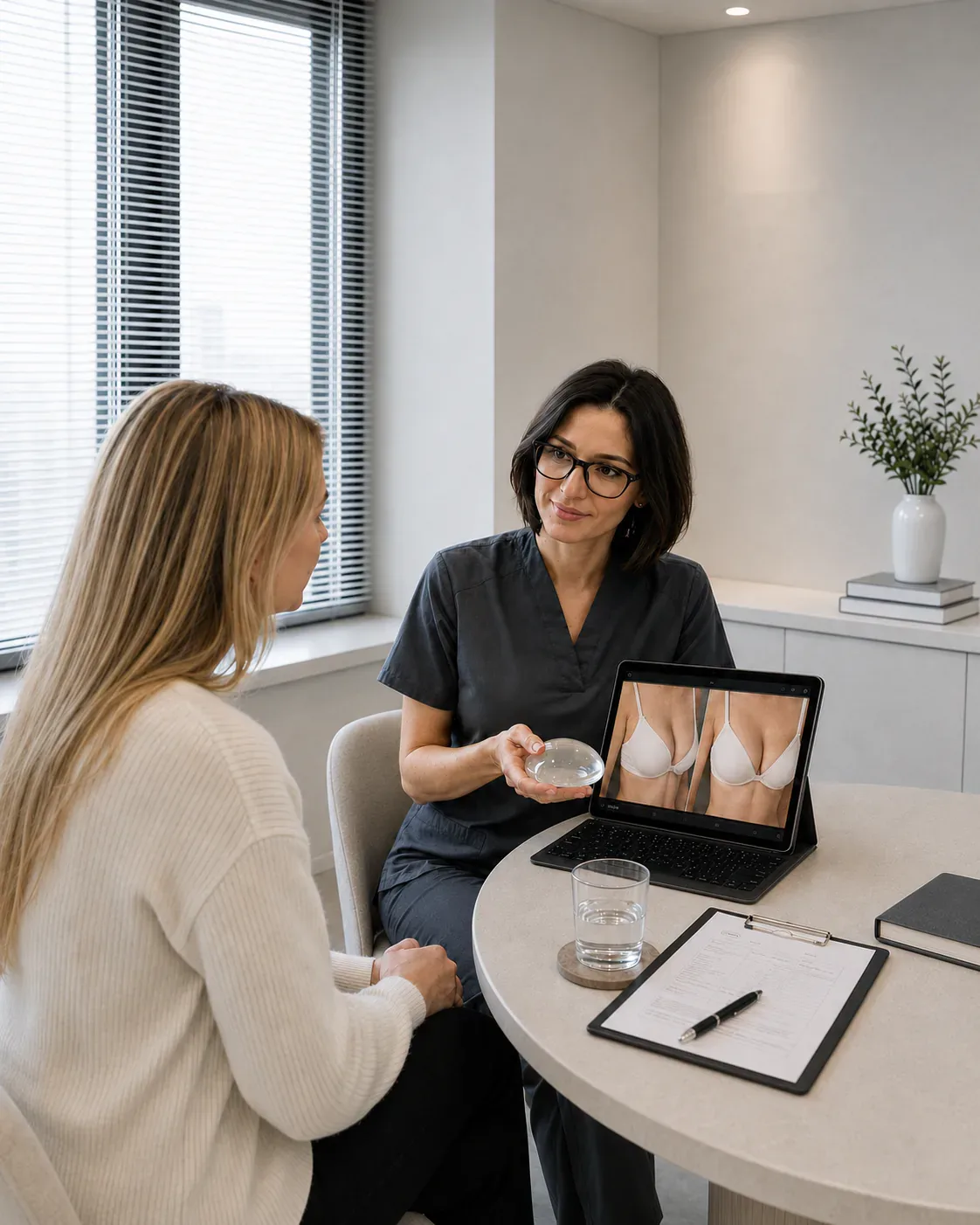
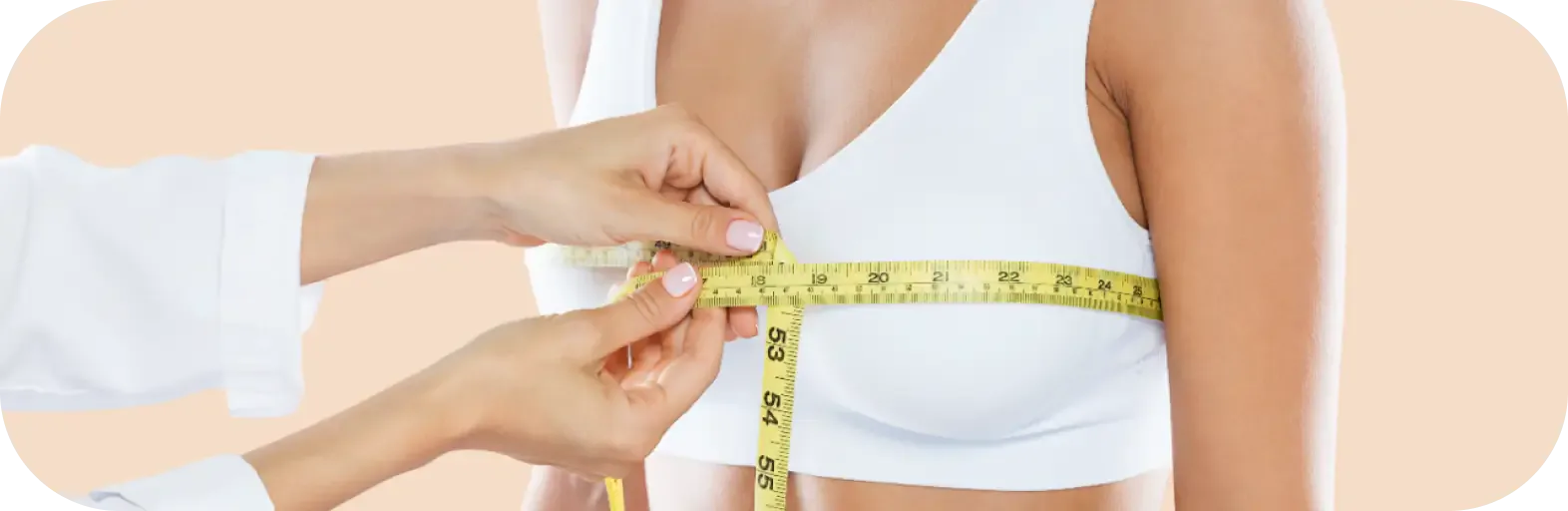
Your figure is assessed, your wishes discussed, and the surgeon chooses the best volume, shape and correction method.
 2
Your surgery date is reserved for you: the deposit can be paid by card at the clinic or online by bank transfer, and the terms are fixed in the medical services contract
 3
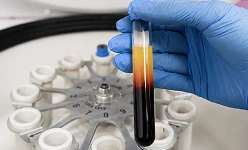
Ahead of surgery you go through full testing — blood tests, an ECG and other examinations as prescribed by the doctor.
 4
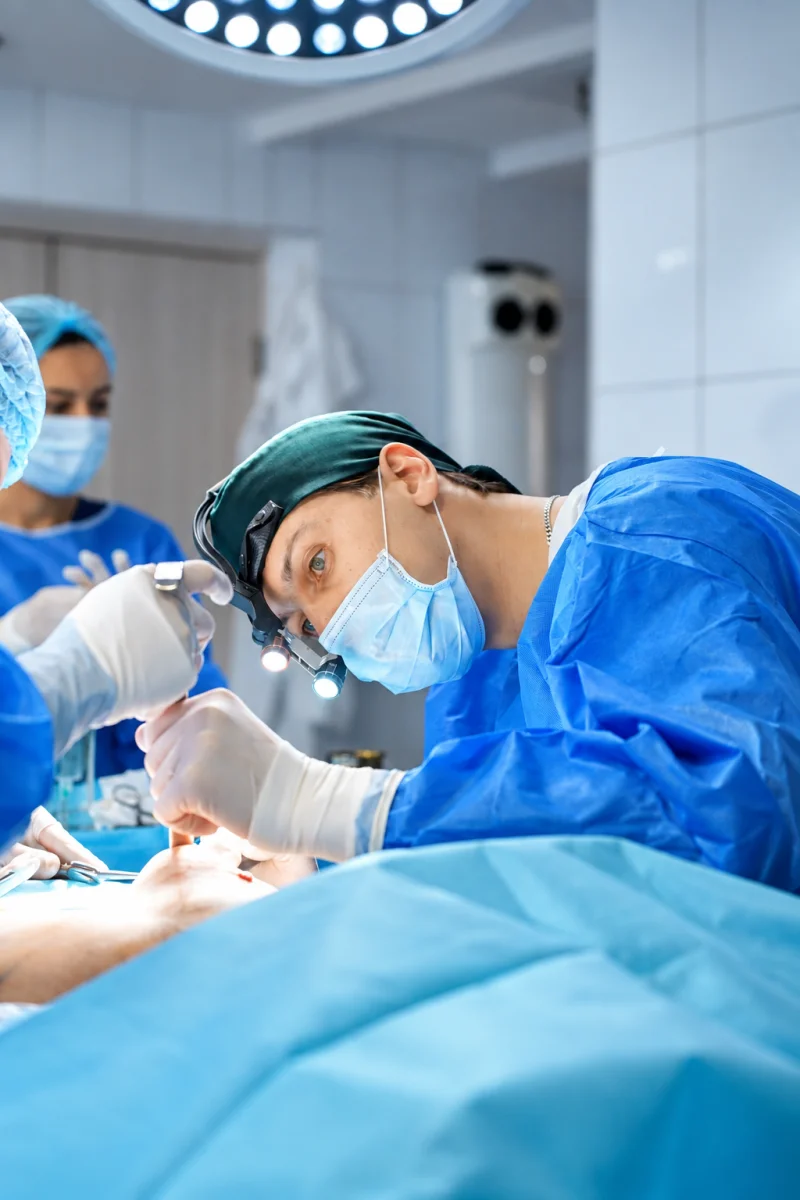
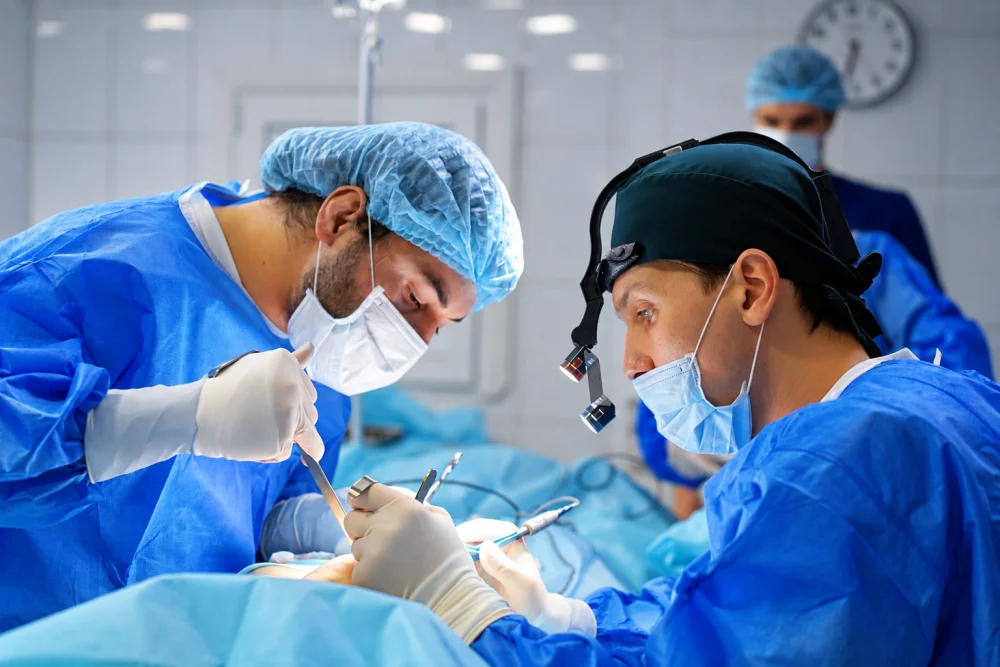
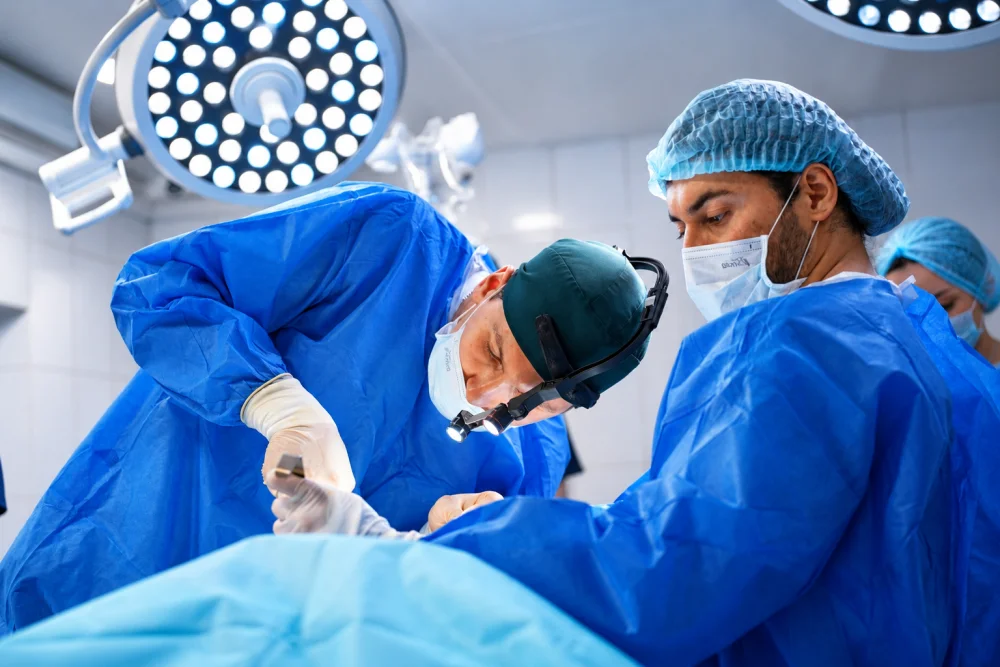
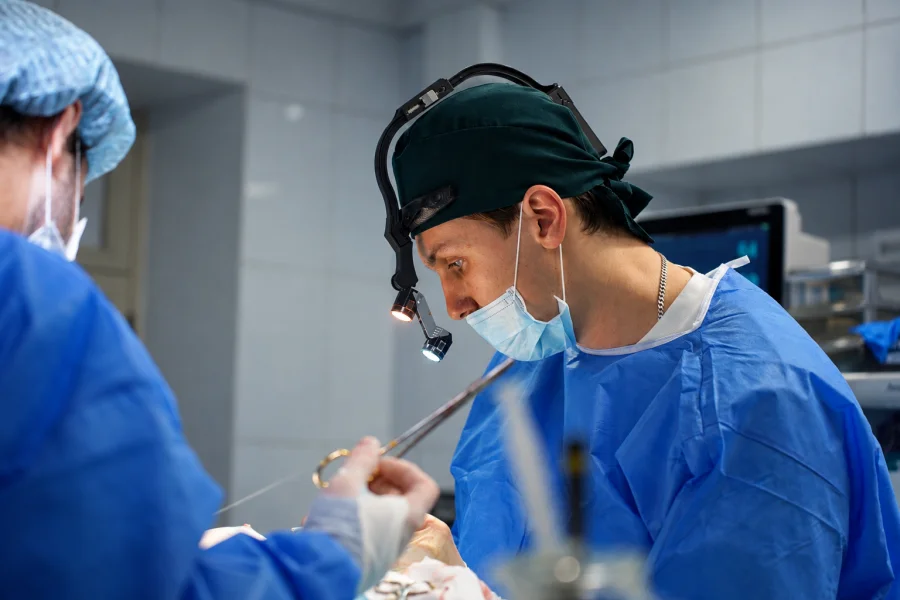
The operation follows your individual mammoplasty plan and is performed under general anesthesia with continuous monitoring of the patient.
 5
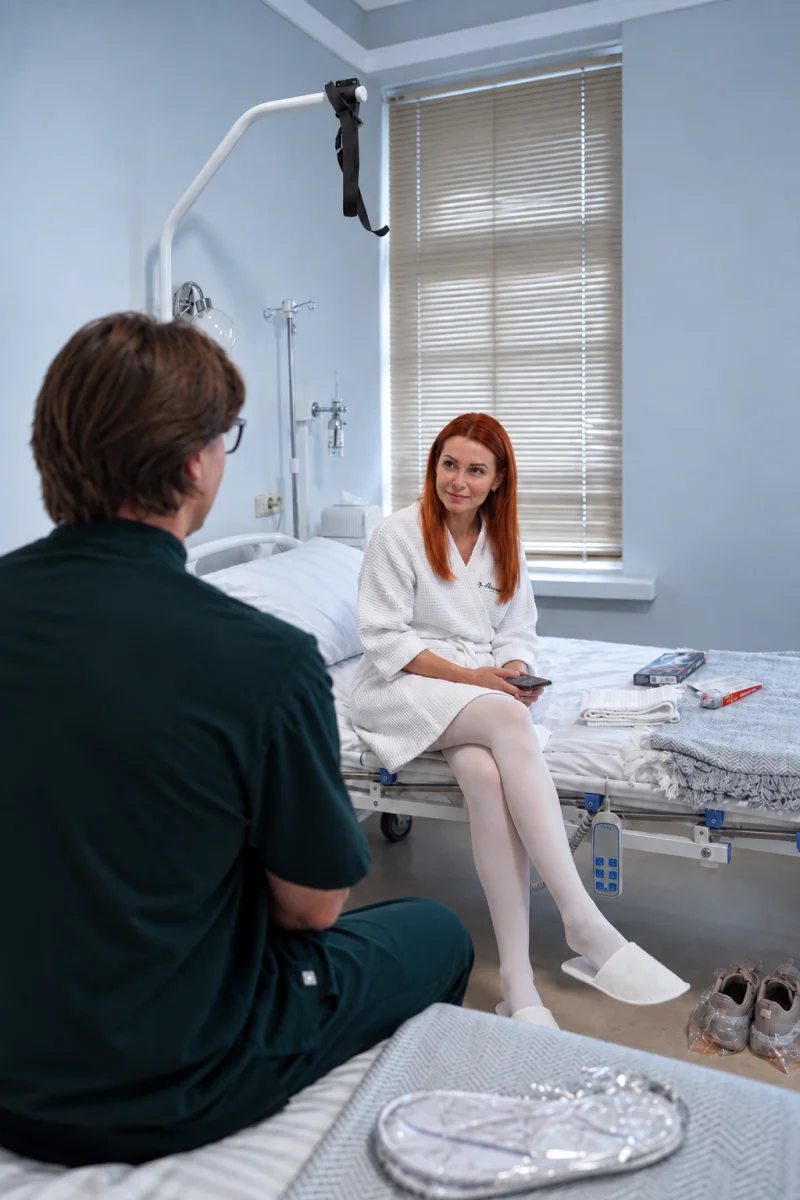
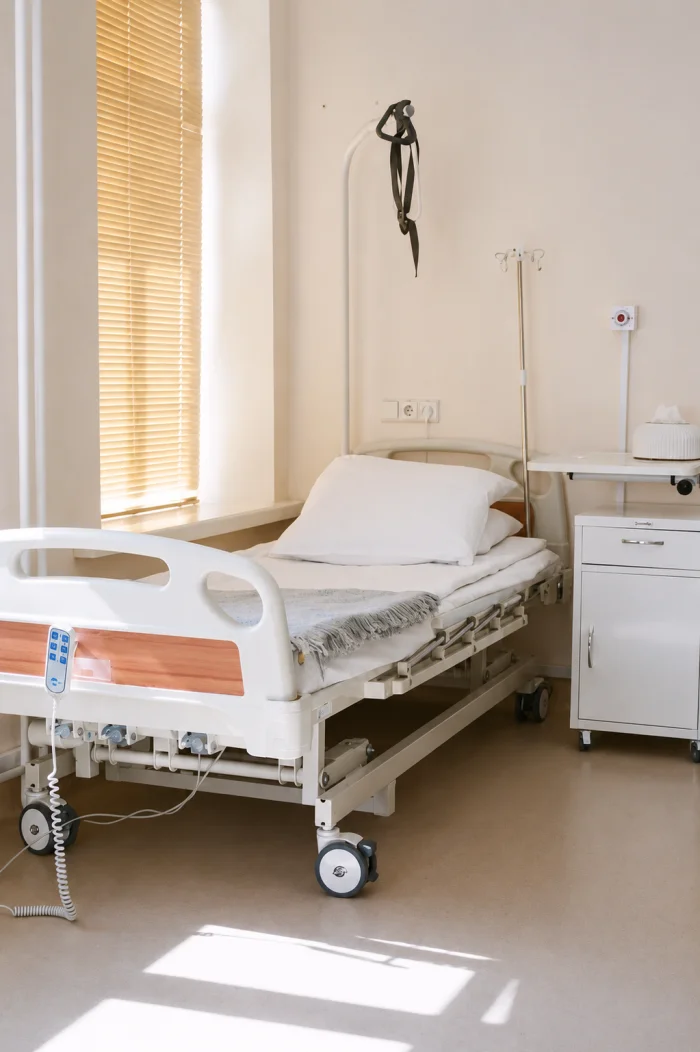
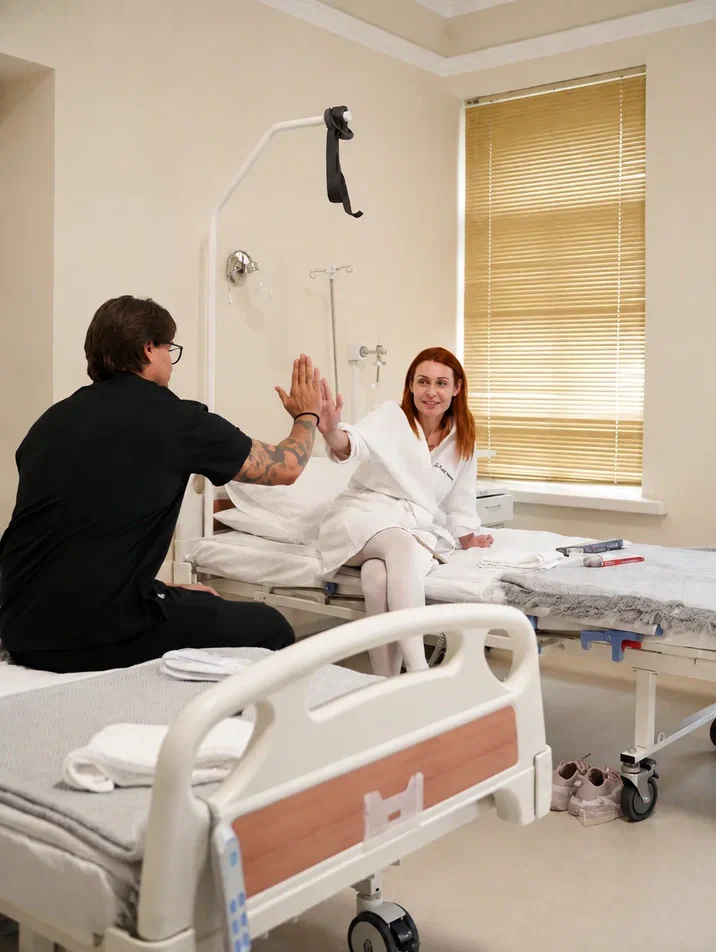
Following surgery, you recover in a comfortable inpatient ward of the clinic with the medical team looking after you until discharge.
 6
After surgery you receive a recovery programme. Check-ups at 7 days, 3 and 6 months track your progress, and consultations with your surgeon are free for a year.
Prior to surgery, cease taking aspirin-containing medicines, steroids and hormonal drugs for chronic illness
Hormonal oral contraceptives should be stopped at least a month before the procedure
Get your tests a week ahead of surgery
Follow a few simple rules before surgery: balance work and rest sensibly, sleep more, avoid stress, anxiety and strong emotions, and scale back physical activity.
Intense gym workouts should be avoided for up to 40 days, along with overly active aerobics; after a month light cardio may be possible. Watch your diet.
Post-op swelling disappears after 3 weeks
Within 3 months, discomfort disappears
Scars form within 3 weeks
No physical exertion (lifting over 3 kg)
It takes up to 3 months for inflammatory tissue changes to resolve and for a “pocket” to form around the implant
You wear compression garments for 1–1.5 months while recovering from the correction
Do not raise arms above shoulder level for 3 weeks
Baths and saunas are off-limits up to three months, as is physiotherapy
Doctors
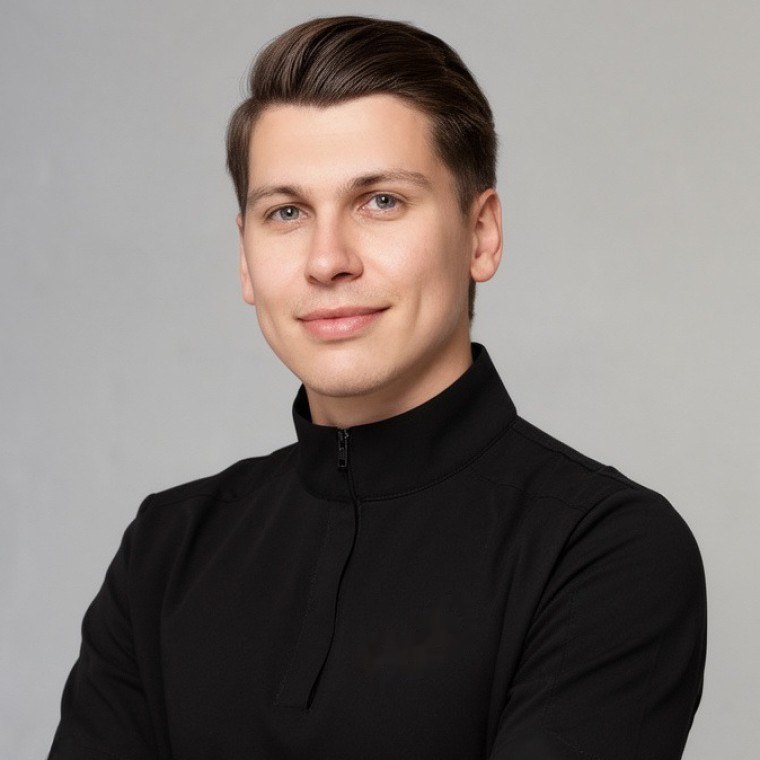
7 years of experience
Plastic surgeon
Residency in plastic surgery: Petrovsky National Research Centre of Surgery. Areas of expertise are aesthetic and reconstructive surgery of the breast and body.
At the consultation you talk to the surgeon who will operate
A skilled plastic surgeon who cares about the beauty and health of patients
Book a consultationAdvantages
During the consultation we discuss your wishes and model the planned changes. The surgeon explains what surgery can achieve, so you know exactly what result to expect.
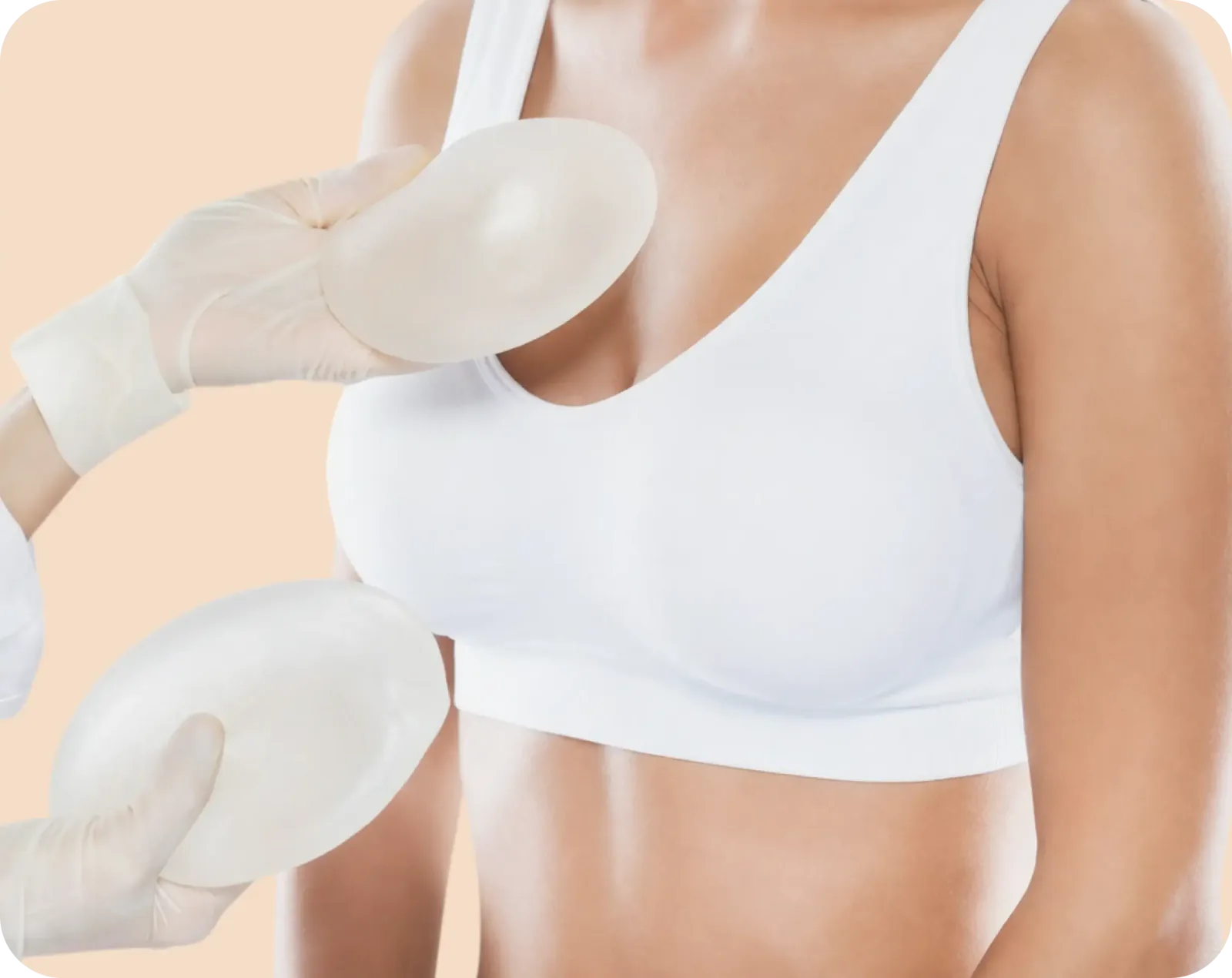
During the year after surgery the surgeon keeps track of your recovery and breast shape. The price already covers check-ups and dressings.
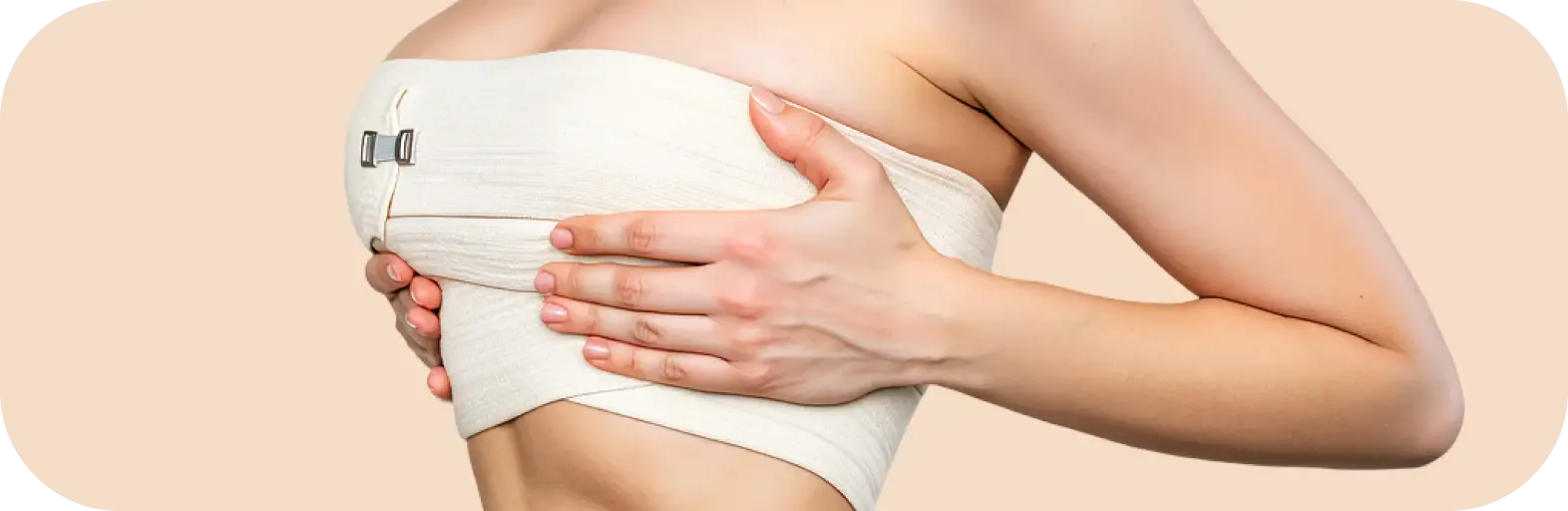
We choose the shape, volume and correction method based on your anatomy and wishes. For augmentation, implant size and profile are chosen individually.
We respect your time: we work 24/7, with easy booking and a personal approach — we adapt to your pace.
After the consultation the surgeon determines the scope of correction, and you receive a clear price for the surgery with no surprises along the way.

Your recovery begins in a comfortable inpatient ward, with nurses on hand day and night. The price already covers your stay and meals.
FAQ
Mammoplasty refers to several procedures: augmentation (adding volume through implants), reduction (cutting away excess tissue and skin), mastopexy (lifting sagging breasts), reconstruction (after mastectomy) and asymmetry correction. The best technique is picked individually, based on what you want and what the surgeon advises.
Message us — our coordinator will get back to you shortly and book your consultation. The plastic surgeon consultation is free.
If all recommendations are followed, complications are rare, but they may include hematoma or seroma, wound infection, reduced or increased nipple sensitivity, capsular contracture, aesthetic asymmetry, wound separation and tissue necrosis.
Results after mammoplasty last a long while: about 10–15 years for augmentation (until implant replacement) and 5–10 years for a lift or reduction. Weight changes, pregnancy, skin aging and gravity affect their duration. To maintain the result, choose supportive underwear and control your weight.
Breastfeeding after mammoplasty varies with the type of surgery. Lactation is usually preserved after augmentation through an under-breast or armpit incision with the implant under the muscle, because glandular tissue is not injured. After a lift or reduction there is more risk, since ducts may be cut. Discuss this in advance with your surgeon.
Implant choice considers material (silicone looks most natural, saline is used less often), shape (round or anatomical teardrop), surface (smooth or textured), size and profile. The surgeon will choose the best option for your anatomy and wishes.
The operation itself happens under general anesthesia, so nothing is felt. Moderate discomfort can occur in the first 1–3 days and responds to painkillers. By day 5–7 pain decreases a lot, and by weeks 2–3 discomfort is gone. In case of severe pain, tell your doctor right away.
A return to work (no physical exertion) is possible after 7–14 days. Easy walks from 1–2 weeks. Fitness and swimming from 4–6 weeks; strength training from 3 months. Pool and sea from 4–6 weeks. Compression garments for 4–6 weeks. Precise timing depends on your individual recovery.
No scientific data suggest that mammoplasty increases breast cancer risk, and implants are not carcinogenic. After the operation, continue regular screening: self-examination, mammography and ultrasound. Always tell the doctor who examines you about your implants.
Mammoplasty after a C-section is possible, but only once your body has fully recovered. Allow at least 6–12 months after giving birth and after breastfeeding stops. A consultation and check-up with a surgeon are required before surgery.
Mammoplasty does result in scars, but a skilled surgeon keeps them minimal. Incisions are made in areas that are out of sight: under the breast, around the areola or in the armpit. At first scars are reddish, and within 6–12 months they fade and become nearly invisible.
During the first weeks after the operation, slight asymmetry is normal, since swelling and healing are uneven. If a size or shape difference continues after 3–6 months, see your surgeon for an exam to find its cause.
A temporary decrease or increase in nipple and breast sensitivity is possible after mammoplasty, caused by irritated nerve endings. Most of the time sensitivity returns within 3–12 months. If it has not improved after one year, see your surgeon.
Implants are not directly influenced by hormonal drugs (contraceptives, hormone replacement therapy), yet swelling or breast tissue volume changes can result and temporarily affect appearance. Mention any such medications to your surgeon before surgery.
Prices are in US dollars; the amount in brackets is an approximate conversion to RWF at the rate of 02.10.2026. The final price is fixed in your contract.
Prices start from $4,700 (≈ RWF 7,000,000). The surgeon sets the final price at the free consultation, and it is fixed in the contract, with no hidden extras.
The surgical team's work, anaesthesia, the inpatient stay with meals, dressings and follow-up visits for twelve months.
Message us on WhatsApp or Telegram using the buttons below. A coordinator will answer your questions and book a free consultation where the doctor names the exact price.
By messaging us, you agree to our Privacy Policy
Women in Kigali who are unhappy with small or uneven breasts often look into augmentation. The operation places an implant in a pocket created by the surgeon, who then adjusts its position for symmetry and a natural contour. Incisions sit in discreet places: under the breast, around the areola or in the armpit. Over the following months the scars fade and become almost invisible.
Here is the route in brief. Consultation and choice of implants. Lab tests and instrumental examinations. Surgery lasting on average 1.5 to 3 hours. One day under round-the-clock observation. Then a recovery program with swelling control and compression garments, plus check-ups at one week, three months and half a year. Women in Kigali follow this same sequence.
A free consultation is the easiest way to get an exact figure. The surgeon assesses your anatomy, models the result and confirms the plan; the base cost of augmentation is from $4,700 (≈ RWF 7,000,000). Everything around the surgery — anesthesia, inpatient stay, 24/7 monitoring, personal support and a year of follow-up — is in that amount. Patients from Kigali can apply through the site or a messenger.
What patients write after this operation. Reviews are translated from the original language.
Anna Smirnova
I went to Dmitry Sergeyevich for breast augmentation with implants. At the consultation everything was explained in detail, and together we chose the best size. The operation under combined anaesthesia took 2 hours, and I was discharged home the next day. The swelling went down in about a month, and my breasts look very natural. The year of follow-up care is a real lifesaver: you can always ask a question and get an answer. Thank you to the clinic!
Breast augmentation
Doctor: Dmitry S. Kuznetsov
Ekaterina Morozova
After two births I decided on a breast lift without implants. I chose Dmitry Sergeyevich and have no regrets. The result exceeded all my expectations: my breasts are lifted and the shape is youthful and firm. The incisions are minimal and almost invisible. I spent one day in the hospital, and the room was very comfortable. I recommend him!
Breast lift
Doctor: Dmitry S. Kuznetsov
Olga Kuznetsova
I had a combined operation, a breast lift with augmentation, with Dmitry Sergeyevich. At the consultation it was immediately clear that I was in the right place. Everything is included in the price, with no hidden charges. After a month my breasts already feel soft and natural. Personal follow-up after the operation is very valuable.
Breast lift with implants
Doctor: Dmitry S. Kuznetsov
Maria Lebedeva
Breast augmentation from a size 3 to a size 4 with Dmitry Sergeyevich. He chose perfect anatomical implants. The operation took 2 hours, and I woke up with almost no pain. In the ward I was fed and monitored around the clock. Four months have passed and the result looks like a magazine cover.
Breast augmentation
Doctor: Dmitry S. Kuznetsov
Natalia Vorobyova
I went to Dmitry Sergeyevich to correct breast asymmetry with a small lift. A true professional: at the consultation he immediately showed before-and-after photos of similar cases. Recovery was easy and the swelling went down quickly. I had my check-up after just 7 days. An excellent clinic!
Breast reconstruction
Doctor: Dmitry S. Kuznetsov
Yulia Romanova
I had a lift with implants after losing a lot of weight. I chose Dmitry Sergeyevich. At the consultation everything was explained in simple words, and my fears were gone. One day in the hospital, then care at home. Now my breasts look natural and keep their shape. I am very happy!
Breast lift with implants
Doctor: Dmitry S. Kuznetsov
Page medically reviewed by Dmitry S. Kuznetsov, plastic surgeon. Review date: .
Kigali is the capital and largest city of Rwanda and a province-level administrative unit. As of 31 August 2022, Kigali city has a population of 1,745,555 inhabitants. It is a young city: founded in 1907, it became the national capital at independence in 1962. A large share of residents are young, and the city has a higher proportion of people aged 14 to 35. Many of the women who ask about breast augmentation here are students, young professionals, mothers or entrepreneurs who want to fit a surgical decision around a busy schedule.
Planning matters more than speed. A good plan covers your work calendar, family commitments, the weather, the support you will have at home and the questions you want answered before you agree to anything. This text is meant to help you build that plan in the setting of Kigali: its hills, its climate, its working rhythm and its food.
City Medical Centre does not have an office in Kigali. You start with a free online consultation from home, and the coordinators are available around the clock (24/7) on WhatsApp and Telegram. You can send your questions at any hour and a coordinator will call you back 24/7.
Kigali has a tropical savanna climate, but its high elevation keeps temperatures gentler than in most equatorial places. The average elevation is 1,567 m above sea level, and the average daily temperature range is between 15 and 27 °C, with little variation through the year. For a patient in recovery this is comfortable. You are unlikely to face extreme heat that makes a compression garment unbearable, but the midday sun at altitude can still be strong, so plan to stay in shade and wear loose, breathable clothing over the garment.
There are two rainy seasons, from February to June and from September to December. They are separated by a major dry season from June to September and a shorter, less severe dry season from December to February. April is the wettest month on average and July the driest. Heavy rain makes the steep streets slippery and the roads busy, which matters in the first days when you should move carefully and avoid sudden efforts.
Rain, humidity and dust all call for the same routine: keep the wound area clean and dry as your surgeon instructs, change into dry clothing quickly if you get damp, and do not skip check-ups because the weather is bad. Remote follow-up is useful on those days, because you can send photos and messages to your coordinator without leaving the house.
Because temperatures change little through the year, the season is less about heat and more about rain and your own calendar. The long dry season from June to September offers the most predictable weather: there is often no rain at all, so short walks in the first weeks are easier. Many women also find that dry weeks suit the period when they wear a compression garment for 4 to 6 weeks.
The rainy months are not a barrier. If your work or study schedule fits better with the period from February to June or from September to December, you can still plan the operation well. Arrange transport to your appointments in advance, because torrential rain can slow traffic, and keep a rain cover handy so that you do not get chilled while you recover.
Also look at the rest of your year. Family ceremonies, exams, a busy period at your company or a school holiday with children at home all affect how restful your first weeks will be. Choose a window in which you can take at least 7 to 14 days off, because that is the period after which many patients return to work, without physical exertion, depending on how recovery goes.
Kigali is the economic and financial hub of Rwanda, and the service sector is the largest part of its economy: retail, information technology, transport, hotels and real estate. Many residents work at a desk, in customer service or in hospitality. Desk work is generally easier to resume than a job that involves carrying, so the answer depends on your duties.
According to the medical plan for this procedure, you may go back to work, with no physical exertion, after 7 to 14 days. The timing depends on how you recover. If you work in a hotel, a shop or a warehouse, tell your surgeon exactly what you lift and how often. The rule for the early period is no heavy exertion, meaning no lifting of more than 3 kg, and no lifting of arms above shoulder height for 3 weeks. That affects shelves, bags, children and car boots.
Students at the city's universities and institutes face a similar question. Lectures and library work are possible once you feel comfortable, but long hours carrying a heavy bag are not. Ask a relative or a classmate to carry your books for the first weeks, and plan assignments so that you are not under pressure at the time of the operation.
The city is built on rolling hills with steep slopes between ridges and valleys. Walking up and down hills is more tiring than walking on flat ground, so in the first week choose short, gentle routes. Light walks are suitable after 1 to 2 weeks.
The surgery is performed under general anaesthesia, so you feel nothing during the operation. The hospital stay is 1 to 2 days, and the whole time you are under 24/7 monitoring by medical staff. Tell your surgeon about every medicine, supplement or herbal remedy you take, and about any previous reactions to anaesthesia.
In the first 1 to 3 days you may feel moderate discomfort, which painkillers relieve. Pain subsides significantly by day 5 to 7, and discomfort is gone by weeks 2 to 3. If pain becomes severe, inform your doctor right away and do not wait for the next scheduled check-up.
Arrange help at home before the day of surgery. You will need someone to prepare meals, help with younger children and keep an eye on you in the first days. In Kigali, where many families live close together, a sister, mother or friend can often do this. Plan ahead for transport, because you should not drive yourself home.
After the operation you receive a recovery programme. Swelling goes away after 3 weeks. Compression garments stay on for 4 to 6 weeks, and when the operation includes a correction, recovery may involve 1 to 1.5 months of compression garments. Choose soft, breathable fabrics and have a second garment ready so that you can wash one while wearing the other.
Light walks are possible after 1 to 2 weeks. For as long as 40 days, stay away from intense gym workouts and overly active aerobics; light cardio is possible after a month. Fitness and swimming are allowed after 4 to 6 weeks, and pool and sea after 4 to 6 weeks. Strength training is allowed after 3 months. These timings depend on your recovery, so confirm each step with your surgeon.
Discomfort fades after 3 months. In 3 months any inflammatory changes in the tissue disappear, and a pocket forms around the implant. Until then, avoid sleeping in positions that put pressure on the chest if your surgeon tells you so, and keep your diet balanced.
In Kigali, sport is part of daily life for many young residents, from gym classes to group runs on weekends. If you are used to this, expect the break to feel long. Treat it as a planned pause and return gradually, as the schedule above allows.
Local cuisine is built around bananas, plantains, pulses, sweet potatoes, beans and cassava. In restaurants these often appear in a mélange, a self-service buffet that may also include meat, chips or fish. Cassava leaves cooked with onions make the stew isombe. These dishes are filling and can fit a sensible diet during recovery, especially when you choose beans, pulses and vegetables and keep portions moderate.
Brochettes are the most popular evening food when eating out, usually made from goat but sometimes tripe, beef or fish. Fermented milk, ikivuguto, is a popular drink, as is urwagwa banana beer. Ask your surgeon what to eat and drink in the first weeks, and especially whether to avoid alcohol while you take medicines.
Diet matters beyond the first weeks. Weight changes affect how long a breast augmentation result lasts, together with pregnancy, skin aging and gravity. The World Health Organization treats excess weight as a significant health issue, so a steady, balanced eating pattern supports both your health and your result.
Breast augmentation suits adult women who are in good general health, who have realistic expectations and who have made the decision themselves. It is not suitable if you are pregnant or breastfeeding, if you have an active infection or if you have uncontrolled chronic illness. Your surgeon will decide after an examination, a review of your medical history and tests.
If you have had a C-section, mammoplasty is possible, but only once your body has fully recovered. Allow at least 6 to 12 months after giving birth and after breastfeeding stops. A consultation and check-up with a surgeon are required before surgery.
Prepare your questions before the online consultation. Ask which incision is suitable for you, how scars will look, what size and shape fit your frame, what happens if the two sides differ, and how often you will be seen after surgery. Ask what the plan is if you live far from the operating team and need help between check-ups.
The centre's follow-up gives you a structure: check-ups at 7 days, 3 and 6 months help track your recovery, support continues for 12 months, and for a year after surgery consultations with your surgeon are free.
There are scars after mammoplasty, though a skilled surgeon keeps them minimal. The incisions go in discreet areas such as under the breast, around the areola or in the armpit. Early on the scars are reddish, but over 6 to 12 months they fade and are almost unnoticeable. Because Kigali sunshine is strong at altitude, ask your surgeon how to protect healing skin from direct sun.
In the first weeks slight asymmetry is normal: swelling and uneven healing are behind it. If shape or size still differ after 3 to 6 months, see your surgeon for a check-up to find the reason. Breast and nipple sensitivity may change for a time, going down or up, because of irritation of nerve endings. In the majority of cases sensitivity is restored within 3 to 12 months. If nothing has improved after a year, consult your surgeon.
Results last a long while: about 10 to 15 years for augmentation, until implant replacement. Weight changes, pregnancy, skin aging and gravity affect their duration. To maintain the result, choose supportive underwear and control your weight.
The city began on Nyarugenge Hill in 1907, when the colonial resident Richard Kandt chose it for his headquarters because of its central position, views and security. His house, close to the central business district, is now the Kandt House Museum of Natural History. Today the same hill carries the 20-storey Kigali City Tower, the headquarters of large banks and businesses, the University Teaching Hospital of Kigali and the College of Science and Technology.
For a woman who works in this part of town, the practical question is how soon she can sit at a desk again. Banking, office and ministry jobs are mostly seated work, which fits the plan of returning after 7-14 days without physical exertion. Tell your employer that you will not be lifting files, boxes or equipment, and keep the rule of no lifting of more than 3 kg and no arms above shoulder height for 3 weeks.
Because the centre is built on a slope, ask a colleague to carry your laptop bag on the uphill stretches in the first weeks. It is a small arrangement, but it protects the area of the operation while swelling goes away after 3 weeks.
Nyamirambo was built in the 1920s for civil servants and Swahili traders and is still known as the Muslim Quarter, with the Green Mosque (Masjid al-Fatah) dating to the 1930s. Islam is more widespread in Kigali than elsewhere in Rwanda, with 5.7 per cent of residents in the 2012 census. Many women from this and other communities value privacy and modesty, and ask how a remote consultation can respect that. You can talk with the coordinators in writing first, send questions at any hour and decide at your own pace who in the family is told and when.
Nyabugogo lies in the lowest part of the city, in the river valley, and holds the main bus and share taxi station. It is crowded and full of trading. In the first weeks after surgery, crowds, pushing and carrying shopping are the main risks, so ask a relative to do the market shopping and avoid the busiest hours at the station while you wear your compression garment for 4-6 weeks.
Remember that low, humid valley areas feel warmer than the ridges. Wear a breathable layer over the garment if you must pass through them.
Kigali spreads eastward over many hills and ridges. Kiyovu has large houses and restaurants, Kacyiru is home to most government departments, Gisozi holds the Kigali Genocide Memorial, Nyarutarama is an affluent suburb with the city's only golf course, and Remera and Kimihurura are busy residential and business areas. Where you live decides how long your daily movement is and how many slopes lie between your door and your errands.
When you talk to the coordinator, mention your neighbourhood and whether your home has stairs. A woman living on a steep ridge may want to arrange a ground-floor room for the first days, while someone in a flat area can plan short walks after 1-2 weeks more easily. Golf, long walks and heavier recreation belong to the later stage, and fitness and swimming are allowed after 4-6 weeks.
Gentle gardening or a slow walk in the evening after the first week is a reasonable goal. Let the schedule from your surgeon, not the pace of the neighbourhood, set the speed.
Kigali is a young city: 73 per cent of residents were under 30 in the 2012 census, and the proportion aged 14-35 is 50.3 per cent against 39.6 per cent nationwide. Many questions therefore come from women in their twenties and early thirties: how to combine surgery with a first job, university, a new business or a young child at home.
Mothers often ask about timing. After a C-section the body must recover fully first, and at least 6-12 months should pass after giving birth and after breastfeeding stops. Younger women ask how long an implant lasts, and the answer is about 10-15 years until replacement, so it is wise to think about the long term rather than only the next season.
Those who moved to the city from other areas for work, as many Kigali residents did, may have no relatives nearby. Name one reliable friend or colleague who can stay with you in the first days, since the hospital stay is 1-2 days and help at home matters afterwards.
Rwanda marks Liberation Day on 4 July, the date the RPF took control of Kigali in 1994, as a national holiday. Public holidays and long weekends are tempting moments for surgery, because you can take fewer days off. Check that the dates give you a calm first week, with no family gatherings that require you to stand, cook or carry.
Kigali has been rebuilt on a large scale since the 1990s, and new offices and infrastructure appear across the city. Patients working in construction-related companies, real estate or event planning should be honest about deadlines and site visits, because uneven ground and dust are not suited to the first weeks of recovery.
A practical plan is to schedule the operation at the start of a quieter month and book your follow-up check-ups at 7 days, 3 and 6 months early, so that they do not clash with busy periods.
The process starts from your phone. Write to the coordinators on WhatsApp or Telegram at any hour; they work around the clock, and the consultation is free. Send your questions, your medical history, and photos if requested. Your time matters to us: booking is easy and our personal approach adapts to your pace.
A coordinator will call you back 24/7, so you can choose a moment that suits your work or lectures. During the call you can discuss your goals, the type of procedure, preparation, the hospital stay and follow-up. Take your time and ask for clarification of anything you do not understand.
After surgery you stay in contact with the same team through the recovery programme. This is especially useful in a city where distances look short on a map but hills and weather can make movement slow.
Yes. The first consultation is free. You can write to the coordinators on WhatsApp or Telegram, and they are available around the clock (24/7). A coordinator will call you back 24/7 at a time that suits you.
General anaesthesia is used for the surgery itself, so there is no sensation. The stay is 1 to 2 days, with 24/7 monitoring by medical staff. Report any allergies or past reactions to anaesthesia during your consultation.
You may go back to work, with no physical exertion, after 7 to 14 days. Timing depends on your recovery. If your job involves lifting, remember the rule of no lifting of more than 3 kg and no lifting of arms above shoulder height for 3 weeks.
Rain does not change the medical side, but it affects movement. The rainy seasons run from February to June and from September to December. Steep, wet streets call for caution in the early days, so arrange transport and keep follow-up contact by phone.
Compression garments stay on for 4 to 6 weeks. If the operation includes a correction, recovery involves 1 to 1.5 months of compression garments. Your surgeon will confirm the exact timing for your case.
Light walks are possible after 1 to 2 weeks. Fitness and swimming are allowed after 4 to 6 weeks, as are pool and sea. Strength training is allowed after 3 months. For as long as 40 days, avoid intense gym workouts and overly active aerobics; light cardio is possible after a month.
Results last about 10 to 15 years for augmentation, until implant replacement. Weight changes, pregnancy, skin aging and gravity affect their duration. Supportive underwear and weight control help to maintain the result.
Yes, but only once your body has fully recovered. Allow at least 6 to 12 months after giving birth and after breastfeeding stops. A consultation and check-up with a surgeon are required before surgery.
There are scars, though a skilled surgeon keeps them minimal. Incisions go under the breast, around the areola or in the armpit. They are reddish at first, then over 6 to 12 months they fade and are almost unnoticeable.
You receive a recovery programme with check-ups at 7 days, 3 and 6 months. Follow-up support lasts 12 months, and for a year after surgery consultations with your surgeon are free.
Seated office work around the central business district is usually the easiest to resume, often after 7-14 days without physical exertion. Jobs with lifting need more care: no lifting of more than 3 kg and no arms above shoulder height for 3 weeks.
Yes, for comfort. Climbing slopes is tiring in the early days, so prepare a room on the ground floor if possible and take short walks after 1-2 weeks. Tell the coordinator about your home when you plan.
You decide who knows. You can start in writing on WhatsApp or Telegram at any hour, and a coordinator will call you back 24/7 when it suits you.
Usually not. The stay is 1-2 days, and the return to work is after 7-14 days. A holiday helps, but plan a few extra days of rest and avoid crowded markets while wearing the garment.