
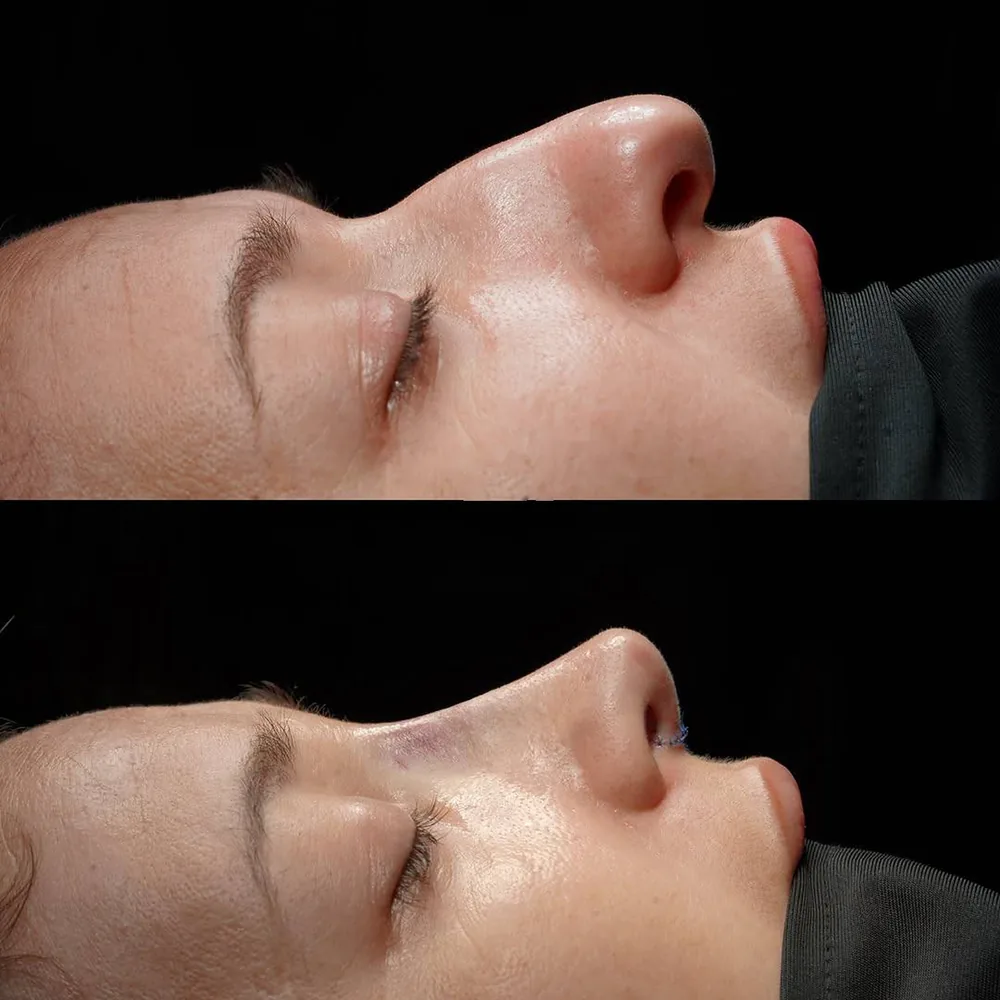
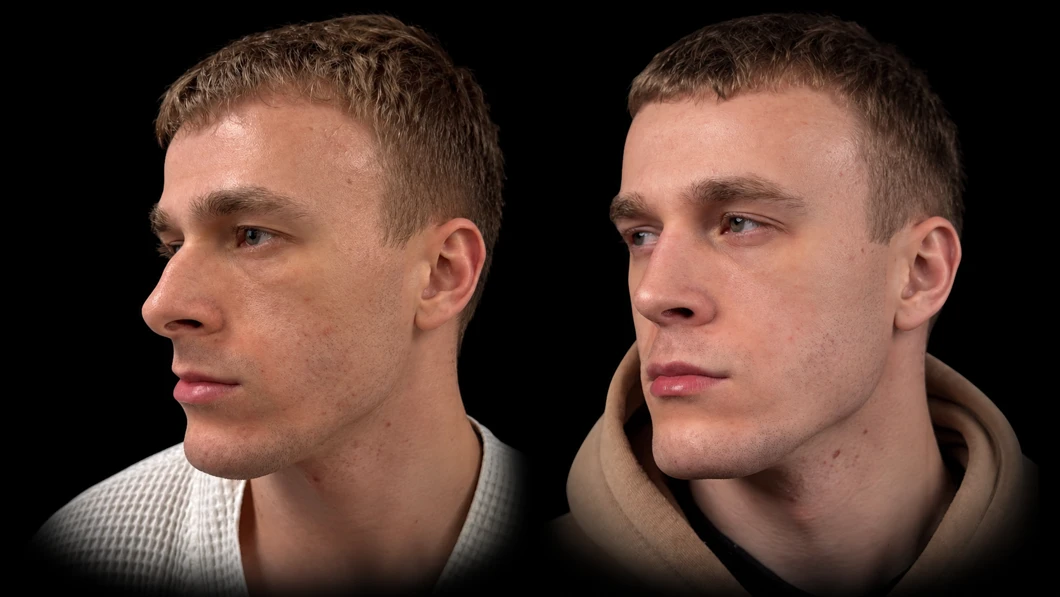
 beforeafter
Irina, 24
Rhinoplasty
Rhinoplasty
$4,200
Instead of $6,000 (≈ KES 780,000) · First consultation — Free
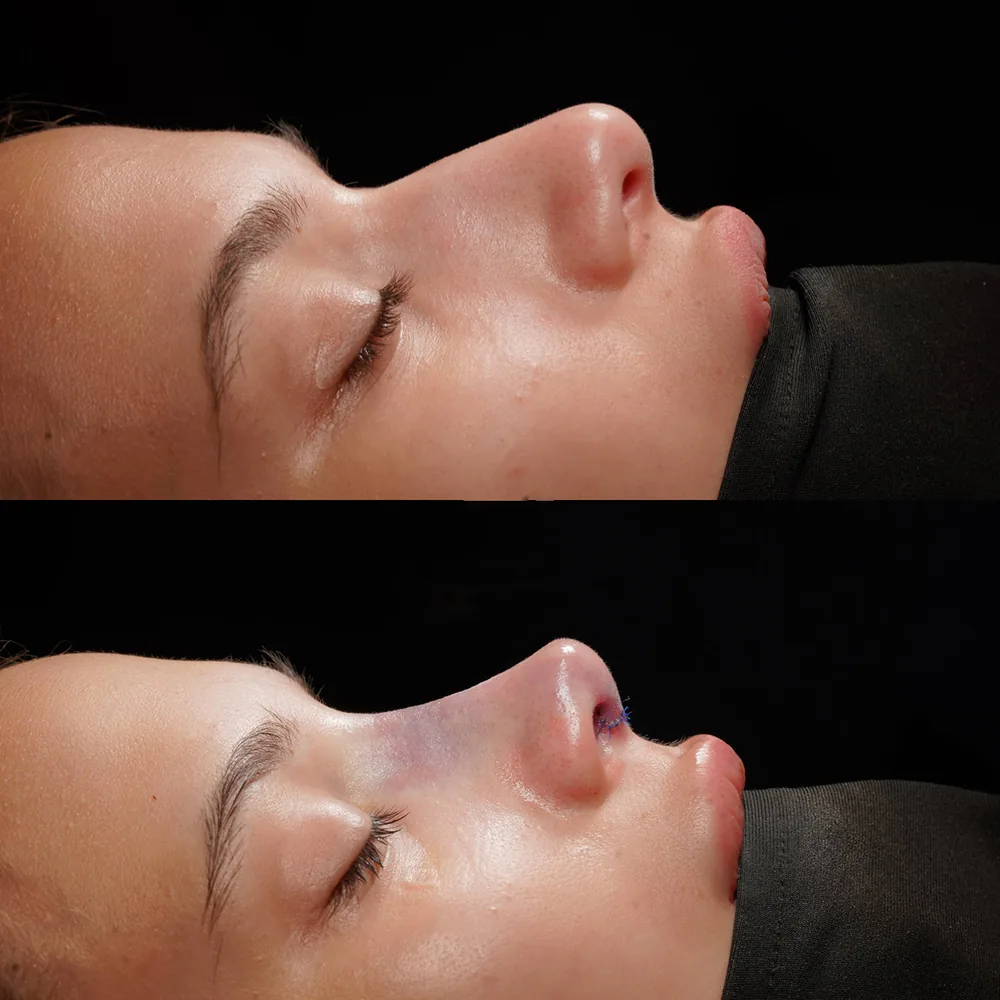 before
after
Message our coordinator
Free online consultation · Reply within 15 minutes
Message us on TelegramMessage us on WhatsAppBy messaging us, you agree to our Privacy Policy
Results
These are genuine patients treated at the clinic.
beforeafterRhinoplasty
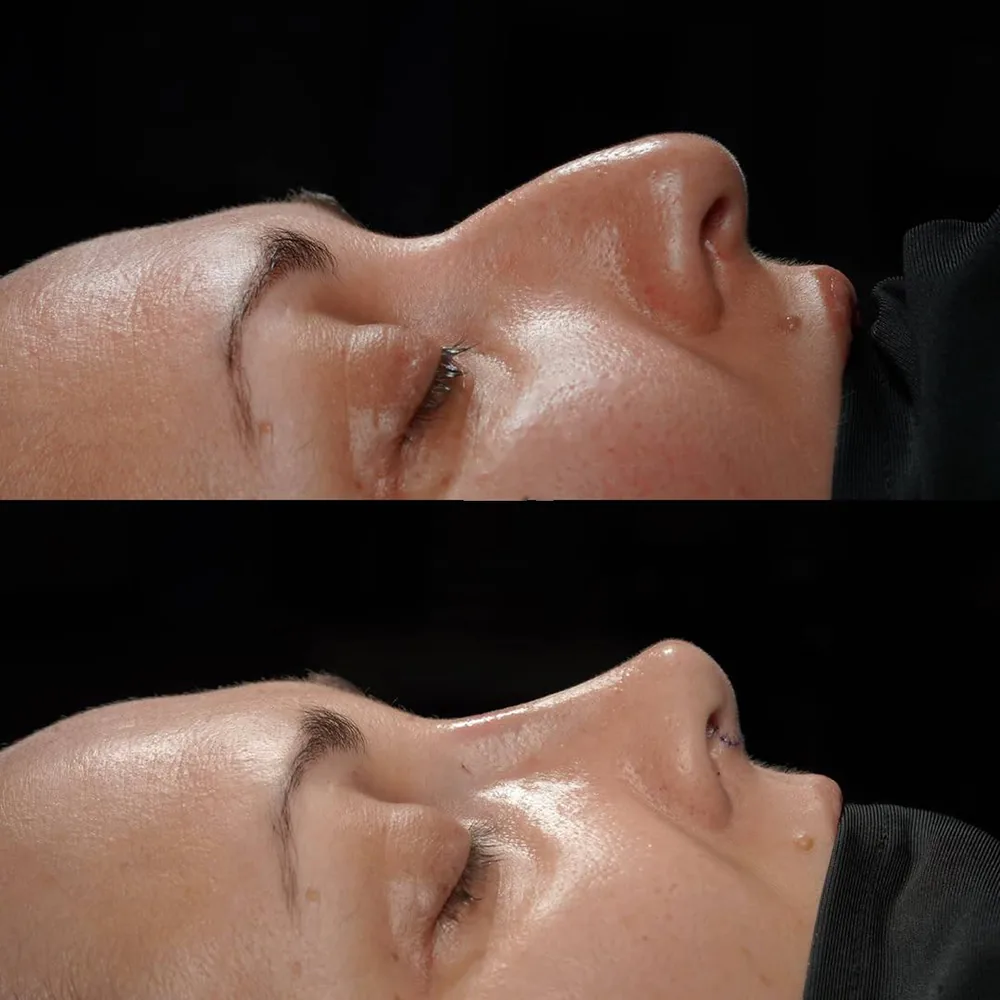 beforeafter
Rhinoplasty
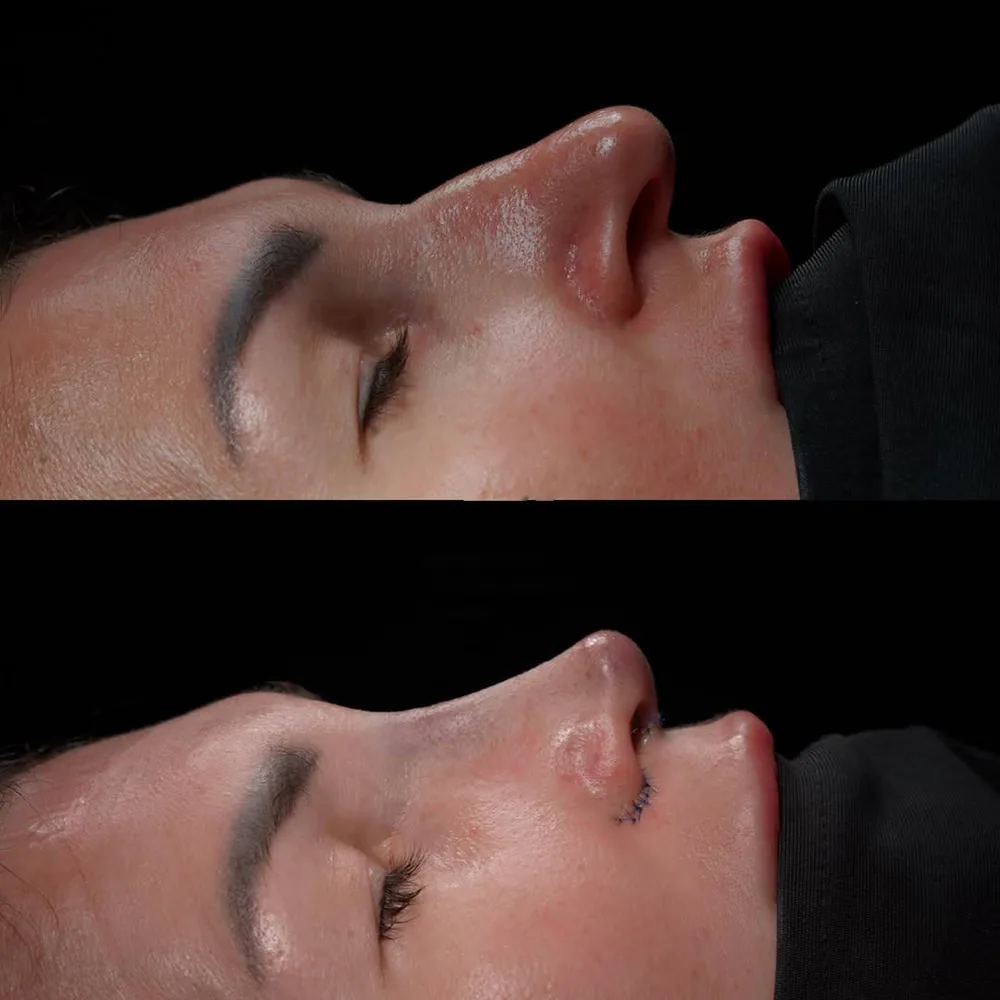 beforeafter
Rhinoplasty
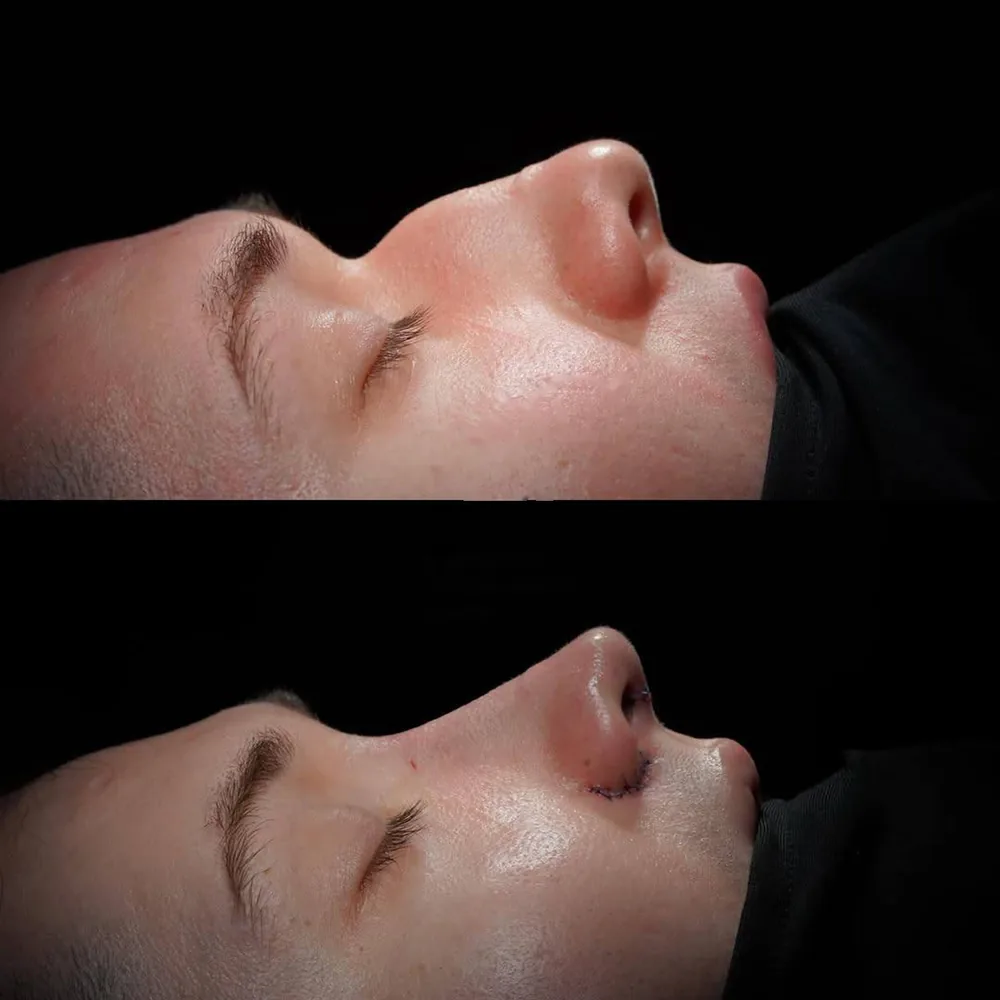 beforeafter
Rhinoplasty
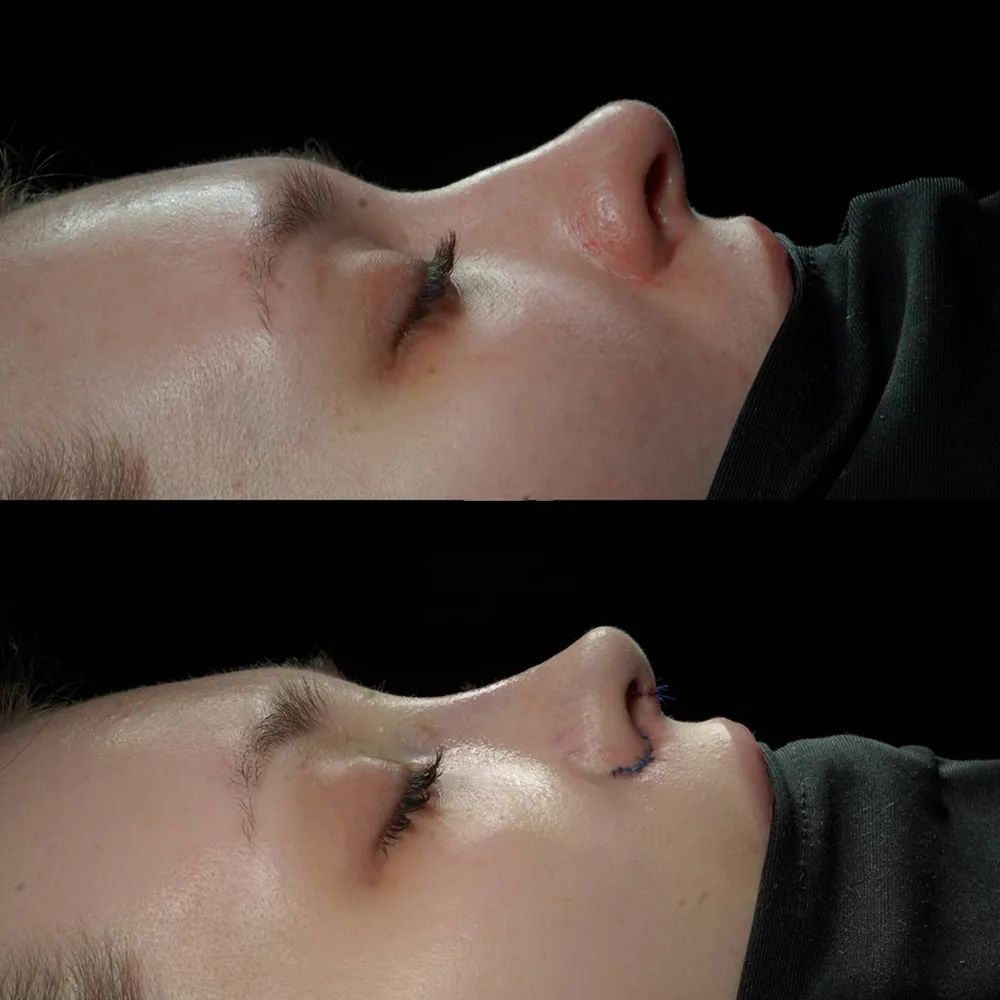 beforeafter
Rhinoplasty
beforeafterRhinoplasty
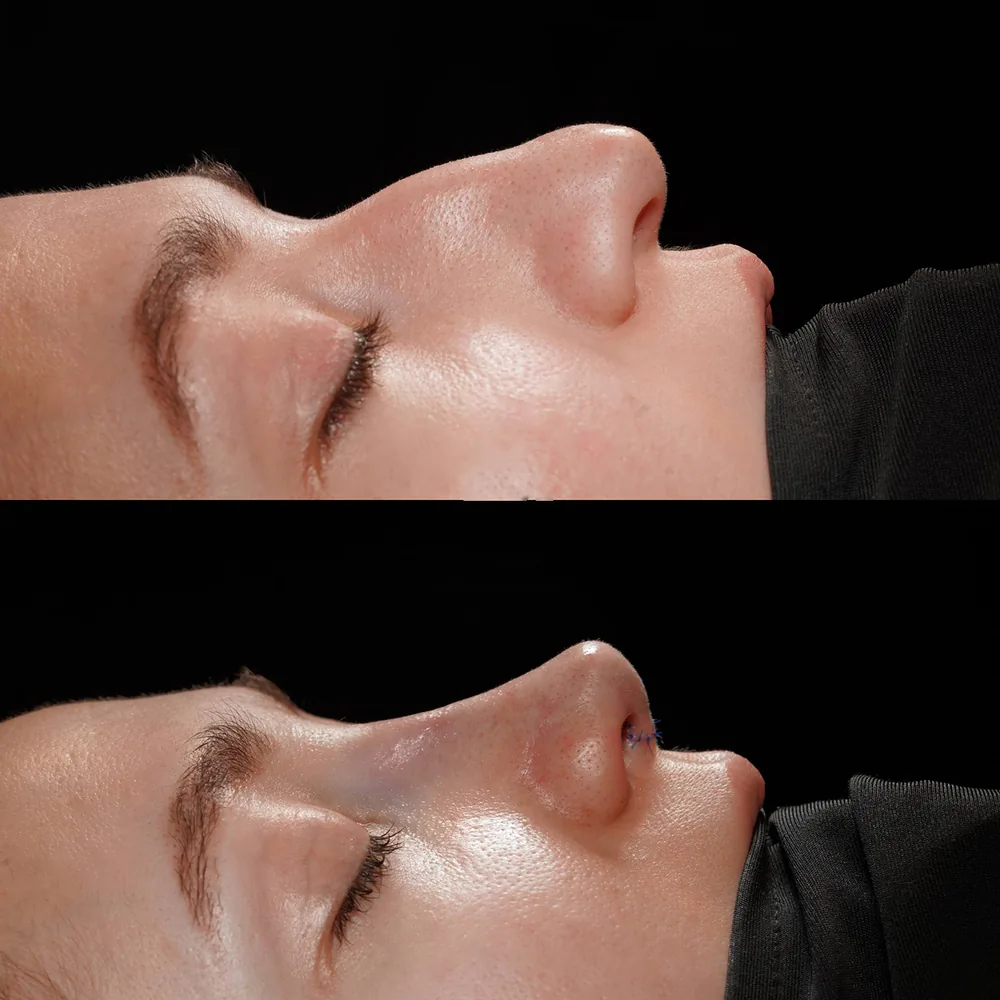 beforeafter
Rhinoplasty
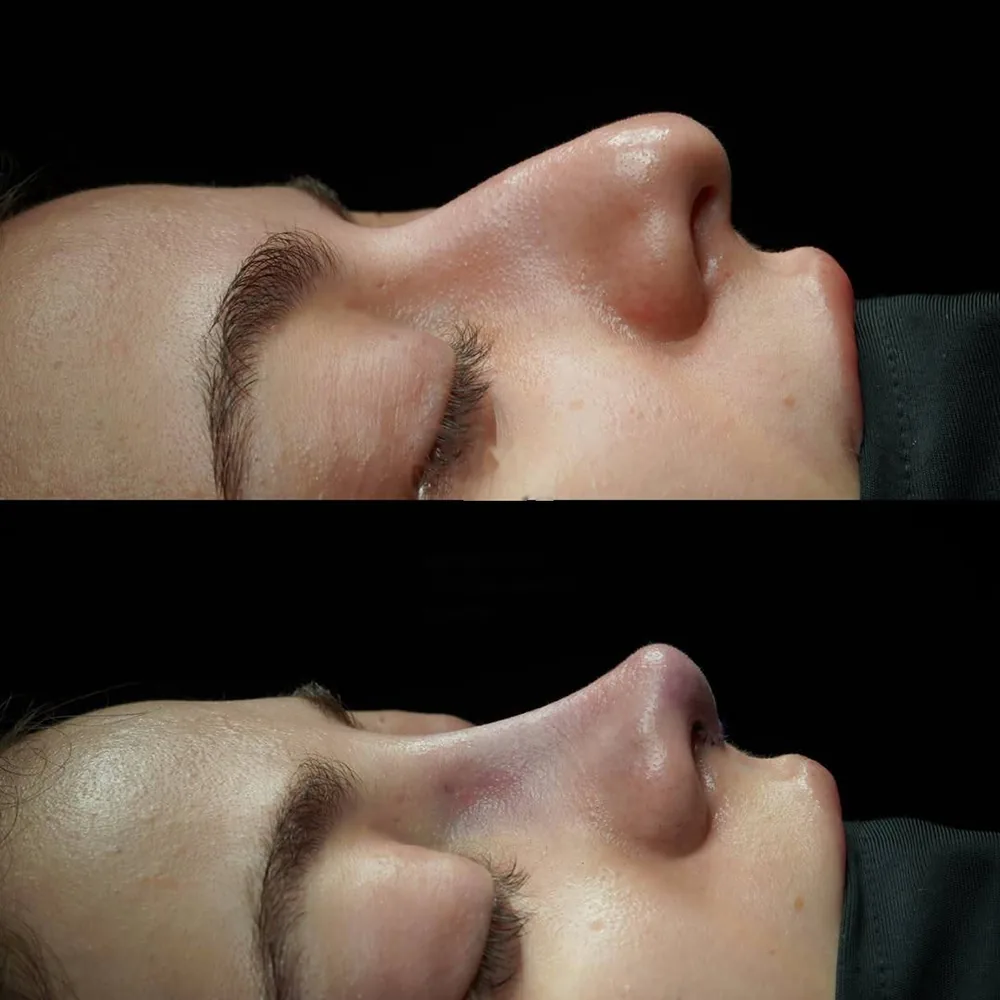 beforeafter
Rhinoplasty
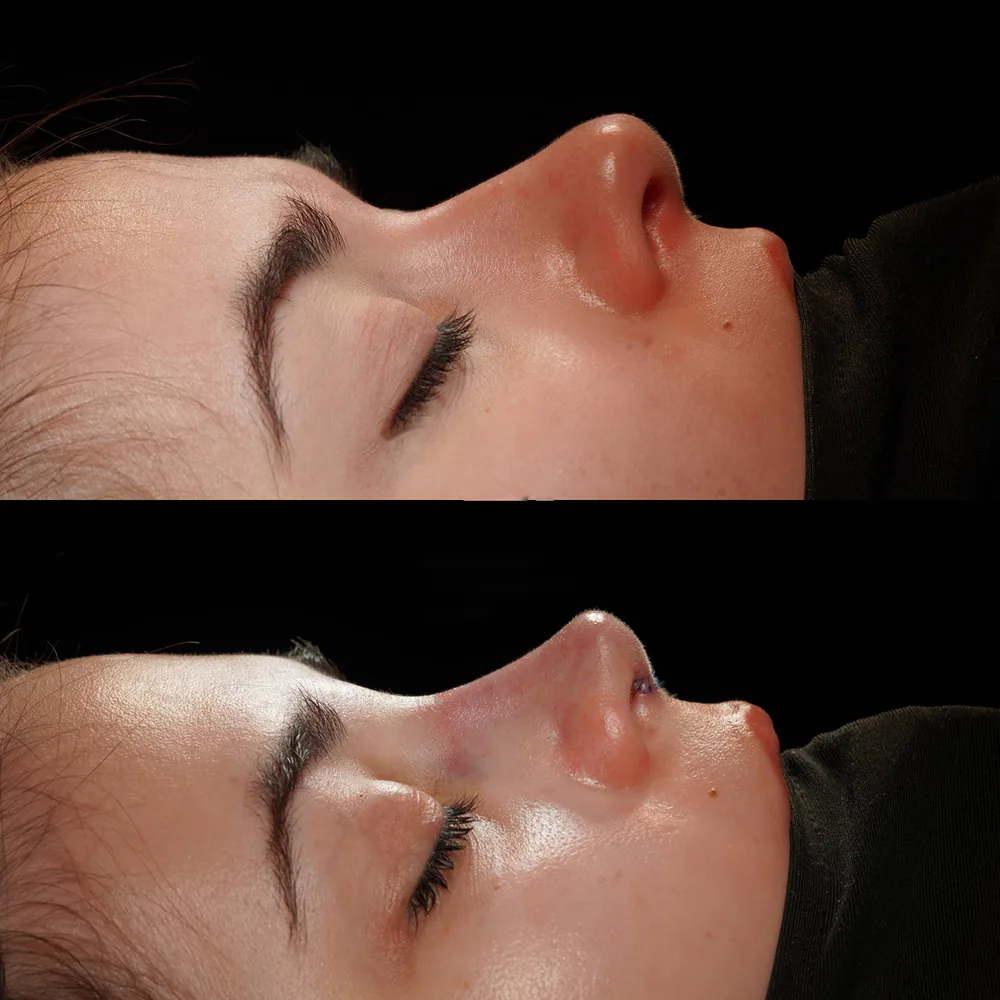 beforeafter
Rhinoplasty
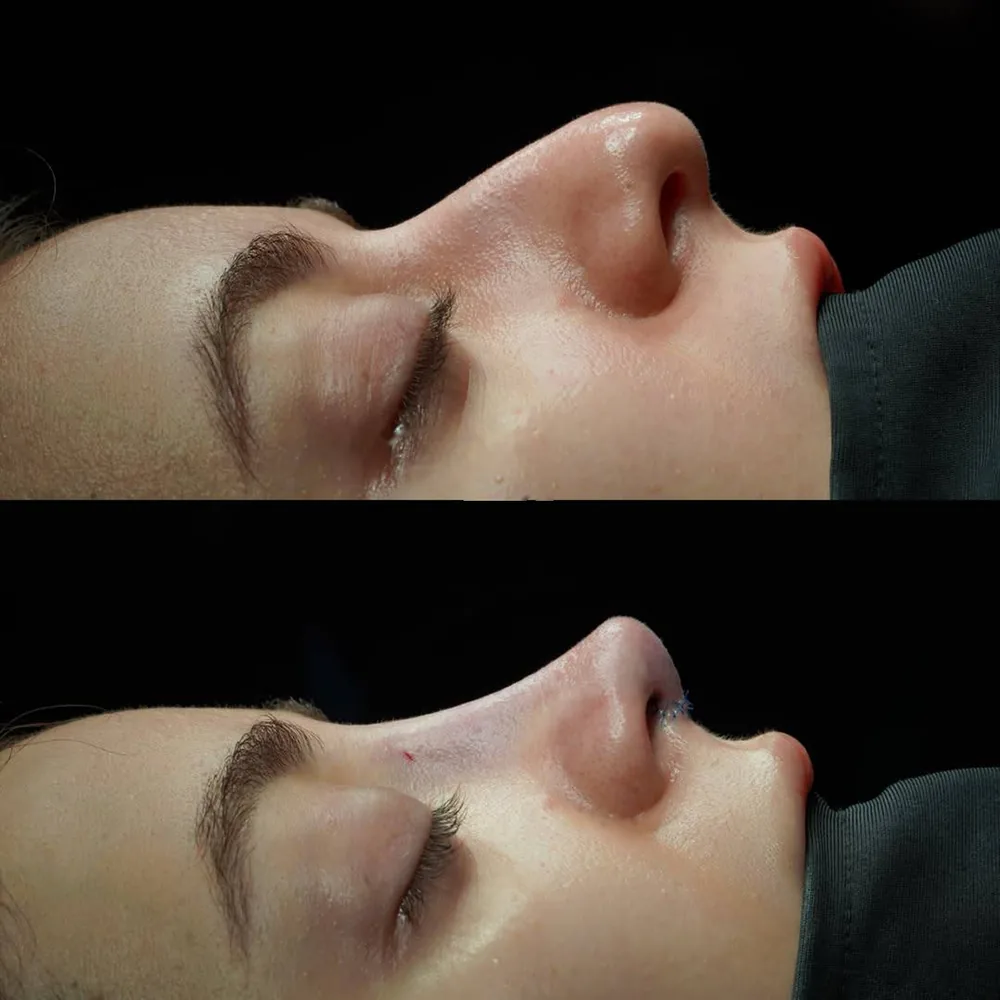 beforeafter
Rhinoplasty
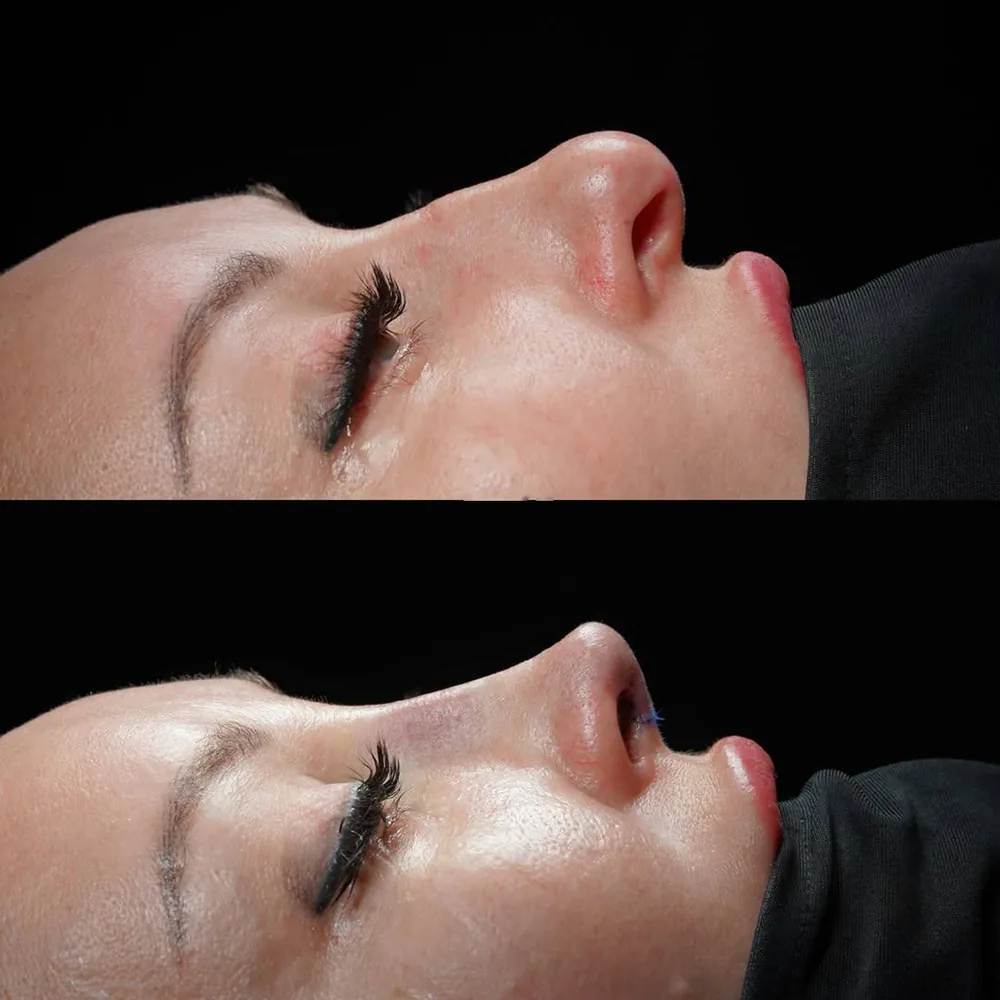 beforeafter
Rhinoplasty
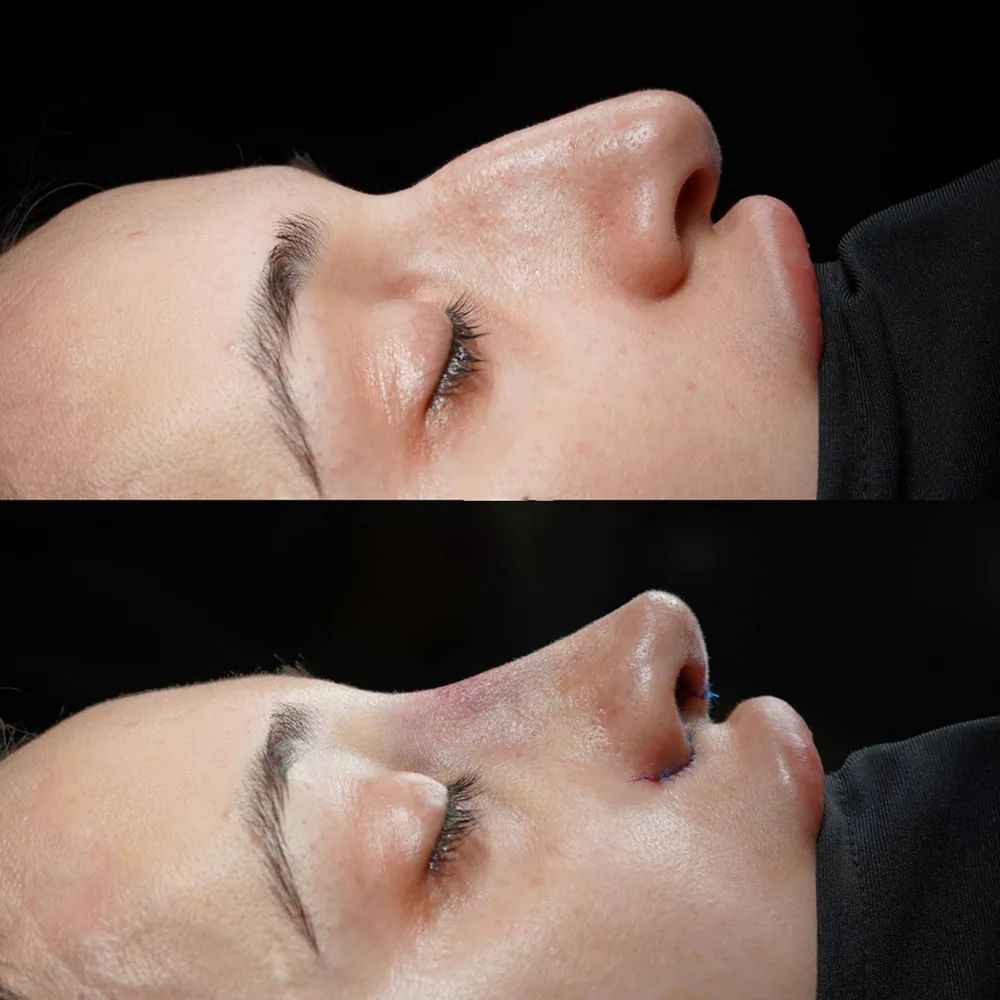 beforeafter
Rhinoplasty
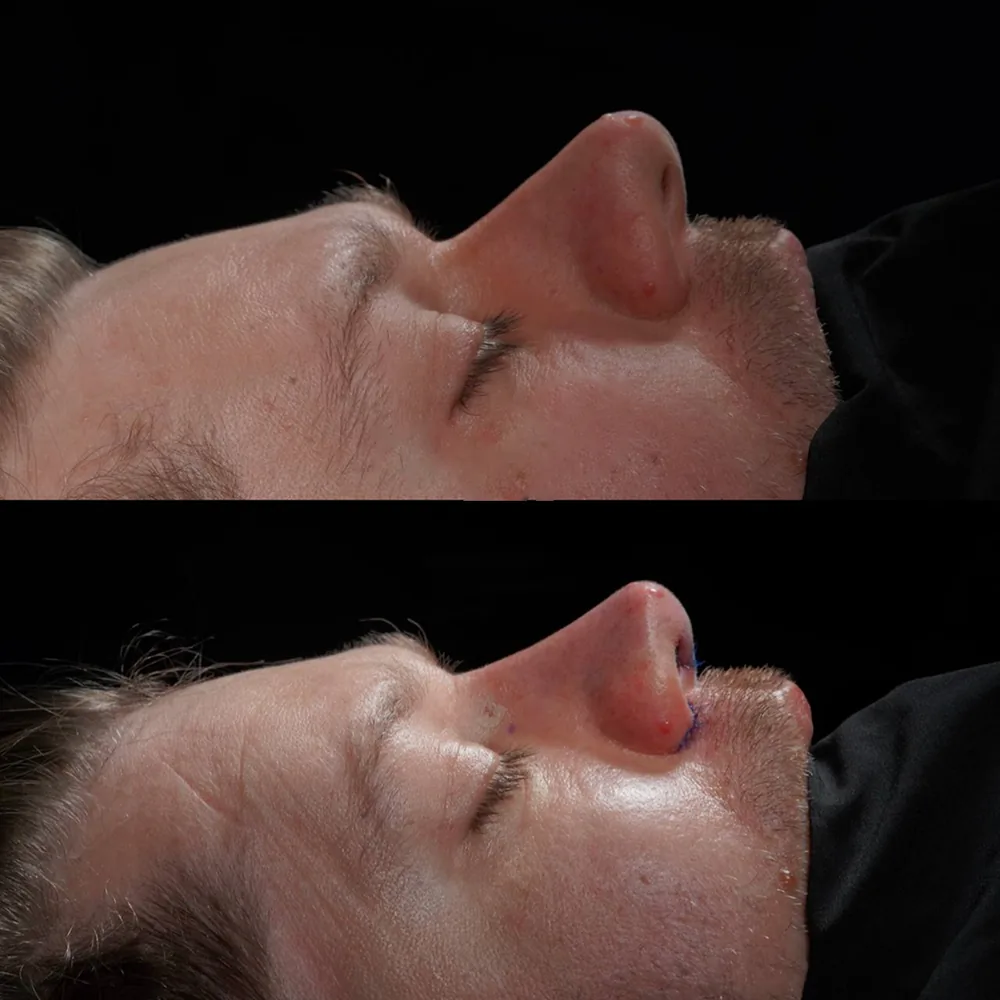 beforeafter
Rhinoplasty
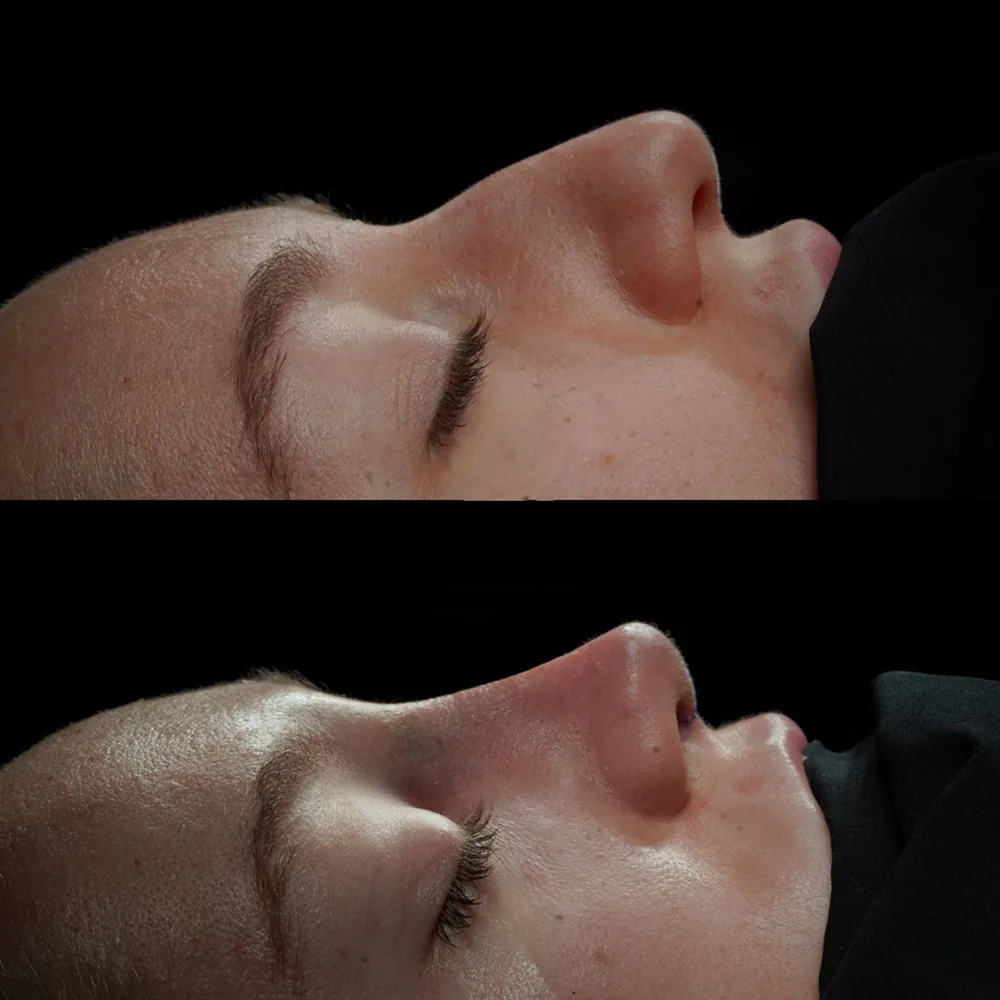 beforeafter
Rhinoplasty
Comparison
The most effective solution for you — found by us, with an excellent result delivered.
The first operation on the nose: changing its appearance and improving its function when breathing is impaired.
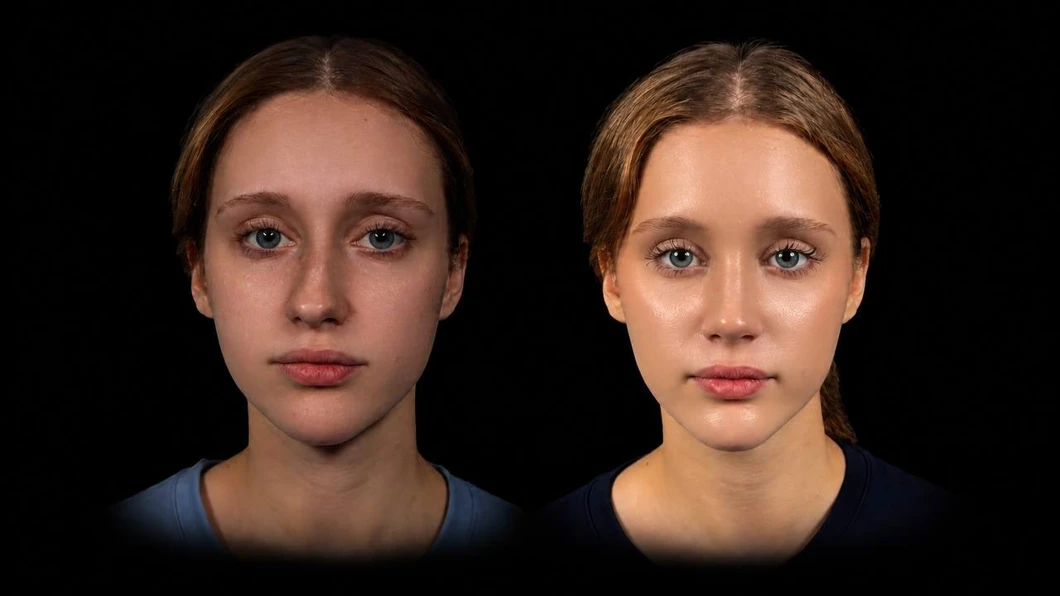
Discounted price
$4,200 $6,000
A secondary, corrective operation: performed when an earlier nose surgery was unsuccessful or only partly worked. It is not done until at least a year after the first procedure.
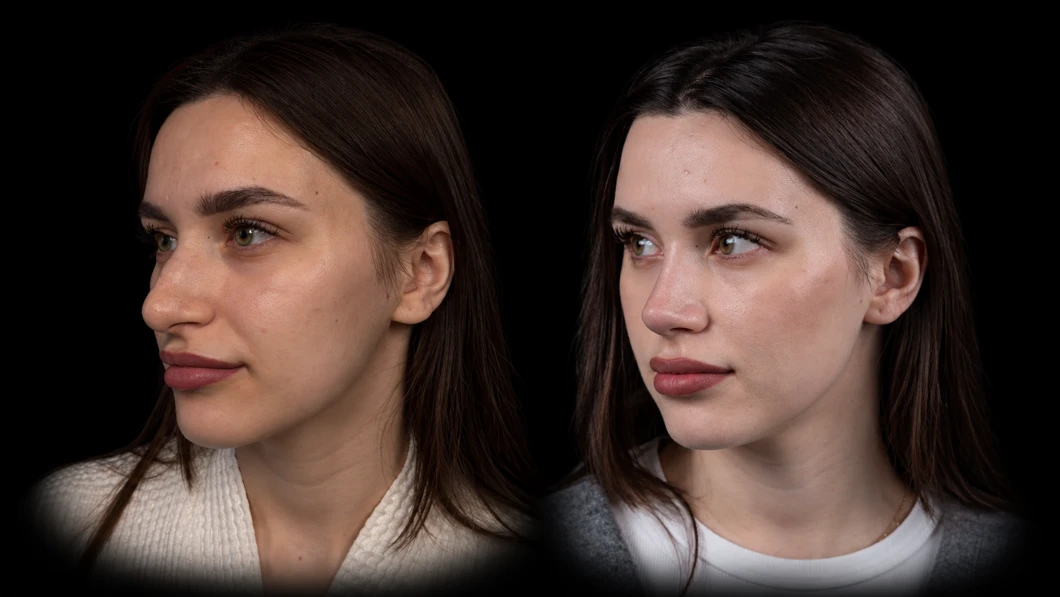
Discounted price
$5,400 $7,200
A combined operation to correct the septum and change the appearance of the nose.
Discounted price
$5,000 $6,600
Shown here are average benefits and recovery times by surgery type, for guidance only: the real extent of correction and recovery time depends on your anatomy, confirmed by the surgeon at the consultation.
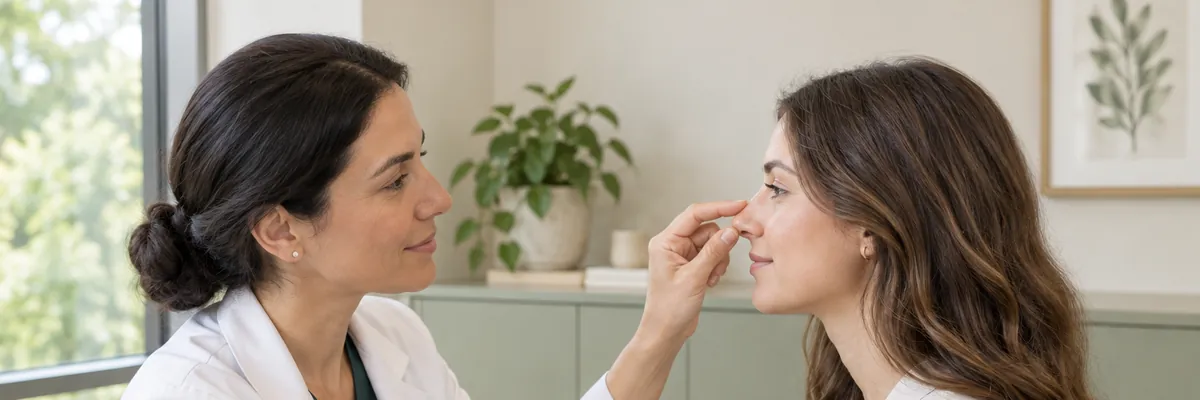
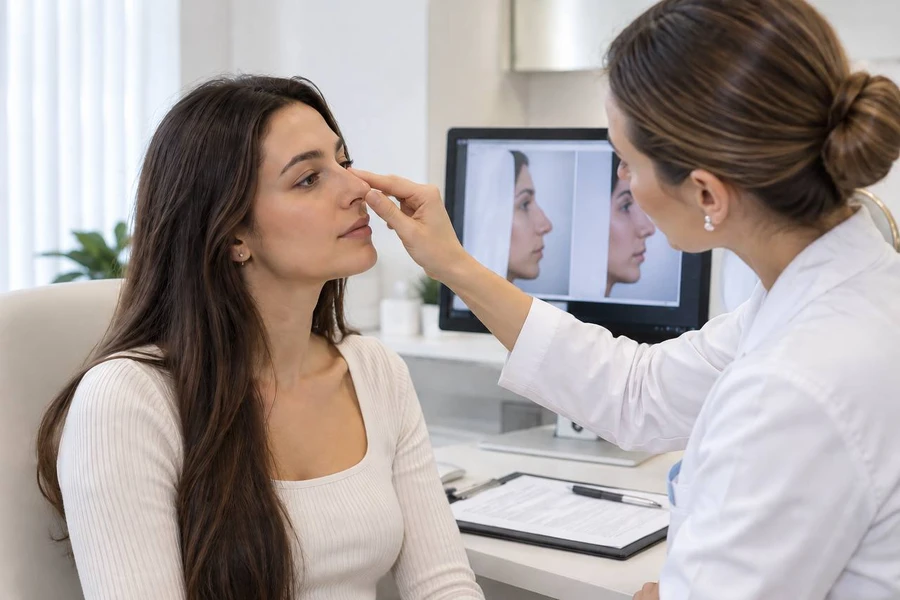
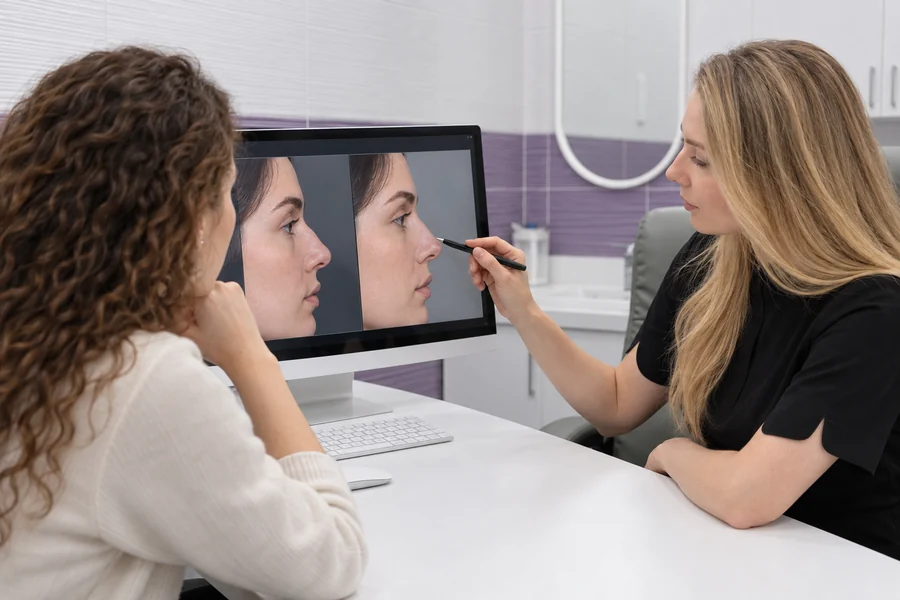
At the consultation the doctor will model the future result in 3D and explain
each step of your rhinoplasty
Free of charge, before surgery, and with no obligation — that is the consultation.
Book a consultationAbout us
Modern equipment, comfortable rooms and care for every patient
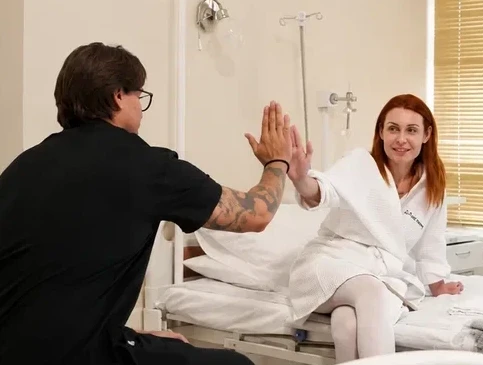
We answer every question and schedule the consultation at a time that suits you
Get a consultationWhen a case can be resolved without an operation, the doctor explains this at the consultation, so your money is never wasted.

Not certain which group fits your case?
Message us on Telegram and send photos of your nose — the doctor will tell you whether rhinoplasty is right for you. Free and with no commitment to surgery.
Find out if it suits me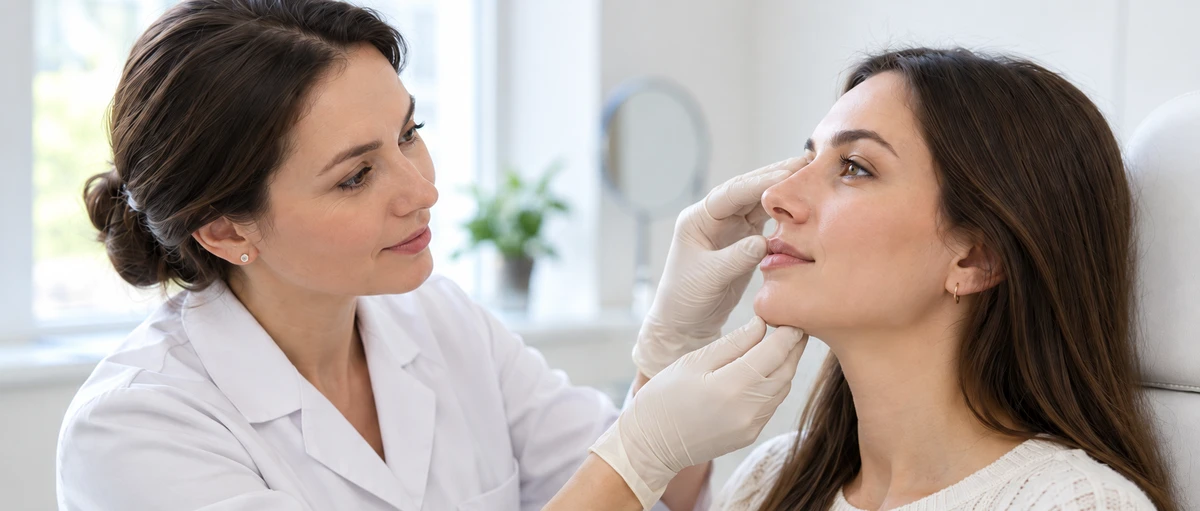
Prices
After the result is modelled at the free consultation, the cost is quoted and set out in the contract.
Discounted price
nose reshaping
$4,200$6,000
Discounted price
secondary, revision
$5,400$7,200
Discounted price
nose shape and septum
$5,000$6,600
Free
surgeon's examination and 3D modelling
Free
the price of surgery is confirmed
and fixed in your contract
The doctor will assess the anatomy of your nose, listen to your wishes
and decide on the right technique for the correction. At the consultation you are told the cost, which is then fixed in the contract.

Message our coordinator
Free online consultation · Reply within 15 minutes
Message us on TelegramMessage us on WhatsAppBy messaging us, you agree to our Privacy Policy
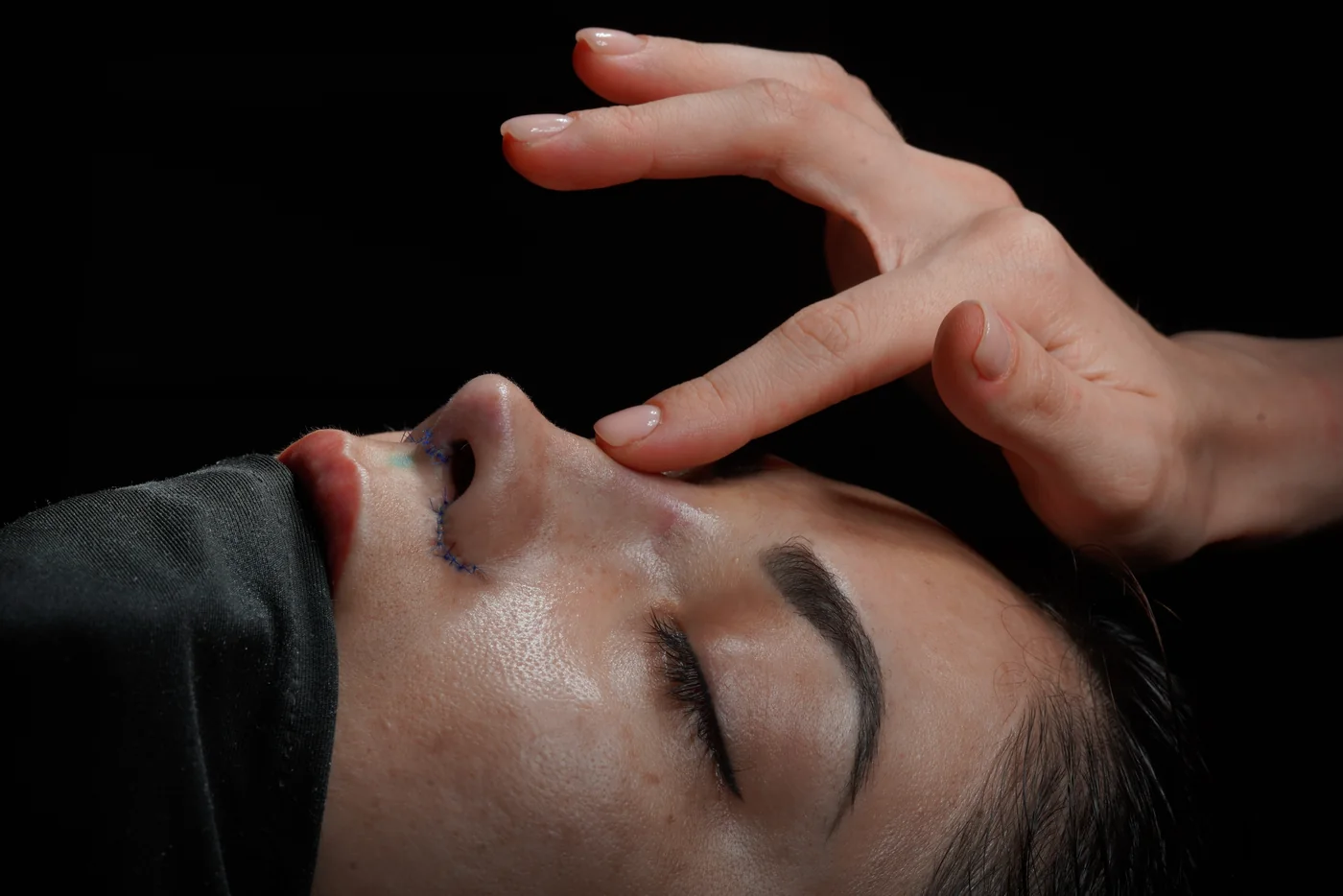
Price
From your pre-surgery preparation
to follow-up support for 12 months.
Discounted price
$4,200$6,000Discounted price
How it goes
A correction plan agreed with you, inpatient observation, and a full year of recovery follow-up.
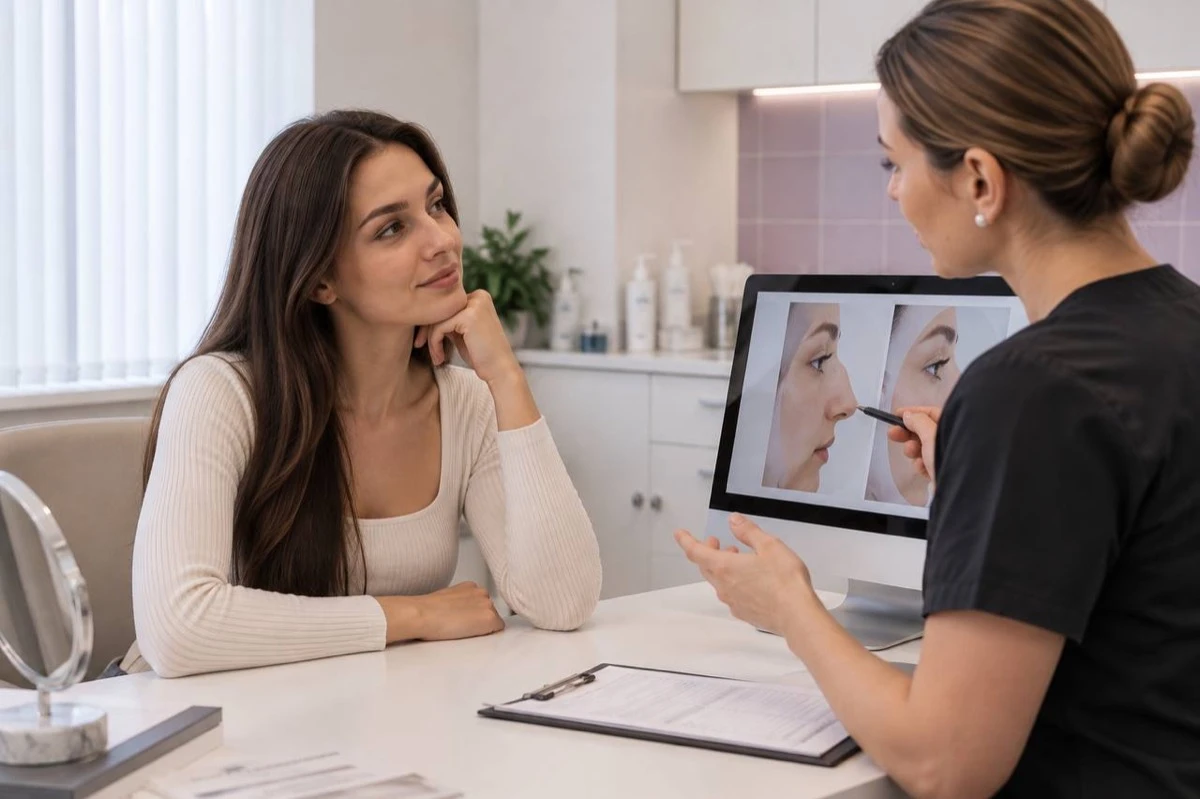
The doctor assesses your nose, discusses your wishes and carries out the examinations needed to choose the best correction technique

We reserve a surgery date for you: the deposit can be paid by card at the clinic or online by bank transfer. The terms are fixed in the contract for medical services
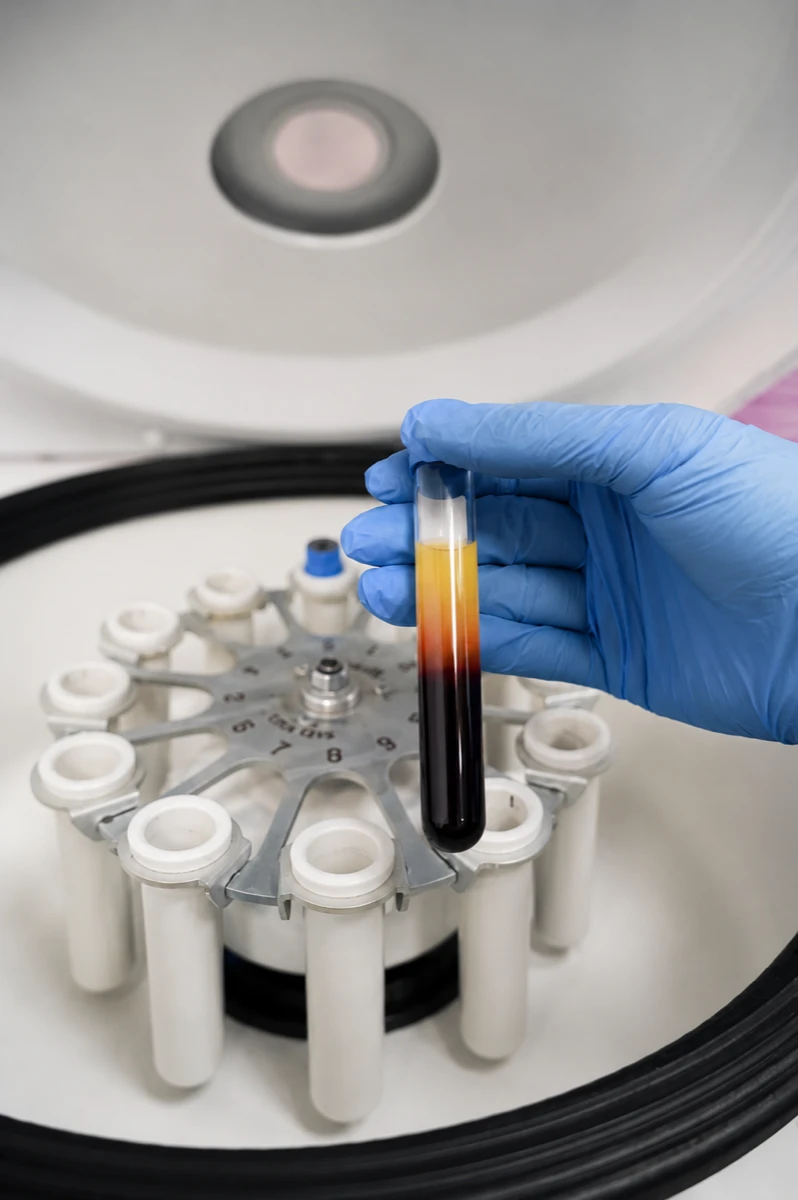
Before the operation you will need a complete set of lab tests — complete blood count, biochemistry, coagulation panel, chest X-ray and an X-ray of the sinuses
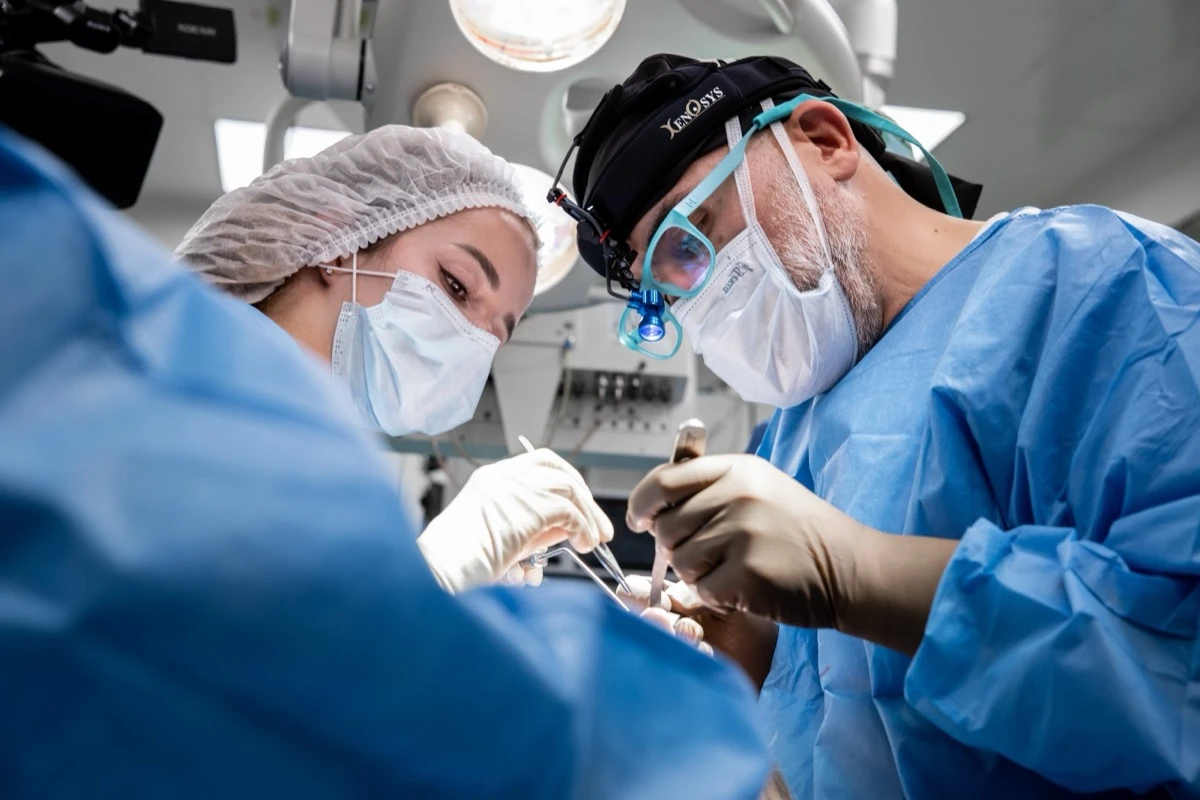
Under general or local anaesthesia, the surgeon performs the rhinoplasty with the chosen technique, correcting the structure and shape of the nose
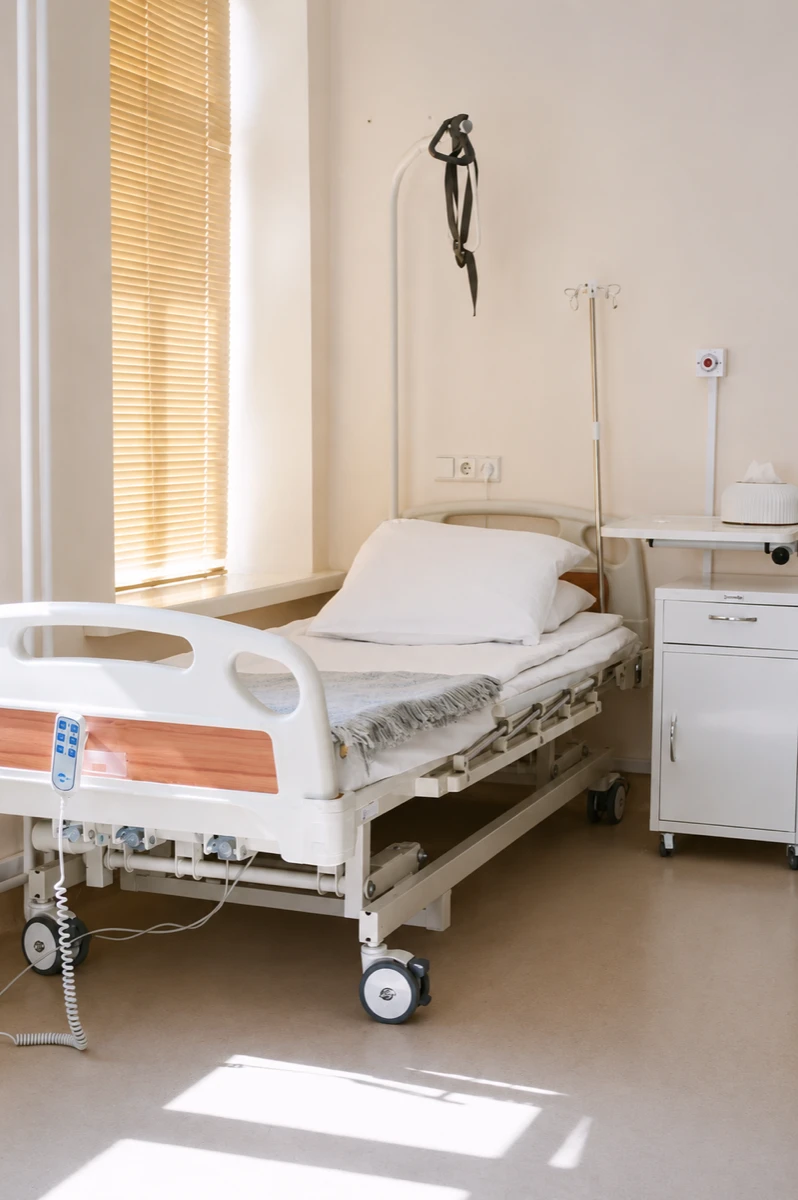
Each procedure is performed in the inpatient unit of the clinic. After surgery, your stay lasts one day
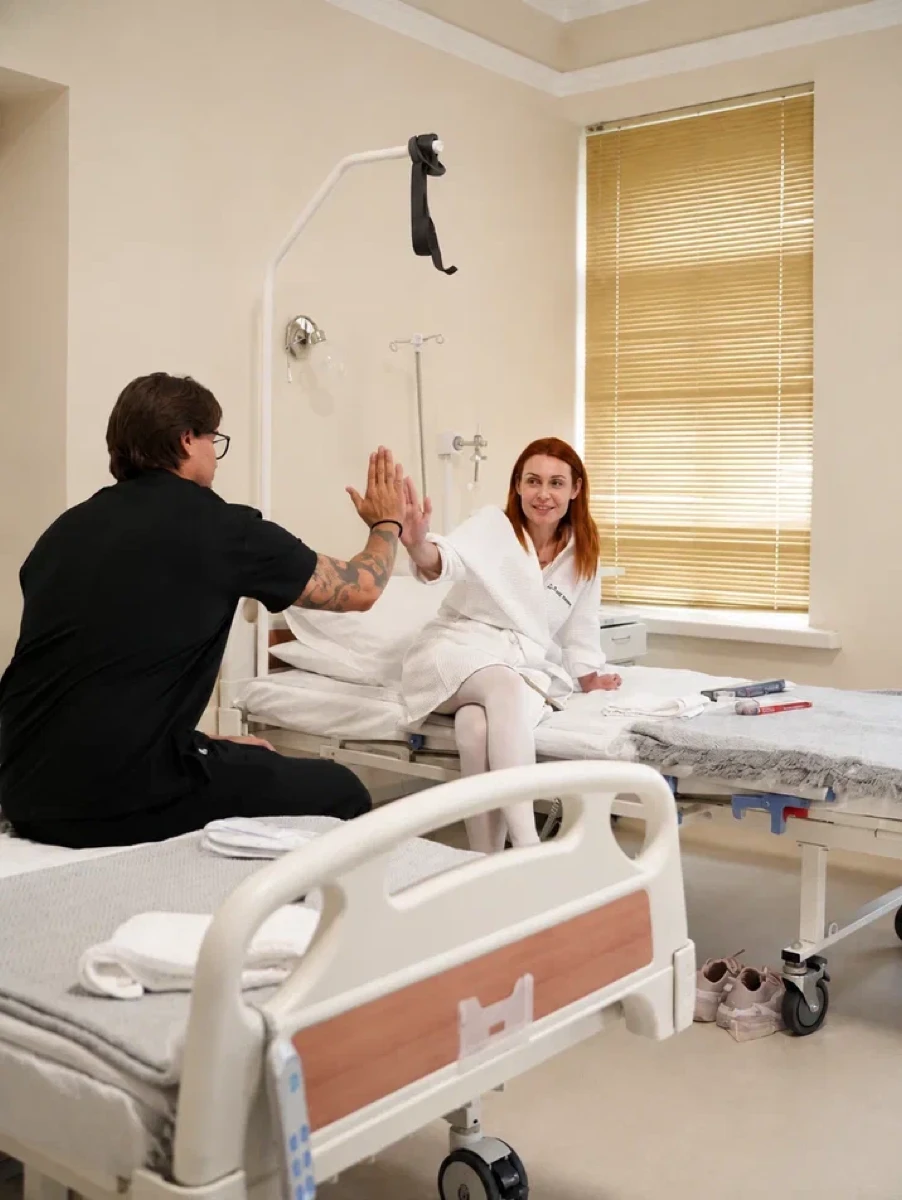
You get a recovery programme after surgery, with progress tracked through check-ups at 7 days, 3 and 6 months — and free consultations with your surgeon for a year.
During the consultation you get a realistic forecast of the expected result
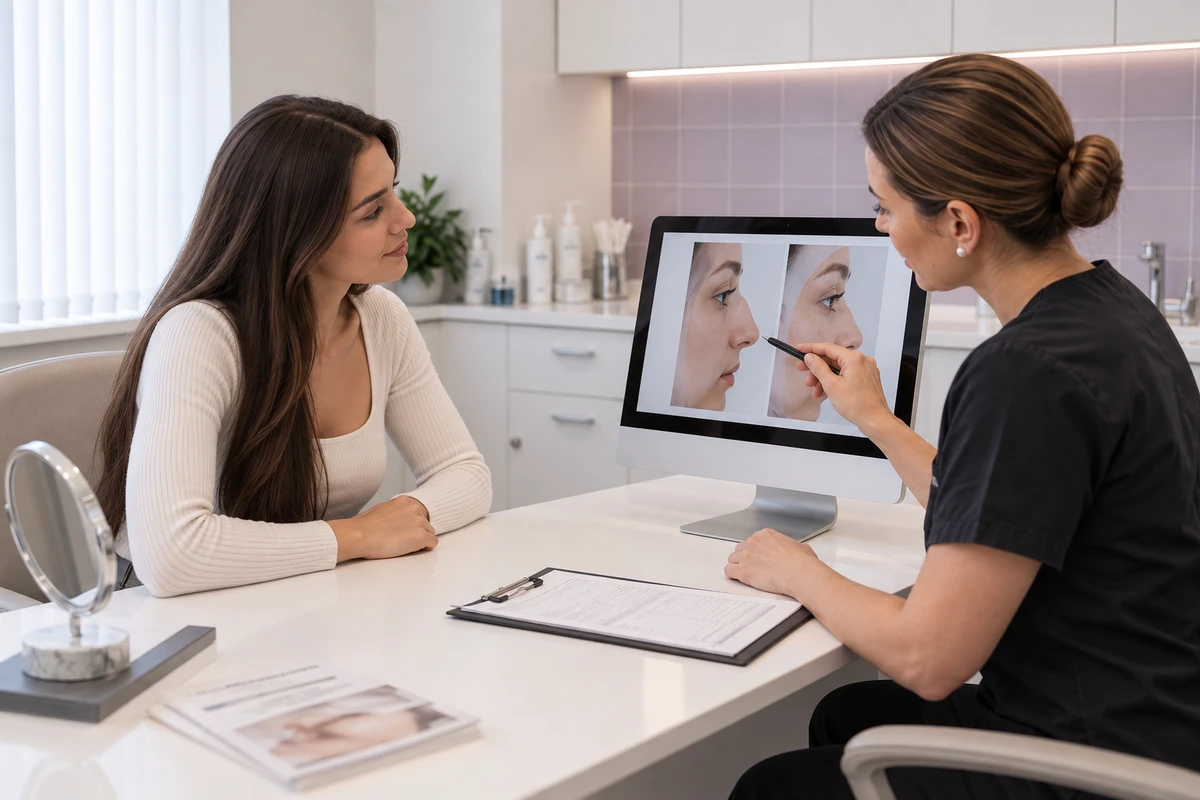
Free of charge, before surgery, and with no obligation — that is the consultation.
Book a consultationNasal splint
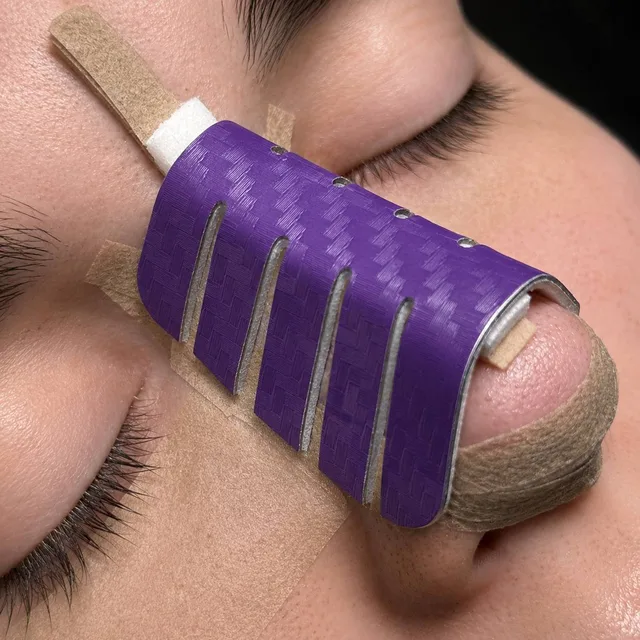
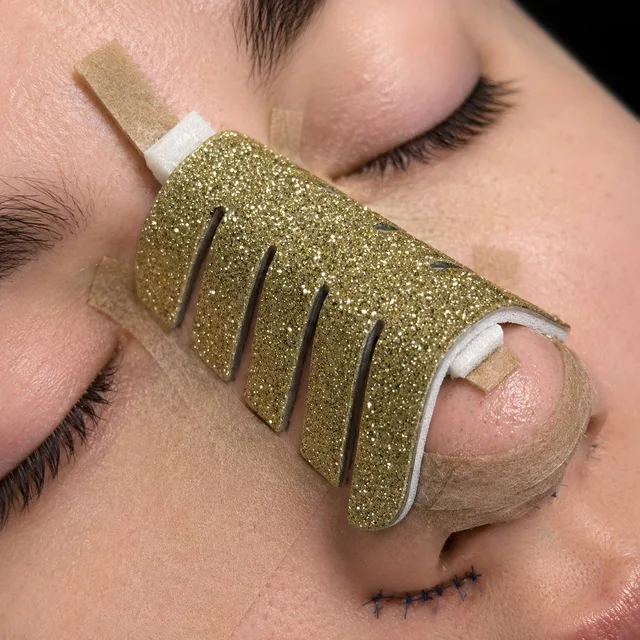
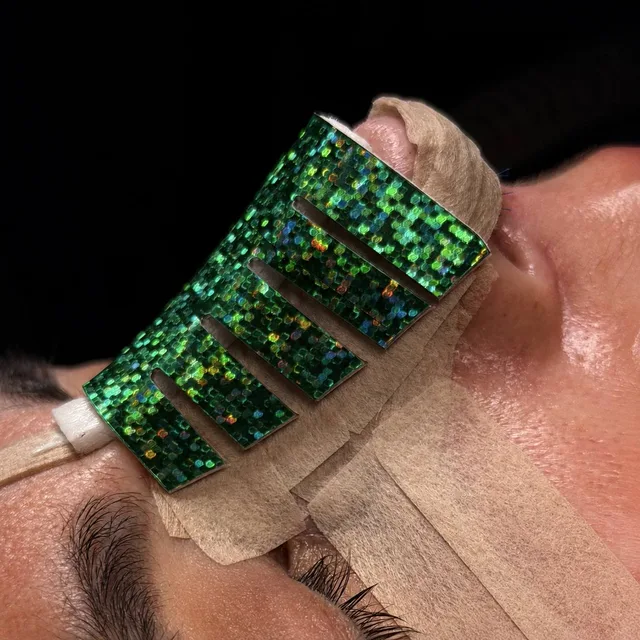
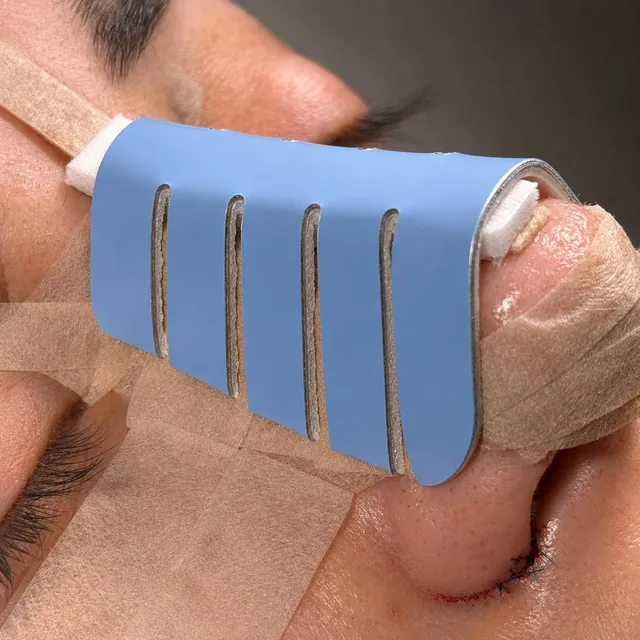
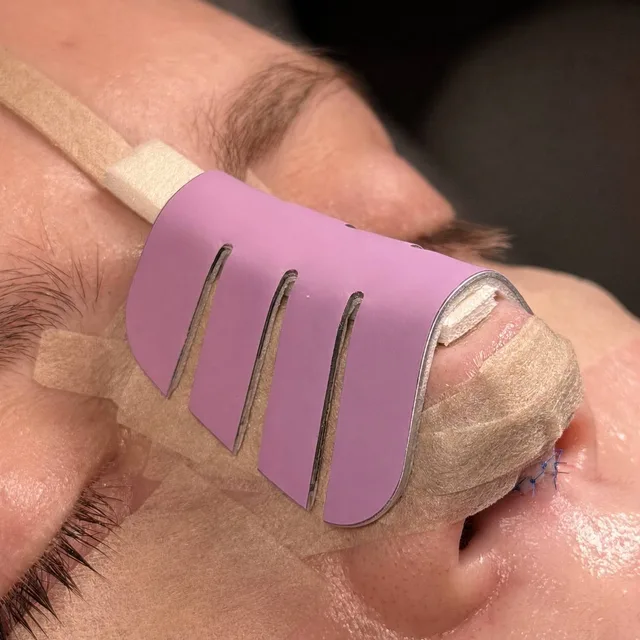
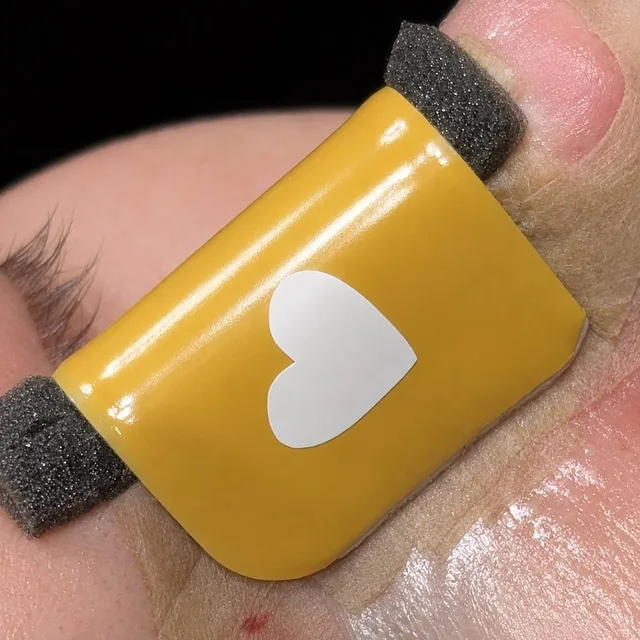
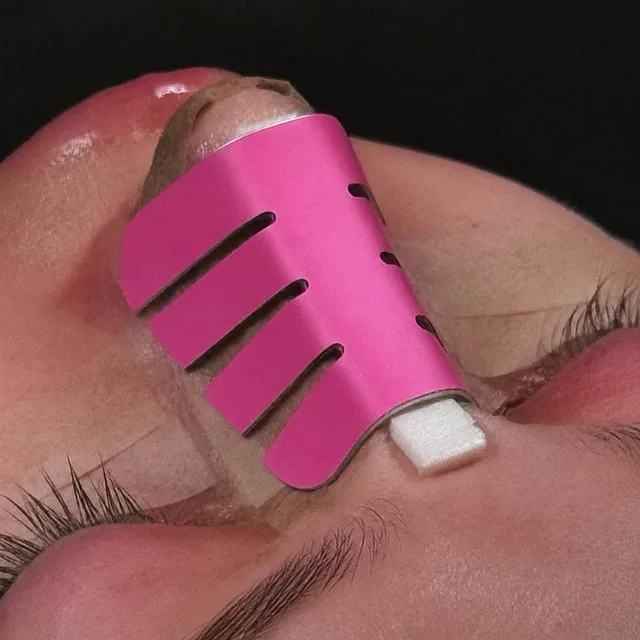
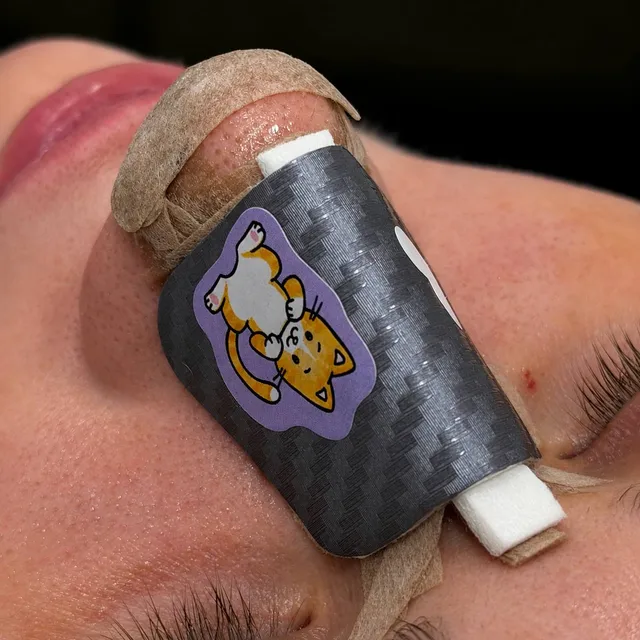
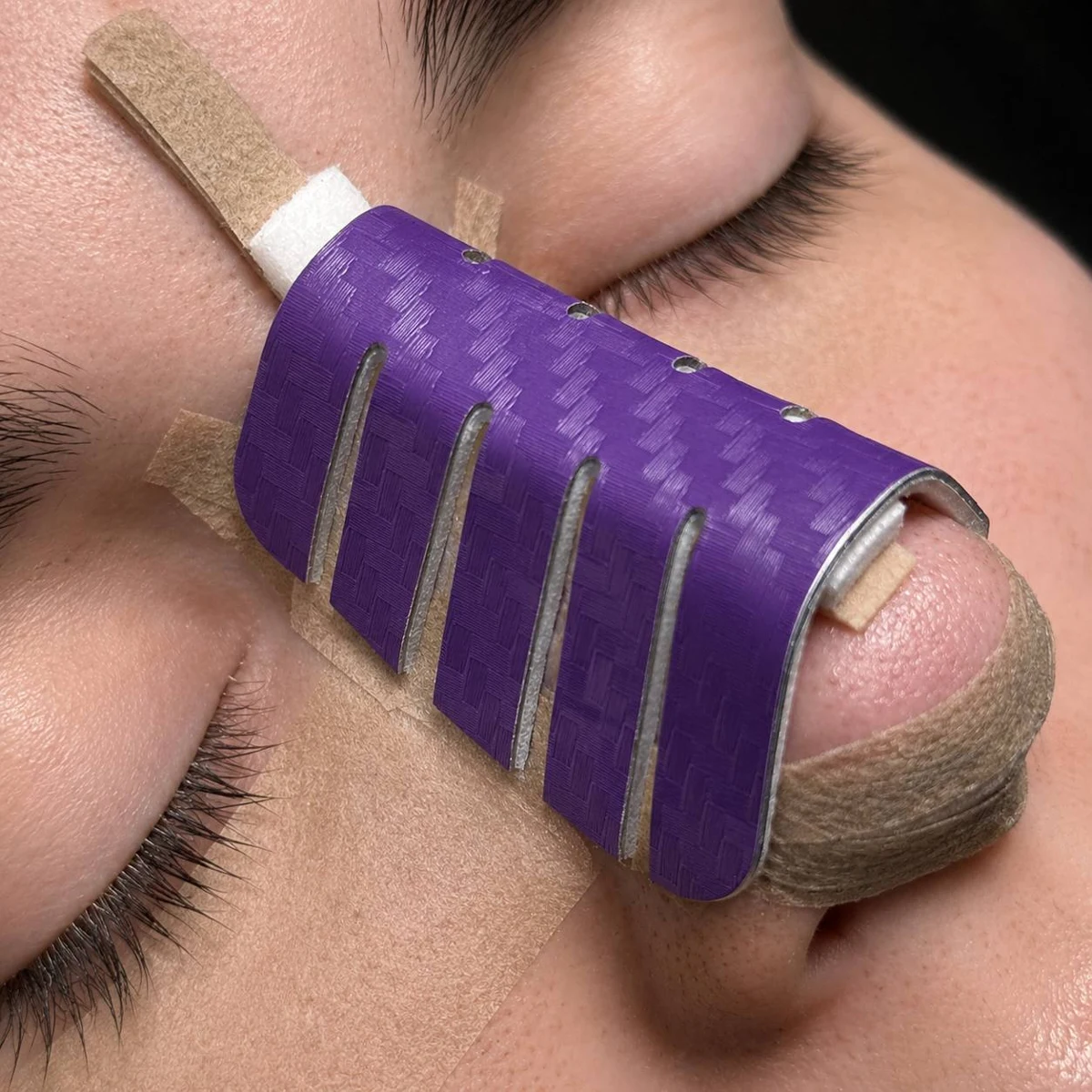
Every detail aims to highlight your natural beauty, and to make the recovery period more enjoyable, we let you pick the colour of your nasal splint.
Style shown in the details:
Choose the splint colour that fits your mood
Confidence starts with small things, just like your future profile
Doctors
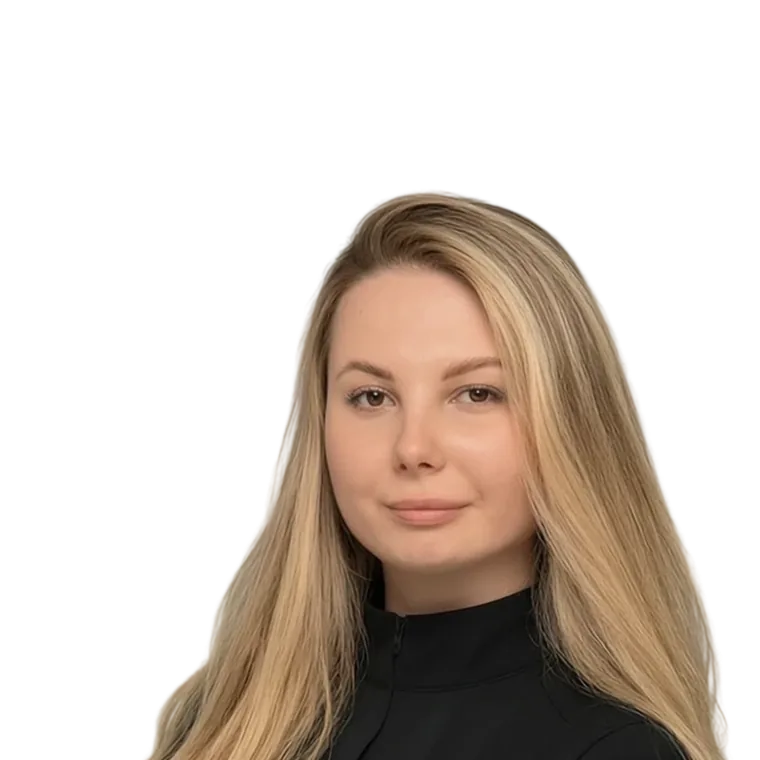
Rhinoplasty surgeon
You speak directly with the operating surgeon at the consultation
The doctor evaluates your facial proportions, listens carefully to your wishes and outlines which changes are possible.
Book a consultationCoordinators
We stay with you through every stage

Your dedicated coordinator
Your first point of contact at the clinic — from your very first message through to the consultation
Patient support
Helps you choose a convenient date and answers your questions before the first consultation

Your dedicated coordinator
With you from booking through your stay to discharge
Patient support
Helps you prepare for surgery and stays in touch during your stay at the clinic

Your dedicated coordinator
With you through recovery — from discharge to your final check-up
Patient support
Keeps you updated during recovery and sets up your follow-up visits with the surgeon
A closed channel built for those who care about honesty and expertise
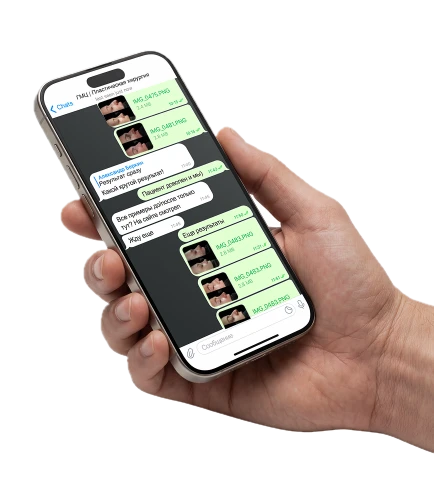
Message us — our coordinator will contact you shortly and book your consultation
Advantages
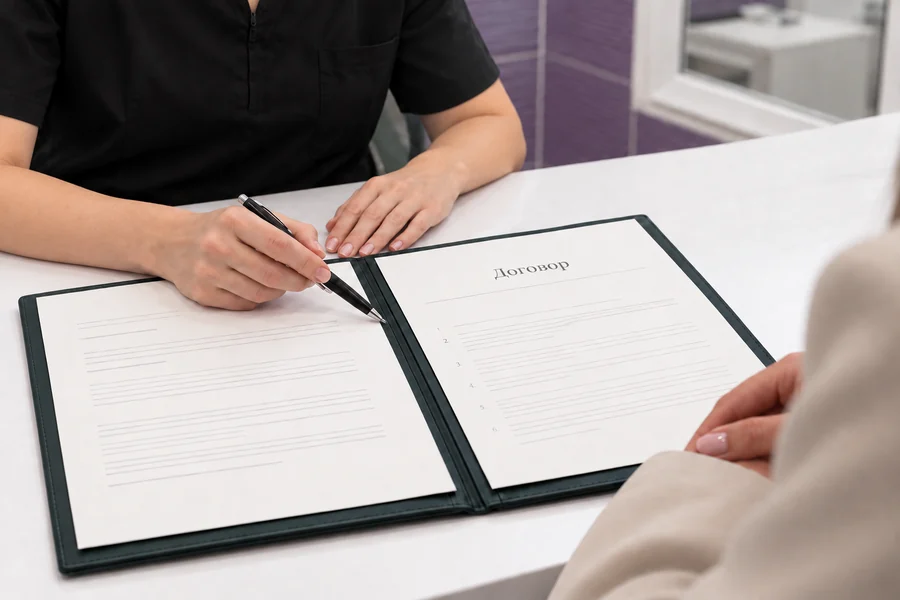
A lifetime guarantee, set out in the contract. The terms of the surgery, ongoing support and post-operative follow-up are all agreed in advance.
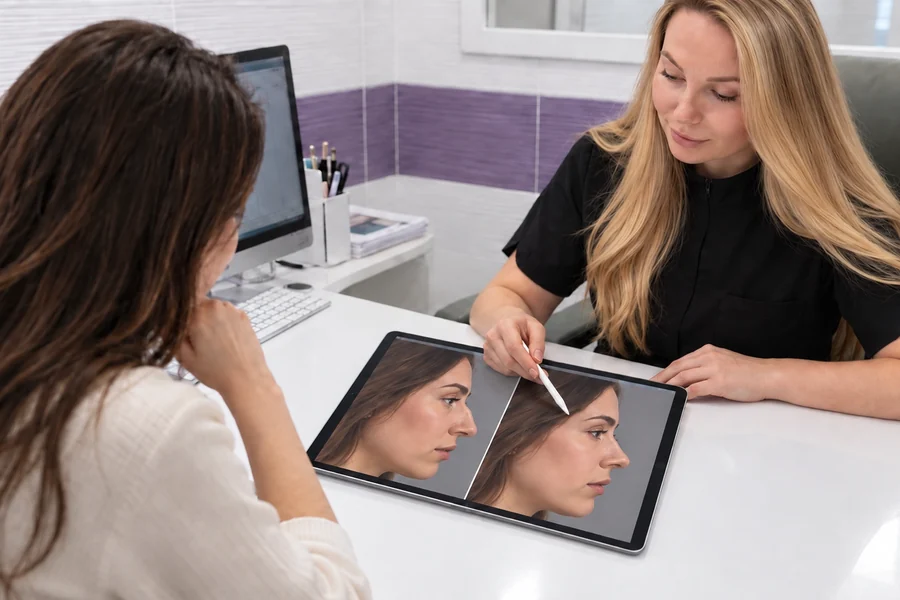
We review your case at a free consultation and tell you plainly whether rhinoplasty is right for you. Just the facts, with no push toward surgery.
For patients travelling from another city or country, we combine the consultation and the required preparation into one trip, so the process is more convenient and needs fewer journeys.
We respect your time: we work 24/7, with easy booking and a personal approach — we adapt to your pace.
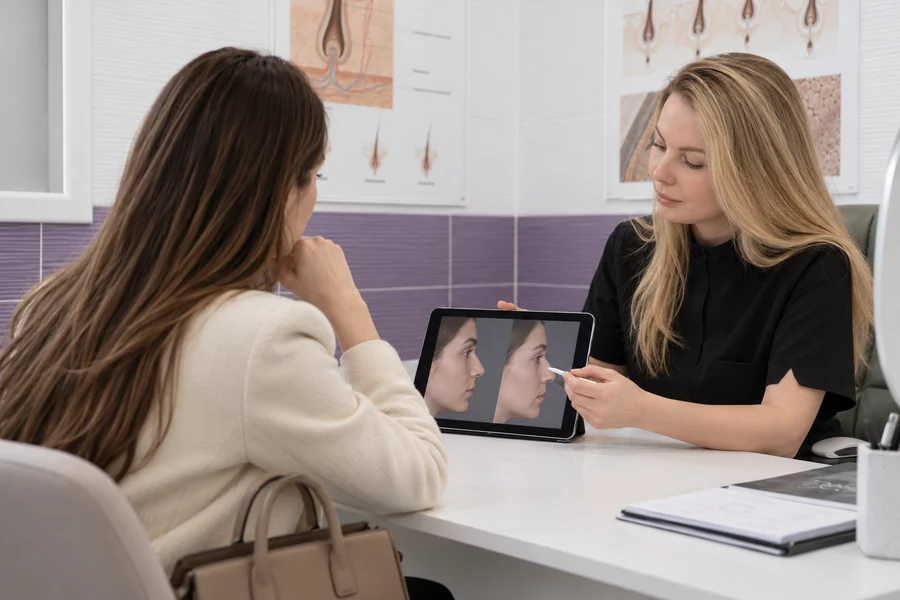
The surgeon defines the scope of correction after the consultation and gives you a clear, upfront price for the surgery — with no surprises before you reach the result you want.
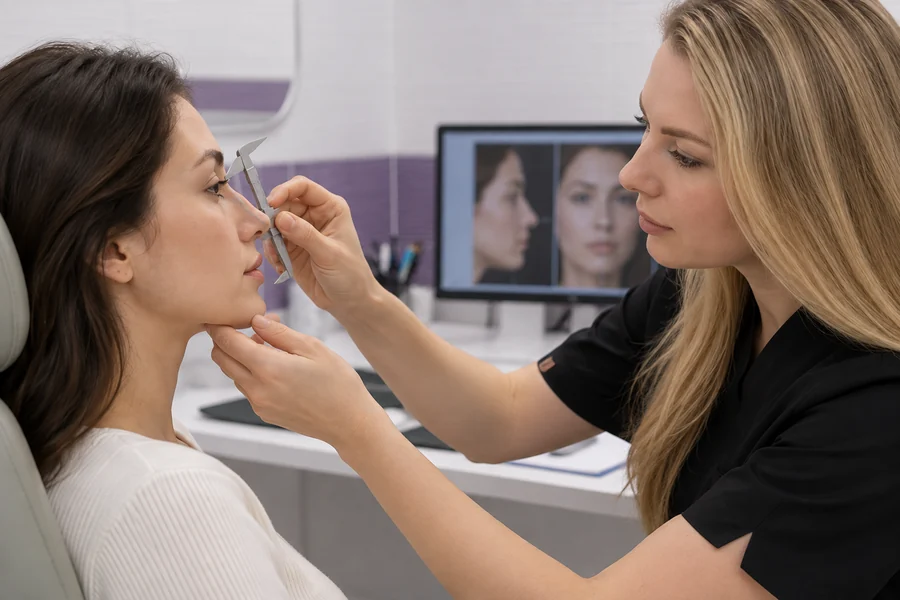
Modern equipment supports gentle, precise work by the surgeon, especially important where millimetres influence proportions, profile and facial harmony.
Prices
Send a request and get a free consultation on any service
Free
BookPrice without discount: $6,000$4,200
Price without discount: $7,200$5,400
Price without discount: $6,600$5,000
Price without discount: $6,500$4,700
Price without discount: $7,200$5,400
FAQ
Rhinoplasty (nose job) — one of the most delicate and sought-after plastic surgeries, aimed at reshaping the nose in line with the individual proportions of the nose and the whole face. Modern rhinoplasty is not just an operation to change how the nose looks, but complex surgical work aimed at an aesthetic ideal without compromising health.
Ideally, patients are 18 to 45: the nose is fully formed and tissues still heal well. When there are medical indications, surgery can be done at an older age if general health allows
At its core, rhinoplasty is a comprehensive solution. It corrects both congenital and acquired nasal deformities, for example after a nasal injury. Patients are often bothered by a dorsal hump or an overly wide nose. Nose correction can also target the tip (tip rhinoplasty) or the nostrils (alar rhinoplasty). The surgical plan is created individually for each patient, taking every feature of their nose into account.
Rhinoplasty is performed under general anaesthesia and, depending on complexity, takes 1.5 to 3 hours.
The surgeon determines the extent and course of the surgery at the consultation, based on your goals and the anatomy of your nose.
Rhinoplasty — surgery to change the appearance of the nose (an aesthetic goal) and improve its function if breathing is impaired.
Septoplasty — a surgical fix for the nasal septum that restores normal breathing without changing how the nose looks outside.
Often both surgeries are combined, especially when a patient has a deviated septum and aesthetic concerns. This gives a harmonious look and restores full breathing. At City Medical Centre we perform rhinoseptoplasty — a combined surgery that solves both tasks at once
For a successful operation, preparation should begin 21 days before rhinoplasty. At the first appointment our plastic surgeon will give you a list of the required tests.
| Complete blood count (including ESR, white cell differential, platelets) | 2 weeks |
| Urinalysis | 2 weeks |
| Infection tests: HIV, HBsAg, anti-HCV, antibodies to Treponema pallidum | 2 weeks |
| Blood group and Rh factor | 2 weeks |
| Blood biochemistry (total protein; urea; uric acid; creatinine; glucose; total, unconjugated and conjugated bilirubin; ALT; AST; K; Na; Cl; cholesterol) | 2 weeks |
| Coagulation panel (Quick prothrombin, INR, APTT, D-dimer, antithrombin III) | 2 weeks |
| Electrocardiogram (ECG) tracing with a report | 2 weeks |
| Doppler ultrasound of the leg vessels / duplex scan of the leg veins | 2 weeks |
| Chest X-ray or fluorography with a report | 6 months |
| MSCT of the paranasal sinuses | 6 months |
| After the full laboratory work-up — a physician's report confirming there are no contraindications to surgery | 2 weeks |
Pre-op preparation includes plastic surgeon consultations, lab tests (CBC, biochemistry, coagulation, infection tests), ECG, chest X-ray, and a nasal X-ray or CT. Anticoagulants, alcohol and smoking are stopped a week before surgery. The day before, eat lightly; fast 6 hours before surgery
Although nose surgery is one of the most popular and well-established aesthetic operations, like any surgery it carries certain risks. To minimise the likelihood of complications after rhinoplasty, our clinic provides thorough pre-operative preparation and post-operative monitoring.
Important: if after rhinoplasty you have difficulty breathing, severe pain, a high temperature or a change in the shape of your nose, contact your doctor immediately.
Rhinoplasty at City Medical Centre is performed with modern technology, safe materials and constant medical supervision, which keeps the risk of complications to a minimum.
We also provide post-operative monitoring and prescribe recovery therapy.
Recovery after nose surgery is just as important as the operation itself. Proper recovery determines how aesthetic and harmonious the final result will be. At City Medical Centre recovery is closely monitored and divided into three phases: early, intermediate and late
Improvements begin to show after swelling subsides (2–3 weeks), but it takes 1–1.5 years to judge the final rhinoplasty result, when tissues fully stabilise
The nose needs to be protected after surgery. An aluminium cast is placed over the nose, with special silicone splints inside the nasal cavity. Nasal function is limited in the first days but recovers quickly. The final result of rhinoplasty can be assessed after 1–1.5 years, once the swelling has fully subsided.
Important: if nasal function is impaired after the first operation or you are not satisfied with the result, revision (secondary) rhinoplasty may be needed. It is a more complex procedure, performed no earlier than one year after the primary operation.
During the first days after surgery, splints or swelling may partly block the nasal passages. Breathing is usually fully restored within 1–2 weeks, depending on the extent of surgery and your body
Our doctors use microsurgical techniques and quality sutures to keep scars minimal
Rhinoplasty balances facial features and improves aesthetics while preserving individuality. 3D modelling lets you see the predicted result early and discuss and agree on the changes with your surgeon
Rhinoplasty is a serious step. A well-performed rhinoplasty means the new nose is in perfect harmony with your facial features and works flawlessly. At the consultation the nasal surgeon assesses every parameter in detail: the size of the nose, tip projection, and the condition of the septum and nasal mucosa. We use 3D modelling so you can see the future proportions of your nose before the surgery is performed.
Don't just browse rhinoplasty photos online. Book a consultation to discuss what modern rhinoplasty can and cannot do for you. Correcting external nasal deformities and reshaping the nose is our speciality.
Rhinoplasty price at City Medical Centre: $4,200 (≈ KES 550,000) instead of $6,000 (≈ KES 780,000) with the current discount. The first consultation costs nothing.
What you pay depends on the extent of surgery and is agreed at the consultation — the doctor quotes the exact price once your nose and facial proportions are examined.
Surgery performed under general anaesthesia, one day as an inpatient, doctor supervision and a free check-up after surgery. The clinic grants a lifetime guarantee on the result.
We offer the first consultation at City Medical Centre free. The doctor examines your nose, evaluates the proportions of your face and names the exact cost.
Blog
Rhinoplasty articles
Find out how recovery after rhinoplasty goes in the first 7, 14 and 30 days
Read the article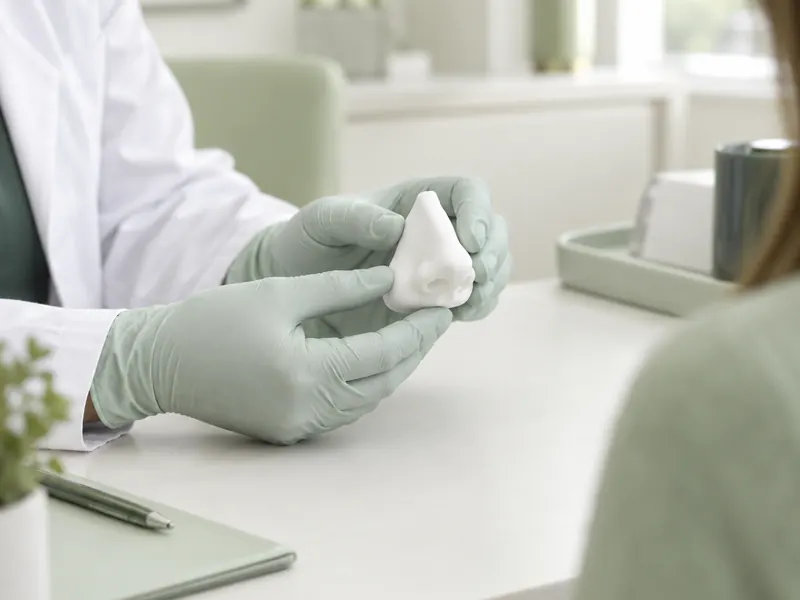
Preparation, recovery week by week, when the splint and stitches come out and how long to wait before flying home.
Read the articlePrices are in US dollars; the amount in brackets is an approximate conversion to KES at the rate of 02.10.2026. The final price is fixed in your contract.
Prices start from $4,200 (≈ KES 550,000). The surgeon sets the final price at the free consultation, and it is fixed in the contract, with no hidden extras.
The operation under general anaesthesia, a one-day inpatient stay, follow-up visits and dressings, plus a lifetime guarantee on the result.
Surgery takes 1.5–3 hours and you stay one day in the clinic. The nasal splints come out on day 7, and the cast is worn for up to 14 days.
Yes. The first consultation is free and does not oblige you to anything. You can start online by sending a message to the coordinator.
Message us on WhatsApp or Telegram using the buttons below. A coordinator will answer your questions and book a free consultation where the doctor names the exact price.
By messaging us, you agree to our Privacy Policy
This is one of the most delicate and popular plastic surgeries. It suits adults who want to correct the shape of the nose, whether the issue is congenital or appeared after an injury, and those with impaired nasal breathing. If you are from Thika and unhappy with the outcome of an earlier operation, secondary rhinoplasty is also an option after at least a year.
What happens after surgery? For the first day you stay under observation in the inpatient unit. Swelling gradually subsides, though the tip and bridge may remain swollen for some time. Bending over, touching the nose and wearing glasses or makeup around it are off-limits early on. The final result for patients from Thika can be judged after 1–1.5 years, once tissues fully stabilise.
For anyone searching for rhinoplasty in Thika, the key figures are simple: $4,200 (≈ KES 550,000) for the surgery package and $0 (≈ KES 0) for the first consultation. The package covers the surgeon's work, one day in the inpatient unit, follow-up visits, dressings and a personal coordinator. The exact cost is agreed after the doctor examines your nose. Leave a request to book.
What patients write after this operation. Reviews are translated from the original language.
Ekaterina Ivanova
For a long time I was self-conscious about the length of my nose, until a friend who had had rhinoplasty recommended this clinic. At the very first consultation they set the date of surgery and explained every stage in detail. The rhinoplasty under general anaesthesia was performed by Mareta Meirieva: the swelling went down quickly, and after just a week my nose looked natural and neat. Modern equipment, attentive staff and appointments without delays made the whole process comfortable. I recommend the clinic to anyone who values professionalism and a quality result.
Rhinoplasty
Olga Vasilyeva
This was my first visit to the clinic, for rhinoseptoplasty, and to be honest I was very nervous. At the consultation they explained every stage of the operation and recovery in detail, which calmed me down straight away. The operation was performed by Mareta Meirieva: the swelling started to go down on the third day, and the result is visible to the naked eye. Everything inside is sterile and pleasant, the atmosphere inspires trust, and the staff are always responsive. I thank the clinic for the high level of service and the warm approach!
Rhinoplasty
Marina Samarina
Everything was first-class: clean, cosy and calm. Booking and choosing the right date was easy. The nose operation went smoothly and the nerve block was done perfectly: now I breathe freely without nasal drops! It is a real lifesaver for anyone tired of endless prescriptions and ineffective procedures. I recommend it to everyone who values professionalism and results.
Rhinoplasty
Viktoria Petrova
I recently had rhinoplasty and I am absolutely delighted. At the consultation they told me about every stage in detail, so I went into surgery fully prepared. The operation went smoothly: they straightened the bridge of my nose and made the nostrils symmetrical, and the shape came out very neat. The swelling lasted a little longer than I expected, but they explained straight away that full recovery takes more time. No unpleasant surprises, everything was within the normal range. I recommend the clinic to anyone looking for a confident result and an attentive attitude.
Rhinoplasty
Thika is an industrial town and commerce hub in Kiambu County, Kenya, 42 kilometres northeast of Nairobi, close to the point where the Thika and Chania Rivers meet. The 2019 National Census recorded a population of 279,429, and the town is described as growing rapidly. Kiambu Town is the county headquarters, yet Thika has the largest economy in the county. Many people here work in trade, production and services, and many of them ask about rhinoplasty in a practical way: how many days away from work, who will cover the shift, and when it is comfortable to be seen by customers again.
The wider Thika area also includes residential neighbourhoods such as Bendor estate, Maporomoko, Thika Greens, Thika Golden Pearl and Bahati Ridge, which fall within Murang'a County. Residents of these areas often ask whether living on a county border changes anything. It does not. The first step is a free online consultation from your own home, and the coordinators answer on Telegram and Telegram around the clock, 24/7.
Rhinoplasty is a decision about the shape of the nose and also about breathing, proportion and confidence. Rhinoplasty improves aesthetics and makes facial features more harmonious, without loss of individuality. That idea suits a town where people know each other through work, church, school and family, because most patients want a result that looks like themselves, only better balanced.
Thika has a subtropical highland climate with sunshine most of the year and an average annual temperature of 19.8 °C. The town sits at roughly 1,631 metres, on a gentle plain before the climb into the central highlands. Moderate temperatures are helpful after nose surgery, because you are not forced to spend the first days in extreme heat, which tends to increase swelling and discomfort under a cast.
Even so, sunshine most of the year means sun protection matters. After rhinoplasty the skin of the nose is sensitive, and strong light on a nose that is still swollen is not a good idea. Plan shade, a wide-brimmed hat that does not press on the nose, and short outdoor errands in the first weeks. Ask your surgeon when it is appropriate to resume ordinary sun exposure and what protection to use on the healing skin.
Dust from busy roads and construction is a daily reality in any commercial town. For the first days, when breathing is through the mouth with splints in the nostrils, keep to clean indoor spaces and avoid dusty walks. Later, when the nose recovers its function, light walks in the cool morning or evening are comfortable and help general wellbeing.
The hottest period in Thika is March and April, leading into the long rains, which last from March or April to May or June. The short rains run from October to November or December, and July is the coolest month. For rhinoplasty there is no single perfect month, but the seasons give you useful planning points.
The cooler weeks around July suit patients who want comfortable days at home with the cast on. Rainy weeks can also work well, since you will be staying in anyway, though wet roads and crowded matatus are a reason to arrange a ride home rather than walk. If you work in a shop, office or factory, choose a period when your workload is lighter and a colleague can step in.
Remember that the recovery programme has fixed points: splints out on day 7, cast and stitches removed on day 14, and check-ups at 7 days, 3 and 6 months. Look at your calendar for school terms, business peaks, weddings and funerals, and place the operation where these check-ups will not clash with obligations. Your coordinator will help you build this plan in the free online consultation.
Rhinoplasty is done in 1 day, under general anaesthesia, and the surgery takes 1.5 to 3 hours depending on complexity. For 24 hours afterwards the patient remains under observation in the inpatient unit. For a working person in Thika, this means you should plan time off for the stay and the first days at home, then agree with your employer how the rest of recovery will look.
Days 1–3 are the most limiting: breathing is through the mouth, with splints in the nostrils. On day 7 the splints are removed, and the aluminium nasal cast is worn for up to 14 days. Stitches are removed on day 14 together with the cast. Many patients choose to return to public-facing work only after the cast is off and the first swelling has settled, but the exact time for your job should be agreed with your surgeon.
Family events are an important part of life in Kenya, and a wedding, a graduation or a church celebration is a typical reason patients ask about timing. First improvements show once swelling subsides (2–3 weeks), while the final result is judged in 1–1.5 years, so do not plan the operation for the week before a major photographed event. Leave a comfortable gap, and tell your family early so they can help with meals and errands.
The rules about food are simple and strict. The day before surgery, eat light food. On the day of surgery, your last food and any fluids must be taken at least 6 hours before the scheduled time of the operation. In a town where meals are social and often large, tell your household in advance so that nobody offers you tea or a snack on the morning of surgery.
A week ahead, give up anticoagulants, alcohol and smoking. If a family celebration or a work dinner falls in that week, it is better to move the operation than to bend the rule. Ask your surgeon which medicines you take at home need to be paused, and do not stop any prescription medicine on your own.
After surgery, with breathing through the mouth in the first days, soft, easy-to-eat food is more comfortable. Prepare simple meals in advance so that the first days at home are calm. Ask the surgeon about foods and drinks to avoid while the nose is protected and swollen.
Thika is known for Chania Falls and for Fourteen Falls on the River Athi, and Ol Donyo Sabuk National Park lies to the southeast. These places are favourites for weekend outings, and many patients ask when they can go back to them. Plan outings after the early recovery, and confirm with your surgeon before any activity with a risk of a knock to the face.
Contact sports, ball games and anything where the nose could be hit need a clear green light from the surgeon. Golf, part of the local residential culture around the Thika Sports Golf Club, and walking are gentler, but even then wait for your surgeon's guidance, avoid bending sharply with a cast on, and protect the nose from sun. Swimming and river or pool water should also be discussed with the surgeon before you return to them.
Keep in mind that the nose needs to be protected after surgery. An aluminium cast is placed over the nose, with special silicone splints inside the nasal cavity. Nasal function is limited in the first days but recovers quickly. Slight congestion can remain for 1–1.5 months, so do not judge your fitness by the first weeks only.
The most common question is how a remote consultation can replace a first visit. In the online consultation you speak with a coordinator and then with the surgeon, and the doctor builds a 3D model of the expected result and explains it. With 3D modelling the predicted result is visible in advance, and you agree on changes with your surgeon. You can do this from your home in Thika, with a good phone connection, at a time that fits your day.
Other questions are about breathing and about the look of the nose in the first days. In the days right after surgery, splints or swelling may partly block the nasal passages. You usually breathe fully again within 1–2 weeks, depending on your body and how extensive the surgery was. First improvements show once swelling subsides, and the nose takes its final shape after 1–1.5 years.
Patients also ask about support. Once surgery is done, you follow a recovery programme, with check-ups at 7 days, 3 and 6 months to track progress. Consultations with your surgeon stay free for a year after surgery. Follow-up support lasts 12 months, and a coordinator will call you back 24/7.
18 to 45 is the optimal age. By this age the nose has formed completely, while tissues still heal well. With medical indications, older patients can have surgery if their general health allows. A younger person whose nose is still developing should wait, and the surgeon will explain why.
Psychological readiness is as important as age. The patient should understand that the final result will be visible in 1–1.5 years. If you expect a perfect nose in two weeks, or if you are making the decision because of pressure from family or friends, speak openly with the surgeon. Good candidates have clear, realistic wishes and are ready to follow the recovery programme.
General contraindications are decided by the doctor after the examination and tests. Blood clotting problems, active infections and serious uncontrolled illnesses can be reasons to postpone or decline. Be honest about your medical history, medicines, smoking and alcohol, because these affect both safety and healing.
For a successful operation, preparation should begin 21 days before rhinoplasty. At the first appointment our plastic surgeon will give you a list of the required tests. Getting ready involves consultations with the plastic surgeon, lab work (CBC, biochemistry, coagulation, infection tests), ECG, chest X-ray, plus a nasal X-ray or CT.
In a commercial town like Thika, you will want to book the tests at a time that does not disturb your work, so ask the coordinator for the full list early and mark the 21 days on your calendar. A week ahead, give up anticoagulants, alcohol and smoking. The day before, eat light food, and take no food 6 hours before surgery.
For your hospital stay, buy compression stockings (class 2 compression) in advance and bring them with you. Do not leave this for the last day. Also prepare loose clothes that open at the front, so you do not pull anything over the nose, and arrange for someone to accompany you home.
The name Thika has two explanations. One links it to the Kikuyu word Guthika, meaning to bury, and recalls a drought when the Maasai came looking for water for their herds and met the farming Kikuyu on land fed by the Thika and Chania Rivers. A mound near Blue Posts Hotel is said to mark where the fallen were buried. The other theory ties the name to the Maasai word Sika, meaning rubbing something off an edge. The Akamba also lived in the area, so Thika grew up as a border region between three communities. People who live here are used to a town with layers of history, and many approach a personal decision such as rhinoplasty with the same patience.
Towards the end of the 19th century Europeans and Asians settled the area and set up schools, farms, health care and businesses. A pillar monument raised in the early 1900s in the central business district marks the founding of the town. Thika received town status by government gazette in 1924, became a municipality when Kenya gained independence in 1963, and chose its first mayor in 1968. A town that took its time to formalise its status is a good model for a patient: gather information, ask questions and set the date only when the plan is clear.
The final result of rhinoplasty is also something that needs time. The nose takes its final shape after 1–1.5 years, and first improvements show once swelling subsides (2–3 weeks). If you are thinking about the operation, treat the first weeks as the start of a long process, not as the moment of the final photograph.
Mugumo Gardens in Thika is named after the giant fig tree where the legendary seer Mugo wa Kibiro is said to have prophesied. Believers hold that all his prophecies came true. By tradition, the fall of the tree would symbolise the end of British rule in Kenya. The tree was reinforced to keep it standing, yet it split into two parts and fell in two stages in 1963. Local people tell this story with pride, and it is a reminder that some outcomes come in stages, not in a single moment.
Rhinoplasty also unfolds in stages. Splints stay in the nostrils for the first days, with breathing through the mouth on days 1–3. On day 7 the splints are removed. The aluminium nasal cast is worn for up to 14 days, and stitches are removed on day 14 together with the cast. Slight congestion may be felt for 1–1.5 months. A calm walk in a quiet green place like the gardens is a gentle way to spend the later weeks of recovery, once your surgeon agrees that you can be outdoors for longer.
Use the 3D model from the consultation as your own map. The doctor builds a 3D model of the expected result and explains it, and you agree on changes with the surgeon. Realistic expectations, discussed openly before the date is fixed, make the staged recovery easier to accept.
Thika has about 100 small-scale industries and about 50 major factories in and around the town. The main activities include agricultural processing, especially horticulture and pineapple, coffee, cooking oils and animal feed, along with textiles, macadamia nuts, wheat, tanneries, motor vehicle assembly, bakeries, packaging and industrial chemicals. Someone working on a production line, in a packing hall or in a bakery will want to talk to the surgeon about dust, steam, heat and heavy lifting in the workplace during the first weeks.
Practical questions for your supervisor: can your duties be changed for a time, can you work in a cleaner part of the plant, and who covers your shift while you are away? Rhinoplasty is done in 1 day, with 24 hours of observation in the inpatient unit, but the cast stays on for up to 14 days. Agree your return date with your surgeon first, then with your employer.
The service sector in Thika is also large, with dozens of financial institutions and many shops and offices. For jobs that mean meeting customers face to face, many patients prefer to return after the cast is off and the first swelling has eased. Your coordinator can help you put these points into a simple plan during the free online consultation.
Thika is home to, or close to, three universities, tens of middle-level colleges and hundreds of primary and secondary schools. Institutions such as Mount Kenya University, Gretsa University, the Thika Institute of Science and Technology and Thika Technical Institute bring many young adults to town. Many are in the 18 to 45 age range that is considered optimal for rhinoplasty, because by this age the nose has formed completely while tissues still heal well.
A student has a different calendar from a worker. Plan around examination periods, practical sessions and graduation, and avoid the days when you must sit long hours in a crowded hall or lab. Splints and swelling may partly block the nasal passages in the first days, and you usually breathe fully again within 1–2 weeks, so a quieter term break is a sensible choice. Ask a classmate to share notes, and discuss with the surgeon how soon you can return to lectures.
Teachers and school staff in Thika's many schools should think about how a nasal cast looks in front of a class, and about how much speaking they can do while breathing through the mouth in the first days. Younger people whose nose is still developing should wait, and the surgeon will explain why. If you are still in school, a parent or guardian should be part of the conversation from the start.
Thika has a lively nightlife, with venues such as Blend and The Garage Bar & Grill, as well as recreation centres and busy retail trade. Campus students also gather in Thika and nearby Juja for weekends. After rhinoplasty, crowds, loud rooms and the chance of an accidental knock are not a good match for a nose protected by a cast. Alcohol should also be given up a week before surgery, so plan social evenings accordingly.
The town lies 42 kilometres northeast of Nairobi and is served by an eight-lane superhighway, so many residents work or study in the capital. If that is your routine, discuss with your surgeon how long you should avoid long hours on crowded transport, and arrange a lift for the day you leave the clinic. The railway currently carries cargo only, with a light rail extension planned, so for now road transport is what most people rely on.
Growth around Greater Nairobi has created new residential estates around Thika. A quiet home, a spare room and a relative who can help with meals and errands make the first two weeks easier. Tell friends the date in advance, so that invitations do not clash with the days of the cast and check-ups at 7 days, 3 and 6 months.
The consultation is free and online, and coordinators are available around the clock on Telegram and Telegram. You write from Thika, send your photos and medical history, and arrange a call. The consultation includes examination by the surgeon and 3D modelling, and the plan is built around your face and your pace.
Prepare your questions in advance. Ask how the surgery will change the shape and breathing, what the 3D model shows, which part of the plan is firm and which is flexible, how long the operation will take, and what recovery in the first 7, 14 and 30 days looks like. Ask what you must avoid at work and at home, when to see the surgeon again, and how to reach the team with a concern.
Write down the answers and compare them with your calendar. A calm, well-prepared decision is better than a quick one. If something is unclear, ask again, since your time matters and the team is reachable 24/7.
Yes. The consultation is free and online. You contact a coordinator on Telegram or Telegram at any hour, then speak with the surgeon, who examines your case and builds a 3D model of the expected result.
Rhinoplasty is performed under general anaesthesia and, depending on complexity, takes 1.5 to 3 hours. You stay one day in the clinic.
The splints are removed on day 7. The aluminium nasal cast is worn for up to 14 days, and stitches are removed on day 14 together with the cast.
In the first days splints or swelling may partly block the nose. You usually breathe fully again within 1–2 weeks, depending on your body and the extent of surgery. Slight congestion may remain for 1–1.5 months.
First improvements show once swelling subsides (2–3 weeks). The final result can be judged in 1–1.5 years, when tissues fully stabilise.
18 to 45 is the optimal age. With medical indications, older patients can have surgery if their general health allows.
Preparation should begin 21 days before surgery. You will receive a list of tests, including blood tests, ECG, chest X-ray and a nasal X-ray or CT. A week ahead, give up anticoagulants, alcohol and smoking, and take no food 6 hours before surgery.
Buy compression stockings (class 2 compression) in advance and bring them with you, along with loose front-opening clothes.
Yes. You follow a recovery programme with check-ups at 7 days, 3 and 6 months. Consultations with your surgeon stay free for a year, follow-up support lasts 12 months, and a coordinator will call you back 24/7.
Thika has sunshine most of the year, so protect the healing nose from strong light with shade and a light hat that does not press on it, and ask your surgeon when normal sun exposure is suitable.
Many choose a quieter period at work or school, such as a term break or a slower stretch in the factory calendar. Remember the fixed points: splints out on day 7, cast and stitches off on day 14, and check-ups at 7 days, 3 and 6 months.
Ask when you can return to a workplace with dust, heat or heavy lifting, whether lighter duties are advisable for a time, and how long to protect the nose while the cast is on, which can be up to 14 days.
A break between terms is often practical. You usually breathe fully again within 1–2 weeks, and first improvements show when swelling subsides in 2–3 weeks, so avoid the weeks around important examinations.
Wait for your surgeon's permission. Crowds and the risk of a knock to the nose are unsuitable while the cast is on, and alcohol should be given up a week before the operation.
Page medically reviewed by Marina T. Pershikova, rhinoplasty surgeon. Review date: .