


























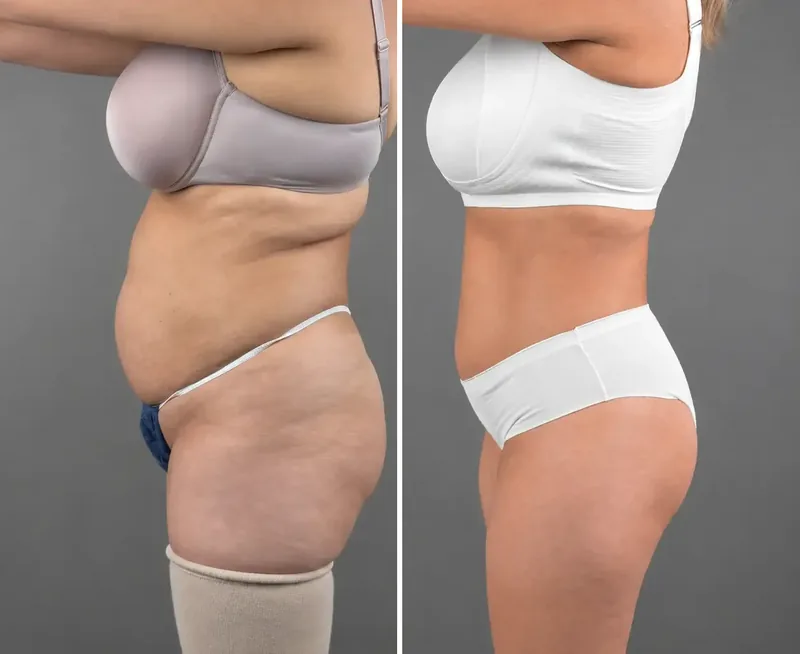
 beforeafter
Liposuction
Abdomen and sides
from $1,200
The price is fixed in the contract before surgery
Message our coordinator
Free online consultation · Reply within 15 minutes
Message us on TelegramMessage us on WhatsAppBy messaging us, you agree to our Privacy Policy
Results
All cases are real patients. Faces and identifying details are hidden.
beforeafterAbdomen and sides
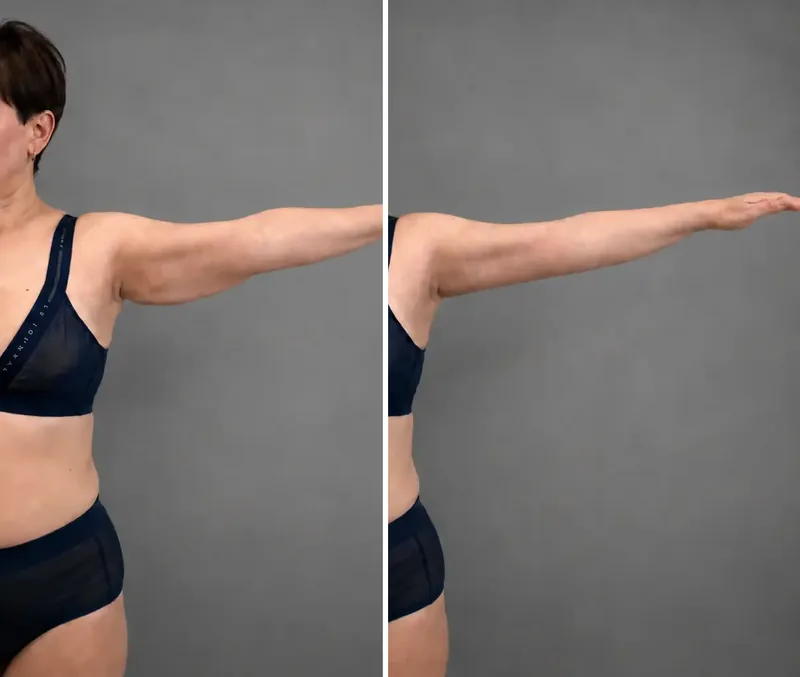 beforeafter
Arms
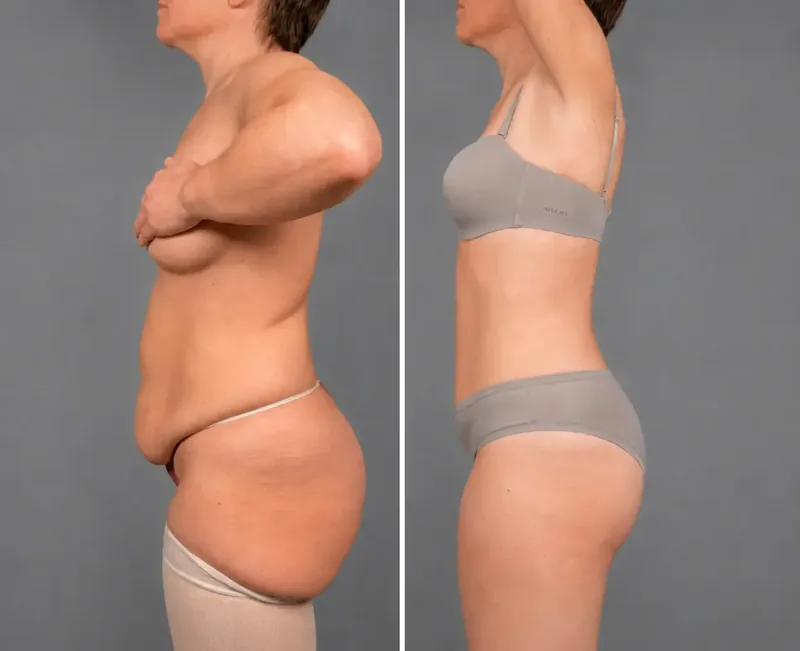 beforeafter
Abdomen and sides
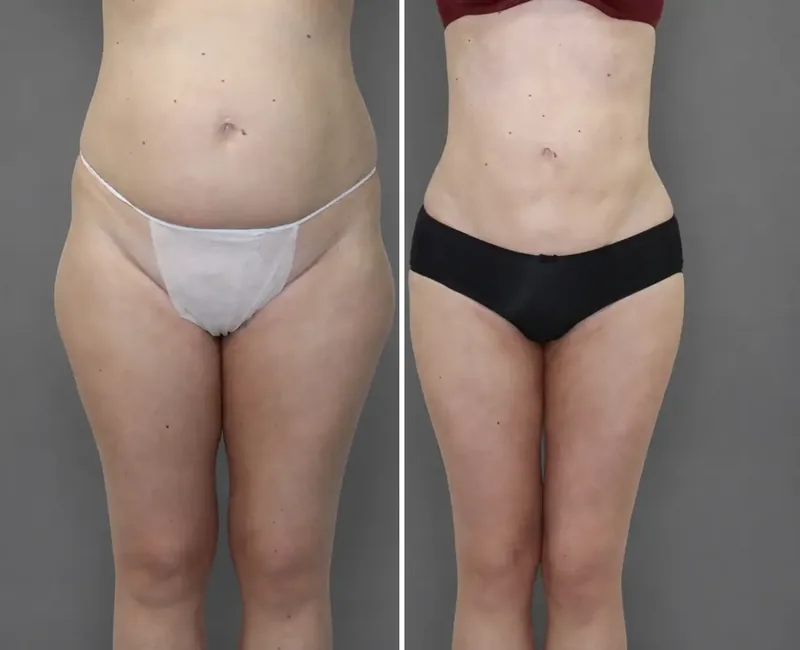 beforeafter
Abdomen and thighs
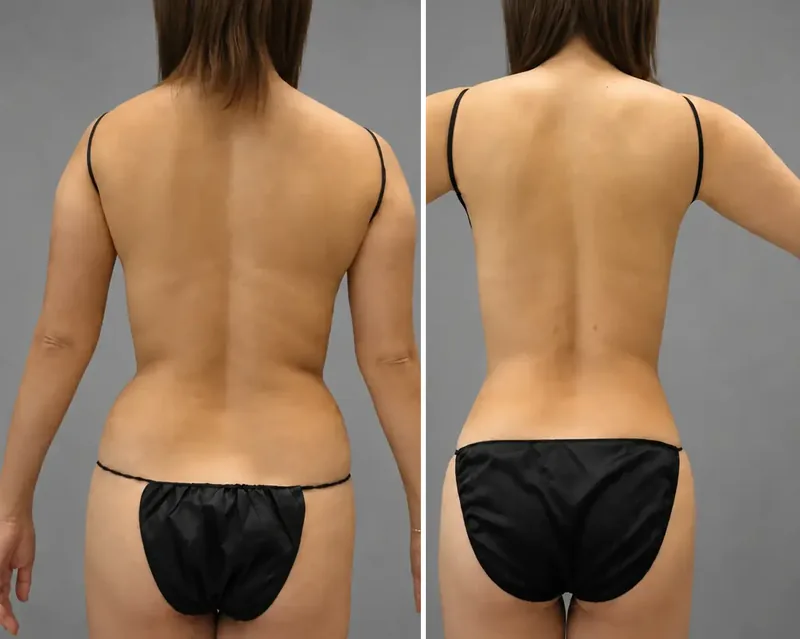 beforeafter
Back and flanks
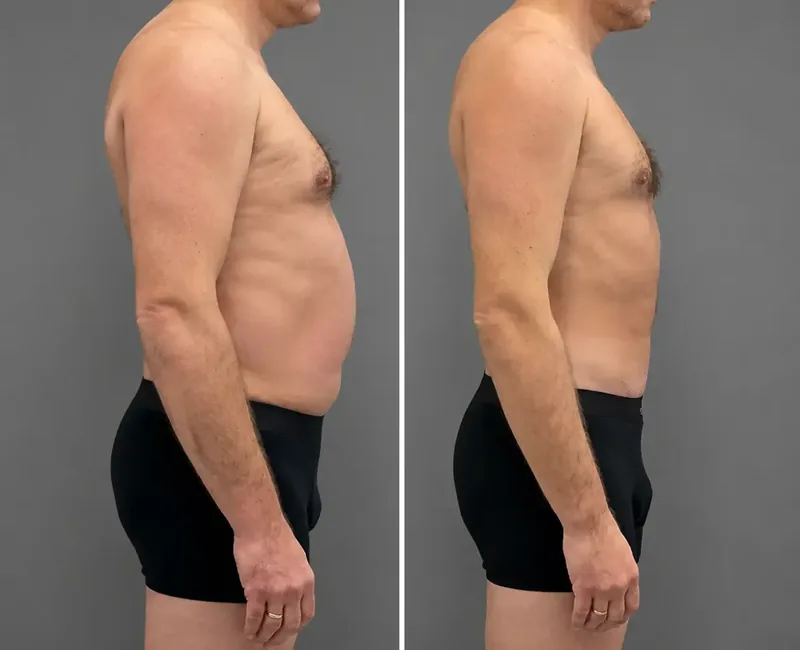 beforeafter
Male abdomen
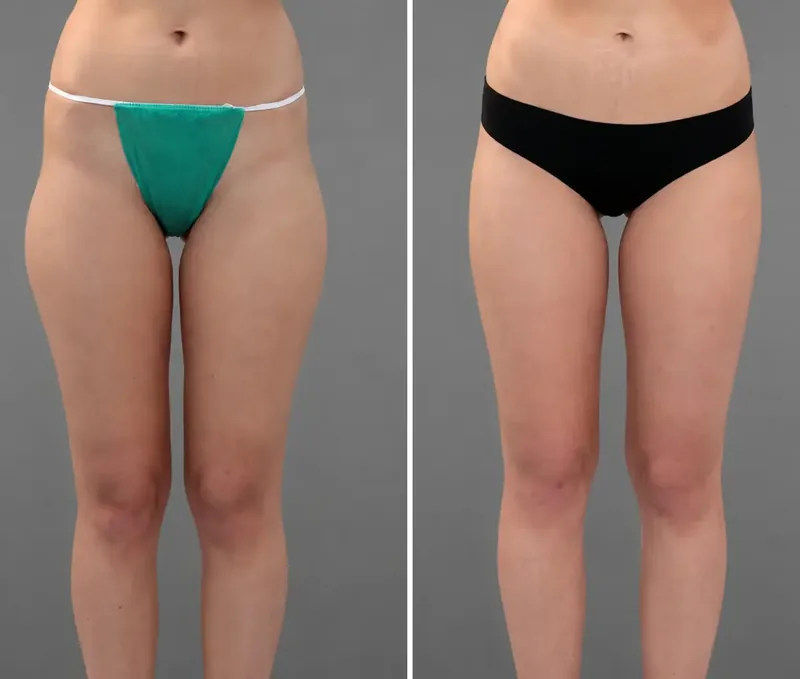 beforeafter
Inner thighs
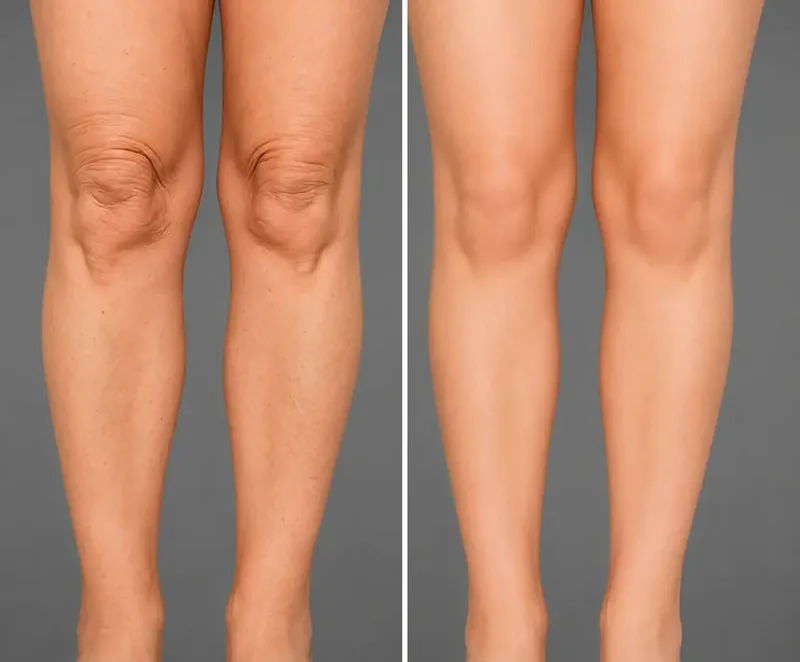 beforeafter
Knees
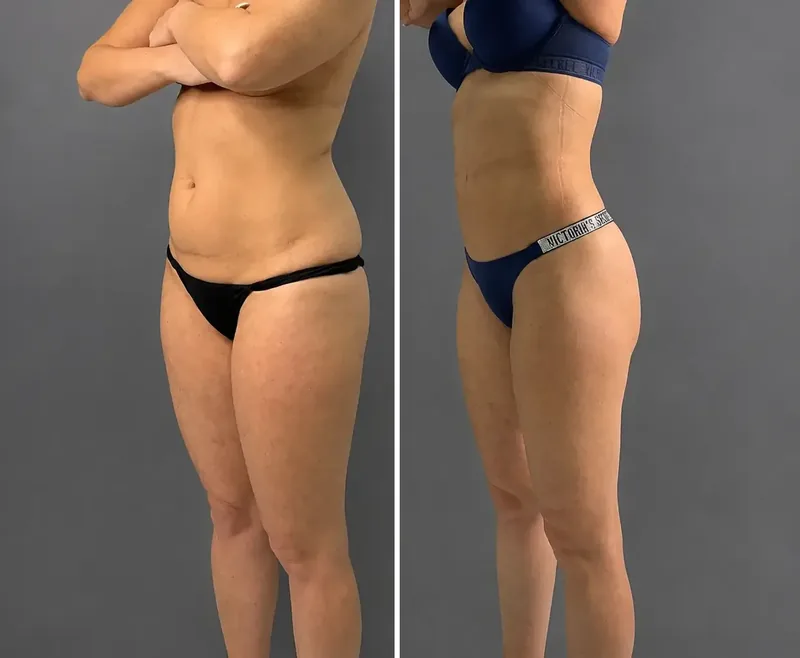 beforeafter
Abdomen and sides
Comparison
We use two liposuction techniques: tumescent (classic) and VASER (ultrasound). Compare the goal, the indications and the anaesthesia to choose the right technique together with your surgeon.
A special solution loosens fat for removal through a thin cannula
from $1,200
Ultrasound breaks down fat cells before vacuum removal
Price at consultation
The benefits and recovery times shown are averaged for each technique and given for guidance: the scope of correction and rehabilitation depend on your anatomy and individual features, and the surgeon confirms them at the consultation.
At the consultation the surgeon draws up a plan for your case and explains how your liposuction will go.
Free, before surgery and with no obligation.
One operation can cover several areas — you save on recovery time and on budget
The most requested area for women and men, often combined with abdominoplasty
Fat “traps” that resist exercise
Rolls on the back that affect the silhouette
A cosmetic issue seen in warm weather
Small area, fast visible result
A delicate zone that calls for precision
Fat-related gynecomastia and pseudogynecomastia
About the clinic
Modern equipment, comfortable rooms and care for every patient

We will answer your questions and find a convenient time for a consultation
If your case can be solved without surgery, the doctor will tell you so at the consultation — and you will not spend money for nothing.


Not sure the surgery is right for you?
Leave your number — the coordinator will call you back, and the surgeon will tell you whether liposuction suits you. No surgery booking needed.
Find out if it suits me
Prices
The final price is calculated individually after an examination and fixed in the contract.
The most requested area — treated in one operation

Contouring of the front abdominal wall

The surgeon assesses the fat deposits and skin tone, listens to your wishes and chooses the right technique.

Message our coordinator
Free online consultation · Reply within 15 minutes
Message us on TelegramMessage us on WhatsAppBy messaging us, you agree to our Privacy Policy

all inclusive
From preparation for surgery
to post-op check-ups.
from $1,200
Book a consultationHow it works
An agreed treatment plan, careful monitoring after surgery and post-op check-ups.
 1
1The surgeon listens to your wishes, assesses the fat deposits and skin tone and rules out contraindications. A hormonal screening is also ordered — it helps predict the long-term result.
 2
2We reserve a surgery date for you: the deposit can be paid by card at the clinic or online by bank transfer. The terms are fixed in the contract for medical services
 3
3Blood tests (complete count, coagulation panel, biochemistry, infections), an ECG, a chest X-ray and, if needed, a GP consultation. All tests can be done at the clinic with no waiting.
 4
4Marking the areas and fitting compression garments. Under local or general anaesthesia the surgeon removes fat through 3–5 mm micro-punctures — from 1 hour for small areas to 3–4 hours for a combined procedure.
 5
5With local anaesthesia you go home 3–4 hours after surgery; with general anaesthesia you stay one day in a comfortable ward under medical supervision.
 6
6Compression garments for 30–45 days. First changes show at 2 weeks, once swelling subsides; the final result forms in 3–6 months. Check-ups at 7 days, 3 and 6 months.

After tumescent liposuction, recovery is much shorter than after a conventional procedure. Most patients return to work within 7–10 days. In the first week, mild swelling and a raised temperature are possible — a normal response to surgery. Compression garments are worn for 30–45 days: they fix the new contours and speed up tissue recovery. In the first month, bathhouse, sauna, pool and intense sport are off-limits. For the best result and faster recovery we recommend lymphatic drainage massage, pressotherapy and a gradual return to activity. First visible changes show 2 weeks after surgery, when the main swelling subsides; the final result forms in 3–6 months.
After 7 days, at 3 months and at 6 months. Until the end of the year, get a post-surgery consultation with your surgeon to review results and get more information, at the clinic's expense.
Advantages

At the consultation we discuss your wishes and assess the fat deposits and skin tone. Before surgery an endocrinologist rules out hormonal causes of the fat deposits — this improves the long-term result.

The surgeon follows your recovery and the new body contour at check-ups after 7 days, 3 and 6 months. Check-ups, dressings and aftercare advice are already included in the price of surgery.

Tumescent and VASER techniques, micro-incisions of 3–5 mm and precise volume control. Our aim is a smooth contour that keeps the natural proportions of your body.

We respect your time: we work 24/7, with easy booking and a personal approach — we adapt to your pace.

After the consultation the surgeon defines the areas and the scope of surgery, and you get a clear price fixed in the contract — no hidden extras.

With general anaesthesia recovery starts in a comfortable hospital ward under round-the-clock nursing care. The stay and meals are already included in the price.
FAQ
Yes, it's standard practice. Treating a single area alone is rare — patients more often combine several problem zones, e.g. abdomen and flanks, or inner and outer thighs. At the consultation, our surgeons will help define the optimal scope of surgery based on your health and desired result.
No, liposuction is not a way to lose weight. It removes local fat deposits resistant to diet and exercise and reshapes body contours. With an unstable weight, you should first see a nutritionist or endocrinologist.
The surgery is done through punctures only 3–5 mm across — they usually need no stitches. Once healed, the marks are barely visible. With proper care during recovery they fade completely.
The surgeon always checks skin tone, elasticity and turgor before the operation. When the skin is in good condition, it tightens on its own along the new contours. If tone is lower or stretch marks are present, our specialists suggest preparatory treatments to improve the skin in advance.
No, you are under anesthesia during the procedure — local or general, depending on the scope. After surgery there may be mild discomfort, relieved by painkillers prescribed by the doctor.
For the first 7 days — no physical exertion or heavy lifting. For 4–6 weeks wear compression garments and avoid bathhouse, sauna, pool and active sport. Alcohol and tanning beds are off-limits for at least a month. Your surgeon gives all individual recommendations after surgery.
We carry out the surgery for patients 18+ with no contraindications. An upper age limit does not exist — each case is decided individually after an examination and health assessment.
Not directly. While liposuction removes fat tissue, it does not change the skin structure that causes cellulite. Improved body contours still visibly reduce its appearance.
Most patients return to work and everyday life in 7–10 days. Swelling and bruising settle by weeks 4–5, while the final result forms over 3–6 months as the tissues fully adapt.
No strict diet is needed, yet nutrition plays a role in keeping the result. Removed fat cells don't return, but the ones left can grow if you gain weight. To make the result last, we recommend a balanced diet and regular physical activity.
Yes. You need to stop smoking, alcohol and medications that affect blood clotting (aspirin, etc.) 7–10 days before liposuction, and pass pre-op tests: blood tests, ECG, ultrasound, GP and anesthesiologist consultations. All instructions are provided after your first consultation.
When the main swelling subsides, 2 weeks after surgery, the first changes become visible. The interim result is assessed at 1.5–2 months and the final contours form in 3–6 months.
Prices are in US dollars; the amount in brackets is an approximate conversion to IQD at the rate of 02.10.2026. The final price is fixed in your contract.
Prices start from $1,200 (≈ IQD 1,600,000) per area. The surgeon sets the final price at the free consultation, and it is fixed in the contract, with no hidden extras.
The operation under local or general anaesthesia and the surgeon's support throughout recovery. The price is per area and fixed in the contract.
Message us on WhatsApp or Telegram using the buttons below. A coordinator will answer your questions and book a free consultation where the doctor names the exact price.
By messaging us, you agree to our Privacy Policy
The aim is not a smaller number on the scales but a better shape. Liposuction targets saddlebags, back rolls, a belly that will not flatten and fat on the arms, chin or knees. For patients from Baqubah, the result depends on one key fact: removed fat cells do not return, while the remaining ones can still grow with weight gain, so a balanced diet keeps the contour for the long term.
Inside the operating room the process is gentle. With the tumescent method a solution of saline, lidocaine and adrenaline is injected into the area, loosening the fat and narrowing vessels. The fat emulsion is then removed by vacuum through a thin cannula. With VASER, ultrasound breaks down fat cells first. Either way, patients from Baqubah get micro-incisions that are barely visible later.
Budget matters, so the price is agreed upfront and written into an official contract with a guarantee. Liposuction starts from $1,200 (≈ IQD 1,600,000), and interest-free instalments make planning easier. The clinic has 400+ successful surgeries and 10 years of liposuction experience behind it. To begin, anyone from Baqubah simply leaves a phone number and waits for the coordinator's call.
Well-known people who spoke openly about this operation, in their own words.
 Amy Schumer's liposuction: “thanks for helping me get my strength back”Amy Schumer revealed her liposuction on Instagram in 2022 and explained why. Her words, how liposuction works today and what recovery looks like.
 Brooks Nader and her liposuction regret: what she actually saidModel Brooks Nader told People she regrets a past liposuction, saying it left dimples and ripples. What she said, how liposuction works, and recovery.
 Stacey Silva's liposuction: what was reported, and what wasn'tStacey Silva and her twin Darcey had liposuction on a 2021 trip to Turkey, reported by Showbiz Cheat Sheet. What was said, how the procedure works and recovery.
 Did Tara Reid have liposuction? Yes — and she told the whole storyThe American Pie star had liposuction and breast surgery in 2004; both went wrong. Her honest quotes on the damage and the repair.
 Did Wendy Williams have liposuction? Yes — and she paid a price for saying soThe talk-show host had full-body liposuction and breast implants in 1994 and says she was 'vilified' for admitting it. Her quotes and what lipo involves.
 Did Josie Gibson have liposuction? Yes, and she explained whyJosie Gibson had liposuction and skin removal on her arms in 2026 because of lipoedema. Her own words, how liposuction works and what recovery involves.
Liposuction answers a narrow question. A person has kept the same weight for a year or more, eats sensibly and walks regularly, and still finds a firm pocket of fat at the waist, the flanks, the thighs or under the chin that no routine seems to touch. It reshapes such a pocket by removing fat cells through thin tubes, and it is not a treatment for general weight gain, which is why the surgeon will ask about your weight history before drawing a single mark.
In Baqubah the question often comes from people whose days are long and whose bodies are tired of being measured against a family photograph. Teachers from the University of Diyala, drivers on the highway to Baghdad and Mandali, sellers in the old market and young mothers all arrive at it from different directions, and each one deserves a plan built on their own figure.
Start with a message to the coordinators, who reply on Telegram and Telegram without a break between night and morning. Send daylight photographs from the front, the side and the back, a note on your weight across the last several months, and a list of the areas that bother you in order of importance. The first reply states whether your situation looks suitable and which zones could realistically be combined.
Good preparation is quiet and mostly practical. Choose a plain wall and the same hour of the day, stand relaxed with your arms by your sides and take the same three photographs again a week later. The pair shows the surgeon how your shape behaves across a normal week, and it shows you what you are really asking to change.
Decide who will be at home for the first two evenings and who will prepare food that needs no standing at the stove. Place water, a phone charger and your documents where you can reach them without bending. Check that the clothes you intend to wear home are loose, soft and easy to put on without raising the arms sharply.
Take a few minutes to talk with the household about what you can and cannot do in the first week. Mothers with small children should arrange help with lifting, and anyone who drives should confirm with the surgeon when driving is possible again instead of guessing.
Anyone from Baqubah can sketch the town from memory: Yarmouk on the west side, Tahrir and Sawamera on the east, New Baqubah and Old Baqubah in the middle, and the river that runs between them. The census table of 2015 counts 65,612 residents in Yarmouk, 51,581 in Tahrir and 39,992 in Sawamera, and each of those quarters has its own pace, its own distances and its own way of arranging a day.
A contouring plan is a map in the same sense. The surgeon draws the areas on your standing body, usually with you looking in a mirror, and the lines mark where fat will be removed and where it will be left to keep transitions smooth. Take your time over this stage. A line that you do not understand is a line to ask about, and you may say that an area should be left alone as easily as you may ask for it to be treated.
The more precisely you can describe your daily routine, the more precisely the plan can be adapted. Someone who sits in a classroom or an office for most of the day needs different advice on clothing and rest than someone who is on their feet in a shop or a workshop, and a person who drives long distances needs to hear when driving becomes comfortable again.
A branch of the Sarya Khrisan canal runs through Baqubah beside the Diyala, and the river bridge ties the two banks together every day. For a person recovering from contouring this geography is a practical aid: it offers flat, familiar paths for short walks, shaded stretches in the evening and a clear landmark to aim for as the weeks pass.
The University of Diyala, founded in 1999, gives the province a medical college, and it is natural to ask the team how the follow-up will be organised for someone who lives here: which visits are held by message, which need an examination, and who reads your photographs between appointments. Clear answers to those questions matter more than any description of the operation itself.
Remember that the town is also your support system. A neighbour who can look in on the first evening, a relative who can drive you to a visit and a friend who will simply walk beside you on the riverbank are worth planning for. Name them before the date is fixed, and tell them what the surgeon has asked.
A single small area may take about an hour, whereas combining several areas in one session extends the operation to three or four hours. Anaesthesia follows the scale: local anaesthesia for limited work, general anaesthesia for broader work, decided by the surgeon after examining the tissue.
The way home depends on that choice. After work under local anaesthesia you leave three to four hours after the operation ends, and after work under general anaesthesia you remain one day in hospital under observation. Plan the transport home and the person who will stay with you for the first evening accordingly.
That is why the list of zones should be as exact as possible before the consultation. Write down whether you want one area or three, whether the abdomen and flanks are meant to be done together, and whether you have any health condition that the team should know about. Changes in the list change the entire schedule.
A traveller described the town's market in 1907 as a place selling local goods next to imported ones, and the tradition of long hours behind a counter has not disappeared. Shopkeepers and clerks often suspect that sitting and standing, more than eating, explains the deposits at the waist, and the surgeon will ask what your day looks like because it affects how you rest afterwards.
Most people return to office-type work within seven to ten days, according to the surgeon's instructions. Citrus crates, sacks of goods and other heavy loads remain off limits until he gives explicit permission, because early carrying on freshly treated areas charges its price to the final contours.
Agree your absence with the person you work for, or with the relative who will cover the shop, before the date is fixed. Name who opens in the morning and who closes in the evening during the first week, since neither long standing nor carrying suits that week.
Anyone who lives in a town of orchards learns to read the calendar by the fruit. Orange picking, the busy weeks of the market and the family occasions that fill the autumn and spring are known to everybody in the household long in advance, so the date for an operation can be placed in the gaps between them. A patient who recovers during a rush of visitors is tempted to stand up, serve and carry long before she should.
Give the date as much attention as the surgeon. Tell the coordinators about the calendar, your job and the days on which you cannot be away. They can help propose a week with the lightest obligations, and they will pass your constraints to the surgeon so that the plan and the diary agree.
Keep the evening circuit by the Diyala in mind as a goal. In the first fortnight the destination is the corridor of your own house; in a few weeks, if the surgeon agrees, it becomes the end of the street and then the riverbank at dusk when the heat has fallen. Setting a modest goal for each week makes the recovery something you can measure, and it keeps the days from blurring into one long wait.
The weeks of recovery are not only about the garment. Drink water steadily through the day, because dry air in a town with summer highs above 45C hides thirst, and swollen tissue recovers better when the body is well hydrated. Eat regular, light meals with enough protein and vegetables, and keep sugary drinks and heavy fried dishes for later in the season.
Sleep matters more than people expect. Ask the surgeon which position is suitable for the areas treated, arrange pillows before the operation and plan to rest in the afternoon during the first days. A tired body notices every twinge, and a rested one reports them more calmly and with better judgement.
Mood moves too. It is common to feel impatient in the second and third weeks, when swelling is still visible but the excitement of the operation has faded. That is the moment to look again at the first photographs, remember the timetable the surgeon gave and keep the monthly album going, instead of searching the internet for comparisons.
The recovery garment is worn day and night for the period the surgeon sets, and it is removed, washed and refitted exactly as written. In Baqubah the summer makes this a practical question: the average high touches 45.0C in July and 45.3C in August, so a thin cotton layer beneath the garment, a moderately cooled room and visits postponed from midday to the evening make the weeks easier.
Winter has its own difficulty. Most of the town's roughly 186 mm of annual rain falls between November and March, the January low averages 5.9C, and wet ground around the groves is a poor place for someone with fresh incisions. On those days stay indoors, walk in the corridor and take the mild midday hours for a short outing.
Walking returns in stages: first inside the house, then short distances along the Diyala bank in the evening, widening week by week as the surgeon allows. The gym and any effort that raises pressure inside the abdomen wait for his explicit permission, and the first training session begins when the team schedules it, not when week-one enthusiasm suggests it.
The hidden costs of an operation are mostly costs of time and attention. Think about the days of work you will miss, the help you will need at home, the garments that must be washed daily, and the visits that follow. Ask the team to list everything the plan includes, so that you can place it beside other offers without guessing at the missing items.
Do not assume that a health policy covers an aesthetic operation: if you hold one, ask the insurer in writing before you plan around it. Keep every written reply from the team in one folder, with dates, so that nothing depends on memory.
Tell the team promptly about fever, spreading redness around an incision, discharge that changes colour or smell, sudden one-sided swelling, shortness of breath, pain that grows instead of easing, or a leg that becomes painful and swollen. These signs are uncommon, but they are the ones for which an early message is far more useful than a late appointment.
Keep the emergency number of the nearest hospital beside the coordinators' chat on your phone and show the people at home what each sign looks like. A household that knows the signals acts in minutes, and the team can advise on the same day when you describe the situation with a photograph and a few exact words.
Will it hurt? Some discomfort and tightness are expected in the first days, and the team explains what is normal and what needs a call. Will I need to stay away from the sun? Fresh incisions and the treated skin are best kept covered outdoors for the period the surgeon specifies, and in a town where July and August highs pass 45C that is easy advice to follow.
Can I fast or observe Ramadan after the operation? Discuss the calendar with the surgeon before choosing a date. Fluids and meals are part of a smooth recovery, and a date well away from long fasting hours is often the more comfortable choice for many patients.
What if I gain weight later? Liposuction removes fat cells from the treated area, but the rest of the body can still gain weight, so a stable routine of food and walking protects the result. Photograph yourself monthly, because small changes are easier to correct early.
The final shape of the treated areas becomes clear between the third and sixth month, after the tissues have adapted completely. Until then the skin passes through swelling and contraction, and lumps, firmness and uneven lines are normal at various stages. Judging the result in the second week, or comparing yourself with a friend who seems to recover faster, helps nobody.
Take a photograph once a month in the same light and from the same angle, and compare the album from one month to the next in place of studying the mirror each morning. When the shape has settled, order new clothes from the tailor; those who bought tight clothes in the first month paid for them again when the last swelling drained.
Follow-up visits are part of the operation. Ask at the first consultation how many visits the plan includes, when the first takes place and who answers between visits. Between appointments the coordinators remain the channel for any observation, and a single file that gathers the care sheet and the album lets the surgeon read the whole course at once.
In Iraq the Ministry of Health, formed in 1920, regulates health work, with an inspection department that monitors governmental and non-governmental facilities and a quality-control division; the official site is moh.gov.iq. Request the surgeon's registration number and specialty in writing and check them there before accepting a date.
Place two or three offers side by side and compare the content, not the tone: which zones are proposed and why, which anaesthesia is expected for that extent, how many follow-up visits are included and who answers between them. Insist on receiving the details in writing so that you can read them at home.
Be cautious with any proposal that rushes a decision within one session or promises lines copied from someone else's photograph. Your body sets its own limits, and a respectful offer gives you time to read, a page that you can take home and a direct answer to every question.
The name Baqubah is Aramaic and means the house of Jacob, and the modern town traces its founding to 1882, the year the Shabander mosque was built at its centre. The Abbasid-era settlement was a station on the road to Khorasan, and by the fourteenth century its gardens were known for oranges and for the large citrus fruit sawadi. A place with so long a memory is not impressed by haste.
The same temperament suits this decision. Gather your papers into one file, read them through a full day, write your remaining questions and send them to the coordinators, then give your answer yourself, in your own time, and from your own home.
A remote assessment is only as good as the material it starts from, so treat the first message as a small dossier rather than a casual note. Gather three items: a set of photographs, a short written history, and a ranked list of what you want changed. Surgeons reading a tidy file spend their time on judgement. Surgeons reading a vague one spend it on guessing, and the guess usually errs on the cautious side.
For the photographs, use the same wall, the same lamp or the same window and the same distance each time. Wear plain underwear that does not cut into the skin, stand with your weight even on both feet, and keep your hands loose. Add a relaxed pose and, if you can, one in which you tense the abdomen gently, because the contrast tells the surgeon how much of the bulge is fat and how much is skin or muscle wall.
The written history should cover earlier operations, long-term medication, allergies, smoking, and any period in which your weight moved noticeably. Mention a breastfeeding stage or a recent pregnancy plainly. None of this is an admission of fault; it is the map the surgeon needs before suggesting zones. Keep it to one page that you could read aloud in two minutes.
When the reply arrives, read it twice, once for the verdict and once for the reasoning. A useful answer names the zones it would treat, explains why it would leave others alone, and says what it could not judge from photographs and will need to feel by hand. An answer that consists only of enthusiasm tells you nothing about your own body.
Underline every sentence that contains a condition: if your weight stays steady, if the skin tightens as expected, if the examination agrees. Conditions are not hedging. They are the surgeon showing you where the plan can change, and a plan with no conditions has usually been written for someone else.
Write your follow-up questions in the same order as the answer, one line each, and send them together instead of as a stream of single messages. Ask what the surgeon would do differently if you wished to treat fewer zones, and what would make the answer a no. The response to those two questions reveals more about the quality of the advice than any description of technique.
Two proposals can look similar on screen and describe entirely different operations. Lay them next to each other and fill a simple table: zones treated, kind of anaesthesia, expected length of the session, whether a night under observation is planned, number of follow-up contacts, and the name of the person who answers when you have a question. Empty cells are the finding.
Beware of comparing tone. A warm, fluent message is pleasant, but warmth is not a unit of surgery. Compare the volume of work proposed against the history you supplied. If one team suggests four zones for a patient with a long-standing stable weight and another suggests one, ask both to explain in writing why they differ, and let the explanations decide.
Keep the conversation civil even when you decline an offer. A short note thanking the team and saying you have chosen to wait or go elsewhere leaves the door open and costs nothing. Decisions made calmly, on paper, tend to be the ones people still agree with a year later.
Part of a good assessment is the possibility of refusal. A surgeon may advise waiting until your weight settles, until a health matter is reviewed by your own physician, or until you have had time to think about whether the change you picture is the change the operation can deliver. Hearing this is not a failure of the process; it is the process working.
People sometimes feel they have wasted effort when the answer is deferral. The opposite is true. The file you built, the photographs and the questions remain valid, and returning to them in a season or two is far easier than starting from nothing. Add dated notes to the file so the next conversation begins where this one stopped.
A second opinion is a normal step, not a betrayal. Share the same file with another surgeon, ask the same questions, and compare the reasoning. If both reach similar conclusions, you can proceed with more confidence. If they diverge, you now know exactly which question to settle, and that is real progress.
Memory is a poor witness to a slow change. A diary of photographs, taken on a fixed schedule, gives you something firmer: evenings in the first weeks look nothing like mornings, and a bad day in the mirror will not match the pictures taken on the calendar. Set a reminder in your phone and keep to it even when you feel there is nothing to show.
Standardise everything you can. Same wall, same light, same clothing, same posture, same distance, and ideally the same time of day, since swelling shifts through the hours. Name each file with the date and the viewpoint. After a few months you will have a sequence that you can send to the coordinators and the surgeon without explanation.
Do not photograph yourself every morning. Frequent checking feeds anxiety and teaches you to notice noise. A weekly picture during the first stage and a monthly picture afterwards gives the surgeon enough to see the trend while leaving you free to get on with ordinary life.
The most common mistake is choosing the date first and the plan second. Someone books a gap in the calendar, then tries to fit the surgery into it, and ends by shortening the questions that mattered. Reverse the order: fix the plan, then look for the date that suits it.
The second is comparing your progress with another person's. Bodies differ in skin quality, in the extent of the work and in the way they hold fluid, so a friend's smooth contour in the fifth week says nothing about yours. Compare yourself only with your own earlier photographs.
The third is silence. A patient who notices something odd and waits for the next scheduled visit lets a small question become a large one. Write to the coordinators the same day; they are reachable in Telegram and Telegram at any hour, and the surgeon would rather read ten unnecessary messages than miss one that mattered. The fourth, finally, is dropping the routine once the garment comes off. A steady rhythm of food and walking protects the result, and it is the only part of the plan that is entirely yours.
One feature of the arrangement deserves plain description: the coordinators answer in Telegram and Telegram around the clock. For someone in Diyala whose working day ends late and whose family responsibilities begin at dawn, this means a question does not have to wait for office hours or be squeezed into a lunch break.
Use the channel with discipline. Put the date and the topic at the start of each message, attach photographs with the viewpoint written beside them, and keep one conversation thread for the whole case so the surgeon can scroll back through it. Ask for the key decisions to be restated in a single written summary before you act on them.
Answers that touch on a medical judgement will come from the surgeon, and the coordinators will tell you when that is the case. Treat that as a sign of order rather than delay. A message handled by the right person at the right moment is worth more than a fast reply from the wrong one.
Someone whose weight has been stable for a long time and who has a local area of fat that does not respond to diet and exercise. It is a contouring procedure and not a treatment for general weight gain.
A single small zone may take about an hour, while combining several areas in one session extends it to three or four hours, with anaesthesia moving from local to general according to the extent.
Under local anaesthesia for small areas you leave three to four hours after the surgery ends; under general anaesthesia for broader work you remain one day under observation.
Most patients resume office-type work within seven to ten days according to the surgeon's instructions, while heavy loads wait for his explicit permission.
Wear a thin cotton layer beneath it, keep the room moderately air-conditioned, postpone midday errands, and follow the written schedule of removing, washing and refitting.
Only with the surgeon's explicit permission. Begin with walking inside the house, then short distances in the evening, and widen gradually.
Between the third and sixth month, once the tissues have adapted completely. Swelling and contraction before then should not be judged.
Ask for the registration number and specialty and check them with Iraq's Ministry of Health through moh.gov.iq. Request the plan and visit schedule in writing.
Ask the surgeon directly. After general anaesthesia you should not drive on the day, and the date for returning to the wheel depends on how you feel and on his instructions.
Fever, spreading redness, discharge with a changed colour or smell, pain that grows, sudden swelling on one side, shortness of breath or a painful swollen leg. Write to the coordinators the same day.
The treated area has fewer fat cells, but the rest of the body can still gain weight, so a steady routine of balanced food and walking protects the shape. Photograph yourself monthly and correct small changes early.
Three photographs from the front, the side and the back in daylight, a short written history with earlier operations, medicines and allergies, and your list of areas ranked by importance.
Yes. Send the same file to another surgeon and compare the reasoning, not only the conclusion. A careful team welcomes it.
Treat it as a useful result. Keep the file up to date with dated photographs and return to the conversation when the condition named by the surgeon is met.
Weekly during the first stage and monthly afterwards, with the same light, wall, clothing and distance, so that the surgeon can read the trend.