City Medical Centre · multi-specialty surgery clinicOpen 24/7

Tummy tuck

Tummy Tuck in Baqubah: Methods and Recovery

Free consultation

Price at consultation

The price is fixed in the contract before surgery
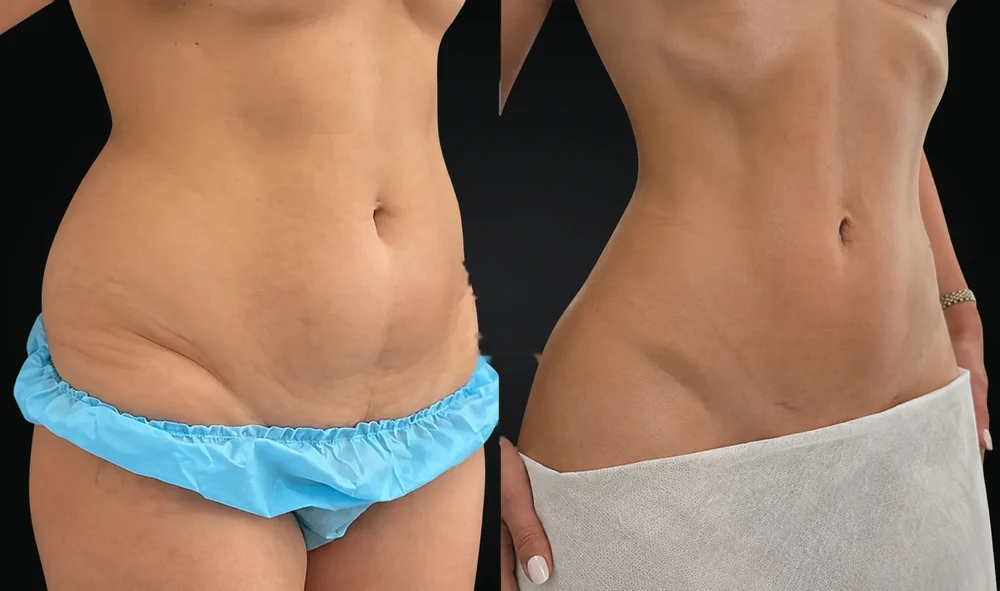
Real case
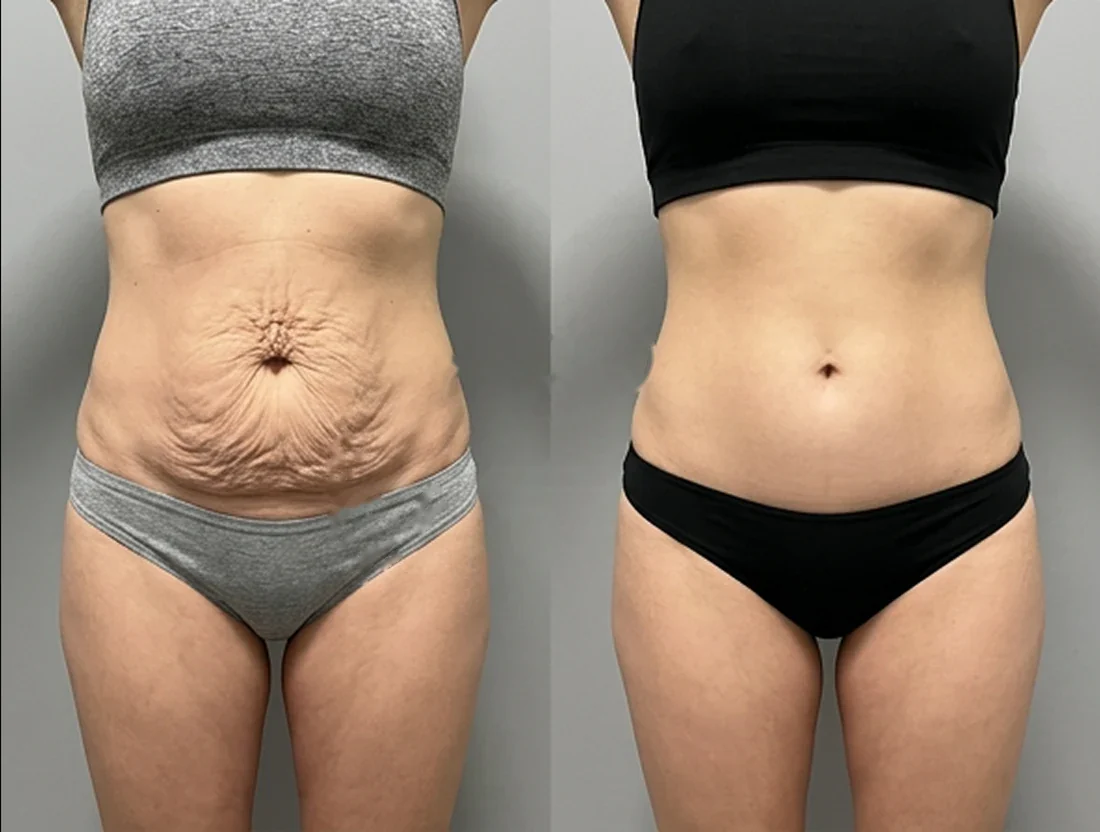
Tummy tuck: a patient's abdomen before and after surgery before after
A flat tummy and a toned silhouette in one operation. Your individual surgical plan and the expected result are discussed at the consultation

Message our coordinator

Free online consultation · Reply within 15 minutes

Message us on Telegram

By messaging us, you agree to our Privacy Policy

Results

Tummy tuck results
of our patients

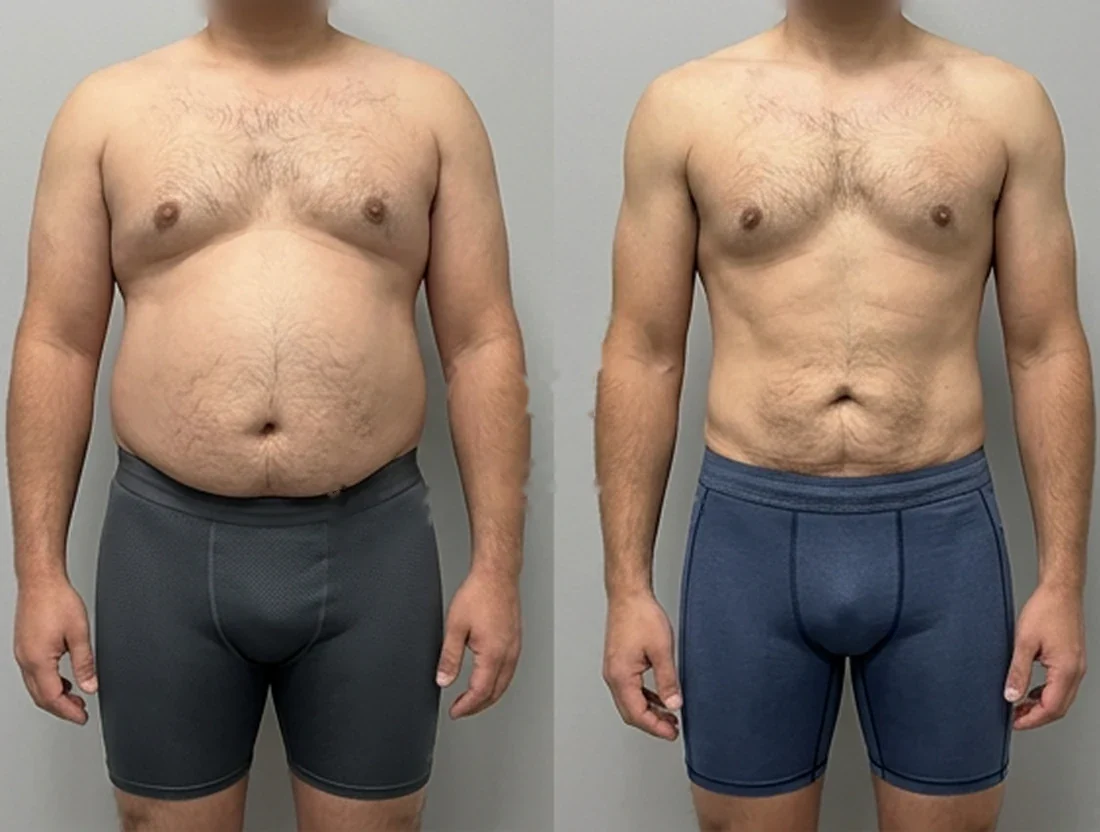
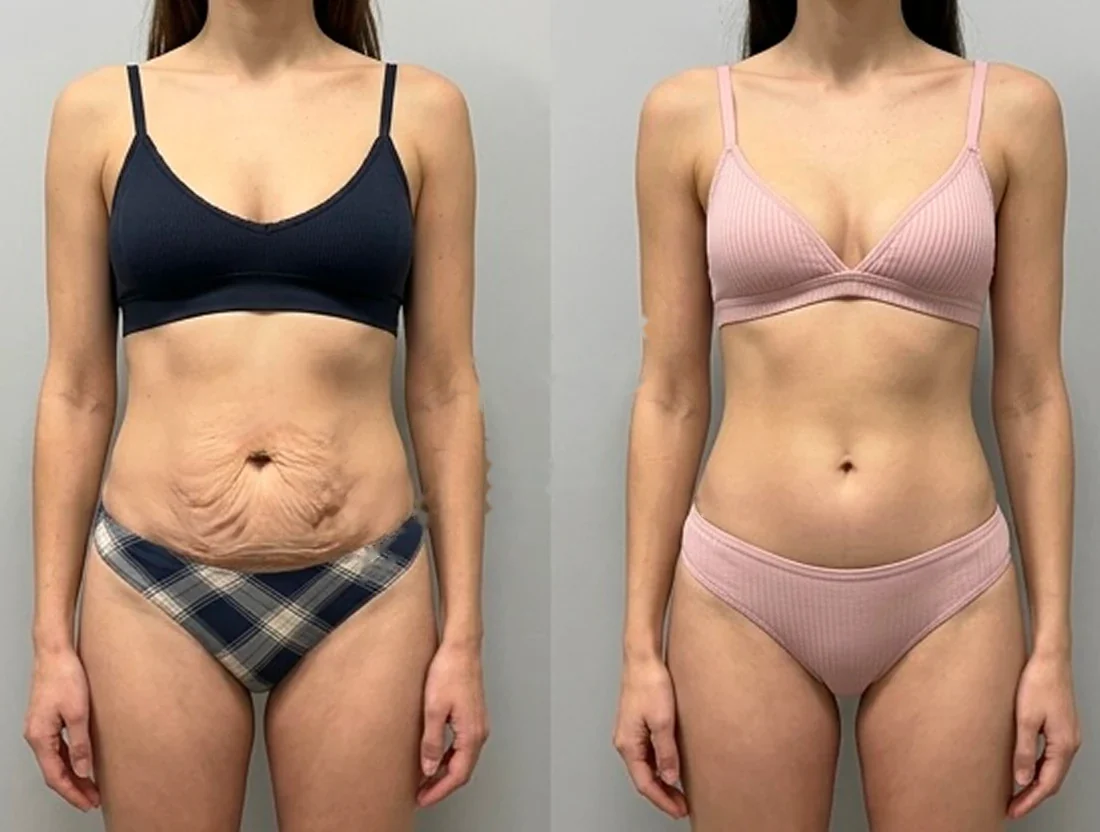
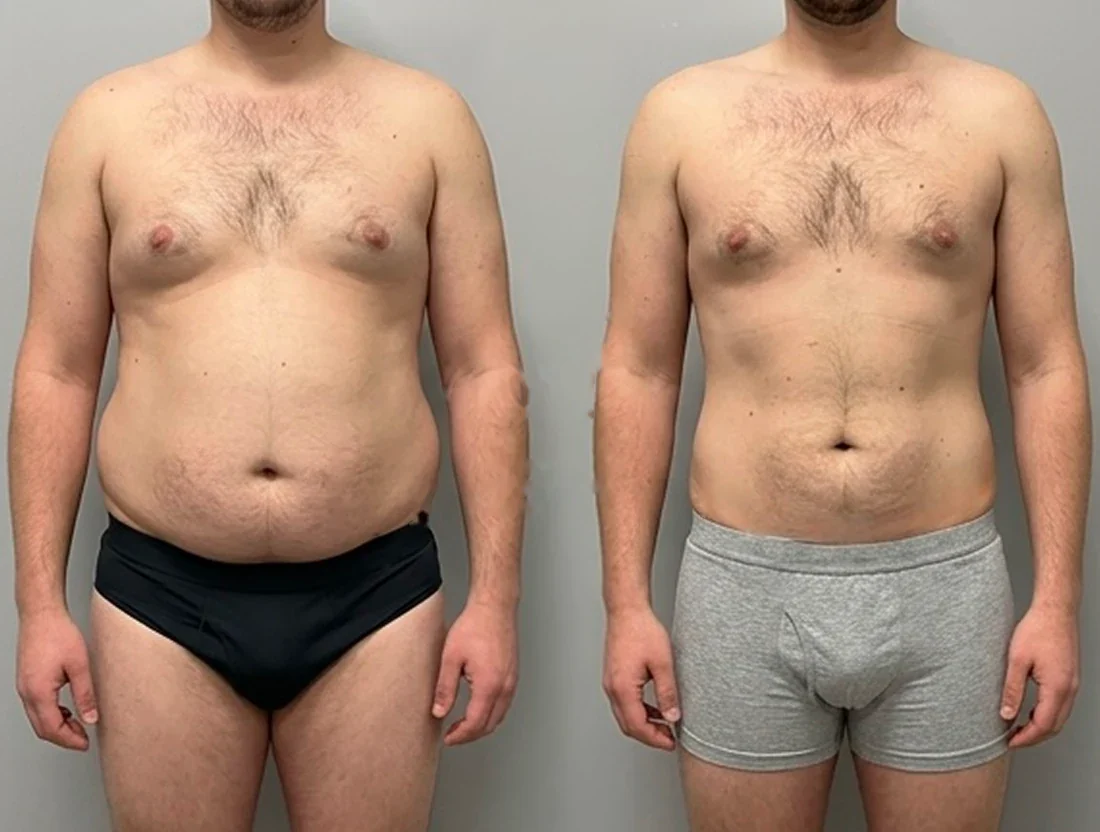
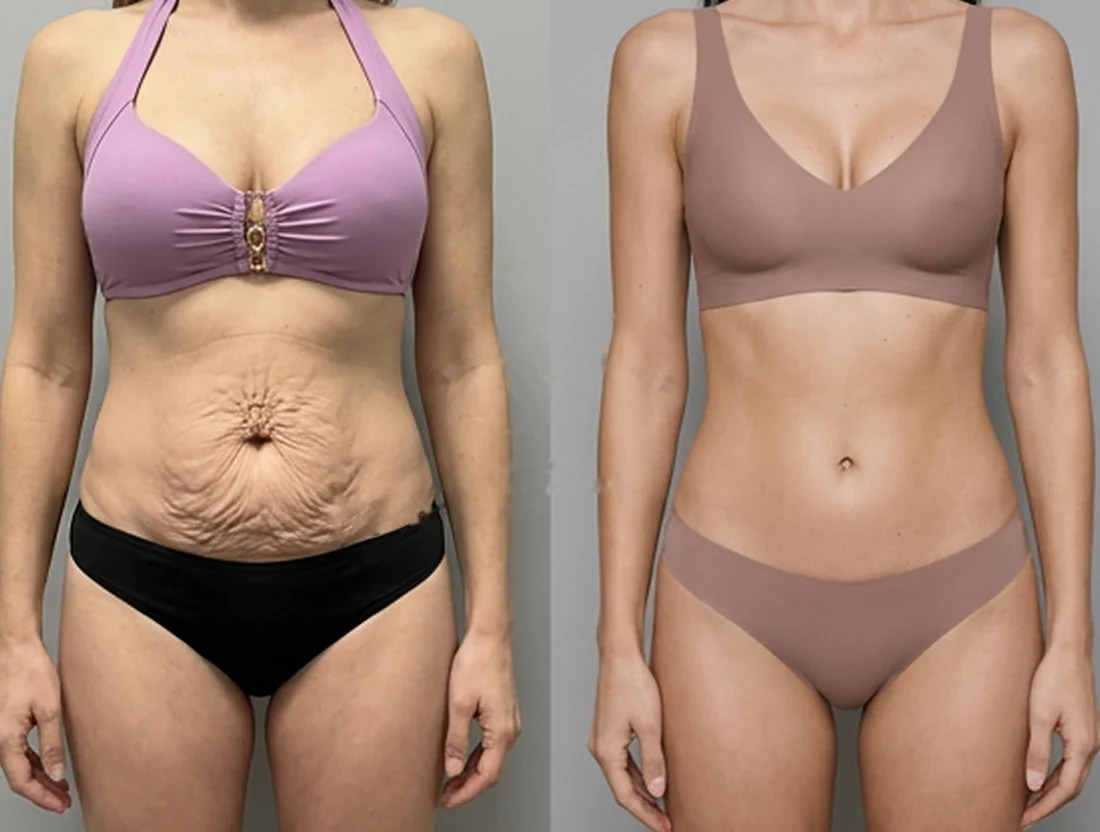
All cases are real patients. Faces and identifying details are hidden.

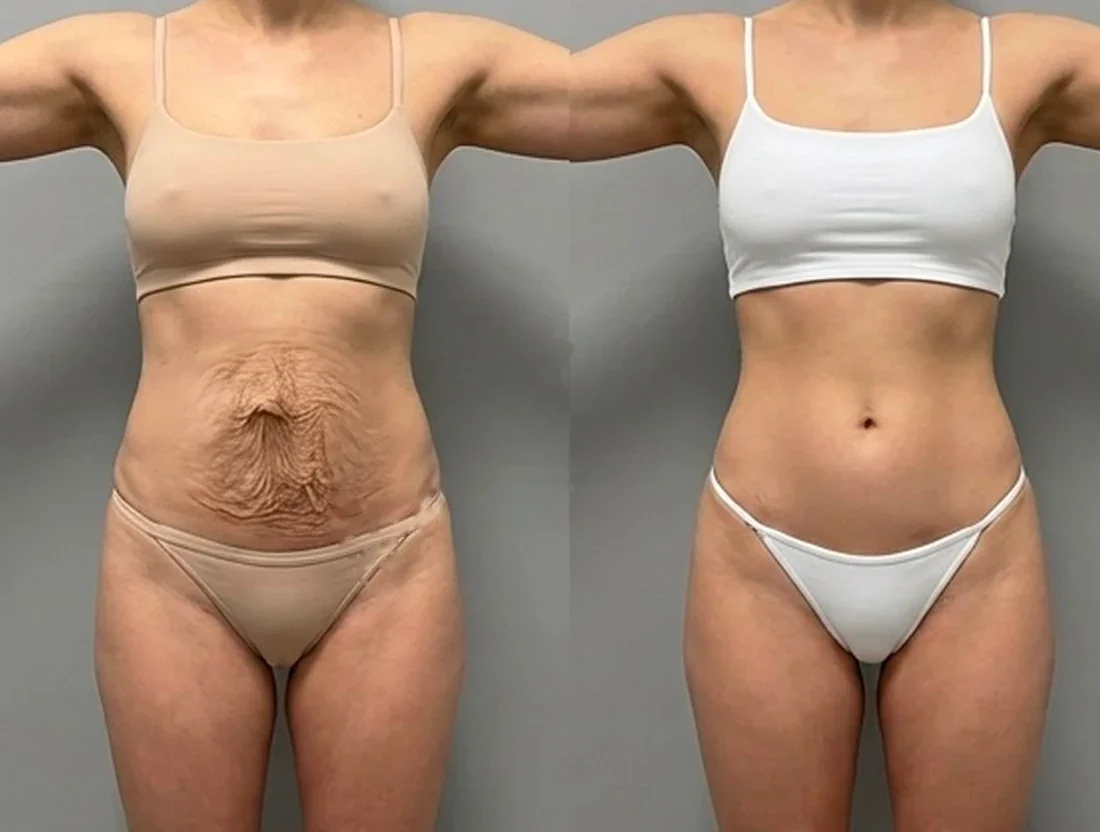
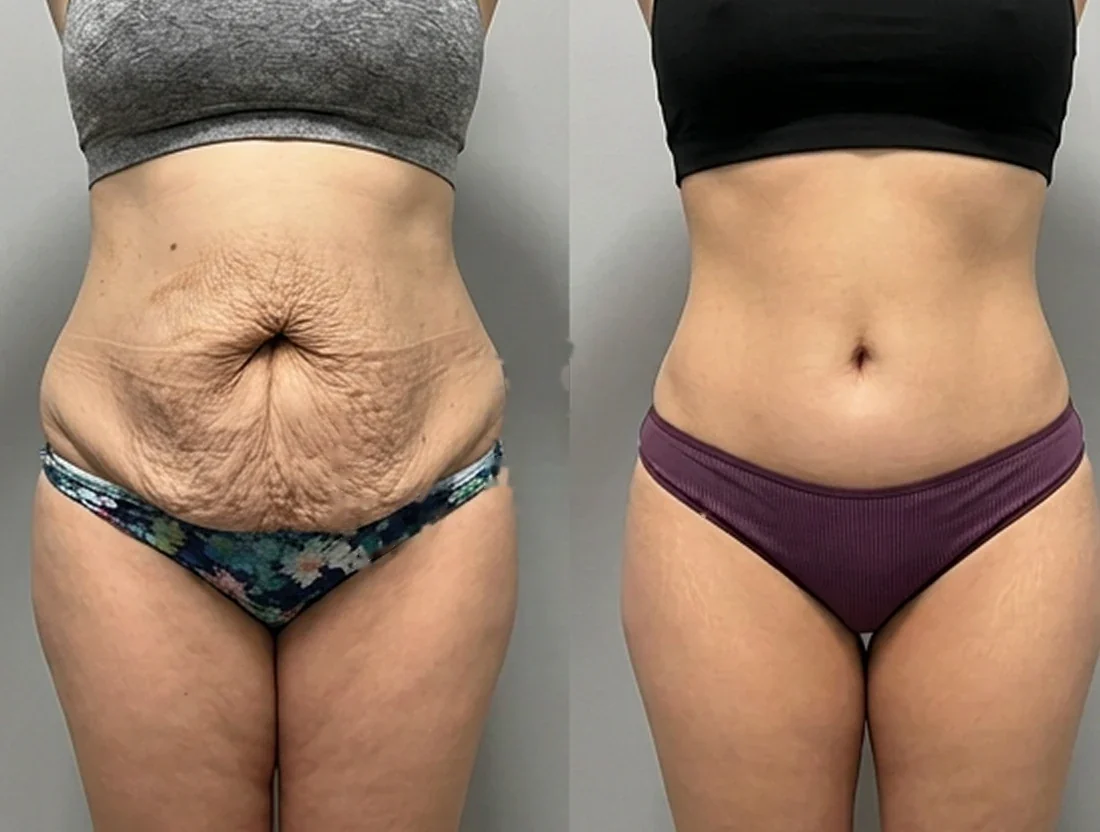
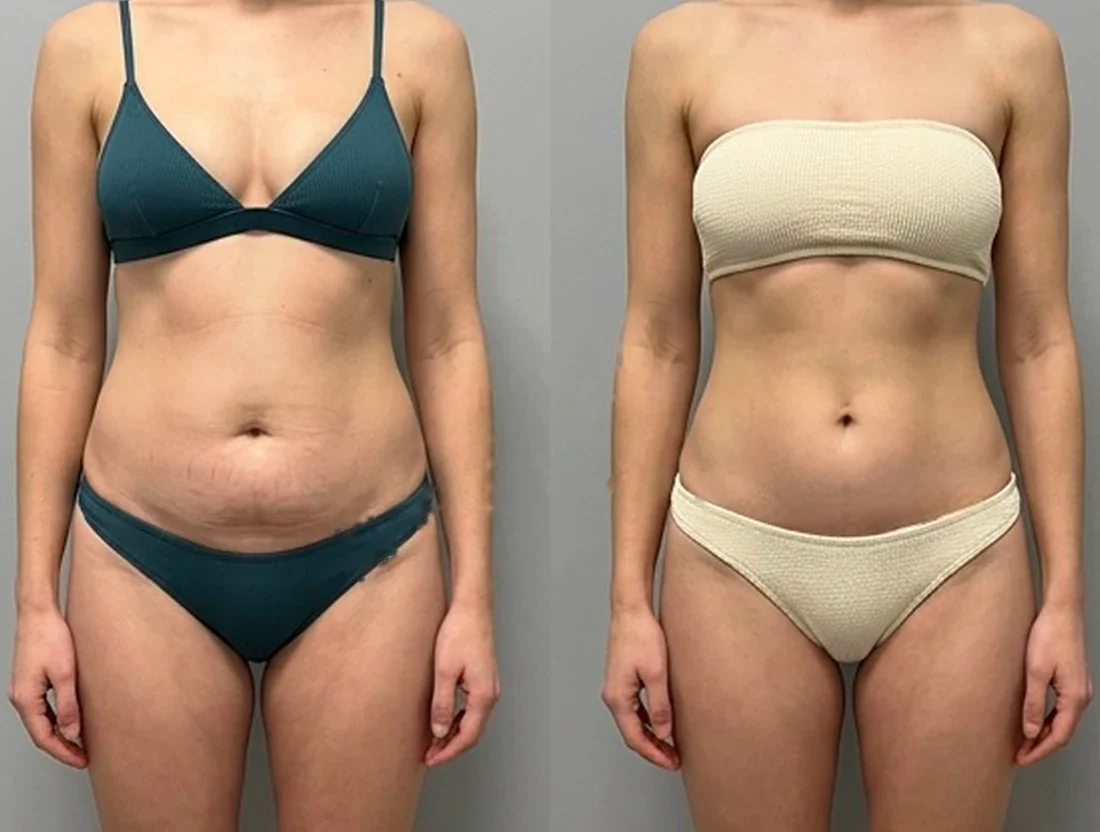
Tummy tuck: a female patient's abdomen before and after surgerybeforeafter
Tummy tuck: a male patient's abdomen before and after surgerybeforeafter
Tummy tuck: a female patient's abdomen before and after surgerybeforeafter
Tummy tuck: a male patient's abdomen before and after surgerybeforeafter
Tummy tuck: a female patient's abdomen before and after surgerybeforeafter
1 of 8

Comparison

Tummy tuck techniques

A tummy tuck is done as a full (classic) or mini operation, or combined with liposuction as lipoabdominoplasty. Compare the scope of surgery, the indications and the expected results to choose the right technique together with your surgeon.

Tummy tuck

Removal of excess skin, abdominal muscle tightening
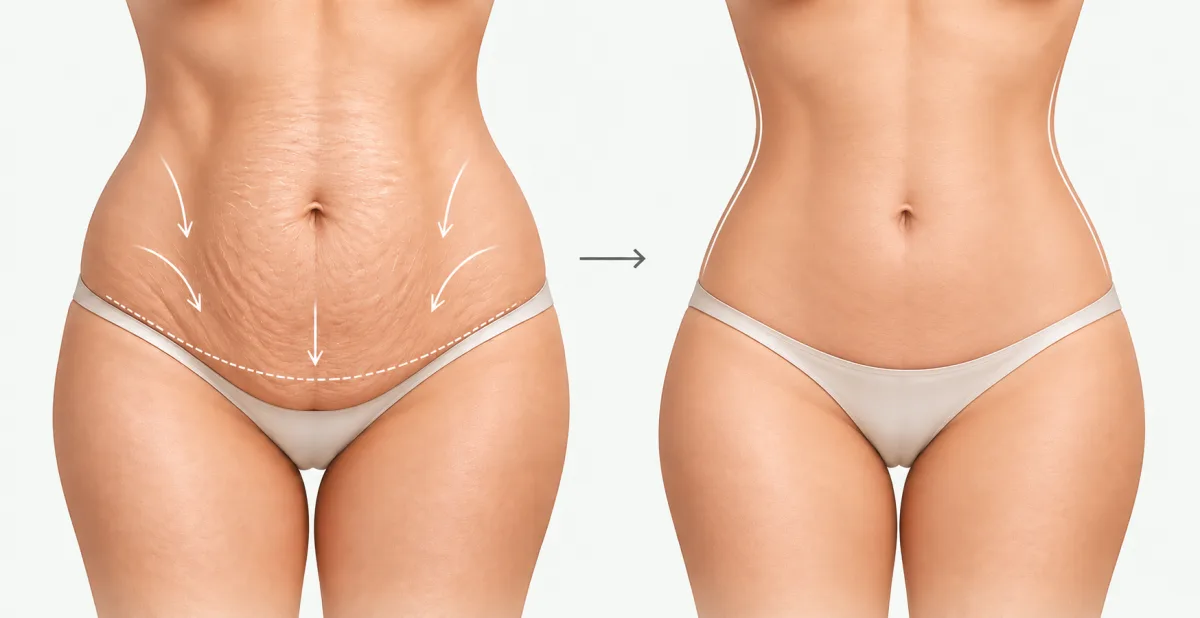
Tummy tuck diagram: the abdomen before surgery with the incision line, and the result
Main goal
Removal of excess skin, diastasis repair
When it is done
Excess skin after childbirth or weight loss
Anaesthesia and stay
General anaesthesia, up to 3 days in hospital

Lipoabdominoplasty

Tummy tuck with added liposuction
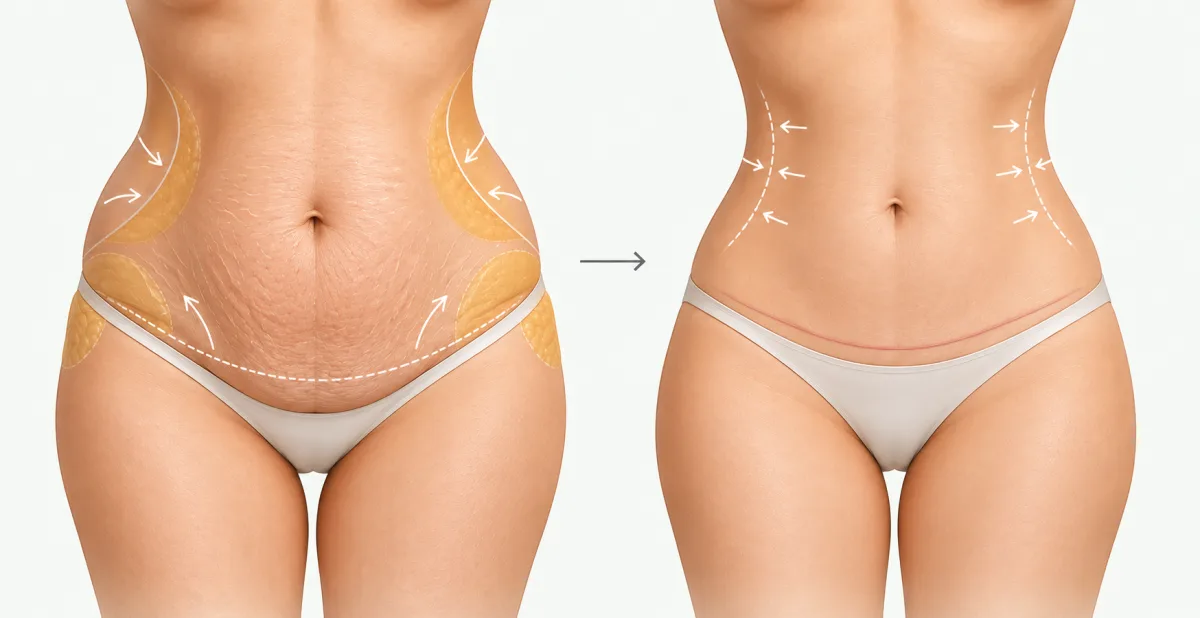
Lipoabdominoplasty diagram: the abdomen with fat on the flanks before surgery, and the result
Main goal
Tummy tightening and waist contouring
When it is done
For fat deposits on the flanks and waist
Anaesthesia and stay
General anaesthesia, up to 3 days in hospital

The benefits and recovery times shown are averaged for each technique and given for guidance: the scope of correction and rehabilitation depend on your anatomy and individual features, and the surgeon confirms them at the consultation.

At the consultation the surgeon draws up a plan for your case and explains how your tummy tuck will go.

Free, before surgery and with no obligation.

Book a consultation

Tummy tuck from the inside

About the clinic

A clinic where you can feel at ease

Modern equipment, comfortable rooms and care for every patient

A doctor and a patient in a clinic ward

Contact us the way that suits you

We will answer your questions and find a convenient time for a consultation

A tummy tuck is not for everyone

If your case can be solved without surgery, the doctor will tell you so at the consultation — and you will not spend money for nothing.

Suitable

A surgeon shows a patient on a model and a monitor how the abdominal contour changes after a tummy tuck
  • Rectus abdominis diastasis
  • Skin folds after weight loss
  • Loose abdominal skin
  • Stretched skin after pregnancy
  • A distorted abdominal contour

Not suitable

A surgeon discusses the indications and contraindications for a tummy tuck with a patient
  • Acute infections
  • Significant disease of the heart, kidneys or liver
  • Problems with blood clotting
  • Being under 18
  • Decompensated diabetes
  • Cancer
  • Skin inflammation in the surgical area
  • Being pregnant or breastfeeding

Not sure the surgery is right for you?

Message us — the coordinator will ask for your photos in the messenger, and the surgeon will tell you whether a tummy tuck suits you. No surgery booking needed.

Find out if it suits me

A surgeon goes through a tummy tuck diagram with a patient at the consultation

Prices

You know the price
before surgery

The price is set at the consultation and fixed in the contract.

Other services

  • First consultationFree
  • Liposuction of the abdomen and flanksfrom $1,700
Book a consultation

Find out your tummy tuck plan and price

The surgeon assesses your abdominal skin and muscles, listens to your wishes and chooses the right correction technique.
The price is set at the consultation and fixed in the contract.

A nurse talks to a patient in a clinic ward

Message our coordinator

Free online consultation · Reply within 15 minutes

Message us on Telegram

By messaging us, you agree to our Privacy Policy

A patient's abdomen before a tummy tuck in the operating room

all inclusive

What the price includes

From preparation for surgery
to post-op check-ups.

  • All scheduled dressings
  • Scheduled post-op check-ups
  • A personal coordinator on call
  • Compression garments fitted on the day of surgery
  • A stay in a comfortable
    hospital ward with meals
  • Individual recommendations
    for recovery
  • Remote progress monitoring
    by photos

How it works

Three days at the clinic —
from preparation to discharge

An agreed correction plan, inpatient observation and post-op check-ups.

A doctor shows a patient a tummy tuck diagram on a monitor1

Consultation
and the surgical plan

The surgeon assesses your abdominal skin and muscles and checks for diastasis, listens to your wishes and chooses the right correction technique.

Paying the deposit by card at the clinic reception2

Booking the date
of surgery

We reserve a surgery date for you: the deposit can be paid by card at the clinic or online by bank transfer. The terms are fixed in the contract for medical services

A blood sample tube for tests before a tummy tuck3

Check-up before
surgery

Before surgery you complete a full lab check-up: blood tests, an ECG, a chest X-ray and reports from the required specialists.

The surgical team during the operation4

Surgery

The surgeon performs the tummy tuck with the chosen technique, repairs diastasis if needed and shapes a firmer abdominal contour.

A hospital ward at the clinic5

Inpatient stay

After surgery the patient stays for 1–3 days in a comfortable hospital ward with meals, under medical supervision.

A surgeon and a patient in the ward during recovery6

Recovery

After surgery you get a recovery programme. Check-ups at 7 days, 3 and 6 months help track your recovery.

Book a free consultation — the surgeon will plan every step with you.

A doctor discusses the tummy tuck plan with a patient
Book a consultation
A doctor discusses the tummy tuck plan with a patient

How it really happens

After a tummy tuck: recovery

Right after surgery the patient stays in hospital for 1–3 days under medical supervision. Drains are usually removed after two days and stitches after 7 days. A compression binder is worn for 1.5–2 months — it supports the abdominal wall and shapes a smooth contour. Most swelling goes within 30 days; office work resumes after 2–3 weeks. Sports, sauna and heavy lifting are off-limits for 2–3 months; at first, sleeping on your back with knees bent is advised. By 12 months the scar is fully mature: it fades and is barely noticeable.

Post-op check-ups

After 7 days, at 3 months and at 6 months. Until the end of the year, get a post-surgery consultation with your surgeon to review results and get more information, at the clinic's expense

Advantages

Reasons to choose City Medical Centre

A surgeon discusses the tummy tuck plan with a patient at the consultation

Just find out — you lose nothing

At the consultation we discuss your wishes and assess your abdominal skin and muscles. The surgeon explains what changes are possible, chooses the correction technique and answers your questions.

A surgeon on a video call with a patient after surgery

We stay with you after surgery

The surgeon follows your recovery and the changing abdominal contour at check-ups after 7 days, 3 and 6 months. Check-ups, dressings and aftercare advice are already included in the price of surgery.

A surgeon shows a patient a model and tummy tuck diagrams

A beautiful contour that fits your figure

We choose the correction technique based on your skin, muscles and figure. Our aim is a harmonious abdominal contour that keeps the natural proportions of your body.

A patient writes down a convenient visit time in her planner

Your schedule is our priority

We respect your time: we work 24/7, with easy booking and a personal approach — we adapt to your pace.

A surgeon shows a patient the fixed price of surgery with no extra charges

Fixed prices

After the consultation the surgeon defines the extent of correction, and you get a clear price for the surgery — no surprises on the way to the result you want.

A surgeon visits a patient in the hospital ward after surgery

Round-the-clock care after surgery

Recovery starts in a comfortable hospital ward under round-the-clock nursing care. The stay and meals are already included in the price.

FAQ

We answer what
people ask before booking

How a tummy tuck works for Baqubah residents

Every tummy tuck leaves a scar; it is the unavoidable price of removing excess skin. In a classic procedure it runs across the lower abdomen from hip to hip, below the underwear or swimsuit line, and in a mini procedure it is much shorter. By 12 months the scar is mature, thin and barely noticeable. People in Baqubah can discuss at the consultation how the incision line will be planned.

Compression is not optional: without the garment recovery is worse, because it supports the tissues and reduces swelling. For the first 3–4 weeks it is worn around the clock, then for about another month during the day; the operating surgeon names the exact period. For at least a month, sauna, pool, tanning beds, alcohol and smoking are off-limits. Baqubah patients receive the full list of restrictions from the surgeon.

Combining procedures can make the plan more efficient: a tummy tuck with flank and waist liposuction or diastasis repair is done under one anaesthesia with one recovery period. The price for such a combination, as for a standalone operation, is set after a free consultation and fixed in the contract. People in Baqubah can book that consultation through the form or any messenger.

Stories of well-known people

Well-known people who spoke openly about this operation, in their own words.

All stories about this operation →

When the Abdomen Will Not Return on Its Own: Skin, Muscle and Planning

A tummy tuck, or abdominoplasty, is designed for a particular kind of change. After pregnancies, after a large weight loss or simply with the years, the skin of the lower abdomen stretches beyond what it can recover, and the muscles that run down the front of the belly separate. Diet and exercise can improve fitness but they cannot take away spare skin or draw the muscles together, and that is the gap that this operation fills.

It removes the excess skin, tightens the muscles and returns the navel to its proper position. The operation is performed under general anaesthesia and lasts two to four hours according to the scale of the work, which is why the first honest question to ask is how much work is planned: a full tightening or a limited one, and whether anything else is combined in the same session.

The path begins at home with a message to the coordinators, who answer on Telegram and Telegram around the clock. Include daylight photographs of the abdomen from the front and the side, a line about your weight over the last two years, because stability is a condition of a good result, and, for anyone who is still planning children, a clear note about it. The first reply states whether you appear to be a suitable candidate and what the assessment will need.

Seasonal Work in a Town of Orchards: Planning the Weeks Away from Lifting

Many households in Baqubah live by the rhythm of the groves. The citrus harvest means crates to load and unload through the winter, and the markets of the town handle sacks of fruit all season. A freshly tightened abdominal wall carries nothing for the first two months, and anyone whose work involves lifting should plan their absence before the operation and agree it with the supervisor in advance.

Choose a date that leaves the busiest weeks of your year behind you. In practice that means checking with relatives who help with the orchard, with the shop or with the children, and confirming that a named person, not a vague promise, will do the lifting and carrying until the surgeon allows it.

The rule to explain to the household is plain: a tightened back carries nothing across the first two months, and whoever lifts for you in that stretch is buying you a result that arrives whole. Early lifting charges its price to the whole result and not to a single week.

Hospital Days, Drains and the Day-Seven Visit

After the operation the patient remains in hospital under care for one to three days, depending on the scale of the work and her condition. The drains, thin tubes that carry away fluid from the operated area, are usually removed after two days, and then you return home to a rest regime that has been prepared in advance, with a bed that rises and a safe path for short walks.

One family member should stay close through the hospital days and the first week at home and run the kitchen, the children and the shopping. Take your written questions with you on the first day and note the surgeon's answers in the same file, so they are in front of you in the first week rather than in memory only.

The stitches come out on day seven as a rule, in a short visit, and the person who brought you home from hospital should be the one to bring you back for it. Never try to remove a stitch or a tape yourself, however ready it looks, because the timing of removal is the surgeon's decision alone.

Standing Straight Again: Posture, Sleep and the First Fortnight

A tightened abdomen pulls the body slightly forward, and most patients walk bent over for the first days. That is expected, and it eases as the tissues relax. Straighten gradually, keep the shoulders loose and avoid forcing the posture, because a controlled walk with a slight stoop is safer than a proud upright stance that pulls on the wound.

Sleeping is easier with the head and the knees raised on pillows, or in a bed that rises, and getting up is easier if you roll to the side first and push with the arms instead of lifting through the belly. Practise these two movements before the operation so that your body knows them when it needs them. Keep a stool beside the bed and a handrail or a firm chair near the bathroom.

Food in the first fortnight should be light and regular, with enough fluid and fibre, because constipation makes every movement of the abdomen harder. Ask the team about medicines for pain and for the bowel, and write the schedule on a sheet attached to the refrigerator so that whoever is helping you can follow it.

Helpers, Neighbours and the Shape of a Good Week

Think of the first week as a schedule with names in it. Monday to Sunday, who sits with you, who cooks, who takes the children to school, who goes to the pharmacy, and who answers the phone to visitors? Written on one sheet and pinned inside the kitchen cupboard, such a plan takes the pressure off the person who has been operated on and the one who is caring for her.

Baqubah is a town where neighbours know one another across the quarters of Yarmouk, Tahrir and Sawamera, and offers of help are common. Accept the practical ones, such as shopping, school runs and a cooked dish left at the door, and politely decline the invitations that require you to stand, host or lift.

Plan small pleasures too: a favourite series, a book, a call with a friend, a chair by a window facing the garden. Recovery after abdominal surgery is slow in the first fortnight, and a week with gentle things to look forward to passes more easily than one organised only around instructions.

The Binder, the Heat and the Walk Along the Diyala

A compression binder is worn for one and a half to two months according to the surgeon's instructions, and in that period the swelling and tightness pass towards the interim result. In Baqubah, where July highs average 45.0C and August 45.3C, the binder needs a thin cotton layer beneath it, a moderately cooled room and visits postponed away from the burning midday hours.

Around thirty days most of the swelling has gone, and from there the daily walk takes its role. Short distances widening week by week, along the bank of the Diyala in the evening, protect against clotting, speed the retreat of the swelling and help correct posture after the tightening. The bridge and the two banks make a very good circuit for someone who is recovering.

In winter the picture changes. January lows average 5.9C and most of the roughly 186 mm of annual rain falls between November and March, so the walk moves to the mild midday hours and the binder, which is a burden in July, becomes a welcome layer.

Returning to Work and to Normal Weight-Bearing

Office work usually resumes after two to three weeks, depending on how the recovery goes and on the surgeon's judgement. Heavy loads, among them carrying sacks and unloading crates, stay postponed until after the binder period. If your shifts are heavy, arrange the cover with the supervisor in advance and do not rely on a change of mind in the second week.

The first steps back to exercise begin with the walk. The gym, sit-ups and anything that raises pressure inside the abdomen wait for the surgeon's permission, which is given after he has seen the scar and the tissue at the follow-up visits. If you are tempted to do more than the plan says, remember that the tissues are still healing underneath a skin that looks calm.

Take the opportunity of this period to rebuild the habits that protect the result: balanced meals, regular water, enough sleep and a weight that does not swing up and down. A tummy tuck corrects the shape you have at the moment of the operation, and keeping a stable weight keeps the correction.

Caring for the Scar in a Sunny Town

The scar of a tummy tuck usually sits low on the abdomen, where clothing hides it, and its appearance develops over months. Follow the surgeon's sheet on dressings, creams and massage, and do not improvise with home remedies or products suggested by friends.

Sunlight is the great enemy of a young scar. In Baqubah, where the summer highs pass 45C and the sun is intense for long months, keep the area covered outdoors, avoid the beach or the pool until the surgeon permits and take extra care in the first year, when the new skin darkens easily. A scar that is protected carefully fades to a thin pale line.

Be patient with colour and texture. The scar often looks pink, firm and slightly raised for a time, and this is a stage and not the end result. If you notice a change that worries you, photograph it in daylight and send the picture to the coordinators for the surgeon's opinion.

Why You Cannot Judge the Scar in Month Three

The final contours and the mature scar are read between the sixth and twelfth month, after the tissues have adapted completely. Pass no verdict on the abdomen in month two or on the scar in month three, because each is mid-road at that point and may look redder, firmer or less even than it will finally appear.

A monthly album, with photographs in the same daylight and from the same angle, shows the course that the daily eye misses. After the settling comes the wardrobe you postponed: new cuts that fit a waist that has finally stabilised, while whoever bought tight clothes in the first month paid for them when the last swelling drained.

Follow-up visits read the scar and the contours through to the final assessment. The coordinators remain your channel for any observation between two appointments, from an odd colour in the scar to a tightness beyond the usual.

Talking to the People Around You

The decision is yours, but the recovery is a household affair. Tell the person who will help what they will have to do in the first week, and ask them to read the written schedule with you. Where children are involved, explain in simple words that you need rest and that they should not jump on the bed or pull at your arms.

Some women prefer to keep the operation private, and that is respected: the messages are closed and the file carries your name only. If you decide to say nothing, plan an explanation for the absence, and avoid receiving visitors during the first week, when rest is the main instruction.

Checking Who Operates and What the Offer Contains

Start with the regulator. Iraq's Ministry of Health, formed in 1920, regulates the country's health work; its structure includes an inspection department that monitors governmental and non-governmental facilities and a quality-control division, and its official site is moh.gov.iq. Ask for the surgeon's registration number and specialty and verify them yourself.

Ask plainly about the scale of the planned work. Is it a full tightening or a limited one? Is anything combined in the same session? Combining changes the calculation of anaesthesia and time within the two-to-four-hour band that the surgeon sets, and not by preference.

Request the complete plan in writing: the expected incision length, the binder months, the number of visits and who answers between them. Compare more than one offer at leisure at home in Baqubah, place the papers side by side and read the differences between plans, not between phrases.

A Town That Builds Slowly: Taking Time Over the Decision

The Shabander mosque at the centre of Baqubah has stood since 1882, and the settlement itself, whose Aramaic name means the house of Jacob, goes back to long before the modern town. In the Abbasid period it was a station on the road to Khorasan, and by the fourteenth century its gardens were known for oranges and sawadi. Places like this have a long habit of building slowly and well.

The decision about a tummy tuck deserves the same pace. Read the plan through a full day, write your questions on one sheet, send them to the coordinators and decide yourself, without a deadline imposed by someone else. A clear sheet of paper in your file is the best companion for the months of recovery.

Building the Photo File for a Remote Assessment

A good remote assessment starts with a good set of pictures, and the quality of that set is entirely within your control. Stand in front of a plain wall near a window, in daylight rather than under a ceiling lamp, because overhead light carves shadows into the lower abdomen and makes soft tissue look worse or better than it is. Take the front view, both side views and, if the coordinators ask for it, a view with the torso gently bent forward so that the loose skin shows how it hangs.

Keep the camera at the height of the navel and hold it level, not tilted down from above. Dress in plain underwear, remove jewellery and keep the same distance for every frame. A surgeon reading the file cannot ask you to turn around, so each missing angle becomes a guess, and guesses are exactly what a careful assessment is trying to avoid. Name each file so that front, left and right are obvious, and send them in one message.

Add a short paragraph in your own words: previous operations on the abdomen, scars from caesarean births, the date of the last pregnancy, any medicines you take daily, and your weight over the past two years. Be complete rather than brief. Information that seems embarrassing or irrelevant to you is often the very thing that changes the plan, and it is safer in the file than in your memory on the day of the operation.

Questions Worth Taking to the Surgeon, and How to Read the Answers

Prepare the questions on paper and put the most important one first. Ask what exactly will be done in your case, which part of the problem is skin and which is muscle, and what the operation will not change. A useful answer is specific to your photographs. If the reply could be pasted under anyone's file without alteration, ask again, politely, until the explanation mentions your own body.

Listen for how uncertainty is handled. A surgeon who says that something cannot be known until the tissues are seen, or that a limited approach suits you better than a full one, is giving you information. A reply made only of reassurance gives you nothing to plan around. Ask what the surgeon would advise a sister to do in your position, and note whether the answer includes a reason to wait.

Write down the answers on the same sheet, with the date, and leave a margin for the points you did not understand. Read the sheet again the next morning. Questions that survive a night of sleep are the real ones, and the ones that disappear were nerves. Send the real ones to the coordinators, who are available around the clock on Telegram and Telegram, and keep the replies together with the photographs so that the whole conversation is in one place.

Doubt, Delay and a Polite No Are Normal Outcomes

Not every assessment ends in an operation, and a good one does not try to force that ending. You may be told that your weight should settle first, that a different procedure fits your goals better, or that the timing is wrong for your family. Hearing this is the assessment working, not failing. It is far cheaper in every sense to learn it from a photograph and a conversation at home than after a decision has been taken in haste.

Feeling unsure is also information. If you notice that you are agreeing mainly because the conversation is pleasant, or because someone else wants the date fixed, stop and wait. A decision about the body should survive a week of ordinary life without the pressure of a calendar. Tell the coordinators that you need more time; a serious team treats that as a normal request and does not repeat the question every day.

Declining is allowed at every stage and costs you nothing in respect. Keep the file, because circumstances change after a pregnancy has passed, a weight has stabilised or a busy season has ended, and an assessment that is already on paper can be picked up again without starting from the beginning.

Common Mistakes Patients Make Before and After

The first mistake is treating the date as the goal. A date is only the point at which preparation ends; what decides the quality of the first two months is the arrangement of the house, the names on the help rota and the clothes that fit loosely over a dressing. People who spend their energy on the date and none on the arrangements meet the first week unprepared.

The second is comparing the result with a photograph from someone else's file. Bodies differ in skin quality, muscle width and scar behaviour, and an image that impressed you shows one person at one stage. Ask the surgeon what range of outcomes is realistic for your own photographs and measure yourself against that range, not against a picture from a social media feed.

The third is feeling better and doing more. In the second and third weeks, when the pain has eased and the mirror looks calm, the temptation to carry shopping, lift a child or return to the kitchen for a feast is strongest. Tissue healing runs on its own schedule, which the surgeon sets at the visits, and the sensation of well-being is not a permission. The fourth is silence: a worry kept until the next appointment instead of sent to the coordinators the same day.

Keeping a Photo Diary of the Result

A diary of your recovery is the only honest way to judge a change that happens slowly. Choose one spot, one time of day and one distance, and take the same three views at regular intervals, using the same clothing. In the early weeks the pictures will mostly show swelling and the binder, and that is exactly why they matter: months later they remind you where you started and how far the tissues have come.

Date every frame and keep them in one folder with a short note for each, such as how you slept, what the weather was like and what the swelling felt like. When something worries you, you can then send the coordinators a comparison instead of a vague description, and the surgeon sees the trend rather than a single frame. A change that is slow looks like nothing from one day to the next and like a great deal from one month to the next.

Resist the habit of checking in the mirror every hour. The eye adjusts to what it sees daily and misses real progress, while the monthly album shows it plainly. Put the album away between sessions, and look at it at the follow-up visits with the surgeon, where the pictures can be read with someone who knows what each stage should look like.

How long does the operation take and what anaesthesia is used?

General anaesthesia, lasting two to four hours depending on the scale of the work.

How many days do I stay in hospital?

From one to three days depending on the scale of the work and your condition. The drains are usually removed after two days.

When are the stitches removed?

On day seven as a rule, in a short visit. Arrange in advance who will bring you, and never remove a stitch or tape yourself.

When can I return to office work?

After two to three weeks according to the course of recovery and the surgeon's judgement. Heavy loads stay postponed until after the binder period.

How long do I wear the compression binder?

One and a half to two months according to the surgeon's instructions. In summer use a cotton layer beneath it and keep the room moderately cool.

When does the swelling go?

Most of it fades within about thirty days, while the final contours and the mature scar are read between the sixth and twelfth month.

Is walking allowed?

Yes, short distances from the start, widening week by week. Walking protects against clotting and helps posture. The gym waits for the surgeon's permission.

Should I plan a pregnancy before the operation?

Tell the coordinators in your first message if a pregnancy is near in your plans, so that the assessment is built on it from the start.

How do I verify the surgeon?

Ask for the registration number and specialty and check them with Iraq's Ministry of Health at moh.gov.iq. Ask for the full plan in writing.