City Medical Centre · multi-specialty surgery clinicOpen 24/7

Tummy tuck

Tummy Tuck After Pregnancy in Kisumu

Free consultation

Price at consultation

The price is fixed in the contract before surgery
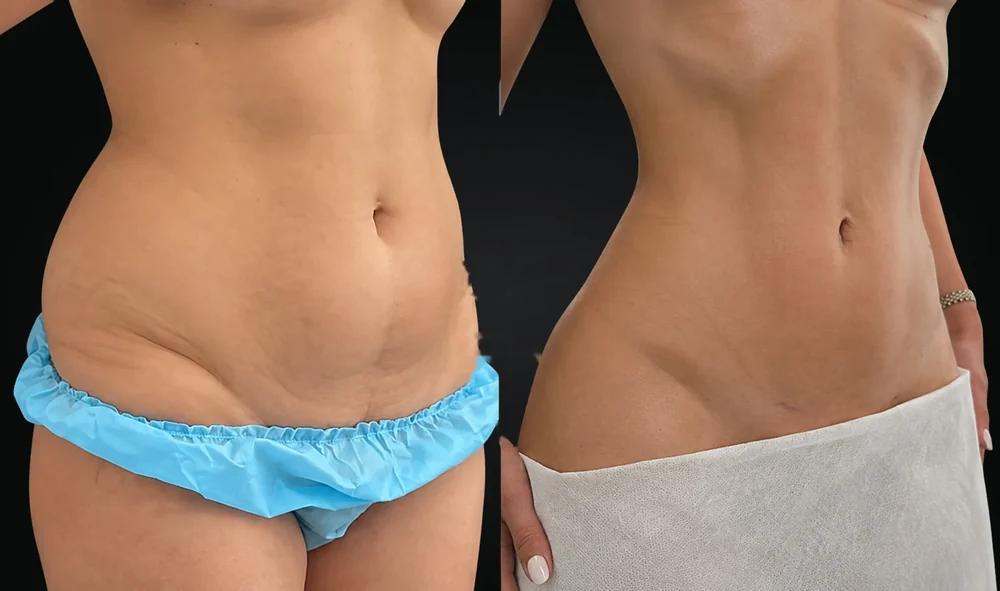
Real case
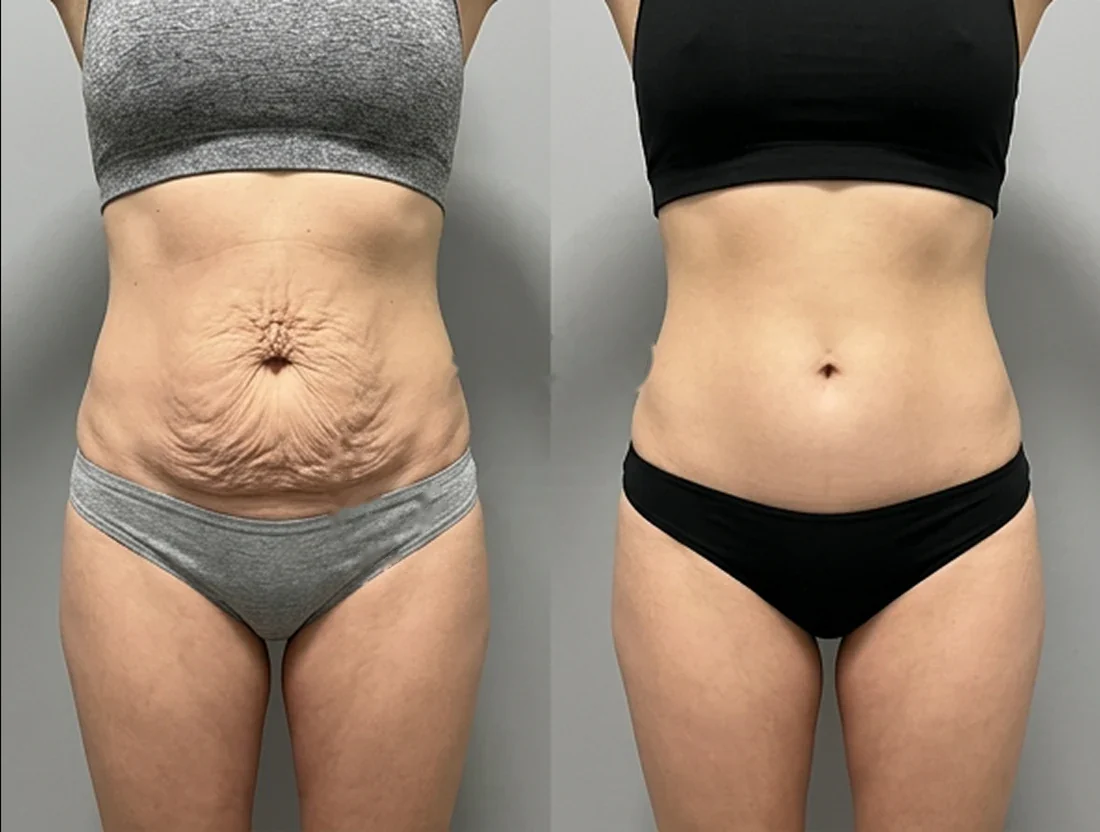
Tummy tuck: a patient's abdomen before and after surgery before after
A flat tummy and a toned silhouette in one operation. Your individual surgical plan and the expected result are discussed at the consultation

Message our coordinator

Free online consultation · Reply within 15 minutes

Message us on Telegram

By messaging us, you agree to our Privacy Policy

Results

Tummy tuck results
of our patients

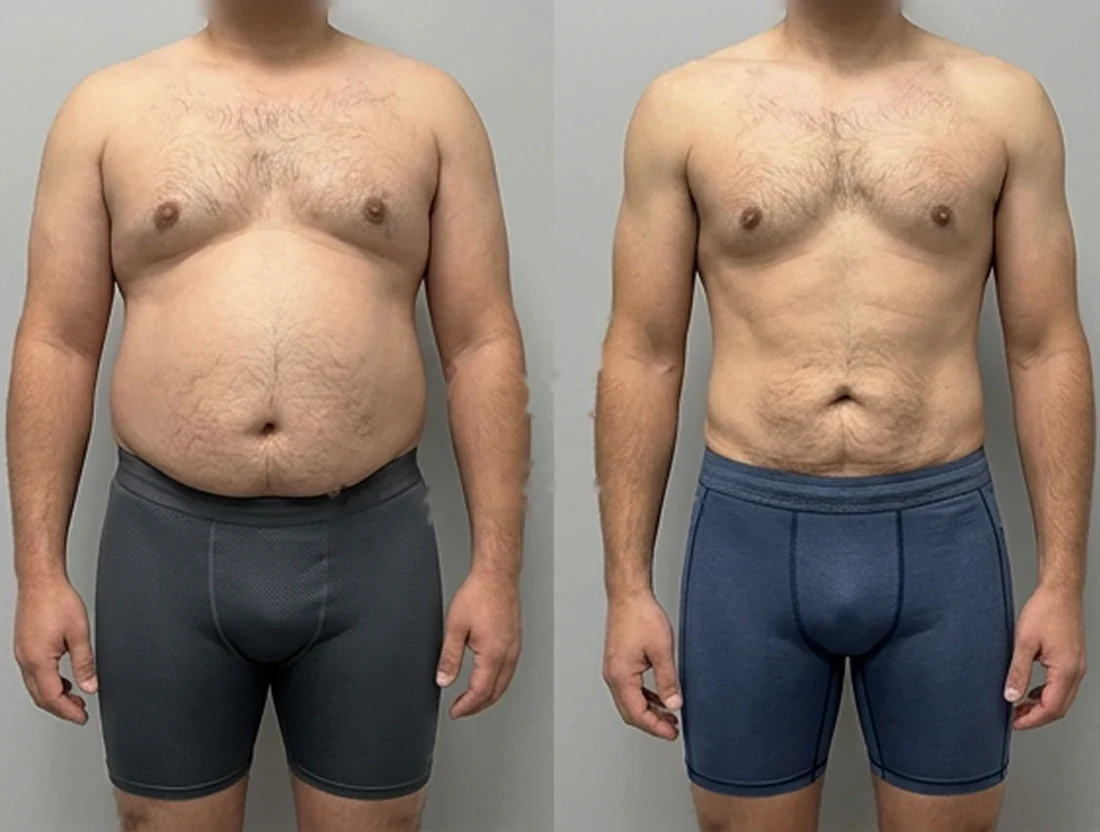
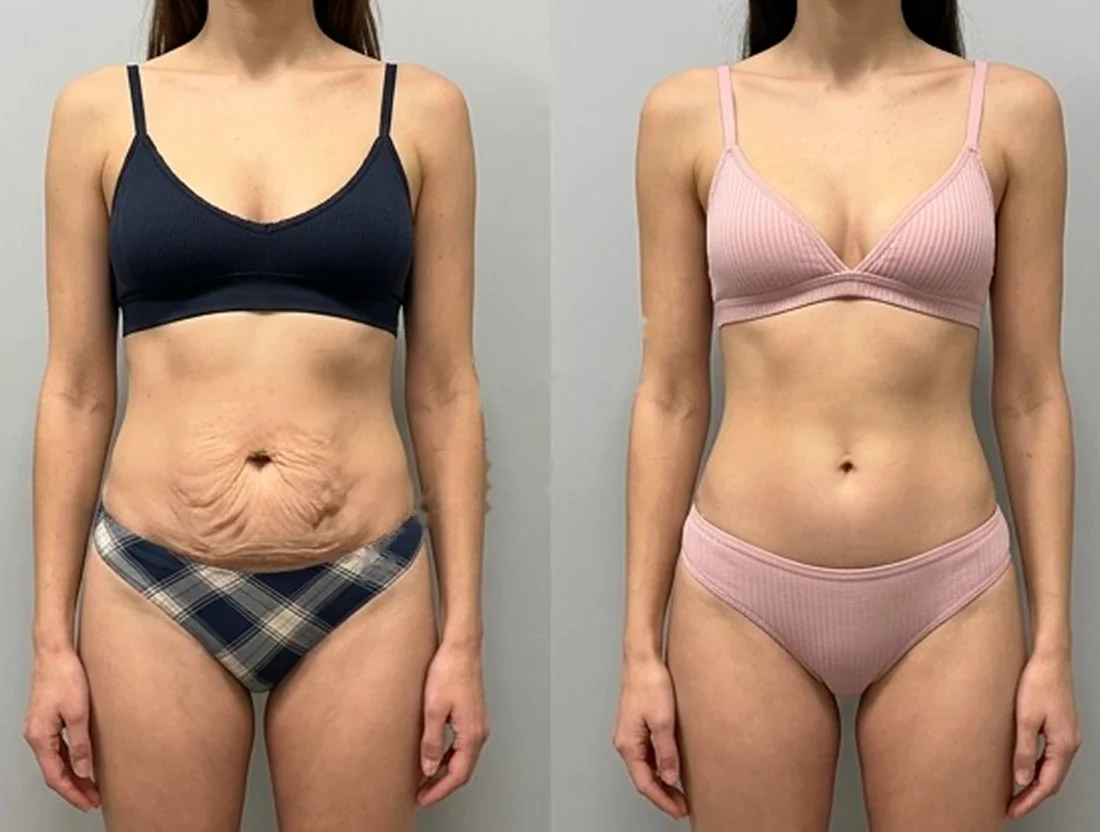
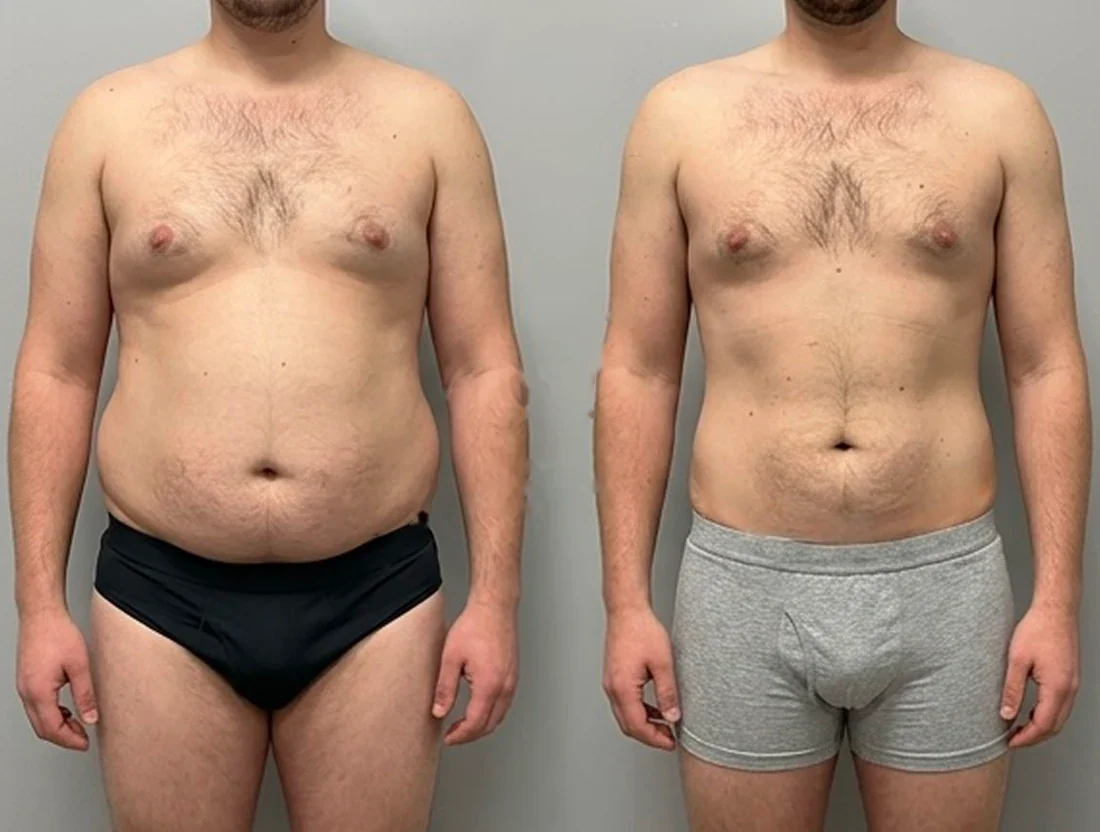
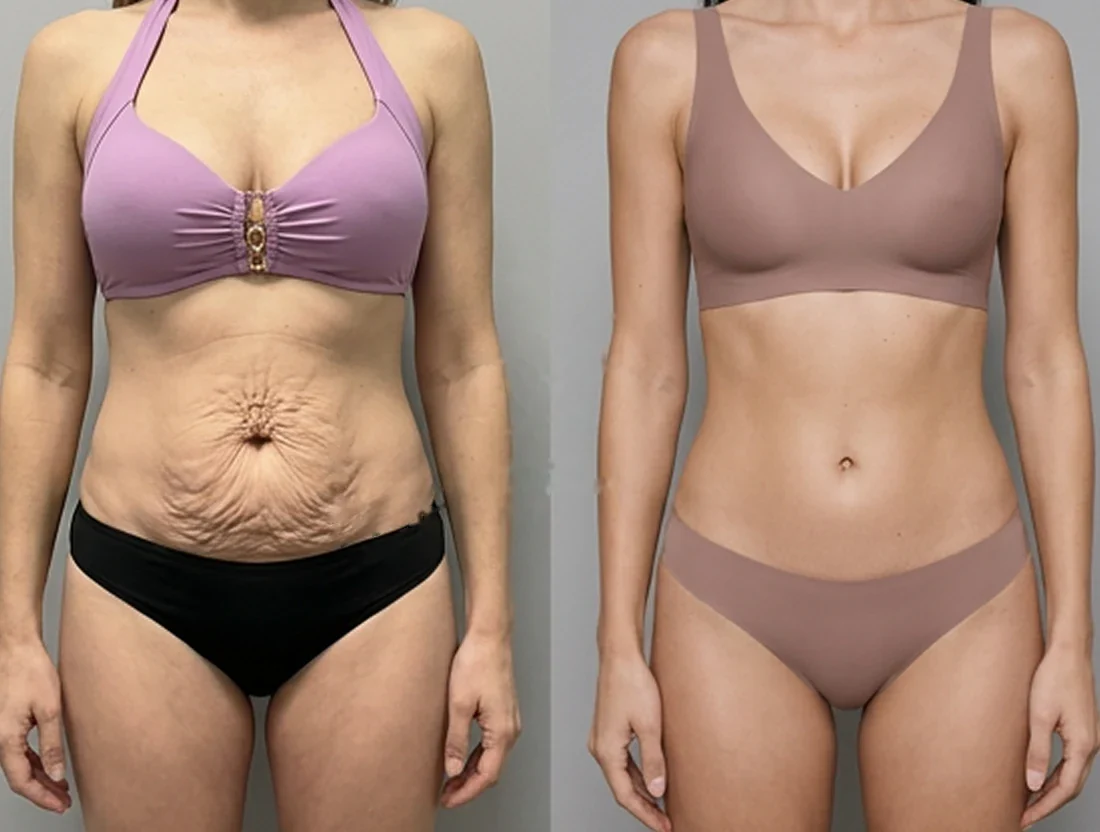
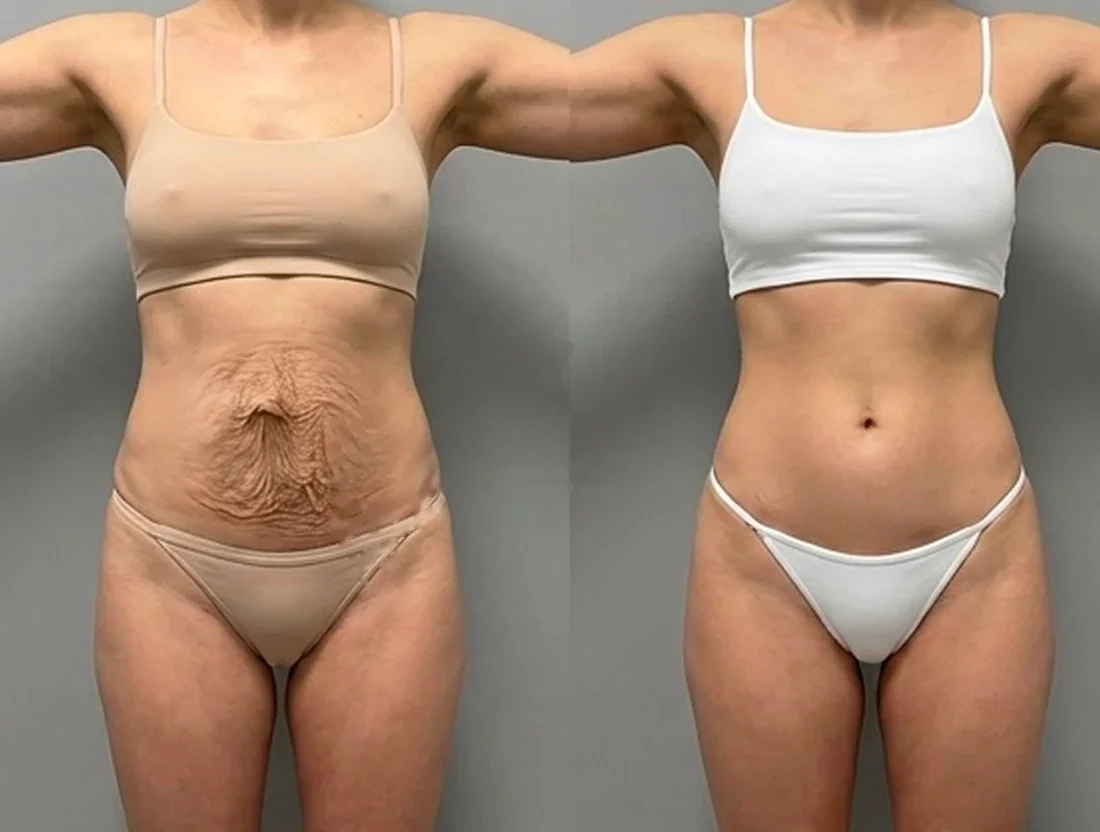
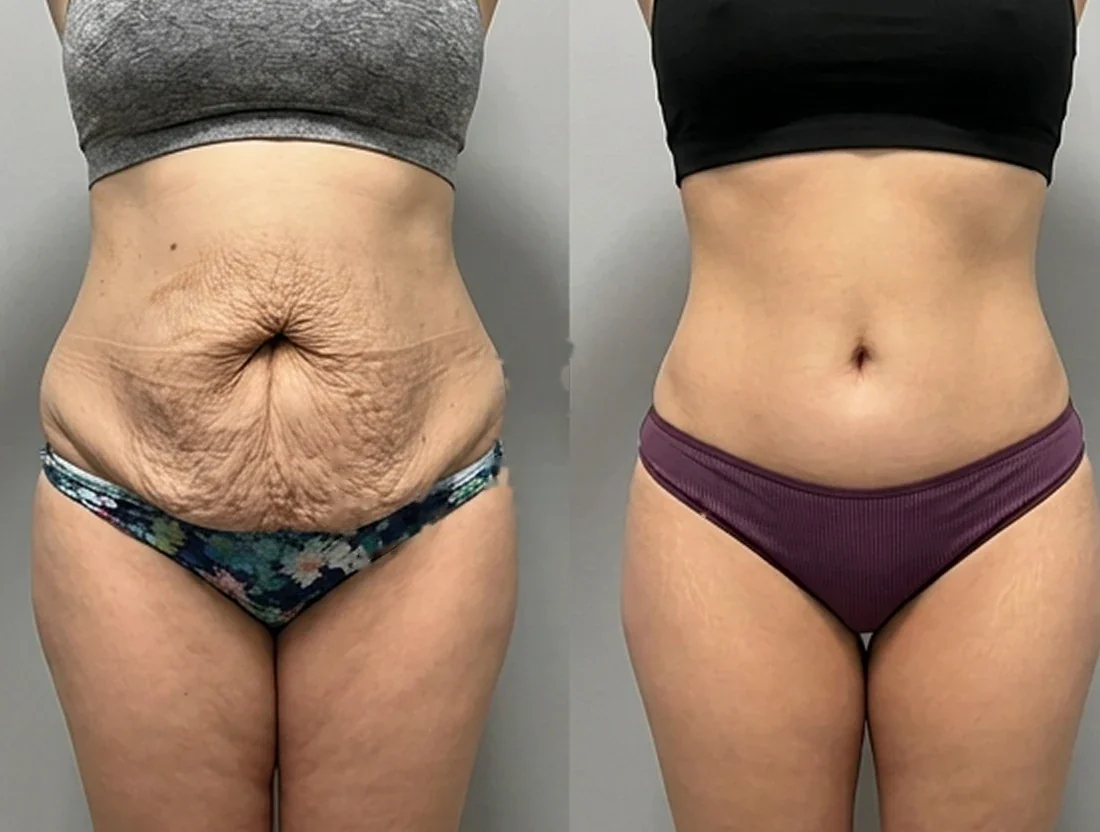
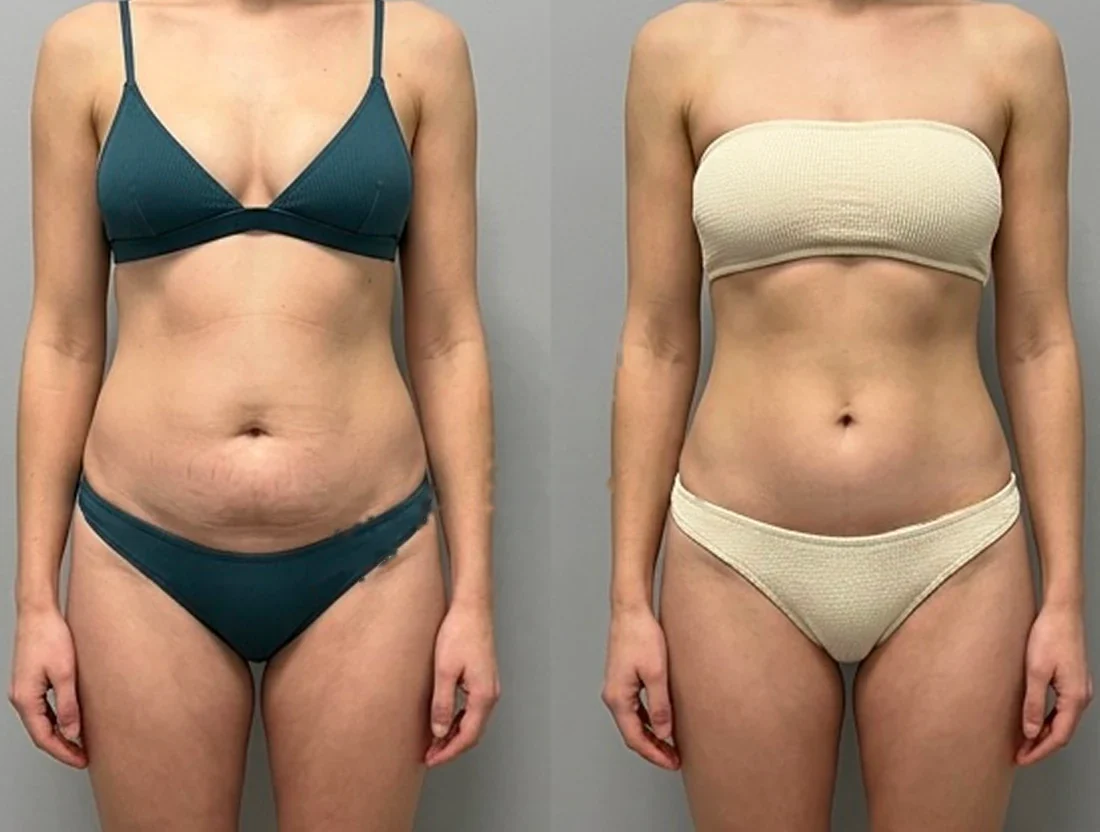
All cases are real patients. Faces and identifying details are hidden.

Tummy tuck: a female patient's abdomen before and after surgerybeforeafter
Tummy tuck: a male patient's abdomen before and after surgerybeforeafter
Tummy tuck: a female patient's abdomen before and after surgerybeforeafter
Tummy tuck: a male patient's abdomen before and after surgerybeforeafter
Tummy tuck: a female patient's abdomen before and after surgerybeforeafter
1 of 8

Comparison

Tummy tuck techniques

A tummy tuck is done as a full (classic) or mini operation, or combined with liposuction as lipoabdominoplasty. Compare the scope of surgery, the indications and the expected results to choose the right technique together with your surgeon.

Tummy tuck

Removal of excess skin, abdominal muscle tightening
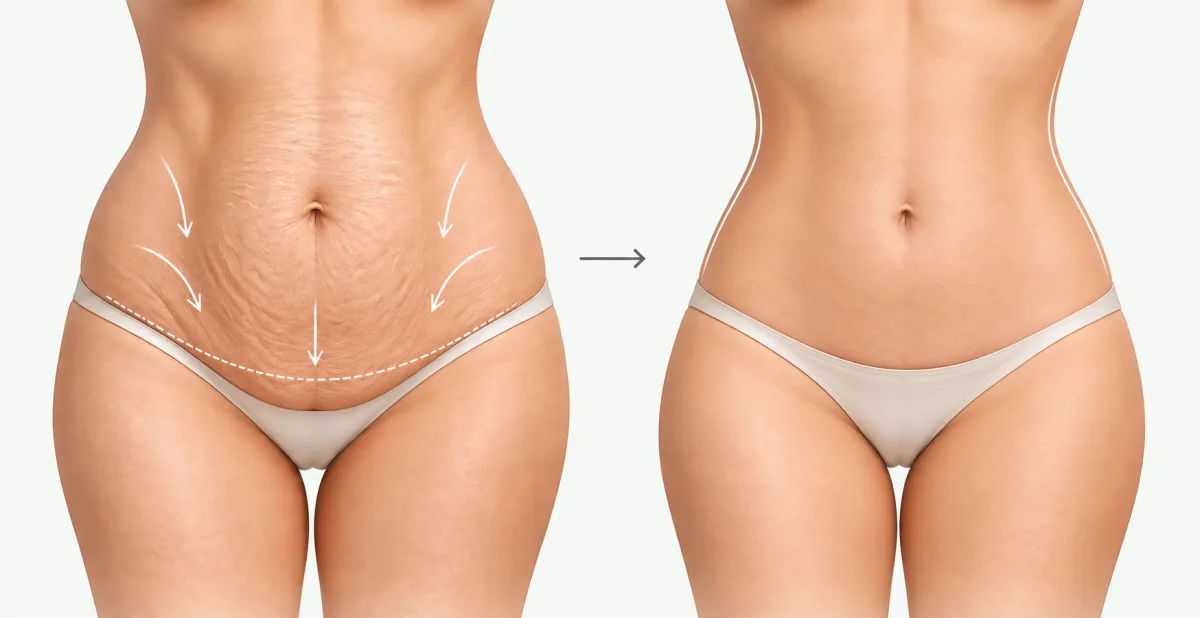
Tummy tuck diagram: the abdomen before surgery with the incision line, and the result
Main goal
Removal of excess skin, diastasis repair
When it is done
Excess skin after childbirth or weight loss
Anaesthesia and stay
General anaesthesia, up to 3 days in hospital

Lipoabdominoplasty

Tummy tuck with added liposuction
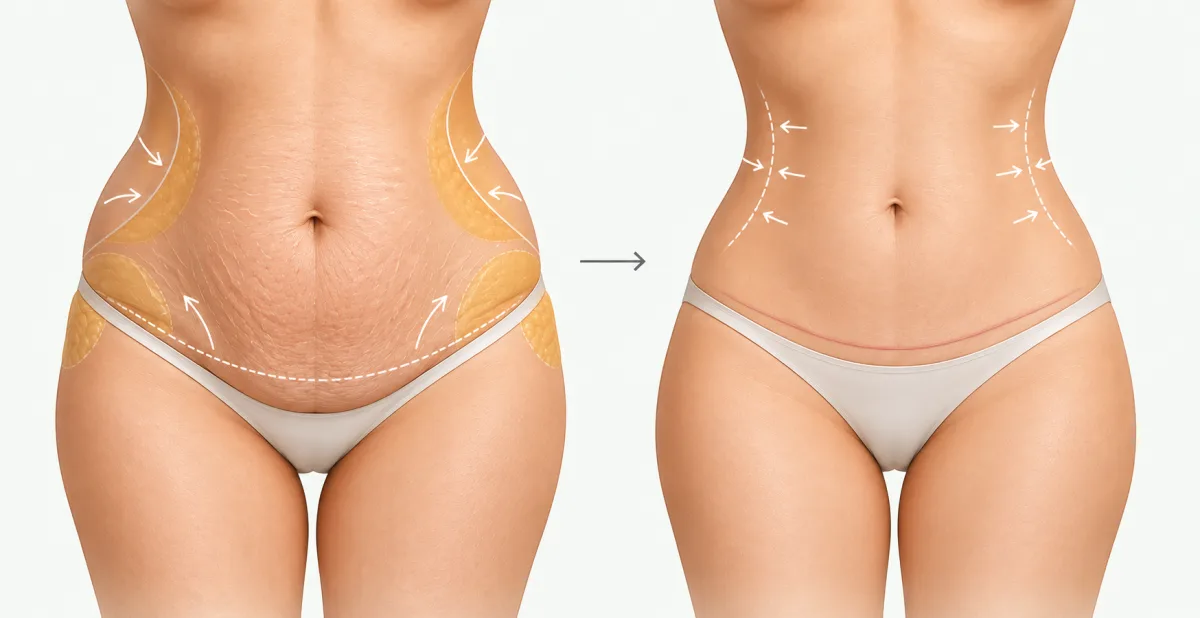
Lipoabdominoplasty diagram: the abdomen with fat on the flanks before surgery, and the result
Main goal
Tummy tightening and waist contouring
When it is done
For fat deposits on the flanks and waist
Anaesthesia and stay
General anaesthesia, up to 3 days in hospital

The benefits and recovery times shown are averaged for each technique and given for guidance: the scope of correction and rehabilitation depend on your anatomy and individual features, and the surgeon confirms them at the consultation.

At the consultation the surgeon draws up a plan for your case and explains how your tummy tuck will go.

Free, before surgery and with no obligation.

Book a consultation

Tummy tuck from the inside

About the clinic

A clinic where you can feel at ease

Modern equipment, comfortable rooms and care for every patient

A doctor and a patient in a clinic ward

Contact us the way that suits you

We will answer your questions and find a convenient time for a consultation

A tummy tuck is not for everyone

If your case can be solved without surgery, the doctor will tell you so at the consultation — and you will not spend money for nothing.

Suitable

A surgeon shows a patient on a model and a monitor how the abdominal contour changes after a tummy tuck
  • Rectus abdominis diastasis
  • Skin folds after weight loss
  • Loose abdominal skin
  • Stretched skin after pregnancy
  • A distorted abdominal contour

Not suitable

A surgeon discusses the indications and contraindications for a tummy tuck with a patient
  • Acute infections
  • Significant disease of the heart, kidneys or liver
  • Clotting disorders of the blood
  • Age under 18
  • Decompensated diabetes
  • Cancer
  • Skin inflammation in the surgical area
  • Being pregnant or breastfeeding

Not sure the surgery is right for you?

Message us — the coordinator will ask for your photos in the messenger, and the surgeon will tell you whether a tummy tuck suits you. No surgery booking needed.

Find out if it suits me

A surgeon goes through a tummy tuck diagram with a patient at the consultation

Prices

You know the price
before surgery

The price is set at the consultation and fixed in the contract.

Other services

  • First consultationFree
  • Liposuction of the abdomen and flanksfrom $1,700
Book a consultation

Find out your tummy tuck plan and price

The surgeon assesses your abdominal skin and muscles, listens to your wishes and chooses the right correction technique.
The price is set at the consultation and fixed in the contract.
A nurse talks to a patient in a clinic ward

Message our coordinator

Free online consultation · Reply within 15 minutes

Message us on Telegram

By messaging us, you agree to our Privacy Policy
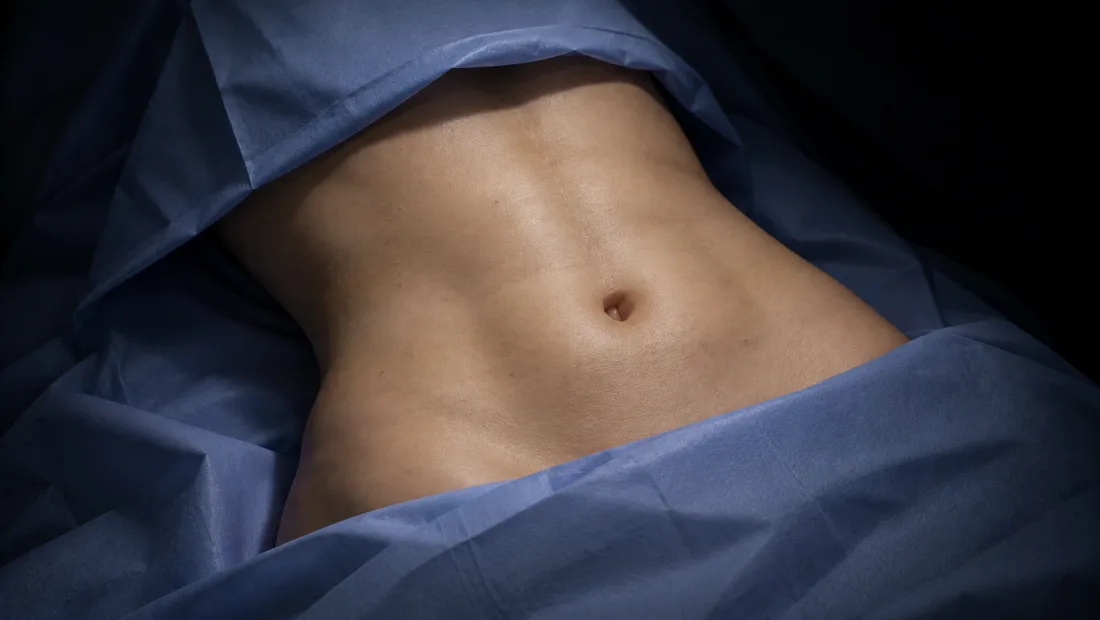
A patient's abdomen before a tummy tuck in the operating room

all inclusive

What the price includes

From preparation for surgery
to post-op check-ups.

  • All scheduled dressings
  • Scheduled post-op check-ups
  • A personal coordinator on call
  • Compression garments fitted on the day of surgery
  • A stay in a comfortable
    hospital ward with meals
  • Individual recommendations
    for recovery
  • Remote progress monitoring
    by photos

How it works

Three days at the clinic —
from preparation to discharge

An agreed correction plan, inpatient observation and post-op check-ups.

A doctor shows a patient a tummy tuck diagram on a monitor1

Consultation
and the surgical plan

The surgeon assesses your abdominal skin and muscles and checks for diastasis, listens to your wishes and chooses the right correction technique.

Paying the deposit by card at the clinic reception2

Booking the date
of surgery

We reserve a surgery date for you: the deposit can be paid by card at the clinic or online by bank transfer. The terms are fixed in the contract for medical services

A blood sample tube for tests before a tummy tuck3

Check-up before
surgery

Before surgery you complete a full lab check-up: blood tests, an ECG, a chest X-ray and reports from the required specialists.

The surgical team during the operation4

Surgery

The surgeon performs the tummy tuck with the chosen technique, repairs diastasis if needed and shapes a firmer abdominal contour.

A hospital ward at the clinic5

Inpatient stay

After surgery the patient stays for 1–3 days in a comfortable hospital ward with meals, under medical supervision.

A surgeon and a patient in the ward during recovery6

Recovery

After surgery you get a recovery programme. Check-ups at 7 days, 3 and 6 months help track your recovery.
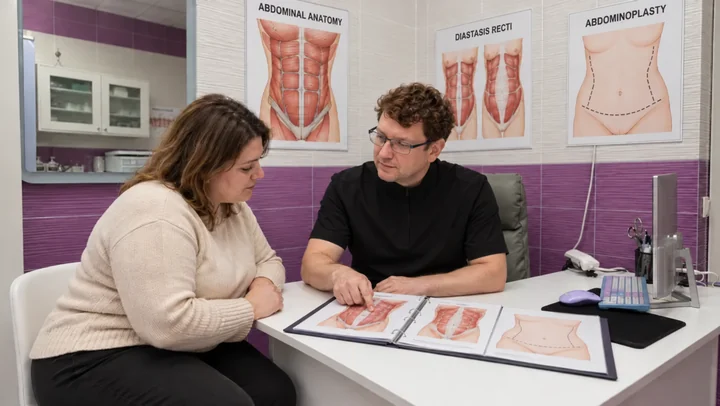
Book a free consultation — the surgeon will plan every step with you.

A doctor discusses the tummy tuck plan with a patient
Book a consultation
A doctor discusses the tummy tuck plan with a patient

How it really happens

Recovery after abdominoplasty

Right after surgery the patient spends 1–3 days in hospital under medical supervision. Drains usually come out after two days and stitches after 7 days. A compression binder is worn for 1.5–2 months to support the abdominal wall and shape a smooth contour. Most swelling goes within 30 days, and office work resumes after 2–3 weeks. Sports, sauna and heavy lifting are off-limits for 2–3 months; at first, sleeping on your back with bent knees is advised. By 12 months the scar is fully mature — it fades and is barely noticeable.

Post-op check-ups

After 7 days, at 3 months and at 6 months. Until the end of the year, get a post-surgery consultation with your surgeon to review results and get more information, at the clinic's expense

Advantages

Why people choose City Medical Centre

A surgeon discusses the tummy tuck plan with a patient at the consultation

Just find out — you lose nothing

At the consultation we discuss your wishes and assess your abdominal skin and muscles. The surgeon explains what changes are possible, chooses the correction technique and answers your questions.

A surgeon on a video call with a patient after surgery

We stay with you after surgery

The surgeon follows your recovery and the changing abdominal contour at check-ups after 7 days, 3 and 6 months. Check-ups, dressings and aftercare advice are already included in the price of surgery.

A surgeon shows a patient a model and tummy tuck diagrams

A beautiful contour that fits your figure

We choose the correction technique based on your skin, muscles and figure. Our aim is a harmonious abdominal contour that keeps the natural proportions of your body.

A patient writes down a convenient visit time in her planner

Your schedule is our priority

We respect your time: we work 24/7, with easy booking and a personal approach — we adapt to your pace.
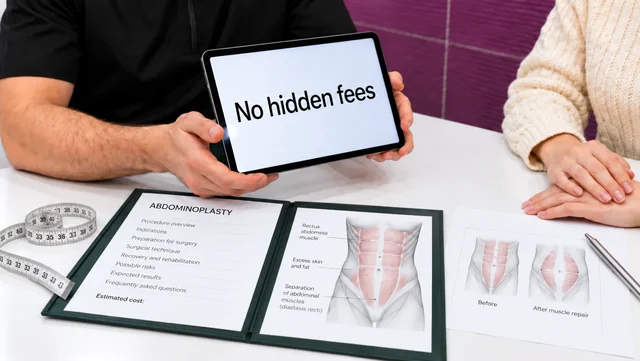
A surgeon shows a patient the fixed price of surgery with no extra charges

Fixed prices

After the consultation the surgeon defines the extent of correction, and you get a clear price for the surgery — no surprises on the way to the result you want.

A surgeon visits a patient in the hospital ward after surgery

Round-the-clock care after surgery

Recovery starts in a comfortable hospital ward under round-the-clock nursing care. The stay and meals are already included in the price.

FAQ

We answer what
people ask before booking

How a tummy tuck works for Kisumu residents

Pregnancy, a C-section or major weight loss can leave behind loose skin and diastasis, the separation of the rectus abdominis muscles. Diet and training cannot fix this: stretched skin does not shrink, and separated muscles do not come back together on their own. That is when women in Kisumu consider abdominoplasty, which restores both the skin and the muscle wall in one operation.

Pre-surgery tests should be completed in advance, not the day before. The surgeon gives the exact list at the consultation, and results are usually valid for 10–14 days. Seven to ten days before the operation, stop smoking, alcohol and medicines that affect blood clotting. Anyone in Kisumu preparing for a tummy tuck also sees a GP and an anaesthetist before the surgery date.

Combining procedures can make the plan more efficient: a tummy tuck with flank and waist liposuction or diastasis repair is done under one anaesthesia with one recovery period. The price for such a combination, as for a standalone operation, is set after a free consultation and fixed in the contract. People in Kisumu can book that consultation through the form or any messenger.

Kisumu and the decision to have a tummy tuck

Kisumu is the third-largest city in Kenya. It sits on the shore of Lake Victoria in the former Nyanza Province and is the capital of Kisumu County. The city has a population of 438,588 according to the 2026 population estimates. The wider metropolitan area includes Maseno, Kondele and Ahero. For a city of this size, Kisumu has a busy, connected feel: a port town, a trading centre and a university centre at once. People here are used to planning ahead, comparing options and asking relatives for advice, and a decision about abdominoplasty usually follows the same pattern.

A tummy tuck, or abdominoplasty, removes excess skin and fat from the abdomen and tightens the abdominal wall. Women in Kisumu most often ask about it after pregnancies. Men and women who have lost a lot of weight ask about it too, because loose skin remains after the weight has gone. These are common reasons everywhere, and a calm, informed approach matters more than speed.

City Medical Centre works with patients from Kisumu through a free online consultation. Coordinators are available 24/7 on Telegram and Telegram, so you can write after work, in the evening or at the weekend. You send your questions and photographs and describe your history. The surgeon then explains whether a classic or a mini tummy tuck suits your body, and what the plan would look like.

Climate of Kisumu and what it means for recovery

Kisumu has a tropical rainforest climate with no true dry season and significant rainfall throughout the year. January is the driest month and April the wettest. The average temperature is 22.9 °C. The city lies at 1,131 m above sea level and about 11 km south of the equator, and its elevation keeps temperatures moderate. For recovery this is a fairly forgiving background. You are not dealing with extreme desert heat or cold, though the humidity near the lake can make a compression garment feel warm.

The compression garment is not optional. Recovery is worse without it, because it supports the tissues and reduces swelling. For the first 3–4 weeks it stays on around the clock, then during the daytime for roughly a month more. Your operating surgeon will name the exact period. In Kisumu's humid air, choose soft, breathable cotton layers to wear under and over the garment, keep the skin clean and dry, and ask the surgeon how to care for the skin under the fabric.

Rain is frequent, so plan the first weeks at home with this in mind. Wet steps and crowded, slippery entrances are poor places for someone who should avoid sudden movements. Arrange for someone to drive you or walk with you on rainy days, and keep an umbrella and a light waterproof jacket handy so you do not hurry or strain.

Choosing the season for the operation

Because Kisumu has no true dry season, there is no perfect month, but the rhythm of the year still helps you plan. January is the driest month, which makes the first weeks at home easier if you need to go out for check-ups or errands. April brings the heaviest rainfall, so if you choose that period, organise help at home and reliable transport in advance.

The more important calendar is personal. Think about school terms, because many families in a city with so many schools and colleges build their year around them. Think about work deadlines, harvest or trading seasons if your family business depends on them, and big family events. Choose a time when the first 2–3 weeks, without physical exertion, heavy lifting or sudden movements, can be calm.

Do not set the date too close to a wedding, graduation or holiday. The interim result appears at 1.5–2 months and the final contours at 6–12 months. If you want to look your best at a particular event, plan it well after surgery rather than in the first weeks, when swelling and tightness are still present. Your coordinator can help you build a timeline in the free consultation.

Daily life, work and study in Kisumu after surgery

Kisumu is an industrial and commercial centre, and it is also home to many higher-education institutions, among them Maseno University, Jaramogi Oginga Odinga University of Science and Technology, Great Lakes University and campuses of the University of Nairobi, the Catholic University of East Africa and Mount Kenya University. That means many patients are teachers, lecturers, administrators, students or office staff, and for them the main milestone is simple: you can return to office work after 2–3 weeks.

Work that keeps you on your feet, such as market trading, lakefront and port work, or anything with heavy carrying, needs a longer discussion with the surgeon. The rule is the same for everyone: for the first 2–3 weeks you avoid physical exertion, heavy lifting and sudden movements. If your job involves lifting stock, boxes or equipment, ask when you can safely return to it and whether a lighter schedule is possible.

Students should agree on a plan with their department before surgery. Lecture halls and long hours on a bench can be tiring in the early days, so ask about notes or deferred assignments. Self-employed people can arrange for a relative or employee to manage the business for a short period. Telling a trusted person at work in advance often removes much of the stress.

Food culture, fish and everyday habits

Kisumu sits on the shore of Lake Victoria. The Kenyan part of the lake has about 400,000 hectares of surface and 550 kilometres of shoreline, so fish is part of everyday life in the city. The region around Kisumu also has fertile land and two rainy seasons per year, which supports a wide range of crops. Local meals therefore tend to be built around fish, vegetables and staples that families know well.

Before surgery, food is part of preparation. Smoking and alcohol must stop 7–10 days before a tummy tuck, along with medicines that affect blood clotting. Alcohol, smoking, sauna, steam bath, pool and tanning beds are out for at least a month after surgery. If social meals in Kisumu often include drinks, let friends and relatives know in advance so that you are not pressed to join.

After the operation, the patient stays for 1–3 days in a comfortable hospital ward with meals, under medical supervision. At home, simple balanced meals, plenty of fluids and fibre support comfortable recovery, especially when movement is limited. Ask the surgeon about diet and any supplements. Family members who cook can prepare light dishes in advance so that you are not standing at the stove in the first weeks.

Sport, lakefront walks and returning to activity

Sport matters in Kisumu. Moi Stadium hosts teams such as Kisumu All Stars and Kisumu Telkom FC. Kisumu RFC plays rugby, and the city hosts a leg of the national rugby sevens circuit, the Dala sevens, with thousands of fans. Kisumu Lakeside plays basketball at Jomo Kenyatta Sports Grounds. Many residents play, coach or follow sport, so a question about returning to activity comes up in almost every consultation.

The rule is clear. Sport is resumed gradually, with the surgeon's approval only, and compression garments are worn for another 4–8 weeks. Contact sports such as rugby, and anything with sudden twists, jumps or heavy loads, belong at the end of that process rather than the beginning. Do not judge readiness by how you feel on a good day; wait for the surgeon's decision at a check-up.

Gentle walking is a sensible start once the surgeon agrees. The city is working on lakefront improvements and more pedestrian-friendly streets, which can make short walks pleasant when you are ready. Keep them short, avoid crowds where someone might bump into you, and stay out of the sun in the hottest hours. Pools and the lake itself are off limits for at least a month, and the surgeon will tell you when water is safe.

Who is a candidate and who should wait

You must be at least 18, with no contraindications. No upper limit exists; each case is considered individually, after an examination and health assessment. A tummy tuck is suitable for people with loose skin, a weakened abdominal wall or a fold of tissue that does not respond to diet and exercise. It is not a weight-loss method.

The World Health Organization describes obesity and overweight as a major health concern, and surgeons generally prefer a stable weight before abdominoplasty. If you plan further pregnancies or substantial weight loss, discuss the timing openly, because both can change the abdomen after surgery. Smokers should be ready to stop, and anyone with a chronic illness should bring their records to the consultation.

Contraindications are decided by the surgeon after tests and an examination, not by an online article or a friend's experience. During the free remote consultation, be honest about medicines, previous operations, scars and your family history of clots. A frank conversation makes the plan safer and more realistic.

Preparation, tests and the hospital stay

Preparation is a must. The pre-surgery check-up covers blood tests, ECG, leg vein ultrasound and consultations with a GP and anaesthetist. The list is the same for all patients: blood and urine tests, coagulation panel, biochemistry, infection tests, ECG, chest X-ray, ultrasound of the leg veins and a GP's report. The exact list comes from the surgeon at the consultation, and tests usually stay valid for 10–14 days, so schedule them to match the date of surgery.

Get the tests done in advance, not the day before. In a city like Kisumu, with laboratories and hospitals spread across the metropolitan area, ask your coordinator which reports they need and in what format, and keep copies on your phone. Doing this early leaves room to repeat a test if something is unclear.

The operation is under general anaesthesia, with up to 3 days in hospital. A classic tummy tuck means 1–3 days under medical supervision; for a mini tummy tuck, one day is usually enough. At home recovery continues, and the surgeon monitors it at scheduled check-ups. We respect your time: we work 24/7, with easy booking and a personal approach, and we adapt to your pace.

Talking to family and friends in Kisumu about your decision

Kisumu is a city where family opinions carry weight. Most residents belong to the Luo community, and many people are fluent in Dholuo, Kiswahili and English, so a conversation about surgery can happen in several languages in one household. Some relatives will be supportive, others curious or worried. It helps to decide in advance whom you will tell, how much detail you want to share and who will be your main support in the first weeks.

Choose one or two trusted people who will know the plan: the date of surgery, the 1–3 days in hospital, and the first 2–3 weeks without physical exertion, heavy lifting or sudden movements. Ask them to help with childcare, shopping and household tasks. Explain that this is a planned medical operation with scheduled check-ups at 7 days, 3 months and 6 months, not a quick cosmetic decision.

You do not have to justify your reasons to everyone. Questions about appearance can be sensitive, and a calm answer such as “I am having a planned operation on the advice of a surgeon” is enough. If a relative has doubts, invite them to join part of the free online consultation, where the surgeon can explain the procedure, the recovery and the limits of what surgery can achieve.

Home setup for the first weeks in Kisumu

A little preparation at home makes the early days easier. Because Kisumu has rain throughout the year, plan for damp weather: keep the floors around the bed and bathroom dry, place a non-slip mat where water is likely, and make sure the path from bed to toilet is clear and well lit. Sudden movements are to be avoided, so remove anything you might trip over.

Put the things you use every day at waist or chest height, so that you do not bend or stretch. Water, medicines, your phone with the coordinators' Telegram or Telegram chat, tissues and a charger should be within reach. Prepare a few pillows for comfortable resting positions, and ask the surgeon how to sleep during the first nights.

Keep two sets of the compression garment if the surgeon agrees, so that one can be washed and dried while you wear the other. In humid lakeside air, laundry dries slowly, so plan for this. The garment stays on around the clock for the first 3–4 weeks, then during the daytime for roughly a month more, and the operating surgeon will name the exact period.

Questions to ask the surgeon before you decide

A good consultation is a two-way conversation. Write your questions down before the call and keep them on your phone. Ask whether a classic or a mini tummy tuck suits your abdomen, what the scar will look like and where it will lie, and what the surgeon expects from your tissues after pregnancies or weight loss.

Ask about the practical side as well: how the general anaesthesia works, how long you will stay in hospital, what the recovery programme includes, and what to do if you notice something unusual at home. Ask when you can do office work, when you can return to sport and when you can use a pool, sauna or steam bath.

Finally, ask about follow-up. Check-ups at 7 days, 3 and 6 months help track recovery, and the surgeon follows the changing abdominal contour at each one. Make sure you understand how photographs and messages will be exchanged from Kisumu, who will answer and how quickly. Coordinators are available 24/7, so you can send a question at any hour.

Realistic expectations and patience

The result of a tummy tuck develops over months, not days. The first changes appear 2 weeks after surgery as the main swelling subsides. At 1.5–2 months swelling and tightness pass and the interim result can be seen. The final contours and the scar are assessed at 6–12 months, when the tissues have fully adapted.

In the early weeks the abdomen may look swollen and feel tight, which is part of normal healing. Avoid comparing your progress with photographs of other patients, because every body heals at its own pace. Use the scheduled check-ups to ask what is expected at each stage, and keep your own photographs in the same light and position to see real change.

A tummy tuck corrects loose skin and a weakened abdominal wall, but it is not a substitute for a healthy lifestyle. Steady habits, balanced meals and gradual, approved activity help you keep the contour you worked for.

Recovery milestones and follow-up from Kisumu

Three milestones mark recovery. After 2–3 weeks you can do office work. By 1.5–2 months swelling and tightness pass. At 6–12 months, with the tissues fully adapted, the final result and scar are assessed. The first changes appear 2 weeks after surgery as the main swelling subsides, followed by the interim result at 1.5–2 months and the final contours at 6–12 months.

After surgery you get a recovery programme. Check-ups at 7 days, 3 and 6 months help track your recovery. The surgeon follows your recovery and the changing abdominal contour at those points. Check-ups, dressings and aftercare advice are already included in the surgery package. Until the end of the year, you can get a post-surgery consultation with your surgeon to review results and get more information, at the clinic's expense.

For a patient in Kisumu, this follow-up works through the same channels as the first consultation. You send photographs and describe how you feel, and the coordinators answer around the clock on Telegram and Telegram. Keep a short diary of swelling, discomfort and garment wear, and note any question before each check-up so that nothing is forgotten.

How does the online consultation work for a patient in Kisumu?

It is free. You contact the coordinators on Telegram or Telegram, send photographs and a short medical history, and arrange a conversation with the surgeon. Coordinators are available 24/7, so you can write at any hour. The surgeon then explains which type of tummy tuck suits you and what tests you need.

How soon can I go back to work?

After 2–3 weeks you can do office work. For physically demanding work, wait for the surgeon's approval, because for the first 2–3 weeks you avoid physical exertion, heavy lifting and sudden movements.

What anaesthesia is used and how long is the hospital stay?

The operation is under general anaesthesia, with up to 3 days in hospital. A classic tummy tuck usually means 1–3 days under medical supervision, and for a mini tummy tuck one day is usually enough.

How long do I wear the compression garment in Kisumu's humid climate?

The first 3–4 weeks it stays on around the clock, then during the daytime for roughly a month more. Your operating surgeon will name the exact period. Wear breathable cotton under it and keep the skin clean and dry.

When can I return to sport, including rugby or basketball?

Sport is resumed gradually, with the surgeon's approval only, and compression garments are worn for another 4–8 weeks. Contact and high-impact sports should wait until the surgeon agrees at a check-up.

Can I swim in the pool or the lake, or use a sauna?

Sauna, steam bath, pool, tanning beds, alcohol and smoking are out for at least a month. Ask the surgeon before returning to any water, including the lake.

What tests do I need, and how long are they valid?

The list includes blood and urine tests, coagulation panel, biochemistry, infection tests, ECG, chest X-ray, ultrasound of the leg veins and a GP's report. The exact list comes from the surgeon, and tests usually stay valid for 10–14 days.

Do I need to stop smoking or alcohol before surgery?

Yes. Stop smoking, drinking alcohol and taking medicines that affect blood clotting 7–10 days before a tummy tuck. After surgery, alcohol and smoking stay out for at least a month.

When will I see the result?

The first changes appear 2 weeks after surgery as the main swelling subsides. The interim result comes at 1.5–2 months and the final contours at 6–12 months, when the final result and scar are assessed.

Is there an age limit?

You must be at least 18, with no contraindications. No upper limit exists; each case is considered individually, after an examination and health assessment.

Should I tell my employer or university about the operation?

It is a personal choice, but a short notice helps. Office work is possible after 2–3 weeks, and a student or employee who plans ahead can arrange tasks, notes or a lighter schedule without stress.

What can I prepare at home before surgery?

Keep daily items within easy reach, clear the path to the bathroom, add non-slip mats for rainy days and arrange help for shopping and household work. Avoid physical exertion, heavy lifting and sudden movements for the first 2–3 weeks.

Can a mini tummy tuck be enough for me?

Only the surgeon can say, after reviewing your photographs, history and examination. For a mini tummy tuck one day in hospital is usually enough, while a classic tummy tuck means 1–3 days under medical supervision.