
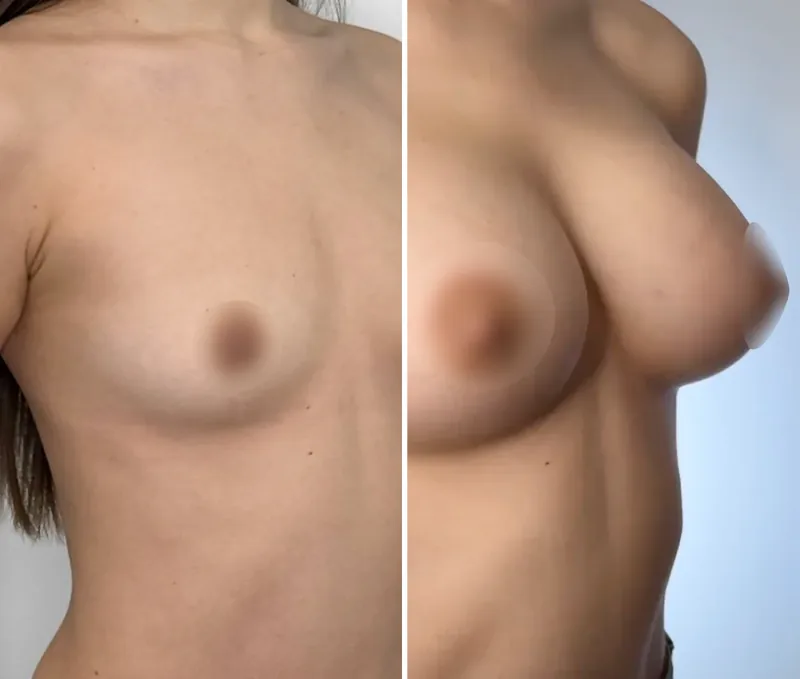
 beforeafter
Mammoplasty
Method: implants
Breast augmentation
$4,700
$5,900 · First consultation — Free
Message our coordinator
Free online consultation · Reply within 15 minutes
Message us on TelegramMessage us on WhatsAppBy messaging us, you agree to our Privacy Policy
Results
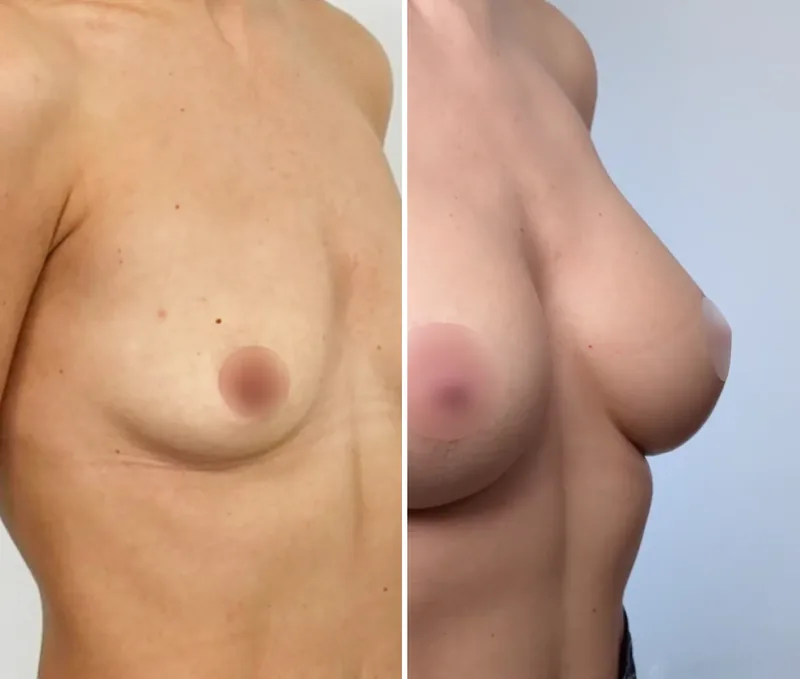
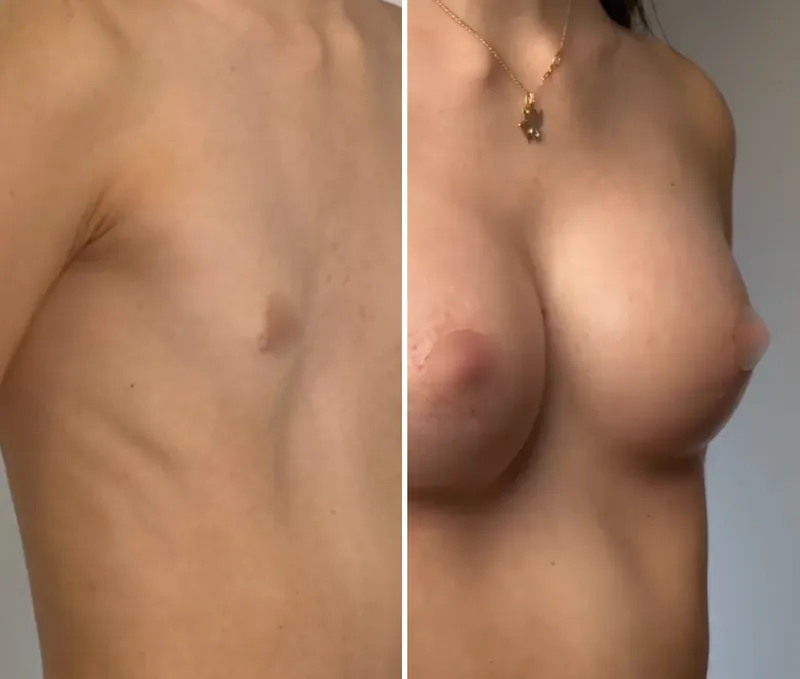
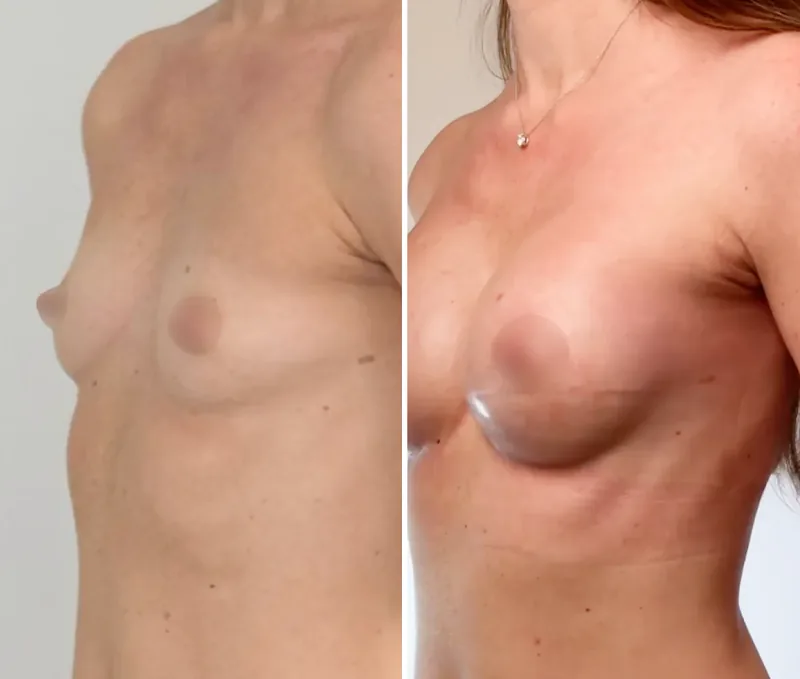
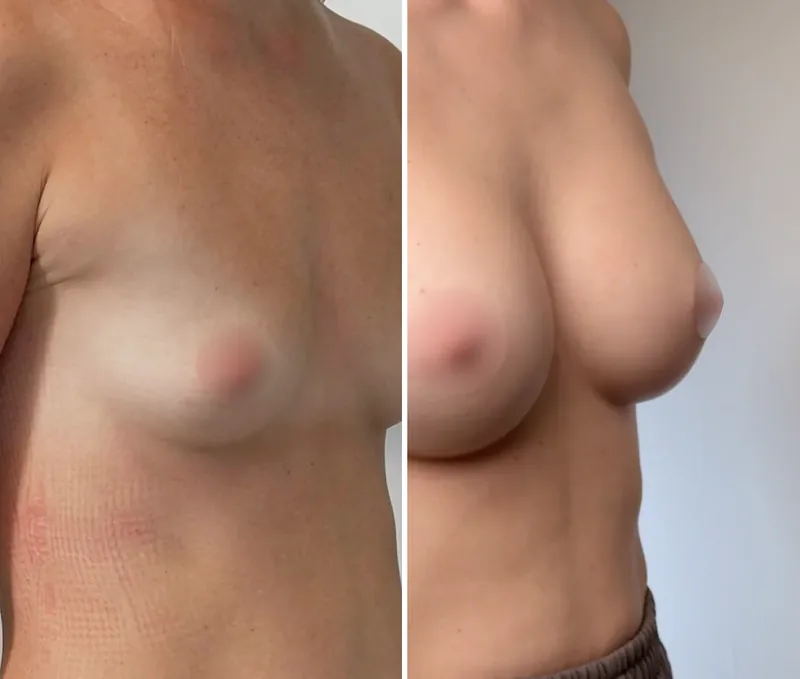
Each case belongs to a real clinic patient; faces and identifying details are not shown.
beforeafterMethod: implants
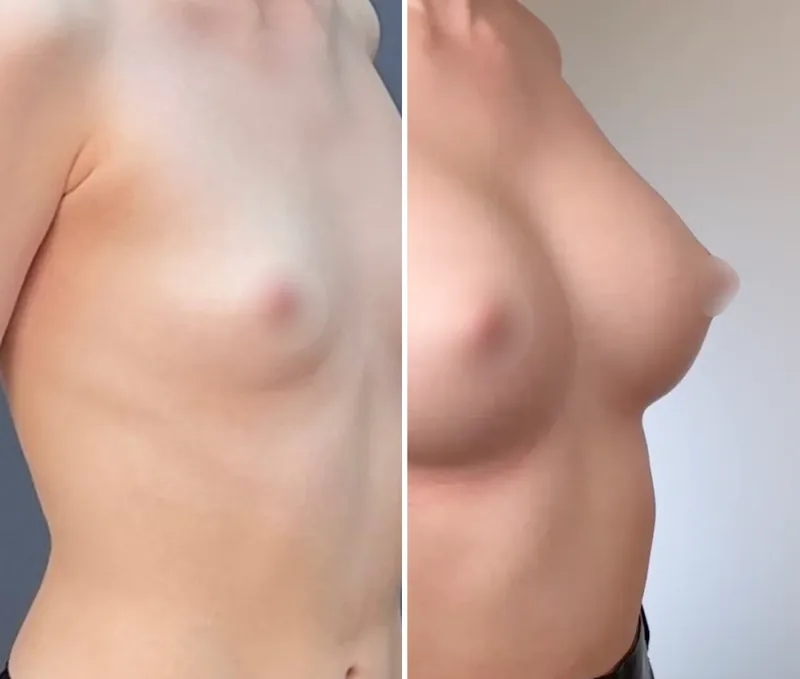 beforeafter
Method: implants
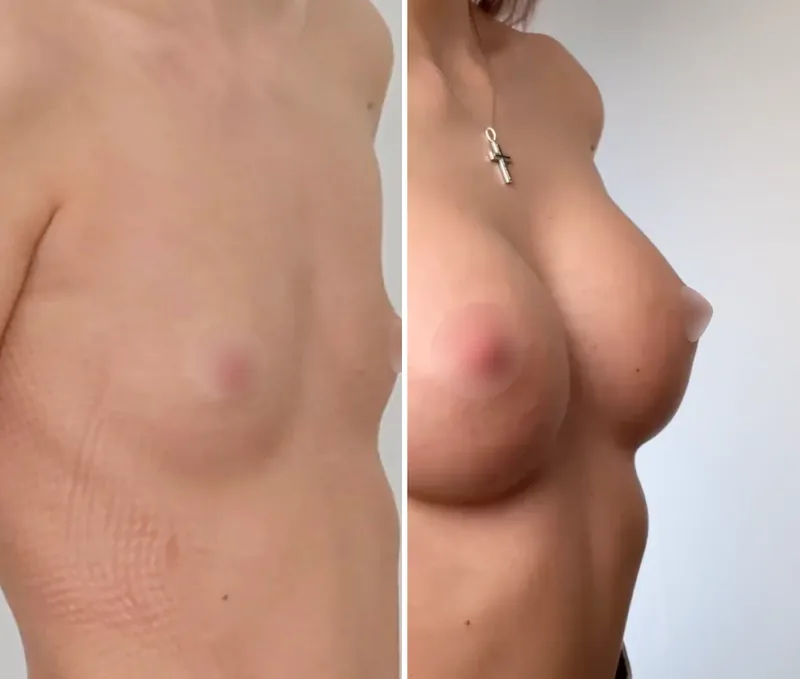 beforeafter
Method: implants
 beforeafter
Method: implants
 beforeafter
Method: implants
 beforeafter
Method: implants
 beforeafter
Method: implants
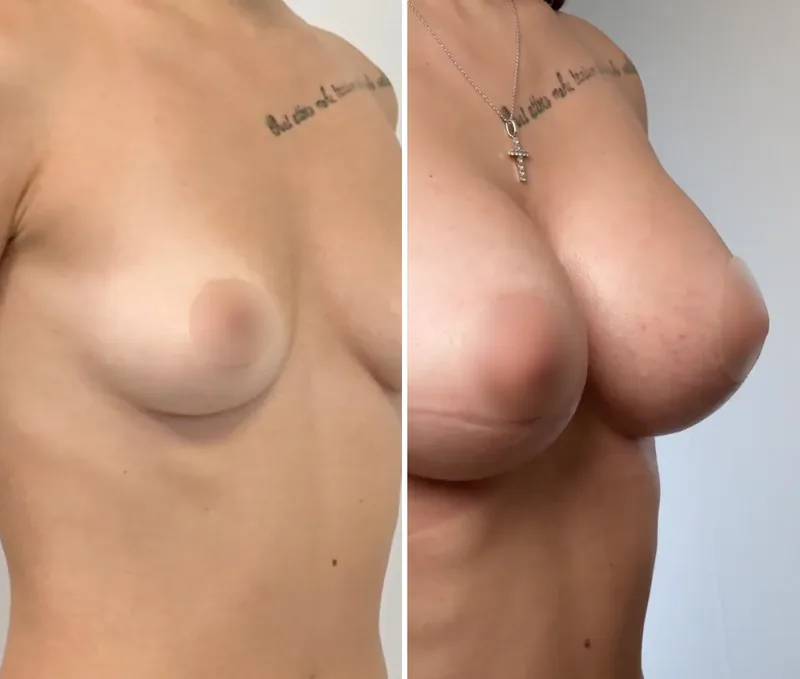 beforeafter
Method: implants
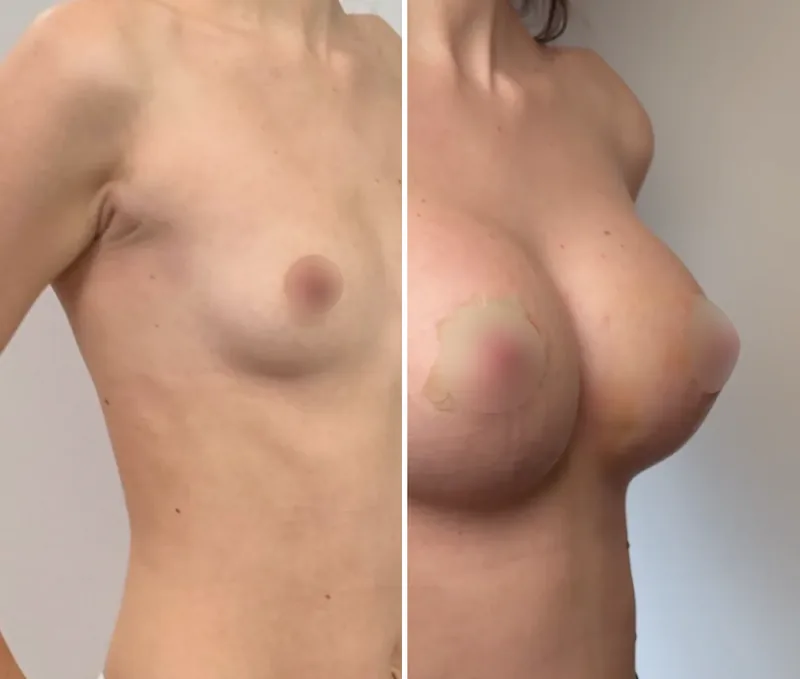 beforeafter
Method: implants
Comparison
There are two main ways we correct the breasts: augmentation and reduction. Compare their goal, how precise the correction is and who they suit, and choose your method with confidence.
Size and shape correction with implants
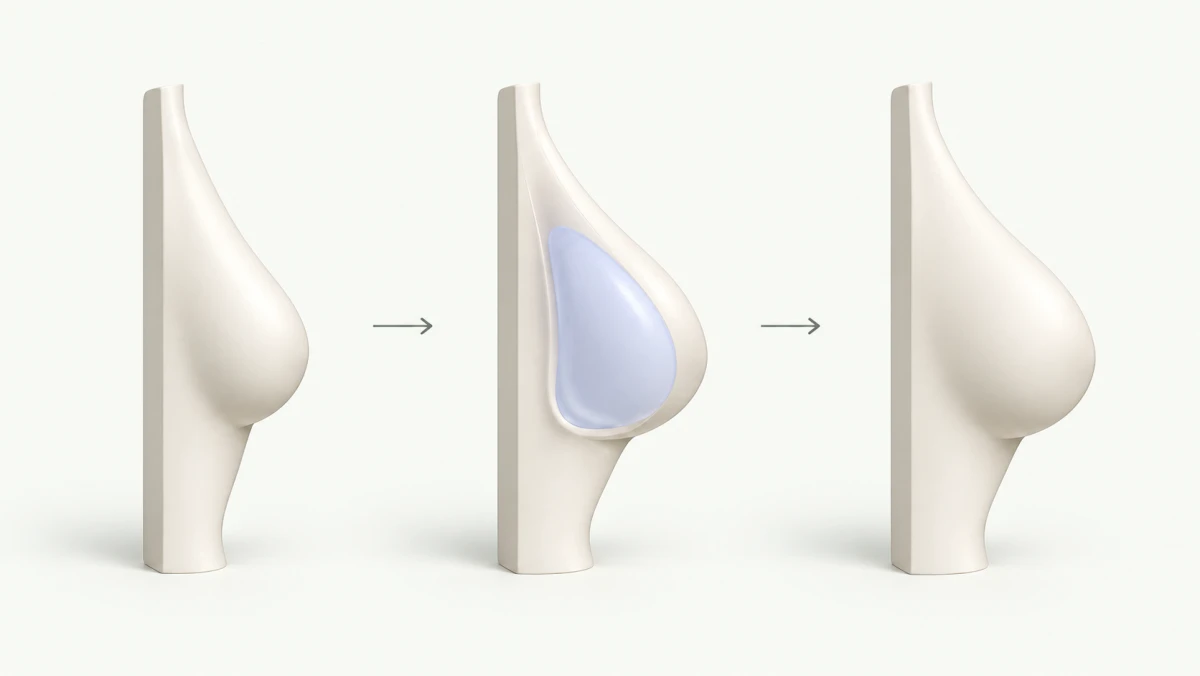
Discounted price
$4,700 $5,900
Correcting breast size by reducing volume and weight
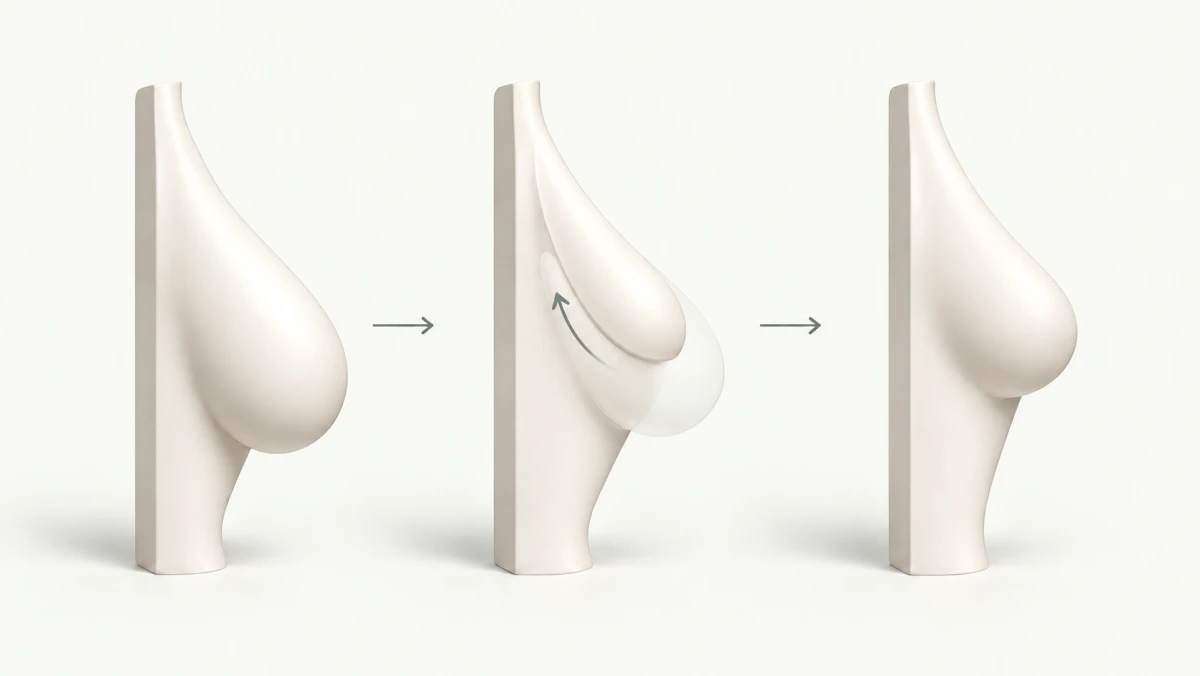
Discounted price
$4,700 $5,900
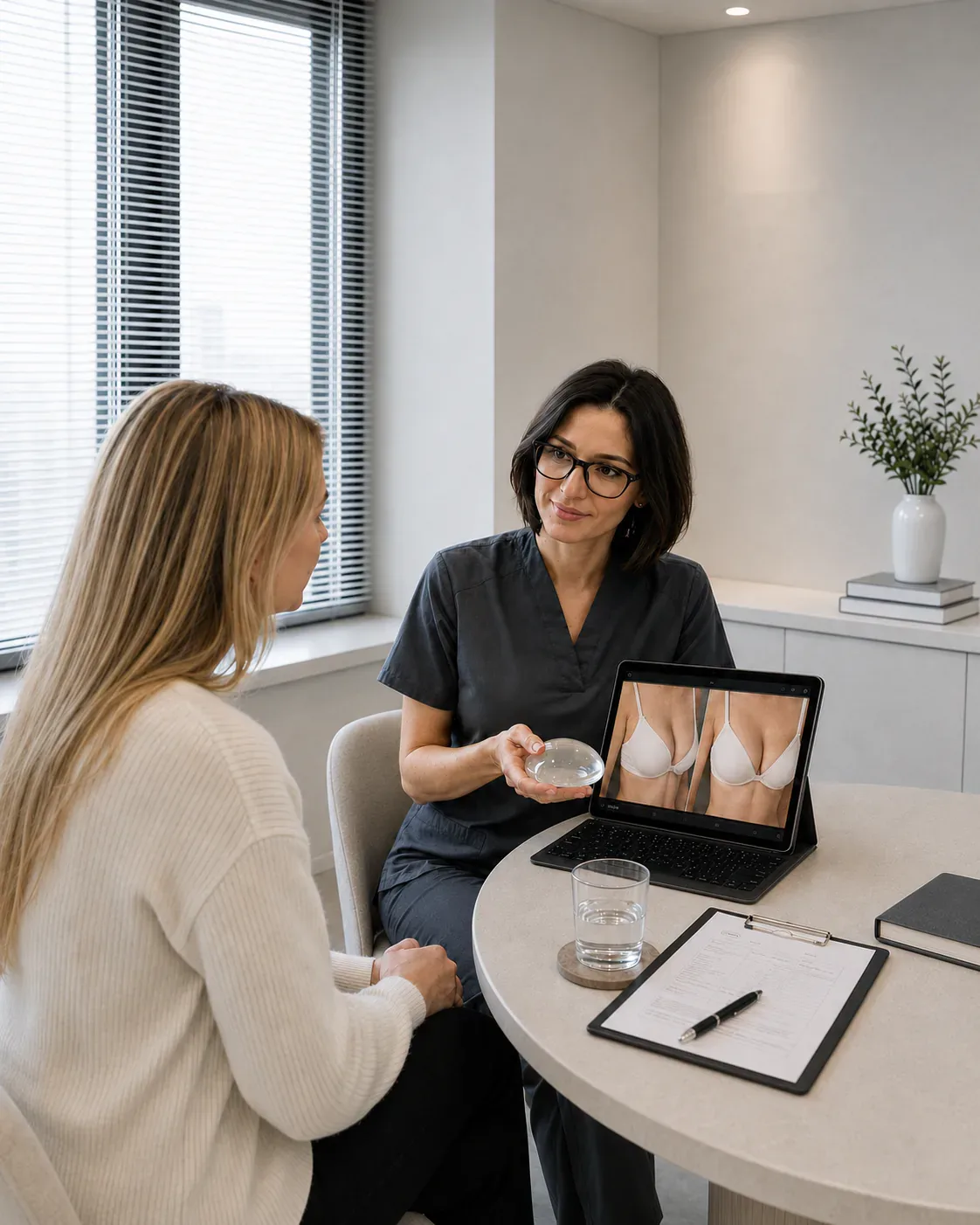
During the consultation the surgeon evaluates the shape and proportions of your breasts, listens to your wishes and selects the most suitable type of mammoplasty.
The consultation is free, before surgery and with no commitment.
Comparison
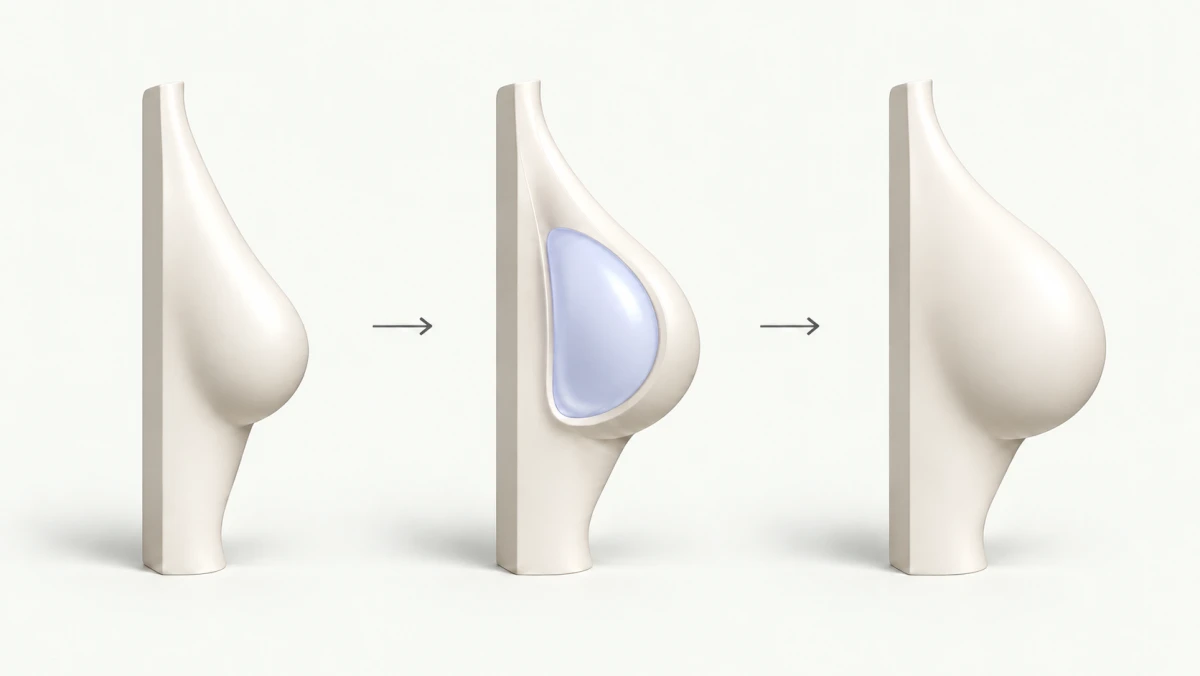
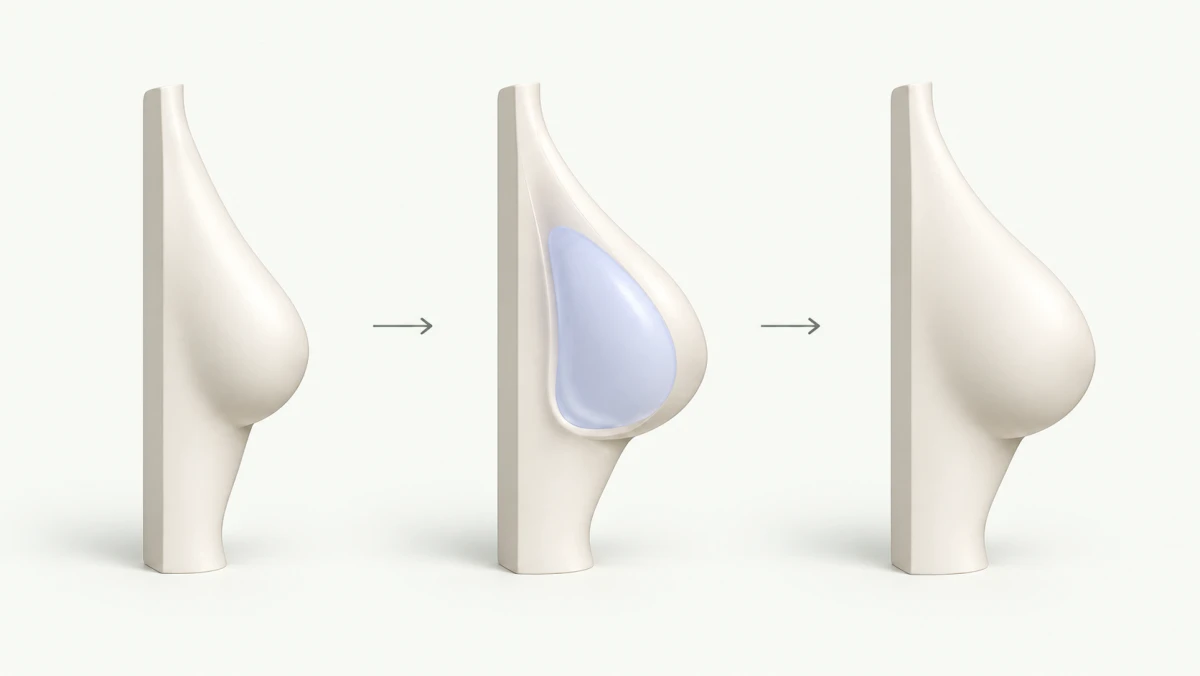
Round and anatomical implants are the two main types we work with. Each adds volume and corrects the shape, but the form and the final look differ.
Balanced volume and a fuller upper pole
A natural slope with a soft, teardrop-like shape
The surgeon will help you choose the implant shape and volume.
Our clinic
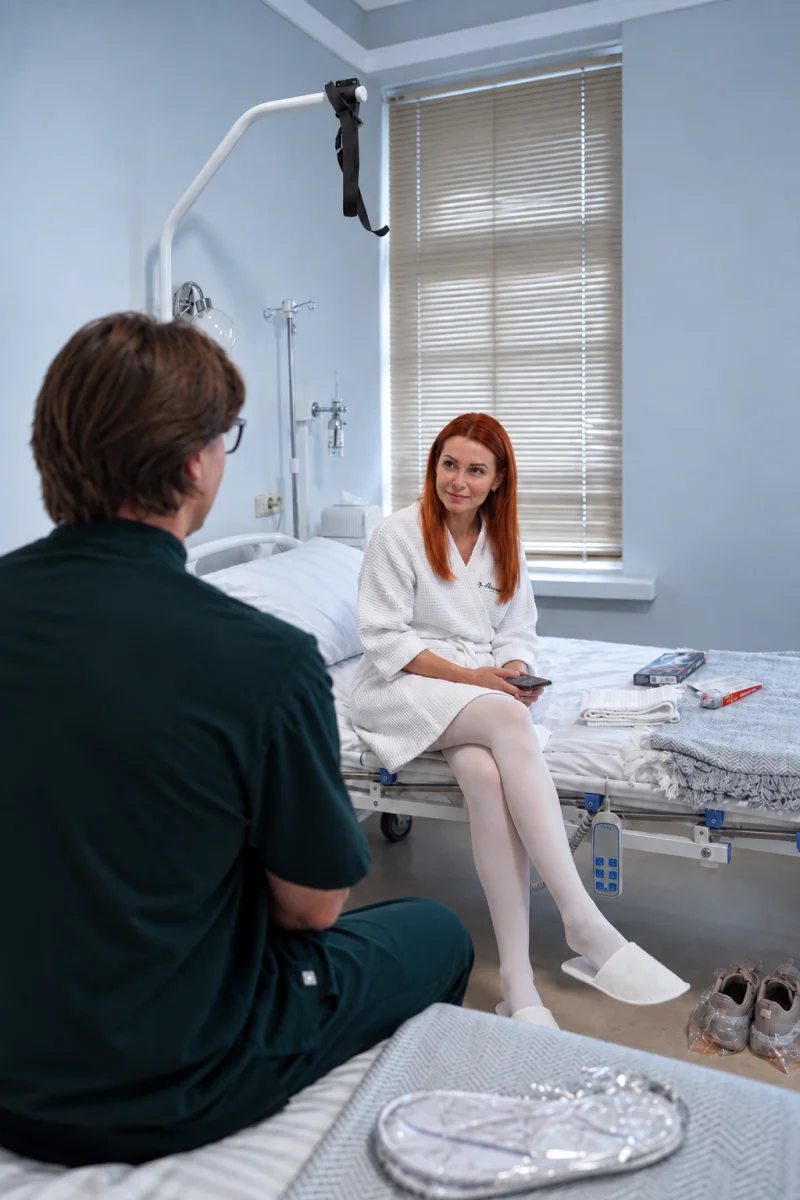
Comfortable rooms, modern equipment and care for each person
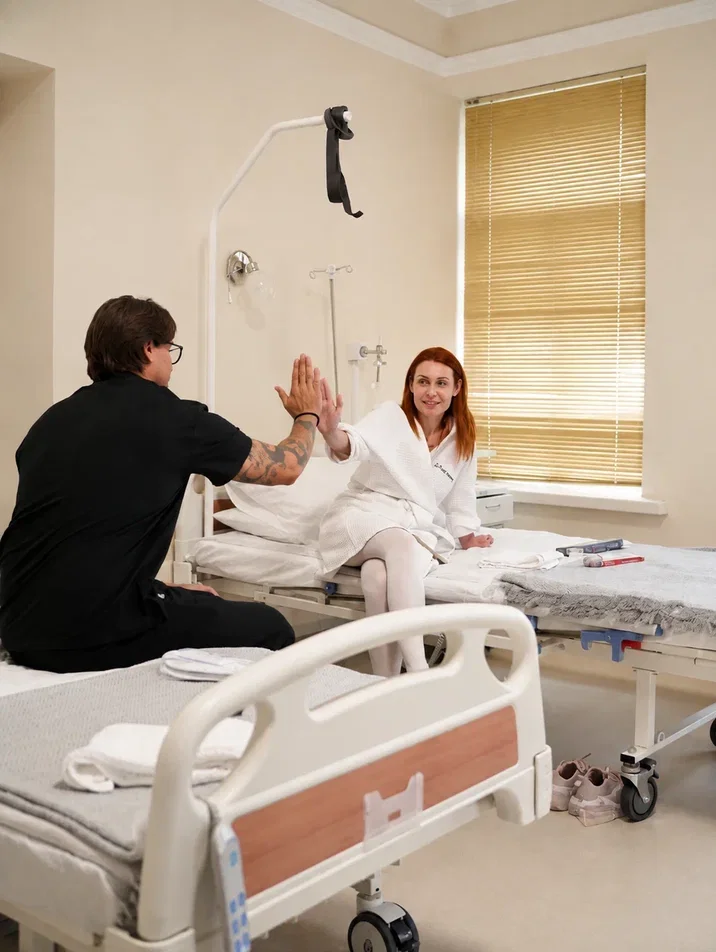
We will answer your questions and find a convenient time for a consultation
If your case can be solved without surgery, the doctor will tell you so at the consultation — and you will not spend money for nothing.

Not sure whether surgery is right for you?
Write to us: your coordinator will request photos in a messenger, and the surgeon will review them and tell you whether mammoplasty suits you.
Find out if it suits me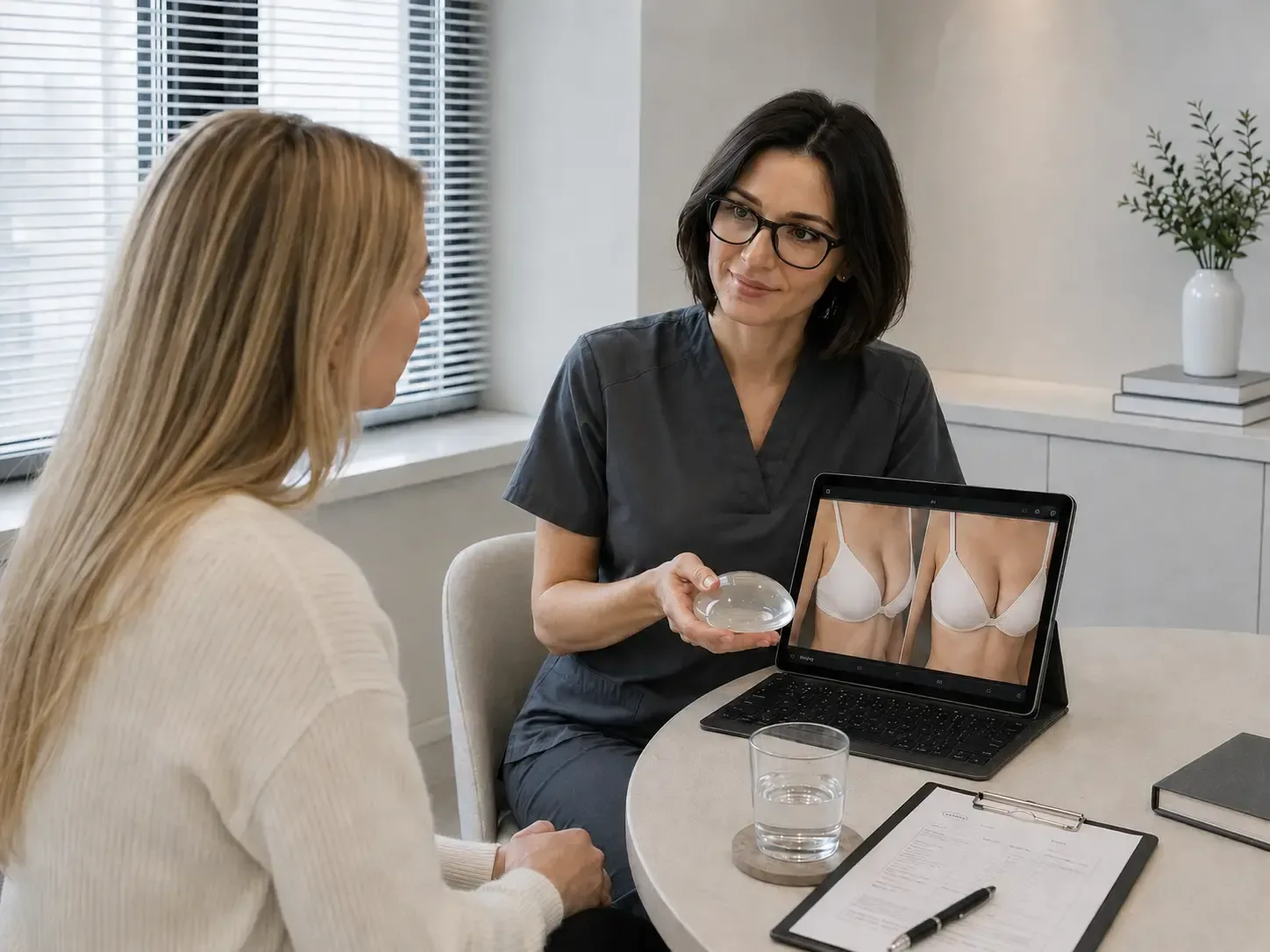
Prices
The price is set at the consultation and fixed in the contract.
Discounted price
Size and shape correction with implants
$4,700$5,900
Discounted price
Reducing the volume and weight of the breasts
$4,700$5,900
Breast restoration after mastectomy
The price is set at the consultation and fixed in the contract.
Get a consultationThe surgeon assesses the anatomy and proportions of your breasts, listens to your wishes and chooses the right correction method.
The price is set at the consultation and fixed in the contract.
Message our coordinator
Free online consultation · Reply within 15 minutes
Message us on TelegramMessage us on WhatsAppBy messaging us, you agree to our Privacy Policy
all inclusive
Starting with preparation for surgery
and ending with support for 12 months.
Discounted price
$4,700$5,900
How it goes
An agreed plan for the correction, observation in hospital and recovery monitoring for a year.
 1
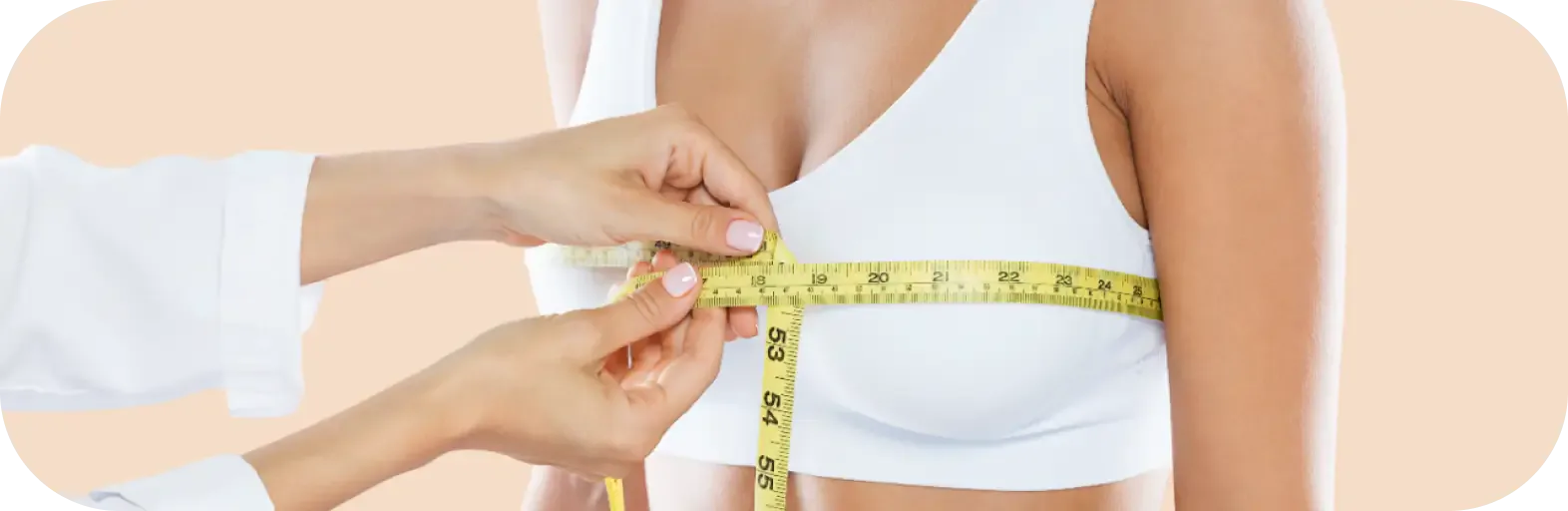
The surgeon looks at your figure, talks through your wishes and picks the best volume, shape and correction method.
 2
We hold a surgery date for you. You can pay the deposit by card at the clinic or online by bank transfer; all terms are set out in the contract for medical services
 3
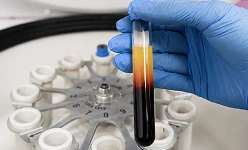
Before surgery you complete a full set of tests: blood tests, an ECG and other examinations prescribed by the doctor.
 4
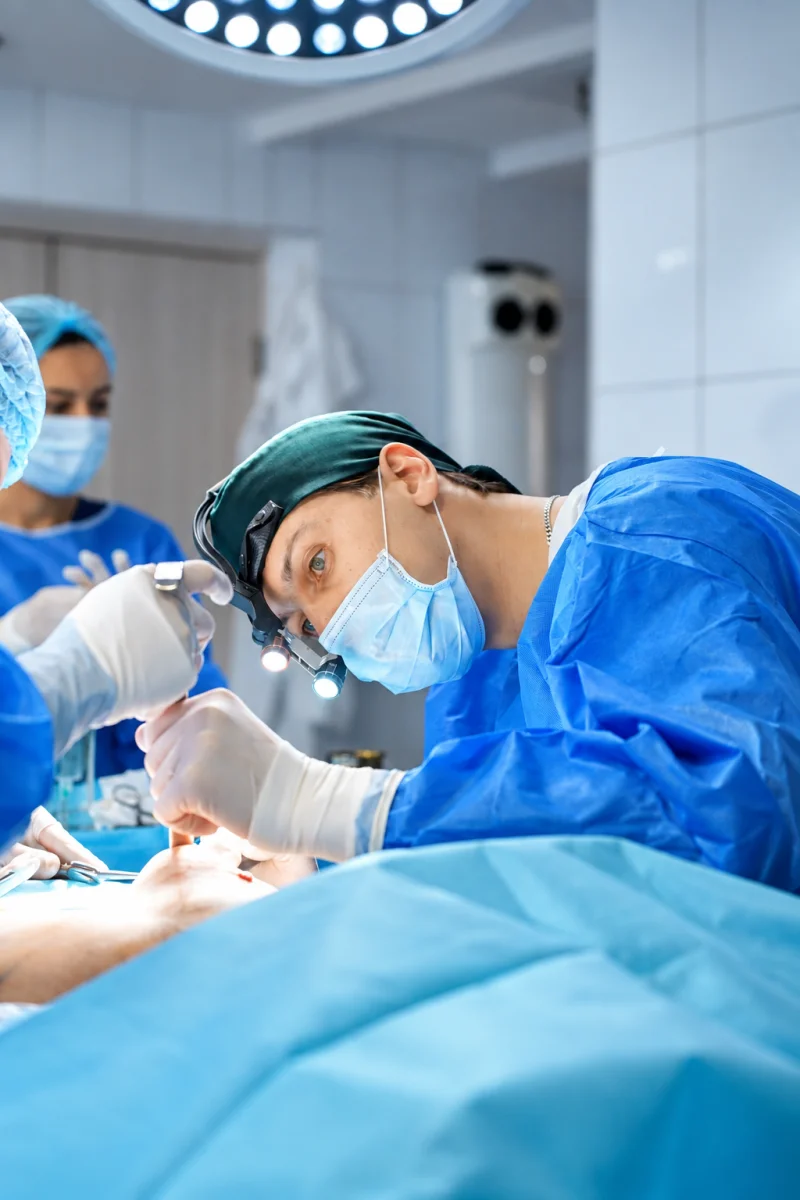
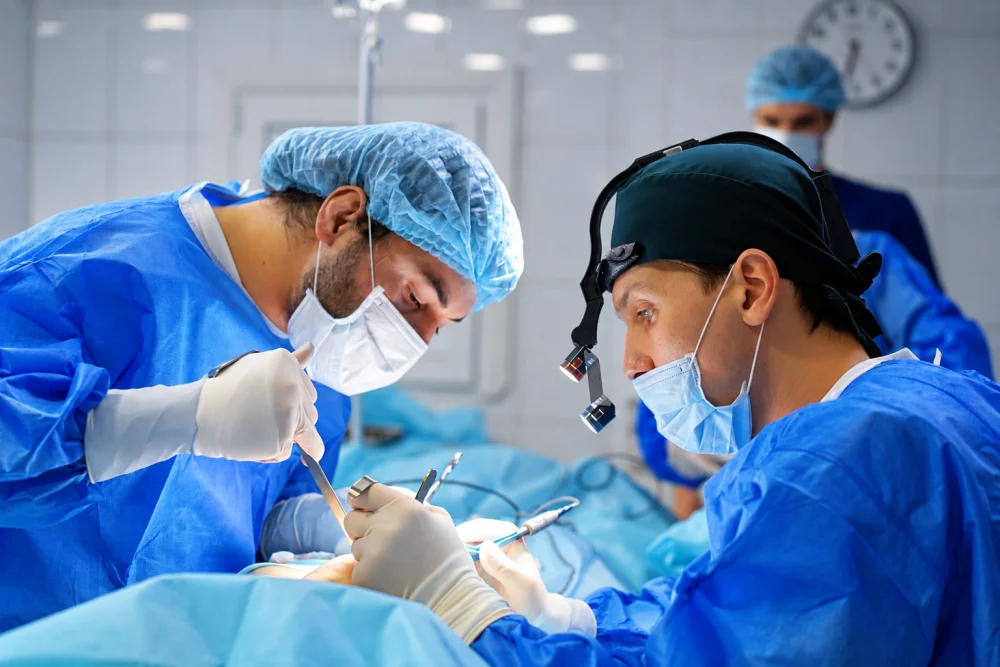
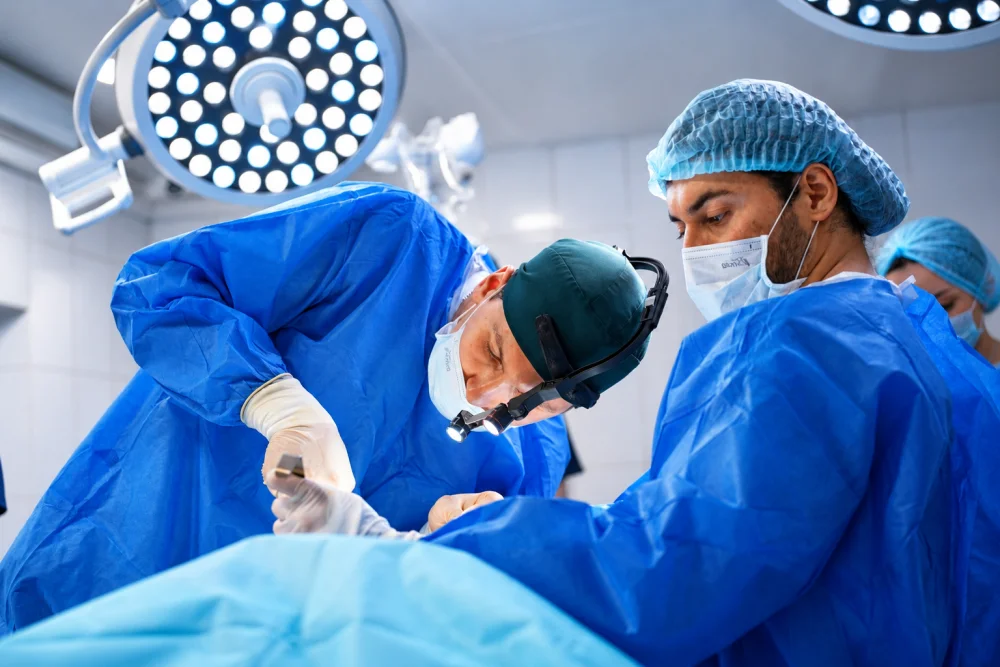
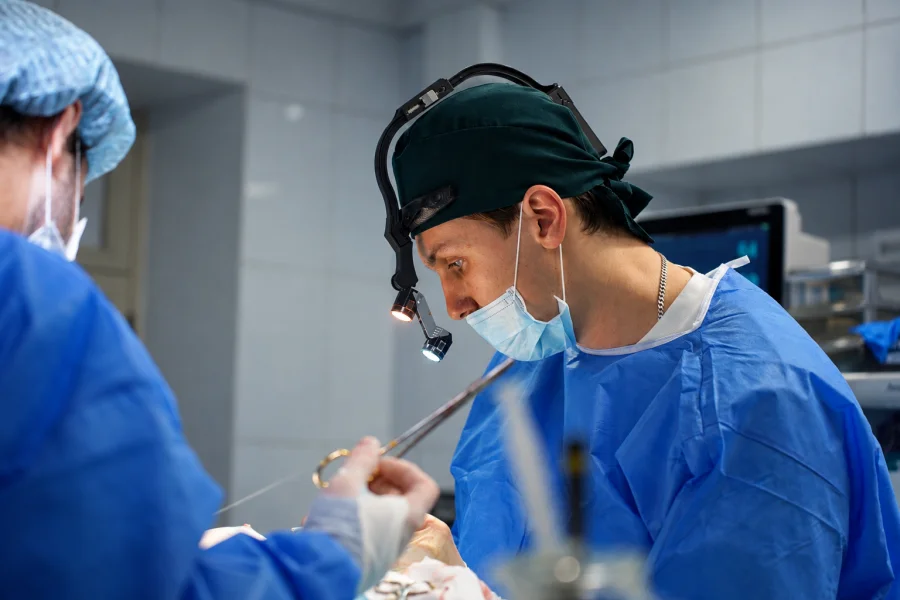
Your surgeon carries out the mammoplasty following your personal plan, under general anesthesia and with constant monitoring of your condition.
 5
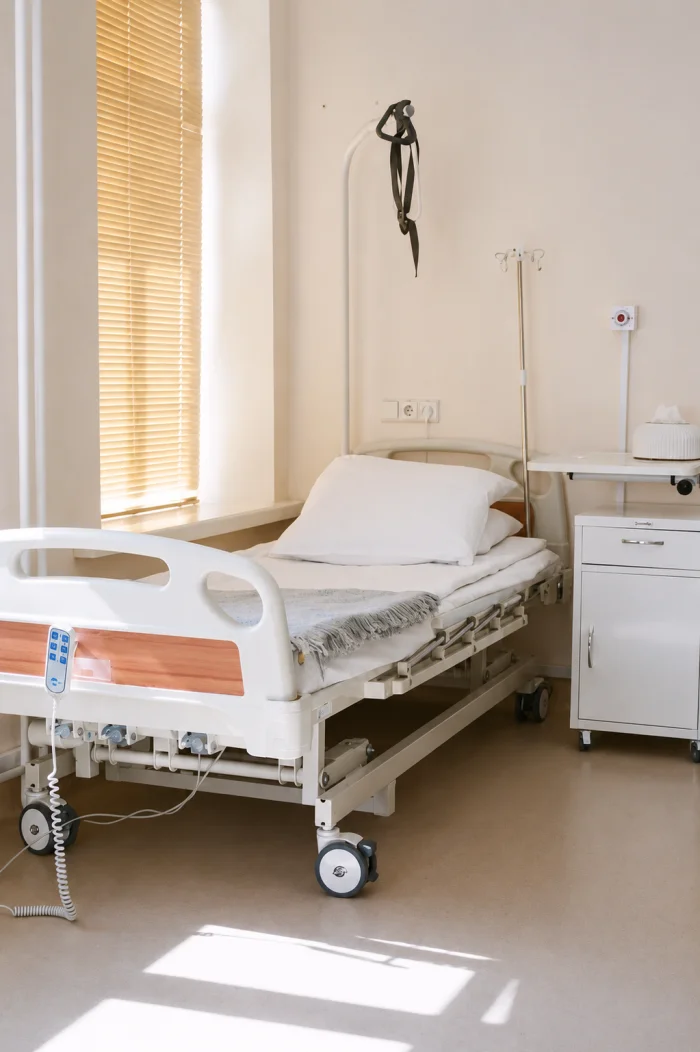
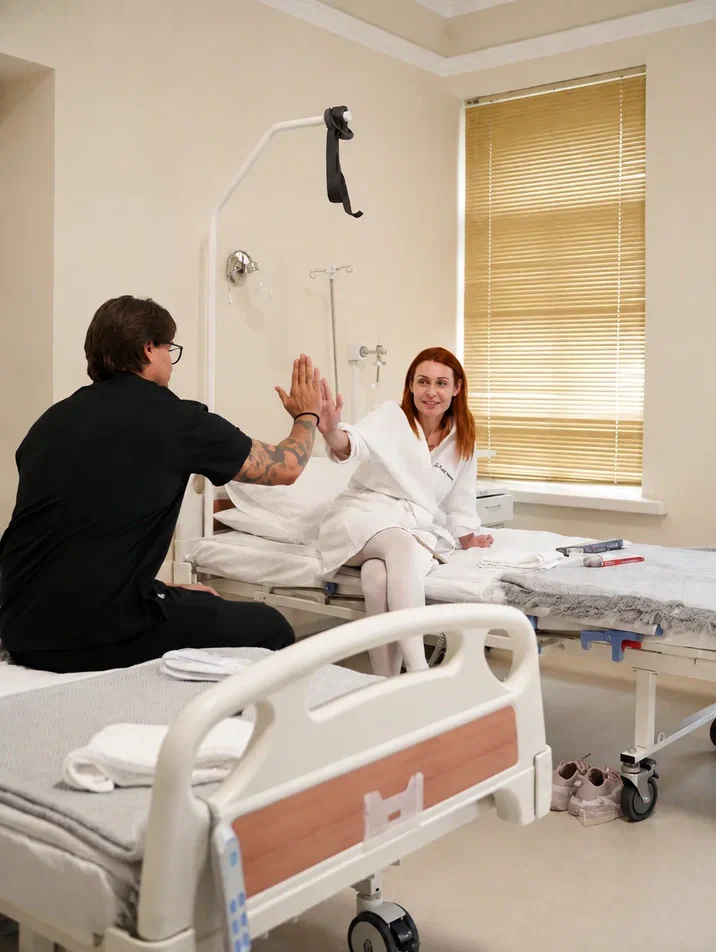
After surgery you stay in the clinic's comfortable inpatient ward under the care of the medical team until discharge.
 6
After surgery you get a recovery programme. Check-ups at 7 days, 3 and 6 months help track your recovery. For a year after surgery, consultations with your surgeon are free.
Before surgery, come off aspirin-containing drugs, steroids and any hormonal medications for chronic conditions
At least one month before the procedure, oral hormonal contraceptives should be stopped
Have your tests done a week before surgery
Before surgery it helps to follow a few easy steps: rest as well as work, sleep more, keep away from stress, anxiety and strong emotions, and reduce physical activity.
Refrain from intense gym training for up to 40 days and from very active aerobics; light cardio is possible after a month. Follow your diet and meals.
Post-op swelling disappears after 3 weeks
Discomfort disappears after 3 months
Scars form within 3 weeks
No strenuous activity (lifting over 3 kg)
Inflammatory changes in the tissue resolve within 3 months, while a “pocket” forms around the implant
Part of recovery after the correction is wearing compression garments for 1–1.5 months
Avoid raising arms above shoulder level — 3 weeks
Baths and saunas are off-limits up to three months, as is physiotherapy
Doctors
7 years of experience
Plastic surgeon
Residency in plastic surgery — Petrovsky National Research Centre of Surgery. Specializes in aesthetic and reconstructive breast and body surgery.
At the consultation you talk to the surgeon who will operate
An experienced plastic surgeon focused on the beauty and health of every patient
Book a consultationAdvantages
During the consultation we discuss your wishes and model the planned changes. The surgeon explains what surgery can achieve, so you know exactly what result to expect.
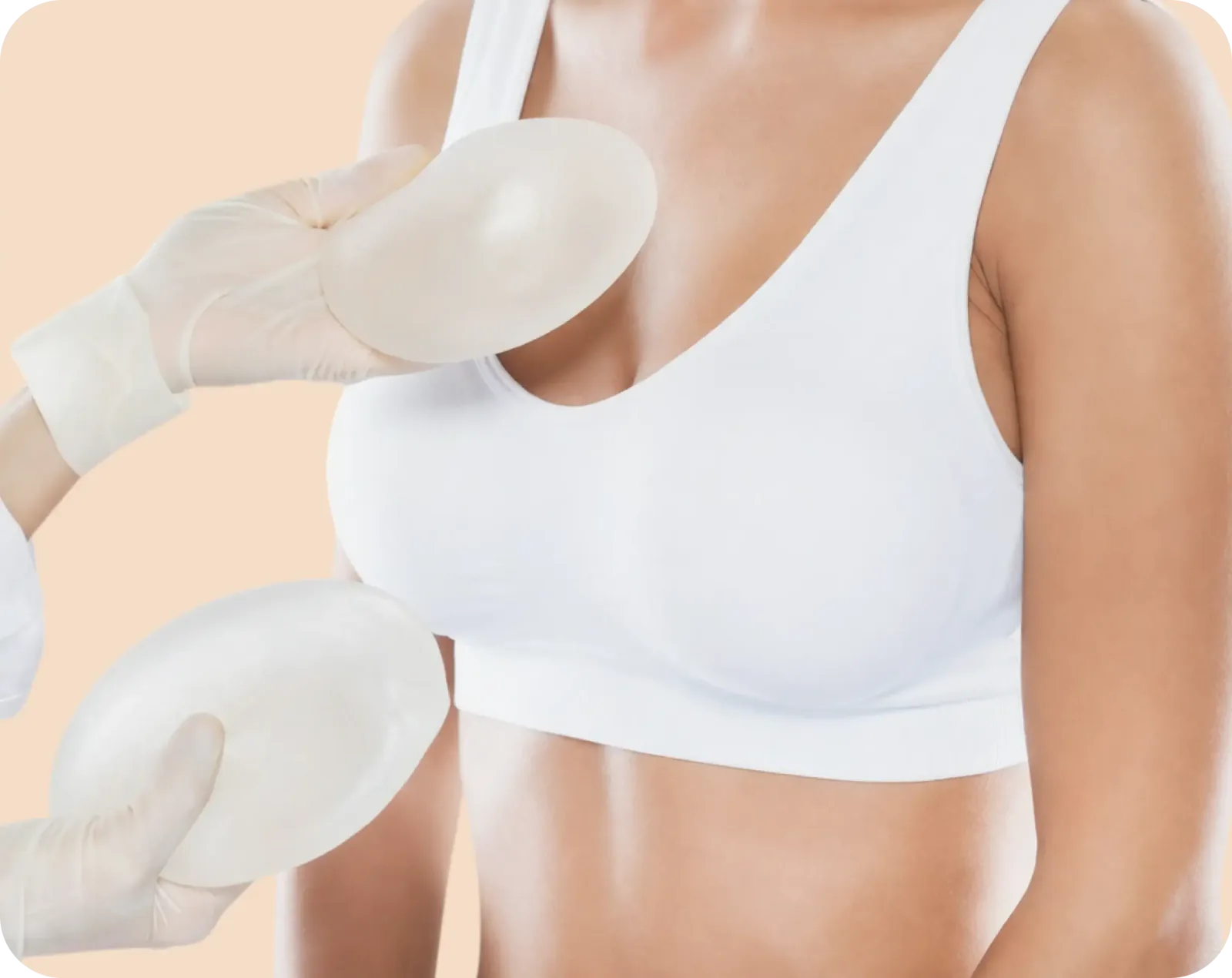
The surgeon follows your recovery and the changes in breast shape for a year. Check-ups and dressings are already included in the price.
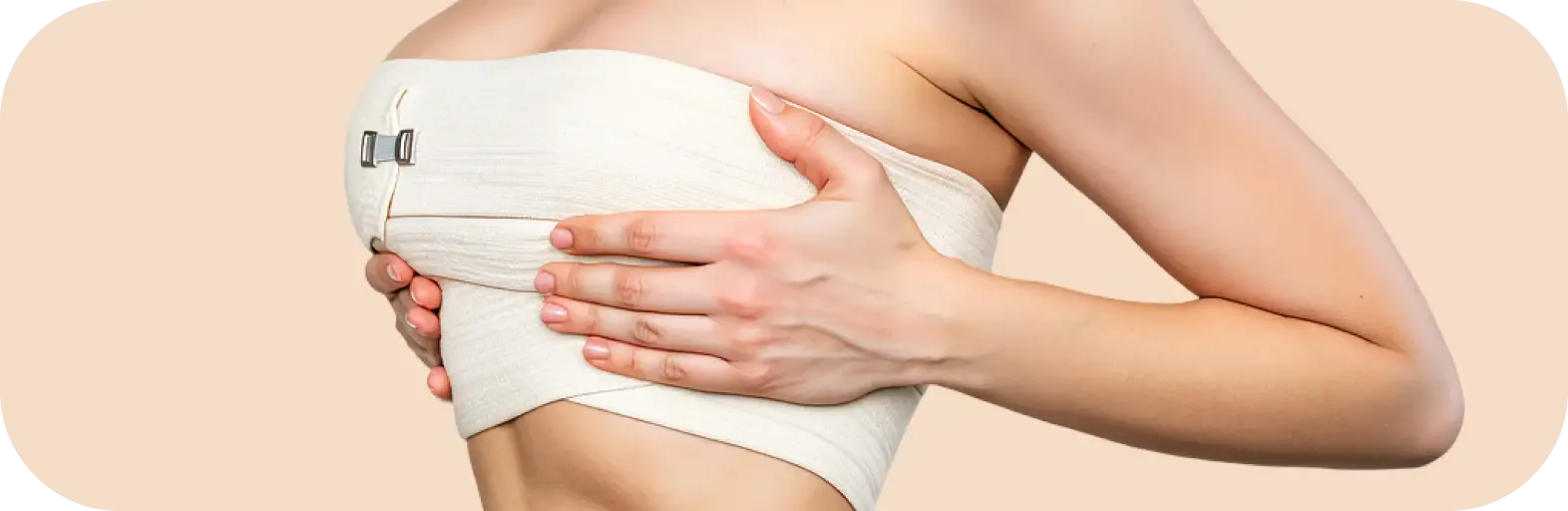
We select the shape, volume and correction method according to your anatomy and goals; for augmentation, implant size and profile are chosen just for you.
We respect your time: we work 24/7, with easy booking and a personal approach — we adapt to your pace.
Once the surgeon has defined the extent of correction at the consultation, you get a clear surgery price — no surprises on the way to your result.

Your recovery begins in a comfortable inpatient ward, with nurses on hand day and night. The price already covers your stay and meals.
FAQ
Mammoplasty brings together several procedures: augmentation (implants to add volume), reduction (removal of surplus tissue and skin), mastopexy (lift for sagging breasts), reconstruction (after mastectomy) and asymmetry correction. The most suitable method is selected individually, guided by your wishes and the surgeon's advice.
Message us — our coordinator will get back to you shortly and book your consultation. The plastic surgeon consultation is free.
Complications are rare when recommendations are fully followed, yet they can include hematoma or seroma, wound infection, reduced or increased nipple sensitivity, capsular contracture, aesthetic asymmetry, separation of the wound and tissue necrosis.
Results after mammoplasty last a long while: about 10–15 years for augmentation (until implant replacement) and 5–10 years for a lift or reduction. Weight changes, pregnancy, skin aging and gravity affect their duration. To maintain the result, choose supportive underwear and control your weight.
Whether breastfeeding remains possible after mammoplasty depends on the type of operation. With augmentation via an under-breast or armpit incision and the implant beneath the muscle, lactation is usually preserved, as the glandular tissue is spared. After a lift or reduction the risk is higher because ducts may be cut. Talk it through with your surgeon beforehand.
In choosing implants, the surgeon considers material (silicone looks most natural, saline is less common), shape (round or anatomical teardrop), surface (smooth or textured), size and profile, and selects the best option for your anatomy and wishes.
The patient feels nothing during surgery, which is performed under general anesthesia. Moderate discomfort in the first 1–3 days is possible and is treated with painkillers. By day 5–7 the pain is greatly reduced, and by weeks 2–3 no discomfort remains. With severe pain, contact your doctor immediately.
Work is possible after 7–14 days, as long as it involves no physical exertion. Take light walks after 1–2 weeks. Fitness and swimming after 4–6 weeks; strength training after 3 months. Pool and sea after 4–6 weeks. Compression garments are worn for 4–6 weeks. Timing depends on your recovery.
Science offers no evidence that mammoplasty increases breast cancer risk. Implants are not a cause of cancer. After the operation, keep having regular screening: self-exams, mammography and ultrasound. Make sure the examining doctor always knows about your implants.
You can have mammoplasty after a C-section, though your body needs to recover completely first. Wait a minimum of 6–12 months after childbirth and the end of breastfeeding. Before surgery, a surgeon's consultation and examination are mandatory.
Scars do remain after mammoplasty, but a skilled surgeon keeps them to a minimum. Incisions are placed in hidden zones: beneath the breast, around the areola or in the armpit. The scars are reddish for the first months and fade within 6–12 months to become almost invisible.
Slight asymmetry is normal in the first weeks after surgery and comes from swelling and uneven healing. When a difference in shape or size lasts beyond 3–6 months, visit your surgeon for an examination to pinpoint the cause.
Following mammoplasty, the nipples and breasts may temporarily become less or more sensitive. Irritated nerve endings are the cause. In most cases normal sensitivity returns within 3–12 months. With no improvement after a year, visit your surgeon.
Hormonal drugs (contraceptives, hormone replacement therapy) have no direct effect on implants, but they can cause swelling or changes in breast tissue volume that temporarily alter appearance. Always tell your surgeon about such medications before surgery.
Prices are in US dollars; the amount in brackets is an approximate conversion to CDF at the rate of 02.10.2026. The final price is fixed in your contract.
Prices start from $4,700 (≈ CDF 11,000,000). The surgeon sets the final price at the free consultation, and it is fixed in the contract, with no hidden extras.
The surgical team's work, anaesthesia, the inpatient stay with meals, dressings and follow-up visits for twelve months.
Message us on WhatsApp or Telegram using the buttons below. A coordinator will answer your questions and book a free consultation where the doctor names the exact price.
By messaging us, you agree to our Privacy Policy
Women in Kinshasa who are unhappy with small or uneven breasts often look into augmentation. The operation places an implant in a pocket created by the surgeon, who then adjusts its position for symmetry and a natural contour. Incisions sit in discreet places: under the breast, around the areola or in the armpit. Over the following months the scars fade and become almost invisible.
Follow-up does not end at discharge. Throughout the year after mammoplasty, patients from Kinshasa can get free post-op consultations with the plastic surgeon, alongside dressings and planned check-ups. Slight asymmetry in the first weeks is normal and caused by swelling; if a difference persists after 3–6 months, the surgeon examines you to find the reason. Nipple sensitivity usually returns within 3–12 months.
How much is breast augmentation in Kinshasa? From $4,700 (≈ CDF 11,000,000) for the complete package. That sum includes the surgery, anesthesia, inpatient care with meals, round-the-clock monitoring by staff and a full year of post-op follow-up until the final result. To start, send your name and phone number or write in a messenger; a coordinator will contact you and book a free consultation.
What patients write after this operation. Reviews are translated from the original language.
Anna Smirnova
I went to Dmitry Sergeyevich for breast augmentation with implants. At the consultation everything was explained in detail, and together we chose the best size. The operation under combined anaesthesia took 2 hours, and I was discharged home the next day. The swelling went down in about a month, and my breasts look very natural. The year of follow-up care is a real lifesaver: you can always ask a question and get an answer. Thank you to the clinic!
Breast augmentation
Doctor: Dmitry S. Kuznetsov
Ekaterina Morozova
After two births I decided on a breast lift without implants. I chose Dmitry Sergeyevich and have no regrets. The result exceeded all my expectations: my breasts are lifted and the shape is youthful and firm. The incisions are minimal and almost invisible. I spent one day in the hospital, and the room was very comfortable. I recommend him!
Breast lift
Doctor: Dmitry S. Kuznetsov
Olga Kuznetsova
I had a combined operation, a breast lift with augmentation, with Dmitry Sergeyevich. At the consultation it was immediately clear that I was in the right place. Everything is included in the price, with no hidden charges. After a month my breasts already feel soft and natural. Personal follow-up after the operation is very valuable.
Breast lift with implants
Doctor: Dmitry S. Kuznetsov
Maria Lebedeva
Breast augmentation from a size 3 to a size 4 with Dmitry Sergeyevich. He chose perfect anatomical implants. The operation took 2 hours, and I woke up with almost no pain. In the ward I was fed and monitored around the clock. Four months have passed and the result looks like a magazine cover.
Breast augmentation
Doctor: Dmitry S. Kuznetsov
Natalia Vorobyova
I went to Dmitry Sergeyevich to correct breast asymmetry with a small lift. A true professional: at the consultation he immediately showed before-and-after photos of similar cases. Recovery was easy and the swelling went down quickly. I had my check-up after just 7 days. An excellent clinic!
Breast reconstruction
Doctor: Dmitry S. Kuznetsov
Yulia Romanova
I had a lift with implants after losing a lot of weight. I chose Dmitry Sergeyevich. At the consultation everything was explained in simple words, and my fears were gone. One day in the hospital, then care at home. Now my breasts look natural and keep their shape. I am very happy!
Breast lift with implants
Doctor: Dmitry S. Kuznetsov
Page medically reviewed by Dmitry S. Kuznetsov, plastic surgeon. Review date: .
Kinshasa is the capital and largest city of the Democratic Republic of the Congo, and its metropolitan area is estimated at around 18,552,800 people as of January 2026. It is the leading economic, political and cultural centre of the country, with manufacturing, telecommunications, banking and entertainment all based here. People who live and work in such a city tend to plan an operation like a project: work calendar, family obligations, help at home and a realistic recovery window.
Breast augmentation is a decision that women in Kinshasa usually come to after months of thought. Some want better proportions after weight loss, some want volume that never developed, and some want to restore the shape of the breasts after pregnancy and breastfeeding. A good first step is a calm conversation about your goals, not a rush to book a date.
City Medical Centre works with patients from Kinshasa through a free online consultation. Coordinators are available around the clock (24/7) on WhatsApp and Telegram, so you can write after a working day, in the evening or at the weekend, and you do not have to arrange your day around a visit.
You write to a coordinator on WhatsApp or Telegram and describe what you would like to change. You are then asked for a few photographs and some general information: your health history, earlier operations, medicines you take, whether you have been pregnant, and whether you are still breastfeeding. The surgeon uses this to judge whether augmentation is suitable and which approach fits your body.
Your time matters to us: we work 24/7, booking is easy, and our personal approach adapts to your pace. If you send a message at night, a coordinator will call you back 24/7, so you do not need to wait for an office to open.
Before any decision, a consultation and check-up with a surgeon are required. Use the conversation to ask every question you have. Write the questions down beforehand, because in a busy city it is easy to forget half of them once the call begins.
Kinshasa has a tropical wet and dry climate. The long rainy season runs from October through May, and a shorter dry season lasts from June to September. The dry season is slightly cooler than the wet one, though temperatures stay fairly constant through the year. For recovery this means warmth and humidity are with you in almost every month.
Warm, humid weather affects comfort more than the healing itself. Compression garments can feel heavy in the heat, and sweating under them may irritate the skin. Choose soft, breathable clothing to wear over the garment, keep the skin clean and dry, and follow your surgeon's instructions on hygiene. After the correction, recovery involves 1–1.5 months of compression garments, and the schedule also states that they stay on for 4–6 weeks, so plan your wardrobe for that time.
The rainy season can bring heavy downpours and slow traffic. If you have a check-up or a family errand, leave time and avoid carrying bags or umbrellas that strain the arms. In the dry season the air can feel dustier on busy roads, so keep the dressings clean and covered when you are outside.
There is no single perfect month in Kinshasa, because the temperature varies little. Instead of choosing by weather, choose by your life: a quieter period at work, school holidays if you have children, or a time when relatives can help at home. The dry season from June to September is a little cooler, which some women find more comfortable under compression garments.
If you take the rainy season, plan around the rain: arrange transport in advance, keep a dry change of clothes, and avoid situations where you might have to lift or carry heavy things in a hurry. The most useful question is not when it is cooler, but when you can rest for the first weeks without pressure.
Also think about big family events such as weddings, baptisms and celebrations. Swelling after surgery goes away after 3 weeks, and discomfort fades after 3 months, so do not schedule the operation days before an event where you want to look your best. Leave a comfortable margin.
Kinshasa is home to many universities and institutes, including the University of Kinshasa, the National Pedagogy University and the Université Libre de Kinshasa. If you are a student, you can usually plan the operation around an exam break. If you work in banking, trade, telecommunications or the public sector, talk to your employer about the time you need.
The usual guidance is that you may go back to work after 7–14 days, with no physical exertion. Desk work is generally easier to resume than work that involves lifting or long standing. Timing depends on your recovery, so do not promise a date to your manager before you have seen how you feel.
For the first weeks there are some rules that affect ordinary routines. There should be no heavy exertion, meaning lifting more than 3 kg, and no lifting the arms above shoulder height for 3 weeks. In a household this means asking someone else to carry water, shopping, children and bags, and to reach the high shelves.
Family is central to life in Kinshasa, and relatives often help in the first days. Use that help: ask someone to cook, take care of the children, and manage errands. You will be asked to monitor your diet and meals during recovery, so fresh, light food that does not upset the stomach is a sensible choice while you are less active.
Weight matters for the long-term result. Results after mammoplasty last a long while: about 10–15 years for augmentation (until implant replacement). Weight changes, pregnancy, skin aging and gravity affect their duration. To maintain the result, choose supportive underwear and control your weight. The WHO provides general information on overweight and obesity, which is a useful reminder that a stable, healthy weight supports any surgical outcome.
On the day of the operation, general anaesthesia is used and the stay is 1 day (some programmes mention 1–2 days). There is 24/7 monitoring by medical staff. Plan who will be with you at home on the first evening and the first night.
General anaesthesia is used for the surgery itself, so there is no sensation. In the first 1–3 days you may feel moderate discomfort, which painkillers relieve. Pain subsides significantly by day 5–7 and discomfort is gone by weeks 2–3. If pain becomes severe, inform your doctor right away.
There are scars after mammoplasty, though a skilled surgeon keeps them minimal. The incisions go in discreet areas, such as under the breast, around the areola or in the armpit. Early on the scars are reddish, but over 6–12 months they fade and are almost unnoticeable. Ask the surgeon which incision is planned for you and why.
Breast and nipple sensitivity may change for a time, going down or up, because of irritation of nerve endings. In the majority of cases sensitivity is restored within 3–12 months. If nothing has improved after a year, consult your surgeon. Slight asymmetry in the first weeks is normal, caused by swelling and uneven healing; if shape or size still differ after 3–6 months, see your surgeon for a check-up.
Many women in Kinshasa enjoy walking, dancing and group fitness, and they want to know when these are possible. You can take light walks after 1–2 weeks. For as long as 40 days, stay away from intense gym workouts and overly active aerobics; light cardio is possible after a month.
Fitness and swimming come after 4–6 weeks, and pool and sea are also allowed after 4–6 weeks. Strength training is allowed after 3 months. Dancing with strong arm movements should wait until your surgeon agrees, given the rule about lifting the arms above shoulder height for 3 weeks.
In 3 months any inflammatory changes in the tissue disappear, and a pocket forms around the implant. This is why the schedule is gradual. Timing depends on your recovery, and your surgeon may adjust it to your case.
Kinshasa has carried several names. Local tradition links the older name Nshasa to a trading place on the southern shore of the Pool Malebo, and one interpretation derives it from a Teke word for exchange and market. In 1881 the city was founded as a trading post and called Léopoldville, and in 1966 it was renamed Kinshasa. A place built on trade and conversation suits the way many women here approach an operation: they ask, compare and listen before they decide.
In the same spirit, treat breast augmentation as an exchange of information. Talk with a coordinator, put your questions to the surgeon, and take your time. A free online consultation lets you do this from home, and coordinators answer around the clock (24/7) on WhatsApp and Telegram, so you can ask in the evening after the market, the office or the school run.
Kinshasa is the largest nominally Francophone urban area in the world, with French used in government, education and media and Lingala heard in the street. When you write to the coordinator, choose the language in which you can describe your wishes most precisely, and note down any medical term you do not understand so that the surgeon can explain it plainly.
The city is divided into 24 communes and stretches in a wide crescent along the Congo River on flat, low-lying ground. Residents of Gombe, with its government buildings and offices, live a different rhythm from those in Lemba, Limete, Matete, Ngaliema, Kintambo or Bandalungwa. Some of these areas grew out of workers' housing built around the Limete industrial zone. Think about your own commune: how long your usual errands take, how many stairs lead to your home, and who lives nearby and can help.
For the first weeks, limit your movement to what is necessary. No heavy exertion applies, meaning no lifting of more than 3 kg, and no lifting of the arms above shoulder height for 3 weeks. If you live in a multi-storey building such as the apartment blocks found in some older communes, arrange for someone else to carry water, groceries and children up the stairs.
Kinshasa is known for heavy traffic and crowded public transport. Check-ups are best arranged remotely where possible, and a recovery programme with check-ups at 7 days, 3 and 6 months helps you track progress. Ask your coordinator how each stage will be handled so that you are not forced into long crowded journeys across the city while the arms are still restricted.
Kinshasa is the centre of banking, telecommunications, manufacturing and entertainment in the country, and it hosts the People's Palace, the Constitutional Court, the Kinshasa Financial Center and many national agencies. Women employed in such places often have fixed schedules and formal leave rules. Return to work is possible after 7–14 days with no physical exertion, so ask your employer in advance what sort of leave or lighter duties are possible, and do not promise a date before you see how you feel.
The city is also a university city. The National Pedagogical University, the first pedagogical university in the country, and the old Lovanium University, opened in 1954 as the first university of the colony, are part of its history. Students and teachers can look for a gap between terms or exams. Carrying heavy books and bags is a real issue in the first weeks, so use a light bag or ask a friend to help.
Many women in Kinshasa also work in trade and in small businesses where standing and lifting are daily tasks. If your work involves this, plan a longer pause with your family or colleagues covering for you, and agree on it before the operation. Swelling goes away after 3 weeks and discomfort fades after 3 months, so lighter duties at first are sensible.
In 2015 UNESCO designated Kinshasa a City of Music. Rumba, soukous and concerts shape evenings and weekends, and many women love to dance. After augmentation, dancing with strong arm movements should wait: the rule against lifting the arms above shoulder height lasts 3 weeks, and intense gym workouts and overly active aerobics are to be avoided for as long as 40 days. Light cardio is possible after a month.
Markets are the heart of daily life, from the Central Market, which dates to the colonial period, to neighbourhood stalls. Crowded markets mean jostling, so for the first weeks send someone else to shop, or order what you need. This protects the chest and the arms while the tissue settles and a pocket forms around the implant, which takes about 3 months.
Weddings, baptisms and church events are important occasions in the city, and the dress is often fitted and elaborate. Plan the operation well ahead of a big event, because compression garments stay on for 4–6 weeks and the final shape appears over months. Tell the tailor about your new measurements only once swelling has gone down, and choose soft, supportive underwear to help maintain the result.
The Pool Malebo and the Congo River define the geography of Kinshasa, and Nsele Valley Park, the largest urban park of the city, is a popular place for weekend outings. Families also gather in gardens and along the riverside. For the first weeks, short light walks near home are enough; light walks are possible after 1–2 weeks.
Swimming, whether in a pool or elsewhere, waits for 4–6 weeks, and strength training for 3 months. Do not enter the river or any open water before your surgeon allows it, because the wounds must be healed and clean. Ask your surgeon about this directly if you often spend weekends near the water.
Sun and heat are part of every outing in a tropical city. Wear loose, breathable clothing over the compression garment, rest in the shade, and drink water. Avoid carrying picnic baskets, coolers or children until the lifting limits end.
Good candidates are adult women in generally good health who have realistic expectations and have finished growing. Surgery may be postponed or not recommended when there are active infections, uncontrolled chronic illness, pregnancy or breastfeeding. Your surgeon will decide after reviewing your history.
Mammoplasty after a C-section is possible, but only once your body has fully recovered. Allow at least 6–12 months after giving birth and after breastfeeding stops. A consultation and check-up with a surgeon are required before surgery.
Questions worth asking: Which implant size and shape suit my frame? Where will the incisions be? What will my recovery programme look like? How will I be monitored after I go home? After surgery you get a recovery programme. Check-ups at 7 days, 3 and 6 months help track your recovery. For a year after surgery, consultations with your surgeon are free, with follow-up support for 12 months.
Yes. The consultation is free and online. Write to a coordinator on WhatsApp or Telegram, who are available 24/7, send photographs and your health information, and the surgeon will assess your case.
General anaesthesia is used, so there is no sensation during the operation. The stay is 1 day, and some programmes mention 1–2 days, with 24/7 monitoring by medical staff.
Usually after 7–14 days, with no physical exertion. Timing depends on your recovery.
They stay on for 4–6 weeks, and after the correction recovery involves 1–1.5 months of compression garments. Your surgeon will confirm the exact period.
It mainly affects comfort. Choose breathable clothing over the garment, keep the skin clean and dry, and follow the hygiene advice of your surgeon.
Light walks after 1–2 weeks, light cardio after a month, fitness and swimming after 4–6 weeks, pool and sea after 4–6 weeks, and strength training after 3 months. Avoid intense gym workouts for as long as 40 days.
About 10–15 years for augmentation, until implant replacement. Weight changes, pregnancy, skin aging and gravity affect the duration, so supportive underwear and weight control help.
There are scars, though a skilled surgeon keeps them minimal. Early on they are reddish, but over 6–12 months they fade and are almost unnoticeable.
Yes, but only once your body has fully recovered. Allow at least 6–12 months after giving birth and after breastfeeding stops, with a consultation and check-up first.
You get a recovery programme with check-ups at 7 days, 3 and 6 months. Consultations with your surgeon are free for a year, and follow-up support lasts 12 months.
Because daily conditions differ between communes: distance to errands, stairs, traffic and the help available nearby. Plan who will carry water, shopping and children for the first weeks, since lifting more than 3 kg is not allowed.
Usually after 7–14 days, with no physical exertion. Timing depends on your recovery, so agree on lighter duties with your employer in advance.
Not at first. Avoid lifting the arms above shoulder height for 3 weeks, and avoid overly active aerobics for as long as 40 days. Light walks are possible after 1–2 weeks.
Swimming in a pool or the sea is allowed after 4–6 weeks. Wait for your surgeon's approval before any open water, and gentle walks in a park are fine after 1–2 weeks.