
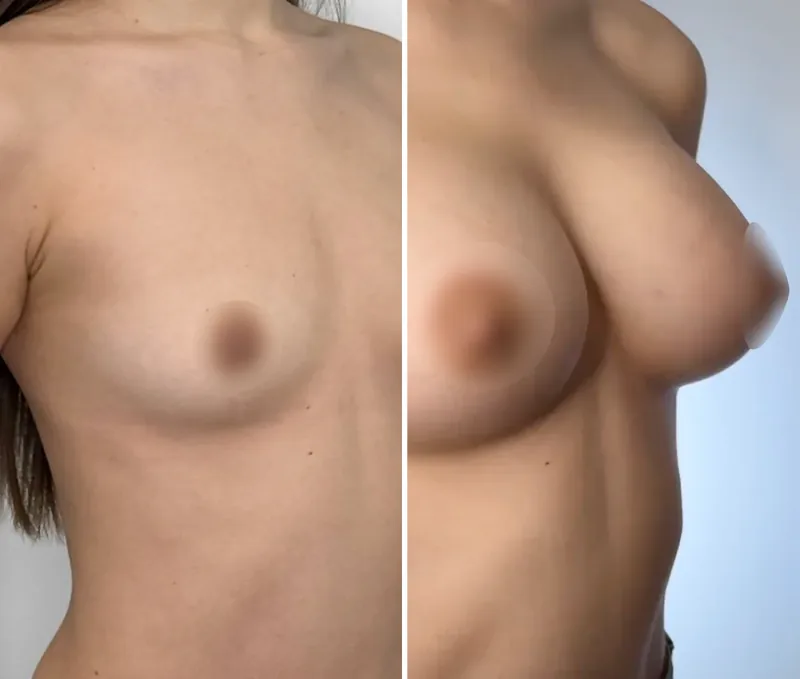
 beforeafter
Mammoplasty
Method: implants
Breast augmentation
$4,700
$5,900 · First consultation — Free
Message our coordinator
Free online consultation · Reply within 15 minutes
Message us on TelegramMessage us on WhatsAppBy messaging us, you agree to our Privacy Policy
Results
These are real patients of the clinic, with faces and identifying details hidden.
beforeafterMethod: implants
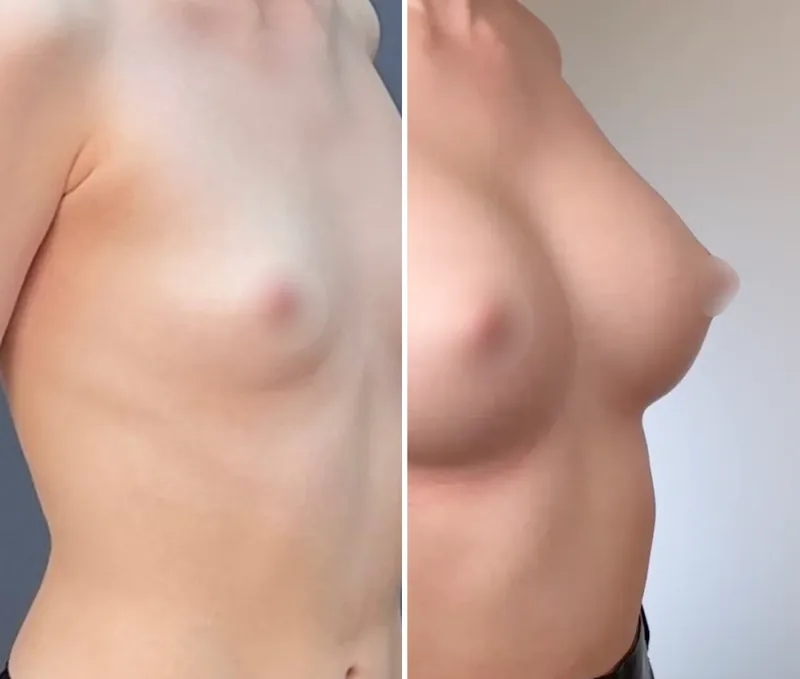 beforeafter
Method: implants
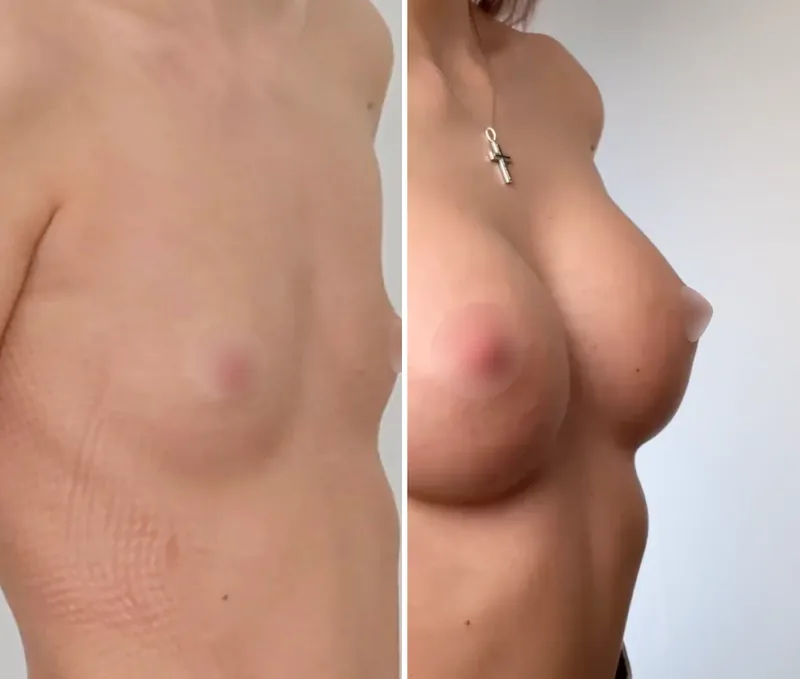 beforeafter
Method: implants
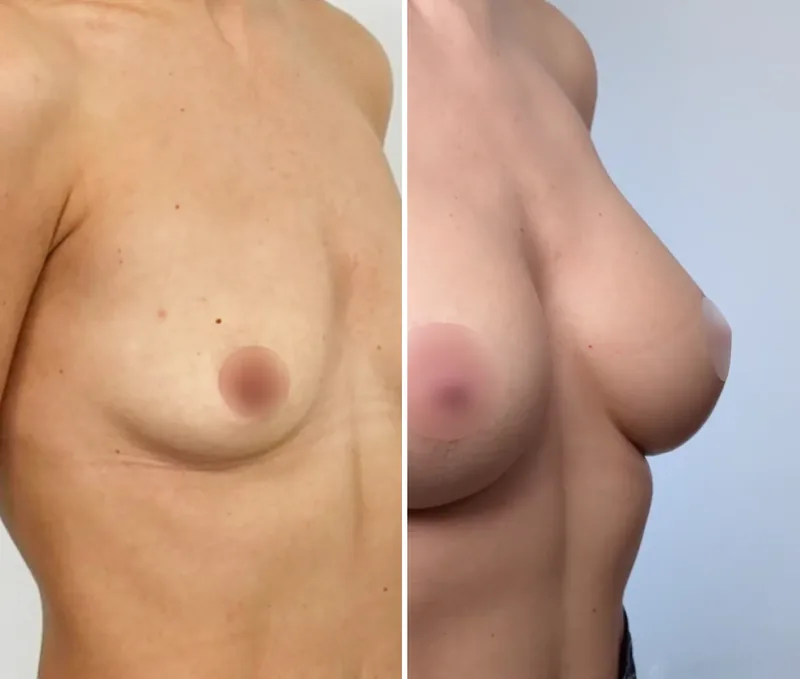 beforeafter
Method: implants
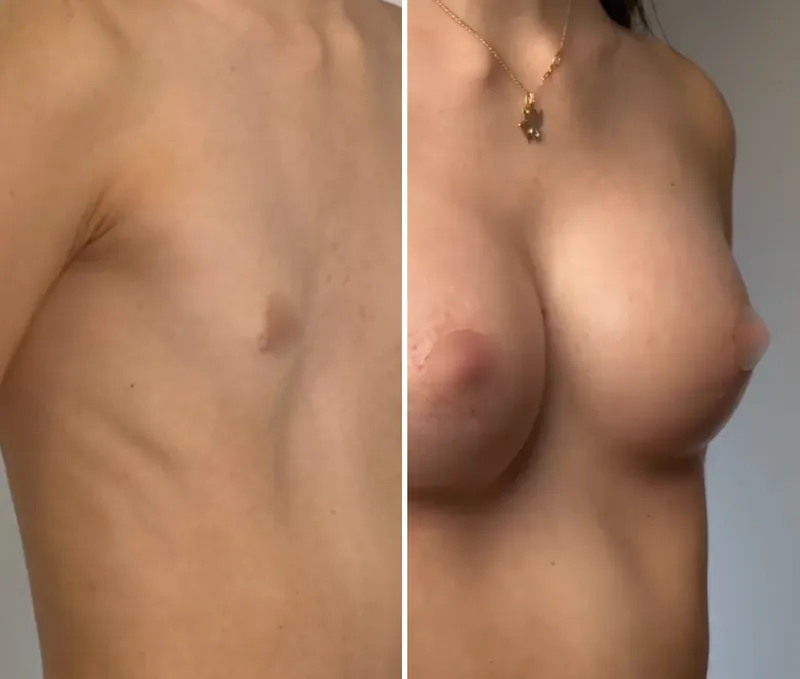 beforeafter
Method: implants
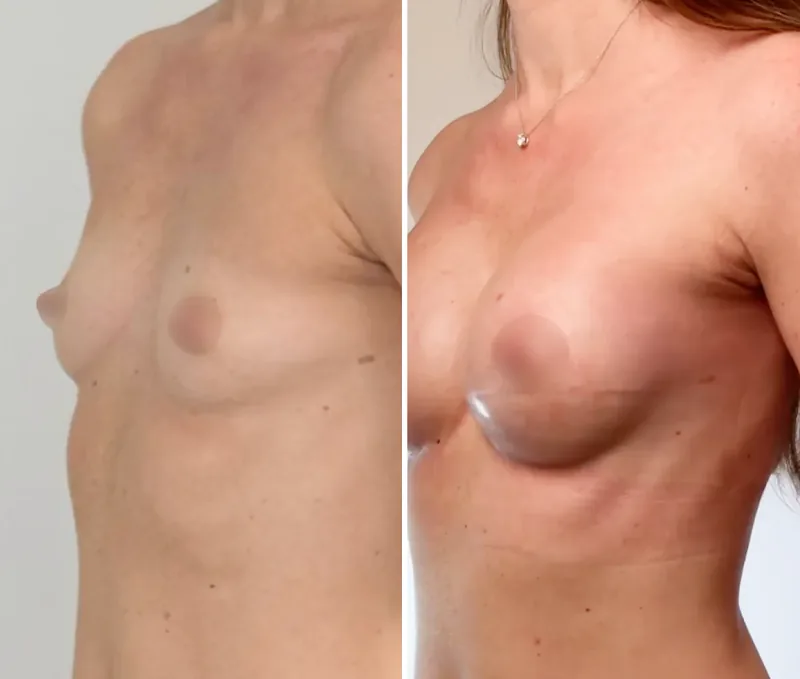 beforeafter
Method: implants
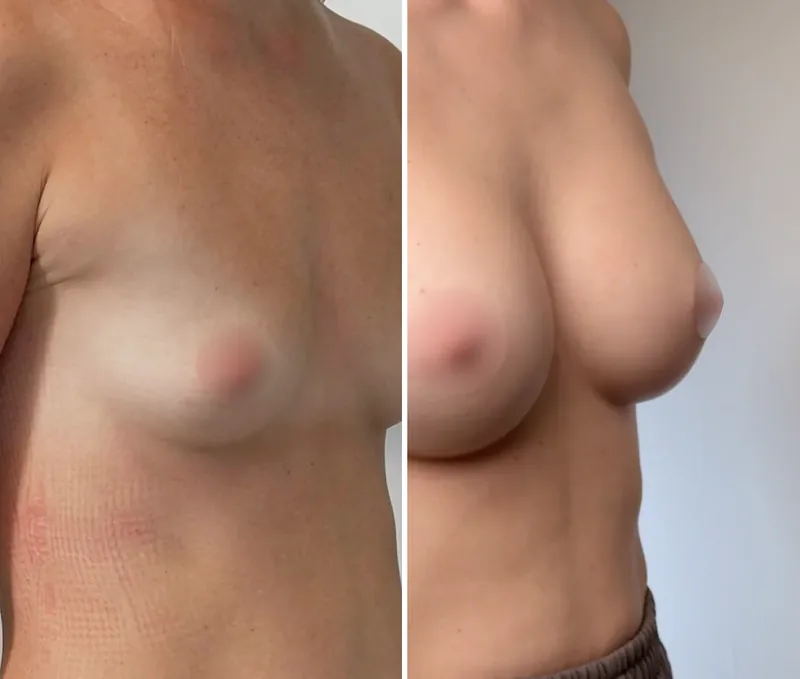 beforeafter
Method: implants
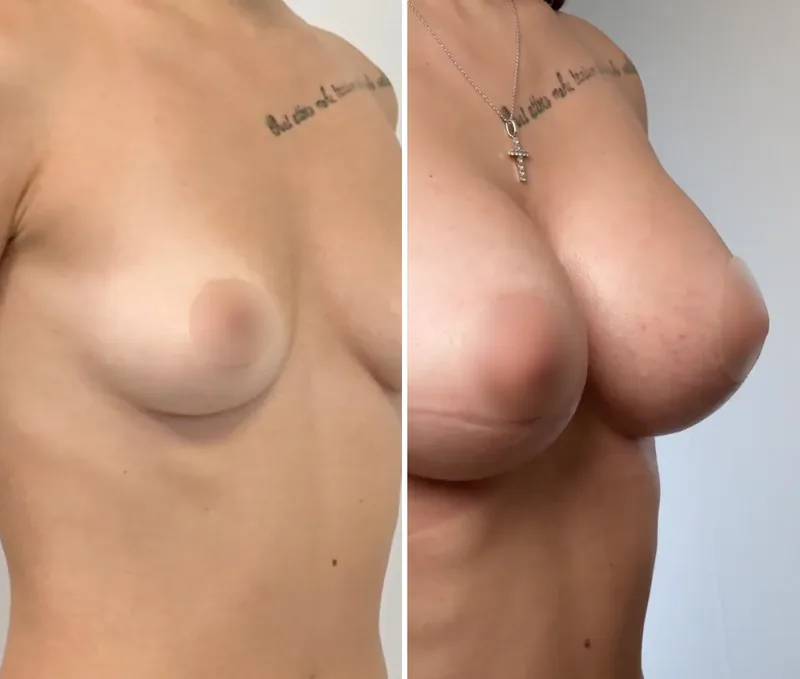 beforeafter
Method: implants
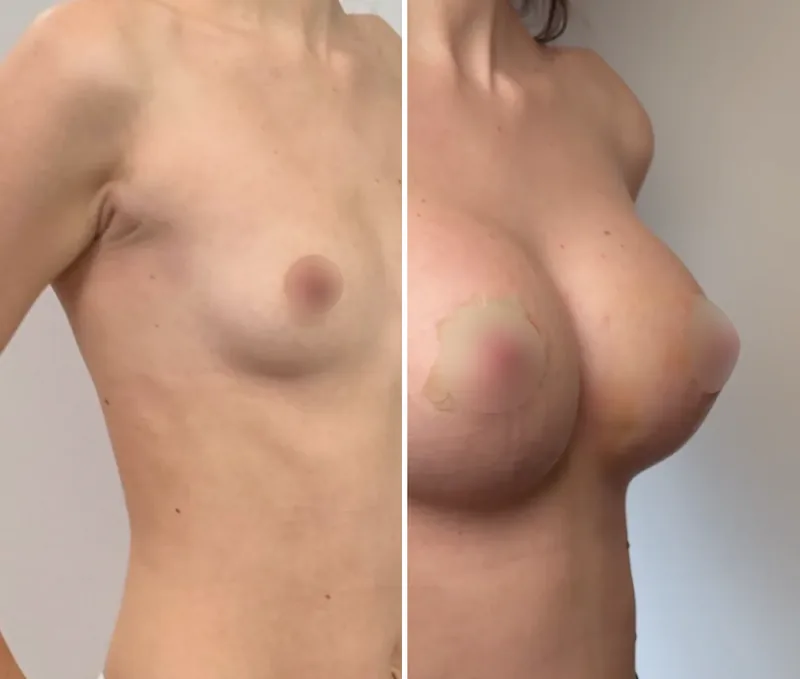 beforeafter
Method: implants
Comparison
Our surgeons use two main methods of breast correction — augmentation and reduction. See the goal, the precision and the indications of each to make an informed choice.
Size and shape correction with implants
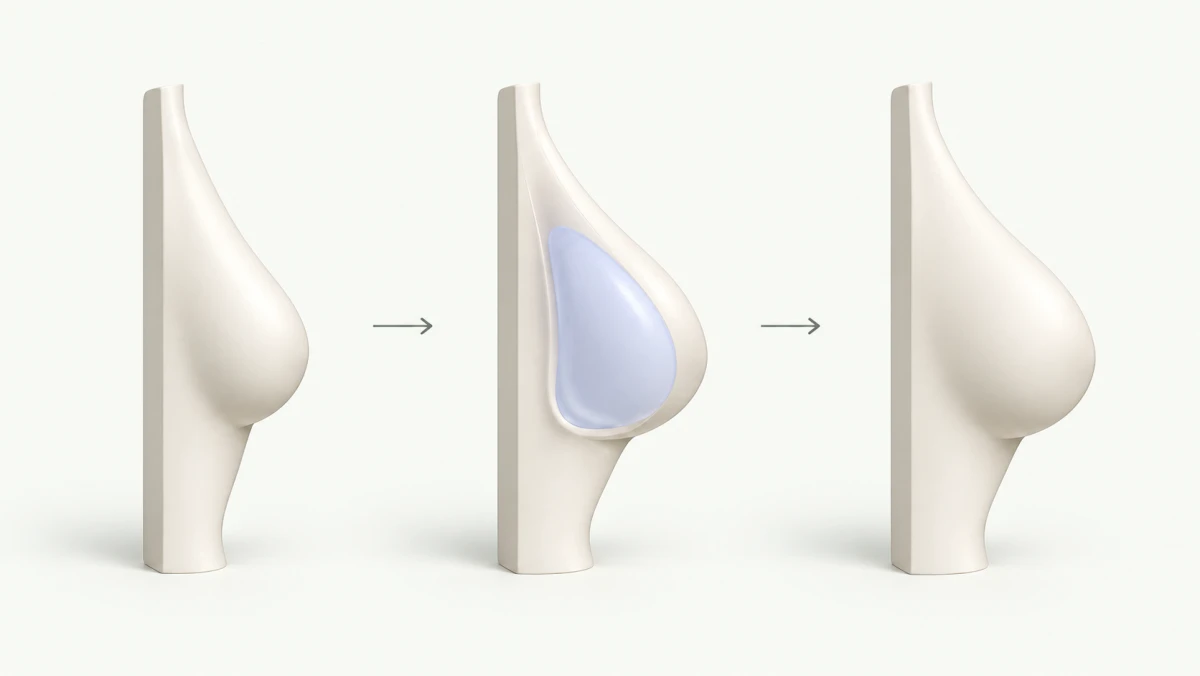
Discounted price
$4,700 $5,900
Correcting breast size by reducing volume and weight
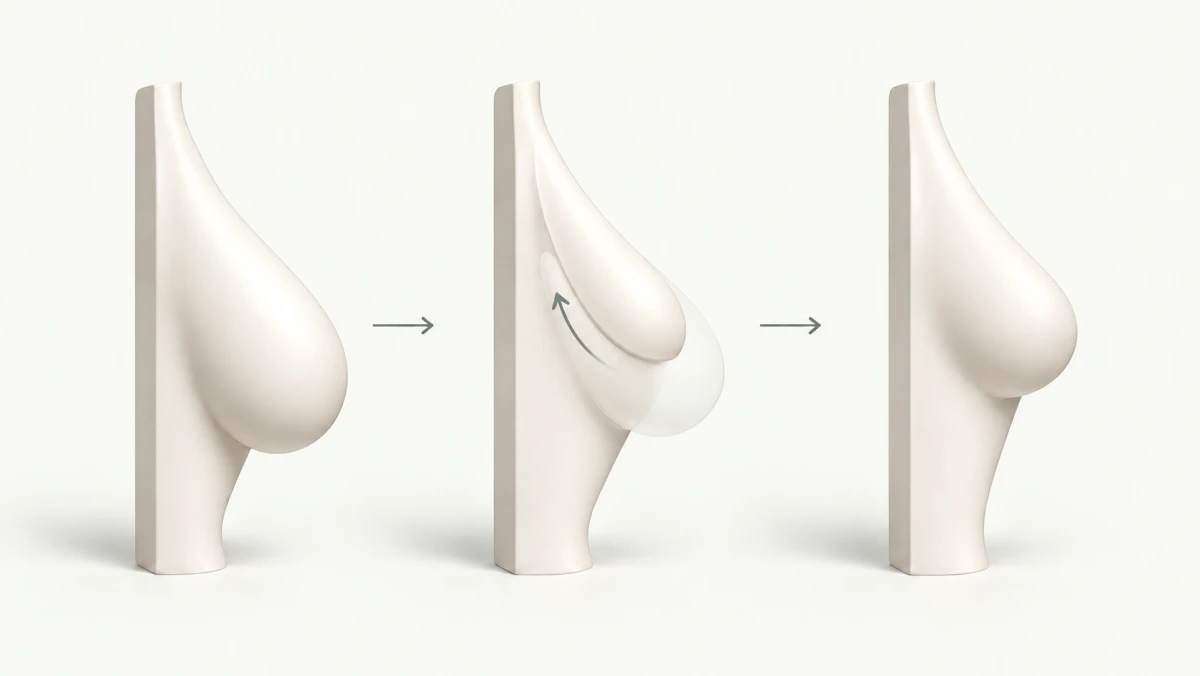
Discounted price
$4,700 $5,900
At your consultation the surgeon looks at the shape and proportions of your breasts, talks through what you want and recommends the best mammoplasty option.
The consultation is free, before surgery and with no commitment.
Comparison
We use two main implant types — round and anatomical. Both increase volume and improve breast shape, yet each gives a different contour and result.
Uniform volume and a fuller upper area
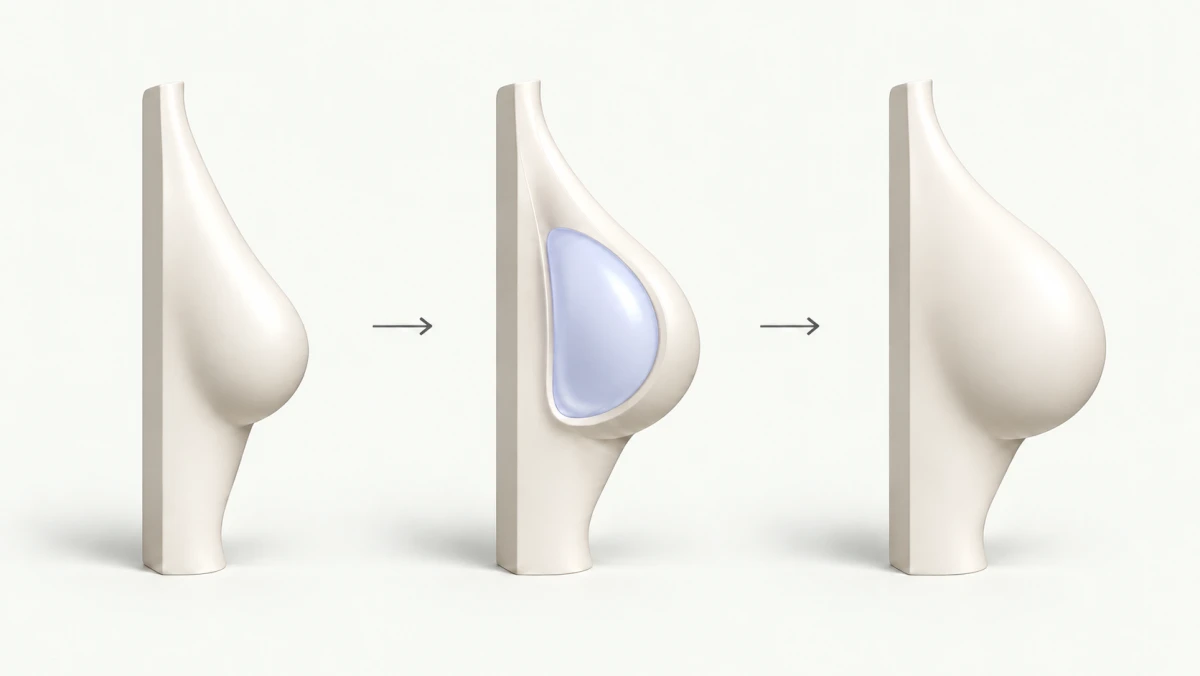
A soft teardrop shape with a natural slope
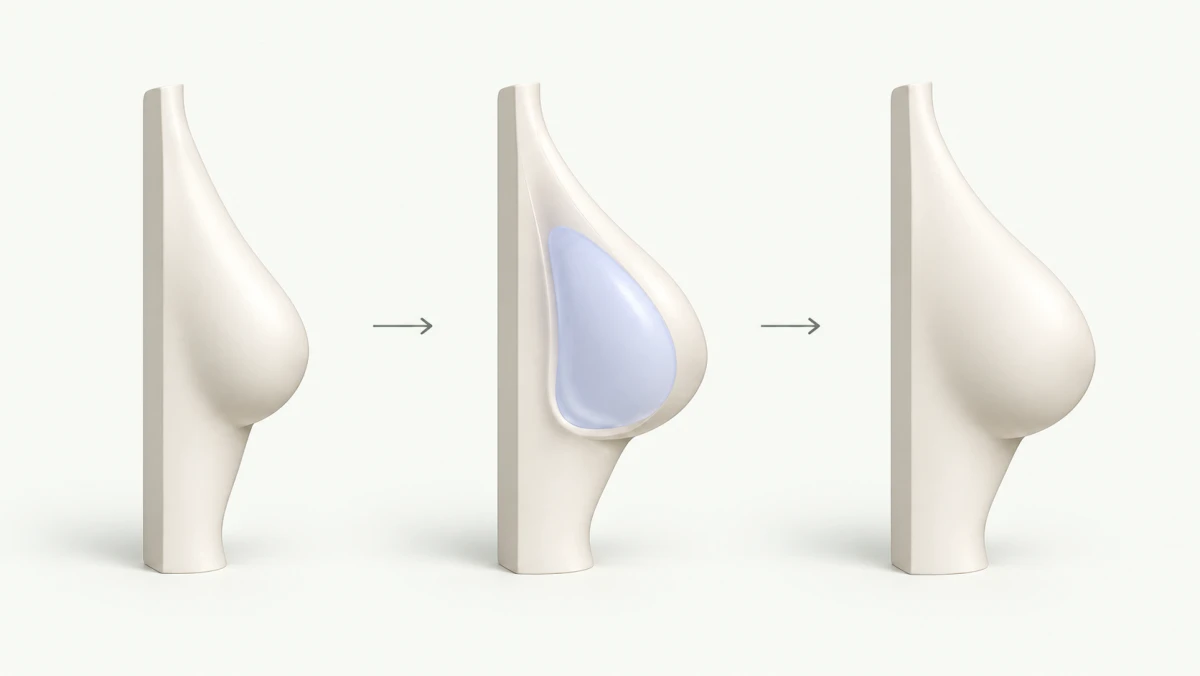
The surgeon will help you choose the implant shape and volume.
About the clinic
Modern equipment, comfortable rooms and care for every patient
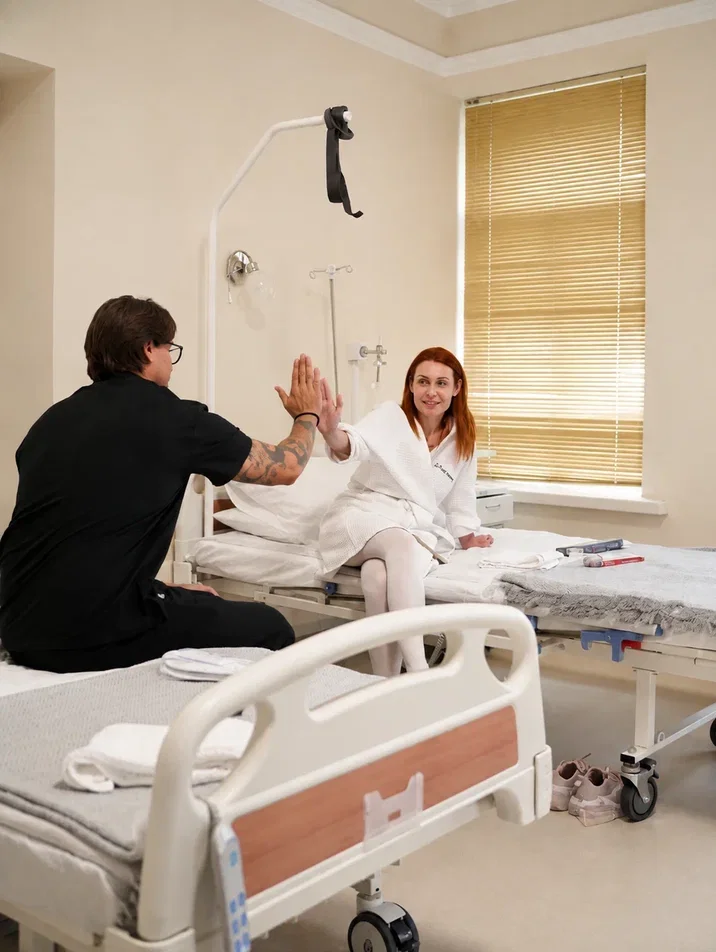
We answer your questions and pick a convenient consultation time
When surgery is not needed, the doctor tells you honestly at the consultation — and you avoid spending money on an unnecessary operation.

Not certain if surgery is the right choice for you?
Write to us: your coordinator will request photos in a messenger, and the surgeon will review them and tell you whether mammoplasty suits you.
Find out if it suits me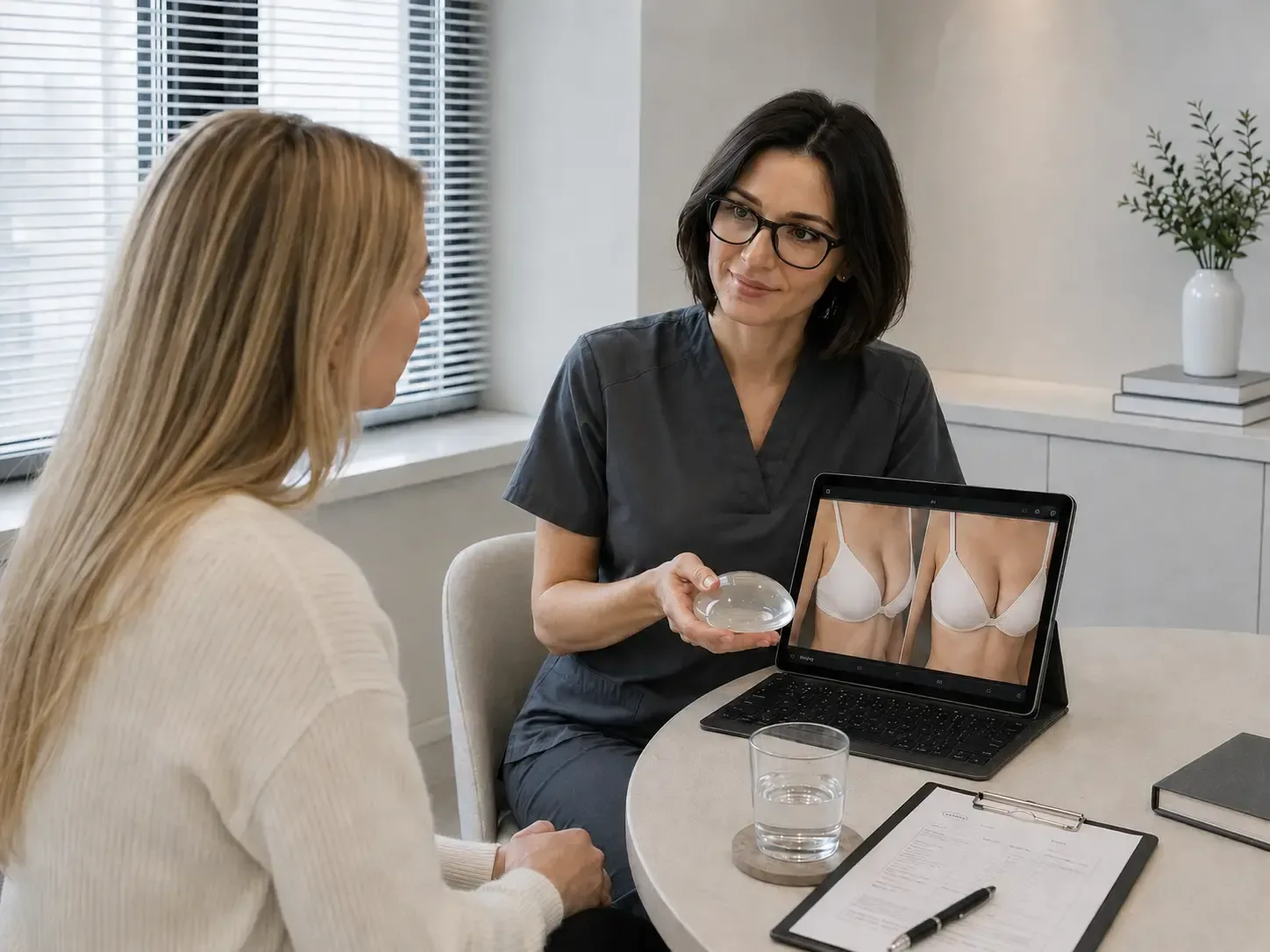
Prices
The price is set at the consultation and fixed in the contract.
Discounted price
Size and shape correction with implants
$4,700$5,900
Discounted price
Reducing the volume and weight of the breasts
$4,700$5,900
Breast restoration after mastectomy
The price is set at the consultation and fixed in the contract.
Get a consultationYour surgeon examines the anatomy and proportions of your breasts, discusses your wishes and recommends the right way to correct them.
The price is set at the consultation and fixed in the contract.
Message our coordinator
Free online consultation · Reply within 15 minutes
Message us on TelegramMessage us on WhatsAppBy messaging us, you agree to our Privacy Policy
all inclusive
Starting with preparation for surgery
and ending with support for 12 months.
Discounted price
$4,700$5,900
What to expect
An agreed plan for correction, hospital observation and a year of recovery monitoring.
 1
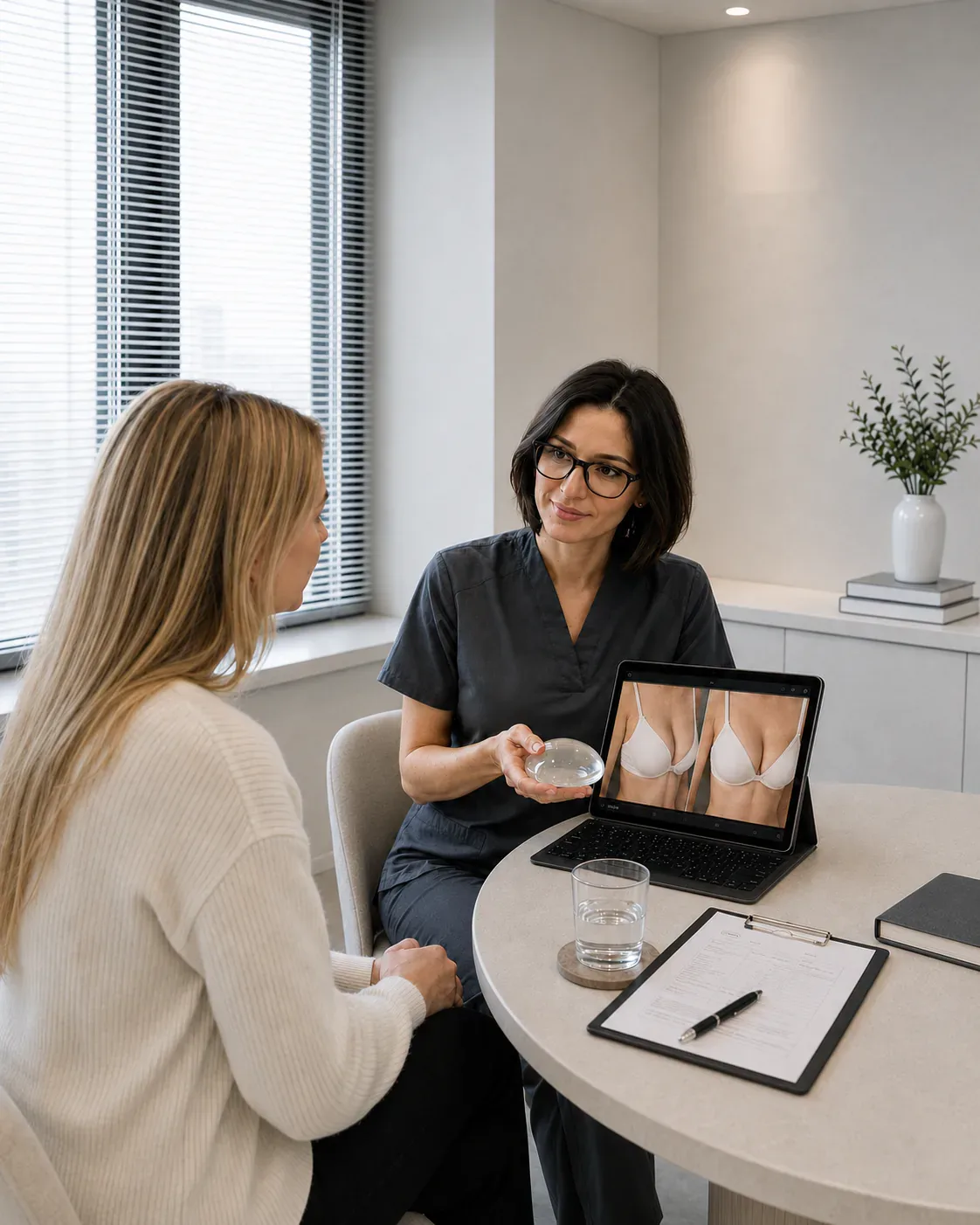
The surgeon looks at your figure, talks through your wishes and picks the best volume, shape and correction method.
 2
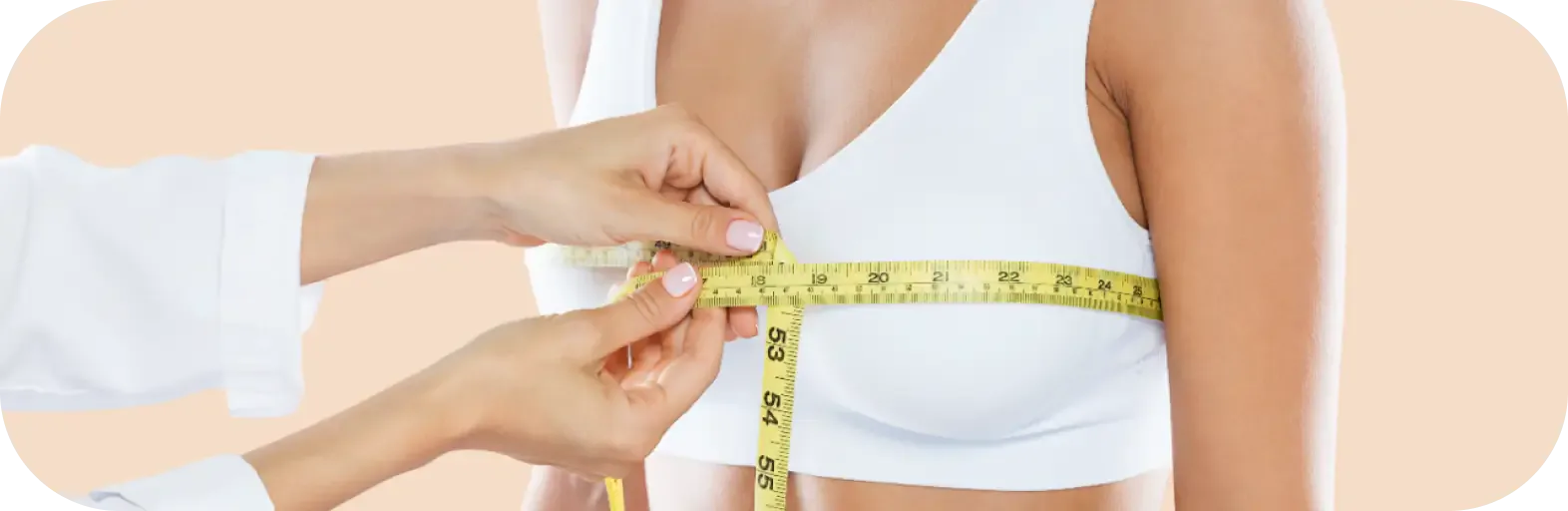
We hold a surgery date for you. You can pay the deposit by card at the clinic or online by bank transfer; all terms are set out in the contract for medical services
 3
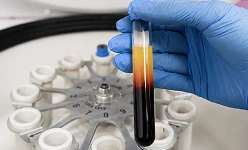
A complete pre-operative check-up comes first: blood tests, an ECG and the other examinations prescribed by your doctor.
 4
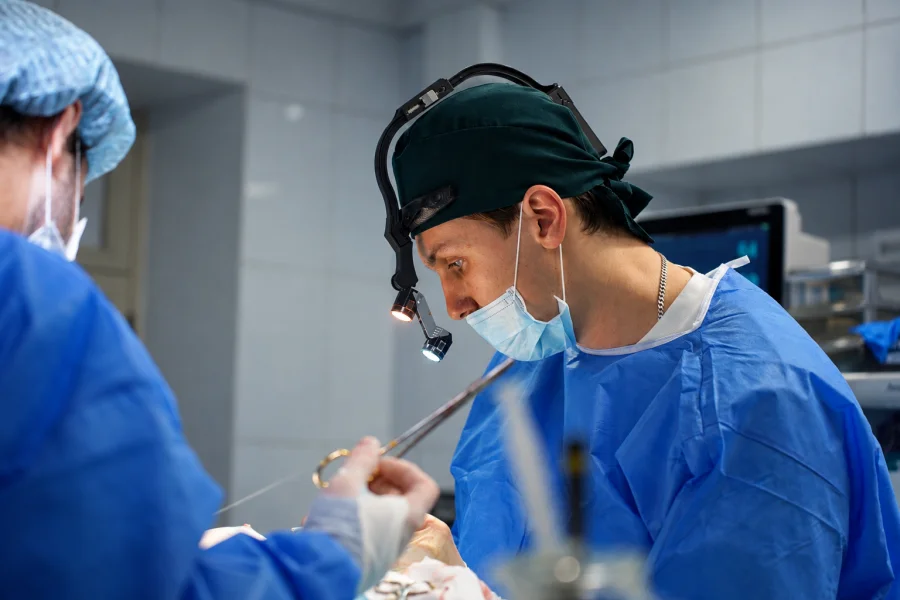
The surgeon performs mammoplasty according to your individual plan. The operation takes place under general anesthesia with continuous patient monitoring.
 5
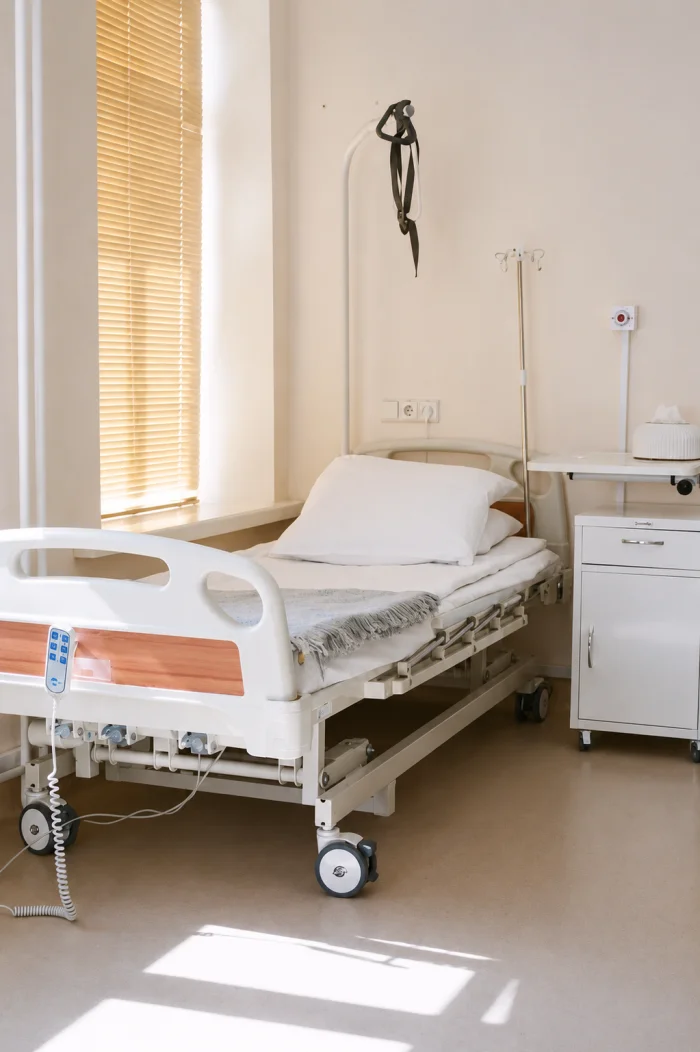
After the operation you remain in the clinic's comfortable inpatient ward, cared for by the medical team until you are discharged.
 6
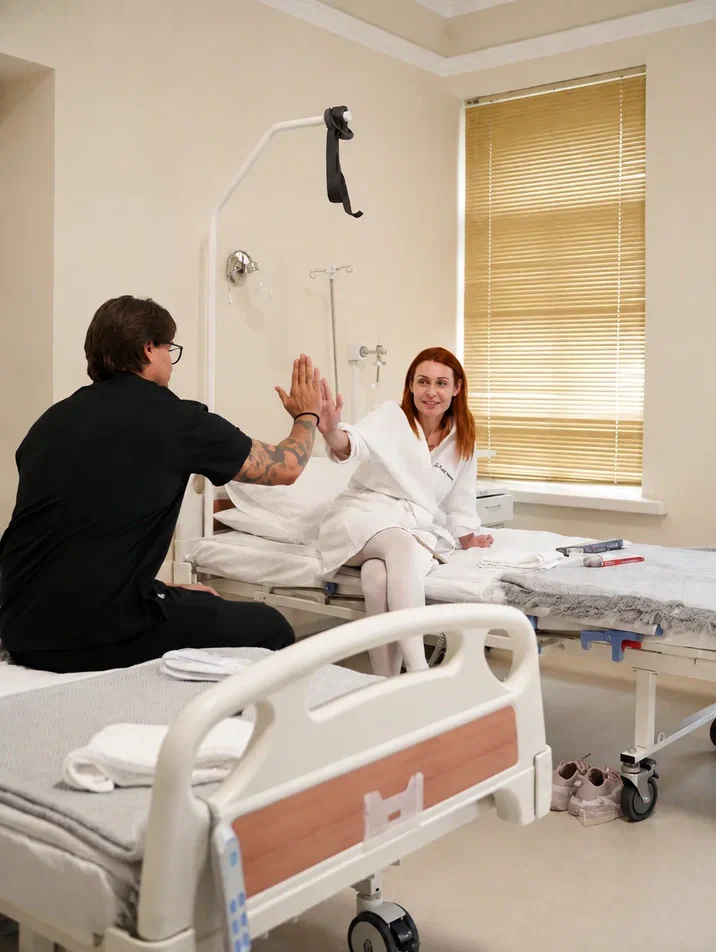
A recovery programme is prescribed after surgery. Check-ups at 7 days, 3 and 6 months follow your recovery, and for a year after surgery you consult your surgeon for free.
Prior to surgery, cease taking aspirin-containing medicines, steroids and hormonal drugs for chronic illness
Discontinue hormonal oral contraceptives at least a month ahead of the procedure
Get your tests a week ahead of surgery
To prepare for surgery, stick to a few simple guidelines: balance work with rest, get extra sleep, avoid stress, anxiety and strong emotions, and limit exercise.
Refrain from intense gym training for up to 40 days and from very active aerobics; light cardio is possible after a month. Follow your diet and meals.
After 3 weeks, post-op swelling disappears
After 3 months, discomfort disappears
Scars take shape within 3 weeks
No strenuous activity (lifting over 3 kg)
Within 3 months all inflammatory changes in the tissue resolve and a “pocket” forms around the implant
Recovery after the correction involves wearing compression garments for 1–1.5 months
No raising arms above shoulder level — 3 weeks
Baths and saunas are off-limits up to three months, as is physiotherapy
Doctors
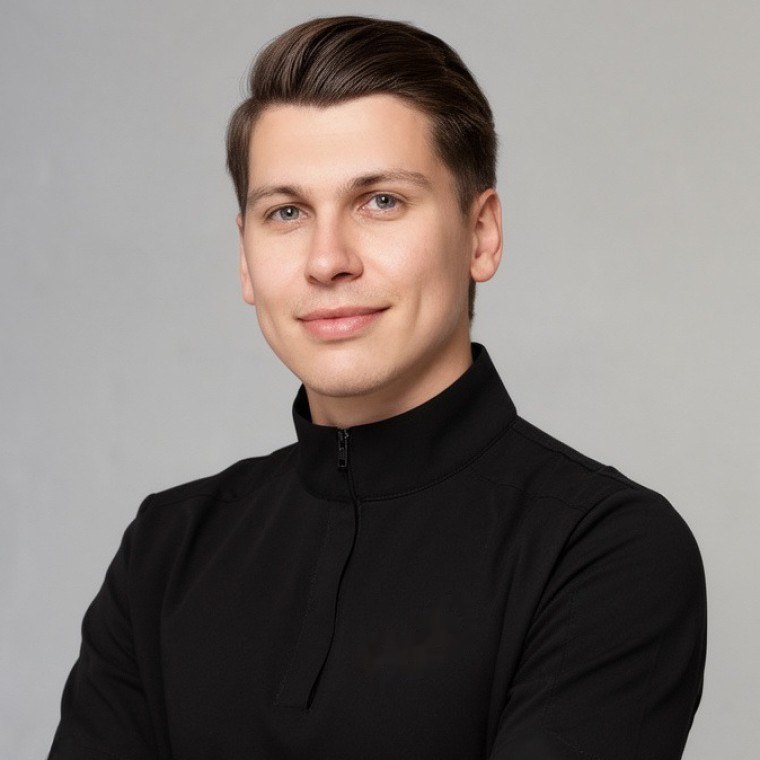
7 years of experience
Plastic surgeon
Plastic surgery residency at the Petrovsky National Research Centre of Surgery. Focuses on aesthetic and reconstructive surgery of the breast and body.
At the consultation, you talk directly to your operating surgeon
An experienced plastic surgeon devoted to patients' beauty and well-being
Book a consultationAdvantages
At the consultation we go through your wishes and model the planned changes. The surgeon explains what surgery can do, so you know exactly what result we are aiming for.
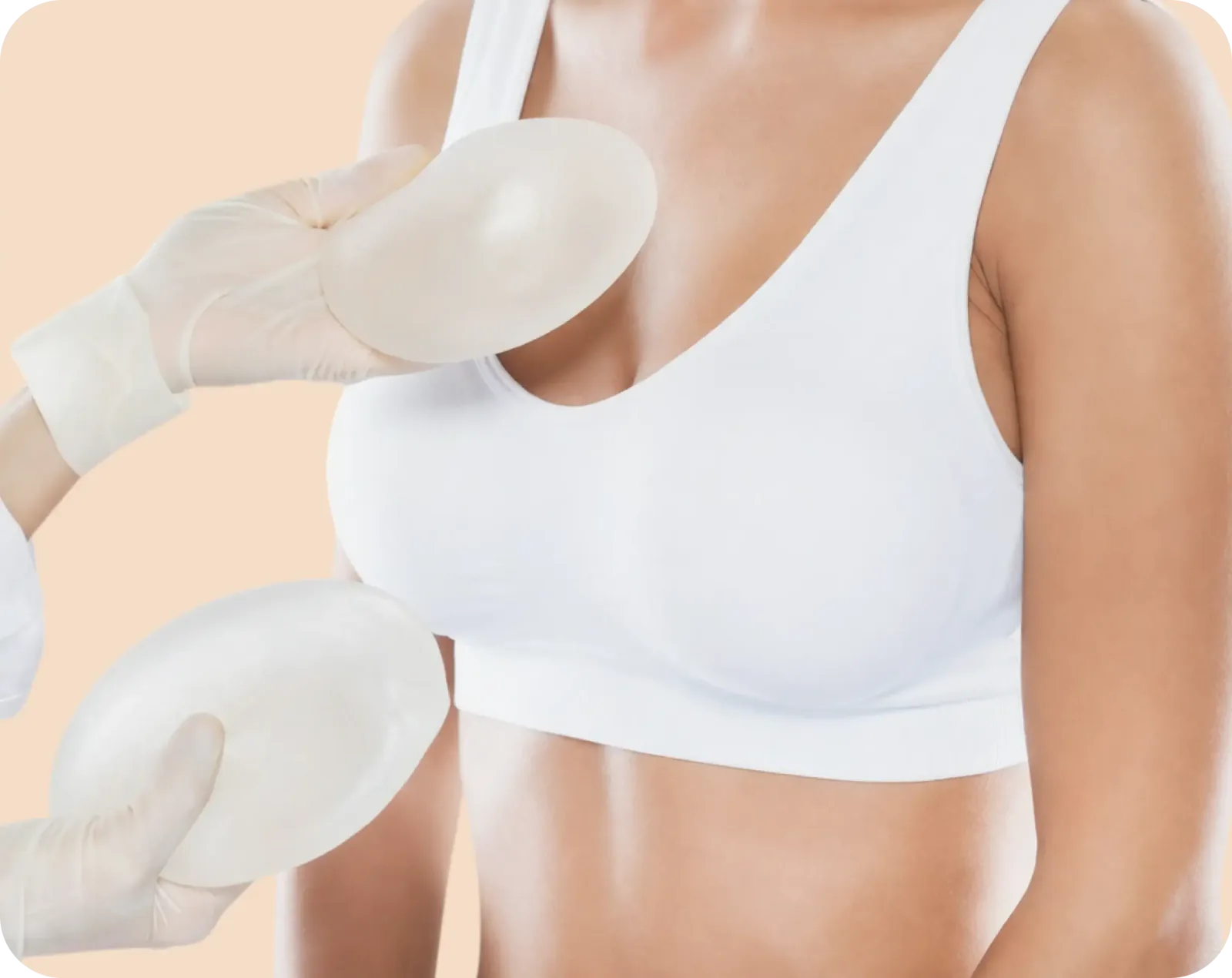
During the year after surgery the surgeon keeps track of your recovery and breast shape. The price already covers check-ups and dressings.
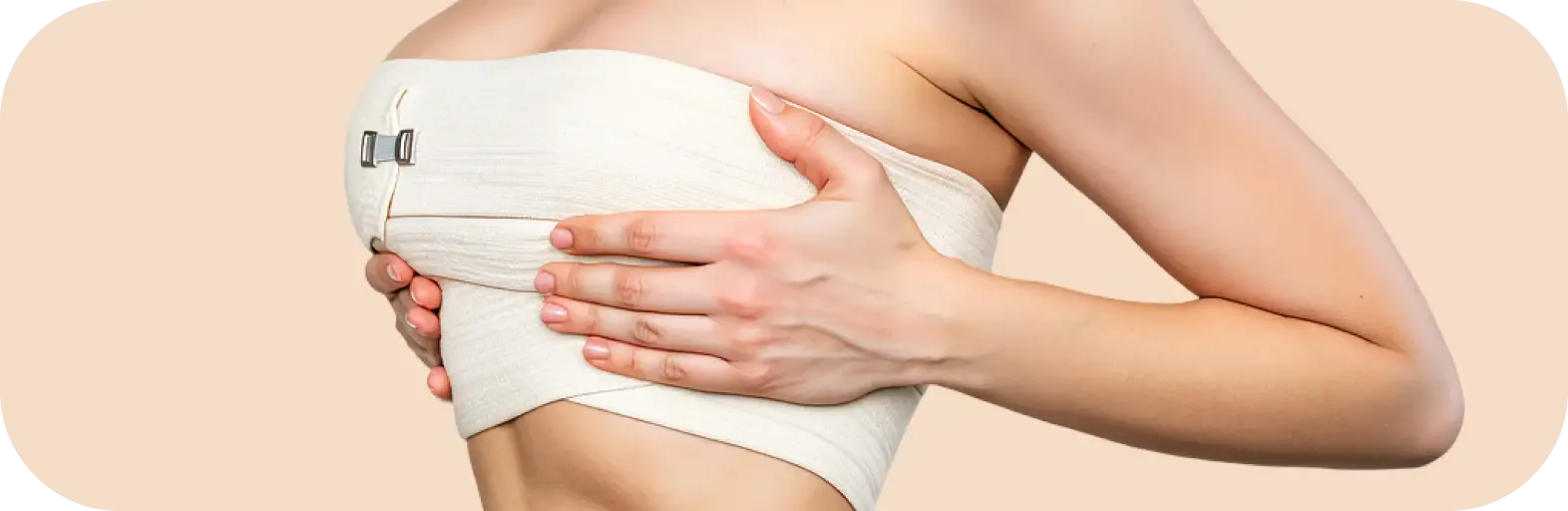
Shape, volume and correction method are chosen to match your anatomy and wishes. For augmentation, the implant size and profile are selected individually.
We respect your time: we work 24/7, with easy booking and a personal approach — we adapt to your pace.
Once the surgeon has defined the extent of correction at the consultation, you get a clear surgery price — no surprises on the way to your result.

Recovery starts in a comfortable inpatient ward with nursing care around the clock. Your stay and meals are already included in the price.
FAQ
The term mammoplasty covers several operations: augmentation (implants to increase volume), reduction (excess tissue and skin removed), mastopexy (a lift for sagging), reconstruction (after mastectomy) and correction of asymmetry. Which method is best is decided individually, from your wishes and the surgeon's advice.
Message us — our coordinator will get back to you shortly and book your consultation. The plastic surgeon consultation is free.
With every recommendation followed, complications seldom occur, though they can include hematoma or seroma, wound infection, reduced or increased nipple sensitivity, capsular contracture, aesthetic asymmetry, wound separation and tissue necrosis.
The outcome of mammoplasty is long-lasting: about 10–15 years after augmentation (until implants are replaced) and 5–10 years after a lift or reduction. Its duration is influenced by weight, pregnancy, skin aging and gravity. Keep the result by wearing supportive underwear and managing your weight.
After mammoplasty, breastfeeding depends on the type of surgery. If augmentation uses an under-breast or armpit incision and the implant goes under the muscle, lactation is typically preserved because glandular tissue is not damaged. A lift or reduction has a higher risk since ducts may be cut. Discuss it with your surgeon before surgery.
Implants are chosen by material (silicone appears most natural, saline is used less frequently), shape (round or anatomical teardrop), surface (smooth or textured), size and profile. Your surgeon selects the option that best suits your anatomy and wishes.
The patient feels nothing during surgery, which is performed under general anesthesia. Moderate discomfort in the first 1–3 days is possible and is treated with painkillers. By day 5–7 the pain is greatly reduced, and by weeks 2–3 no discomfort remains. With severe pain, contact your doctor immediately.
Work is possible after 7–14 days, as long as it involves no physical exertion. Take light walks after 1–2 weeks. Fitness and swimming after 4–6 weeks; strength training after 3 months. Pool and sea after 4–6 weeks. Compression garments are worn for 4–6 weeks. Timing depends on your recovery.
Mammoplasty has not been scientifically shown to increase the risk of breast cancer, and implants do not cause it. Keep up regular screening after surgery (self-exams, mammography and ultrasound) and always mention your implants to the doctor examining you.
Mammoplasty after a C-section is possible, but your body must fully recover first. Wait at least 6–12 months after giving birth and after breastfeeding ends. A surgeon's consultation and check-up are required before surgery.
Mammoplasty always leaves scars, though with a skilled surgeon they are minimal. The incisions are hidden under the breast, around the areola or in the armpit. Scars are reddish in the early months but fade within 6–12 months and become almost invisible.
Some slight asymmetry during the first weeks after surgery is expected, caused by swelling and uneven healing. Should a difference in shape or size persist after 3–6 months, visit your surgeon to be examined and find out why.
Mammoplasty may temporarily alter the sensitivity of the nipples and breasts, making it lower or higher. This is caused by irritated nerve endings. In most cases it recovers within 3–12 months. If you see no improvement after a year, contact your surgeon.
Although hormonal drugs (contraceptives, hormone replacement therapy) have no direct impact on implants, they can produce swelling or changes in breast tissue volume, temporarily affecting appearance. Be sure your surgeon knows about such medications before surgery.
Prices are in US dollars; the amount in brackets is an approximate conversion to ZAR at the rate of 02.10.2026. The final price is fixed in your contract.
Prices start from $4,700 (≈ R79,000). The surgeon sets the final price at the free consultation, and it is fixed in the contract, with no hidden extras.
The surgical team's work, anaesthesia, the inpatient stay with meals, dressings and follow-up visits for twelve months.
Message us on WhatsApp or Telegram using the buttons below. A coordinator will answer your questions and book a free consultation where the doctor names the exact price.
By messaging us, you agree to our Privacy Policy
Women in East London who are unhappy with small or uneven breasts often look into augmentation. The operation places an implant in a pocket created by the surgeon, who then adjusts its position for symmetry and a natural contour. Incisions sit in discreet places: under the breast, around the areola or in the armpit. Over the following months the scars fade and become almost invisible.
Step one is a meeting with the plastic surgeon to choose size, shape and profile. Step two is a full medical check-up with lab tests, instrumental examinations and, if indicated, a GP, gynecologist or breast specialist. On the day itself, the surgeon marks incisions, places the implant and closes the wound in layers with self-absorbing cosmetic sutures. This is how augmentation goes for East London patients.
Pricing is transparent: from $4,700 (≈ R79,000) for augmentation, the same for breast reduction or a lift without implants, and $5,400 (≈ R91,000) for a combined lift with implants. Reconstruction is priced on request. For people from East London, the plastic surgeon consultation is free, and in-house instalments make planning easier. Leave a request to get your personal correction plan.
What patients write after this operation. Reviews are translated from the original language.
Anna Smirnova
I went to Dmitry Sergeyevich for breast augmentation with implants. At the consultation everything was explained in detail, and together we chose the best size. The operation under combined anaesthesia took 2 hours, and I was discharged home the next day. The swelling went down in about a month, and my breasts look very natural. The year of follow-up care is a real lifesaver: you can always ask a question and get an answer. Thank you to the clinic!
Breast augmentation
Doctor: Dmitry S. Kuznetsov
Ekaterina Morozova
After two births I decided on a breast lift without implants. I chose Dmitry Sergeyevich and have no regrets. The result exceeded all my expectations: my breasts are lifted and the shape is youthful and firm. The incisions are minimal and almost invisible. I spent one day in the hospital, and the room was very comfortable. I recommend him!
Breast lift
Doctor: Dmitry S. Kuznetsov
Olga Kuznetsova
I had a combined operation, a breast lift with augmentation, with Dmitry Sergeyevich. At the consultation it was immediately clear that I was in the right place. Everything is included in the price, with no hidden charges. After a month my breasts already feel soft and natural. Personal follow-up after the operation is very valuable.
Breast lift with implants
Doctor: Dmitry S. Kuznetsov
Maria Lebedeva
Breast augmentation from a size 3 to a size 4 with Dmitry Sergeyevich. He chose perfect anatomical implants. The operation took 2 hours, and I woke up with almost no pain. In the ward I was fed and monitored around the clock. Four months have passed and the result looks like a magazine cover.
Breast augmentation
Doctor: Dmitry S. Kuznetsov
Natalia Vorobyova
I went to Dmitry Sergeyevich to correct breast asymmetry with a small lift. A true professional: at the consultation he immediately showed before-and-after photos of similar cases. Recovery was easy and the swelling went down quickly. I had my check-up after just 7 days. An excellent clinic!
Breast reconstruction
Doctor: Dmitry S. Kuznetsov
Yulia Romanova
I had a lift with implants after losing a lot of weight. I chose Dmitry Sergeyevich. At the consultation everything was explained in simple words, and my fears were gone. One day in the hospital, then care at home. Now my breasts look natural and keep their shape. I am very happy!
Breast lift with implants
Doctor: Dmitry S. Kuznetsov
East London, known in Xhosa as eMonti and officially KuGompo City since February 2026, sits on the Indian Ocean coast of the Eastern Cape, largely between the Buffalo River and the Nahoon River. As of 2011 the city had a population of over 267,000, with over 755,000 in the surrounding metropolitan area. It is a place where people know each other, where school, church, sport and family circles overlap, and where a personal decision such as breast augmentation is often made quietly and discussed with only a few trusted people.
Women in East London who consider augmentation usually start with the same practical questions. How will it fit around work, children and studies? How visible will the first weeks be at the beach, the gym or the office? Who will be reachable if a question comes up at night? This text answers those questions with East London's climate, rhythm and habits in mind, so you can plan realistically rather than in general terms.
Breast augmentation is a planned operation, not a spontaneous one. The most useful first step is a conversation about your goals, your health history and your expectations. In East London that conversation can happen online, from your own home, without arranging time off work just to ask your first questions.
The consultation is free and online. You write to the coordinators on Telegram or Telegram, and they are available around the clock, 24/7. If you leave a message late in the evening after work or early in the morning before the school run, a coordinator will call you back 24/7. Your time matters to us: we work 24/7, booking is easy, and our personal approach adapts to your pace.
Before the conversation, prepare a short summary: your age, any chronic conditions, medicines you take, previous operations, whether you have been pregnant or breastfed, and whether your weight has been stable. Photographs of your current profile and a note of what you dislike or want to change help the surgeon understand your wishes. Decide in advance what matters most to you: natural proportion, more upper fullness, symmetry, or a size that suits an active life.
The surgeon will explain whether augmentation fits your situation, which questions remain open and what examinations are needed before surgery. Nothing is decided during the first contact. You can come back with further questions, talk it over with family and take the time you need.
East London has an oceanic climate, bordering on humid subtropical, with the warm, moderate temperatures typical of the South African coastline. There is no true dry season, though winter tends to be drier, and spring and autumn are the wettest times of year. December and January bring a shorter, lesser dry period. For recovery this means the weather is rarely extreme, but it does vary, and your plan should allow for it.
The city can also be very hot. The all-time record high is 44 °C, recorded on 13 March 2021, and the hottest days come in spring and autumn rather than mid-summer, because of berg winds, which are warm, dry air dropping from the interior to the coast. On such days swelling can feel more uncomfortable, and compression garments can feel heavy. Choose breathable cotton layers, keep rooms ventilated, drink enough water and avoid long exposure to direct sun while the scars are still reddish.
Humid coastal days call for a different kind of care: change your garments if they get damp from perspiration, keep the skin clean and dry, and follow your surgeon's instructions on wound care. Swelling after surgery goes away after 3 weeks, and compression garments stay on for 4–6 weeks. Plan your clothing for that period with the East London weather in mind, choosing loose tops with front fastening that do not press on the chest.
There is no single best month in East London, because the climate is mild all year. What matters is how the season matches your commitments. The 4–6 weeks in compression garments and the first weeks of restricted activity are easier when you do not have a major event, an exam period or a heavy work deadline right after surgery.
Summer brings beach days along the coast, and the temptation to rush back to the water. The medical guidance is clear: pool and sea are allowed after 4–6 weeks, and timing depends on your recovery. If you operate in the warmer months, expect to watch the sea from the shore for a while. Autumn and spring can bring berg winds and sudden heat, so keep light, breathable clothing ready. Winter is cooler and more humid, which many patients find comfortable for wearing a compression garment, though the wetter weather may limit light walks on some days.
Think also about family events: weddings, graduations, holidays and church gatherings. Leave enough distance between surgery and an occasion where you would like to feel fully at ease. Remember that scars are reddish early on and fade over 6–12 months, and that slight asymmetry in the first weeks is normal.
East London is the second largest industrial centre in the Eastern Cape. The motor industry is the dominant employer, with a major Daimler plant next to the harbour, and clothing, textiles, pharmaceuticals and food processing also employ many people. The city also has several secondary schools and tertiary institutions, including the University of Fort Hare, Walter Sisulu University and UNISA, as well as private colleges.
What you do for a living shapes your recovery. If you work at a desk, in an office, in a school or in administration, you may go back to work (with no physical exertion) after 7–14 days. If your work involves physical effort, such as lifting stock, working on a production line or handling equipment, discuss it with the surgeon in advance. The rule is no heavy exertion (lifting more than 3 kg), and no lifting arms above shoulder height for 3 weeks. Ask your employer whether lighter duties are possible for a while.
Students can plan around term timetables. Carrying a heavy bag of books is exactly the sort of load that is restricted, so arrange for lighter bags or ask for help. Mothers with small children should arrange support for lifting babies and toddlers in the first weeks. A short list of who will help with what, drawn up before surgery, removes much of the stress later.
Sport is part of East London life. Soccer, cricket and rugby are popular, the city has hosted major cricket and rugby matches, and the Buffalo Road Running Club organises the Old Mutual Buffalo marathon in February or March and the Washie ultra marathon. Triathlon, with its swim at Orient Beach, was a fixture for years. If you run, swim or cycle, you will want to know exactly when you can return.
The medical guidance is specific. For as long as 40 days, stay away from intense gym workouts and overly active aerobics. Light cardio is possible after a month. Take light walks after 1–2 weeks, and do fitness and swimming after 4–6 weeks. Strength training is allowed after 3 months. Timing depends on your recovery, and your surgeon sets the final go-ahead. Monitor your diet and meals during this period.
If you train for a race, plan the operation so that it does not collide with the training peak. Treat the first months as a rebuilding phase rather than a break. Walking along the coast in the first weeks keeps you moving without strain, and a gradual return protects the result and your comfort. Tell your surgeon about the sports you practise, because the way the implant sits and the type of support garment you need can depend on your routine.
General anaesthesia is used for the surgery itself, so there is no sensation during the operation. The hospital stay is 1 day or 1–2 days, with 24/7 monitoring by medical staff. In the first 1–3 days you may feel moderate discomfort, which painkillers relieve. Pain subsides significantly by day 5–7 and discomfort is gone by weeks 2–3. If pain becomes severe, inform your doctor right away.
There are scars after mammoplasty, though a skilled surgeon keeps them minimal. The incisions go in discreet areas, such as under the breast, around the areola or in the armpit. Early on the scars are reddish, but over 6–12 months they fade and are almost unnoticeable. In East London's sunny climate this is worth remembering: protect the scars from strong sun and ask your surgeon what to apply.
Breast and nipple sensitivity may change for a time, going down or up, because of irritation of nerve endings. In the majority of cases sensitivity is restored within 3–12 months. If nothing has improved after a year, consult your surgeon. In the first weeks slight asymmetry is normal, because swelling and uneven healing are behind it. If shape or size still differ after 3–6 months, see your surgeon for a check-up to find the reason.
Discomfort fades after 3 months. In 3 months any inflammatory changes in the tissue disappear, and a pocket forms around the implant. That is the point at which you can judge the shape more reliably.
Distance from your surgeon should not mean being left alone. After surgery you get a recovery programme. Check-ups at 7 days, 3 and 6 months help track your recovery. For a year after surgery, consultations with your surgeon are free, and follow-up support lasts 12 months. These check-ups take place online, so you can send photographs and describe how you feel from home in East London.
Coordinators remain reachable on Telegram and Telegram at any hour. If something worries you at night, such as unusual swelling, a change in colour or increasing pain, write immediately. A coordinator will call you back 24/7 and direct your question to the surgeon.
Keep a simple recovery diary: the date, how you feel, when you changed garments, which activities you resumed. It makes the online check-ups more precise and helps you notice patterns. Arrange for a family member or friend to be at home in the first days, especially if you live far from the city centre or if the weather is hot and you need help with fluids and meals.
East London began as a river port. John Bailie, one of the 1820 Settlers, surveyed the Buffalo River mouth and founded the town in 1836, and a memorial on Signal Hill marks the event. The settlement was first called Port Rex, later London, and became a city in 1914. In February 2026 the official name became KuGompo City, after the sound of waves crashing against the Gompo Rock, a sacred site for the Xhosa. Residents carry three names for the same place: East London, eMonti and KuGompo. That habit of living with a changing name is a useful image for a body that changes in stages too.
Like the harbour, which began operating in 1870 and grew step by step, recovery from augmentation is a sequence of stages rather than one moment. Check-ups at 7 days, 3 and 6 months give you fixed points, just as a port keeps a schedule. Swelling after surgery goes away after 3 weeks, discomfort fades after 3 months, and in 3 months a pocket forms around the implant. Write these milestones in your diary the way you would mark tides or sailing dates.
Many women here also want to keep the decision private. The consultation is free and online, so you can ask your questions at home, on Telegram or Telegram, at any hour, without anyone in a close community noticing.
The city grew on both sides of the Buffalo River. The West Bank is the older settlement, where Fort Glamorgan was built in 1847, and the East Bank grew with the railway from 1876. Nahoon lies toward the second river, Gonubie and Amalinda are further out, and Mdantsane, Duncan Village and Buffalo Flats are home to large communities with their own rhythm of life. The unusual double-decker bridge of 1935 over the Buffalo River is the only one of its type in South Africa.
Where you live affects how you plan the first days. A patient in Nahoon or Gonubie may have a quieter coastal setting, while a patient in Mdantsane may rely more on relatives nearby and on shared household tasks. Whichever suburb you live in, decide before surgery who will stay with you, who will lift children and heavy shopping, and who will drive you to and from medical appointments, since no heavy exertion (lifting more than 3 kg) is allowed.
Because the check-ups with your surgeon are online, the distance between suburbs does not matter. A good phone signal, a charged phone and a well-lit corner for photographs are all you need to send updates from any neighbourhood.
The motor industry is the dominant employer, and the Daimler plant next to the harbour makes Mercedes-Benz vehicles for the local market and for export. The East London Industrial Development Zone on the West Bank, set up in 2004, adds more jobs in manufacturing and logistics. Shift work is common in such places, and many patients ask how shifts fit with recovery.
If your day involves standing on a line, lifting parts or operating machinery, ask your employer about an adapted role. You may go back to work, with no physical exertion, after 7–14 days, and arms must not be lifted above shoulder height for 3 weeks. Office, administrative and laboratory staff, including those in pharmaceuticals and food processing, can usually return to desk tasks sooner than colleagues who work with their hands.
Plan the leave around your shift pattern, and tell your supervisor only what you wish to share. A medical note can state that you need light duties without any detail.
Sport in this city is public and social. Buffalo City Stadium hosted games of the 1995 Rugby World Cup, Buffalo Park hosted matches of the 2003 Cricket World Cup, the Nahoon Reef surf break draws surfers and the Nahoon Surf Pro, and the Buffalo Regatta, begun in 1881, fills the river with rowers every year. Many women support a son or husband at these events and play, run or paddle themselves.
After augmentation, treat the surf, the river and the sea with patience. Pool and sea are allowed after 4–6 weeks, fitness and swimming after 4–6 weeks, and strength training after 3 months. Paddling a surfski or rowing puts load on the chest and shoulders, so these belong at the later end of that timeline and only with your surgeon's agreement. For as long as 40 days, avoid intense gym workouts and overly active aerobics; light cardio is possible after a month.
A match day in the stands is a realistic goal earlier: sit comfortably in a supportive garment, avoid crowds that could bump your chest, and skip the jumping and cheering with raised arms during the first 3 weeks.
Family life here often revolves around braais, seafood, church lunches and school functions at schools such as Clarendon High School for Girls, Hudson Park High School and Selborne College. Heavy pots, large trays and long standing at a fire are tasks to hand over in the early weeks. Ask relatives to host, and let others carry and serve.
Food also matters for healing. Monitor your diet and meals, favour light dishes in the first days and drink enough water, especially on hot berg wind days. Weight changes affect long-term results, which last about 10–15 years for augmentation until implant replacement, so steady eating habits support the outcome.
Weekend walks along the coast, near the East London Coast Nature Reserve or the Hood Point Lighthouse, are a gentle way to move after the first 1–2 weeks. Keep to flat paths, wear a supportive garment under loose clothing and cover the scars from the sun.
Augmentation suits adult women in good general health who want more volume or better proportion and who have realistic expectations. Contraindications are decided individually, and typically include serious uncontrolled illness, active infection, pregnancy and breastfeeding. Weight matters too, since weight changes affect the result. If you wonder about your own weight, the World Health Organization's information on obesity and overweight gives a general background, and your surgeon will discuss what applies to you.
Results after mammoplasty last a long while: about 10–15 years for augmentation (until implant replacement). Weight changes, pregnancy, skin aging and gravity affect their duration. To maintain the result, choose supportive underwear and control your weight. Mammoplasty after a C-section is possible, but only once your body has fully recovered. Allow at least 6–12 months after giving birth and after breastfeeding stops. A consultation and check-up with a surgeon are required before surgery.
Questions to prepare: Which incision and implant position do you recommend for my build and lifestyle? What will my scars look like? How long will I wear compression garments? When can I lift my child, drive, train and swim in the sea? What does the recovery programme include, and how do I reach you at night? How will the implant need to be monitored, and when might it need replacement?
Yes. The consultation is free and online. Write on Telegram or Telegram, where coordinators are available 24/7, or leave a request and a coordinator will call you back 24/7. You can send photographs and your medical history, and talk to the surgeon remotely.
The stay is 1 day or 1–2 days, depending on how you feel, under general anaesthesia, with 24/7 monitoring by medical staff. The surgeon will confirm the plan for your case during the consultation.
You may go back to work, with no physical exertion, after 7–14 days. If your job involves lifting, remember the rule of no heavy exertion (lifting more than 3 kg) and no lifting arms above shoulder height for 3 weeks. Discuss lighter duties with your employer in advance.
General anaesthesia is used for the surgery itself, so there is no sensation. In the first 1–3 days you may feel moderate discomfort, which painkillers relieve. Pain subsides significantly by day 5–7 and discomfort is gone by weeks 2–3. If pain becomes severe, inform your doctor right away.
Choose loose, breathable clothing, keep rooms ventilated and avoid long exposure to direct sun, especially on hot berg wind days. Scars are reddish early on and fade over 6–12 months, so protect them from strong sun. Compression garments stay on for 4–6 weeks, and swelling goes away after 3 weeks.
Pool and sea are allowed after 4–6 weeks, and fitness and swimming after 4–6 weeks. For as long as 40 days, stay away from intense gym workouts and overly active aerobics. Light cardio is possible after a month, and strength training is allowed after 3 months. Timing depends on your recovery.
There are scars after mammoplasty, though a skilled surgeon keeps them minimal. The incisions go in discreet areas, such as under the breast, around the areola or in the armpit. Early on they are reddish, but over 6–12 months they fade and are almost unnoticeable.
Slight asymmetry is normal in the first weeks, because swelling and uneven healing are behind it. If shape or size still differ after 3–6 months, see your surgeon for a check-up to find the reason.
Mammoplasty after a C-section is possible, but only once your body has fully recovered. Allow at least 6–12 months after giving birth and after breastfeeding stops. A consultation and check-up with a surgeon are required before surgery.
After surgery you get a recovery programme. Check-ups at 7 days, 3 and 6 months help track your recovery. For a year after surgery, consultations with your surgeon are free, and follow-up support lasts 12 months. Coordinators answer on Telegram and Telegram around the clock.
No. Whether you call your city East London, eMonti or KuGompo City, the consultation is the same: free, online, with coordinators on Telegram and Telegram 24/7, and a coordinator will call you back 24/7.
Yes. Check-ups at 7 days, 3 and 6 months take place online, and consultations with your surgeon are free for a year after surgery, so your suburb does not limit your follow-up.
You may go back to work, with no physical exertion, after 7–14 days. Heavy lifting over 3 kg and raising arms above shoulder height for 3 weeks are restricted, so ask your employer about lighter duties.
Pool and sea are allowed after 4–6 weeks, and strength training after 3 months. Paddling and rowing load the chest and shoulders, so ask your surgeon before resuming them.
Page medically reviewed by Dmitry S. Kuznetsov, plastic surgeon. Review date: .