



before op
just 12 months on
2,800 grafts
FUE method
City Medical Centre
0% instalments
from $367/mo
A look and a figure — $0.
Real outcome
before op
just 12 months on
FUE: intact skin, no sutures. Grafts counted and outcome forecast added up, nothing to pay — before you decide.
At no cost to you, no surgery booking required
Message our coordinator
Free online consultation · Reply within 15 minutes
Message us on TelegramMessage us on WhatsAppBy messaging us, you agree to our Privacy Policy
results
Every case is a real CMC patient.
before op
just 12 months on
2,800 grafts
FUE method

before op
just 12 months on
3,500 grafts
FUE method

before op
just 12 months on
2,600 grafts
FUE method

before op
just 12 months on
3,000 grafts
FUE method

before op
just 12 months on
2,700 grafts
FUE method

before op
just 12 months on
3,300 grafts
FUE method

before op
just 12 months on
2,900 grafts
FUE method

before op
just 12 months on
2,500 grafts
FUE method

before op
just 12 months on
3,400 grafts
FUE method

before op
just 12 months on
2,500 grafts
FUE method

before op
just 12 months on
3,100 grafts
FUE method

before op
just 12 months on
3,600 grafts
FUE method

before op
just 12 months on
4,000 grafts
FUE method

before op
just 12 months on
3,200 grafts
FUE method

before op
just 12 months on
3,000 grafts
FUE method

before op
just 12 months on
3,700 grafts
FUE method

before op
just 12 months on
2,700 grafts
FUE method

before op
just 12 months on
3,800 grafts
FUE method

before op
just 12 months on
3,300 grafts
FUE method

before op
just 12 months on
2,800 grafts
FUE method

before op
just 12 months on
2,500 grafts
FUE method

before op
just 12 months on
3,900 grafts
FUE method

before op
just 12 months on
3,500 grafts
FUE method

before op
just 12 months on
3,800 grafts
FUE method

before op
just 12 months on
2,900 grafts
FUE method

before op
just 12 months on
3,600 grafts
FUE method

before op
just 12 months on
2,600 grafts
FUE method

before op
just 12 months on
2,700 grafts
FUE method

before op
just 12 months on
3,700 grafts
FUE method

before op
just 12 months on
3,200 grafts
FUE method

before op
just 12 months on
3,000 grafts
FUE method

before op
just 12 months on
2,800 grafts
FUE method

before op
just 12 months on
4,000 grafts
FUE method

before op
just 12 months on
3,400 grafts
FUE method

before op
just 12 months on
2,900 grafts
FUE method

before op
just 12 months on
3,100 grafts
FUE method

before op
just 12 months on
2,600 grafts
FUE method

before op
just 12 months on
3,300 grafts
FUE method

before op
just 12 months on
3,900 grafts
FUE method

before op
just 12 months on
3,500 grafts
FUE method

before op
just 12 months on
2,700 grafts
FUE method

before op
just 12 months on
3,800 grafts
FUE method

before op
just 12 months on
3,200 grafts
FUE method

before op
just 12 months on
3,000 grafts
FUE method

before op
just 12 months on
2,800 grafts
FUE method

before op
just 12 months on
3,100 grafts
FUE method

before op
just 12 months on
3,600 grafts
FUE method
Comparison
Graft transfer here comes in three technologies: classic FUE, suture-free DHI and a combined protocol. Compare them on implantation technique, tissue trauma and graft survival and choose knowingly.
Classic method requiring no cuts or sutures

$2,200
$2,700
Graft implantation technique
ForcepsGraft trauma
MinimalA natural growth angle
NaturalGraft survival
98–100%Suitable for
Androgenetic alopeciaStitch-free implantation with a Choi pen

$2,500
$2,900
Graft implantation technique
DHI, a Choi implanterGraft trauma
MinimalA natural growth angle
NaturalGraft survival
98–100%Suitable for
DensificationFUE extraction, DHI pen implantation

$2,700
$2,900
Graft implantation technique
FUE extraction with DHI implantGraft trauma
MinimalA natural growth angle
NaturalGraft survival
98–100%Suitable for
Androgenetic alopecia and densificationSurvival and trauma rates are given per method as averages, for guidance: the exact figures depend on the transplant area and the patient's individual features, and the doctor sets them out at the consultation.
Discuss your options


















about the clinic
Comfort in the room, quality equipment, attention to the patient

We will answer the questions you have and find a convenient consultation time
Message us on WhatsApp Send an enquiryThe doctor speaks plainly at the consultation when an operation is unnecessary, so your budget stays intact. Set out below are the situations where a transplant genuinely delivers.
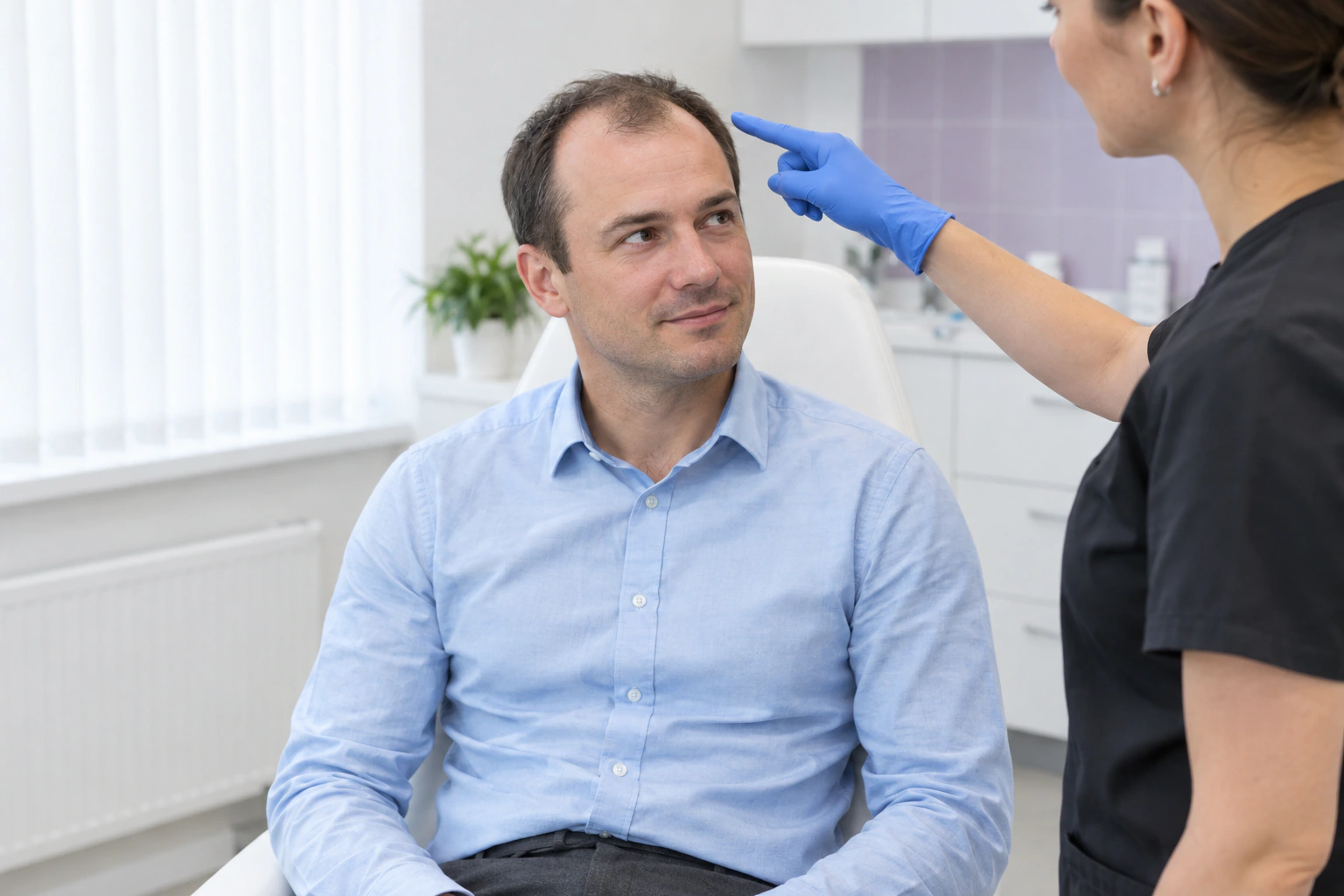

Hand over a number and nothing more. The coordinator requests messenger pictures of the thinning zone, a doctor looks them over and answers whether a transplant would help. Free, and nothing is booked.

services
The price depends on the graft count, which is done at the free consultation and recorded in the contract.
suture-free graft extraction

$2,200$2,700
or $367/mo — 0% instalments for 6 months
Claim this priceimplantation without channels

$2,500$2,900
or $417/mo — 0% instalments for 6 months
Claim this pricecombined technique

$2,700$2,900
or $450/mo — 0% instalments for 6 months
Claim this price| Your first meeting | Free |
|---|---|
| Eyebrow transplant, FUE | |
| Beard transplant, FUEinstalments $467/mo | |
| Hair trichopigmentation | |
| PRP therapy / session | $200 |
all included
We see it through: pre-op planning and 12 months of care.
You will not be asked for more on surgery day.
two more sites
Transplants are not limited to the scalp: the same grafts from the back of the head, the same FUE method, only the area changes.
FUE, no incisions and no stitches

We take grafts from the donor area at the back of the head and move them through micro-punctures of about 1 mm — no scars remain. Before the operation the doctor agrees the shape with you, taking your facial features into account. Transplanted hair grows for life: the beard is trimmed and styled as usual.
$2,800$3,000
or $467/mo — 0% instalments for 6 months
Claim this priceFUE, no incisions and no stitches

When you first sit down with the surgeon, the brow shape is drawn, reference images are looked at together and the proportions of your face guide the lines. Every hair is angled to natural growth, which is what keeps the brows convincing. It also helps where years of plucking stopped growth.
$1,600$1,700
an op you walk out of, under local anaesthesia
Claim this priceThe doctor will assess your donor area, count the grafts and show what result is possible in your case. The cost is quoted at the consultation and fixed in the contract.

Message our coordinator
Free online consultation · Reply within 15 minutes
Message us on TelegramMessage us on WhatsAppBy messaging us, you agree to our Privacy Policy
Process
From consultation to going home — all in one day

This first meeting is for understanding. FUE and DHI are explained, questions are answered, and the doctor examines what the donor area holds.

The booking is confirmed by a deposit, which may be paid on a card terminal at the clinic or arranged online.

Preparation rests on a list of analyses that the clinic gives you, with instructions attached to make it simple.

A local anaesthetic is applied, and the surgery goes ahead with no pain involved.

At this stage, grafts are taken from the donor area — back of the head or temples — through a stitch-free method.

Once harvested, the grafts are put in place across the area of hair loss.
Healing is supported by what the clinic provides and by detailed directions on using it.

Scabs disappear, the swelling goes down, the skin returns to normal

The shafts come out on schedule; the roots are untouched

First sprouts come through, the difference starts showing

The hair gains body, and the volume and hairline can be seen

Natural hairline and final density take their shape

Free, before the operation, leaving you free to think.
Discuss your optionsdoctors

Hair transplant doctor, trichologist, surgeon
10 years in practice

Dermatovenereologist, trichologist, surgeon
11 years of experience

Plastic surgeon
9 years of experience

Plastic surgeon
9 years of experience

Assistant
9 years of experience
The doctor will assess your donor area, count the grafts and say what result is achievable.
Discuss your optionscoordinators
Every patient has a coordinator of their own, from first contact until recovery is done.

Patient care coordinator
Will back you up before and after surgery
Will chase the papers and hold your slot

Patient care coordinator
Will back you up before and after surgery
Will chase the papers and hold your slot

Patient care coordinator
Will back you up before and after surgery
Will chase the papers and hold your slot
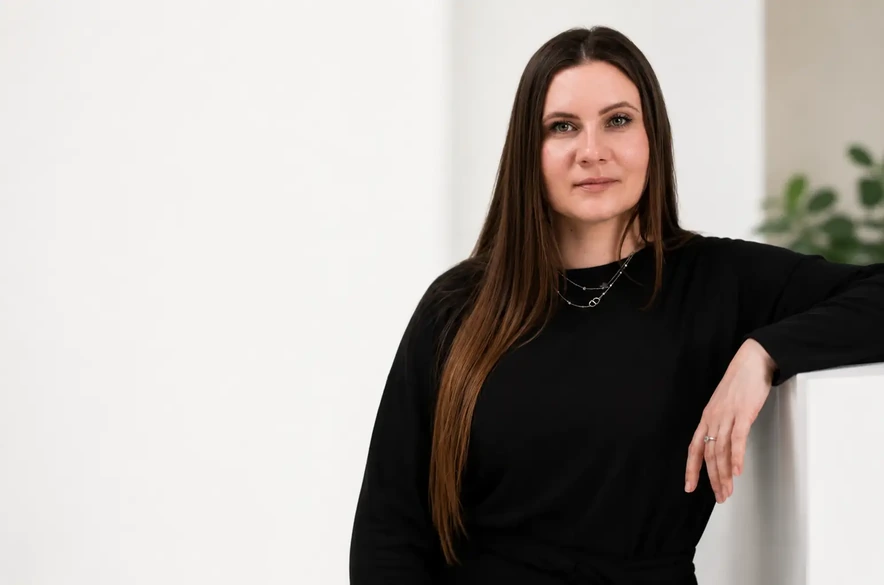
Patient care coordinator
Will back you up before and after surgery
Will chase the papers and hold your slot













We will answer the questions you have and find a convenient consultation time
Message us on WhatsApp Send an enquiryAsked all the time

Yes. Where you live has no bearing on being accepted, and the doctor reviews your photographs online first.
FUE: $2,200 (≈ R37,000). DHI: $2,500 (≈ R42,000). Combined: $2,700 (≈ R45,500). A free consultation and graft count gives you the final, contract-fixed price with no hidden extras.
It occupies a single day and patients then head home.
Nothing hurts: local anaesthesia is given before the work starts.
With FUE, grafts are taken by tweezer with no incisions. With DHI, grafts are implanted directly using a Choi pen, without pre-made channels. The combined method mixes FUE harvesting with DHI implantation.
Graft count is calculated by the doctor at no cost, based on an assessment of your donor zone.
Skin recovers over 0–10 days. A shed at 2–4 weeks is a normal phase, not a setback. Hair pushes through at 3–4 months, looks noticeably fuller between 6–9 months, and settles into its final form at 12–18 months.
Your procedure includes a lifetime hair-growth guarantee under contract.
The clinic works under a medical licence, care meets the standards and clinical guidelines
under Ministry of Health.

Look through the diplomas before trusting anyone with surgery
Check the documentsAKC POMOSHCH LLC
the clinic's legal entity
1057746096924
OGRN
7728536872
INN
The choice for a patient in East London lies between FUE and DHI, and either way the scalp is not cut, nothing has to be stitched, only local anaesthesia is used, and one day is all the operation takes.
The beginning in East London is photos and a conversation, and both are free: the doctor examines the thinning area on the pictures and counts the grafts. The clinic stays in touch 24/7, so you write when the day allows it.
Within 0-10 days the healing is behind you. At 2-4 weeks the transplanted hairs shed, which is normal, and the scalp looks bare again for a while. Growth begins at 3-4 months and the gaps fill in.
Prices are in US dollars; the amount in brackets is an approximate conversion to ZAR at the rate of 02.10.2026. The final price is fixed in your contract.
By messaging us, you agree to our Privacy Policy
What patients write after this operation. Reviews are translated from the original language.
Andrey M.
I had the operation a month ago. Before and after surgery they were always in touch and helped with questions about my tests. The operation itself went wonderfully, the staff are polite and masters of their craft, you feel you are in safe hands. I am recovering now, and they answer all my questions. I am happy and I recommend them!
DHI hair transplant
Pavel Sinitsyn
The best clinic of all the ones I was choosing from. No regrets at all! The result is simply amazing, I am thrilled. I recommend it to everyone: these people do great work and make people happy. Once again, a huge thank you to everyone. Roman, the head of the clinic, is the best: he was personally in touch with me and looked after my recovery. Thank you for making my dream come true.
FUE hair transplant
Maria Akopyan
I thought about an eyebrow transplant for a long time and finally went for it. At first I was afraid the result would look unnatural, but when I saw my new eyebrows I was delighted! They came out full and in harmony with my face. I can hardly believe that now I just wash my face and go, I have never felt so free. For anyone tired of constant make-up, a transplant is a real lifesaver!
Eyebrow transplant (FUE)
Alexander M.
I really wanted a thick beard, but I had problems with it. I tried every home remedy and minoxidil, and nothing helped. After a long search for the best clinic I settled on this one. Thank you so much for the service, I liked everything and now I am happy! I had the beard transplant 10 months ago and I am very pleased with the result. By the way, the music in the clinic was great, as far as I remember. A friend of mine has already come to you for a transplant on my advice and was also happy with the result. I wish you every success!
Beard transplant (FUE)
Vladimir Z.
I went to the clinic to see a trichologist and had a hair transplant. I really liked the doctor's approach, and all the recommendations helped. I want to point out that nobody tries to sell you extra services: they tell you things as they are, and if some treatment is not needed, they do not push it. Cosy and clean.
DHI hair transplant
Artem Popov
This may sound obvious, but a head of hair really changes everything in your life. You feel much more confident and go through life like a winner. And it is all thanks to the doctor at this clinic and to the staff who take care of their patients. Many thanks to the clinic for a happy life with new hair, for the comfortable conditions and for the professionalism during the hair transplant.
FUE hair transplant
East London, officially KuGompo City since February 2026, sits on the Indian Ocean coast of the Eastern Cape, largely between the Buffalo River and the Nahoon River. It is the second-largest city in the province, and it hosts the country's only river port. English is the first spoken language in the city and Xhosa is the second, so most people here are comfortable discussing a medical plan in English and can ask the surgeon detailed questions without a language barrier.
Population figures differ depending on the boundary. As of 2011, the city itself had a population of over 267,000, with over 755,000 in the surrounding metropolitan area. For a patient this means a mix of people from the centre, the suburbs and the wider Buffalo City area, all with different working routines and different amounts of free time.
Hair transplant by FUE or DHI is planned calmly and in advance. Grafts are taken from the back of the head, the donor area, and moved through micro-punctures of about 1 mm, so nothing scars over. City Medical Centre helps residents of East London prepare for this step remotely, from the first conversation to the follow-up months later.
You do not need to leave the city to start. The consultation is free and takes place online. You write to the coordinators on Telegram or Telegram, send photos of the front, the crown and the back of the head, and describe what bothers you: a receding temple, thinning on top, or patchy areas in the beard.
Coordinators are available around the clock, 24/7. This suits East London well, because many people work shifts in industry, at the port or in logistics, and can only write in the evening or at night. A coordinator will be on the phone 24/7, so a question that comes up late in the day does not have to wait.
During the consultation the doctor reviews your photos, discusses the shape with you before the operation and takes your facial features into account. You can ask about the choice between FUE and DHI, the density that is realistic for your donor area, and how the plan fits your calendar.
East London has an oceanic climate, bordering on humid subtropical, with warm temperatures and the moderation typical of the South African coastline. There is no true dry season, though winter tends to be drier, and spring and autumn are the wettest times of the year. This matters for the first days after the procedure, when the scalp is healing and you want to avoid sweat, damp and dirt on the treated area.
The sun is the main concern. The healing period is 0–10 days, and during this time the scalp should be protected from strong sunlight, as the surgeon will explain. Choose a loose, clean, breathable cap or head covering that does not press on the grafts, and ask the doctor which type and when you may wear it.
Plan your daily outings around shade and avoid long hours on open ground. Wind, salt air and dust from a windy day are better avoided while the small crusts are still present. Follow the washing instructions you receive from the medical team instead of improvising with local advice.
The city has an unusual weather feature. The all-time record high is 44 °C on 13 March 2021, and the hottest temperatures have been recorded in springtime and autumn rather than in summer, due to violent berg (foehn) winds. Warm air from the arid interior is heated further as it drops over the escarpment to sea level. For someone recovering from a hair transplant, such days mean extra sweating, dry air and dust.
There is no single perfect month. Winter is gentler on the scalp because it is cooler and there is less direct sun, and it is easier to wear a soft cap. Summer and the berg wind periods require more care, with more shade and a plan to stay indoors during the hottest hours. Discuss your preferred month with the coordinator and choose a date when you can stay calm at home for the first days.
Think also about the timeline. The shedding of transplanted hair comes at 2–4 weeks, and new growth at 3–4 months. If you want the hair to look fuller before a major event, count back from the date using the stages below, rather than from the day of the operation alone.
East London is the second largest industrial centre in the province, and the motor industry is the dominant employer. A major Daimler plant stands next to the harbour. Other industries include clothing, textiles, pharmaceuticals and food processing. Many residents therefore work in factories, warehouses, offices or at the port, where helmets, caps and dusty conditions are part of the day.
If your work requires a helmet or a hard hat, say so during the consultation. The surgeon can tell you how long to avoid pressure on the treated area, and whether you should arrange a temporary change of duties. Office staff usually have more flexibility, but should still plan the first days off with their employer.
Students at the University of Fort Hare, Walter Sisulu University, UNISA or a private college can plan around the academic calendar. A quiet period between terms gives time for healing without the stress of lectures and exams, and the visible phase of shedding passes before you return to a busy schedule.
Sport is a large part of life in East London. Soccer, cricket and rugby are popular, and the city has a strong running and triathlon tradition, including the Buffalo marathon held in February or March each year, and events that start from Orient Beach. Many patients ask when they can return to training.
The answer is gradual. In the first days, rest and avoid anything that makes you sweat heavily or risks a knock to the head. Contact sports such as rugby, or ball games in which a head impact is possible, need the doctor's permission. Running, cycling and swimming are resumed according to the individual plan and the rules for pool and sport that the medical team gives you, not by guesswork.
The sea and the pool deserve special attention. Salt water, chlorine and sun on a healing scalp are not a good mix in the early period. Ask the surgeon exactly when you may go back to the beach, and how to protect the area from the sun when you do. If you are preparing for a race, choose the date of the operation so that the early recovery does not fall in the weeks of heavy training.
The timeline is the same for everyone, although the speed differs between individuals. 0–10 days for healing, 2–4 weeks for normal shedding of transplanted hair, 3–4 months for new growth to start, 6–9 months for real density, and 12–18 months for the final result. Knowing this in advance prevents panic when the hair falls out at 2–4 weeks, which is expected.
One patient described it this way: now the result truly makes them very happy. From about the 4th month active, even growth began. The transplanted hair took very well, the beard now looks as natural as possible, no bald patches are left, and the beard became much thicker and denser, with the shape they had thought about for a long time. Your own result will depend on your donor area and your care, but the pattern of stages is similar.
Transplanted hair grows for life, so you can trim and style the beard as usual. Visible thickening comes at 6–9 months, and the settled look at 12–18 months. Avoid judging the result before these points, and take comparison photos in the same light at each check-up.
East London began as a river port. John Bailie surveyed the Buffalo River mouth and founded the town in 1836, and it was first known as Port Rex before being renamed London, hence East London. It became a city in 1914. In February 2026 its official name changed to KuGompo City, said to come from the sound of waves crashing against Gompo Rock, a sacred site for the Xhosa. Many residents still say East London or eMonti in daily speech, so it helps to tell the coordinator which name you use when you write.
A city that has changed its name is a good reminder that a change in appearance is a personal decision taken at your own pace. Patients here often tell us they spent a long time thinking about the shape of the hair line or the beard before writing. Use that time well: collect photos of the look you want, in daylight, and send them with your own pictures so the doctor can discuss the shape with you before the operation.
Life in the city is spread across many areas: the West Bank, with the harbour and the Industrial Development Zone established in 2004; Nahoon, known for its reef; Gonubie to the north; Amalinda, Parkside, Buffalo Flats and Duncan Village; and Mdantsane, which belongs to the same metropolitan municipality together with Qonce and Bhisho. Distances between these areas, and the routines of the people who live in them, differ a great deal.
This matters for planning, because the online consultation and the remote check-ups at months 1, 3, 6, 9 and 12 are the same wherever you live. A person in Mdantsane, a shift worker on the West Bank and a student near Nahoon all send photos in the same way, in their own time, and the coordinator replies around the clock. Choose a quiet room with daylight at home for the photos, so that each set can be compared with the previous one.
The Daimler plant beside the harbour, the new car terminal and the Industrial Development Zone make the motor industry the main employer. Clothing, textiles, pharmaceuticals and food processing add to it. Many families here have several members on shifts, so time off is usually negotiated well ahead.
If you work near the port or on a production line, agree your days off before you fix the date of the operation. Healing takes 0–10 days, and the visible shedding at 2–4 weeks is easier to live with if you know that you will not need to present yourself at a customer counter or a ceremony at that moment. Ask the surgeon what to say to your employer about caps and protective equipment in the first weeks.
Sport defines the weekends. Buffalo City Stadium, which hosted a 1995 Rugby World Cup game, and Buffalo Park, where cricket from the 2003 World Cup and two Indian Premier League matches were played, are part of local pride, and many schools in the city produce rugby players. Others spend time at Nahoon Reef, the surf spot that hosts the Nahoon Surf Pro, or on the Buffalo River, where the Buffalo Regatta has run since 1881.
Surfers, rowers and club rugby players ask the same question: when can I go back? The answer comes from the doctor and the plan you receive, not from teammates. Ask about helmets and scrum caps, salt water and sun separately, because each has its own rule. If you take part in the Buffalo marathon, which is held in February or March, work backwards from the race and keep the early healing phase away from the weeks of hard training.
Hudson Park, Selborne College, Stirling, West Bank and the other local schools, together with the University of Fort Hare and Walter Sisulu University, give the city a lively calendar of school events, graduations and weddings. Photographs at such events last for years, which is why many patients want the new growth to be visible by then.
Count the stages: new growth starts at 3–4 months, the hair becomes visibly thicker at 6–9 months, and the settled look comes at 12–18 months. For a graduation or a wedding, plan the operation so that the event falls well after the shedding phase, ideally in the thicker stage, and tell the coordinator the date at the very first conversation.
We stay with you from pre-op planning to 12 months later. Check-ups are at months 1, 3, 6, 9 and 12, and they are done remotely, so a patient in East London does not need to rearrange work or study for them. Send photos on schedule, and the coordinator will pass them to the doctor.
Prepare your questions in advance. Ask which technique, FUE or DHI, suits your case and why. Ask how the hair line or the beard shape will be designed, how many sessions might be needed, which medicines and shampoos to use, when the crusts fall off, and what to do about sun and wind on windy days. Ask what signs mean you should write to the coordinator at once.
Candidates are, in general terms, adults with a stable pattern of hair loss and enough healthy hair in the donor area. Caution is needed with active skin disease of the scalp, unstable chronic conditions, blood clotting problems or unrealistic expectations. Only the doctor can decide after reviewing your photos and medical history, so be honest about medicines and past illnesses.
Yes. The consultation is free and online. You write to the coordinators on Telegram or Telegram, send photos and receive an assessment from the doctor. Coordinators are available 24/7.
English is the first spoken language in East London, and you can discuss all details with the coordinator in English.
Both are methods of moving your own hair. Grafts are taken from the back of the head, the donor area, and moved through micro-punctures of about 1 mm, so nothing scars over. The doctor will advise which method fits you.
Yes, and this is normal. Transplanted hairs let go at 2-4 weeks. New hair comes back at 3-4 months, becomes visibly thicker at 6-9 months, and the settled look appears at 12-18 months.
The healing period is 0–10 days. During this time protect the scalp from the sun, dust and sweat, and follow the doctor's instructions on washing and head covering.
Heat, strong sun and dusty berg wind days make recovery harder, so plan the first days in shade or indoors. Many people find the cooler months more comfortable, but you can choose a date together with the coordinator.
The doctor gives the exact dates for sport, pool and sea. Do not go back to contact sports or the beach until you are told it is safe, because knocks, salt water, chlorine and sun can harm a healing scalp.
Yes. Transplanted hair grows for life, so you can trim and style the beard as usual.
We stay with you from pre-op planning to 12 months later, with check-ups at months 1, 3, 6, 9 and 12. A coordinator will be on the phone 24/7.
Either name is fine. Since February 2026 the official name is KuGompo City, but the coordinators understand both, and the consultation is the same.
Ask the surgeon how long to avoid pressure from a helmet or hard hat on the treated area, and plan days off for the 0–10 days of healing.
The doctor sets the date for sea and sun after your operation. Do not return to the waves or contact sport until you have been told it is safe.
Count back from the date: shedding at 2–4 weeks, new growth at 3–4 months, visibly thicker at 6–9 months, settled look at 12–18 months.
Page medically reviewed by Anastasia A. Kolesnik, hair transplant doctor. Review date: .

 Forceps
 Minimal


