


























Hair transplantDenmark6 min read
Simon Talbot and his hair transplant – in his own words
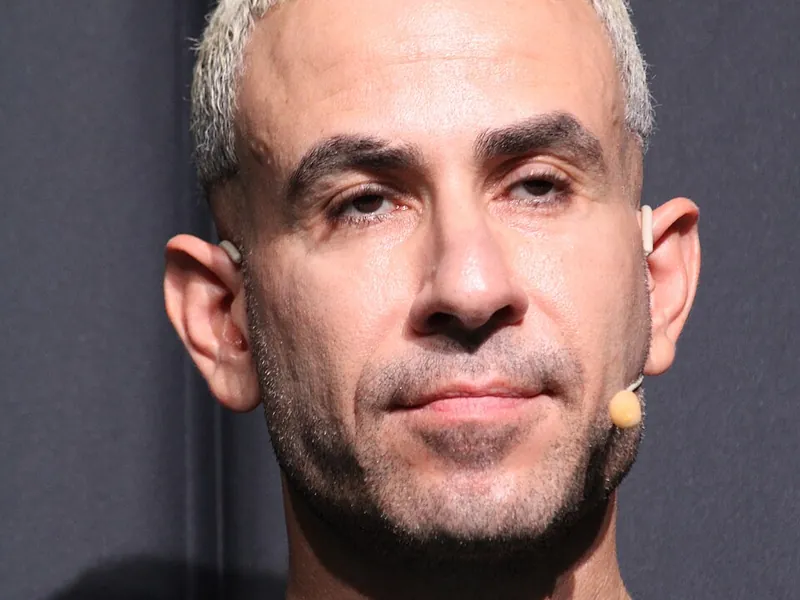
In May 2024 the Danish comedian Simon Talbot explained why, after years with a shaved head, he travelled to Greece for a hair transplant. Below is what he said, where it was published, and what the procedure involves for anyone considering it today.
By messaging us, you agree to our Privacy Policy
The main points in 30 seconds
- In May 2024 Simon Talbot told Ritzau Fokus that he had travelled to Greece for a hair transplant.
- He started losing his hair at about 29, shaved his head, and later felt the bald look made him seem too hard on stage.
- A hair transplant is done under local anaesthesia, and you go home the same day.
- Transplanted hairs shed in weeks 2–4, new hair grows from months 3–4, and the final result is assessed at 12–18 months.
- At City Medical Centre a hair transplant starts at $2,200 for FUE, and the first consultation is free.
Key facts about the procedure
- Stay in clinicSame day
- Final result12–18 months
- AnaesthesiaLocal
- Price
$2,700from $2,200
Profile
Simon Talbot
- Country
- Denmark
- Who
- Danish stand-up comedian and TV host
- Quote source
- Ekstra Bladet, 17 May 2024
I thought I looked too hard when I was on stage. If I played a character who behaved like a psychopath, I could feel the audience pulling back. People reacted to the way I looked on stage.
What did Simon Talbot say about his hair transplant?
In May 2024 the Danish comedian Simon Talbot talked about his hair transplant in an interview with the news agency Ritzau Fokus, published by Ekstra Bladet and also reported by SE og HØR. The topic came up because his new hair was a running joke in the Prime Video show “Roasted: Verdens sjoveste ferie”, where six comedians roast each other.
He explained that he started losing his hair at about 29. Instead of waiting, he shaved his head: “I actually thought I wouldn't care, but when my hair loss began, I thought: I can't even be bothered to wait until I'm completely bald. I'll just shave it all off.” After several years with a shaved head he travelled to Greece for a hair transplant.
His reason was very specific to his job: “I thought I looked too hard when I was on stage. If I played a character who behaved like a psychopath, I could feel the audience pulling back. People reacted to the way I looked on stage.” He added: “I'm not a hard type, but apparently it was my hair that made me look hard.” A manager in England, where he also performs stand-up, told him: “You took your hair off. I think you should get it back.”
That is everything we rely on. He did not name the technique, the number of grafts or the exact date, so this article does not guess at them. Where methods and timelines are described below, they refer to hair transplantation in general, not to his treatment.
What his words tell us
Talbot's story is a useful counterweight to the idea that a hair transplant is pure vanity. For a performer, the way the audience reads your face is part of the work, and he describes the decision almost as a practical one. He also approached it calmly: “If I get hair again, that's great, and if it doesn't work, I'll just carry on being bald.”
He noted that acquaintances and strangers have since asked him how he got his hair back, and that he believes many men would do the same: “I think it's much more normal than people imagine. It's just not something people advertise.” Male pattern hair loss (androgenetic alopecia) is indeed very common and usually hereditary. A transplant does not stop the process; it moves hair that is resistant to it from the back of the head to the areas that have thinned. Whether that makes sense for you is a medical decision best made with a doctor who has examined your scalp and donor area.
Hair transplant abroad: choose a city and clinic
Prices, the clinic and a free online consultation for each city:
How a hair transplant works today
A modern hair transplant is an outpatient operation under local anaesthesia. Follicles are taken one by one from the donor area, usually the back of the head and the sides, and implanted where hair is missing. The main techniques are:
- FUE — grafts are extracted individually through tiny punctures and placed into channels prepared by the surgeon. No linear incision and no stitches.
- DHI — grafts are implanted with a special implanter pen without pre-made channels, which gives fine control over angle and direction.
- Combined DHI+FUE — FUE extraction followed by DHI implantation.
How grafts are placed
- FUE
- Into channels made in advance
- DHI
- Directly with an implanter pen
Anaesthesia
- FUE
- Local
- DHI
- Local
Stitches
- FUE
- None
- DHI
- None
Typical use
- FUE
- Larger areas such as the crown, more grafts
- DHI
- Hairline and dense packing of smaller zones
Price at City Medical Centre
- FUE
- $2,200
- DHI
- $2,500
For someone who has shaved off thinning hair for years, the key questions are how much donor hair is available and how large the area to cover is. That is why the method and number of grafts are chosen at a consultation.
Who is a good candidate, and how to prepare
A transplant works best when the donor area is dense enough to give grafts and the pattern of hair loss is clear and stable. Typical reasons people consider it:
- a receding hairline or thinning at the crown;
- generally low density after years of gradual hair loss;
- hair loss after injury, burns, illness or hormonal disorders.
There are contraindications, including patchy (focal) alopecia, age under 18, trichotillomania, body dysmorphic disorder, cancer, severe heart disease, diabetes mellitus, epilepsy, a pacemaker and intolerance to anaesthetics. After booking, the patient receives a list of tests and instructions for the days before surgery.
Recovery and results
The patient goes home the same day. For about ten days the scalp heals and small crusts fall off. In weeks two to four the transplanted hairs usually shed; this is expected, because the follicles stay in place. New growth starts after three to four months, density becomes clearly visible at six to nine months, and the final result is judged at 12–18 months. The timeline below shows the usual stages.
How hair transplant results usually develop
- Day of surgeryLocal anaesthesia, grafts are taken and implanted; you go home the same day.
- Days 1–10The scalp heals and small crusts fall off; you follow the washing and sleeping instructions.
- Weeks 2–4Transplanted hairs shed. This is expected: the follicles remain under the skin.
- Months 3–4New hair begins to grow, often fine at first.
- Months 6–9Density becomes clearly visible.
- Months 12–18The final result can be assessed.
A hair transplant at City Medical Centre
City Medical Centre performs FUE, DHI and combined hair transplants for international patients. The first consultation is free and can be held online: send photos of your hair and donor area, and the doctor estimates the number of grafts and names the price, which is then fixed in the contract. Prices start at $2,200 for FUE, $2,500 for DHI and $2,700 for the combined method. The price includes dressings, follow-up appointments at 1, 3, 6, 9 and 12 months and a lifetime guarantee of hair growth.
More details are on the hair transplant page; to book a free consultation, leave a request there or write to us on Telegram.
To be clear: City Medical Centre has no connection with Simon Talbot or his treatment. His words are quoted here because he chose to talk about his hair transplant publicly.
Hair transplant prices in this article are the current offer, valid until 31 October 2026. Regular prices: FUE $2,700, DHI $2,900, combined method $2,900. The price that applies to you is confirmed at the consultation.
Frequently asked questions
Did Simon Talbot have a hair transplant?
Yes. In May 2024 he told Ritzau Fokus, in an interview published by Ekstra Bladet, that he had travelled to Greece for a hair transplant after several years with a shaved head.
Why did Simon Talbot decide to get his hair back?
He said he looked too hard on stage with a shaved head, that audiences reacted to it, and that an English manager told him he should get his hair back.
When did he start losing his hair?
He said his hair loss began when he was about 29, and that he chose to shave his head rather than wait.
How much does a hair transplant cost at City Medical Centre?
Prices start at $2,200 for FUE, $2,500 for DHI and $2,700 for the combined method. The final price is given after the free consultation and fixed in the contract.
When is the final result visible?
New hair usually starts growing after three to four months, density is clearly visible at six to nine months, and the final result is assessed at 12–18 months.
Sources
What the article says about the celebrity is based only on these public statements.
- Ekstra Bladet (Ritzau Fokus), 17 May 2024
- SE og HØR, 17 May 2024
Considering the same operation? Get a free consultation
We reply right in the chat — you can send photos
- The first consultation is free, online consultations are available
- The doctor names the cost after the assessment, and it is fixed in the contract
- A personal coordinator guides you from the first message to recovery
In other cities
Read also
 Hair transplant
Abdel Aziz Mahmoud and his hair transplant: in his own words
Danish TV host Abdel Aziz Mahmoud has spoken openly about his two hair transplants. His own words, how the procedure works and what recovery involves.
 Hair transplant
John Cena's hair transplant: “I got a problem, I try to fix it”
John Cena spoke openly in 2025 about his hair transplant and the fan signs that pushed him to it. His words, how the procedure works and the recovery.
 Hair transplant
Wayne Rooney's hair transplant: the tweets that started a conversation
Wayne Rooney announced his hair transplant on Twitter in June 2011. His exact words, what the procedure involves and how the first months usually go.
 Hair transplant
Am I a Good Candidate for a Hair Transplant? Age, Hair Loss Type and Health
Who is a good candidate for a hair transplant, is there an age limit, is 22 too young or 60 too old, and who should not have the surgery. A practical checklist.