City Medical Centre · multi-specialty surgery clinicOpen 24/7

Tummy tuck

Tummy Tuck in Zawiya: Methods and Recovery

Free consultation

Price at consultation

The price is fixed in the contract before surgery
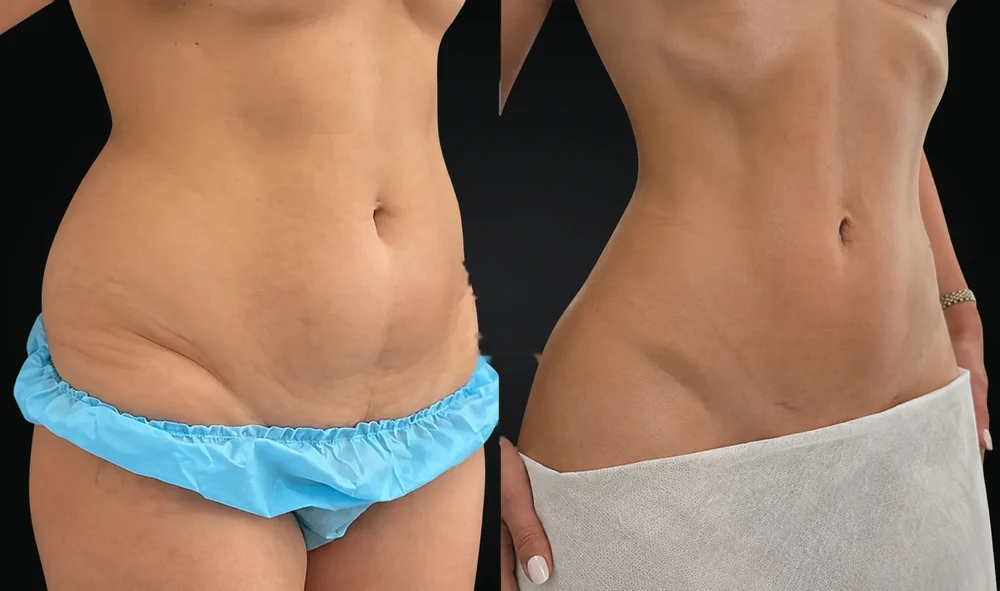
Real case
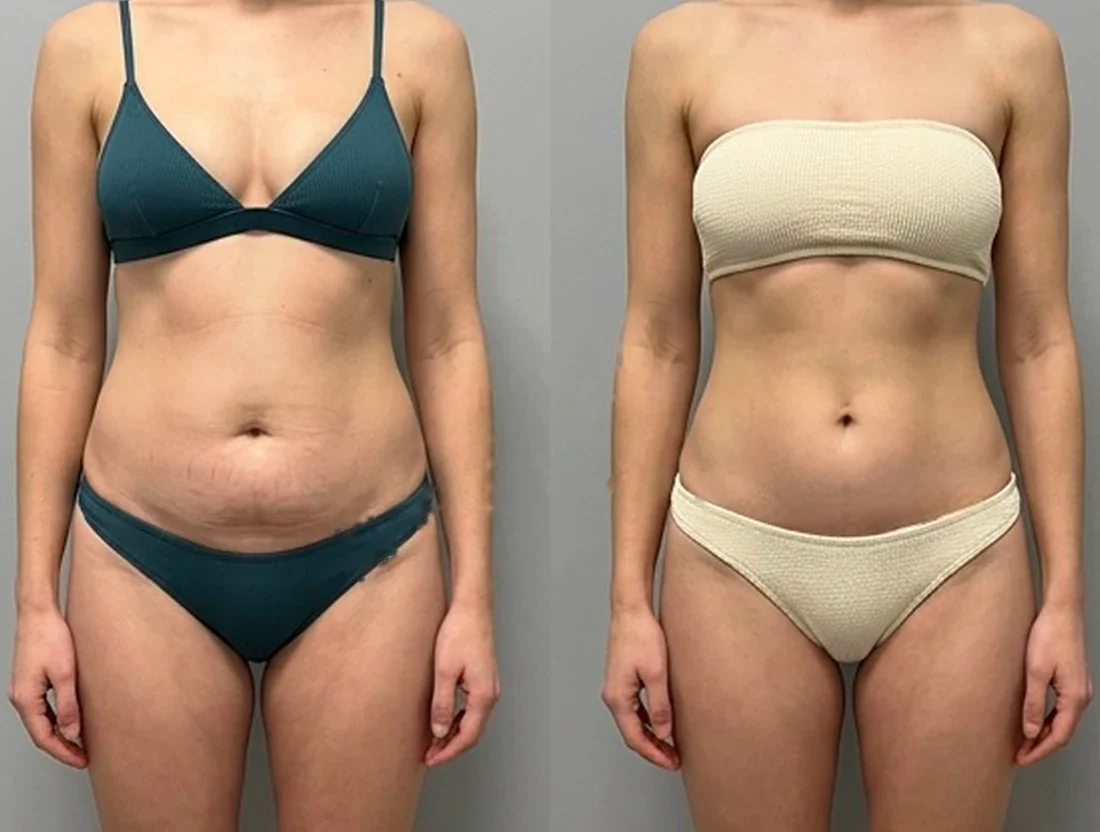
Tummy tuck: a patient's abdomen before and after surgery before after
A flat tummy and a toned silhouette in one operation. Your individual surgical plan and the expected result are discussed at the consultation

Message our coordinator

Free online consultation · Reply within 15 minutes

Message us on Telegram

By messaging us, you agree to our Privacy Policy

Results

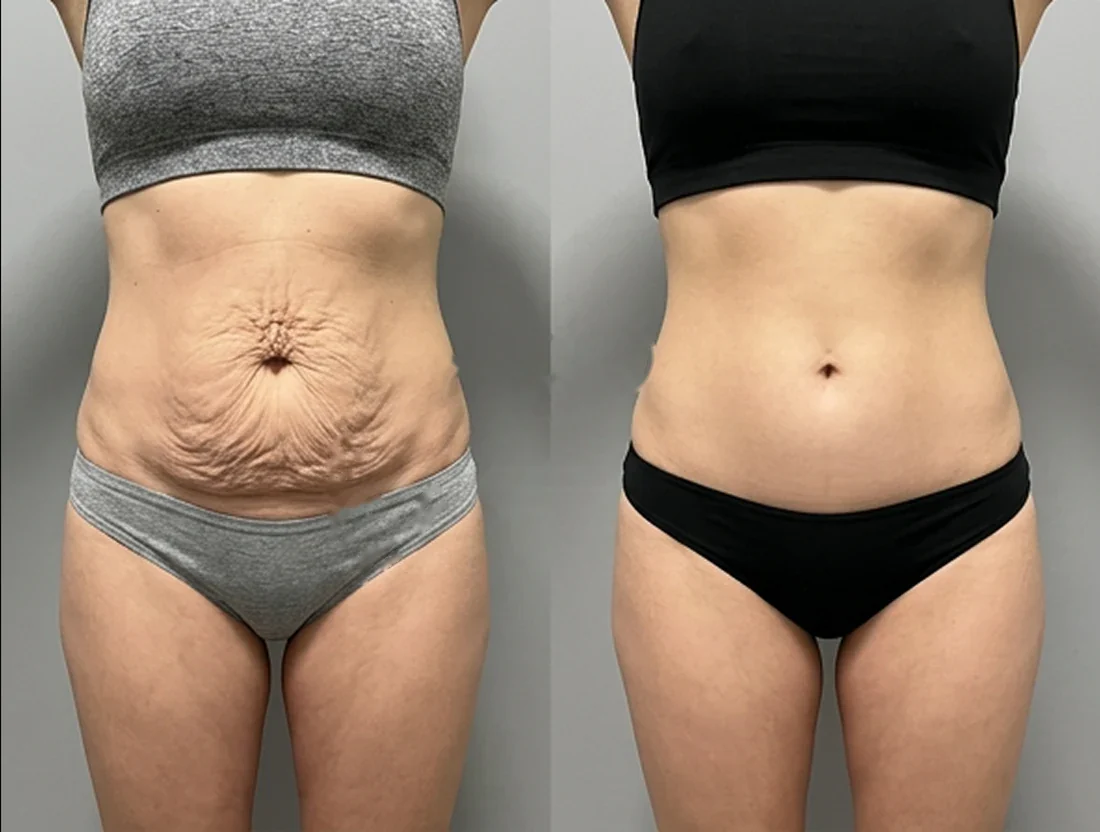
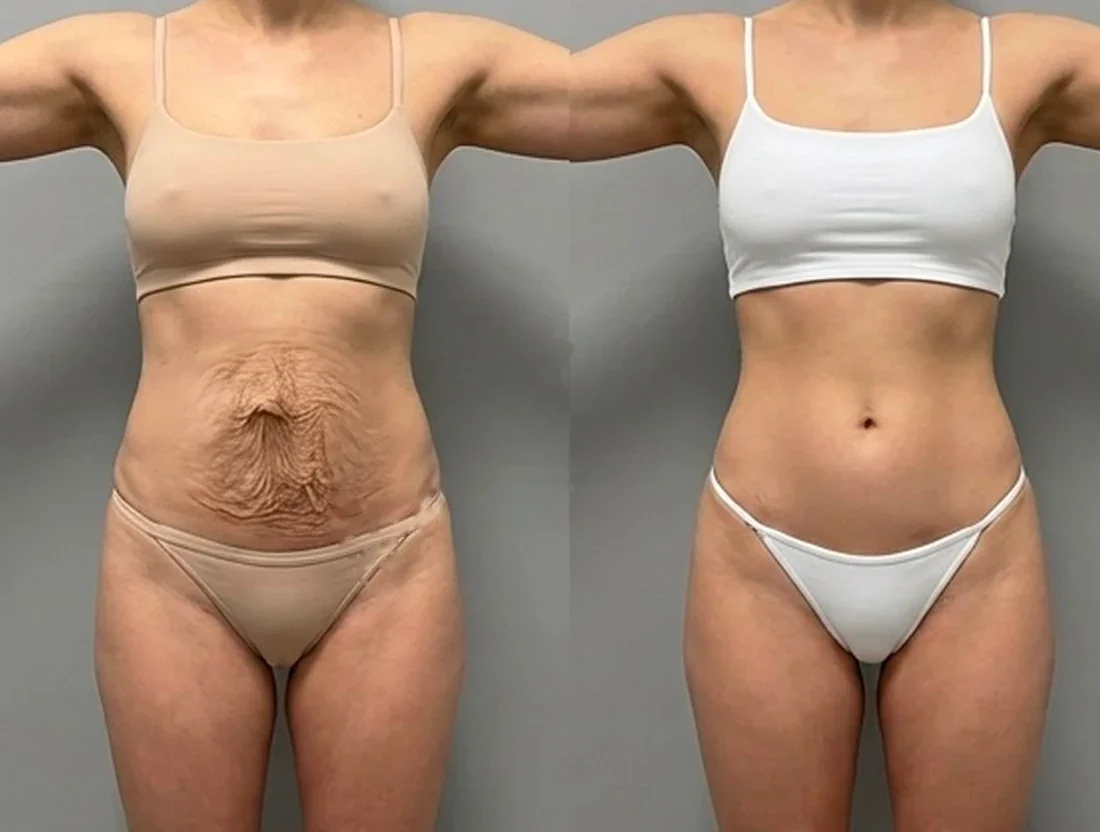
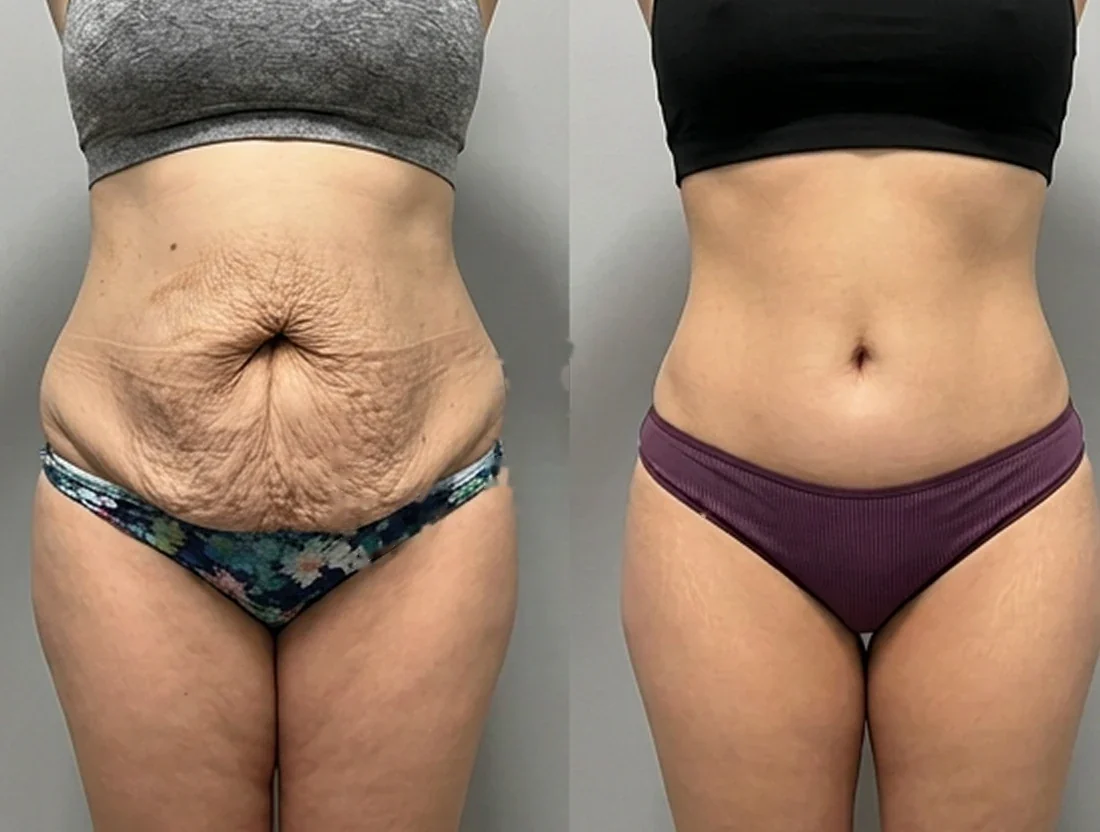
Tummy tuck results
of our patients

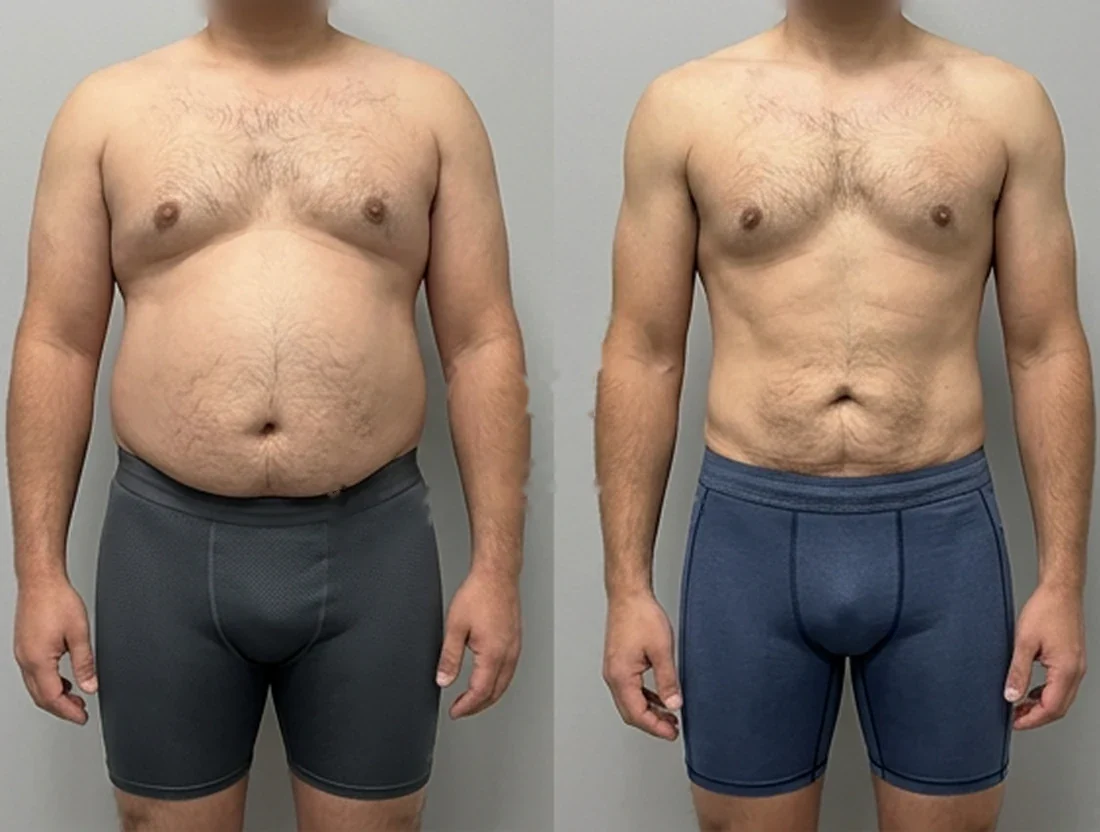
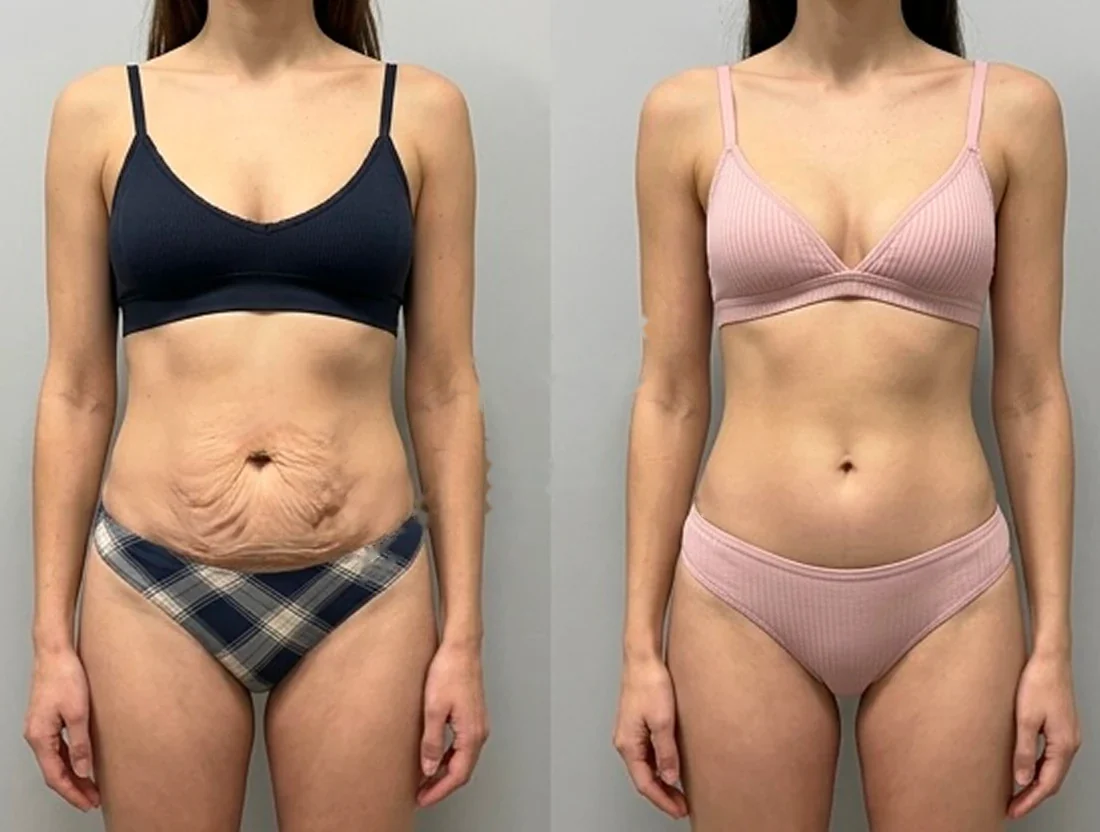
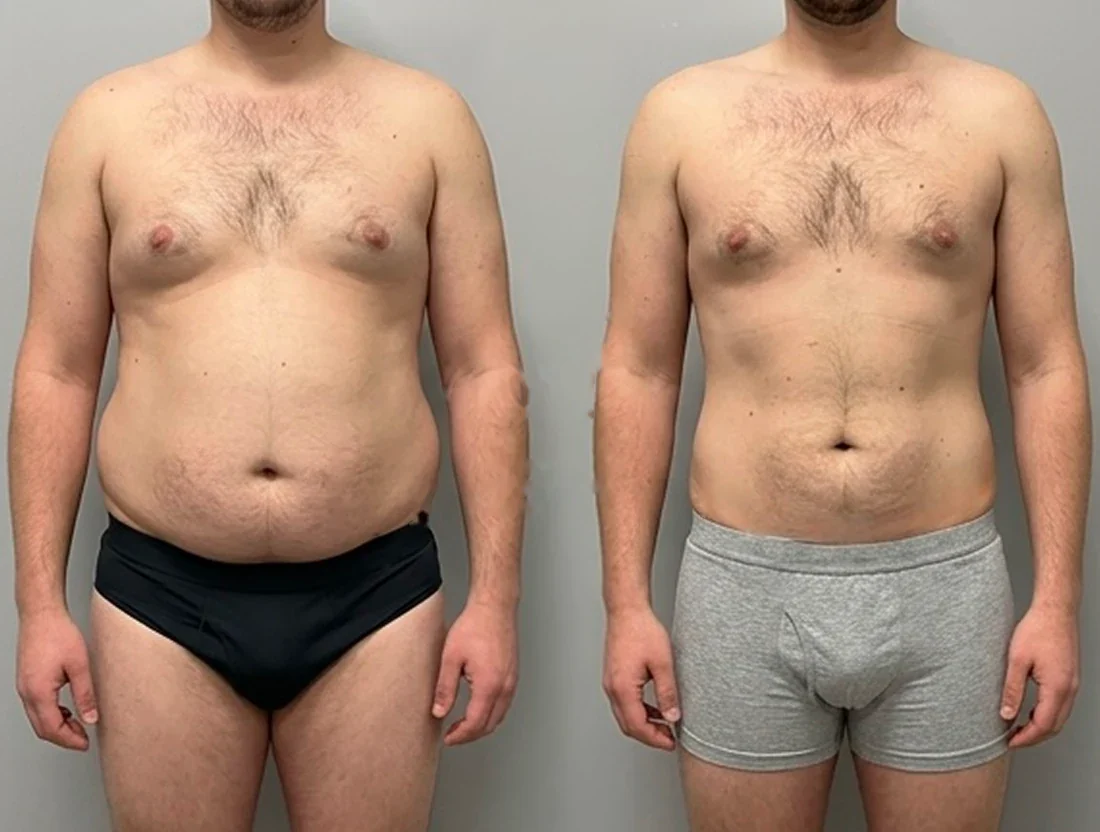
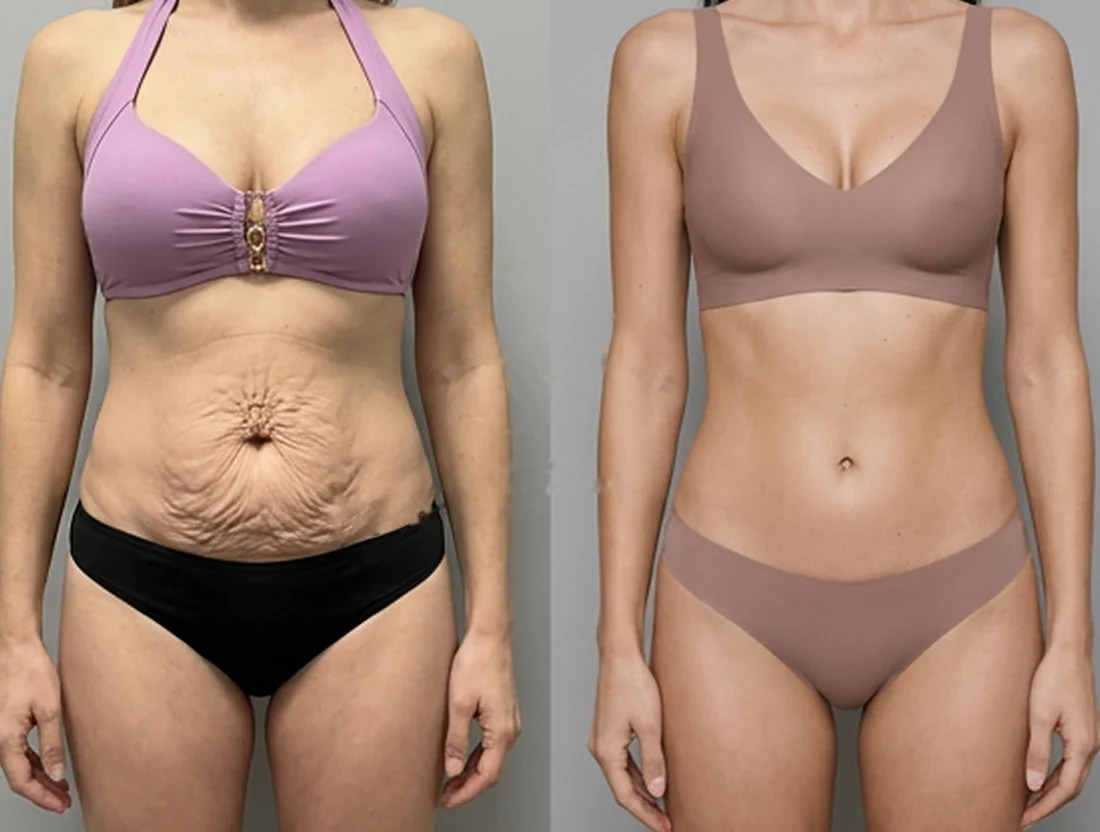
All cases are real patients. Faces and identifying details are hidden.

Tummy tuck: a female patient's abdomen before and after surgerybeforeafter
Tummy tuck: a male patient's abdomen before and after surgerybeforeafter
Tummy tuck: a female patient's abdomen before and after surgerybeforeafter
Tummy tuck: a male patient's abdomen before and after surgerybeforeafter
Tummy tuck: a female patient's abdomen before and after surgerybeforeafter
1 of 8

Comparison

Tummy tuck techniques

A tummy tuck is done as a full (classic) or mini operation, or combined with liposuction as lipoabdominoplasty. Compare the scope of surgery, the indications and the expected results to choose the right technique together with your surgeon.

Tummy tuck

Removal of excess skin, abdominal muscle tightening
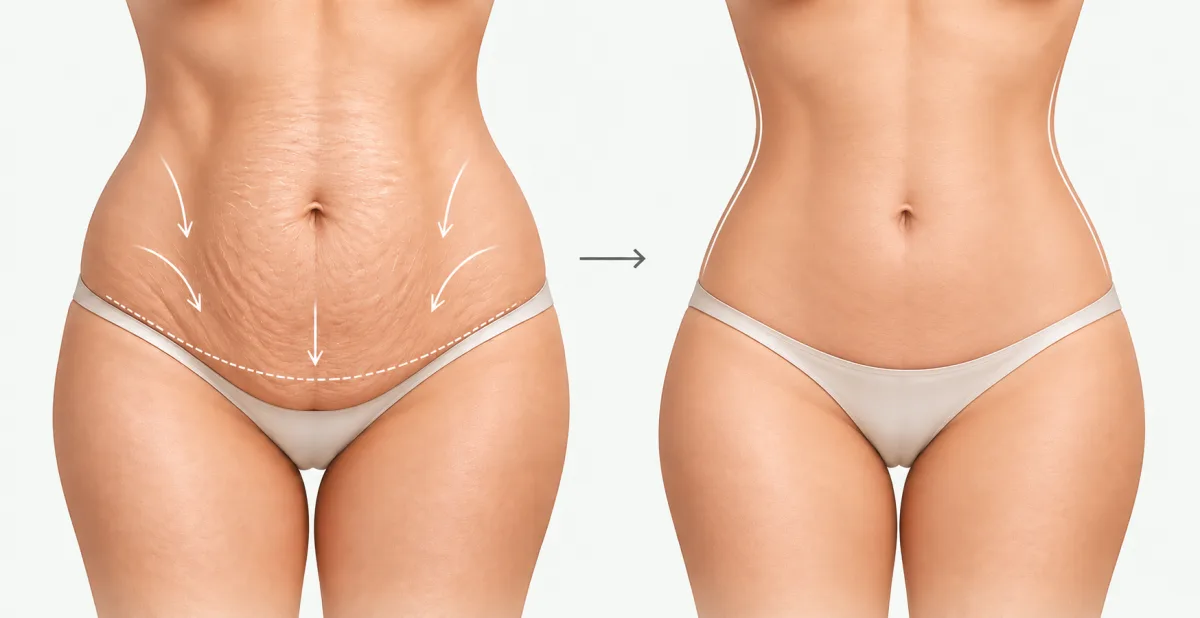
Tummy tuck diagram: the abdomen before surgery with the incision line, and the result
Main goal
Removal of excess skin, diastasis repair
When it is done
Excess skin after childbirth or weight loss
Anaesthesia and stay
General anaesthesia, up to 3 days in hospital

Lipoabdominoplasty

Tummy tuck with added liposuction
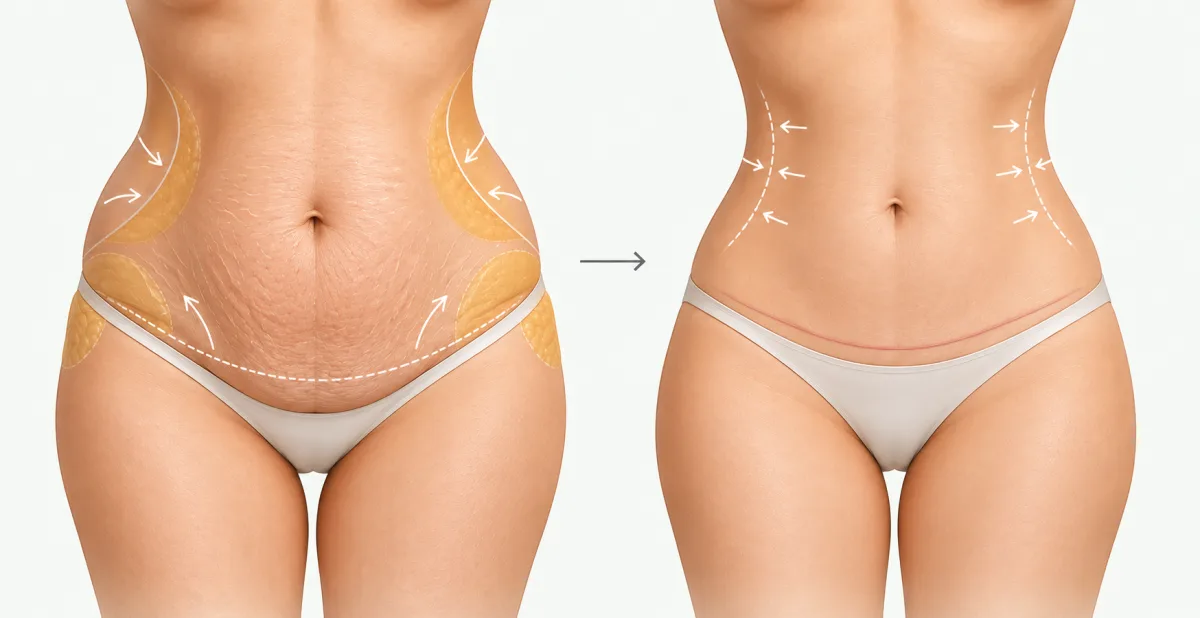
Lipoabdominoplasty diagram: the abdomen with fat on the flanks before surgery, and the result
Main goal
Tummy tightening and waist contouring
When it is done
For fat deposits on the flanks and waist
Anaesthesia and stay
General anaesthesia, up to 3 days in hospital

The benefits and recovery times shown are averaged for each technique and given for guidance: the scope of correction and rehabilitation depend on your anatomy and individual features, and the surgeon confirms them at the consultation.

At the consultation the surgeon draws up a plan for your case and explains how your tummy tuck will go.

Free, before surgery and with no obligation.

Book a consultation

Tummy tuck from the inside

About the clinic

A clinic where you can feel at ease

Modern equipment, comfortable rooms and care for every patient

A doctor and a patient in a clinic ward

Contact us the way that suits you

We will answer your questions and find a convenient time for a consultation

A tummy tuck is not for everyone

If your case can be solved without surgery, the doctor will tell you so at the consultation — and you will not spend money for nothing.

Suitable

A surgeon shows a patient on a model and a monitor how the abdominal contour changes after a tummy tuck
  • Rectus abdominis diastasis
  • Skin folds after weight loss
  • Loose abdominal skin
  • Stretched skin after pregnancy
  • A distorted abdominal contour

Not suitable

A surgeon discusses the indications and contraindications for a tummy tuck with a patient
  • Acute infections
  • Severe disease of the heart, kidneys or liver
  • Disorders of blood clotting
  • Age under 18
  • Decompensated diabetes
  • Cancer
  • Skin inflammation in the surgical area
  • Currently pregnant or breastfeeding

Not sure the surgery is right for you?

Message us — the coordinator will ask for your photos in the messenger, and the surgeon will tell you whether a tummy tuck suits you. No surgery booking needed.

Find out if it suits me

A surgeon goes through a tummy tuck diagram with a patient at the consultation

Prices

You know the price
before surgery

The price is set at the consultation and fixed in the contract.

Other services

  • First consultationFree
  • Liposuction of the abdomen and flanksfrom $1,700
Book a consultation

Find out your tummy tuck plan and price

The surgeon assesses your abdominal skin and muscles, listens to your wishes and chooses the right correction technique.
The price is set at the consultation and fixed in the contract.

A nurse talks to a patient in a clinic ward

Message our coordinator

Free online consultation · Reply within 15 minutes

Message us on Telegram

By messaging us, you agree to our Privacy Policy

A patient's abdomen before a tummy tuck in the operating room

all inclusive

What the price includes

From preparation for surgery
to post-op check-ups.

  • All scheduled dressings
  • Scheduled post-op check-ups
  • A personal coordinator on call
  • Compression garments fitted on the day of surgery
  • A stay in a comfortable
    hospital ward with meals
  • Individual recommendations
    for recovery
  • Remote progress monitoring
    by photos

How it works

Three days at the clinic —
from preparation to discharge

An agreed correction plan, inpatient observation and post-op check-ups.

A doctor shows a patient a tummy tuck diagram on a monitor1

Consultation
and the surgical plan

The surgeon assesses your abdominal skin and muscles and checks for diastasis, listens to your wishes and chooses the right correction technique.

Paying the deposit by card at the clinic reception2

Booking the date
of surgery

We reserve a surgery date for you: the deposit can be paid by card at the clinic or online by bank transfer. The terms are fixed in the contract for medical services

A blood sample tube for tests before a tummy tuck3

Check-up before
surgery

Before surgery you complete a full lab check-up: blood tests, an ECG, a chest X-ray and reports from the required specialists.

The surgical team during the operation4

Surgery

The surgeon performs the tummy tuck with the chosen technique, repairs diastasis if needed and shapes a firmer abdominal contour.

A hospital ward at the clinic5

Inpatient stay

After surgery the patient stays for 1–3 days in a comfortable hospital ward with meals, under medical supervision.

A surgeon and a patient in the ward during recovery6

Recovery

After surgery you get a recovery programme. Check-ups at 7 days, 3 and 6 months help track your recovery.

Book a free consultation — the surgeon will plan every step with you.

A doctor discusses the tummy tuck plan with a patient
Book a consultation
A doctor discusses the tummy tuck plan with a patient

How it really happens

Recovery after a tummy tuck

For 1–3 days right after surgery the patient stays in hospital under medical supervision. Drains are usually removed after two days, stitches after 7 days. You wear a compression binder for 1.5–2 months; it supports the abdominal wall and shapes a smooth contour. Office work resumes after 2–3 weeks, and most swelling goes within 30 days. Sports, sauna and heavy lifting are off-limits for 2–3 months, and at first sleeping on your back with knees bent is advised. By 12 months the scar is fully mature and fades to barely noticeable.

Post-op check-ups

After 7 days, at 3 months and at 6 months. Until the end of the year, get a post-surgery consultation with your surgeon to review results and get more information, at the clinic's expense

Advantages

Reasons to choose City Medical Centre

A surgeon discusses the tummy tuck plan with a patient at the consultation

Just find out — you lose nothing

At the consultation we discuss your wishes and assess your abdominal skin and muscles. The surgeon explains what changes are possible, chooses the correction technique and answers your questions.

A surgeon on a video call with a patient after surgery

We stay with you after surgery

The surgeon follows your recovery and the changing abdominal contour at check-ups after 7 days, 3 and 6 months. Check-ups, dressings and aftercare advice are already included in the price of surgery.

A surgeon shows a patient a model and tummy tuck diagrams

A beautiful contour that fits your figure

We choose the correction technique based on your skin, muscles and figure. Our aim is a harmonious abdominal contour that keeps the natural proportions of your body.

A patient writes down a convenient visit time in her planner

Your schedule is our priority

We respect your time: we work 24/7, with easy booking and a personal approach — we adapt to your pace.
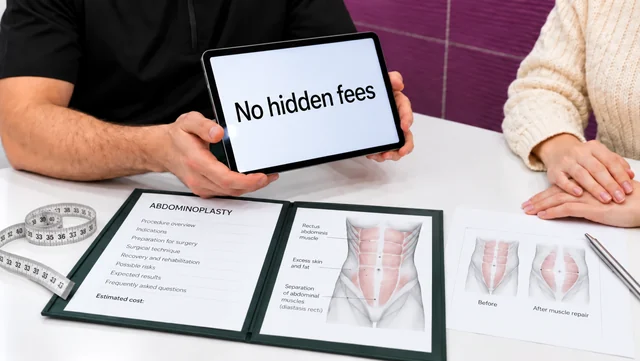
A surgeon shows a patient the fixed price of surgery with no extra charges

Fixed prices

After the consultation the surgeon defines the extent of correction, and you get a clear price for the surgery — no surprises on the way to the result you want.

A surgeon visits a patient in the hospital ward after surgery

Round-the-clock care after surgery

Recovery starts in a comfortable hospital ward under round-the-clock nursing care. The stay and meals are already included in the price.

FAQ

We answer what
people ask before booking

Tummy tuck in Zawiya: what you should know

What exactly changes? The surgery removes sagging skin and the fat apron entirely, and stretch marks below the navel go with them. The upper abdominal skin is pulled downward, so the tummy becomes smooth. If the rectus muscles have separated, they are brought together in the same operation. For anyone researching a tummy tuck in Zawiya, removed skin does not grow back, so that part of the result is permanent.

Recovery has three milestones. Office work is possible after 2–3 weeks, swelling and tightness pass by 1.5–2 months, and the final result and scar are assessed at 6–12 months once tissues have adapted. Most swelling goes within 30 days. Sport, sauna and heavy lifting wait 2–3 months, and sleeping on your back with knees bent is advised at first. The same timeline applies to Zawiya patients.

How much is a tummy tuck in Zawiya? The answer comes at a free consultation: the surgeon examines the abdominal muscles and skin, chooses a classic or mini technique and decides whether diastasis repair or liposuction should be added. Only then is the price calculated and written into the contract. Send a request or message us in any messenger to get started.

Stories of well-known people

Well-known people who spoke openly about this operation, in their own words.

All stories about this operation →

From the Operating Table to the Final Scar: A Calendar in Six Stops

A tummy tuck is performed under general anaesthesia and takes two to four hours, and the surgery itself is the shortest part of the story. Afterwards you stay in hospital under medical supervision for one to three days, and the drains are usually removed after two days. Hold on to that sequence, because it shapes everything you arrange at home: who minds the children, who meets you at the door, which bed you will sleep in, and which room has a chair that is not too low to climb out of. Write the six stops on a single sheet with the day beside each, and show it to whoever shares your home. A household that has seen the calendar asks fewer anxious questions at breakfast.

At seven days the stitches come out. By two to three weeks office work resumes, and by thirty days most of the swelling is gone. These are the first stops where many patients feel they are already finished, and they are not. Between one and a half and two months you wear a compression binder, and the swelling and tightness pass, giving an interim result. Keep a calendar on the wall beside your bed and tick the days; recovery feels shorter when you can see it moving. Anything that surprises you on that sheet is worth a message to the coordinators now, long before the date, because questions are easiest to answer when nothing is yet in motion.

The last stop is the slowest. The final contours and the scar are assessed at six to twelve months, once the tissues have fully adapted. A reasonable surgeon will talk about this number openly, because a scar that looks angry at week six is not the scar you will have at month ten. Photograph it monthly in the same light, send the pictures to the coordinators, and ask what is expected at each point. Patients who know the calendar complain far less about the middle of it. Ask also how you will know that a stage has gone well. The answer is usually a short list of things to look for, such as a calm wound, a falling swelling and the ability to stand straighter each day.

Zawiya has about 198,000 people, by the 2008 figures, and in a city of that size almost everyone knows a woman who had a difficult delivery or a man who lost a great deal of weight and was left with loose skin. Their experiences pass from house to house with a surprising lack of detail. Collect the exact stages above from your own file instead of from conversation, and share them with the people who will look after you, so that nobody in the house has to guess what day it is in your recovery. A city that remembers stories rather than facts needs someone in the family to keep the facts, and that person might as well be you.

Skin, Muscle and Weight: Is This the Right Operation for You?

A tummy tuck deals with excess skin and with abdominal muscles that have drifted apart, as often happens after pregnancy or after major weight loss. It does not take off kilograms, and it is not a shortcut for someone whose weight is still moving. The surgeon will want to know that your weight has been stable for a good while, so tell the coordinator the highest and lowest weights of your adult life and how long ago they occurred. An honest answer saves everyone months. Say in your first message whether you are a mother, how many children you have, and how old they are. It affects what kind of help the house will need on the days after you return from hospital.

Your first file needs four standing photographs in daylight: front, both sides and back, once with the stomach relaxed and once gently tightened, in plain underwear. Add the number of pregnancies, any caesarean section or earlier abdominal surgery, a hernia if you know of one, back problems, your medicines and your allergies. Send everything to the coordinators on Telegram or Telegram, who work around the clock. The first reply will say whether a full operation, a smaller one, or waiting is the sensible path. Do not hide a past complication or a medicine out of embarrassment. The surgeon plans around what is true, and a missing detail can change the safety of the plan more than a missing photograph.

Do not be surprised if the answer is less than you hoped. A surgeon who advises delaying until your weight settles, or who proposes a smaller procedure than the one you asked for, is doing the job properly. Ask for the reason in simple sentences and for what would change the advice. That conversation is more valuable than any promise of a flat stomach in a fortnight, and it costs you nothing but a few minutes of listening. If you are told to wait, ask for a target, such as a stable weight for a certain number of months, so that waiting becomes a plan rather than a verdict.

The University of Zawiya has taught here since 1988 and counts thirty-two faculties, and its staff and students are accustomed to planning around terms and examinations. Borrow that habit. Open the academic calendar or your own work diary, and mark the weeks after the operation as unavailable for deadlines, long meetings and anything that needs lifting. The date that looks perfect in the abstract is often the one that falls on top of a busy quarter, and moving it early is easier than explaining later. Also tell the coordinator about any dates on which you cannot keep appointments, such as family occasions already fixed, so that nothing important is squeezed against your recovery.

Desk, Dock and Household: Getting Back to Work

Office work resumes after two to three weeks, but the phrase hides a lot of variety. Zawiya has a port with maritime commercial sites, as well as government offices and a university, so some patients sit at a desk and others stand, carry and bend. If you are in the first group, you may be back sooner than if you are in the second. Describe your working day to the coordinator in detail, including how many hours you stand and what you lift, so the surgeon can name a realistic date. If your job has no desk at all, say so plainly. A surgeon would rather hear that you drive, stand or carry for eight hours than discover it from your complaints in week three.

Friday and Saturday are the weekend in Libya, which helps if you plan well. An operation early in the week lets you add the next weekend to the first days at home, while a note from the surgeon through the coordinator supports a request for short leave. Do not rely on a verbal promise from your manager. Settle the question in advance, and if your employer requires paperwork, ask for what the team can supply while you still have the energy to fill in forms. Even a good plan needs a back-up. Ask a relative or neighbour to be the person you call if the first helper falls ill, because recoveries do not pause for colds.

At home, the real challenge is posture. Do not bend at the waist: lower yourself by bending your knees, and push up from a chair with your arms rather than your abdomen. Put a small cushion behind your lower back, keep the things you use daily between hip and shoulder height, and ask someone else to carry the laundry and the shopping. Heavy lifting, jumping and hard exercise wait for the surgeon's permission, however well you feel on day twenty. Practise getting up from the bed and from the sofa the week before, with a cushion at your back, so that the movement is familiar when your abdomen feels tight and unsure.

You do not owe your colleagues a full explanation. Saying that you are recovering from a medical procedure and need a gradual return is enough, and the sentence will end most conversations kindly. A trusted colleague who covers the practical side of your absence is worth more than a crowd of well-wishers. If something worries you, such as a wound that looks different or a leg that swells on one side, message the coordinators immediately rather than waiting for the next appointment. Keep your phone charged and your instructions on paper as well as on the screen. A dead battery on a difficult night is a small problem that can feel large.

Binder Weeks in a Mild Winter or a Hot Summer

You wear the binder for roughly a month and a half to two months, which in Zawiya means living through a whole season in it. If those weeks fall in winter, the climate is on your side. January averages 17.3 degrees Celsius by day and 6.7 at night, and February 18.8 and 7.7, so a binder is bearable. Rain peaks in December at 61 millimetres, and January receives 53 out of the annual 252, so keep a waterproof coat that is loose at the waist and shoes that grip wet ground. In winter, a lightweight blanket is kinder than a heavy quilt, because weight on the abdomen is unwelcome in the early weeks while warmth is still welcome.

Summer is harder. July averages 32.3 degrees by day and 19.9 at night, and August 33.0 and 20.8, with no rain in either. A binder that presses against warm skin invites sweat, irritation and rash close to the wound. Put soft cotton beneath it, own two so that one is always clean, stay in shade, and report redness or itching to the team instead of experimenting with a cream. If the date is flexible, ask the coordinator whether a cooler month would be easier on you. Wash the binder as instructed and do not shorten its wearing time because the weather is warm. If it truly cannot be tolerated, say so to the coordinators and let the surgeon decide.

The sea is close, and the Judaim forest and its beach are among the places people think of first. Stitches, wounds and scars do not belong in salt water and sand during the early weeks, and a binder that gets soaked is no help to anyone. Ask the surgeon when swimming is allowed, ideally after the binder period and after the scar has been checked. A summer of patience will not cost you the beach in the long run, and it may protect a scar you will live with for years. Eat in small portions and drink enough water. Moving a little each day and keeping the digestive system calm will make the days in the binder feel shorter.

Through these weeks the shape changes from one week to the next. The skin may swell, ease, tighten and ease again, and the interim result becomes visible at around two months, once swelling and tightness pass. That is only an interim result, so avoid judging the final line from it. Take the same weekly photograph, keep a short diary of what you feel, and bring both to every conversation with the coordinators, who will pass what is needed to the surgeon. When the swelling seems uneven from one day to the next, do not panic. Compare against photographs rather than memory, and send the pictures if the difference still worries you.

Scars, Promises and the Papers Behind an Offer

The scar is what a tummy tuck leaves behind, and the honesty of an offer begins with how it speaks about it. Ask where it will lie in relation to the clothes you usually wear, how it will be cared for in the first weeks, and what options exist if healing is poor. A surgeon who describes the scar plainly and gives the six-to-twelve-month timetable for assessing it is giving you a real picture. A leaflet that promises a hardly visible line from the first day is not. Ask how follow-up will be done after you are home, by photographs, by messages or by other means, and who decides when a further check is needed. A plan for after-care is part of a serious offer.

To compare offers fairly, ask every source for the same items in writing: the surgeon's full name and exact specialty, general anaesthesia given by a qualified anaesthesiologist, the length of the hospital stay, the number of check-ups afterwards, and how a complication would be handled. An offer missing one of these cannot be set against an offer that includes it. Zawiya sits on the historic road between Tripoli and the Tunisian border, and traders there have always known that a deal should be put on paper. If the answers you get are cheerful but vague, do not take that as kindness. Request the same facts again in writing, and the clarity of the reply will tell you what you need to know.

Verify the surgeon through the Libyan health authority that registers doctors, and if the route is unclear, ask the coordinator to show proof of name, specialty and licence before you book. The town takes its name from the Quran schools that once taught here and was founded around 1250 by Abd al-Nabi al-Sanhaji, so it has a long memory of valuing a chain of credentials. Accept no claim that arrives without one, and treat a refusal to name the surgeon as an answer. Keep a folder with every written reply, dated, so that you can show it to anyone helping you decide and return to it when doubt arrives in the middle of the night.

Take the decision at home, not under pressure. Show the written replies to someone whose judgement you respect, list the points you will not give up, and wait until every question has an answer. If anyone says the date will disappear tomorrow, remember that surgery is not a market stall. The coordinators answer on Telegram and Telegram whatever the hour, so a late-night question never has to wait for the morning. Book when the file is complete, and not a day earlier. And if you still hesitate after all this, say so. The coordinators would rather answer one more question than see you commit while uncertain.

What should I send from Zawiya to begin an assessment?

Send four standing photographs in daylight, front, both sides and back, once relaxed and once gently tightened, and add the number of pregnancies, any caesarean or abdominal surgery, a known hernia, your medicines and allergies, and the highest and lowest adult weights. The coordinators reply at any hour with a first reading. Use daylight and plain underwear for clarity.

How long does the operation take and how long do I stay in hospital?

The surgery is under general anaesthesia and lasts two to four hours. Afterwards you stay in hospital under medical supervision for one to three days, and the drains are usually removed after two days. The stitches come out at seven days. Arrange help at home for those first days before the date is fixed. Ask for the post-operative instructions in writing.

When can I go back to my job?

Office work resumes after two to three weeks. If you stand, carry or bend all day, ask the coordinator for a realistic date from the surgeon. Do not lift heavy loads, jump or exercise hard until permission is given, even if you feel strong earlier. Say exactly what your job involves.

How long do I wear the binder, and how do I manage it in summer?

The compression binder is worn for about a month and a half to two months. In July and August the daytime average is above 32 degrees Celsius with no rain, so wear soft cotton underneath, keep a spare, stay in shade and report redness or itching to the team. A spare binder helps in warm weather.

Can I swim in the sea once I am home?

Not until the surgeon agrees. Stitches, wounds and scars should stay out of salt water and sand in the early weeks. Ask after the binder period and after the scar has been checked, and leave the Judaim beach for a later day. Patience here protects the scar.

When will I see the final result and scar?

The interim result appears at around two months when swelling and tightness pass, but the final contours and the scar are assessed at six to twelve months, once the tissues have fully adapted. Photograph the area monthly in the same light and send the pictures for comparison. Monthly photographs tell the story better than memory.

Does a tummy tuck help me lose weight?

No. It removes excess skin and tightens abdominal muscles that have drifted apart. It is best done when your weight has been stable, and the coordinator will give you the surgeon's view once he has seen your photographs and history. Ask the coordinator for the surgeon's opinion on timing.

How do I check the surgeon before booking?

Ask in writing for his full name, exact specialty and licence, and verify them through the Libyan health authority that registers doctors. If the route is unclear, ask the coordinator for the documents themselves, and be wary of an offer that avoids naming the surgeon or describing follow-up. Keep copies of whatever you receive.