City Medical Centre · multi-specialty surgery clinicOpen 24/7

Tummy tuck

Tummy Tuck After Pregnancy in Likasi

Free consultation

Price at consultation

The price is fixed in the contract before surgery
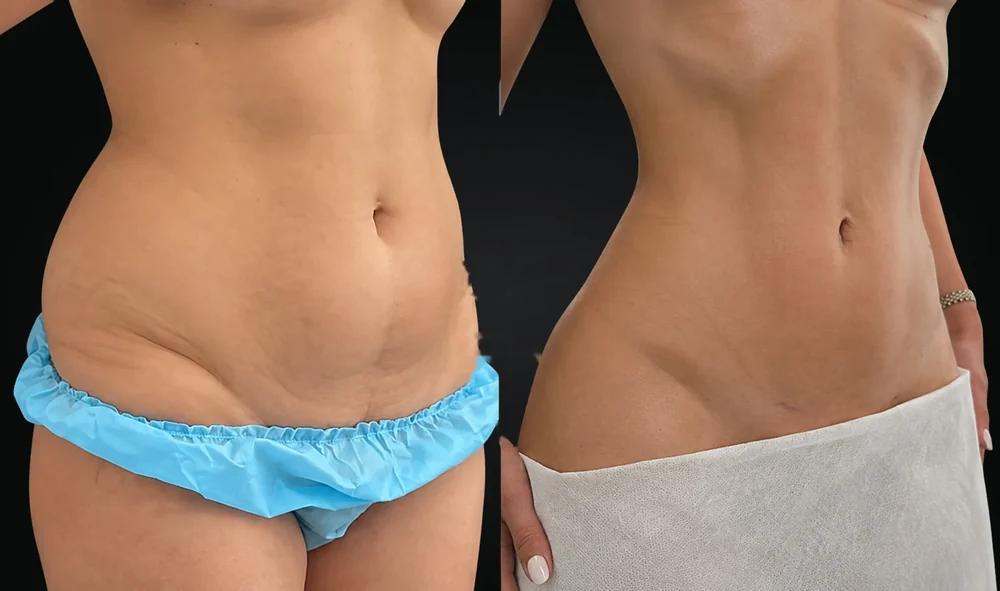
Real case
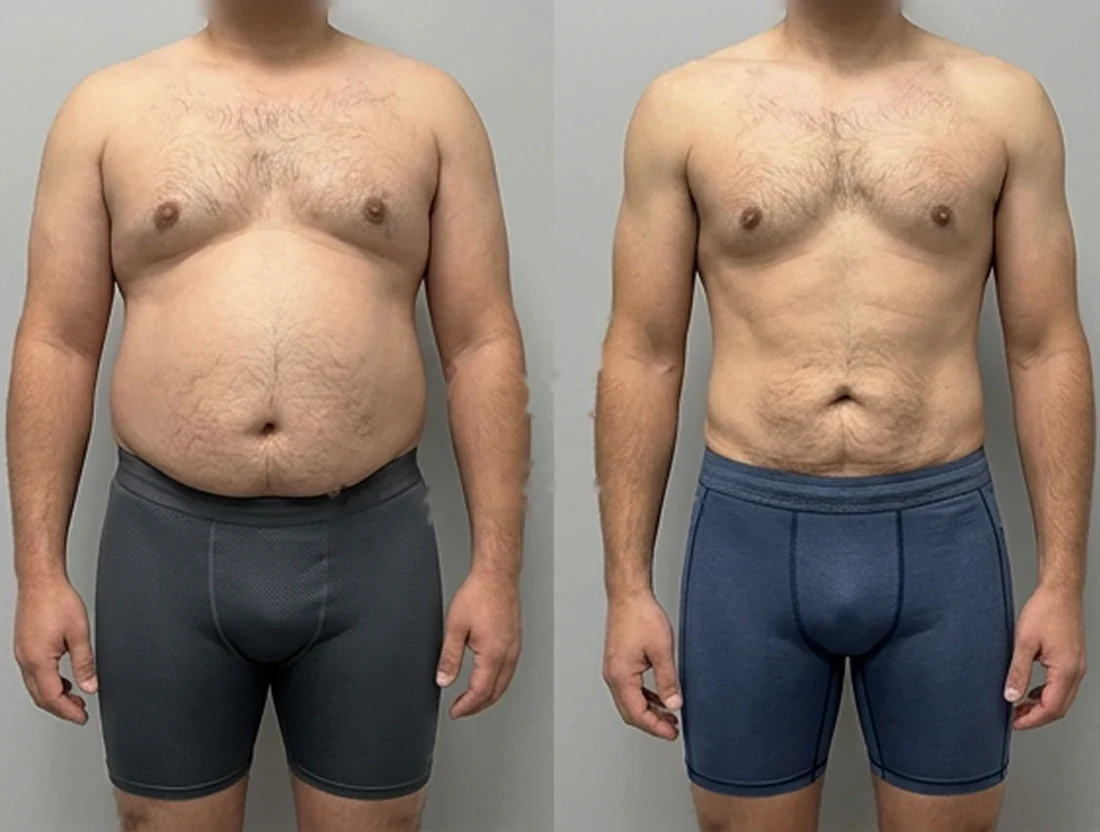
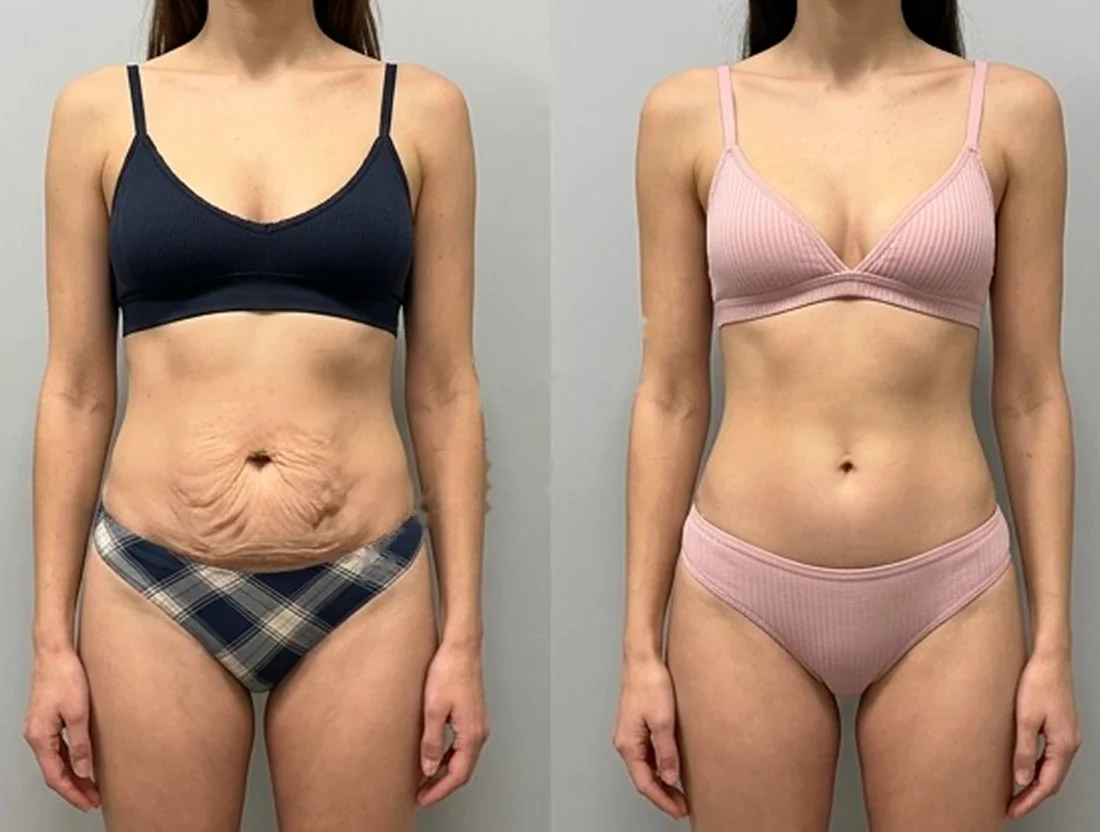
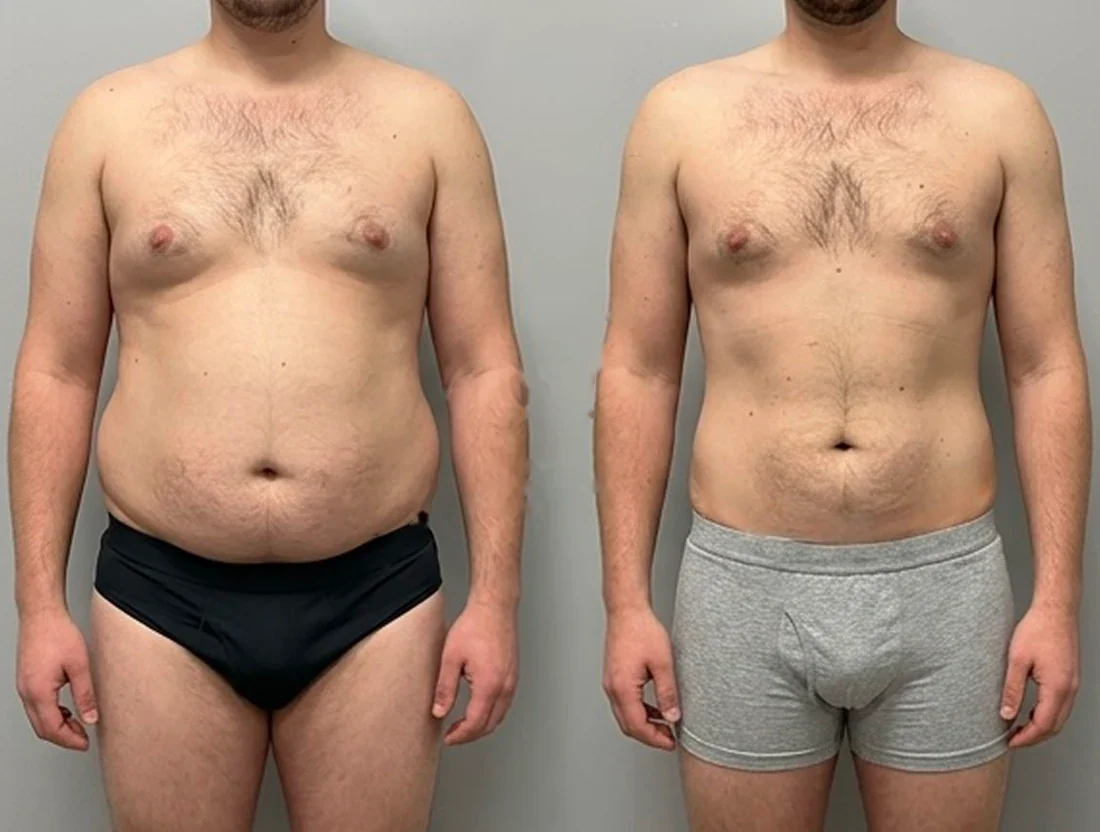
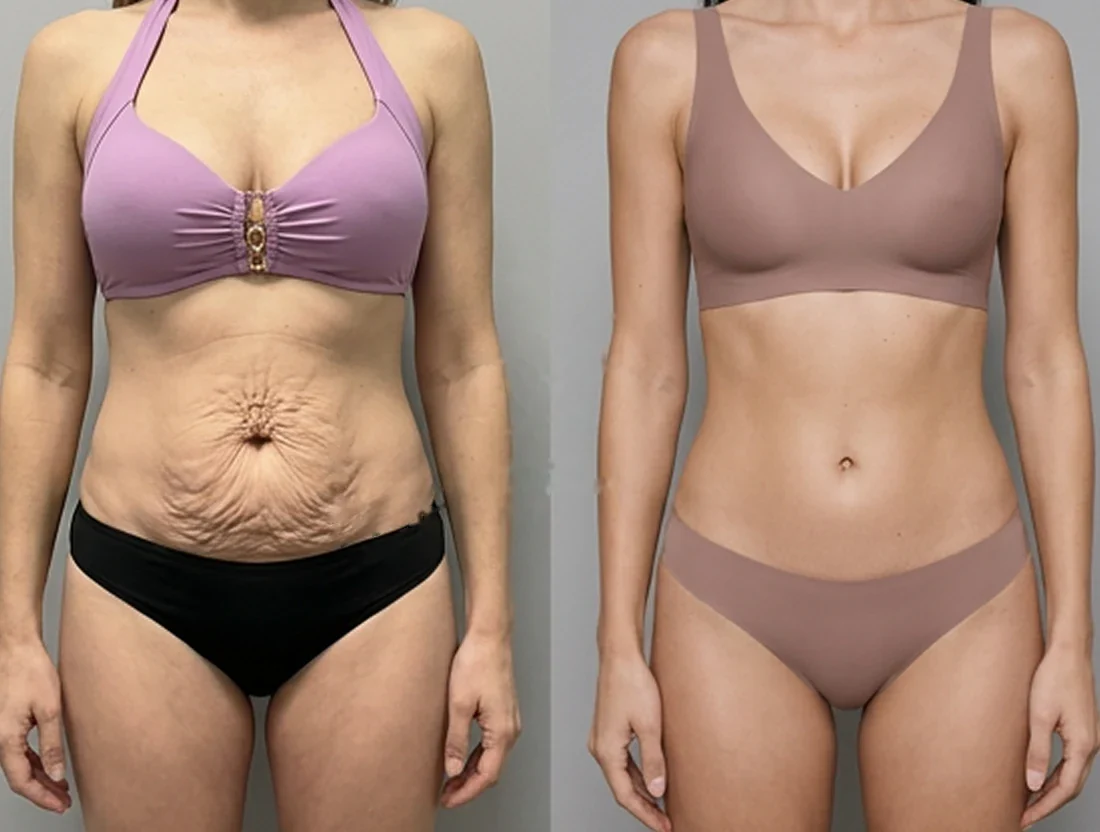
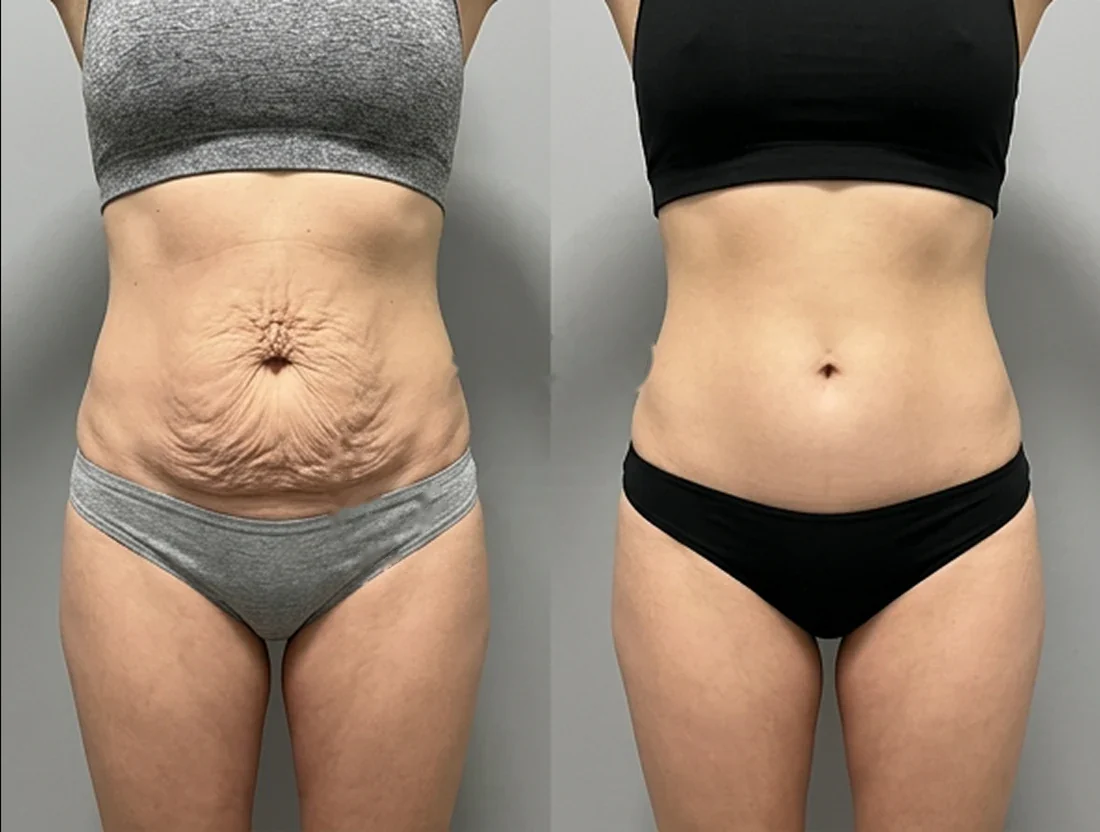
Tummy tuck: a patient's abdomen before and after surgery before after
A flat tummy and a toned silhouette in one operation. Your individual surgical plan and the expected result are discussed at the consultation

Message our coordinator

Free online consultation · Reply within 15 minutes

Message us on Telegram

By messaging us, you agree to our Privacy Policy

Results

Tummy tuck results
of our patients

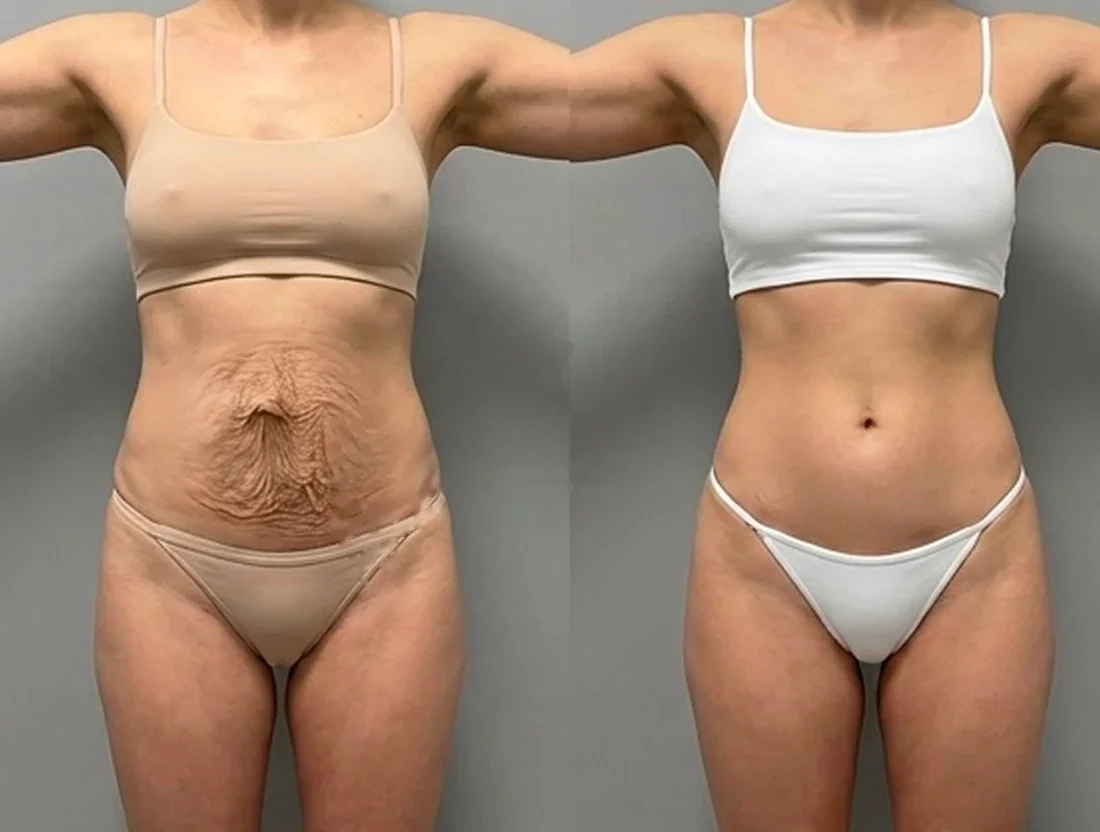
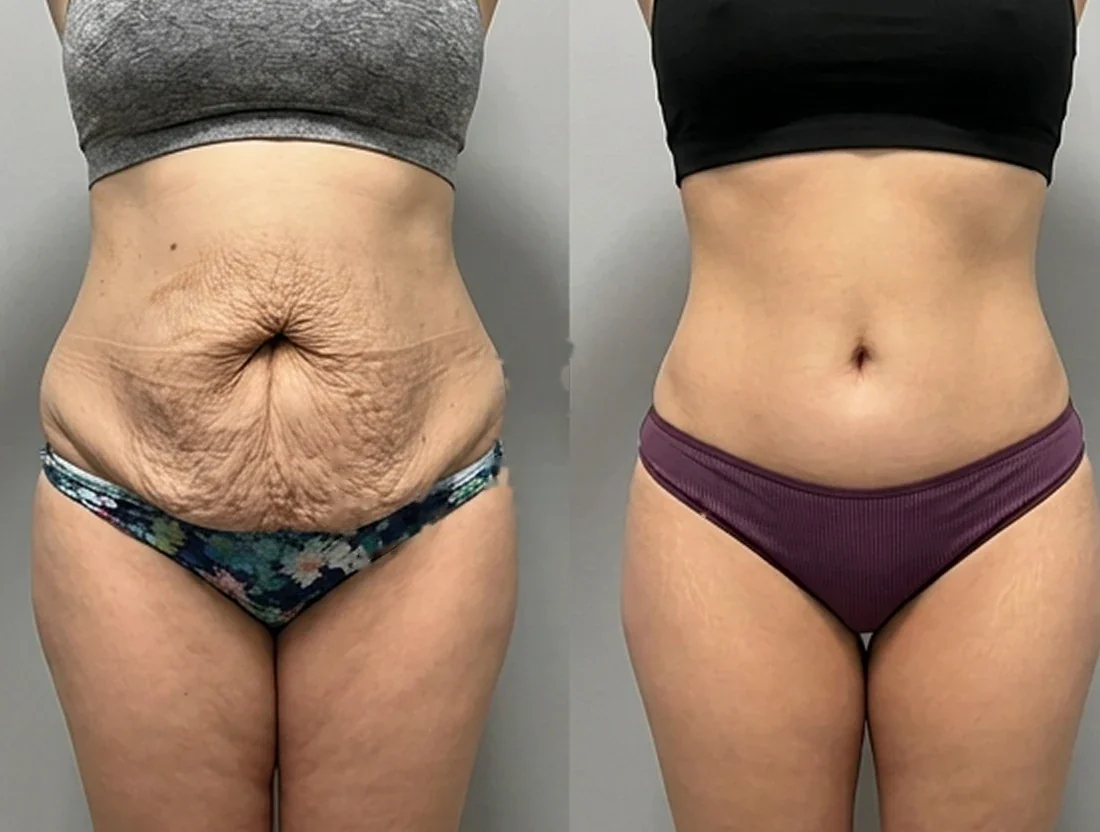
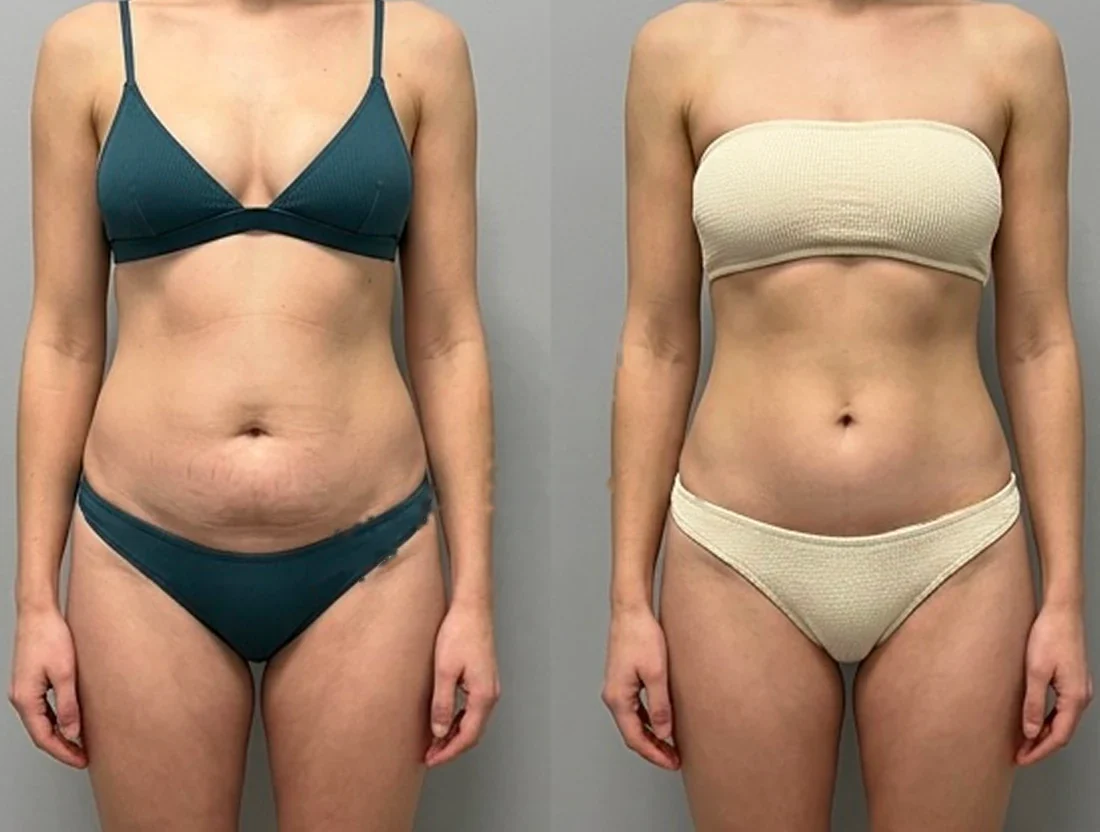
All cases are real patients. Faces and identifying details are hidden.

Tummy tuck: a female patient's abdomen before and after surgerybeforeafter
Tummy tuck: a male patient's abdomen before and after surgerybeforeafter
Tummy tuck: a female patient's abdomen before and after surgerybeforeafter
Tummy tuck: a male patient's abdomen before and after surgerybeforeafter
Tummy tuck: a female patient's abdomen before and after surgerybeforeafter
1 of 8

Comparison

Tummy tuck techniques

A tummy tuck is done as a full (classic) or mini operation, or combined with liposuction as lipoabdominoplasty. Compare the scope of surgery, the indications and the expected results to choose the right technique together with your surgeon.

Tummy tuck

Removal of excess skin, abdominal muscle tightening
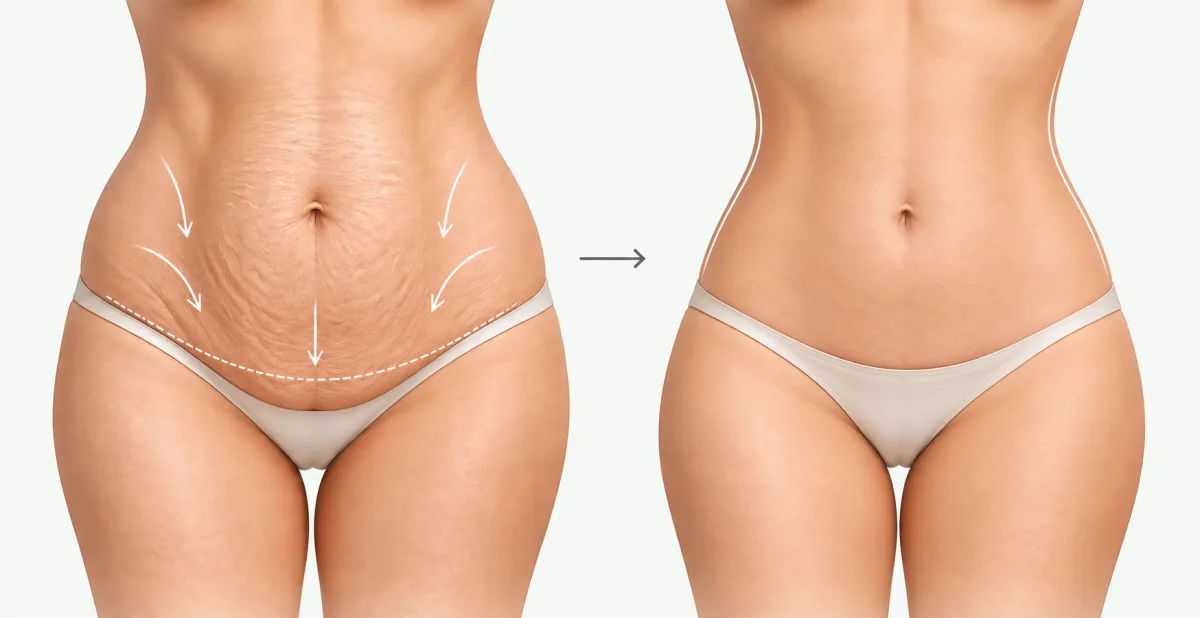
Tummy tuck diagram: the abdomen before surgery with the incision line, and the result
Main goal
Removal of excess skin, diastasis repair
When it is done
Excess skin after childbirth or weight loss
Anaesthesia and stay
General anaesthesia, up to 3 days in hospital

Lipoabdominoplasty

Tummy tuck with added liposuction
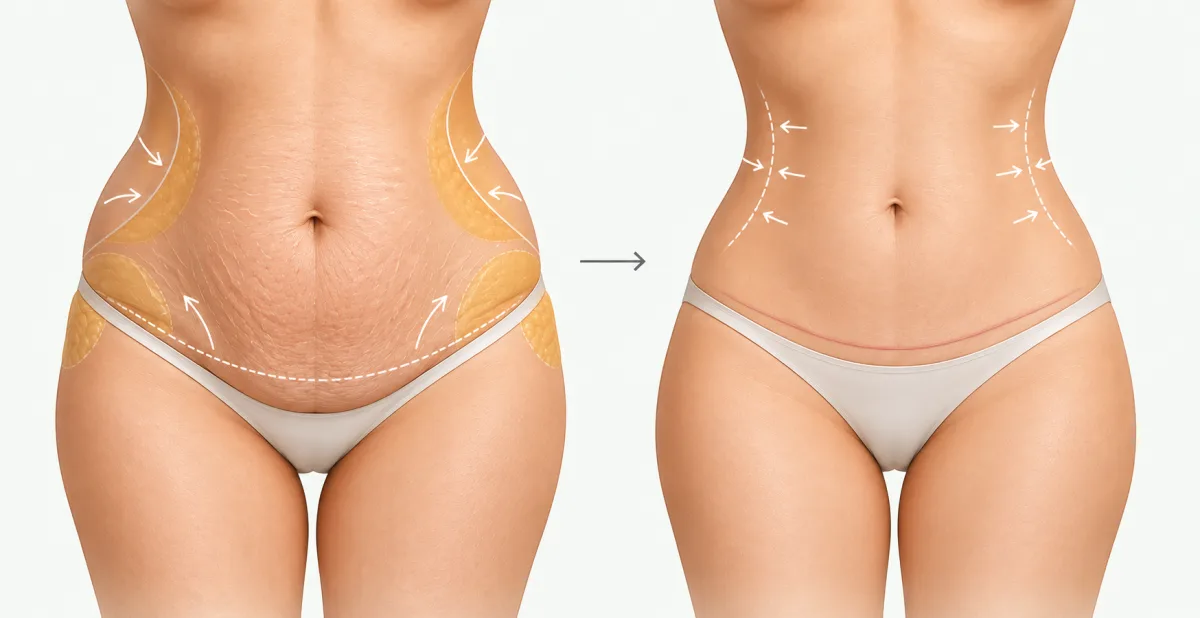
Lipoabdominoplasty diagram: the abdomen with fat on the flanks before surgery, and the result
Main goal
Tummy tightening and waist contouring
When it is done
For fat deposits on the flanks and waist
Anaesthesia and stay
General anaesthesia, up to 3 days in hospital

The benefits and recovery times shown are averaged for each technique and given for guidance: the scope of correction and rehabilitation depend on your anatomy and individual features, and the surgeon confirms them at the consultation.

At the consultation the surgeon draws up a plan for your case and explains how your tummy tuck will go.

Free, before surgery and with no obligation.

Book a consultation

Tummy tuck from the inside

About the clinic

A clinic where you can feel at ease

Modern equipment, comfortable rooms and care for every patient

A doctor and a patient in a clinic ward

Contact us the way that suits you

We will answer your questions and find a convenient time for a consultation

By messaging us, you agree to our Privacy Policy

A tummy tuck is not for everyone

If your case can be solved without surgery, the doctor will tell you so at the consultation — and you will not spend money for nothing.

Suitable

A surgeon shows a patient on a model and a monitor how the abdominal contour changes after a tummy tuck
  • Rectus abdominis diastasis
  • Skin folds after weight loss
  • Loose abdominal skin
  • Stretched skin after pregnancy
  • A distorted abdominal contour

Not suitable

A surgeon discusses the indications and contraindications for a tummy tuck with a patient
  • Acute infections
  • Severe heart, kidney or liver conditions
  • Blood coagulation disorders
  • Age below 18
  • Decompensated diabetes
  • Cancer
  • Skin inflammation in the surgical area
  • Pregnancy or breastfeeding

Not sure the surgery is right for you?

Message us — the coordinator will ask for your photos in the messenger, and the surgeon will tell you whether a tummy tuck suits you. No surgery booking needed.

Find out if it suits me

A surgeon goes through a tummy tuck diagram with a patient at the consultation

Prices

You know the price
before surgery

The price is set at the consultation and fixed in the contract.

Other services

  • First consultationFree
  • Liposuction of the abdomen and flanksfrom $1,700
Book a consultation

Find out your tummy tuck plan and price

The surgeon assesses your abdominal skin and muscles, listens to your wishes and chooses the right correction technique.
The price is set at the consultation and fixed in the contract.
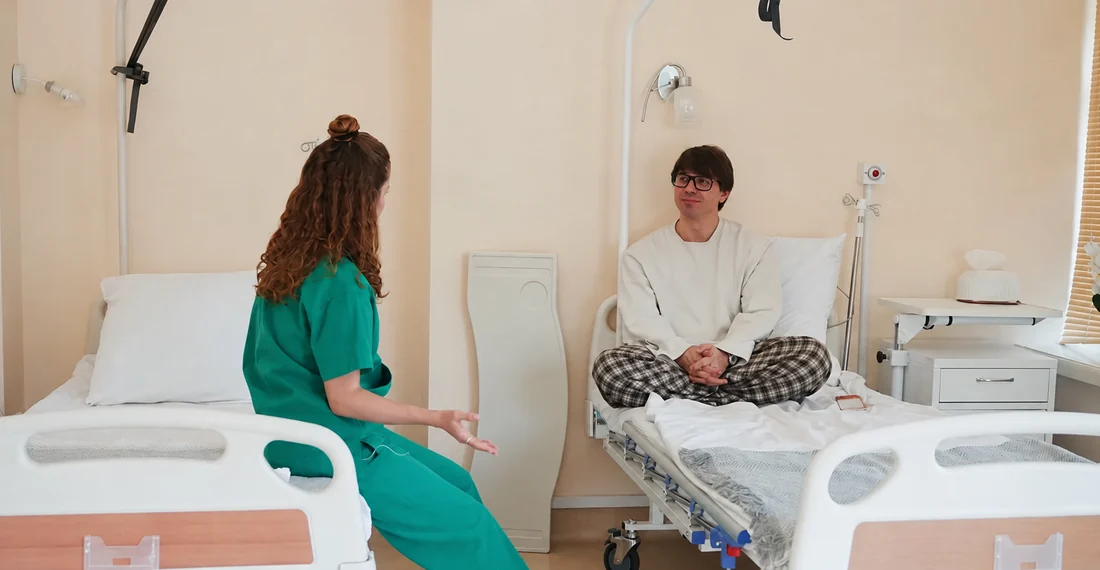
A nurse talks to a patient in a clinic ward

Message our coordinator

Free online consultation · Reply within 15 minutes

Message us on Telegram

By messaging us, you agree to our Privacy Policy
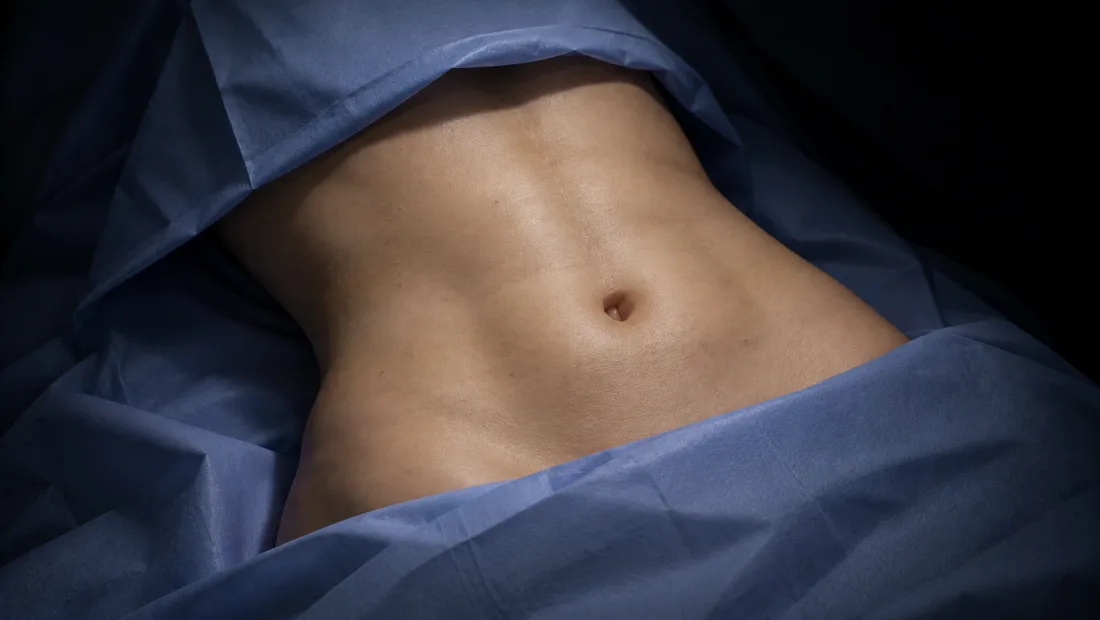
A patient's abdomen before a tummy tuck in the operating room

all inclusive

What the price includes

From preparation for surgery
to post-op check-ups.

  • All scheduled dressings
  • Scheduled post-op check-ups
  • A personal coordinator on call
  • Compression garments fitted on the day of surgery
  • A stay in a comfortable
    hospital ward with meals
  • Individual recommendations
    for recovery
  • Remote progress monitoring
    by photos

How it works

Three days at the clinic —
from preparation to discharge

An agreed correction plan, inpatient observation and post-op check-ups.

A doctor shows a patient a tummy tuck diagram on a monitor1

Consultation
and the surgical plan

The surgeon assesses your abdominal skin and muscles and checks for diastasis, listens to your wishes and chooses the right correction technique.

Paying the deposit by card at the clinic reception2

Booking the date
of surgery

We reserve a surgery date for you: the deposit can be paid by card at the clinic or online by bank transfer. The terms are fixed in the contract for medical services

A blood sample tube for tests before a tummy tuck3

Check-up before
surgery

Before surgery you complete a full lab check-up: blood tests, an ECG, a chest X-ray and reports from the required specialists.

The surgical team during the operation4

Surgery

The surgeon performs the tummy tuck with the chosen technique, repairs diastasis if needed and shapes a firmer abdominal contour.

A hospital ward at the clinic5

Inpatient stay

After surgery the patient stays for 1–3 days in a comfortable hospital ward with meals, under medical supervision.

A surgeon and a patient in the ward during recovery6

Recovery

After surgery you get a recovery programme. Check-ups at 7 days, 3 and 6 months help track your recovery.
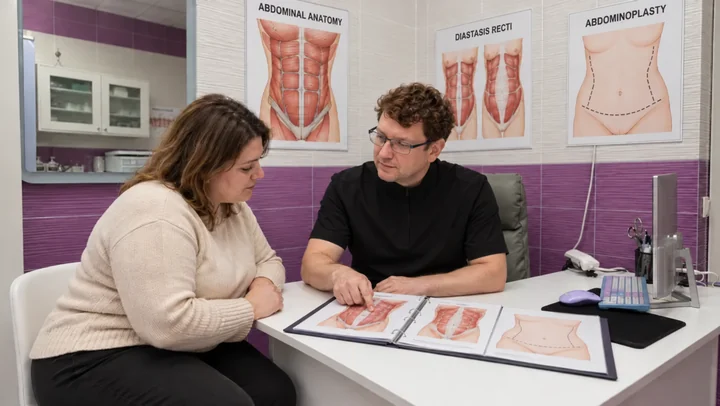
Book a free consultation — the surgeon will plan every step with you.

A doctor discusses the tummy tuck plan with a patient
Book a consultation
A doctor discusses the tummy tuck plan with a patient

How it really happens

Recovering after a tummy tuck

For 1–3 days right after surgery the patient stays in hospital under medical supervision. Drains are usually removed after two days, stitches after 7 days. You wear a compression binder for 1.5–2 months; it supports the abdominal wall and shapes a smooth contour. Office work resumes after 2–3 weeks, and most swelling goes within 30 days. Sports, sauna and heavy lifting are off-limits for 2–3 months, and at first sleeping on your back with knees bent is advised. By 12 months the scar is fully mature and fades to barely noticeable.

Post-op check-ups

After 7 days, at 3 months and at 6 months. Until the end of the year, get a post-surgery consultation with your surgeon to review results and get more information, at the clinic's expense

Advantages

Why patients choose City Medical Centre

A surgeon discusses the tummy tuck plan with a patient at the consultation

Just find out — you lose nothing

At the consultation we discuss your wishes and assess your abdominal skin and muscles. The surgeon explains what changes are possible, chooses the correction technique and answers your questions.

A surgeon on a video call with a patient after surgery

We stay with you after surgery

The surgeon follows your recovery and the changing abdominal contour at check-ups after 7 days, 3 and 6 months. Check-ups, dressings and aftercare advice are already included in the price of surgery.

A surgeon shows a patient a model and tummy tuck diagrams

A beautiful contour that fits your figure

We choose the correction technique based on your skin, muscles and figure. Our aim is a harmonious abdominal contour that keeps the natural proportions of your body.

A patient writes down a convenient visit time in her planner

Your schedule is our priority

We respect your time: we work 24/7, with easy booking and a personal approach — we adapt to your pace.
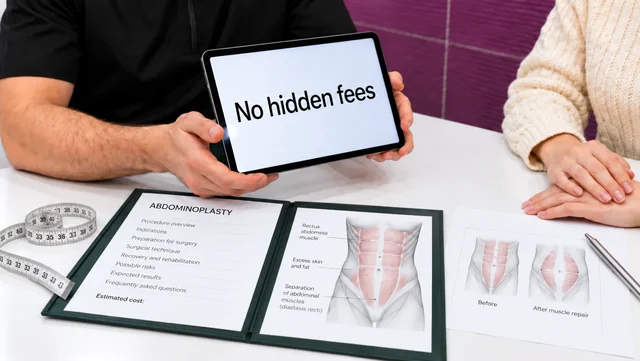
A surgeon shows a patient the fixed price of surgery with no extra charges

Fixed prices

After the consultation the surgeon defines the extent of correction, and you get a clear price for the surgery — no surprises on the way to the result you want.

A surgeon visits a patient in the hospital ward after surgery

Round-the-clock care after surgery

Recovery starts in a comfortable hospital ward under round-the-clock nursing care. The stay and meals are already included in the price.

FAQ

We answer what
people ask before booking

Abdominoplasty in Likasi: a short guide

Two techniques are available. The classic tummy tuck uses a horizontal incision above the pubic area, repairs the muscles, removes excess tissue and repositions the navel; it suits marked excess skin and a C-section scar. The mini tummy tuck corrects only the lower abdomen through a shorter incision without moving the navel. For each patient from Likasi, the surgeon chooses in person.

Recovery has three milestones. Office work is possible after 2–3 weeks, swelling and tightness pass by 1.5–2 months, and the final result and scar are assessed at 6–12 months once tissues have adapted. Most swelling goes within 30 days. Sport, sauna and heavy lifting wait 2–3 months, and sleeping on your back with knees bent is advised at first. The same timeline applies to Likasi patients.

The first step costs nothing: the consultation with the surgeon is free. You get an assessment of excess skin and muscle separation, a recommended technique, an explanation of recovery and your personal price. Patients from Likasi can then decide calmly, with the amount fixed in the contract. Fill in the short form on the page, and a coordinator will call back shortly.

Likasi and the tummy tuck: why people here ask about it

Likasi is a city in Haut-Katanga Province in the south-east of the Democratic Republic of the Congo, with around 635,000 inhabitants (2015). It was created in 1916-1917 when the copper mines of Likasi and Shituru began operating, and for decades it carried the name Jadotville. Today it is known as an industrial and mining centre and as the city nicknamed the City of Lights. Its name comes from dikashi, «good smells». People who live in such a city tend to plan things carefully, and a tummy tuck (abdominoplasty) is the kind of decision that rewards careful planning.

The questions we hear from Likasi are practical. How long will I be away from work? Can I manage the first days at home with my family around me? When can I wear fitted clothes again? What happens to the skin and the abdominal wall after pregnancies or after a large loss of weight? An abdominoplasty tightens the muscles of the abdominal wall, removes excess skin and reshapes the abdominal contour. It is a planned operation under general anaesthesia, and it is not a way to lose weight.

This text is written for a resident of Likasi who wants a clear picture before the first conversation with a surgeon. It covers the climate and how it affects recovery, daily life and work in the city, preparation, the hospital stay, aftercare and the questions worth asking. Every medical figure below is the same for everyone, wherever you live.

Climate of Likasi and what it means for recovery

Likasi has a humid subtropical climate (Köppen Cwa). In the far south-east of the country, where Likasi lies, winters are cool and dry and summers are warm and damp. In the southern part of the country the rainy season runs roughly from early November to late March. This pattern matters when you choose the month of the operation, because recovery does not happen in a laboratory: it happens in your home, in your weather.

The warm, damp months are harder for a person wearing a compression garment around the clock. Heat and humidity make the fabric uncomfortable, they can irritate the skin and they make the swelling feel heavier. If you operate in that season, plan a cool, ventilated room, soft cotton layers under the garment, and enough rest during the hottest hours. Never take the garment off to cool down: it supports the tissues and reduces swelling. If it bothers you, tell the surgeon, who will advise how to handle it.

The cool dry months are often easier for the first weeks. The sun is not a reason to hurry, though. After a tummy tuck the scar is fresh and must be protected from direct sun, and tanning beds are out for at least a month. Choose loose, long clothing and shade for the first walks, and ask the surgeon how to protect the scar when it is time to go outside more.

Dust is a factor in a mining and industrial region. Keep the dressing dry and clean, keep the room where you rest tidy, and ask your surgeon how to change dressings and what to watch for. Pool and bathing rules are also fixed: the pool is out for at least a month, and this includes swimming at the reservoir lakes of the region.

Choosing the season and the date in a working city

Likasi lives by the rhythm of its mines, refineries and factories. The city is a centre for industry, especially mining, with copper and cobalt deposits nearby, and the Shituru factories produce copper electrodes. Many families depend on shift schedules, contracts and the calendar of the plant or the office. That is why the date of the operation should be fixed together with your employer, not at the last minute.

The medical facts give a clear frame: you return to office work after 2–3 weeks. For the first 2–3 weeks you avoid physical exertion, heavy lifting and sudden movements. If your work is physical, or involves standing for long hours, climbing or carrying loads, the plan is different from that of someone at a desk. Talk to your surgeon about what your actual job demands, and do not promise your supervisor a date until the surgeon has seen your case.

Think also about family events. Weddings, funerals, church celebrations and big family gatherings are important in the life of any Congolese city, and they come with long hours of sitting, standing, dancing and meals. Do not plan the operation just before such an event. The tissues need time: swelling and tightness pass by 1.5–2 months, and the final result is assessed at 6–12 months. Choose a period when you can rest and the household can manage without you.

The practical advice is to pick a window of several weeks with no heavy obligations, arrange help at home for children and housework, and book the check-ups in your calendar from the start.

Who is a candidate and who should wait

You must be at least 18 and have no contraindications. There is no upper age limit: each case is considered individually after an examination and a health assessment. A tummy tuck is considered by people with loose skin and a stretched abdominal wall, often after pregnancies or after a major change in weight. Candidates are people in stable health who understand that the result is a new contour with a scar, and not a perfect body.

The World Health Organization describes overweight and obesity as abnormal or excessive fat accumulation that may impair health. This is relevant because a tummy tuck is not a treatment for obesity. If weight is still changing, the surgeon may ask you to stabilise it first. Be honest with the surgeon about your weight history and your plans for future pregnancies.

Contraindications are decided by the doctor after examination. In general terms, serious uncontrolled illnesses, problems with blood clotting, active infections and a habit that cannot be stopped, such as smoking, are reasons for caution or delay. Never hide chronic conditions or medicines you take, including traditional remedies and herbal preparations, because some of them affect clotting.

For some patients a mini tummy tuck is enough, with a shorter stay in hospital, usually one day. Which version suits you depends on the examination and not on what a friend or a neighbour had done.

Preparation: tests, habits and timing

Preparation is a must. Stop smoking, drinking alcohol and taking medicines that affect blood clotting 7–10 days before the tummy tuck. This is a firm rule for everyone. If you have a habit of smoking, this is the moment to deal with it, and ideally you stop earlier than the minimum.

The pre-surgery check-up covers blood tests, ECG, leg vein ultrasound and consultations with a GP and an anaesthetist. The usual list is blood and urine tests, a coagulation panel, biochemistry, infection tests, ECG, chest X-ray, ultrasound of the leg veins and a GP's report. The exact list comes from the surgeon at the consultation, and tests usually stay valid for 10–14 days. Get them done in advance, not the day before.

For a resident of Likasi this means organising the tests locally, at a laboratory and a medical facility of your choice, and sending the results to the coordinators. Do the tests so that they are still valid on the day of the operation: too early and they expire, too late and the date moves. Keep the paper results and photos of them on your phone.

Prepare the home as well. Arrange a bed where you can rest comfortably, loose front-opening clothes, easy food, and someone who can help for the first days. Bring your compression garment and your medicine list to the hospital.

Hospital stay, anaesthesia and the first days

The operation is performed under general anaesthesia. After it you stay 1–3 days in a comfortable hospital ward with meals, under medical supervision; a classic tummy tuck means up to 3 days in hospital, and for a mini tummy tuck one day is usually enough. Yes, a stay in hospital is needed. At home recovery continues, and the surgeon monitors it at scheduled check-ups.

In these days the team watches the dressings, your general state and your first movements. You get a recovery programme before leaving, which explains how to move, sleep, wash and wear the garment. Ask every question while you are still in the ward, and write the answers down so that your family can help you at home.

The compression garment is a requirement. Recovery is worse without it because it supports the tissues and reduces swelling. The first 3–4 weeks it stays on around the clock, then during the daytime for roughly a month more. Your operating surgeon will name the exact period. In a warm climate like that of Likasi it is tempting to remove it, but this is exactly the habit to avoid.

Food in the first days should be light and regular. Families in Likasi often prepare hearty meals with staple dishes, and relatives bring food when someone is ill. This is a kindness, but ask relatives to keep the meals simple, and avoid alcohol at any gathering at your home.

Recovery at home: daily life, work and sport

The rules after a tummy tuck are the same for everyone. For the first 2–3 weeks you avoid physical exertion, heavy lifting and sudden movements. Sauna, steam bath, pool, tanning beds, alcohol and smoking are out for at least a month. Sport is resumed gradually, with the surgeon's approval only, and compression garments are worn for another 4–8 weeks.

Three milestones mark recovery. After 2–3 weeks you can do office work. By 1.5–2 months swelling and tightness pass. At 6–12 months, with the tissues fully adapted, the final result and the scar are assessed. The first changes appear 2 weeks after surgery as the main swelling subsides, followed by two checkpoints: the interim result at 1.5–2 months and the final contours at 6–12 months.

In daily life this means that you do not carry water containers, bags of food from the market, or children in the first weeks. Ask relatives to do the shopping and the heavy household jobs. If you walk to the market or use shared transport in the city, keep the first outings short and slow, and avoid crowded places where someone could bump into you.

For people who play football, run, go to a gym or do heavy manual work, the return is gradual and depends on the surgeon's approval. Do not test yourself on a good day. A feeling of strength can be misleading while the tissues are still healing.

Check-ups and remote support from Likasi

After surgery you get a recovery programme. Check-ups at 7 days, 3 and 6 months help track your recovery. The surgeon follows your recovery and the changing abdominal contour at those check-ups. Check-ups, dressings and aftercare advice are already included in the surgery programme. Until the end of the year you can also get a post-surgery consultation with your surgeon to review results and get more information, at the clinic's expense.

The first step is simple and free: an online consultation. You write to the coordinators on Telegram or WhatsApp from Likasi, send photos and your health information, and the coordinators arrange a conversation with a surgeon. We respect your time: we work 24/7, with easy booking and a personal approach, so we adapt to your pace. Night-shift workers and people with irregular schedules can write at any hour and get an answer at a convenient time.

Use the consultation well. Prepare a list of your illnesses, your medicines, past operations, pregnancies and your weight history. Ask the surgeon what the exact sequence is, what the tests are, and what your recovery will look like in your climate and with your job.

Keep photos of the dressings and the abdomen as the surgeon requests, and report anything unusual promptly. Remote follow-up works best when you write early and describe clearly.

Likasi neighbourhoods, distances and how daily movement shapes your recovery

Likasi is spread across many neighbourhoods, including Quartier Mission, Kitabataba, Kapumpi, Kamatanda and Quartier 40 Maisons, and people often cover real distances during an ordinary day. Walking to a shop, going to a church or a market, or reaching a relative's house is normal life. After a tummy tuck, this everyday movement has to be planned rather than left to habit.

In the first 2–3 weeks you avoid physical exertion, heavy lifting and sudden movements. In practice, ask someone from your family or a neighbour to handle errands, water, shopping and any carrying. Short, slow walks inside the house or the yard are enough at the start. Longer outings on foot or in shared vehicles can wait until the surgeon agrees.

Likasi sits on a main highway used by heavy traffic, and bumpy rides and crowded seats are not what a healing abdomen needs. When you go to a check-up, a laboratory or any appointment, choose the calmest way to move, sit upright with support, and keep the compression garment in place. If a journey in the city feels tiring, shorten it and rest.

Many families here live in households with several generations. That is a real advantage during recovery, because helpers are close. Agree in advance who cooks, who looks after the children and who accompanies you, so that nobody expects you to lift or bend before the tissues are ready.

Food culture, weight and long-term care of the result in Likasi

Food in Likasi is built around filling staple dishes shared with family, and meals are a social event. Nothing about this culture is a problem for a tummy tuck, but the months after the operation reward steady habits. A stable weight protects the new abdominal contour, because large swings in weight change the tissues again.

In the first days, choose light, regular meals and enough fluids. During the first month alcohol is out, and that includes celebrations at home. Smoking is out for at least a month too. It helps to tell relatives openly that you are in recovery, so that nobody pushes extra portions or a drink on you at a family table.

The World Health Organization describes overweight and obesity as abnormal or excessive fat accumulation that may impair health. A tummy tuck does not treat this condition. It reshapes the abdomen when skin and muscle have changed, and the benefit lasts best when daily habits support it: balanced meals, movement once the surgeon allows it, and regular check-ups.

At the 3-month and 6-month check-ups, tell the surgeon honestly about your eating, your weight and any plans for pregnancy. That information helps the surgeon read your result correctly and advise you on what comes next.

Power cuts, hygiene and keeping the dressing area safe at home

Likasi receives electricity from a hydro-electric dam on the Lufira, and in any city the supply can be interrupted from time to time. This is a practical point for recovery. Do not depend on an electric fan alone to stay cool while you wear the compression garment around the clock. Keep a simple hand fan, cotton bedding and drinking water within reach.

Hygiene deserves the same planning. Wash your hands before touching the dressing, keep the treated area clean and dry, and follow the instructions of the recovery programme exactly. Ask the surgeon beforehand how to wash while the dressings are in place, and what to do if a dressing gets wet or dirty.

Mining towns bring dust, especially in dry months. Keep windows near your resting place managed, wash bedding often, and keep pets and small children from jumping on you. Prepare a clean corner of the home with a bed, a chair with arms to help you stand, and everything you need within an arm's reach.

If something looks unusual, such as growing pain, a dressing that is soaked, a strong smell or a feeling that the garment is wrong, write to the coordinators at once on Telegram or WhatsApp. They work 24/7, and an early message is always better than waiting until the next check-up.

Questions to ask the surgeon before you decide

A good consultation is a two-way conversation. Ask which type of tummy tuck suits you, classic or mini, and why. Ask what the scar will look like and where it will lie, how the muscles will be treated, and what the anaesthetist needs to know. Ask how long you stay in hospital and what the check-ups at 7 days, 3 months and 6 months involve.

Ask about your own life: Can I return to my job after 2–3 weeks given what I do? When can I resume sport? How long do I wear the compression garment and how do I manage it in hot, humid weather? What should I avoid while the swelling goes down? Which signs mean I should write to the coordinators immediately?

Ask about limits. A tummy tuck is not weight loss, and it does not replace healthy habits. Ask what you must do before and after to protect the result, including steady weight, no smoking and no alcohol for at least a month after the operation.

Take your time. Do not decide under pressure from friends or from social media. A confident decision comes from clear answers, complete tests and a date that suits your family and your work in Likasi.

Can I have a consultation about a tummy tuck from Likasi?

Yes. The online consultation is free. You contact the coordinators on Telegram or WhatsApp from Likasi, send photos and health details, and arrange a conversation with a surgeon. The coordinators work 24/7.

How long is the hospital stay?

A classic tummy tuck means 1–3 days in a comfortable hospital ward with meals, under medical supervision. For a mini tummy tuck, one day is usually enough. Recovery then continues at home and the surgeon monitors it at scheduled check-ups.

What anaesthesia is used?

General anaesthesia. Before the operation you have a consultation with an anaesthetist, so tell the doctor about every illness and medicine.

When can I go back to work?

You can return to office work after 2–3 weeks. For the first 2–3 weeks you avoid physical exertion, heavy lifting and sudden movements. If your job is physical, ask the surgeon about your own case.

Which tests do I need?

The list is blood and urine tests, coagulation panel, biochemistry, infection tests, ECG, chest X-ray, ultrasound of the leg veins and a GP's report. The exact list comes from the surgeon at the consultation, and tests usually stay valid for 10–14 days.

Is the compression garment really necessary in a warm climate like Likasi?

Yes. Recovery is worse without it because it supports the tissues and reduces swelling. The first 3–4 weeks it stays on around the clock, then during the daytime for roughly a month more. Your surgeon will name the exact period.

When will I see the result?

The first changes appear 2 weeks after surgery as the main swelling subsides. The interim result comes at 1.5–2 months, and the final contours and the scar are assessed at 6–12 months.

What must I stop before the operation?

Stop smoking, drinking alcohol and taking medicines that affect blood clotting 7–10 days before the tummy tuck. Mention all medicines, including herbal ones, to the surgeon.

When can I swim or play sport?

Sauna, steam bath, pool, tanning beds, alcohol and smoking are out for at least a month. Sport is resumed gradually, with the surgeon's approval only, and compression garments are worn for another 4–8 weeks.

Who can have a tummy tuck, and is there an age limit?

You must be at least 18, with no contraindications. There is no upper limit; each case is considered individually after an examination and health assessment.

What check-ups follow the operation?

Check-ups after 7 days, 3 months and 6 months, with dressings and aftercare advice included. Until the end of the year you can also have a post-surgery consultation with your surgeon, at the clinic's expense.

Can my family help me during recovery in Likasi?

Yes, and it is very useful. For the first 2–3 weeks you avoid physical exertion, heavy lifting and sudden movements, so relatives can carry water, shop, cook and look after children. Agree on these roles before the operation.

What should I do if the power goes out while I wear the compression garment?

Keep the garment on, because it supports the tissues and reduces swelling. Use a hand fan, cotton bedding and plenty of water to stay comfortable, and tell the surgeon if the garment causes real problems.

Does a tummy tuck help me lose weight?

No. It reshapes the abdomen by removing excess skin and tightening muscles, and it is not a treatment for overweight. Keeping a stable weight afterwards helps protect the contour, and the surgeon follows it at the check-ups after 7 days, 3 and 6 months.