


























 beforeafter
Tummy tuck
Before and after
Tummy tuck
Price at consultation
The price is fixed in the contract before surgery
Message our coordinator
Free online consultation · Reply within 15 minutes
Message us on TelegramMessage us on WhatsAppBy messaging us, you agree to our Privacy Policy
Results
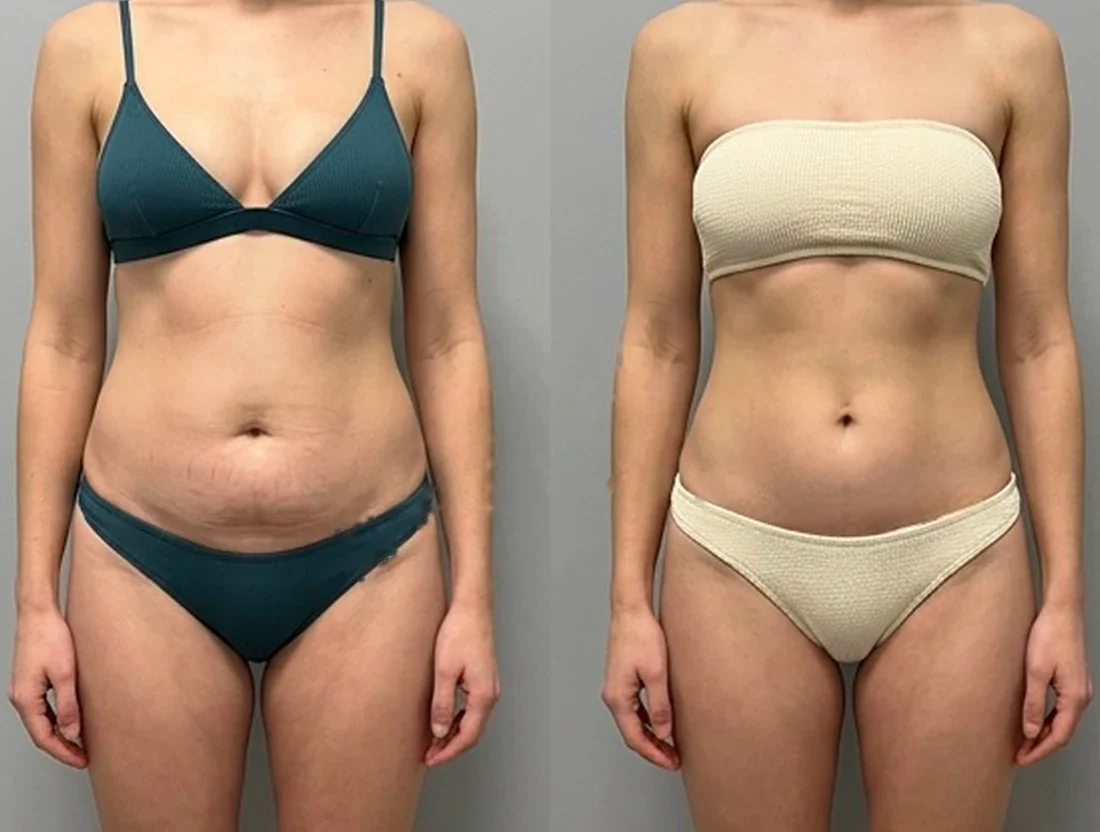
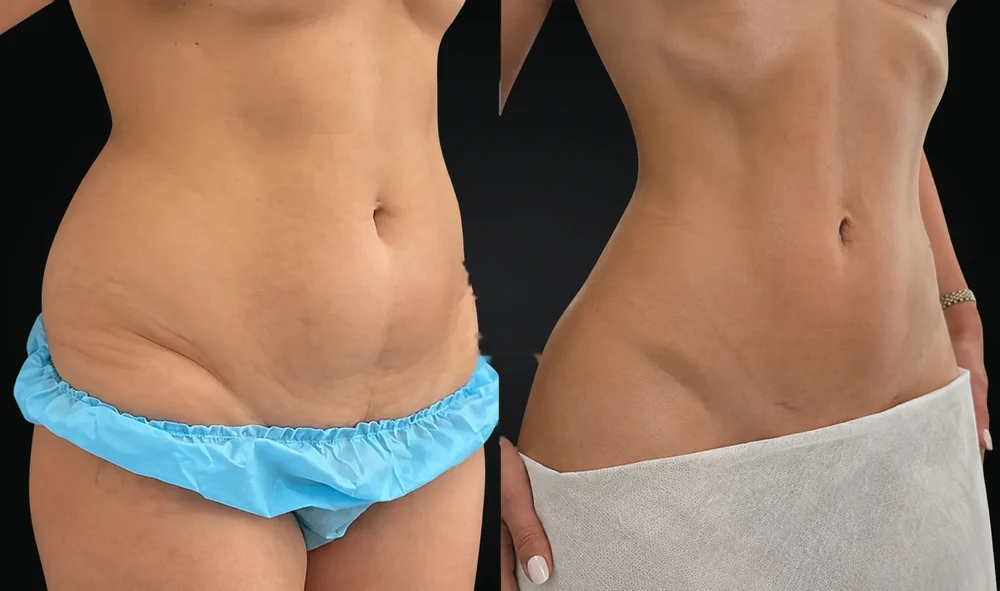
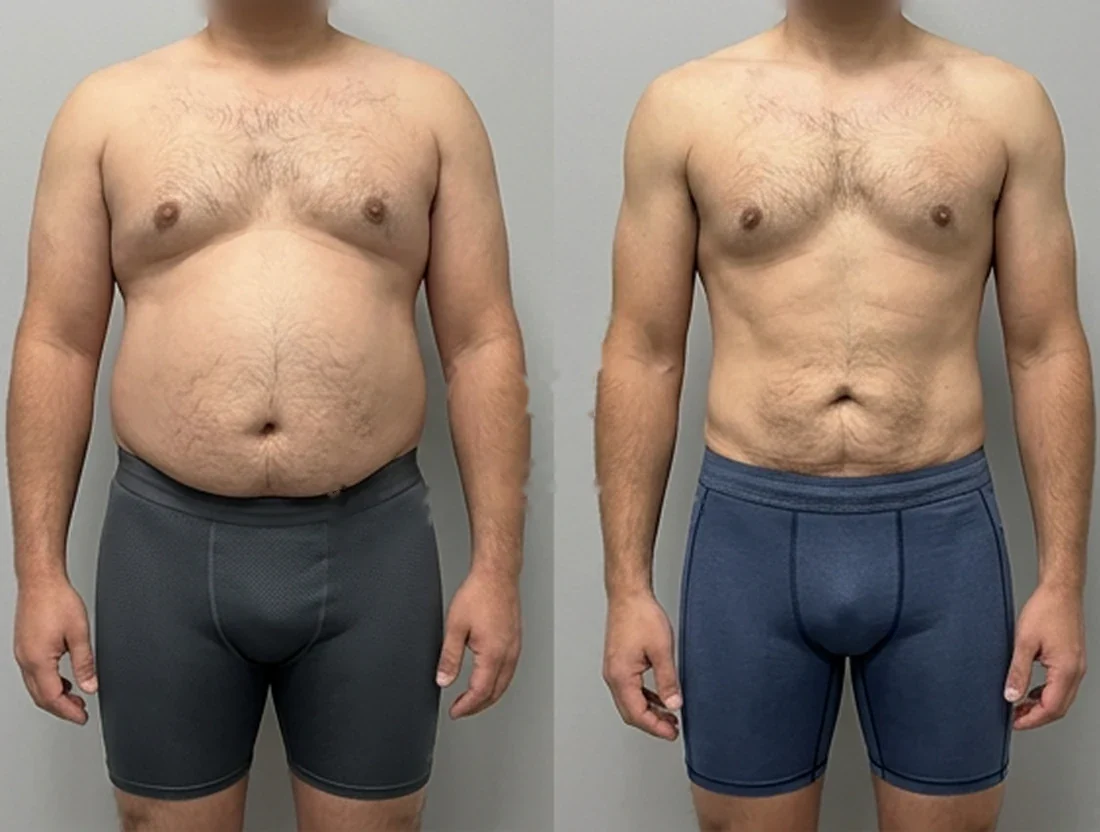
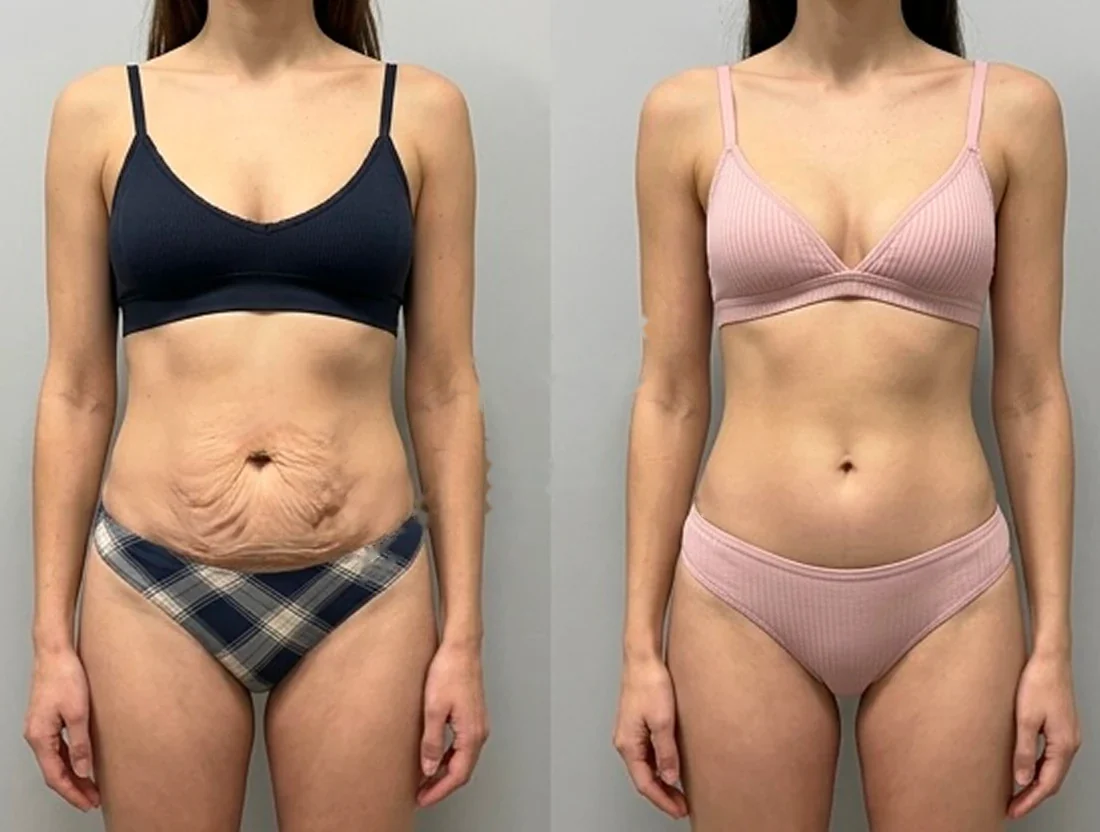
All cases are real patients. Faces and identifying details are hidden.
beforeafterBefore and after
 beforeafter
Before and after
 beforeafter
Before and after
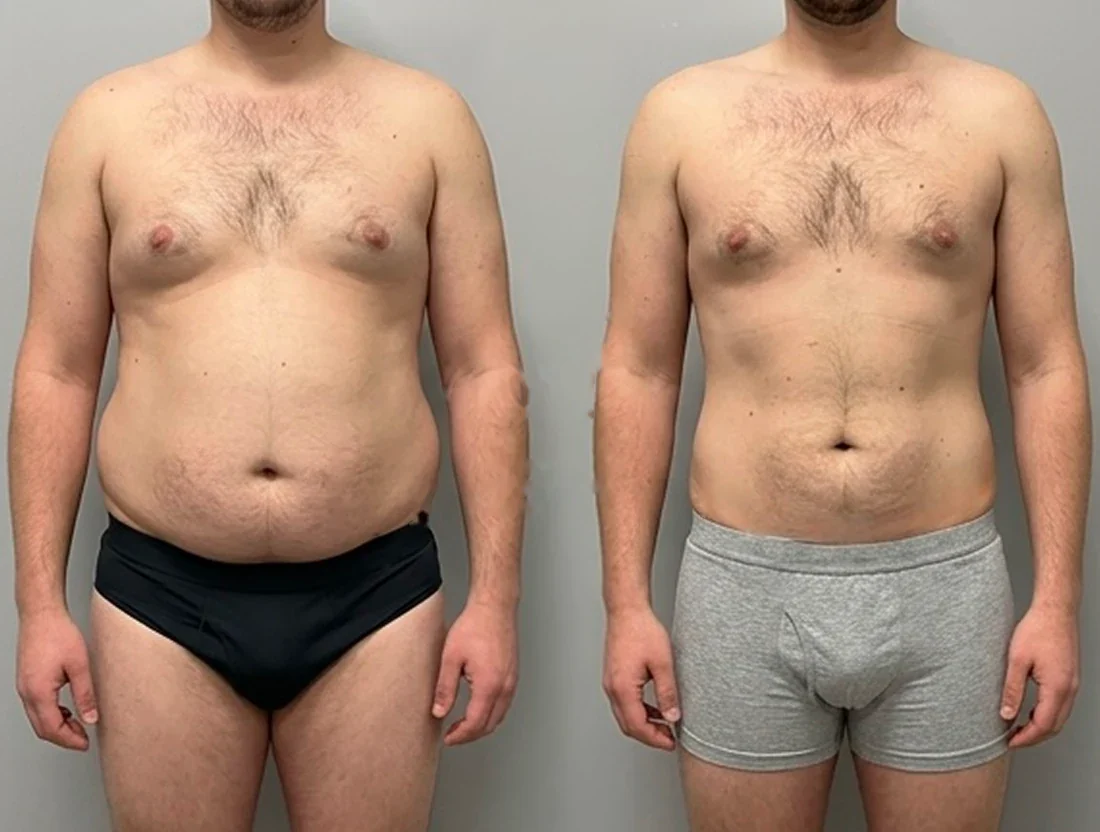 beforeafter
Before and after
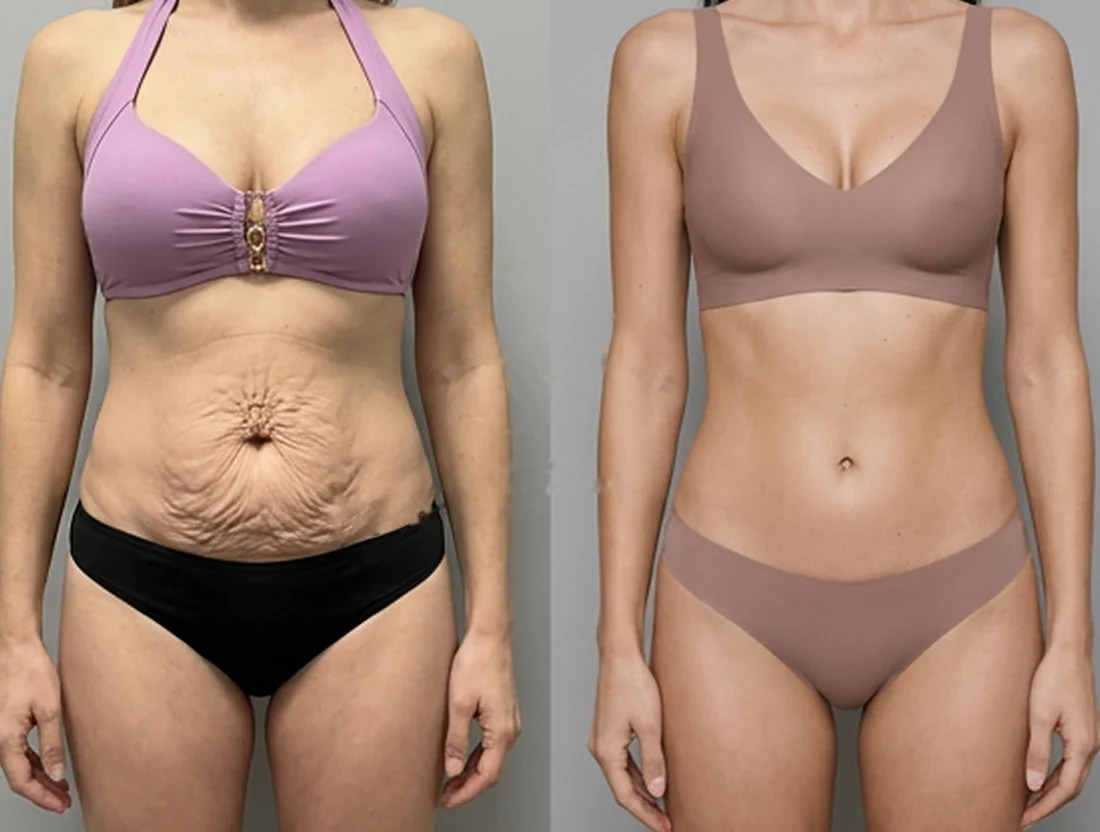 beforeafter
Before and after
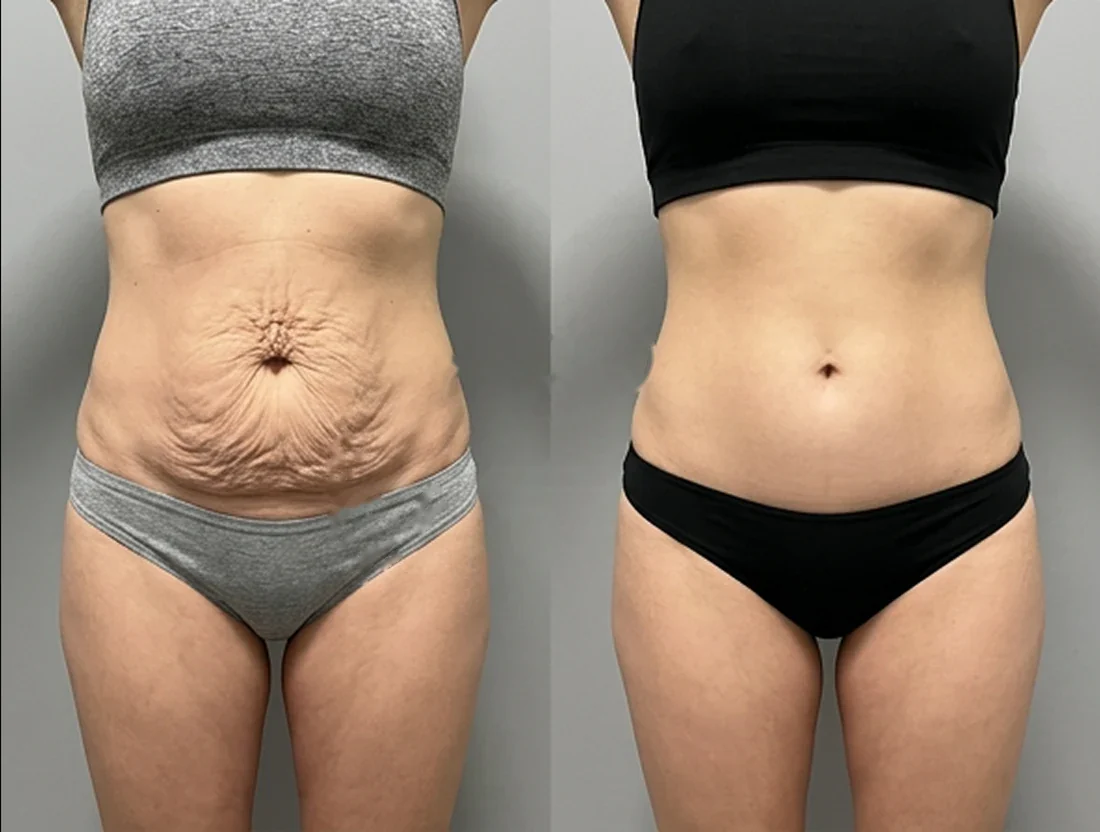 beforeafter
Before and after
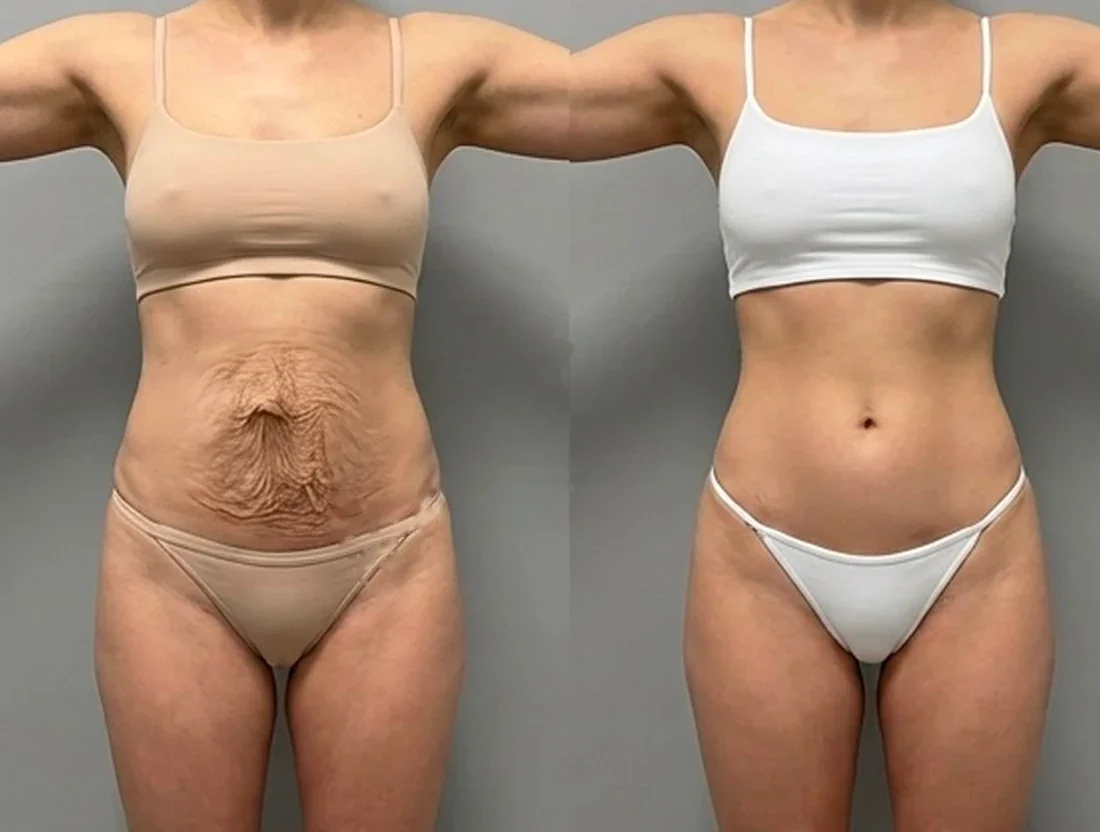 beforeafter
Before and after
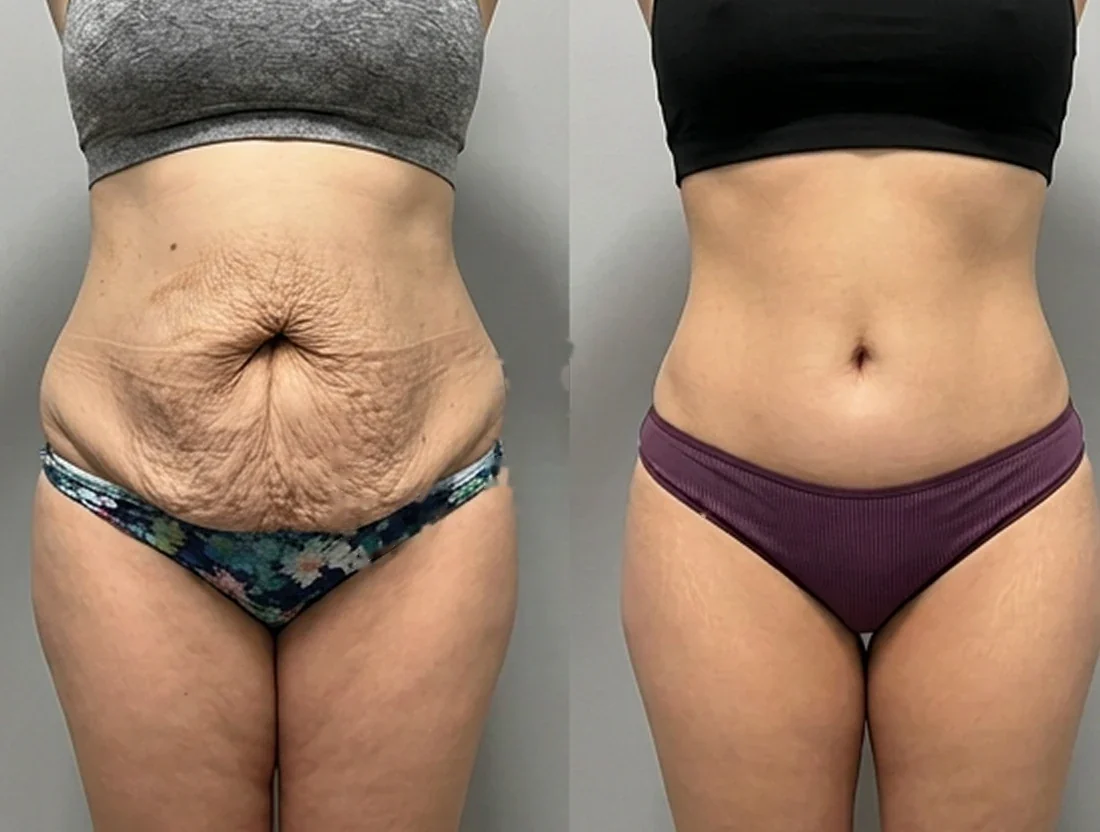 beforeafter
Before and after
Comparison
A tummy tuck is done as a full (classic) or mini operation, or combined with liposuction as lipoabdominoplasty. Compare the scope of surgery, the indications and the expected results to choose the right technique together with your surgeon.
Removal of excess skin, abdominal muscle tightening
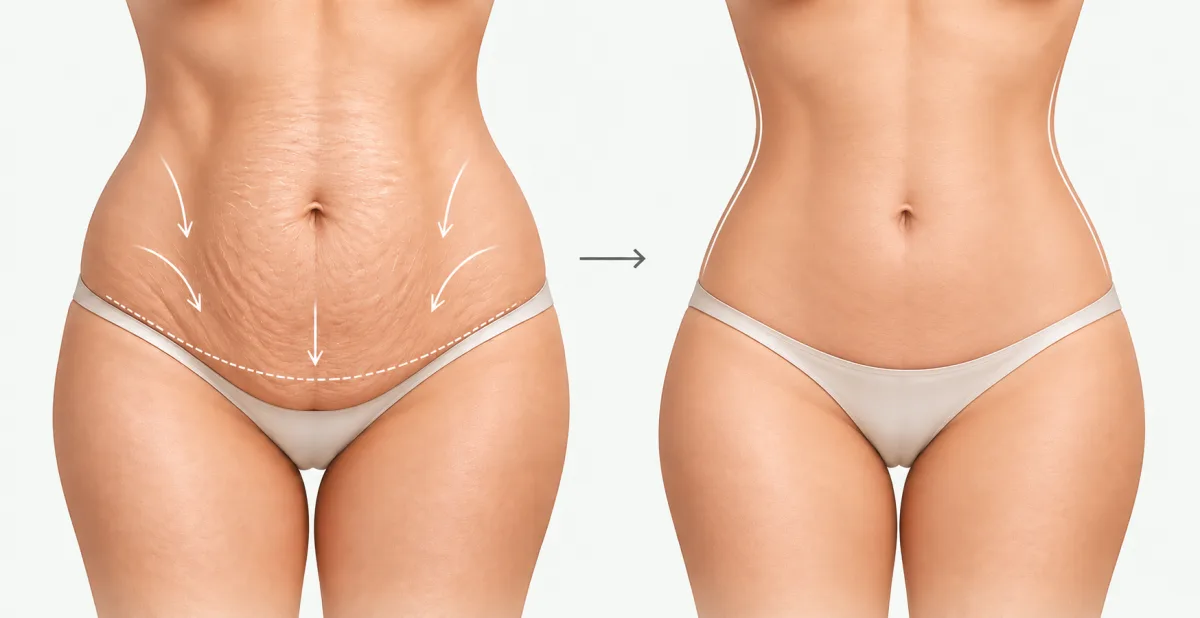
Price at consultation
Tummy tuck with added liposuction
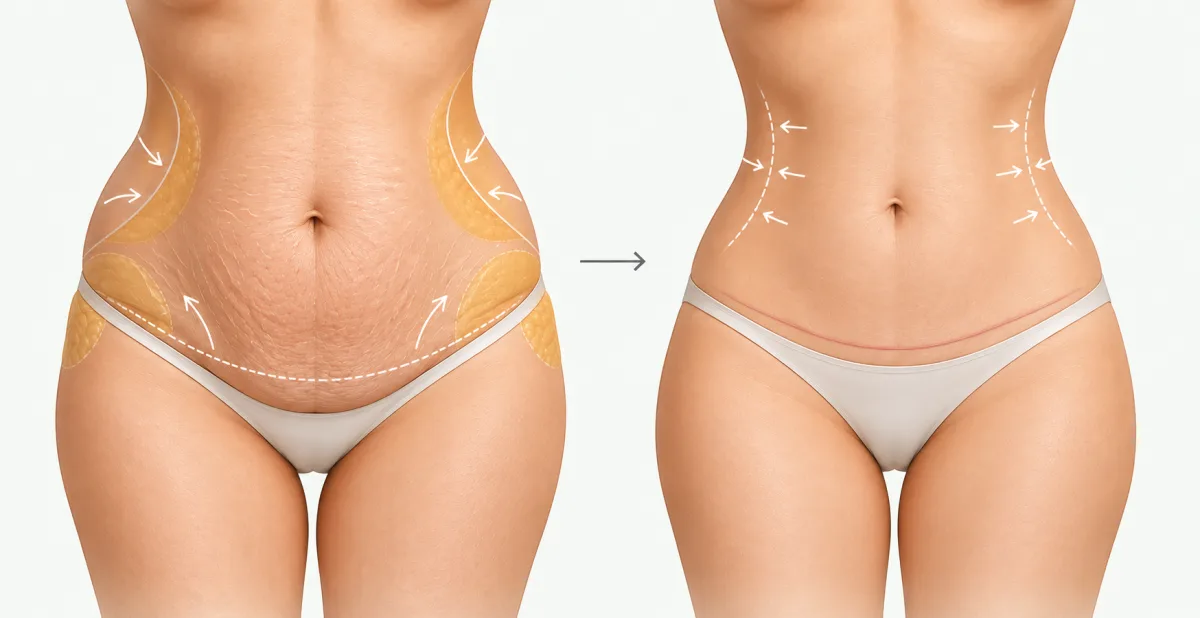
Price at consultation
The benefits and recovery times shown are averaged for each technique and given for guidance: the scope of correction and rehabilitation depend on your anatomy and individual features, and the surgeon confirms them at the consultation.
At the consultation the surgeon draws up a plan for your case and explains how your tummy tuck will go.
Free, before surgery and with no obligation.
About the clinic
Modern equipment, comfortable rooms and care for every patient

We will answer your questions and find a convenient time for a consultation
If your case can be solved without surgery, the doctor will tell you so at the consultation — and you will not spend money for nothing.


Not sure the surgery is right for you?
Message us — the coordinator will ask for your photos in the messenger, and the surgeon will tell you whether a tummy tuck suits you. No surgery booking needed.
Find out if it suits me
Prices
The price is set at the consultation and fixed in the contract.
Abdominal contouring

Abdominal contouring with liposuction of the flanks and waist

The surgeon assesses your abdominal skin and muscles, listens to your wishes and chooses the right correction technique.
The price is set at the consultation and fixed in the contract.

Message our coordinator
Free online consultation · Reply within 15 minutes
Message us on TelegramMessage us on WhatsAppBy messaging us, you agree to our Privacy Policy

all inclusive
From preparation for surgery
to post-op check-ups.
Price at consultation
Book a consultationHow it works
An agreed correction plan, inpatient observation and post-op check-ups.
 1
1The surgeon assesses your abdominal skin and muscles and checks for diastasis, listens to your wishes and chooses the right correction technique.
 2
2We reserve a surgery date for you: the deposit can be paid by card at the clinic or online by bank transfer. The terms are fixed in the contract for medical services
 3
3Before surgery you complete a full lab check-up: blood tests, an ECG, a chest X-ray and reports from the required specialists.
 4
4The surgeon performs the tummy tuck with the chosen technique, repairs diastasis if needed and shapes a firmer abdominal contour.
 5
5After surgery the patient stays for 1–3 days in a comfortable hospital ward with meals, under medical supervision.
 6
6After surgery you get a recovery programme. Check-ups at 7 days, 3 and 6 months help track your recovery.

Immediately after surgery the patient stays in hospital for 1–3 days, supervised by doctors. Drains are usually removed after two days, stitches after 7 days. For 1.5–2 months you wear a compression binder that supports the abdominal wall and forms a smooth contour. Most of the swelling goes within 30 days; office work is possible after 2–3 weeks. No sports, sauna or heavy lifting for 2–3 months, and in the beginning it is best to sleep on your back with knees bent. At 12 months the scar is fully mature, faded and barely noticeable.
After 7 days, at 3 months and at 6 months. Until the end of the year, get a post-surgery consultation with your surgeon to review results and get more information, at the clinic's expense
Advantages

At the consultation we discuss your wishes and assess your abdominal skin and muscles. The surgeon explains what changes are possible, chooses the correction technique and answers your questions.

The surgeon follows your recovery and the changing abdominal contour at check-ups after 7 days, 3 and 6 months. Check-ups, dressings and aftercare advice are already included in the price of surgery.

We choose the correction technique based on your skin, muscles and figure. Our aim is a harmonious abdominal contour that keeps the natural proportions of your body.

We respect your time: we work 24/7, with easy booking and a personal approach — we adapt to your pace.
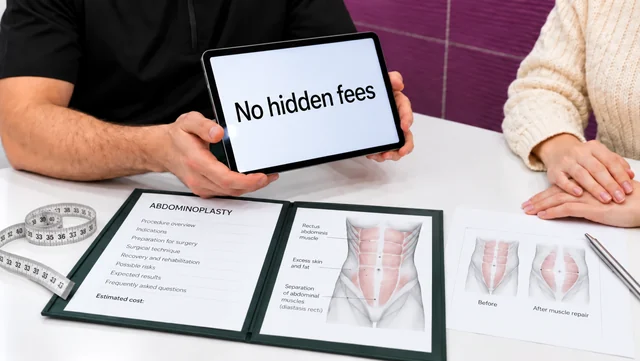
After the consultation the surgeon defines the extent of correction, and you get a clear price for the surgery — no surprises on the way to the result you want.

Recovery starts in a comfortable hospital ward under round-the-clock nursing care. The stay and meals are already included in the price.
FAQ
Yes, combining is allowed and is very common in practice. Liposuction of the flanks and waist is added to a tummy tuck, and after childbirth — repair of rectus diastasis. You go through one anaesthesia and one recovery period, and the surgeon will tell you at the consultation how extensive the procedure will be.
No, it doesn't help with weight loss — its goal is different: removing excess stretched skin and the fat apron and restoring the abdominal muscle wall. Surgery is done at a stable weight; if your weight is still changing, see a dietitian or endocrinologist first.
Yes, a scar remains — the unavoidable price of excess skin removal. In the classic tummy tuck, the incision goes across the lower abdomen from hip to hip and lies below the underwear or swimsuit line; in the mini tummy tuck it's much shorter. The scar becomes thin and fades over time.
That is exactly the purpose of the surgery: sagging skin and the fat apron are removed entirely, along with stretch marks below the navel. The upper abdominal skin is pulled downward by the surgeon, leaving a smooth tummy with no extra lift needed.
No, the patient feels no pain during the procedure — it is done under general anaesthesia, so nothing is felt. In the first days there may be tightness and soreness, which painkillers from the doctor relieve; by the end of the first week the discomfort eases noticeably.
The same restrictions apply to everyone after a tummy tuck. For 2–3 weeks, avoid physical exertion, heavy lifting and sudden movements. For at least a month, sauna, steam bath, pool, tanning beds, alcohol and smoking are ruled out. Sport resumes step by step, with the surgeon's approval only. Compression garments are worn for another 4–8 weeks.
The minimum age is 18 and contraindications must be absent. There is no upper limit: every case at our clinic is considered individually, after an examination and health assessment.
The difference is the extent of surgery. A mini tummy tuck is performed for a small excess of skin below the navel, with a shorter incision, the navel not moved and faster recovery. A classic tummy tuck removes the whole-abdomen skin-and-fat apron, includes moving the navel and allows full-length diastasis repair of the muscles.
Recovery follows three milestones — office work after 2–3 weeks, the end of swelling and tightness by 1.5–2 months, and assessment of the final result and scar at 6–12 months, when tissues have fully adapted.
Skin that has been removed doesn't regrow, which makes that part of the result permanent. The abdomen will only stretch again with significant weight gain, so maintain a stable weight. A pregnancy after a tummy tuck is possible, but it stretches the repaired muscles — surgery is therefore planned once your family is complete.
Yes, you have to prepare. 7–10 days before the tummy tuck, stop smoking, alcohol and any medicines affecting blood clotting. A pre-surgery check-up is needed: blood tests, ECG, ultrasound of the leg veins, GP and anaesthetist consultations. Do it well in advance, not the day before.
Same answer for everyone: at 2 weeks after surgery, with the main swelling down, the first changes are visible. Then two checkpoints: the interim result at 1.5–2 months, the final contours at 6–12 months.
Yes, it is needed: a classic tummy tuck requires 1–3 days in hospital under medical supervision, while one day is usually enough after a mini tummy tuck. You recover further at home, and the surgeon monitors progress at scheduled check-ups.
Everyone gets the same list before a tummy tuck: blood and urine tests, a coagulation panel, biochemistry, infection tests, an ECG, chest X-ray, leg vein ultrasound and a GP's report. At the consultation the surgeon gives the exact list; tests are usually valid for 10–14 days.
No, repair is needed only when the rectus abdominis muscles are actually separated, not for everyone. The surgeon identifies diastasis at the examination; if in doubt, it is confirmed by ultrasound. Separated muscles are brought together during the same surgery, without a separate procedure.
Pregnancy is not forbidden after a tummy tuck, but the right order is childbirth first, then surgery. Otherwise skin and muscles stretch again, and part of the result is lost. The one piece of advice surgeons give: if a child is planned, wait at least a year after the procedure.
Yes, it's required, since without the garment recovery is worse — it supports the tissues and reduces swelling. You wear it around the clock for the first 3–4 weeks and then in the daytime for roughly another month. Your operating surgeon gives the exact period.
Pregnancy, a C-section or major weight loss can leave behind loose skin and diastasis, the separation of the rectus abdominis muscles. Diet and training cannot fix this: stretched skin does not shrink, and separated muscles do not come back together on their own. That is when women in Khamis Mushait consider abdominoplasty, which restores both the skin and the muscle wall in one operation.
Preparation is straightforward. Two weeks before surgery, medicines affecting blood clotting are stopped; a week before, alcohol and smoking are ruled out for faster healing; the last meal is eight hours before. On the day, you meet the surgeon, the skin is marked and compression garments are fitted. The operation takes 2–4 hours under general anaesthesia. This is the plan for everyone in Khamis Mushait.
If you are comparing tummy tuck options in Khamis Mushait, look at more than the operation itself. Here the approach includes hormone screening before surgery, tests at the clinic with no waiting, a hospital stay under medical supervision and surgeon support until the result. The cost is calculated after a free consultation and fixed in the contract. Leave a request to arrange yours.
Well-known people who spoke openly about this operation, in their own words.
 Did María Patiño have a tummy tuck? Yes, she announced it herselfSpanish TV presenter María Patiño told viewers she had had a tummy tuck. What she said, how abdominoplasty works and what recovery really involves.
 Did Jaap Reesema have a tummy tuck? Yes, and he shared it himselfJaap Reesema shared his tummy tuck in January 2026. What he said, how the operation works, who it suits and what recovery usually looks like.
 Did Eva Frantz have a tummy tuck? Yes, and she explained why in her own wordsCrime author Eva Frantz wrote in 2023 that a mini tummy tuck after three pregnancies was one of her best decisions. Her words, the surgery and recovery.
 Did Olivia Gavrili have a tummy tuck? Yes, she shared it herselfJournalist Olivia Gavrili shared in 2023 that she had a tummy tuck after her fourth birth. What she said, how the operation works and how recovery goes.
 Did Popi Malliotaki have a tummy tuck? Yes, she said so on live TVPopi Malliotaki said on Greek TV in 2022 that she had a tummy tuck. Her exact words, how abdominoplasty works, recovery and what to ask before your own.
 Oana Radu and her abdominal surgery: what she said herselfOana Radu said in 2023 that she had abdominal surgery to correct the traces of losing over 100 kg. Her words, how a tummy tuck works and what recovery involves.
Weights sometimes leave in full, by diet or by bariatric surgery, and the skin of the lower abdomen stays loose like a flag defeated in a battle its owner won. A tummy tuck is the operation of exactly this stage: it removes the surplus skin, tightens the central line, and returns the abdominal muscles to their place; it treats no weight and replaces none. In Khamis Mushait, the kingdom's fifth-largest city with 535,065 residents in the 2022 census, the questions arrive from men and women who finished the weight's battle and found no dietary exit for the skin, sending first photos to coordinators on Telegram or Telegram at any hour of day or night.
The photos the assessment needs are simple: front and side in window light, standing, in modest inner clothing that shows the waistline and the whole abdomen, and no filters editing out what the photos came to reveal. The surgeon reads in them the amount of surplus skin, the position of the waist crease, the state of the central line's muscles, and any old hernias, then a written reply arrives distinguishing a full tuck from a mini one, and the candidate who needs limited liposuction with the tuck from the one who does not. Ask at the end of the page for a line on what the operation will not improve; whoever knows its limits before the date is not shocked after it.
The city's questions come from two neighbouring groups: those who finished bariatric surgery and reached their target weight, and those whose diet succeeded after successive pregnancies. Both carry the same question: when will my body be ready? The practical answer is that the weight should settle first, commonly three to six months at least before serious planning, and a coming pregnancy, if any, waits until after the operation, while the surgeon reads your whole course before deciding. Send your weight history and family plan with the photos in the first message; those two lines compress weeks of hesitant correspondence.
And an old market city teaches its people that every good is inspected in its own light, which is the experience here: photos in daylight reveal what room lamps hide, the weight history reveals what memory hides, and the written answer reveals what phrases hide. Whoever sent a complete file in the first message got an opinion worthy of it, and whoever sent a general sentence got a general sentence. Khamis Mushait was built on markets whose traders knew good goods need no loud voice, and your medical file is of the goods inspected by details rather than by courtesy.
A tummy tuck is performed under general anaesthesia and lasts two to four hours by the width of the work, and the patient then stays in hospital from one day to three under observation. In these days painkillers run on a schedule rather than on demand, rounds pass morning and evening, and home-care steps are explained in writing before discharge. This stay's bag knows its peculiarity: a garment opening at the front, wide trousers for the compression binder, and items used without bending. Whoever packed her list in Khamis Mushait two weeks before the date lived the hospital days in order, the way a written project is lived.
The drainage tubes, usually removed about two days after the operation, are the first thing families ask about and the least they understand, so they are explained before discharge in one sentence: their task is carrying away excess fluid, and their exit is reassurance, not alarm. At home, emptying and measuring them becomes one person's assigned role, chosen in advance, rather than a duty shuffled between household members who mix the readings. The mother or sister who plays this role knows the written file on the phone holds the answer before the question, and manages the first days with the calm of someone who read the script before the show, while the whole house rests from the repeated word normal?
The first ride after discharge is managed like a small deal: a reclined back seat, a pillow under the knees, a route of fewest bumps, and a family member driving rather than a driver who does not know the case. In highland households where two generations at least share one roof, it is arranged in advance who receives, who cooks, and who answers visitors with a polite delay. The receiving room waits ready: a bed of medium height rather than a low one demanding bending, water and soft meals for days, and a firm-backed chair standing in for floor seating for at least the first two weeks.
Early movement inside the house is part of the treatment, not a debate: frequent short walking shortens recovery and guards against clots, while lifting anything heavier than the tea pot is forbidden in the first period. What is most easily forgotten is that the back's effort makes no announcement: lifting a child off the floor, dragging a table, pushing a gas cylinder into its corner, all load the freshly tightened abdomen without warning. Write the forbidden list and pin it where it is seen, for a house whose members became willing guards spared its patient half the reminders and doubled the calm of her first two weeks.
The compression binder is worn after a tummy tuck from a month and a half to two months, and in Khamis Mushait the commitment is easier than in most of the kingdom: mountain air above two thousand metres, a June high that does not pass about 32.3°C, a January low near 8.6°C, and rains near 180 millimetres that soften the whole year. Light cotton over the binder at midday, a warm layer on the cold months' nights, and moderate morning walking; that is the entire summary. Whoever wore the binder in a coastal city understands what this city gives of comfort at no price.
But the altitude sets its condition: thinner air does not weaken the sun, so the skin under the binder and around the scar needs shade through the peak hours, and whoever is used to open markets and field work arranges the first week indoors. The loose scarf and the cap on short outings are not the highlands' fashion but part of the surgical plan, and whoever managed these details at the start spared herself weeks of what need not have happened. The precaution in this city is lighter than elsewhere, but it is not struck from the account, because it is not struck from its elevation.
The scar a tummy tuck leaves is designed low beneath the underwear line from the start, so it shows neither in a work dress nor in a wedding one. Its first weeks pass under the binder, then a maturation journey runs until the sixth month to the twelfth, asking two constants of its owner: protection from the sun, and patience with the slow woman the scar passes through. A monthly photo file in one light turns this journey from anxiety into measurement, and the surgeon's written comments on each photo remain a record the household returns to whenever someone wonders: is this normal in this month?
And the highlands' sun demands its respect during this stage specifically: thinner air does not weaken it on exposed skin, and a fresh scar is the quickest thing to show the neglect. Shade through peak hours, a cap on every daytime outing, and loose light-coloured clothing are three habits cheap to keep and expensive to lose. Whoever worked in an open market or a field arranged her hours the way a shade-seeker arranges his, since a city whose people sit in the mountains' shadows knows that chosen shade is wider than accidental shade.
A tummy tuck carries a calendar the surgeon knows before you do: stitches come out around the seventh day, most of the swelling goes within the first month, the return to desk work comes between the second and third week, the binder stays from a month and a half to two months, and the result and scar are assessed finally between the sixth month and the twelfth. This calendar is not trivia but a tool: whoever knows what each week brings is not shaken by a two-day delay and does not rush what needs months. Ask for it written before the date, pin it to the refrigerator, and let it become the house's calendar rather than yours alone.
The return-to-work date knows its shape from two answers: what your work is, and how the swelling runs. The desk employee returns easier than the open-shop owner or the teacher standing at the assembly line, and the difference between the cases is mentioned by the coordinator in the first consultation so the date is built to your measure. Heavy work with lifting and carrying is another matter the surgeon alone decides, and it does not resume on personal signal however normal things look. Ask for the answer written within the plan and book your leave on that basis; whoever arranged her work on the surgeon's calendar returned reassured, and whoever arranged it on her colleagues' enthusiasm returned hurried and regretting.
And between one check and the next the written channel stays open: a passing question about tightness in the skin, a photo that worries you in the evening, and a surgeon's comment that returns on time. Rank no question too small for your channel, since every written answer blocks a guess that swells after midnight. Keep your questions-and-answers file as you keep the photos, for together they make the recovery record the surgeon reads and judges you on your own course, not on a friend's who healed faster or slower, since bodies' speeds differ as house keys do.
The list of questions worth writing before the date is short: the scar's plan and position, the expected number of hospital days, what happens if the case ever needs a second tightening, and how follow-up runs from a distance. Send them in one batch through the coordinator, and the written answers become the whole household's reference at every later wondering. Whoever settled these four before the date entered the operating room knowing the entire path from the first step to the last check-in, and that written calm is what separates a managed operation from one that shocks its owner with the details.
Three tales repeat in Khamis Mushait's councils about the tummy tuck: that it is a luxury with no medicine in it, that it replaces a diet, and that its result delights for a year and departs. The truth is that the operation treats skin and muscles no food system can fix, that its best candidate is whoever's weight has settled, and that its result lives with the habits after it rather than apart from them. A patient who tied the operation to a complete weight project told her story with photos rather than words, and her picture file is the strongest answer to an objecting council. Ask about any worrying tale in writing; the page from its source reaches the council faster than the rumour that left it.
And offers for this operation are compared by two lines unlike the others: what the offer includes of scar follow-up across the first year, and how emergencies are managed in the first weeks after discharge. A tummy tuck is the widest of the common operations, and its bond with its scar stretches months, so whoever hands you the operating room and then vanishes from your questions is half an offer. Ask for the post-operative detail in writing, and ask about the surgeon's experience in this operation specifically and his registration with the Saudi Commission for Health Specialties; verifying the licence through its portal is an ordinary step in a city whose people know official papers' worth.
As for the household, they ask in the language of worry rather than objection: why now, and what afterwards, and who stands beside you? Give them the same page that reached you: a written plan, general anaesthesia with known observation days, and a known follow-up calendar. Ask the coordinator to answer their questions in the same conversation, since whoever reads the answer from its source settles before dinner. The house that distributes tasks two weeks before the date and gives each member a small role turns the first weeks from a patience test into shared work, and the senior mother in a highland household is often the first to arrange this distribution and supervise it.
Write your first message on the night you decide to stop postponing: front and side photos in window light, your weight history, and a line about what bothers you specifically. A written answer will arrive from coordinators on Telegram or Telegram at any hour, and from it begins a road walked step by step the way the city's old market is walked from the first shop to the last without one leap. A tummy tuck is, at its core, a rearranging of what your weight loss achieved, and a city that became the kingdom's fifth on the patience of deals knows that every successful rearranging begins with a clear page and ends with highland patience.
Often yes, once the weight settles: the skin emptied of fat does not chase the smaller size on its own, and the surgery works when the body is stable rather than still moving. Send your complete weight history and abdominal photos to the coordinator, and a written opinion arrives saying whether the time has come or needs waiting. That early conversation organises the whole path: you learn when to book your leave and when to begin preparing, instead of swinging between enthusiasm and delay each time you pass the mirror.
Two to four hours under general anaesthesia by the width of the work, then one to three days in hospital under observation. There painkillers run on a regular schedule, rounds pass morning and evening, and home care is explained in writing before discharge. Arrange in advance a reception car with a reclined seat and a pillow under the knees, and a house with a suitable bed and soft meals ready; those three days are all the calendar asks at the start, and what follows is photo follow-up from your home in Khamis Mushait.
Around the seventh day after the operation, after which care of the closed scar begins. Some internal stitches dissolve on their own and need no removal step, and the surgeon states which type was used in your case within the written instructions. Book the stitches' appointment through the coordinator rather than on your own arrangement, so the day stays calculated with the team watching the scar from the first moment; and whoever comes from a city or village outside Khamis Mushait plans that day's ride with the team's schedule, not her own estimate.
Between the second and third week according to how the swelling recedes and how you feel generally; the range gives an employee room to tie her leave to a known holiday, and a teacher room to book it between two terms. Heavy work with lifting and carrying is another matter the surgeon alone decides, and it does not resume on personal signal however normal things look. Ask for the answer written within the plan and tell your workplace early about the nature of the absence; whoever arranged her work on the surgeon's calendar returned reassured, and whoever followed the enthusiasm around her returned hurried and regretting.
With an ease few cities grant: mountain air above two thousand metres, a June high near 32.3°C and a January low near 8.6°C, so light cotton by day and a warm layer on cold nights usually suffice. The commitment runs from a month and a half to two months and ends on the surgeon's signal rather than on your comfort's estimate, and remember the sun at this altitude stays strong, so shade through peak hours is part of the plan. Whoever wore the binder in a hot coastal city knows that what you live here is closer to a clothing layer than to a summer burden.
It is designed from the start low beneath the underwear line, so it appears neither in work clothes nor in occasion ones. Its first weeks pass under the binder, then a maturation journey runs until the sixth month to the twelfth, fading gradually, on two constant conditions: protection from direct sun and patience with the stages. In a city where many work under the open sky, covering the scar in its first months becomes part of the surgical plan itself, since sun on a fresh scar is the shortest road to darkening its colour.
The first period forbids lifting any weight that loads the freshly tightened abdomen, and lifting a child off the floor is among the heaviest movements for the central line's muscles. Permission comes from the surgeon in stages: lifting while seated with back support first, then standing from the side, then full normal lifting in its own time. Mention your child's age in the first conversation so a written answer arrives arranging the household's roles for the first two weeks, and preventing a moment of enthusiasm from lifting the child off the floor too early and trading weeks of healing for seconds.
Liposuction removes deposits and leaves the skin to tighten according to its elasticity, while a tummy tuck removes the surplus skin, repairs the central line and returns the muscles to their place, and limited flank liposuction may be added by the plan. This is why the assessment begins with a question about your skin's elasticity rather than your weight, and the surgeon's written description of exactly what he will do is the best thing to compare between two offers. Many came asking about liposuction and left with a tuck plan, and the reverse happens; the examination decides, not the mirror and not a friend's opinion.