City Medical Centre · multi-specialty surgery clinicOpen 24/7

Tummy tuck

Tummy Tuck in Addis Ababa: Methods and Recovery

Free consultation

Price at consultation

The price is fixed in the contract before surgery
Real case
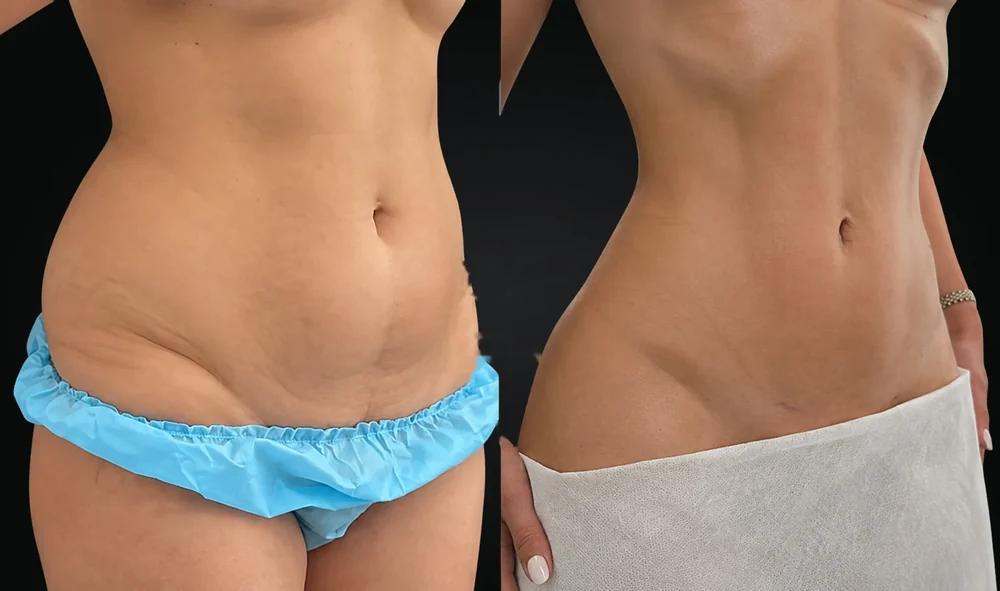
Tummy tuck: a patient's abdomen before and after surgery before after
A flat tummy and a toned silhouette in one operation. Your individual surgical plan and the expected result are discussed at the consultation

Message our coordinator

Free online consultation · Reply within 15 minutes

Message us on Telegram

By messaging us, you agree to our Privacy Policy

Results

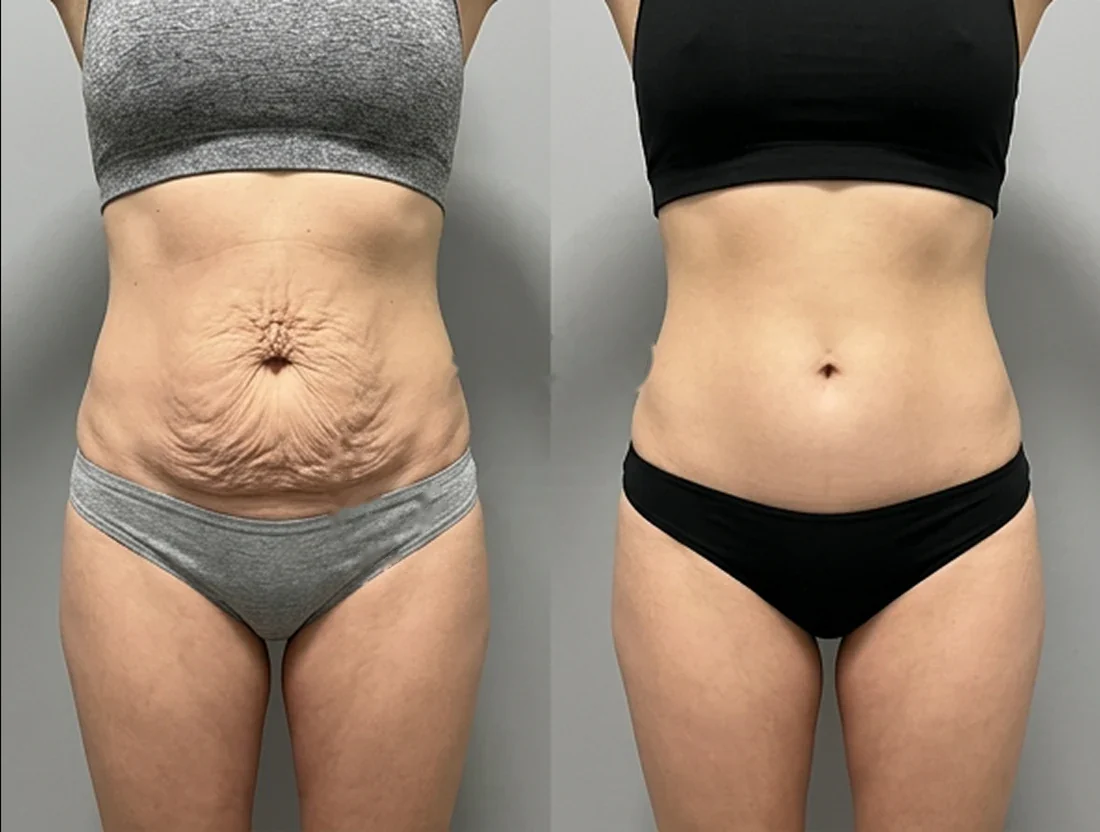
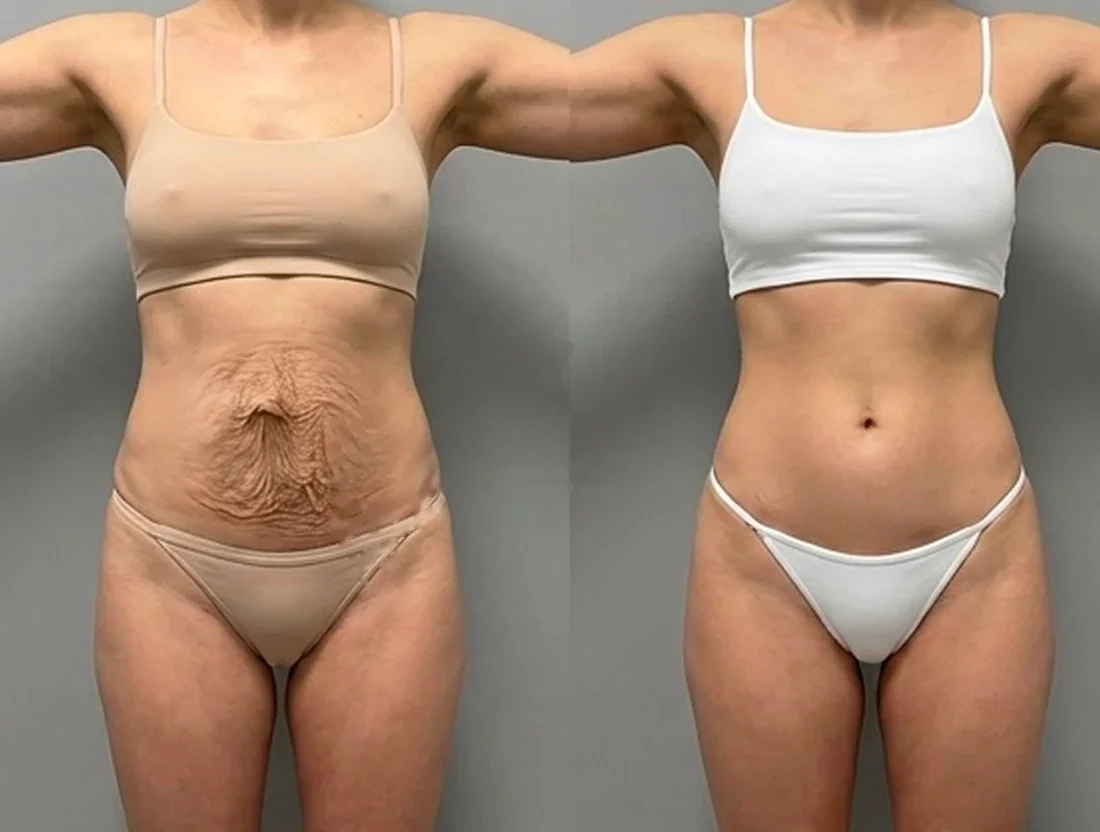
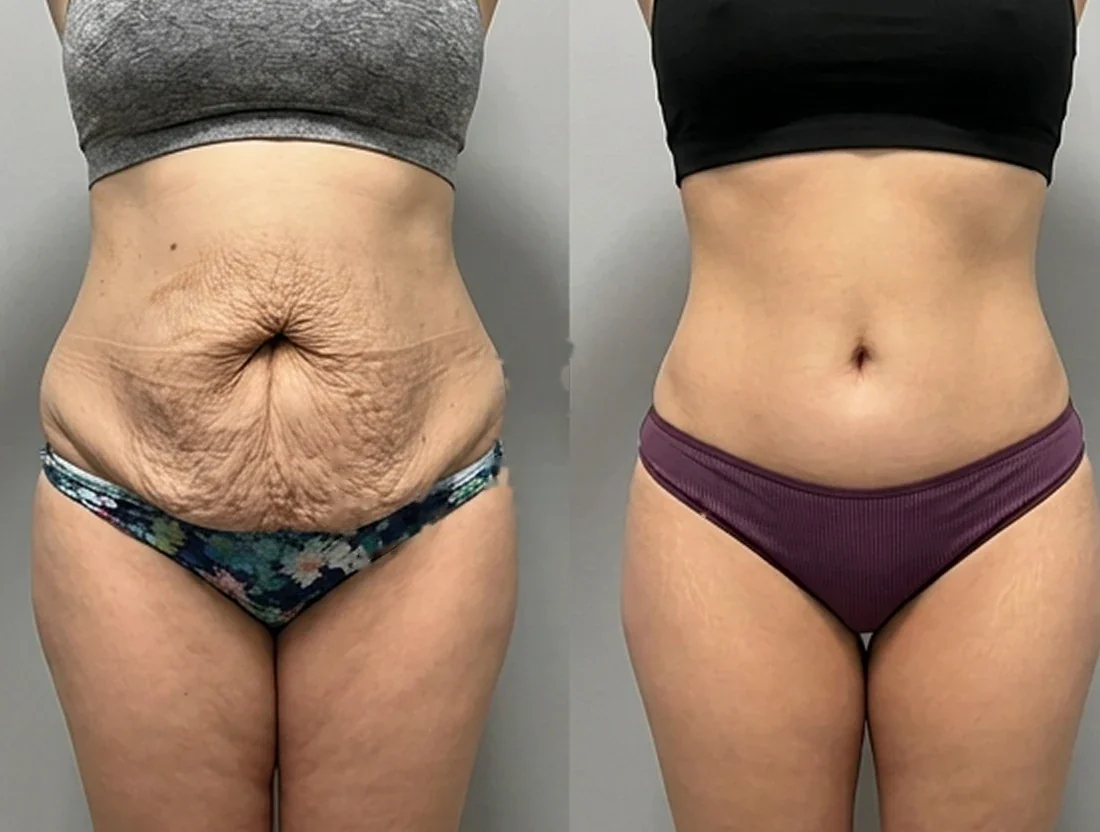
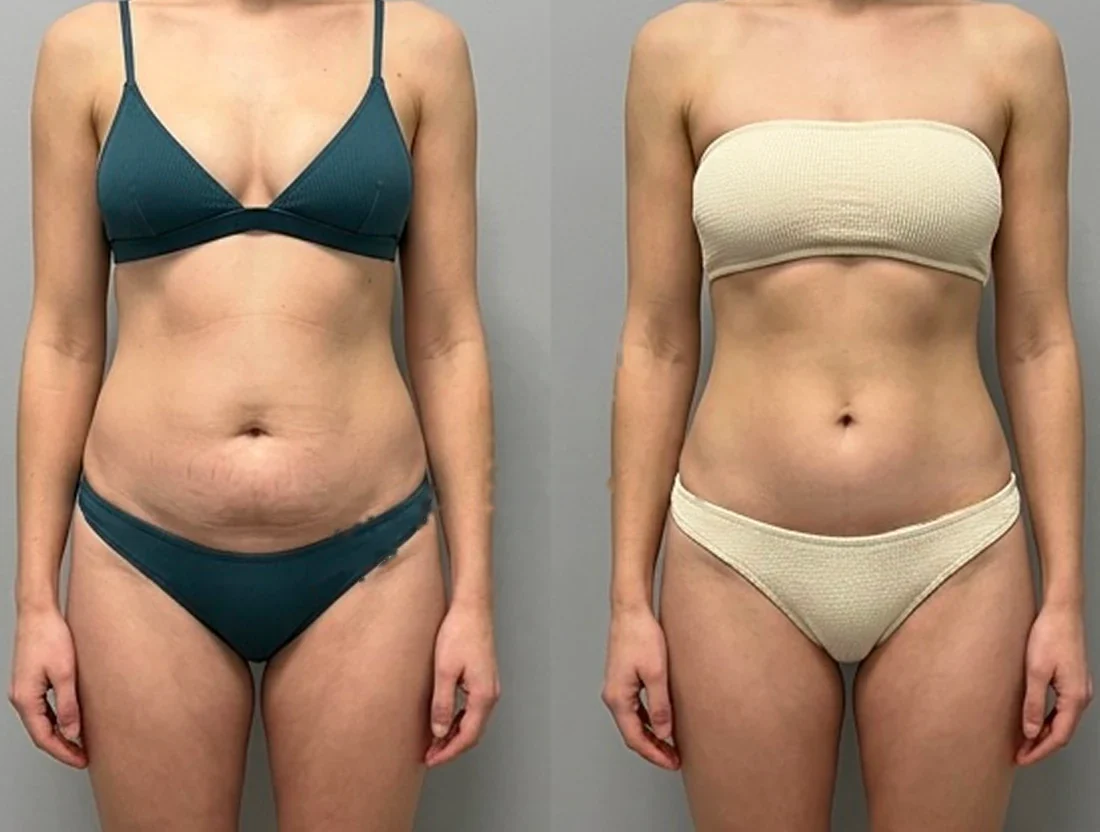
Tummy tuck results
of our patients

All cases are real patients. Faces and identifying details are hidden.

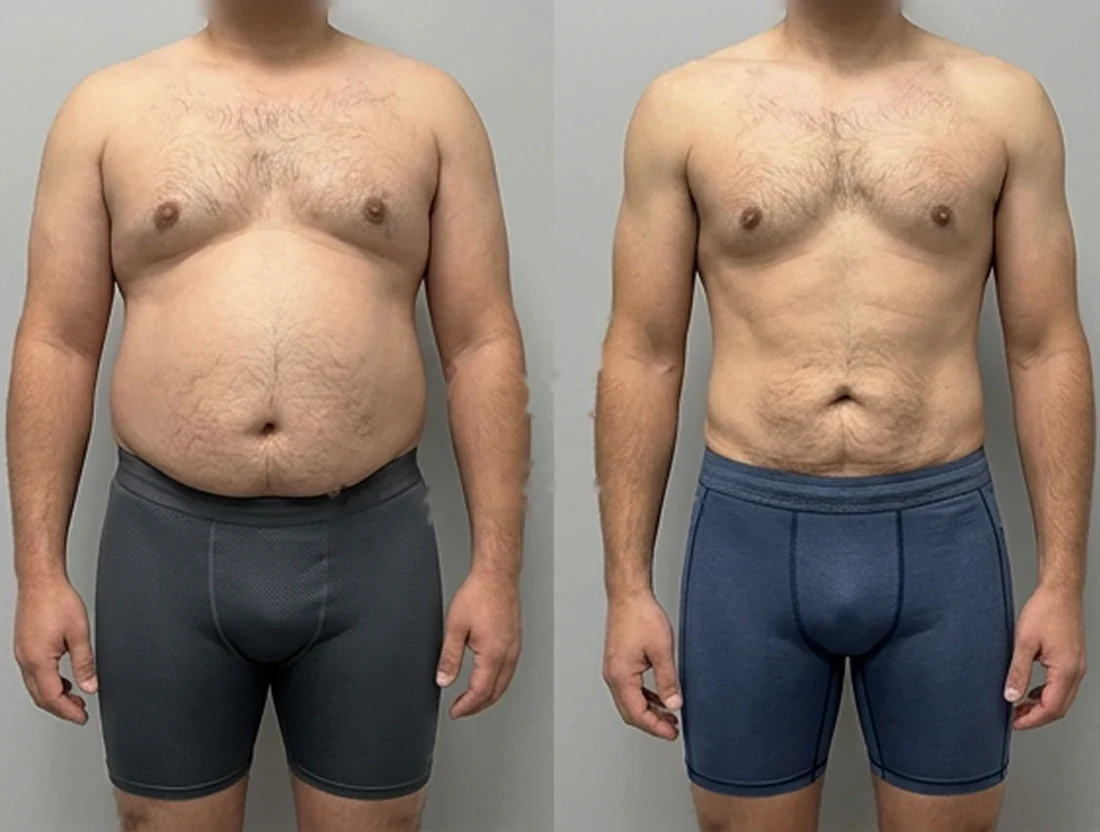
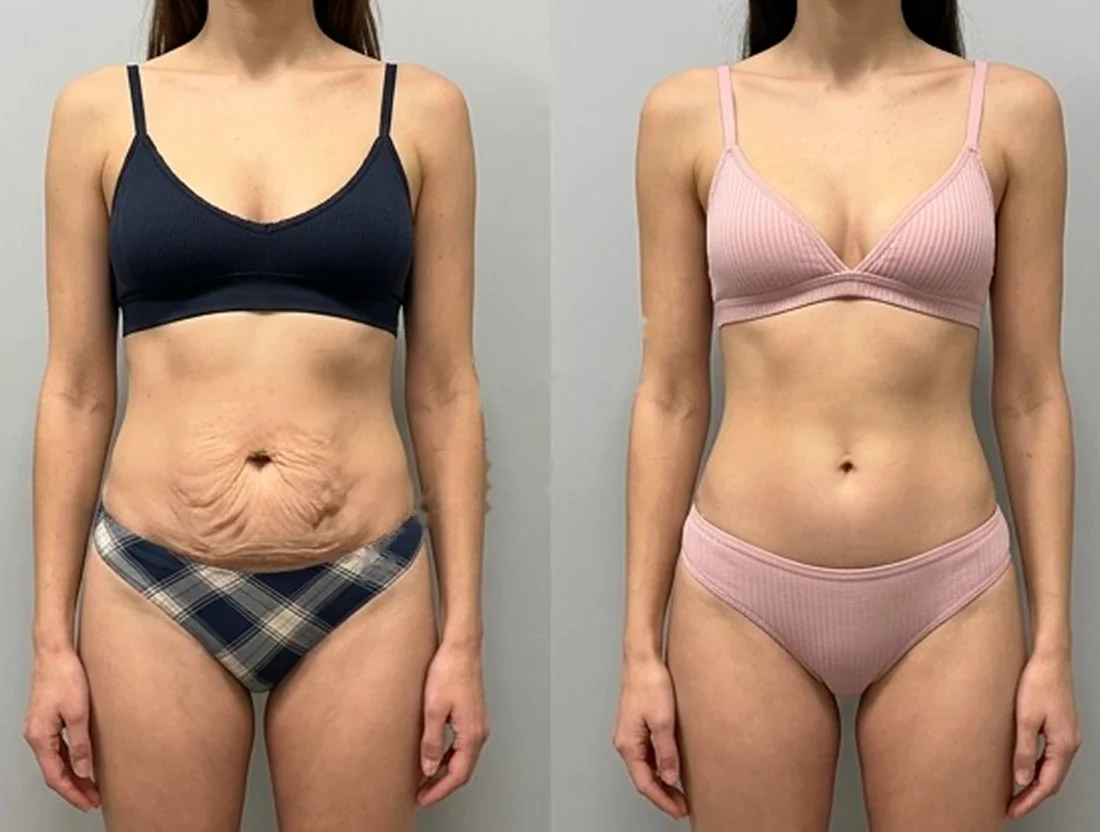
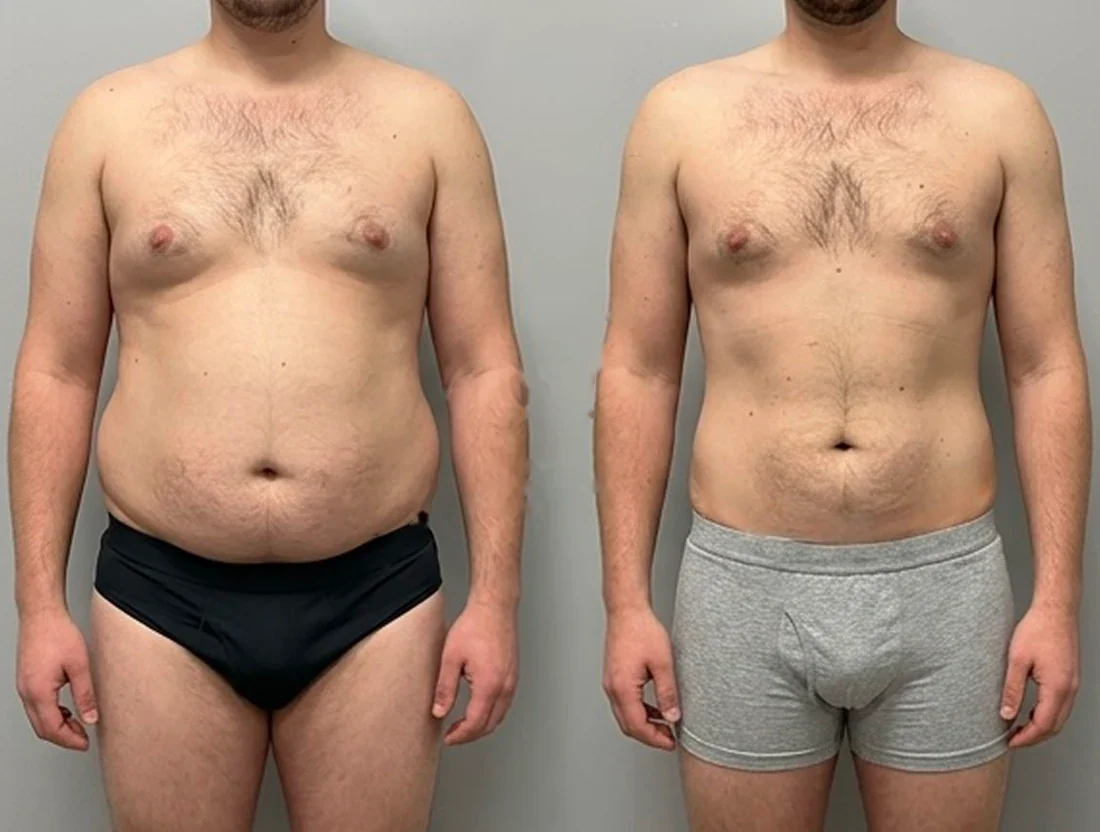
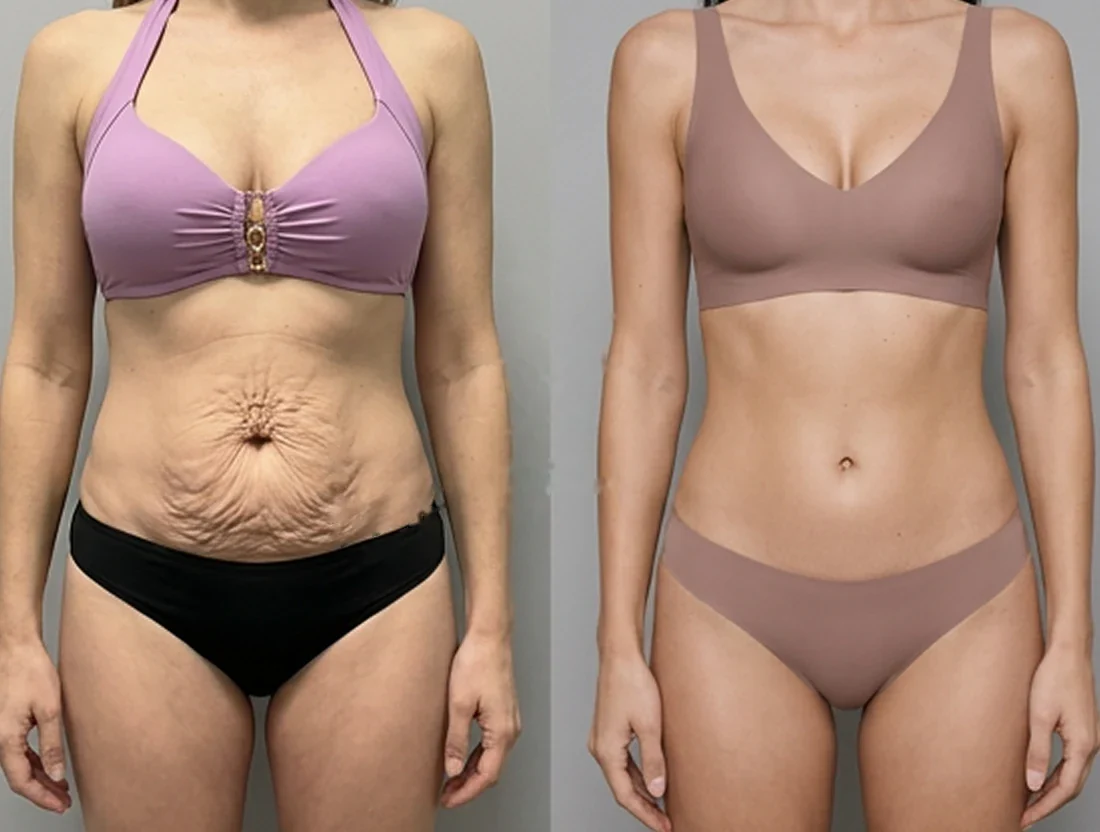
Tummy tuck: a female patient's abdomen before and after surgerybeforeafter
Tummy tuck: a male patient's abdomen before and after surgerybeforeafter
Tummy tuck: a female patient's abdomen before and after surgerybeforeafter
Tummy tuck: a male patient's abdomen before and after surgerybeforeafter
Tummy tuck: a female patient's abdomen before and after surgerybeforeafter
1 of 8

Comparison

Tummy tuck techniques

A tummy tuck is done as a full (classic) or mini operation, or combined with liposuction as lipoabdominoplasty. Compare the scope of surgery, the indications and the expected results to choose the right technique together with your surgeon.

Tummy tuck

Removal of excess skin, abdominal muscle tightening
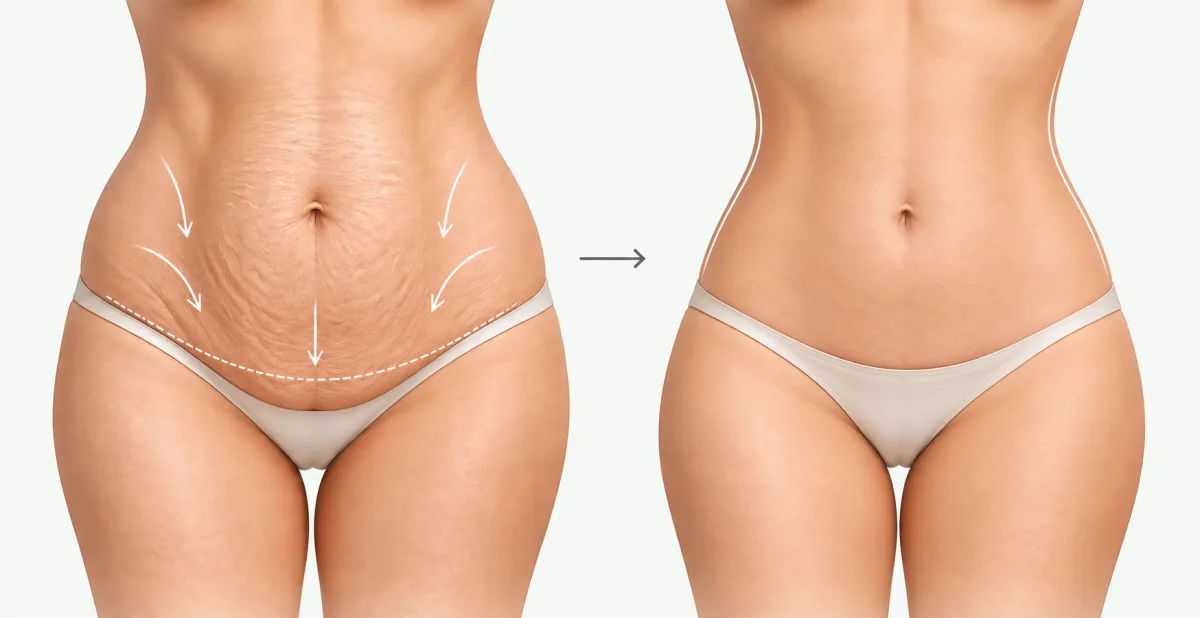
Tummy tuck diagram: the abdomen before surgery with the incision line, and the result
Main goal
Removal of excess skin, diastasis repair
When it is done
Excess skin after childbirth or weight loss
Anaesthesia and stay
General anaesthesia, up to 3 days in hospital

Lipoabdominoplasty

Tummy tuck with added liposuction
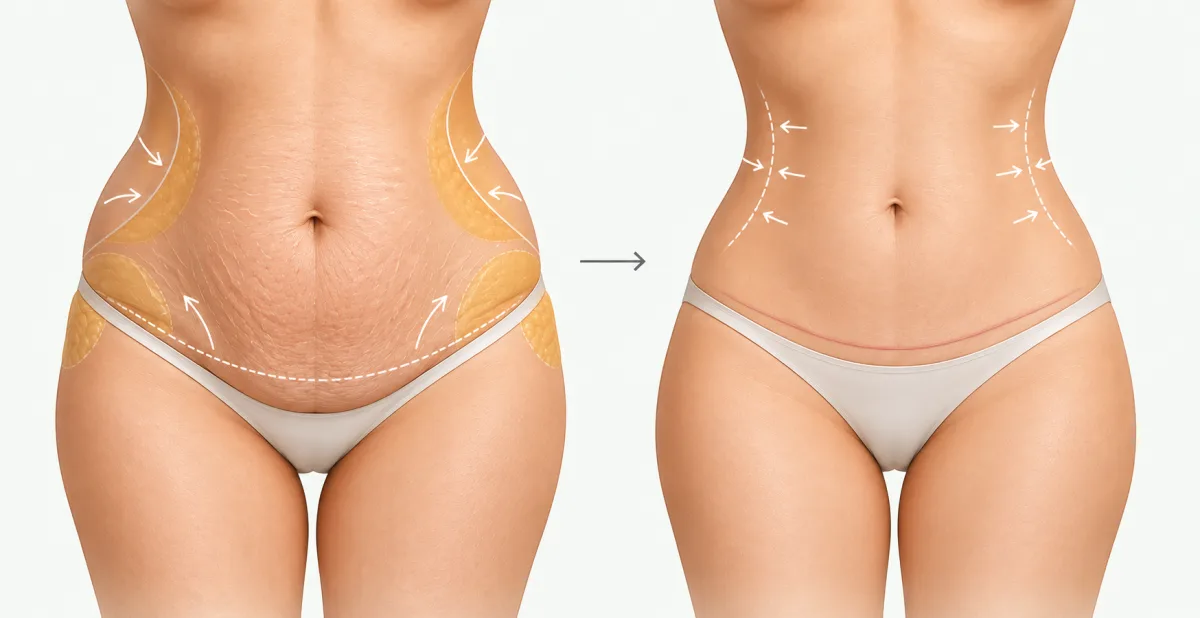
Lipoabdominoplasty diagram: the abdomen with fat on the flanks before surgery, and the result
Main goal
Tummy tightening and waist contouring
When it is done
For fat deposits on the flanks and waist
Anaesthesia and stay
General anaesthesia, up to 3 days in hospital

The benefits and recovery times shown are averaged for each technique and given for guidance: the scope of correction and rehabilitation depend on your anatomy and individual features, and the surgeon confirms them at the consultation.

At the consultation the surgeon draws up a plan for your case and explains how your tummy tuck will go.

Free, before surgery and with no obligation.

Book a consultation

Tummy tuck from the inside

About the clinic

A clinic where you can feel at ease

Modern equipment, comfortable rooms and care for every patient

A doctor and a patient in a clinic ward

Contact us the way that suits you

We will answer your questions and find a convenient time for a consultation

A tummy tuck is not for everyone

If your case can be solved without surgery, the doctor will tell you so at the consultation — and you will not spend money for nothing.

Suitable

A surgeon shows a patient on a model and a monitor how the abdominal contour changes after a tummy tuck
  • Rectus abdominis diastasis
  • Skin folds after weight loss
  • Loose abdominal skin
  • Stretched skin after pregnancy
  • A distorted abdominal contour

Not suitable

A surgeon discusses the indications and contraindications for a tummy tuck with a patient
  • Acute infections
  • Significant disease of the heart, kidneys or liver
  • Problems with blood clotting
  • Age under 18
  • Decompensated diabetes
  • Cancer
  • Skin inflammation in the surgical area
  • Pregnancy and nursing

Not sure the surgery is right for you?

Message us — the coordinator will ask for your photos in the messenger, and the surgeon will tell you whether a tummy tuck suits you. No surgery booking needed.

Find out if it suits me

A surgeon goes through a tummy tuck diagram with a patient at the consultation

Prices

You know the price
before surgery

The price is set at the consultation and fixed in the contract.

Other services

  • First consultationFree
  • Liposuction of the abdomen and flanksfrom $1,700
Book a consultation

Find out your tummy tuck plan and price

The surgeon assesses your abdominal skin and muscles, listens to your wishes and chooses the right correction technique.
The price is set at the consultation and fixed in the contract.
A nurse talks to a patient in a clinic ward

Message our coordinator

Free online consultation · Reply within 15 minutes

Message us on Telegram

By messaging us, you agree to our Privacy Policy
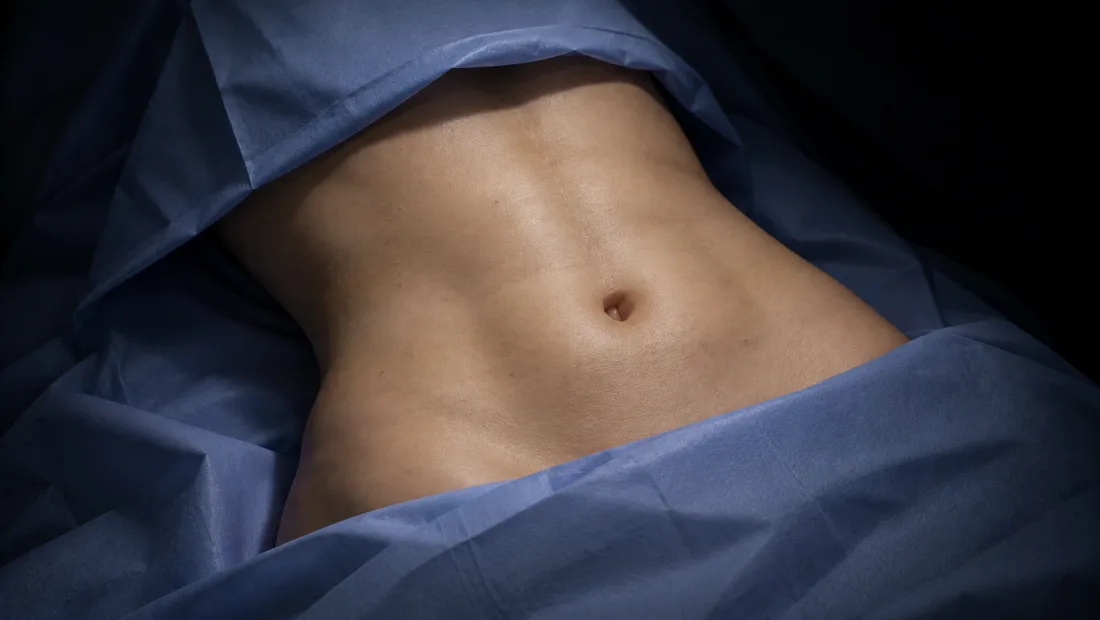
A patient's abdomen before a tummy tuck in the operating room

all inclusive

What the price includes

From preparation for surgery
to post-op check-ups.

  • All scheduled dressings
  • Scheduled post-op check-ups
  • A personal coordinator on call
  • Compression garments fitted on the day of surgery
  • A stay in a comfortable
    hospital ward with meals
  • Individual recommendations
    for recovery
  • Remote progress monitoring
    by photos

How it works

Three days at the clinic —
from preparation to discharge

An agreed correction plan, inpatient observation and post-op check-ups.

A doctor shows a patient a tummy tuck diagram on a monitor1

Consultation
and the surgical plan

The surgeon assesses your abdominal skin and muscles and checks for diastasis, listens to your wishes and chooses the right correction technique.

Paying the deposit by card at the clinic reception2

Booking the date
of surgery

We reserve a surgery date for you: the deposit can be paid by card at the clinic or online by bank transfer. The terms are fixed in the contract for medical services

A blood sample tube for tests before a tummy tuck3

Check-up before
surgery

Before surgery you complete a full lab check-up: blood tests, an ECG, a chest X-ray and reports from the required specialists.

The surgical team during the operation4

Surgery

The surgeon performs the tummy tuck with the chosen technique, repairs diastasis if needed and shapes a firmer abdominal contour.

A hospital ward at the clinic5

Inpatient stay

After surgery the patient stays for 1–3 days in a comfortable hospital ward with meals, under medical supervision.

A surgeon and a patient in the ward during recovery6

Recovery

After surgery you get a recovery programme. Check-ups at 7 days, 3 and 6 months help track your recovery.
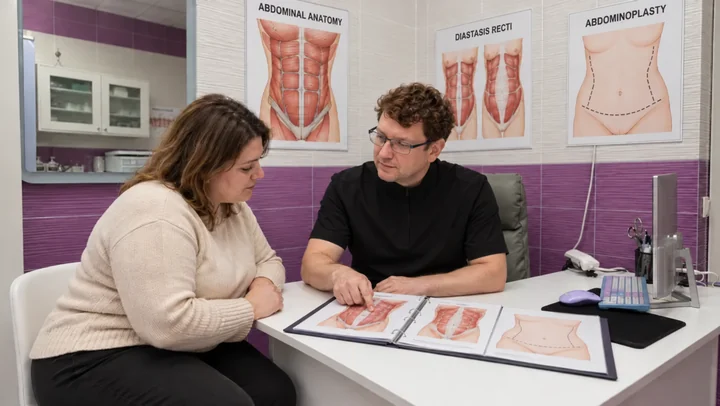
Book a free consultation — the surgeon will plan every step with you.

A doctor discusses the tummy tuck plan with a patient
Book a consultation
A doctor discusses the tummy tuck plan with a patient

How it really happens

Recovering after a tummy tuck

The patient remains in hospital under medical supervision for 1–3 days right after surgery. Drains are usually taken out after two days and stitches after 7 days. A compression binder, worn for 1.5–2 months, supports the abdominal wall and shapes a smooth contour. Within 30 days most swelling goes; after 2–3 weeks you can return to office work. Sports, sauna and heavy lifting are not allowed for 2–3 months, and sleeping on your back with knees bent is recommended at first. By 12 months the scar has matured fully: it fades and is hardly visible.

Post-op check-ups

After 7 days, at 3 months and at 6 months. Until the end of the year, get a post-surgery consultation with your surgeon to review results and get more information, at the clinic's expense

Advantages

Why patients pick City Medical Centre

A surgeon discusses the tummy tuck plan with a patient at the consultation

Just find out — you lose nothing

At the consultation we discuss your wishes and assess your abdominal skin and muscles. The surgeon explains what changes are possible, chooses the correction technique and answers your questions.

A surgeon on a video call with a patient after surgery

We stay with you after surgery

The surgeon follows your recovery and the changing abdominal contour at check-ups after 7 days, 3 and 6 months. Check-ups, dressings and aftercare advice are already included in the price of surgery.

A surgeon shows a patient a model and tummy tuck diagrams

A beautiful contour that fits your figure

We choose the correction technique based on your skin, muscles and figure. Our aim is a harmonious abdominal contour that keeps the natural proportions of your body.

A patient writes down a convenient visit time in her planner

Your schedule is our priority

We respect your time: we work 24/7, with easy booking and a personal approach — we adapt to your pace.
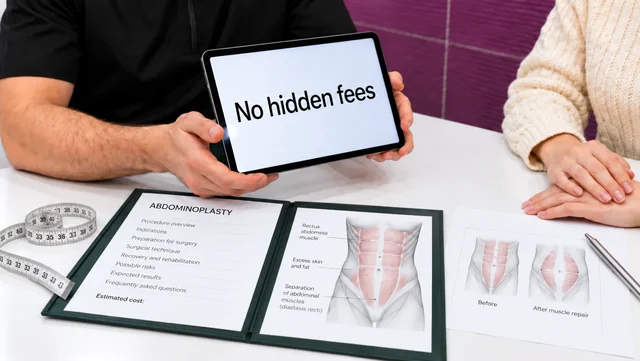
A surgeon shows a patient the fixed price of surgery with no extra charges

Fixed prices

After the consultation the surgeon defines the extent of correction, and you get a clear price for the surgery — no surprises on the way to the result you want.

A surgeon visits a patient in the hospital ward after surgery

Round-the-clock care after surgery

Recovery starts in a comfortable hospital ward under round-the-clock nursing care. The stay and meals are already included in the price.

FAQ

We answer what
people ask before booking

Tummy tuck in Addis Ababa: what you should know

Pregnancy, a C-section or major weight loss can leave behind loose skin and diastasis, the separation of the rectus abdominis muscles. Diet and training cannot fix this: stretched skin does not shrink, and separated muscles do not come back together on their own. That is when women in Addis Ababa consider abdominoplasty, which restores both the skin and the muscle wall in one operation.

It all begins with a surgeon consultation: the doctor listens to your wishes, examines the abdomen and rules out contraindications, and a hormone screening is ordered to help predict the long-term result. Patients from Addis Ababa then complete a check-up: blood tests including a coagulation panel, biochemistry and infections, ECG and chest X-ray, all available at the clinic with no waiting.

There is no single price for abdominoplasty, since a mini tummy tuck and a classic operation with diastasis repair differ in scope. What stays constant is the approach: the surgeon names the cost after an in-person examination, and it is fixed in the contract without surprises. Addis Ababa residents can apply before the end of the year and get the consultation at the clinic's expense.

Tummy tuck in Addis Ababa: who asks and why

Addis Ababa is the capital and largest city of Ethiopia, with an estimated population of 6,287,000 inhabitants as of 2025. People from every region live here, and the city is known as a meeting point of communities. Residents who ask about abdominoplasty come from very different backgrounds. Some are mothers whose abdominal wall and skin changed after pregnancy. Others lost a lot of weight and are left with loose skin. Others simply feel that the contour of the abdomen no longer matches the rest of their body.

The questions are usually practical rather than abstract. How many days will I be away from work? When can I hold my children again? Can I plan around a family event? Will the garment show under my clothes? This text answers those questions with the planning of a person living in Addis Ababa in mind: its work rhythm, its cool highland weather and its busy social calendar.

A tummy tuck is a planned operation under general anaesthesia, with up to 3 days in hospital. It is not a quick cosmetic procedure and it is not a way to lose weight. Patients who understand this from the first conversation usually plan better and are calmer during recovery.

The first step is a free online consultation. You write to the coordinators from your own city on WhatsApp or Telegram. They are available 24/7, so you can send photographs and questions in the evening after work or early in the morning, and nobody expects you to fit into someone else's schedule.

How the remote consultation works from Addis Ababa

You do not need to leave the city to start. You contact the coordinators on WhatsApp or Telegram, describe your goal, and share basic information about your health, previous operations, pregnancies and weight history. Communication is possible in a language that suits you, and the coordinators work around the clock, so a person on a night shift or a student with a tight timetable can still write when it suits them.

After that the surgeon reviews your case online. Together you discuss whether a classic tummy tuck or a mini tummy tuck is more suitable. For a classic operation the stay is 1–3 days under medical supervision, and for a mini tummy tuck one day is usually enough. The surgeon also tells you which tests you need. The exact list comes from the surgeon at the consultation, and tests usually stay valid for 10–14 days. That detail matters for planning, because you should not do all the tests too early or leave them to the last day.

We respect your time: we work 24/7, with easy booking and a personal approach, and we adapt to your pace. If you need a few weeks to arrange leave at work or at the university, that is normal. Make the decision calmly, not under pressure.

Prepare your questions in writing before the conversation. Addis Ababa is a city of long working days and heavy traffic, and it is easy to forget half of what you wanted to ask once the call begins.

Climate of the highlands and recovery after abdominoplasty

Addis Ababa lies in the Ethiopian Highlands at an elevation of 2,355 metres, which makes it the highest capital in Africa. The altitude keeps temperatures moderate all year, and no month has a mean temperature above 22 °C. For a person recovering from a tummy tuck this is a real advantage. You do not face the extreme heat that makes a compression garment uncomfortable, and heavy sweating under the garment is less of a problem.

The seasons still differ. Mid-November to January is the dry season, with daily maximums usually not above 23 °C and nights of 5 °C to 10 °C that can drop to freezing. That is comfortable for wearing a garment around the clock, but you should dress in warm layers in the evening and avoid sitting in a cold draught. The short rainy season runs from February to May, with pleasant rain and warm temperatures. The long wet season, from June to mid-September, is the coldest time of year, with frequent rain, hail and cloud.

Whatever the season, the compression garment is a requirement. Recovery is worse without it because it supports the tissues and reduces swelling. For the first 3–4 weeks it stays on around the clock, then during the daytime for roughly a month more. Your operating surgeon will name the exact period. Choose loose, soft clothes that fit over the garment, and avoid belts or tight waistbands that press on the abdomen.

Strong sun is still possible at this altitude on clear days, so protect the scars from direct light when you go out, and remember that tanning beds are out for at least a month.

Choosing the season for your operation

There is no single correct month, and the rules after a tummy tuck are the same for everyone. Still, the weather of Addis Ababa gives some practical points. The dry season from mid-November to January offers clear days and easier movement around the city, which helps if you have to attend check-ups or run small errands in the first weeks.

The wet season, from June to mid-September, brings rain, hail and dark chilly days. Some people find this a good time to stay at home quietly, since the first 2–3 weeks require you to avoid physical exertion, heavy lifting and sudden movements. Others find slippery streets and crowded transport tiring, and prefer a drier month. Think about how you move through the city every day and choose the period when it is easiest for you.

Plan around your own calendar as well. Do not schedule the operation shortly before a family celebration, an examination period or a work deadline that you cannot move. The first changes appear 2 weeks after surgery as the main swelling subsides, then there is an interim result at 1.5–2 months and the final contours at 6–12 months. If you want to feel comfortable at an event, leave a gap of several months, not several weeks.

Allow time before the operation too. Preparation means giving up smoking and alcohol and certain medicines 7–10 days beforehand, and it includes a full check-up. A hurried schedule makes preparation harder.

Work, study and daily life during recovery

Addis Ababa has a varied economy: trade and commerce, manufacturing, civil administration, transport, education, health and hotel services all employ many residents. Because of this, the return to work depends on the type of job. With office work, you can return after 2–3 weeks, and that is the first of three milestones of recovery. By 1.5–2 months swelling and tightness pass, and at 6–12 months, with the tissues fully adapted, the final result and scar are assessed.

If your work involves standing for long hours, carrying goods or lifting, discuss it openly with the surgeon. Heavy lifting is excluded for the first 2–3 weeks, and sport is resumed gradually, only with the surgeon's approval. Employees in trade or transport may need a longer adjustment period or lighter duties at first. Talk to your employer early and arrange the leave in advance instead of improvising.

Students at the city's universities and colleges can plan the operation around a break in studies. Sitting at a desk is realistic after about 2–3 weeks, but long hours on hard benches or in crowded transport need care. A small cushion and short walks help.

Home life matters too. Many households in Addis Ababa include several generations, which can be a big help. Ask a relative to take over lifting children, shopping and heavy cleaning during the first weeks. Arrange this before the operation, so that on your return home everything is ready.

Sport, running culture and the spa capital: what to avoid and when

Addis Ababa is a running city. It hosts the Jan Meda International Cross Country and the annual Great Ethiopian Run, held in late October. Many residents run or walk regularly, and it is natural to ask when you can return. The answer is gradual. For the first 2–3 weeks you avoid physical exertion and sudden movements. After that, sport is resumed step by step, with the surgeon's approval only. Compression garments are worn for another 4–8 weeks.

If you hope to take part in a race, plan it far in advance and ask the surgeon at a check-up whether it is realistic. Light walking in the cool morning air is usually the first step, while running and strength training must wait for permission.

The city has also been called the spa capital of Africa by some spa professionals. That is pleasant in daily life, but after a tummy tuck sauna, steam bath, pool, tanning beds, alcohol and smoking are out for at least a month. Postpone any massage or spa visit until the surgeon confirms that the wound area is ready, and ask specifically about treatments that press on or heat the abdomen.

Remember that a good result needs patience. Returning to sport too early can increase swelling and delay healing, so follow the plan even when you feel well.

Who is a suitable candidate, and who should wait

You must be at least 18, with no contraindications. No upper limit exists; each case is considered individually, after an examination and health assessment. In general terms, abdominoplasty suits adults with loose skin or a weakened abdominal wall that does not respond to diet and exercise, and who are in stable health.

Weight matters. The World Health Organization treats overweight and obesity as health issues, and a tummy tuck is not a replacement for weight management. If you are planning a significant weight change or a new pregnancy, discuss the timing with the surgeon, because these affect the result.

Some conditions make surgery unsuitable or require postponing it. Examples are active infections, problems with blood clotting, serious heart or lung conditions and uncontrolled chronic diseases. Smoking is a particular concern. Stop smoking, drinking alcohol and taking medicines that affect blood clotting 7–10 days before the operation, and ideally stay away from them for the whole recovery period.

Be honest in the online consultation about everything: medicines, past operations, allergies and any chronic conditions. The surgeon can only judge safety when the information is complete.

Preparation, hospital stay and check-ups

Preparation is a must. The pre-surgery check-up covers blood tests, ECG, leg vein ultrasound and consultations with a GP and anaesthetist. The full list usually includes blood and urine tests, coagulation panel, biochemistry, infection tests, ECG, chest X-ray, ultrasound of the leg veins and a GP's report. Get it done in advance, not the day before. In a large city like Addis Ababa, laboratories and clinics can be busy, so book your appointments early.

The operation is performed under general anaesthesia, with up to 3 days in hospital. After surgery the patient stays for 1–3 days in a comfortable hospital ward with meals, under medical supervision. At home recovery continues, and the surgeon monitors it at scheduled check-ups.

After surgery you get a recovery programme. Check-ups at 7 days, 3 and 6 months help track your recovery, and the surgeon follows the changing abdominal contour at each of them. Check-ups, dressings and aftercare advice are already included in the surgery package. Until the end of the year, you can get a post-surgery consultation with your surgeon to review results and get more information, at the clinic's expense.

Since you are in Addis Ababa, the coordinators stay in touch with you on WhatsApp or Telegram around the clock, so questions that come up at night or at the weekend do not have to wait.

Family life, food and gatherings in Addis Ababa while you heal

Addis Ababa is a city of large households, shared meals and frequent visits from relatives. Its residents come from many communities, and the capital is known as a meeting point where Amhara, Oromo, Gurage, Tigrayan and other groups live side by side. The population statistics show an average of about 5 persons per household, so a quiet recovery at home will rarely be a solitary one. That can be a real support, but it needs organising.

Think in advance about who will cook, who will take the children to school and who will answer the door. During the first 2–3 weeks you avoid physical exertion, heavy lifting and sudden movements, so carrying pots, shopping bags or a small child is not something to do. Ask relatives to divide these tasks before you go to hospital, and agree that visitors may stay only briefly.

Food culture matters as well. Shared dishes, long gatherings around a table and fasting periods of the Orthodox calendar are part of everyday life for many families in the city. After surgery you eat meals in the hospital ward under medical supervision, and at home you should follow your surgeon's advice on diet. If you fast for religious reasons, raise it openly at the online consultation so that the surgeon can tell you what is reasonable during recovery.

Alcohol and smoking are out for at least a month. At family celebrations and coffee ceremonies, simply say that your doctor has asked you to wait. Most relatives understand this readily, and a clear answer at the start saves you awkward moments later.

Everyday movement around the city: stairs, transport and the compression garment

Addis Ababa is built on hills, at the foot of Mount Entoto, and rises from about 2,326 metres in the south to over 3,000 metres in the Entoto Mountains to the north. Many residents climb slopes and stairs every day. In the first weeks after a tummy tuck, plan your home so that you do not have to climb often: put water, medicines and clothes within easy reach on one floor.

Public transport in the city runs on buses, light rail and taxis, and these can be crowded. Crowds are a problem because a push or a sudden turn strains the abdomen. For your check-ups at 7 days, 3 and 6 months, ask a relative or a trusted driver to take you, sit calmly and avoid rush hours where possible.

The compression garment accompanies you through all of this. For the first 3–4 weeks it stays on around the clock, then during the daytime for roughly a month more, and your operating surgeon will name the exact period. Because the highland evenings are cool, a loose coat or shawl over the garment keeps you comfortable without pressing on the abdomen.

Walk a little every day inside the house or in a quiet courtyard. Short, gentle walks are good for general wellbeing, but increase them only as the surgeon allows, and stop if you feel pain or unusual tightness.

Thin air, cool nights and how the body heals

At 2,355 metres the air in Addis Ababa is thinner than at sea level, and some visitors notice it quickly. Residents are used to it, so there is no special reason to fear that altitude will hinder your recovery, but you should still tell the anaesthetist about any breathing problems, asthma or heart conditions at the pre-surgery consultation. That is part of the health assessment and it keeps the operation under general anaesthesia as safe as possible.

Dry-season days are bright and the nights can be close to freezing. Dry air can make skin feel tight and itchy around the healing area. Do not scratch and do not apply creams or oils to the wound unless the surgeon has approved them. Drink enough water and ask the surgeon about skin care at the check-up after 7 days.

In the wet months, damp and cloud may make you feel tired and low. Keep a simple daily routine: rest, light meals, short walks indoors, and contact with the coordinators when you have questions. Swelling and tightness pass by 1.5–2 months, so a heavy feeling in the first weeks is expected and does not mean something has gone wrong.

Dust on the street and smoke from cooking fires can irritate. Keep dressings clean and dry, and ask the surgeon what to do if you notice redness, increasing pain or fever. Do not wait for the next scheduled check-up in such a case; write to the coordinators straight away.

Practical plan for patients in Addis Ababa: a simple checklist

Start with the free online consultation on WhatsApp or Telegram. Send your questions, then agree with the surgeon on the type of operation and the list of tests. Do the tests so that they remain valid, since they usually stay valid for 10–14 days.

Two weeks before, arrange leave from work or study. Office work is possible after 2–3 weeks, so plan for at least that. Seven to ten days before the operation, stop smoking, drinking alcohol and taking medicines that affect blood clotting, as the surgeon instructs.

Prepare the home: loose clothes, a pillow for support, easy meals, and a helper for the first days. Remember the three milestones of recovery: after 2–3 weeks you can do office work, by 1.5–2 months swelling and tightness pass, and at 6–12 months the final result and scar are assessed.

Mark the check-ups at 7 days, 3 months and 6 months in your calendar. Until the end of the year you can also get a post-surgery consultation with your surgeon to review results, at the clinic's expense. Keeping to this plan is the surest way to feel calm throughout.

Questions to ask your surgeon

A good consultation is a conversation in both directions. Before it, write down your questions. Useful ones include: which type of tummy tuck suits my body, classic or mini? How long will I stay in hospital? Where will the scar be, and how will it look when fully healed? How long must I wear the compression garment, day and night? When may I return to office work, to the gym, to running?

Ask also about practical details related to life in Addis Ababa. What should I do if swelling increases during a cold rainy week? How should I sleep and move at home in the first days? Which clothes work best over the garment? Which signs mean I should contact the coordinators immediately?

Ask what the results will look like at each stage. The first changes appear 2 weeks after surgery, the interim result is visible at 1.5–2 months and the final contours at 6–12 months. Understanding this timeline prevents disappointment in the early weeks, when swelling and tightness are normal.

Finally, ask what is included in the care package. Check-ups, dressings and aftercare advice are already included, and you can plan the check-ups at 7 days, 3 months and 6 months around your work and family commitments.

Can I have a consultation without leaving Addis Ababa?

Yes. The first consultation is free and online. You write to the coordinators on WhatsApp or Telegram, who work 24/7, and then the surgeon reviews your case remotely. You can send questions and photographs at any hour that suits you.

Does the cool climate of Addis Ababa help recovery?

It can. At 2,355 metres no month has a mean temperature above 22 °C, so wearing the compression garment is usually less tiring than in a hot climate. Still, in the cold dry-season nights and in the wet season you should dress warmly and avoid chills. The garment remains a requirement in every season.

How long is the hospital stay?

General anaesthesia is used, with up to 3 days in hospital. A classic tummy tuck means 1–3 days under medical supervision, in a comfortable ward with meals. For a mini tummy tuck, one day is usually enough.

When can I go back to work?

Office work is possible after 2–3 weeks. For jobs with standing, lifting or physical effort, discuss it with your surgeon first, because heavy lifting and sudden movements are avoided for the first 2–3 weeks.

When can I run or exercise again?

Sport is resumed gradually, with the surgeon's approval only. For the first 2–3 weeks physical exertion is avoided, and compression garments are worn for another 4–8 weeks. If you are a regular runner in Addis Ababa, ask your surgeon at the check-ups when to restart.

Can I visit a sauna, steam bath or pool?

Not at first. Sauna, steam bath, pool, tanning beds, alcohol and smoking are out for at least a month. This includes spa visits, so postpone them until your surgeon allows.

How long must I wear the compression garment?

The first 3–4 weeks it stays on around the clock, then during the daytime for roughly a month more. Your operating surgeon will name the exact period. Without the garment recovery is worse, because it supports the tissues and reduces swelling.

What tests do I need before the operation?

The list is the same for all: blood and urine tests, coagulation panel, biochemistry, infection tests, ECG, chest X-ray, ultrasound of the leg veins and a GP's report. You also consult an anaesthetist. The exact list comes from the surgeon, and tests usually stay valid for 10–14 days.

Is there an age limit?

You must be at least 18, with no contraindications. No upper limit exists; each case is considered individually, after an examination and health assessment.

When will I see the result?

The first changes appear 2 weeks after surgery as the main swelling subsides. The interim result comes at 1.5–2 months, and the final contours and scar are assessed at 6–12 months. Check-ups at 7 days, 3 and 6 months follow the process.

Can my family help me during recovery in Addis Ababa?

Yes, and it is a good idea to arrange it before the operation. For the first 2–3 weeks you avoid physical exertion, heavy lifting and sudden movements, so relatives can take over cooking, shopping and lifting children while you rest.

Does living at high altitude affect the operation?

Addis Ababa lies at 2,355 metres, and residents are used to it. Still, mention any breathing or heart problems at the pre-surgery check-up, which includes an ECG, a GP's report and a consultation with the anaesthetist, so that the team can plan general anaesthesia properly.

What should I do if I have a question at night?

Write to the coordinators on WhatsApp or Telegram. They work 24/7, so you do not have to wait until morning, and they will pass the question to the surgeon where needed.