


























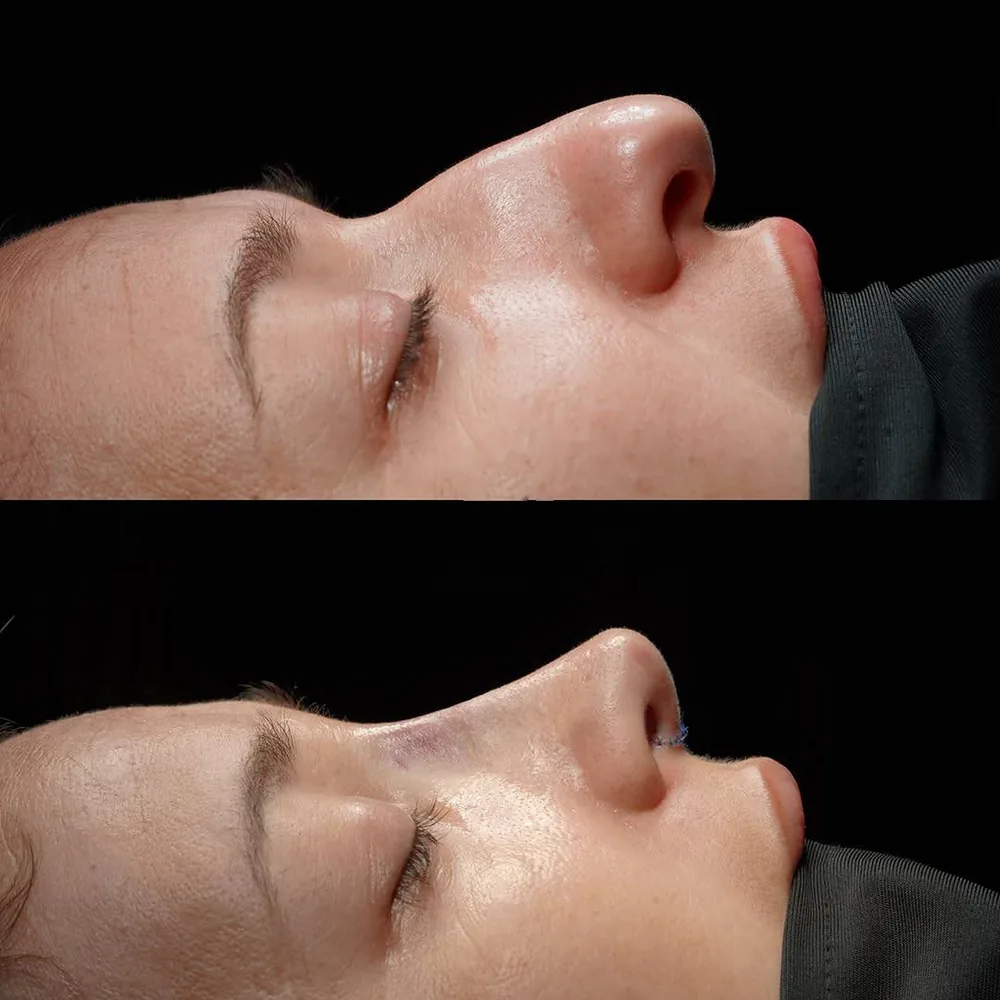
 beforeafter
Irina, 24
Rhinoplasty
Rhinoplasty
$4,200
Instead of $6,000 (≈ EGP 315,000) · First consultation — Free
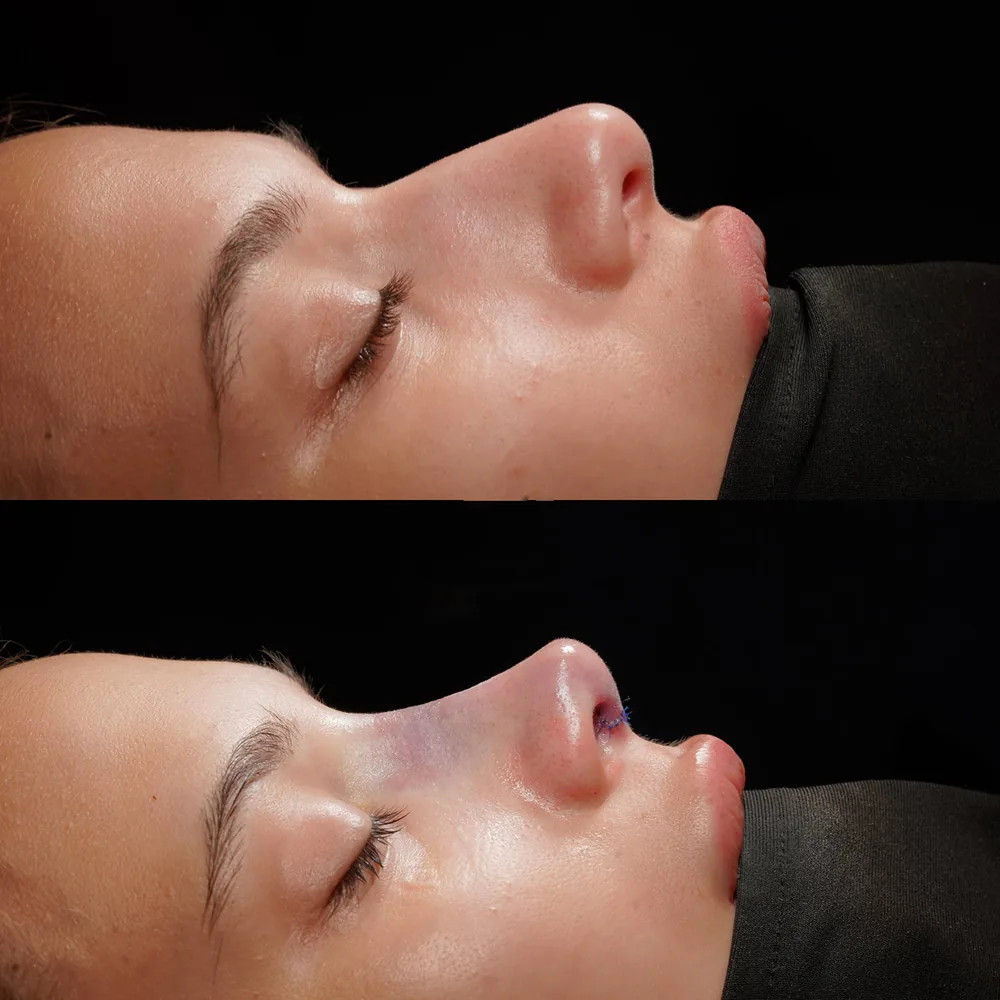 before
after
before
after
Message our coordinator
Free online consultation · Reply within 15 minutes
Message us on TelegramMessage us on WhatsAppBy messaging us, you agree to our Privacy Policy
Results
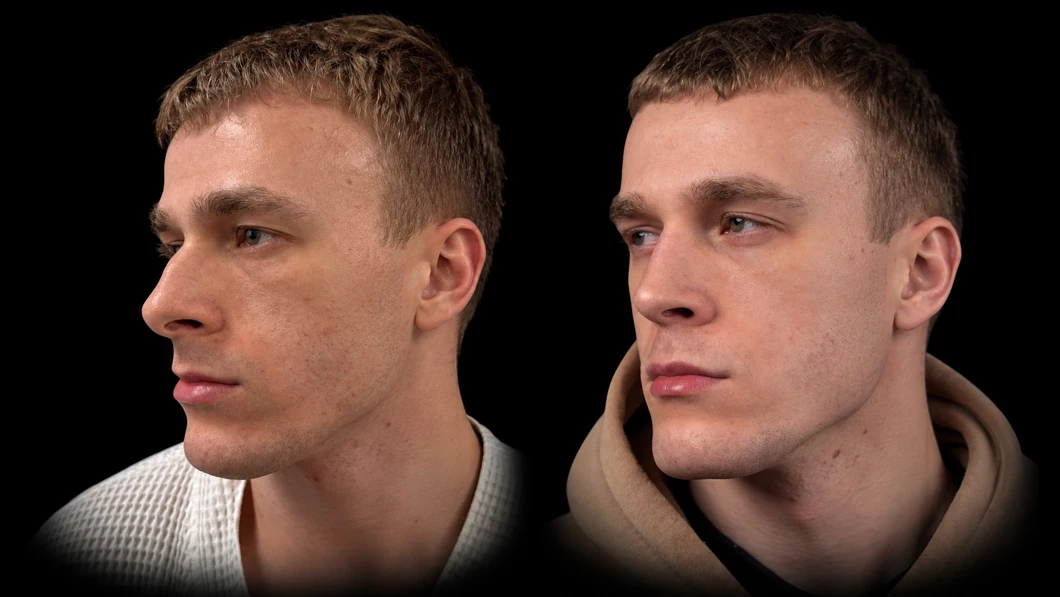
These are genuine patients treated at the clinic.
beforeafterRhinoplasty
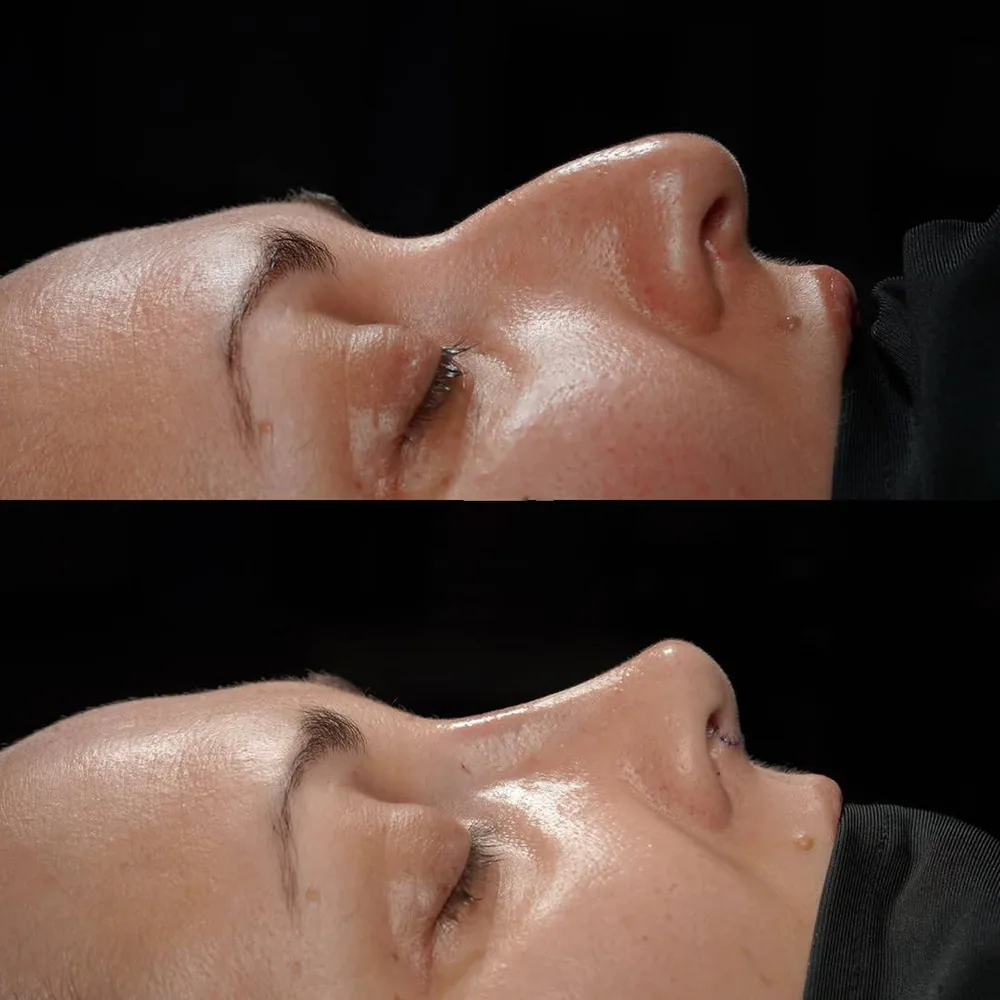 beforeafter
Rhinoplasty
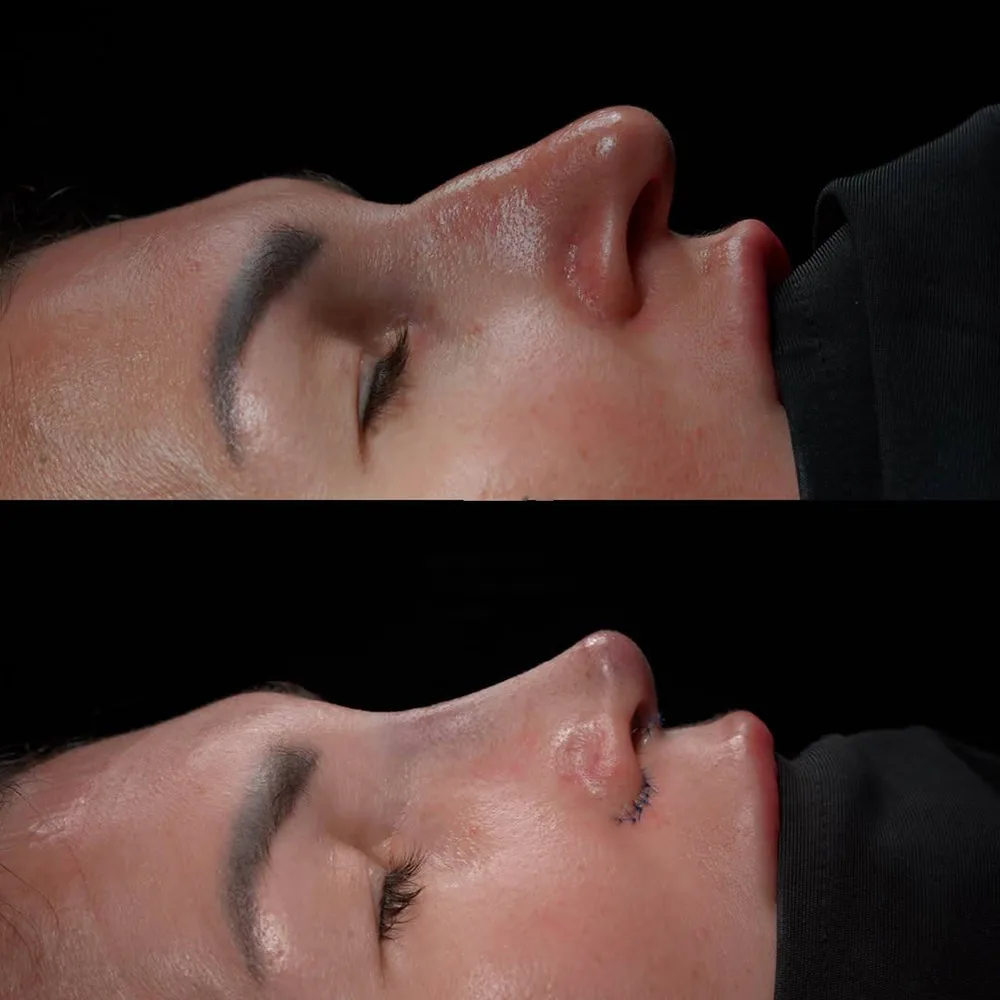 beforeafter
Rhinoplasty
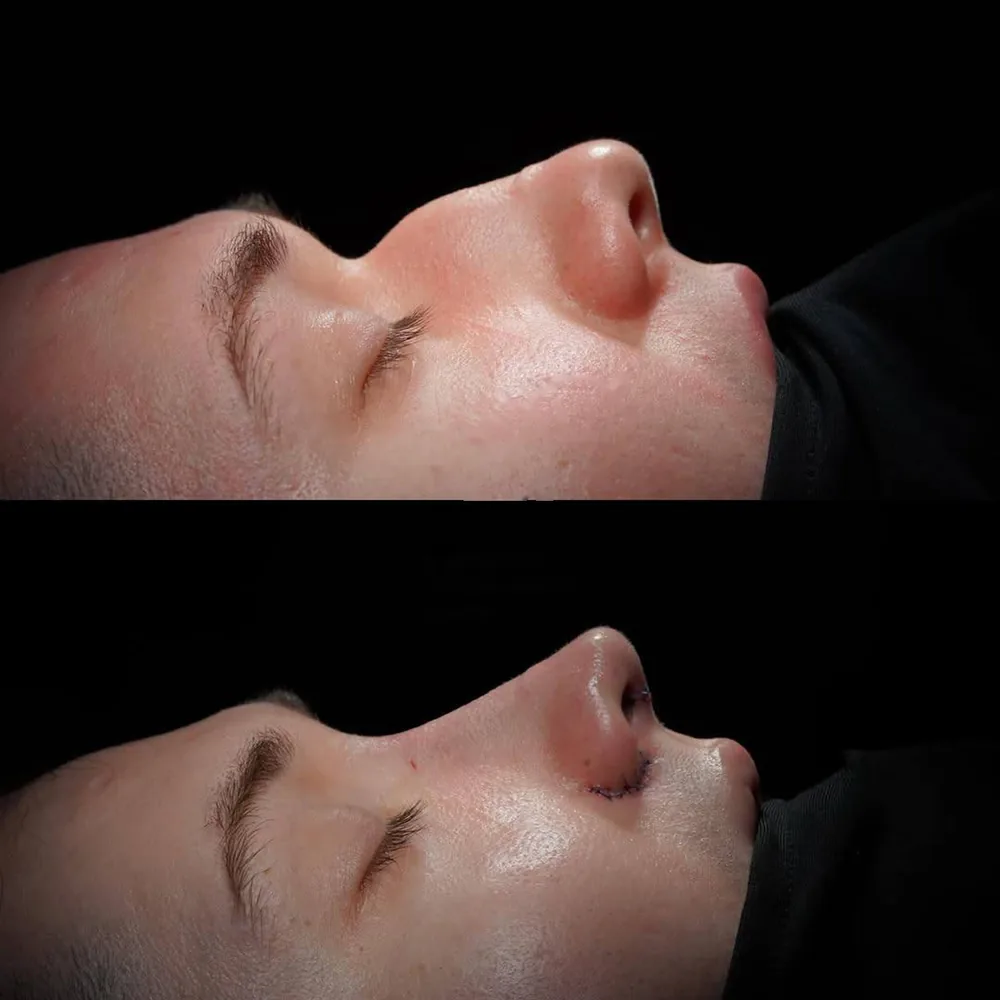 beforeafter
Rhinoplasty
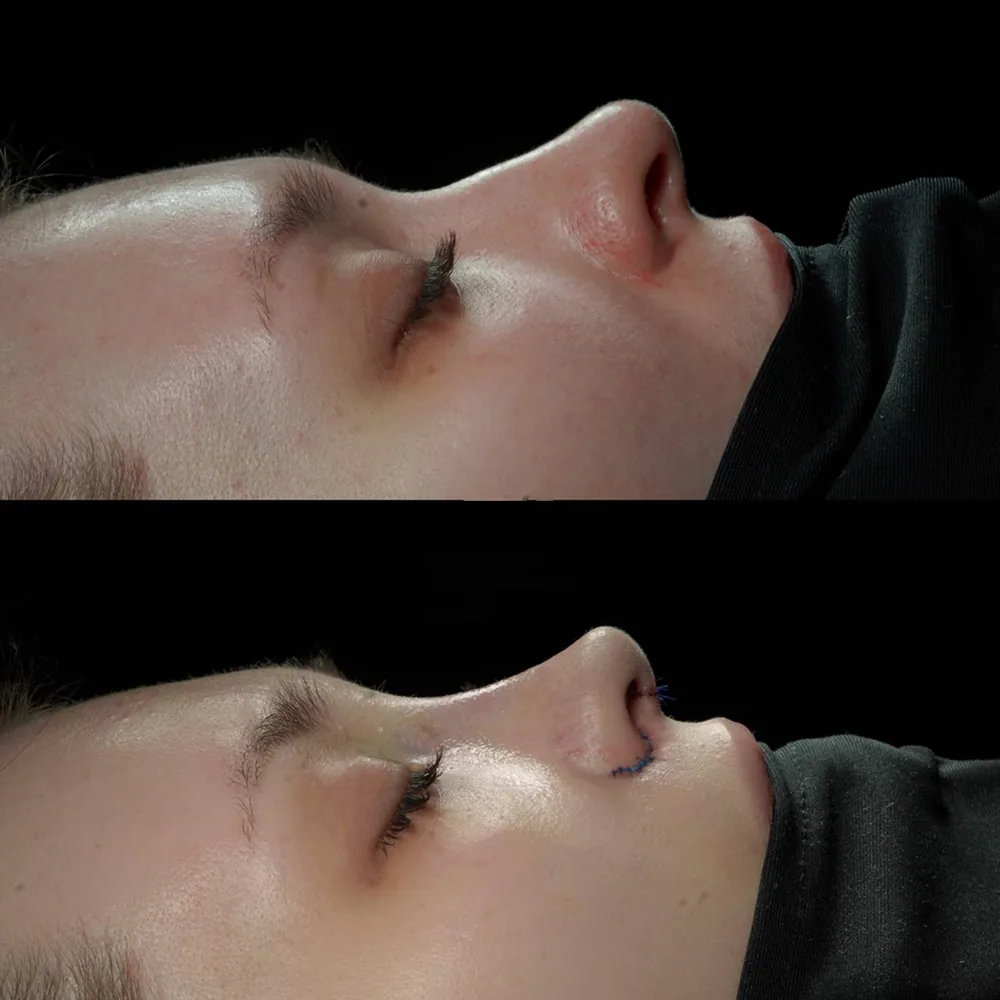 beforeafter
Rhinoplasty
beforeafterRhinoplasty
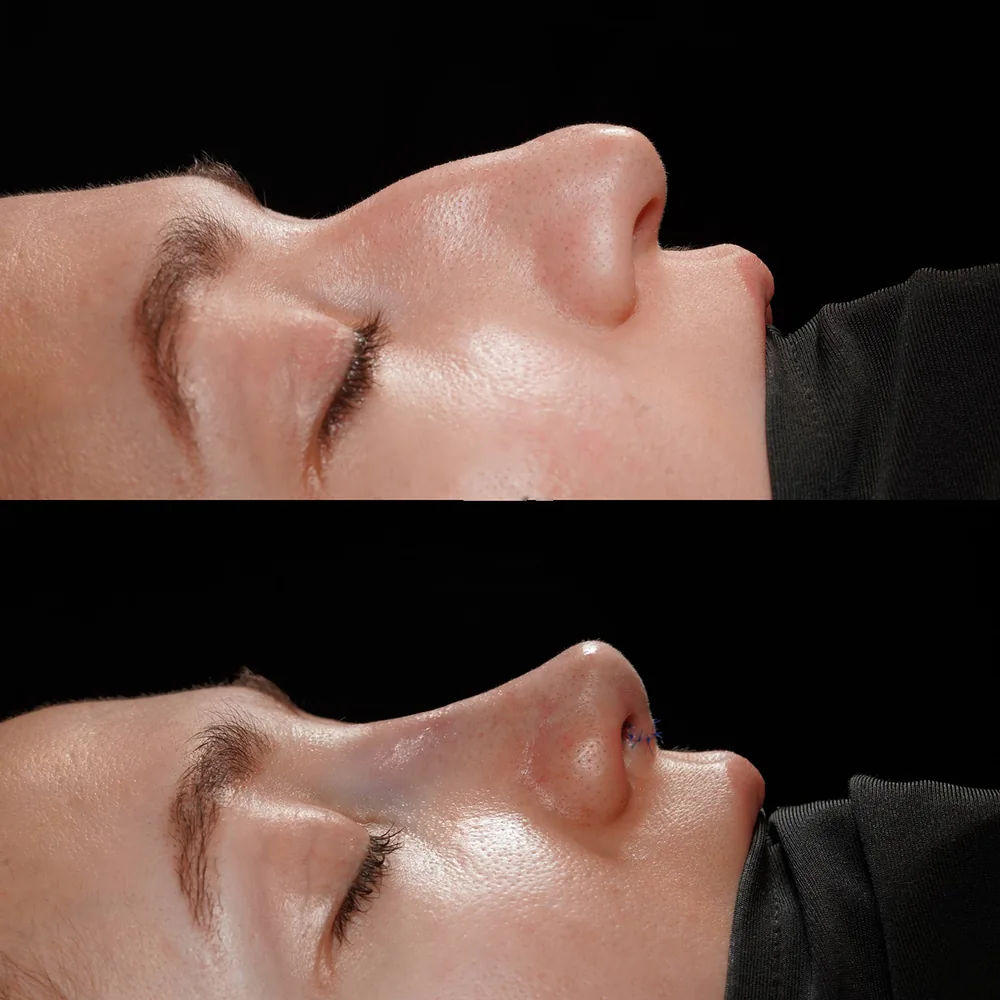 beforeafter
Rhinoplasty
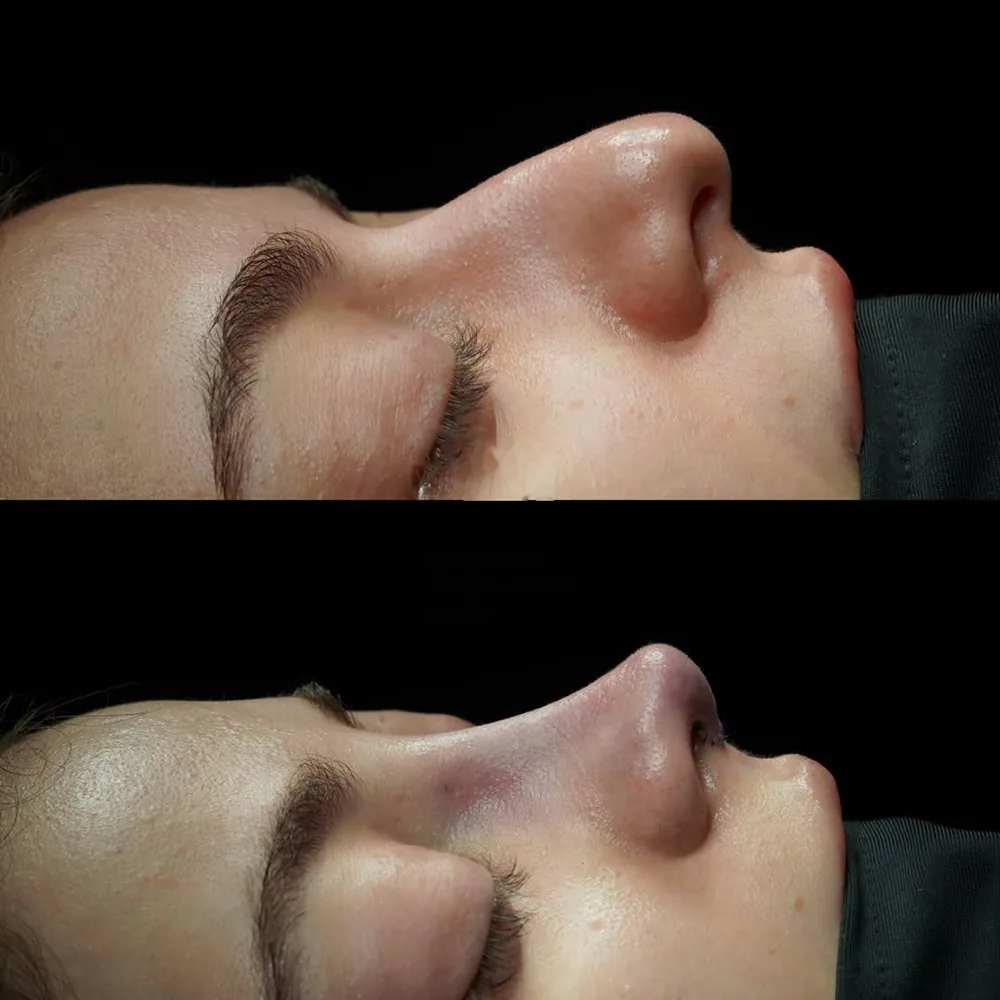 beforeafter
Rhinoplasty
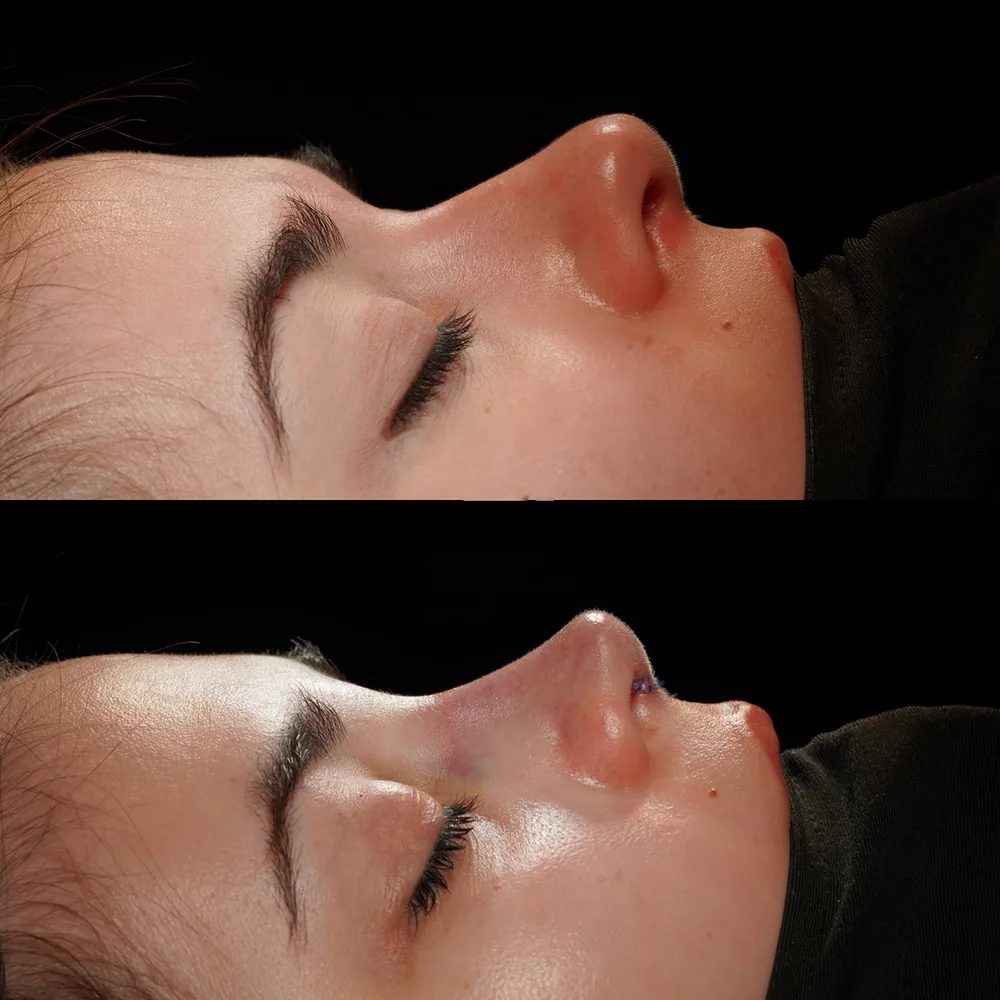 beforeafter
Rhinoplasty
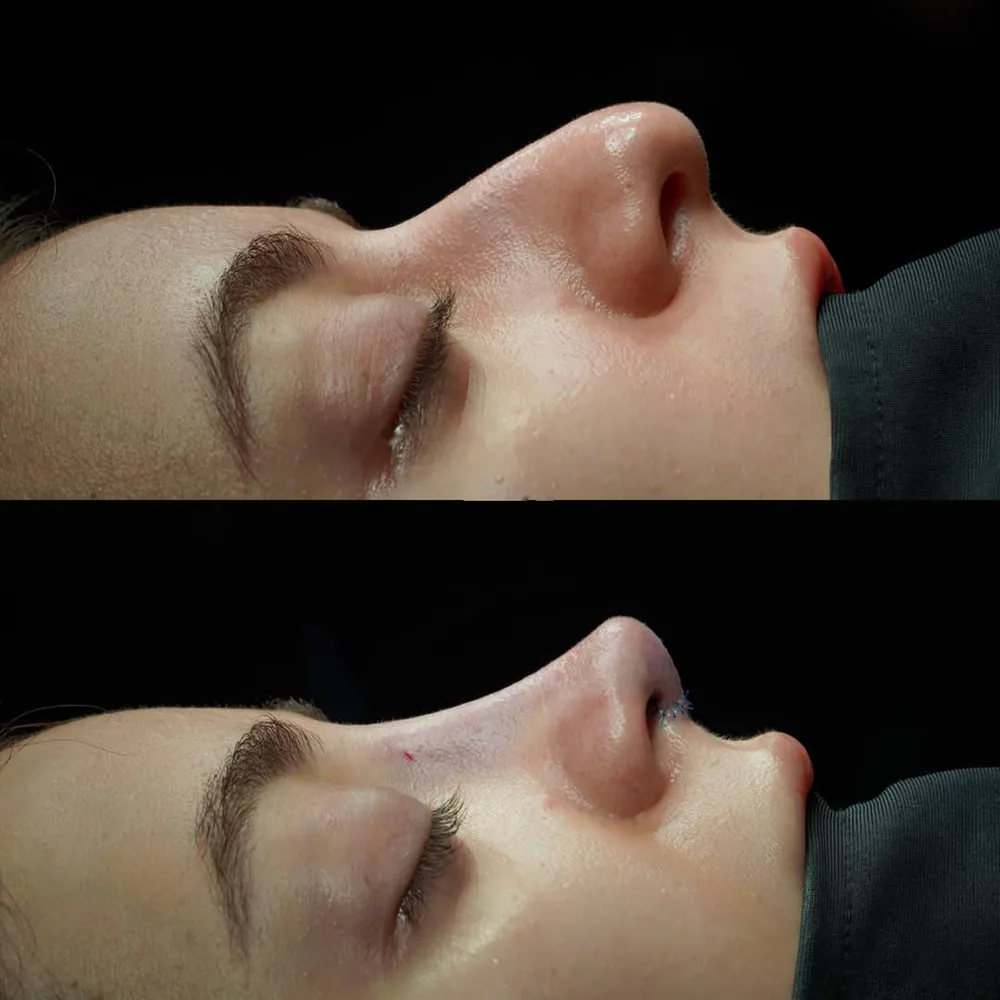 beforeafter
Rhinoplasty
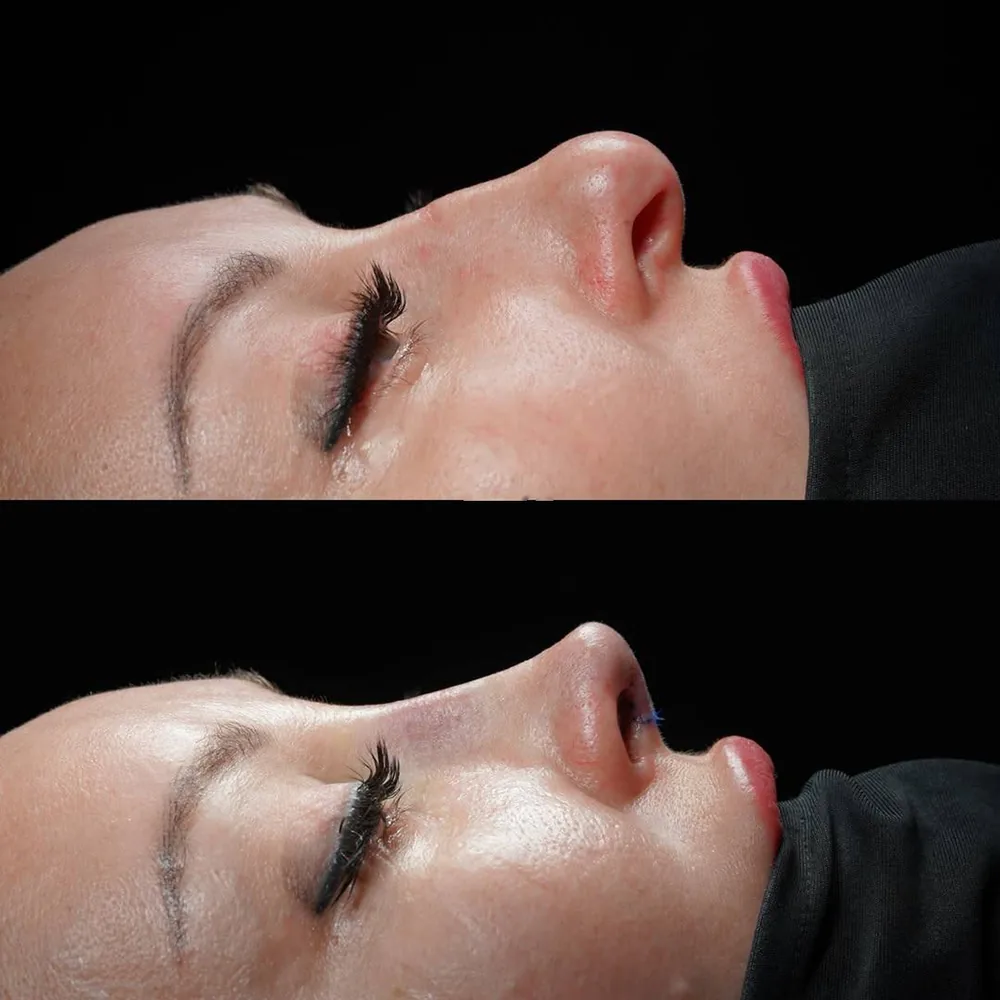 beforeafter
Rhinoplasty
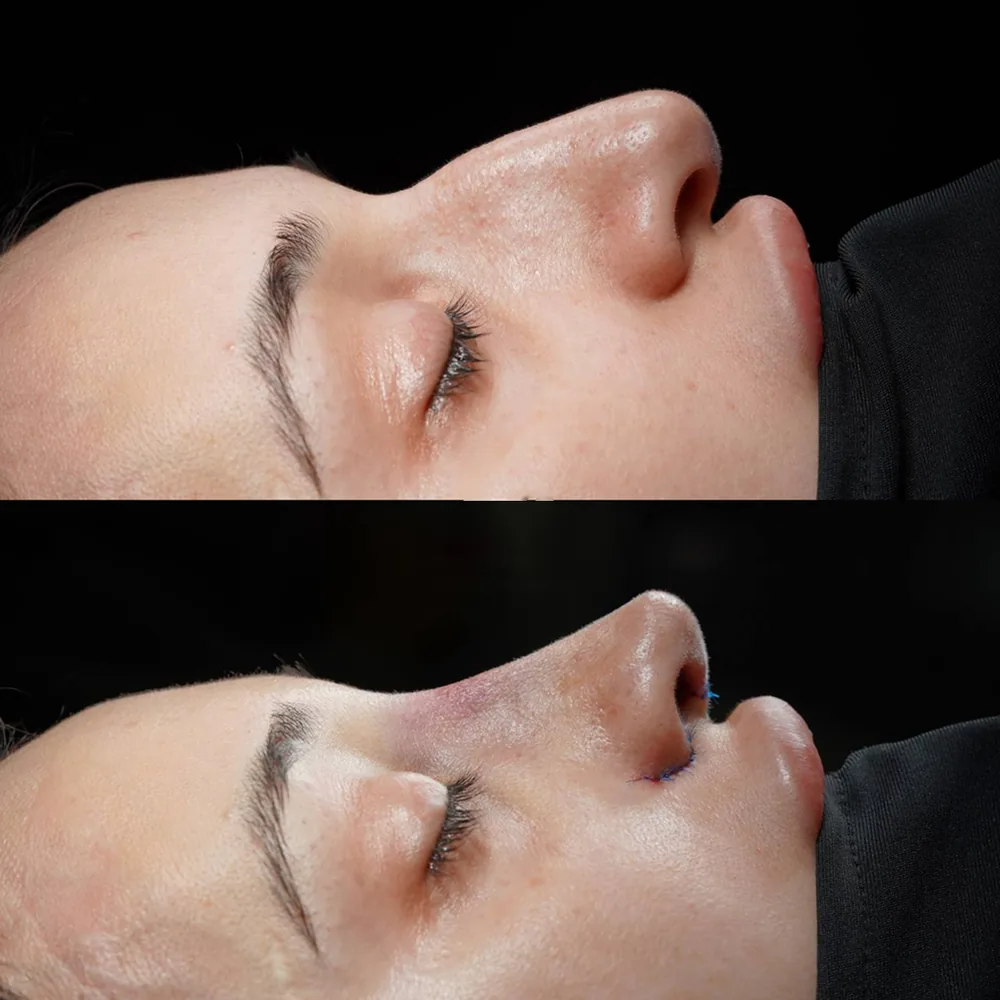 beforeafter
Rhinoplasty
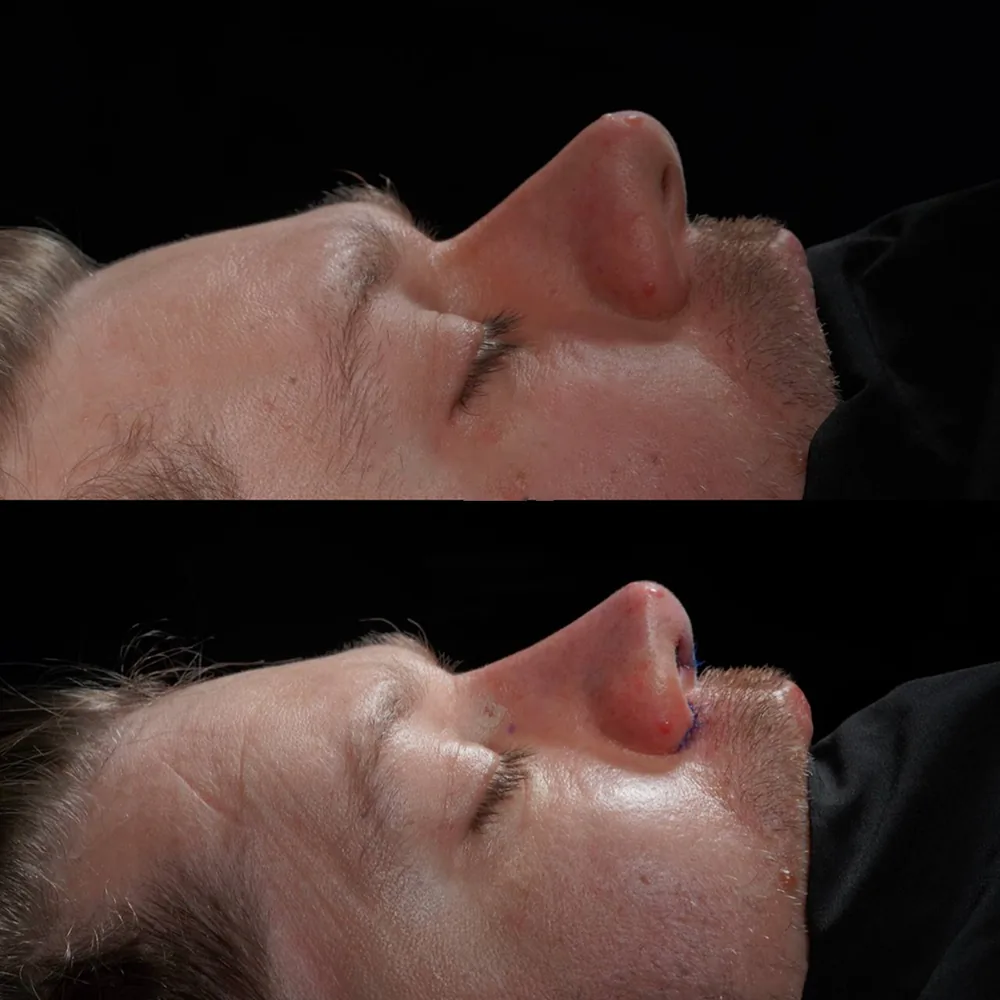 beforeafter
Rhinoplasty
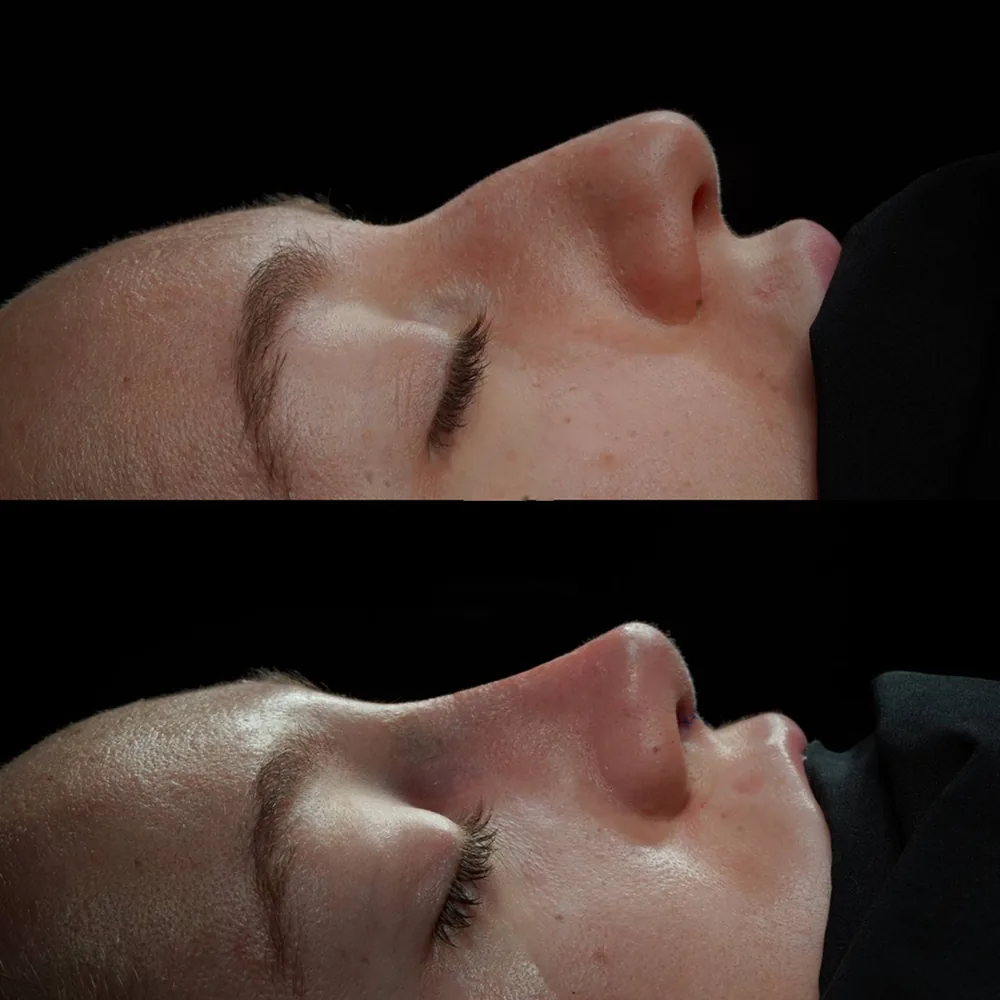 beforeafter
Rhinoplasty
Comparison
The most effective solution for you — found by us, with an excellent result delivered.
A first-time nose surgery: it reshapes the nose and corrects breathing when airflow is affected.
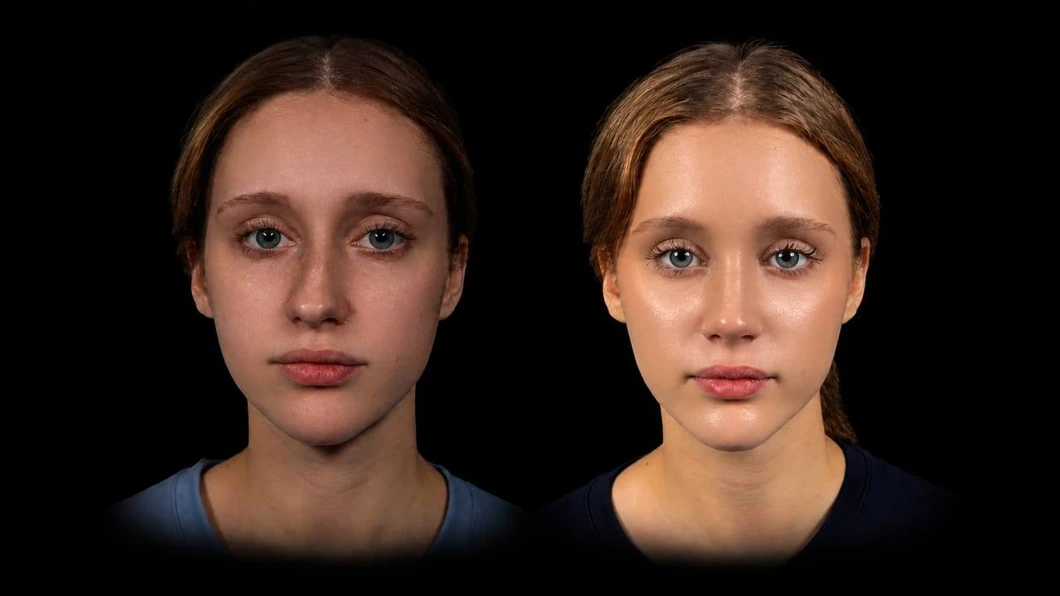
Discounted price
$4,200 $6,000
Revision surgery: a repeat correction of the nose after a prior operation that failed or only partly succeeded. Carried out no sooner than a year after the first surgery.
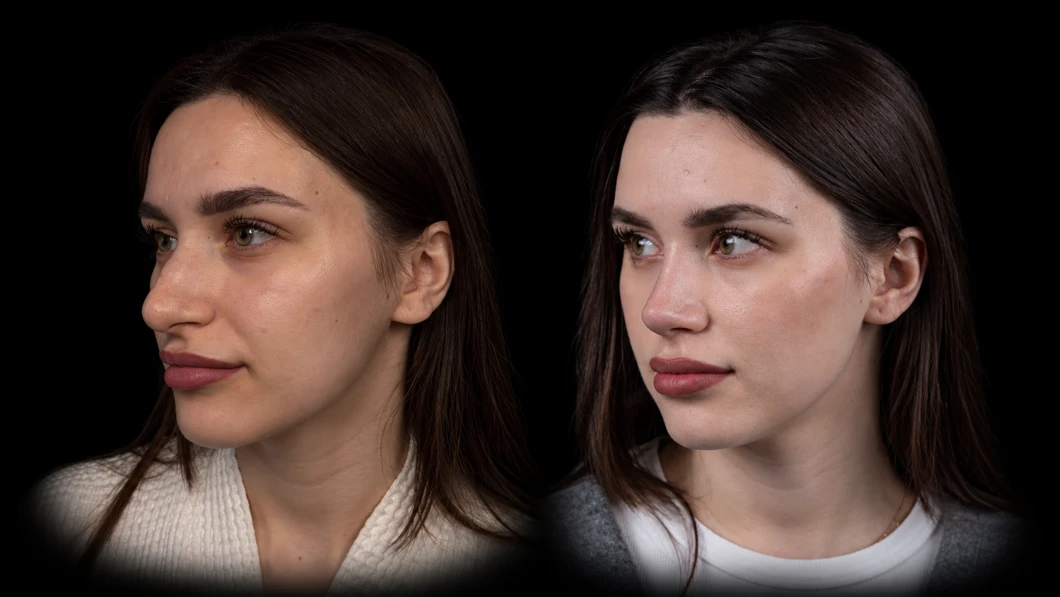
Discounted price
$5,400 $7,200
Surgery that corrects the septum while also changing how the nose looks.
Discounted price
$5,000 $6,600
The benefits and recovery periods listed here are average figures by surgery type, provided only for guidance — the actual scope of correction and recovery time depend on your own anatomy, and the surgeon will confirm them at the consultation.
During the consultation the doctor will create a 3D model of your future result and explain
each step of your rhinoplasty
Free of charge, before surgery, and with no obligation — that is the consultation.
Book a consultationAbout the clinic
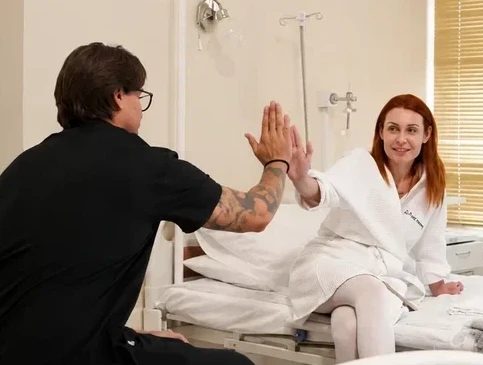
Modern facilities, comfortable rooms and care given to every patient
We'll respond to your questions and set up a consultation at a convenient time
Get a consultationShould your case be solvable without an operation, the doctor will say so at the consultation — so you won't pay for nothing.

Not certain which group fits your case?
Message us on Telegram and send photos of your nose — the doctor will tell you whether rhinoplasty is right for you. Free and with no commitment to surgery.
Find out if it suits me
Prices
At the free consultation, once the result has been modelled, you receive the price, which is then fixed in the contract.
Discounted price
a new shape for the nose
$4,200$6,000
Discounted price
secondary, revision
$5,400$7,200
Discounted price
nasal shape plus the septum
$5,000$6,600
Free
surgeon's examination and 3D modelling
Free
the cost of the operation is named
and recorded in the contract
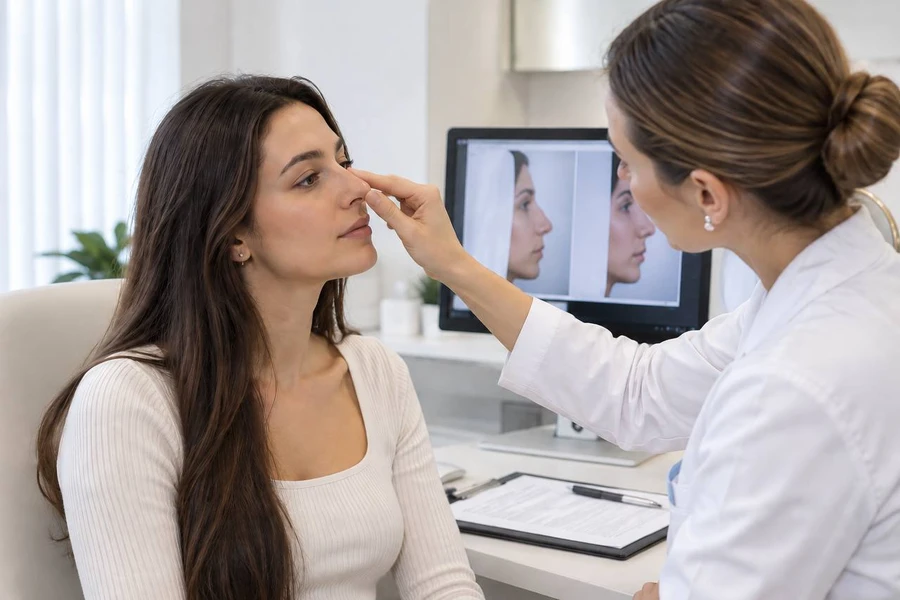
The doctor will assess the anatomy of your nose, listen to your wishes
and decide on the right technique for the correction. At the consultation you are told the cost, which is then fixed in the contract.
Message our coordinator
Free online consultation · Reply within 15 minutes
Message us on TelegramMessage us on WhatsAppBy messaging us, you agree to our Privacy Policy
Price
From preparation for surgery
to support for 12 months.
Discounted price
$4,200$6,000Discounted price
How it goes
A correction plan agreed with you, inpatient observation, and a full year of recovery follow-up.
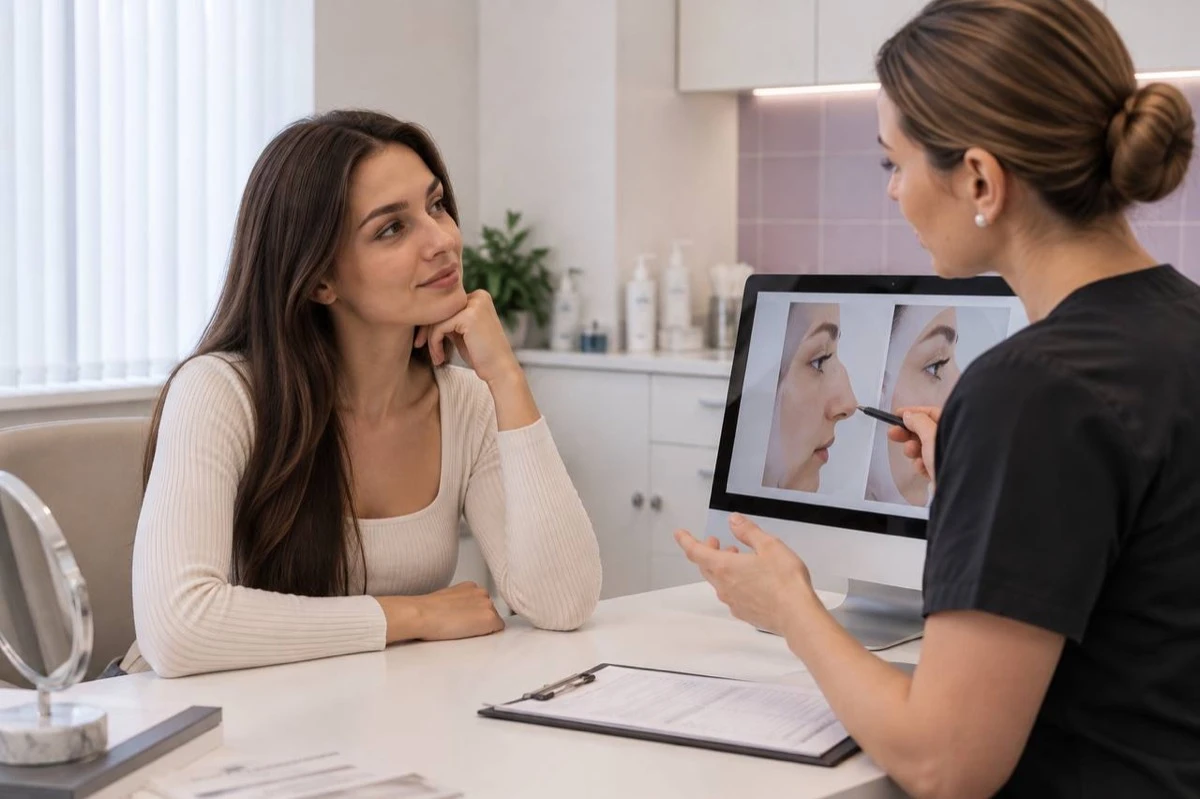
The doctor assesses your nose and your wishes, then performs the examinations needed to choose the right correction technique

We reserve a surgery date for you: the deposit can be paid by card at the clinic or online by bank transfer. The terms are fixed in the contract for medical services
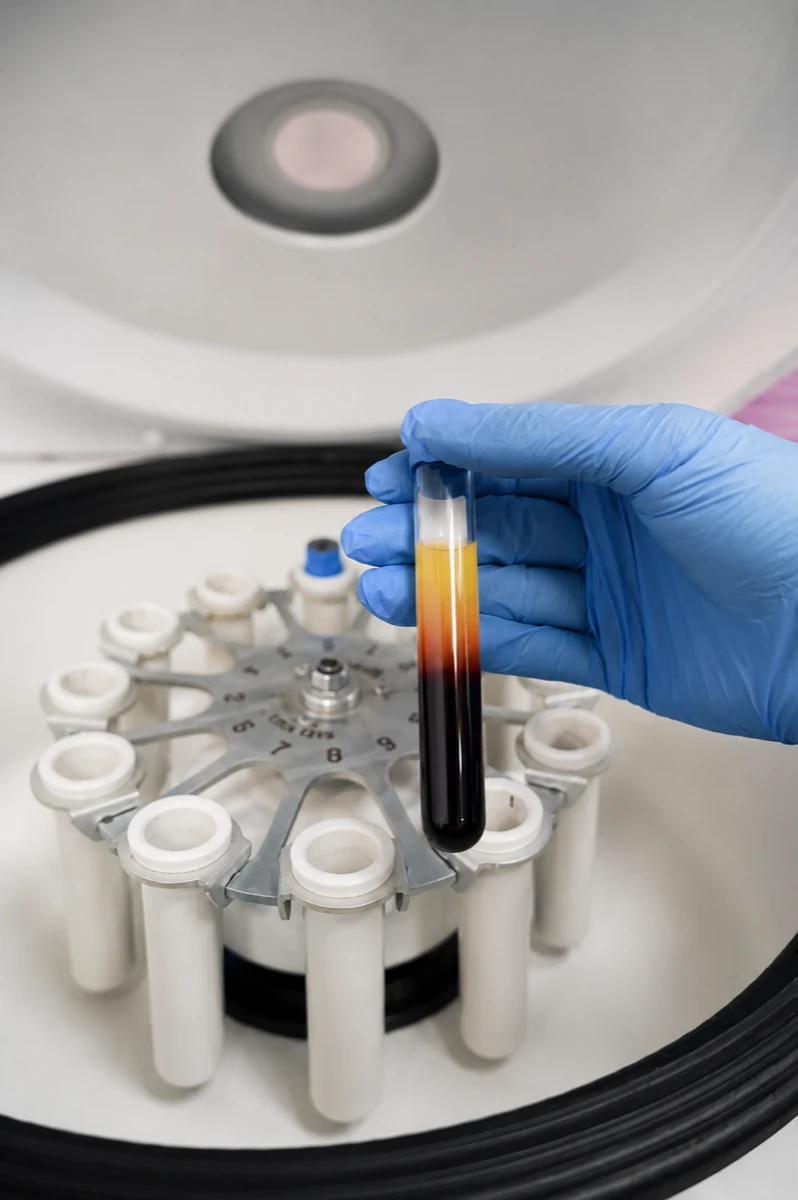
Ahead of surgery, a full set of lab tests is required: complete blood count, biochemistry, coagulation panel, chest X-ray and a sinus X-ray
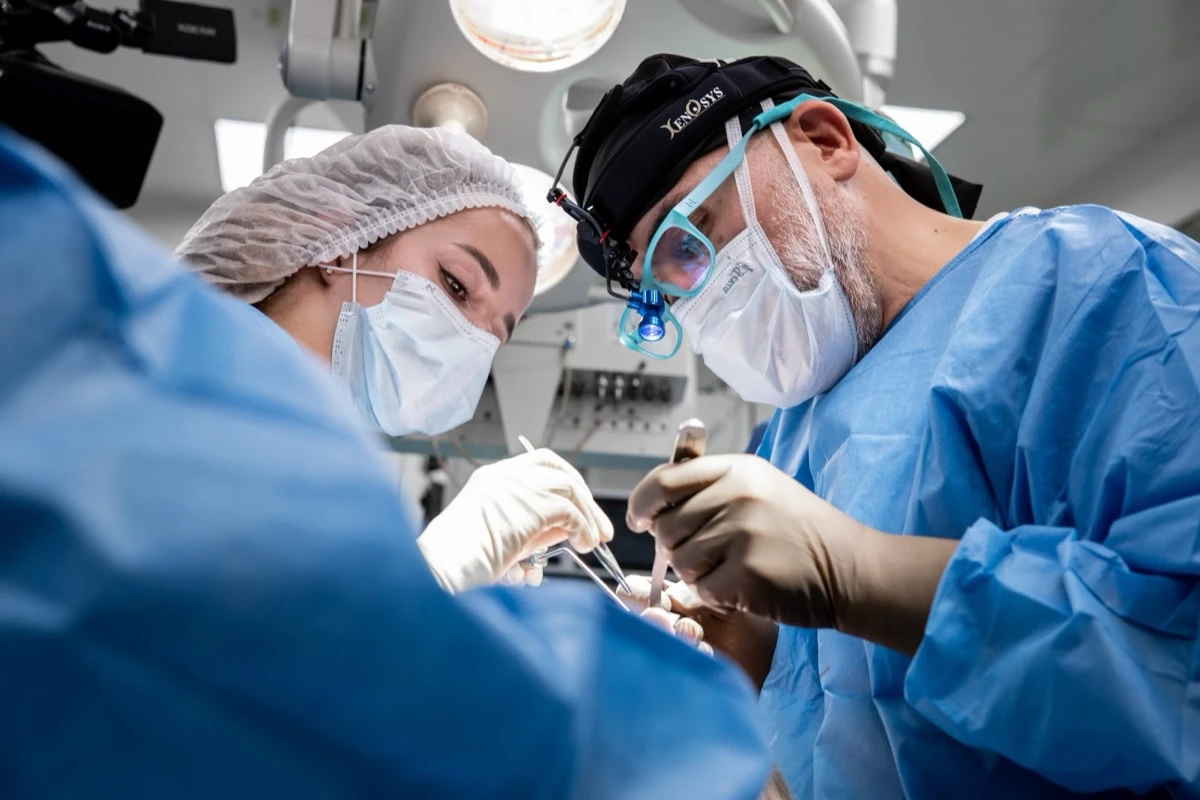
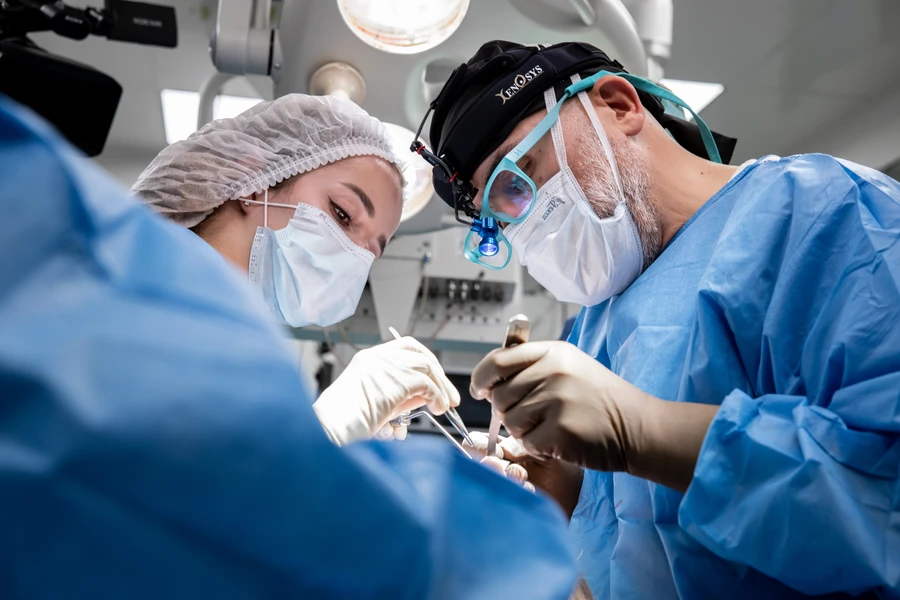
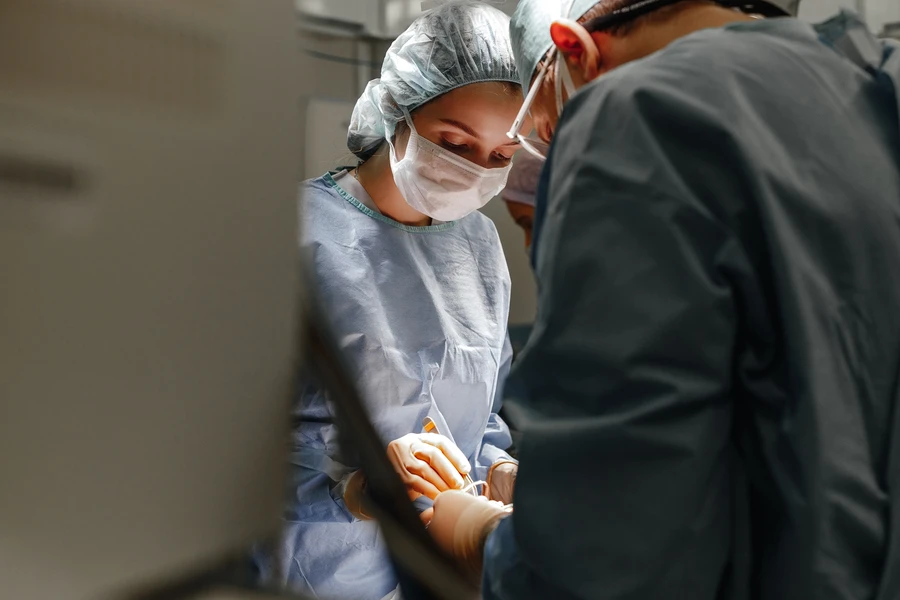
The surgeon performs rhinoplasty with the chosen technique under general or local anaesthesia, correcting the shape and structure of the nose
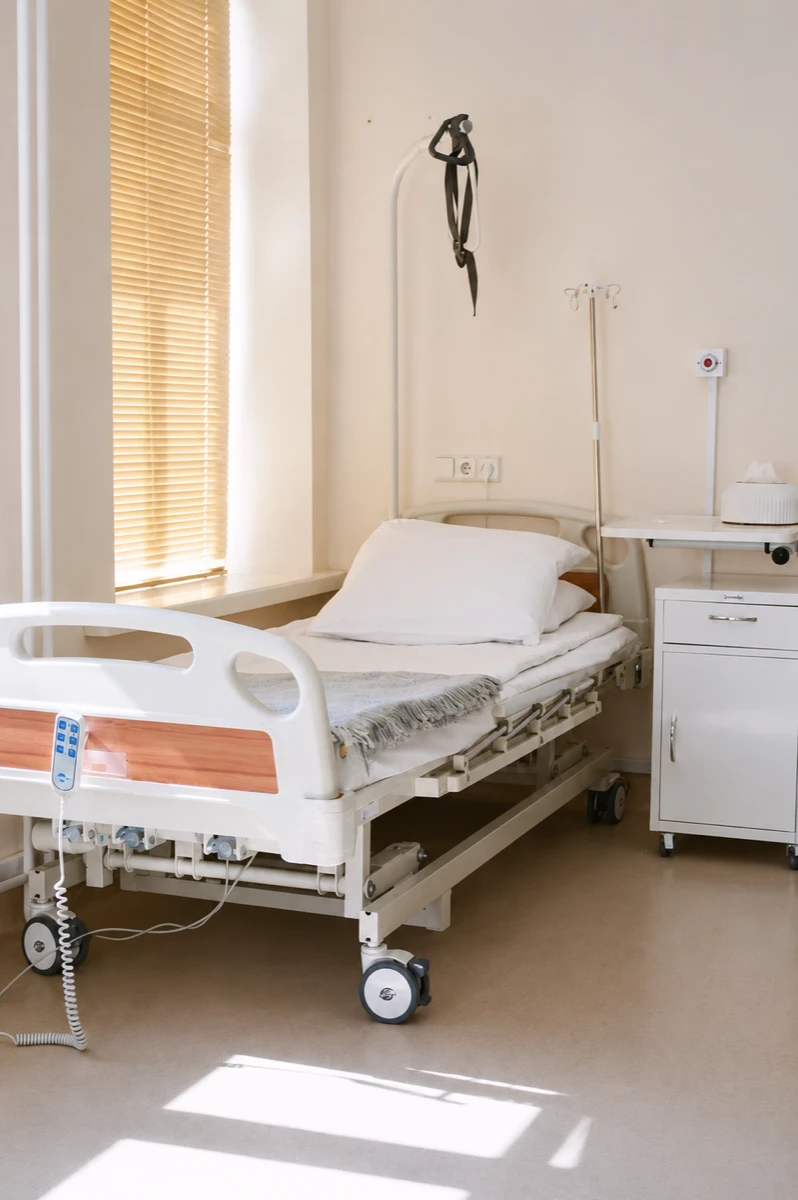
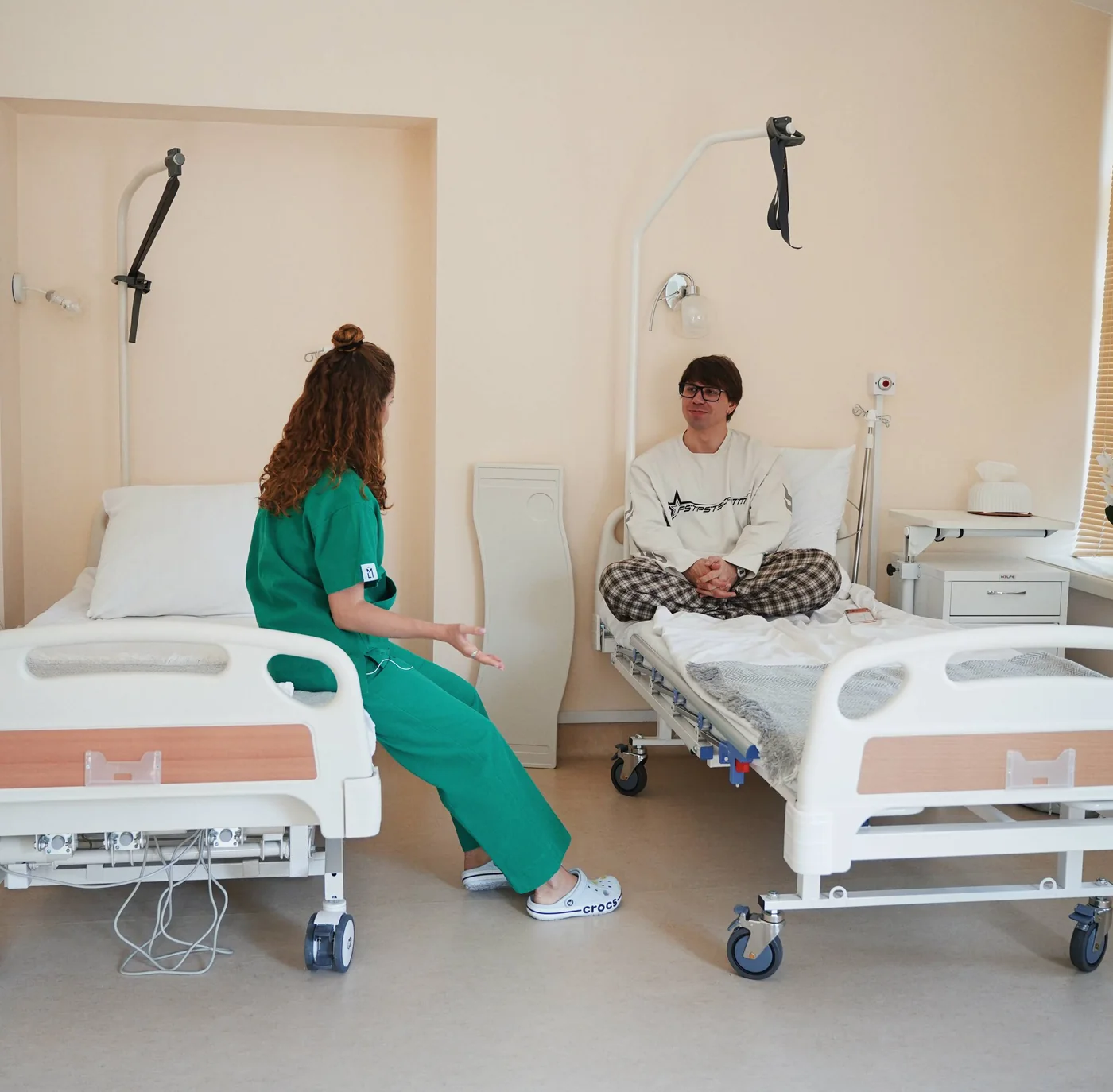
Each procedure is performed in the inpatient unit of the clinic. After surgery, your stay lasts one day
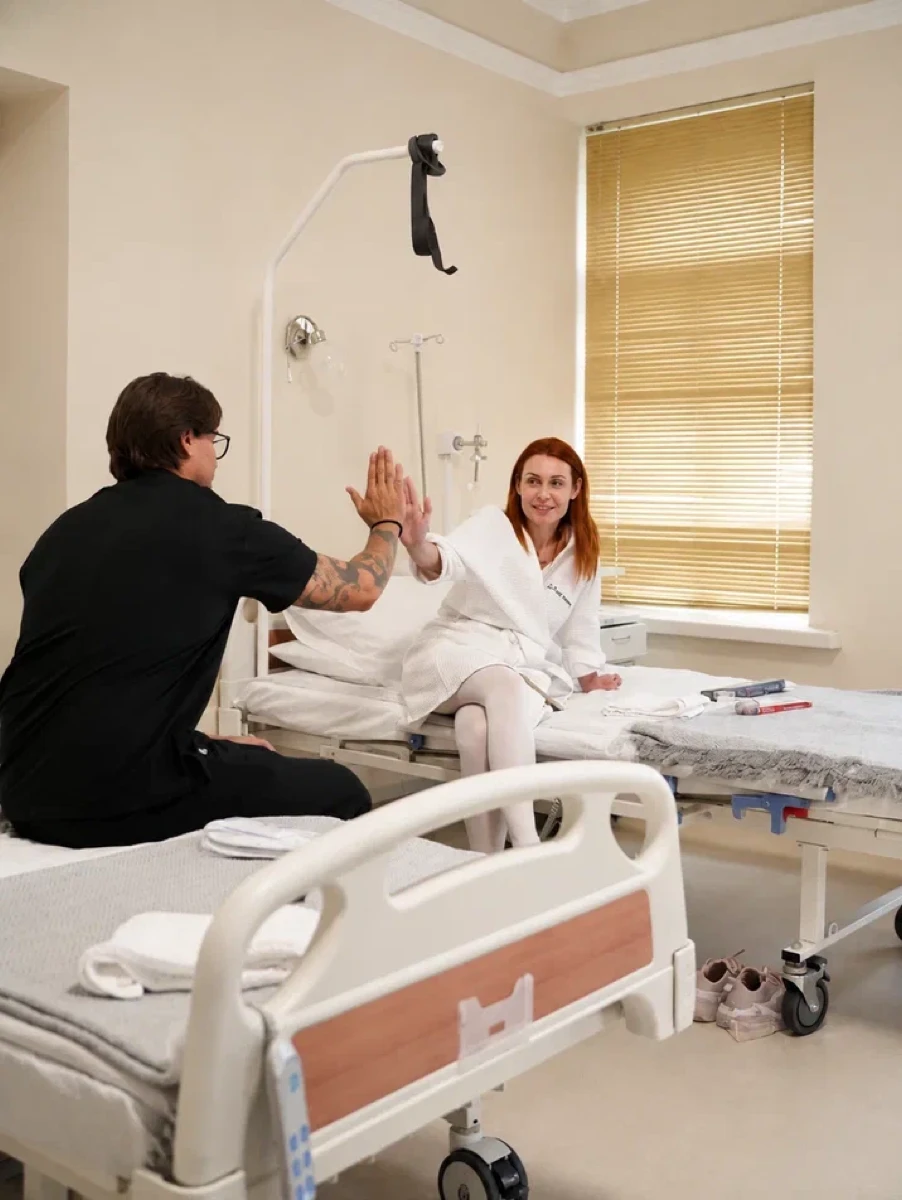
Once surgery is done, you follow a recovery programme, with check-ups at 7 days, 3 and 6 months to track progress. Consultations with your surgeon stay free for a year after surgery.
During the consultation you get a realistic forecast of the expected result
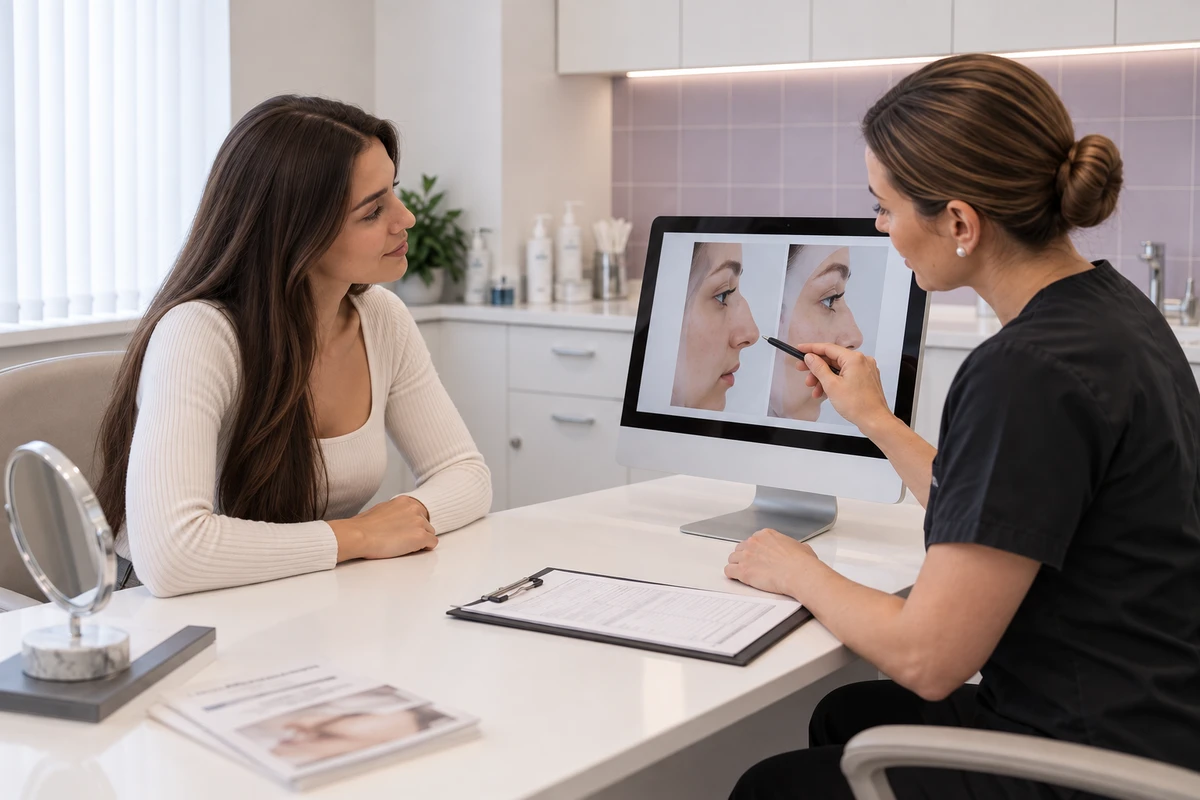
Free of charge, before surgery, and with no obligation — that is the consultation.
Book a consultationNasal splint
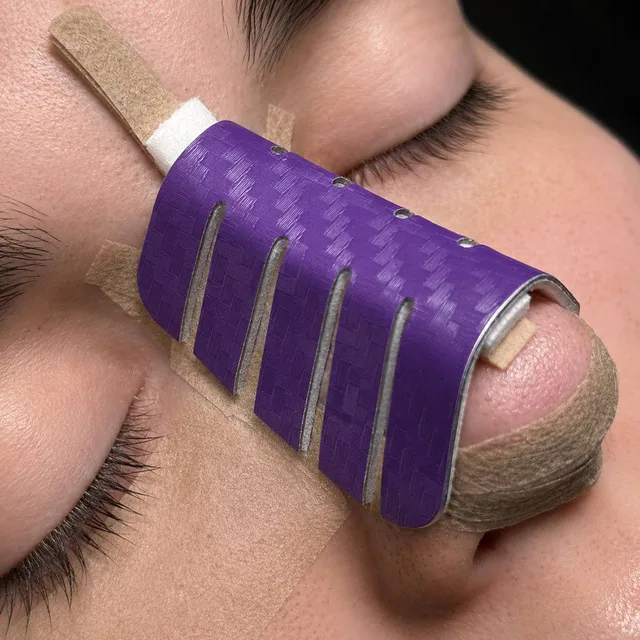
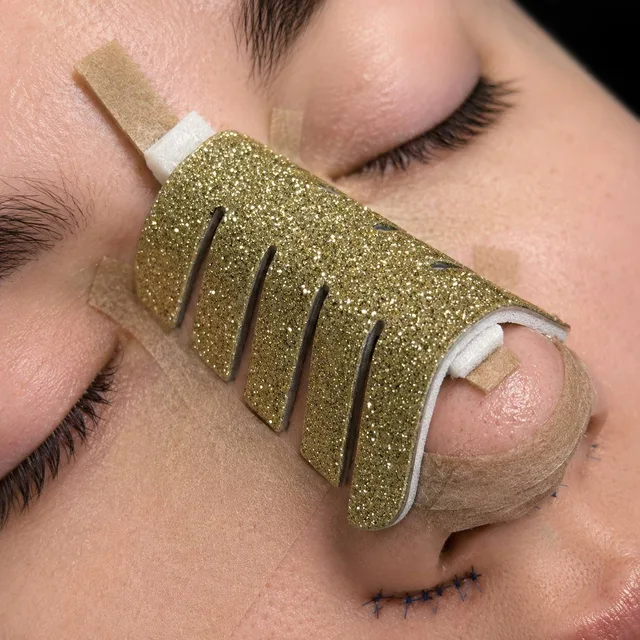
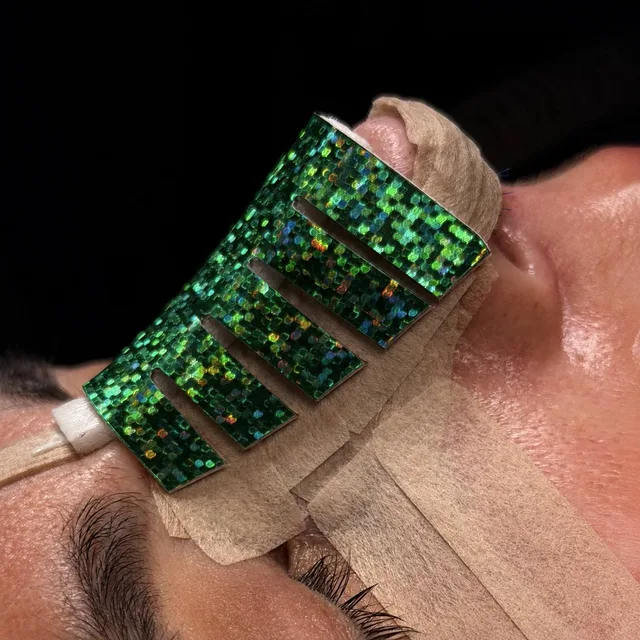
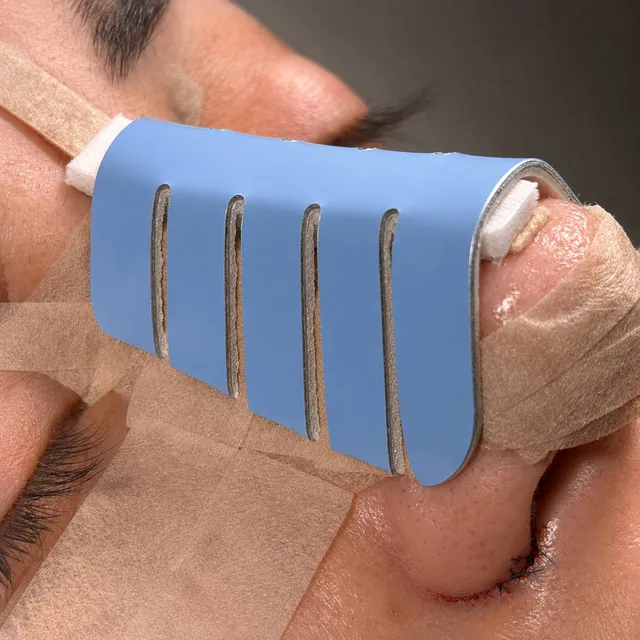
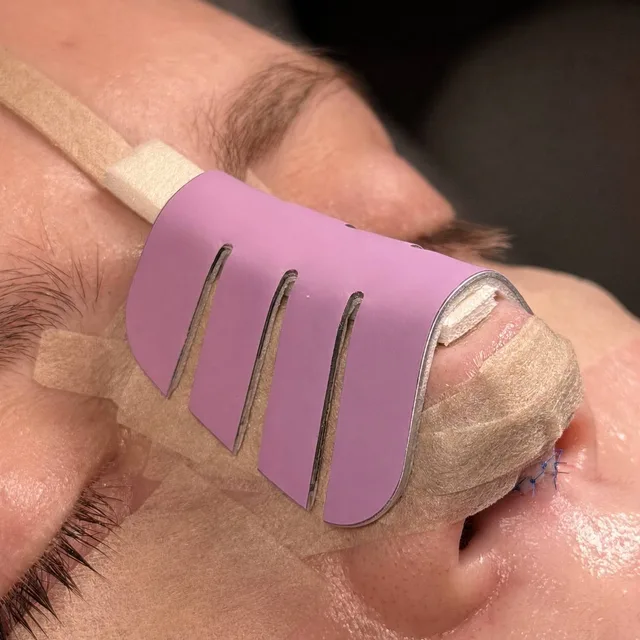
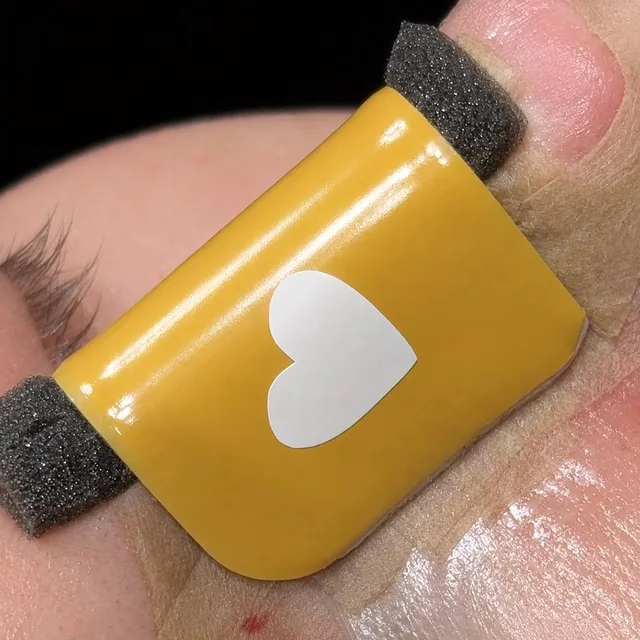
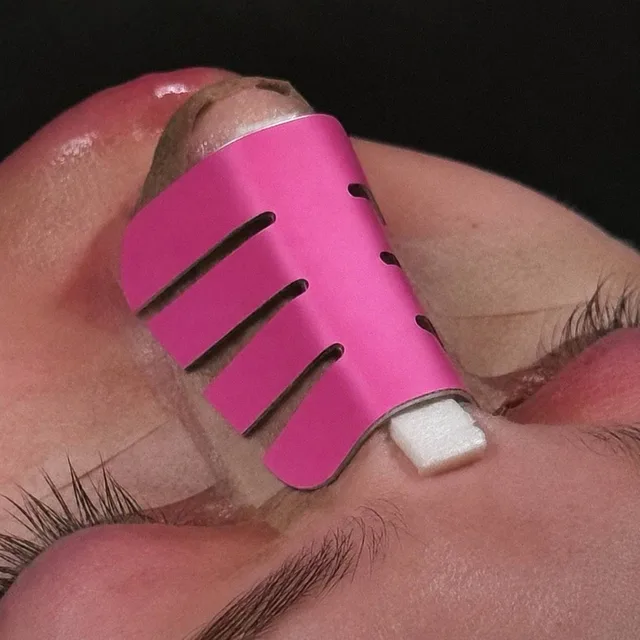
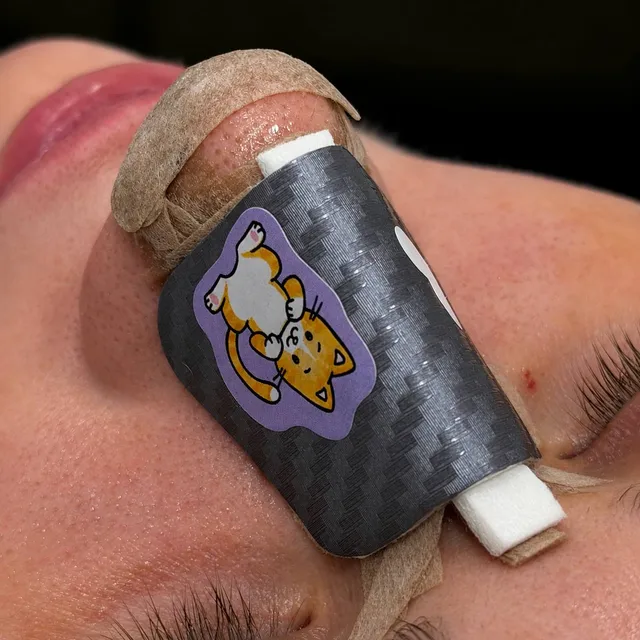
Each detail is designed around your natural beauty, and to make even the recovery period enjoyable, you're invited to pick the colour of your nasal splint.
Style shown in the details:
Pick a splint colour that matches your mood
Confidence starts with small things, just like your future profile
Doctors
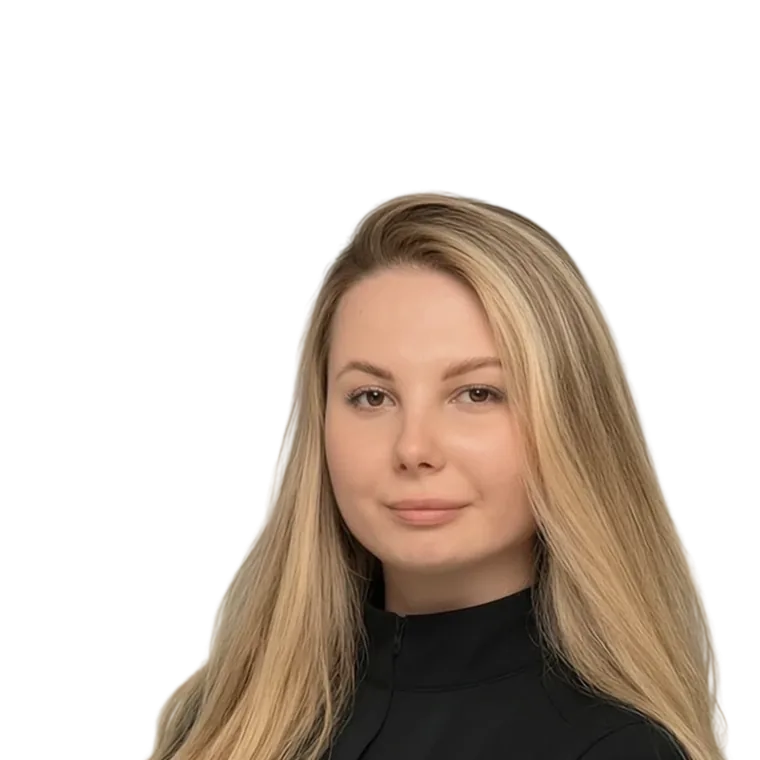
Rhinoplasty surgeon
The surgeon who will carry out your operation is who you talk to at the consultation
The doctor assesses your facial proportions, listens to your wishes and explains which changes are possible.
Book a consultationCoordinators
We stay with you through every stage

A coordinator just for you
Your first point of contact at the clinic — from your very first message through to the consultation
Care specialist for patients
Answers your questions before the first consultation and helps you choose a convenient date

A coordinator just for you
Present before and during your stay — covering everything from booking to discharge
Care specialist for patients
Helps you prepare for the operation and stays in touch while you're at the clinic

A coordinator just for you
With you throughout recovery, from discharge all the way to your final check-up
Care specialist for patients
Keeps in touch during recovery and books your follow-up visits with the surgeon
A members-only channel for people who value honest, expert information
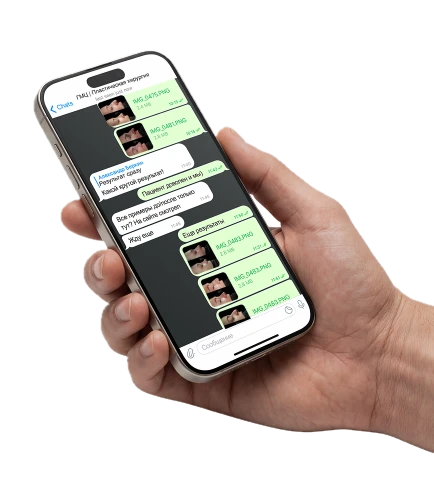
Message us — our coordinator will contact you shortly and book your consultation
Advantages
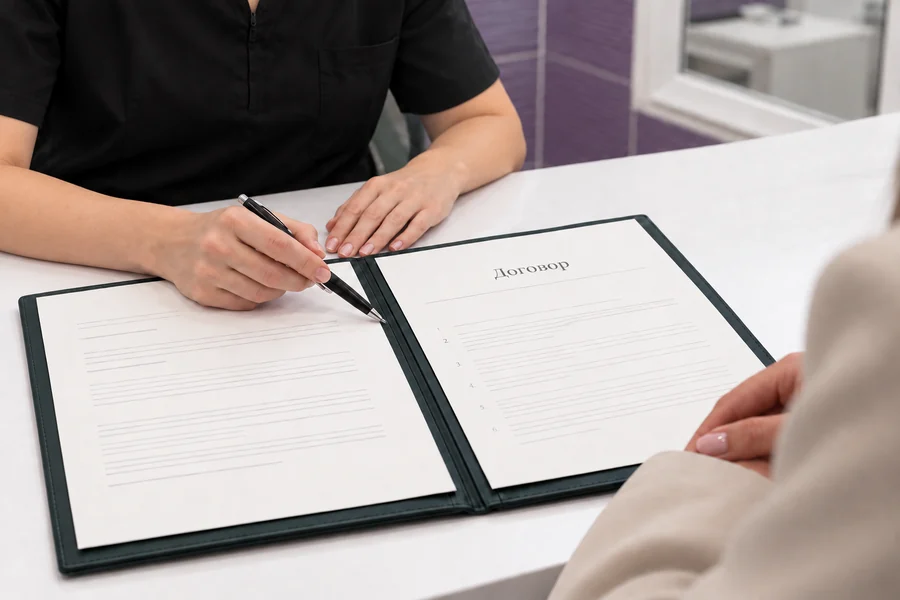
A lifetime guarantee applies under the contract, which sets out the terms of surgery, support and post-operative follow-up in advance.
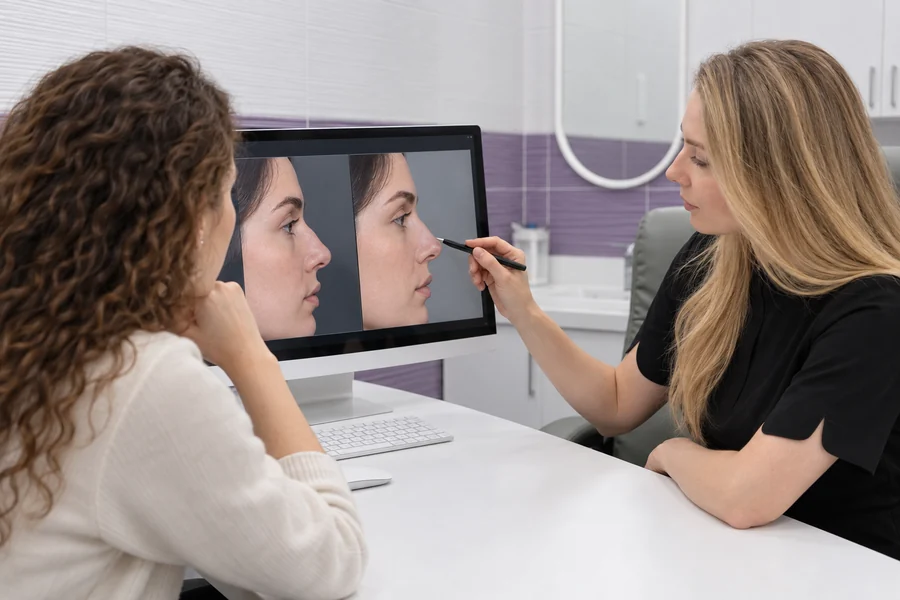
At a free consultation we review your case and tell you whether rhinoplasty is right for you. Facts only — no attempts to talk you into surgery.
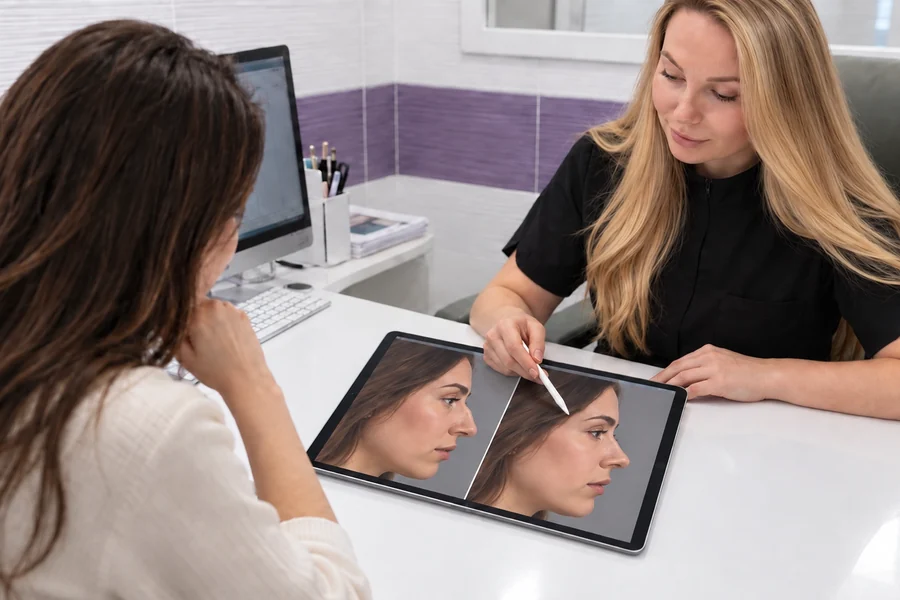
If you come from another city or country, we arrange the consultation and the necessary preparation in one trip — so that the path to change is more comfortable and needs fewer journeys.
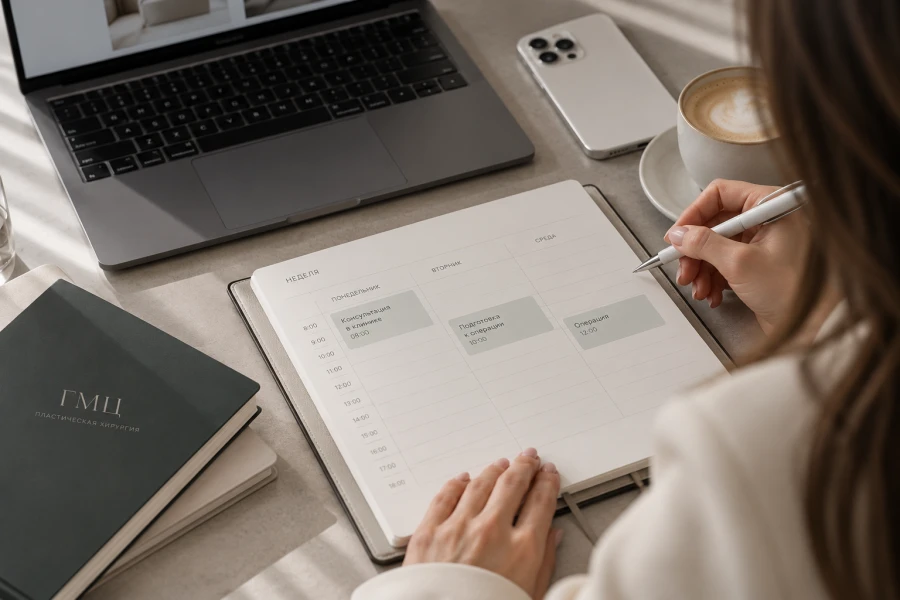
We respect your schedule: working 24/7, with easy booking and a personal approach that fits your pace.
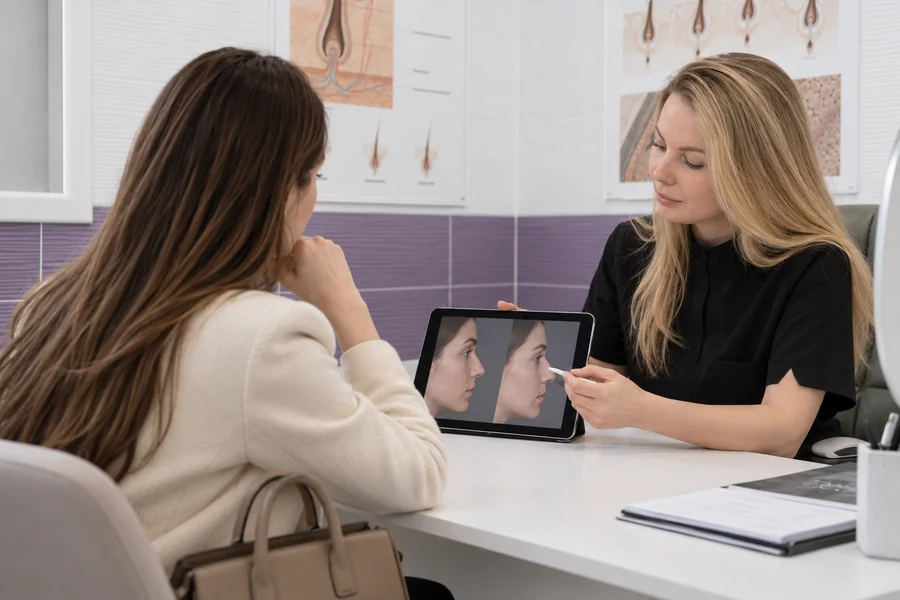
After the consultation, the surgeon sets out the extent of correction needed and gives you a clear price for the surgery, so there are no surprises on the way to the result.
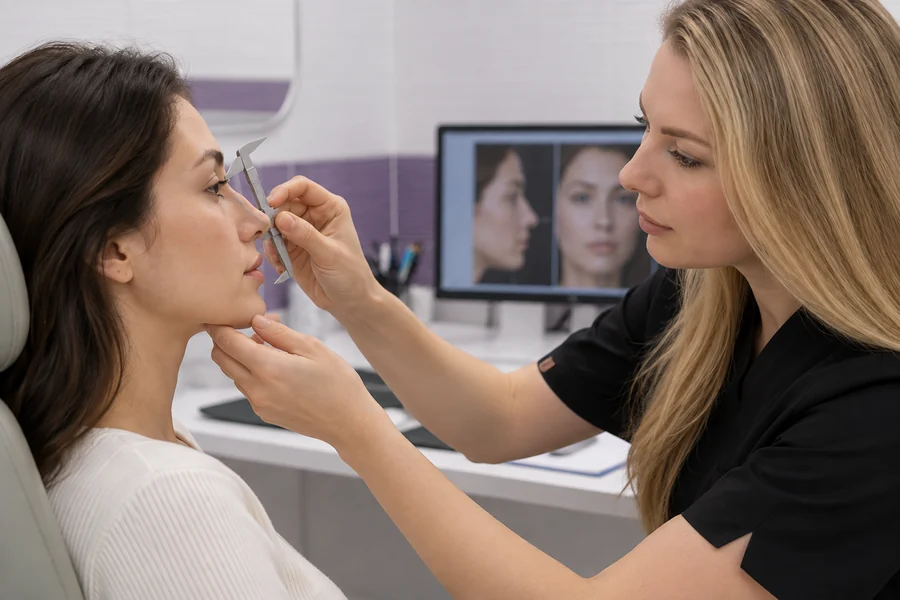
Modern equipment supports gentle, precise work by the surgeon, especially important where millimetres influence proportions, profile and facial harmony.
Prices
Send a request and get a free consultation on any service
Free
BookPrice without discount: $6,000$4,200
Price without discount: $7,200$5,400
Price without discount: $6,600$5,000
Price without discount: $6,500$4,700
Price without discount: $7,200$5,400
FAQ
Rhinoplasty (nose job) — one of the most delicate and sought-after plastic surgeries, aimed at reshaping the nose in line with the individual proportions of the nose and the whole face. Modern rhinoplasty is not just an operation to change how the nose looks, but complex surgical work aimed at an aesthetic ideal without compromising health.
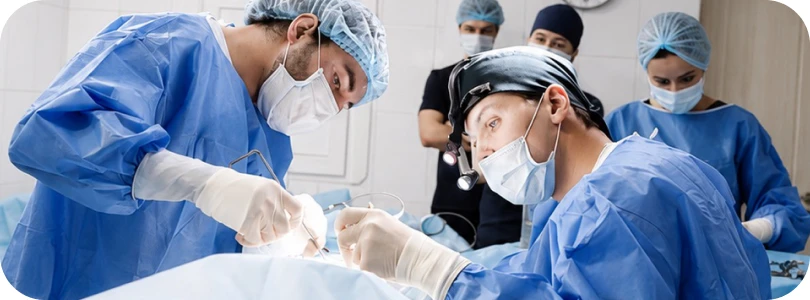
18 to 45 is the optimal age. By this age the nose has formed completely, while tissues still heal well. With medical indications, older patients can have surgery if their general health allows
At its core, rhinoplasty is a comprehensive solution. It corrects both congenital and acquired nasal deformities, for example after a nasal injury. Patients are often bothered by a dorsal hump or an overly wide nose. Nose correction can also target the tip (tip rhinoplasty) or the nostrils (alar rhinoplasty). The surgical plan is created individually for each patient, taking every feature of their nose into account.
Rhinoplasty is performed under general anaesthesia and, depending on complexity, takes 1.5 to 3 hours.
The surgeon determines the extent and course of the surgery at the consultation, based on your goals and the anatomy of your nose.
Rhinoplasty — surgery to change the appearance of the nose (an aesthetic goal) and improve its function if breathing is impaired.
Septoplasty — surgical correction of the septum that restores normal breathing without altering the nose's external contour.
Often both surgeries are combined, especially when a patient has a deviated septum and aesthetic concerns. This gives a harmonious look and restores full breathing. At City Medical Centre we perform rhinoseptoplasty — a combined surgery that solves both tasks at once
For a successful operation, preparation should begin 21 days before rhinoplasty. At the first appointment our plastic surgeon will give you a list of the required tests.
| Complete blood count (including ESR, white cell differential, platelets) | 2 weeks |
| Urinalysis | 2 weeks |
| Infection tests: HIV, HBsAg, anti-HCV, antibodies to Treponema pallidum | 2 weeks |
| Blood group and Rh factor | 2 weeks |
| Blood biochemistry (total protein; urea; uric acid; creatinine; glucose; total, unconjugated and conjugated bilirubin; ALT; AST; K; Na; Cl; cholesterol) | 2 weeks |
| Coagulation panel (Quick prothrombin, INR, APTT, D-dimer, antithrombin III) | 2 weeks |
| Electrocardiogram (ECG) tracing with a report | 2 weeks |
| Doppler ultrasound of the leg vessels / duplex scan of the leg veins | 2 weeks |
| Chest X-ray or fluorography with a report | 6 months |
| MSCT of the paranasal sinuses | 6 months |
| After the full laboratory work-up — a physician's report confirming there are no contraindications to surgery | 2 weeks |
Preparation consists of plastic surgeon consultations, lab tests (CBC, biochemistry, coagulation, infection tests), ECG, chest X-ray, and a nasal X-ray or CT. One week before surgery, stop anticoagulants, alcohol and smoking. On the day before, eat light meals; fast for 6 hours before surgery
Although nose surgery is one of the most popular and well-established aesthetic operations, like any surgery it carries certain risks. To minimise the likelihood of complications after rhinoplasty, our clinic provides thorough pre-operative preparation and post-operative monitoring.
Important: if after rhinoplasty you have difficulty breathing, severe pain, a high temperature or a change in the shape of your nose, contact your doctor immediately.
Rhinoplasty at City Medical Centre is performed with modern technology, safe materials and constant medical supervision, which keeps the risk of complications to a minimum.
We also provide post-operative monitoring and prescribe recovery therapy.
Recovery after nose surgery is just as important as the operation itself. Proper recovery determines how aesthetic and harmonious the final result will be. At City Medical Centre recovery is closely monitored and divided into three phases: early, intermediate and late
Early improvements become visible when swelling subsides (2–3 weeks); the final result of rhinoplasty is judged in 1–1.5 years, after tissues fully stabilise
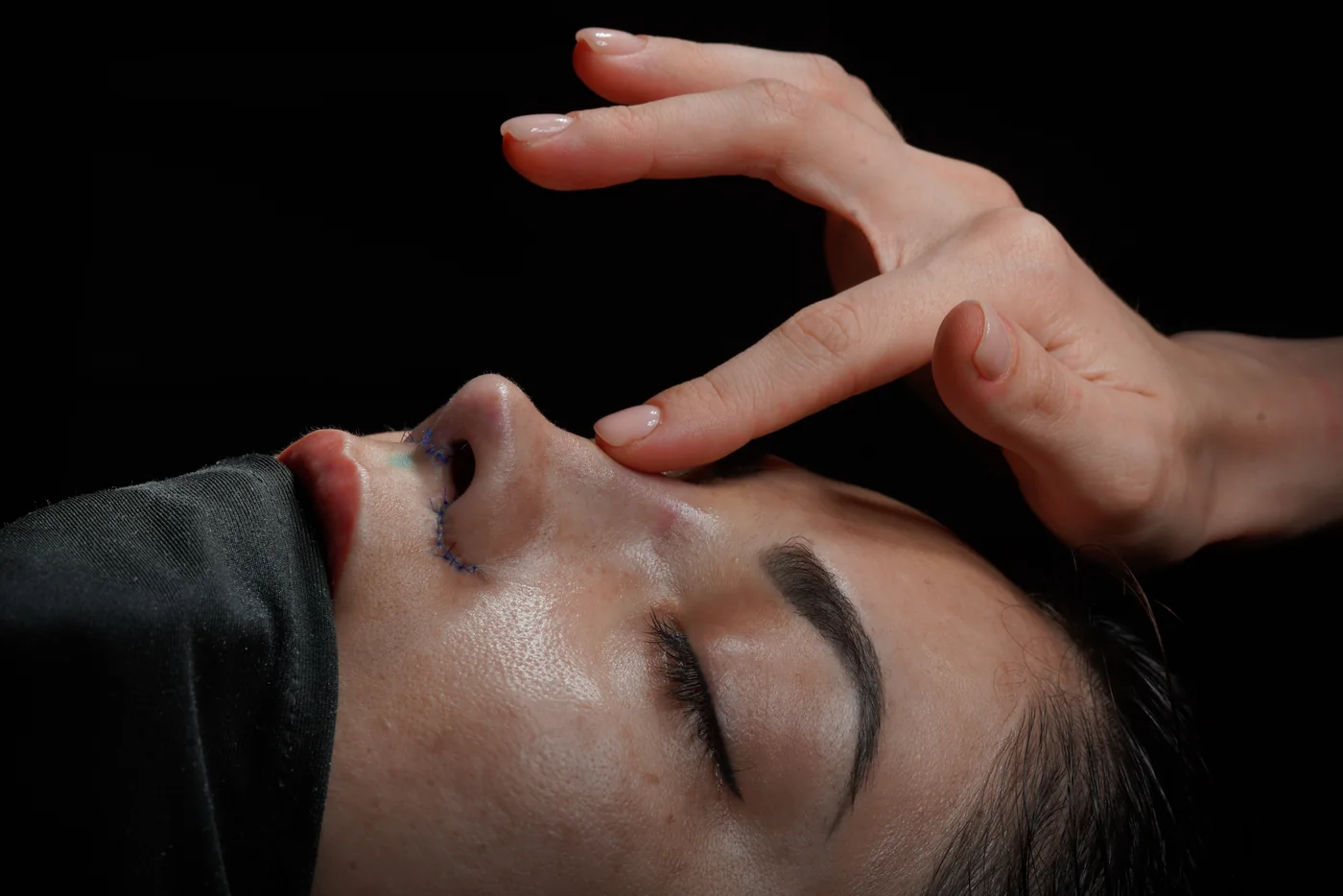
The nose needs to be protected after surgery. An aluminium cast is placed over the nose, with special silicone splints inside the nasal cavity. Nasal function is limited in the first days but recovers quickly. The final result of rhinoplasty can be assessed after 1–1.5 years, once the swelling has fully subsided.
Important: if nasal function is impaired after the first operation or you are not satisfied with the result, revision (secondary) rhinoplasty may be needed. It is a more complex procedure, performed no earlier than one year after the primary operation.
Early after surgery the nasal passages may be partially blocked by splints or swelling. Full breathing typically comes back within 1–2 weeks, depending on the extent of surgery and your body
Our doctors use microsurgical techniques and quality sutures to keep scars minimal
Rhinoplasty balances facial features and improves aesthetics while preserving individuality. 3D modelling lets you see the predicted result early and discuss and agree on the changes with your surgeon
Rhinoplasty is a serious step. A well-performed rhinoplasty means the new nose is in perfect harmony with your facial features and works flawlessly. At the consultation the nasal surgeon assesses every parameter in detail: the size of the nose, tip projection, and the condition of the septum and nasal mucosa. We use 3D modelling so you can see the future proportions of your nose before the surgery is performed.
Don't just browse rhinoplasty photos online. Book a consultation to discuss what modern rhinoplasty can and cannot do for you. Correcting external nasal deformities and reshaping the nose is our speciality.
Rhinoplasty price at City Medical Centre: $4,200 (≈ EGP 220,000) instead of $6,000 (≈ EGP 315,000) with the current discount. The first consultation costs nothing.
How much it costs depends on the extent of surgery and is decided at the consultation: the doctor names the exact price after studying your nose and facial proportions.
Surgery under general anaesthesia, one day spent in the inpatient unit, ongoing doctor monitoring and a free post-op check-up. The clinic gives a lifetime guarantee on the result.
First consultation at City Medical Centre — free. The doctor looks at your nose, analyses facial proportions and tells you the exact cost of surgery.
Blog
Rhinoplasty articles
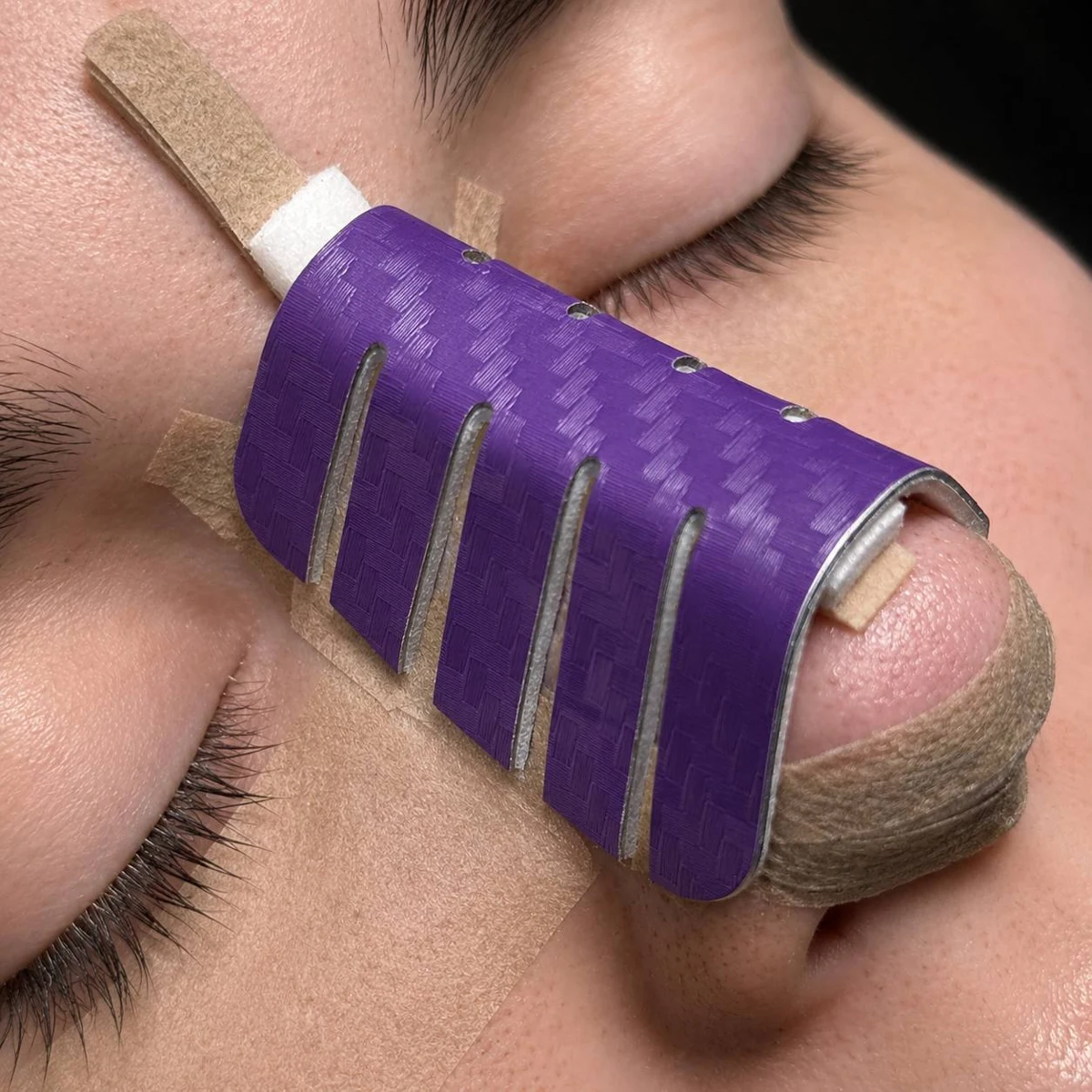
Find out how recovery after rhinoplasty goes in the first 7, 14 and 30 days
Read the article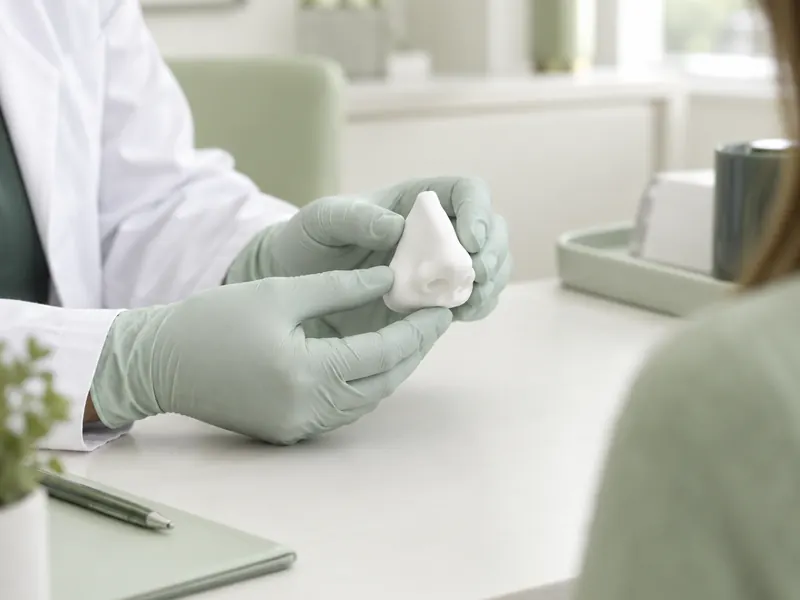
Preparation, recovery week by week, when the splint and stitches come out and how long to wait before flying home.
Read the articlePrices are in US dollars; the amount in brackets is an approximate conversion to EGP at the rate of 02.10.2026. The final price is fixed in your contract.
Prices start from $4,200 (≈ EGP 220,000). The surgeon sets the final price at the free consultation, and it is fixed in the contract, with no hidden extras.
The operation under general anaesthesia, a one-day inpatient stay, follow-up visits and dressings, plus a lifetime guarantee on the result.
Surgery takes 1.5–3 hours and you stay one day in the clinic. The nasal splints come out on day 7, and the cast is worn for up to 14 days.
Yes. The first consultation is free and does not oblige you to anything. You can start online by sending a message to the coordinator.
Message us on WhatsApp or Telegram using the buttons below. A coordinator will answer your questions and book a free consultation where the doctor names the exact price.
By messaging us, you agree to our Privacy Policy
Who is a candidate? The optimal age is 18 to 45, when the nose is fully formed and tissues heal well; with medical indications, older patients can also be considered if health allows. Indications include asymmetric cartilage or nostrils and significant breathing problems. Anyone researching rhinoplasty in Luxor should know the contraindications too: decompensated chronic disease, skin damage or inflammation in the area.
Everything starts with a consultation and nose modelling: the doctor assesses your anatomy, discusses wishes and chooses the correction method. Patients from Luxor then complete a lab work-up — blood count, biochemistry, coagulation panel, infection tests, ECG, chest X-ray and a CT scan of the sinuses. Surgery lasts 1.5 to 3 hours under general anaesthesia, followed by one day in the inpatient unit.
The consultation costs nothing and gives a realistic forecast: facial proportions are assessed, a 3D model of the future nose is shown and a personal surgery and recovery plan is drawn up. After that, the fee for rhinoplasty is $4,200 (≈ EGP 220,000) with inpatient care, dressings and follow-ups included. Patients from Luxor can book via the form or message us in any messenger.
Well-known people who spoke openly about this operation, in their own words.
 Ashley Tisdale's rhinoplasty: a breathing problem, a decision and the reactionAshley Tisdale had rhinoplasty in 2007 to fix a deviated septum and later wrote about the shaming that followed. Her words, the operation and recovery.
 Bhad Bhabie and her rhinoplasty: what she posted, day by dayIn January 2025 Bhad Bhabie (Danielle Bregoli) shared her rhinoplasty recovery on Instagram. What she wrote, why she had it, and how a nose job works.
 Did Darcey Silva get a nose job? Yes, and she said so herselfDarcey Silva described getting a rhinoplasty on a 2021 'twinsformation' trip to Turkey with her twin sister Stacey. Her words, the surgery and recovery explained.
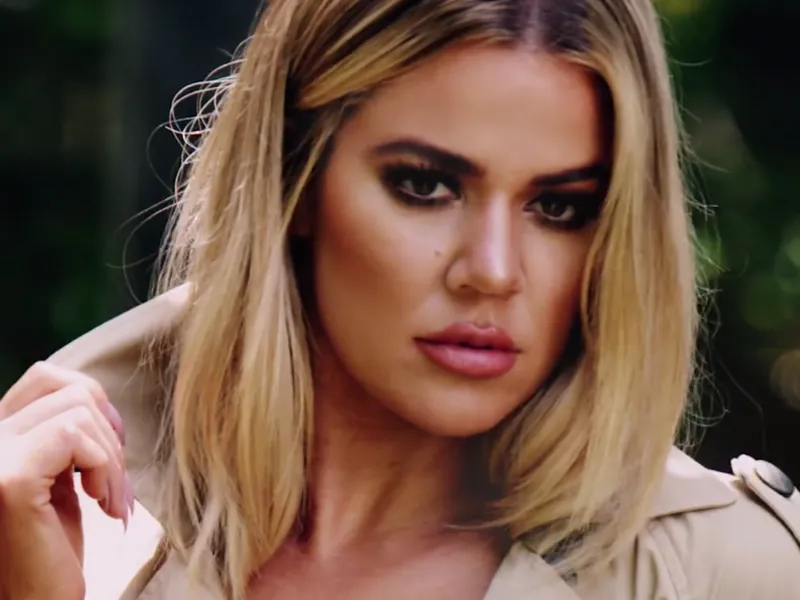 Did Khloé Kardashian have a nose job? Yes, and she confirmed it herselfKhloé Kardashian confirmed on Twitter that she had a nose job around 2019. Her own words, how rhinoplasty is done today and what recovery involves.
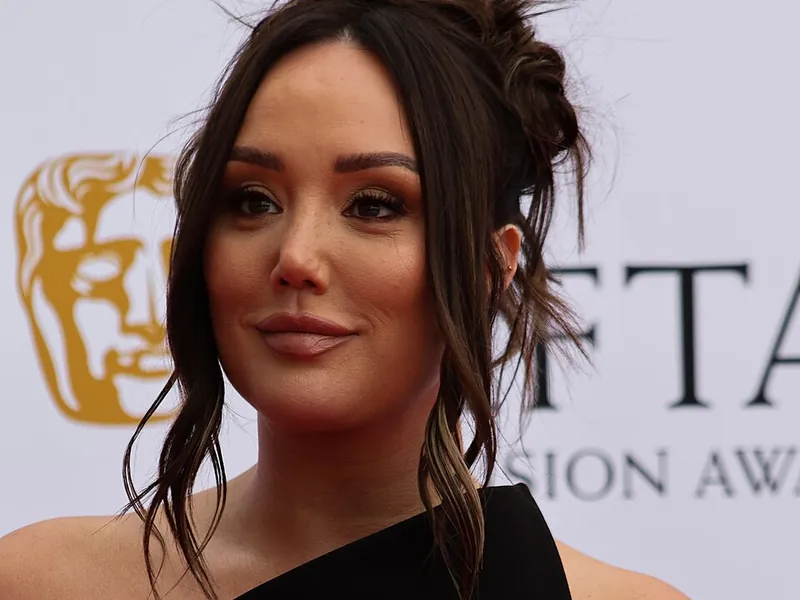 Did Charlotte Crosby have a nose job? Yes, and she defended the choice as her ownCharlotte Crosby confirmed on Loose Women that she had had a nose job. Her own words, how rhinoplasty is done today and what recovery involves.
 Kady McDermott on her “secret” nose job: “That feeling when you get your nose cast off”Kady McDermott revealed her rhinoplasty on her own Instagram Stories once the cast came off. Her own words, and how rhinoplasty is done and recovered from today.
What patients write after this operation. Reviews are translated from the original language.
Ekaterina Ivanova
For a long time I was self-conscious about the length of my nose, until a friend who had had rhinoplasty recommended this clinic. At the very first consultation they set the date of surgery and explained every stage in detail. The rhinoplasty under general anaesthesia was performed by Mareta Meirieva: the swelling went down quickly, and after just a week my nose looked natural and neat. Modern equipment, attentive staff and appointments without delays made the whole process comfortable. I recommend the clinic to anyone who values professionalism and a quality result.
Rhinoplasty
Olga Vasilyeva
This was my first visit to the clinic, for rhinoseptoplasty, and to be honest I was very nervous. At the consultation they explained every stage of the operation and recovery in detail, which calmed me down straight away. The operation was performed by Mareta Meirieva: the swelling started to go down on the third day, and the result is visible to the naked eye. Everything inside is sterile and pleasant, the atmosphere inspires trust, and the staff are always responsive. I thank the clinic for the high level of service and the warm approach!
Rhinoplasty
Marina Samarina
Everything was first-class: clean, cosy and calm. Booking and choosing the right date was easy. The nose operation went smoothly and the nerve block was done perfectly: now I breathe freely without nasal drops! It is a real lifesaver for anyone tired of endless prescriptions and ineffective procedures. I recommend it to everyone who values professionalism and results.
Rhinoplasty
Viktoria Petrova
I recently had rhinoplasty and I am absolutely delighted. At the consultation they told me about every stage in detail, so I went into surgery fully prepared. The operation went smoothly: they straightened the bridge of my nose and made the nostrils symmetrical, and the shape came out very neat. The swelling lasted a little longer than I expected, but they explained straight away that full recovery takes more time. No unpleasant surprises, everything was within the normal range. I recommend the clinic to anyone looking for a confident result and an attentive attitude.
Rhinoplasty
Luxor's city population was estimated at 289,618 in 2024 by Egypt's Central Agency for Public Mobilization and Statistics, and among them are people who want to correct the shape of their nose or improve breathing limited by a deviated septum, as well as patients whose earlier surgery did not give the result they hoped for and who are looking to correct it.
Most patients from Luxor start with a clear description of the issue, shape, breathing, or both, plus daylight photos from several angles, sent to coordinators on Telegram or Telegram who are available around the clock, so they get an honest first opinion before anything else.
Primary rhinoplasty corrects the shape and improves breathing where airflow is limited, usually suiting patients between 18 and 45; revision rhinoplasty is performed after an earlier operation failed or only partly worked, and is not done until at least a year has passed since the first procedure; and rhinoseptoplasty combines septum correction with reshaping, fitting patients whose main issue is a deviated septum.
The procedure is performed under general anaesthesia and patients spend one day in hospital afterward, and the surgeon builds a 3D model of the expected result at the consultation before any decision is made.
Over the eight to thirty days following surgery, swelling gradually eases while the tip and bridge of the nose may stay mildly swollen; for that first month, physical exertion, steam baths, saunas, swimming pools, hot baths and sun exposure are all avoided, and sleeping only on the back in a semi-upright position is advised.
Among the driest and hottest cities anywhere, Luxor's daytime summer highs routinely pass 40C, with a recorded peak of 50C in May 1991; that makes staying out of direct sun and away from the dust that comes with dry air for most of the year more important than usual during that first month, not a new instruction, just a stricter version of what the surgeon already advises.
For one to one and a half months after surgery, mild nasal congestion can linger, which is normal and gradually fades, while the nose reaches its final, settled shape after one to one and a half years, with regular follow-up visits to the surgeon throughout that stretch.
Surgeons consistently advise against removing dressings or splints yourself, touching the nose, taking hot baths or using a solarium, and against sport, alcohol and cigarettes until the surgeon says otherwise.
Regular follow-up visits during recovery help catch the smallest deviation early and correct it, and a patient should contact their doctor right away if they notice difficulty breathing, severe pain, a fever, or a sudden change in the shape of the nose.
The Egyptian Medical Syndicate (ems.org.eg), founded in 1940 and counting more than 230,000 registered physicians, works with the Ministry of Health and Population to grant doctors their licence to practise, so checking a surgeon's registration and specialty through it is a reasonable step before a decision of this scale.
When the septum does not have enough spare cartilage for reshaping or for repairing a previous surgery, a surgeon may use cartilage from elsewhere, commonly the ear or a rib, as graft material; which source is appropriate depends entirely on how much work the nose needs and what remains available after any earlier procedure.
Rhinoplasty corrects the external shape and can improve breathing when the cause is narrowed airways or a deviated septum, but it does not fix breathing problems unrelated to the nose's shape itself, such as seasonal allergies, and that is a distinction worth getting clarity on from the surgeon before any decision.
Bone and cartilage structure differs from person to person, and that determines what can actually be changed safely in the shape; a good surgeon explains the realistic limits for each patient's case rather than promising whatever shape a patient asks for without regard to their underlying structure.
The skin of the nose itself affects the final result too: thicker skin takes longer to settle over the new structure and hides fine detail more than thin skin does, which explains why the final result appears at different speeds between patients.
Someone having a revision after an earlier surgery did not work needs a more detailed exam, since the tissue itself has already changed from the first operation, and the options available may be narrower than for a primary procedure on a nose that has never been operated on before.
It helps for a patient from Luxor to bring clear photos from the front, side and below to the consultation, and to ask directly about the realistic limits of what can be changed in their own particular structure.
Patients from Luxor often ask specifically about one of three visible issues: a dorsal hump along the bridge, a bulbous or drooping tip, or visible asymmetry between the two nostrils, and each of those calls for a different adjustment to cartilage and bone rather than one blanket technique applied to every nose.
A hump is typically reduced by shaving down bone and cartilage along the bridge, a heavy or drooping tip is refined by reshaping the cartilage that supports it, and asymmetry is corrected by comparing both sides against each other rather than against an idealised template nose that ignores a patient's actual face.
Explaining which of these specific issues applies to your case, rather than describing the goal only as a nicer nose in general terms, gives the surgeon a much clearer starting point at the first consultation.
Alongside discussing the shape a patient wants, the surgeon checks airflow through each side of the nose directly at the consultation, often by looking inside with a light and asking the patient to breathe through one nostril at a time, rather than relying only on what the patient describes from memory.
That direct check matters because a patient might notice general stuffiness without realising one side is far more restricted than the other, and knowing exactly where the restriction sits changes how the surgeon plans the septum correction alongside the cosmetic reshaping.
The tip of the nose carries the last of the swelling the longest, often staying slightly rounder or firmer to the touch for months after the bridge and sides have already settled, simply because the tissue there is thicker and the blood supply works differently than along the bony bridge.
Some surgeons use short-term taping across the bridge for part of the early recovery to help the skin adapt smoothly to a narrower profile underneath, a detail worth asking about specifically since not every surgeon or every case uses it the same way.
When you collect more than one offer for rhinoplasty, compare the paperwork rather than the enthusiasm. Start with what can be verified: the surgeon's registration and specialty with the Egyptian Medical Syndicate, a concrete number you request and confirm yourself instead of a general description of experience. Then look at what each side proposes among the three types of nose surgery, primary, revision, or reshaping combined with septum correction, and ask for a clear medical reason for that choice in your case.
Next, compare what happens after the operation, not only the day of it: how far the follow-up plan stretches, given that the final shape does not settle before one to one and a half years and regular visits are part of the road? Who answers your questions between visits, and through which channel? Ask for the follow-up details in writing, because a refusal to put your agreement on paper tells you something in itself.
Watch the party's own behaviour, because it is a document too. Whoever promises any shape you ask for without discussing the limits of your bone and cartilage is selling an impression; whoever checks airflow through each nostril at the first consultation is planning your whole face. Gather these observations on one sheet, send whatever questions remain to the Telegram or Telegram coordinator at any hour, and decide at your own pace from your home in Luxor rather than under the pressure of hurried talk.
Yes, airflow through each side of the nose is checked directly at the consultation, often by looking inside with a light and asking the patient to breathe through one nostril at a time, rather than relying only on the patient's own description.
Primary corrects shape and breathing for the first time; revision follows an earlier unsuccessful surgery and is not done until a year has passed; rhinoseptoplasty combines septum correction with reshaping.
It eases gradually between days eight and thirty, though the tip of the nose can stay mildly swollen a little longer, which is normal.
Not more risky, but it makes avoiding direct sun and dust more important during that first month, a stricter version of the surgeon's usual advice, not a new rule.
After one to one and a half years, with regular follow-up visits to the surgeon recommended throughout that period.
Mild congestion can last one to one and a half months, which is normal and fades gradually without extra treatment.
Through the Egyptian Medical Syndicate (ems.org.eg), which works with the Ministry of Health to license doctors; ask for the registration number and confirm it.
If there is difficulty breathing, severe pain, fever, or a sudden change in the shape of the nose.
It depends on the hump itself; some are mostly cartilage and some include a bony ridge, so the surgeon examines which tissue makes up the bump before deciding how much of each to shave down.
No, it improves breathing when the cause is narrowed airways or a deviated septum, but not issues unrelated to the nose's shape, such as seasonal allergies.
No, bone and cartilage structure differs from person to person and determines what can be safely changed; a good surgeon explains the realistic limits for each case.
Thicker nasal skin takes longer to settle over the new structure than thinner skin does, which explains the difference in timing.
Yes, it needs a more detailed exam since the tissue has already changed from the first surgery, and the options available may be narrower.
Clear photos from the front, side and below, which help assess the nose's actual structure before any decision.
No, rhinoplasty addresses issues tied to the nose's shape or septum, not breathing problems caused by allergies.
The surgeon's registration and specialty with the Egyptian Medical Syndicate, a specific number you request and verify yourself rather than general titles. After that, read the written plan: which of the three operation types was proposed and why for your case, and whether the 3D model of the expected result is part of the consultation rather than an optional extra.
Someone who pushes you to decide immediately, skips checking airflow through each nostril, and promises any shape without discussing your structure gives three signals in one sitting. Fair comparison gives every offer at least one written question through Telegram or Telegram at any hour, and gives yourself time to read the answers calmly before any appointment.
Page medically reviewed by Marina T. Pershikova, rhinoplasty surgeon. Review date: .