



original
after 12 months
2,800 grafts
FUE method
City Medical Centre
0% instalments
from $367/mo
Consultation and quote — $0.
Real outcome
original
after 12 months
No scalpel and no stitches in FUE. Graft count and forecast tallied without a penny — before you decide.
With no fee, no surgery booking required
Message our coordinator
Free online consultation · Reply within 15 minutes
Message us on TelegramMessage us on WhatsAppBy messaging us, you agree to our Privacy Policy
results
All of the cases are real CMC patients.
original
after 12 months
2,800 grafts
FUE method

original
after 12 months
3,500 grafts
FUE method

original
after 12 months
2,600 grafts
FUE method

original
after 12 months
3,000 grafts
FUE method

original
after 12 months
2,700 grafts
FUE method

original
after 12 months
3,300 grafts
FUE method

original
after 12 months
2,900 grafts
FUE method

original
after 12 months
2,500 grafts
FUE method

original
after 12 months
3,400 grafts
FUE method

original
after 12 months
2,500 grafts
FUE method

original
after 12 months
3,100 grafts
FUE method

original
after 12 months
3,600 grafts
FUE method

original
after 12 months
4,000 grafts
FUE method

original
after 12 months
3,200 grafts
FUE method

original
after 12 months
3,000 grafts
FUE method

original
after 12 months
3,700 grafts
FUE method

original
after 12 months
2,700 grafts
FUE method

original
after 12 months
3,800 grafts
FUE method

original
after 12 months
3,300 grafts
FUE method

original
after 12 months
2,800 grafts
FUE method

original
after 12 months
2,500 grafts
FUE method

original
after 12 months
3,900 grafts
FUE method

original
after 12 months
3,500 grafts
FUE method

original
after 12 months
3,800 grafts
FUE method

original
after 12 months
2,900 grafts
FUE method

original
after 12 months
3,600 grafts
FUE method

original
after 12 months
2,600 grafts
FUE method

original
after 12 months
2,700 grafts
FUE method

original
after 12 months
3,700 grafts
FUE method

original
after 12 months
3,200 grafts
FUE method

original
after 12 months
3,000 grafts
FUE method

original
after 12 months
2,800 grafts
FUE method

original
after 12 months
4,000 grafts
FUE method

original
after 12 months
3,400 grafts
FUE method

original
after 12 months
2,900 grafts
FUE method

original
after 12 months
3,100 grafts
FUE method

original
after 12 months
2,600 grafts
FUE method

original
after 12 months
3,300 grafts
FUE method

original
after 12 months
3,900 grafts
FUE method

original
after 12 months
3,500 grafts
FUE method

original
after 12 months
2,700 grafts
FUE method

original
after 12 months
3,800 grafts
FUE method

original
after 12 months
3,200 grafts
FUE method

original
after 12 months
3,000 grafts
FUE method

original
after 12 months
2,800 grafts
FUE method

original
after 12 months
3,100 grafts
FUE method

original
after 12 months
3,600 grafts
FUE method
Comparison
Our work relies on three graft transfer technologies: classic FUE, suture-free DHI and a combined protocol. Compare implantation technique, tissue trauma and graft survival, then choose knowingly.
Classic technique without incisions or stitches

$2,200
$2,700
Graft implantation technique
ForcepsGraft trauma
MinimalA natural growth angle
NaturalGraft survival
98–100%Suitable for
Androgenetic alopeciaStitch-free implantation with a Choi pen

$2,500
$2,900
Graft implantation technique
DHI, a Choi implanterGraft trauma
MinimalA natural growth angle
NaturalGraft survival
98–100%Suitable for
DensificationFUE extraction, DHI pen implant

$2,700
$2,900
Graft implantation technique
FUE extraction plus DHI implantGraft trauma
MinimalA natural growth angle
NaturalGraft survival
98–100%Suitable for
Androgenetic alopecia and densificationSurvival and trauma figures come as method averages, as a reference point: the exact numbers depend on the transplant area and the patient's individual features, and the doctor clarifies them at consultation.
Set up an assessment


















about the clinic
Care for every patient, modern equipment, comfortable rooms

We clarify anything unclear and arrange the appointment around your day
Message us on WhatsApp Leave a requestWhere the goal can be reached without an operation, that is what you hear during the consultation, with your money left untouched. Below are the situations in which a transplant is genuinely justified.
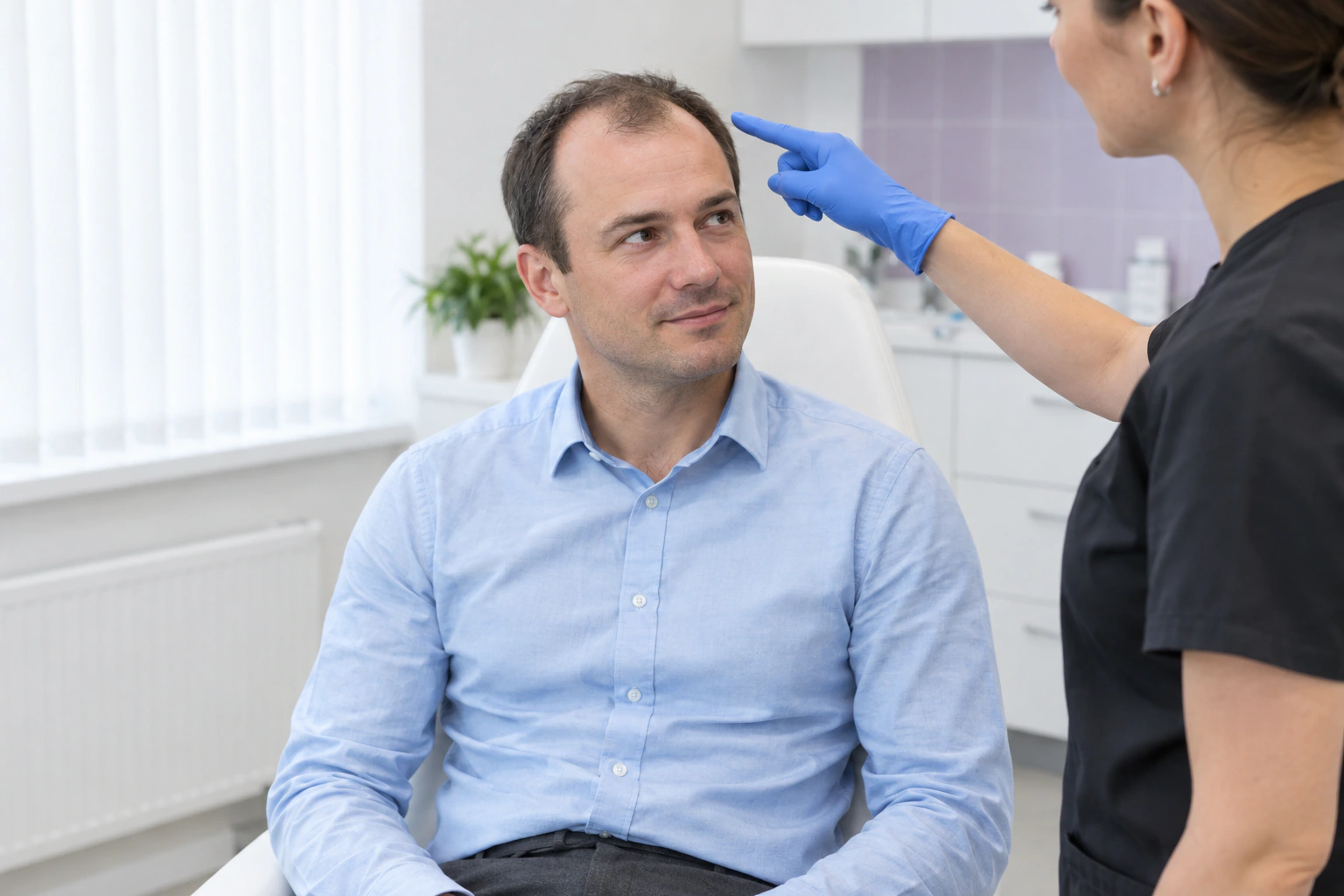

Send your number, get photos in a messenger to a coordinator, and the doctor says if a transplant helps. Free, with no booking.

services
No figure is named until the grafts have been counted; this happens at the free consultation and is recorded in the contract.
suture-free graft extraction

$2,200$2,700
or $367/mo — 0% instalments for 6 months
Claim this priceimplantation without channels

$2,500$2,900
or $417/mo — 0% instalments for 6 months
Claim this pricecombined technique

$2,700$2,900
or $450/mo — 0% instalments for 6 months
Claim this price| The starting appraisal | Free |
|---|---|
| Eyebrow transplant, FUE | |
| Beard transplant, FUEinstalments $467/mo | |
| Hair trichopigmentation | |
| PRP therapy / session | $200 |
all included
Preparation for surgery through 12 months of follow-up.
The day of surgery adds nothing to the price.
two more areas
The area may change, the surgery stays the same: grafts from the back of the head, taken with FUE.
FUE method, no incisions or stitches

Grafts are taken from the back of the head, the donor area, and moved through micro-punctures of about 1 mm, so no scars are left. The doctor discusses the shape with you before the operation, taking your facial features into account. Transplanted hair grows for life: trim and style the beard as usual.
$2,800$3,000
or $467/mo — 0% instalments for 6 months
Claim this priceFUE method, no incisions or stitches

At your first meeting the surgeon settles the brow shape: references are turned over together and the proportions of your face underpin the design. Angled correctly, the implanted hairs give brows that read as natural. Growth stopped by long years of plucking is covered as well.
$1,600$1,700
a procedure with no overnight stay, numbed locally
Claim this priceThe doctor assesses the donor zone, counts the grafts and explains the outcome that can be reached. The price named at that consultation is what the contract will state.

Message our coordinator
Free online consultation · Reply within 15 minutes
Message us on TelegramMessage us on WhatsAppBy messaging us, you agree to our Privacy Policy
Process
From consultation to going home — all in one day

The consultation costs nothing and gives you a full explanation of FUE and DHI, answers to your questions, and an individual plan built for your surgery.

Reserving the surgery date means paying a deposit, either by card at the clinic or online, with the terms recorded in a medical services contract.

Before surgery day, the required tests are completed with the help of a list and instructions provided by the clinic.

Anaesthesia at this stage is local, which keeps the operation painless for the patient.

The surgeon draws grafts from the rear of the scalp or the temples, and no stitching follows.

The surgeons then implant the harvested grafts into the balding area.
The clinic sends you off with the necessary supplies and a full set of directions for a quick recovery.

The scabs shed, the swelling fades out, the skin returns to normal

This shedding is expected; the roots are not affected

Growth is underway and the difference can be seen

The hair is becoming thicker, the volume and contour are visible

Final density and a natural hairline are in place

Free, before the operation, and you owe nothing.
Set up an assessmentdoctors

Hair transplant doctor, trichologist, surgeon
10 years of experience

Dermatovenereologist, trichologist, surgeon
11 years of experience

Plastic surgeon
9 years in practice

Plastic surgeon
9 years in practice

Assistant
9 years in practice
The doctor appraises the donor zone, sets the graft figure and explains what outcome is realistic.
Set up an assessmentcoordinators
You are assigned a personal coordinator who is with you from the first enquiry to recovery.
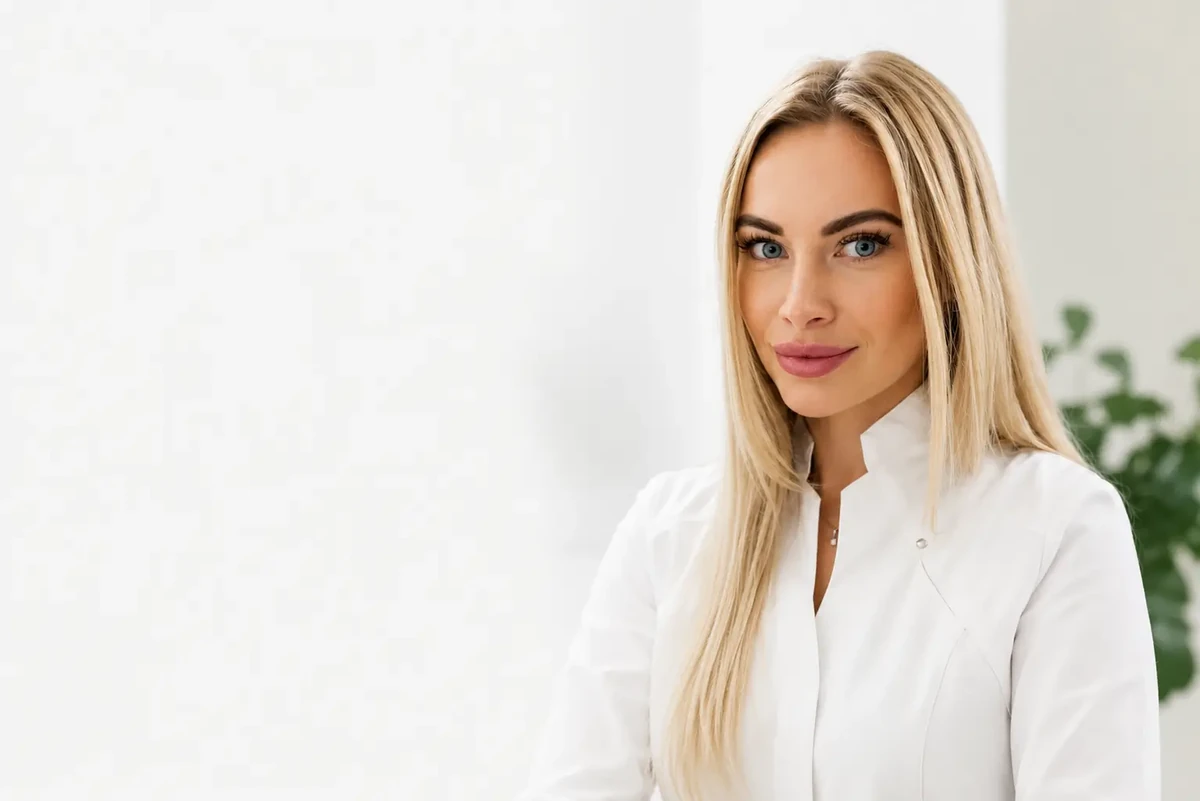
Your care coordinator
Will stay beside you before and after surgery
Handles the paperwork and your bookings

Your care coordinator
Will stay beside you before and after surgery
Handles the paperwork and your bookings

Your care coordinator
Will stay beside you before and after surgery
Handles the paperwork and your bookings
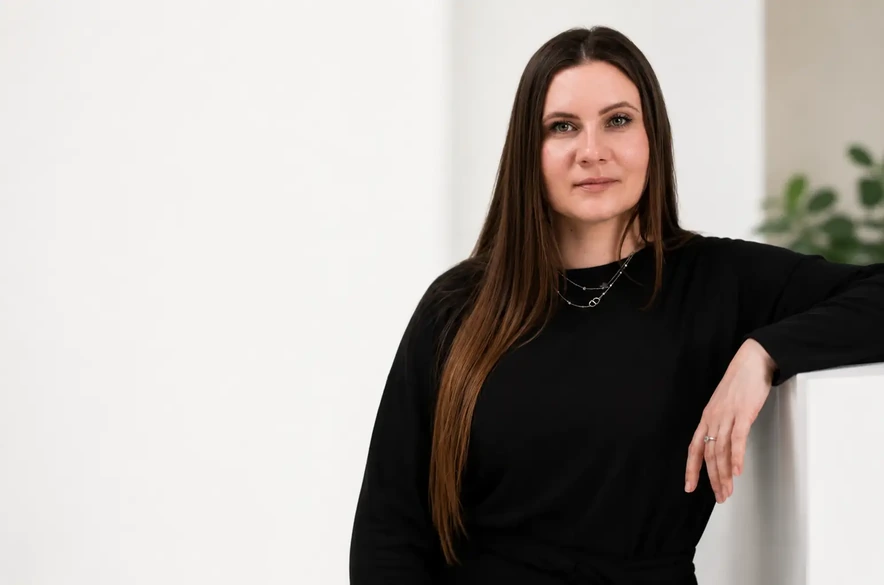
Your care coordinator
Will stay beside you before and after surgery
Handles the paperwork and your bookings













We clarify anything unclear and arrange the appointment around your day
Message us on WhatsApp Leave a requestRegular questions

Yes. City Medical Centre accepts patients from other cities and countries, and an online consultation is available before you decide.
FUE: $2,200 (≈ TZS 5,900,000). DHI: $2,500 (≈ TZS 6,700,000). Combined: $2,700 (≈ TZS 7,200,000). A free consultation and graft count gives you the final, contract-fixed price with no hidden extras.
Allow one day; you will be home once the operation ends.
Pain is not part of it; local anaesthesia is applied first.
With FUE, grafts are taken by tweezer with no incisions. With DHI, grafts are implanted directly using a Choi pen, without pre-made channels. The combined method mixes FUE harvesting with DHI implantation.
Graft count is calculated by the doctor at no cost, based on an assessment of your donor zone.
Count on 0–10 days until the skin is sound. Shedding comes at 2–4 weeks and is expected. Hair begins growing at 3–4 months, looks dense at 6–9 months, reaching its final state at 12–18 months.
A lifetime guarantee of hair growth is included, confirmed in your contract.
Care is provided under a medical licence, to the standards and clinical guidelines
under Ministry of Health.

The diplomas and certificates of the operating doctors
Read the documentsAKC POMOSHCH LLC
the clinic's own entity
1057746096924
OGRN
7728536872
INN
Two methods are used for a resident of Mwanza, FUE and DHI, and both go without cuts and stitches, under local anaesthesia, within one day. Graft survival is 98-100 %, and a price from $2,200 (≈ TZS 5,900,000) appears in the contract after a free count of the grafts.
If you are in Mwanza, the first step is a free online consultation: photographs of the thinning area go to the doctor, who looks at them and counts the grafts. Daily contact is open 24/7, so nothing depends on a lucky moment.
0-10 days is what healing needs, and very little is asked of you during them. At 2-4 weeks the transplanted hairs shed; nothing has gone wrong, this is simply how it works for everyone. Growth starts at 3-4 months and builds up from then on.
Prices are in US dollars; the amount in brackets is an approximate conversion to TZS at the rate of 02.10.2026. The final price is fixed in your contract.
By messaging us, you agree to our Privacy Policy
What patients write after this operation. Reviews are translated from the original language.
Andrey M.
I had the operation a month ago. Before and after surgery they were always in touch and helped with questions about my tests. The operation itself went wonderfully, the staff are polite and masters of their craft, you feel you are in safe hands. I am recovering now, and they answer all my questions. I am happy and I recommend them!
DHI hair transplant
Pavel Sinitsyn
The best clinic of all the ones I was choosing from. No regrets at all! The result is simply amazing, I am thrilled. I recommend it to everyone: these people do great work and make people happy. Once again, a huge thank you to everyone. Roman, the head of the clinic, is the best: he was personally in touch with me and looked after my recovery. Thank you for making my dream come true.
FUE hair transplant
Maria Akopyan
I thought about an eyebrow transplant for a long time and finally went for it. At first I was afraid the result would look unnatural, but when I saw my new eyebrows I was delighted! They came out full and in harmony with my face. I can hardly believe that now I just wash my face and go, I have never felt so free. For anyone tired of constant make-up, a transplant is a real lifesaver!
Eyebrow transplant (FUE)
Alexander M.
I really wanted a thick beard, but I had problems with it. I tried every home remedy and minoxidil, and nothing helped. After a long search for the best clinic I settled on this one. Thank you so much for the service, I liked everything and now I am happy! I had the beard transplant 10 months ago and I am very pleased with the result. By the way, the music in the clinic was great, as far as I remember. A friend of mine has already come to you for a transplant on my advice and was also happy with the result. I wish you every success!
Beard transplant (FUE)
Vladimir Z.
I went to the clinic to see a trichologist and had a hair transplant. I really liked the doctor's approach, and all the recommendations helped. I want to point out that nobody tries to sell you extra services: they tell you things as they are, and if some treatment is not needed, they do not push it. Cosy and clean.
DHI hair transplant
Artem Popov
This may sound obvious, but a head of hair really changes everything in your life. You feel much more confident and go through life like a winner. And it is all thanks to the doctor at this clinic and to the staff who take care of their patients. Many thanks to the clinic for a happy life with new hair, for the comfortable conditions and for the professionalism during the hair transplant.
FUE hair transplant
Page medically reviewed by Anastasia A. Kolesnik, hair transplant doctor. Review date: .
Mwanza, known to its residents as Rock City, is a port city on the southern shore of Lake Victoria in north-western Tanzania. It is the capital of Mwanza Region and is divided into two municipal districts, Ilemela and Nyamagana. With an urban population of 1,104,521 in the 2022 census, it is the second largest city in Tanzania after Dar es Salaam, and people here are used to taking big decisions about work, family and health with careful planning.
Hair transplantation by FUE or DHI is one of those decisions. Men in Mwanza most often ask about a thinning frontal hair line, a receding temple area, gaps in the beard or a crown that has become sparse. Women ask about a high hair line or thinning after hair-pulling styles. This text explains how the procedure fits real life in the city, from the first online talk to the settled result.
The centre works with patients from Mwanza through a free online consultation. A coordinator will be on the phone 24/7, on WhatsApp and Telegram, so you can send photos and ask questions at a time that suits your working day.
You start by sending clear photos of the front, the top, the crown and both sides of the head, and of the beard if the beard is the target. You then describe how long the loss has been going on, what you have already tried and what you want to look like. A coordinator replies in the same messenger and arranges a conversation with the medical team.
The doctor discusses the shape with you before the operation, taking your facial features into account. This matters for a frontal hair line: it has to suit your face, your age and the way the loss will probably develop over the years, not only the way you want it to look today.
We stay with you from pre-op planning to 12 months later. You do not have to arrange anything alone. Questions that come up in the evening after a long day in the city, or at night, can be put to the coordinator at any hour.
Mwanza has a tropical savanna climate. Temperatures are fairly even through the year, averaging roughly 23.5 °C, because the altitude tempers the heat. The city is not as hot as its position near the equator suggests. That is helpful for healing, since you are rarely forced to choose between staying cool and protecting the scalp.
There is a long wet season from October through May and a short, pronounced dry season over the remaining four months, with roughly 1,050 millimetres of rain a year. In the wet months, humidity and rain mean you should keep the head clean, avoid crowded wet public transport if you can, and follow the washing routine the clinic gives you. Do not rub or scratch the treated area.
In the dry months the sun and dust are the main concerns. Direct sun on the freshly treated scalp should be avoided during early healing, and dusty roads call for a loose, clean, breathable cover recommended by your doctor rather than a tight cap. Ask which type of headwear is acceptable and from which day.
The lake invites swimming and boat outings, but lake water, pools and sweat-heavy activity should wait until the doctor allows them. Your coordinator will tell you when each is acceptable for your case.
For many people in Mwanza the question is whether to plan in the rains or in the dry months. Neither is wrong. The dry season means more dust and sun, the wet season means more humidity and muddy streets. What counts more is a quiet period at work or study without big outdoor commitments during the first days.
The healing phase is 0–10 days. Within that window you will want to avoid long outdoor shifts, crowded events and heavy physical effort. Pick a period when you can stay home for the first days and then return gradually to your routine.
Remember that the timeline is long. Transplanted hairs let go after 2-4 weeks, as expected, and the final look comes at 12-18 months. A date set months before a wedding or another important family event gives the hair time to settle; a date set just before it does not.
Mwanza is a working port and commercial city, with trade, the lake economy, a brewery and large retail developments such as Rock City Mall. Many people work in direct contact with customers, so the first visible days matter. Discuss with your coordinator how many days you realistically need before you meet clients, and plan your shifts around the healing phase of 0–10 days.
Students, including those at St. Augustine University of Tanzania in the Nyegezi-Malimbe area south of the city, usually have more flexible schedules, but the daily commute along the main road is dusty and busy. Ask how to protect the scalp on public transport and what to avoid in the first days.
Football is part of the city's life, with matches at CCM Kirumba Stadium and the local team Mbao FC in the Tanzanian Premier League. If you play or train, ask your surgeon exactly when you may return to running, team games and contact. Heading a ball or wearing tight helmets and caps too early can disturb the grafts, so wait for the permission given in your plan.
The Sukuma make up over 90 percent of the population of Mwanza Region, and family gatherings, celebrations and community events are an important part of social life. If you have such an event coming, count backwards: early healing, the shedding phase of 2-4 weeks and the months before density builds up.
Many people ask whether the shedding of transplanted hair in weeks 2-4 will be noticeable at a celebration. It is a normal stage, not a failure, and the hair comes back in 3-4 months. Knowing this in advance helps you avoid worry and choose your date sensibly.
Lake fish and filling local meals are part of everyday eating in Mwanza. Balanced food, enough water and regular sleep support healing. Ask the doctor about alcohol and smoking during recovery, and about hot, steamy kitchens or cooking over open heat in the first days, when sweat and smoke can irritate the scalp.
The grafts are taken from the back of the head, the donor area, and moved through micro-punctures of about 1 mm, so nothing scars over. Transplanted hair grows for life: trim and style the beard as usual.
The timeline is: 0–10 days for healing, 2–4 weeks for normal shedding of transplanted hair, 3–4 months for new growth to start, 6–9 months for real density, and 12–18 months for the final result. Check-ups at months 1, 3, 6, 9 and 12 let the team follow your progress and answer questions.
One patient wrote: «But now the result truly makes me very happy. From about the 4th month active, even growth began. The transplanted hair took very well, the beard now looks as natural as possible, no bald patches are left. The beard became much thicker and denser, with the shape I had thought about for a long time.» Every case is individual, so use this as an illustration, not as a promise.
Preparation starts weeks before the procedure and is mostly a matter of organising ordinary life. In Mwanza, where days are often built around work in the port area, the markets and the lakeshore, it helps to write down which commitments fall in the first days after surgery and to move or hand over the ones that involve dust, crowds or heavy lifting.
Prepare a clean place to rest, fresh pillowcases and a loose, soft shirt that can be taken off without pulling over the head. Ask your coordinator for the full list of what to arrange, including which medicines to mention and which habits to pause before the operation. Because the consultation is online, you can go through the list by message and return to it as often as you need.
Tell your family or the people you live with what to expect. They can help you keep to the washing routine, remind you not to touch the treated area and take over errands in the early days. A calm home makes the first stage of recovery much easier.
The first nights need a little planning. Most surgeons advise sleeping with the head slightly raised and avoiding pressure on the treated area. In a warm, humid evening during the long rains, a fan or open window helps you stay comfortable without sweating heavily on the scalp.
Mosquito nets are part of life in many homes around Lake Victoria. Check that the net and bedding do not brush against the scalp or catch on the head while you move in your sleep. Keep bedding clean, because the fresh micro-punctures need a clean environment.
Daily routine matters more than any single product. Wash as instructed, do not scratch even when the skin itches, and keep your hands clean. If something looks unusual, such as increasing redness, swelling that does not settle or discomfort that grows instead of easing, send photos to the coordinator at once rather than waiting for the next check-up.
The long wait is the hardest part for many patients. Between the shedding at 2-4 weeks and the visible thickening at 6-9 months there is a stretch when the head can look less full than before. People in Mwanza often meet colleagues, customers and relatives every day, so decide in advance how you will talk about it, or whether you need to say anything at all.
Use the check-ups at months 1, 3, 6, 9 and 12 as fixed points. Take photos in the same light and from the same angles each time, ideally in daylight near a window, so that you compare like with like. Changes that feel invisible day to day become clear when pictures are placed side by side.
Avoid judging the result by a single week or by what other people tell you. Hair grows in cycles, and the settled look comes at 12-18 months. If you have doubts, write to the team and ask for an assessment of your own photos.
Not everyone who notices thinning needs surgery. Some people in Mwanza first try medical treatment or simply change their hairstyle, and these are reasonable steps to discuss with a doctor. A transplant makes sense when the loss is established and there is a healthy donor area at the back of the head.
In the online consultation the doctor looks at your photos, asks about family history and how the loss has progressed, and says honestly whether the procedure suits you now, later or not at all. A good plan sometimes means waiting until the pattern of loss is clearer, especially for younger men.
Whatever you decide, keep realistic goals. A natural frontal hair line, a well-shaped beard or a fuller crown are achievable aims. A return to the hair of your teenage years is not what the procedure is for.
Good candidates have a healthy donor area at the back of the head, realistic expectations and stable general health. Contraindications are decided by the doctor and may include a poor donor area, active scalp disease, uncontrolled chronic conditions or ongoing hair loss that has not been assessed. Be honest about medicines, allergies and previous procedures.
Questions to ask: How many grafts are needed for my goal, and is the donor area enough? Which technique, FUE or DHI, suits me, and why? What will my frontal hair line look like with my face? What is the healing routine in Mwanza's rainy or dry season? When may I wash, work, sport and go in the sun or the lake?
General health also matters for recovery. Excess weight is a topic that doctors discuss in relation to surgery, and the World Health Organization publishes information on obesity and overweight; mention your weight and conditions in the consultation so the plan is safe.
No. The consultation is free and online. You send photos and talk to a coordinator and the medical team through WhatsApp or Telegram from home.
A coordinator will be on the phone 24/7, so evening and night questions are not a problem.
Both use grafts from the donor area at the back of the head. The doctor will explain which technique suits your hair, your goals and the shape of your face.
Grafts are moved through micro-punctures of about 1 mm, so nothing scars over. The doctor will explain the donor area healing for your case.
Transplanted hairs let go after 2-4 weeks, as expected. This is a normal stage.
New growth starts at 3-4 months, becomes visibly thicker at 6-9 months and settles at 12-18 months.
Yes, beard restoration is possible if there is a suitable donor area. Transplanted hair grows for life, so you trim and style the beard as usual.
Not necessarily. In the rains, keep the head clean and dry as instructed; in the dry months, protect it from sun and dust. Choose the time when you can rest during the first 0–10 days.
Your doctor will give you the exact date in your plan. Do not rush back to team games, caps or helmets before it.
We stay with you from pre-op planning to 12 months later, with check-ups at months 1, 3, 6, 9 and 12.
Yes. Many patients in Mwanza include a spouse or a relative in the conversation. They can hear the explanations, ask questions and help later with the washing routine.
Usually with the head slightly raised and without pressure on the treated area. Your doctor and coordinator will give exact instructions for your case.
Send photos to the coordinator on WhatsApp or Telegram. A coordinator will be on the phone 24/7, and the medical team will tell you what to do.

 Forceps
 Minimal


