

Message our coordinator
Free online consultation · Reply within 15 minutes
Message us on TelegramMessage us on WhatsAppBy messaging us, you agree to our Privacy Policy

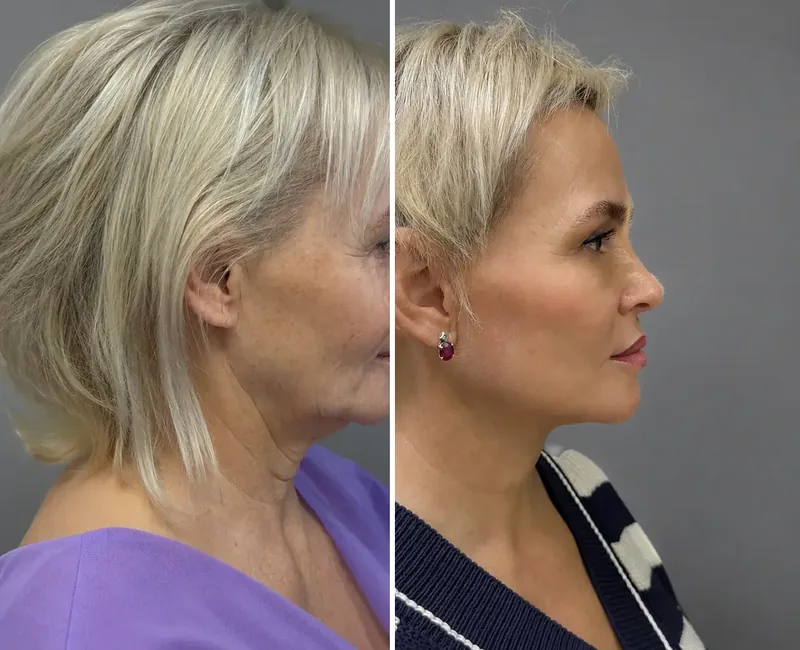

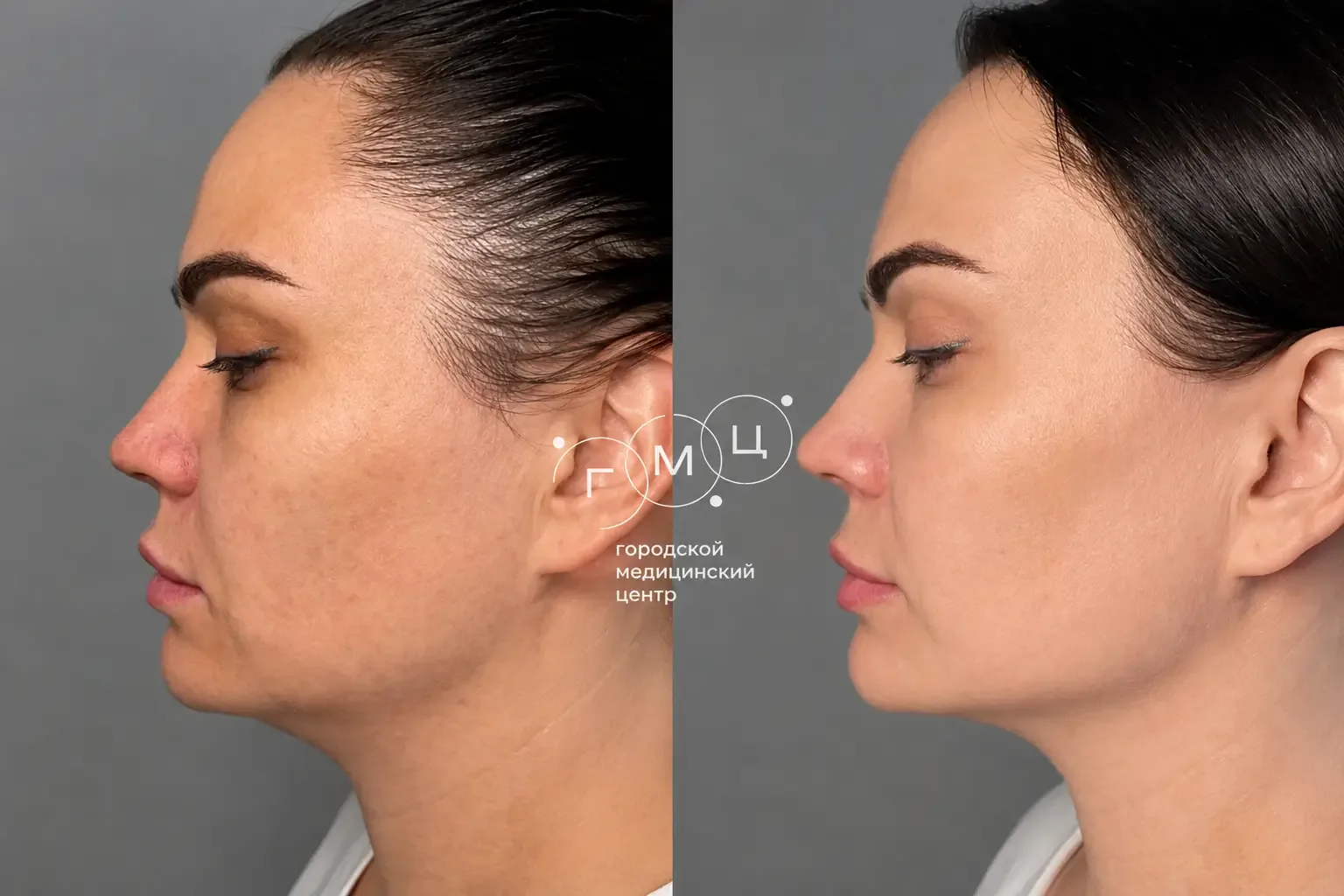
50 years
9 months
SMAS facelift
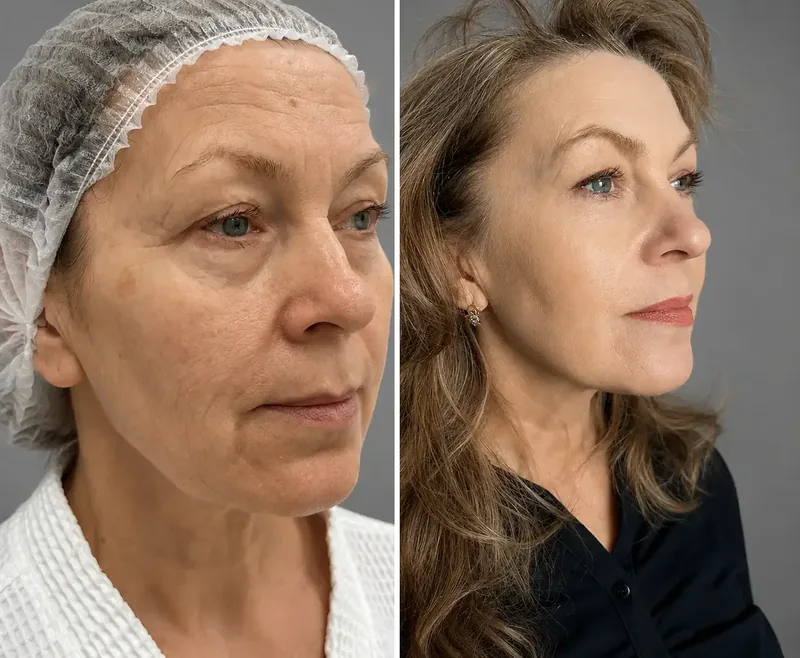
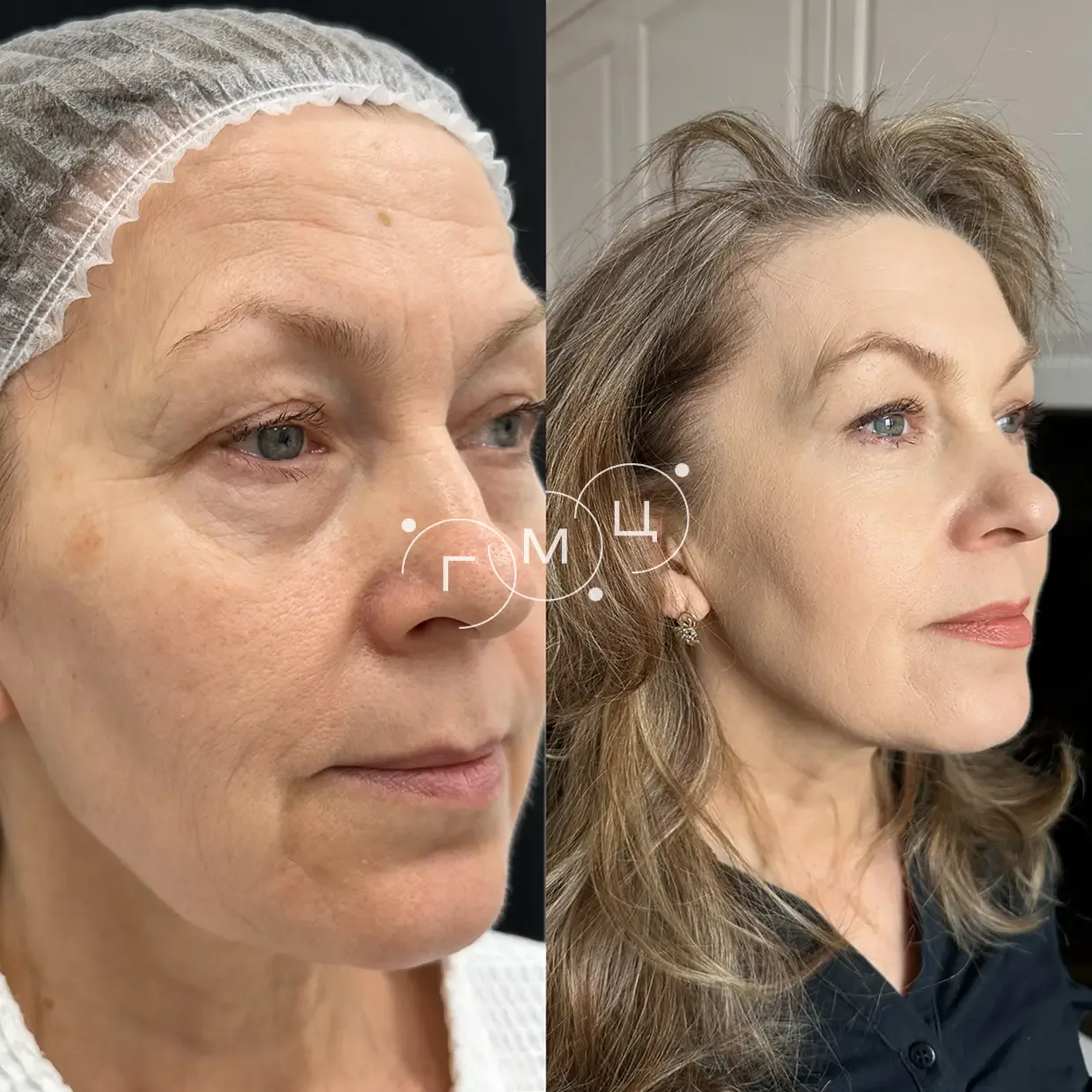
58 years
8 months
SMAS facelift
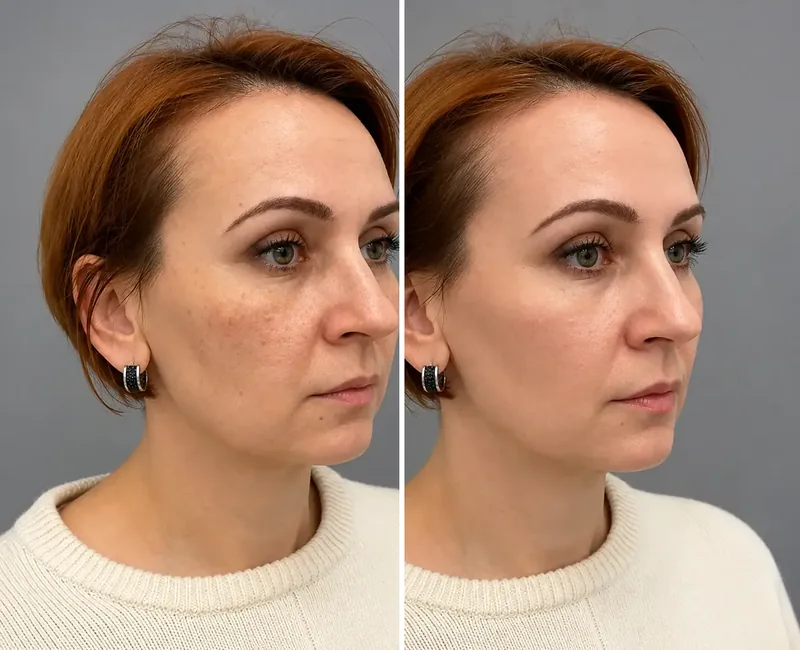
34 years
5 months
SMAS facelift
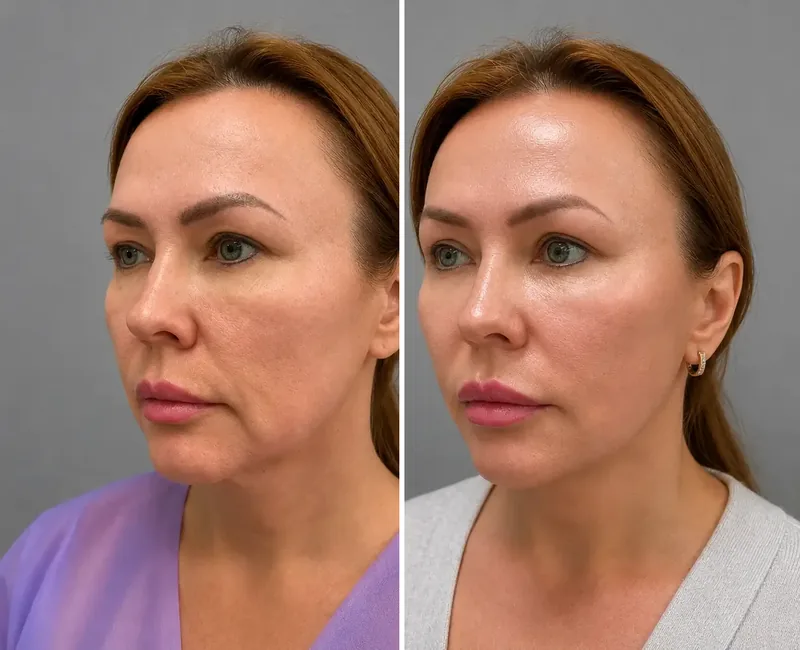
32 years
7 months
SMAS facelift
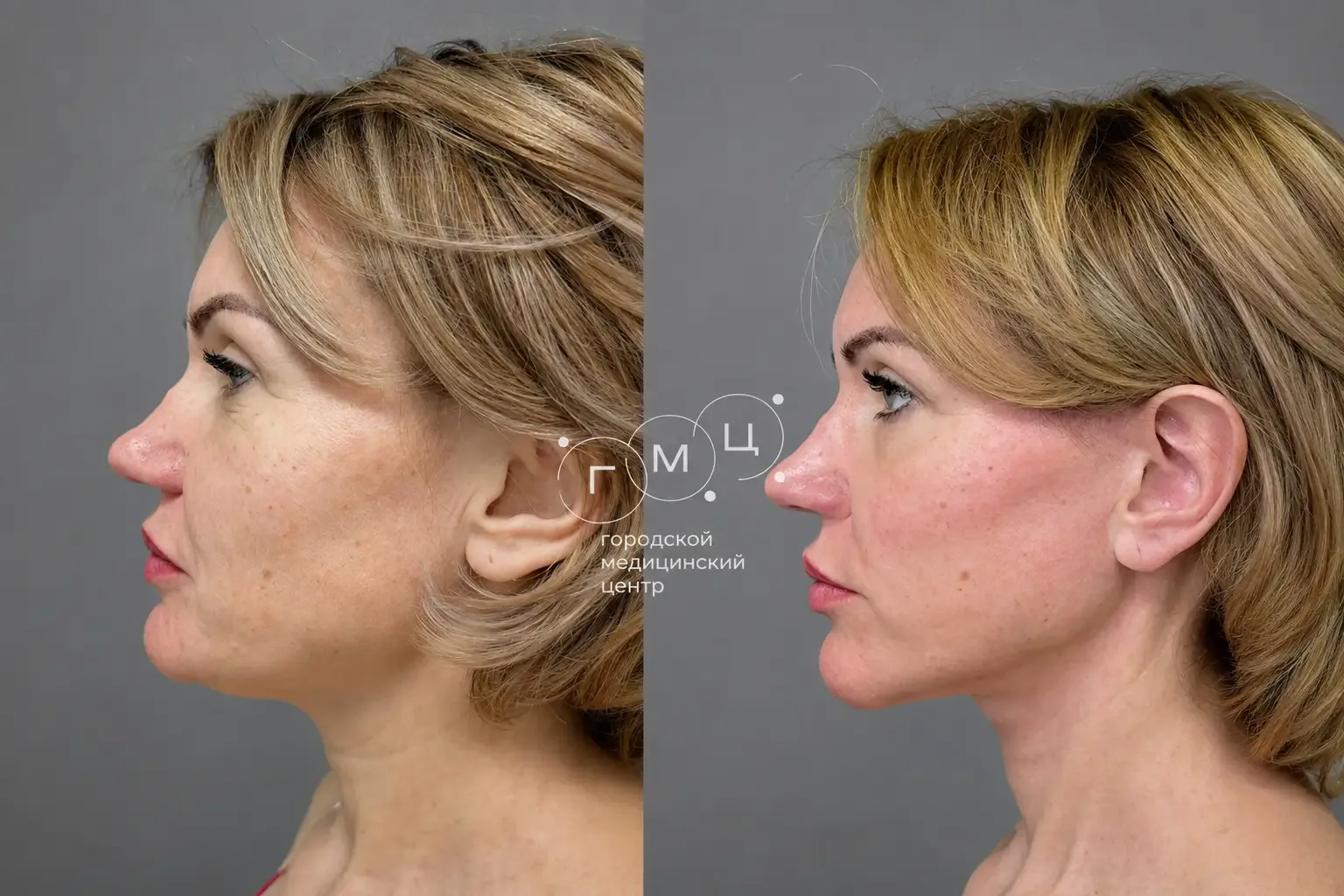
40 years
6 months
SMAS facelift
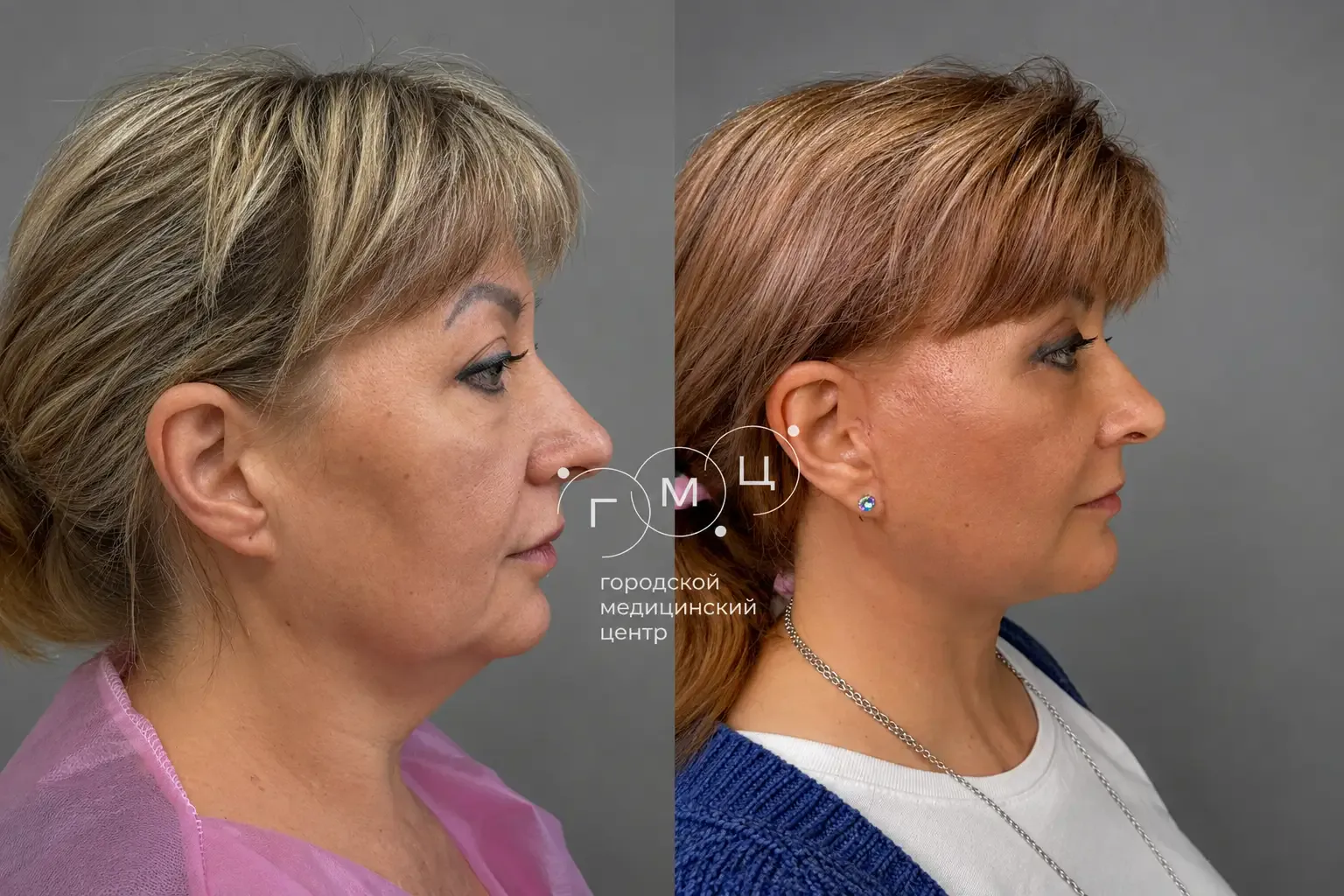
45 years
8 months
SMAS facelift
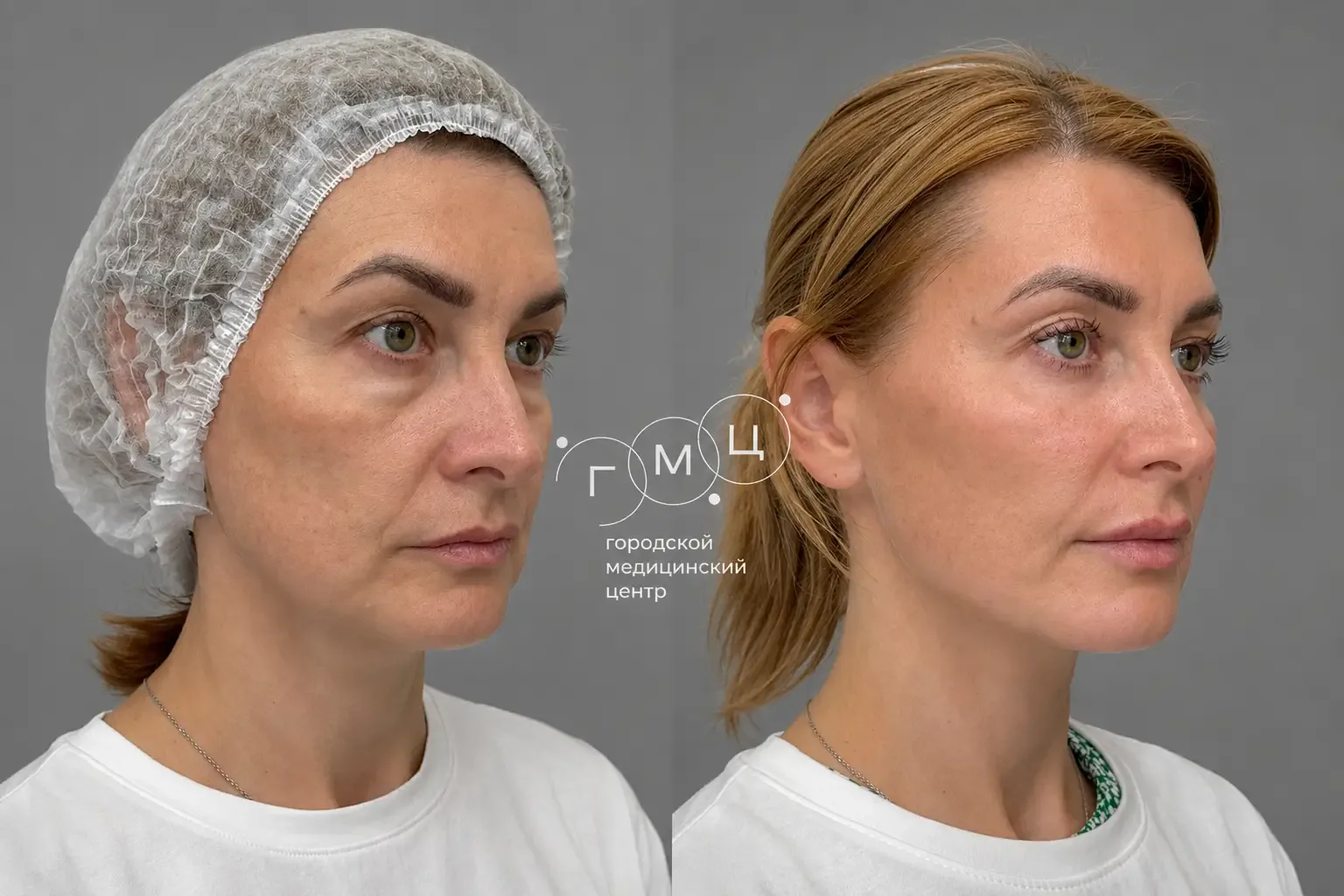
38 years
5 months
SMAS facelift
33 years
6 months
SMAS facelift
50 years
9 months
SMAS facelift
58 years
8 months
SMAS facelift
34 years
5 months
SMAS facelift
32 years
7 months
SMAS facelift
40 years
6 months
SMAS facelift
45 years
8 months
SMAS facelift
38 years
5 months
SMAS facelift
33 years
6 months
SMAS facelift

The face and neck show marked sagging
The jawline is blurred, with jowls
A double chin with loose skin on the neck
Deep nasolabial folds, marionette lines
Drooping brows and a heavy look
A significant drop in skin firmness after 40
Wish for a long-term result (7–10 years)

Age under 30
Active, acute inflammation of the skin
Being pregnant or breastfeeding
Serious cardiovascular disease
Disorders of blood clotting
Cancer
Decompensated diabetes
Facelift in Kira: a short guide
A facelift can also be part of a broader plan. It is often combined with blepharoplasty (eyelid surgery), rhinoplasty or double-chin liposuction, and the scope of a combined procedure is set by the surgeon at the consultation. This lets patients from Kira address several concerns in one combined procedure. The surgeon never suggests surgery where it is not needed and never prescribes anything extra.
Here is the route in brief. A free consultation with an assessment of sagging. A choice between a SMAS, full, neck and lower face or endoscopic lift. Surgery under general anaesthesia. A stay in an inpatient room with meals and round-the-clock monitoring. Then 7–10 days of rest in a compression bandage and a year of follow-up. Patients from Kira follow this same sequence.
Start with a free, no-pressure consultation: you get an assessment of your ageing type, an explanation of the expected result and answers on recovery. If you decide to proceed, a facelift costs from $2,400 (≈ UGX 9,500,000), with anaesthesia, the inpatient stay, meals and a year of follow-up included, and 0% instalments available. People in Kira can send a request online or message a coordinator.
Facelift in Kira: price and what is included
Prices are in US dollars; the amount in brackets is an approximate conversion to UGX at the rate of 02.10.2026. The final price is fixed in your contract.
- Faceliftfrom $2,400 (≈ UGX 9,500,000)
How much does a facelift in Kira cost?
Prices start from $2,400 (≈ UGX 9,500,000). The surgeon sets the final price at the free consultation, and it is fixed in the contract, with no hidden extras.
What is included in the price?
A one-to-one consultation, the medical team, anaesthesia, inpatient care with meals, 24/7 monitoring and twelve months of follow-up by the surgeon.
How do I get my exact price?
Message us on WhatsApp or Telegram using the buttons below. A coordinator will answer your questions and book a free consultation where the doctor names the exact price.
By messaging us, you agree to our Privacy Policy
Kira and the question of a facelift
Kira Town is a municipality in the Wakiso District of the Central Region of Uganda. It is run by the Kira Town Council, an urban local government, and it is the second most populous urban centre in the country after Kampala. In 2020 the Uganda Bureau of Statistics estimated its population at 462,900 people. Between 2014 and 2020 the town grew at an average of 6.68 percent a year. A place that grows this fast is full of people who work, study and raise families at a quick tempo, and many of them start to notice how a busy life shows on the face.
Residents often describe the same changes: the cheeks lose volume and slip downward, jowls form along the jaw, the line between jaw and neck blurs, and the nasolabial folds deepen. After 40–50 the skin gradually loses firmness, and creams or surface cosmetology can no longer change what is happening in the deeper layers. This is the point at which many people in Kira begin to read about a surgical SMAS facelift.
This text is for people in Kira who want to understand the operation before they decide anything. It explains what the facelift does, how to plan it around local life, and which questions to bring to the surgeon during a free online consultation, which you can arrange with our coordinators on WhatsApp or Telegram around the clock.
What a SMAS facelift does and why age matters
A surgical SMAS facelift works deeper than cosmetology. It repositions the muscle and fascia layer, so it treats the cause of sagging, not just its effects. The cause is weakened ligaments and descended muscles. Lifting and securing that layer is the central step of the operation, and it is why the result looks natural and lasts up to 10 years. A lift that only tightens the skin tends to look pulled, while work on the deep layer lets the lower face, jawline and neck stay firmer for longer.
The correction happens at 3 levels, and the surgeon decides together with you how far to go. As a rule, surgery is recommended for patients aged 40+ with marked tissue sagging, and in some cases from 35. The recommendation is made individually after an examination, so a number on a passport is only a starting point.
For a resident of Kira, the practical meaning is this: if you notice a marked loss of skin firmness after 40 and you want a result that lasts (7–10 years), a facelift is a conversation worth having. If your changes are mild, the surgeon may tell you honestly that you do not need an operation yet.
The four options and how to think about them
There are 4 main options. At the consultation, the surgeon helps select the right one for your age and type of ageing. You do not need to arrive with a decision. It is more useful to arrive with clear photographs and a clear description of what bothers you most.
The classic SMAS lift of the mid and lower face is the one many people picture. The surgeon works on the skin and the SMAS layer through incisions hidden along the hair line and around the ears. It removes jowls, sagging cheeks, a double chin and deep nasolabial folds. Results last 7–10 years.
The comprehensive lift covers the forehead, temples, mid and lower face and neck. It suits marked sagging in several areas at once. It delivers the most complete rejuvenation and a natural look, free of a mask effect, with results lasting up to 10 years.
Ask the surgeon why one option fits you better than another. A good answer refers to your own face: where the tissue has descended, how the neck looks, and how the forehead and temples contribute to the overall impression.
Planning around life in a commuter town
Kira is described as a bedroom community for Kampala, because it lies close to the capital and many residents spend their working day there. If you commute, the first question is how to organise the early recovery. During the first 7–10 days you need rest, a compression bandage and less physical activity. Daily commuting, crowded transport and long hours at a desk do not fit that period, so plan it as time at home.
Swelling and bruising fade within 2–4 weeks, and full recovery takes about 2 months. After 3–4 weeks, as the swelling settles, the first clear changes appear. Your face takes on its final look in 3–6 months. It helps to tell your employer or your own team early that you will be less available for a while, and to arrange who covers your tasks.
People who run a business in town, work in trade or manage a household have the same planning question: which obligations can be moved, which can be delegated, and which can be handled by phone. Our coordinators are available 24/7, so you can talk through your calendar and compare it with the recovery stages before you fix a date.
Study, teaching and public life
Kira has an educational side that shapes who asks about facelifts. The Shimoni Core Primary Teachers' College opened at Kitikifumba village in January 2011, and St. Augustine International University maintains a campus at Namugongo with its College of Agriculture and Veterinary Medicine. Teachers, lecturers and administrators in a town like this stand in front of people every day, and for them the appearance of the face and the confidence of the voice matter.
If you teach or speak in public, plan the operation for a period when your timetable is lighter, for example between terms or during a quieter stretch. Be realistic: swelling and bruising are visible for up to 2–4 weeks, and the final shape of the face appears in 3–6 months. Colleagues may notice that you look rested, and you can decide in advance what you want to say about it.
Ask the surgeon how the incisions around the ears will look when the hair is worn in your usual style, and when you can return to lectures, meetings or classroom work. The answer depends on your individual healing, so ask for a plan with stages, not a single date.
Recovery at home: sun, heat, dust and hygiene
Healing skin needs protection. Whatever the season, avoid direct sun on the face and neck while the scars and bruises are settling. Wear a light, wide-brimmed hat or a scarf that does not press on the incisions, and ask the surgeon what kind of headwear is acceptable and from when. In hot weather, swelling can feel worse, so rest in a cool room, keep your head comfortably raised as advised and follow the compression instructions exactly.
Dust and dirt are a concern for any wound. Keep the face clean as instructed, do not touch the incisions, and avoid dusty places during the early days. Kira's Public Health Department works on sanitation, safe drinking water and hygiene in schools, markets and other public places, which is a reminder that hygiene in daily surroundings counts. At home, use clean towels and bedding, and ask visitors to wash their hands before they come near you.
Pools, the sea and any open water should wait until the surgeon allows them. Heavy sport, lifting and anything that raises blood pressure to the face should also wait. The surgeon will tell you when each activity can be resumed, and recovery is complete only after about 2 months.
Family events, social life and food
Weddings, funerals, church or mosque gatherings and family celebrations fill the calendar in any growing town, and Kira is no exception. Do not schedule the operation just before an event that you cannot miss. In the first 7–10 days you should rest, and the visible swelling and bruising need 2–4 weeks to fade. For a large family event, leave a comfortable margin, and remember that the final look arrives in 3–6 months.
Eating is part of any social event. During early recovery, choose soft and easy foods if chewing is uncomfortable, drink enough fluids and follow the dietary instructions of the medical team. Inpatient care with meals is part of the programme, so during the stay you will not have to think about cooking. At home, ask a relative to prepare simple meals for the first days.
Family support helps. Tell your husband, wife, children or parents what to expect: you will look swollen and bruised for a while, you will need rest, and you may want quiet. If they understand the schedule, it is easier for everyone.
How the remote consultation works from Kira
Everything starts with a free online consultation. You contact the coordinators on WhatsApp or Telegram, available 24/7, and send clear photographs of your face from the front and both sides, along with a short list of your questions. The programme is built around flexible booking and a personal approach: we fit around your busy schedule and adapt to you.
At the consultation, the surgeon looks at your photographs, listens to your goals and explains which of the 4 options may suit you. The final recommendation is made after an examination. Be ready to give honest information about your health, your medicines and any earlier operations. Contraindications are decided individually, but in general terms, serious uncontrolled illnesses, problems with healing or unrealistic expectations are reasons for caution.
The programme includes a one-to-one consultation, the medical team, anaesthesia, inpatient care with meals, 24/7 monitoring and twelve months of follow-up by the surgeon. Continuous 24/7 monitoring by the medical team means you are not left alone with questions, and for the whole first year your operating surgeon follows you up.
Questions to ask the surgeon and what to expect later
Prepare your questions in writing. Useful ones include: Which option do you recommend for my face and why? Where will the incisions be and how will they look? What will the first week be like? When can I go back to work, to teaching and to exercise? How will you follow me up during the first year? What would make you advise against surgery in my case?
One operation gives a complete result. A repeat procedure is possible after 7–10 years if the patient wants it. The effect of a surgical SMAS facelift lasts 7–10 years, and the result lasts up to 10 years, but the face continues to age naturally, so healthy habits, sun protection and good skin care still matter.
Kira keeps growing, and its residents are building careers and families at a fast pace. A facelift should fit into that life without disruption, and careful planning is how you achieve it. Start with the online consultation, ask everything you want, and decide only when the plan is clear.
At what age should a resident of Kira consider a facelift?
As a rule, surgery is recommended for patients aged 40+ with marked tissue sagging, and in some cases from 35. After 40–50 the skin gradually loses firmness, with sagging, jowls, a blurred jawline and drooping cheeks. The recommendation is made individually after an examination, so photographs and a consultation come first.
How is a SMAS facelift different from cosmetology?
It is a face lift that tightens the deep SMAS layer under the skin, not only the skin itself. It repositions the muscle and fascia layer and treats the cause of sagging, not its effects. That is why the lower face, jawline and neck stay firmer for longer, and the result lasts about 7–10 years.
How long does the result last?
A surgical SMAS facelift gives an effect that lasts 7–10 years, and the result lasts up to 10 years. One operation gives a complete result. A repeat procedure is possible after 7–10 years if the patient wants it.
How long is the recovery?
During the first 7–10 days you need rest, a compression bandage and less physical activity. Swelling and bruising fade within 2–4 weeks, and full recovery takes about 2 months. After 3–4 weeks, as the swelling settles, the first clear changes appear, and your face takes on its final look in 3–6 months.
Can I keep working in Kira or commuting to Kampala during recovery?
Plan to stay at home and rest during the first 7–10 days, with less physical activity. Many people who commute from Kira arrange leave or remote tasks for this stage. Ask the surgeon at the consultation when you can return to the office, to teaching or to public-facing work, because it depends on how your healing goes.
Which facelift options are available?
There are 4 main options. The classic SMAS lift of the mid and lower face works through incisions hidden along the hair line and around the ears, and its results last 7–10 years. The comprehensive lift covers the forehead, temples, mid and lower face and neck, and its results last up to 10 years. At the consultation, the surgeon helps select the right option for your age and type of ageing.
What is included in the programme?
A one-to-one consultation, the medical team, anaesthesia, inpatient care with meals, 24/7 monitoring and twelve months of follow-up by the surgeon. For the whole first year, your operating surgeon follows you up.
How do I start the consultation from Kira?
Write to the coordinators on WhatsApp or Telegram. They are available around the clock, and the first online consultation is free. Send clear photographs and your questions, and the team will arrange a time with the surgeon that suits your schedule.
When can I swim or return to sport?
Do not go to a pool or open water, and do not start heavy exercise, until the surgeon allows it. Full recovery takes about 2 months, and the surgeon will give you a step-by-step plan for returning to activity.