
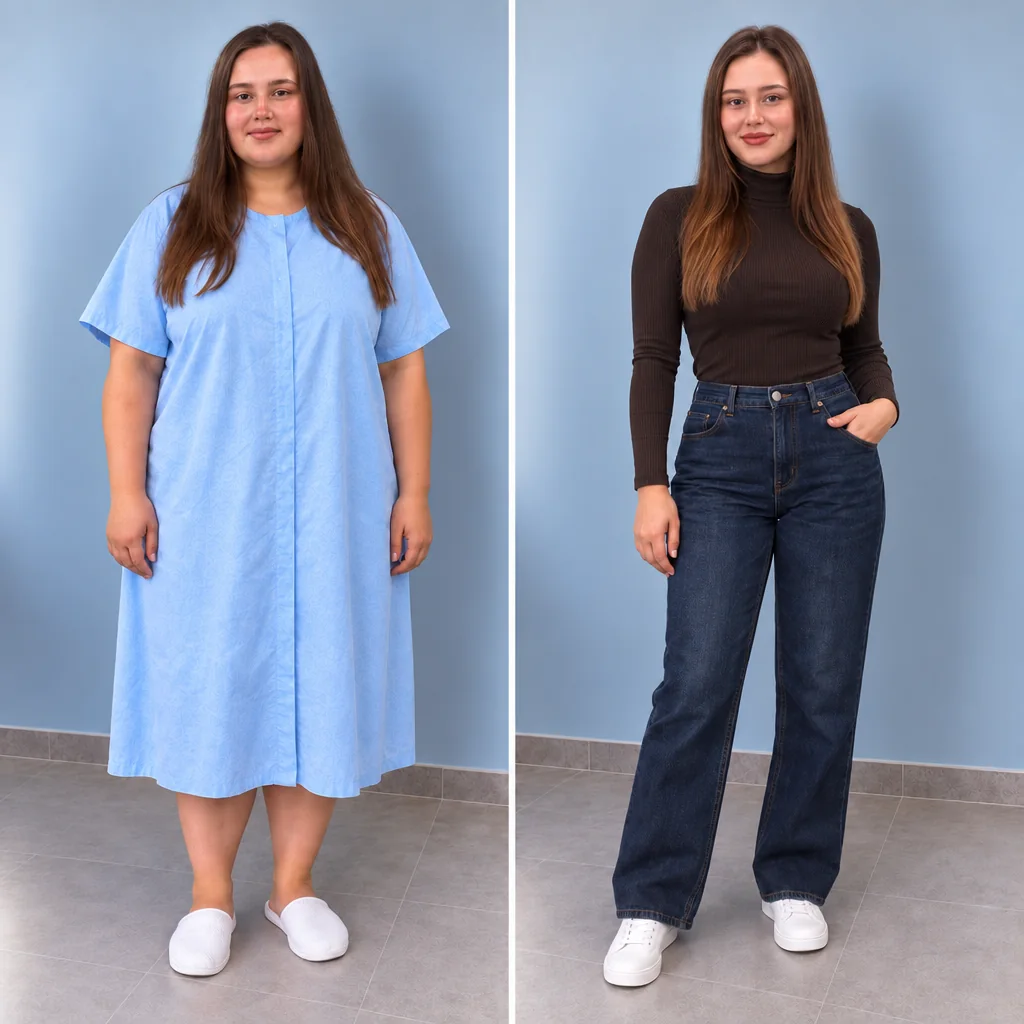
 beforeafter
Irina, 26
Bariatric surgery
Bariatric surgery
$3,600
$4,800 · First consultation — Free
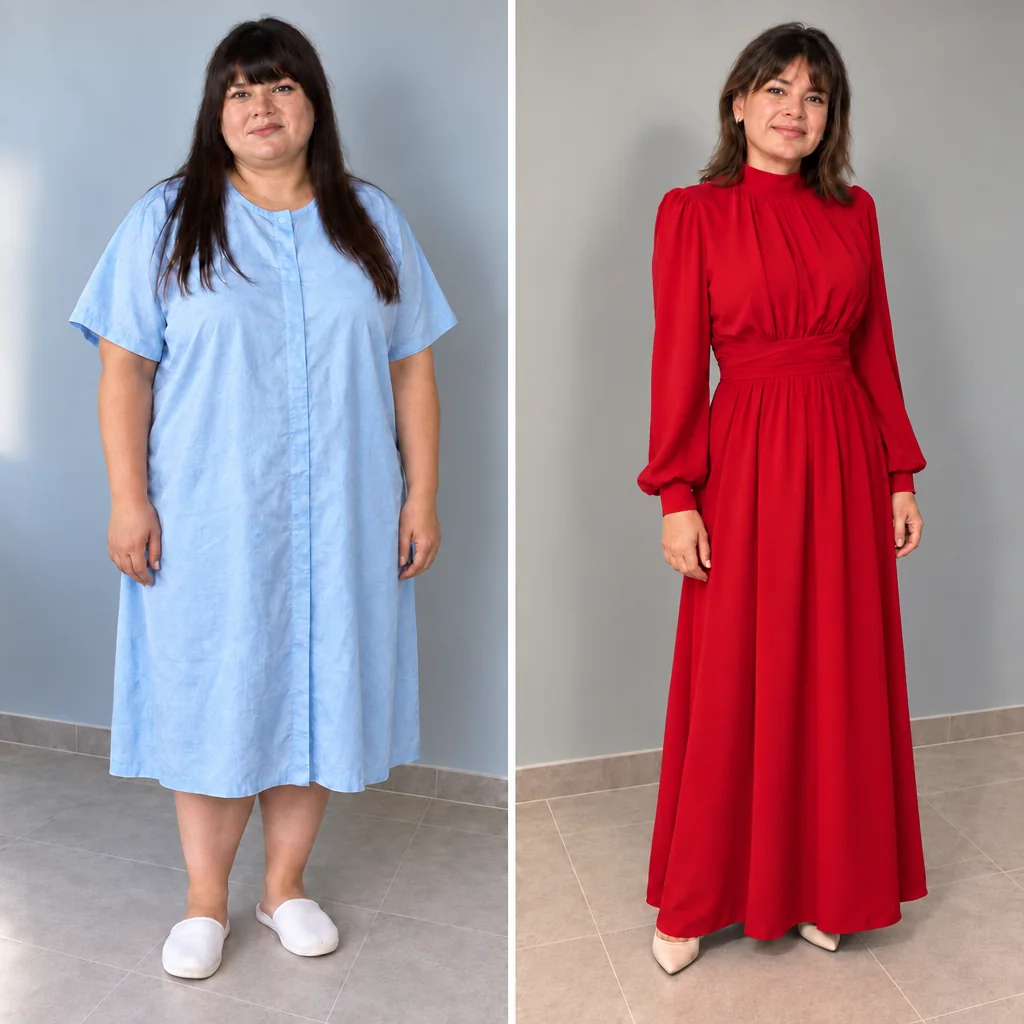 before
after
Message our coordinator
Free online consultation · Reply within 15 minutes
Message us on TelegramMessage us on WhatsAppBy messaging us, you agree to our Privacy Policy
Results
All cases are real patients of the clinic.
beforeafterBariatric surgery
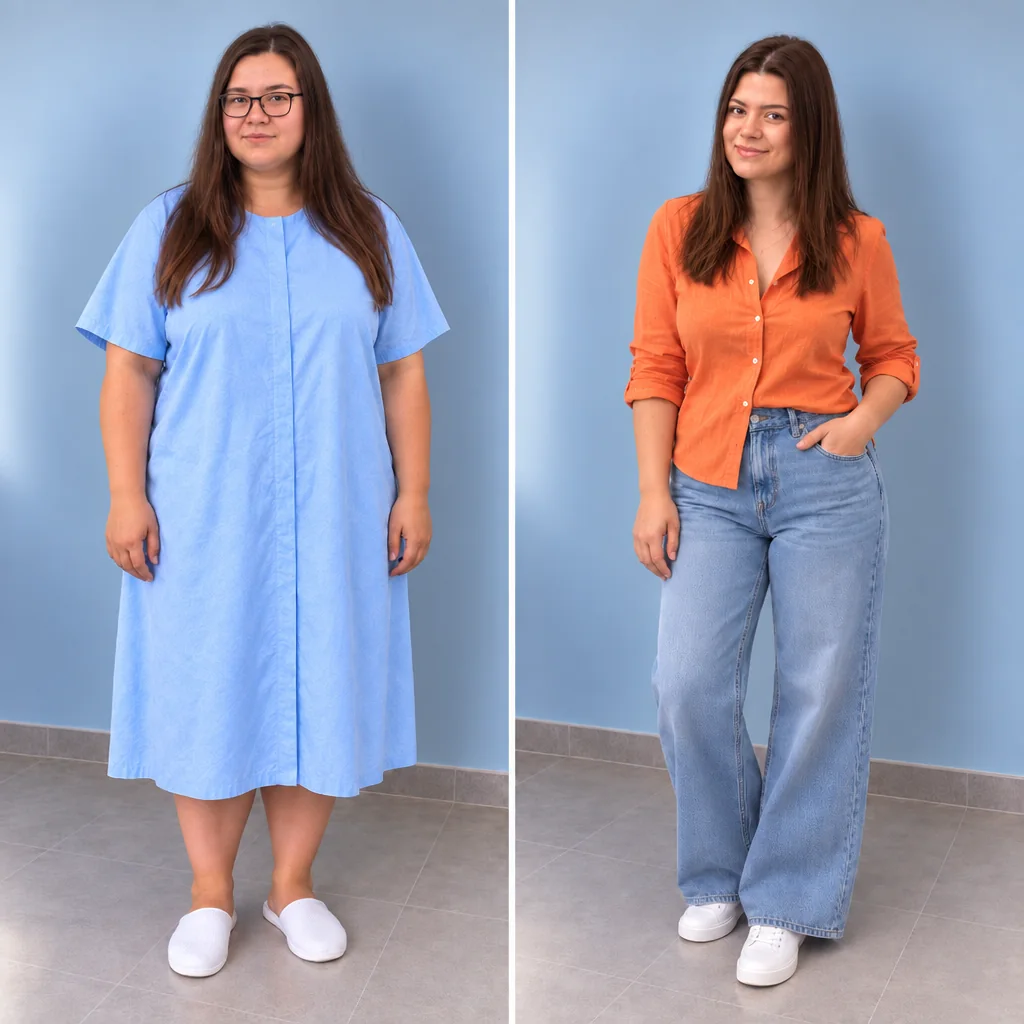 beforeafter
Bariatric surgery
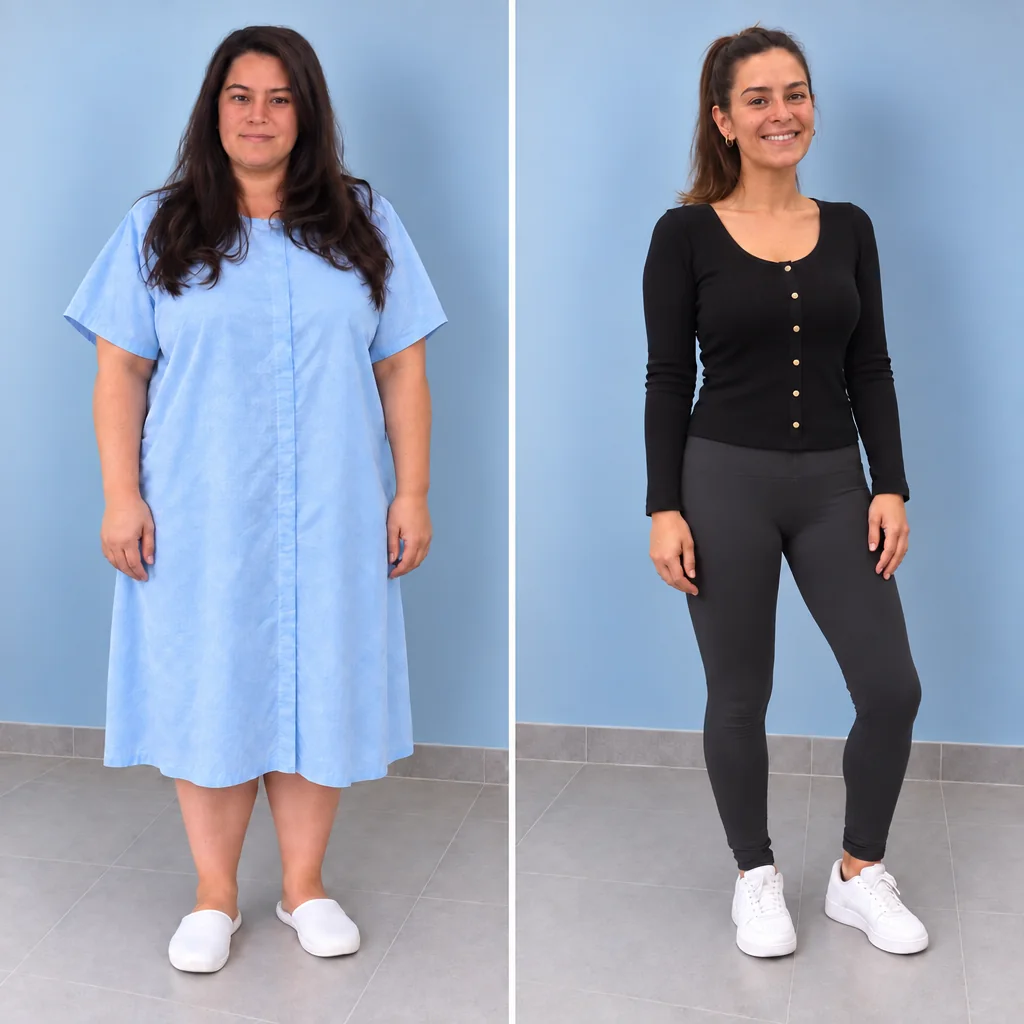 beforeafter
Bariatric surgery
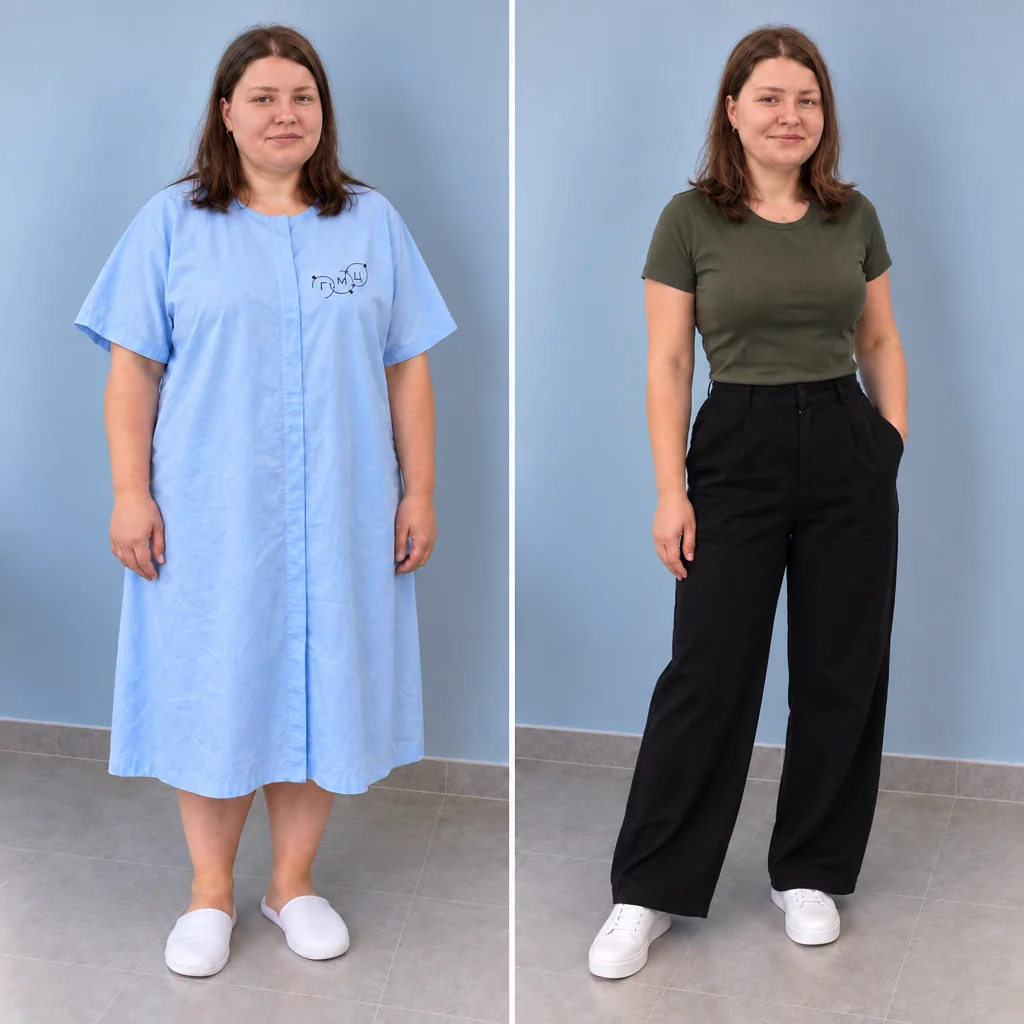 beforeafter
Bariatric surgery
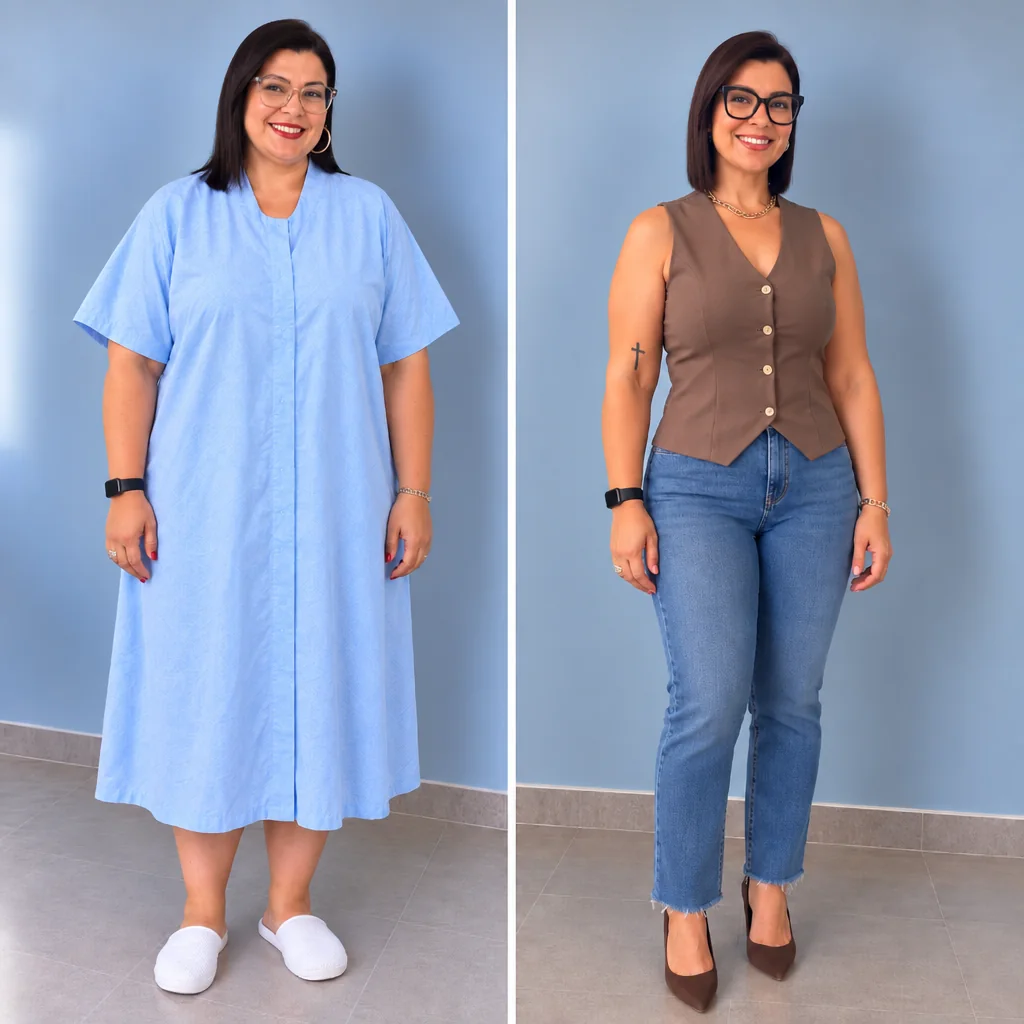 beforeafter
Bariatric surgery
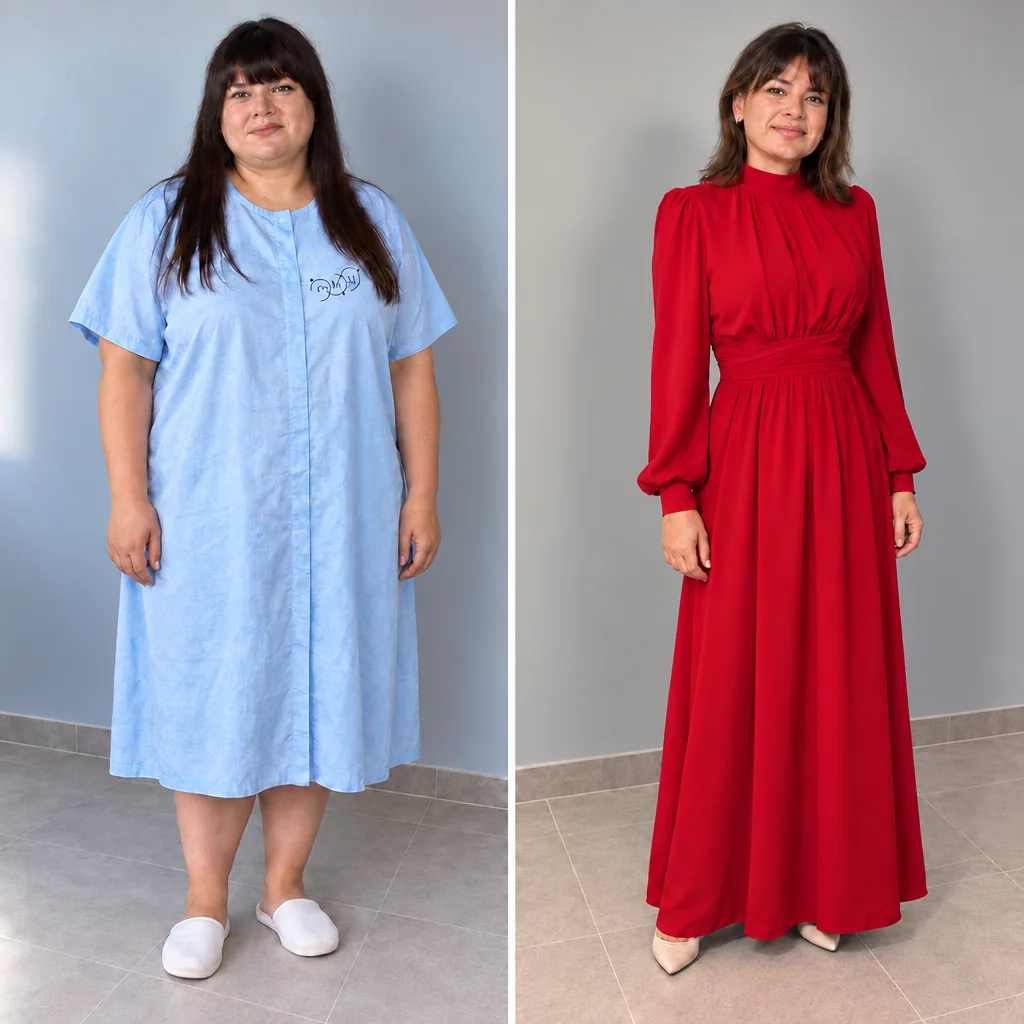 beforeafter
Bariatric surgery
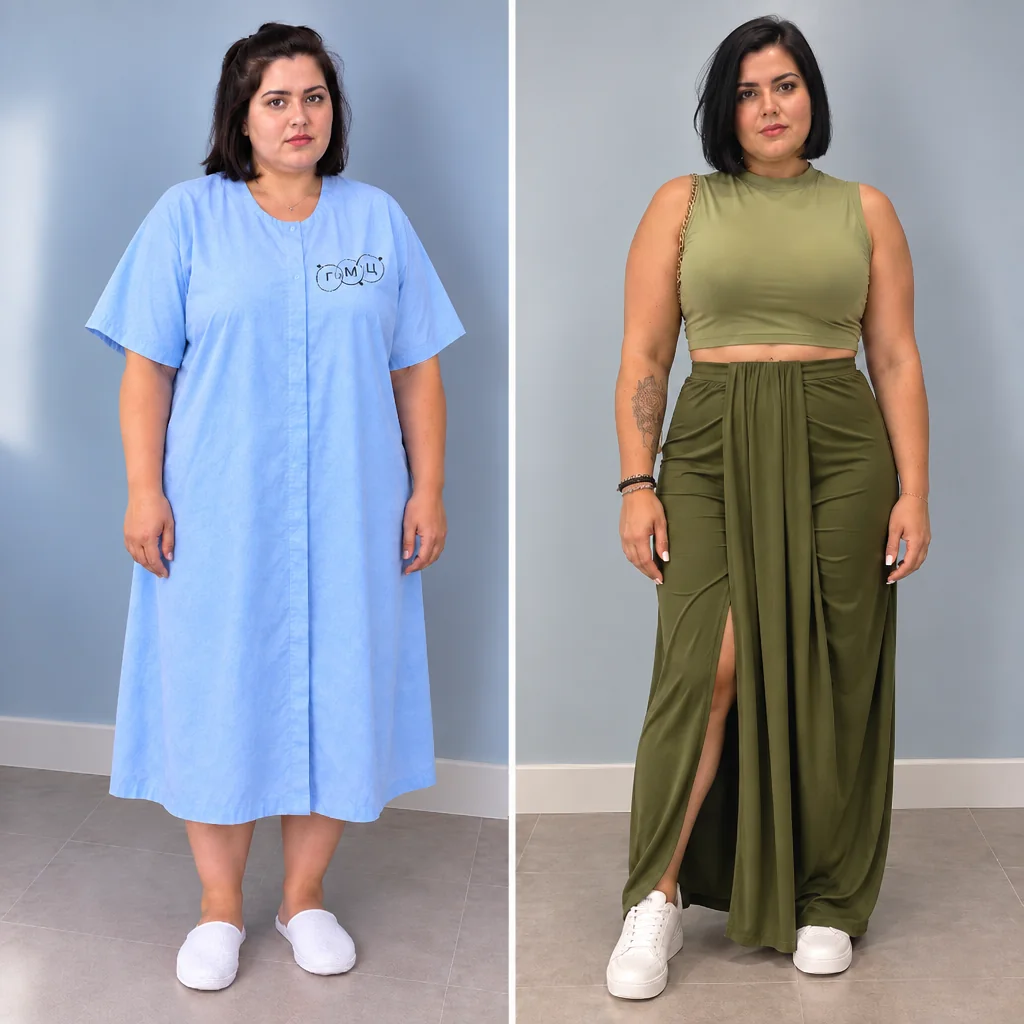 beforeafter
Bariatric surgery
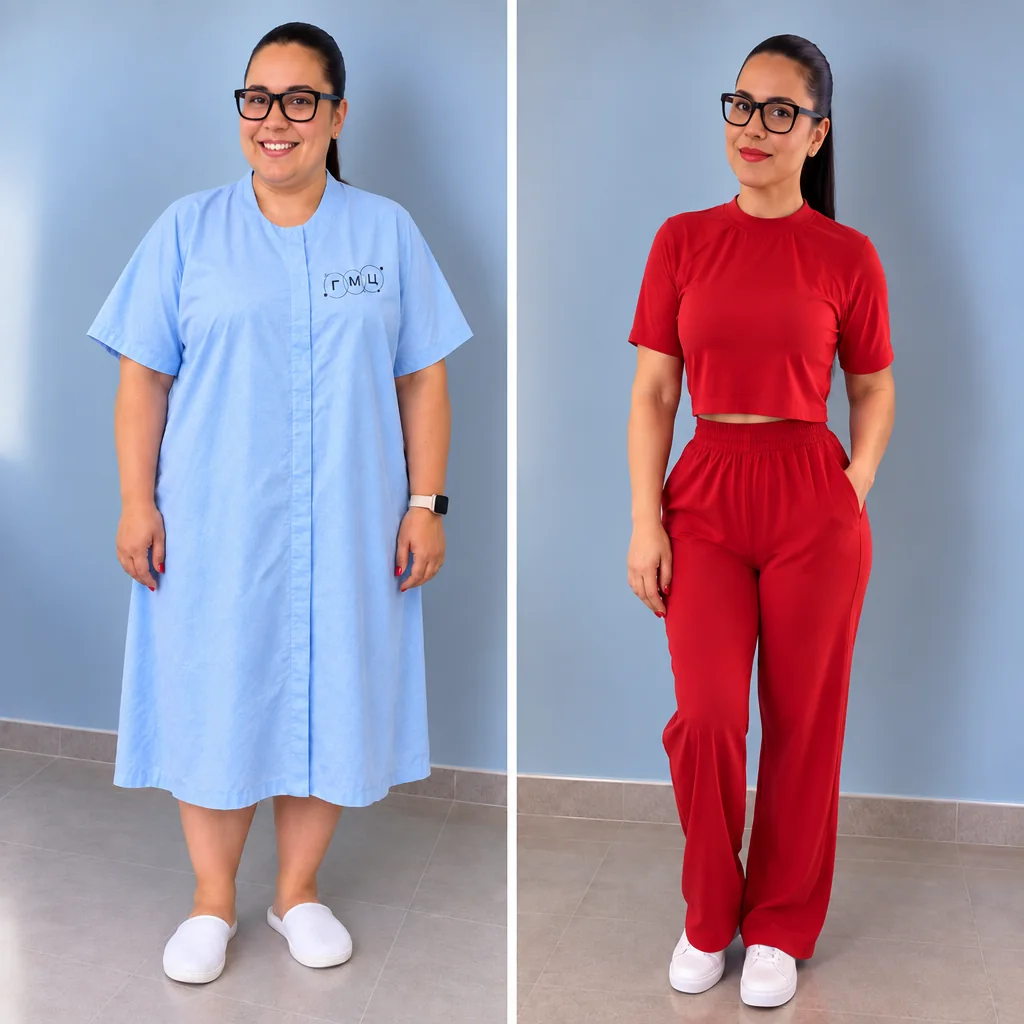 beforeafter
Bariatric surgery
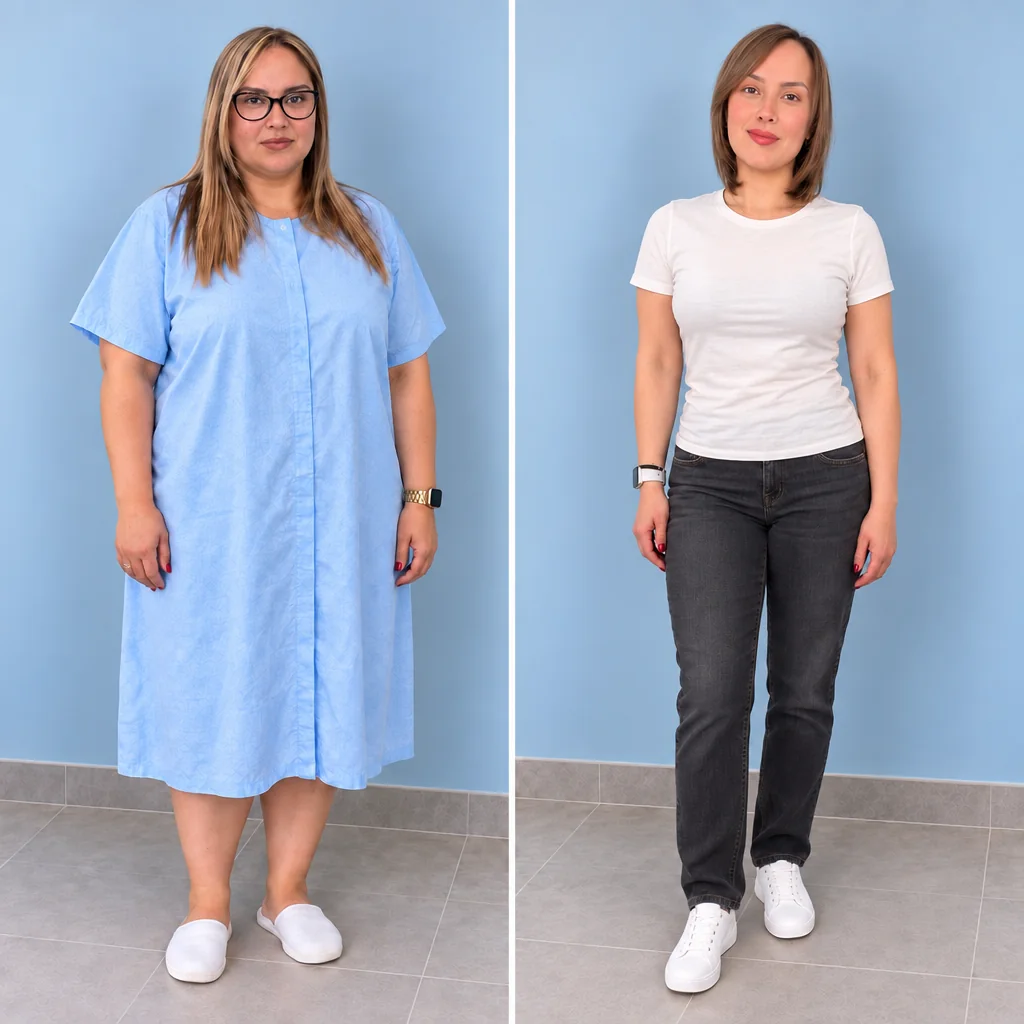 beforeafter
Bariatric surgery
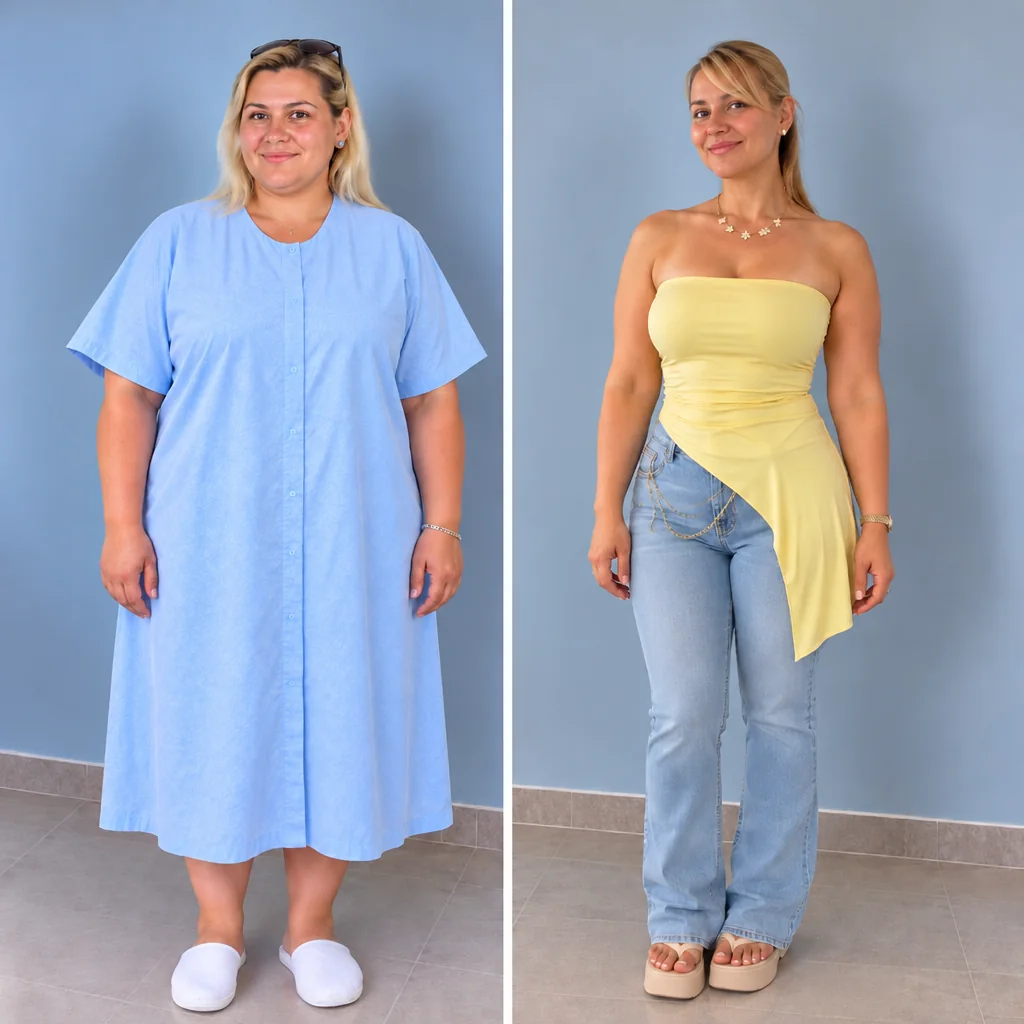 beforeafter
Bariatric surgery
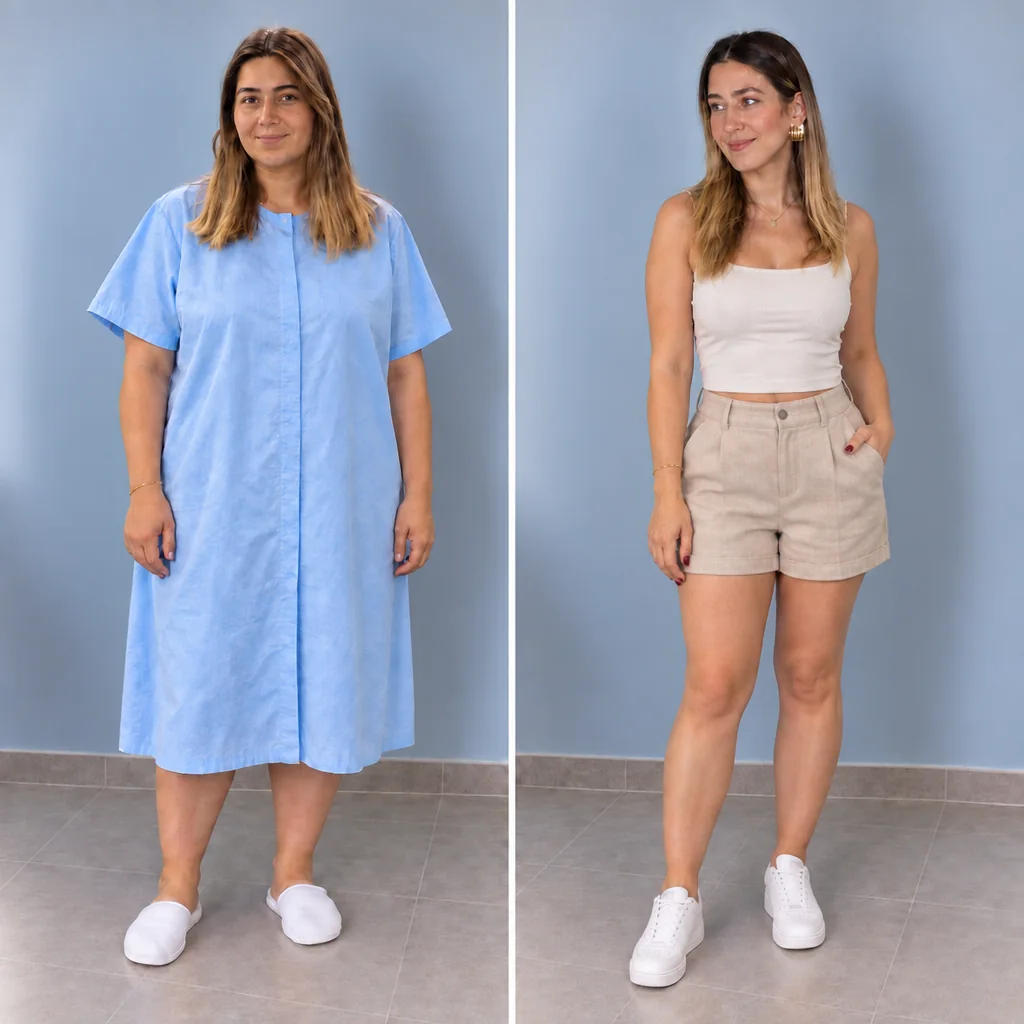 beforeafter
Bariatric surgery
Comparison
Our surgeons perform two key operations — sleeve gastrectomy and gastric bypass. A side-by-side look at how, why and when each is used helps you choose with confidence.
A smaller stomach volume
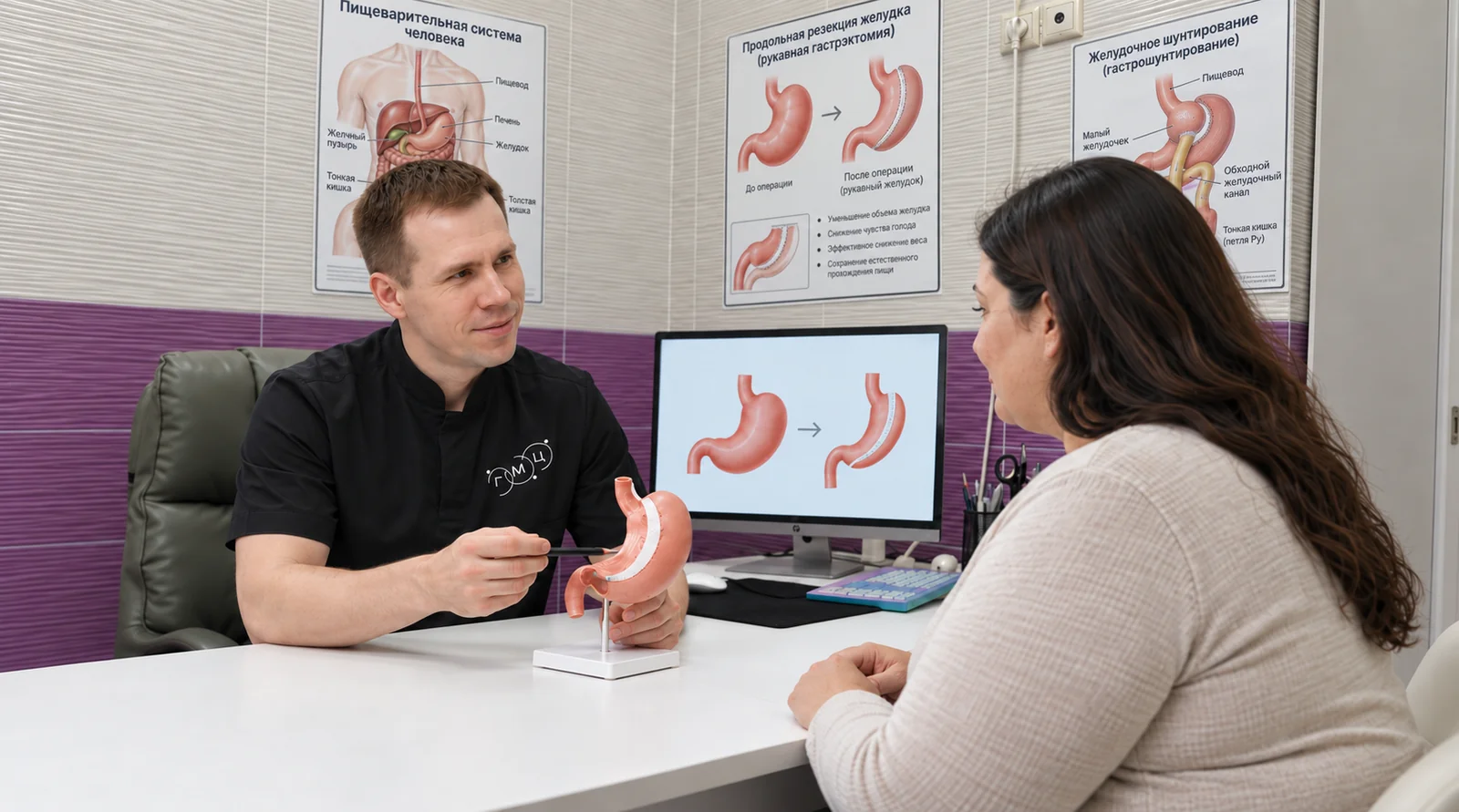
Discounted price
$3,600 $4,800
Stomach volume is reduced and the food path is changed
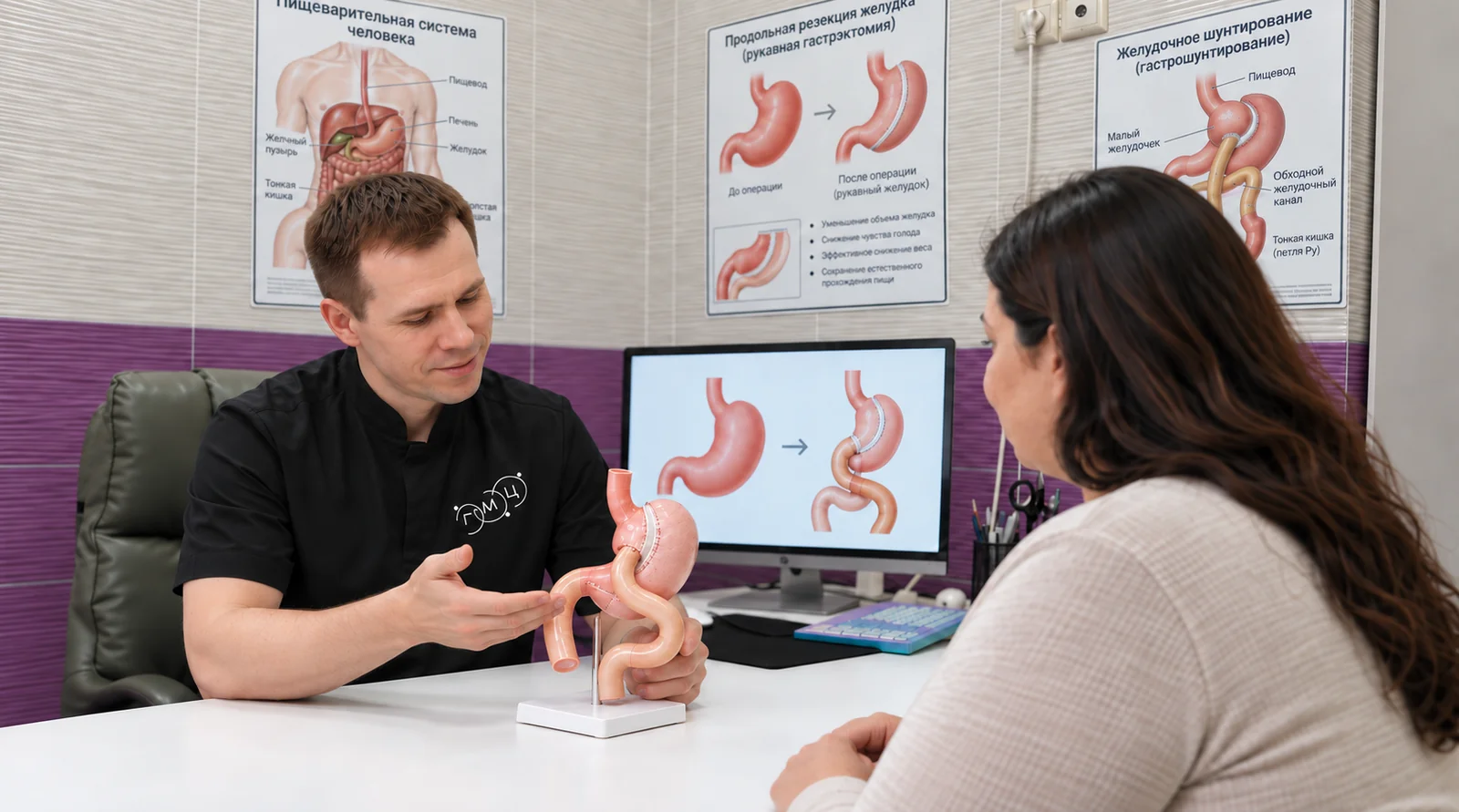
Discounted price
$4,000 $5,200
All benefits and recovery periods listed are averages per method, for guidance only. The extent of surgery and recovery vary with your anatomy and individual traits and are confirmed by the surgeon at the consultation.
Book a consultationInside the clinic
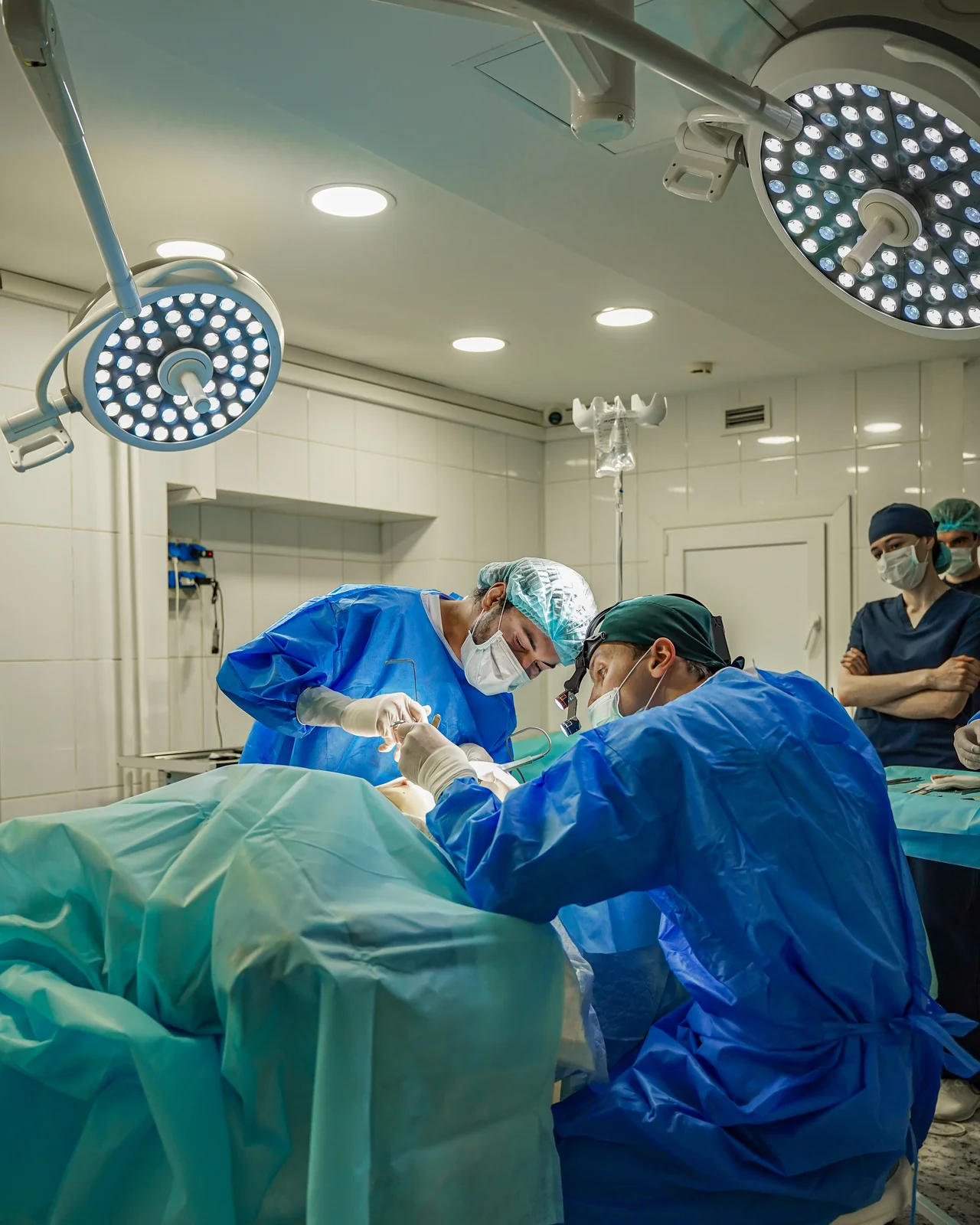
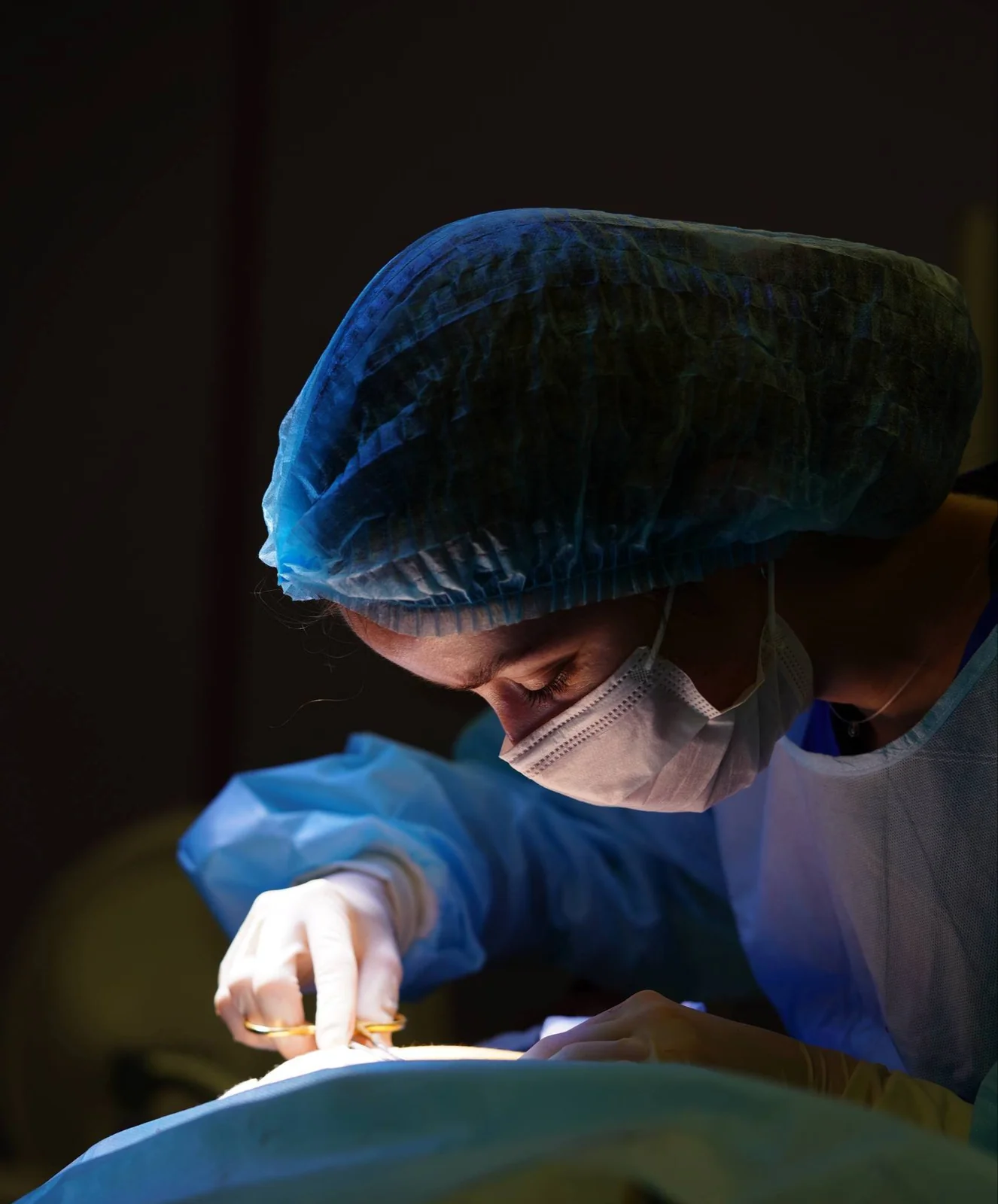
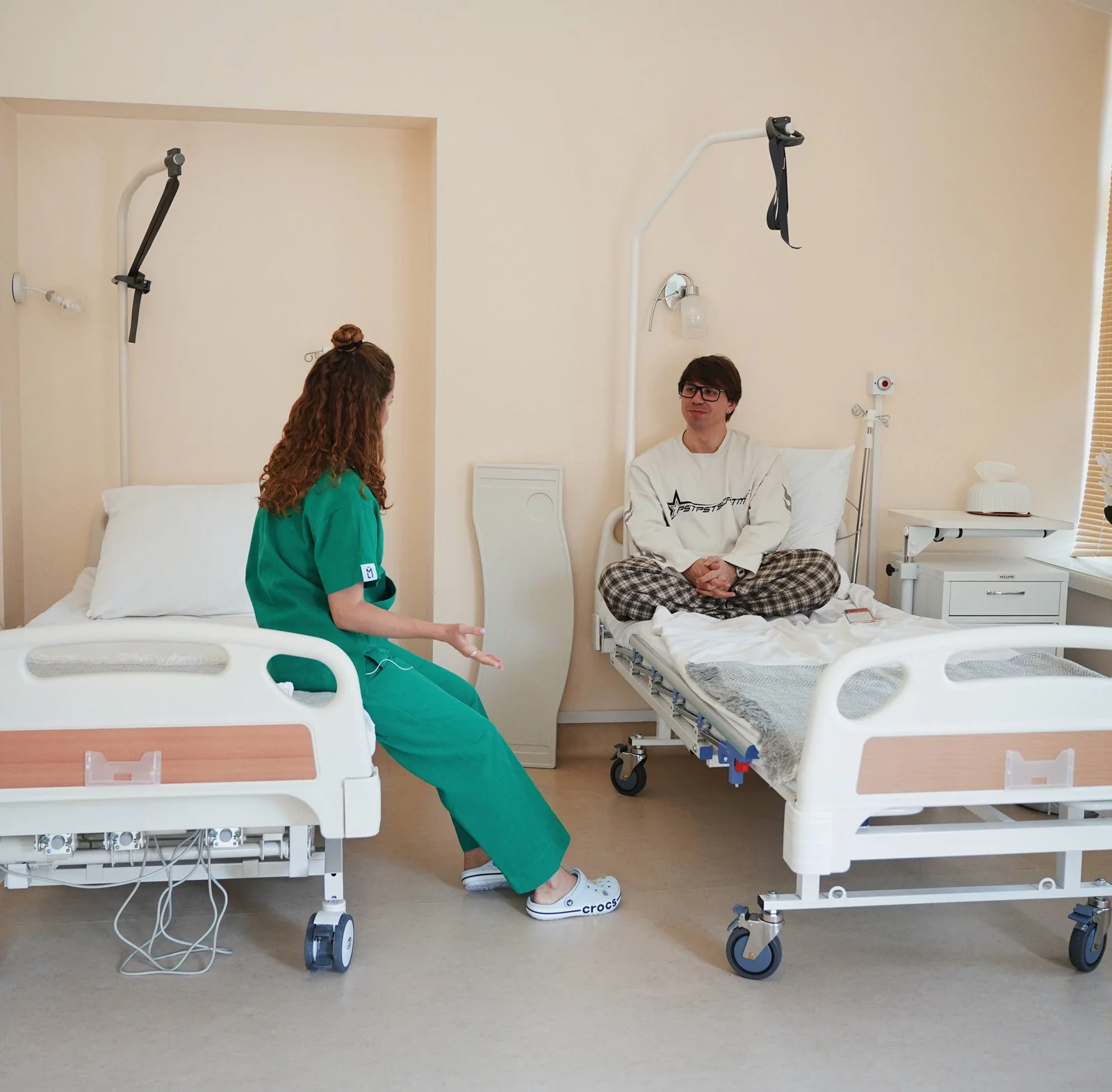
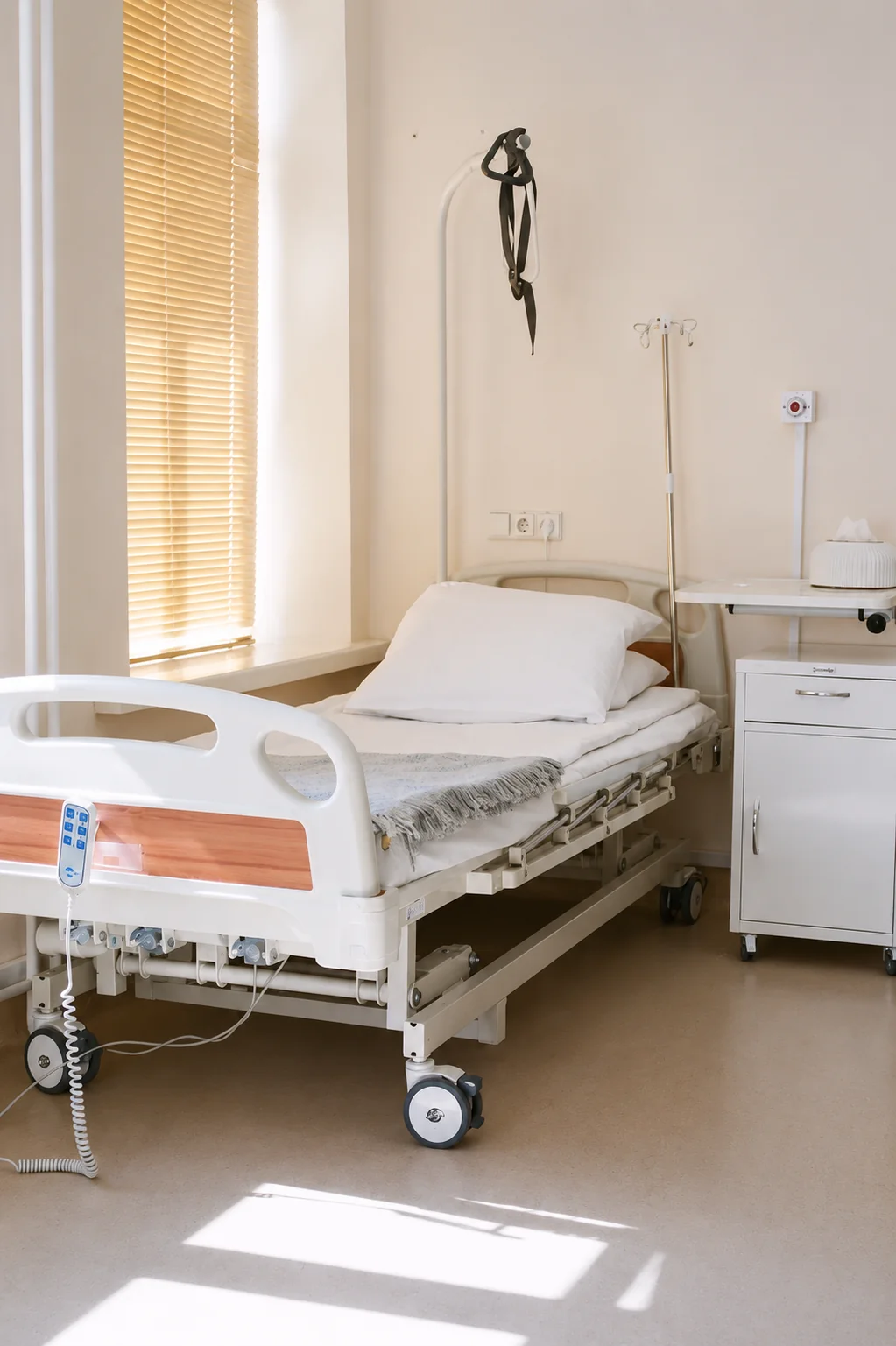
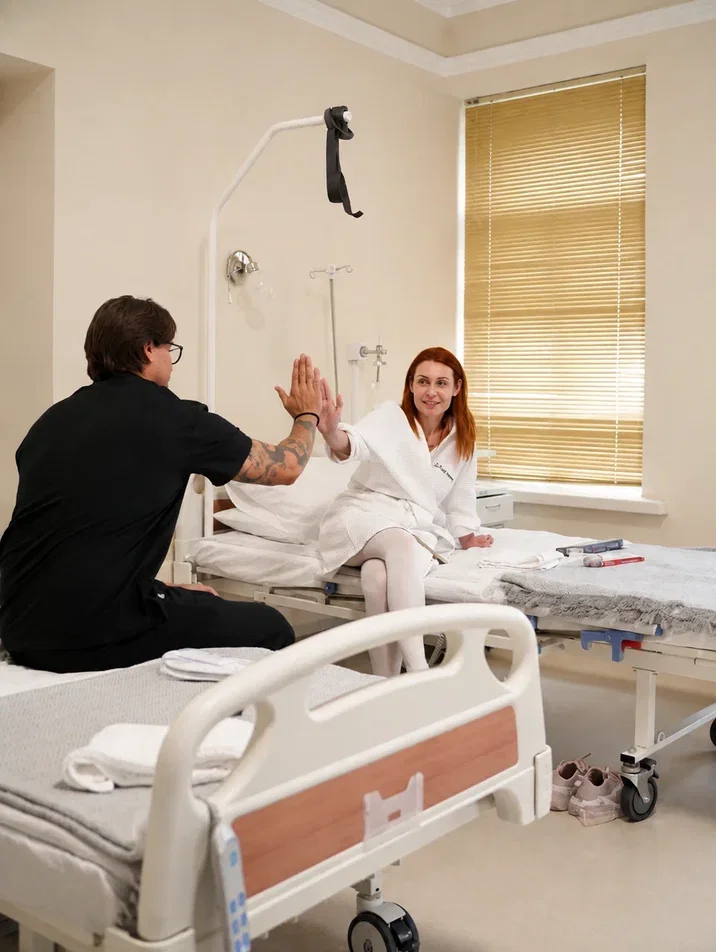
Comfortable rooms, modern equipment and care for each person
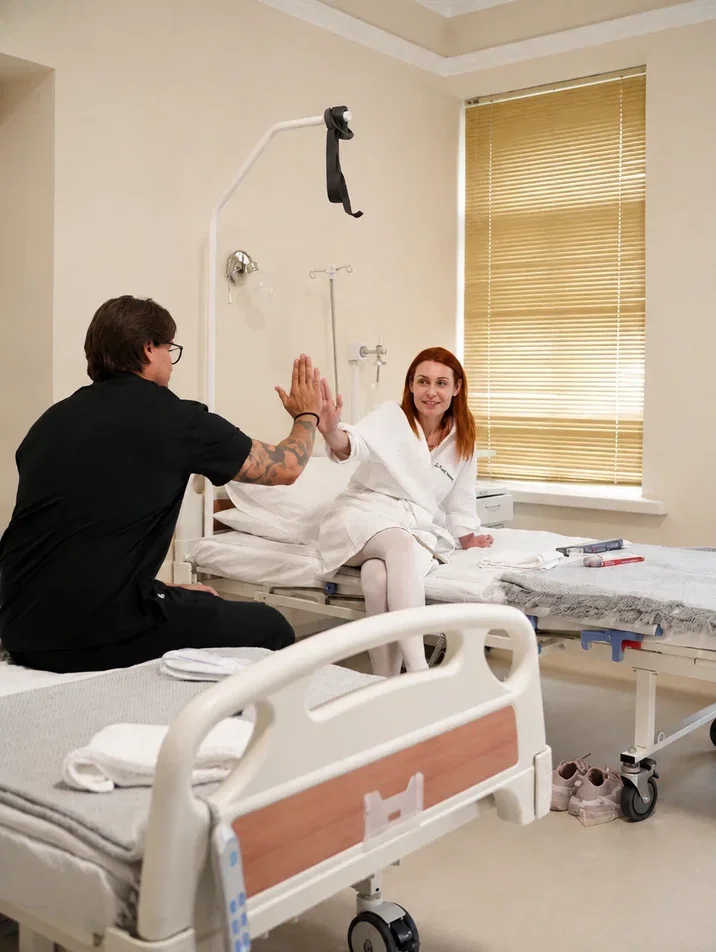
Our team will reply to your questions and help you choose a consultation time
Get a consultationAfter a consultation and check-up, the surgeon and you make the decision on surgery together.
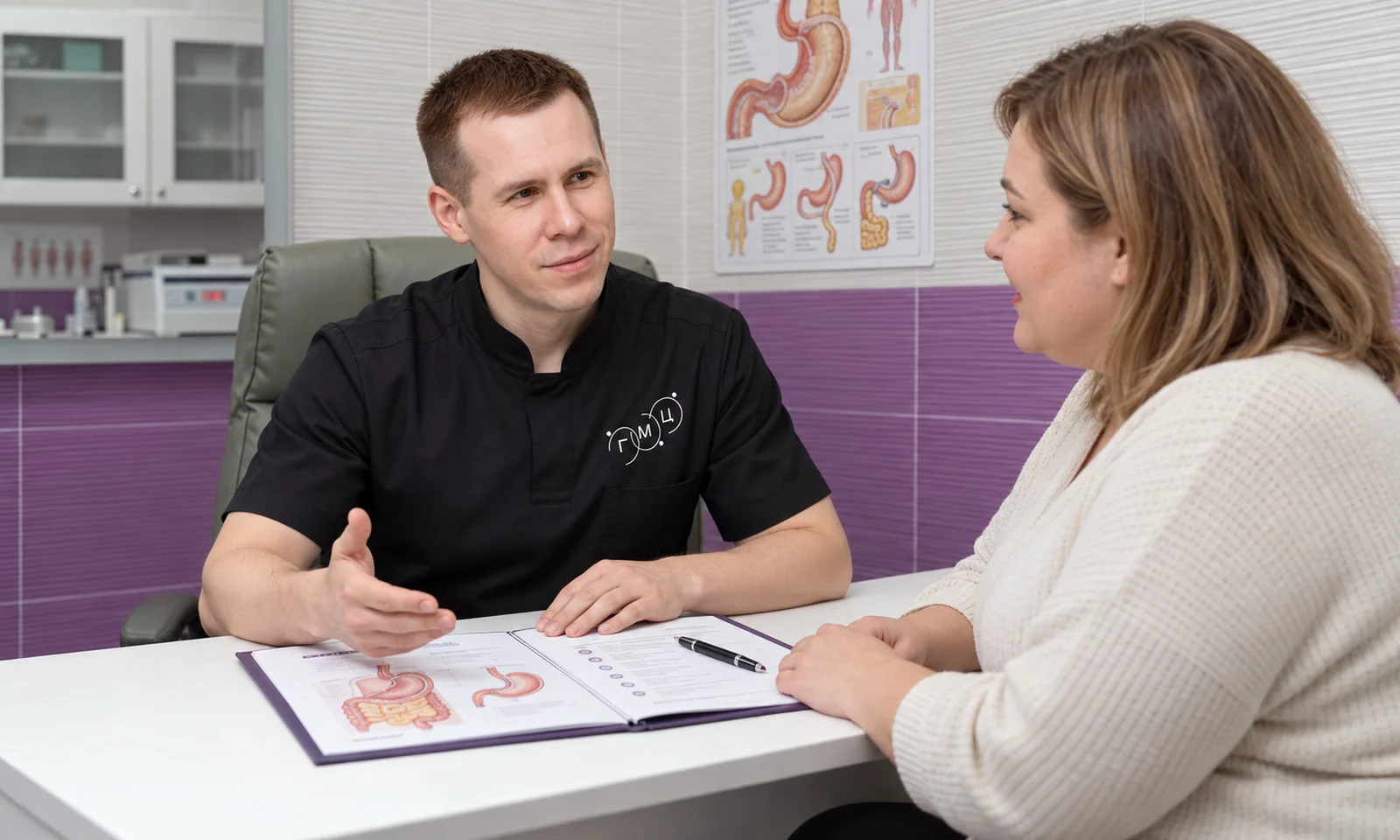
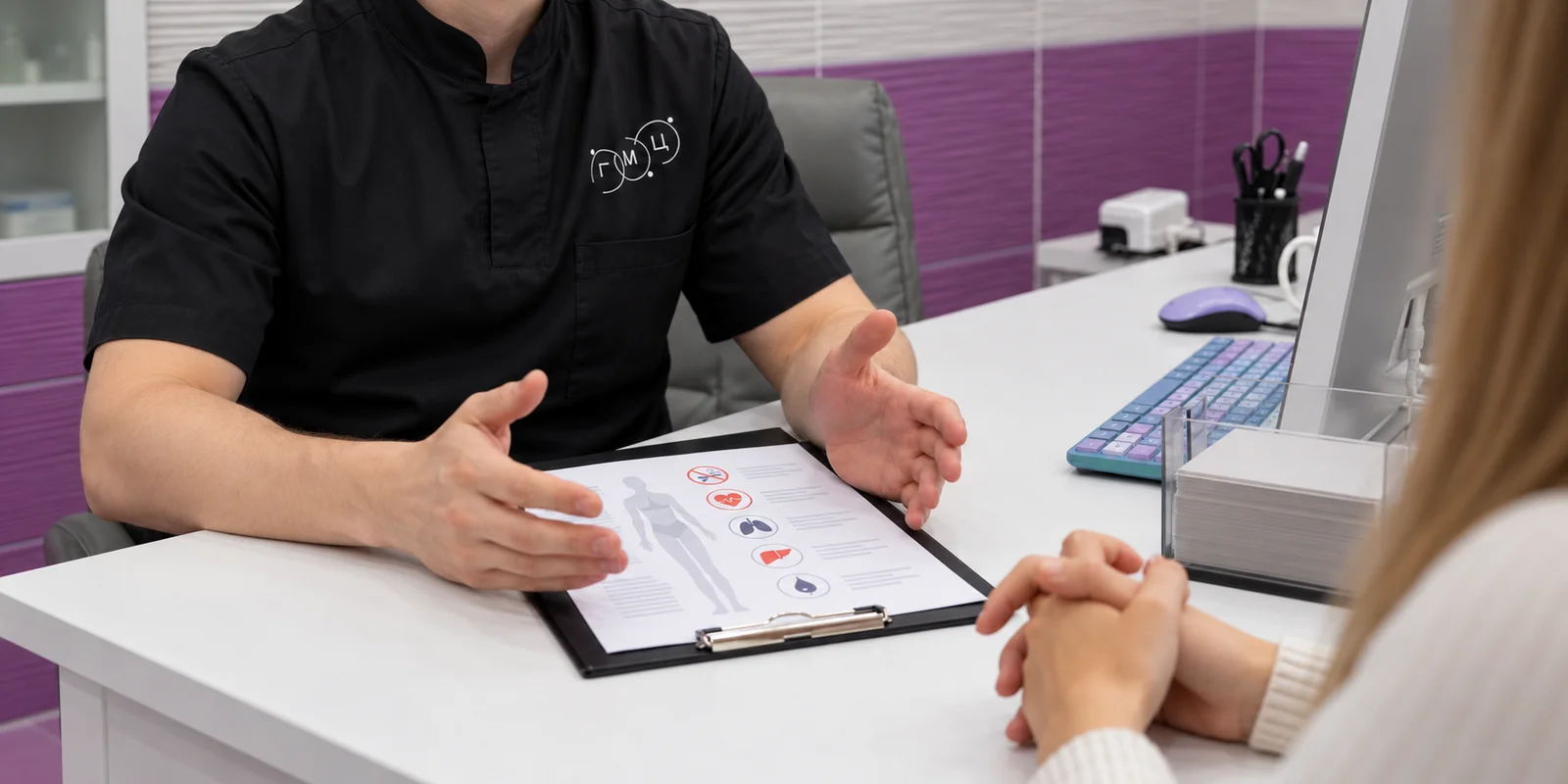
Can't tell which column fits your case?
Get in touch on Telegram — our coordinator will explain whether bariatric surgery is right for you. The consultation with a surgeon is free, and there is no commitment to an operation.
Find out if it suits me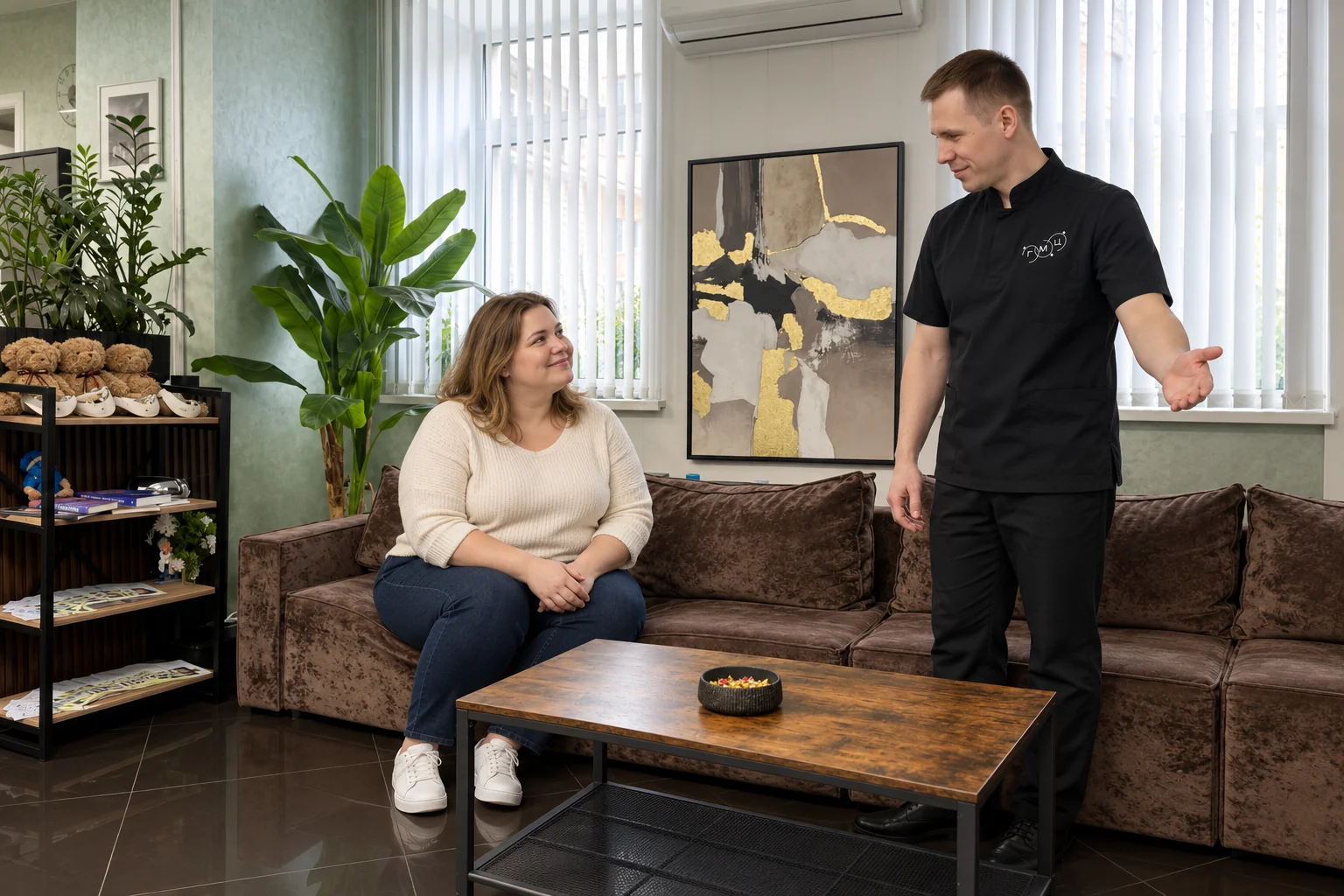
Prices
We tell you the cost at the consultation once your plan is ready; the contract then fixes it.
Discounted price
A smaller stomach volume
$3,600$4,800
Discounted price
Weight reduction with rerouting of food
$4,000$5,200
Free
Your treatment plan follows the surgeon's examination

Free
you are told the cost of surgery
and it is fixed in the contract
Assessing your health and discussing what you want to achieve, the doctor selects the right bariatric method. The cost is named at the consultation and written into the contract.
Message our coordinator
Free online consultation · Reply within 15 minutes
Message us on TelegramMessage us on WhatsAppBy messaging us, you agree to our Privacy Policy

price
One package includes preparation and 12 months of support. There are no extra charges.From your pre-surgery preparation
to follow-up support for 12 months.
What to expect
An agreed treatment plan, close monitoring in hospital and support lasting a year.
 1
Assessing your health and discussing your goals, the doctor orders the tests needed to select the appropriate bariatric method.
2Your surgery date is reserved once the deposit is paid — by card at the clinic or by online bank transfer. The contract for medical services fixes the terms
 3
At the consultation the doctor gives you the exact list of pre-surgery checks: blood and urine tests, an ECG, an ultrasound, a gastroscopy and visits to specialists.
 4
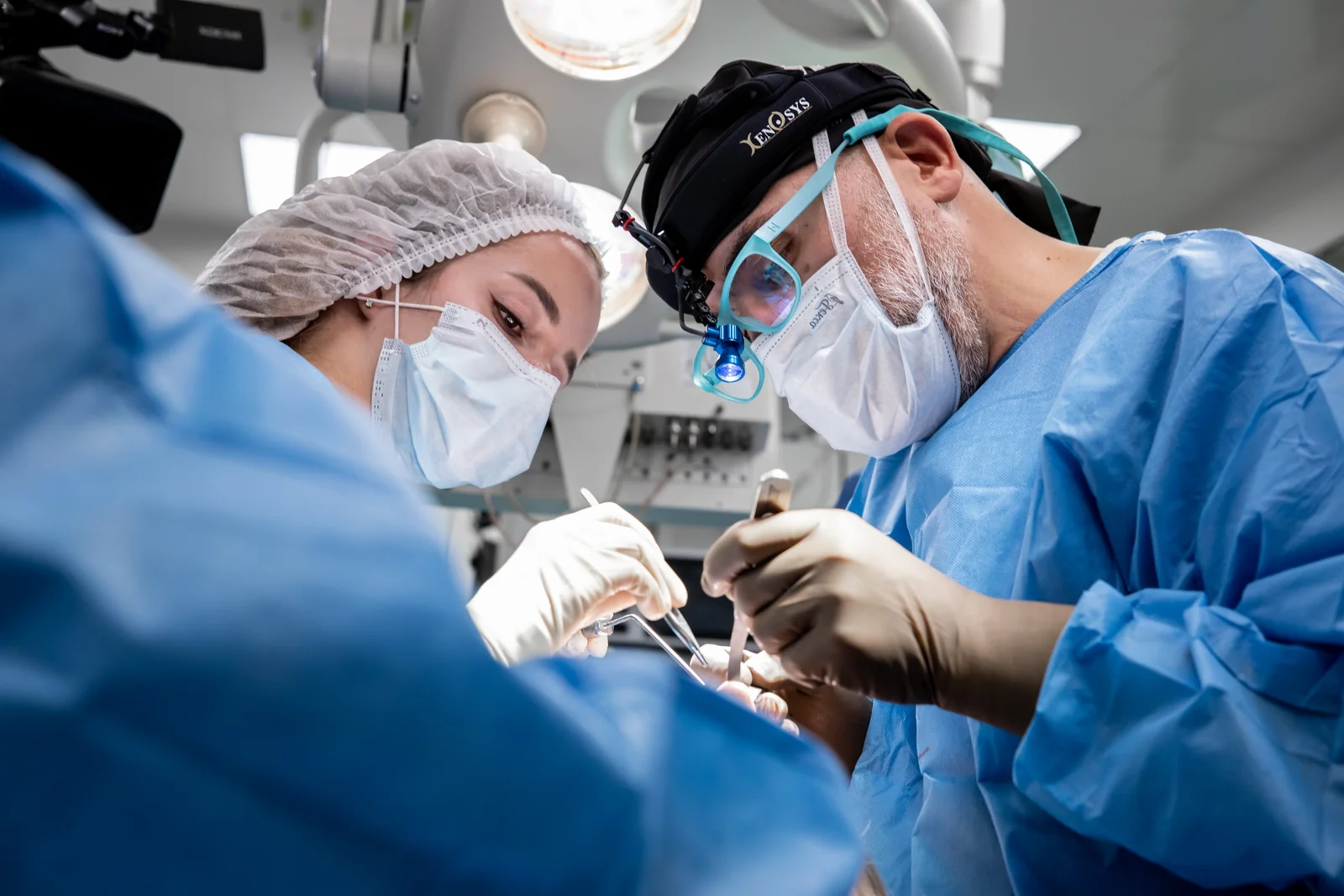
Your surgeon performs the bariatric operation with the chosen method under general anaesthesia, and after surgery the medical team monitors you.
 5
After surgery, doctors supervise you in hospital. You stay from 1–3 to 4–5 days, depending on the complexity of the operation and your well-being.
 6
After discharge you get advice on diet and recovery. Scheduled check-ups track how you feel, your weight and your test results. The clinic team supports you for a year.
During the consultation the doctor prepares a plan and walks you through the surgery
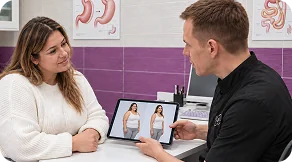
There is no fee for the consultation, is held before surgery and carries no obligation.
Book a consultationDoctors
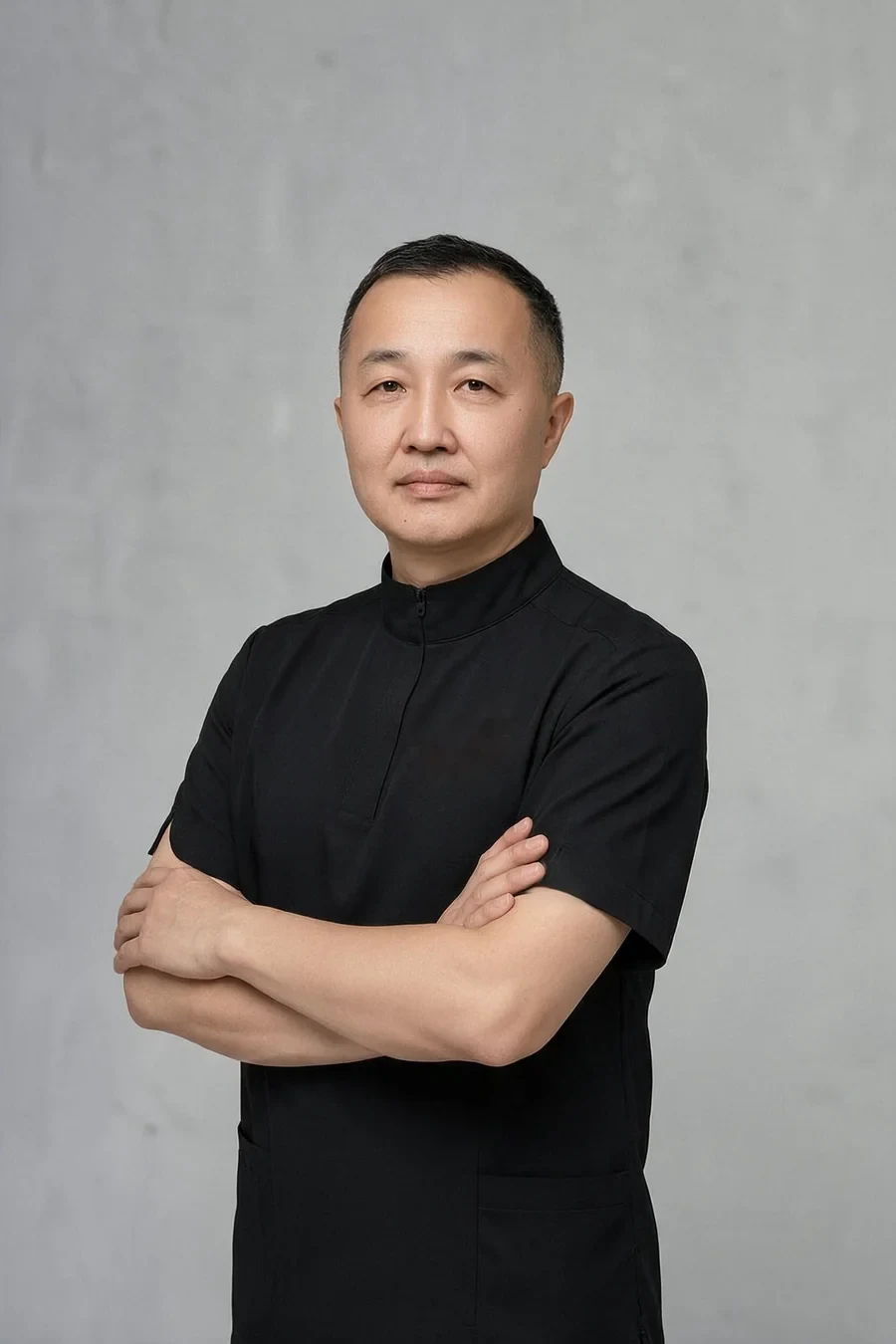
27 years of experience
Head bariatric surgeon
Surgeon
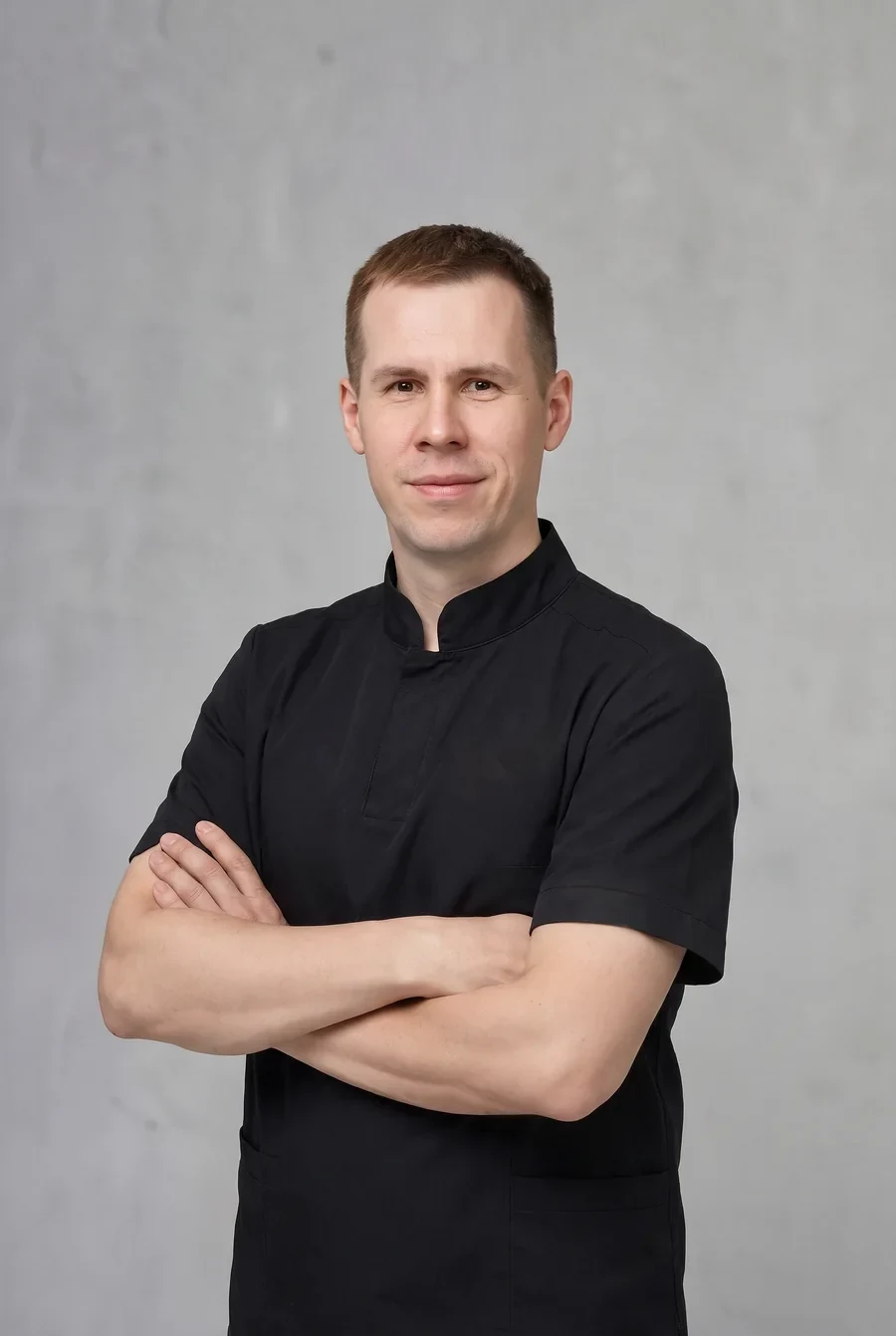
9 years of experience
Bariatric surgeon
Surgical oncologist
From the first consultation to the result, your surgeon operates and follows you.
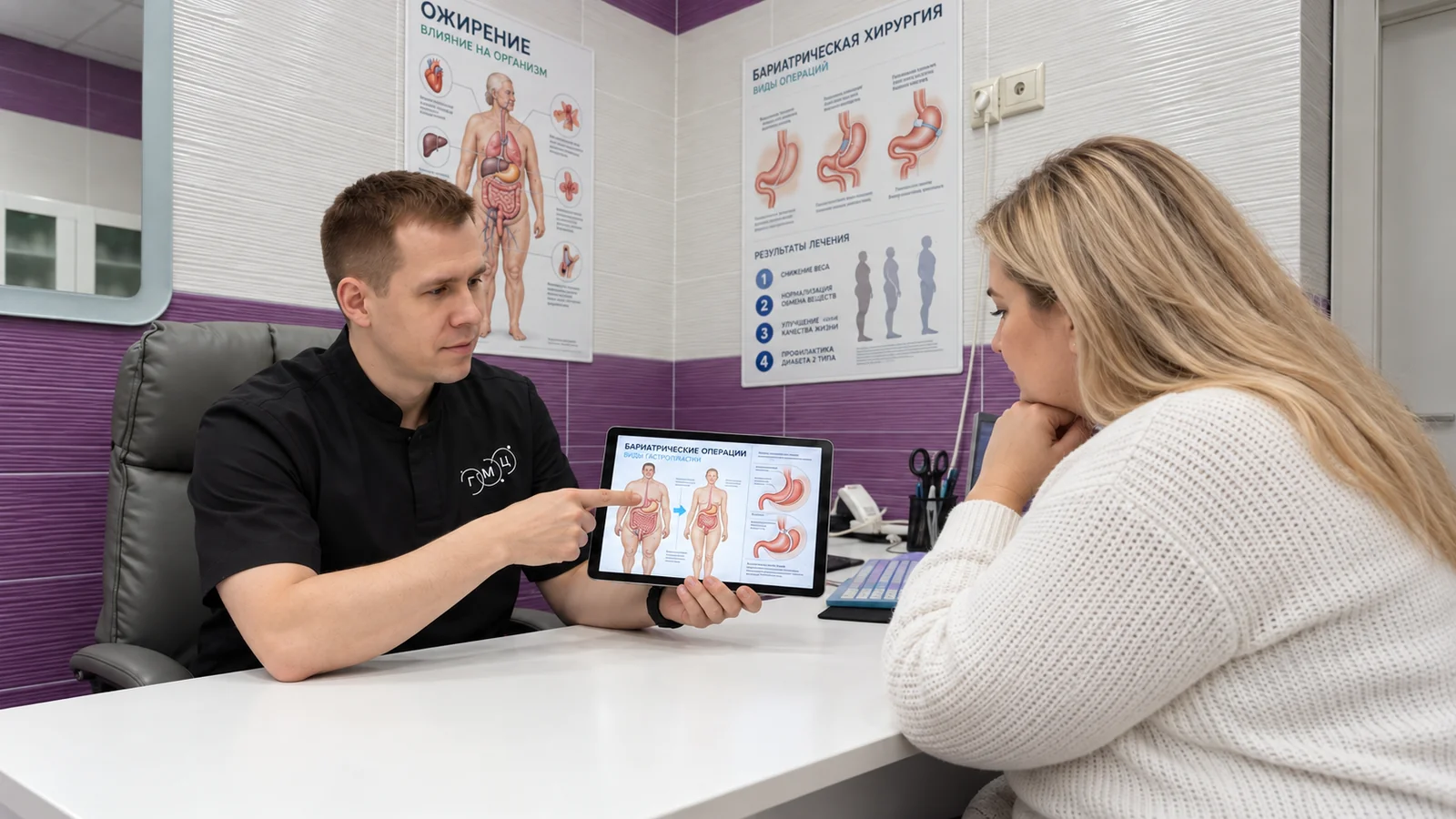
You start with a free consultation with our patient care manager, who calculates your BMI, explains the methods and books you in with the surgeon.
Book a consultationCoordinators
We are with you at each stage

Your first contact at the clinic, all the way from your first message to the consultation
Specialist in patient care
Ahead of your first consultation, answers questions and helps you choose a convenient date

With you before and while you stay with us, from booking to discharge
Specialist in patient care
Helps you get ready for surgery and keeps in touch while you stay at the clinic

From the day of discharge to your final check-up — with you through recovery
Specialist in patient care
Keeps in touch during recovery and books your follow-up visits with the surgeon
Advantages
We match the best method to your health, lifestyle and goals. Our team is by your side all the way.
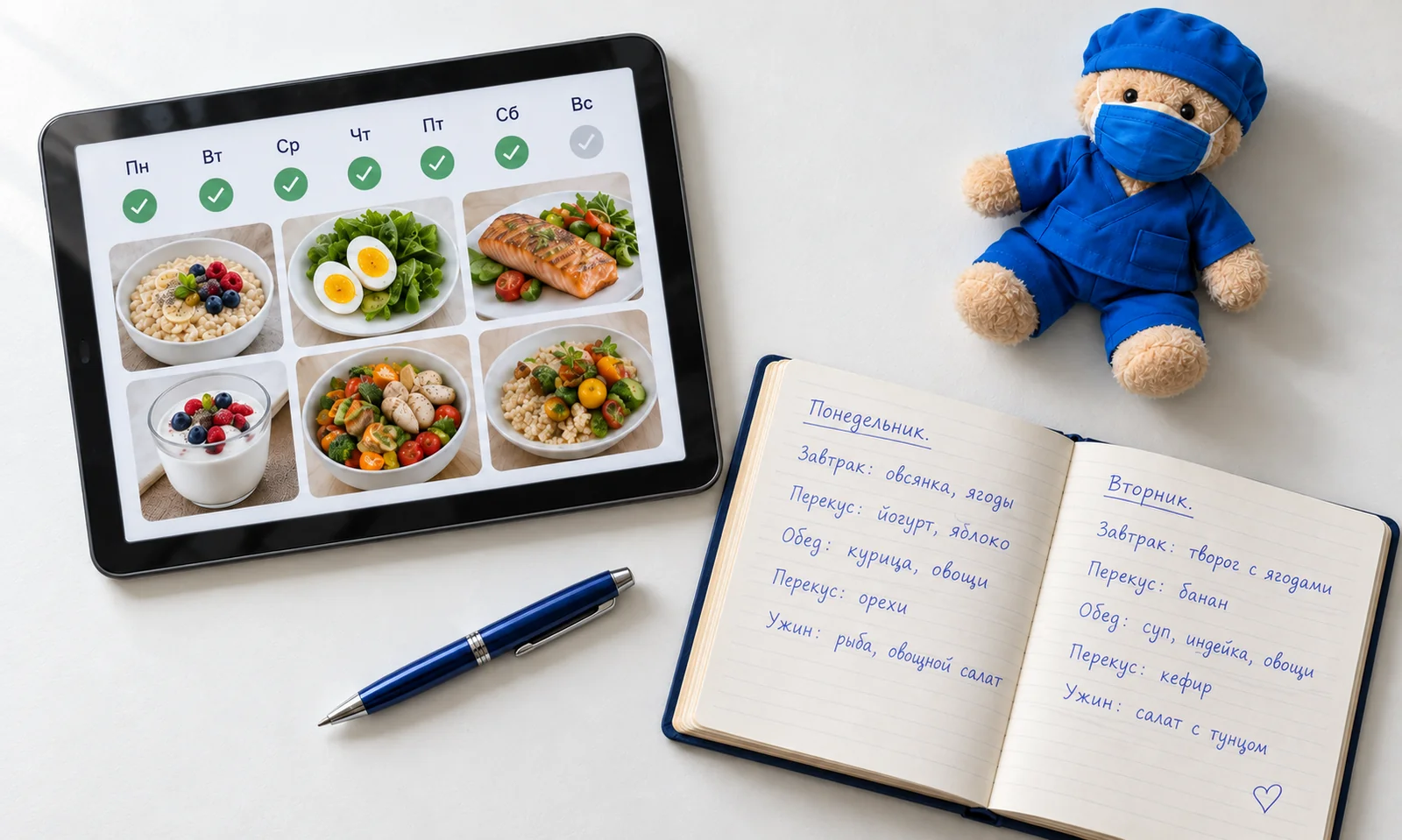
We help you adjust to new eating habits, follow your results and maintain them.
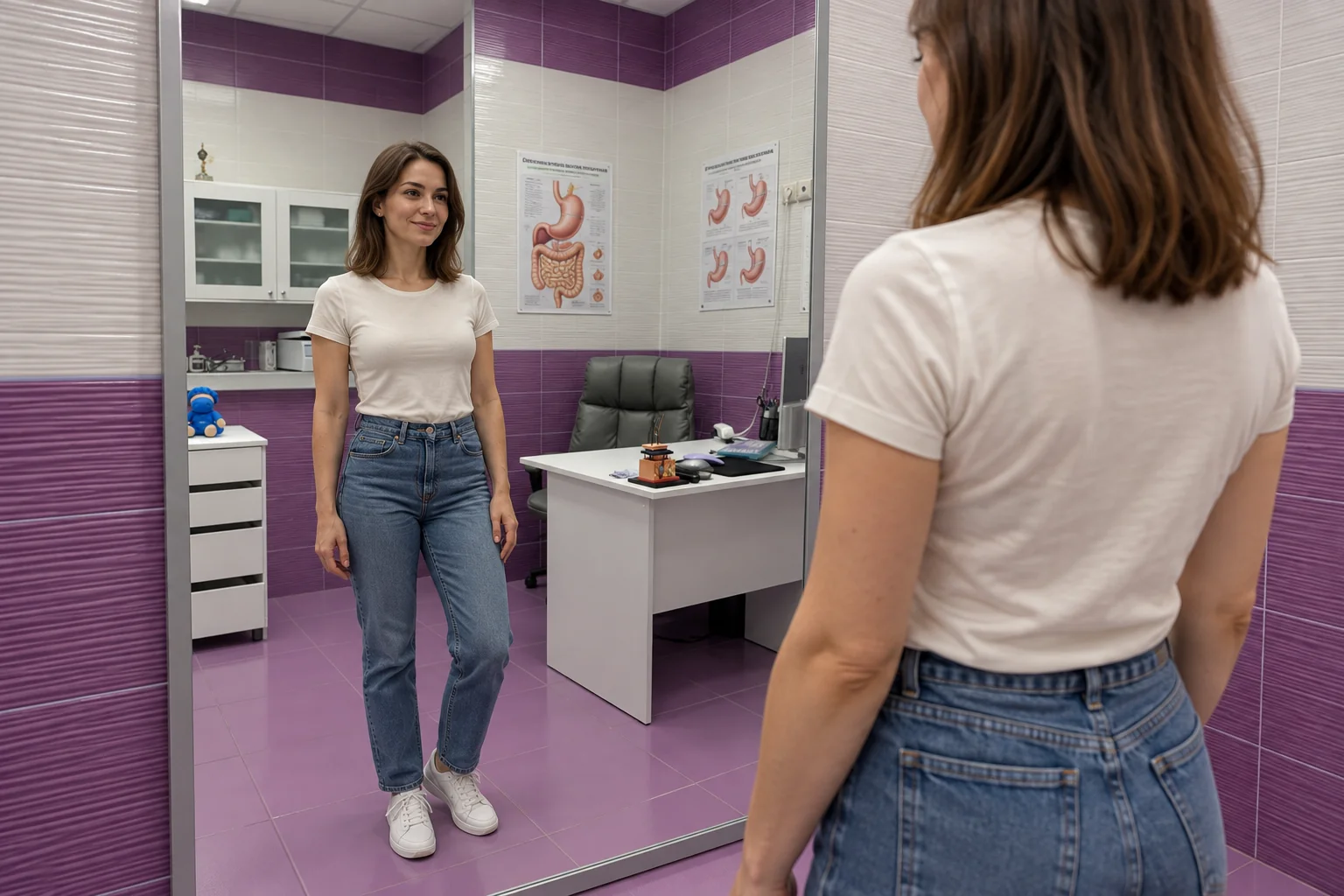
Stable weight loss, improved well-being and a higher quality of life.

We work 24/7: booking is easy, the approach is personal and we adapt to your pace.
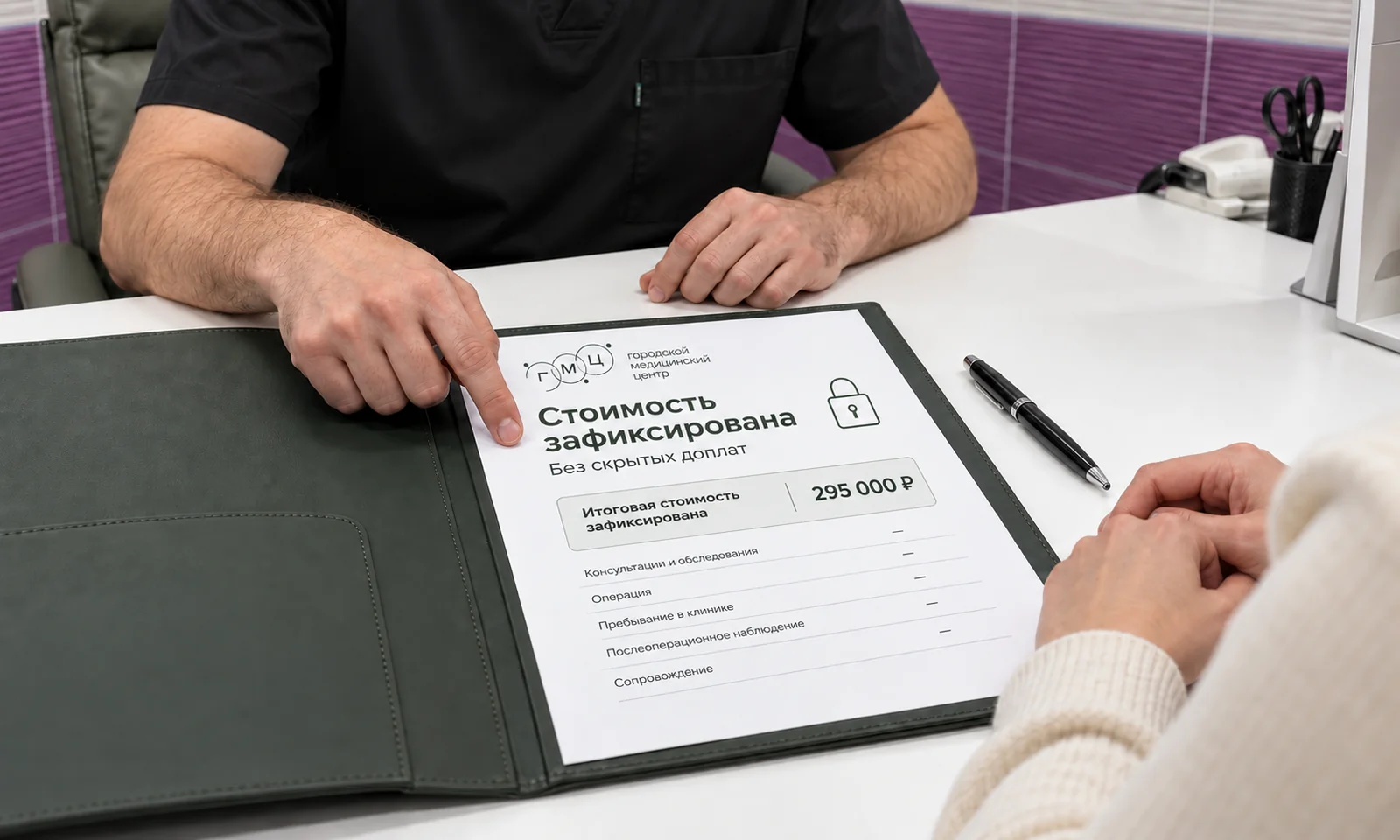
No hidden fees and no surprises on the way to your result: after the consultation the surgeon chooses the method and you get a clear price.
FAQ
Our clinic's bariatric operations are performed by experienced bariatric surgeons:
Send us a message — our coordinator will get back to you shortly and set up your consultation. The bariatric surgeon consultation is free.
Surgery is prescribed only when clear criteria are met
The main way to assess the degree of obesity is BMI. It is body weight (kg) divided by height squared (m²). Generally, surgery is justified with BMI above 40, or above 35 combined with serious related conditions. Lower values may sometimes be considered for surgery too, when non-surgical measures have failed.
These two are frequently confused, although their goals differ at the core. Bariatric surgery is a medical treatment of obesity and related diseases that changes the workings of the digestive tract, targeting the causes of excess weight and metabolism. Plastic surgery corrects outer body contours; it does not treat obesity or change metabolism.
Four main types of bariatric surgery are performed at City Medical Centre: sleeve gastrectomy, Roux-en-Y gastric bypass, mini gastric bypass (MGB) and SADI-S duodeno-ileal bypass. Each is selected individually based on BMI, related conditions and patient goals.
Modern laparoscopic technique allows the operation through 4 small punctures of 5 to 15 mm. Cosmetic sutures make the marks almost invisible when fully healed.
Recovery time depends on the activity. Office work: after 2–4 weeks. Physical work: after 1.5 months. Sport and activity: swimming allowed after 30 days, other exercise gradually added as weight goes down. Travel and holidays: plan no sooner than one month after surgery.
Eating changes gradually: liquid food first, then soft, then solid. The focus is protein, with high-calorie, fatty food kept to a minimum.
After bariatric surgery pregnancy is possible, yet doctors recommend at least 12–18 months of waiting. Meanwhile the body stabilizes, weight arrives at target values and nutritional status normalizes.
Yes, vitamins are essential after bariatric surgery. As digestive anatomy changes, the body absorbs certain nutrients less well, so regular vitamin and mineral supplements become a lasting part of the patient's life.
Weight can be regained after bariatric surgery, but this is very unlikely with the doctor's advice followed. Proper nutrition, avoiding high-calorie drinks and regular follow-up with City Medical Centre specialists are crucial.
Prices are in US dollars; the amount in brackets is an approximate conversion to NGN at the rate of 02.10.2026. The final price is fixed in your contract.
Prices start from $3,600 (≈ ₦4,800,000). The surgeon sets the final price at the free consultation, and it is fixed in the contract, with no hidden extras.
General anaesthesia, a personal coordinator from day one, monitoring in the hospital and support for one year.
The hospital stay is 1–5 days, depending on the method and how you feel. Office work is possible after 2–4 weeks.
Yes. The first consultation is free and does not oblige you to anything. You can start online by sending a message to the coordinator.
Message us on WhatsApp or Telegram using the buttons below. A coordinator will answer your questions and book a free consultation where the doctor names the exact price.
By messaging us, you agree to our Privacy Policy
Mini gastric bypass is an improved version of the classic operation with a single connection between the small stomach and the intestine. The technique is simpler, recovery shorter, and weight loss reaches 75–80% of excess weight. It is technically reversible, but bile reflux is a possible risk. For people from Makurdi, the surgeon explains such trade-offs before any decision.
During the operation the surgeon works laparoscopically, which keeps rehabilitation as short as possible. Right after, you are under round-the-clock care in a ward, with meals and nursing included. After discharge, most people in Makurdi return to office work in 2–4 weeks, following a diet plan and avoiding saunas and heavy exercise for the first weeks.
A permanent team — not a duty shift — handles your case, and the whole package is transparent. Included are the operation, 24/7 care in the ward, meals, nursing and a personal coordinator from day one, plus support throughout the first year. Makurdi patients also get a contractual result guarantee. Book a free consultation to discuss your situation.
What patients write after this operation. Reviews are translated from the original language.
Irina, 26
For a long time I doubted whether to go ahead with surgery, but after the consultation I felt much calmer. Andrey Georgievich explained in detail how gastric bypass is done, what to expect after the operation and how recovery would go. I especially liked that they talked to me calmly and without pressure. I am now gradually getting used to my new way of life and I am very glad I took this step.
Bariatric surgery
Doctor: Andrey G. Ugay
Angelina, 22
For me the hardest part was deciding to have the operation. At the consultation Ruslan Sergeyevich answered all my questions in detail and explained the specifics of sleeve gastrectomy and recovery. After the operation I always understood what I was doing and why. Thank you to the doctor and the whole team for their attentiveness.
Bariatric surgery
Doctor: Ruslan S. Menzulin
Anna, 31
For a very long time I tried to deal with my excess weight on my own, but I did not get the result I wanted. After the consultation with Andrey Georgievich I finally understood what to do next. I came through the operation well, and my recovery was supervised by the doctors. It was important for me to feel that I was not left alone after surgery.
Bariatric surgery
Doctor: Andrey G. Ugay
Veronika, 25
Before the operation I had many fears, mostly of the unknown. Ruslan Sergeyevich explained every stage of treatment in detail and answered even the simplest questions. Thanks to that I felt much more confident. I keep following the recommendations and I am gradually seeing the changes I had the operation for.
Bariatric surgery
Doctor: Ruslan S. Menzulin
Valentina, 23
The decision to have bariatric surgery was not easy for me. I worried both about the operation itself and about how my life would change afterwards. At the consultation Andrey Georgievich explained everything in detail, so little by little my fear turned into confidence. What matters most to me now is the result and the chance to treat my health and lifestyle differently.
Bariatric surgery
Doctor: Andrey G. Ugay
Anna, 27
I am very grateful to Ruslan Sergeyevich for his attentiveness. Before the operation I had a huge number of questions, and I got a clear answer to every one of them. After the operation it was also clear which recommendations to follow and how to eat. It was important to me that the doctor stayed in touch and I felt supported at every stage.
Bariatric surgery
Doctor: Ruslan S. Menzulin
Makurdi is the capital of Benue State, in the Middle Belt of central Nigeria, on the banks of the River Benue. In 2017 the urban population was 517,342. It is a large, busy administrative and trading city, and its residents lead very different working lives: civil servants and bankers at desks, traders in the markets, students on campuses, farmers and agro-processing workers who come into town from the surrounding countryside. Weight problems look different in each of these groups, but the questions they bring to a remote consultation are similar: is surgery really needed, which operation fits, and how will it fit around work and family?
The World Health Organization describes obesity and overweight as a condition linked to many chronic illnesses, and it is the reason doctors look at weight as a medical matter and not only a cosmetic one. In Makurdi, people usually reach this point after years of trying diets, fasting, herbal products and exercise without lasting change, or after a doctor has linked their weight to blood pressure, diabetes, joint pain or sleep problems.
Bariatric surgery, meaning sleeve gastrectomy or gastric bypass, is a serious step, and this text is meant to help you prepare questions. It does not replace the surgeon's decision. The surgeon confirms at the consultation whether surgery suits you. You can start the conversation from Makurdi, without leaving the city, through a free online consultation with coordinators available 24/7 on Telegram and Telegram.
BMI is the main tool for assessing the degree of obesity. It is calculated by dividing body weight in kilograms by height in metres squared. Surgery is usually justified with a BMI above 40, or above 35 with serious related conditions. In some cases surgery is considered at lower values too, if non-surgical approaches have failed. A Makurdi resident can calculate this at home with a tape measure and a bathroom scale before the first conversation, and send the result to the coordinator together with a short list of diagnoses and medicines.
Related conditions that surgeons often ask about include type 2 diabetes, high blood pressure, sleep apnoea, fatty liver and joint problems. If you have been treated for any of them at a local hospital or by a family doctor in Makurdi, keep the discharge notes and recent test results; they make the remote consultation far more useful.
Contraindications are decided individually, and only the surgeon can state them. In general terms, doctors look carefully at serious untreated heart or lung disease, active ulcers or other stomach problems, severe eating disorders, untreated substance dependence, current pregnancy and a lack of readiness to follow the diet and the follow-up plan afterwards. Being honest about your medical history during the online conversation is the best protection you have.
Patients in Makurdi often ask which of the two operations is better. There is no single answer, and the choice depends on your BMI, related illnesses, eating habits, previous abdominal surgery and your own preferences. A sleeve reduces the size of the stomach, while a bypass also changes the route food takes through the digestive tract. Ask the surgeon to explain in plain language why one method suits your case more than the other, and what changes in eating and vitamin needs follow each choice.
We rely on modern laparoscopic technique. The operation is performed through 4 small punctures of 5 to 15 mm. Cosmetic sutures are used, so after healing the marks are barely visible. This matters to many people who wear fitted clothing for church, weddings or office work and want to know what will show.
Useful questions to put to the surgeon during the call: how is the operation performed in my case, how long will I stay under observation, which tests do I need before surgery and can I do them in Makurdi, what will my first weeks of eating look like, which supplements will I need, and who do I contact when I have questions at night. The answers should be specific to you, not general reassurance.
Owing to its location in the valley of the River Benue, Makurdi experiences warm temperatures most of the year. The period from November to January, when the harmattan weather is experienced, is relatively cool. For someone planning an operation, this is a practical matter: heat affects how comfortable you are in bed, how much you sweat, how well you tolerate light clothing over healing skin, and how easily you become tired.
During the warm months, choose breathable cotton clothing, keep the bedroom ventilated, and avoid long hours in direct sun while the small cosmetic sutures heal. Heat can also increase thirst and the temptation to drink sweet or fizzy drinks, which are not suitable after bariatric surgery. Plan water and approved fluids in small, regular amounts, as your surgical team instructs.
The harmattan months bring cooler air, but also dry, dusty conditions. Dust can irritate the throat and nose, and a dry cough is unpleasant while the abdomen is healing, so keep windows managed, rest indoors on the dustiest days and carry a light cover when going out. Whether you choose the warm or the cooler season, discuss the timing with the surgeon, because your health and readiness matter more than the weather.
Makurdi is a commercial hub for the Middle Belt, and the local economy is driven largely by trade and agriculture. The Makurdi Modern Market is a key distribution point for regional produce such as yams and cassava. Traders and farmers who depend on busy seasons should look at their own calendar: a period when someone can cover the stall, the farm work or the deliveries makes recovery calmer.
Family events are another factor. Weddings, naming ceremonies, funerals and church or community gatherings in Makurdi are often large and centred on food. Try to choose a time when you are not facing a long run of such events soon after the operation, or prepare in advance what you will say to relatives about your new eating pattern. Many patients find it easier to tell family early so that they become allies instead of pressuring them to eat more.
Students at the universities and the polytechnic in the city can plan the operation around breaks in the academic calendar, and civil servants can discuss leave with their employers. The coordinator can help you build a timetable from the first online consultation: preparation, the hospital stay of 1–5 days depending on the method and how you feel, the first weeks at home, and the return to normal activity.
Food is a central part of life in Makurdi. Yams and cassava from the surrounding farmland, and rice grown in Benue State, appear on many tables, and meals are often shared and generous. After sleeve gastrectomy or gastric bypass, portions are much smaller, and the surgical team will give you a staged plan that begins with liquids and gradually moves to soft and then regular food. Follow it exactly as given to you.
Heavy starchy portions, sugary drinks, fried snacks and alcohol are usually the hardest items to give up. Discuss with the dietitian how to adapt familiar local dishes: more protein, smaller portions of starch, slow eating, careful chewing, and stopping at the first feeling of fullness. Many people from Makurdi find that they can still enjoy their traditional cooking, but in a different quantity and with different priorities.
Ask also about vitamins and minerals. Because the stomach is smaller, and in a bypass the route of food changes, supplements and regular blood tests are part of life afterwards. Doctors supervise you in hospital after surgery for a stay of 1–3 to 4–5 days, depending on the complexity of the operation and how you are feeling, and the support continues at home: from preparation to 12 months of support, all in one package. No added fees.
Recovery time depends on the activity. Office work: after 2–4 weeks. Physical work: after 1.5 months. This is relevant to the many Makurdi residents who work in government offices, banks, schools and commercial companies, and equally to those in markets, farming, loading, building and other physical jobs. If your work involves lifting or long hours in the heat, tell the surgeon exactly what you do so that the return date is realistic.
Sport and activity: swimming allowed after 30 days, other exercise gradually added as weight goes down. With the River Benue running through the city, some people think of swimming or river leisure early; wait for the permitted time and for the skin to heal completely. Walking in the cooler parts of the day, early in the morning or in the evening, is a gentle way to build activity while avoiding the strongest heat.
Back to work after 2–4 weeks is a general indication for desk jobs, and every person is different. Fatigue, low appetite and a need for frequent rest in the first period are normal topics to discuss with the team. If you drive across the bridges at busy hours, ask when it is safe to resume driving. Do not rush the return because colleagues or customers are waiting.
Many women of childbearing age in Makurdi ask about pregnancy. Getting pregnant after bariatric surgery is possible, but doctors advise waiting at least 12–18 months, so the body can stabilize, weight can reach target values and nutritional status can normalize. Discuss contraception and family plans with the surgeon before the operation, not afterwards.
The final picture of weight change appears slowly. The timing of the result is 18–24 months after surgery, and during this period weight goes down, eating habits settle and the body adapts. Surgery is a tool, not a replacement for habits: regular meals, protein, fluids, supplements, activity and check-ups continue to matter.
Follow-up support for 12 months lets you ask questions as they appear, whether it is about a food that does not agree with you, a supplement, tiredness or skin changes as weight falls. Because the coordinator service works 24/7, a patient in Makurdi can write at a time that suits them, including late evenings after work or early mornings, and a coordinator will call you back 24/7.
Makurdi is divided by the River Benue into a north bank and a south bank, joined by two bridges: the railway bridge built in 1932 and the dual carriage bridge commissioned in 1978. Before the 1932 bridge, a train ferry carried passengers across the river. For a patient, this layout is a practical planning point. Decide in advance which bank you will recover on, and who will drive you home after discharge, so that the first journey is calm and unhurried.
Until the surgeon allows it, avoid carrying heavy bags across or standing in long queues at busy crossing hours. Early walks should be short and close to home, on the quieter streets of your own ward. Increase the distance slowly, in line with the guidance you receive. Ask the surgeon when you may sit in a vehicle for long periods and when you may drive yourself, since the bridges and main roads are crowded at peak hours.
The southern part of the city is made up of wards such as Central Ward, Old GRA, New GRA, Wadata, High Level, Wurukum, Ankpa Ward, Nyiman layout and Achusa. Here you find the Government House, the State Secretariat, the Federal Secretariat, the regional office of the Central Bank of Nigeria, commercial banks, telecommunication companies, Radio Benue, the NTA studios and Benue State Breweries. Many of these jobs are desk-based, so the return to office work after 2–4 weeks is the usual question for civil servants and bank staff. Ask your employer about phased hours in the first days back.
The north bank holds the Federal University of Agriculture, Akawe Torkula Polytechnic and the Nigerian Army School of Military Engineering. Lecturers, students and staff there can plan the operation around the academic calendar and tell the coordinator about any practical sessions, field work or drills, because physical work is usually resumed after 1.5 months rather than after 2–4 weeks. Benue State University, on the south side, offers the same kind of planning for its own staff and students.
The Makurdi Modern Market is a key distribution point for regional produce such as yams and cassava, and Benue State is predominantly agricultural, with companies such as Oracle farms and feed mills and MIVA rice working in the sector. After sleeve gastrectomy or gastric bypass, your plate changes, but the market remains useful. Spend the weeks before the operation learning where to buy fresh fish, eggs, beans, vegetables and fruit in small quantities, and ask the dietitian how to rework a yam or rice meal into a small portion with the protein served first.
Traders and farmers who sell these staples all day are surrounded by food and by customers who offer tastings. If you work at a stall, agree with a relative or a colleague who can cover the first weeks, and prepare short answers for regulars who ask why you are eating less. Cooking in small batches at home and carrying your own approved food prevents hungry hours at the market.
Makurdi is home to the Tiv, Idoma, Hausa, Igede, Jukun, Agatu, Etulo, Alago and Igbo communities, and the city has a long history as a river port and trading town founded in the early 1920s, which became the headquarters of Benue Province in 1927. Households here are often large and multi-generational, and a decision about surgery is rarely made alone. Many patients find it helpful to invite a trusted relative to join the video consultation so that questions about food, rest and care at home are heard by everyone.
Wadata, historically the area of the Hausa-speaking railway workers, and neighbourhoods across the city share a love of hospitality, so refusing a second plate can feel awkward. Prepare a simple sentence that your doctor has asked you to follow a special plan. Most relatives accept it and become supporters during the 12 months of follow-up.
Aper Aku Stadium on the south side is a familiar landmark for football fans in Makurdi, and many residents follow matches with friends over food and drink. Watching a game is fine during recovery, but skip the sugary drinks, fried snacks and beer that usually go with it. Light walking is the first activity to add, and swimming is allowed after 30 days; other exercise is built up gradually as weight goes down.
The valley location means warm weather most of the year, so exercise early in the morning or late in the afternoon and carry water. During the cooler harmattan period from November to January, short walks are more pleasant, but protect the throat from dust. Ask the surgeon which sports you play, such as football or basketball, and when contact or jumping is acceptable.
The first step is simple and free. You write to the coordinators on Telegram or Telegram from your phone in Makurdi, at any hour, since we work 24/7: booking is easy, the approach is personal and we adapt to your pace. You tell them your height, weight, main illnesses, current medicines and what you hope to achieve, and you attach any existing reports.
Next, an online consultation with the surgeon is arranged. During the call you can ask all the questions from this text, and the surgeon explains whether bariatric surgery is suitable, which method is appropriate and what preparation is needed. Good connection matters, so choose a quiet room and a time when power and network are stable; if the connection drops, the coordinator will arrange a new call.
You are under no obligation to decide on the first call. Take time to consult your family, discuss the plan with your own doctor, and compare the explanation with what you have read from the World Health Organization. When you decide to continue, preparation, the operation, the stay of 1–5 days and 12 months of follow-up are organised as one programme from the start.
Yes. The first consultation is free and online. You write to the coordinators on Telegram or Telegram, they are available 24/7, and the surgeon then talks with you by video call. You only need a phone or computer, a stable connection and your basic medical documents.
Usually a BMI over 40, or over 35 with related health conditions. In some cases surgery is considered at lower values too, if non-surgical approaches have failed. The surgeon confirms whether surgery suits you at the consultation.
Divide your body weight in kilograms by your height in metres squared. For example, measure your height without shoes against a wall and weigh yourself in the morning. Send both figures to the coordinator, and the surgeon will interpret them together with your health history.
The operation is done under general anaesthesia. The hospital stay is 1–5 days, depending on the method and how you feel. Doctors supervise you in hospital after surgery, and the exact length depends on the complexity of the operation.
We rely on modern laparoscopic technique. The operation is performed through 4 small punctures of 5 to 15 mm. Cosmetic sutures are used, so after healing the marks are barely visible. Wearing loose cotton clothing in the warm Makurdi weather helps the skin heal comfortably.
Office work is possible after 2–4 weeks. Physical work: after 1.5 months. If your job in Makurdi involves lifting, long hours in the heat or standing at a market stall, tell the surgeon so that your return is planned individually.
Swimming is allowed after 30 days, and other exercise is gradually added as weight goes down. Begin with walking in the cooler hours of the day and increase activity slowly, following your surgeon's instructions.
It is possible, but doctors advise waiting at least 12–18 months, so the body can stabilize, weight can reach target values and nutritional status can normalize. Discuss family plans with the surgeon before the operation.
Support continues for 12 months, from preparation to follow-up, all in one package. No added fees. A coordinator will call you back 24/7, so you can ask questions about food, supplements or recovery from home in Makurdi.
The result develops gradually and is usually assessed 18–24 months after surgery. During this time weight falls, eating habits settle and the body adapts, so regular check-ups and following the dietary plan remain important.
Either is suitable. What matters is a quiet home, a ready caregiver and an easy, short route after discharge. Plan the journey home in advance, avoid busy crossing hours and ask the surgeon when you may sit in a vehicle for long periods.
Yes. Buy fresh protein foods, vegetables and fruit in small amounts and follow the staged plan from your dietitian. Yams, cassava and rice can return only as small portions, when the team allows them.
Office work is possible after 2–4 weeks. The hospital stay is 1–5 days, depending on the method and how you feel. Discuss leave with your employer early and ask about gradual return to full hours.
Choose a break in the academic calendar and tell the coordinator about any practical or physical activity, because physical work is usually resumed after 1.5 months. The surgeon will confirm your individual timetable at the online consultation.
Page medically reviewed by Andrey G. Ugay, lead bariatric surgeon. Review date: .