
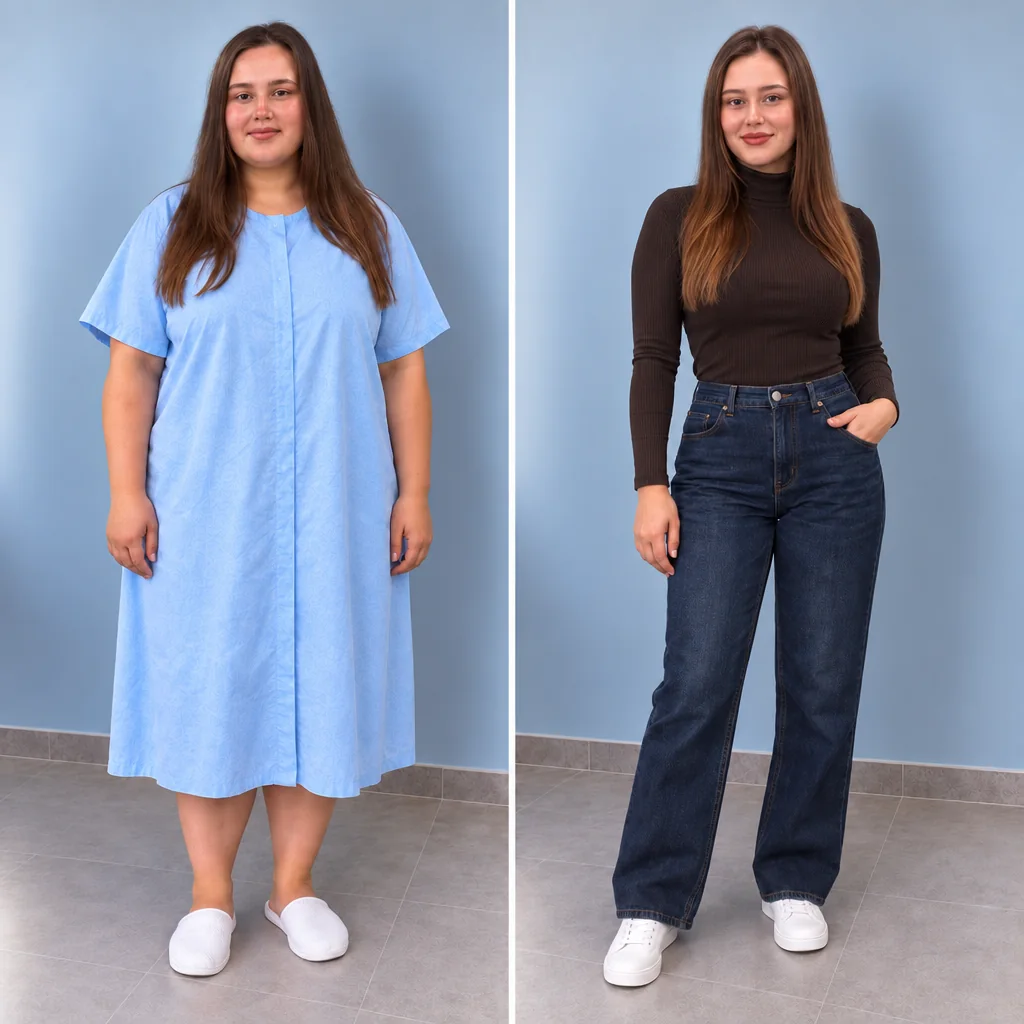
 beforeafter
Irina, 26
Bariatric surgery
Bariatric surgery
$3,600
$4,800 · First consultation — Free
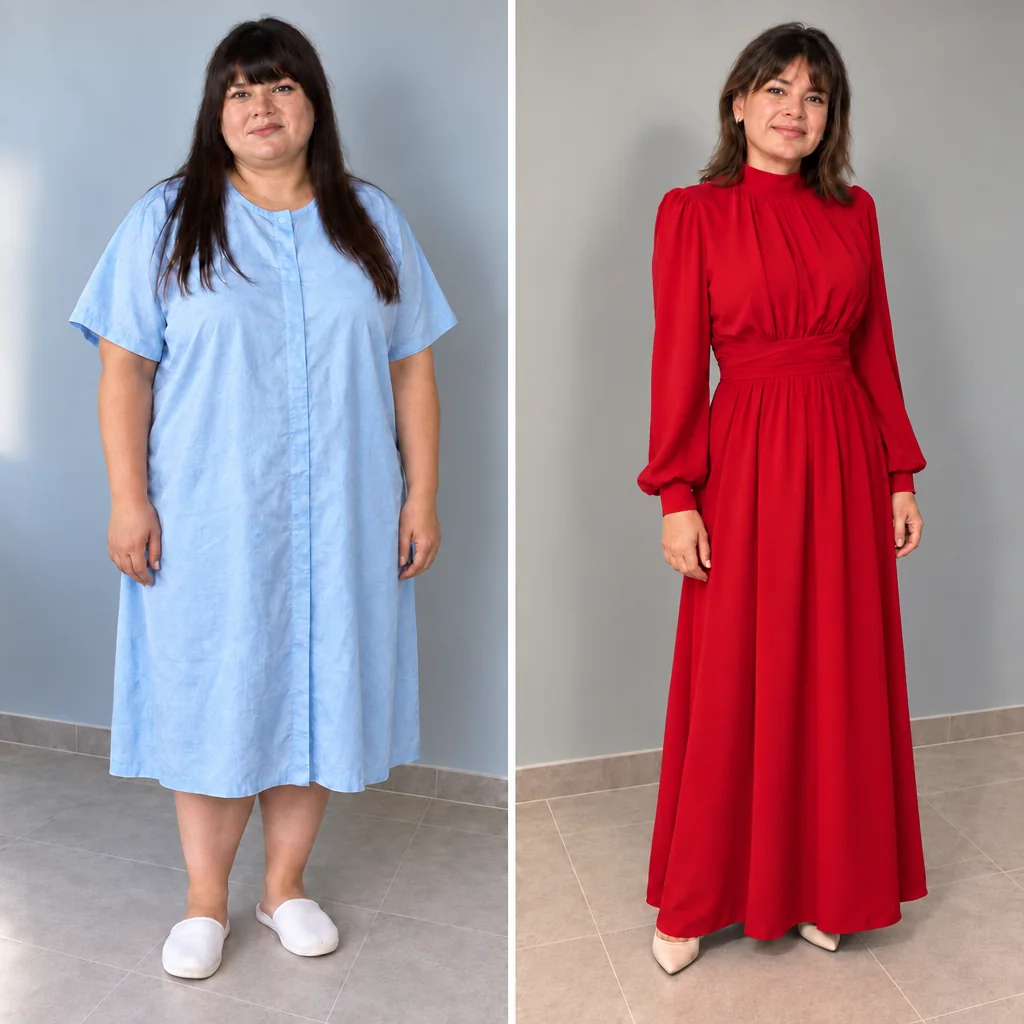 before
after
Message our coordinator
Free online consultation · Reply within 15 minutes
Message us on TelegramMessage us on WhatsAppBy messaging us, you agree to our Privacy Policy
Results
All cases are real patients of the clinic.
beforeafterBariatric surgery
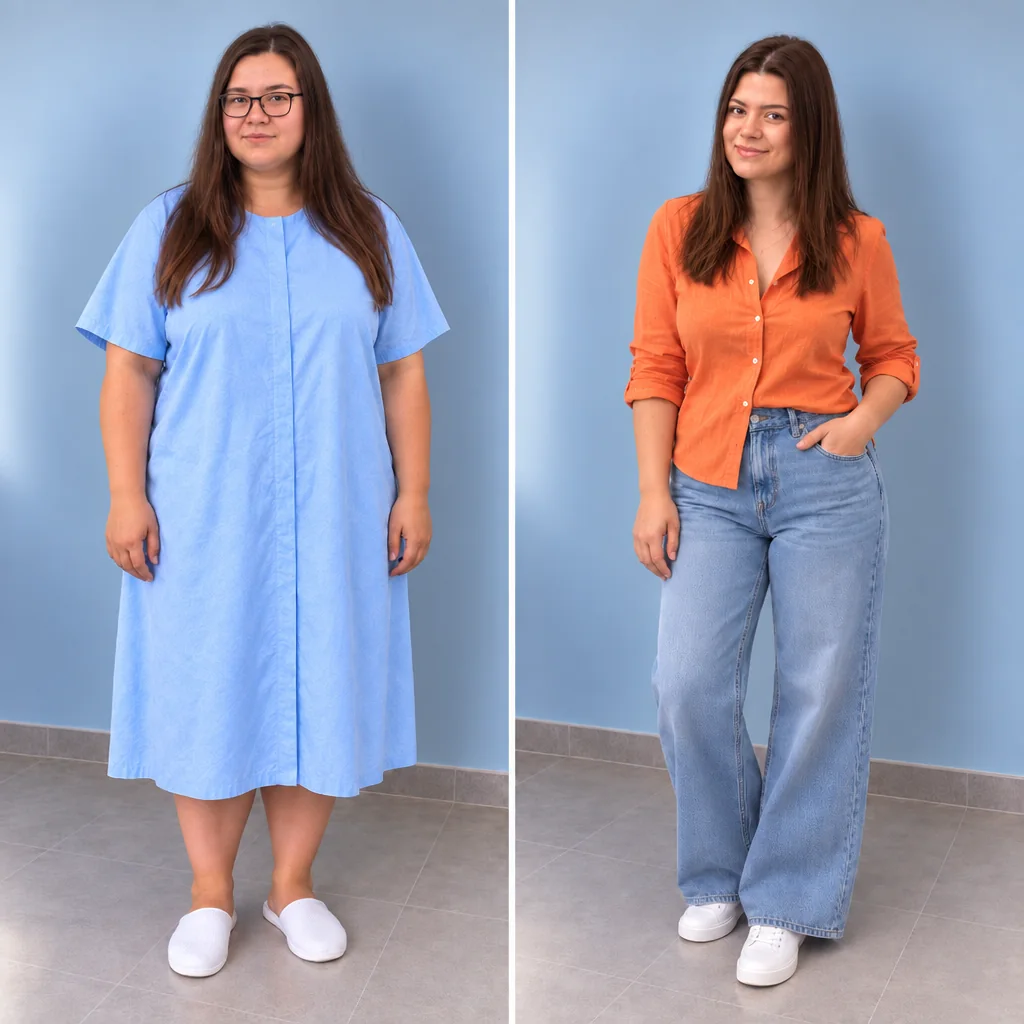 beforeafter
Bariatric surgery
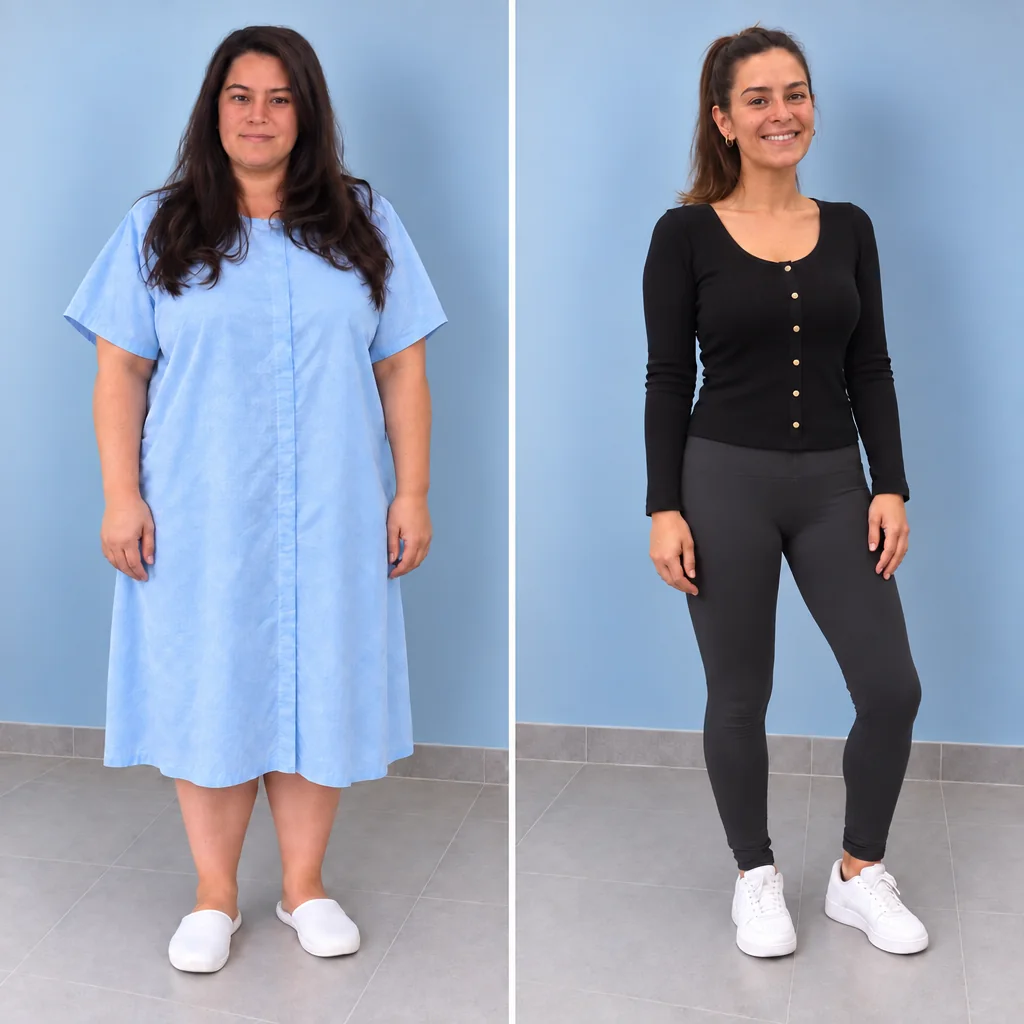 beforeafter
Bariatric surgery
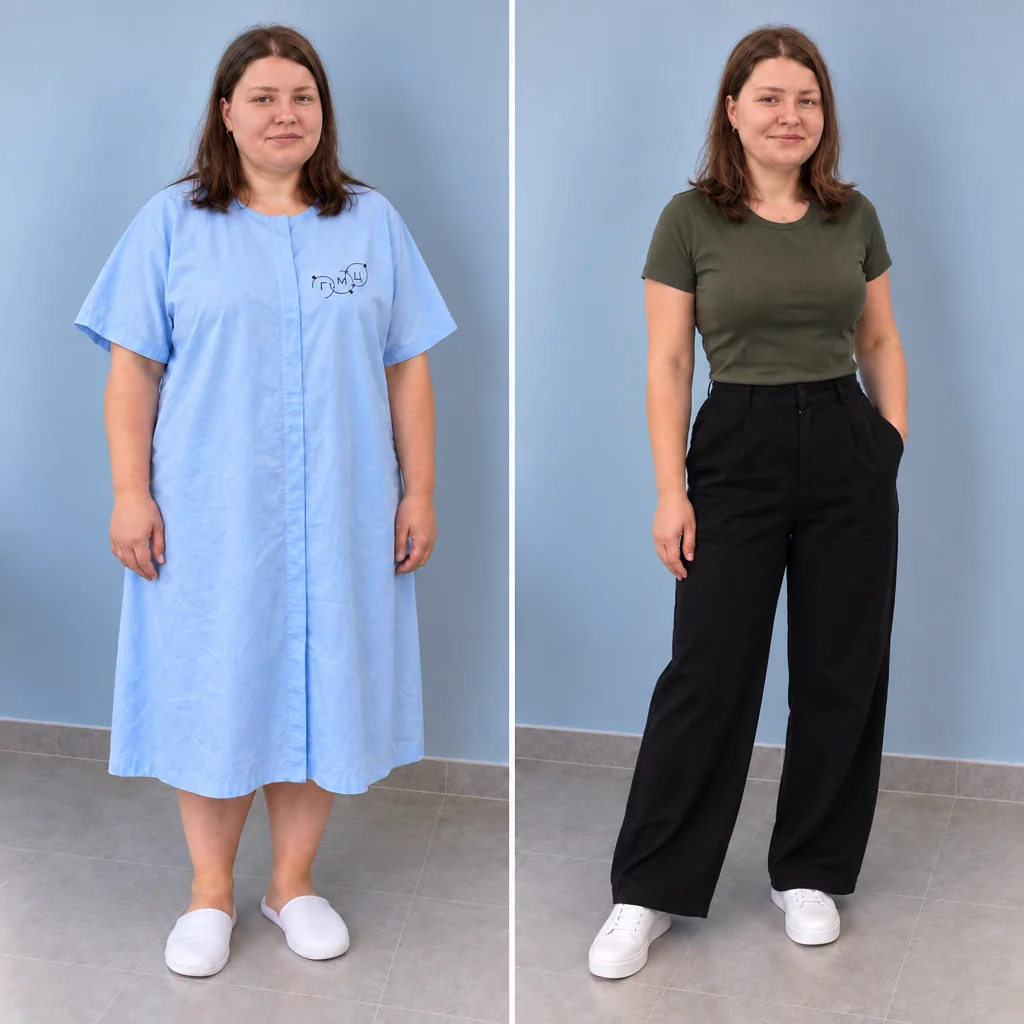 beforeafter
Bariatric surgery
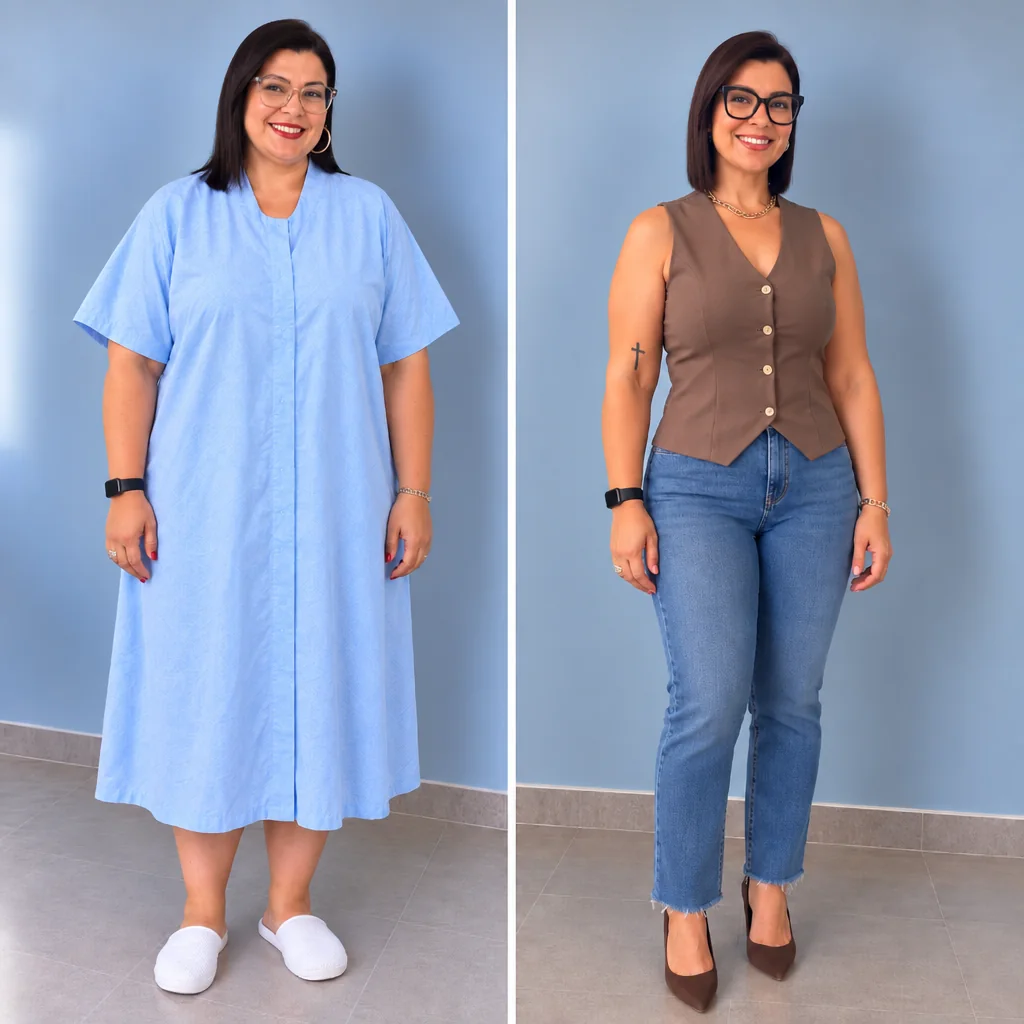 beforeafter
Bariatric surgery
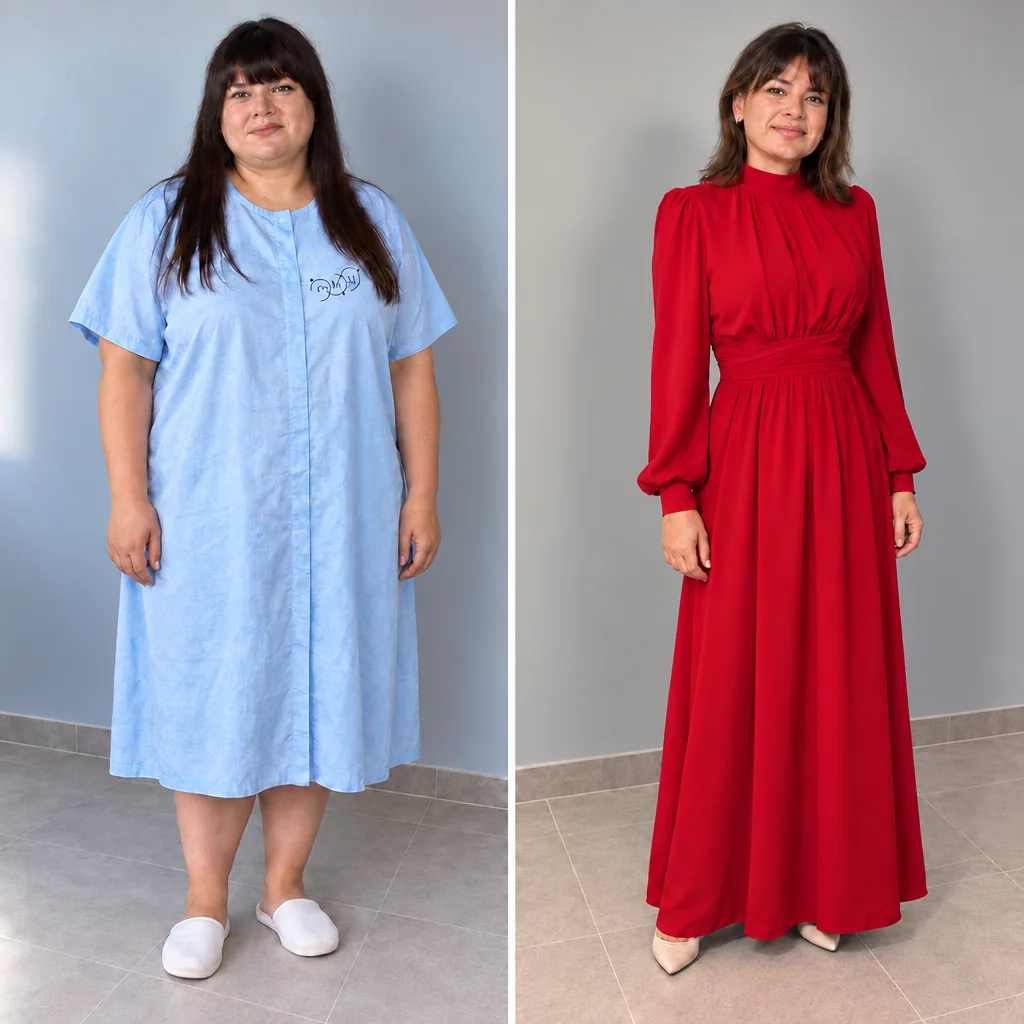 beforeafter
Bariatric surgery
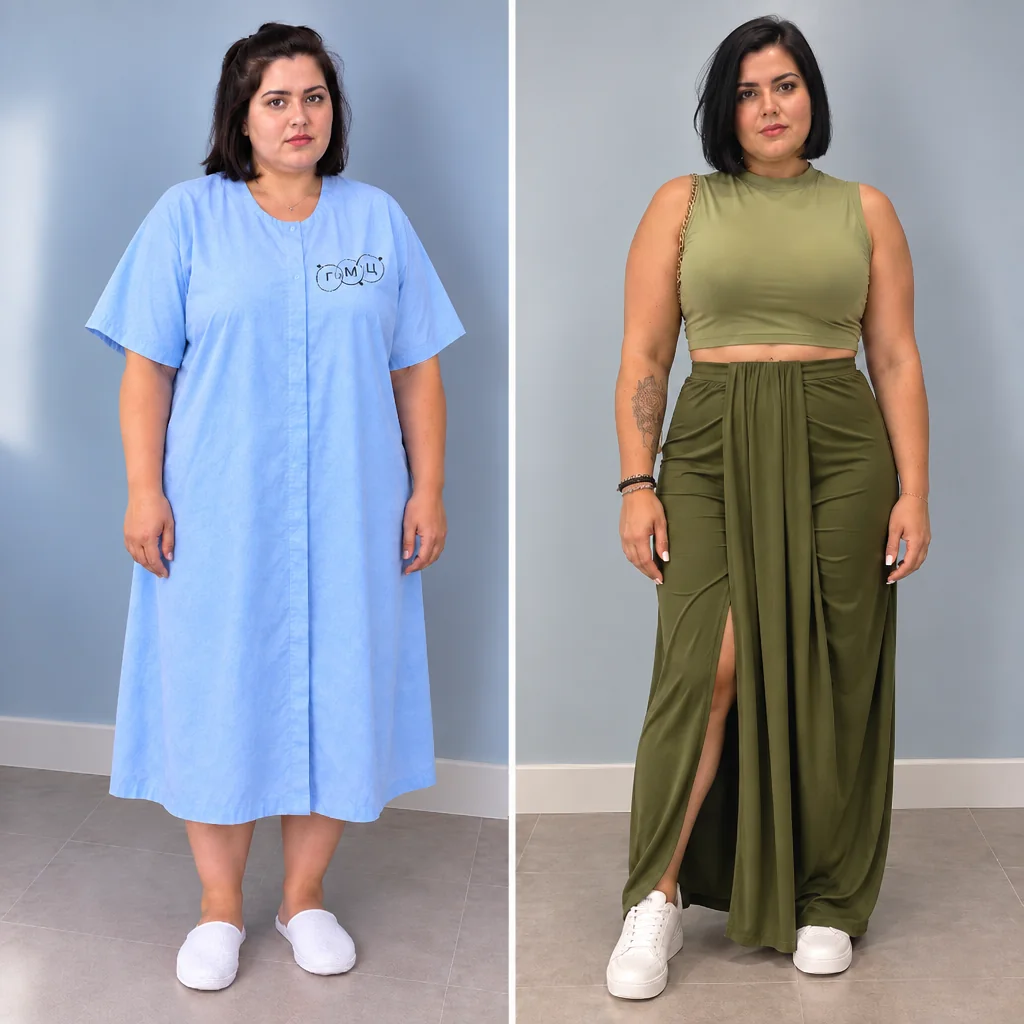 beforeafter
Bariatric surgery
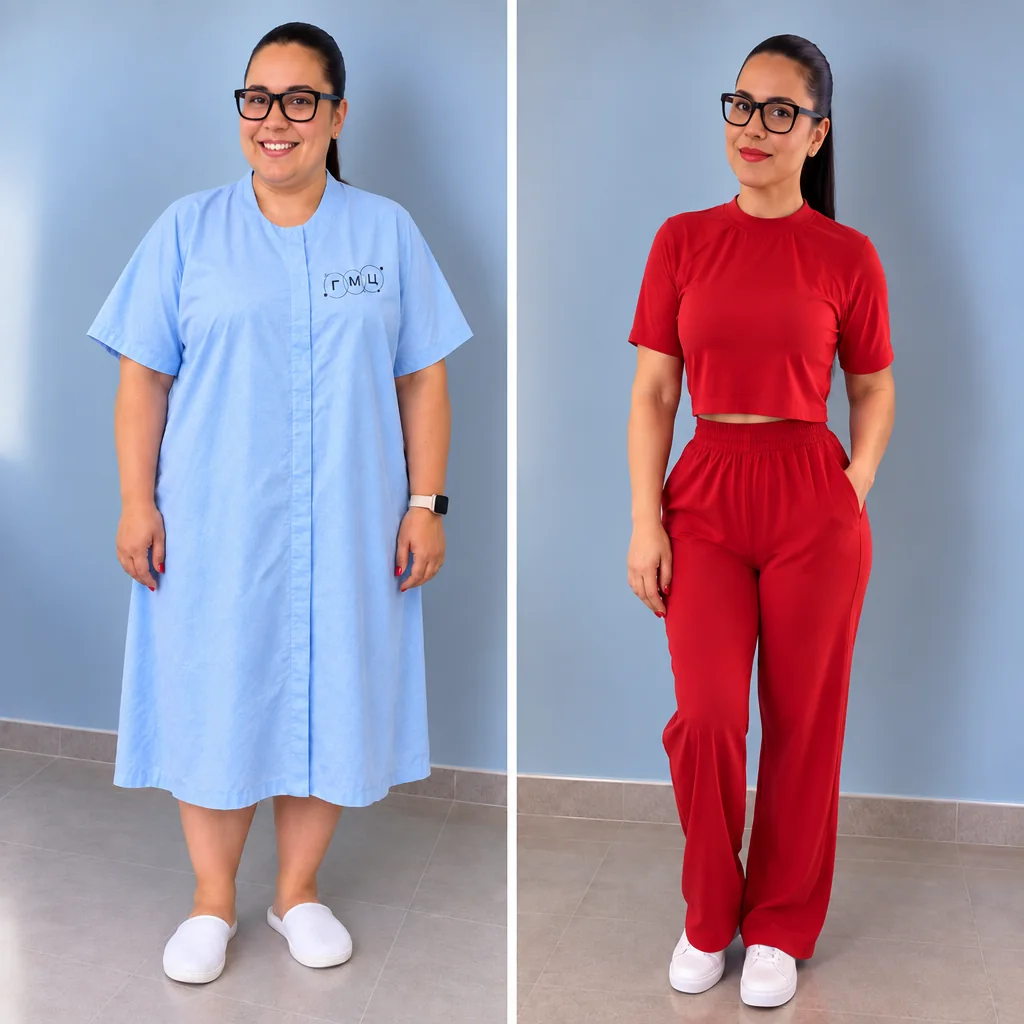 beforeafter
Bariatric surgery
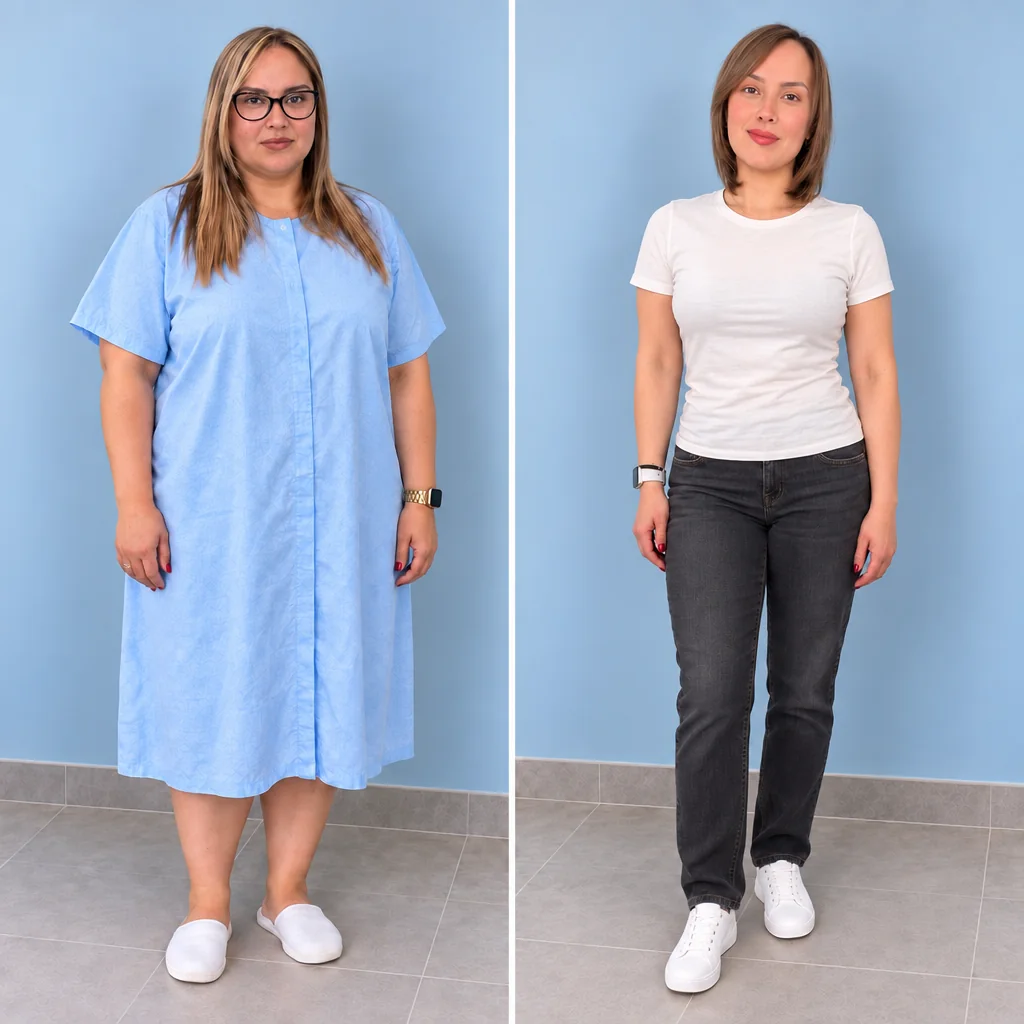 beforeafter
Bariatric surgery
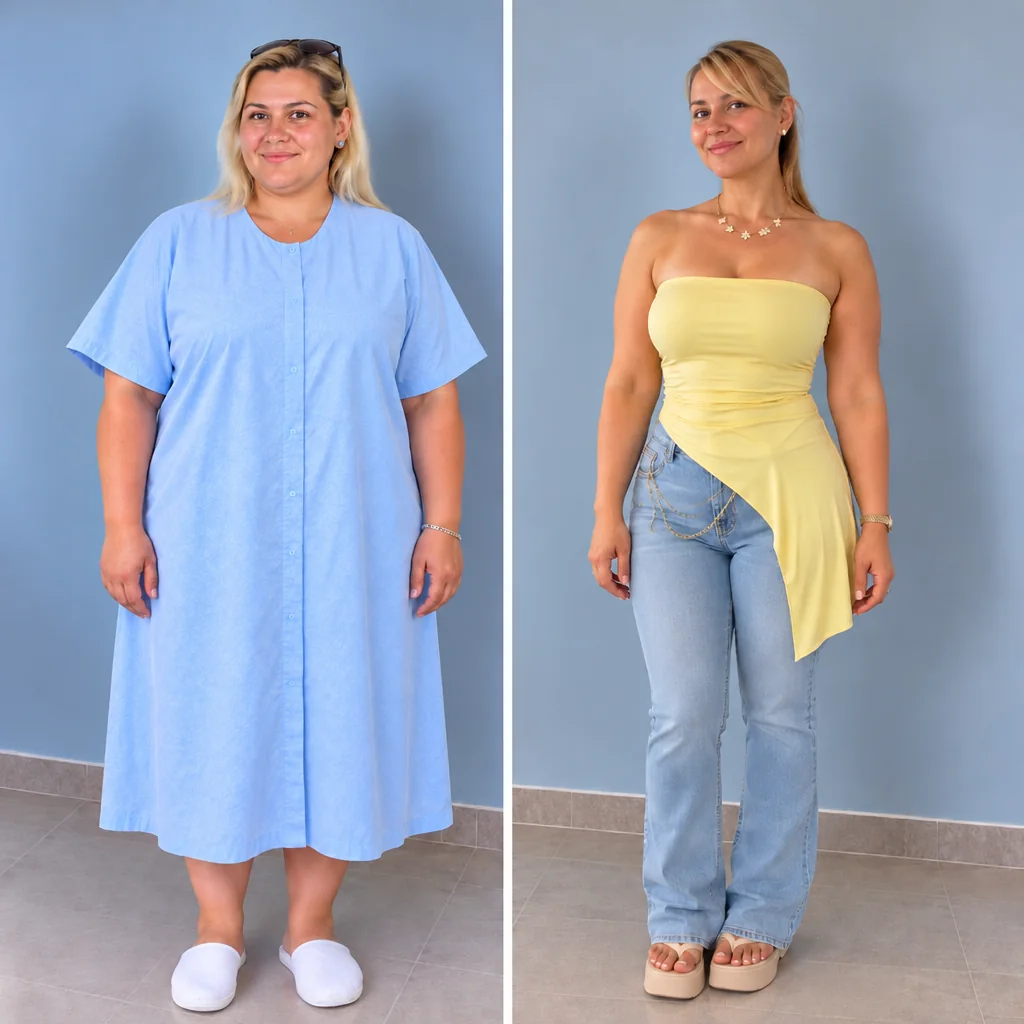 beforeafter
Bariatric surgery
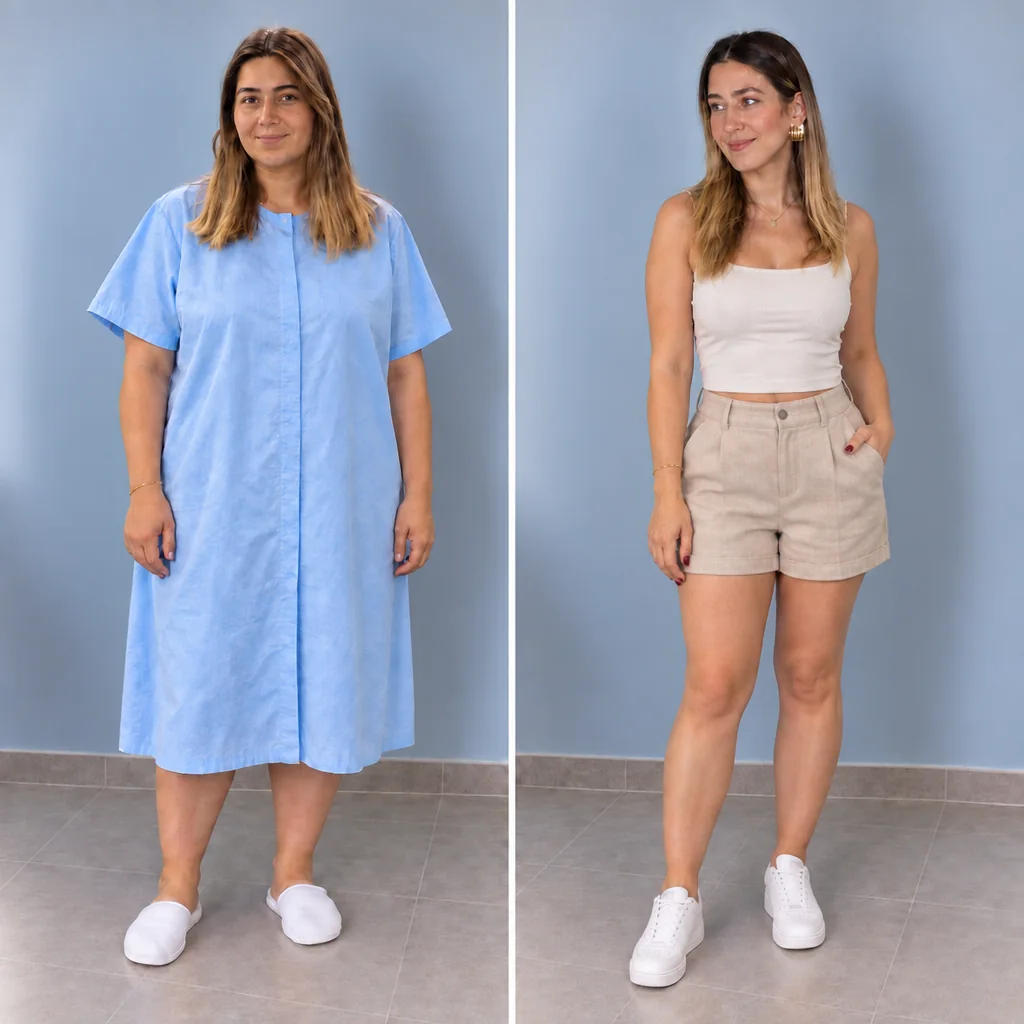 beforeafter
Bariatric surgery
Comparison
Choose your method with confidence by comparing our two main procedures — sleeve gastrectomy and gastric bypass — in terms of how they work, their purpose and their indications.
A smaller stomach volume
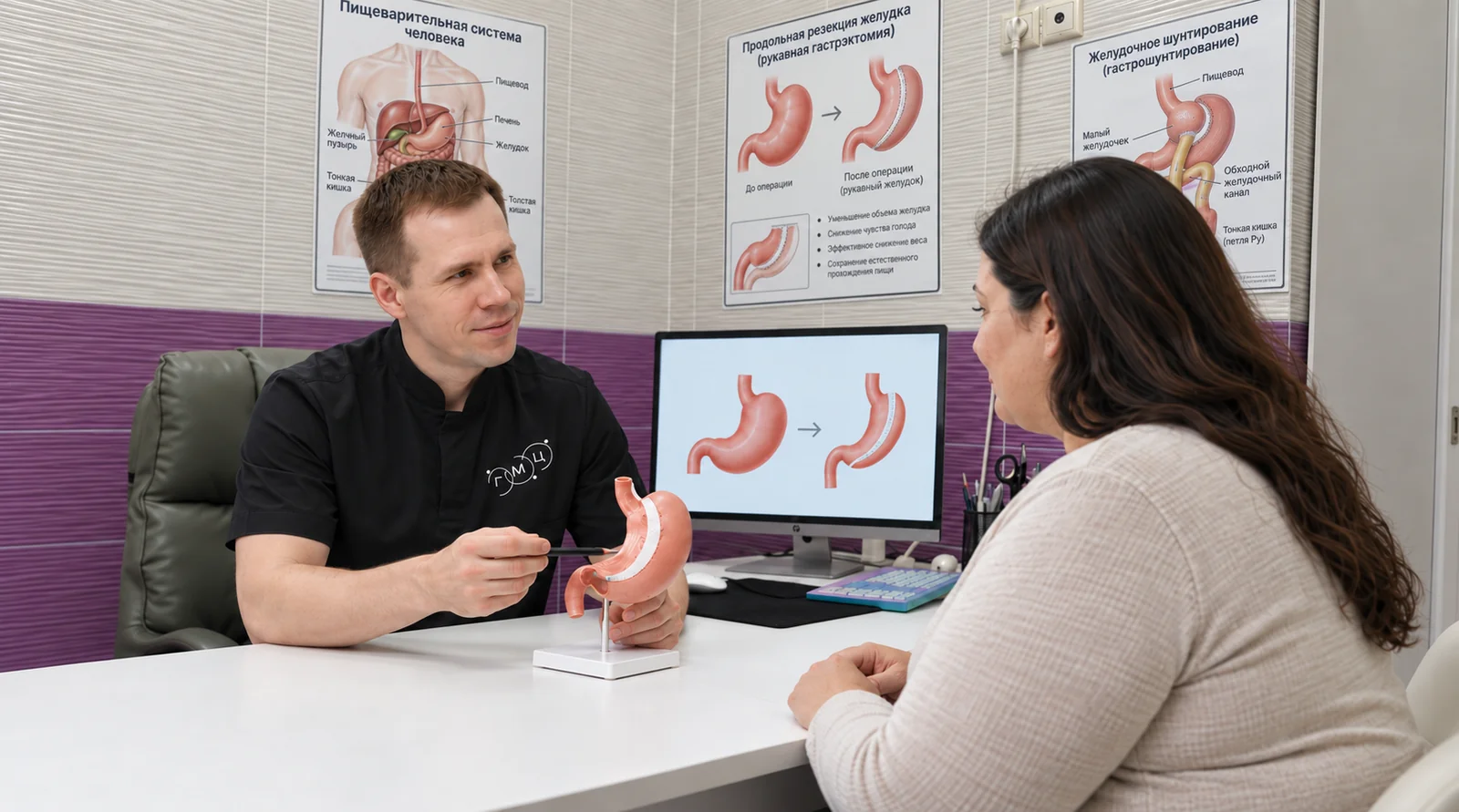
Discounted price
$3,600 $4,800
The stomach is made smaller and food is rerouted
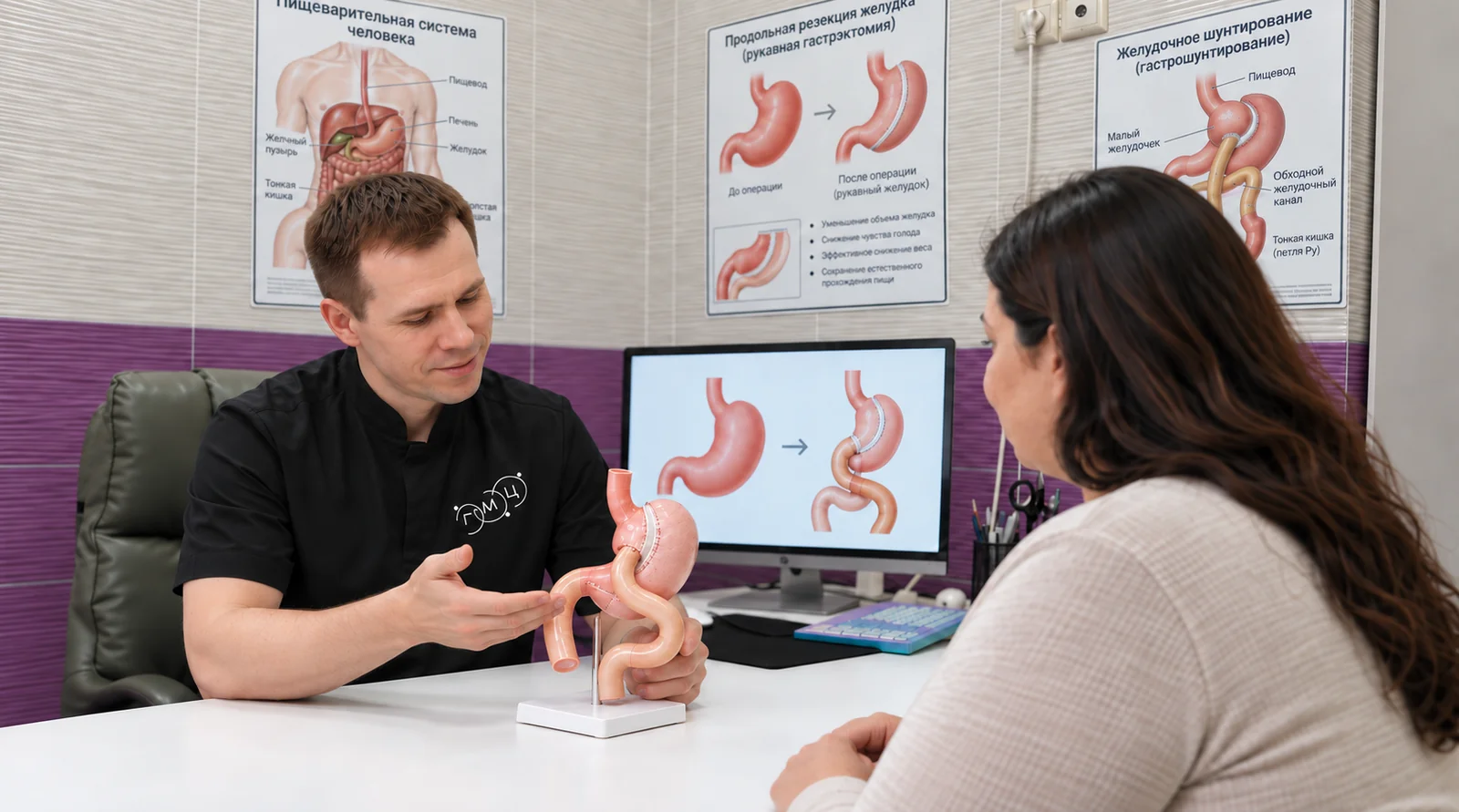
Discounted price
$4,000 $5,200
Recovery times and benefits are averaged for each method and shown for orientation. Your anatomy and individual features shape the extent of surgery and recovery, and the surgeon confirms both at the consultation.
Book a consultationAbout us
Modern technology, cosy rooms and personal attention for every patient
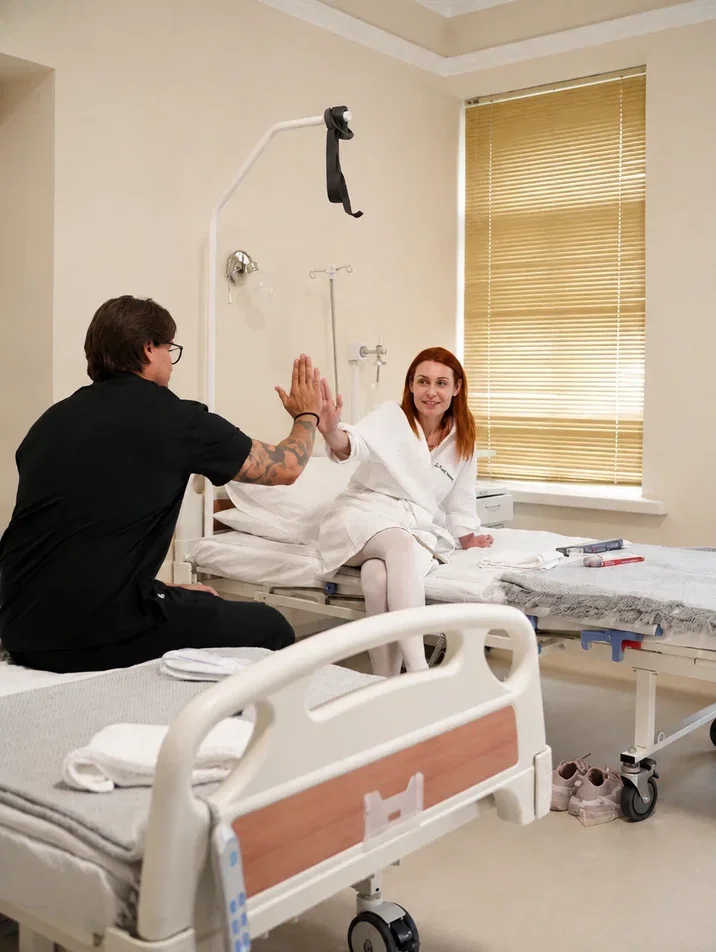
We will answer your questions and find a convenient time for a consultation
Get a consultationSurgery is only decided jointly with the surgeon, once the consultation and check-up are done.
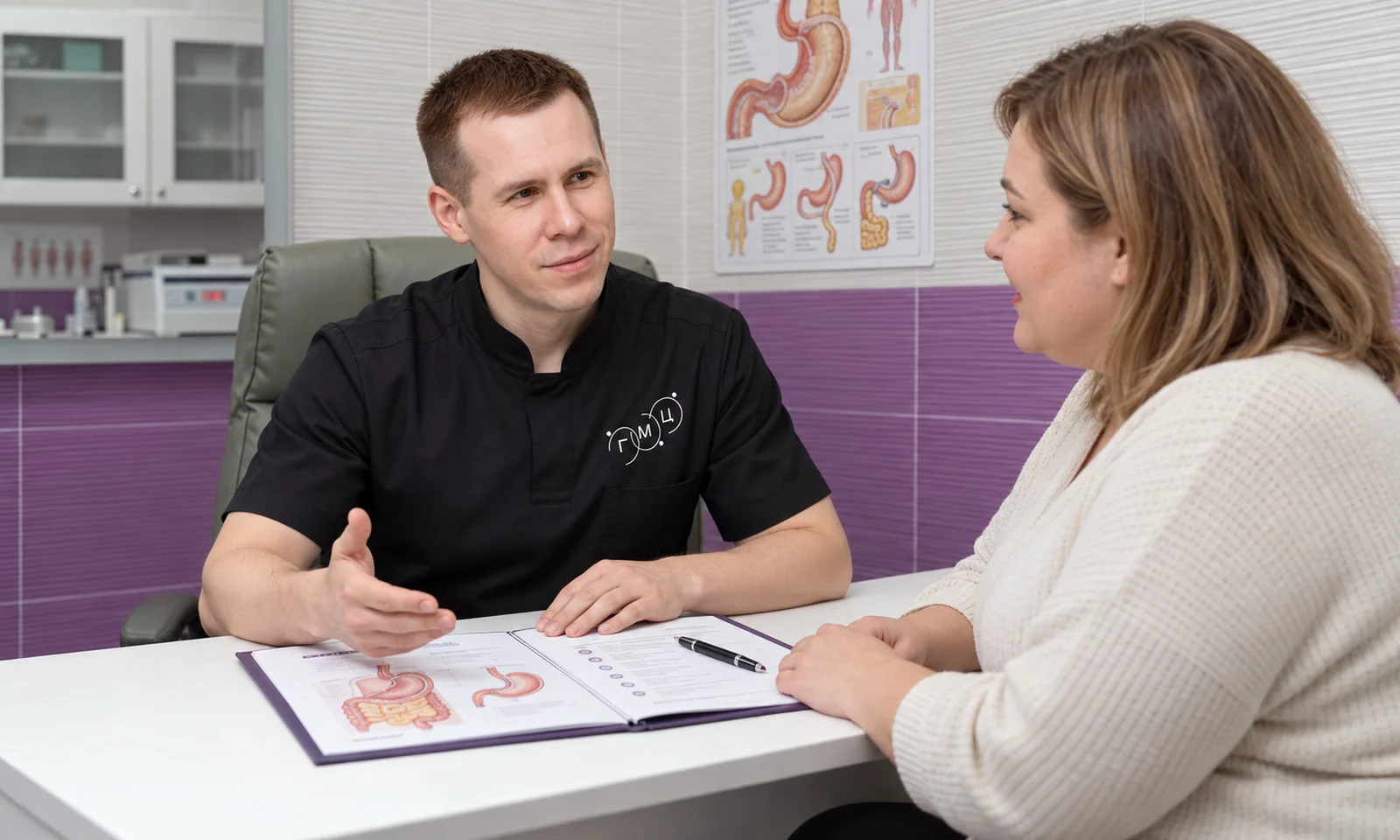
Unsure which column describes you?
Write to us on Telegram and our coordinator will tell you whether bariatric surgery is suitable. Your surgeon consultation is free and carries no commitment to surgery.
Find out if it suits me
Prices
When your plan is prepared, the cost is named at the consultation and locked in the contract.
Discounted price
A smaller stomach volume
$3,600$4,800
Discounted price
Losing weight by changing the food route
$4,000$5,200
Free
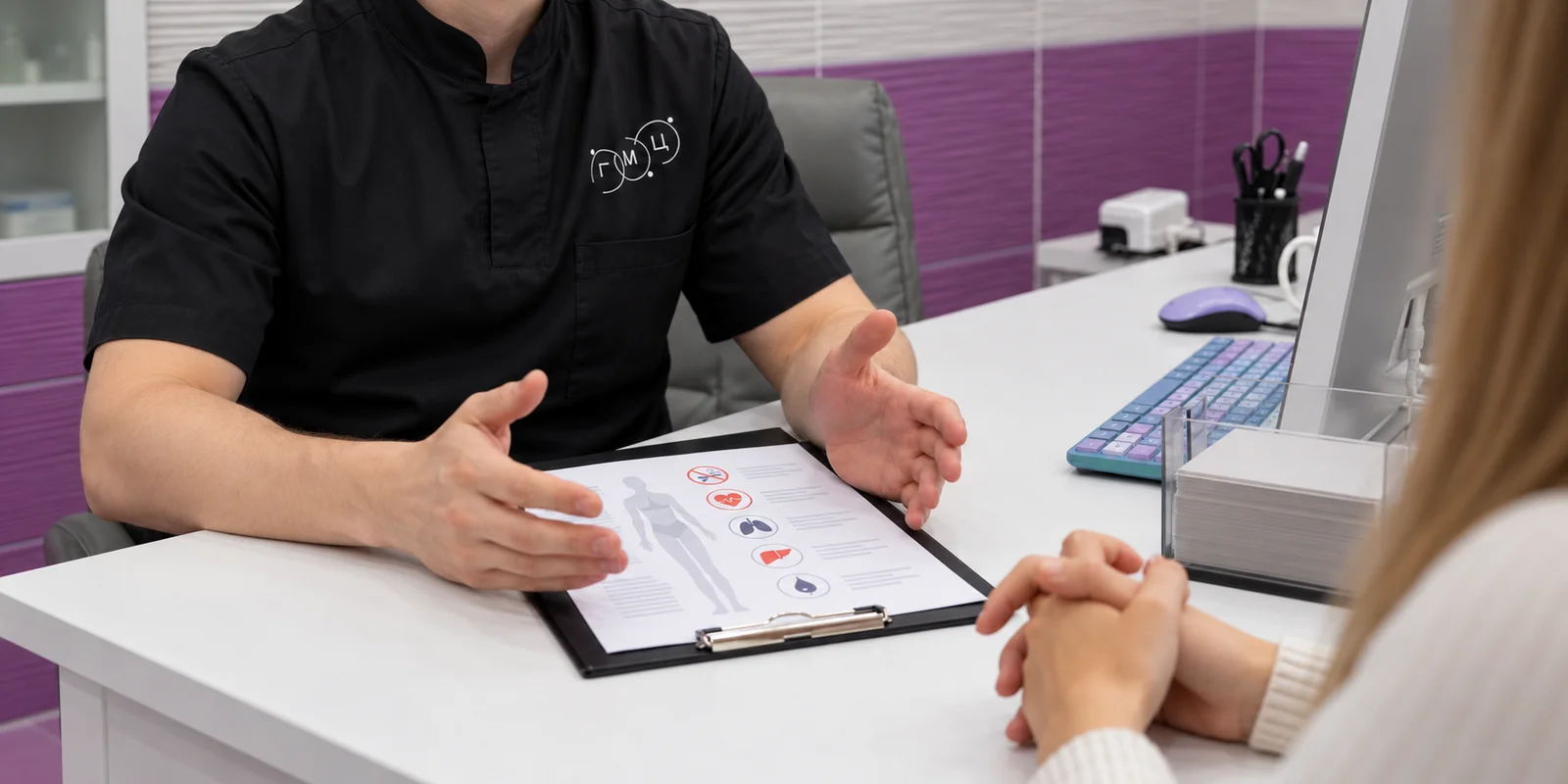
The surgeon examines you and draws up a treatment plan

Free
the surgery price is set
and written into the contract
The doctor checks your health, goes over your goals and chooses a suitable bariatric surgery method. The cost is stated at the consultation and fixed in the contract.
Message our coordinator
Free online consultation · Reply within 15 minutes
Message us on TelegramMessage us on WhatsAppBy messaging us, you agree to our Privacy Policy
price
A single package: preparation through 12 months of support, no extra charges.From getting ready for surgery
to 12 months of support.
How it goes
A treatment plan agreed with you, hospital monitoring and a year of support.
 1
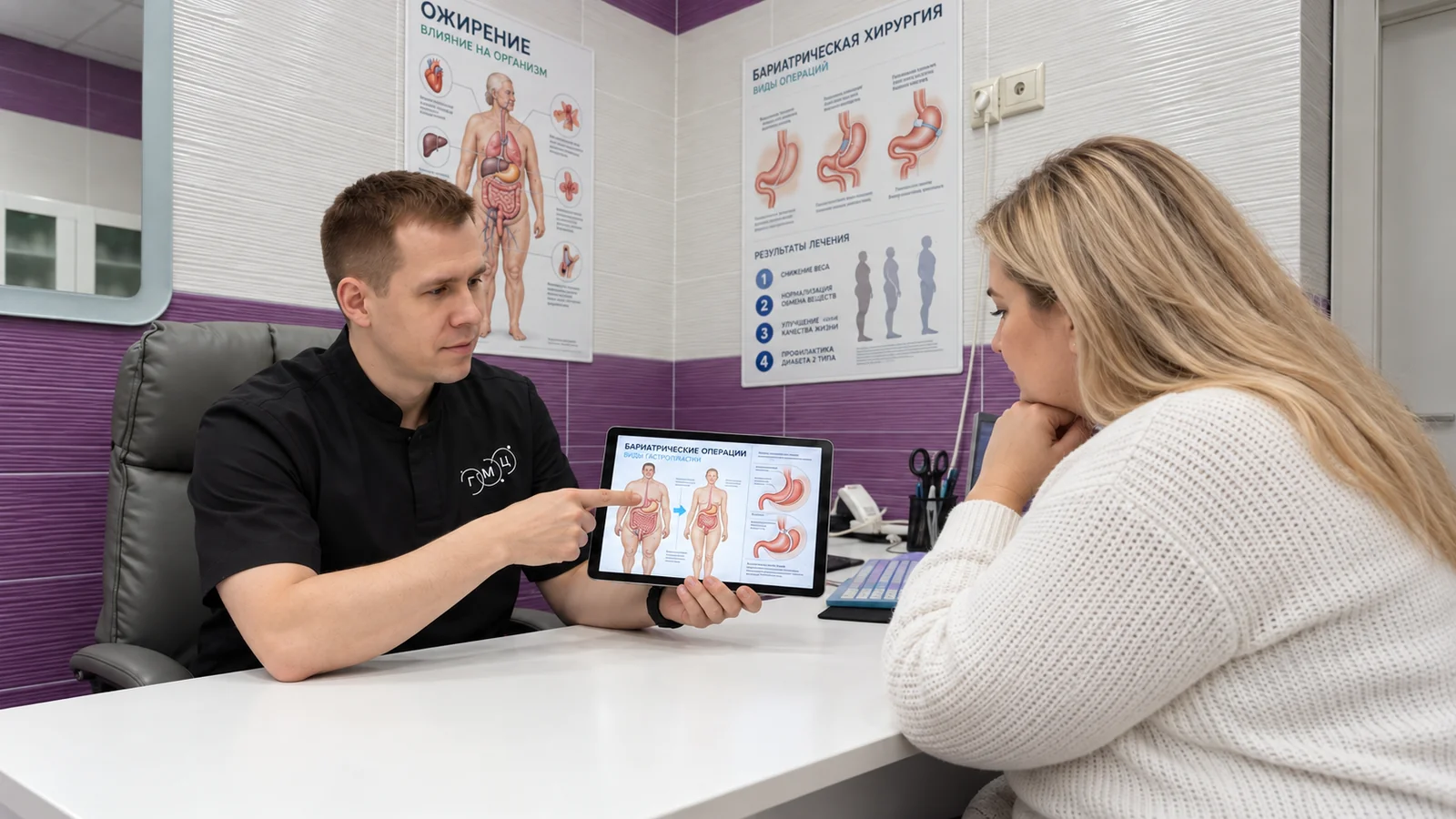
Your health is assessed, your goals are discussed and the doctor orders the tests required to pick the right bariatric method.
2A surgery date is reserved for you, with the deposit paid by card at the clinic or online by bank transfer. The terms are recorded in the contract for medical services
 3
Blood and urine tests, an ECG, an ultrasound, a gastroscopy and specialist visits come before surgery. At the consultation the doctor gives you the exact list.
 4
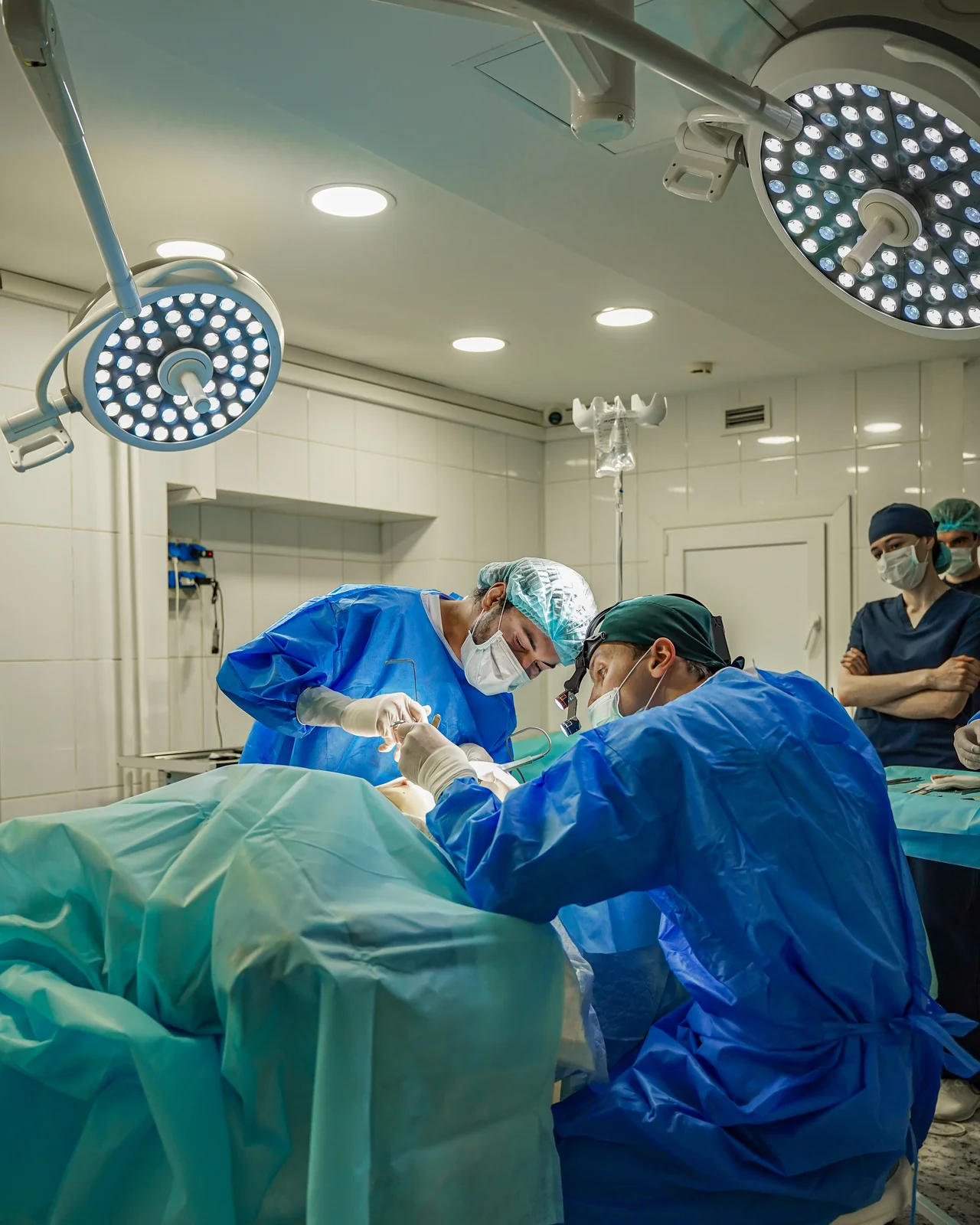
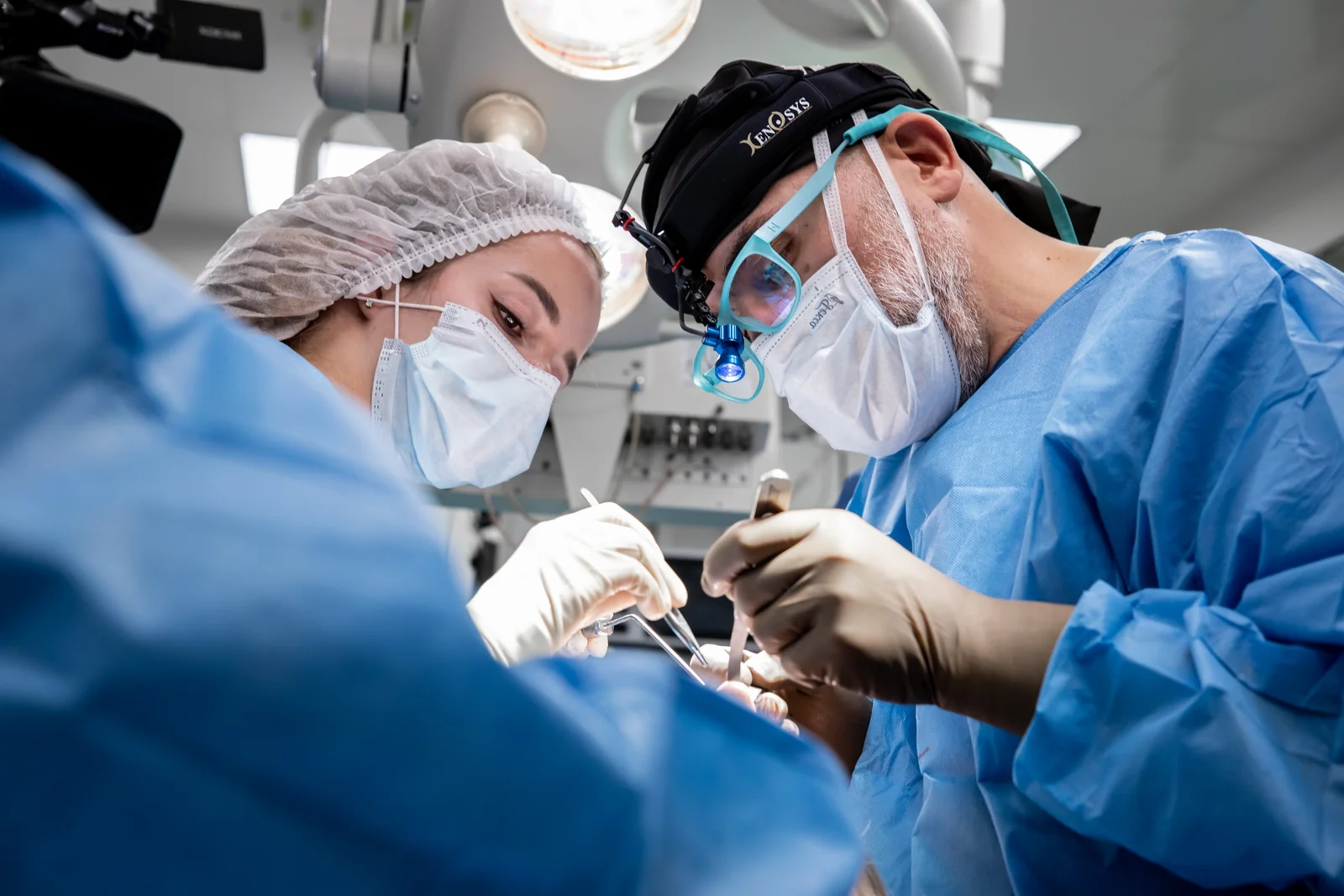
The bariatric operation is performed by the surgeon under general anaesthesia with the selected method. Afterwards the patient is monitored by the medical team.
 5
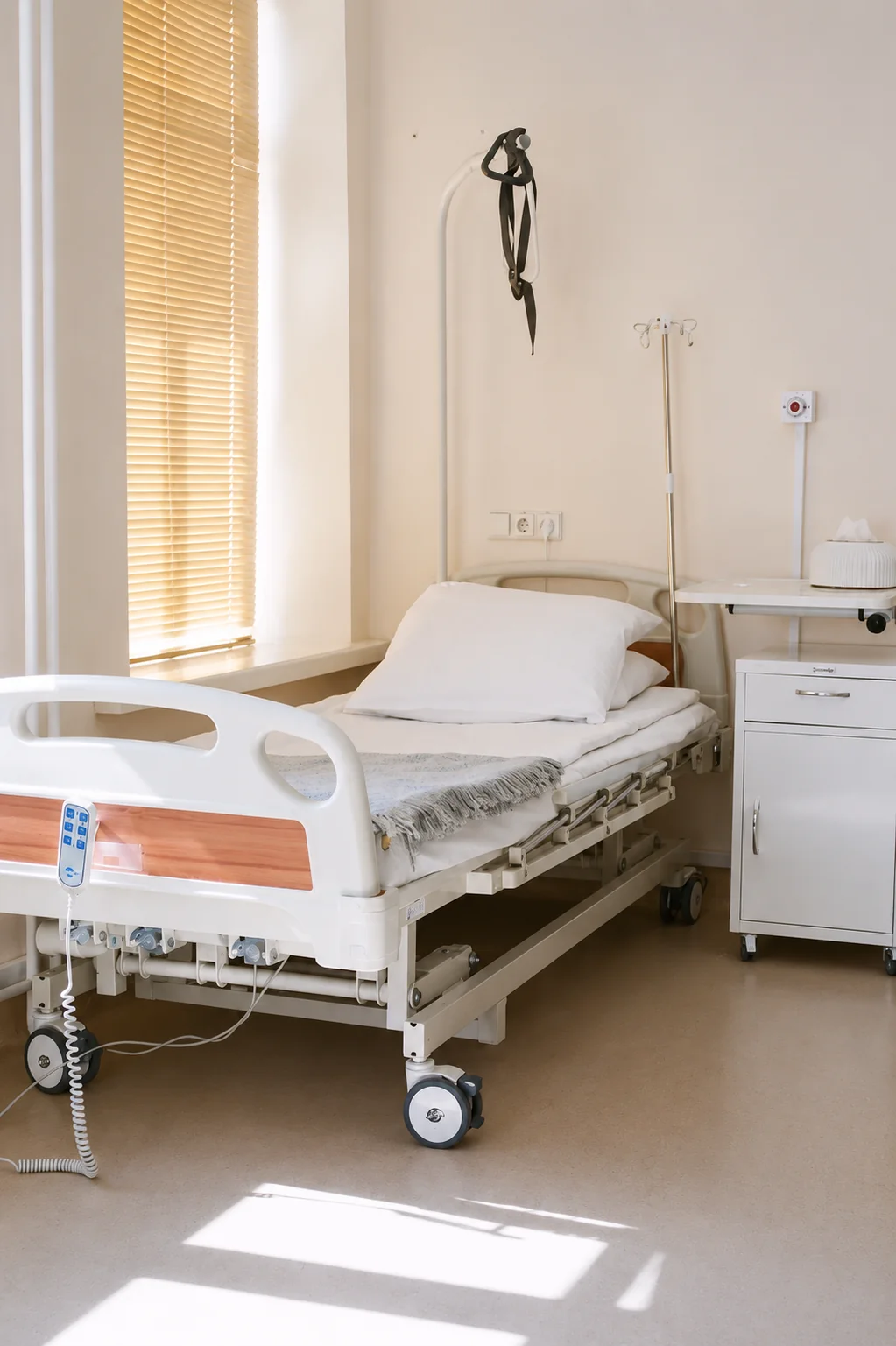
After surgery you stay in hospital under doctors' supervision. The stay lasts from 1–3 to 4–5 days, depending on the complexity of the operation and how you feel.
 6
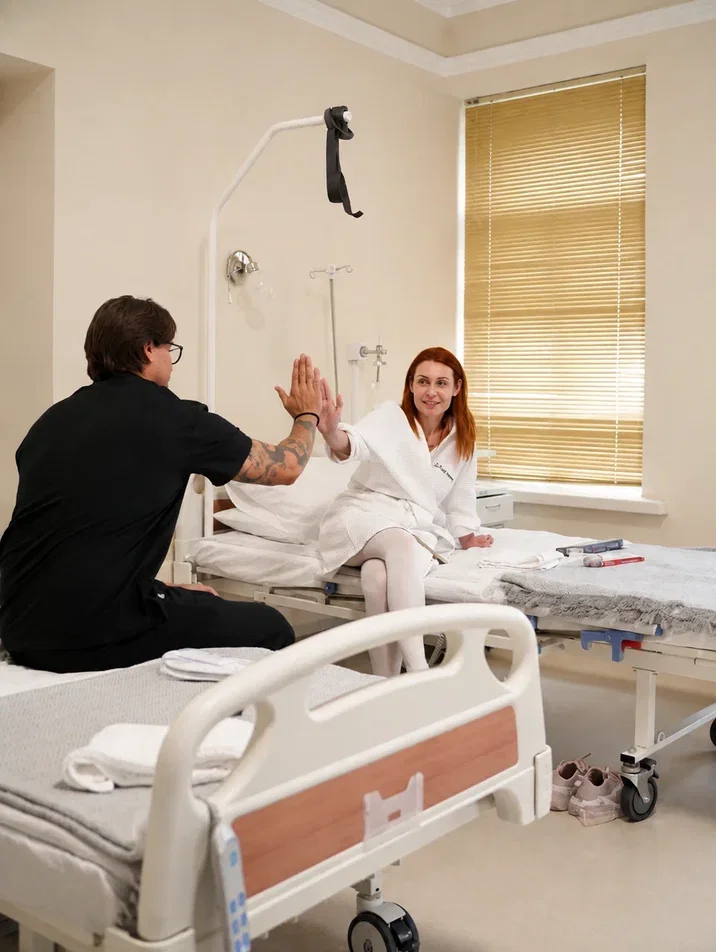
After discharge, expect advice on diet and recovery and scheduled check-ups of your well-being, weight and test results. The clinic team supports you for a year.
Your plan is drawn up at the consultation, where the doctor explains how the surgery will go
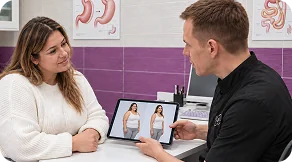
There is no fee for the consultation, is held before surgery and carries no obligation.
Book a consultationDoctors
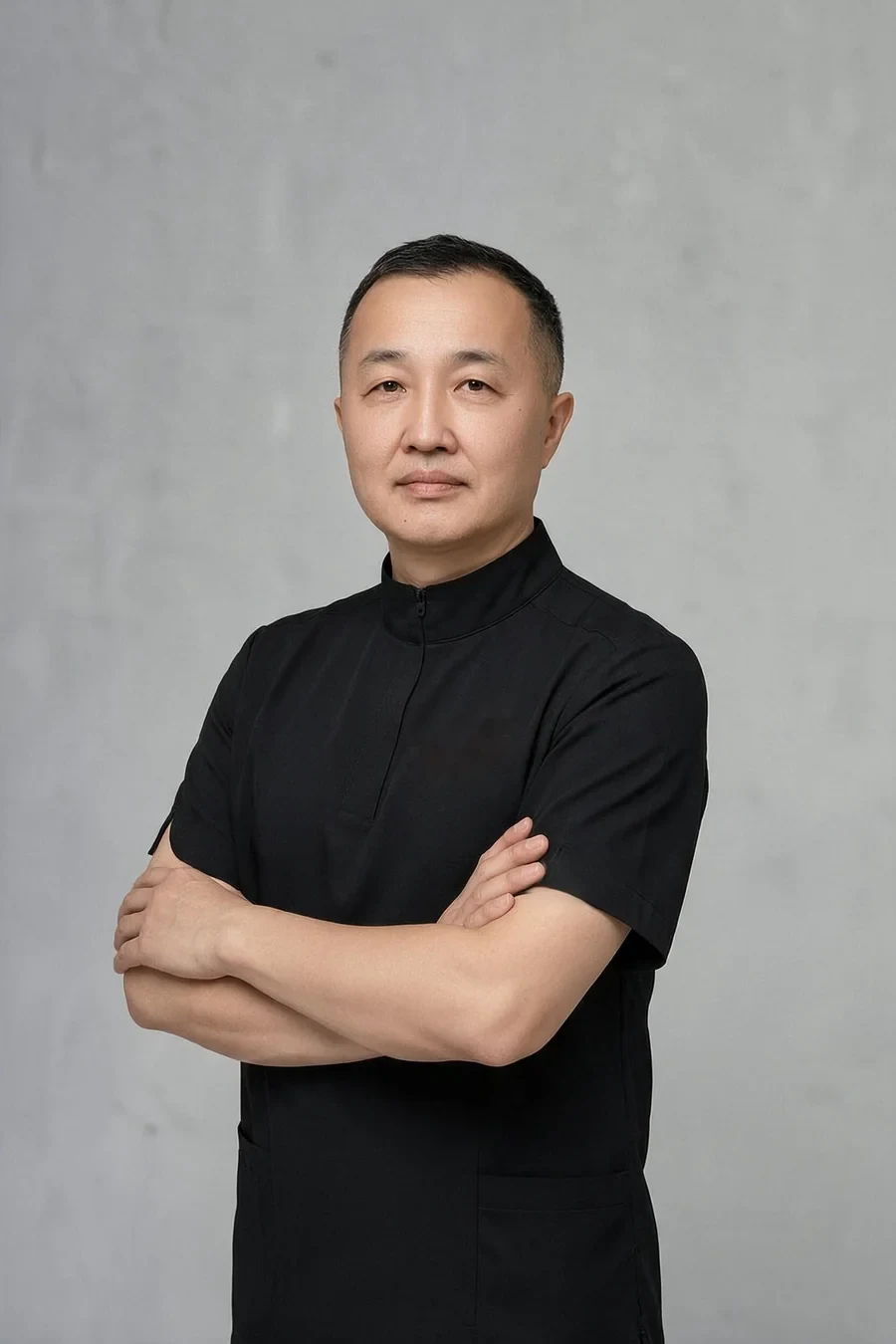
27 years of experience
Lead bariatric surgeon
Surgeon
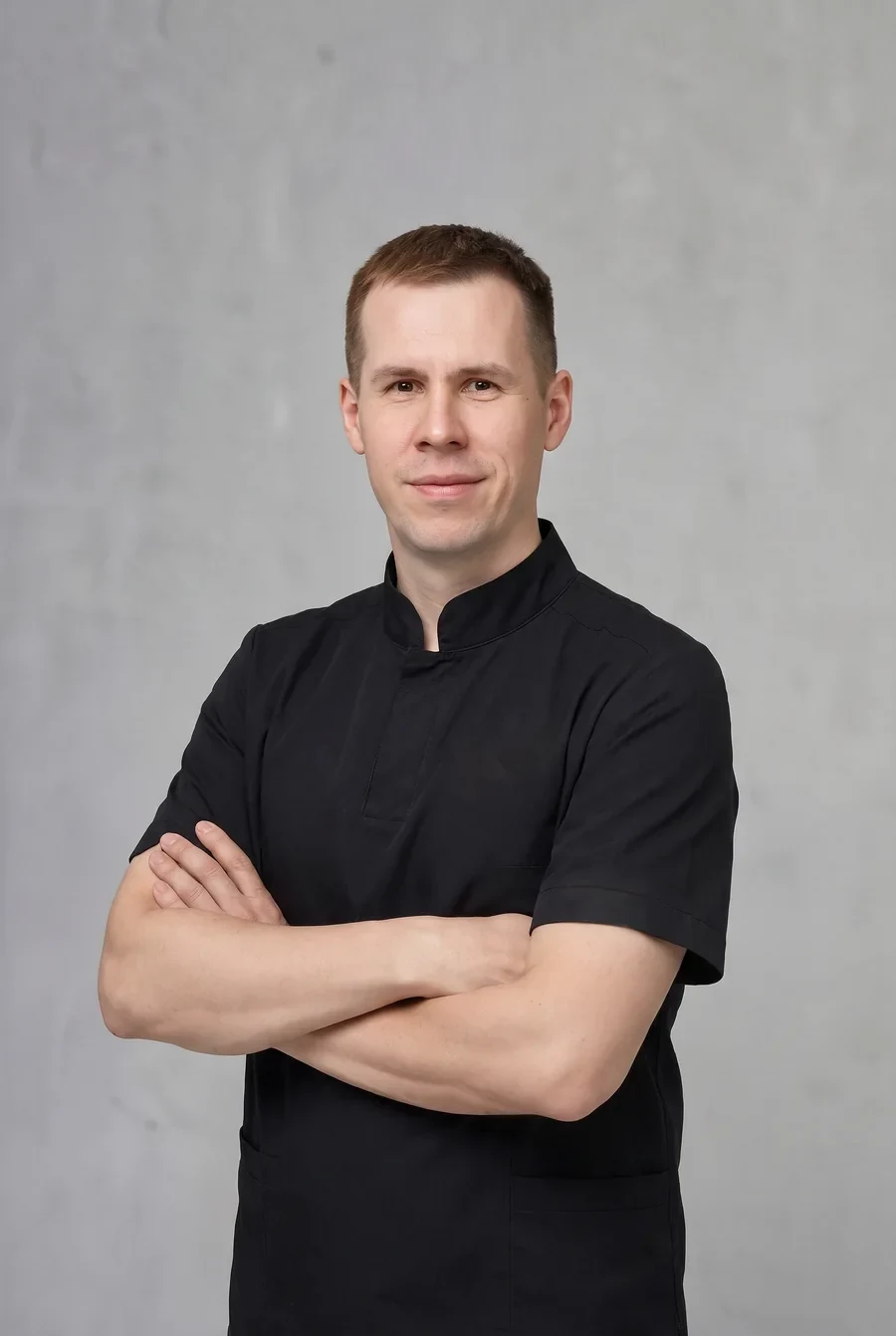
9 years of experience
Bariatric surgeon
Surgical oncologist
Your surgeon carries out the operation and follows you from the first consultation to your result.
Our patient care manager holds the first consultation — calculating your BMI, explaining the methods and booking you with the surgeon. It costs nothing.
Book a consultationCoordinators
Support at every step of the way

Your first contact at the clinic, all the way from your first message to the consultation
Patient care specialist
Answers your questions ahead of the first consultation and helps you pick a convenient date

With you before and during your stay — from booking to discharge
Patient care specialist
Helps you prepare for surgery and stays in touch during your stay at the clinic

By your side from discharge to your final check-up during recovery
Patient care specialist
Keeps in touch during recovery and books your follow-up visits with the surgeon
Advantages
The best method is chosen for your health, lifestyle and goals, and our team is with you all the way.
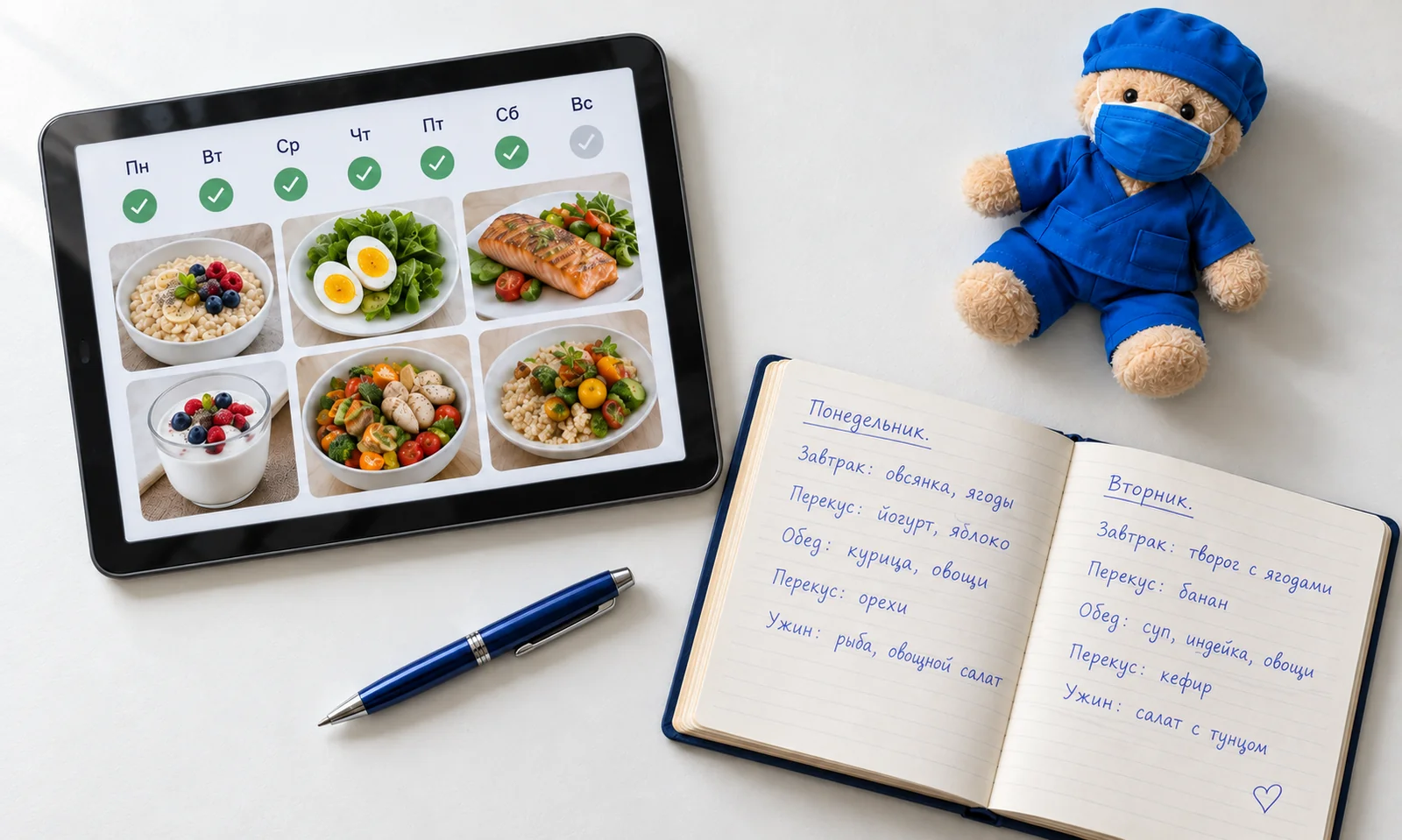
Our help covers adapting to new eating habits, tracking your results and maintaining them.
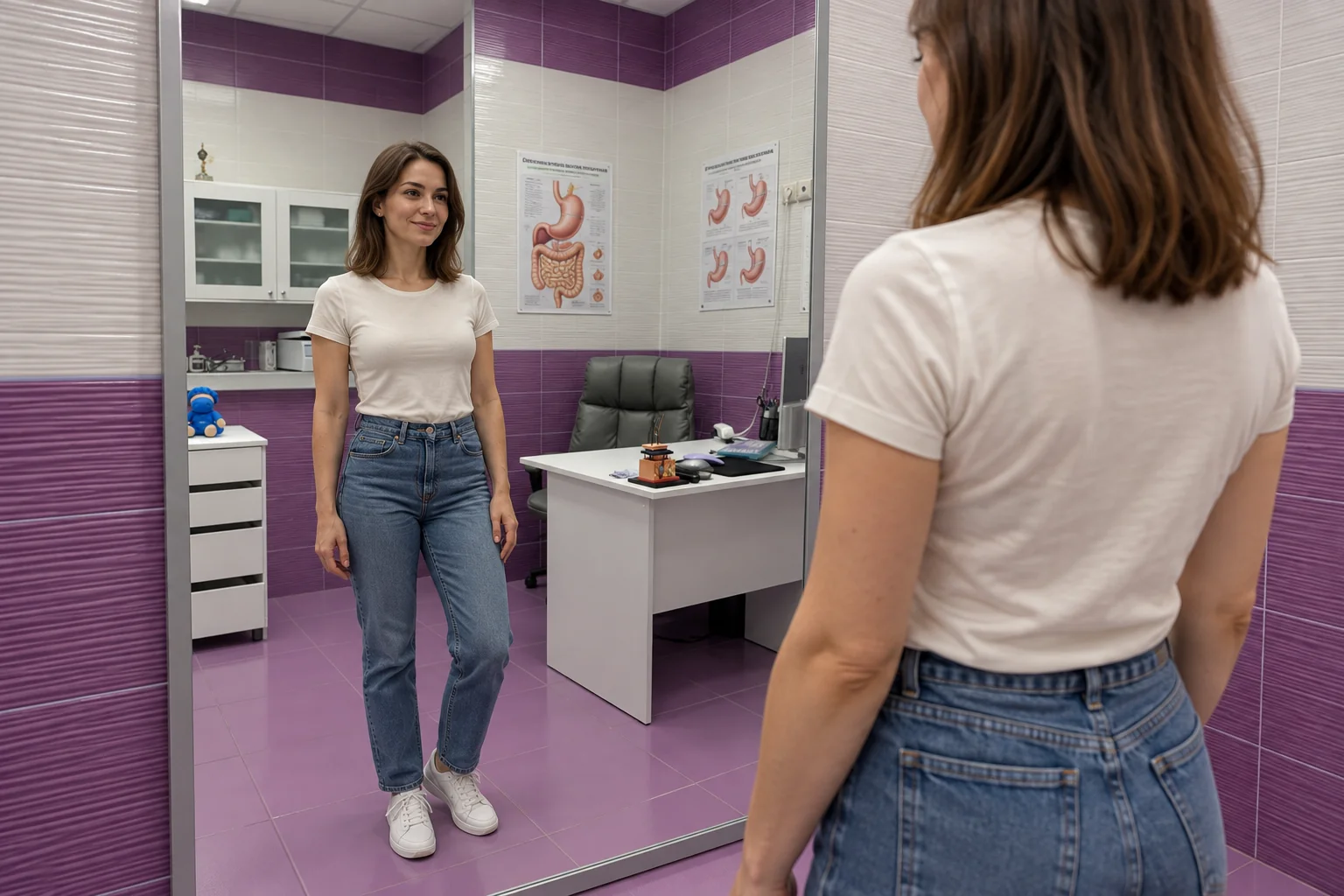
Stable weight loss, improved well-being and a higher quality of life.
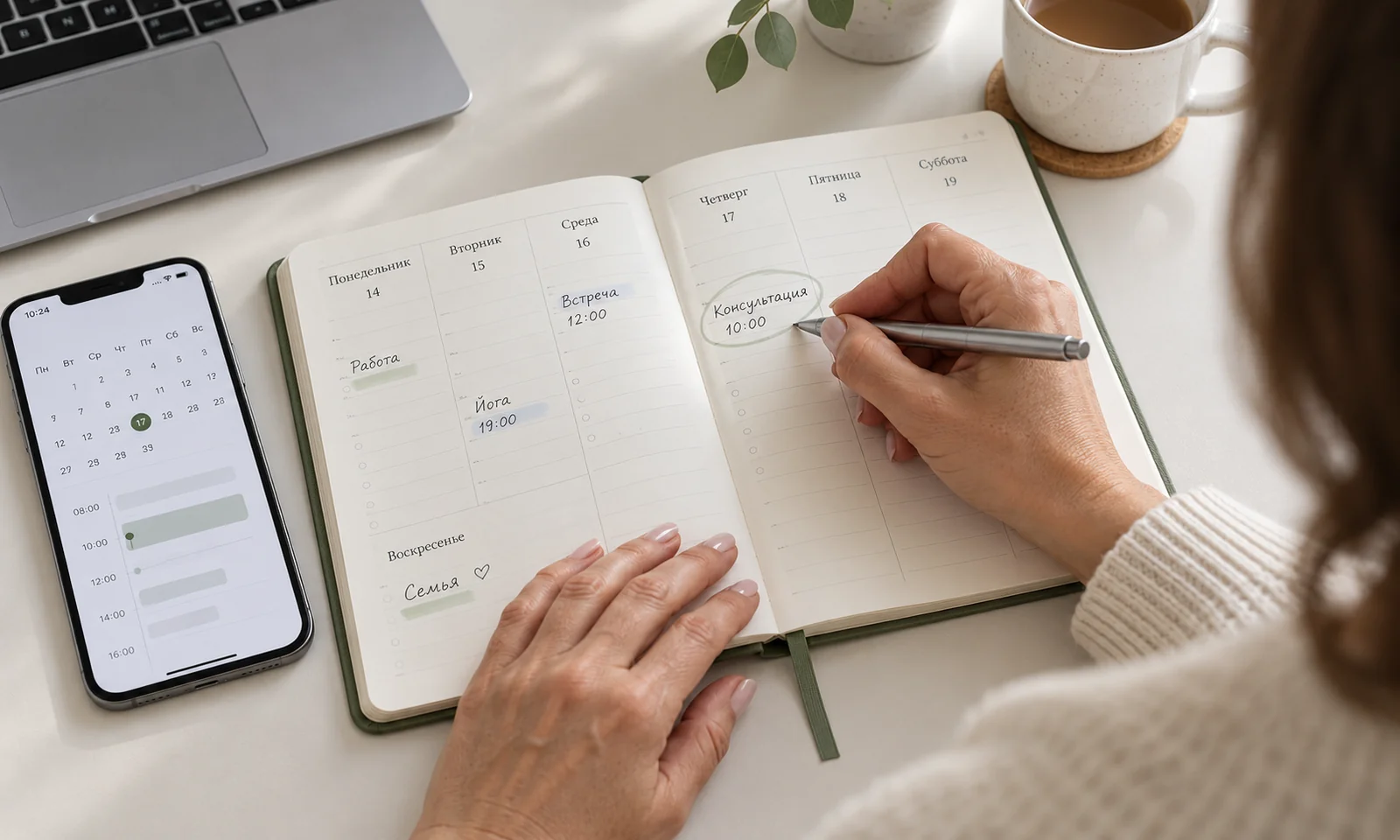
We adapt to your pace and respect your time — easy booking, a personal approach and open 24/7.
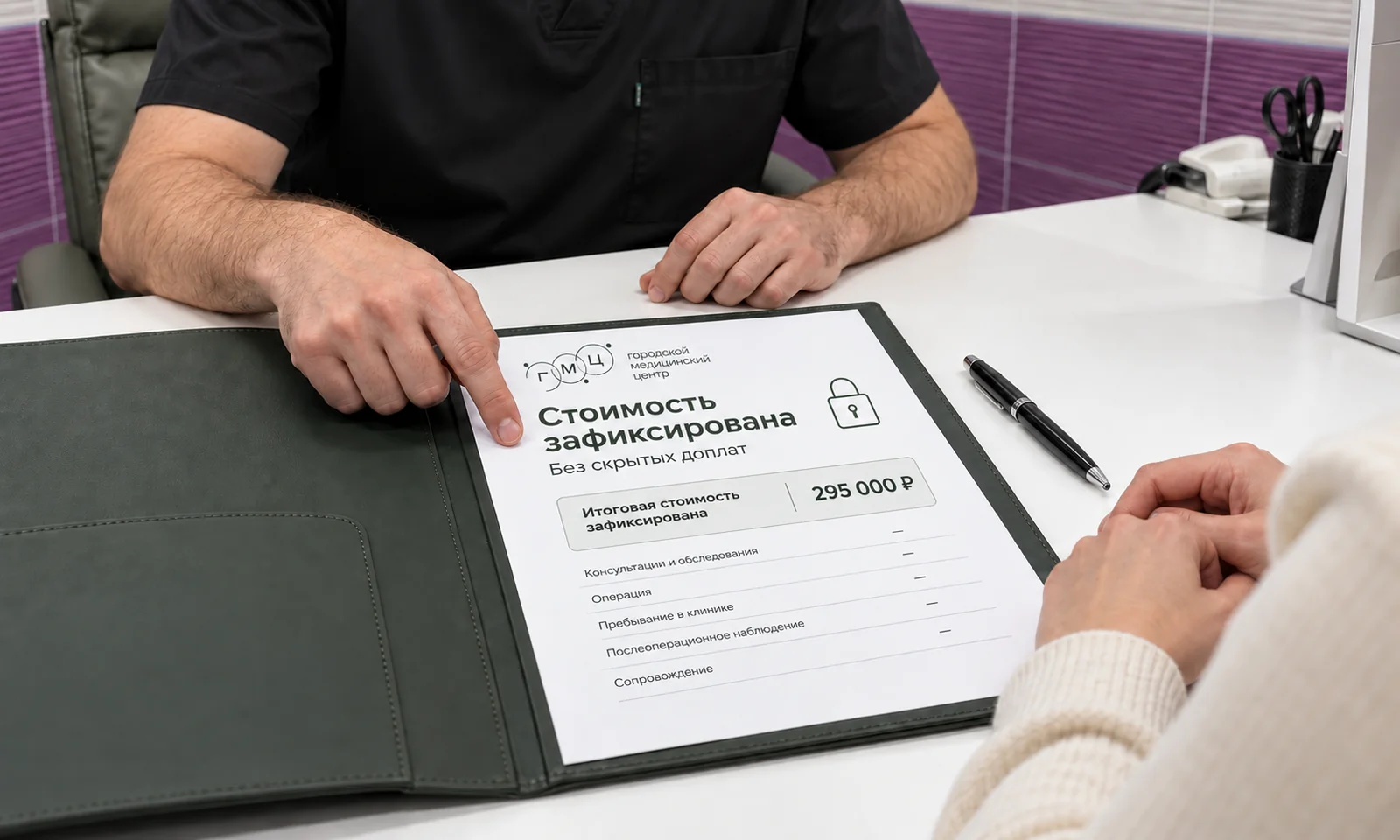
After the consultation the surgeon chooses the method and you get a clear price — no hidden fees and no surprises on the way to your result.
FAQ
At the clinic, experienced bariatric surgeons perform the bariatric operations:
Write to us and our coordinator will respond shortly and book you in for a consultation. The consultation with the bariatric surgeon is free.
Surgery is prescribed only when clear criteria are met
BMI is the key measure used to assess how severe obesity is. You get it by dividing body weight (kg) by height squared (m²). Surgery is generally justified at a BMI above 40, or above 35 when serious related conditions are present. Sometimes it is also considered at lower values — when non-surgical methods have not worked.
Though often confused, the two have fundamentally different goals. Bariatric surgery is a medical treatment of obesity and related illnesses; it changes the functioning of the digestive tract to address the causes of excess weight and metabolism. Plastic surgery reshapes the outer contours of the body and neither treats obesity nor affects metabolism.
City Medical Centre performs four core types of bariatric surgery: sleeve gastrectomy, Roux-en-Y gastric bypass, mini gastric bypass (MGB) and SADI-S duodeno-ileal bypass. Selection is individual and takes into account BMI, related conditions and the patient's goals.
We work with modern laparoscopic technique. The operation needs only 4 small punctures, 5 to 15 mm each. Cosmetic sutures are applied, so healed marks are almost invisible.
Recovery depends on what you plan to do. Office work: after 2–4 weeks. Physical work: after 1.5 months. Sport and activity: swimming after 30 days, other exercise phased in as weight drops. Travel and holidays: preferably not earlier than one month after surgery.
Stage by stage, you move from liquid food to soft and then solid. Priority goes to protein, and high-calorie, fatty food is limited.
It is possible to get pregnant after bariatric surgery, but doctors recommend a minimum wait of 12–18 months. During it the body stabilizes, weight reaches its target and nutritional status is normalized.
Yes, after bariatric surgery vitamins cannot be skipped. As the digestive anatomy changes, some nutrients are absorbed less well, making regular vitamin and mineral supplements a permanent feature of the patient's life.
Regain after bariatric surgery is possible, but very unlikely if you follow the doctor's advice. Proper nutrition, no high-calorie drinks and regular follow-up visits with City Medical Centre specialists make the difference.
Prices are in US dollars; the amount in brackets is an approximate conversion to NGN at the rate of 02.10.2026. The final price is fixed in your contract.
Prices start from $3,600 (≈ ₦4,800,000). The surgeon sets the final price at the free consultation, and it is fixed in the contract, with no hidden extras.
General anaesthesia, a personal coordinator from day one, monitoring in the hospital and support for one year.
The hospital stay is 1–5 days, depending on the method and how you feel. Office work is possible after 2–4 weeks.
Yes. The first consultation is free and does not oblige you to anything. You can start online by sending a message to the coordinator.
Message us on WhatsApp or Telegram using the buttons below. A coordinator will answer your questions and book a free consultation where the doctor names the exact price.
By messaging us, you agree to our Privacy Policy
The decision rests on clear criteria: body mass index, overall health with related chronic conditions, and failed previous attempts at weight loss. BMI is weight in kilograms divided by height in metres squared. Contraindications include acute illness, severe chronic or mental illness, and less than six months since breastfeeding ended. Yola patients receive a personal assessment against these points.
Step one: consultation. Step two: laboratory and instrumental tests, gastroscopy and specialist reviews. Step three: surgery through small punctures by a permanent team, not a duty shift. Step four: 1–5 days in the ward with meals and nursing. Step five: a staged diet and a year of follow-up. People in Yola follow this route from start to finish.
Everything needed for the result is combined in one package, with no hidden fees and no surprises. For patients from Yola, it includes surgery by a dedicated team, round-the-clock care in the ward with meals and nursing, a doctor nearby 24/7 and a personal coordinator. The first step is a free 15-minute consultation with a bariatric surgeon.
What patients write after this operation. Reviews are translated from the original language.
Irina, 26
For a long time I doubted whether to go ahead with surgery, but after the consultation I felt much calmer. Andrey Georgievich explained in detail how gastric bypass is done, what to expect after the operation and how recovery would go. I especially liked that they talked to me calmly and without pressure. I am now gradually getting used to my new way of life and I am very glad I took this step.
Bariatric surgery
Doctor: Andrey G. Ugay
Angelina, 22
For me the hardest part was deciding to have the operation. At the consultation Ruslan Sergeyevich answered all my questions in detail and explained the specifics of sleeve gastrectomy and recovery. After the operation I always understood what I was doing and why. Thank you to the doctor and the whole team for their attentiveness.
Bariatric surgery
Doctor: Ruslan S. Menzulin
Anna, 31
For a very long time I tried to deal with my excess weight on my own, but I did not get the result I wanted. After the consultation with Andrey Georgievich I finally understood what to do next. I came through the operation well, and my recovery was supervised by the doctors. It was important for me to feel that I was not left alone after surgery.
Bariatric surgery
Doctor: Andrey G. Ugay
Veronika, 25
Before the operation I had many fears, mostly of the unknown. Ruslan Sergeyevich explained every stage of treatment in detail and answered even the simplest questions. Thanks to that I felt much more confident. I keep following the recommendations and I am gradually seeing the changes I had the operation for.
Bariatric surgery
Doctor: Ruslan S. Menzulin
Valentina, 23
The decision to have bariatric surgery was not easy for me. I worried both about the operation itself and about how my life would change afterwards. At the consultation Andrey Georgievich explained everything in detail, so little by little my fear turned into confidence. What matters most to me now is the result and the chance to treat my health and lifestyle differently.
Bariatric surgery
Doctor: Andrey G. Ugay
Anna, 27
I am very grateful to Ruslan Sergeyevich for his attentiveness. Before the operation I had a huge number of questions, and I got a clear answer to every one of them. After the operation it was also clear which recommendations to follow and how to eat. It was important to me that the doctor stayed in touch and I felt supported at every stage.
Bariatric surgery
Doctor: Ruslan S. Menzulin
Yola takes its name from the Fulfulde word for a great, vast plain, and it is the capital and administrative centre of Adamawa State. The city lies on the Benue River and is made up of two parts: the old town, where the Lamido of Adamawa resides, and the newer commercial and administrative centre of Jimeta, about 5 km to the north-west. The city had a population of over 392,854 as of 2006. In a city of this size, weight-related health is a practical subject that people discuss with relatives, colleagues and friends.
Obesity is a long-term medical condition, not a lack of willpower. The World Health Organization treats obesity and overweight as a major health concern, and a person in Yola who has tried diets, exercise and supervised programmes without lasting change is not unusual. Bariatric surgery, meaning sleeve gastrectomy or gastric bypass, is one option that doctors consider when non-surgical approaches have not worked.
This text is written for residents of Yola and Jimeta who want to understand the operation before they speak to a specialist. It covers how the city's climate and daily rhythm affect planning and recovery, what to ask the surgeon, who is usually considered a candidate, and how the free online consultation works from home.
Sleeve gastrectomy reduces the size of the stomach so that a person feels full on a smaller portion. Gastric bypass changes the route food takes through the digestive system as well as the stomach volume. Which of the two suits a particular patient is decided by the surgeon after reviewing weight, related conditions, eating habits and previous treatment. A patient in Yola should not choose a method from advice given by friends; the choice belongs in the consultation.
We rely on modern laparoscopic technique. The operation is performed through 4 small punctures of 5 to 15 mm. Cosmetic sutures are used, so after healing the marks are barely visible. For many people this matters for everyday comfort, including wearing light clothing in a hot climate without worrying about large scars.
The operation is performed under general anaesthesia, with 1–5 days in hospital. Doctors supervise you in hospital after surgery for a stay of 1–3 to 4–5 days, depending on the complexity of the operation and how you are feeling.
Usually a BMI over 40, or over 35 with related health conditions. The surgeon confirms whether surgery suits you at the consultation. BMI is the main tool for assessing the degree of obesity. It is calculated by dividing body weight (kg) by height squared (m²).
Surgery is usually justified with a BMI above 40, or above 35 with serious related conditions. In some cases surgery is considered at lower values too, if non-surgical approaches have failed. Many people in Yola who ask about the operation have already tried several approaches over the years, and the surgeon will want to hear that history in detail.
Contraindications are assessed individually. In general terms, the doctor looks at the state of the heart and lungs, digestive diseases, medicines you take, previous abdominal operations, and whether you are ready to follow a long-term eating and follow-up plan. Be honest about all of this during the consultation. An incomplete picture makes the plan less safe, not more convenient.
Yola has a tropical savanna climate that borders on a hot semi-arid one, with a dry season and a wet season. The temperature is warm all year. March has the highest average high, 42.8 °C, and April has the highest average low, 27.0 °C. The hottest weeks come just before the rains begin.
The wet season runs from May to October. August is the wettest month, with 196.1 mm of rain on average, and humidity can be high from July to September. The dry season covers the rest of the year, and no precipitation falls from December to February. Humidity drops to just 13.5% in February. Yola receives 2,845.5 hours of sunshine a year.
For planning, each season has its own advantages. In the hottest weeks of March and April, heat and the wish to drink little during the day can make the first weeks harder, and a compression garment, if the surgeon recommends one, feels warmer. In the humid months of July to September, damp skin around the small incisions needs careful drying. November or December, with lower humidity and more moderate heat, are often easier for a quiet recovery at home, but the final timing depends on your health and your surgeon's schedule, not on the weather alone.
The dry season brings strong sun and a wide difference between day and night temperatures. In the first weeks after surgery, spend the hottest part of the day indoors, wear loose breathable cotton, and cover the small marks from direct sun so that the healing skin is not irritated. Ask the surgeon when sunscreen on the area is appropriate.
Fluid intake needs particular attention in a hot city. After the operation you will drink in small, frequent sips, and the team will explain the plan. Keep water within reach at home and carry it when you go out. If you feel dizzy, unusually weak or cannot keep fluids down, contact the coordinator and the medical team without waiting.
Dust in the dry season can irritate the throat and skin. Keep the room clean, avoid crowded dusty places while you are still weak, and wash your hands before touching the dressings. In the rains, damp and mosquitoes are part of daily life, so a clean, dry resting space matters for comfort.
Yola is the administrative centre of Adamawa State, while Jimeta is the commercial heart of the urban area. Many patients work in offices, trade, education or public service, and some have physical jobs. Recovery time depends on the activity. Office work: after 2–4 weeks. Physical work: after 1.5 months. Back to work after 2–4 weeks is the figure for desk-based jobs, so speak to your employer early and plan the leave.
Students can usually plan the operation around a break in the academic calendar, so that lectures and exams do not collide with the first weeks. Ask the surgeon whether you can study from home while resting, and how long to avoid carrying heavy bags or books.
Weddings, naming ceremonies and religious celebrations are an important part of community life, and they are usually built around shared meals. It is sensible to schedule the operation well away from a major family event, and to tell close relatives in advance that your portions will be small and that you will not be able to eat as before. Support from the household makes the new eating pattern much easier to keep.
After sleeve gastrectomy or gastric bypass the diet moves through stages set by the medical team, from liquids to soft food and then to normal textures. Everyday meals in northern Nigeria often include grains, stews, rice, soups and fried snacks. The practical question is not which dishes are forbidden but how to build a small, protein-first plate and eat slowly.
Discuss with the dietitian how to adapt your family's usual cooking: less oil, smaller portions, careful chewing, and avoiding sweet drinks. Sugary soft drinks and very fatty foods can cause discomfort after surgery, and the team will explain what to expect.
Plan meals together with the household. When the person who prepares meals understands the plan, it is far easier to keep to it during busy weeks and celebrations. From preparation to 12 months of support, all in one package. No added fees. That support includes help with questions about food, supplements and weight loss progress.
Sport and activity: swimming allowed after 30 days, other exercise gradually added as weight goes down. For people in Yola who like to swim in a pool or enjoy a river outing in the rainy season, this means waiting until the surgeon agrees that the wounds have healed, and avoiding unclean open water until then.
Walking is the natural start in any climate. In the hot season, walk in the early morning or after sunset rather than at midday, wear a hat and drink water. Football, running and gym work are added step by step, not all at once. Heavy lifting should wait until the surgeon allows it.
As weight goes down, your capacity changes, so the plan changes too. Keep the surgeon informed about how you feel, and do not compare your pace with that of a friend who had the same operation.
Getting pregnant after bariatric surgery is possible, but doctors advise waiting at least 12–18 months, so the body can stabilize, weight can reach target values and nutritional status can normalize. Women in Yola who are planning a family should discuss this before choosing the date of surgery.
Weight reaches its lowest stable level over time: the figure given for the full effect is 18–24 months after surgery. The first months bring the fastest change, followed by a slower phase. Do not judge the result by the first weeks.
Follow-up support for 12 months is part of the programme. Regular contact lets the team check weight, blood tests, vitamins and the way you are eating, and catch problems early. Keep every scheduled check even when you feel well.
Yola was established in 1841 by Modibbo Adama, a local Fulani chief recognised as a Muslim scholar during the movement led by Shehu Usman Dan Fodio. The city sprawls across a hillside on the Benue River, and a visitor in 1893 described it as built on a level sandstone ridge, with dark green trees against the vivid red of the earth. For a patient planning bariatric surgery, this matters in a small way: the old town and Jimeta are about 5 km apart, so errands, family visits and follow-up messages should be arranged before the operation, not during the first weeks.
Old Yola is the traditional city where the Lamido of Adamawa resides, while Jimeta is the administrative and commercial centre with its market, zoo and main mosque and cathedral. Many residents move between the two parts daily by bus or taxi. In the early recovery period, avoid long seats in crowded vehicles and busy market lanes. Ask a relative to shop for you, and keep short walks near home as your main activity.
The red earth and sandstone ground that von Uechtritz noticed also mean dust once the rains stop. Choose a resting room that can be swept and wiped easily, and keep the dressings clean and dry, as your surgical team instructs.
Jimeta is the commercial heart of the urban area, and its market is where many households buy grains, vegetables, meat, fish and spices. Yola has long been a place of cattle and farming: in the nineteenth century the abundance of cattle supplied manure for farmland, and trade centred on foodstuff. Today this farming tradition means fresh milk products, beef and vegetables are close at hand, which helps when you build a small, protein-first plate.
Before surgery, go through the market with your dietitian's guidance in mind. Look for lean meat, fish, eggs, beans and soft-cooked vegetables, and avoid buying large quantities of fried snacks and sweet drinks that tempt the household. After sleeve gastrectomy or gastric bypass, portions are small and textures change in stages, so plan purchases for the stage you are in, not for the family's usual meals.
If you cook for others, prepare the family dish as usual and set aside your portion before adding extra oil. Having a relative carry the heavy market bags in the first weeks is a sensible request, and the surgeon will tell you how long to avoid lifting.
Yola is a city of learning. It is home to the American University of Nigeria, Adamawa State Polytechnic, the Modibbo Adama University, one of the campuses of the Nigerian Law School, and schools such as the Federal Government Girls College and Concordia College. Lecturers, administrators, teachers and students make up a large part of the people who ask about weight surgery here.
For university staff and teachers, the end of a term or a long break is the natural window. Office work is possible after 2–4 weeks, so ask your department whether marking, lectures or supervision can be rearranged. Voice rest is not usually a concern, but standing for long lectures may tire you early on, so arrange a chair and water.
Students can plan around the exam calendar, and a student living on campus should think about where meals will come from, since cafeteria food may not suit the staged diet. Ask the coordinator which questions to put to the surgeon about studying while resting, and arrange for a relative or friend to check on you in the first days after you return home.
Yola lies between the Mandara Mountains to the north and the Shebshi Mountains and Mount Dimlang (Vogel Peak) to the south, and it is an access point to Gashaka Gumpti, the Mambilla Plateau, the Sukur World Heritage Site, the Yadin Waterfalls and the Kiri Dam on the Gongola River. These outings are tempting in the rains, but wait until the surgeon permits. Swimming is allowed after 30 days, and the Benue or dam waters are open water, so ask before any river outing. Hill walking should be added gradually as weight goes down.
The annual horse-riding durbar at the Lamido's Palace is a major event in the city's calendar, and it is a day of crowds, heat and long standing. If you are within the first weeks of recovery, watch calmly from a shaded spot or choose another year for your operation date. Heat in the open, little water and rich festive food are a poor mix for a healing stomach.
The former Njuwa lake fishing festival site is now dried and developed into residential area, a reminder that the city changes. Plan your surgery date around your own calendar of family and community events, and tell relatives that you will take small portions and will not rush the meal.
The first step is a free online consultation. You contact the coordinators on Telegram or Telegram from Yola, Jimeta or anywhere in the region. We work 24/7: booking is easy, the approach is personal and we adapt to your pace. A coordinator will call you back 24/7.
Before the conversation, prepare your height and weight, a list of illnesses and medicines, previous operations, and earlier attempts to lose weight. Recent test results are useful if you have them. From these the surgeon can say whether surgery may suit you and which method is worth discussing.
Mobile data can be unstable in some areas, so choose a quiet place with a good connection, or send documents as messages and photos in advance. Invite a family member to join the conversation if they will support you during recovery.
Usually a BMI over 40, or over 35 with related health conditions. The surgeon confirms whether surgery suits you at the consultation. In some cases surgery is considered at lower values too, if non-surgical approaches have failed.
Divide body weight in kilograms by height in metres squared. It is the main tool for assessing the degree of obesity, and your surgeon will interpret it together with your other health conditions.
Neither is better for everyone. The surgeon chooses after looking at your weight, related conditions, eating habits and history. Do not decide in advance from other people's stories.
General anaesthesia is used, with 1–5 days in hospital depending on the method and how you feel.
We rely on modern laparoscopic technique. The operation is performed through 4 small punctures of 5 to 15 mm. Cosmetic sutures are used, so after healing the marks are barely visible.
Office work is possible after 2–4 weeks. Physical work: after 1.5 months. Tell your employer in Yola early so that leave can be planned.
Swimming is allowed after 30 days, and other exercise is added gradually as weight goes down. Ask the surgeon before returning to any sport.
It can. In March and April, when average highs reach 42.8 °C, heat makes fluid intake and rest more demanding. Stay indoors at midday, wear loose cotton and follow the drinking plan from your team.
It is possible, but doctors advise waiting at least 12–18 months, so the body can stabilize, weight can reach target values and nutritional status can normalize.
Write to the coordinators on Telegram or Telegram for a free online consultation. They work 24/7, and a coordinator will call you back 24/7. Support continues for 12 months after surgery.
Short taxi or bus rides are not the issue so much as long waits, crowds and carrying bags. Arrange errands before the operation, ask relatives to help in the first weeks, and follow the surgeon's advice on lifting and activity.
Ask your surgeon. In the early weeks, long standing in heat, crowds and festive food are difficult. If the event falls near your date, it may be better to watch briefly from shade or choose a different date for the operation.
Office work is possible after 2–4 weeks. Talk to your department early, ask whether lectures can be arranged, and keep water nearby. The surgeon confirms the exact timing for you.
Swimming is allowed after 30 days, and other exercise is added gradually as weight goes down. Open water and rough hill paths should wait until the surgeon agrees that you have healed and have enough strength.
Page medically reviewed by Andrey G. Ugay, lead bariatric surgeon. Review date: .