
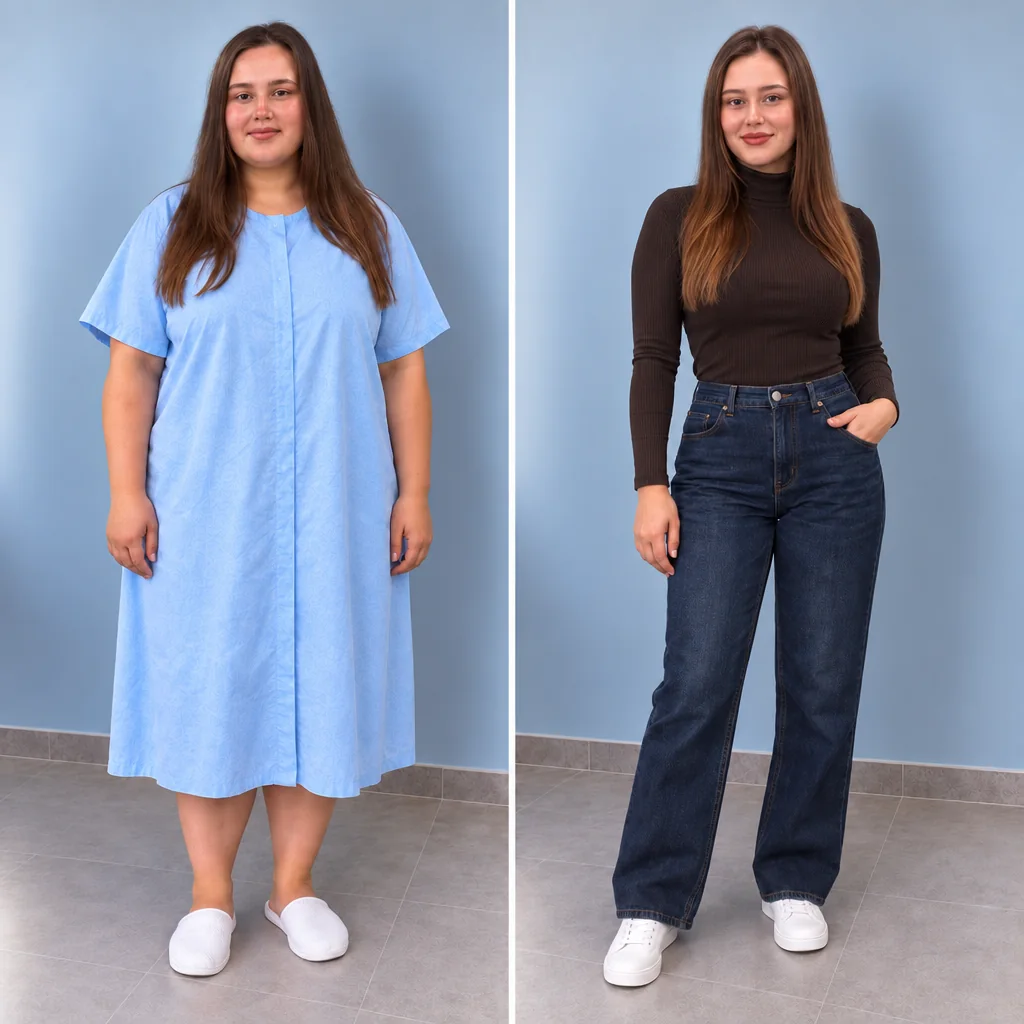
 beforeafter
Irina, 26
Bariatric surgery
Bariatric surgery
$3,600
$4,800 · First consultation — Free
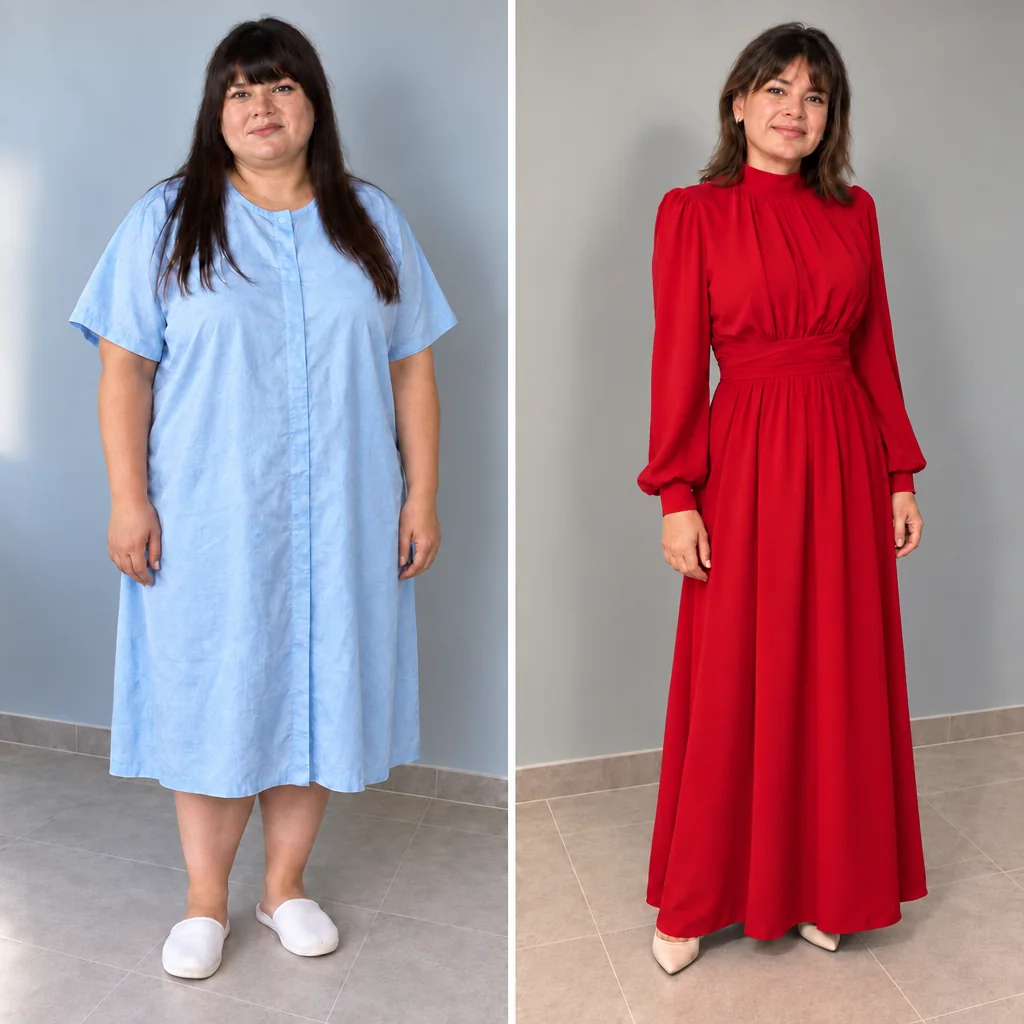 before
after
Message our coordinator
Free online consultation · Reply within 15 minutes
Message us on TelegramMessage us on WhatsAppBy messaging us, you agree to our Privacy Policy
Results
All cases are real patients of the clinic.
beforeafterBariatric surgery
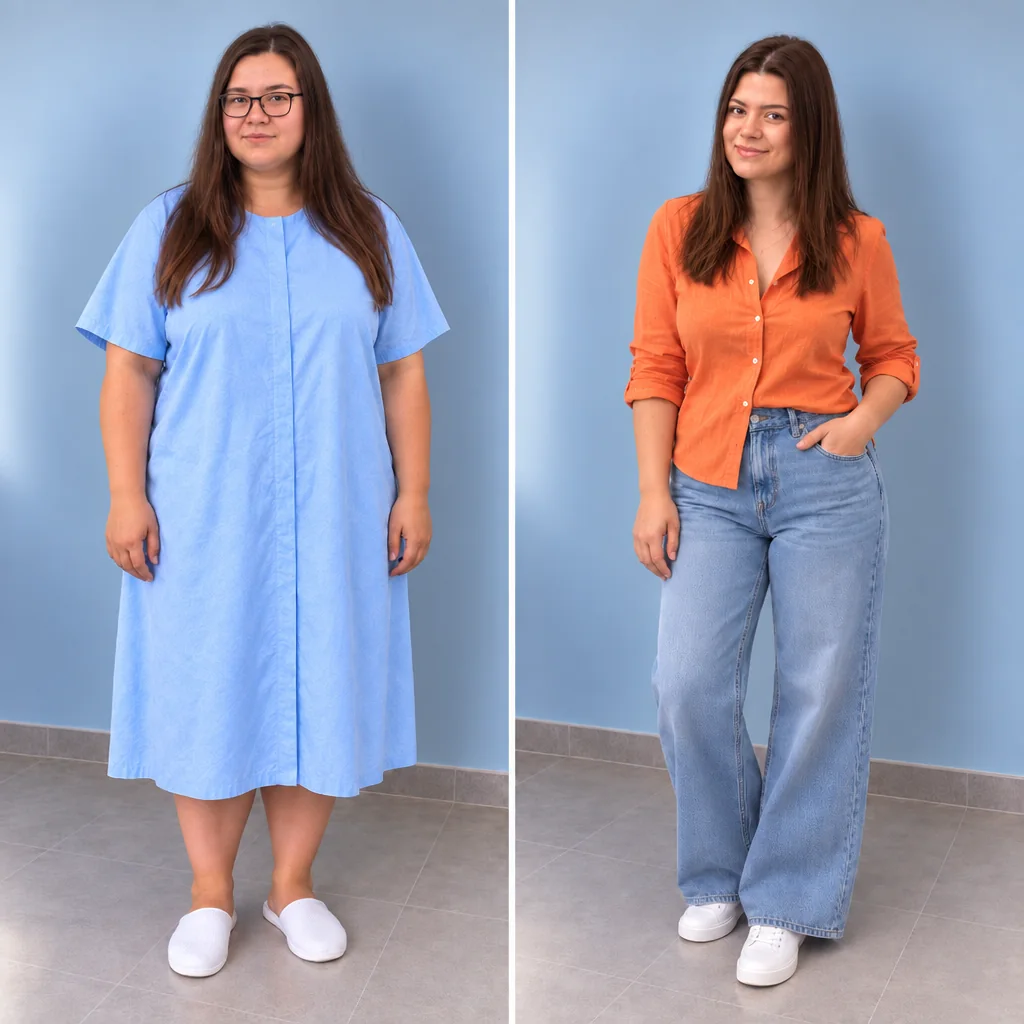 beforeafter
Bariatric surgery
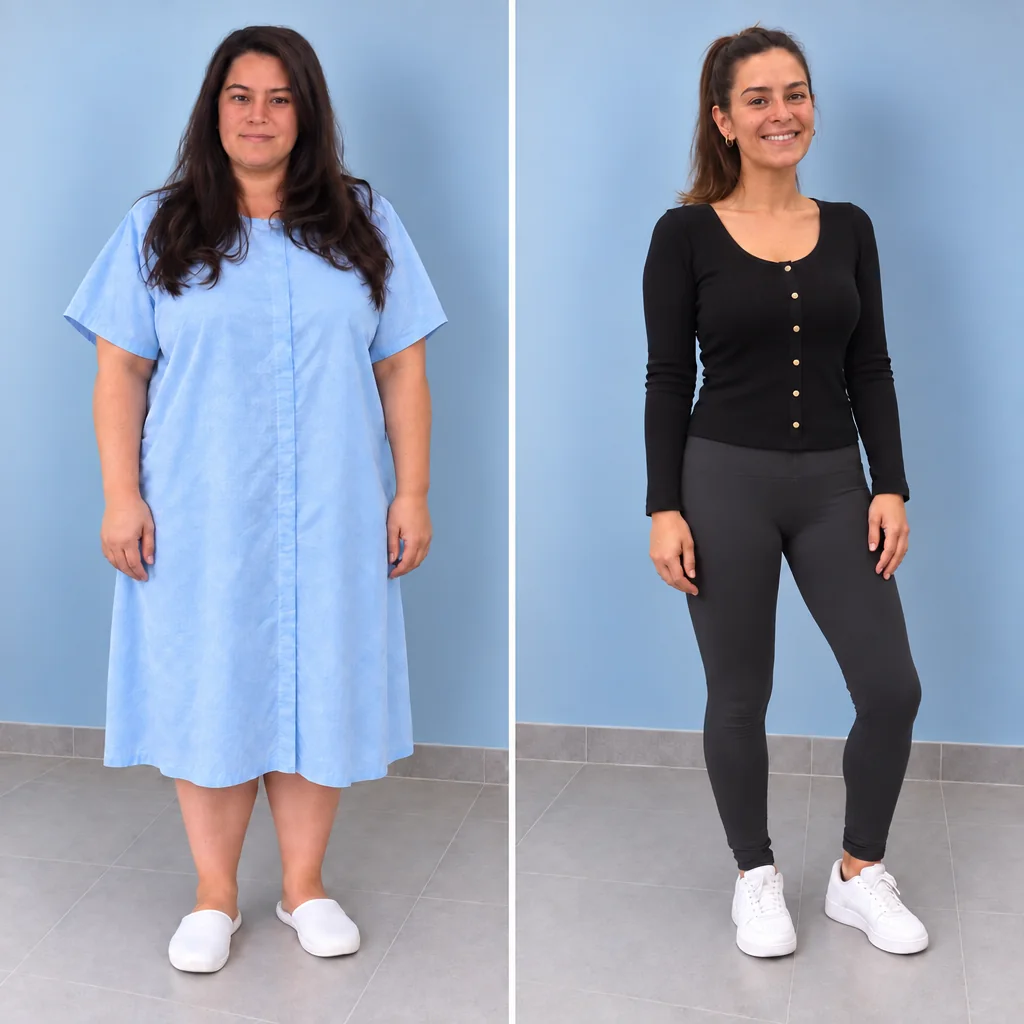 beforeafter
Bariatric surgery
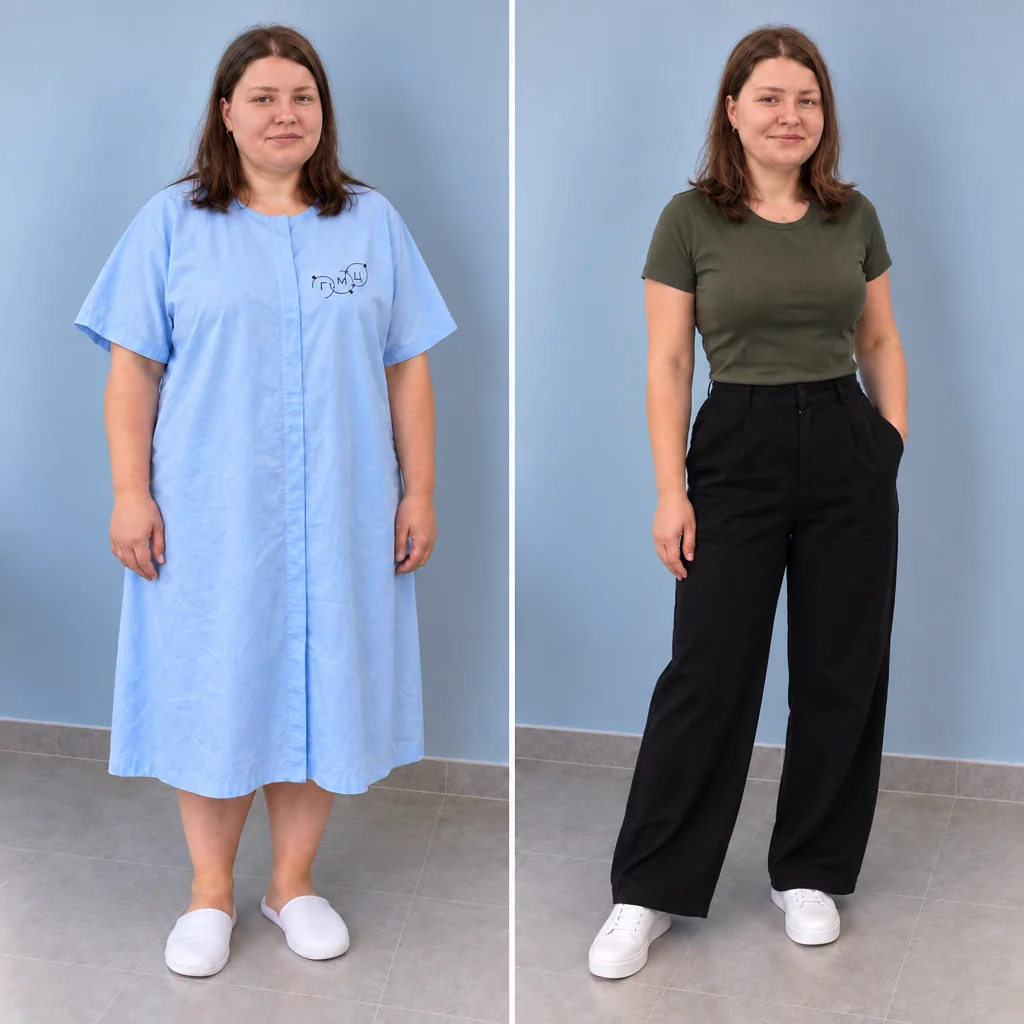 beforeafter
Bariatric surgery
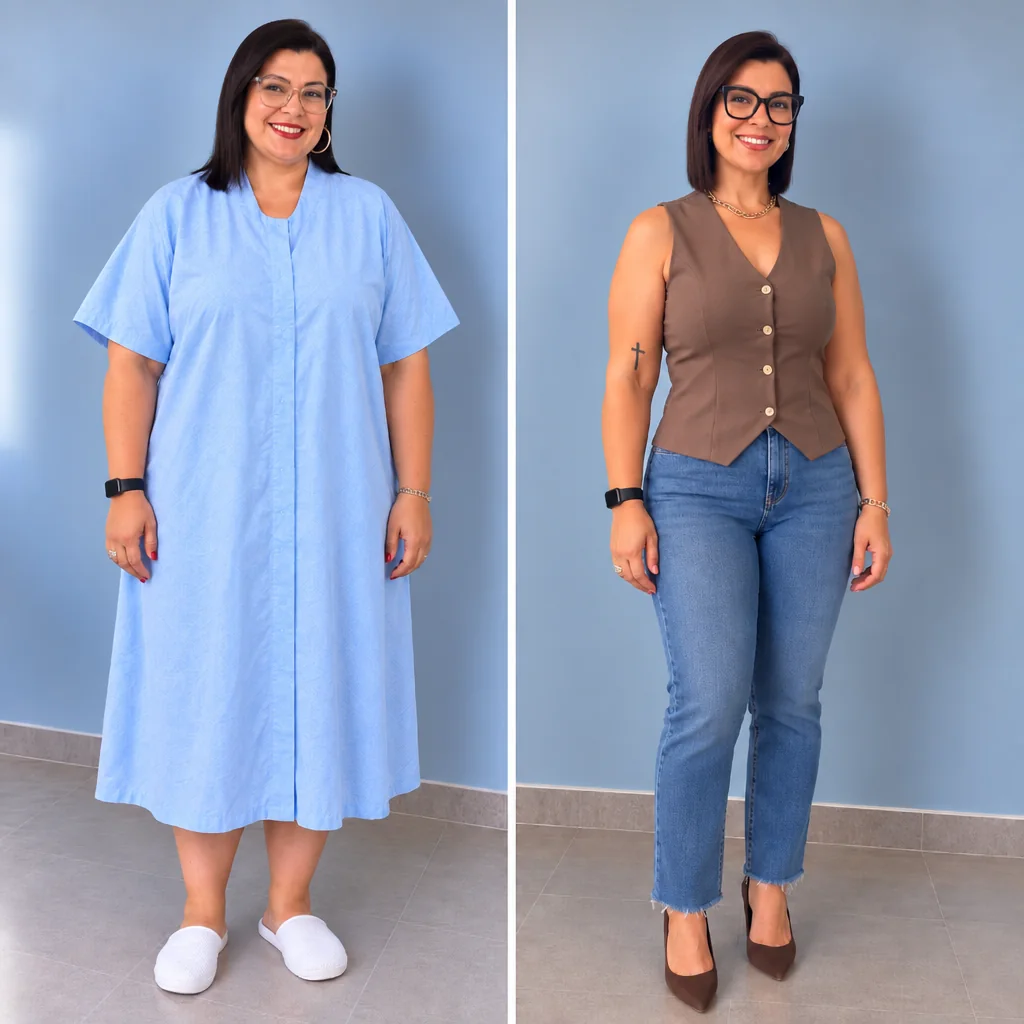 beforeafter
Bariatric surgery
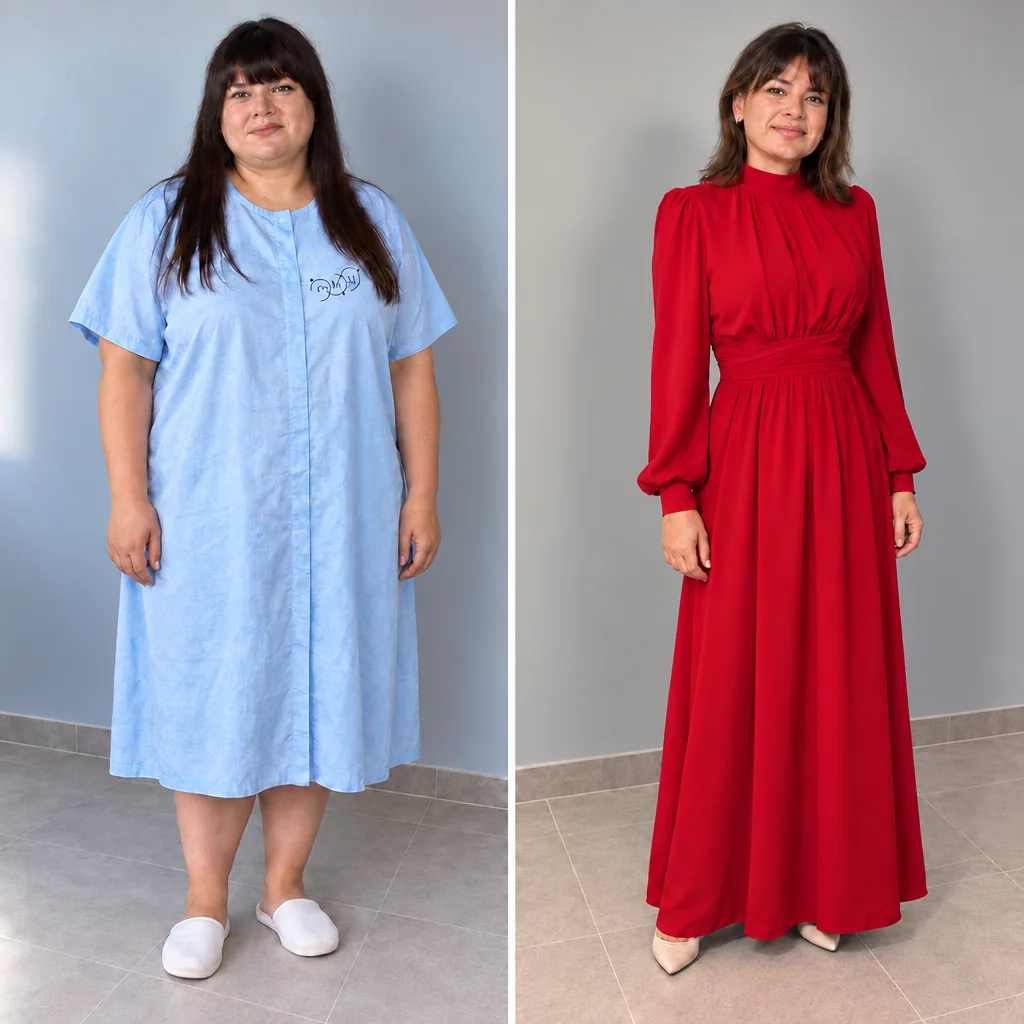 beforeafter
Bariatric surgery
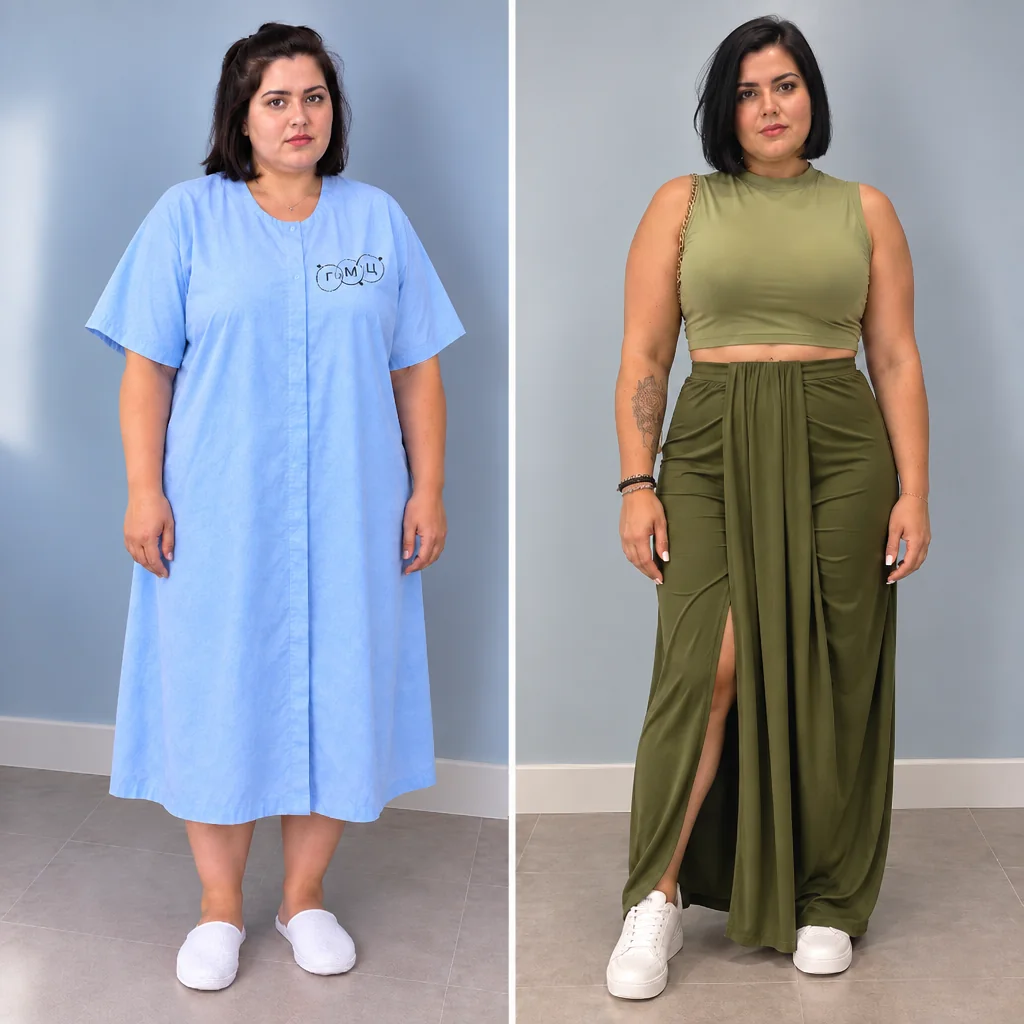 beforeafter
Bariatric surgery
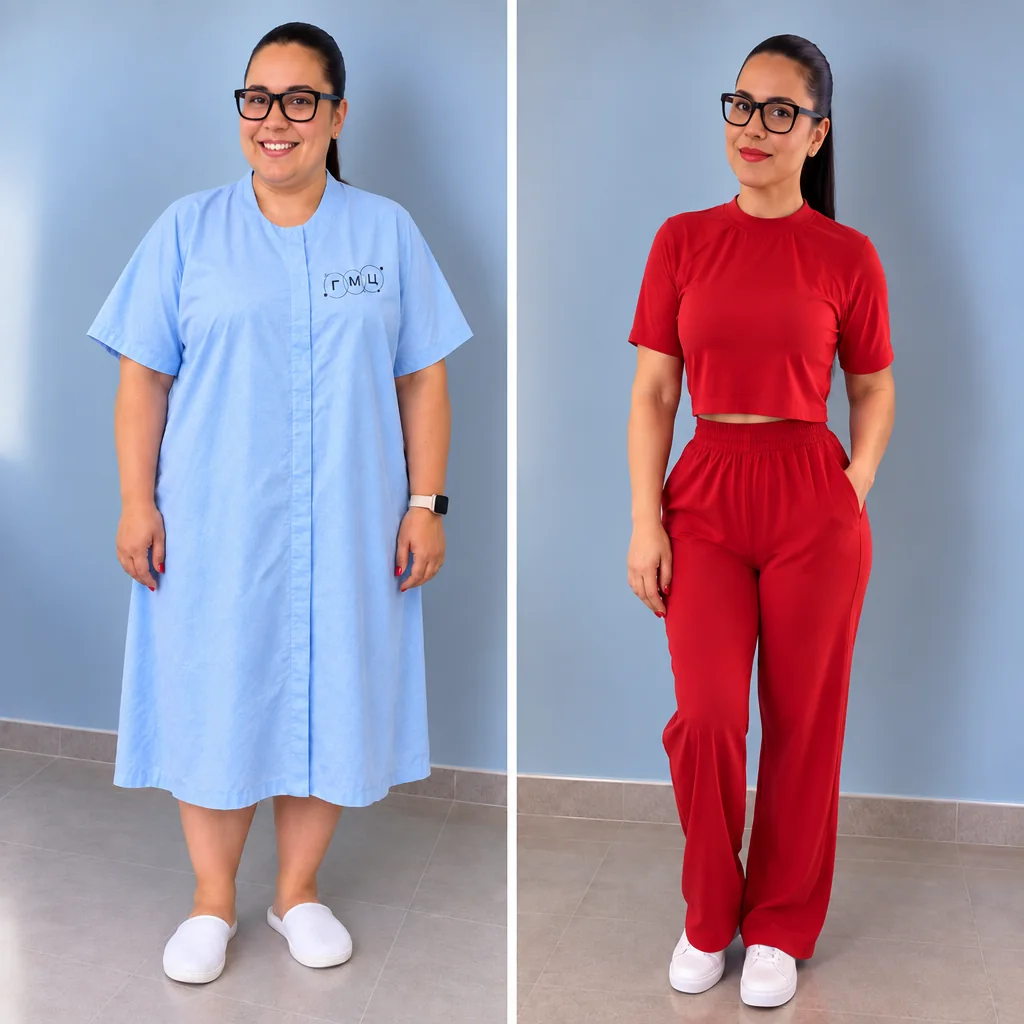 beforeafter
Bariatric surgery
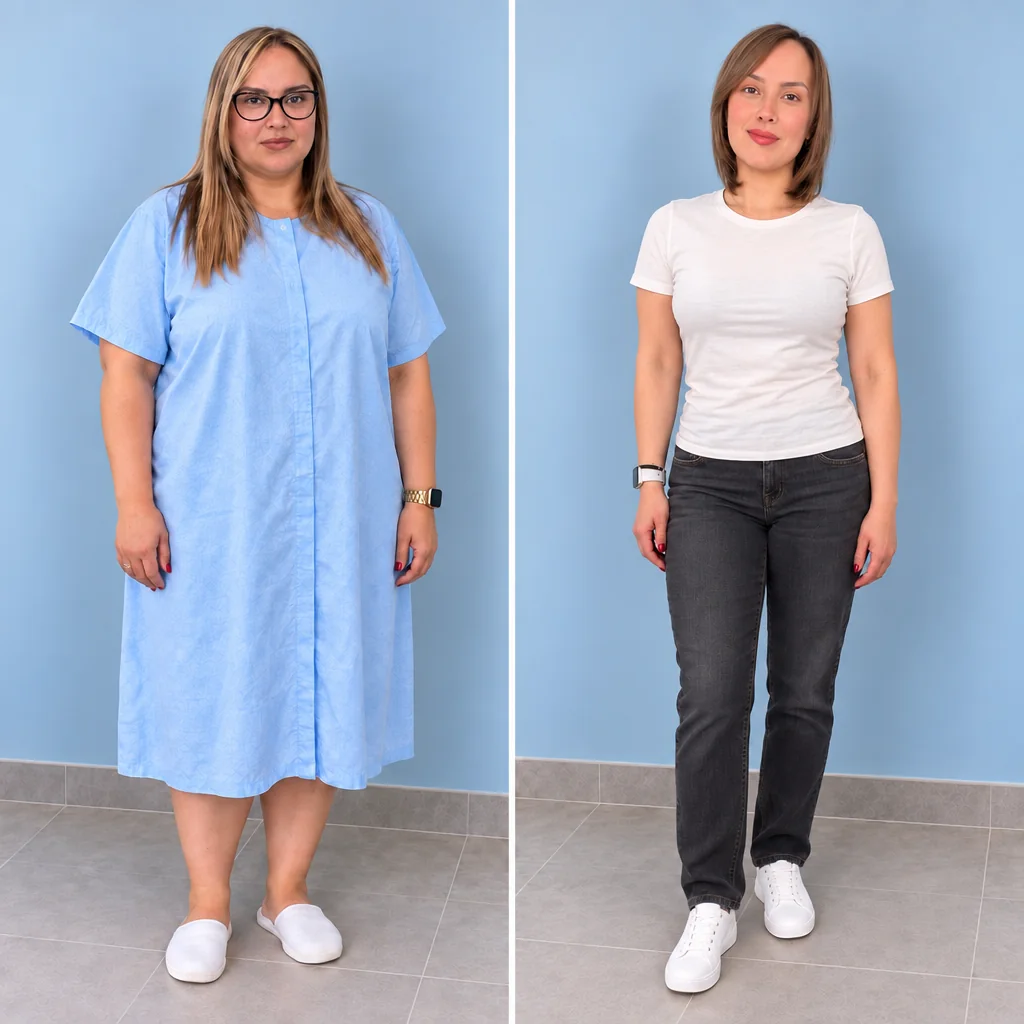 beforeafter
Bariatric surgery
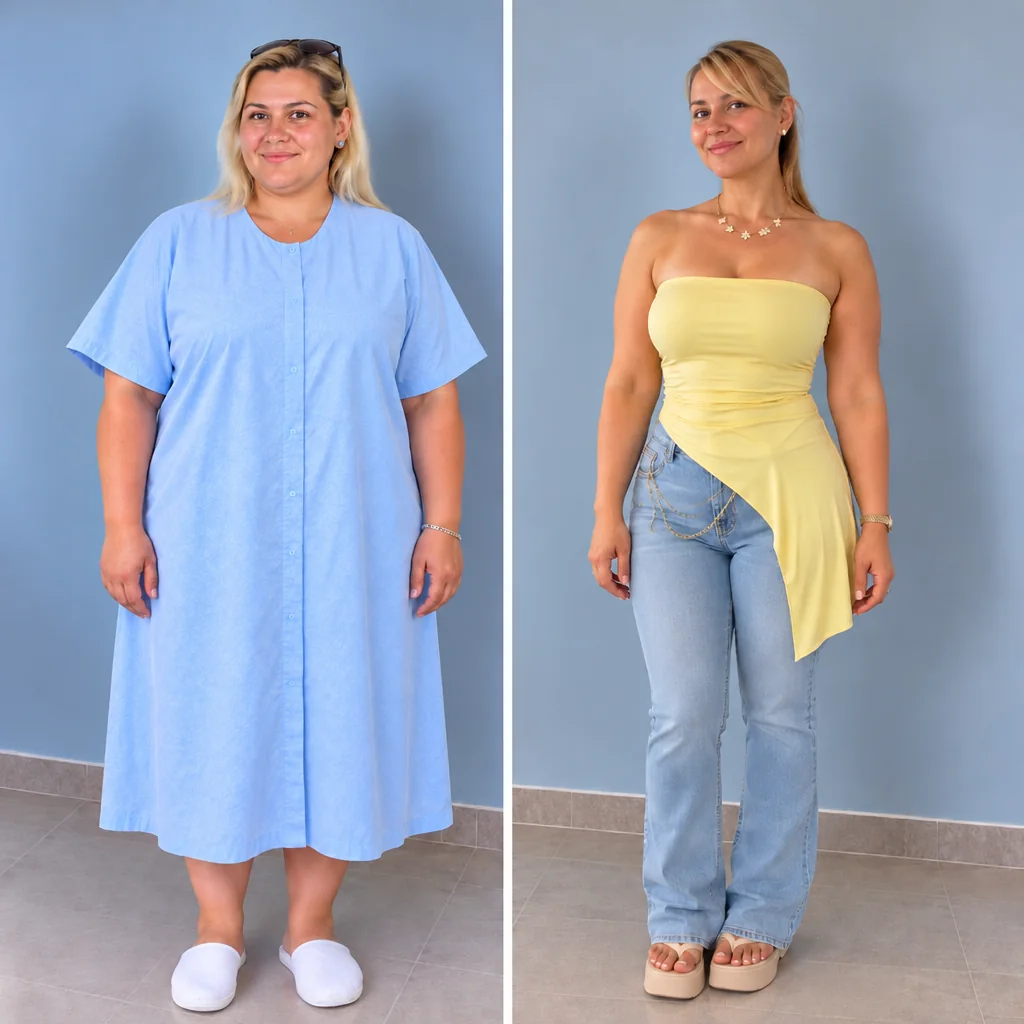 beforeafter
Bariatric surgery
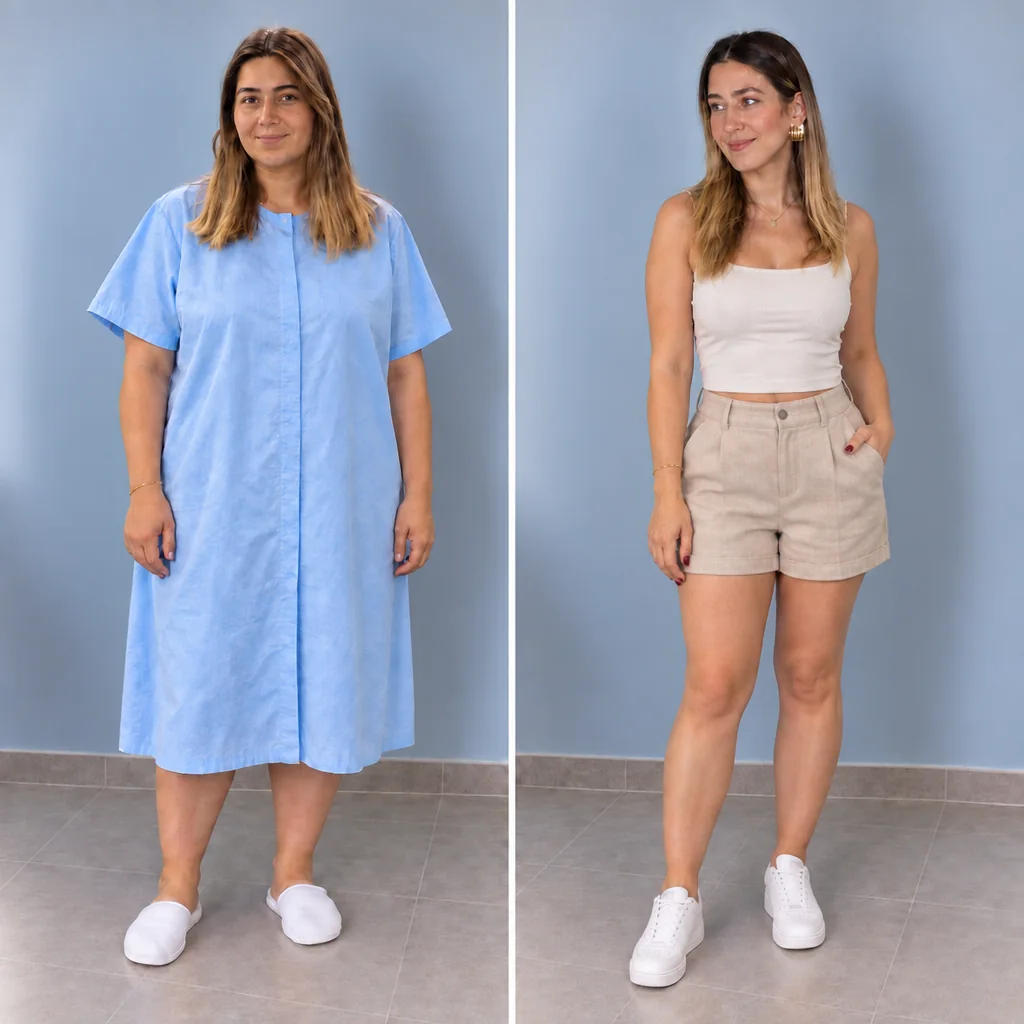 beforeafter
Bariatric surgery
Comparison
We carry out two principal operations: gastric bypass and sleeve gastrectomy. Review how each works, what it treats and when it is advised, and choose your method with confidence.
A smaller stomach volume
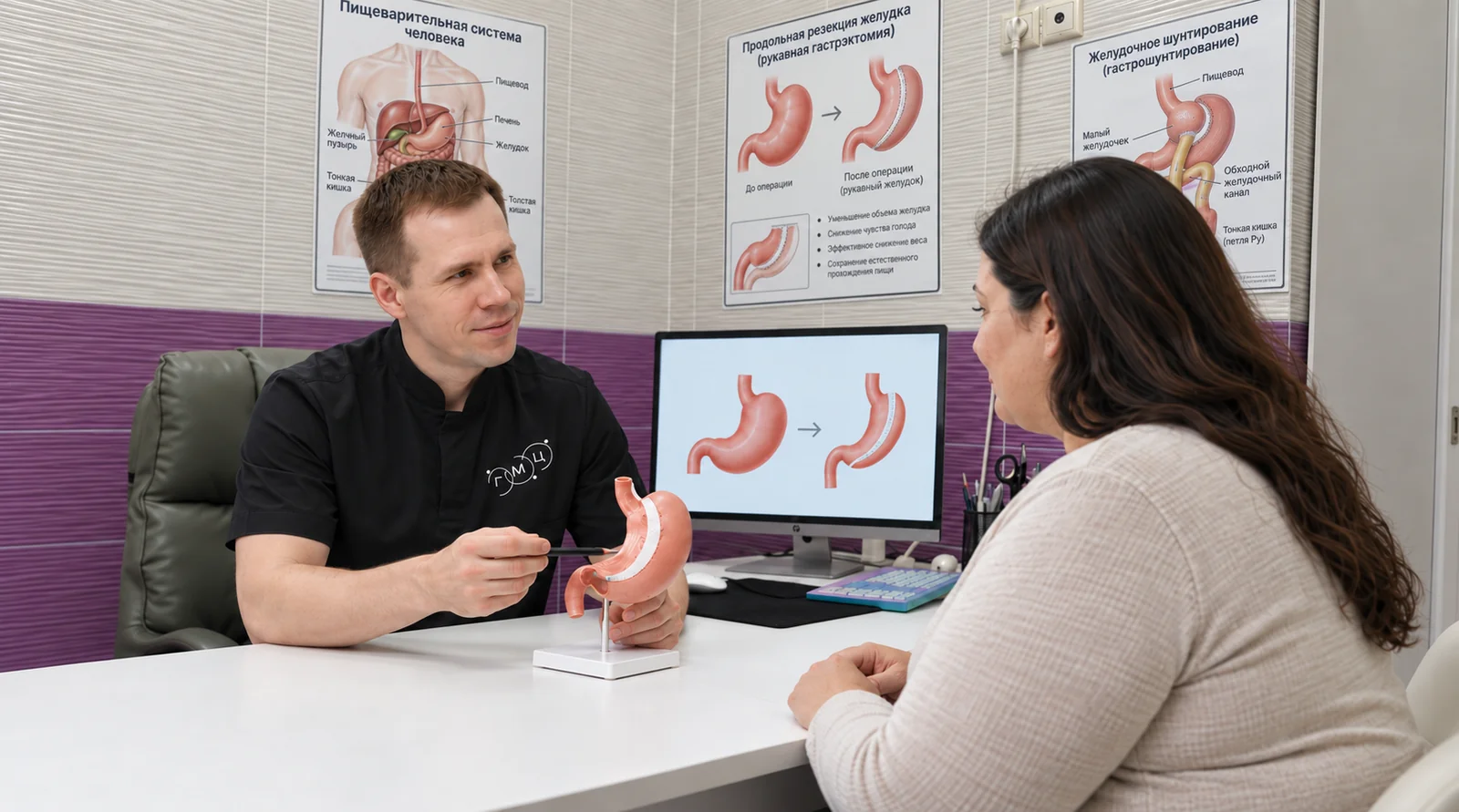
Discounted price
$3,600 $4,800
Less stomach volume and a changed route for food
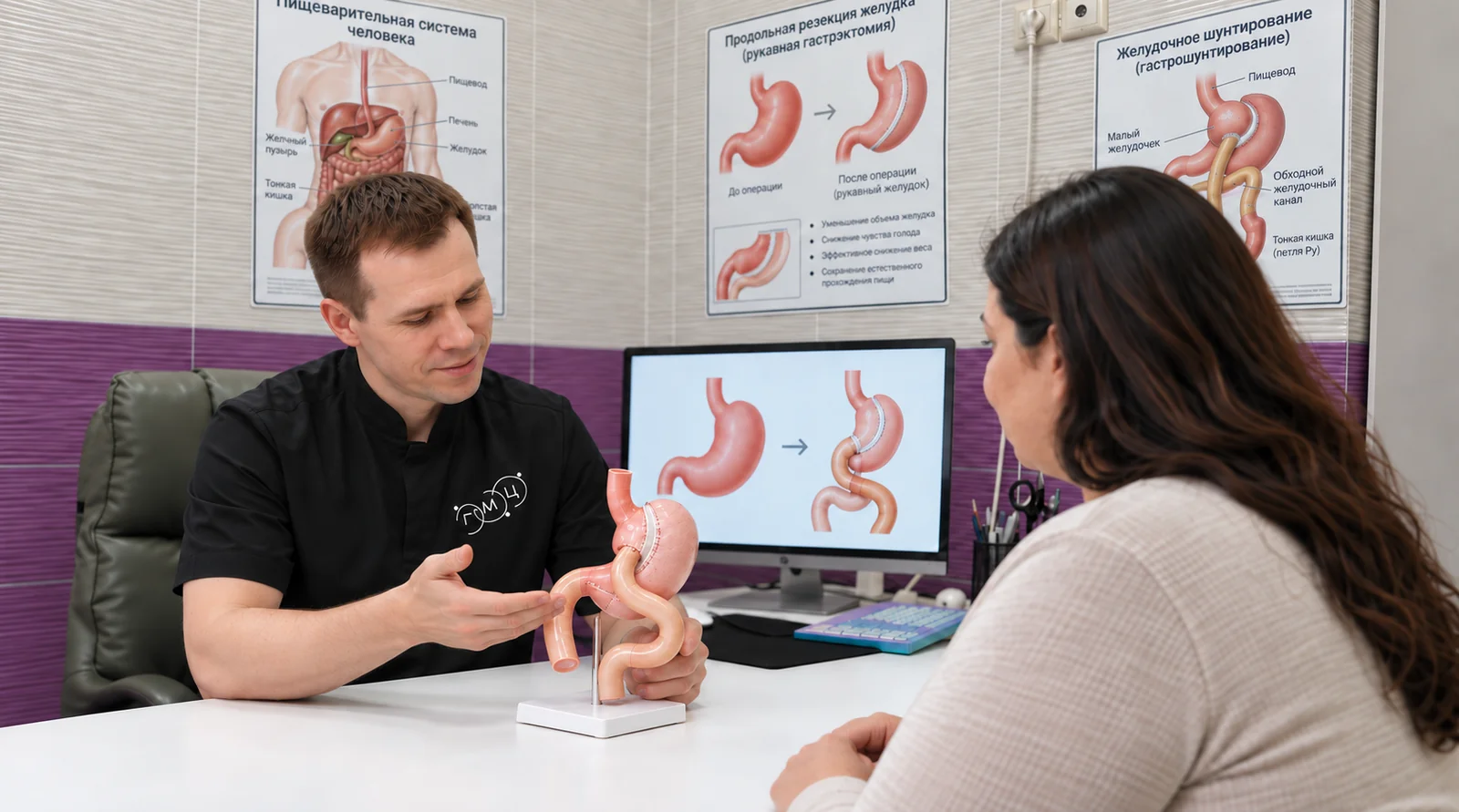
Discounted price
$4,000 $5,200
The benefits and recovery times shown are averaged by method and given for guidance: the extent of surgery and recovery depend on your anatomy and individual features, and the surgeon confirms them at the consultation.
Book a consultationOur clinic
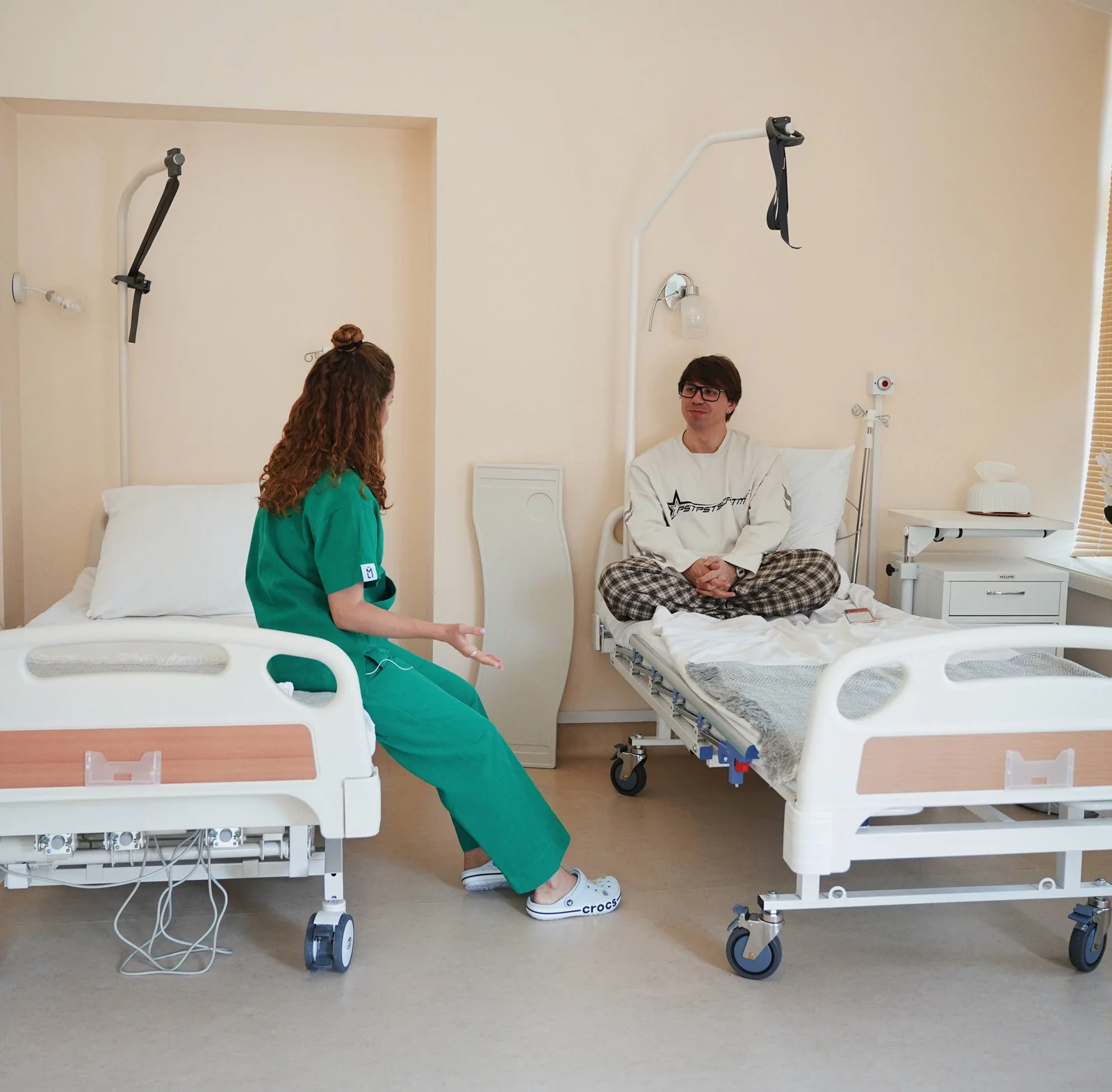
Modern technology, cosy rooms and personal attention for every patient
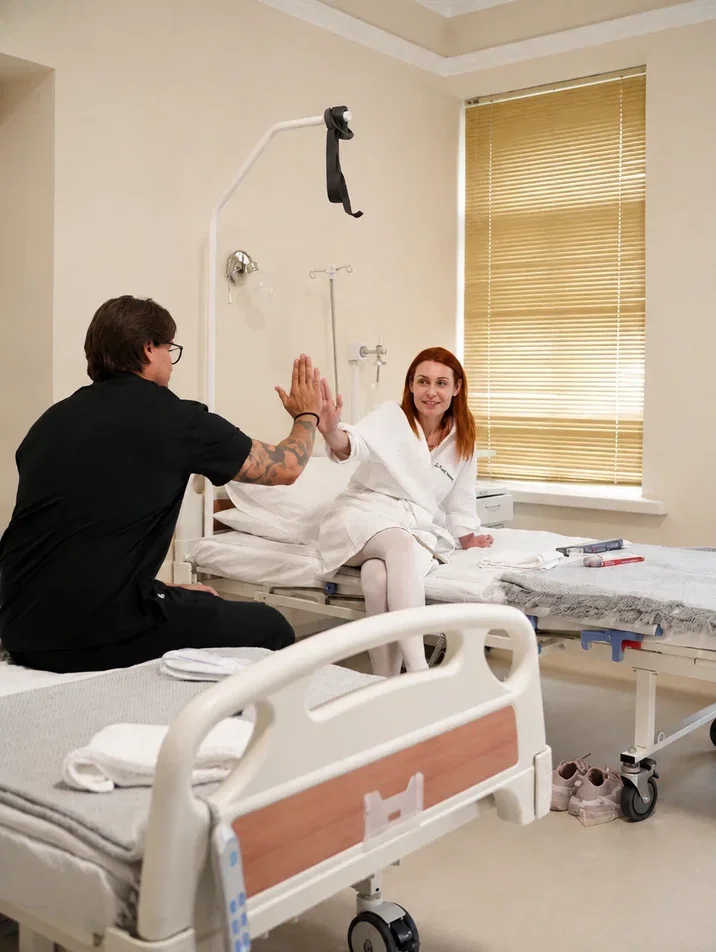
You get answers to your questions and a consultation slot that fits your schedule
Get a consultationSurgery is only decided jointly with the surgeon, once the consultation and check-up are done.
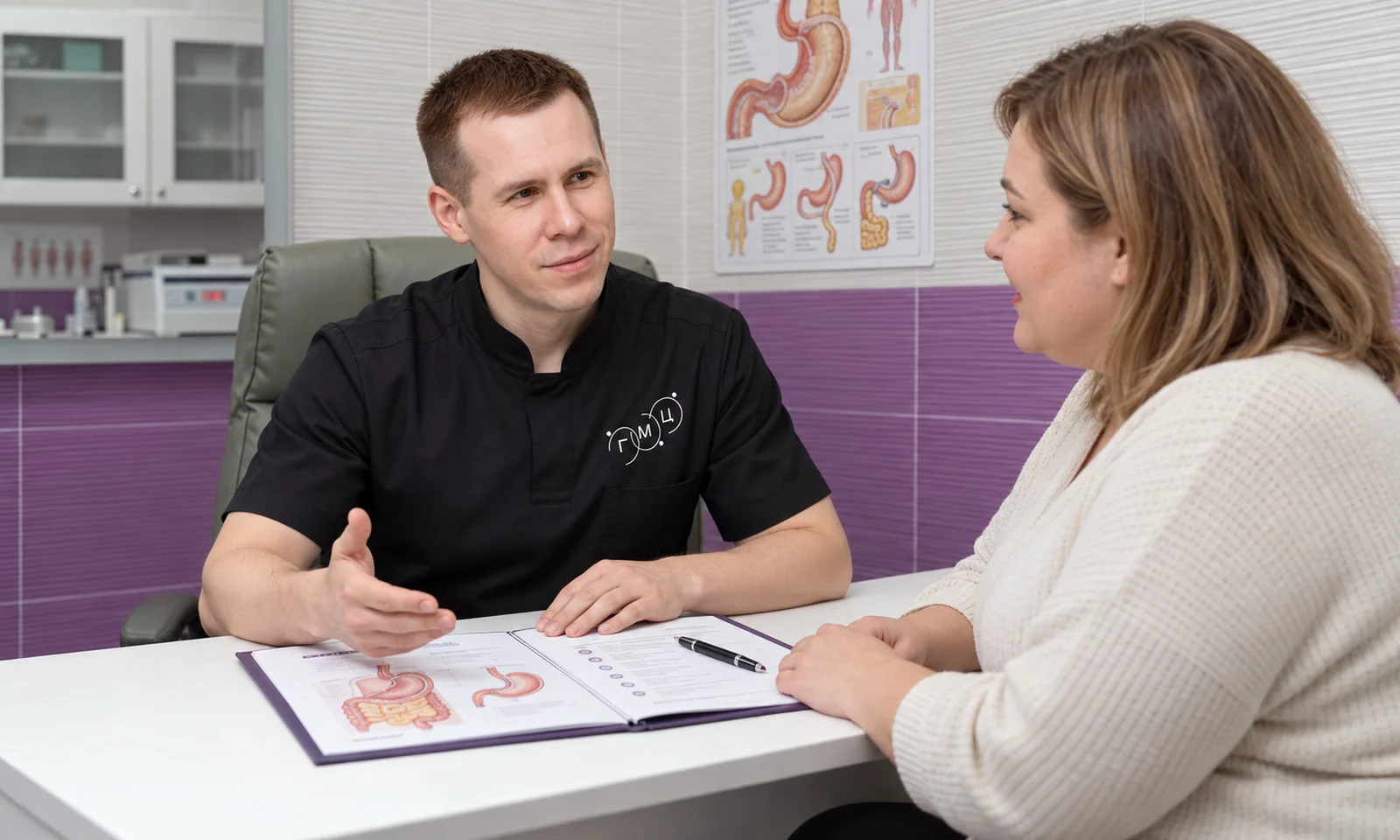
Unsure which column describes you?
Get in touch on Telegram — our coordinator will explain whether bariatric surgery is right for you. The consultation with a surgeon is free, and there is no commitment to an operation.
Find out if it suits me
Prices
When your plan is prepared, the cost is named at the consultation and locked in the contract.
Discounted price
A smaller stomach volume
$3,600$4,800
Discounted price
Rerouting food and losing weight
$4,000$5,200
Free
A treatment plan after the surgeon's examination

Free
the cost of surgery is named
and fixed in the contract
The doctor assesses your health, discusses your goals and chooses the right bariatric surgery method. The cost is named at the consultation and fixed in the contract.
Message our coordinator
Free online consultation · Reply within 15 minutes
Message us on TelegramMessage us on WhatsAppBy messaging us, you agree to our Privacy Policy
price
A single package: preparation through 12 months of support, no extra charges.From your pre-surgery preparation
to follow-up support for 12 months.
How it works
A treatment plan agreed with you, hospital monitoring and a year of support.
 1
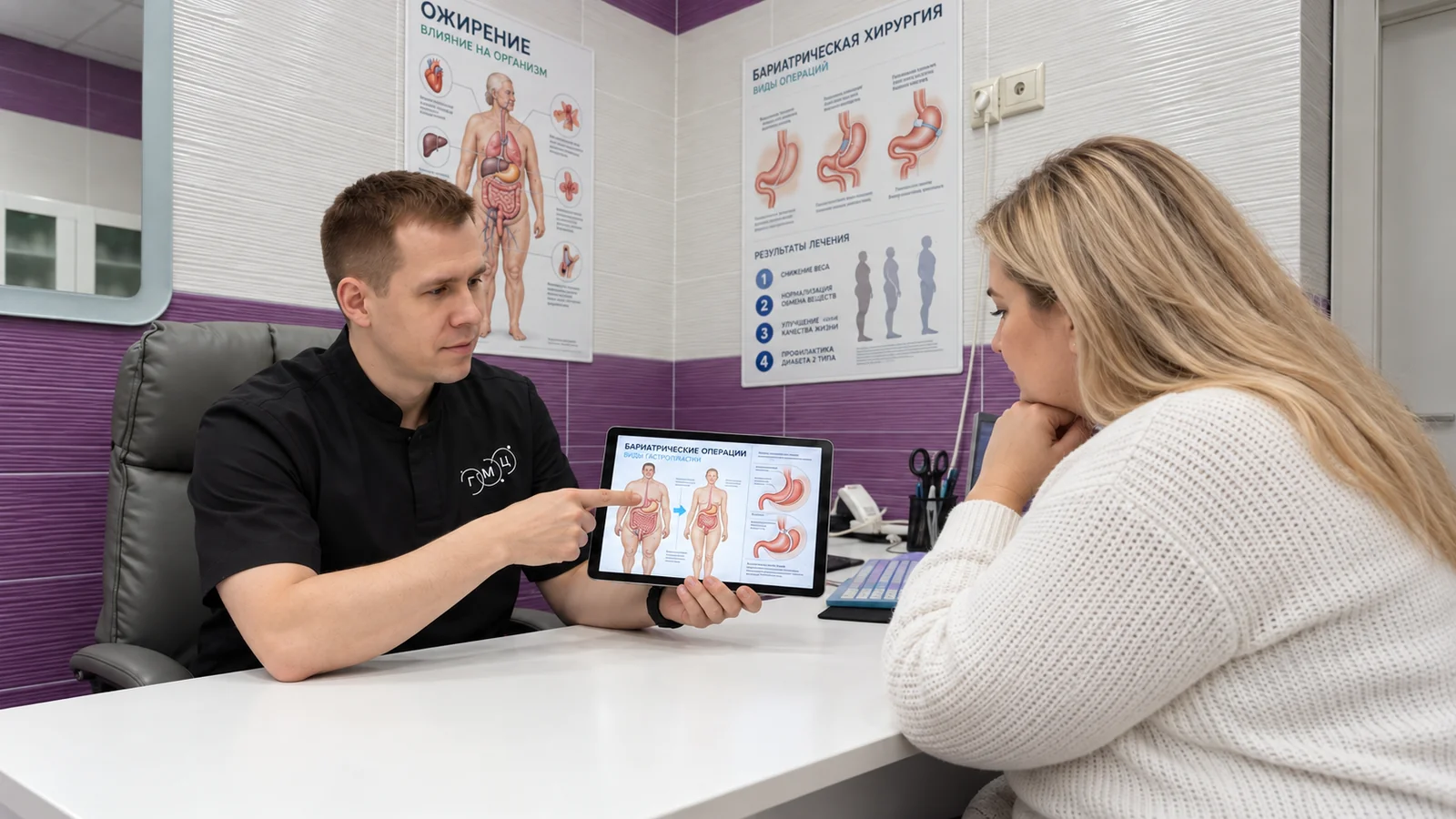
Your health is assessed, your goals are discussed and the doctor orders the tests required to pick the right bariatric method.
2We set aside a surgery date for you — the deposit is paid by card at the clinic or online by bank transfer, and the terms are fixed in the contract for medical services
 3
Before surgery you will have blood and urine tests, an ECG, an ultrasound and a gastroscopy, plus specialist appointments. The doctor provides the exact list at the consultation.
 4
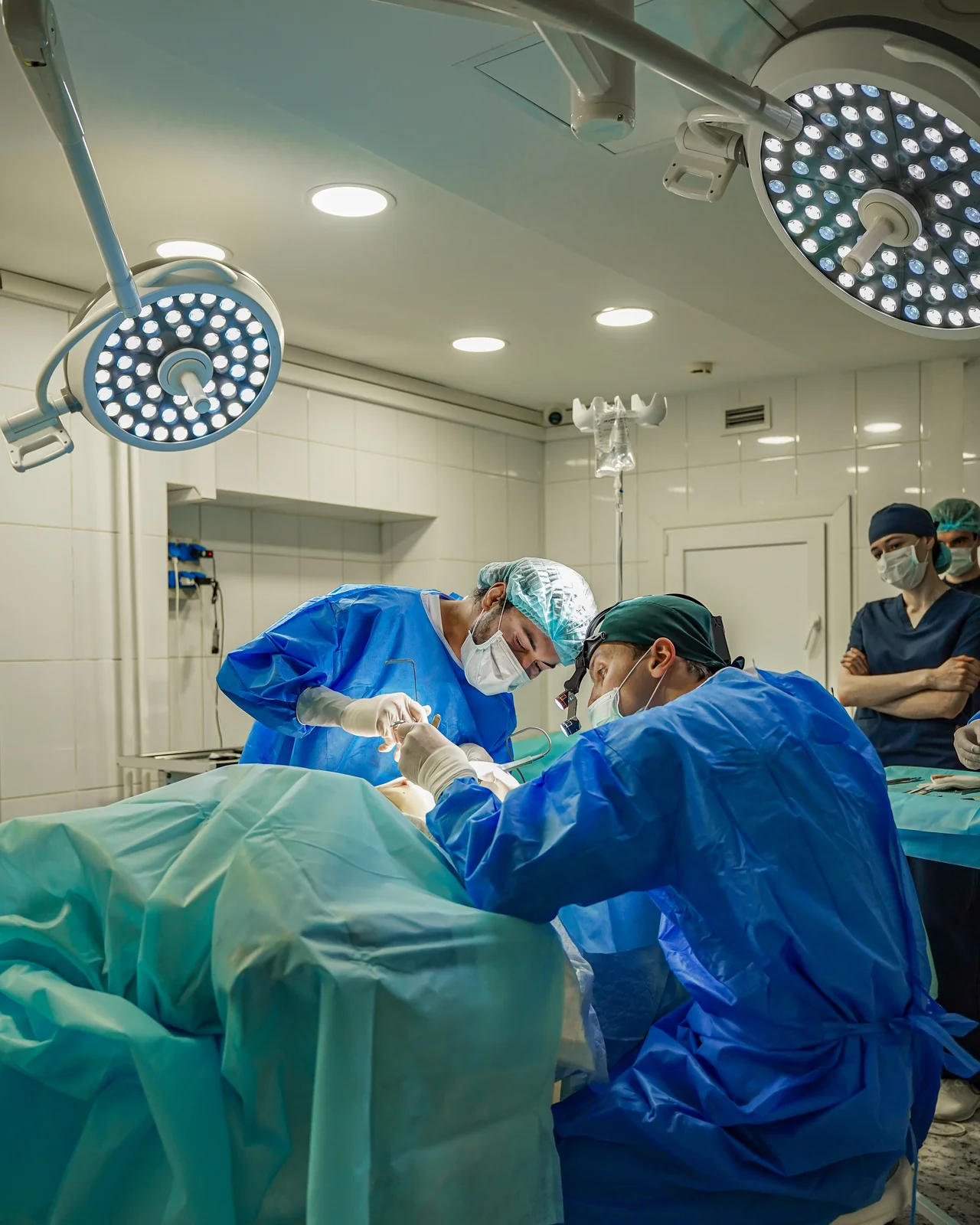
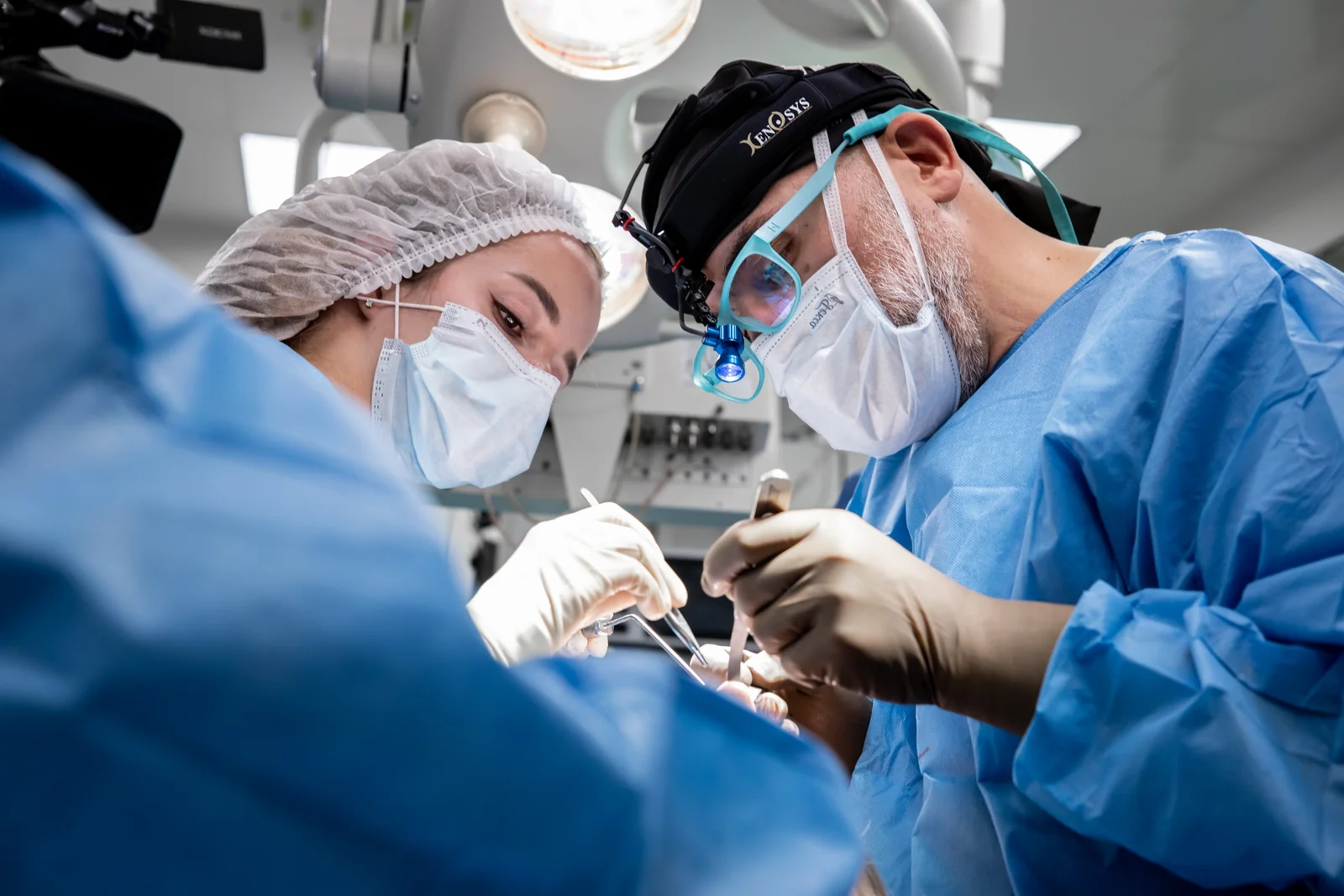
The surgeon does the bariatric operation under general anaesthesia by the method chosen. After surgery, the patient stays under the medical team's monitoring.
 5
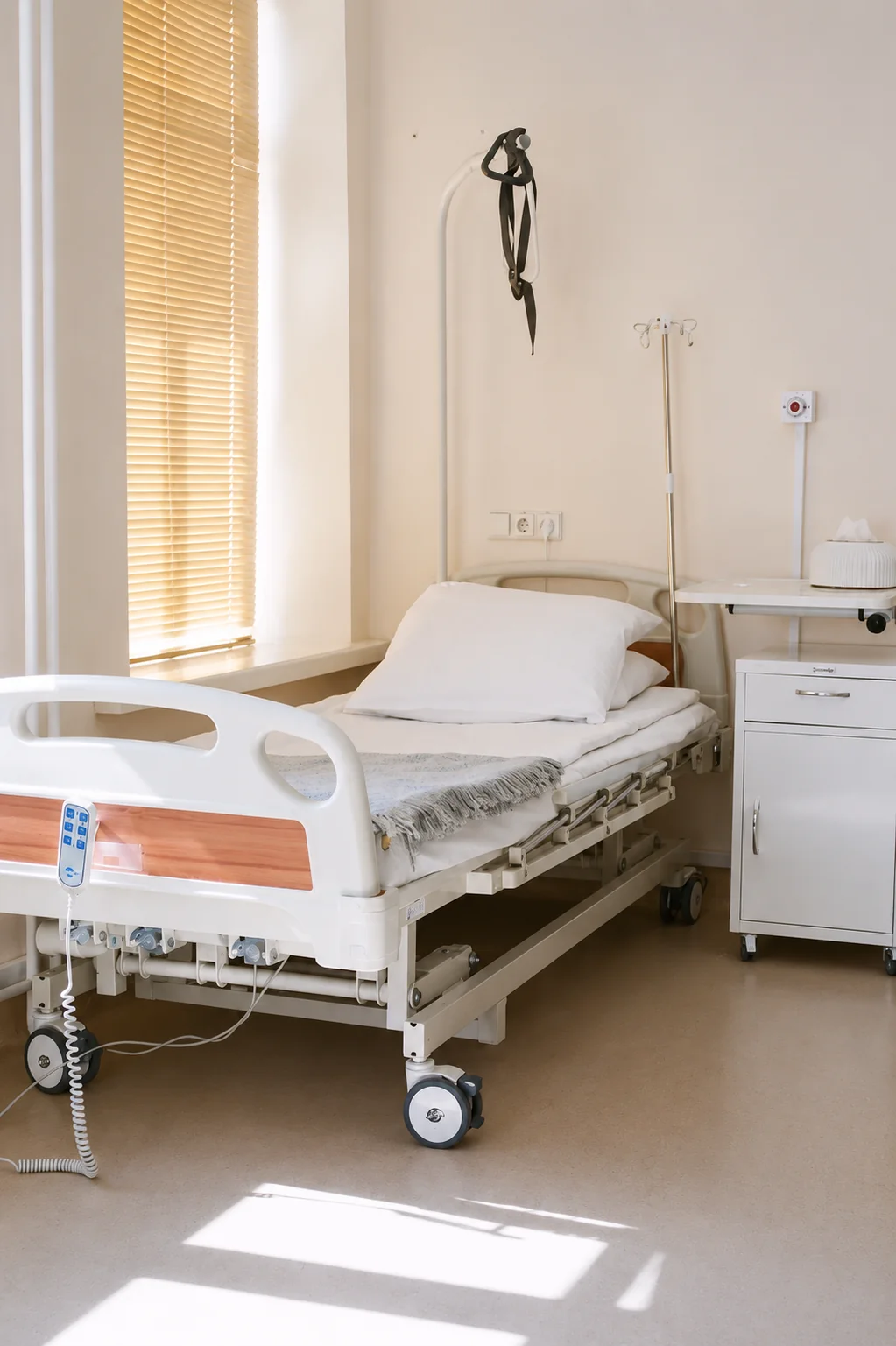
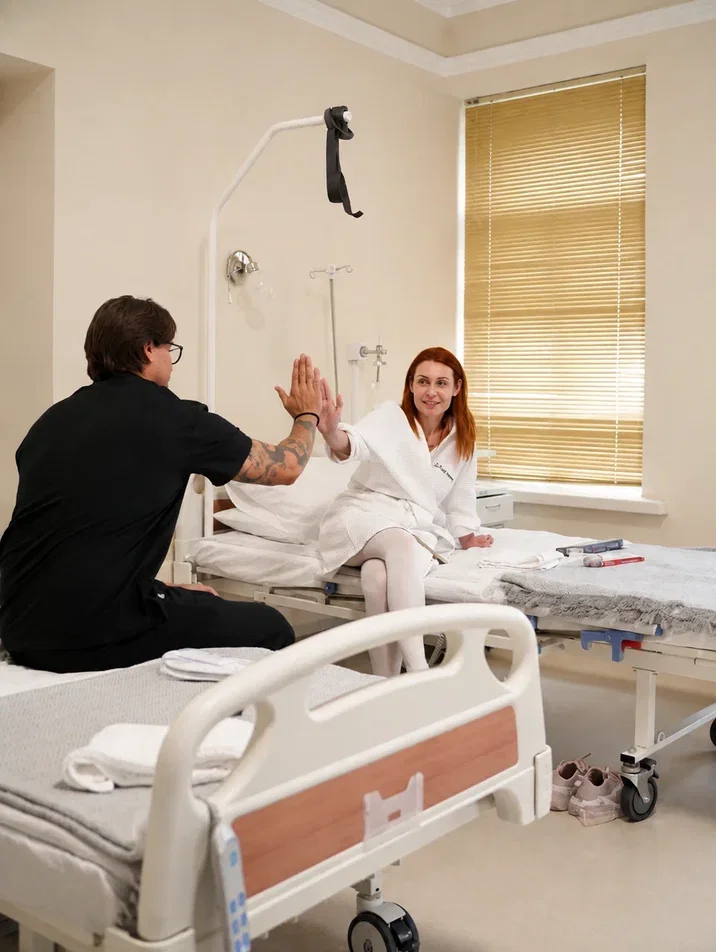
After the operation you stay in hospital under doctors' supervision for 1–3 to 4–5 days, depending on the complexity of the operation and how you feel.
 6
After discharge, expect advice on diet and recovery and scheduled check-ups of your well-being, weight and test results. The clinic team supports you for a year.
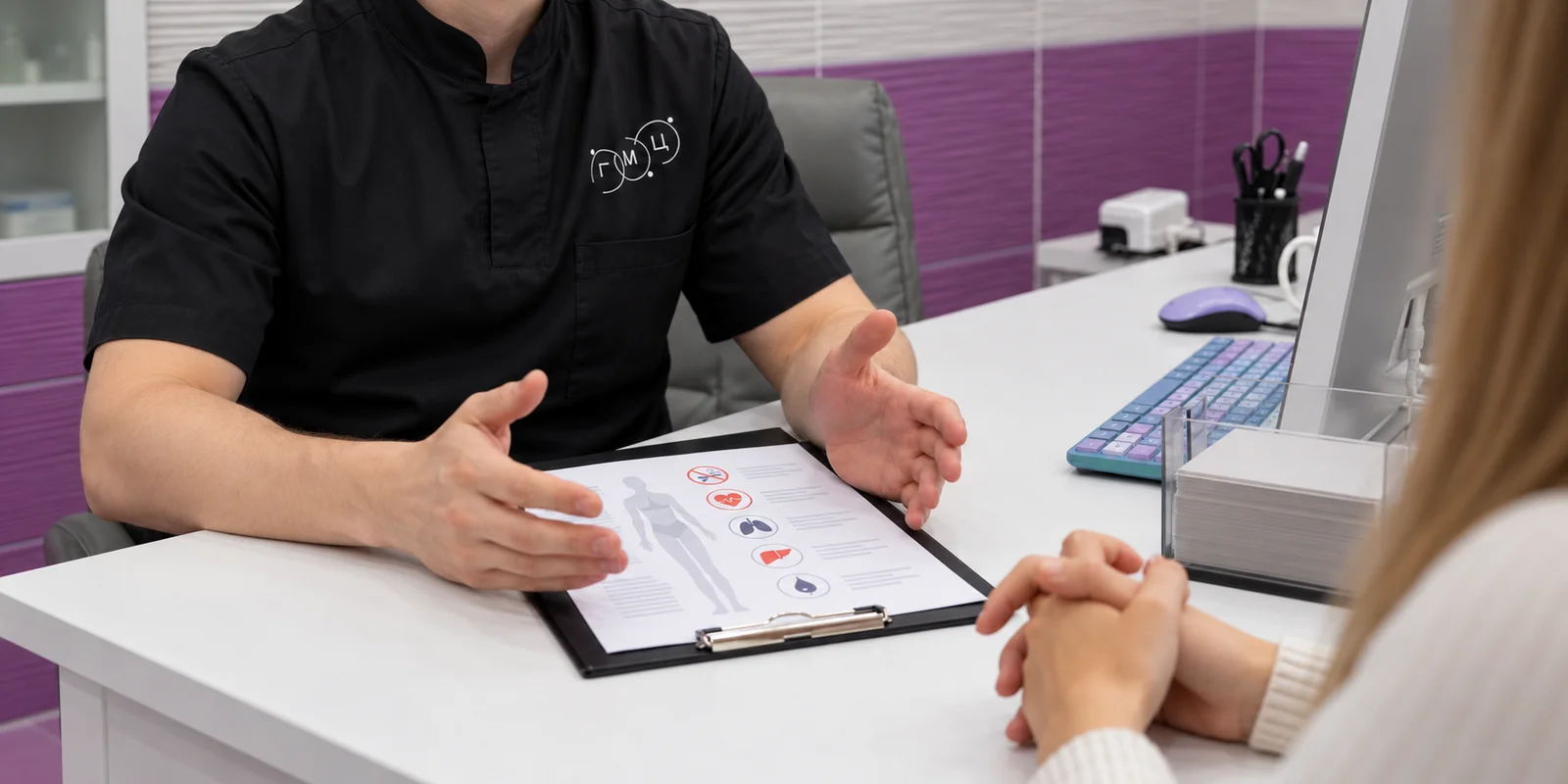
The doctor puts together a plan at the consultation and explains the course of surgery
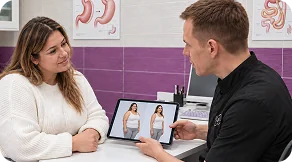
There is no fee for the consultation, is held before surgery and carries no obligation.
Book a consultationDoctors
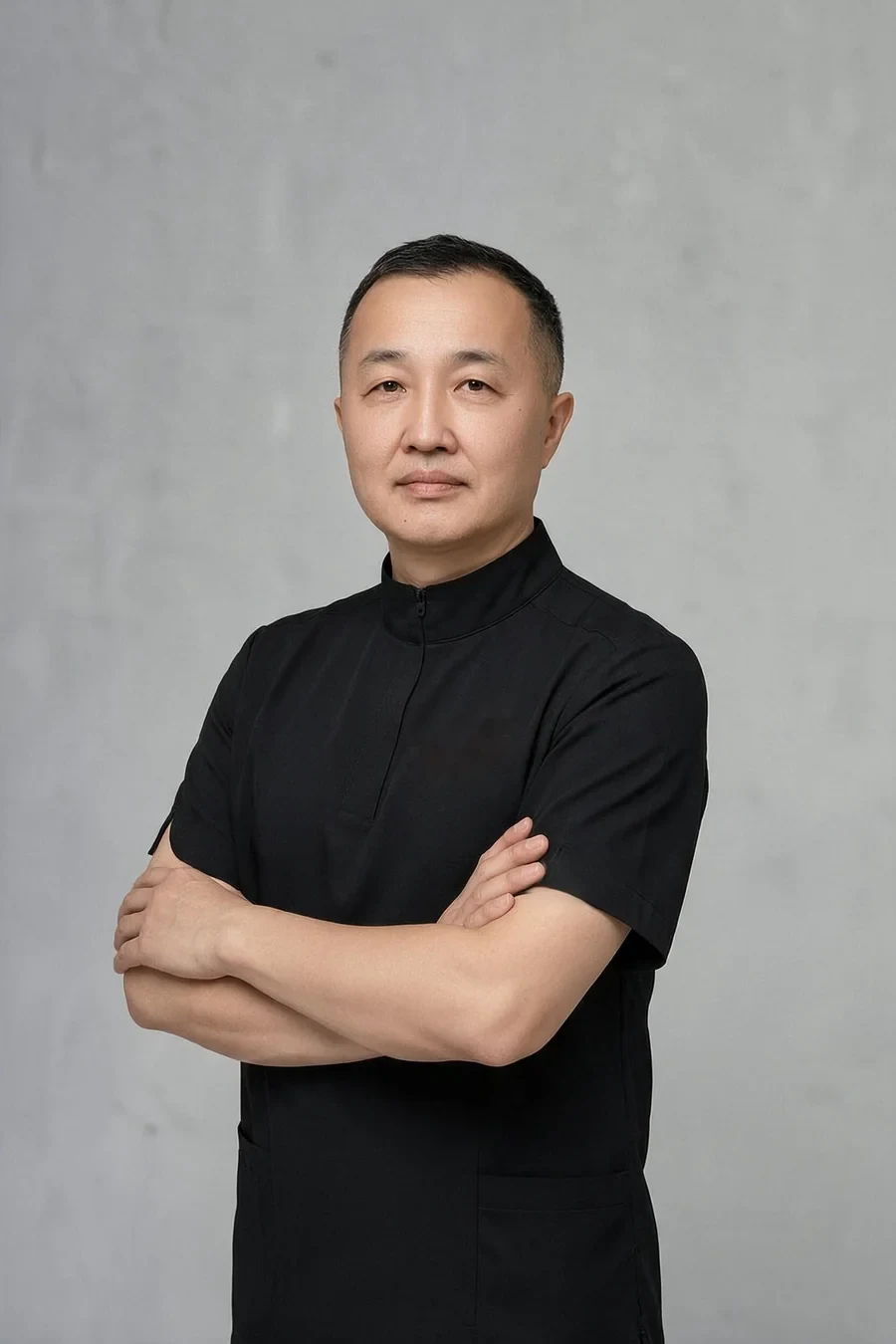
27 years of experience
Leading bariatric surgeon
Surgeon
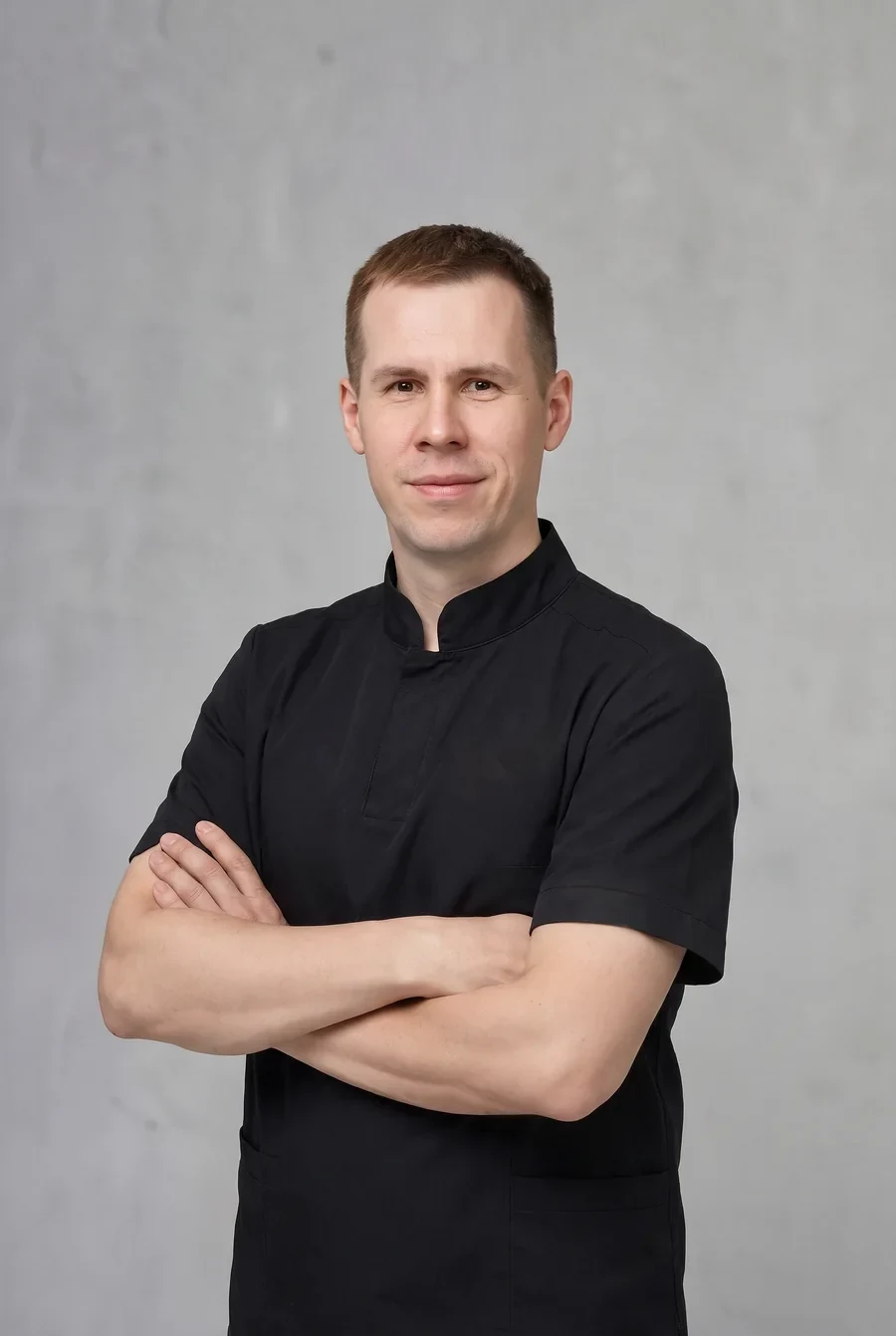
9 years of experience
Bariatric surgeon
Surgical oncologist
From the first consultation to the result, your surgeon operates and follows you.
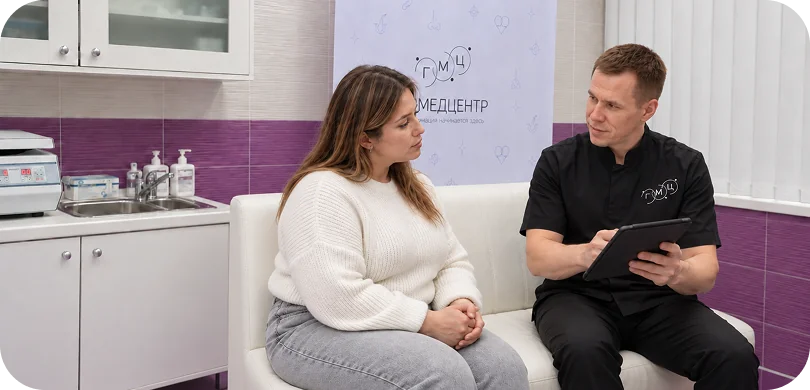
Your first step is a consultation with our patient care manager: BMI calculation, an explanation of the methods and booking with the surgeon. Free of charge.
Book a consultationCoordinators
We support you at every stage

From your first message to the consultation — your first contact at the clinic
Care specialist for patients
Answers your questions before the first consultation and helps select a date that works for you

By your side from booking to discharge, before and during your stay
Care specialist for patients
Helps you prepare for surgery, then keeps in touch throughout your stay at the clinic

Supports you through recovery — from discharge through to your last check-up
Care specialist for patients
Books your follow-up visits with the surgeon and keeps in touch during recovery
Advantages
We select the most suitable method for your health, lifestyle and goals. Our team supports you all the way.
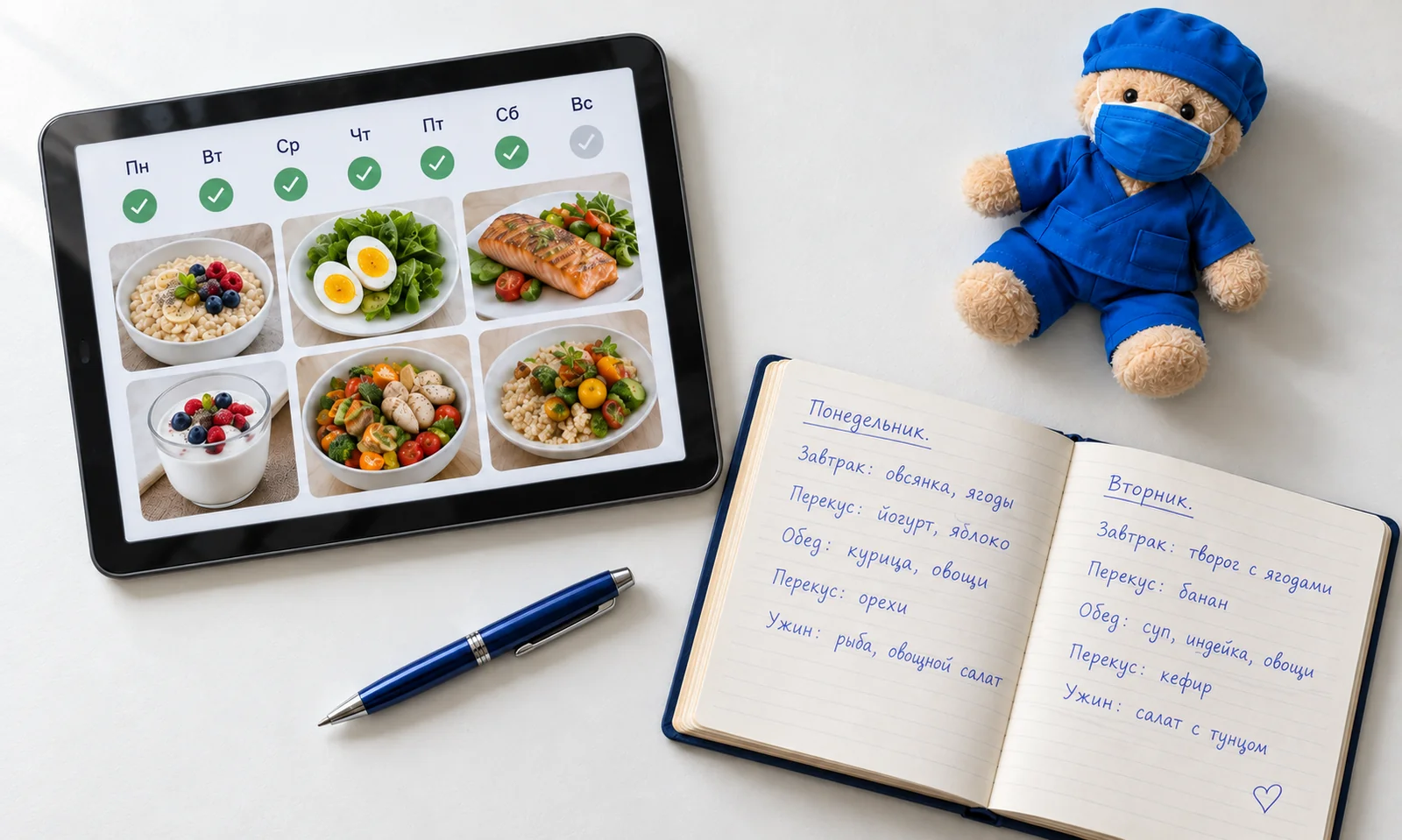
We help you adopt new eating habits, track your results and make them last.
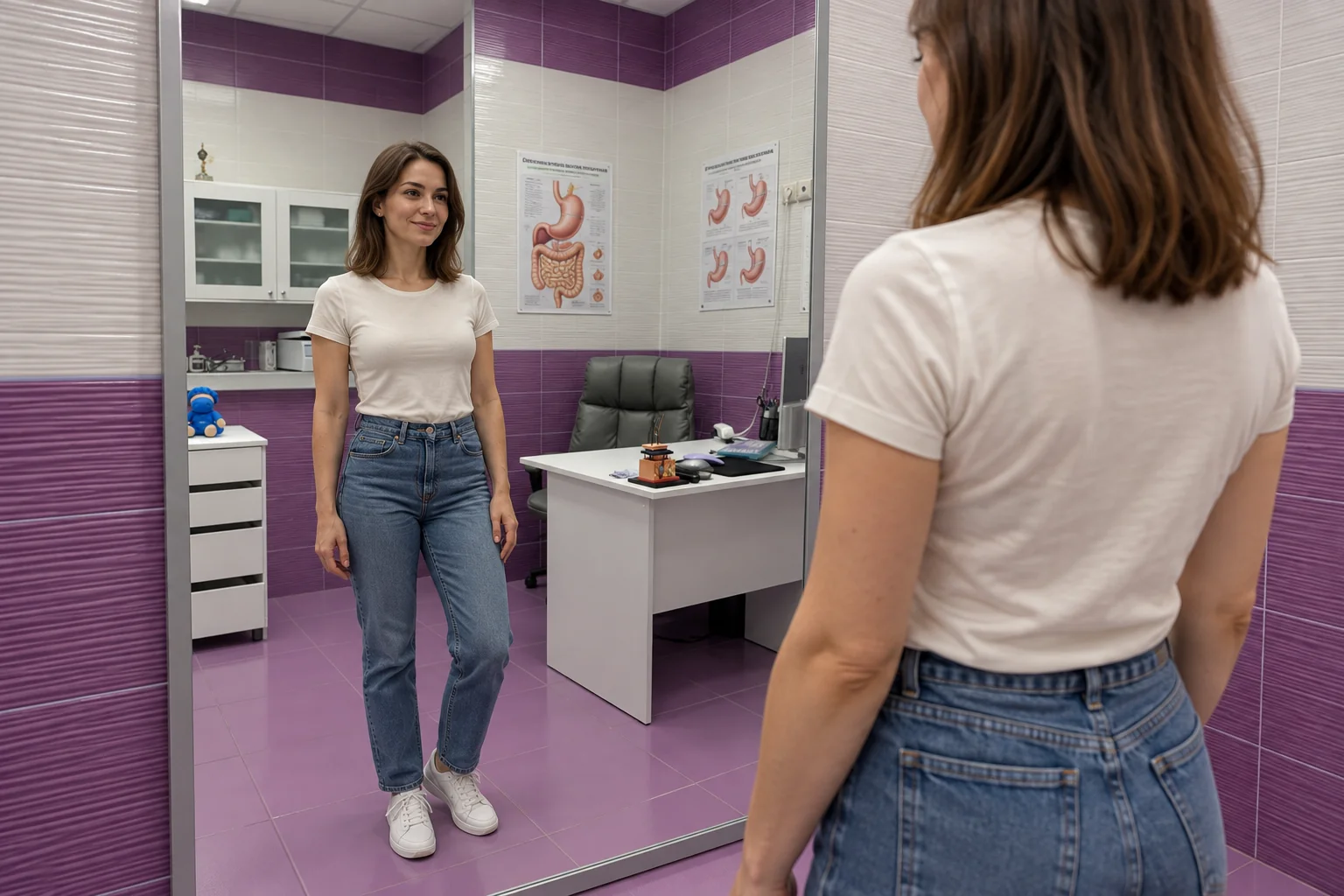
Consistent weight loss, better well-being and a higher quality of life.

Your time matters to us: we work 24/7, booking is simple and we take a personal approach at your pace.
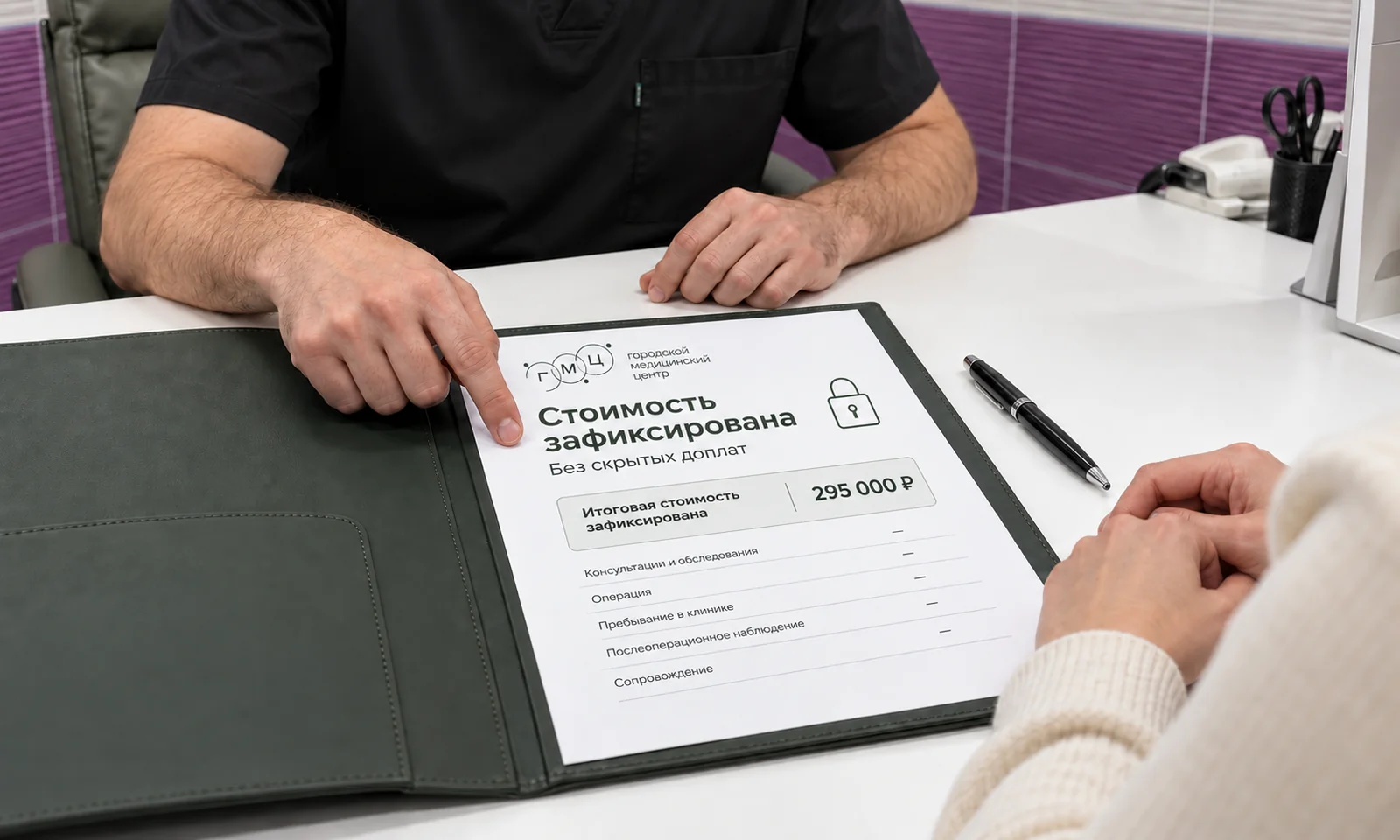
Once the consultation is over, the surgeon chooses the method and you receive a clear price — no hidden fees and no surprises on the way to your result.
FAQ
Experienced bariatric surgeons carry out bariatric operations at the clinic:
Get in touch by message: our coordinator will reply shortly and book your consultation. The bariatric surgeon consultation is free.
Surgery is prescribed only when clear criteria are met
BMI is the key measure used to assess how severe obesity is. You get it by dividing body weight (kg) by height squared (m²). Surgery is generally justified at a BMI above 40, or above 35 when serious related conditions are present. Sometimes it is also considered at lower values — when non-surgical methods have not worked.
Many people confuse the two, but their goals are fundamentally different. Bariatric surgery is a medical treatment for obesity and related diseases. It changes how the digestive tract works, addressing the causes of excess weight and metabolism. Plastic surgery reshapes the body's outer contours; it does not treat obesity or affect metabolism.
City Medical Centre carries out four main types of bariatric surgery: sleeve gastrectomy, Roux-en-Y gastric bypass, mini gastric bypass (MGB) and SADI-S duodeno-ileal bypass. The choice of method is individual, based on BMI, related conditions and the patient's goals.
Our surgeons use modern laparoscopic technique: the operation goes through 4 small 5 to 15 mm punctures. With cosmetic sutures, the marks become almost invisible once healed.
Your recovery depends on your activities. Office work: in 2–4 weeks. Physical work: in 1.5 months. Sport and activity: swimming after 30 days, with other exercise introduced gradually as weight drops. Travel and holidays: plan them a month or more after surgery.
In stages, your diet goes from liquid to soft to solid food. The main focus is protein and restricting high-calorie, fatty food.
Getting pregnant after bariatric surgery is possible, but doctors advise waiting at least 12–18 months, so the body can stabilize, weight can reach target values and nutritional status can normalize.
Yes, after bariatric surgery vitamins are a must. The altered digestive anatomy reduces absorption of some nutrients, which makes regular vitamin and mineral supplements a permanent part of the patient's life.
It is possible to regain weight after bariatric surgery, but very unlikely if you follow your doctor's advice. Proper nutrition, avoiding high-calorie drinks and regular follow-up with City Medical Centre specialists are essential.
Prices are in US dollars; the amount in brackets is an approximate conversion to UGX at the rate of 02.10.2026. The final price is fixed in your contract.
Prices start from $3,600 (≈ UGX 14,500,000). The surgeon sets the final price at the free consultation, and it is fixed in the contract, with no hidden extras.
General anaesthesia, a personal coordinator from day one, monitoring in the hospital and support for one year.
The hospital stay is 1–5 days, depending on the method and how you feel. Office work is possible after 2–4 weeks.
Yes. The first consultation is free and does not oblige you to anything. You can start online by sending a message to the coordinator.
Message us on WhatsApp or Telegram using the buttons below. A coordinator will answer your questions and book a free consultation where the doctor names the exact price.
By messaging us, you agree to our Privacy Policy
SADI-S combines a sleeve with intestinal bypass in two stages and is one of the most powerful bariatric operations, with 80–90% excess weight loss and a long-lasting result. It suits super obesity with a BMI over 50, severe type 2 diabetes, or a second stage after an ineffective sleeve. Anyone in Entebbe in these situations can discuss it at a consultation.
Recovery is short thanks to the minimally invasive technique, and absorbable sutures dissolve on their own. Office work is usually resumed after 2–4 weeks and physical work after about 1.5 months; swimming is allowed after 30 days, with other exercise added gradually. For the first weeks, no sauna or intense training. Entebbe residents get the same step-by-step guidance from the team.
Everything needed for the result is combined in one package, with no hidden fees and no surprises. For patients from Entebbe, it includes surgery by a dedicated team, round-the-clock care in the ward with meals and nursing, a doctor nearby 24/7 and a personal coordinator. The first step is a free 15-minute consultation with a bariatric surgeon.
What patients write after this operation. Reviews are translated from the original language.
Irina, 26
For a long time I doubted whether to go ahead with surgery, but after the consultation I felt much calmer. Andrey Georgievich explained in detail how gastric bypass is done, what to expect after the operation and how recovery would go. I especially liked that they talked to me calmly and without pressure. I am now gradually getting used to my new way of life and I am very glad I took this step.
Bariatric surgery
Doctor: Andrey G. Ugay
Angelina, 22
For me the hardest part was deciding to have the operation. At the consultation Ruslan Sergeyevich answered all my questions in detail and explained the specifics of sleeve gastrectomy and recovery. After the operation I always understood what I was doing and why. Thank you to the doctor and the whole team for their attentiveness.
Bariatric surgery
Doctor: Ruslan S. Menzulin
Anna, 31
For a very long time I tried to deal with my excess weight on my own, but I did not get the result I wanted. After the consultation with Andrey Georgievich I finally understood what to do next. I came through the operation well, and my recovery was supervised by the doctors. It was important for me to feel that I was not left alone after surgery.
Bariatric surgery
Doctor: Andrey G. Ugay
Veronika, 25
Before the operation I had many fears, mostly of the unknown. Ruslan Sergeyevich explained every stage of treatment in detail and answered even the simplest questions. Thanks to that I felt much more confident. I keep following the recommendations and I am gradually seeing the changes I had the operation for.
Bariatric surgery
Doctor: Ruslan S. Menzulin
Valentina, 23
The decision to have bariatric surgery was not easy for me. I worried both about the operation itself and about how my life would change afterwards. At the consultation Andrey Georgievich explained everything in detail, so little by little my fear turned into confidence. What matters most to me now is the result and the chance to treat my health and lifestyle differently.
Bariatric surgery
Doctor: Andrey G. Ugay
Anna, 27
I am very grateful to Ruslan Sergeyevich for his attentiveness. Before the operation I had a huge number of questions, and I got a clear answer to every one of them. After the operation it was also clear which recommendations to follow and how to eat. It was important to me that the doctor stayed in touch and I felt supported at every stage.
Bariatric surgery
Doctor: Ruslan S. Menzulin
Page medically reviewed by Andrey G. Ugay, lead bariatric surgeon. Review date: .
Entebbe sits on a peninsula of Lake Victoria in Central Uganda, about 36 kilometres (22 mi) southwest of Kampala. It was the seat of government for the Protectorate of Uganda before independence in 1962, and today it is still home to State House, the official office and residence of the President. On 27 August 2014, the national population census put Entebbe's population at 69,958. It is a calm, green, administrative and service-oriented town, and that character shapes how residents approach a decision as personal as weight-loss surgery.
People here often work in offices, public institutions, hospitality, transport and services, and many keep close ties with relatives in Kampala and around the lake. A decision about sleeve gastrectomy or gastric bypass is rarely made alone. It is discussed with a husband or wife, parents, adult children and sometimes a church or community circle. A realistic plan should therefore cover not only the operation itself but also the weeks of recovery, who helps at home, and how work is arranged.
City Medical Centre works with patients from Entebbe through a free online consultation. You write to a coordinator on WhatsApp or Telegram, available 24/7, send your height, weight, history and questions, and a specialist reviews them with you. You do not need to rearrange your week around an appointment, which suits a town where many people balance shifts, school runs and family duties.
The World Health Organization treats obesity and overweight as a serious, growing health concern, and the conversation in Entebbe is no different: people notice rising weight, tiredness, joint pain and shortness of breath on stairs or during a walk along the lake shore. Before thinking about surgery, it helps to know your body mass index. BMI is the main tool for assessing the degree of obesity. It is calculated by dividing body weight (kg) by height squared (m²).
Surgery is usually justified with a BMI above 40, or above 35 with serious related conditions. In some cases surgery is considered at lower values too, if non-surgical approaches have failed. In short, the usual threshold is a BMI over 40, or over 35 with related health conditions, and the surgeon confirms at the consultation whether surgery suits you.
Candidates are generally adults who have already tried diet changes, activity and medical supervision without lasting success. General contraindications are discussed individually: certain heart, lung or digestive conditions, untreated eating disorders, dependence on alcohol or substances, and unwillingness to follow the diet and follow-up plan. Pregnancy is also something to discuss in advance. A patient from Entebbe can calculate a BMI at home in a minute and send the numbers to the coordinator before the first conversation.
Entebbe has a tropical rainforest climate with no real dry season. The driest month is July, with precipitation averaging 72 millimetres, while April is the wettest with an average of 264 millimetres. Temperatures are moderated by altitude and by the lake: the hottest month is February with an average of 22.8 °C, and the coolest is July with an average of 20.6 °C. For someone recovering from surgery, this is a mild and stable background without extreme heat.
That stability is useful. You are unlikely to struggle with severe heat in the first days at home, and loose, breathable cotton clothing is usually enough. Because the air is humid, it is sensible to keep the small wound areas clean and dry, change dressings as instructed and avoid tight belts or waistbands that rub against them. The 4 small punctures of 5 to 15 mm are closed with cosmetic sutures, so after healing the marks are barely visible, but good care in a humid climate still matters.
Rain is frequent in the wet months, especially around April. Plan short, safe walks inside the house, on a covered veranda or on dry stretches of road, and keep an umbrella ready rather than skipping movement altogether. Gentle walking is one of the habits doctors encourage early. Also drink water steadily as advised, since mild dehydration can make a person feel weaker than they really are.
With no real dry season, there is no perfect month for surgery in Entebbe, and that makes scheduling simpler. Instead of waiting for a particular weather window, most people choose by their work calendar, school terms and family events. If you can, avoid a period that includes a wedding, a funeral gathering, a major religious celebration or a heavy work deadline in the first weeks after the operation, because these events involve long meals and social pressure to eat.
Think about July, the driest and coolest month, if you prefer slightly lighter rain on your short walks. Think about April or other very wet periods if you simply want a quiet time at home and your job allows it. Neither choice changes the medical side of the operation. What matters is that the first weeks are calm and that a family member can help with shopping and cooking.
Your coordinator can help you match a preferred period with the preparation steps. The programme runs from preparation to 12 months of support, all in one package, with no added fees, so you can plan the whole process rather than only the day of the operation.
Food in a lakeside Ugandan town is social. Meals bring the family together, and fish from Lake Victoria, starchy staples, beans, groundnut sauces, plantain and sweet tea are part of everyday life. After sleeve gastrectomy or gastric bypass the stomach is much smaller, so portion size, texture and the order of foods change. The surgical team gives a stage-by-stage plan that moves gradually from liquids to soft foods and then to regular meals.
This is where local habits meet medicine. Fish is generally a good source of protein, and many patients find it easier to eat when it is soft and moist. Heavy, fried, very sugary or very oily dishes are harder to tolerate and slow down weight loss. Sugary drinks and sodas are best replaced with water. Ask the dietitian how to adapt familiar dishes instead of abandoning your cuisine entirely.
Plan for social situations. Explain to relatives that you will eat small portions and that this is a medical need, not a rejection of their hospitality. Many patients find it helpful to let the host know in advance. You will also be asked about vitamins and supplements, because with a smaller stomach it becomes important to keep nutritional status in order. All of this is covered during the 12 months of follow-up support.
The operation is carried out under general anaesthesia, which means you sleep through the procedure. The surgical team relies on modern laparoscopic technique, performed through 4 small punctures of 5 to 15 mm. Cosmetic sutures are used, and after healing the marks are barely visible. Both sleeve gastrectomy and gastric bypass can be done this way, and the surgeon explains at the consultation which one fits your health, weight and eating habits.
The hospital stay is 1–5 days, depending on the method and how you feel. Doctors supervise you in hospital after surgery for a stay of 1–3 to 4–5 days, depending on the complexity of the operation and how you are feeling. You will be under observation for 1–5 days, and the team decides on discharge only when you are stable.
For a family in Entebbe, this means arranging care for children, elderly relatives or a household business for a short, defined period. It also helps to decide in advance who will be your contact person for the medical team. The coordinator will call you back 24/7, so your relatives can also ask questions at any hour, which is reassuring when the family is anxious.
Entebbe has many office jobs connected to administration, services and business. Recovery time depends on the activity. Office work is possible after 2–4 weeks, so a person who works at a desk can usually plan to be back after 2–4 weeks, in agreement with the doctor. Physical work needs more time: after 1.5 months. If your job involves lifting, long hours on your feet or moving between locations, tell the surgeon exactly what you do.
The lake and the green setting of the town invite walking, swimming and gentle outdoor activity. Swimming is allowed after 30 days. Other exercise is added gradually as weight goes down, so there is no need to rush into intense training. Start with short walks, then lengthen them, and let the team confirm each next step. Teammates in a football or fitness group should hear that you are returning slowly.
Weight changes continue for a long time. The result is usually assessed 18–24 months after surgery, so think of the first weeks as the start of a long process rather than the end. Your habits, sleep, activity and follow-up contacts all affect how well it works.
Many women in Entebbe ask whether weight-loss surgery affects having children. Getting pregnant after bariatric surgery is possible, but doctors advise waiting at least 12–18 months, so the body can stabilize, weight can reach target values and nutritional status can normalize. If you are planning a family, tell the coordinator at the very first conversation so that the timing of the operation is chosen sensibly.
Women also ask about contraception during the period of rapid weight loss, about vitamins and about how to manage family expectations. These questions are best discussed directly with the surgeon and the follow-up team, who know your medical history. Husbands and wives are welcome to join the online consultation if you wish, which often makes the decision easier at home.
Men have their own questions as well, usually about physical work, sport and alcohol. Both groups benefit from the same basic message: surgery is a tool, and it works best together with regular check-ups, nutrition advice and gradual activity.
The name Entebbe comes from the Luganda phrase e ntebe, meaning a seat or a chair. The place was a cultural site of the Mamba clan and was known as entebbe za Mugula, after Mugula, the title of a chief of a subdivision of that clan. It was probably named because a Baganda chief sat here to judge legal cases. A town whose name means a seat of decision makes a fitting image for the first stage of bariatric planning: you sit down, weigh the facts and decide calmly.
Many families in Entebbe still care about clan and family roots, and elders are often consulted on big personal choices. If an older relative doubts the idea of sleeve gastrectomy or gastric bypass, invite them to listen in on the online consultation. Hearing the surgeon explain general anaesthesia, the 4 small punctures of 5 to 15 mm and the 1–5 days in hospital usually replaces rumours with clear information.
Entebbe became a British colonial administrative and commercial centre in 1893, when Sir Gerald Portal used it as a base, and it remained the seat of government of the Protectorate of Uganda until independence in 1962. State House, the official residence of the President, is still here, and so are the headquarters of the Ministry of Agriculture, Animal Industry and Fisheries and of the Civil Aviation Authority. The Special Forces Command also keeps its headquarters in the town.
For planning surgery this matters in a practical way. A large share of local residents work in government offices, agencies and security services, where duties are fairly structured and desk time is common. Office work is possible after 2–4 weeks, so a civil servant can usually agree a leave period with a supervisor in advance. Staff with uniformed or physical duties should describe their tasks exactly, because physical work needs about 1.5 months.
Entebbe is a biomedical research hub. The Uganda Virus Research Institute hosts the MRC laboratories, work with the US Centers for Disease Control and the National Institutes of Health, and HIV vaccine research. Most of its work concerns infectious disease such as HIV, tuberculosis, malaria and helminth infections. The town also holds the headquarters of Uganda National Medical Stores for now, with a move to Kajjansi planned. The Entebbe Children's Surgical Hospital, run by the NGO Emergency, is a centre of excellence for paediatric surgery.
Because so many residents are scientists, laboratory staff, nurses and administrators, patients here tend to ask precise questions: how the stomach changes, what vitamins are needed, how results are measured. Good. Ask the surgeon for a clear explanation of the difference between sleeve gastrectomy and gastric bypass, and ask how nutritional status is monitored during the 12 months of follow-up. Colleagues in research settings may also understand a medical leave request quickly, which eases planning.
Entebbe offers gentle places to build the walking habit that doctors encourage after surgery. The National Botanical Gardens, laid out in 1898, have shaded paths beside the lake. The Uganda Wildlife Education Centre, the national zoo, sits next to the Entebbe Golf Club, the oldest golf course in East Africa, established in 1900. The lake shore around Kitooro and Nakiwogo is also popular for evening strolls.
Begin with short, flat walks close to home, then lengthen them week by week. Swimming in the lake or a pool is allowed after 30 days, and other exercise is added gradually as weight goes down. Golfers and walkers can look forward to returning to the course, but follow the team's guidance on each step rather than copying friends. The shaded gardens are useful for a slow, restful outing when you want company without crowds.
Bugonga, Katabi, Nakiwogo, Nsamizi, Kitooro, Lunnyo and Lugonjo each have a slightly different rhythm, from busy trading streets to quieter residential lanes by the water. Shoprite and the local banks give residents everyday access to groceries, which helps when you need to stock soft foods, protein sources and plenty of water before the operation.
Nkumba University is one of the licensed tertiary institutions in Uganda, and students and lecturers form a visible part of town life. Students and teachers can plan the operation around exam periods and holidays, and tell a supervisor that they will move slowly at first. Kigungu, the historic landing place of the first Catholic missionaries, reminds many families of church life, and congregation meals after services are a place to practise small portions politely.
The first step is simple. Message a coordinator on WhatsApp or Telegram. The team works 24/7: booking is easy, the approach is personal and we adapt to your pace. You can write in the evening after work or early in the morning, and a coordinator will call you back 24/7 when you ask for it. The consultation is free and takes place online, so you can join from home or from your office in Entebbe.
Prepare your height and weight, a list of existing conditions and medicines, previous operations, and any recent test results you have. Write down what worries you: anaesthesia, hospital stay, food, pregnancy, work. The surgeon will look at your situation, confirm whether the usual BMI criteria apply and explain which method is more suitable.
If you decide to go ahead, the process continues from preparation to 12 months of support, all in one package. No added fees. Follow-up support for 12 months means you have someone to ask when questions appear after the first weeks, when the early excitement fades and everyday life returns.
Yes. The online consultation is free. You contact a coordinator on WhatsApp or Telegram, send basic information about your height, weight and health, and a specialist goes through it with you. The coordinators are available 24/7, so you can start at a time that suits your day.
Usually a BMI over 40, or over 35 with related health conditions. In some cases surgery is considered at lower values too, if non-surgical approaches have failed. The surgeon confirms whether surgery suits you at the consultation.
BMI is the main tool for assessing the degree of obesity. It is calculated by dividing body weight (kg) by height squared (m²). You can work it out at home with a calculator before contacting the coordinator.
The operation is done under general anaesthesia. The hospital stay is 1–5 days, depending on the method and how you feel, and doctors keep you under observation during that time.
The surgeons use laparoscopic technique through 4 small punctures of 5 to 15 mm. Cosmetic sutures are used, so after healing the marks are barely visible. In a humid climate like that of Entebbe, keep the wound areas clean and dry as instructed.
Office work is possible after 2–4 weeks. Physical work usually needs about 1.5 months. Tell the surgeon what your job involves so that the plan fits your real duties.
Swimming is allowed after 30 days. Other exercise is gradually added as weight goes down. Start with walking and let the team approve each step.
The climate is tropical rainforest with no real dry season, and temperatures stay moderate, from an average of 20.6 °C in July to 22.8 °C in February. This makes planning easier. Wear loose breathable clothing, keep the wound areas dry and plan short walks around the rain.
Getting pregnant after bariatric surgery is possible, but doctors advise waiting at least 12–18 months, so the body can stabilize, weight can reach target values and nutritional status can normalize. Discuss your plans in advance.
The programme runs from preparation to 12 months of support, all in one package, with no added fees. You have follow-up support for 12 months, and a coordinator will call you back 24/7 when you need advice. The result is usually assessed 18–24 months after surgery.
It comes from the Luganda e ntebe, meaning a seat or a chair, linked to a chief who sat to judge cases and to the Mamba clan site entebbe za Mugula.
The National Botanical Gardens, laid out in 1898, have calm paths near the lake and suit short walks once your team agrees. Start with a few minutes and build up gradually. Swimming is allowed only after 30 days.
Office work is possible after 2–4 weeks. Physical work needs about 1.5 months. Describe your duties to the surgeon so the plan fits them.
Yes. Entebbe families often decide together, and a husband, wife, parent or adult child can listen as the surgeon explains anaesthesia, the 1–5 days in hospital and 12 months of follow-up support.