


























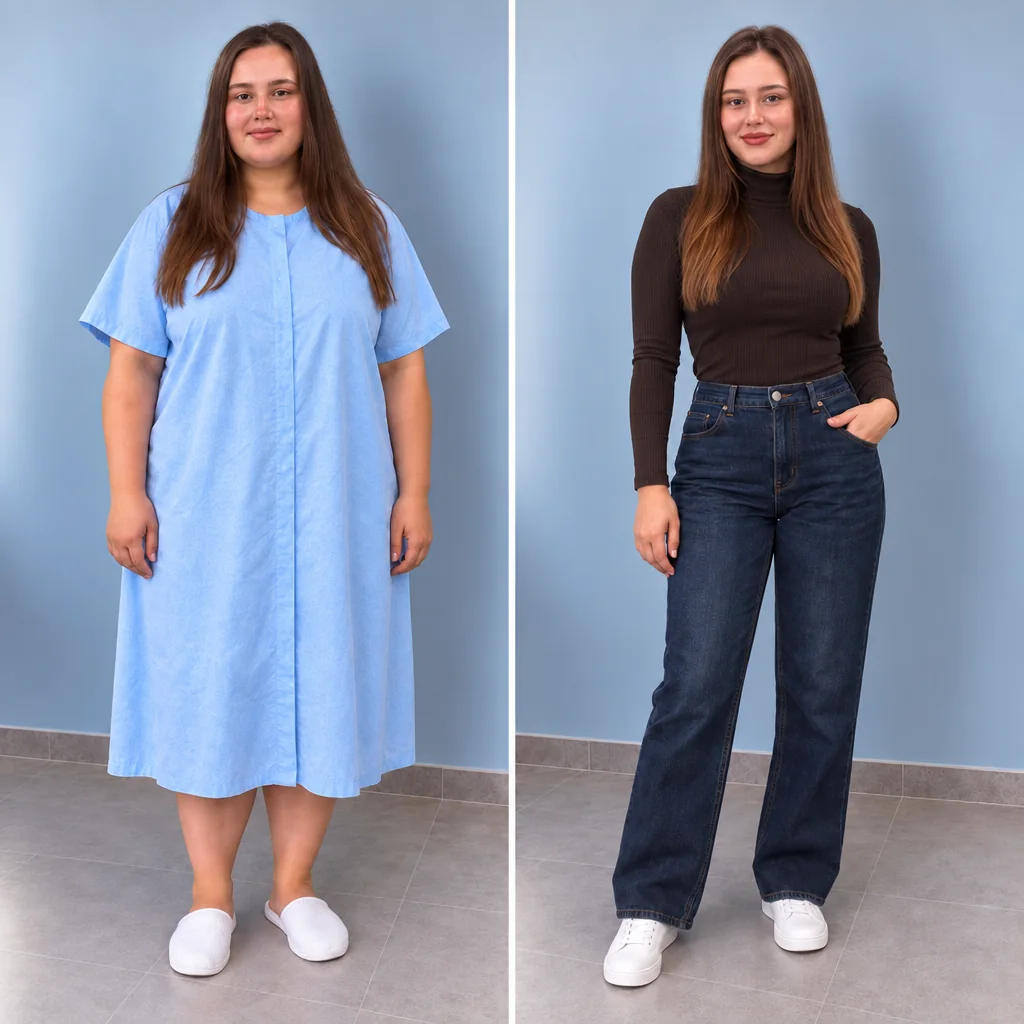
 beforeafter
Irina, 26
Bariatric surgery
Bariatric surgery
$3,600
$4,800 · First consultation — Free
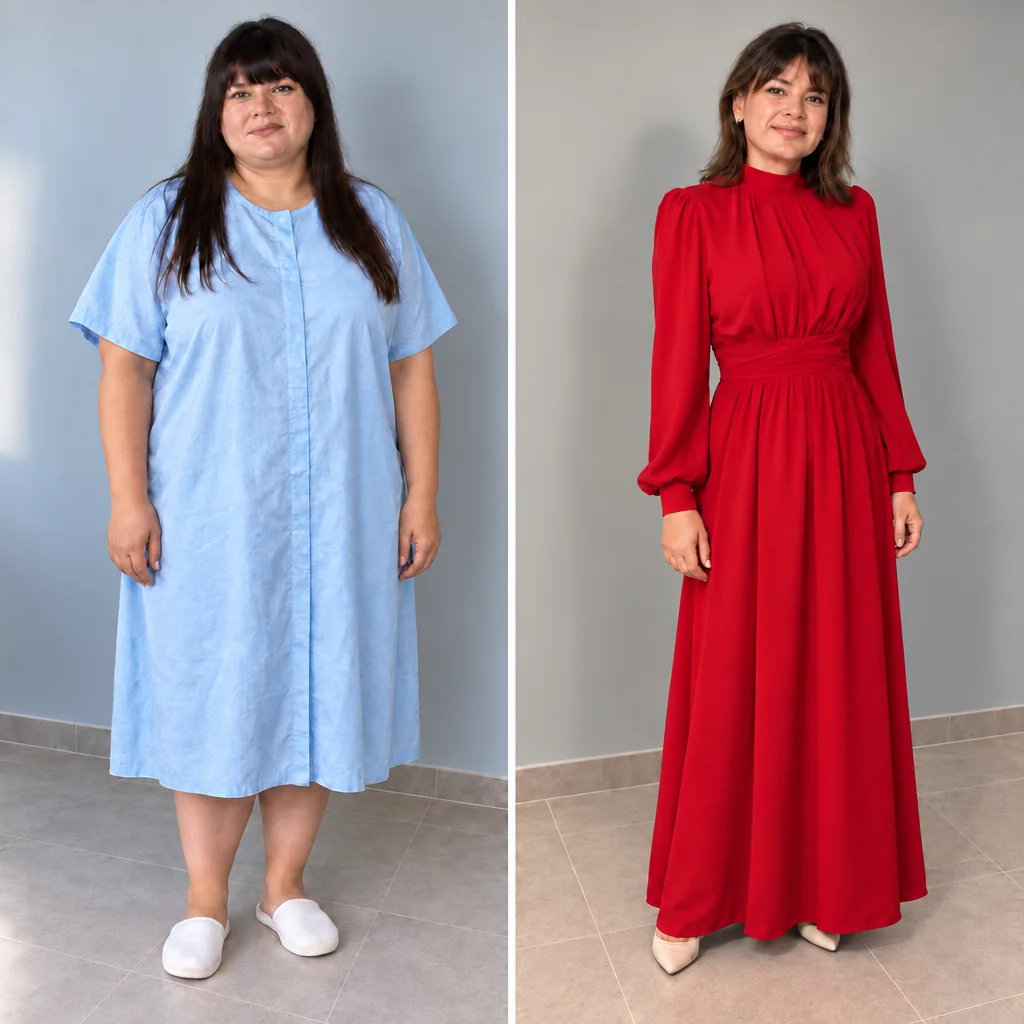 before
after
before
after
Message our coordinator
Free online consultation · Reply within 15 minutes
Message us on TelegramMessage us on WhatsAppBy messaging us, you agree to our Privacy Policy
Results
These are real patients treated at the clinic.
beforeafterBariatric surgery
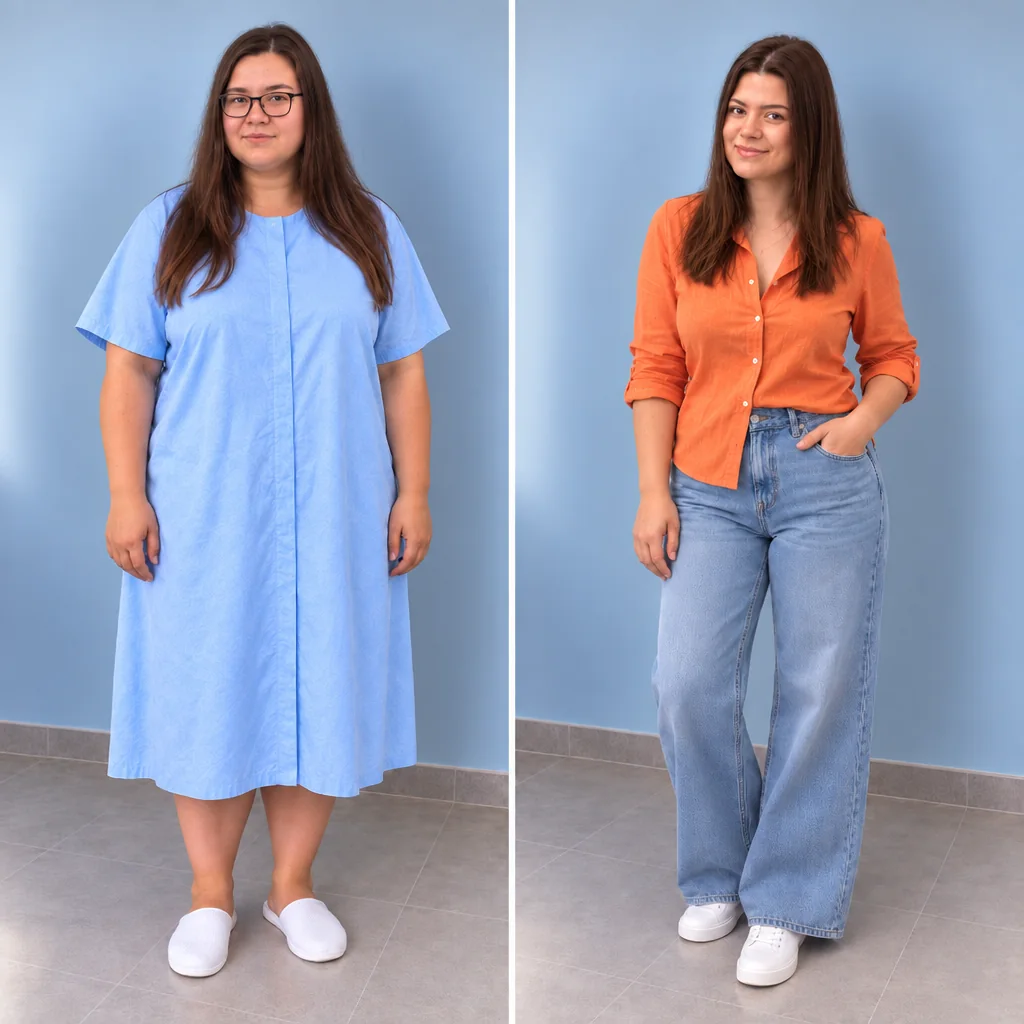 beforeafter
Bariatric surgery
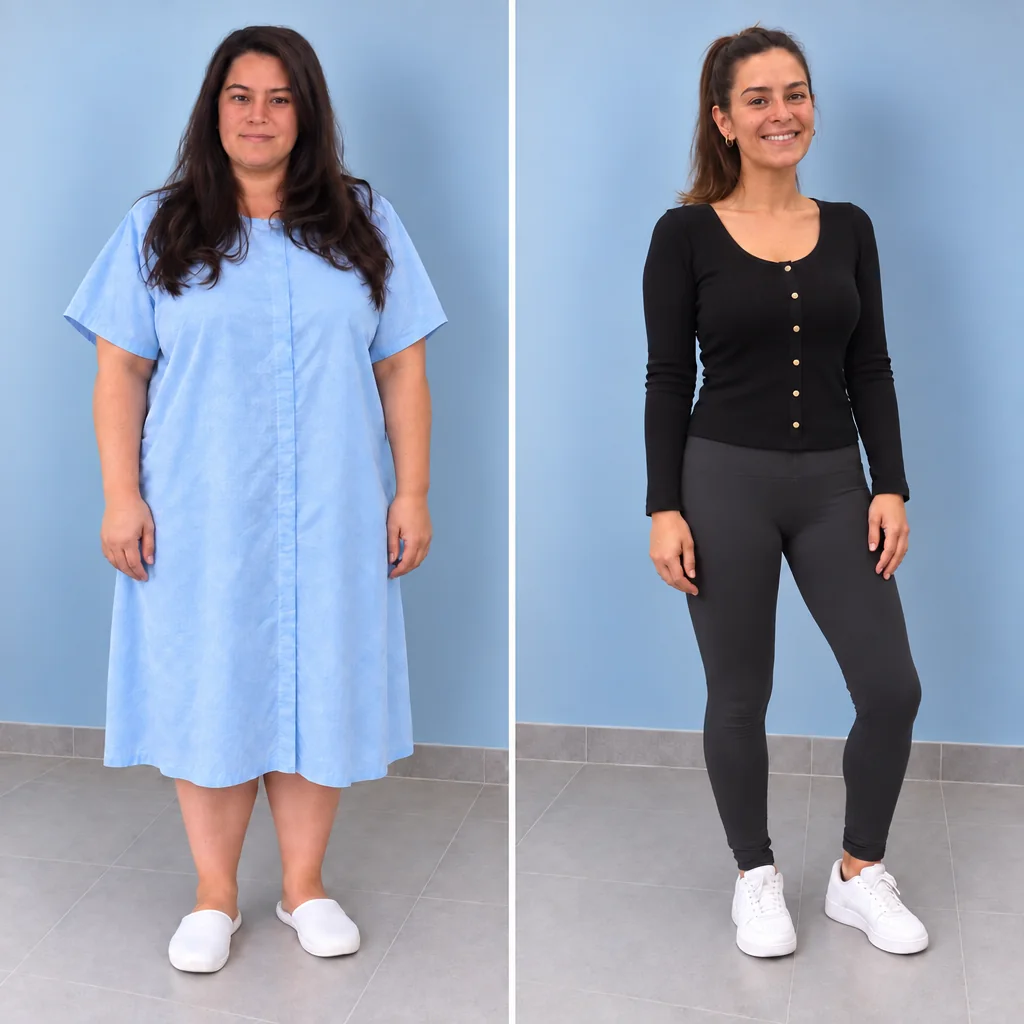 beforeafter
Bariatric surgery
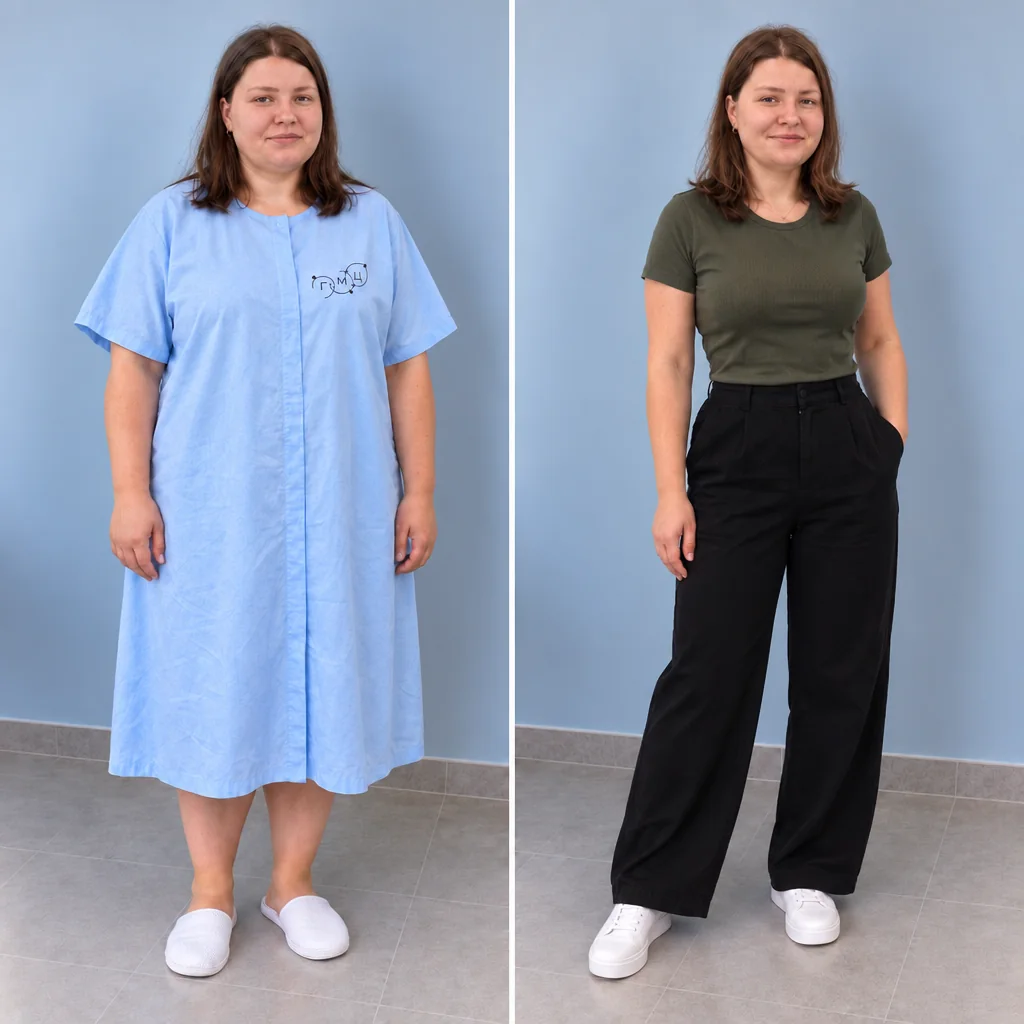 beforeafter
Bariatric surgery
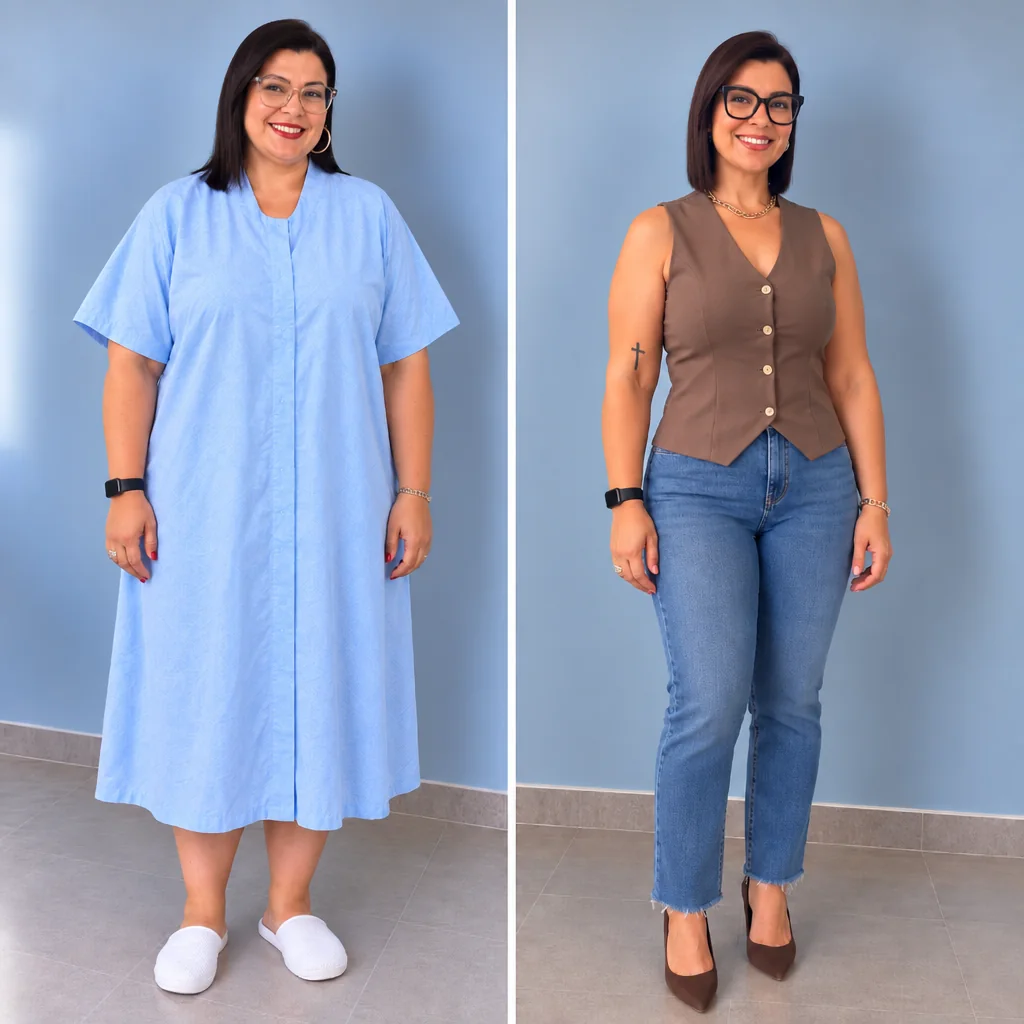 beforeafter
Bariatric surgery
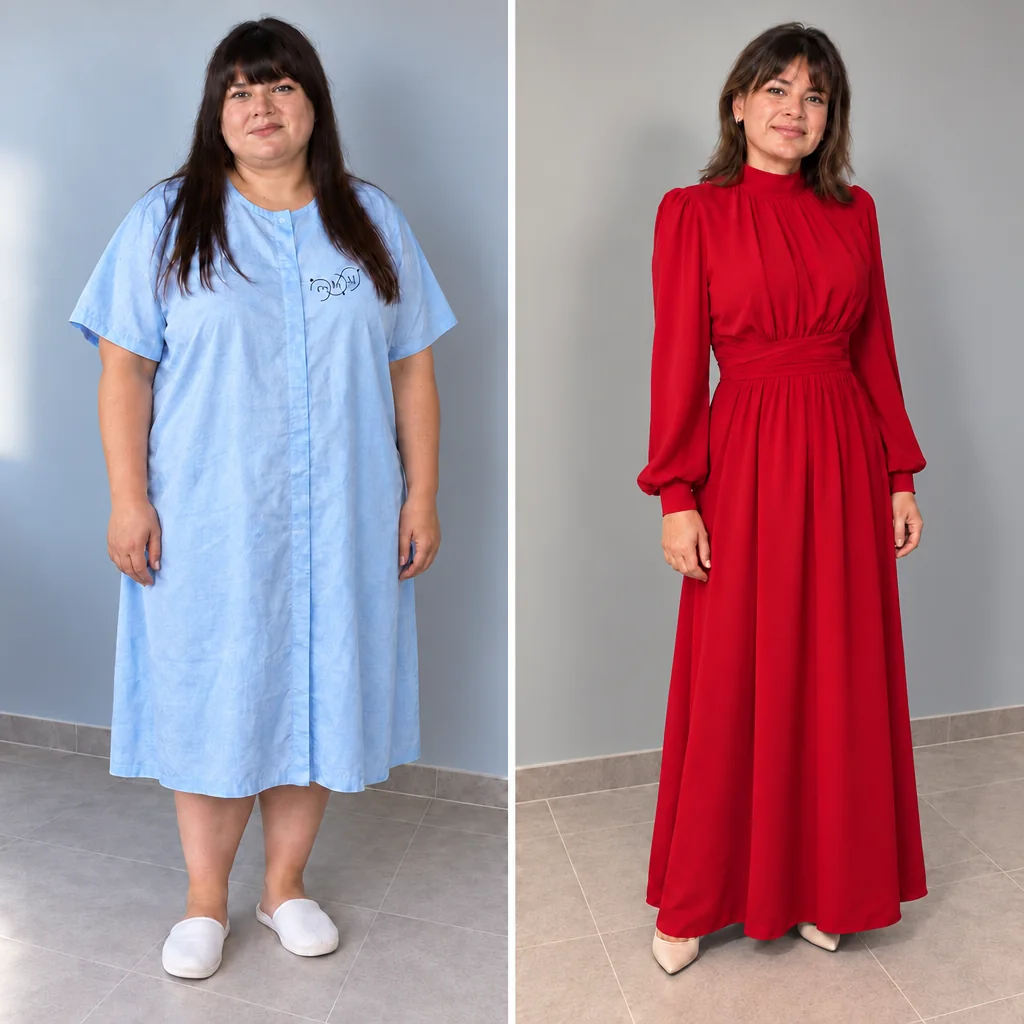 beforeafter
Bariatric surgery
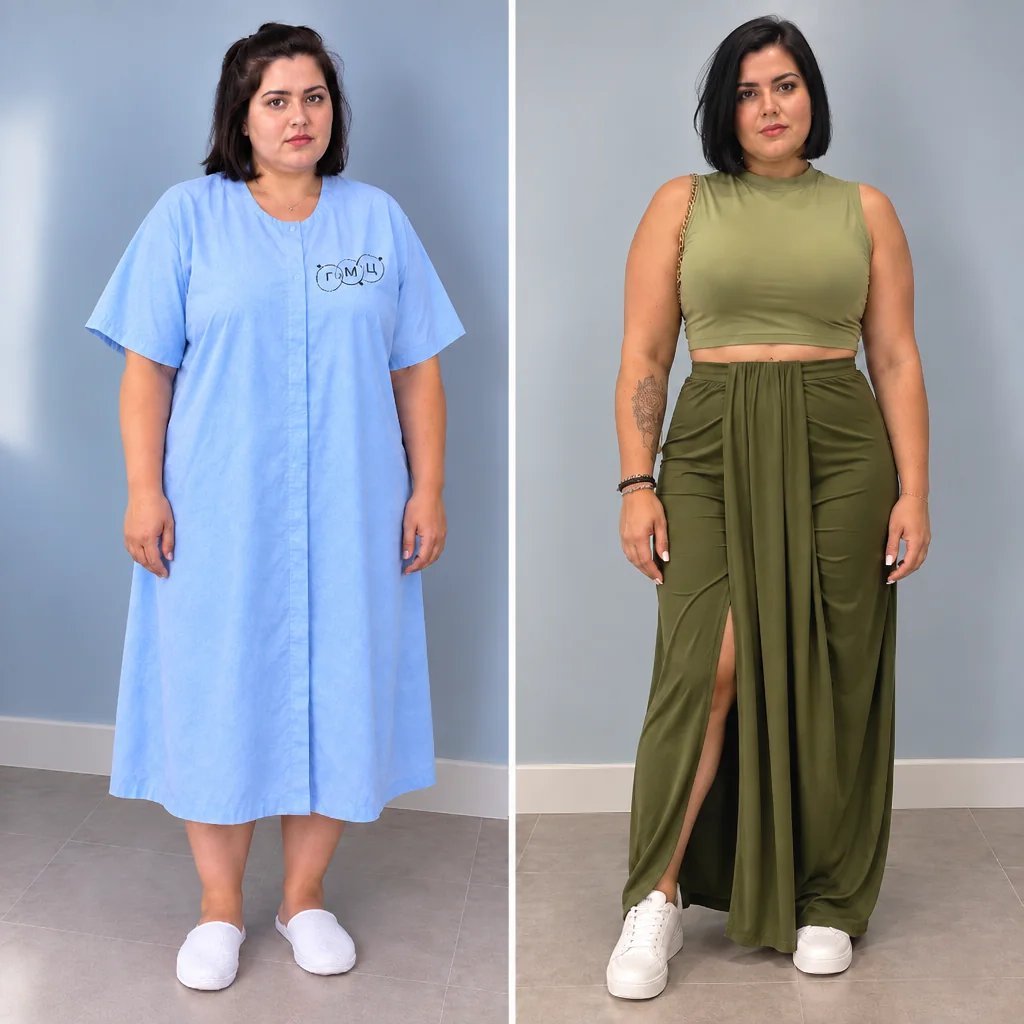 beforeafter
Bariatric surgery
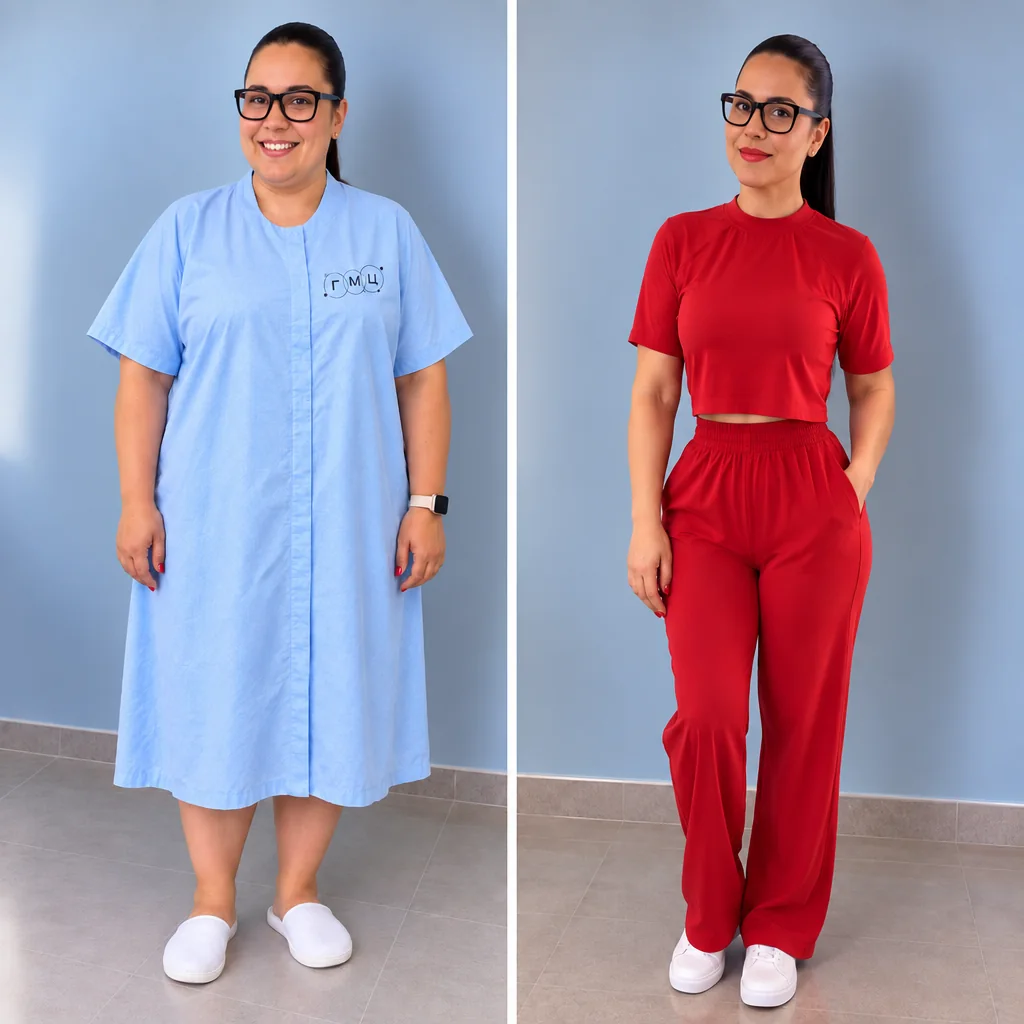 beforeafter
Bariatric surgery
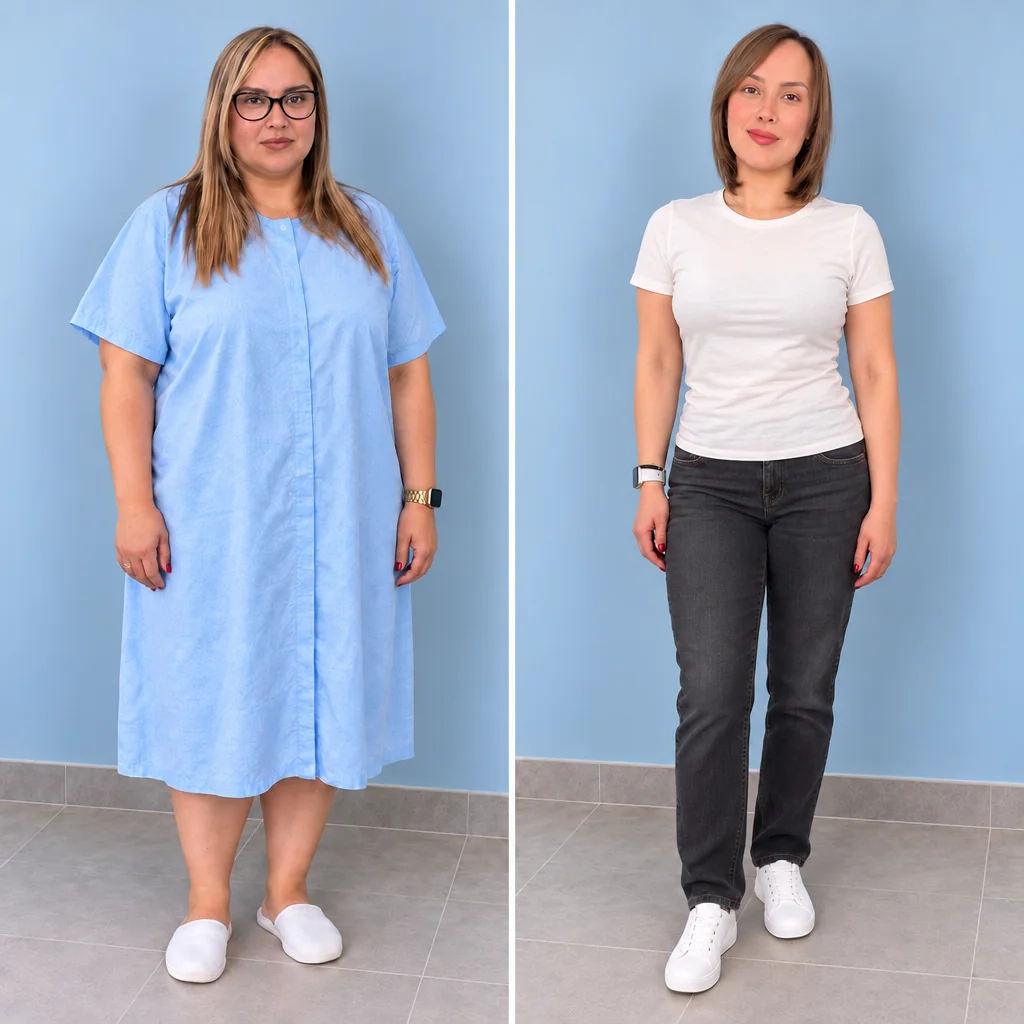 beforeafter
Bariatric surgery
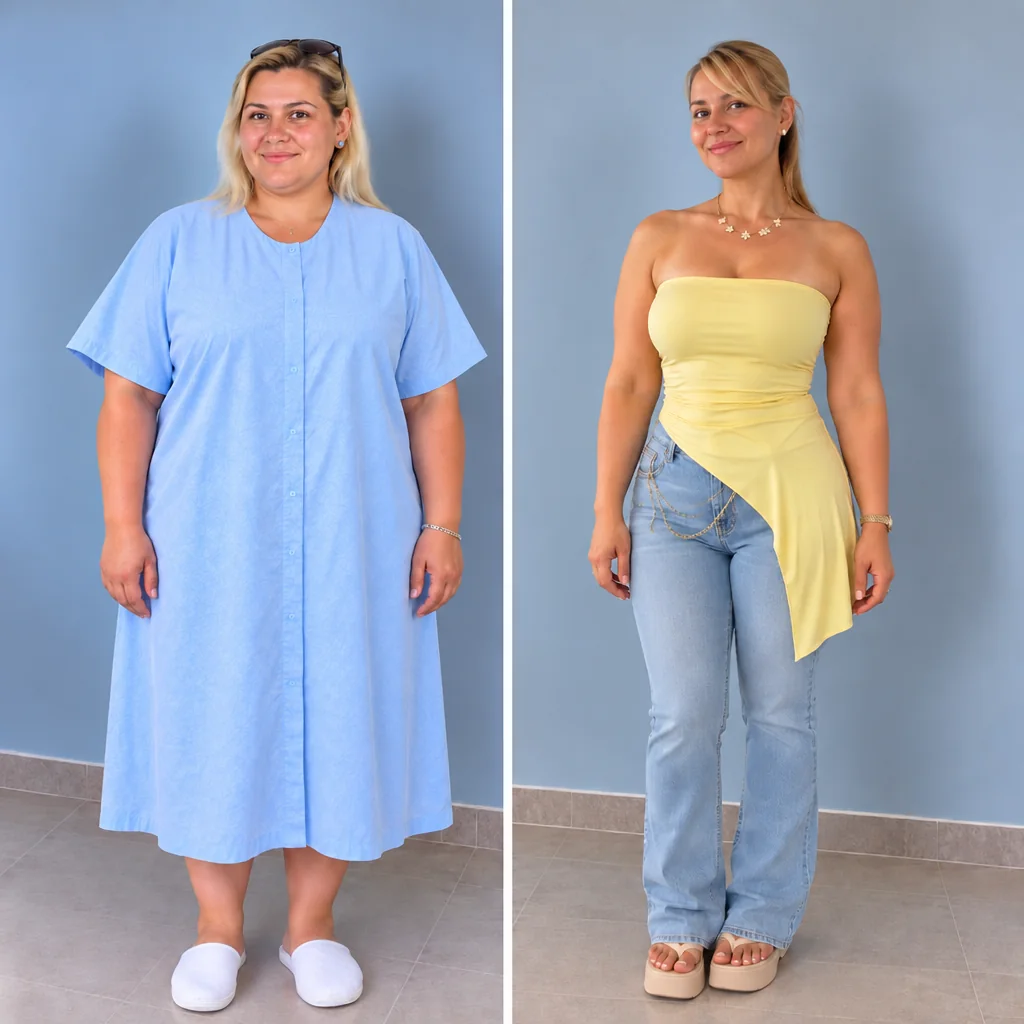 beforeafter
Bariatric surgery
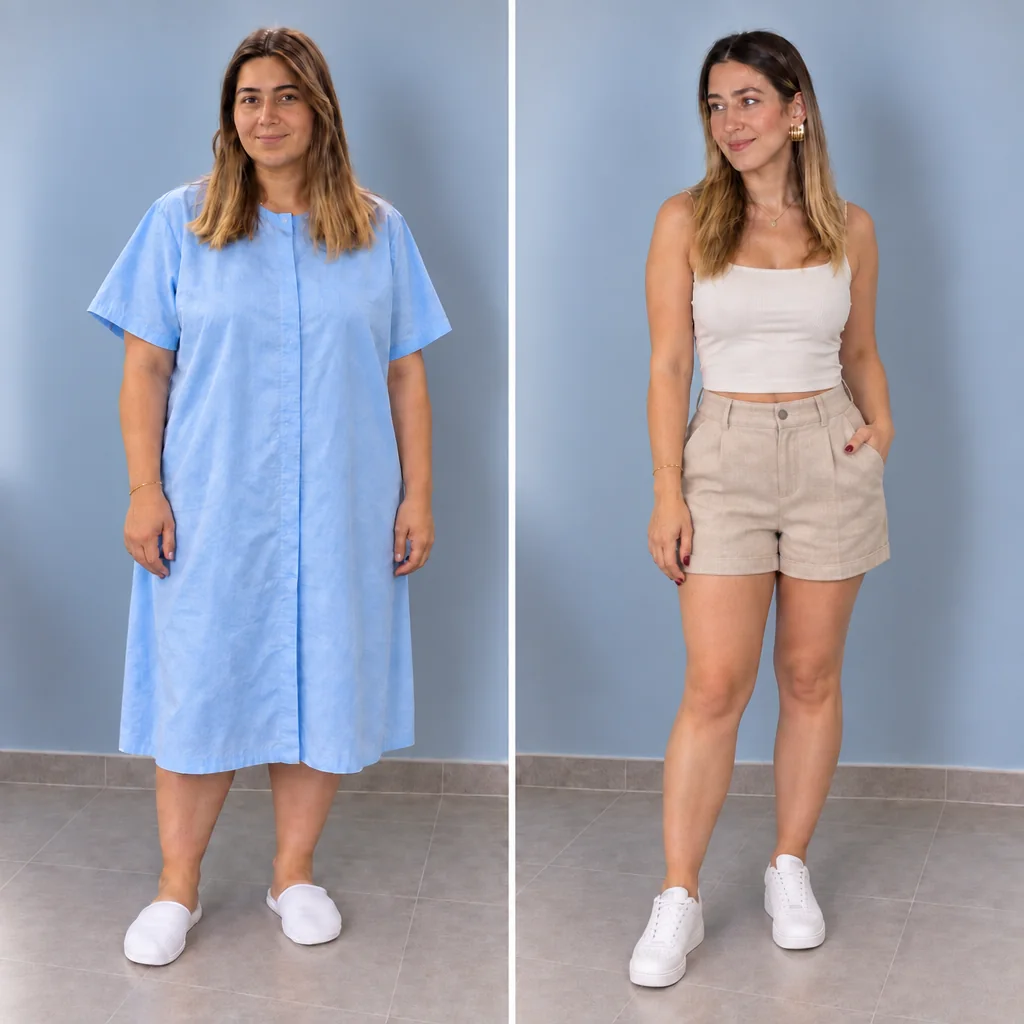 beforeafter
Bariatric surgery
Comparison
Two core procedures are offered here: gastric bypass and sleeve gastrectomy. See how each one works, its purpose and its indications so you can pick a method with confidence.
A smaller stomach volume
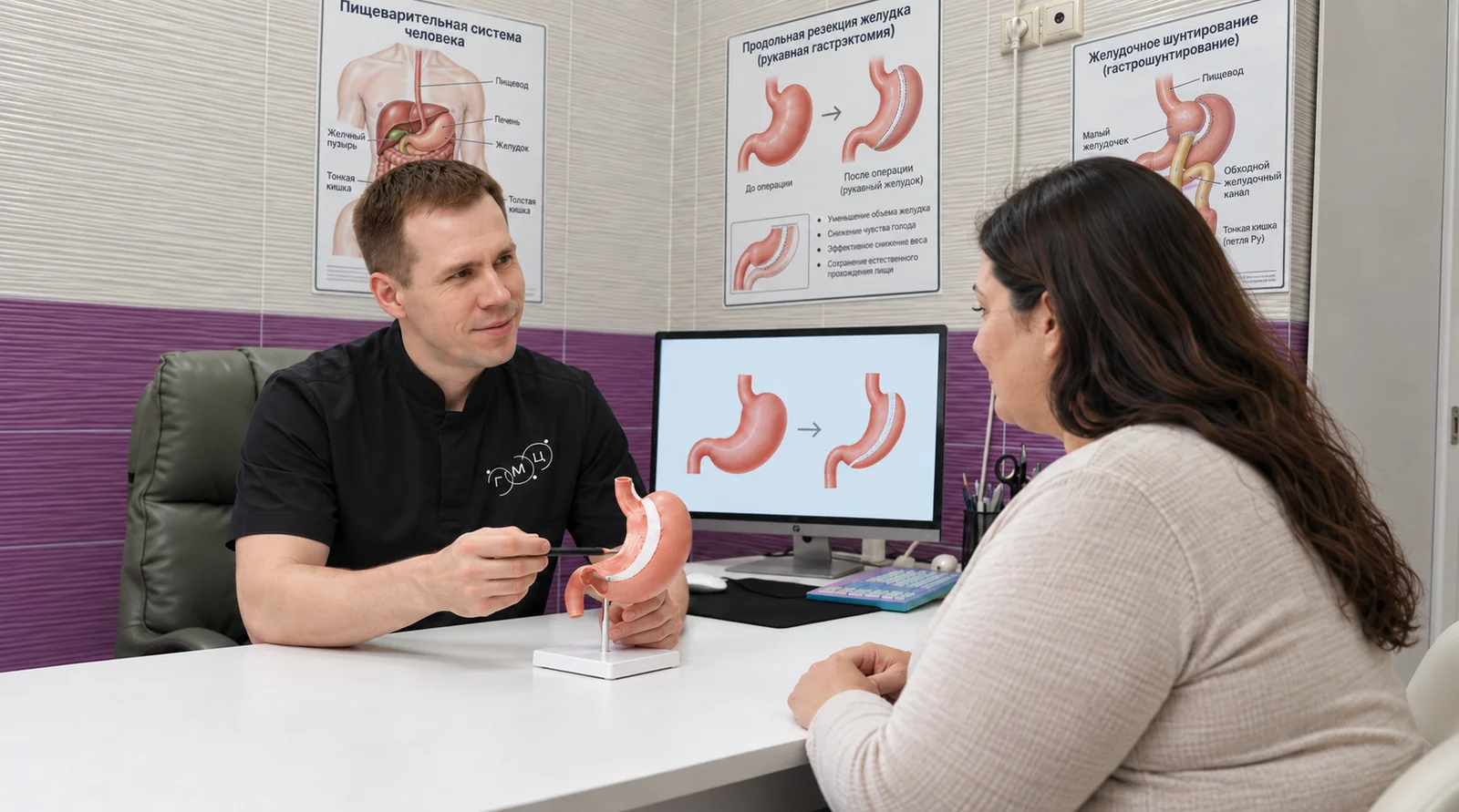
Discounted price
$3,600 $4,800
The stomach is made smaller and food is rerouted
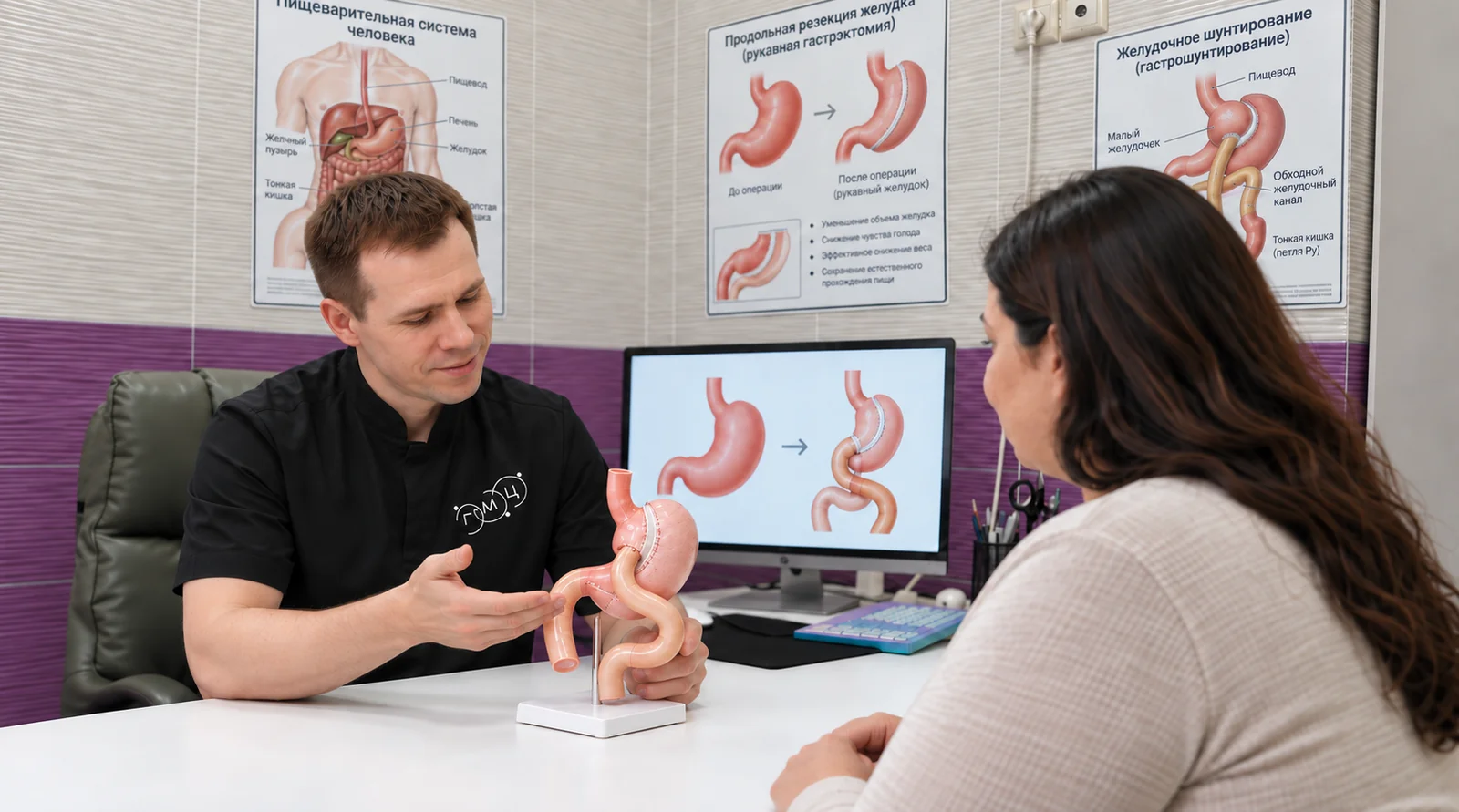
Discounted price
$4,000 $5,200
These figures on benefits and recovery are method averages, given as a guide. Your anatomy and personal features decide the extent of surgery and recovery, which the surgeon confirms at the consultation.
Book a consultationAbout the clinic
Up-to-date equipment, comfortable rooms and attention to each patient
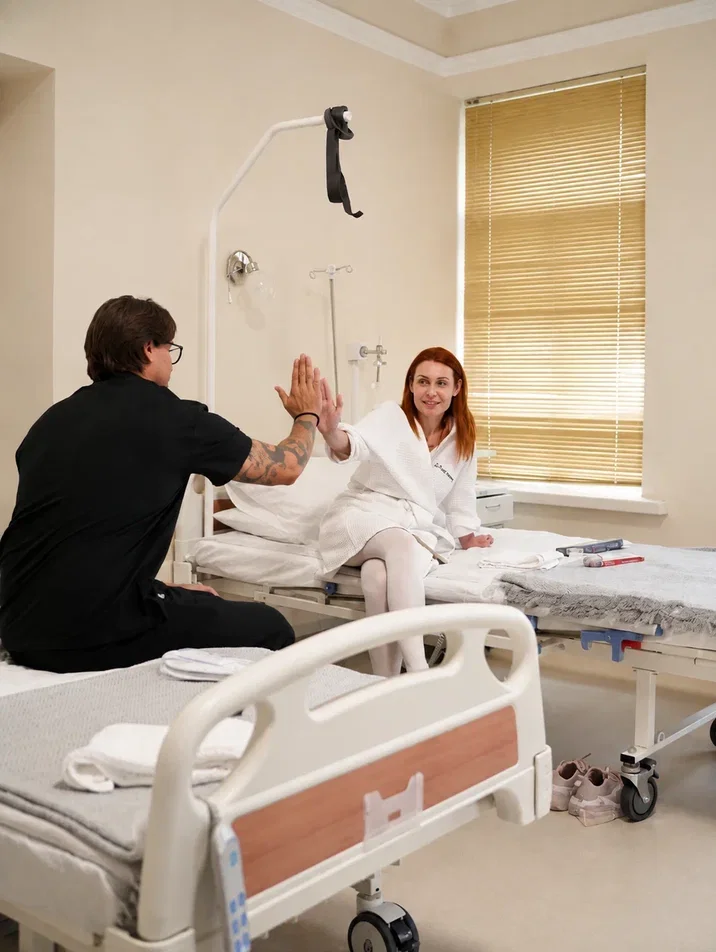
Ask us anything, and we will arrange a consultation at a time that suits you
Get a consultationThe decision to operate is taken with the surgeon, following a consultation and a check-up.
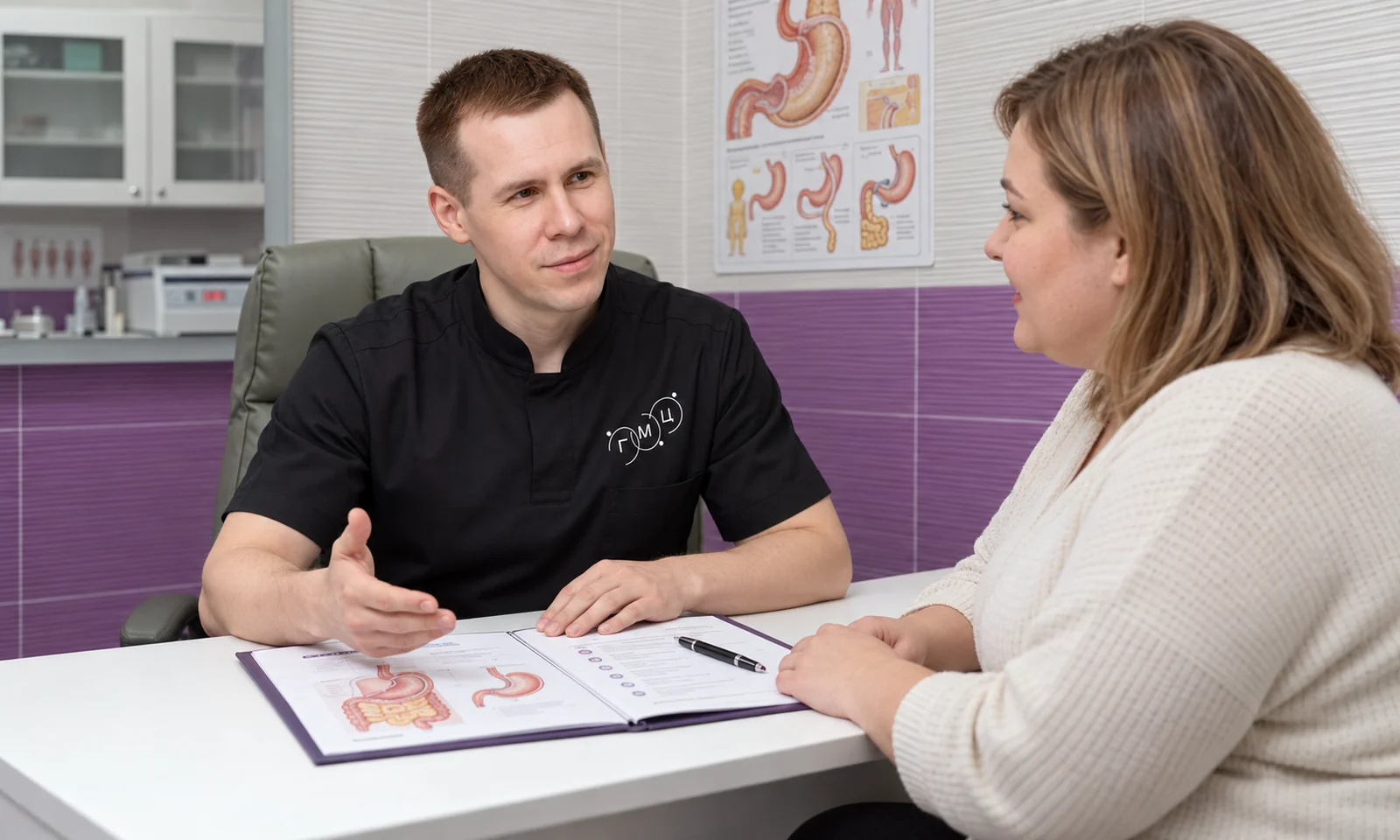
Can't tell which column fits your case?
Message us on Telegram to learn from our coordinator whether bariatric surgery fits your case. The surgeon consultation is free of charge and does not bind you to surgery.
Find out if it suits me
Prices
We tell you the cost at the consultation once your plan is ready; the contract then fixes it.
Discounted price
A smaller stomach volume
$3,600$4,800
Discounted price
Weight loss and a new route for food

$4,000$5,200
Free
A treatment plan after the surgeon's examination

Free
the cost of the operation is named
and recorded in the contract
After assessing your health and discussing your goals, the doctor picks the right bariatric surgery method. You learn the cost at the consultation, and the contract fixes it.
Message our coordinator
Free online consultation · Reply within 15 minutes
Message us on TelegramMessage us on WhatsAppBy messaging us, you agree to our Privacy Policy

price
One package includes preparation and 12 months of support. There are no extra charges.Starting with preparation for surgery
and ending with support for 12 months.
What to expect
Your agreed treatment plan, monitoring during your hospital stay and support for a year.
 1
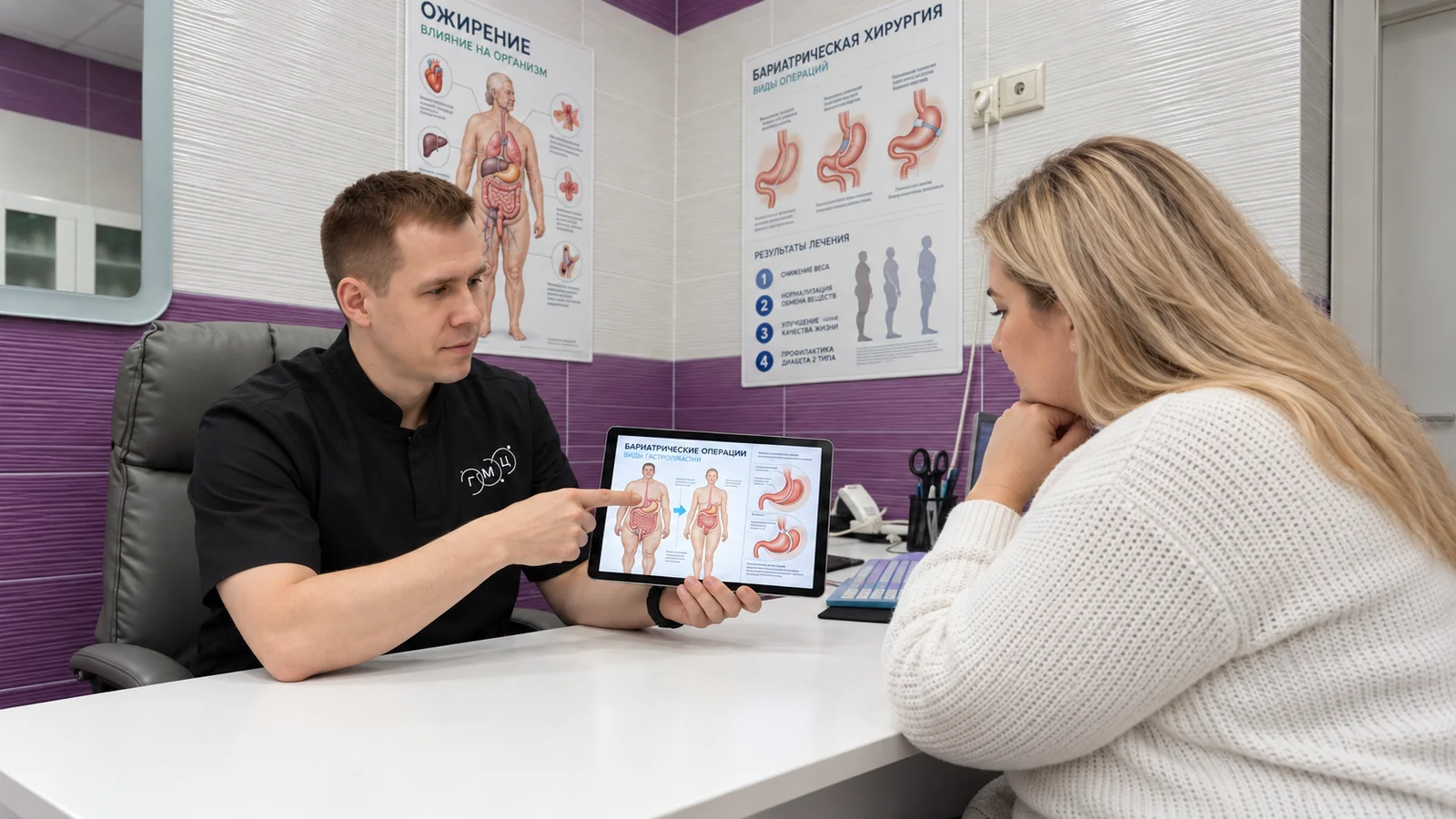
1Your health is assessed, your goals are discussed and the doctor orders the tests required to pick the right bariatric method.
2We secure a date for your surgery: you can pay the deposit by card at the clinic or by bank transfer online. The terms are fixed in the medical services contract
 3
3Pre-operative checks include blood and urine tests, an ECG, an ultrasound, a gastroscopy and specialist visits; your exact list comes from the doctor at the consultation.
 4
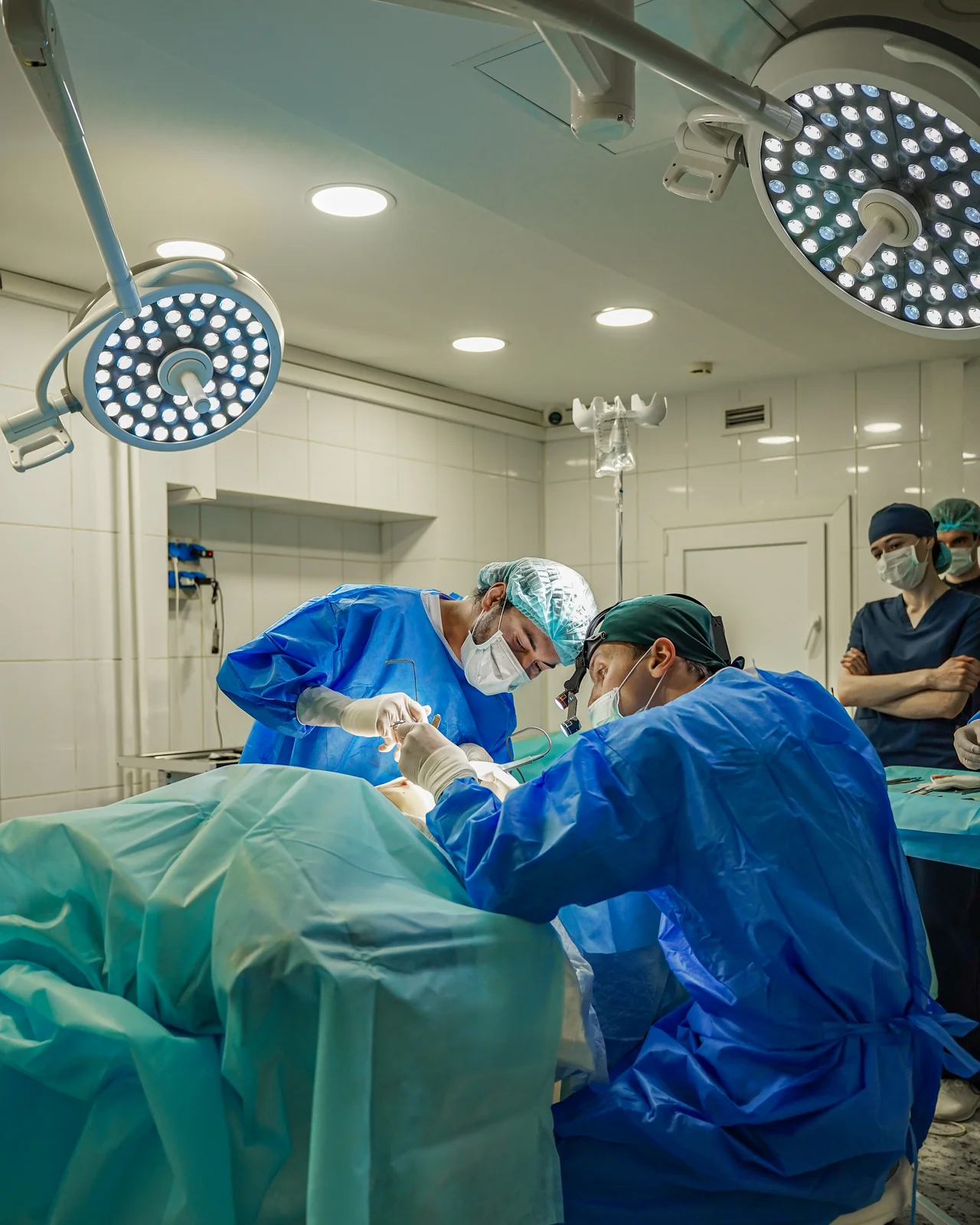
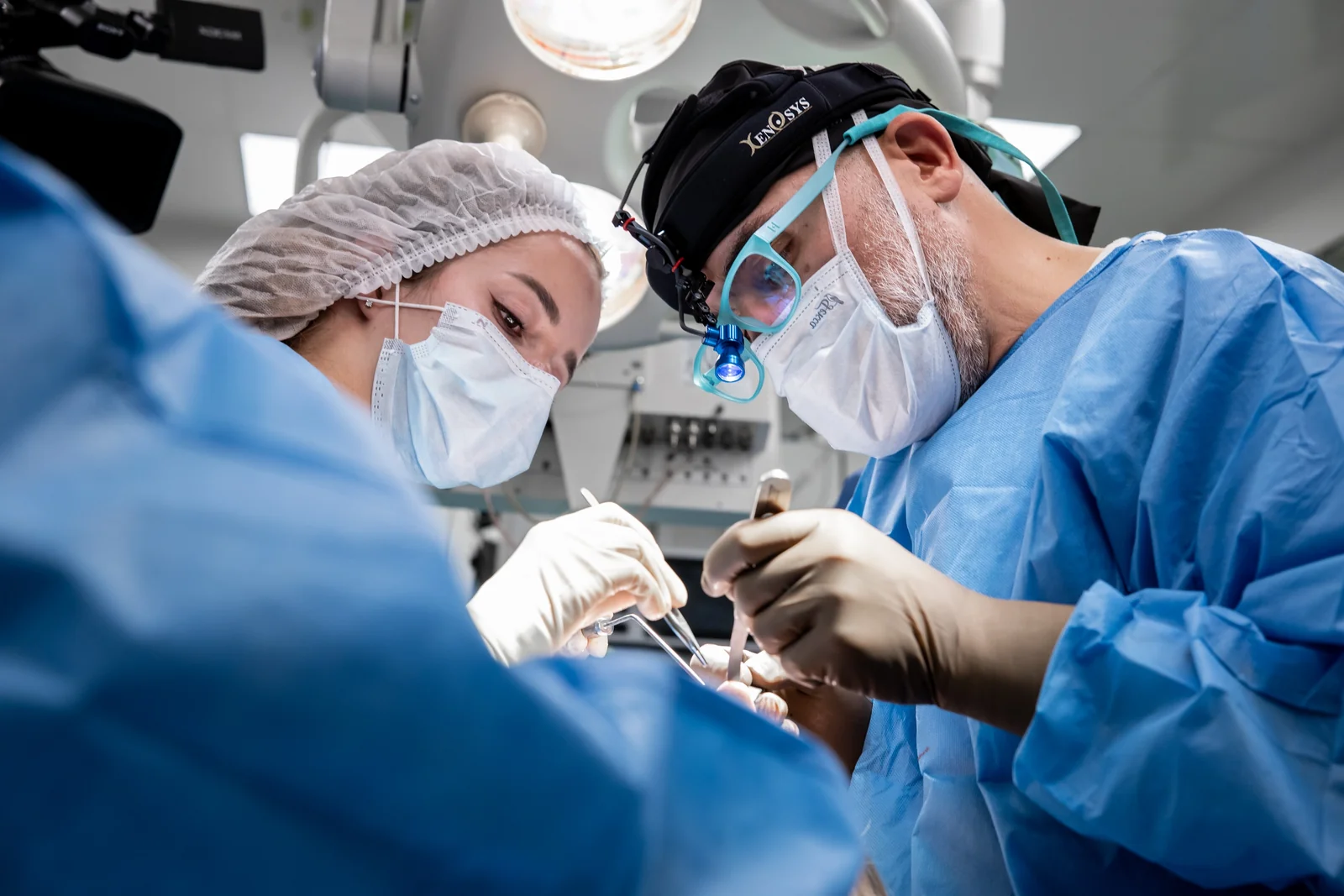
4Under general anaesthesia, the surgeon carries out the bariatric operation using the chosen method. After surgery the medical team monitors the patient.
 5
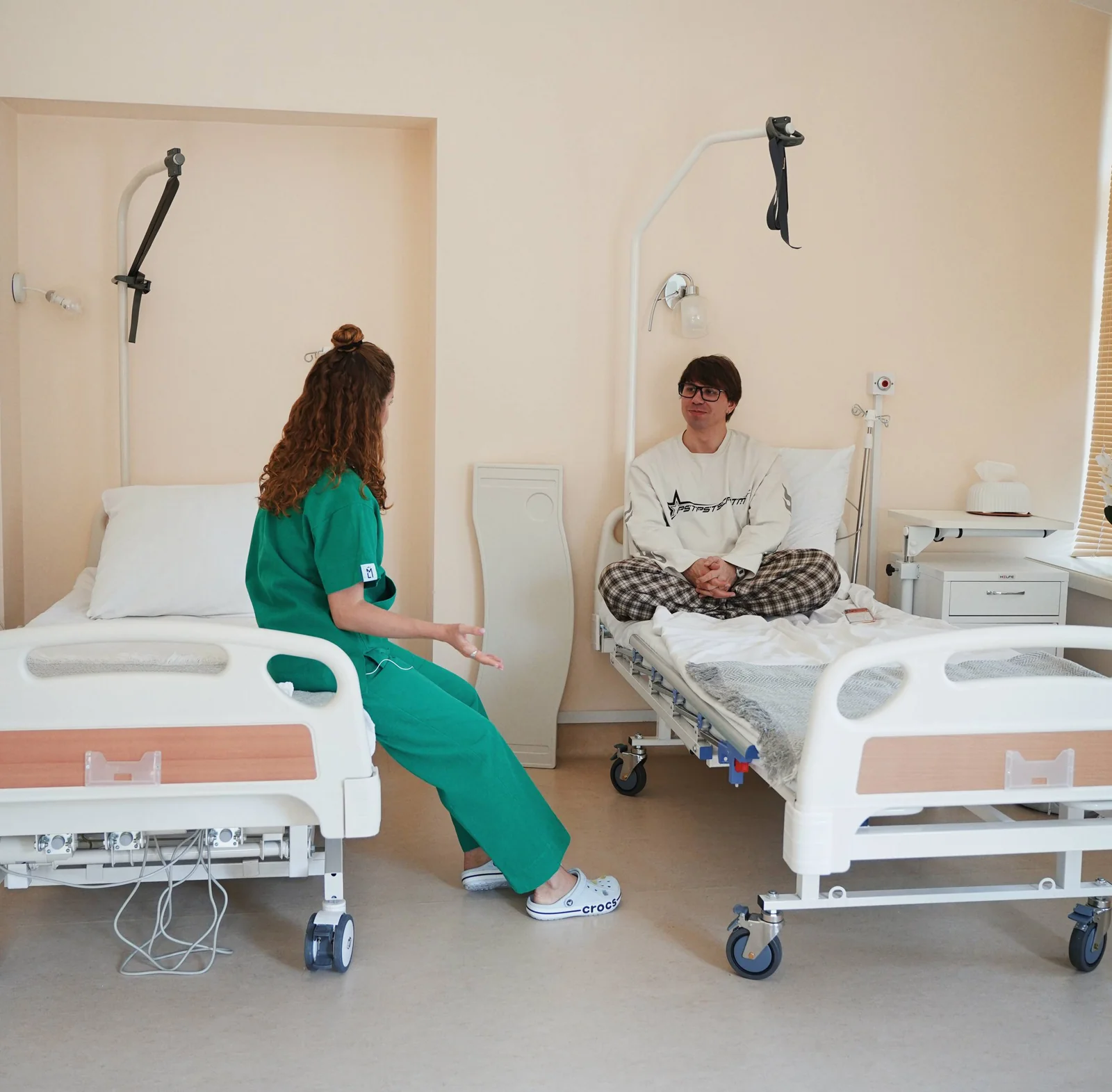
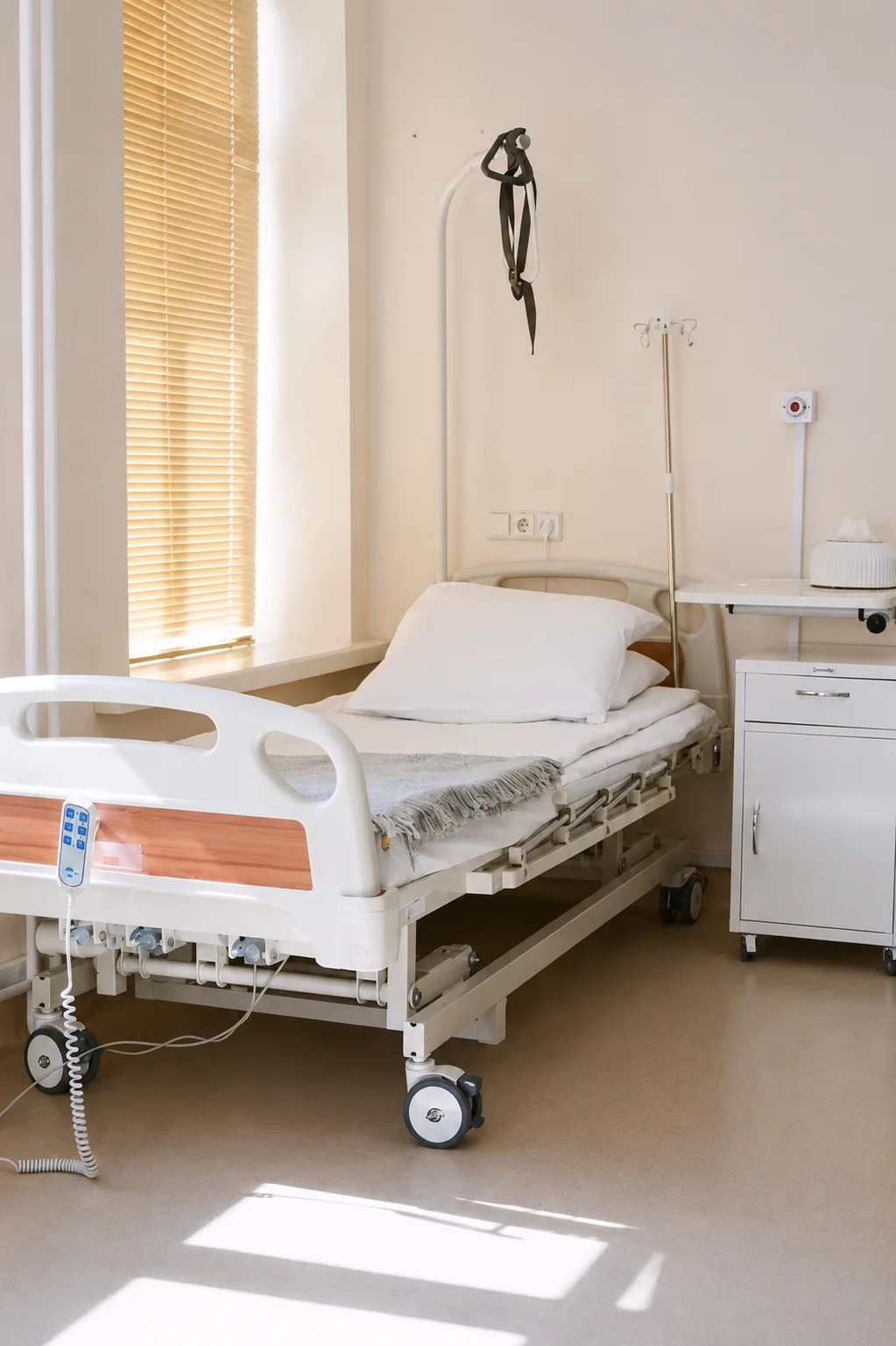
5Following surgery you remain in hospital, supervised by doctors. The stay is from 1–3 to 4–5 days, depending on the operation's complexity and how you feel.
 6
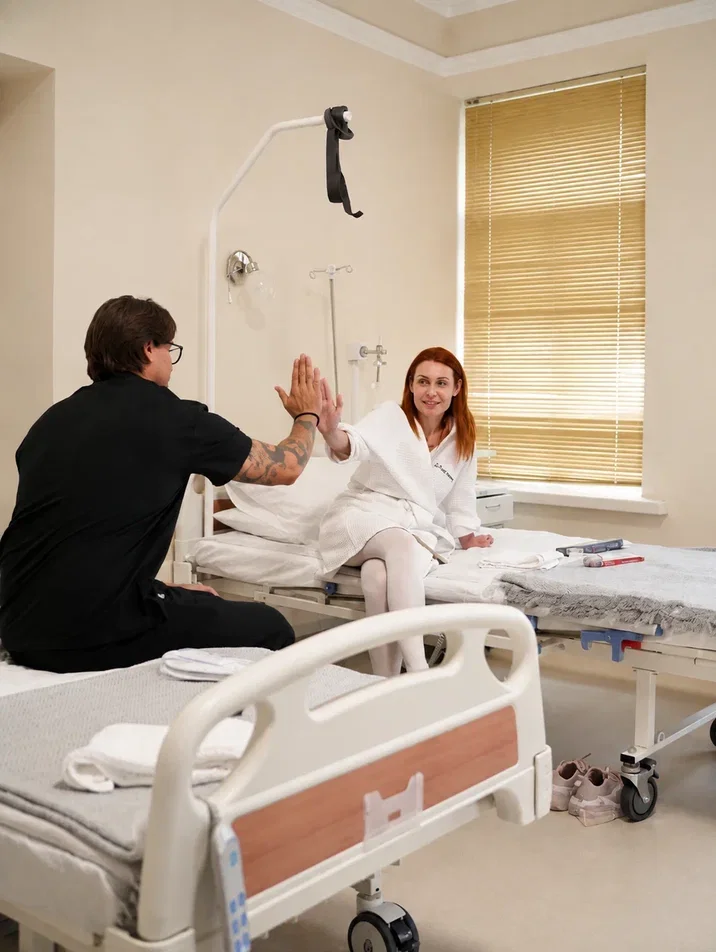
6Following discharge you get advice on diet and recovery, while scheduled check-ups track how you feel, your weight and tests. The clinic team supports you for a year.
At the consultation the doctor makes a plan and tells you how the surgery will go
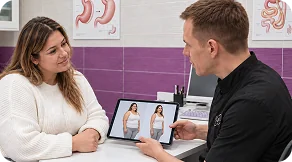
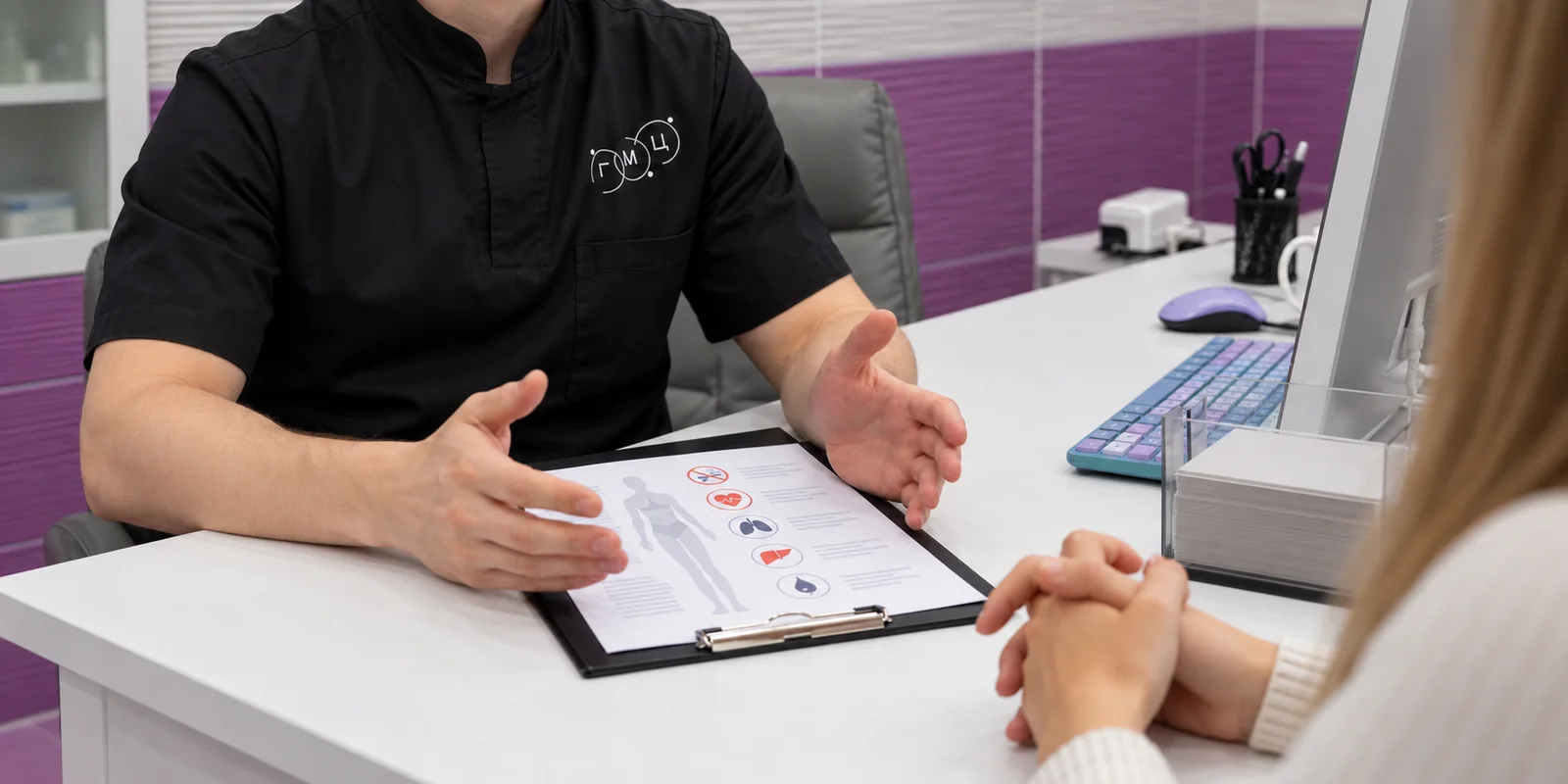
The consultation is free of charge, comes before surgery and obliges you to nothing.
Book a consultationDoctors

27 years of experience
Head bariatric surgeon
Surgeon
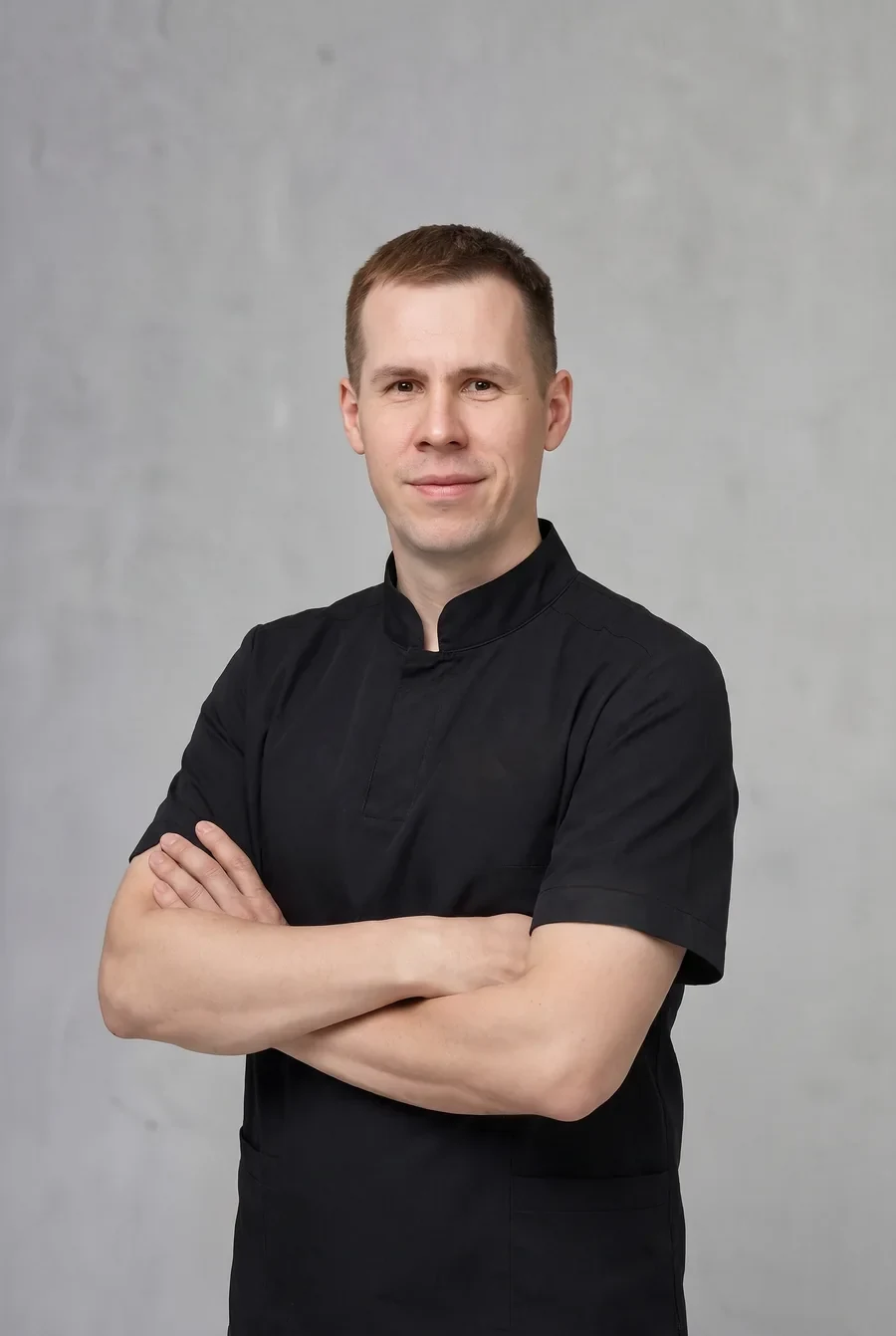
9 years of experience
Bariatric surgeon
Surgical oncologist
One surgeon operates and follows you all the way, from the first consultation to the result.
The first consultation, free of charge, is with our patient care manager, who works out your BMI, explains the methods and books you in with the surgeon.
Book a consultationCoordinators
Support at every step of the way

The person you reach first at the clinic, from your first message up to the consultation
Specialist in patient care
Handles your questions before the first consultation and helps you choose a convenient date

Supports you before and during your stay — from booking through to discharge
Specialist in patient care
Stays in touch during your clinic stay and helps you prepare for surgery

Accompanies you through recovery, from discharge to your final check-up
Specialist in patient care
Stays in touch during your recovery and schedules follow-up visits with the surgeon
Advantages
Our team is with you all the way, and we choose the method that best fits your health, lifestyle and goals.
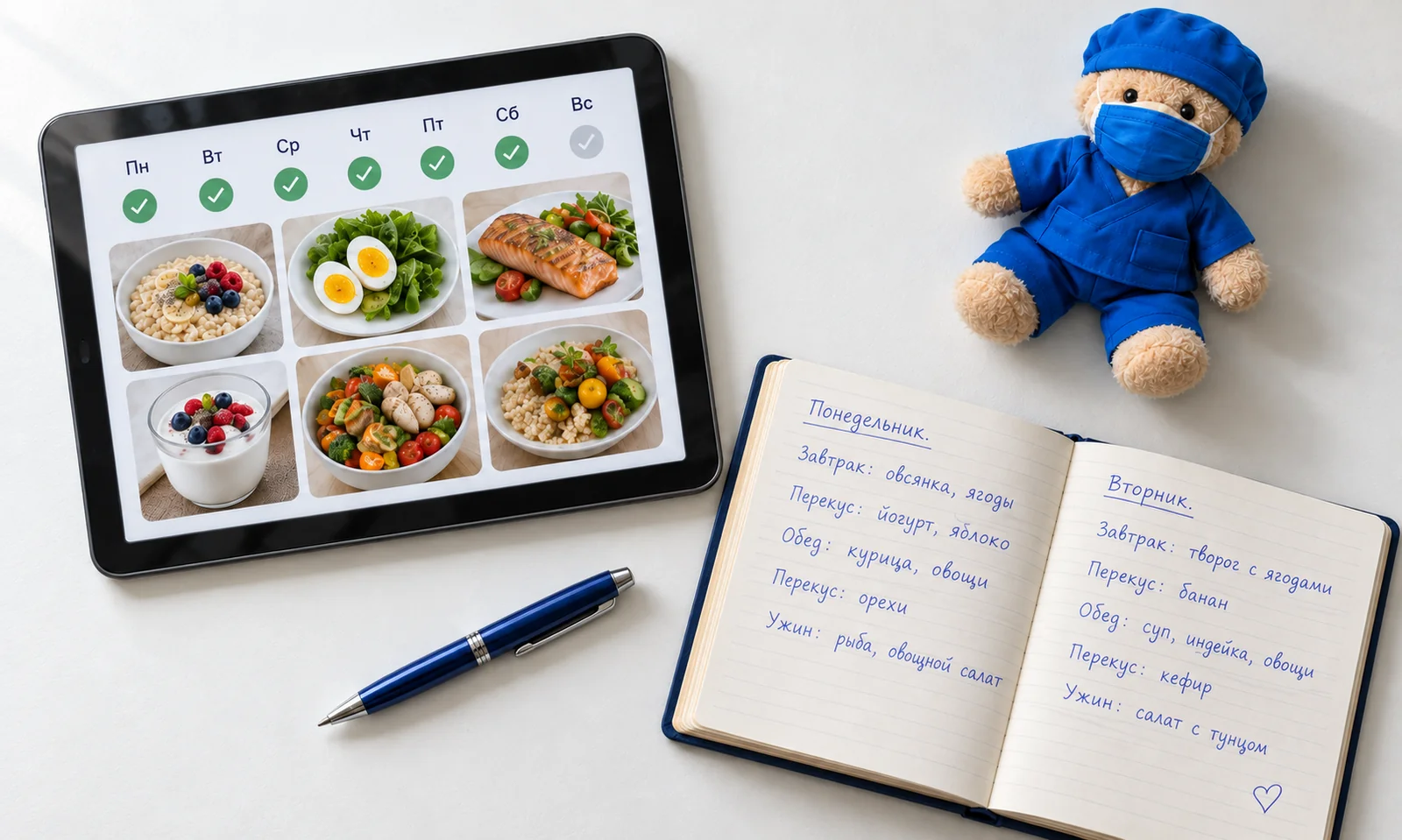
We help you adapt to new eating habits, track your results and keep them.

Stable weight loss, improved well-being and a higher quality of life.

We respect your time: we work 24/7, with easy booking and a personal approach — we adapt to your pace.
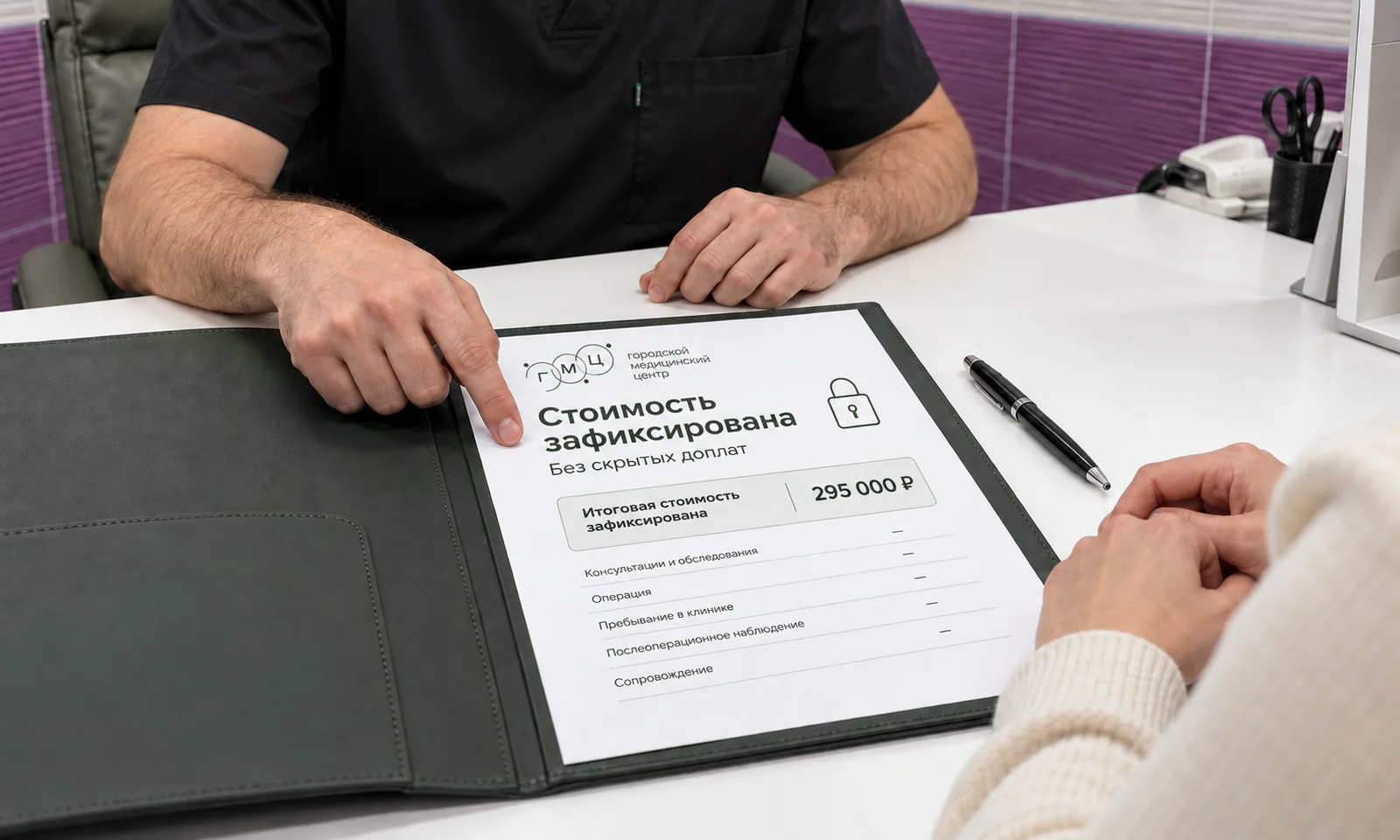
After the consultation you know the method the surgeon has chosen and the clear price, with no hidden fees and no surprises on the way to your result.
FAQ
At the clinic, experienced bariatric surgeons perform the bariatric operations:
Message us and our coordinator will reply shortly and book your consultation. The consultation with a bariatric surgeon is free.
Surgery is prescribed only when clear criteria are met
BMI is the principal gauge of how advanced obesity is, found by dividing body weight (kg) by height squared (m²). Typically, a BMI above 40 — or above 35 with serious related conditions — justifies surgery. Some patients with lower values are considered for surgery too, if non-surgical options have failed.
The two are often confused, yet their goals differ fundamentally. Bariatric surgery is a medical treatment for obesity and its related diseases. It alters how the digestive tract works, tackling the causes of excess weight and metabolism. Plastic surgery changes the body's outer contours; it neither treats obesity nor affects metabolism.
City Medical Centre offers four main types of bariatric surgery: sleeve gastrectomy, Roux-en-Y gastric bypass, mini gastric bypass (MGB) and SADI-S duodeno-ileal bypass. The method is chosen individually according to BMI, related conditions and the patient's goals.
Using modern laparoscopic technique, we perform the operation via 4 small punctures of 5 to 15 mm. Cosmetic sutures are placed, leaving marks that are nearly invisible after healing.
Recovery depends on what you do. Office work: after 2–4 weeks. Physical work: after 1.5 months. Sport and activity: swimming is allowed after 30 days, other exercise is added gradually as weight drops. Travel and holidays: best planned no earlier than a month after surgery.
Your diet changes in stages: from liquid food to soft, then to solid. The focus is on protein and on limiting high-calorie, fatty food.
Getting pregnant after bariatric surgery is possible, but doctors advise waiting at least 12–18 months, so the body can stabilize, weight can reach target values and nutritional status can normalize.
Yes — vitamins are required after bariatric surgery. With the digestive anatomy changed, some nutrients are absorbed less well, and regular vitamin and mineral supplements become a permanent part of life.
It is possible to regain weight after bariatric surgery, but very unlikely if you follow your doctor's advice. Proper nutrition, avoiding high-calorie drinks and regular follow-up with City Medical Centre specialists are essential.
Prices are in US dollars; the amount in brackets is an approximate conversion to SAR at the rate of 02.10.2026. The final price is fixed in your contract.
Prices start from $3,600 (≈ SAR 13,500). The surgeon sets the final price at the free consultation, and it is fixed in the contract, with no hidden extras.
General anaesthesia, a personal coordinator from day one, monitoring in the hospital and support for one year.
The hospital stay is 1–5 days, depending on the method and how you feel. Office work is possible after 2–4 weeks.
Yes. The first consultation is free and does not oblige you to anything. You can start online by sending a message to the coordinator.
Message us on WhatsApp or Telegram using the buttons below. A coordinator will answer your questions and book a free consultation where the doctor names the exact price.
By messaging us, you agree to our Privacy Policy
Bariatric surgery is a medical treatment for obesity and related diseases. Unlike plastic surgery, it changes how the digestive tract works and addresses the causes of excess weight. For patients from Al Kharj, four main methods are available: sleeve gastrectomy, Roux-en-Y gastric bypass, mini gastric bypass and SADI-S. Each is chosen individually based on BMI, related conditions and personal goals.
The final result is reached in 1.5–2 years. Throughout the first year the team tracks weight loss, monitors tests and answers questions about diet and recovery, providing psychological and medical support at every stage. For patients in Al Kharj, regular follow-up with specialists and avoiding high-calorie drinks are the keys to keeping the result for good.
Starting is simple. Leave your name and phone number or write in any messenger, and a coordinator will arrange a free consultation. In about 15 minutes the surgeon will say whether bariatric surgery is right for you and which method fits. For people from Al Kharj, this conversation is the fastest way to replace temporary fixes with a lasting solution.
Well-known people who spoke openly about this operation, in their own words.
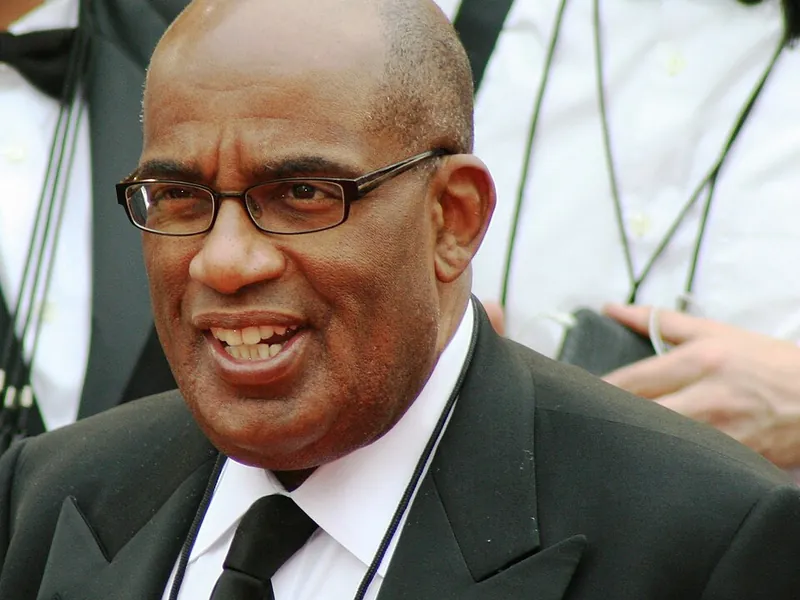 Al Roker and gastric bypass: twenty years of talking about it honestlyAl Roker had gastric bypass surgery in March 2002 and has talked about it for 20 years. His words, how the operation works and what recovery involves.
 Did Graham Elliot have weight-loss surgery? Yes, and he did it for his familyChef Graham Elliot had weight-loss surgery in 2013, saying it was what he needed to do for his family. His words, the operation and recovery.
 Did Randy Jackson have gastric bypass surgery? Yes, and he still talks about maintaining itRandy Jackson had gastric bypass surgery in 2003 and lost 114 pounds. His own words, how the operation works today and what recovery involves.
 Remi Bader and her weight-loss surgery: what she actually saidRemi Bader said in 2023 she had weight-loss surgery removing 80% of her stomach and lost 140 lbs. What she said, how the operation works, and recovery.
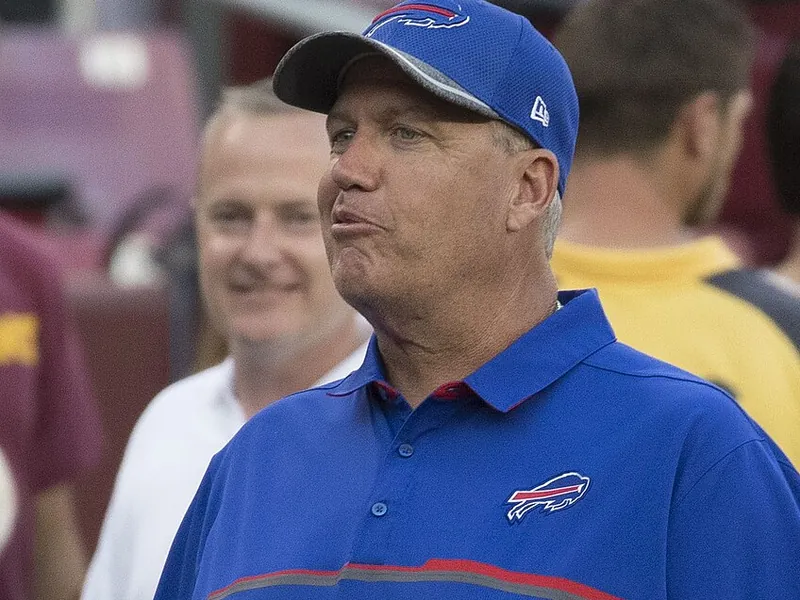 Did Rex Ryan have weight-loss surgery? Yes, and he says it has been greatRex Ryan had Lap-Band surgery in March 2010 and lost over 100 pounds. His own words, how weight-loss surgery works today and what recovery involves.
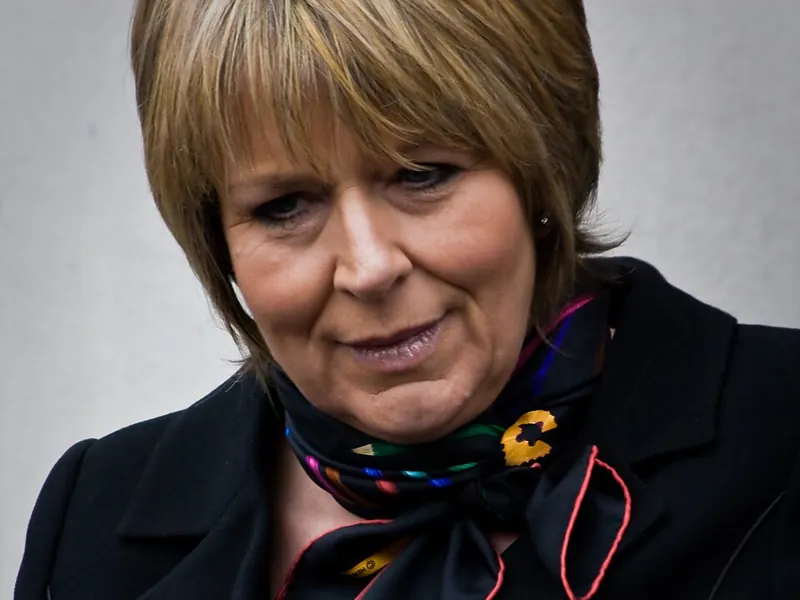 Fern Britton and her gastric band: “I did it for me”Fern Britton said in 2008 that she had a gastric band fitted two years earlier. Her words, how weight-loss surgery has changed and what it involves now.
What patients write after this operation. Reviews are translated from the original language.
Irina, 26
For a long time I doubted whether to go ahead with surgery, but after the consultation I felt much calmer. Andrey Georgievich explained in detail how gastric bypass is done, what to expect after the operation and how recovery would go. I especially liked that they talked to me calmly and without pressure. I am now gradually getting used to my new way of life and I am very glad I took this step.
Bariatric surgery
Doctor: Andrey G. Ugay
Angelina, 22
For me the hardest part was deciding to have the operation. At the consultation Ruslan Sergeyevich answered all my questions in detail and explained the specifics of sleeve gastrectomy and recovery. After the operation I always understood what I was doing and why. Thank you to the doctor and the whole team for their attentiveness.
Bariatric surgery
Doctor: Ruslan S. Menzulin
Anna, 31
For a very long time I tried to deal with my excess weight on my own, but I did not get the result I wanted. After the consultation with Andrey Georgievich I finally understood what to do next. I came through the operation well, and my recovery was supervised by the doctors. It was important for me to feel that I was not left alone after surgery.
Bariatric surgery
Doctor: Andrey G. Ugay
Veronika, 25
Before the operation I had many fears, mostly of the unknown. Ruslan Sergeyevich explained every stage of treatment in detail and answered even the simplest questions. Thanks to that I felt much more confident. I keep following the recommendations and I am gradually seeing the changes I had the operation for.
Bariatric surgery
Doctor: Ruslan S. Menzulin
Valentina, 23
The decision to have bariatric surgery was not easy for me. I worried both about the operation itself and about how my life would change afterwards. At the consultation Andrey Georgievich explained everything in detail, so little by little my fear turned into confidence. What matters most to me now is the result and the chance to treat my health and lifestyle differently.
Bariatric surgery
Doctor: Andrey G. Ugay
Anna, 27
I am very grateful to Ruslan Sergeyevich for his attentiveness. Before the operation I had a huge number of questions, and I got a clear answer to every one of them. After the operation it was also clear which recommendations to follow and how to eat. It was important to me that the doctor stayed in touch and I felt supported at every stage.
Bariatric surgery
Doctor: Ruslan S. Menzulin
Al-Kharj's governorate was home to 373,177 people in the 2022 national census, and it is known as the Kingdom's food basket, with a Food Industries Institute that trains the local workforce in food security and automated packaging and an annual Dairy and Food Festival celebrating the area's agricultural heritage. In a place where food is the main local industry, a conversation about weight naturally begins with food. For people who have already tried standard weight-loss methods without lasting success, the first step is usually a short message to a coordinator on Telegram or Telegram, available around the clock, describing weight history and any related health conditions.
Bariatric surgery is a medical treatment for obesity and the conditions that come with it, not a cosmetic procedure; it changes how the digestive tract works and addresses the underlying cause of excess weight rather than simply removing fat. Four main methods are available — sleeve gastrectomy, Roux-en-Y gastric bypass, mini gastric bypass and SADI-S — and each is chosen individually based on BMI, related conditions such as diabetes or reflux, and the patient's own goals.
The operation takes place under general anaesthesia, performed laparoscopically by the surgeon using the chosen method, with the medical team monitoring the patient closely afterward. The hospital stay runs from one to five days, depending on which method is used and how the individual patient is feeling.
Preparation beforehand is practical rather than dramatic: two to four weeks before surgery, fast carbohydrates and fats are cut from the diet; a month before, smoking stops and physical activity and stress are reduced; the day before, meals become light, with the last light meal in the evening and the last fluids three to four hours before the operation itself.
The weeks right after bariatric surgery are at their most demanding in Al-Kharj's summer, when daytime highs average close to 48°C and even overnight lows stay near 31°C; winter is an entirely different season, with highs around 18°C and lows near 5°C once December and January arrive. While the body is adjusting to much smaller amounts of food and fluid in those early weeks, that kind of dry desert heat makes staying ahead of dehydration more important than it would be in a cooler climate — sipping water steadily through the day rather than catching up all at once, and keeping outdoor activity to the cooler morning or evening hours instead of the middle of a hot afternoon.
Early walks fit best at the edges of the day, at dawn or after sunset, which suits this climate better than a routine borrowed from a gentler one. Lifelong vitamin and mineral supplements join the daily routine after this operation, because the changed digestive tract takes up certain nutrients less well, and pairing them with the water habit from the first week makes both easier to keep. The weather never decides which of the four methods a given patient receives; weight and associated illnesses do.
Return to normal life follows the kind of activity involved: a desk job is usually realistic after two to four weeks, manual work after about a month and a half, swimming from day thirty, and sport is rebuilt slowly while the weight falls. Anything demanding is usually best left until at least a month after surgery, once the body has had time to adjust.
A pregnancy after bariatric surgery can go well, yet most doctors ask for a gap of twelve to eighteen months at least before trying, giving the body time to settle, the weight to reach its intended range and nutrient levels to recover. A patient in Al-Kharj planning a family alongside this surgery benefits from raising that timeline directly with the surgeon early, rather than treating it as an afterthought once recovery is already underway.
Whether a patient suits the sleeve, the Roux-en-Y bypass, the mini bypass or SADI-S is decided one case at a time during the consultation, and not by the number on the scales alone: BMI, coexisting illness such as diabetes, high blood pressure or reflux, earlier attempts at ordinary weight loss and general health all shape which method, if any, is right. A frank conversation about eating habits, lifestyle and long-term expectations matters just as much as the physical assessment itself.
The follow-up that comes after surgery is lifelong and just as much a part of the treatment as the operation: regular blood tests track nutrient levels, scheduled check-ins monitor weight trends and any symptoms, and the surgical team stays reachable for questions that surface well after the first recovery weeks are behind a patient from Al-Kharj. Many Al-Kharj households cook around local dairy and vegetables, so a dietitian's plan works best when it names those everyday foods, such as yoghurt, labneh and cooked vegetables, and shows how their portions change, rather than offering a generic menu. Family meals deserve a plan too: when one person eats smaller portions at a shared table, it helps to agree beforehand how dishes will be served, whether a small separate plate is set aside before serving, and how to respond to relatives who insist on offering more, since the social pressure of hospitality is a real part of eating habits in a close community.
A surgery that changes the digestive tract for life calls for a direct check of the surgeon's registration with the Saudi Commission for Health Specialties, the body that registers practitioners in the Kingdom and runs an online service to confirm that a registration is valid, and for asking which of the four methods that surgeon performs regularly.
Saudi Arabia's cooperative health insurance has been compulsory for non-Saudi workers since 2005 and for Saudi private-sector employees since 2008, and it is built to fund essential and curative medical care. Whether bariatric surgery is treated as medically necessary rather than elective varies by individual case and by insurer, so a patient in Al-Kharj is better off confirming directly with their own employer or insurance provider before booking, rather than assuming either outcome without checking.
In a town whose first industry is food, weight-loss surgery attracts more talk than almost any other operation, and most of that talk does not survive one written medical fact. The sleeve is reversible whenever you want: no, it removes part of the stomach and cannot be undone, which is why the consultation spends real time on BMI, related conditions and expectations before any method is chosen. It is done for beauty, not treatment: also no, it is a medical treatment for obesity and the conditions that come with it.
A second pair travels just as far: the operation alone is enough and normal eating returns once weight settles, and vitamins are a temporary phase while follow-up ends with the first year. The written truth is the opposite on both counts: changes to eating habits are permanent, vitamin and mineral supplements become a daily, lifelong habit because the changed digestive tract absorbs some nutrients less efficiently, and follow-up runs for life, with the surgical team staying reachable for questions that surface long after the first recovery weeks.
The way to check a claim is the same however the story changes: turn it into a written question that reaches the coordinator on Telegram or Telegram at any hour, so documented answers come back to set against the majlis talk. And when someone recounts a relative who had a bad outcome, ask the three questions: who said it, when, and with which method? A tale without details is not a medical file, and one written page weighs more in your decision than a thousand words of council talk.
Regular blood tests track nutrient levels, scheduled check-ins monitor weight trends and any symptoms, and the surgical team stays reachable well after the first recovery weeks, since follow-up continues for life rather than ending once the operation itself is behind you.
Both treat obesity surgically, laparoscopically and under general anaesthesia, but they act differently on the digestive tract. The better fit depends on BMI, coexisting illness such as diabetes or reflux, and the surgeon's assessment at the consultation; there is no single answer for everyone.
Between one and five days, depending on the chosen method and how the patient feels, with the medical team watching recovery closely throughout.
It can. With summer daytime averages near 48°C, drinking steadily matters more than usual while intake of food and fluid is small, and many patients keep their walks for early morning or evening.
A desk job is usually possible after two to four weeks, manual work after about a month and a half, and swimming from day thirty; other activity returns step by step as weight falls.
Yes. Vitamins and minerals become part of everyday life afterwards, because the changed digestive tract takes up certain nutrients less well.
Check the surgeon's registration with the Saudi Commission for Health Specialties and find out which of the four operations they carry out regularly.
It depends on the individual case and the insurer, since whether it counts as medically necessary rather than elective varies; confirming directly with your employer or insurance provider before booking is the safer approach.
Most doctors suggest at least twelve to eighteen months, long enough for weight to level out and for nutrient levels to return to normal.
No, a sleeve gastrectomy removes part of the stomach and cannot be undone, which is exactly why the consultation spends real time on BMI, related conditions and realistic expectations before any method is chosen, rather than treating the decision lightly, especially given how permanent the anatomical change is.
Only one person knows the answer: a surgeon registered with the Saudi Commission for Health Specialties who reads your own file. Second-hand stories without a record, a method or a date compare nothing to anything, and any question of that kind becomes a written message through the Telegram or Telegram coordinator at any hour, so the answers you rely on come documented.
It is true, and it is among the most accurate parts of all that talk: after surgery the digestive tract absorbs some nutrients less efficiently, so vitamins, minerals and regular blood tests become a permanent part of daily life. Anyone unsure can request a written explanation of exactly what their own method requires, sent to the team at any hour.
Page medically reviewed by Andrey G. Ugay, lead bariatric surgeon. Review date: .