City Medical Centre · multi-specialty surgery clinicOpen 24/7

Tummy tuck

Tummy Tuck in Kenitra: Methods and Recovery

Free consultation

Price at consultation

The price is fixed in the contract before surgery
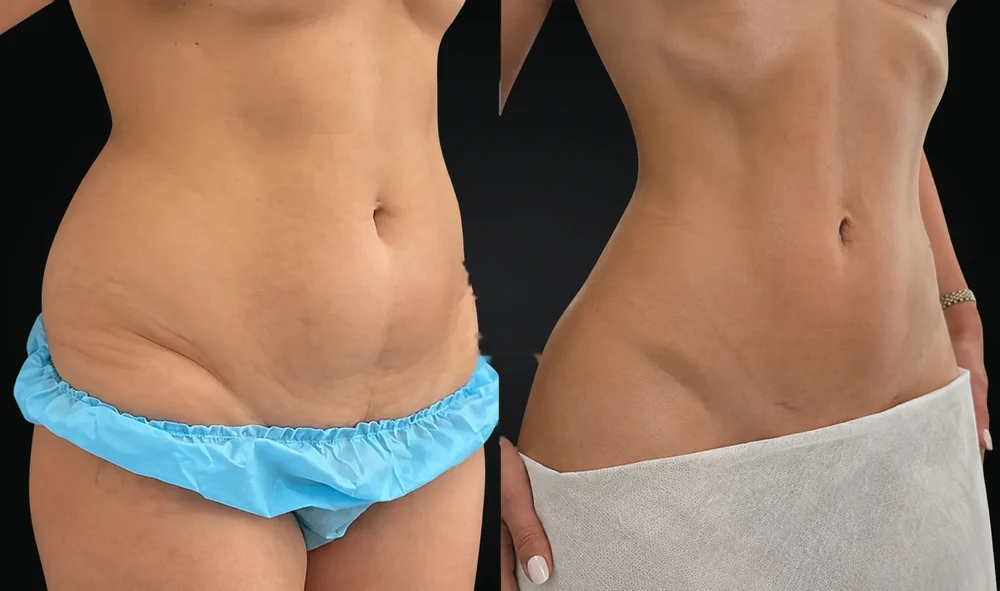
Real case
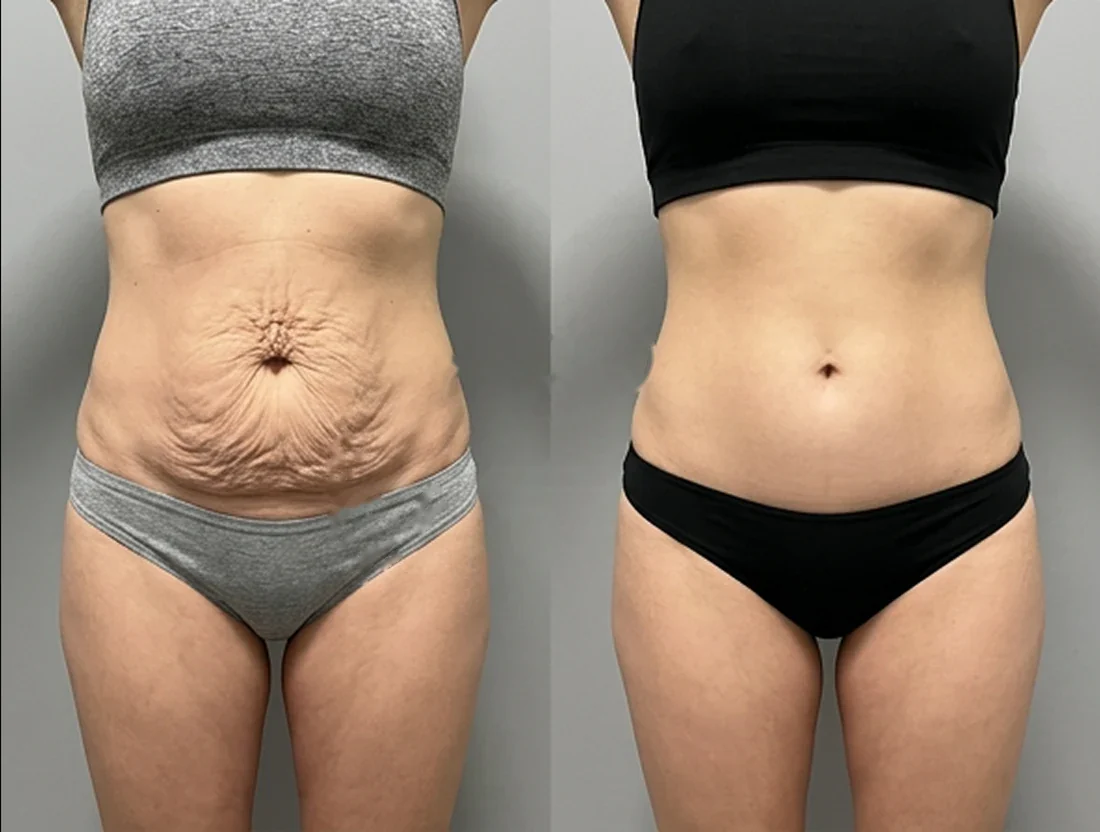
Tummy tuck: a patient's abdomen before and after surgery before after
A flat tummy and a toned silhouette in one operation. Your individual surgical plan and the expected result are discussed at the consultation

Message our coordinator

Free online consultation · Reply within 15 minutes

Message us on Telegram

By messaging us, you agree to our Privacy Policy

Results

Tummy tuck results
of our patients

All cases are real patients. Faces and identifying details are hidden.

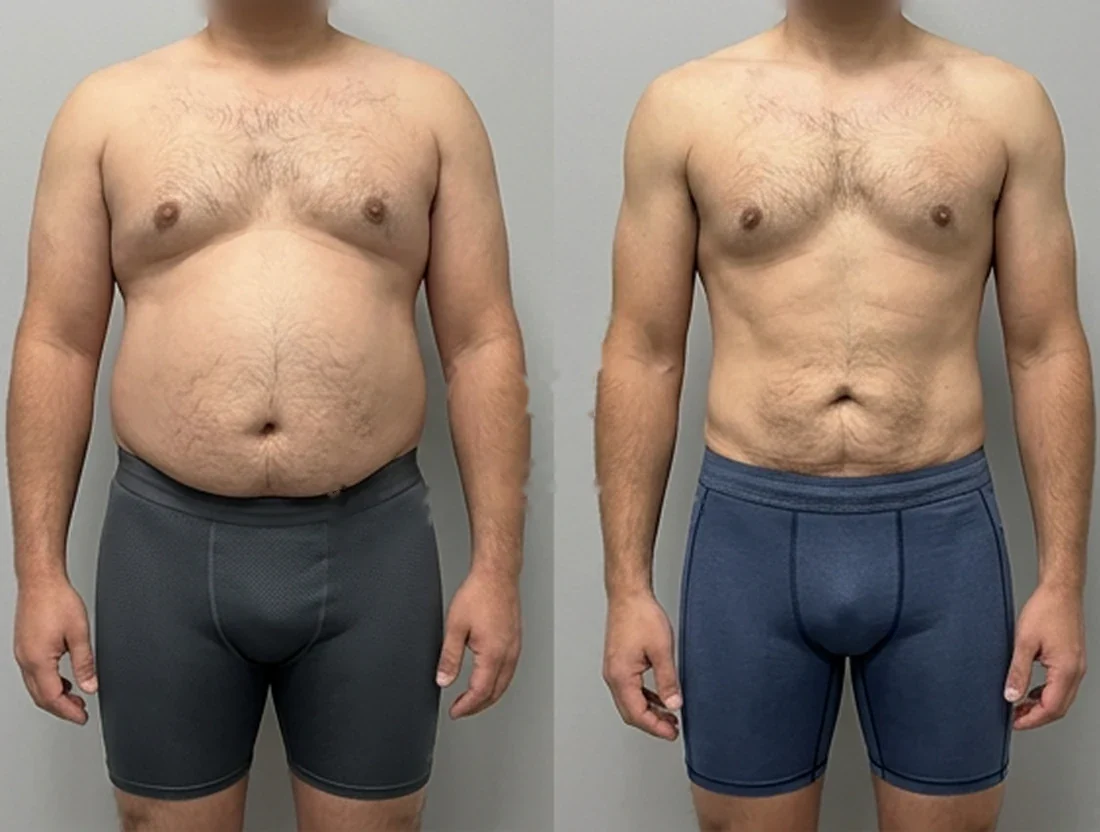
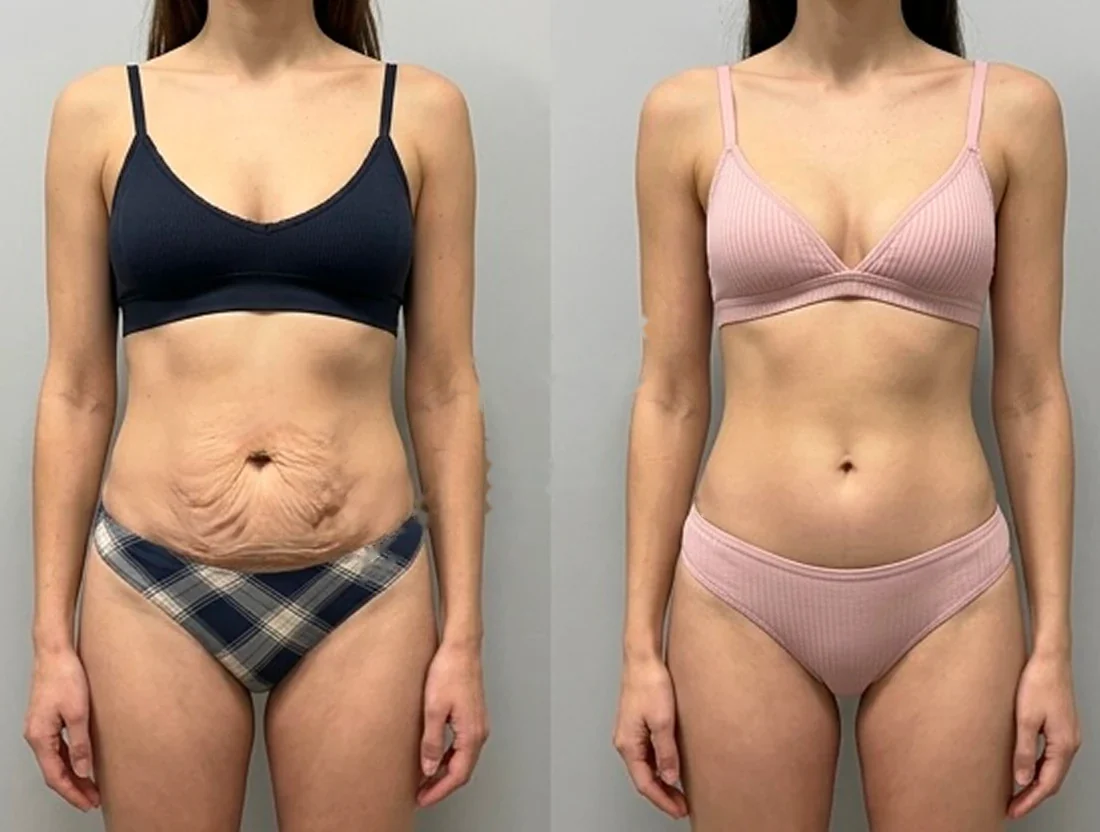
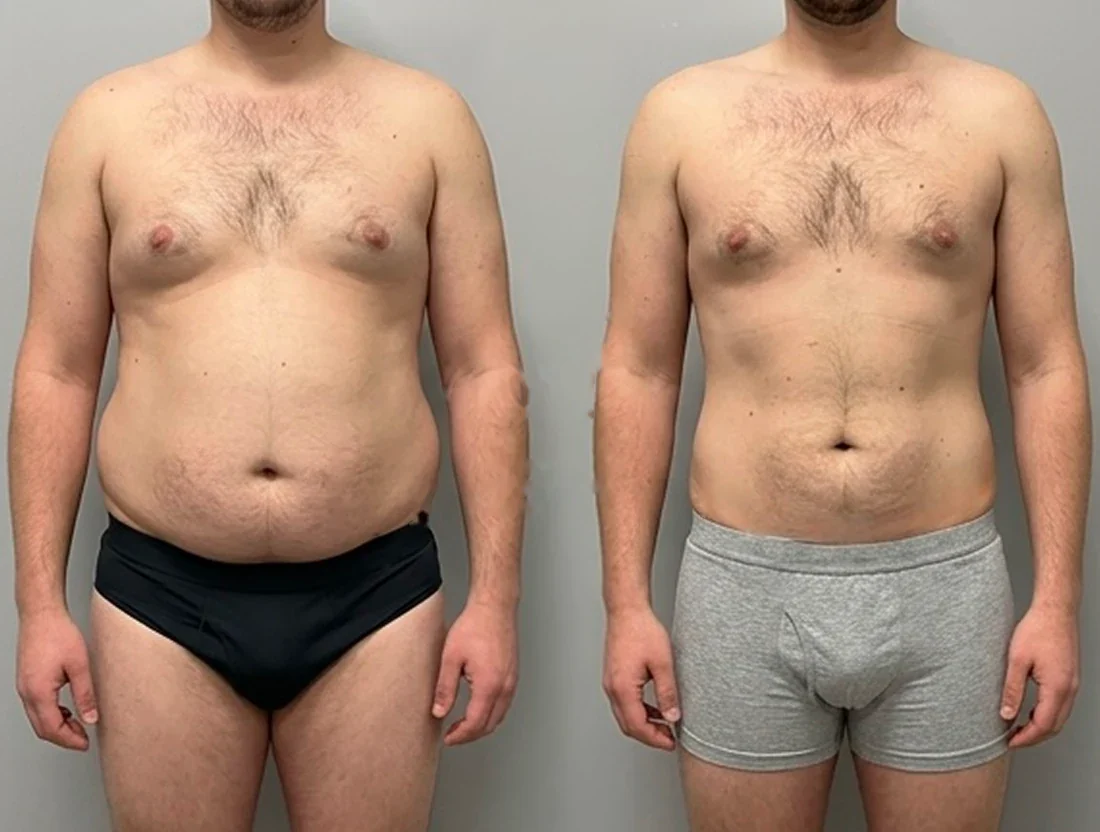
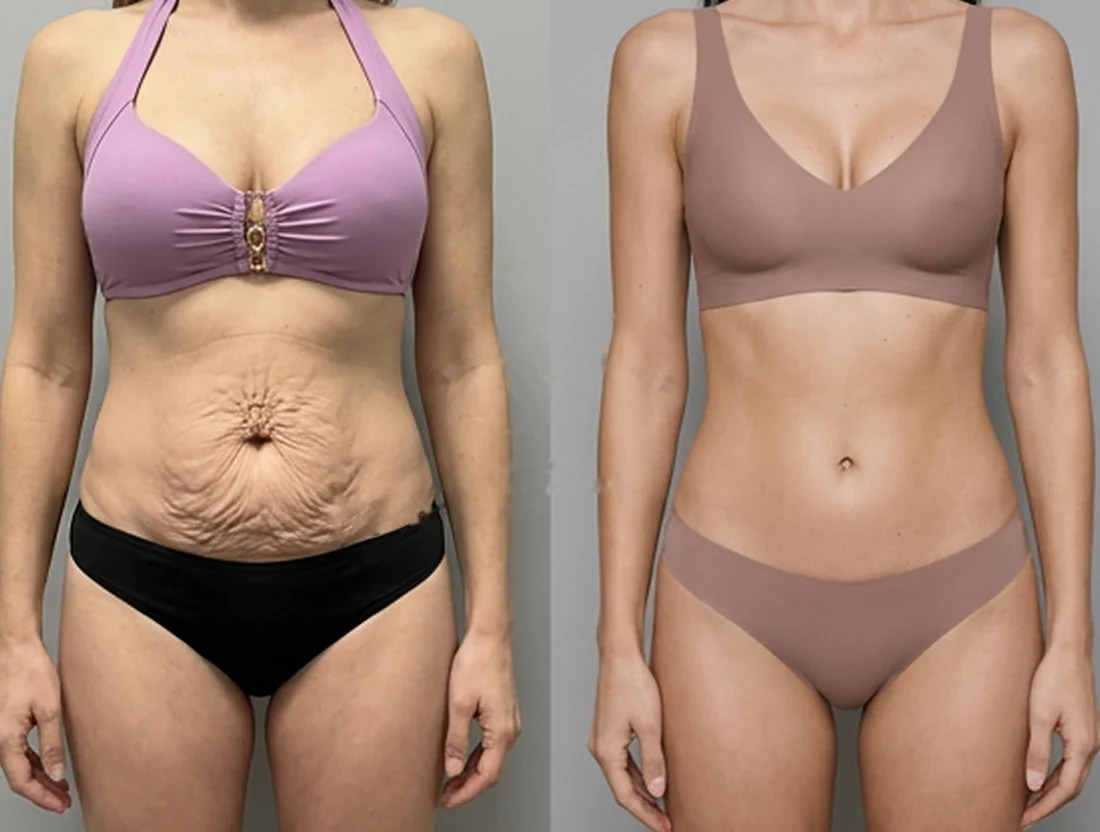
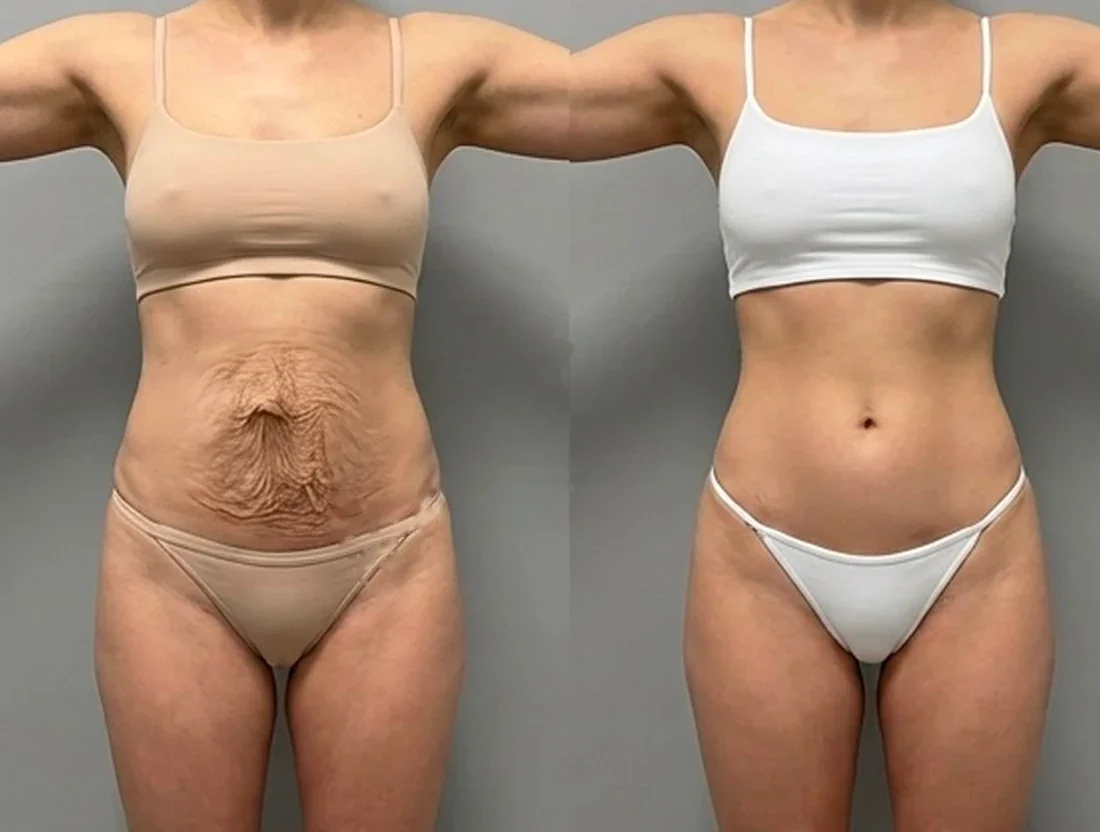
Tummy tuck: a female patient's abdomen before and after surgerybeforeafter
Tummy tuck: a male patient's abdomen before and after surgerybeforeafter
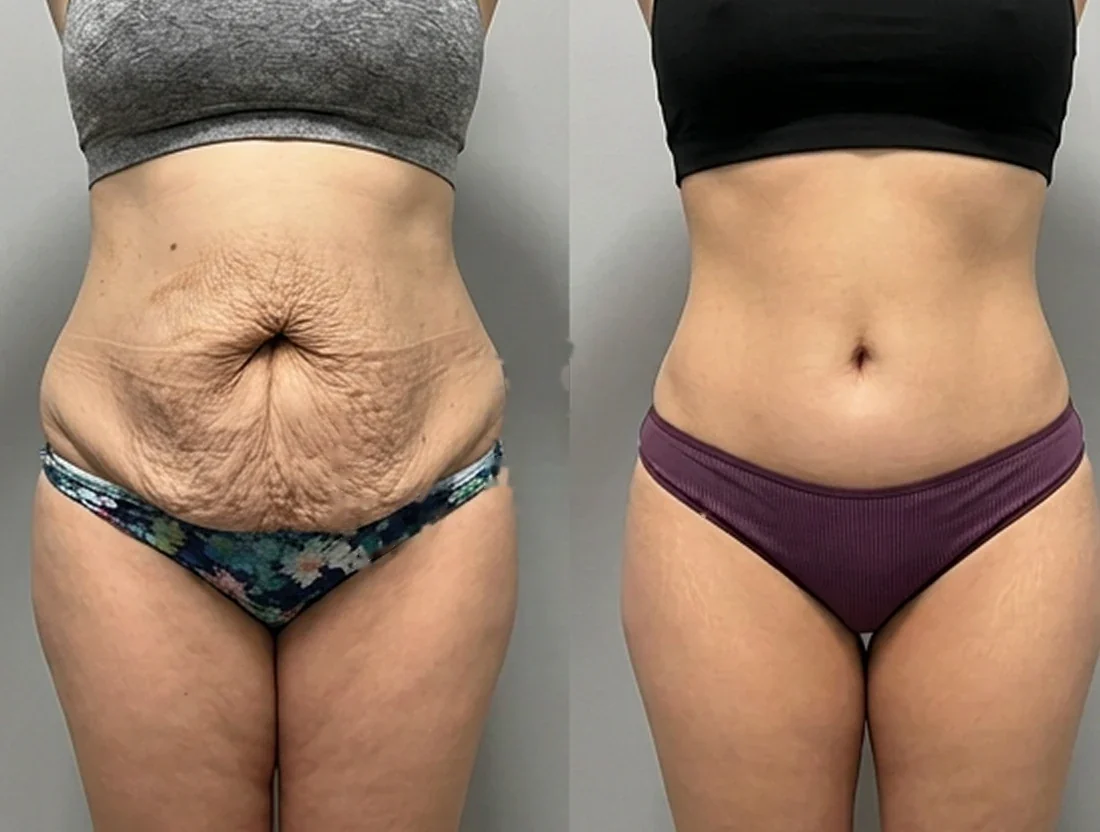
Tummy tuck: a female patient's abdomen before and after surgerybeforeafter
Tummy tuck: a male patient's abdomen before and after surgerybeforeafter
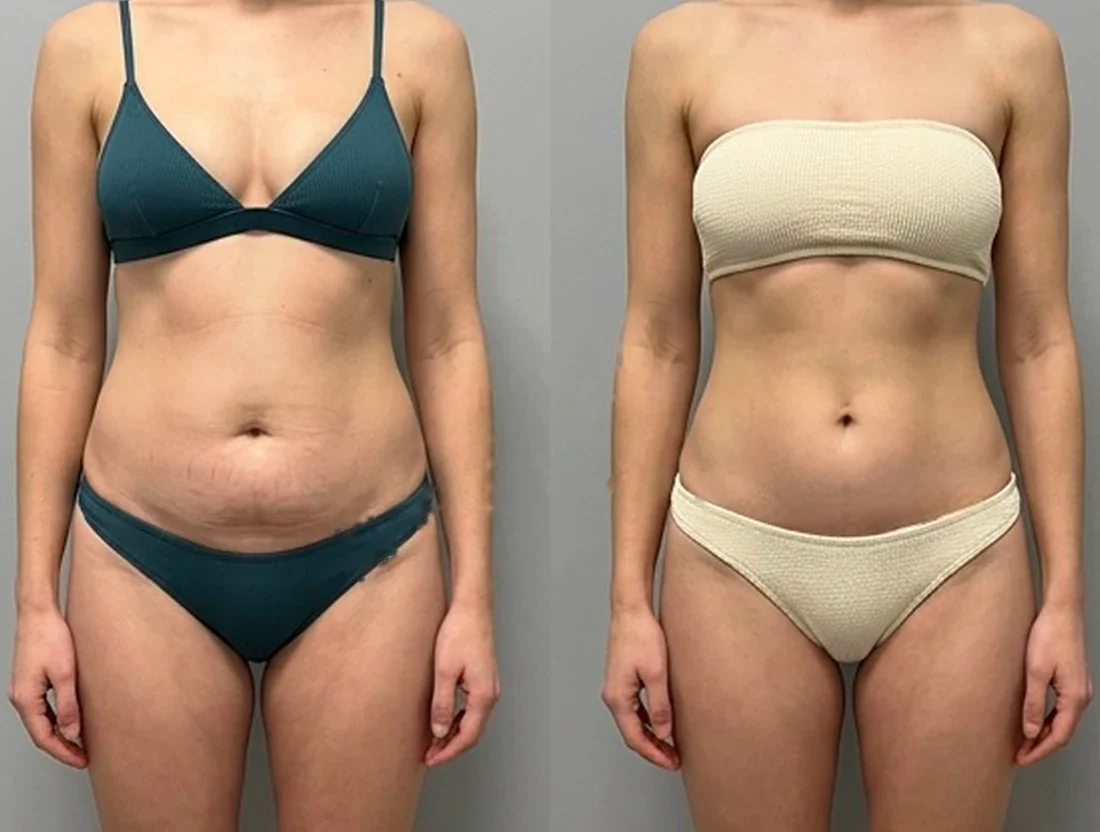
Tummy tuck: a female patient's abdomen before and after surgerybeforeafter
1 of 8

Comparison

Tummy tuck techniques

A tummy tuck is done as a full (classic) or mini operation, or combined with liposuction as lipoabdominoplasty. Compare the scope of surgery, the indications and the expected results to choose the right technique together with your surgeon.

Tummy tuck

Removal of excess skin, abdominal muscle tightening
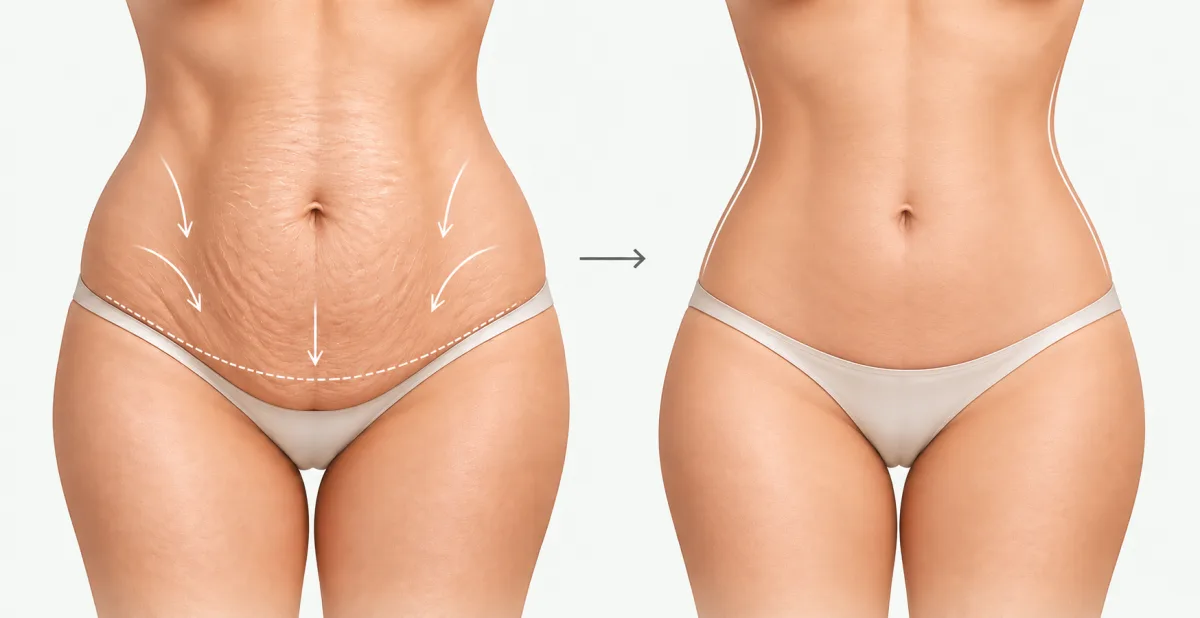
Tummy tuck diagram: the abdomen before surgery with the incision line, and the result
Main goal
Removal of excess skin, diastasis repair
When it is done
Excess skin after childbirth or weight loss
Anaesthesia and stay
General anaesthesia, up to 3 days in hospital

Lipoabdominoplasty

Tummy tuck with added liposuction
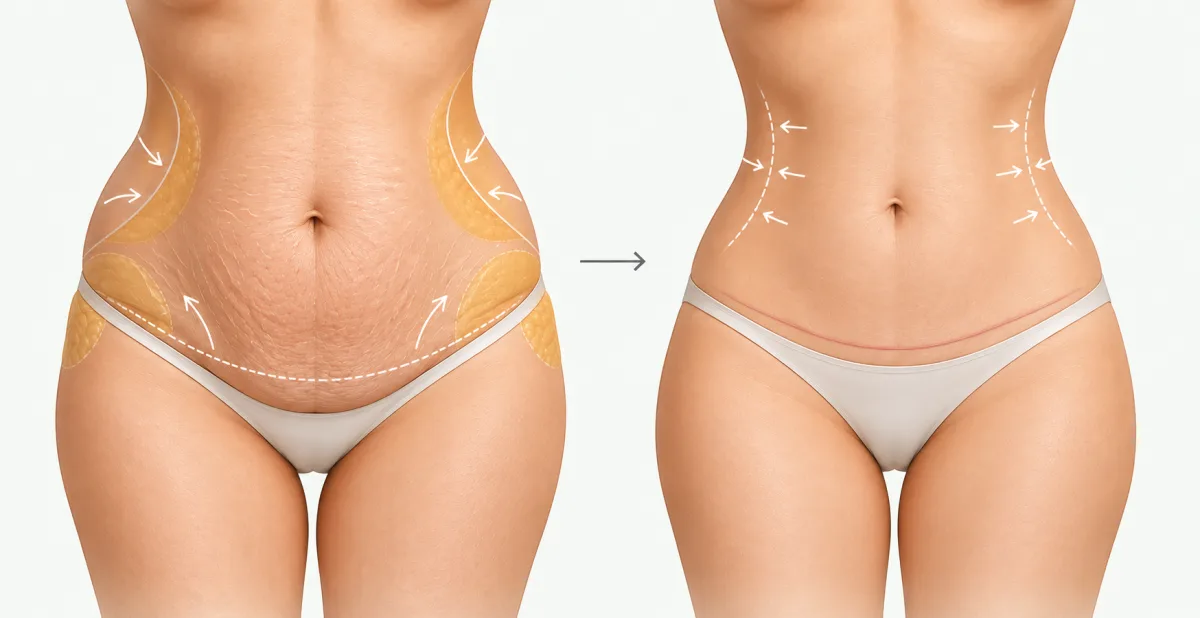
Lipoabdominoplasty diagram: the abdomen with fat on the flanks before surgery, and the result
Main goal
Tummy tightening and waist contouring
When it is done
For fat deposits on the flanks and waist
Anaesthesia and stay
General anaesthesia, up to 3 days in hospital

The benefits and recovery times shown are averaged for each technique and given for guidance: the scope of correction and rehabilitation depend on your anatomy and individual features, and the surgeon confirms them at the consultation.

At the consultation the surgeon draws up a plan for your case and explains how your tummy tuck will go.

Free, before surgery and with no obligation.

Book a consultation

Tummy tuck from the inside

About the clinic

A clinic where you can feel at ease

Modern equipment, comfortable rooms and care for every patient

A doctor and a patient in a clinic ward

Contact us the way that suits you

We will answer your questions and find a convenient time for a consultation

A tummy tuck is not for everyone

If your case can be solved without surgery, the doctor will tell you so at the consultation — and you will not spend money for nothing.

Suitable

A surgeon shows a patient on a model and a monitor how the abdominal contour changes after a tummy tuck
  • Rectus abdominis diastasis
  • Skin folds after weight loss
  • Loose abdominal skin
  • Stretched skin after pregnancy
  • A distorted abdominal contour

Not suitable

A surgeon discusses the indications and contraindications for a tummy tuck with a patient
  • Acute infections
  • Severe heart, kidney or liver conditions
  • Blood coagulation disorders
  • Age under 18
  • Decompensated diabetes
  • Cancer
  • Skin inflammation in the surgical area
  • Pregnancy or breastfeeding

Not sure the surgery is right for you?

Message us — the coordinator will ask for your photos in the messenger, and the surgeon will tell you whether a tummy tuck suits you. No surgery booking needed.

Find out if it suits me

A surgeon goes through a tummy tuck diagram with a patient at the consultation

Prices

You know the price
before surgery

The price is set at the consultation and fixed in the contract.

Other services

  • First consultationFree
  • Liposuction of the abdomen and flanksfrom $1,700
Book a consultation

Find out your tummy tuck plan and price

The surgeon assesses your abdominal skin and muscles, listens to your wishes and chooses the right correction technique.
The price is set at the consultation and fixed in the contract.

A nurse talks to a patient in a clinic ward

Message our coordinator

Free online consultation · Reply within 15 minutes

Message us on Telegram

By messaging us, you agree to our Privacy Policy

A patient's abdomen before a tummy tuck in the operating room

all inclusive

What the price includes

From preparation for surgery
to post-op check-ups.

  • All scheduled dressings
  • Scheduled post-op check-ups
  • A personal coordinator on call
  • Compression garments fitted on the day of surgery
  • A stay in a comfortable
    hospital ward with meals
  • Individual recommendations
    for recovery
  • Remote progress monitoring
    by photos

How it works

Three days at the clinic —
from preparation to discharge

An agreed correction plan, inpatient observation and post-op check-ups.

A doctor shows a patient a tummy tuck diagram on a monitor1

Consultation
and the surgical plan

The surgeon assesses your abdominal skin and muscles and checks for diastasis, listens to your wishes and chooses the right correction technique.

Paying the deposit by card at the clinic reception2

Booking the date
of surgery

We reserve a surgery date for you: the deposit can be paid by card at the clinic or online by bank transfer. The terms are fixed in the contract for medical services

A blood sample tube for tests before a tummy tuck3

Check-up before
surgery

Before surgery you complete a full lab check-up: blood tests, an ECG, a chest X-ray and reports from the required specialists.

The surgical team during the operation4

Surgery

The surgeon performs the tummy tuck with the chosen technique, repairs diastasis if needed and shapes a firmer abdominal contour.

A hospital ward at the clinic5

Inpatient stay

After surgery the patient stays for 1–3 days in a comfortable hospital ward with meals, under medical supervision.

A surgeon and a patient in the ward during recovery6

Recovery

After surgery you get a recovery programme. Check-ups at 7 days, 3 and 6 months help track your recovery.

Book a free consultation — the surgeon will plan every step with you.

A doctor discusses the tummy tuck plan with a patient
Book a consultation
A doctor discusses the tummy tuck plan with a patient

How it really happens

Recovery after a tummy tuck

Right after surgery the patient spends 1–3 days in hospital under medical supervision. Drains usually come out after two days and stitches after 7 days. A compression binder is worn for 1.5–2 months to support the abdominal wall and shape a smooth contour. Most swelling goes within 30 days, and office work resumes after 2–3 weeks. Sports, sauna and heavy lifting are off-limits for 2–3 months; at first, sleeping on your back with bent knees is advised. By 12 months the scar is fully mature — it fades and is barely noticeable.

Post-op check-ups

After 7 days, at 3 months and at 6 months. Until the end of the year, get a post-surgery consultation with your surgeon to review results and get more information, at the clinic's expense

Advantages

What makes patients choose City Medical Centre

A surgeon discusses the tummy tuck plan with a patient at the consultation

Just find out — you lose nothing

At the consultation we discuss your wishes and assess your abdominal skin and muscles. The surgeon explains what changes are possible, chooses the correction technique and answers your questions.

A surgeon on a video call with a patient after surgery

We stay with you after surgery

The surgeon follows your recovery and the changing abdominal contour at check-ups after 7 days, 3 and 6 months. Check-ups, dressings and aftercare advice are already included in the price of surgery.

A surgeon shows a patient a model and tummy tuck diagrams

A beautiful contour that fits your figure

We choose the correction technique based on your skin, muscles and figure. Our aim is a harmonious abdominal contour that keeps the natural proportions of your body.

A patient writes down a convenient visit time in her planner

Your schedule is our priority

We respect your time: we work 24/7, with easy booking and a personal approach — we adapt to your pace.

A surgeon shows a patient the fixed price of surgery with no extra charges

Fixed prices

After the consultation the surgeon defines the extent of correction, and you get a clear price for the surgery — no surprises on the way to the result you want.

A surgeon visits a patient in the hospital ward after surgery

Round-the-clock care after surgery

Recovery starts in a comfortable hospital ward under round-the-clock nursing care. The stay and meals are already included in the price.

FAQ

We answer what
people ask before booking

Classic or mini tummy tuck in Kenitra

A tummy tuck, or abdominoplasty, is surgical tightening of the front abdominal wall that removes excess stretched skin and fat. It is not a weight-loss method and does not replace diet or exercise. For patients from Kenitra, the goal is a flat abdominal contour: removing the overhanging skin-and-fat apron, repairing separated rectus muscles and, where needed, creating a new navel.

It all begins with a surgeon consultation: the doctor listens to your wishes, examines the abdomen and rules out contraindications, and a hormone screening is ordered to help predict the long-term result. Patients from Kenitra then complete a check-up: blood tests including a coagulation panel, biochemistry and infections, ECG and chest X-ray, all available at the clinic with no waiting.

There is no single price for abdominoplasty, since a mini tummy tuck and a classic operation with diastasis repair differ in scope. What stays constant is the approach: the surgeon names the cost after an in-person examination, and it is fixed in the contract without surprises. Kenitra residents can apply before the end of the year and get the consultation at the clinic's expense.

Stories of well-known people

Well-known people who spoke openly about this operation, in their own words.

All stories about this operation →

A Tummy Tuck in Kenitra: Who the Operation Serves and How Its File Begins

In Kenitra, whose 2024 census counts 507,736 residents on the bank of the Sebou, plenty of mothers live with a belly that never returned to its place after pregnancy: slack skin, separated muscles, and a bulge no diet and no exercise dissolve however long they last; the tummy tuck is the operation for these cases, returning the skin to its tightness, drawing the muscles together, and clearing what births and years left behind.

The fitting candidate for this operation is defined by photographs and lines together: daylight pictures of the abdomen from the front, both sides and a full side stance, plus lines about the number of pregnancies, weight stability for at least roughly a year, and future plans for having children; the set travels over Telegram and Telegram to a team that reads at any hour, and a first assessment returns that sorts between a full tuck, a mini tuck, or suction alone.

The condition of stable weight is not an administrative refinement: a tuck performed on a weight that later changes means skin that slackens again and a result that dissipates; this is why the surgeon asks about your weight's stability and your coming plans before any word about a date, and whoever was on a weight-loss path completed it first and then came for the tuck, since the order here is part of the result rather than a formality before it.

And the city's mothers know their calendars: one waits for her youngest to enter kindergarten, another waits for her husband's return from port work to share the first days, and an employee waits for her annual leave; the file opens from the phone on any day, and the operation sits in the gap its owner picks, because a house with children wants a doubled arrangement before any operation.

General Anaesthesia and a Session of Two to Four Hours: The First Three Days

The tummy tuck runs under general anaesthesia and lasts from two to four hours according to the extent of tightening required, and the patient stays afterwards in hospital under medical observation from one to three days; these first days in hospital are not a luxury but part of the operation, in them the drains and the wound are watched and the first careful movement begins.

The drains are usually removed after two days, and from that day the home stage begins: a return to a house in Kenitra arranged in advance with a bed allowing semi-seated sleep, pillows supporting the back and the knees to ease the pull on the suture line, and a short walk inside the room from the first day, because early light movement protects the circulation.

Arrange the house before the appointment, not after: loose clothes that button from the front, light food ready, and someone taking the children for the whole first week, since bending over a child or a wash basin in these days is a direct enemy of the suture line; a young mother knows well that this week is a family effort before it is an individual recovery.

Ask in the consultation about details that get written: which extent of tightening suits your abdomen specifically and why, how the belt-line scar will be handled, and what the visit plan across the first weeks contains; the written answer to these three separates a studied offer from one rich in phrases, and it is the first thing you gather from every offer before comparing.

Day Seven: Stitches Out and the Office After Two Weeks

Day seven after the operation is the stitches' date: the threads come out and the wound's state is read with the surgeon's eye, and from here the count towards the office begins; desk work demanding no effort returns after two to three weeks, and the span between the two dates the surgeon fixes by the progress of healing rather than by workshop pressure or enthusiasm.

Across these weeks the treated abdomen lives a careful life: the abdominal binder stays on from the first day, full bending remains forbidden so washing and the children move to whoever helps her, and a graduated daily walk grows from the room to the mild street; and in the calm streets of the Val Fleuri or Bir Rami districts the evening finds a perfect outlet for the walking the surgeon clears step by step.

And by day thirty most of the swelling goes, so a clearer picture appears of what the tightening built, while the compression binder stage stretches on to a month and a half to two months; the binder across this span is not an aesthetic choice but an engineering pressure that guards the suture line and takes the skin to its new place, and whoever removed it early paid from the result's stability a price that is not returned.

Arrange follow-up calls on the same schedule: a weekly photograph from the same angle and light sent over Telegram and Telegram to the team that reads at any hour, with written notes about any unusual tightness or warmth; a timed answer built on your own file returns, and recovery stays a readable course rather than a guessed worry.

From a Month and a Half to a Year: The Binder, the Result and the Scar

The compression binder stage runs from a month and a half to two months, the period in which the remaining swelling calms and the abdomen settles onto its new line; after it the activities open in stages the surgeon sets, while heavy lifting and strong sport stay postponed until full clearance, because the deep tissues complete after the surface calms.

The final result and the belt-line scar have a far and deliberate appointment: from six months to twelve months until the final contours complete and the scar settles onto its last state; across these long months the scar walks its stages from red to pale, and caring for it with the sun protections the surgeon prescribes decides its final shape in the mirror after a year.

Kenitra's seasons help this management: whoever had the operation in autumn found the binder months inside the wide-clothing season, and whoever met the winter found January and December's rains an ally keeping her in a temperate house away from the sun that aggravates a fresh scar; summer August at 28.7C asks rather for loose light fabrics and a strict shade in the first healing months.

When the year completes, the woman who was patient with the schedule finds an abdomen returned to its engineering and a scar fading along the belt line that her clothing does not raise; this is the result built by months rather than days, and regular follow-up across it is what turns a successful operation on paper into a result that lives in the mirror every morning.

Four Seasons of Healing: What Kenitra's Atlantic Weather Asks of a Tummy Tuck Patient

Kenitra lies close to the Atlantic, at the point where the Sebou reaches the sea, and its weather has a hot-summer Mediterranean character in the 1991 to 2020 averages. For a woman in the weeks after a tummy tuck this matters in small, practical ways. The recovery calendar itself comes from the surgeon: drains out after about two days, stitches out at seven days, a compression binder for one and a half to two months, and no sport, sauna or heavy lifting for two to three months. What changes with the month of surgery is how comfortably each of those steps sits inside your daily life.

Late autumn and winter are the wet months. November averages 104.9 mm of rain, December 93.0 mm and January 87.4 mm, while the average daytime high stays between roughly 18 and 22 degrees. A binder is easy to hide under layers in this weather and staying in is natural, but damp pavements and a tight abdomen are a poor pair. Choose the dry hours for the short daily walk, wear flat shoes with a firm grip, and keep the dressings dry exactly as the surgeon instructs.

Spring is gentler: April brings 41.4 mm of rain with highs near 22 degrees, and March already has about 235 hours of sunshine. These are comfortable weeks for the longer walks the surgeon allows step by step. They are also the weeks when the sun starts to strengthen over a scar that is still young, so a hat, loose long sleeves and the sun protection the surgeon prescribes become part of the daily routine rather than an afterthought.

Summer is dry and bright. July receives only 0.2 mm of rain and about 333 hours of sunshine, with daytime highs around 28 degrees in July and August. In this season the binder is the real test. Ask the surgeon in advance what thin cotton layer may go under it, how to keep the skin clean and dry, and when it may be adjusted. Do not shorten the binder period because of warm afternoons; the first three to four weeks are around the clock, followed by daytime wear for roughly another month. Sauna and sport stay off the list for two to three months in every season, and any sea swim should wait for the surgeon's clear permission.

A River Port With a Long Memory: Kenitra's Character and an Ordinary Patient's Calendar

Kenitra grew around its river port. The town was founded in 1912 under the name Port Lyautey, the port opened in 1913, and the name Kenitra returned in 1956; it comes from a bridge built after the 1681 siege of La Mamora. The Sebou can be navigated for only about 16 kilometres, up to Kenitra, which holds Morocco's only river port, and fruit, fish and timber leave from here. The river also waters the Gharb plain, often described as the country's most fertile region. It is a city of shifts, harvests and loading schedules.

That working rhythm shapes how women in Kenitra plan an operation. The city is the main industrial centre of the Rabat-Salé-Kénitra region and ranks eighth in Morocco by the 2024 census, and the neighbouring commune of Mehdya adds 58,558 residents to the same urban area. Few people here have an empty month. A tummy tuck has to be placed between school terms, harvest or shipping peaks and annual leave, which is why the first conversation is about your calendar and only then about dates.

Picture, as an illustration and not as a real case, a mother of three in her late thirties who works in an office. Her youngest has just started school, her weight has not moved for a long time, and she is tired of a belly that no exercise changes. She sends daylight photographs and a few lines about her pregnancies, learns that the surgeon needs stable weight first, and picks the school holiday. She arranges help at home for the first week, expects one to three days in hospital, and plans a return to desk work after two to three weeks, with check-ups at seven days, three months and six months.

What she brings to the first consultation is a list, and you can do the same. Ask which type of tummy tuck your abdomen needs and why, how the muscles will be treated, how long the hospital stay is likely to be, what the binder schedule looks like, and what the surgeon does if something unexpected appears in the first weeks. Write the answers down. In a city of half a million people, a written answer is the most reliable way to compare one proposal with another.

The Council's Entry and the Offer's Papers Before You Book

Before any date, ask for the first sheet: the surgeon's entry on the roll of the National Council of the Order of Physicians, the independent institution that gathers all of Morocco's doctors by obligation in the public and private branches; ask for the entry number and the specialty and keep the answer in writing, noting that the council's site places no open lookup list at its entrance, which leaves your direct documented question as the road to reassurance.

Then ask every offer for a sheet defining: the extent of tightening proposed for your abdomen and its reasons, the scar plan and its expected position, the length of your hospital stay within the one-to-three days, and the visit plan through the sixth month; the tummy tuck belongs to operations where the gap in experience shows in details only a specialist sees, and papers alone show you that before the signature.

Beware of the three usual ones: the promise of a belly without a scar, the hurry toward deciding in one sitting, and the embarrassment before the registration question; each one is information that enters the account before anything else, because this decision lives with you in every garment, every summer on the Mehdya shore and every family photograph in your house in Kenitra.

And grant the decision its full time: read the answers in quiet, consult the person who carries your trust, and raise whatever lingers in your mind to the team over Telegram and Telegram at any hour; the remote consultation was framed to move with your rhythm, and the time you grant your thinking is part of the result's quality, never a shortage of it.

How long does a tummy tuck take and under which anaesthesia?

It runs under general anaesthesia and lasts from two to four hours according to the extent of tightening required; the patient stays in hospital from one to three days under medical observation before returning home, and the drains are usually removed after two days in the usual course.

How long do I stay in hospital after a tummy tuck?

From one to three days according to your case and the progress of the first healing; these are the days in which the drains and the wound are watched and the first movement begins. Arrange in advance who drives and receives you at home, a semi-seated bed, and someone taking the children for the whole first week.

When are the stitches removed after the operation?

On day seven the threads usually come out and the wound's state is read with the surgeon's eye; from this station the count towards the office begins, since desk work without effort returns after two to three weeks according to what the surgeon sees in the healing's progress, not according to work pressure or early excitement.

When can I go back to work after a tummy tuck?

Desk work without effort returns after two to three weeks, while jobs that lift and bend in workshops and markets need a wider span the surgeon fixes; tell him honestly the nature of your day, since whoever hid the weight of her work took a wrong timing and paid from the quality of her result.

How long do I wear the compression binder after the operation?

The binder stage runs from a month and a half to two months, the period in which the engineering pressure guards the suture line and takes the skin to its new place; removing it early costs the result's stability, and holding to it until the last day the surgeon fixes is half of the true operation protecting its surgical half.

When do the final result and the tummy tuck scar appear?

From six months to twelve months the final contours complete and the scar settles onto its last state; across these months the scar walks its stages from red to pale, and protecting it from the sun per the surgeon's instructions decides its final shape, so whoever passed a verdict in the second month judged an unfinished book.

Does the operation suit someone planning a coming pregnancy?

The tummy tuck is better after the childbearing plans complete, since a coming pregnancy stretches the skin and muscles anew and loses the result what it built; this is why the surgeon asks about your future plans from the first consultation, and whoever was on a weight-loss path completed it first and came for the tuck, for the order here is part of the result.

How do I check a tummy tuck surgeon's registration before booking?

Ask for his entry number on the roll of the National Council of the Order of Physicians, the independent institution that gathers all of Morocco's doctors by obligation in the public and private branches, together with his exact specialty, and keep the answer in writing; the council's site places no open verification list at its entrance, so your direct documented request is the route, and whoever finds the question heavy has given an answer about himself worth noting.

Which season is best for a tummy tuck if I live in Kenitra?

There is no single best month; each season trades one comfort for another. Winter is cool and damp, which suits a binder but calls for care on wet pavements. Summer is dry and bright, which is easy for walking but harder under a binder and harsher on a young scar. Spring sits between them. Tell the surgeon about your family and work calendar, and let that decide the date more than the weather.

Is the summer heat in Kenitra a problem for the compression binder?

It is a nuisance, not a barrier. Daytime highs reach about 28 degrees in July and August, so the binder feels warmer. Ask the surgeon which thin cotton layer may go under it and how to keep the skin dry, and do not remove it early: the binder is worn around the clock for the first three to four weeks and during the day for roughly a month more.

What should I ask the surgeon in the first online consultation about a tummy tuck?

Ask which version of the operation suits your abdomen, how the muscles and the skin are handled, how long the hospital stay will be within the one to three days, how the scar is placed, and what the check-ups at seven days, three months and six months include. Ask for these answers in writing so you can compare offers calmly.

Where can I raise a concern about a doctor in Morocco?

The website of the National Council of the Order of Physicians has a section for services and complaints and lists the contacts of the regional councils. According to the council, the regional councils handle registration applications, inspections of offices and clinics, and disciplinary cases. Keep your questions and the surgeon's answers in writing, since they help if you ever need to describe what was agreed.