City Medical Centre · multi-specialty surgery clinicOpen 24/7

Tummy tuck

Tummy Tuck in Huambo: Methods and Recovery

Free consultation

Price at consultation

The price is fixed in the contract before surgery
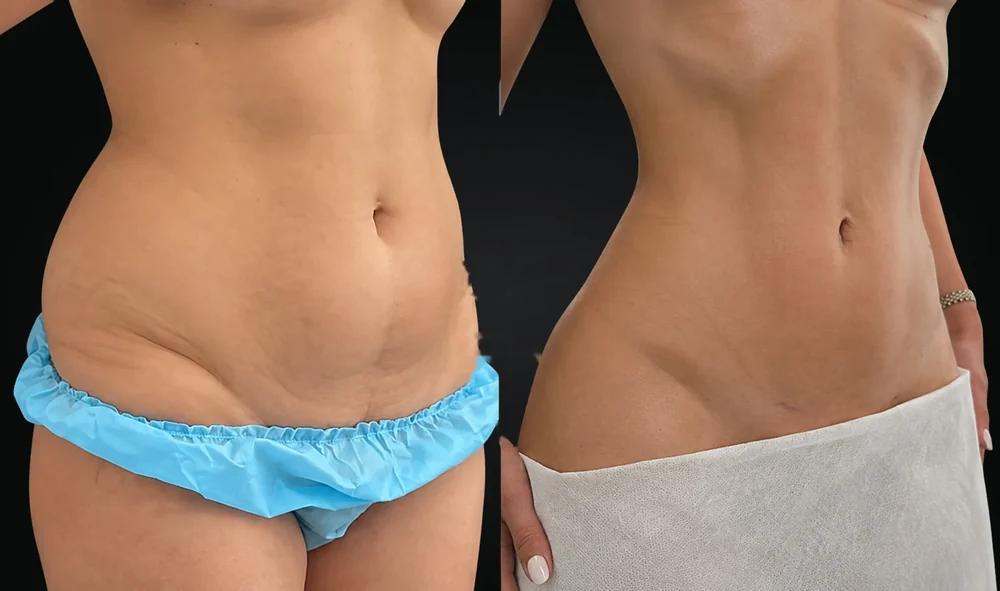
Real case
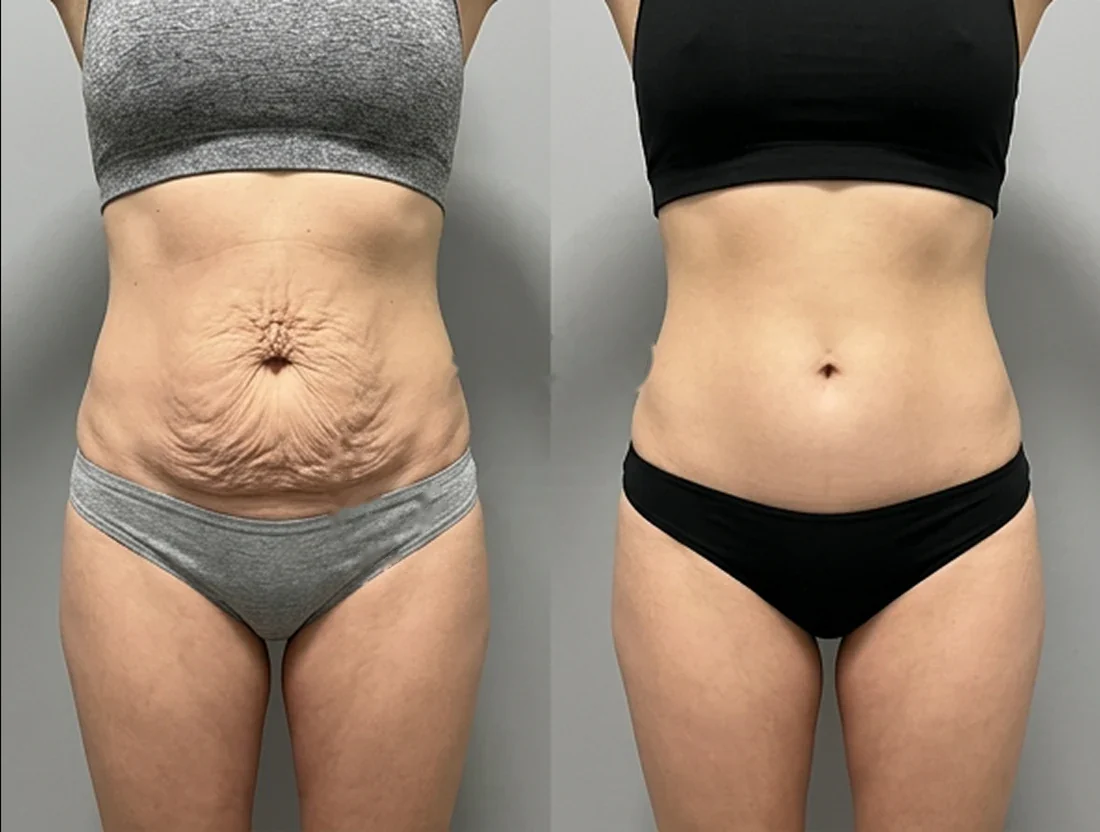
Tummy tuck: a patient's abdomen before and after surgery before after
A flat tummy and a toned silhouette in one operation. Your individual surgical plan and the expected result are discussed at the consultation

Message our coordinator

Free online consultation · Reply within 15 minutes

Message us on Telegram

By messaging us, you agree to our Privacy Policy

Results

Tummy tuck results
of our patients

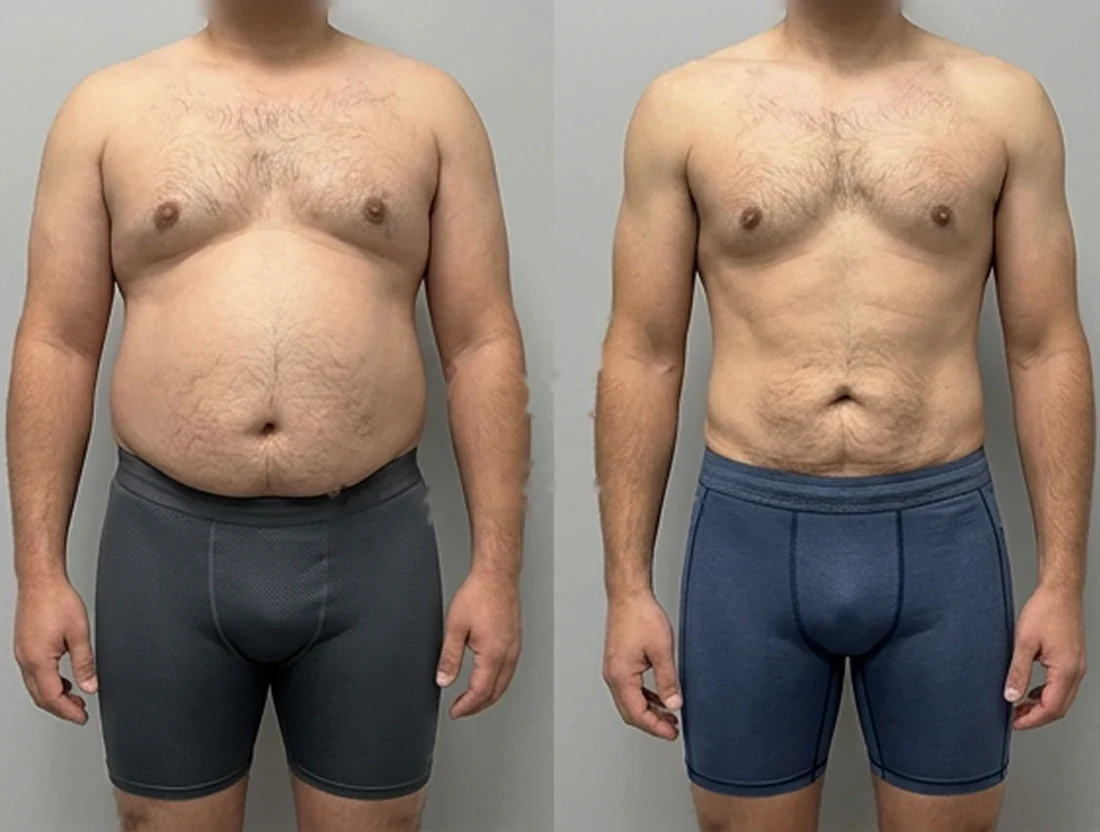
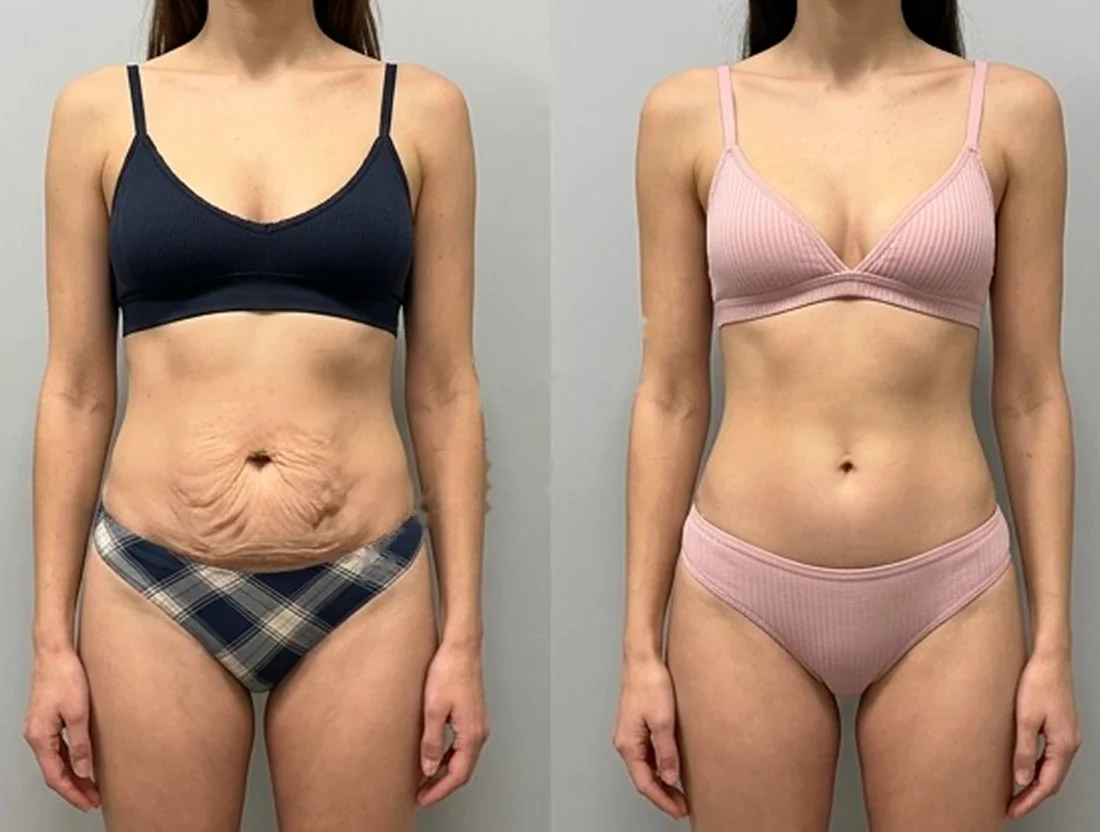
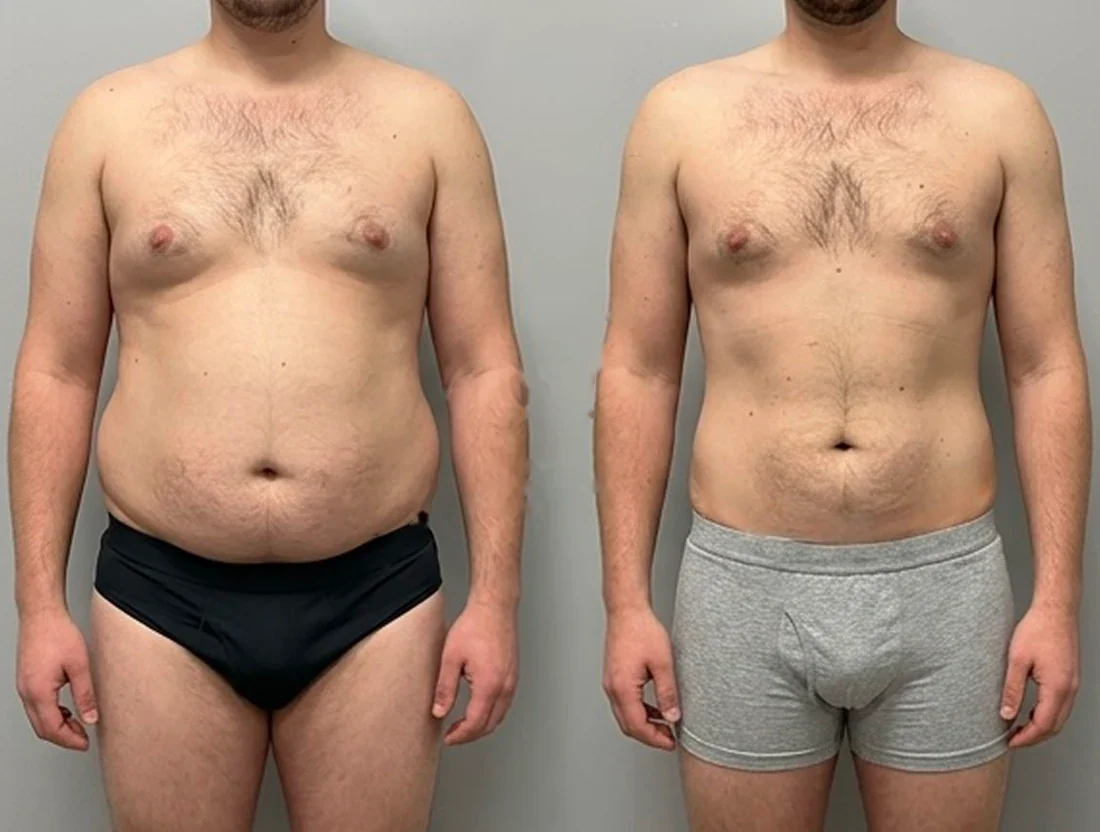
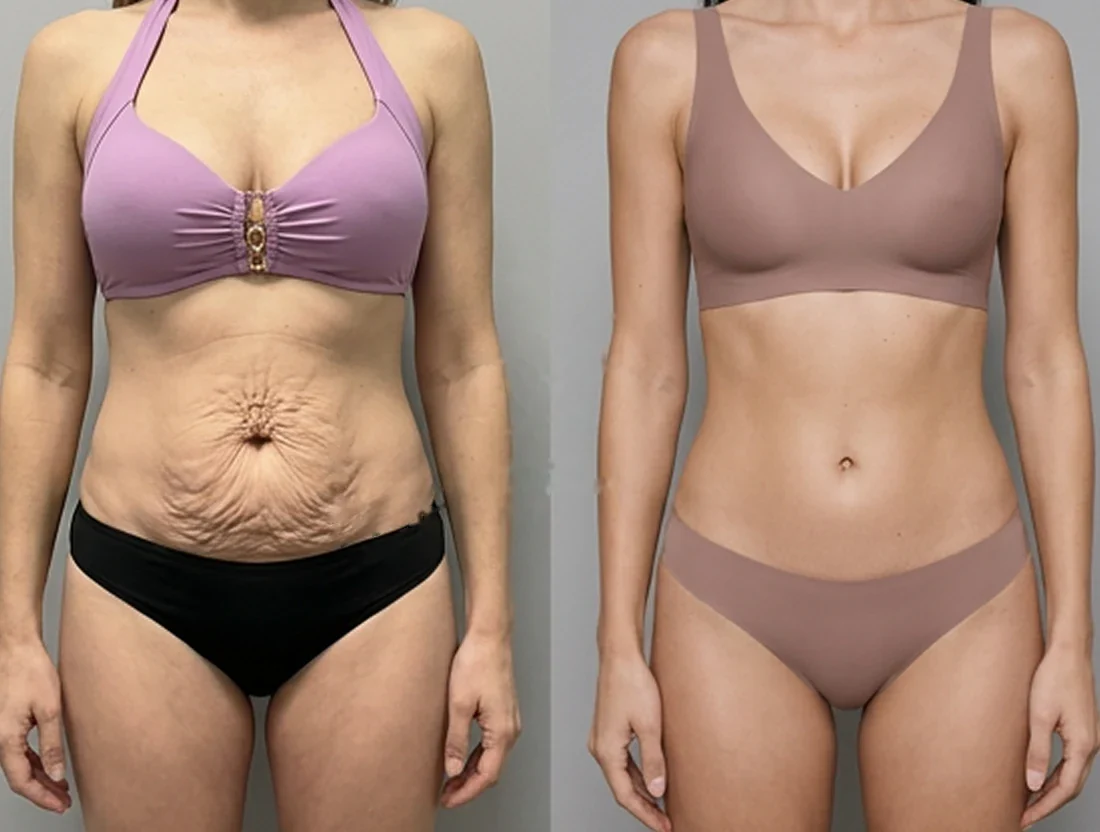
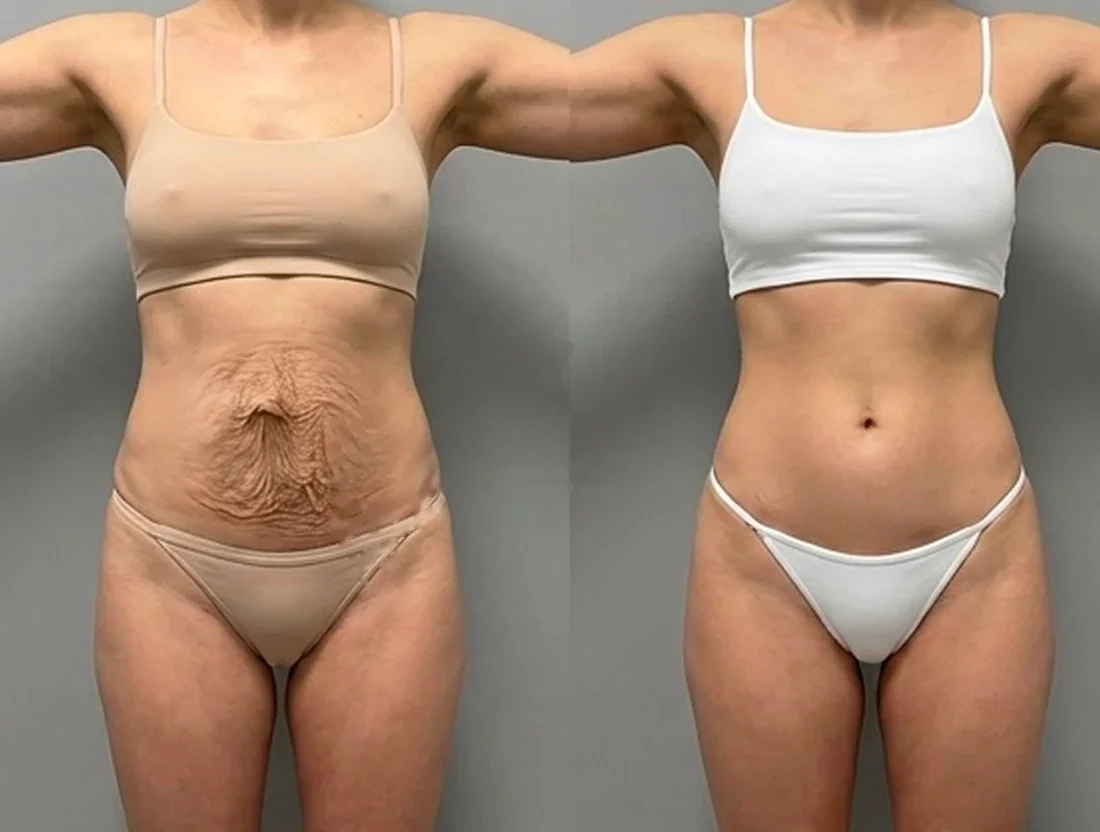
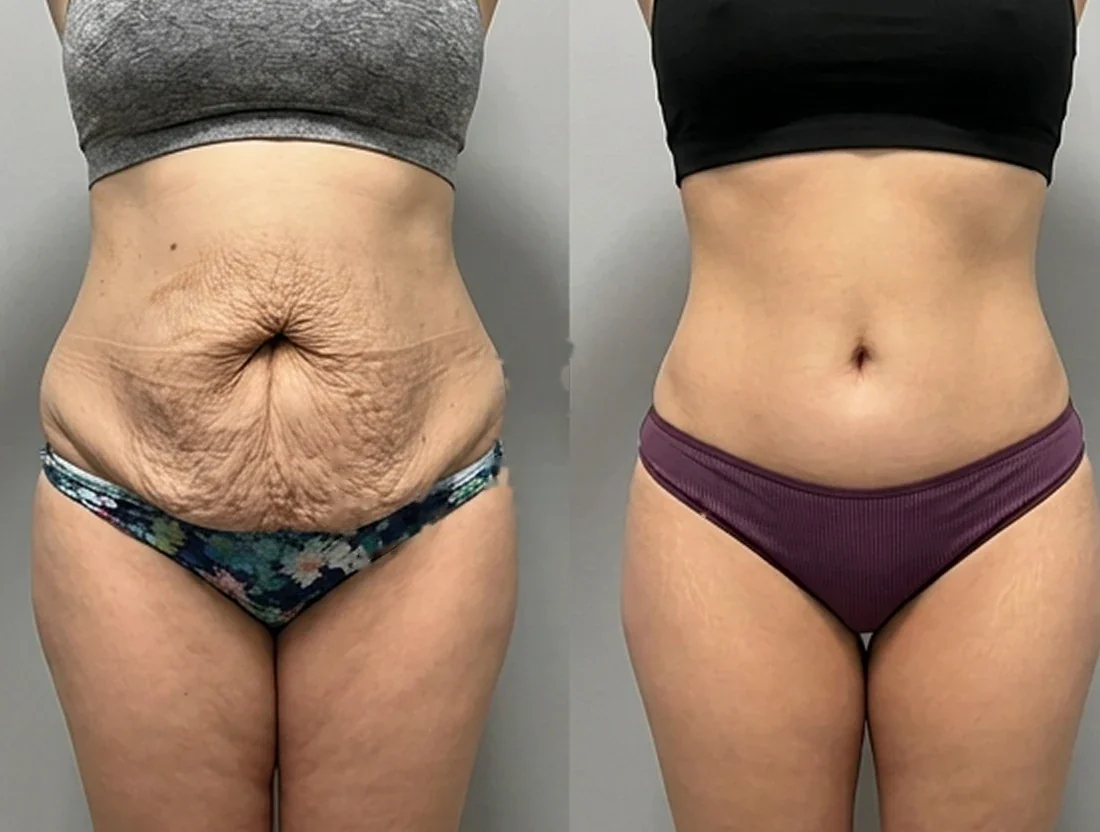
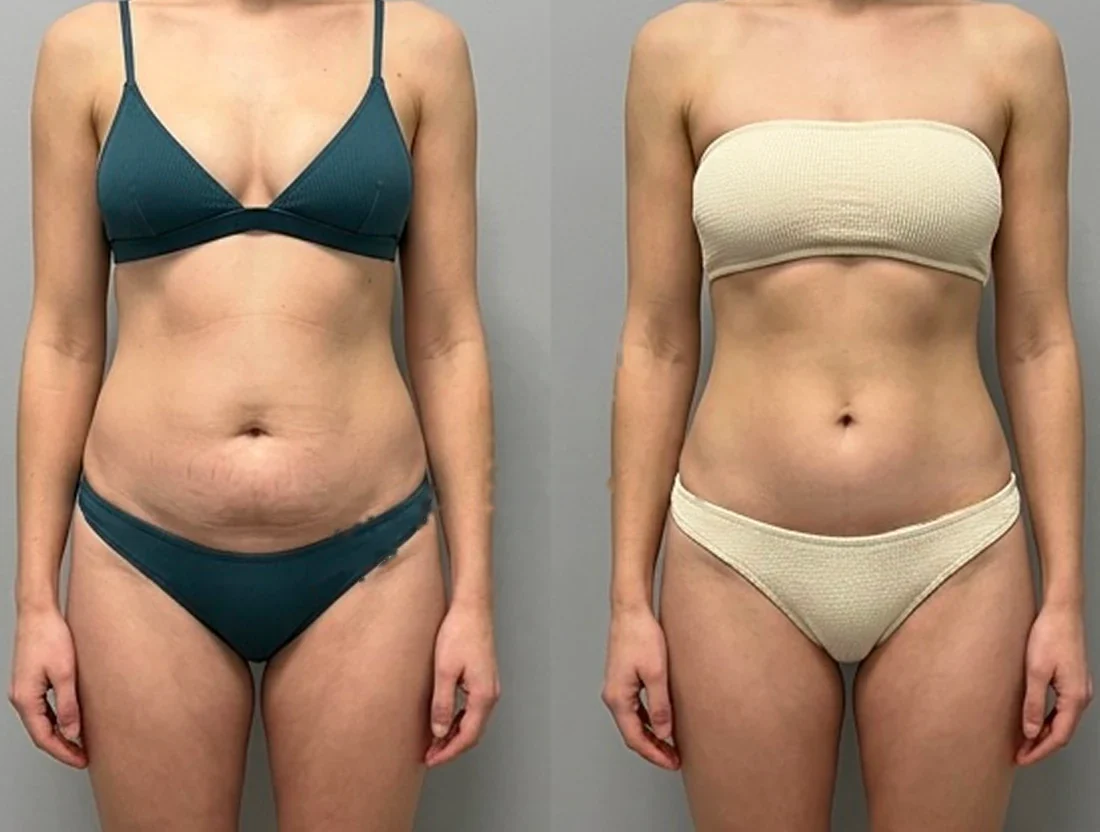
All cases are real patients. Faces and identifying details are hidden.

Tummy tuck: a female patient's abdomen before and after surgerybeforeafter
Tummy tuck: a male patient's abdomen before and after surgerybeforeafter
Tummy tuck: a female patient's abdomen before and after surgerybeforeafter
Tummy tuck: a male patient's abdomen before and after surgerybeforeafter
Tummy tuck: a female patient's abdomen before and after surgerybeforeafter
1 of 8

Comparison

Tummy tuck techniques

A tummy tuck is done as a full (classic) or mini operation, or combined with liposuction as lipoabdominoplasty. Compare the scope of surgery, the indications and the expected results to choose the right technique together with your surgeon.

Tummy tuck

Removal of excess skin, abdominal muscle tightening
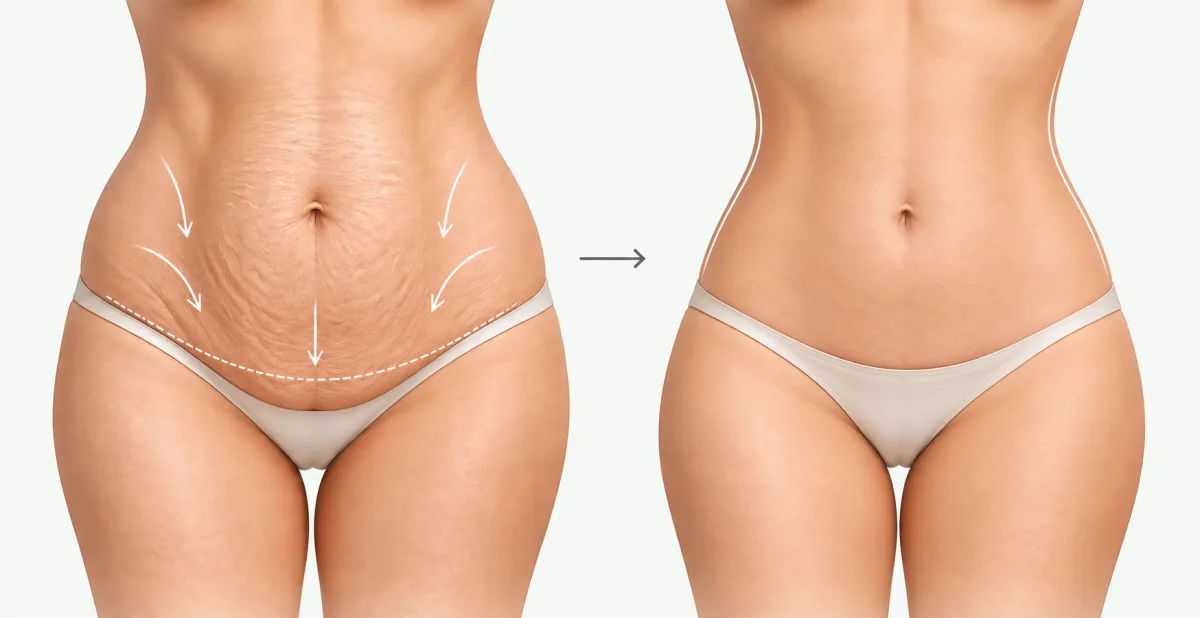
Tummy tuck diagram: the abdomen before surgery with the incision line, and the result
Main goal
Removal of excess skin, diastasis repair
When it is done
Excess skin after childbirth or weight loss
Anaesthesia and stay
General anaesthesia, up to 3 days in hospital

Lipoabdominoplasty

Tummy tuck with added liposuction
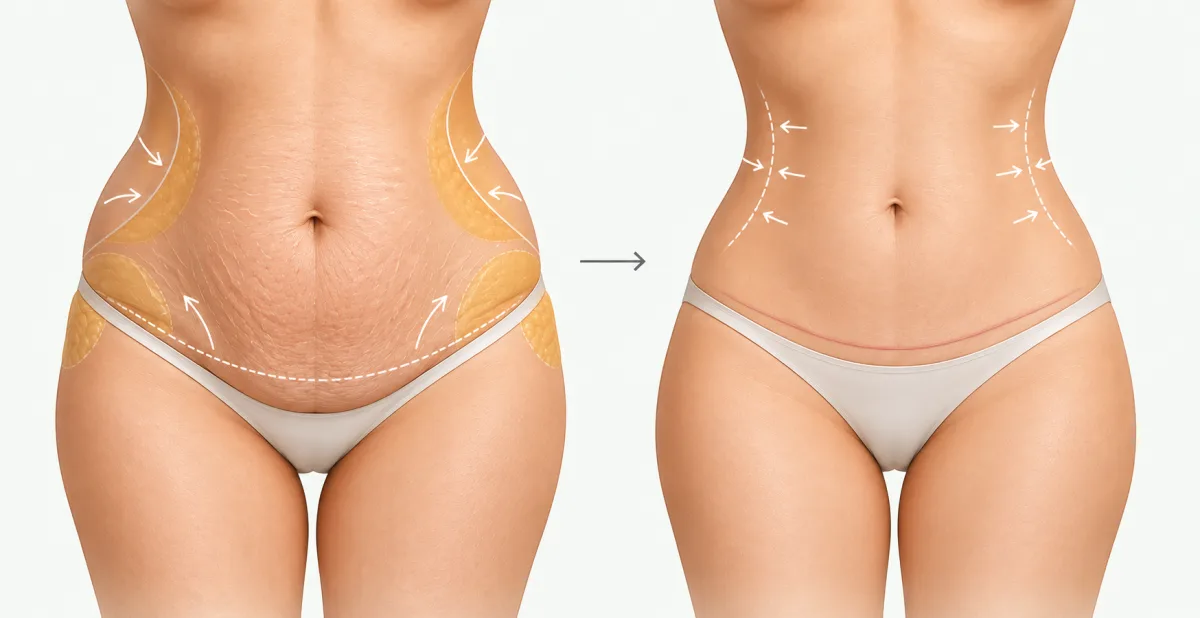
Lipoabdominoplasty diagram: the abdomen with fat on the flanks before surgery, and the result
Main goal
Tummy tightening and waist contouring
When it is done
For fat deposits on the flanks and waist
Anaesthesia and stay
General anaesthesia, up to 3 days in hospital

The benefits and recovery times shown are averaged for each technique and given for guidance: the scope of correction and rehabilitation depend on your anatomy and individual features, and the surgeon confirms them at the consultation.

At the consultation the surgeon draws up a plan for your case and explains how your tummy tuck will go.

Free, before surgery and with no obligation.

Book a consultation

Tummy tuck from the inside

About the clinic

A clinic where you can feel at ease

Modern equipment, comfortable rooms and care for every patient

A doctor and a patient in a clinic ward

Contact us the way that suits you

We will answer your questions and find a convenient time for a consultation

By messaging us, you agree to our Privacy Policy

A tummy tuck is not for everyone

If your case can be solved without surgery, the doctor will tell you so at the consultation — and you will not spend money for nothing.

Suitable

A surgeon shows a patient on a model and a monitor how the abdominal contour changes after a tummy tuck
  • Rectus abdominis diastasis
  • Skin folds after weight loss
  • Loose abdominal skin
  • Stretched skin after pregnancy
  • A distorted abdominal contour

Not suitable

A surgeon discusses the indications and contraindications for a tummy tuck with a patient
  • Acute infections
  • Severe disease of the heart, kidneys or liver
  • Blood clotting disorders
  • Under the age of 18
  • Decompensated diabetes
  • Cancer
  • Skin inflammation in the surgical area
  • Pregnancy or breastfeeding

Not sure the surgery is right for you?

Message us — the coordinator will ask for your photos in the messenger, and the surgeon will tell you whether a tummy tuck suits you. No surgery booking needed.

Find out if it suits me

A surgeon goes through a tummy tuck diagram with a patient at the consultation

Prices

You know the price
before surgery

The price is set at the consultation and fixed in the contract.

Other services

  • First consultationFree
  • Liposuction of the abdomen and flanksfrom $1,700
Book a consultation

Find out your tummy tuck plan and price

The surgeon assesses your abdominal skin and muscles, listens to your wishes and chooses the right correction technique.
The price is set at the consultation and fixed in the contract.
A nurse talks to a patient in a clinic ward

Message our coordinator

Free online consultation · Reply within 15 minutes

Message us on Telegram

By messaging us, you agree to our Privacy Policy
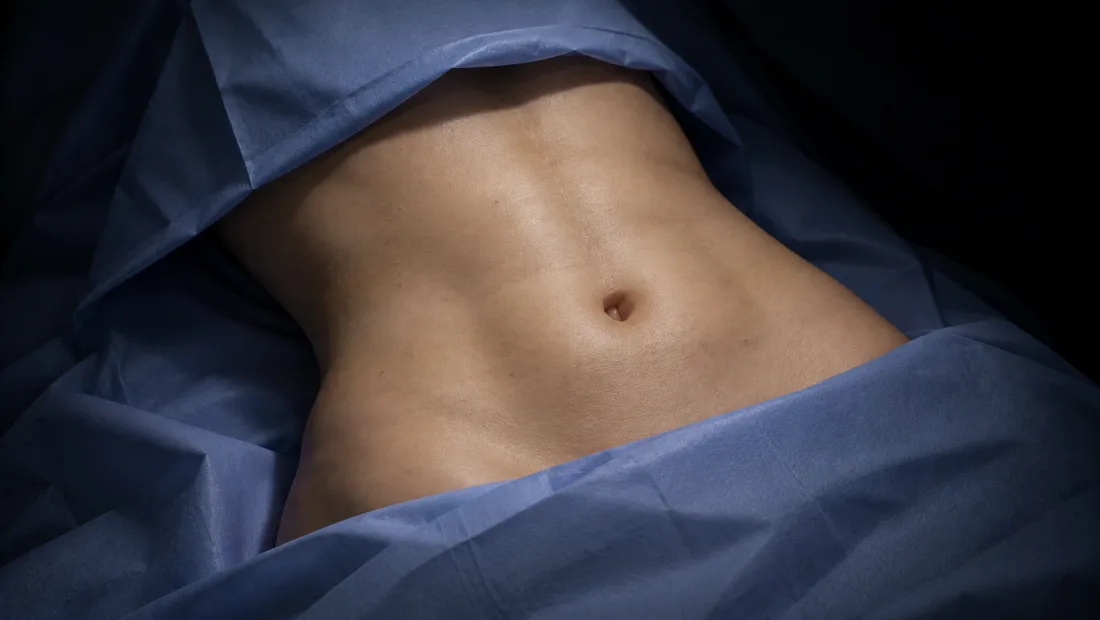
A patient's abdomen before a tummy tuck in the operating room

all inclusive

What the price includes

From preparation for surgery
to post-op check-ups.

  • All scheduled dressings
  • Scheduled post-op check-ups
  • A personal coordinator on call
  • Compression garments fitted on the day of surgery
  • A stay in a comfortable
    hospital ward with meals
  • Individual recommendations
    for recovery
  • Remote progress monitoring
    by photos

How it works

Three days at the clinic —
from preparation to discharge

An agreed correction plan, inpatient observation and post-op check-ups.

A doctor shows a patient a tummy tuck diagram on a monitor1

Consultation
and the surgical plan

The surgeon assesses your abdominal skin and muscles and checks for diastasis, listens to your wishes and chooses the right correction technique.

Paying the deposit by card at the clinic reception2

Booking the date
of surgery

We reserve a surgery date for you: the deposit can be paid by card at the clinic or online by bank transfer. The terms are fixed in the contract for medical services

A blood sample tube for tests before a tummy tuck3

Check-up before
surgery

Before surgery you complete a full lab check-up: blood tests, an ECG, a chest X-ray and reports from the required specialists.

The surgical team during the operation4

Surgery

The surgeon performs the tummy tuck with the chosen technique, repairs diastasis if needed and shapes a firmer abdominal contour.

A hospital ward at the clinic5

Inpatient stay

After surgery the patient stays for 1–3 days in a comfortable hospital ward with meals, under medical supervision.

A surgeon and a patient in the ward during recovery6

Recovery

After surgery you get a recovery programme. Check-ups at 7 days, 3 and 6 months help track your recovery.
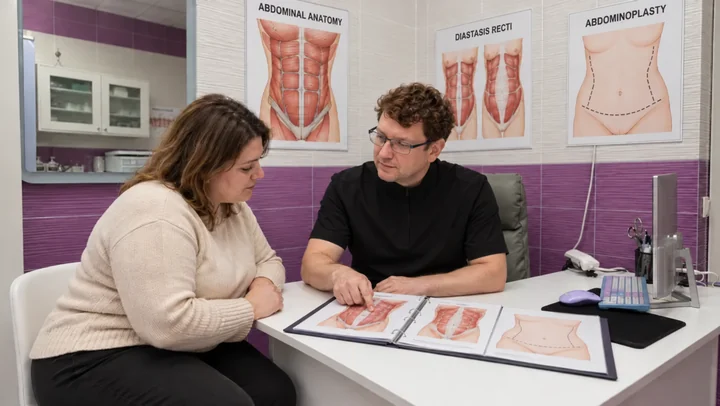
Book a free consultation — the surgeon will plan every step with you.

A doctor discusses the tummy tuck plan with a patient
Book a consultation
A doctor discusses the tummy tuck plan with a patient

How it really happens

Recovery after abdominoplasty

For 1–3 days right after surgery the patient stays in hospital under medical supervision. Drains are usually removed after two days, stitches after 7 days. You wear a compression binder for 1.5–2 months; it supports the abdominal wall and shapes a smooth contour. Office work resumes after 2–3 weeks, and most swelling goes within 30 days. Sports, sauna and heavy lifting are off-limits for 2–3 months, and at first sleeping on your back with knees bent is advised. By 12 months the scar is fully mature and fades to barely noticeable.

Post-op check-ups

After 7 days, at 3 months and at 6 months. Until the end of the year, get a post-surgery consultation with your surgeon to review results and get more information, at the clinic's expense

Advantages

What makes patients choose City Medical Centre

A surgeon discusses the tummy tuck plan with a patient at the consultation

Just find out — you lose nothing

At the consultation we discuss your wishes and assess your abdominal skin and muscles. The surgeon explains what changes are possible, chooses the correction technique and answers your questions.

A surgeon on a video call with a patient after surgery

We stay with you after surgery

The surgeon follows your recovery and the changing abdominal contour at check-ups after 7 days, 3 and 6 months. Check-ups, dressings and aftercare advice are already included in the price of surgery.

A surgeon shows a patient a model and tummy tuck diagrams

A beautiful contour that fits your figure

We choose the correction technique based on your skin, muscles and figure. Our aim is a harmonious abdominal contour that keeps the natural proportions of your body.

A patient writes down a convenient visit time in her planner

Your schedule is our priority

We respect your time: we work 24/7, with easy booking and a personal approach — we adapt to your pace.
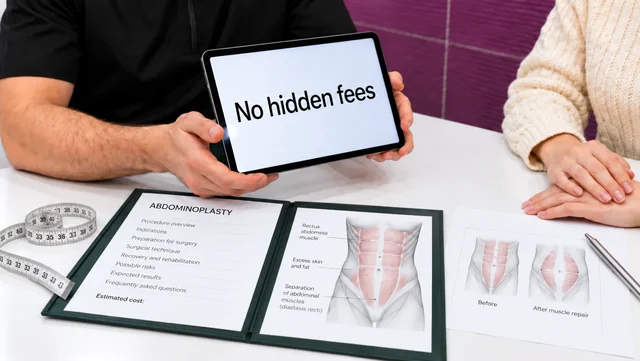
A surgeon shows a patient the fixed price of surgery with no extra charges

Fixed prices

After the consultation the surgeon defines the extent of correction, and you get a clear price for the surgery — no surprises on the way to the result you want.

A surgeon visits a patient in the hospital ward after surgery

Round-the-clock care after surgery

Recovery starts in a comfortable hospital ward under round-the-clock nursing care. The stay and meals are already included in the price.

FAQ

We answer what
people ask before booking

About abdominoplasty for patients from Huambo

Diastasis is not always part of the picture. Repair is done only when the rectus abdominis muscles are actually separated: the surgeon sees it at the examination and, if in doubt, it is confirmed by ultrasound. When needed, the muscles are brought together during the tummy tuck itself, with no separate procedure. Patients from Huambo learn at the consultation whether their case requires it.

Recovery has three milestones. Office work is possible after 2–3 weeks, swelling and tightness pass by 1.5–2 months, and the final result and scar are assessed at 6–12 months once tissues have adapted. Most swelling goes within 30 days. Sport, sauna and heavy lifting wait 2–3 months, and sleeping on your back with knees bent is advised at first. The same timeline applies to Huambo patients.

The price of a tummy tuck is set individually after a free consultation, because it depends on the technique and the scope of surgery. For patients from Huambo, the figure is then fixed in the contract with no hidden extra charges. The clinic works under an official contract with a guarantee. Message us on Telegram or WhatsApp, and a coordinator will contact you to book the consultation.

Huambo and the decision to have a tummy tuck

Huambo, formerly Nova Lisboa, is the third most populous city in Angola. It has a population of 710,000 (2024) in the city and 836,293 in the municipality of Huambo (Census 2024). It is the capital of Huambo Province and a main hub of the Benguela Railway. A city of this size has a lot going on: markets, offices, schools, churches, family businesses and sports clubs. A person considering abdominoplasty here usually has to fit the operation around many obligations, so planning matters as much as the surgery itself.

Tummy tuck removes excess skin and fat from the abdomen and tightens the muscles of the abdominal wall. People in Huambo most often ask about it after pregnancies and births, after significant weight loss, or when the skin of the abdomen has lost its elasticity and exercise no longer changes the contour. These are everyday reasons, and a calm, informed conversation with a surgeon is the right first step.

City Medical Centre works with patients from Huambo through a free online consultation. Coordinators are available 24/7 on Telegram and WhatsApp, so you can send your questions in the evening after work or during a break at the university or office and get a reply without rearranging your day. We work 24/7, with easy booking and a personal approach, and we adapt to your pace.

Highland climate and what it means for recovery

Huambo lies on the Angolan central highlands at an elevation of 1,721 metres. Despite its tropical position, the altitude gives it a subtropical highland climate with mild, spring-like temperatures all year. September is the warmest month, with a mean of 21.0 °C, and June is the coolest, with a mean of 16.2 °C. For recovery this is a real advantage: you are rarely forced to wear a tight compression garment in oppressive heat, and sweating under the garment is easier to manage than in a coastal city.

Mild temperatures do not remove the need for discipline. The compression garment is a requirement, because recovery is worse without it: it supports the tissues and reduces swelling. For the first 3–4 weeks it stays on around the clock, then during the daytime for roughly a month more. Your operating surgeon will name the exact period. In the cooler months a loose layer over the garment keeps you comfortable, and in warmer months breathable, loose cotton clothing helps.

Huambo gets 2273 hours of sunshine a year, with more sun in winter, particularly in June and July, than in summer. Bright sun on a healing scar is not a good idea, so wear clothing that covers the abdomen when you are outside, and avoid sunbathing and tanning beds. The surgeon will advise you on scar care once the wound has closed.

Rainy and dry seasons: choosing the time for the operation

The year in Huambo splits into wet summers from October through April and dry winters between May and September. June and July receive no rain at all. Many patients ask when the best season for the operation is, and the honest answer is that medically there is no single right month. The decision depends more on your work, family calendar and the availability of help at home.

The dry season has practical benefits. Dry streets and clear days make short, gentle walks easier, and walking is encouraged during recovery. Fewer muddy surfaces mean less risk of slipping or making a sudden movement, and the rules after a tummy tuck are clear: for the first 2–3 weeks you avoid physical exertion, heavy lifting and sudden movements.

The rainy season is also workable. Heavy downpours mean you may prefer to stay indoors for the first days, which fits well with rest. Plan how you will get to scheduled check-ups if the weather is bad, arrange help with shopping and carrying, and keep the dressing area dry. Whatever the season, your coordinator can help you match the calendar to your obligations.

Remote consultation from Huambo step by step

The first stage takes place online, in your own city and at no charge. You write to the coordinators on Telegram or WhatsApp, describe your goals, your health history, previous operations, pregnancies and any medicines you take, and send photos if asked. The surgeon then reviews your case and explains which type of tummy tuck suits you, for example the classic operation or a mini tummy tuck, and what the plan would look like.

You can ask the questions that matter to your life in Huambo. How will I manage at home in the first days? Who can help with children? When can I sit at a desk? What do I need to do before the operation? Our coordinators answer around the clock, so you do not have to wait for a special time of day.

The surgeon names the exact list of tests at the consultation. Before a tummy tuck the standard list is the same for everyone: blood and urine tests, coagulation panel, biochemistry, infection tests, ECG, chest X-ray, ultrasound of the leg veins and a GP's report. Tests usually stay valid for 10–14 days, so get them done at the right moment, not too early and not the day before.

Preparation: what to do in advance

Preparation is a must. Stop smoking, drinking alcohol and taking medicines that affect blood clotting 7–10 days before a tummy tuck. If you take any regular medicines, tell the coordinator and the surgeon in the first conversation so nothing is stopped or continued by guesswork.

The pre-surgery check-up covers blood tests, ECG, leg vein ultrasound and consultations with a GP and anaesthetist. Get it done in advance, not the day before. In a busy city like Huambo, where a day can be taken up by work and family errands, it helps to block out time for these examinations and keep the results in one folder or as photos on your phone.

Think about your weight as well. A tummy tuck is a contouring operation, not a method of losing weight. Overweight and obesity are health matters in their own right, and the surgeon will want your weight to be stable and your general health assessed before agreeing to the plan. Be frank about it during the consultation; it makes the result safer and more satisfying.

Hospital stay and the first days at home

The operation is carried out under general anaesthesia, with up to 3 days in hospital. After surgery the patient stays for 1–3 days in a comfortable hospital ward with meals, under medical supervision. A classic tummy tuck means 1–3 days under medical supervision; for a mini tummy tuck, one day is usually enough. Yes, a stay in hospital is needed, and it is part of safe recovery.

At home recovery continues, and the surgeon monitors it at scheduled check-ups. In Huambo many families live together across generations, which is a strength: relatives can help with cooking, lifting and caring for children while you rest. Talk to your household before the operation about who does what, so you are not tempted to lift a child or a bag of shopping too early.

After surgery you get a recovery programme. Check-ups at 7 days, 3 and 6 months help track your recovery. Until the end of the year, you can get a post-surgery consultation with your surgeon to review results and get more information, at the clinic's expense. Check-ups, dressings and aftercare advice are already included in the surgery package, so you do not need to plan separately for them.

Work, study and daily routine after the operation

Huambo has two public higher education institutions, the José Eduardo dos Santos University and the Higher Institute of Education Sciences, and research institutes in veterinary and agricultural science. Students, lecturers and researchers often ask how soon they can return to classes and desks. Office-type work is realistic after 2–3 weeks, which is the first of three recovery milestones.

The second milestone comes by 1.5–2 months, when swelling and tightness pass. The third comes at 6–12 months, when the tissues have fully adapted and the final result and scar are assessed. Knowing this timetable helps you plan: an exam period, a harvest-related business season or a busy time in a family shop is better kept clear of the first weeks.

If your work involves standing for long hours, carrying goods or physical effort, tell the surgeon. The advice is the same for everyone, with no exceptions: for the first 2–3 weeks you avoid physical exertion, heavy lifting and sudden movements. If your job cannot be postponed or changed, discuss options such as lighter duties, and do not go back to heavy tasks on your own initiative.

Sport, football and active life

Football is the most popular sport in Huambo, with well-known local clubs and a main stadium that draws crowds. Many people play on weekends with friends or relatives, and others run or walk in the cool highland mornings. Patients often ask when they can return to this kind of life.

Sport is resumed gradually, with the surgeon's approval only. Sauna, steam bath, pool, tanning beds, alcohol and smoking are out for at least a month. Compression garments are worn for another 4–8 weeks. Do not return to a match, a gym session or running because you feel fine; feeling fine is exactly when people overdo it and strain the abdominal wall.

Watching a match from the stands is a different matter from playing it. Crowds, pushing and sudden movements are best avoided in the early weeks. Start with short, calm walks, and increase activity only when the surgeon confirms at a check-up that it is safe. Motorsport events held in the city are also best enjoyed as a spectator later, not in the first weeks, because bumps and sudden braking put strain on a healing abdomen.

Food, celebrations and family events

Huambo is in the richest agricultural province of Angola, and local food culture reflects that, with maize, beans, vegetables and fresh produce at the centre of many meals, and large family meals at celebrations. Good nutrition supports healing, so plan simple, nourishing food during recovery and ask relatives to prepare it so you do not stand for long at the stove.

Weddings, baptisms, funerals and church gatherings are important in the life of the city, and declining an invitation can feel awkward. Choose the date of the operation with these events in mind. It is easier to avoid a big celebration in the first weeks than to attend one while wearing a compression garment and needing to avoid alcohol, long standing and crowds.

Alcohol is excluded for at least a month after surgery, and also in the 7–10 days before it. If you will be at a family table where toasts are expected, decide in advance how you will politely decline. Eat gradually and avoid heavy meals that make the abdomen uncomfortable under the garment.

Planning around the Benguela Railway city rhythm

Huambo is a main hub on the Benguela Railway, and the city has the busy, practical character of a place where goods, people and ideas pass through. Many residents run small businesses, work in trade or transport, or look after large households. For them, a tummy tuck is a project that needs a calendar, not a spur-of-the-moment decision.

Start by listing what cannot be moved: school terms, shop deliveries, church obligations, a relative's wedding. Then look at the recovery milestones. After 2-3 weeks you can do office work, by 1.5-2 months swelling and tightness pass, and at 6-12 months the final result and scar are assessed. Put these three dates beside your own commitments and you will see quickly which month is realistic.

Share the plan with the person who will help you at home, whether that is your husband or wife, a sister, a mother or a neighbour. Agree in advance who covers the shop, the school run and the cooking. A clear division of tasks protects the abdominal wall far better than good intentions on the day.

Highland evenings, cool mornings and the compression garment

At 1,721 metres, Huambo has cool mornings and evenings, and June is the coolest month with a mean of 16.2 °C. This helps with the garment, but it also brings a temptation: because you do not feel hot, you may be tempted to take the garment off early. Do not. The first 3-4 weeks it stays on around the clock, then during the daytime for roughly a month more, and your operating surgeon will name the exact period.

Keep two or three clean garments or a spare set, if the surgeon allows it, so that washing and drying do not leave you without support. In the wet months from October through April, clothes dry more slowly, so plan this ahead rather than discovering the problem on day five.

Dust in the dry months and damp in the wet months both matter for dressings. Keep the treated area clean and dry, follow the dressing instructions you receive, and ask the coordinator at once if anything looks unusual. Writing to Telegram or WhatsApp at any hour is possible, since coordinators work 24/7.

Questions Huambo patients often raise before deciding

Mothers ask whether a tummy tuck is sensible before or after their family is complete. In general terms, the surgeon will want you to discuss future pregnancies openly, because they can change the result. Raise this in the first online consultation rather than leaving it for later.

Others ask about scars. The scar is assessed finally at 6-12 months, once the tissues have fully adapted, so a scar that looks red or firm in the first weeks is not yet the end of the story. Ask the surgeon where the scar will lie and how to protect it from the strong highland sun, which is more intense in winter, particularly in June and July.

Some people ask whether they can combine the operation with a busy work period. The honest answer is that the first 2-3 weeks need rest, and rushing back is what causes setbacks. A mini tummy tuck may need a shorter hospital stay, one day usually, but the same careful rules apply at home.

Keeping in touch with the team between check-ups

Recovery does not end when you leave the ward. The surgeon follows your recovery and the changing abdominal contour at check-ups after 7 days, 3 and 6 months. In between, you stay in contact with the coordinators, who are available around the clock on Telegram and WhatsApp.

Keep a simple diary: how you slept, how the garment feels, what you ate, how far you walked. Photos taken in the same light and from the same angle show change better than memory does. Bring these notes to each check-up and to the post-surgery consultation available until the end of the year, at the clinic's expense.

Be patient with your own body. The first changes appear 2 weeks after surgery as the main swelling subsides. Tightness and uneven swelling are common in the early stage and pass by 1.5-2 months. If something worries you, write early rather than waiting.

Who is a candidate and what to ask the surgeon

You must be at least 18, with no contraindications. No upper limit exists; at our clinic each case is considered individually, after an examination and health assessment. A tummy tuck is not suitable for everyone, and the surgeon may recommend delaying or choosing another approach if your health, weight or plans (for example, a future pregnancy) call for it. In general terms, serious chronic illness, blood clotting problems and smoking that cannot be stopped need special attention.

Prepare questions before the online consultation. Which type of operation is right for me, classic or mini? Where will the scar lie and how can I care for it? How long will I stay in hospital? What is the exact period for the compression garment? When can I return to work and to sport? What happens at the check-ups after 7 days, 3 and 6 months? Writing the questions down in advance makes the conversation more useful.

The first changes appear 2 weeks after surgery as the main swelling subsides, followed by two checkpoints: the interim result at 1.5–2 months and the final contours at 6–12 months. The surgeon follows your recovery and the changing abdominal contour at check-ups. Patience is part of the process, and a realistic expectation is the best protection against disappointment.

Can I have the first consultation from Huambo without leaving the city?

Yes. The first consultation is online and free. You write to the coordinators on Telegram or WhatsApp, who are available 24/7, send your information and photos, and the surgeon reviews your case and explains the options.

How long will I stay in hospital?

The operation is done under general anaesthesia, with up to 3 days in hospital. After surgery the patient stays for 1–3 days in a comfortable ward with meals, under medical supervision. For a mini tummy tuck, one day is usually enough.

When can I go back to work?

You can return to office work after 2–3 weeks. For the first 2–3 weeks you avoid physical exertion, heavy lifting and sudden movements, so heavy physical work needs a separate discussion with the surgeon.

How should I prepare for the operation?

Preparation is a must. Stop smoking, drinking alcohol and taking medicines that affect blood clotting 7–10 days before the tummy tuck. The pre-surgery check-up covers blood tests, ECG, leg vein ultrasound and consultations with a GP and anaesthetist. Get it done in advance, not the day before.

Which tests do I need?

The list is the same for all: blood and urine tests, coagulation panel, biochemistry, infection tests, ECG, chest X-ray, ultrasound of the leg veins and a GP's report. The surgeon gives you the exact list at the consultation, and tests usually stay valid for 10–14 days.

Is a compression garment really necessary in Huambo's mild climate?

Yes, it is a requirement, whatever the weather. Recovery is worse without it because it supports the tissues and reduces swelling. The first 3–4 weeks it stays on around the clock, then during the daytime for roughly a month more. Your operating surgeon will name the exact period.

When can I play football or exercise again?

Sport is resumed gradually, with the surgeon's approval only. Sauna, steam bath, pool, tanning beds, alcohol and smoking are out for at least a month, and compression garments are worn for another 4–8 weeks.

When will I see the result?

The first changes appear 2 weeks after surgery as the main swelling subsides. The interim result comes at 1.5–2 months and the final contours at 6–12 months, when the tissues have fully adapted and the final result and scar are assessed.

What follow-up care is there?

After surgery you get a recovery programme. Check-ups at 7 days, 3 and 6 months help track your recovery. Check-ups, dressings and aftercare advice are already included in the surgery package. Until the end of the year, you can also get a post-surgery consultation with your surgeon to review results.

Is there an age limit?

You must be at least 18, with no contraindications. No upper limit exists; each case is considered individually, after an examination and health assessment.

Does the highland cold or dry season affect healing after a tummy tuck?

The mild highland temperatures make wearing the garment easier. The rules do not change with the season: avoid physical exertion, heavy lifting and sudden movements for the first 2-3 weeks, keep the dressing area clean and dry, and follow the surgeon's advice.

Can a relative help me communicate with the coordinators?

Yes. A family member can write to the coordinators on Telegram or WhatsApp, which are available 24/7, but the medical conversation and decisions about your case remain between you and the surgeon.

What if I live with a large family and cannot rest at home?

Discuss it in the online consultation. Agree on who looks after children, cooking and lifting during the first 2-3 weeks, and tell the surgeon honestly about your home situation so the recovery plan can be realistic.