



first
12 months out
2,800 grafts
FUE method
City Medical Centre
0% instalments
from $367/mo
Advice, then the price — $0.
Honest case
first
12 months out
FUE, done without incisions or stitches. Grafts and forecast worked out at no charge — before you decide.
Not a penny, no surgery booking required
Message our coordinator
Free online consultation · Reply within 15 minutes
Message us on TelegramMessage us on WhatsAppBy messaging us, you agree to our Privacy Policy
results
Genuine patients only, with nothing staged.
first
12 months out
2,800 grafts
FUE method

first
12 months out
3,500 grafts
FUE method

first
12 months out
2,600 grafts
FUE method

first
12 months out
3,000 grafts
FUE method

first
12 months out
2,700 grafts
FUE method

first
12 months out
3,300 grafts
FUE method

first
12 months out
2,900 grafts
FUE method

first
12 months out
2,500 grafts
FUE method

first
12 months out
3,400 grafts
FUE method

first
12 months out
2,500 grafts
FUE method

first
12 months out
3,100 grafts
FUE method

first
12 months out
3,600 grafts
FUE method

first
12 months out
4,000 grafts
FUE method

first
12 months out
3,200 grafts
FUE method

first
12 months out
3,000 grafts
FUE method

first
12 months out
3,700 grafts
FUE method

first
12 months out
2,700 grafts
FUE method

first
12 months out
3,800 grafts
FUE method

first
12 months out
3,300 grafts
FUE method

first
12 months out
2,800 grafts
FUE method

first
12 months out
2,500 grafts
FUE method

first
12 months out
3,900 grafts
FUE method

first
12 months out
3,500 grafts
FUE method

first
12 months out
3,800 grafts
FUE method

first
12 months out
2,900 grafts
FUE method

first
12 months out
3,600 grafts
FUE method

first
12 months out
2,600 grafts
FUE method

first
12 months out
2,700 grafts
FUE method

first
12 months out
3,700 grafts
FUE method

first
12 months out
3,200 grafts
FUE method

first
12 months out
3,000 grafts
FUE method

first
12 months out
2,800 grafts
FUE method

first
12 months out
4,000 grafts
FUE method

first
12 months out
3,400 grafts
FUE method

first
12 months out
2,900 grafts
FUE method

first
12 months out
3,100 grafts
FUE method

first
12 months out
2,600 grafts
FUE method

first
12 months out
3,300 grafts
FUE method

first
12 months out
3,900 grafts
FUE method

first
12 months out
3,500 grafts
FUE method

first
12 months out
2,700 grafts
FUE method

first
12 months out
3,800 grafts
FUE method

first
12 months out
3,200 grafts
FUE method

first
12 months out
3,000 grafts
FUE method

first
12 months out
2,800 grafts
FUE method

first
12 months out
3,100 grafts
FUE method

first
12 months out
3,600 grafts
FUE method
Comparison
Three graft transfer technologies are on the table: classic FUE, suture-free DHI and a combined protocol. Implantation technique, tissue trauma and graft survival are what you compare when choosing.
Classic method requiring no cuts or sutures

$2,200
$2,700
Graft implantation technique
ForcepsGraft trauma
MinimalNatural hair growth angle
NaturalGraft survival
98–100%Suitable for
Androgenetic alopeciaNo-stitch implantation with a Choi pen

$2,500
$2,900
Graft implantation technique
DHI, a Choi implanterGraft trauma
MinimalNatural hair growth angle
NaturalGraft survival
98–100%Suitable for
DensificationFUE extraction, DHI pen implantation

$2,700
$2,900
Graft implantation technique
FUE extraction + DHI implantationGraft trauma
MinimalNatural hair growth angle
NaturalGraft survival
98–100%Suitable for
Densification for androgenetic alopeciaThese survival and trauma figures are averages for each method, meant as a guide: exact numbers depend on the transplant area and the patient's individual features and are clarified by the doctor at consultation.
Speak to a specialist


















about the clinic
Good equipment, pleasant rooms and attention to each patient

Ask us anything, and a consultation slot that fits your day will be agreed
Message us on WhatsApp Ask us a questionSome cases need no operation at all, and the doctor will state that during the consultation, saving you the expense. Read below about the situations where a transplant genuinely helps.
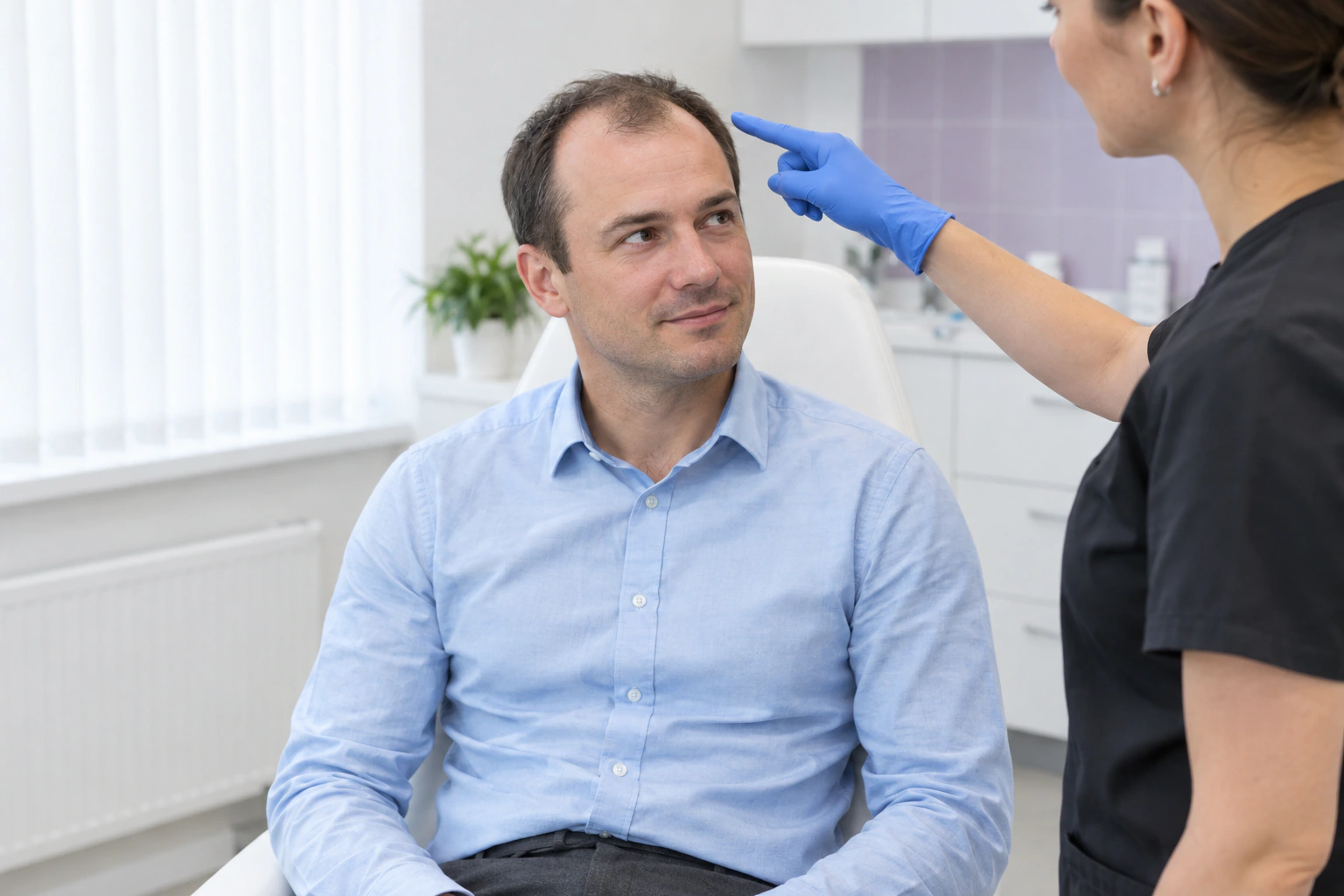

Leave your number for a free answer: photos in a messenger to a coordinator, and the doctor says if a transplant will help you.

services
The free consultation ends with a graft count: the cost is named and fixed in the contract.
suture-free graft extraction

$2,200$2,700
or $367/mo — 0% instalments for 6 months
Hold your priceimplantation without channels

$2,500$2,900
or $417/mo — 0% instalments for 6 months
Hold your pricecombined technique

$2,700$2,900
or $450/mo — 0% instalments for 6 months
Hold your price| The first appointment | Free |
|---|---|
| Eyebrow transplant, FUE | |
| Beard transplant, FUEinstalments $467/mo | |
| Hair trichopigmentation | |
| PRP therapy / session | $200 |
all included
From preparation for surgery to follow-up at 12 months.
No last-minute charges on the day of surgery.
two other areas
The same grafts from the back of the head, the same FUE method — only the area changes: it is not only about the scalp.
The FUE method, no incisions used

Grafts are taken from the donor area at the back of the head and moved through micro-punctures of about 1 mm — there are no scars afterwards. The doctor agrees the shape with you before the operation, taking your facial features into account. Transplanted hair grows for life: trim and style the beard as usual.
$2,800$3,000
or $467/mo — 0% instalments for 6 months
Hold your priceThe FUE method, no incisions used

Shape first, hairs second: at the first consultation the surgeon draws the brow line, reference photos are reviewed with you, and your facial proportions define the line. Each hair sits at the growth angle, which is why the brows look genuine. It also suits growth lost to long years of plucking.
$1,600$1,700
an operation under local anaesthetic, no stay
Hold your priceAt the appointment the donor zone is inspected, the grafts counted and the realistic outcome explained. Cost is discussed at the same appointment and sealed in the contract.

Message our coordinator
Free online consultation · Reply within 15 minutes
Message us on TelegramMessage us on WhatsAppBy messaging us, you agree to our Privacy Policy
Process
From consultation to going home — all in one day

Before anything else the doctor explains the workings of the DHI and FUE methods, responds to whatever you ask, and inspects the donor area.

The date gets reserved through a deposit payment, made either by card at the clinic or online, with the full terms laid out in a medical services contract.

You will be asked to take a number of tests. The clinic issues the complete list and guidance so nothing is guessed at.

The operation brings no pain, because a local anaesthetic is used for it.

Grafts are obtained from the donor zone, from the occiput or the temples, and sutures are not used.

Implanting the gathered grafts into the bald zone is the surgeons' task.
This final step covers recovery, with the clinic giving you everything required and detailed instructions to speed healing.

Crusts fall away, swelling eases, and the treated skin heals

Expected shedding. The roots hold firm, only the shafts fall out

Little by little the area fills in, and the difference shows

The hair becomes thicker, the main volume and outline are visible

Final density is reached and the hairline natural

Free, before the surgery and with no ties at all.
Speak to a specialistdoctors

Hair transplant doctor, trichologist, surgeon
10 years of experience

Dermatovenereologist, trichologist, surgeon
11 years in practice

Plastic surgeon
9 years of experience

Plastic surgeon
9 years of experience

Assistant
9 years of experience
The doctor assesses the donor zone, arrives at a graft figure and describes the outcome within reach.
Speak to a specialistcoordinators
You do not deal with a queue of people: one coordinator covers everything up to recovery.

Aftercare coordinator
Will be with you before and after surgery
Covers the paperwork and the scheduling

Aftercare coordinator
Will be with you before and after surgery
Covers the paperwork and the scheduling

Aftercare coordinator
Will be with you before and after surgery
Covers the paperwork and the scheduling
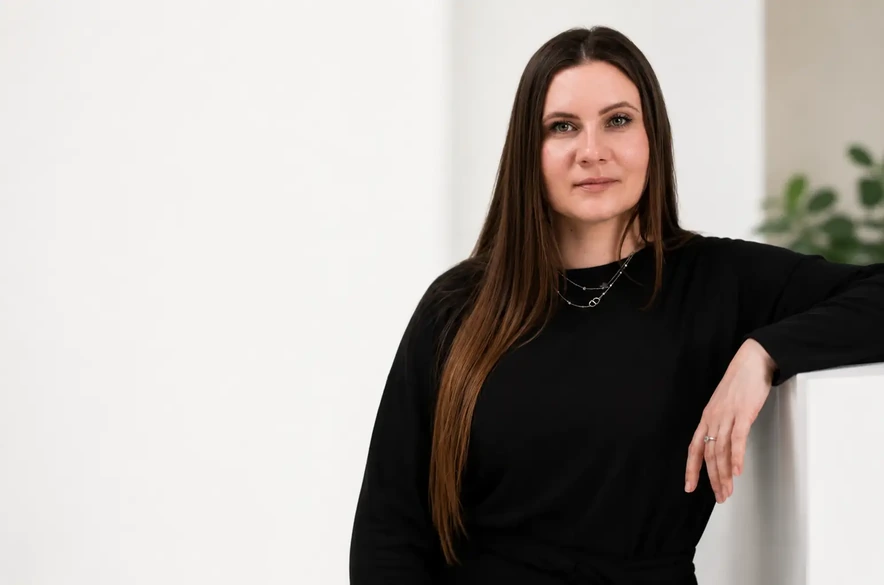
Aftercare coordinator
Will be with you before and after surgery
Covers the paperwork and the scheduling













Ask us anything, and a consultation slot that fits your day will be agreed
Message us on WhatsApp Ask us a questionPoints people raise

Yes. The centre's list runs across numerous cities and several countries, and a preliminary talk online is always possible.
FUE costs $2,200 (≈ TZS 5,900,000), DHI costs $2,500 (≈ TZS 6,700,000), and the combined DHI+FUE method costs $2,700 (≈ TZS 7,200,000). The exact amount is confirmed at a free consultation after your grafts are counted, and it is fixed in the contract.
Everything happens across one day, and nobody is admitted overnight.
Comfort is maintained by local anaesthesia; nothing hurts at all.
FUE is the classic method: grafts are harvested with tweezers, with no cuts or stitches. DHI implants grafts without channels, using a Choi pen. A combined method harvests grafts by FUE and implants them with the DHI pen.
Your graft count is worked out for free by the doctor during the consultation, based on the donor zone.
The skin needs 0–10 days. At 2–4 weeks transplanted hairs are lost, and this is expected rather than alarming. Growth returns at 3–4 months, density reads clearly by 6–9 months, with the finish at 12–18 months.
You get a lifetime hair growth guarantee, written into the contract.
The clinic works under a medical licence, care is given to the standards and clinical guidelines
under Ministry of Health.

Diplomas and certificates of the operating doctors
Go through the papersAKC POMOSHCH LLC
the clinic's legal entity
1057746096924
OGRN
7728536872
INN
The two methods offered to a patient in Zanzibar City, FUE and DHI, leave no cuts and no stitches, work under local anaesthesia and finish within one day. Graft survival is 98-100 %, and a price from $2,200 (≈ TZS 5,900,000) is fixed in the contract after a free graft count.
You can begin in Zanzibar City without leaving home: the online consultation is free, and the doctor looks at photos of the thinning area and counts how many grafts it will take. The clinic is reachable 24/7, so a message fits your schedule.
Healing runs 0-10 days and the transplanted hairs shed at 2-4 weeks, a stage that surprises only the unprepared. Growth returns at 3-4 months, density at 6-9, the final result at 12-18. Check-ups at 1, 3, 6, 9 and 12 months, photo tracking with a personal coordinator, lifetime growth guarantee.
Prices are in US dollars; the amount in brackets is an approximate conversion to TZS at the rate of 02.10.2026. The final price is fixed in your contract.
By messaging us, you agree to our Privacy Policy
What patients write after this operation. Reviews are translated from the original language.
Andrey M.
I had the operation a month ago. Before and after surgery they were always in touch and helped with questions about my tests. The operation itself went wonderfully, the staff are polite and masters of their craft, you feel you are in safe hands. I am recovering now, and they answer all my questions. I am happy and I recommend them!
DHI hair transplant
Pavel Sinitsyn
The best clinic of all the ones I was choosing from. No regrets at all! The result is simply amazing, I am thrilled. I recommend it to everyone: these people do great work and make people happy. Once again, a huge thank you to everyone. Roman, the head of the clinic, is the best: he was personally in touch with me and looked after my recovery. Thank you for making my dream come true.
FUE hair transplant
Maria Akopyan
I thought about an eyebrow transplant for a long time and finally went for it. At first I was afraid the result would look unnatural, but when I saw my new eyebrows I was delighted! They came out full and in harmony with my face. I can hardly believe that now I just wash my face and go, I have never felt so free. For anyone tired of constant make-up, a transplant is a real lifesaver!
Eyebrow transplant (FUE)
Alexander M.
I really wanted a thick beard, but I had problems with it. I tried every home remedy and minoxidil, and nothing helped. After a long search for the best clinic I settled on this one. Thank you so much for the service, I liked everything and now I am happy! I had the beard transplant 10 months ago and I am very pleased with the result. By the way, the music in the clinic was great, as far as I remember. A friend of mine has already come to you for a transplant on my advice and was also happy with the result. I wish you every success!
Beard transplant (FUE)
Vladimir Z.
I went to the clinic to see a trichologist and had a hair transplant. I really liked the doctor's approach, and all the recommendations helped. I want to point out that nobody tries to sell you extra services: they tell you things as they are, and if some treatment is not needed, they do not push it. Cosy and clean.
DHI hair transplant
Artem Popov
This may sound obvious, but a head of hair really changes everything in your life. You feel much more confident and go through life like a winner. And it is all thanks to the doctor at this clinic and to the staff who take care of their patients. Many thanks to the clinic for a happy life with new hair, for the comfortable conditions and for the professionalism during the hair transplant.
FUE hair transplant
Page medically reviewed by Anastasia A. Kolesnik, hair transplant doctor. Review date: .
Zanzibar City, also called Mjini District, is one of two administrative districts of Mjini Magharibi Region in Tanzania. It is the largest city on the island of Zanzibar and lies on the west coast of Unguja, the main island of the archipelago, north of Dar es Salaam across the Zanzibar Channel. In 2022 the district had a population of 219,007. The district covers only 15.4 km2, so daily life is compact and almost everyone lives close to the sea.
A hair transplant by FUE or DHI is a quiet, planned procedure, and a coastal tropical city adds a few conditions that are worth thinking through in advance: heat, humidity, strong sun and the habit of spending time outdoors. A patient in Zanzibar City who plans for these conditions before the day of surgery usually has a calmer recovery.
City Medical Centre works with patients in Zanzibar City through a free online consultation. Coordinators are available 24/7 on WhatsApp and Telegram, so you can send photos of the donor and recipient areas, describe your routine and get a first assessment without leaving home.
The city has two main parts. Stone Town is the historical core, a former capital of the Zanzibar Sultanate, declared a UNESCO World Heritage Site in 2000. Ng'ambo, literally 'The Other Side', is a much larger, modern area with office buildings and large apartment blocks such as those of the Michenzani neighbourhood. Patients living in the narrow lanes of Stone Town and those living in Ng'ambo apartments have different daily rhythms, and that matters for the first days after surgery.
Where you sleep matters. In the first days you will need to rest with your head comfortably raised and avoid rubbing the grafted area on pillows, walls or helmet straps. Think in advance about how you will move around the city, who will help at home, and how you will shield the scalp from crowds, dust and direct sun.
During the online consultation the coordinator will ask about your home, your work and how much of your day is spent outdoors. This is not small talk. It helps the doctor choose a sensible date and give recovery instructions that fit your real life in Zanzibar City.
Zanzibar City has a tropical monsoon climate. The average temperature is 26.9 °C, and monthly averages usually fall between 25.1 and 28.8 °C. Annual rainfall averages 1,512 mm. This is a warm, humid city all year, and that is the first thing to plan around.
Heat and humidity do not stop healing, but they make the scalp sweat more, and sweat plus dust is something you must keep away from fresh micro-punctures. The grafts are moved through micro-punctures of about 1 mm, and the healing phase runs 0–10 days. During this time follow the washing routine given by your doctor exactly, and do not improvise with home remedies.
Sun is the second factor. The recipient area should not be exposed to strong direct sun during early healing. A loose, clean, breathable cap or head covering recommended by your doctor is a practical solution, but it must not press on the grafts. Ask your coordinator which type of headwear suits your stage of healing, and how to keep it clean in a humid climate.
Swimming in the Indian Ocean or in a pool is a very natural wish in a city on the coast. Sea water, sand and pool chemicals are not something to try early. Ask the surgeon in writing when water activities may start, and follow the dates you receive rather than the weather.
Zanzibar City has two rainy seasons. Most rain falls between March and May, and a smaller rainy season comes between November and December. The drier months are January and February, and a longer dry season runs from June to October.
There is no single perfect month. In the heavy rains, humidity is high, and you need to protect the scalp from getting wet unexpectedly while moving around the city. In the dry months, sunshine is stronger and more of your day may be spent outdoors, so you need a reliable plan for head protection. Both seasons are workable if you prepare.
A better way to choose the date is to look at your own calendar: work deadlines, study exams, family gatherings, weddings and religious or community events where you would prefer your head to look natural. Remember that transplanted hairs fall out after 2-4 weeks, which is an expected stage, and that new hair comes back at 3-4 months. So choose a period when the early weeks are quiet.
Send your preferred months to the coordinator in the online consultation. They will help you build a timeline from the day of surgery to the check-ups at months 1, 3, 6, 9 and 12.
The process starts with a free online consultation. You write to the coordinators on WhatsApp or Telegram, and they are available around the clock. You send clear photos of the front, top, crown and back of the head, plus the sides, in daylight. You also describe your medical history, medicines you take and any previous hair treatments.
The doctor then evaluates the donor area at the back of the head, the pattern of loss and the density you can realistically expect. The shape of the frontal hair line is discussed with you before the operation, taking your facial features into account. If you want a beard or other facial hair restored, say so in the first message so it can be planned from the start.
City Medical Centre stays with you from pre-op planning to 12 months later. After the operation a coordinator will be on the phone 24/7, which matters in a city where you may have questions at any hour, including early morning or late evening.
The remote format is convenient for Zanzibar City, but it does not replace honesty. If your photos are unclear or the doctor needs more information, expect to be asked for new pictures or a short video before a plan is confirmed.
Because Zanzibar City is compact, many people walk or ride short distances every day, and a large part of the city works in service, administration and offices, including the large buildings of Ng'ambo. If your job is indoors, you can plan a gentler return to routine. If your work is outdoors, in the sun and dust, tell the coordinator so the instructions are adjusted.
The healing stage is 0–10 days, and this is the period when you should limit social obligations and physical effort. Plan this period so that you are not forced into long hours outdoors, heavy lifting or crowded places. Students should check exam schedules before choosing a date.
For sport, football, running, gym work and swimming are all common in a coastal city, but each has its own demands on the scalp: sweat, impact, friction from helmets or caps and water. Ask the surgeon at what stage each activity can restart, and do not rely on what a friend did.
Family events are worth a conversation as well. Shedding at 2-4 weeks can be surprising to relatives who do not know what to expect. Tell those close to you in advance that this is normal, that hair comes back at 3-4 months, becomes visibly thicker at 6-9 months, and settles at 12-18 months.
A good candidate usually has stable hair loss, enough healthy hair in the donor area at the back of the head and realistic expectations. The age of the patient, the cause of loss and the pattern all influence the plan. Only the doctor can decide this after reviewing photos and your history.
There are situations in which surgery should be postponed or reconsidered: active scalp disease, unexplained sudden hair loss that has not been investigated, uncontrolled chronic illness, or hair loss that is still changing quickly. Tell the coordinator about every medicine and condition, including those you consider minor.
General health matters for healing. The WHO describes overweight and obesity as a factor in many chronic conditions, and general fitness, balanced food and regular check-ups help the body recover. This is not a reason to delay for everyone, but it is a good topic to raise during the consultation.
If the doctor decides you are not ready, that is a useful answer rather than a refusal. You may be advised to start medical treatment first, to wait for the pattern of loss to settle, or to plan a smaller procedure.
Prepare your list before the online consultation. Ask which technique, FUE or DHI, is better for your case and why. Ask how the donor area will be protected so that it does not look thin, and how the shape of the frontal hair line will be designed for your face.
Ask what the day of surgery looks like, which anaesthesia is used and what to expect afterwards. Ask what to do if the scalp is itchy, red or sore in a hot, humid climate such as that of Zanzibar City, and who answers messages at night. The answer should be that a coordinator is available 24/7.
Ask about the timeline in writing: healing 0–10 days, shedding at 2-4 weeks, new growth at 3-4 months, visible thickness at 6-9 months and a settled look at 12-18 months. Ask when check-ups happen: months 1, 3, 6, 9 and 12.
Finally, ask what the doctor expects from you. Good results depend on following instructions, keeping the scalp clean, protecting it from sun and not judging the outcome too early.
Yes. The consultation is free and online. You contact the coordinators on WhatsApp or Telegram, send photos and describe your history, and the doctor gives a first assessment. Coordinators are available 24/7.
It does not prevent healing, but it requires discipline. The average temperature is 26.9 °C, so sweat, dust and sun need to be managed during the 0–10 days of healing. Follow the washing and headwear instructions you receive from the doctor.
There is no single best month. Most rain falls between March and May, a smaller rainy season comes in November and December, and the drier months are January–February and June–October. Choose by your own work, study and family calendar and discuss it with the coordinator.
Not in the early stage. Sea water, sand and pool chemicals should be avoided until your doctor confirms in writing that the scalp is ready. Ask for the exact date during the consultation.
Transplanted hairs let go at 2-4 weeks, which is expected. Hair comes back at 3-4 months, looks visibly thicker at 6-9 months and has a settled look at 12-18 months.
City Medical Centre stays with you from pre-op planning to 12 months later, with check-ups at months 1, 3, 6, 9 and 12. After the operation a coordinator will be on the phone 24/7.
Grafts are taken from the back of the head, the donor area, and moved through micro-punctures of about 1 mm, so nothing scars over. Your doctor will explain how the donor area is protected.
Yes, beard restoration can be planned. A patient review describes active, even growth beginning from about the 4th month, with a natural look and a thicker, denser beard. Transplanted hair grows for life, so you can trim and style the beard as usual. Individual results differ, so ask the doctor about your own case.
Arrange a quiet place to rest, clean bedding, help with errands for the first days, and a plan for protecting the scalp from sun, dust and crowds. Tell the coordinator whether you live in Stone Town or in a modern area of Ng'ambo, and what your work involves.

 Forceps
 Minimal


