


























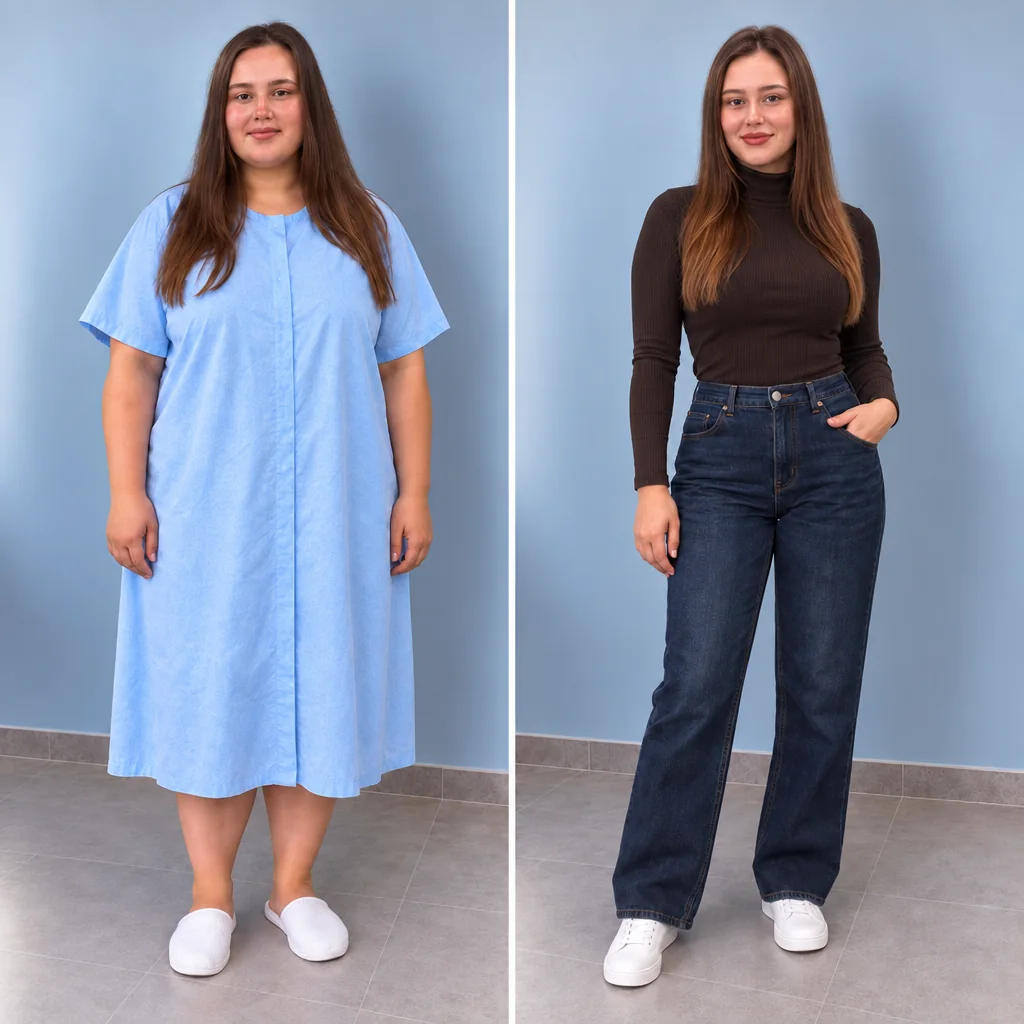
 beforeafter
Irina, 26
Bariatric surgery
Bariatric surgery
$3,600
$4,800 · First consultation — Free
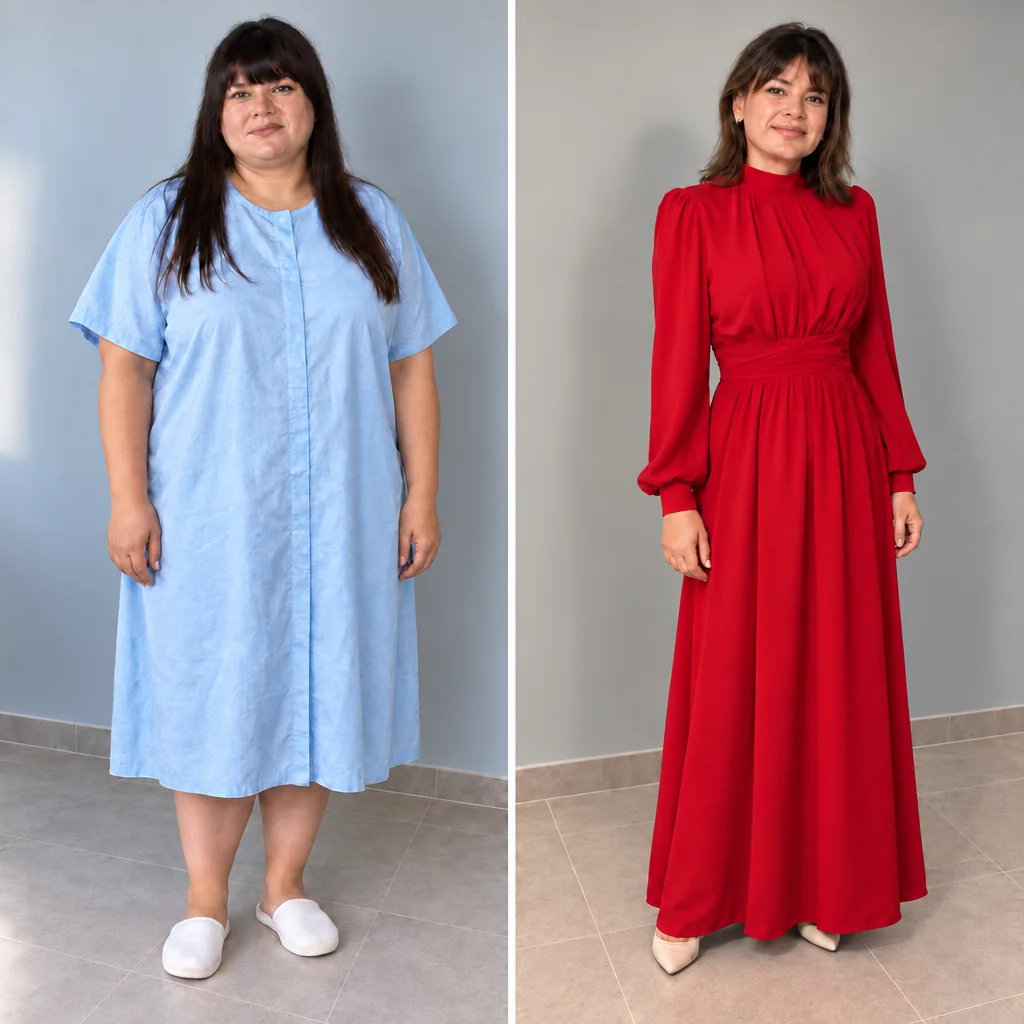 before
after
before
after
Message our coordinator
Free online consultation · Reply within 15 minutes
Message us on TelegramMessage us on WhatsAppBy messaging us, you agree to our Privacy Policy
Results
Only real clinic patients appear here.
beforeafterBariatric surgery
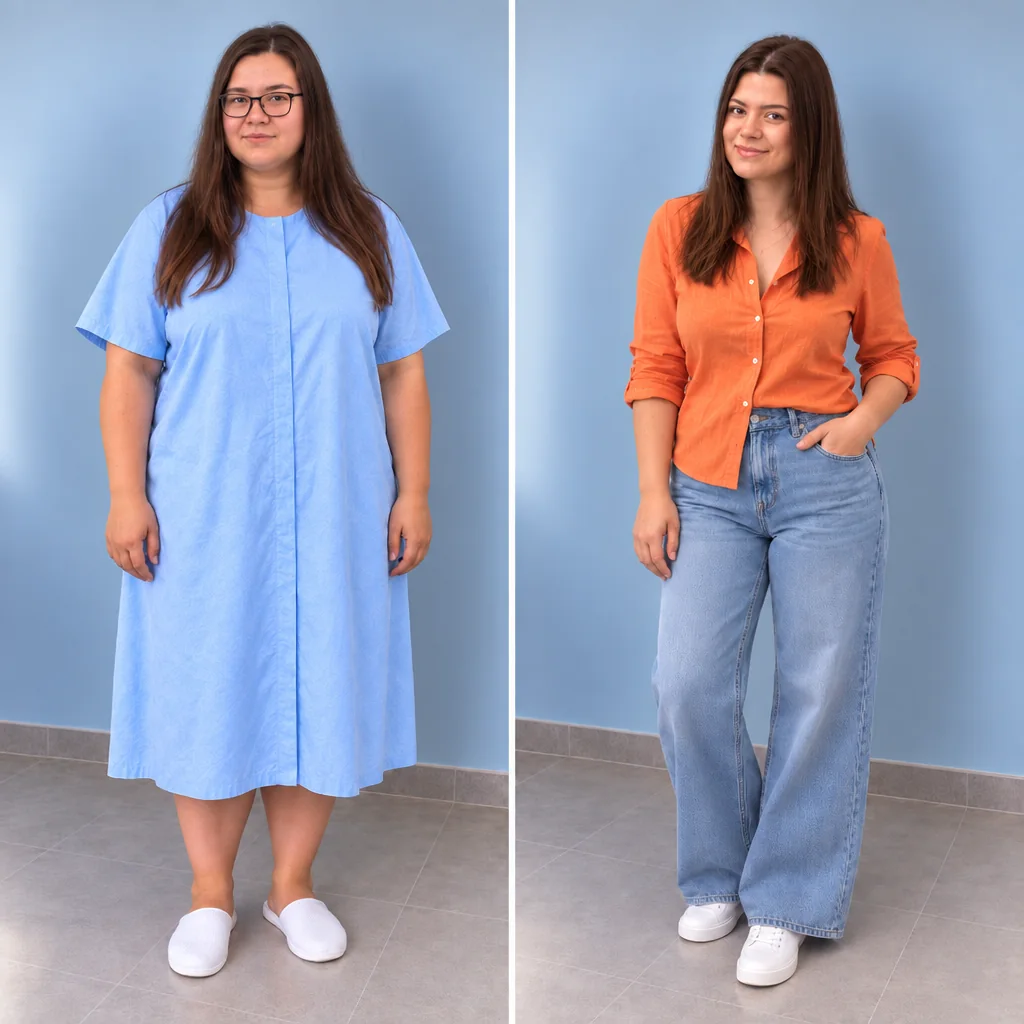 beforeafter
Bariatric surgery
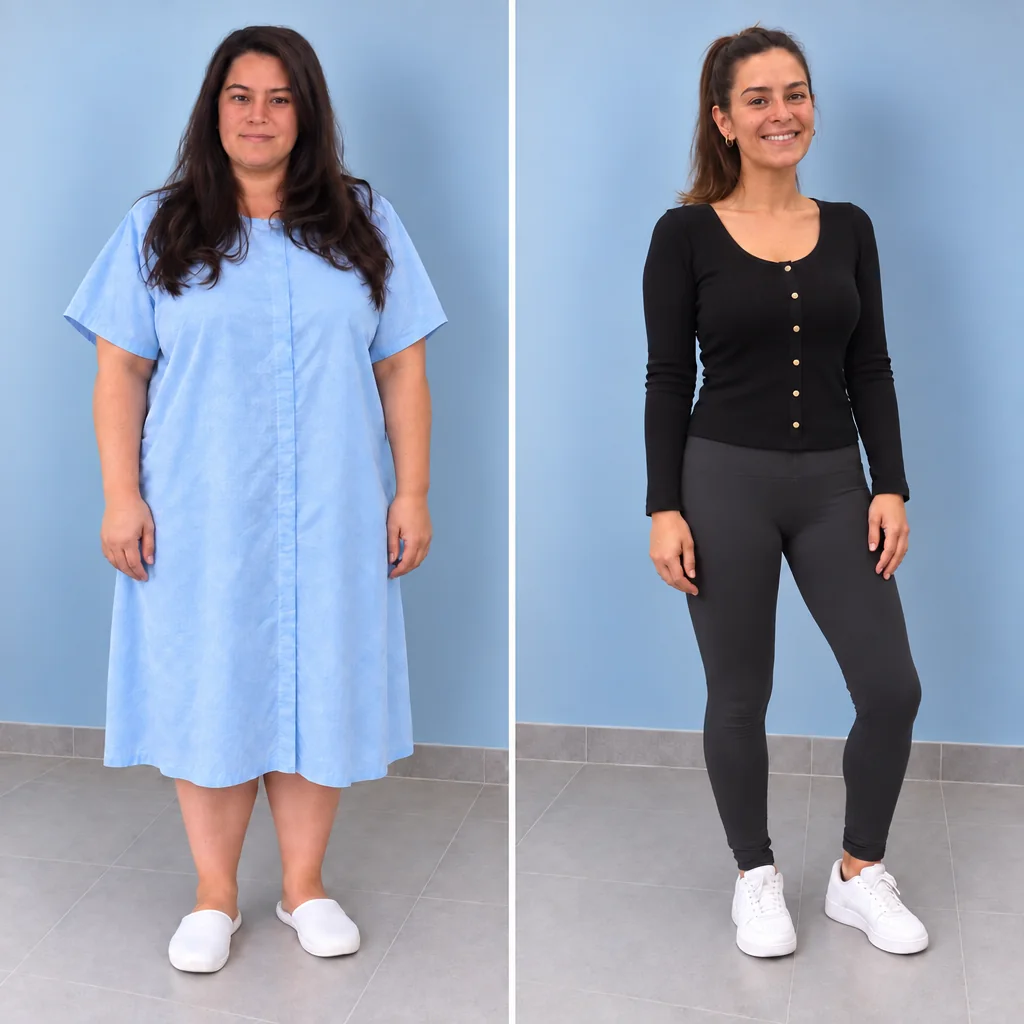 beforeafter
Bariatric surgery
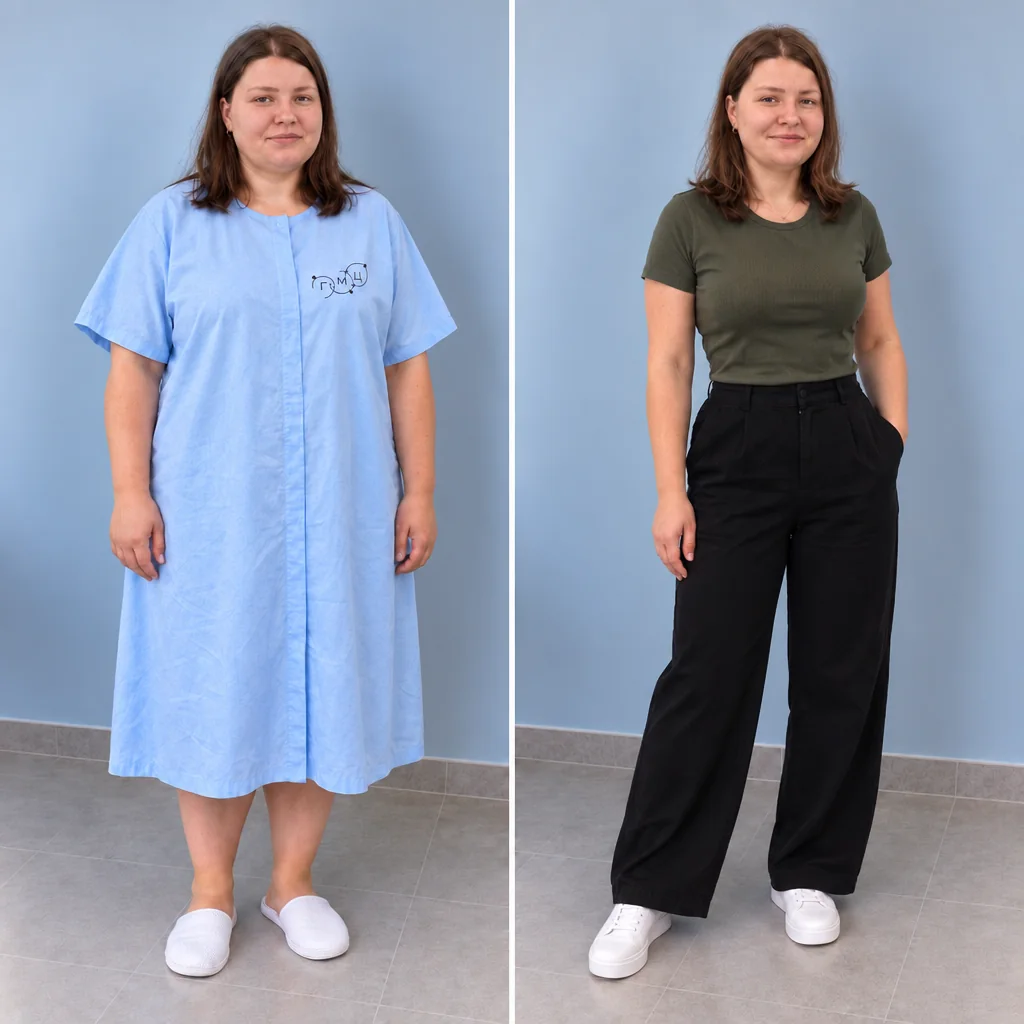 beforeafter
Bariatric surgery
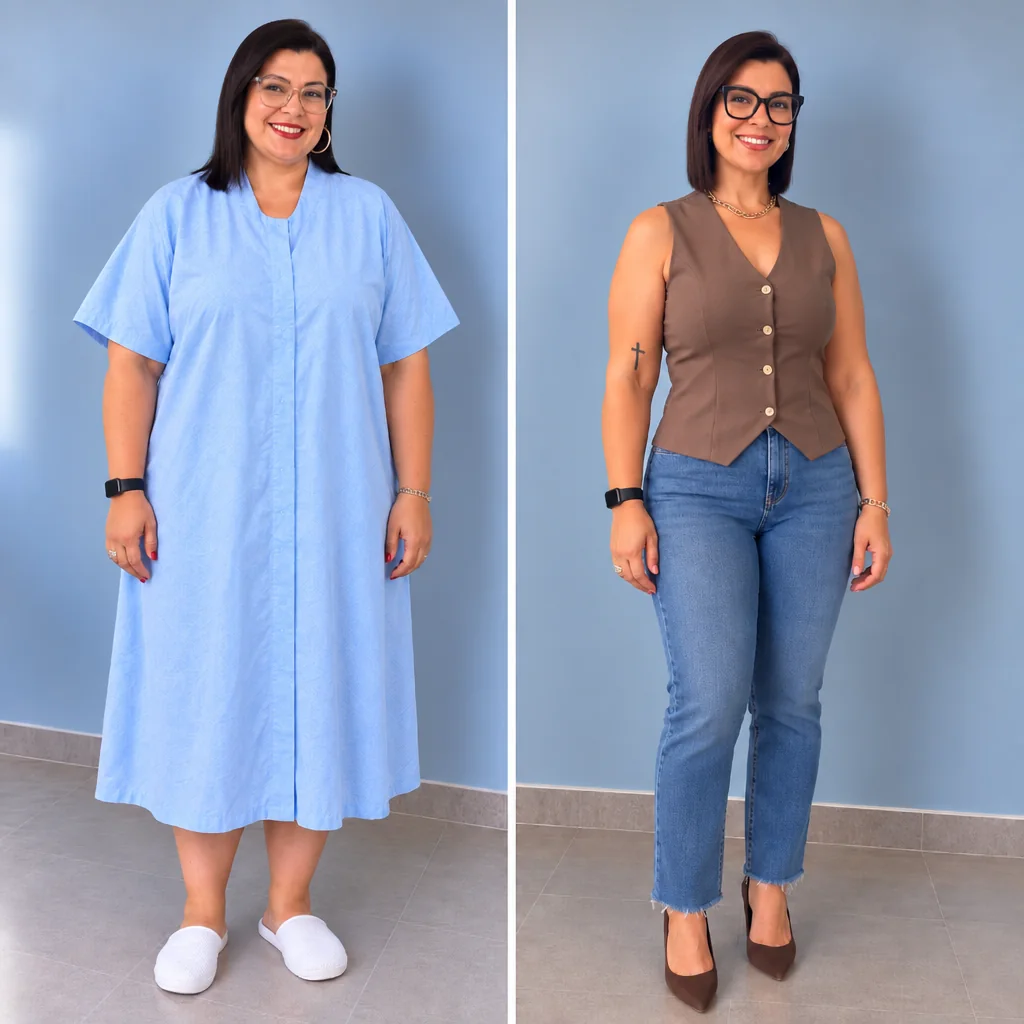 beforeafter
Bariatric surgery
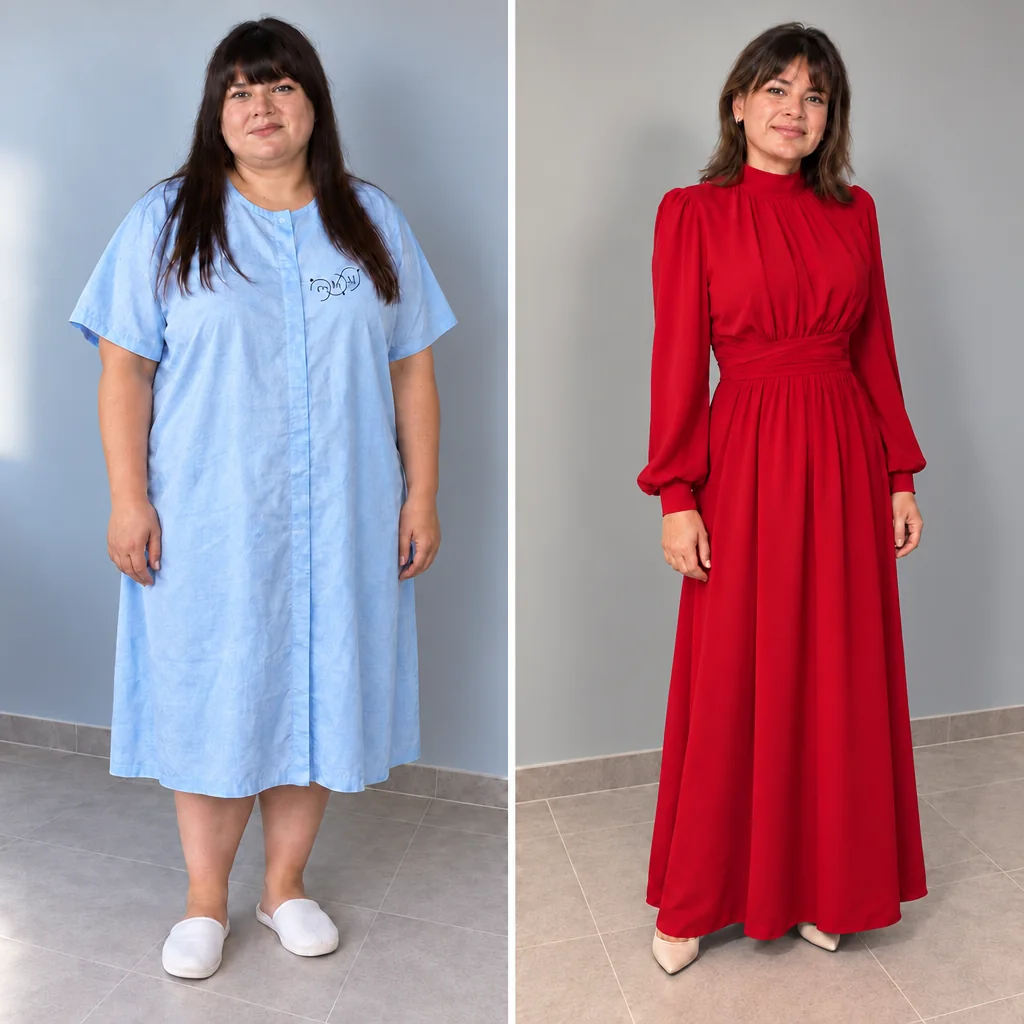 beforeafter
Bariatric surgery
 beforeafter
Bariatric surgery
 beforeafter
Bariatric surgery
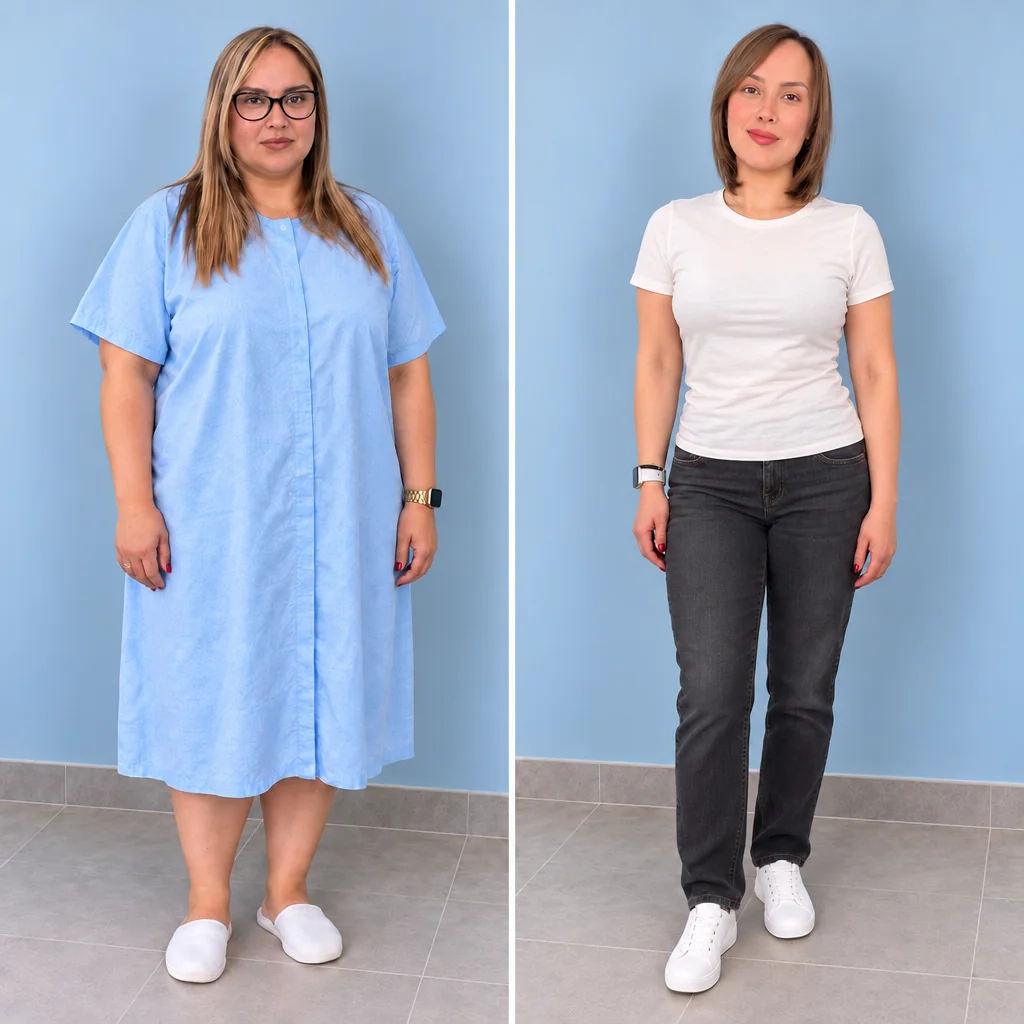 beforeafter
Bariatric surgery
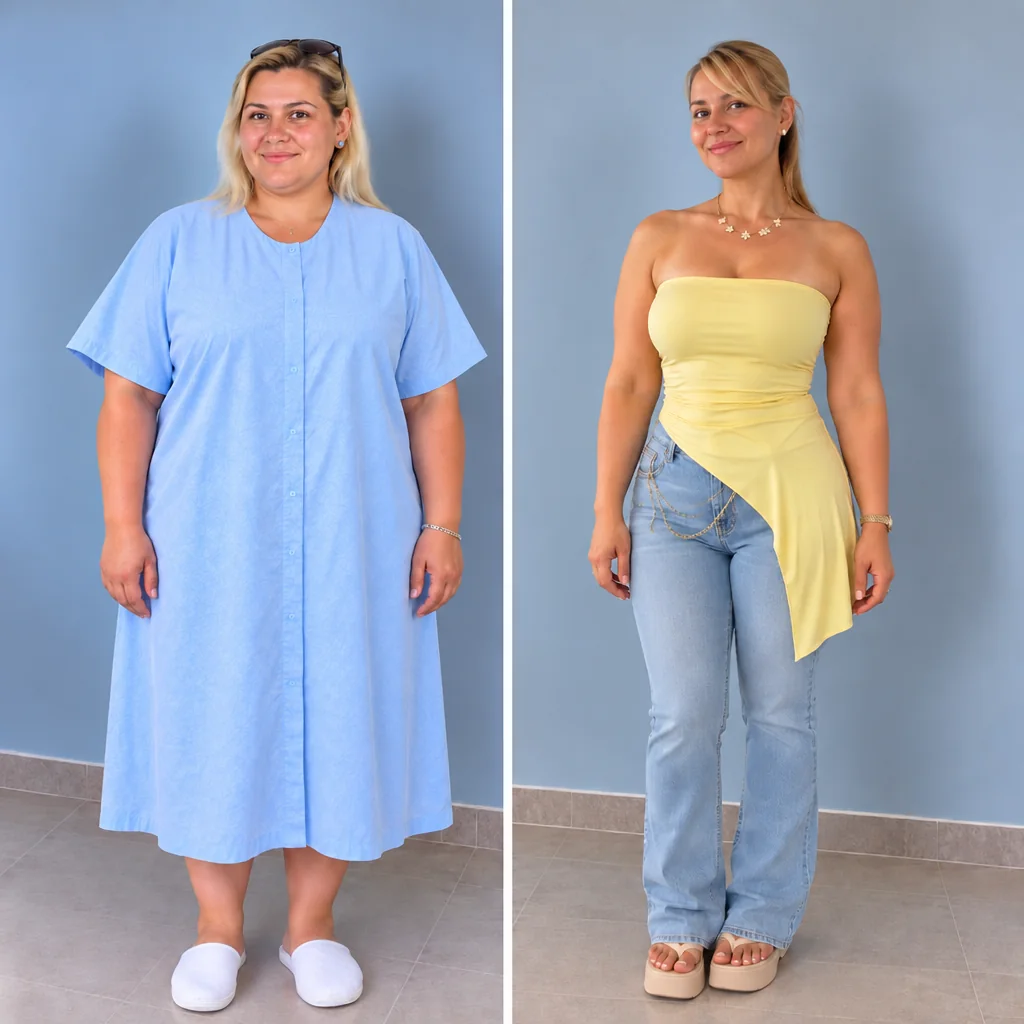 beforeafter
Bariatric surgery
 beforeafter
Bariatric surgery
Comparison
We offer two main options: gastric bypass and sleeve gastrectomy. Weigh up how each works, its purpose and its indications to settle on your method with confidence.
Less stomach volume
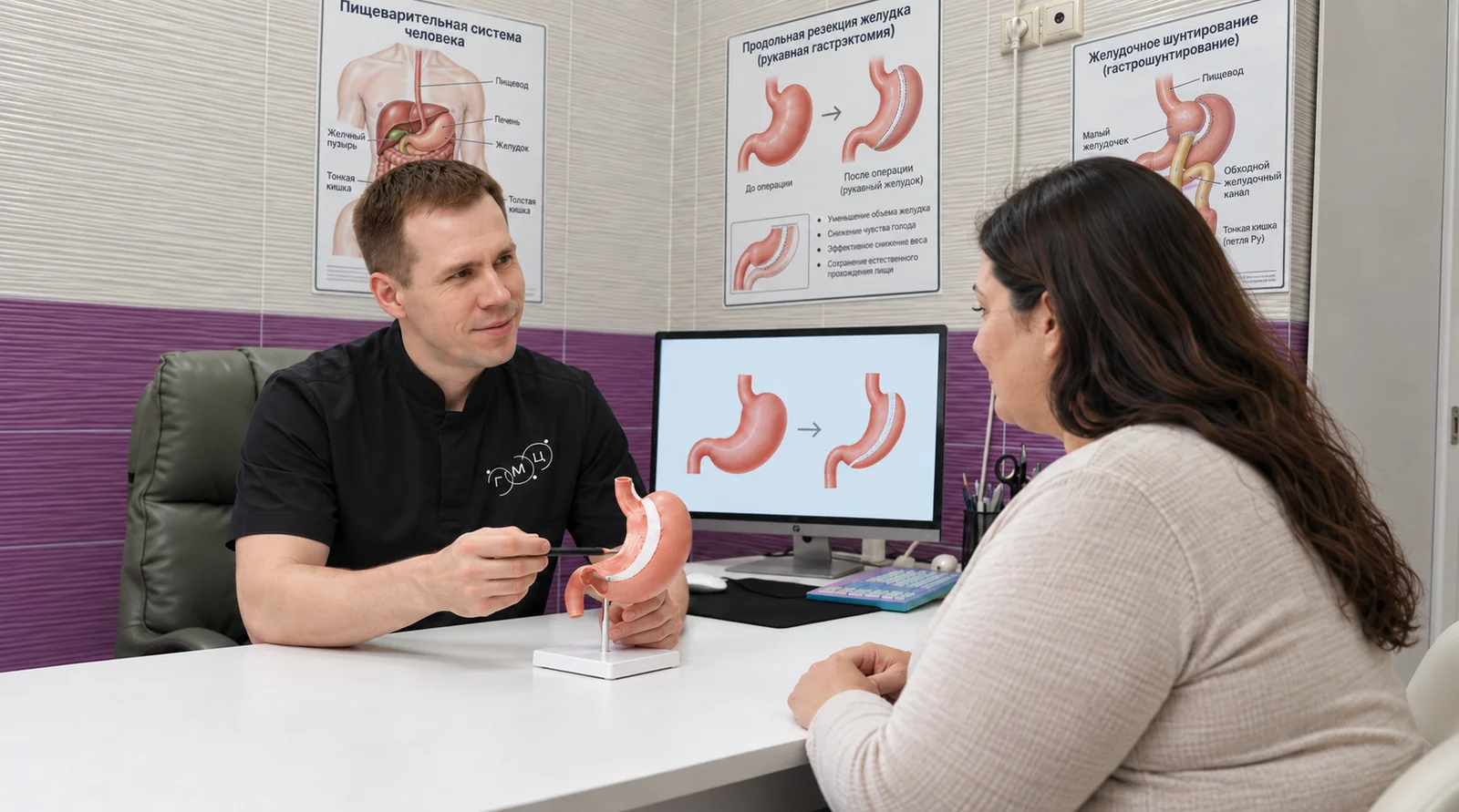
Discounted price
$3,600 $4,800
A smaller stomach volume plus a new route for food
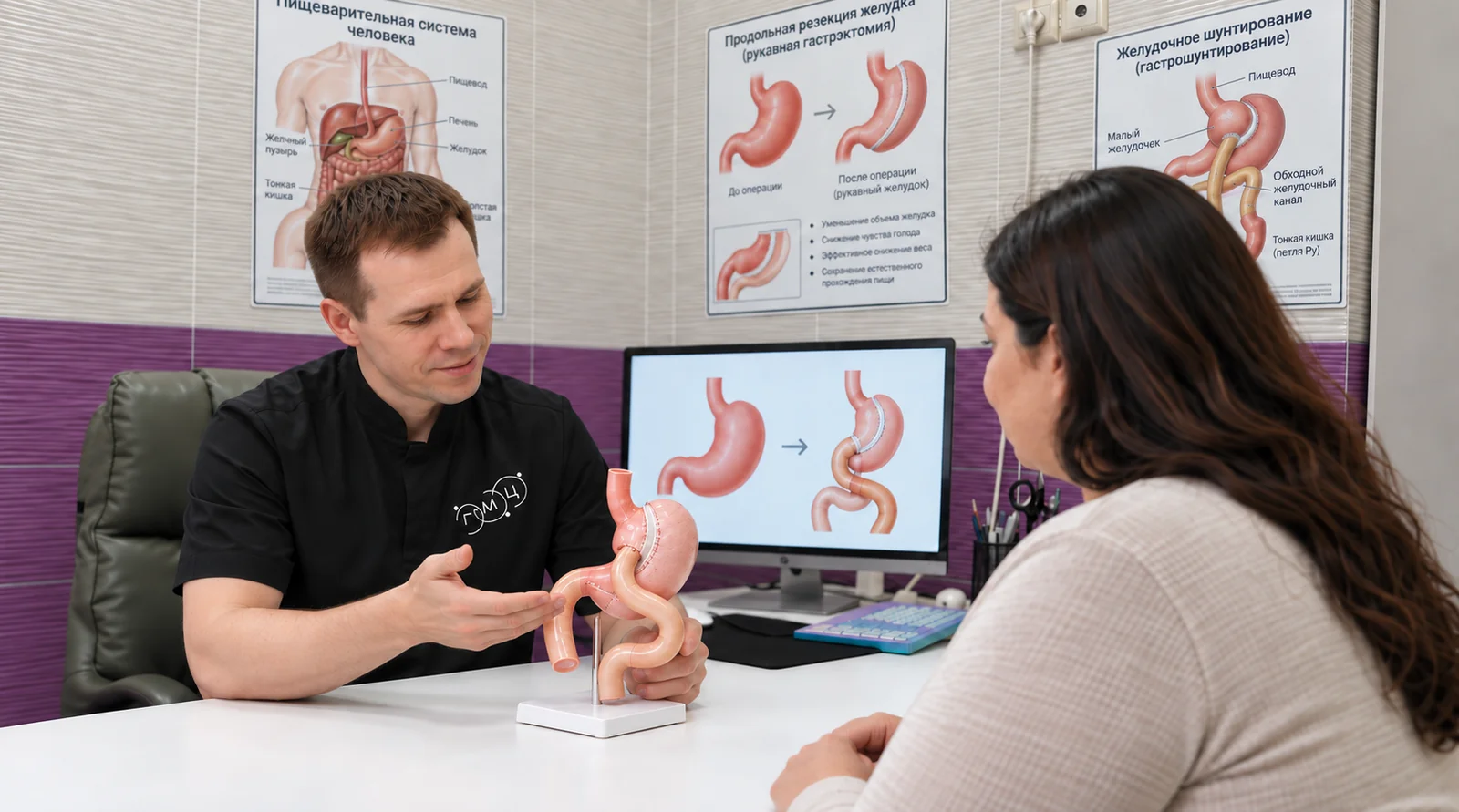
Discounted price
$4,000 $5,200
The benefits and recovery times are method averages meant as a guide; the actual scope of the operation and your recovery depend on your anatomy and individual features. The surgeon confirms them at the consultation.
Book a consultationOur clinic
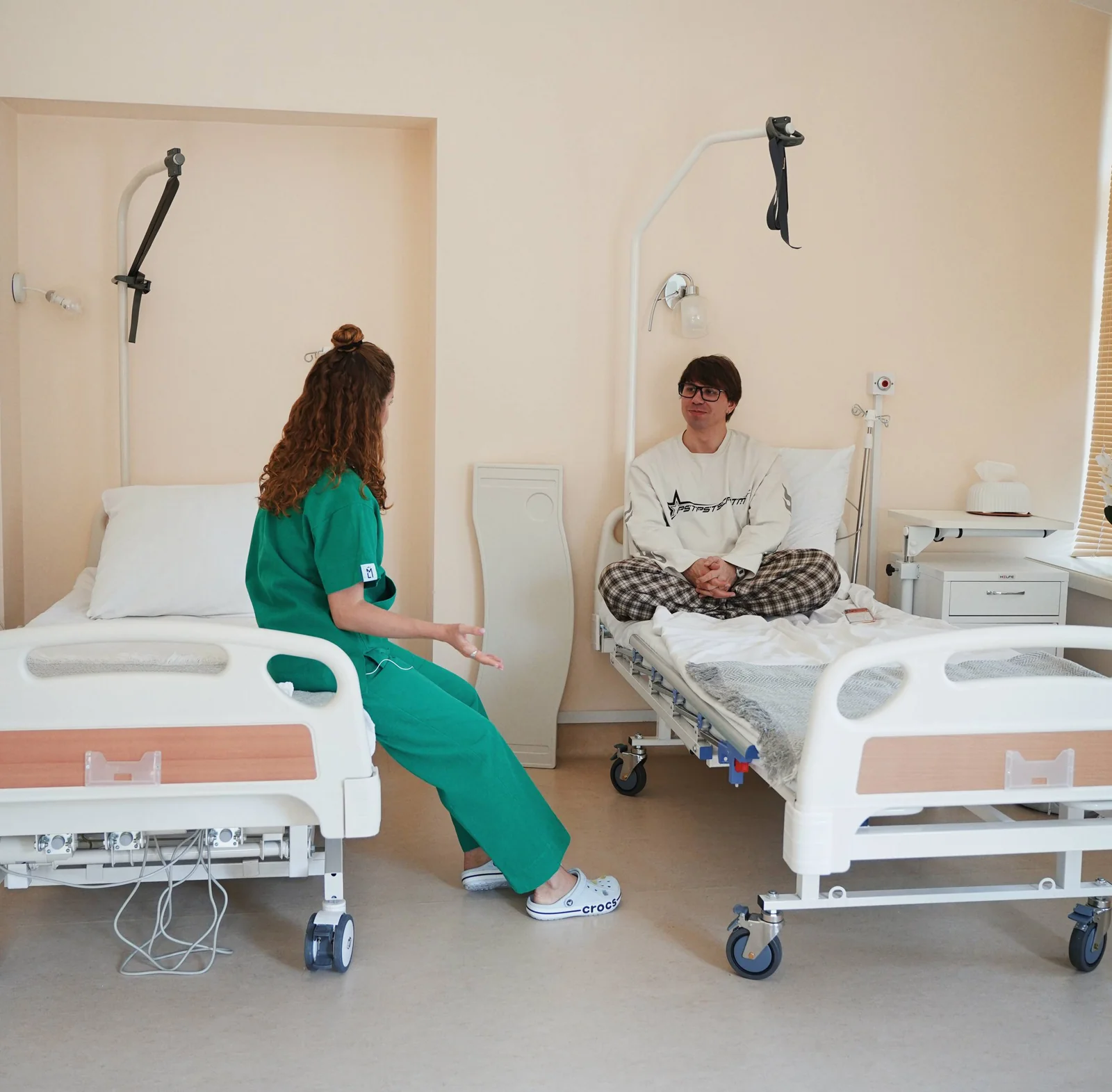
Comfortable rooms, modern equipment and care for each person

We answer your questions and pick a convenient consultation time
Get a consultationThe decision on surgery is made together with the surgeon after a consultation and check-up.

Not sure which column you belong to?
Contact us on Telegram, and our coordinator will say whether bariatric surgery is suitable for you. You pay nothing for the surgeon consultation and are not committed to surgery.
Find out if it suits me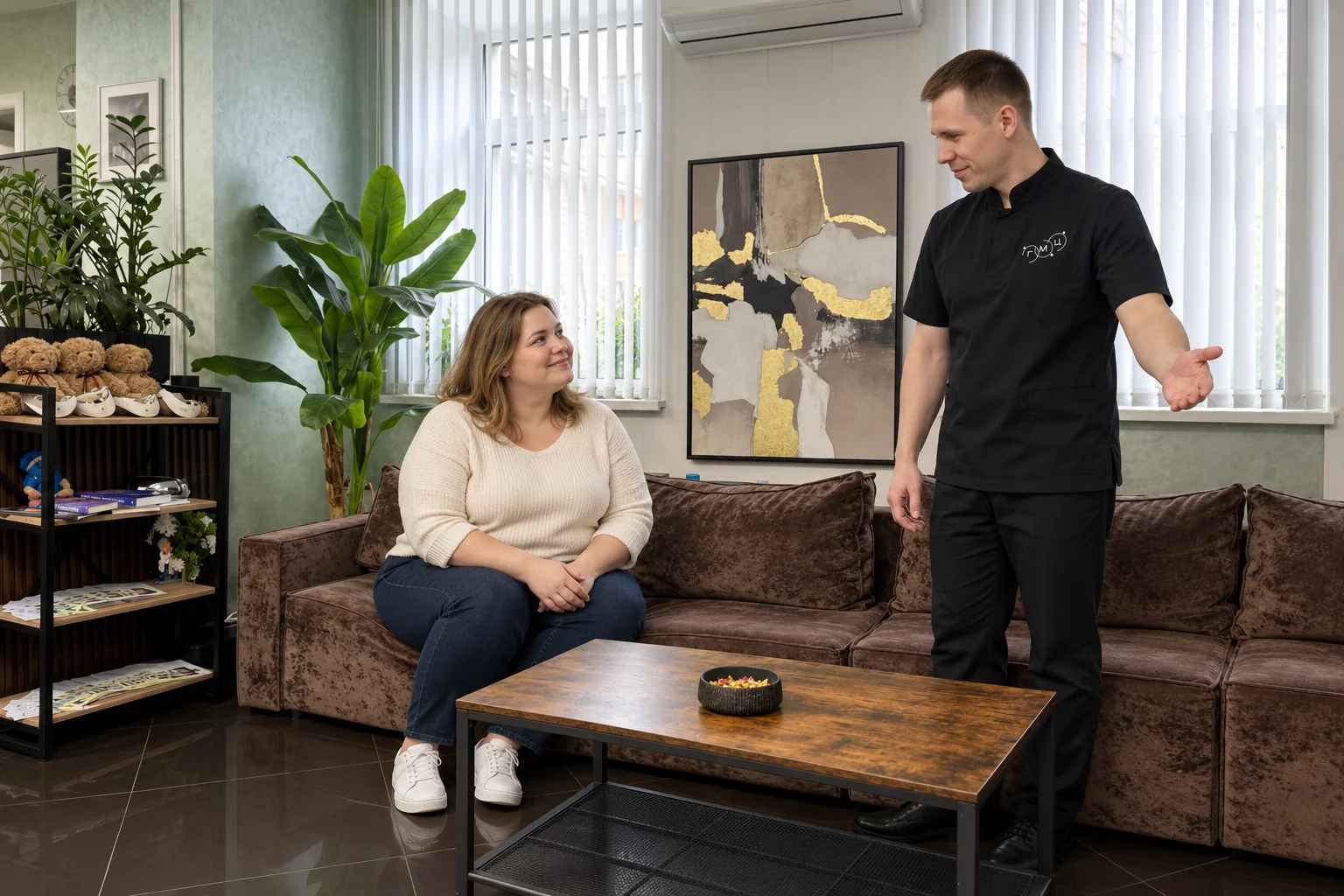
Prices
At the consultation, when your plan is ready, we name the cost and fix it in the contract.
Discounted price
Less stomach volume

$3,600$4,800
Discounted price
Weight loss and a new route for food

$4,000$5,200
Free
The surgeon examines you and draws up a treatment plan

Free
the cost of the operation is named
and recorded in the contract
Your goals are discussed, your health is assessed and the right bariatric method is chosen by the doctor. The price is given at the consultation and fixed in the contract.
Message our coordinator
Free online consultation · Reply within 15 minutes
Message us on TelegramMessage us on WhatsAppBy messaging us, you agree to our Privacy Policy

price
All in one package, from the preparation stage to 12 months of support — and no extra fees.From your pre-surgery preparation
to follow-up support for 12 months.
How it works
An agreed treatment plan, monitoring in hospital and support for a year.
 1
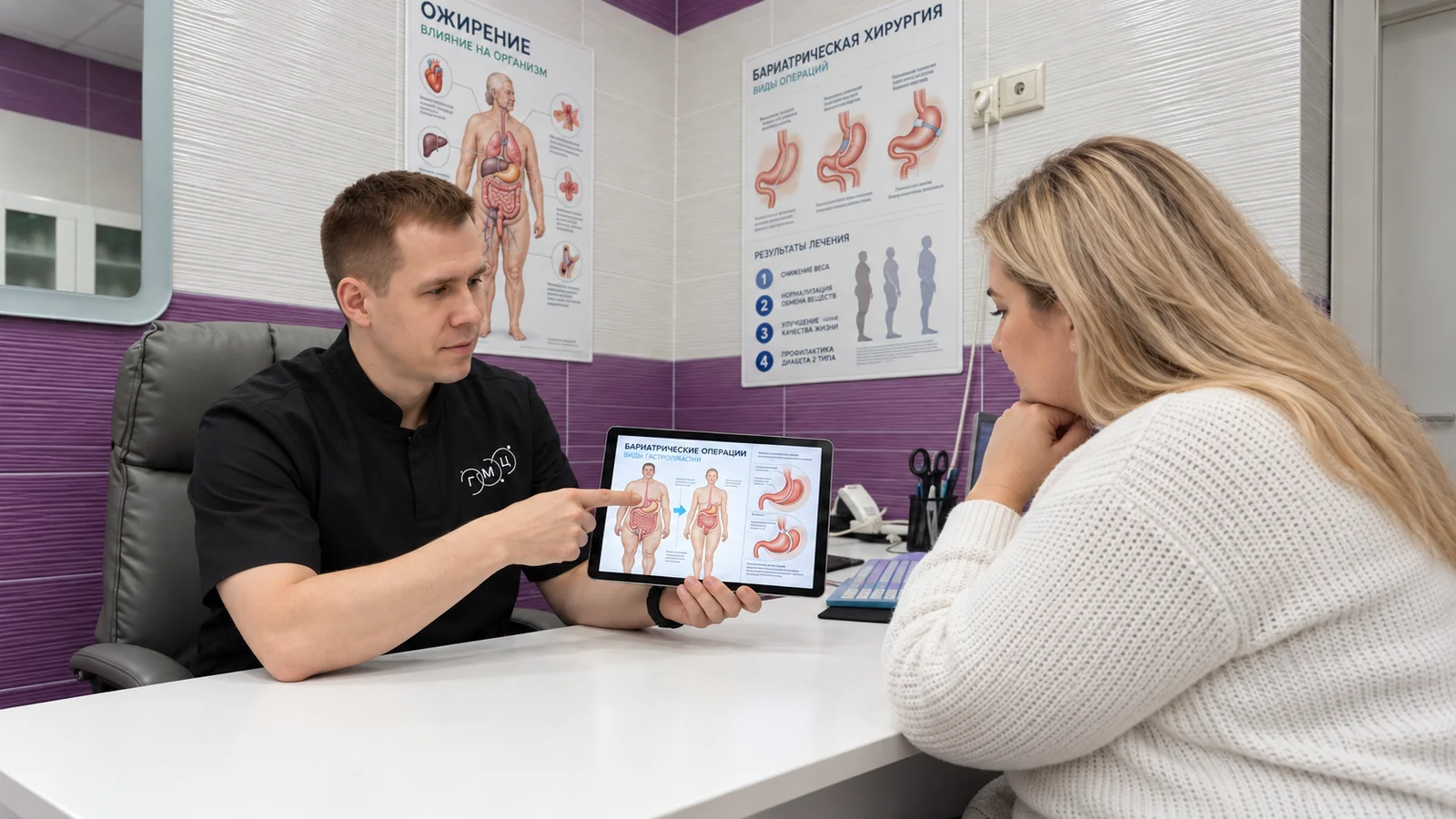
1After assessing your health and discussing your goals, the doctor orders the tests that help choose the right bariatric surgery method.
2A surgery date is reserved for you, with the deposit paid by card at the clinic or online by bank transfer. The terms are recorded in the contract for medical services
 3
3You see the specialists and have blood and urine tests, an ECG, an ultrasound and a gastroscopy before surgery. The doctor gives you the precise list at the consultation.
 4
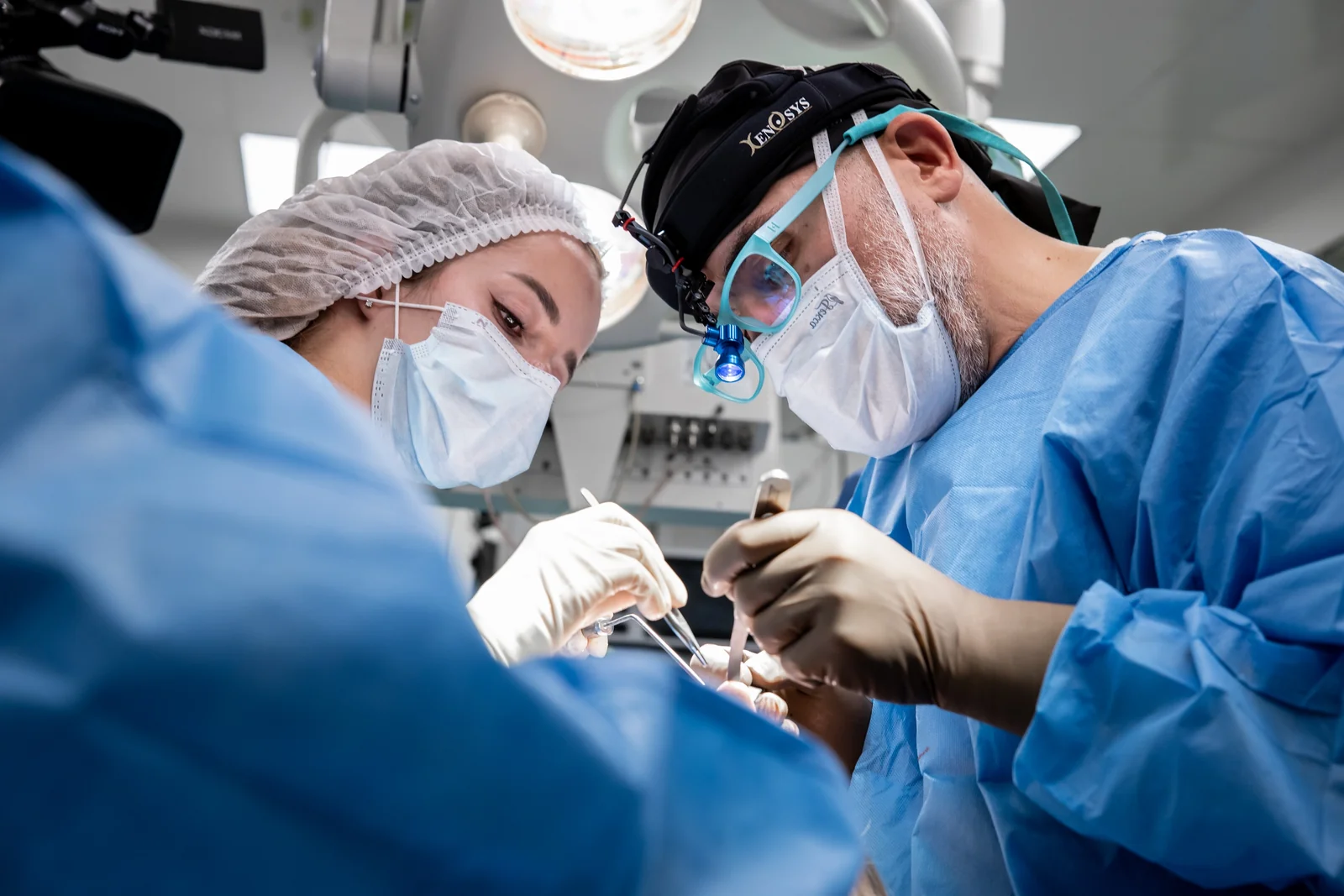
4Under general anaesthesia, the surgeon carries out the bariatric operation using the chosen method. After surgery the medical team monitors the patient.
 5
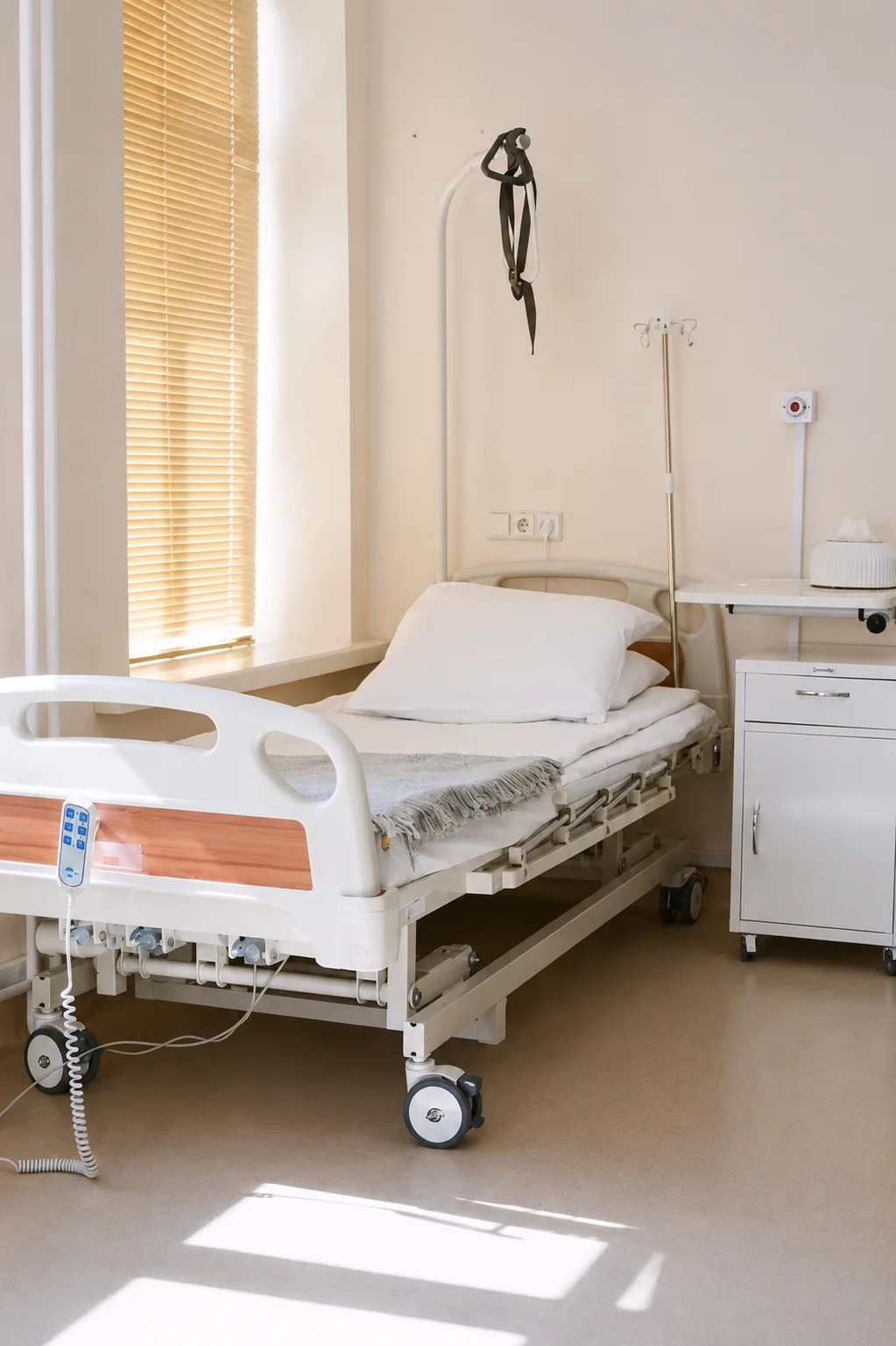
5Your hospital stay after surgery lasts from 1–3 to 4–5 days under doctors' supervision; the length depends on how complex the operation was and how you feel.
 6
6You leave with advice on diet and recovery. Scheduled check-ups then track how you feel, your weight and your test results, and the clinic team stays with you for a year.
At the consultation the doctor draws up your plan and explains the surgery step by step

There is no fee for the consultation, is held before surgery and carries no obligation.
Book a consultationDoctors

27 years of experience
Head bariatric surgeon
Surgeon

9 years of experience
Bariatric surgeon
Surgical oncologist
Your surgeon carries out the operation and follows you from the first consultation to your result.
First you meet our patient care manager: they calculate your BMI, go over the methods and arrange your surgeon appointment. Free of charge.
Book a consultationCoordinators
Our team supports you at each stage

From the first message to the consultation, your first point of contact at the clinic
Patient care specialist
Answers your questions before the first consultation and helps you choose a convenient date

Supports you before and during your stay — from booking through to discharge
Patient care specialist
Helps you get ready for surgery and keeps in touch while you stay at the clinic

Accompanies you through recovery, from discharge to your final check-up
Patient care specialist
Arranges your follow-up visits with the surgeon and stays in touch while you recover
Advantages
The method we choose is the best one for your health, lifestyle and goals — and our team stays with you throughout.

Adapting to new eating habits, tracking and keeping results — we help with it.

A higher quality of life, better well-being and steady weight loss.

We value your time: we are open 24/7, booking is easy and the approach is personal — we adapt to your pace.

After the consultation the surgeon chooses the method and you get a clear price — no hidden fees and no surprises on the way to your result.
FAQ
Bariatric operations at the clinic are performed by experienced bariatric surgeons:
Message us — our coordinator will get back to you shortly and book your consultation. The bariatric surgeon consultation is free.
Surgery is prescribed only when clear criteria are met
BMI serves as the chief indicator of obesity severity. Divide body weight (kg) by height squared (m²) to calculate it. Surgery is normally justified at BMI above 40, or above 35 with serious accompanying conditions. In selected cases it is considered at lower values as well — if non-surgical methods did not help.
The two are often confused, yet their goals differ fundamentally. Bariatric surgery is a medical treatment for obesity and its related diseases. It alters how the digestive tract works, tackling the causes of excess weight and metabolism. Plastic surgery changes the body's outer contours; it neither treats obesity nor affects metabolism.
There are four main types of bariatric surgery at City Medical Centre: sleeve gastrectomy, Roux-en-Y gastric bypass, mini gastric bypass (MGB) and SADI-S duodeno-ileal bypass. BMI, related conditions and the patient's goals guide the individual choice of method.
Our surgeons use modern laparoscopic technique: the operation goes through 4 small 5 to 15 mm punctures. With cosmetic sutures, the marks become almost invisible once healed.
How soon you recover depends on what you do. Office work: 2–4 weeks later. Physical work: 1.5 months later. Sport and activity: swimming from day 30, other exercise brought in gradually as weight falls. Travel and holidays: ideally not sooner than a month after surgery.
Your diet changes in stages: from liquid food to soft, then to solid. The focus is on protein and on limiting high-calorie, fatty food.
Pregnancy is possible after bariatric surgery; doctors advise waiting no less than 12–18 months. This gives the body time to stabilize, for weight to reach target values and nutritional status to normalize.
Yes, after bariatric surgery vitamins cannot be skipped. As the digestive anatomy changes, some nutrients are absorbed less well, making regular vitamin and mineral supplements a permanent feature of the patient's life.
Although weight regain after bariatric surgery is possible, it is very unlikely if you follow the doctor's advice. Proper eating, avoiding high-calorie drinks and regular follow-up with City Medical Centre specialists are key.
Prices are in US dollars; the amount in brackets is an approximate conversion to EGP at the rate of 02.10.2026. The final price is fixed in your contract.
Prices start from $3,600 (≈ EGP 190,000). The surgeon sets the final price at the free consultation, and it is fixed in the contract, with no hidden extras.
General anaesthesia, a personal coordinator from day one, monitoring in the hospital and support for one year.
The hospital stay is 1–5 days, depending on the method and how you feel. Office work is possible after 2–4 weeks.
Yes. The first consultation is free and does not oblige you to anything. You can start online by sending a message to the coordinator.
Message us on WhatsApp or Telegram using the buttons below. A coordinator will answer your questions and book a free consultation where the doctor names the exact price.
By messaging us, you agree to our Privacy Policy
Sleeve gastrectomy turns most of the stomach into a narrow tube, reducing portion size and levels of ghrelin, the hunger hormone. It suits a BMI of 35 to 45, with patients losing on average 60–70% of excess weight. For anyone from Zagazig with a higher BMI or type 2 diabetes, a bypass may fit better; the surgeon compares options at the consultation.
The work-up is done in one building with its own lab, ultrasound and gastroscopy, so preparation is quick and without queues. After laparoscopic surgery, the patient stays under observation for 1 to 5 days depending on the extent of the operation. Within the first hours you may sit up, stand and drink. Most Zagazig patients are up and moving on day one.
One package covers the full journey, from consultation to final result. There are no separate charges added later: ward, meals, nursing care and coordinator support are included. To find out whether surgery suits you, patients in Zagazig can book a free surgeon consultation; the doctor reviews BMI, health and weight history and recommends a method.
Well-known people who spoke openly about this operation, in their own words.
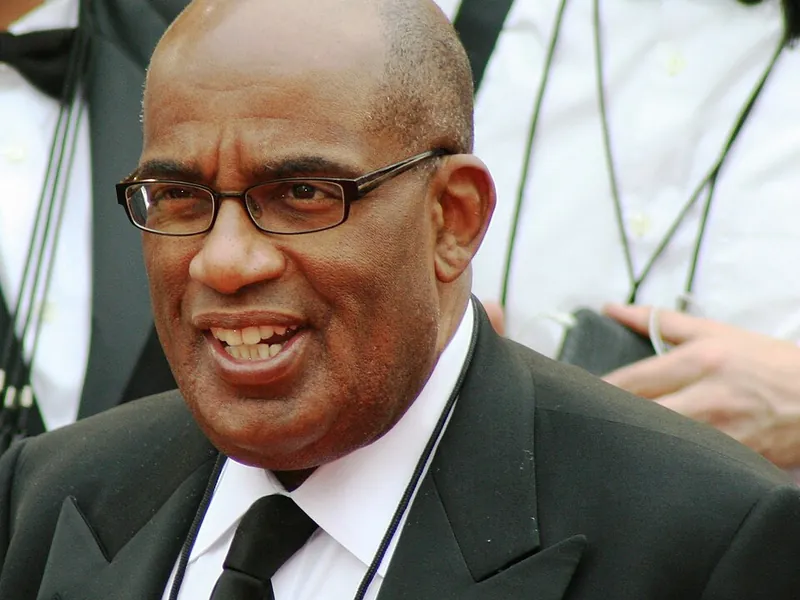 Al Roker and gastric bypass: twenty years of talking about it honestlyAl Roker had gastric bypass surgery in March 2002 and has talked about it for 20 years. His words, how the operation works and what recovery involves.
 Did Graham Elliot have weight-loss surgery? Yes, and he did it for his familyChef Graham Elliot had weight-loss surgery in 2013, saying it was what he needed to do for his family. His words, the operation and recovery.
 Did Randy Jackson have gastric bypass surgery? Yes, and he still talks about maintaining itRandy Jackson had gastric bypass surgery in 2003 and lost 114 pounds. His own words, how the operation works today and what recovery involves.
 Remi Bader and her weight-loss surgery: what she actually saidRemi Bader said in 2023 she had weight-loss surgery removing 80% of her stomach and lost 140 lbs. What she said, how the operation works, and recovery.
 Did Rex Ryan have weight-loss surgery? Yes, and he says it has been greatRex Ryan had Lap-Band surgery in March 2010 and lost over 100 pounds. His own words, how weight-loss surgery works today and what recovery involves.
 Fern Britton and her gastric band: “I did it for me”Fern Britton said in 2008 that she had a gastric band fitted two years earlier. Her words, how weight-loss surgery has changed and what it involves now.
What patients write after this operation. Reviews are translated from the original language.
Irina, 26
For a long time I doubted whether to go ahead with surgery, but after the consultation I felt much calmer. Andrey Georgievich explained in detail how gastric bypass is done, what to expect after the operation and how recovery would go. I especially liked that they talked to me calmly and without pressure. I am now gradually getting used to my new way of life and I am very glad I took this step.
Bariatric surgery
Doctor: Andrey G. Ugay
Angelina, 22
For me the hardest part was deciding to have the operation. At the consultation Ruslan Sergeyevich answered all my questions in detail and explained the specifics of sleeve gastrectomy and recovery. After the operation I always understood what I was doing and why. Thank you to the doctor and the whole team for their attentiveness.
Bariatric surgery
Doctor: Ruslan S. Menzulin
Anna, 31
For a very long time I tried to deal with my excess weight on my own, but I did not get the result I wanted. After the consultation with Andrey Georgievich I finally understood what to do next. I came through the operation well, and my recovery was supervised by the doctors. It was important for me to feel that I was not left alone after surgery.
Bariatric surgery
Doctor: Andrey G. Ugay
Veronika, 25
Before the operation I had many fears, mostly of the unknown. Ruslan Sergeyevich explained every stage of treatment in detail and answered even the simplest questions. Thanks to that I felt much more confident. I keep following the recommendations and I am gradually seeing the changes I had the operation for.
Bariatric surgery
Doctor: Ruslan S. Menzulin
Valentina, 23
The decision to have bariatric surgery was not easy for me. I worried both about the operation itself and about how my life would change afterwards. At the consultation Andrey Georgievich explained everything in detail, so little by little my fear turned into confidence. What matters most to me now is the result and the chance to treat my health and lifestyle differently.
Bariatric surgery
Doctor: Andrey G. Ugay
Anna, 27
I am very grateful to Ruslan Sergeyevich for his attentiveness. Before the operation I had a huge number of questions, and I got a clear answer to every one of them. After the operation it was also clear which recommendations to follow and how to eat. It was important to me that the doctor stayed in touch and I felt supported at every stage.
Bariatric surgery
Doctor: Ruslan S. Menzulin
Zagazig's position at the crossroads between Cairo, the canal cities and Damietta made it a city of 430,445 whose daily life runs on shops, offices and administrative work more than the surrounding fields. Hours behind desks, short drives, quick meals between appointments: the rhythm accumulates into weight the usual diet wheel no longer moves.
An accountant at the wholesale market spends ten hours daily between ledgers and his phone and leaves work more tired than exerted. His blood pressure climbs, his sugar drifts toward the upper limit, and every new diet collapses at the first overloaded week. His correct question is whether the surgical option fits his situation at all.
That question goes out as a message to coordinators on Telegram or Telegram who reply around the clock, carrying current weight, previous attempts and accompanying conditions. From that material the surgeon gives a genuine opinion: sleeve, bypass, or a different route — and above all, whether surgery is the right tool here in the first place.
The two options rest on different principles: sleeve gastrectomy shrinks the stomach's volume and usually suits those without marked reflux, while bypass combines the smaller volume with rerouting part of the digestive path, studied particularly when reflux, diabetes or similar conditions shift the decision's balance.
Both are performed under general anaesthesia, and the hospital stay stays between one and five days by the method, the patient's condition and the pace of settling. These facts go into the written plan in advance, so the patient knows what awaits him day by day before admission.
The surgeon's role in the first conversation is built on exclusion as much as recommendation: an honest account of why one option after another is ruled out in this patient's history, not a nomination for whatever sounds best. Knowing the reasons for exclusion is the surest marker of the team's quality.
After the operation, the possible amount of food shrinks dramatically, which is why a nutrition support program runs alongside it for twelve full months, rebuilding habits around the new capacity without losing essential elements, through written stages reviewed on fixed dates.
In a city where the family table is a daily event and traditional dishes part of collective memory, no program works if it imagines a patient outside that reality. So the plan discusses the actual local pattern: how dishes are arranged on the same table, what gets served at gatherings, how the patient joins without living on the margins.
Patients treating year one as a continuous program with regular appointments settle into the new pattern with visibly fewer setbacks, and the around-the-clock Telegram or Telegram coordinators keep the thread with the medical team connected between follow-ups, so no difficult week turns into a silent gap.
Physical work generally resumes after about a month and a half, swimming is allowed from around day thirty, and remaining exercise is layered in gradually by the surgeon's plan. An office employee resumes earlier than a warehouse worker, and every case is arranged on its own body and job.
The summer lifts daytime highs to the mid-30s °C by July, and the Delta's humidity amplifies the feeling of heat beyond the number, so regular water and shade become daily necessities through recovery. Not because healing differs in heat, but because a recovering body manages fluids less efficiently under heat and humidity together.
That is why some patients choose the mild winter with its gentler days and cooler nights, where most of the year's modest rain gathers, so the first walking weeks skip the harshest months. In any season, the surgeon's pace for restoring activity outweighs any calendar date.
Bariatric surgery succeeds as a team rather than a lone scalpel: a surgeon for the operation, a dietitian building the twelve-month plan, and a physician tracking blood pressure and sugar, conditions that frequently improve after significant weight loss. Before choosing any establishment, a Zagazig patient may ask who actually forms this team.
Verification starts from the official source: every physician practicing in Egypt is registered with the Egyptian Medical Syndicate (ems.org.eg), which provides an online specialty inquiry, while facilities answer to the Ministry of Health and Population (mohp.gov.eg). For an operation of this scale, matching the surgeon's data through the syndicate is fundamental, not a luxury.
The cost is managed realistically: the Health Insurance Organization covers about 60 percent of the population for essential care through payroll contributions, the 2018 law rebuilds coverage around the family, and whether an obesity case counts as medical necessity depends on the individual diagnosis, so the patient asks his treating physician directly. In practice, most pay personally.
A city living on trade and administration has no single day, and no single return to work either. The office clerk at a government department sits back at his desk earlier than anyone, since the job lifts nothing and stands for no hours, while the warehouse porter who hauls stock boxes waits roughly a month and a half before carrying again. The arranging starts not on discharge day, which runs from one to five days in hospital, but with the first written plan, which maps every trade on its own terms.
Take the city's trades one by one. The schoolteacher stands at the board all day without lifting, so her return comes relatively early with someone carrying the lesson books for the first days. The shopkeeper on the market street hoists display crates every morning and delegates those minutes to an assistant for a month or less, by the surgeon's assessment. The delivery driver sits for hours at the wheel, yet the bending for parcels and repeated climbing are what get postponed. And the woman running a home kitchen business finds seated prep work close to the early walking already encouraged.
One rule governs them all: the surgeon's pace outweighs the calendar. Swimming opens around day thirty, and sport layers back gradually. Any trade resting on physical fitness needs a written substitute plan with colleagues or workers agreed before the date, never after, so the absence stays as short as it must be. And the coordinators on Telegram or Telegram answer around the clock whenever a return date needs fine-tuning, letting our clerk or trader arrange his leave on facts rather than guesses.
The opening stretch belongs to rest, so treat it like an appointment. Arrange the leave that covers the hospital days and the quiet stretch after them before the date itself, and say one clear sentence to the household: these weeks take no projects, no seasonal cleaning, no wedding preparations, no hosting duties. Zagazig houses are sociable places and a warning given early saves twenty conversations at the door. Fix your sleep to a steady hour, because the body does its quiet building at night, and recovery weeks that turn into late television evenings borrow from exactly the account they are meant to fill.
The middle weeks hand work its share, in the lightest form the job allows, while rest keeps the larger half. Shorter days or the calmest desk tasks come first, and anything heavy moves to a colleague in advance. Run errands in the morning hours before the Delta heat peaks, keep the lunch break seated instead of circling the market stalls, and give the evening to a slow walk, not to a second round of visits. Keep the Friday family lunch, the weekly anchor, and treat it as the one social event rather than an appetizer for everything that follows. Rest in these weeks is scheduled, not leftover: it sits in the calendar with a name beside it.
The later weeks return duties one at a time, and the plan stays on paper where the household can see it: weeks across the top, work in one column, rest in another, so everyone defends the same schedule. Anchor the calendar on the follow-up dates and keep the day around each one light. Learn the difference between ordinary tiredness, which a night's sleep repairs, and the exhaustion that keeps returning, which deserves a message the same day to the coordinators on Telegram or Telegram. And even after everything resumes, guard one fully free day a week; a recovery that ends because rest ended is a recovery cut short.
No, the idea is relearning around a new capacity, not prohibition: the dietitian arranges quantities and the order inside the meal so familiar foods stay present in portions suiting the stage. The twelve-month program turns this into a workable daily habit.
The reduced volume changes how fullness registers and makes small amounts sufficient — precisely the operation's working principle. The dietitian explains how to read the new fullness signals and arrange meals around them, instead of leaning on old habits.
Accompanying conditions frequently improve after significant weight loss, which is why a physician on the team tracks them through the first year with gradual medication review. Your specifics are assessed from tests, with realistic explanation rather than absolute promises.
Light desk work usually returns earlier than physical work, which waits about a month and a half, while swimming is allowed from around day thirty. The surgeon sets each level's date at follow-ups, making the return ordinary rather than exceptional.
No, the plan discusses the shared table itself: how dishes are arranged, what gets chosen, what is adjusted in cooking without the rest feeling the shift. The household supports the program as part of it — a line worth raising in the advance plan.
Those dips are common at different points of the first year, and a team holding a plan adjusts the program by what follow-up reveals. Asking in advance how they handle such cases measures their readiness for everything after the operation.
Yes, evaluation begins with the first message covering weight, attempts and accompanying conditions, and tests are arranged on a schedule preceding the operation with a comfortable margin. Suitability and the right procedure type surface early, not at the hospital.
This is the first question deserving an honest answer: surgery is an instrument for a case where other means stopped working, not a fast substitute for commitment. The surgeon who sometimes rules surgery out is the one whose recommendation you can trust.
Light desk work belongs to the earliest returning category, involving no lifting and no long standing, and often resumes ahead of the physical work that waits roughly a month and a half. What is asked is a first-days arrangement putting the heavy files on a colleague, plus keeping the follow-ups where the surgeon fixes each case's final return date.
It postpones nothing; it reshapes the planning. Heavy physical work generally resumes after about a month and a half, and that stretch needs clear coverage, a relative sharing the load or a worker arranged beside you. Ask the surgeon in the advance plan when full loads may return, split duties with your people before the date, and the absence passes organized instead of messy.
Front-load it: the first weeks repay rest more than any later stretch does, and leave spent at the start buys calm that no arrangement afterward replaces. Still keep a small reserve for the return weeks, because a heavy day cut short in time is worth more than a holiday taken months later. The coordinators help lay the dates over the surgeon's plan.
Not an evening collapsed in front of the television. It is a short walk when the evening turns cool, meals at the hours the program sets, a fixed bedtime, and one obligation removed from the day on purpose. Rest that sits in the calendar gets taken; rest left to chance gets eaten by everyone else's requests.
Page medically reviewed by Andrey G. Ugay, lead bariatric surgeon. Review date: .