





























Before
12 months along
2,800 grafts
FUE method
City Medical Centre
0% instalments
from $367/mo
Guidance and a total — $0.
Real patient
Before
12 months along
No scalpel, no sutures — the FUE method. Graft count and forecast gone over and nothing owed — before you decide.
Costs nothing, no surgery booking required
Message our coordinator
Free online consultation · Reply within 15 minutes
Message us on TelegramMessage us on WhatsAppBy messaging us, you agree to our Privacy Policy
results
Genuine people treated at City Medical Centre.
Before
12 months along
2,800 grafts
FUE method

Before
12 months along
3,500 grafts
FUE method

Before
12 months along
2,600 grafts
FUE method

Before
12 months along
3,000 grafts
FUE method

Before
12 months along
2,700 grafts
FUE method

Before
12 months along
3,300 grafts
FUE method

Before
12 months along
2,900 grafts
FUE method

Before
12 months along
2,500 grafts
FUE method

Before
12 months along
3,400 grafts
FUE method

Before
12 months along
2,500 grafts
FUE method

Before
12 months along
3,100 grafts
FUE method

Before
12 months along
3,600 grafts
FUE method

Before
12 months along
4,000 grafts
FUE method

Before
12 months along
3,200 grafts
FUE method

Before
12 months along
3,000 grafts
FUE method

Before
12 months along
3,700 grafts
FUE method

Before
12 months along
2,700 grafts
FUE method

Before
12 months along
3,800 grafts
FUE method

Before
12 months along
3,300 grafts
FUE method

Before
12 months along
2,800 grafts
FUE method

Before
12 months along
2,500 grafts
FUE method

Before
12 months along
3,900 grafts
FUE method

Before
12 months along
3,500 grafts
FUE method

Before
12 months along
3,800 grafts
FUE method

Before
12 months along
2,900 grafts
FUE method

Before
12 months along
3,600 grafts
FUE method

Before
12 months along
2,600 grafts
FUE method

Before
12 months along
2,700 grafts
FUE method

Before
12 months along
3,700 grafts
FUE method

Before
12 months along
3,200 grafts
FUE method

Before
12 months along
3,000 grafts
FUE method

Before
12 months along
2,800 grafts
FUE method

Before
12 months along
4,000 grafts
FUE method

Before
12 months along
3,400 grafts
FUE method

Before
12 months along
2,900 grafts
FUE method

Before
12 months along
3,100 grafts
FUE method

Before
12 months along
2,600 grafts
FUE method

Before
12 months along
3,300 grafts
FUE method

Before
12 months along
3,900 grafts
FUE method

Before
12 months along
3,500 grafts
FUE method

Before
12 months along
2,700 grafts
FUE method

Before
12 months along
3,800 grafts
FUE method

Before
12 months along
3,200 grafts
FUE method

Before
12 months along
3,000 grafts
FUE method

Before
12 months along
2,800 grafts
FUE method

Before
12 months along
3,100 grafts
FUE method

Before
12 months along
3,600 grafts
FUE method
Comparison
Grafts can be transferred by three technologies: classic FUE, suture-free DHI and a combined protocol. Compare implantation technique, tissue trauma and graft survival, and decide with your eyes open.
Classic technique without incisions or stitches

$2,200
$2,700
Graft implantation technique
ForcepsGraft trauma
MinimalA natural growth angle
NaturalGraft survival
98–100%Suitable for
Androgenetic alopeciaSuture-free implantation with a Choi pen

$2,500
$2,900
Graft implantation technique
DHI, a Choi implanterGraft trauma
MinimalA natural growth angle
NaturalGraft survival
98–100%Suitable for
DensificationFUE for extraction, DHI implant

$2,700
$2,900
Graft implantation technique
FUE extraction, DHI implantationGraft trauma
MinimalA natural growth angle
NaturalGraft survival
98–100%Suitable for
Densification for androgenetic alopeciaSurvival and trauma rates are given per method as averages, for guidance: the exact figures depend on the transplant area and the patient's individual features, and the doctor sets them out at the consultation.
Set up an assessment


















about the clinic
Modern equipment and comfortable rooms, care for every patient

We will answer your questions and book a consultation time that suits you
Message us on WhatsApp Make an enquiryIf nothing needs to be operated on, that verdict comes during the consultation, and you part with nothing. Described below are the situations where a transplant genuinely helps.
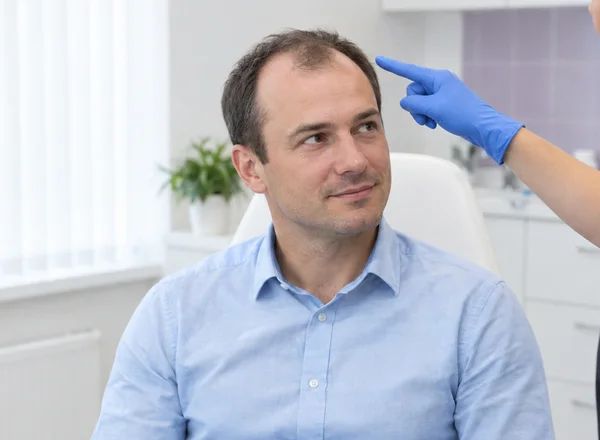

Write to us in Telegram or WhatsApp. Images of where hair has thinned reach a coordinator in a messenger, a doctor reviews them and says if a transplant would help. Free, and nothing gets booked.

services
No figure is named until the grafts have been counted; this happens at the free consultation and is recorded in the contract.
suture-free graft extraction

$2,200$2,700
or $367/mo — 0% instalments for 6 months
Nail down the priceimplantation without channels

$2,500$2,900
or $417/mo — 0% instalments for 6 months
Nail down the pricecombined technique

$2,700$2,900
or $450/mo — 0% instalments for 6 months
Nail down the price| The opening review | Free |
|---|---|
| Eyebrow transplant, FUE | |
| Beard transplant, FUEinstalments $467/mo | |
| Hair trichopigmentation | |
| PRP therapy / session | $200 |
all included
From readiness for surgery to 12 months of follow-up.
The day of surgery adds nothing to the price.
two extra areas
Different zone, same procedure: grafts taken from the back of the head, the FUE method, no other difference.
FUE method, free of cuts or stitches

The donor area at the back of the head supplies the grafts, moved through micro-punctures of about 1 mm — no scars are left. The doctor goes over the shape with you before the operation, taking your facial features into account. Transplanted hair grows for life and the beard is styled as usual.
$2,800$3,000
or $467/mo — 0% instalments for 6 months
Nail down the priceFUE method, free of cuts or stitches

Everything starts with a drawing: the surgeon marks out the brow at the first consultation, reference images are considered one against another, and the proportions of your face steer the design. Hairs are set in at the angle they should follow, so nothing looks drawn on. Brows that quit growing under years with the tweezers respond well too.
$1,600$1,700
an outpatient op, the area numbed beforehand
Nail down the priceThe donor zone is looked at, the grafts are added up and a realistic result is spelled out. At that consultation you also learn the cost, which the contract then fixes.

Message our coordinator
Free online consultation · Reply within 15 minutes
Message us on TelegramMessage us on WhatsAppBy messaging us, you agree to our Privacy Policy
Process
From consultation to going home — all in one day

Everything opens with a consultation. The doctor describes both FUE and DHI, deals with your questions, and checks the state of the donor area.

The date gets reserved through a deposit payment, made either by card at the clinic or online, with the full terms laid out in a medical services contract.

Laboratory work precedes the surgery, and the clinic sees to it that you have the list and know what to do.

Local anaesthesia is the method used here, making the whole operation painless.

This step collects grafts from the donor zone — the back of the head or the temples — using a scarless technique.

This is where the grafts are implanted into the affected, balding area.
This step supports fast healing, with the clinic providing all the necessary items and full instructions.

Crusts thin out and vanish, swelling flattens, the skin repairs

A normal stage. Only the hairs fall, the follicles stay in place

Growth is underway and the difference can be seen

The hair grows denser, the main volume and contour are visible

The look is complete: full volume, a natural edge

Free, ahead of surgery, with no commitment.
Set up an assessmentdoctors

Hair transplant doctor, trichologist, surgeon
10 years in practice

Dermatovenereologist, trichologist, surgeon
11 years of experience

Plastic surgeon
9 years of experience

Plastic surgeon
9 years of experience

Assistant
9 years of experience
A careful look at the donor zone, a graft calculation and a clear statement of the outcome.
Set up an assessmentcoordinators
A single coordinator handles your case from the very first question until recovery is complete.

Your personal manager
Stays in touch from the first step to recovery
Will sort your papers and book you the slot
Your personal manager
Stays in touch from the first step to recovery
Will sort your papers and book you the slot

Your personal manager
Stays in touch from the first step to recovery
Will sort your papers and book you the slot
Your personal manager
Stays in touch from the first step to recovery
Will sort your papers and book you the slot













We will answer your questions and book a consultation time that suits you
Message us on WhatsApp Make an enquiryStandard questions

Yes, they are accepted. City Medical Centre works with people from places large and small, and the case is discussed online before a decision.
Prices start at $2,200 (≈ SOS 1,300,000) for FUE, $2,500 (≈ SOS 1,450,000) for DHI, and $2,700 (≈ SOS 1,550,000) for the combined method. Your final price is set after a free graft count and locked into the contract.
It occupies a single day and patients then head home.
There is no pain; the area is numbed with local anaesthesia.
FUE means tweezer-based, incision-free graft harvesting. DHI means channel-free implantation with a Choi pen. Combined DHI+FUE uses FUE for harvesting and the DHI pen for implanting.
A doctor settles the amount at a consultation you do not pay for, judging by the donor area available.
Reckon on 0–10 days of healing and a normal shed at 2–4 weeks. Hair returns from 3–4 months, becomes visibly dense at 6–9 months, and 12–18 months is where it ends.
A lifetime guarantee of hair growth is included, confirmed in your contract.
A medical licence, and care provided to the standards and clinical guidelines
per Ministry of Health.

Papers proving the qualifications behind every operation
Go through the papersAKC POMOSHCH LLC
our clinic's legal entity
1057746096924
OGRN
7728536872
INN
It is a one-day matter for a patient in Boorama. FUE and DHI are done without any cut and without a single stitch, with local anaesthesia doing all the work, so nothing about it resembles major surgery.
Getting an answer in Boorama takes no appointment at all: the online conversation is free of charge, the doctor reviews pictures of the thinning area and tells you whether a transplant helps. The clinic works 24/7.
Timeline after surgery: healing 0-10 days, shedding of the transplanted hairs 2-4 weeks and it is normal, growth 3-4 months, density 6-9, final result 12-18. A personal coordinator tracks it all by photo with check-ups at 1, 3, 6, 9 and 12 months, and the contract gives a lifetime growth guarantee.
Prices are in US dollars; the amount in brackets is an approximate conversion to SOS at the rate of 02.10.2026. The final price is fixed in your contract.
By messaging us, you agree to our Privacy Policy
What patients write after this operation. Reviews are translated from the original language.
Andrey M.
I had the operation a month ago. Before and after surgery they were always in touch and helped with questions about my tests. The operation itself went wonderfully, the staff are polite and masters of their craft, you feel you are in safe hands. I am recovering now, and they answer all my questions. I am happy and I recommend them!
DHI hair transplant
Pavel Sinitsyn
The best clinic of all the ones I was choosing from. No regrets at all! The result is simply amazing, I am thrilled. I recommend it to everyone: these people do great work and make people happy. Once again, a huge thank you to everyone. Roman, the head of the clinic, is the best: he was personally in touch with me and looked after my recovery. Thank you for making my dream come true.
FUE hair transplant
Maria Akopyan
I thought about an eyebrow transplant for a long time and finally went for it. At first I was afraid the result would look unnatural, but when I saw my new eyebrows I was delighted! They came out full and in harmony with my face. I can hardly believe that now I just wash my face and go, I have never felt so free. For anyone tired of constant make-up, a transplant is a real lifesaver!
Eyebrow transplant (FUE)
Alexander M.
I really wanted a thick beard, but I had problems with it. I tried every home remedy and minoxidil, and nothing helped. After a long search for the best clinic I settled on this one. Thank you so much for the service, I liked everything and now I am happy! I had the beard transplant 10 months ago and I am very pleased with the result. By the way, the music in the clinic was great, as far as I remember. A friend of mine has already come to you for a transplant on my advice and was also happy with the result. I wish you every success!
Beard transplant (FUE)
Vladimir Z.
I went to the clinic to see a trichologist and had a hair transplant. I really liked the doctor's approach, and all the recommendations helped. I want to point out that nobody tries to sell you extra services: they tell you things as they are, and if some treatment is not needed, they do not push it. Cosy and clean.
DHI hair transplant
Artem Popov
This may sound obvious, but a head of hair really changes everything in your life. You feel much more confident and go through life like a winner. And it is all thanks to the doctor at this clinic and to the staff who take care of their patients. Many thanks to the clinic for a happy life with new hair, for the comfortable conditions and for the professionalism during the hair transplant.
FUE hair transplant
Page medically reviewed by Anastasia A. Kolesnik, hair transplant doctor. Review date: .
Boorama is the largest city of the Awdal region and its commercial seat. According to a 2023 estimate the city had a population of 300,000, with the broader district having a population of 398,609 according to a UN 2014 population estimate. In a city this size, people meet each other constantly: at the market, at school gates, at weddings, in the mosque and at family gatherings. Appearance is noticed, and many men and women quietly start asking what can be done about thinning hair, a receding frontal hair line or a patchy beard.
Hair transplantation by the FUE or DHI method is one of the answers. Grafts are taken from the back of the head, the donor area, and moved through micro-punctures of about 1 mm, so nothing scars over. This text is written for people in Boorama who want to understand the procedure calmly, plan it around their own life and ask the right questions before any decision.
Boorama has a hot semi-arid climate. June is the hottest month, with an average temperature of 24.1 °C, and January is the coolest, at 17.1 °C. Average temperatures vary by only 7 °C through the year, and the gap in rainfall between the driest and wettest month is 110 millimetres. In practice this means there is no truly cold season to hide in, and sun and dust are part of nearly every week of the year.
For the first days after a transplant, sun and dust matter more than the calendar. The treated area and the donor area are healing wounds, and the doctor will tell you how to protect them outdoors. A loose, clean, breathable cover for the head is the usual idea, not a tight cap that rubs the grafts. Avoid sweating heavily, dusty yards and open building work while the skin is closing.
The healing window is described as 0–10 days. In Boorama that is easy to plan around: you stay in the shade, keep the head clean as instructed and let the skin settle before returning to normal outdoor routines.
Because the temperature range in Boorama is modest, you are not forced to wait for a particular month. The better question is which period of your own year is quiet. Many people choose a stretch with few weddings, no exams, no heavy travel for work in the region and no big family obligations in the first 10 days.
June is the warmest month, so if you plan the operation then, expect more discomfort from heat and sweat in the first days. January is cooler and gentler on a healing scalp, but it may overlap with other commitments. Either is workable if you follow the care instructions and keep sun exposure low.
Discuss the date with your coordinator during the online consultation. They will help you fit the first days of healing into your real schedule rather than an ideal one.
Boorama is a commercial centre, so many patients are traders, shop owners, drivers, teachers, health workers and office staff. If your work keeps you outdoors or in contact with dust, plan more rest in the first part of the healing period, which runs 0–10 days. Desk work is easier to return to than a job that means long hours in direct sun.
The city has 52 primary and secondary schools and a total of 15,314 students, which means a large community of teachers, parents and young adults. Students and teachers often ask when they can be seen in public without noticeable redness or scabbing. The honest answer is that the first days show visible healing, so choose a date when a few quieter days are acceptable.
A big point to know early is shedding. Between 2–4 weeks the transplanted hairs let go, as expected. This is a normal stage, not a failure. If you teach, trade or meet clients every day, it helps to know about it beforehand so it does not worry you.
Family life in Boorama is busy with weddings, religious gatherings and shared meals. Many patients want the operation done well before a big event. Given the timeline, it makes sense to count in months, not weeks: 3–4 months for hair to come back, 6–9 months for the hair to look visibly thicker, and 12–18 months for the settled look.
Shared meals and tea gatherings are a key part of social life. They do not conflict with healing, but crowded, hot, dusty events in the first days are better skipped. Ask the doctor about what to avoid eating or drinking, and about any medicines you already take, so that your usual diet is not a surprise during recovery.
If a close family member is getting married soon, tell your coordinator the date. It will help set a realistic order of events: operation first, then the quiet period, then the celebration with hair at a stage you are comfortable with.
Young men in Boorama play football and run in open spaces, and heat plus dust is the usual setting. After a transplant, strenuous sport and heavy sweating should wait until the doctor allows it. Follow the written plan from your clinic, not advice from friends who had a different procedure.
Compression garments and head covers are only relevant if the doctor recommends them. In general terms, the aim is to protect the donor area and the treated area from rubbing, direct sun and dust while the skin heals. Keep the head clean and avoid touching the area with unwashed hands.
Pool or sea water is not part of daily life for most people in Boorama, but if you plan a swim at some point, ask the doctor when it is appropriate. Never decide it on your own in the first weeks.
A good candidate has enough healthy donor hair at the back of the head and realistic expectations. The doctor discusses the shape with you before the operation, taking your facial features into account. For beards, the same logic applies: the density and shape you want are planned together with the doctor.
General reasons for caution include unstable chronic illness, uncontrolled blood pressure or diabetes, skin disease in the scalp, bleeding problems, and active hair loss that has not been assessed. Tell the doctor about every medicine and past operation. Honest answers protect you more than any promise.
Transplanted hair grows for life: trim and style the beard as usual. This applies to the transplanted hairs themselves; hair that was not transplanted can still change with time, and the doctor can explain what that means for you.
Boorama is the commercial seat of the Awdal region and sits near the border with Ethiopia. A trading city like this keeps people in constant contact: customers, suppliers, neighbours and relatives all see each other often. That is one reason questions about hair restoration tend to be practical. People ask how visible the first days will be, how long the shedding stage lasts and when the head will look normal in front of clients and colleagues.
A useful way to answer is to split the plan into two parts. The first part is the short healing period, 0–10 days, when you want quiet days and a clean, protected head. The second part is the long wait for the result: 3–4 months for hair to come back, 6–9 months for visible thickness and 12–18 months for the settled look. Patients who think about both parts from the start are rarely disappointed.
Boorama is known for community organizing and self-help, and the habit of asking relatives and neighbours for advice is strong. This can be a real help, because a family member can drive you, remind you about care instructions and cover your duties for a few days. It can also bring conflicting opinions from people who had a different procedure or no procedure at all.
Take the written plan from your own doctor as the main reference. When a friend's story differs from it, ask your coordinator rather than guessing. We stay with you from pre-op planning to 12 months later, so there is always someone who knows your case.
Choose one trusted person at home who knows your timetable, your medicines and the care steps. That person can help you in the first days, when you should not rub, scratch or expose the treated area to dust.
Good preparation makes the free online consultation more useful. Take clear photos in daylight: the front, both sides, the crown and the back of the head. For a beard, photograph the cheeks, chin and jaw line from several angles. Write down how long the thinning has lasted, whether anyone in your family has it, and which medicines or treatments you use.
Prepare a short list of questions in advance: the planned shape for your face, how many stages the result will have, what to avoid in the first days, when you can return to your work and when sport is allowed. Send everything to a coordinator on Telegram or WhatsApp at any hour, since they are available 24/7.
After the doctor reviews your photos and history, you get an honest view of whether the donor area is suitable. If something speaks against the operation, you hear it before any decision is made.
Boorama is the commercial seat of the Awdal region and lies near the border with Ethiopia. A trading town like this has a lively weekly rhythm, and many people plan their time around market days, deliveries and visits from relatives. Before booking a hair transplant, it helps to write down which days in your own week are the busiest and which are calm.
The first stage of healing runs 0–10 days. During this stretch, choose a calm routine at home: a clean room, limited time outdoors and no heavy lifting or long hours in the dust. If a relative or a colleague can cover your duties for those days, the early recovery becomes much easier.
The later stages need patience, not planning around a calendar. Shedding at 2–4 weeks, regrowth at 3–4 months and visible thickness at 6–9 months arrive on their own schedule. Having a calm workplace conversation in advance saves you from explaining yourself repeatedly.
With a hot semi-arid climate, an average of 24.1 °C in June and 17.1 °C in January, Boorama gives you sunshine nearly all year. For a healing scalp this means one simple rule: keep the head covered and clean when outside, and do not let dust settle on the treated area.
Choose a soft, clean, loose head cover that does not rub the grafts. Wash or change it as often as the doctor advises. If you ride a motorbike or travel on dusty roads, ask the doctor beforehand how to protect the head, because helmets and tight caps can press on healing skin.
Do not use home remedies, oils or herbal pastes on the scalp unless the doctor approves them. In the first days, any new product on the wound can irritate it. Ask your coordinator if you are unsure about something a relative suggests.
In a community where people know each other well, a hair transplant rarely stays private. Some patients prefer to tell only a spouse or a close relative, others speak openly. Decide in advance what you want to share, so the questions of neighbours do not catch you off guard.
A simple explanation works best: you had a medical procedure to restore hair, the head needs rest and protection, and the full result will take a year or more. This answer fits the real timeline of 12–18 months and avoids unrealistic expectations from those around you.
If a family member has doubts, invite them to join the online consultation. Hearing the doctor's explanation about the donor area, the micro-punctures of about 1 mm and the stages of recovery is usually more reassuring than any argument at home.
You start from your own city, online and free of charge. Coordinators are available around the clock (24/7) on Telegram and WhatsApp. You send clear photos of the head or beard, tell the coordinator your medical history, and the doctor assesses the donor area and gives a plan.
We stay with you from pre-op planning to 12 months later. There are check-ups at months 1, 3, 6, 9 and 12, and a coordinator will be on the phone 24/7. If a question comes up in the middle of the night during the first days, you do not have to wait.
One patient wrote after his beard transplant: «But now the result truly makes me very happy) From about the 4th month active, even growth began. The transplanted hair took very well, the beard now looks as natural as possible, no bald patches are left. The beard became much thicker and denser, with the shape I had thought about for a long time.» Experiences differ, but this shows how the stages feel in real life.
Plan in stages: 0–10 days for healing, 2–4 weeks for normal shedding of transplanted hair, 3–4 months for new growth to start, 6–9 months for real density, and 12–18 months for the final result.
Yes, the transplanted hairs let go between 2–4 weeks. This is expected. New hair comes back from about 3–4 months.
Yes. The online consultation is free and you do it from your own city. Coordinators answer on Telegram and WhatsApp around the clock, 24/7.
Grafts are taken from the donor area at the back of the head and moved through micro-punctures of about 1 mm, so nothing scars over. The doctor explains your own donor area during the consultation.
Protect the head from direct sun and dust during the first days. Use the cover the doctor recommends and avoid heavy sweating until you are told it is fine.
Yes. Transplanted hair grows for life: trim and style the beard as usual.
We stay with you from pre-op planning to 12 months later. Check-ups are at months 1, 3, 6, 9 and 12, and a coordinator will be on the phone 24/7.
Ask about the planned shape for your face, the condition of your donor area, how shedding will look, what to avoid in daily life, when sport is allowed and how check-ups are arranged.
Count in months. Hair comes back at 3–4 months, is visibly thicker at 6–9 months and looks settled at 12–18 months. Tell the coordinator your event date so the timing is realistic.
Yes. The consultation is online and free. You send photos and your history to a coordinator on Telegram or WhatsApp, and the doctor reviews them with you.
Send clear daylight photos of the front, sides, crown and back of the head. For a beard, send the cheeks, chin and jaw line from several angles.
A coordinator will be on the phone 24/7, and we stay with you from pre-op planning to 12 months later, with check-ups at months 1, 3, 6, 9 and 12.
In the first days dust and pressure on the head are best avoided. Ask the doctor about helmets and covers before the operation so you can plan your daily movement in Boorama.
It is your choice. A short, honest explanation that you had a medical procedure and need quiet days is usually enough. Keep the first 0–10 days as light as you can.
Yes. Many patients ask a spouse, brother or parent to sit in. Write to a coordinator on Telegram or WhatsApp, available 24/7, to arrange it.

 Forceps
 Minimal


