





























before op
now 12 months on
2,800 grafts
FUE method
City Medical Centre
0% instalments
from $367/mo
A look and a figure — $0.
Our patient
before op
now 12 months on
FUE avoids cutting and sewing altogether. Grafts and a result forecast reckoned up without paying — before you decide.
No bill for it, no surgery booking required
Message our coordinator
Free online consultation · Reply within 15 minutes
Message us on TelegramMessage us on WhatsAppBy messaging us, you agree to our Privacy Policy
results
The people you see are genuine CMC patients.
before op
now 12 months on
2,800 grafts
FUE method

before op
now 12 months on
3,500 grafts
FUE method

before op
now 12 months on
2,600 grafts
FUE method

before op
now 12 months on
3,000 grafts
FUE method

before op
now 12 months on
2,700 grafts
FUE method

before op
now 12 months on
3,300 grafts
FUE method

before op
now 12 months on
2,900 grafts
FUE method

before op
now 12 months on
2,500 grafts
FUE method

before op
now 12 months on
3,400 grafts
FUE method

before op
now 12 months on
2,500 grafts
FUE method

before op
now 12 months on
3,100 grafts
FUE method

before op
now 12 months on
3,600 grafts
FUE method

before op
now 12 months on
4,000 grafts
FUE method

before op
now 12 months on
3,200 grafts
FUE method

before op
now 12 months on
3,000 grafts
FUE method

before op
now 12 months on
3,700 grafts
FUE method

before op
now 12 months on
2,700 grafts
FUE method

before op
now 12 months on
3,800 grafts
FUE method

before op
now 12 months on
3,300 grafts
FUE method

before op
now 12 months on
2,800 grafts
FUE method

before op
now 12 months on
2,500 grafts
FUE method

before op
now 12 months on
3,900 grafts
FUE method

before op
now 12 months on
3,500 grafts
FUE method

before op
now 12 months on
3,800 grafts
FUE method

before op
now 12 months on
2,900 grafts
FUE method

before op
now 12 months on
3,600 grafts
FUE method

before op
now 12 months on
2,600 grafts
FUE method

before op
now 12 months on
2,700 grafts
FUE method

before op
now 12 months on
3,700 grafts
FUE method

before op
now 12 months on
3,200 grafts
FUE method

before op
now 12 months on
3,000 grafts
FUE method

before op
now 12 months on
2,800 grafts
FUE method

before op
now 12 months on
4,000 grafts
FUE method

before op
now 12 months on
3,400 grafts
FUE method

before op
now 12 months on
2,900 grafts
FUE method

before op
now 12 months on
3,100 grafts
FUE method

before op
now 12 months on
2,600 grafts
FUE method

before op
now 12 months on
3,300 grafts
FUE method

before op
now 12 months on
3,900 grafts
FUE method

before op
now 12 months on
3,500 grafts
FUE method

before op
now 12 months on
2,700 grafts
FUE method

before op
now 12 months on
3,800 grafts
FUE method

before op
now 12 months on
3,200 grafts
FUE method

before op
now 12 months on
3,000 grafts
FUE method

before op
now 12 months on
2,800 grafts
FUE method

before op
now 12 months on
3,100 grafts
FUE method

before op
now 12 months on
3,600 grafts
FUE method
Comparison
Three graft transfer technologies are on the table: classic FUE, suture-free DHI and a combined protocol. Implantation technique, tissue trauma and graft survival are what you compare when choosing.
Classic method requiring no cuts or sutures

$2,200
$2,700
Graft implantation technique
ForcepsGraft trauma
MinimalA natural growth angle
NaturalGraft survival
98–100%Suitable for
Androgenetic alopeciaStitch-free implantation with a Choi pen

$2,500
$2,900
Graft implantation technique
Choi implanter, DHI penGraft trauma
MinimalA natural growth angle
NaturalGraft survival
98–100%Suitable for
DensificationFUE for extraction, DHI implant

$2,700
$2,900
Graft implantation technique
Extraction by FUE, DHI implantGraft trauma
MinimalA natural growth angle
NaturalGraft survival
98–100%Suitable for
Androgenetic alopecia and densificationSurvival and trauma figures are averaged per method and given as a guide: the exact numbers follow the transplant area and the patient's individual features, and the doctor clarifies them at the consultation.
Book an appointment


















about the clinic
Attention to each person, pleasant rooms, good equipment

Nothing is left unclear, and the consultation is arranged for a suitable hour
Message us on WhatsApp Submit the formSome cases need no operation at all, and the doctor will state that during the consultation, saving you the expense. Read below about the situations where a transplant genuinely helps.
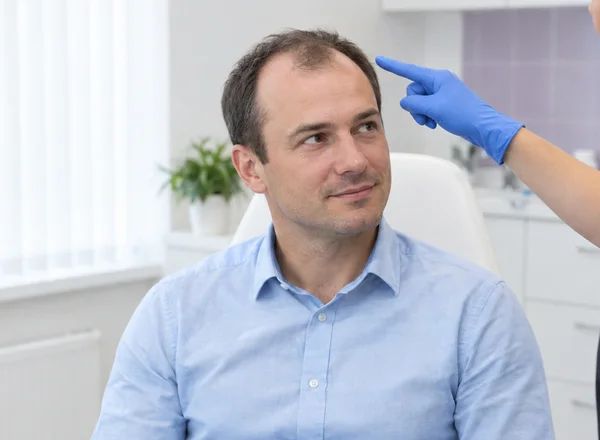

Write to us in Telegram or WhatsApp: photos to the coordinator, then the doctor's answer on whether a transplant helps. Free, no booking.

services
The cost is quoted at the free consultation, after the grafts are counted, and it is fixed in the contract.
suture-free graft extraction

$2,200$2,700
or $367/mo — 0% instalments for 6 months
Hold the cost nowimplantation without channels

$2,500$2,900
or $417/mo — 0% instalments for 6 months
Hold the cost nowcombined technique

$2,700$2,900
or $450/mo — 0% instalments for 6 months
Hold the cost now| The opening review | Free |
|---|---|
| Eyebrow transplant, FUE | |
| Beard transplant, FUEinstalments $467/mo | |
| Hair trichopigmentation | |
| PRP therapy / session | $200 |
all included
From the run-up to surgery to 12 months of follow-up.
Nothing unexpected lands on your bill that day.
two more areas
The same donor grafts from the back of the head, the same FUE method — only the area changes, not just the scalp.
FUE method, no incisions or stitches

Grafts are taken from the donor area at the back of the head and go in through micro-punctures of about 1 mm — no scars are left. The doctor discusses the shape with you ahead of the operation, taking your facial features into account. Transplanted hair grows for life: trim and style the beard as usual.
$2,800$3,000
or $467/mo — 0% instalments for 6 months
Hold the cost nowFUE method, no incisions or stitches

The surgeon draws the brow outline at your first meeting: you leaf through reference images together and the design respects the proportions of your face. Hairs go in at the natural growth angle, so the brows look entirely genuine. Where years of plucking stopped growth, this is the solution.
$1,600$1,700
an operation under local anaesthetic, no stay
Hold the cost nowYou see the state of your donor zone, the number of grafts and the result it allows. The cost follows from the count, is named at the consultation and fixed in writing.

Message our coordinator
Free online consultation · Reply within 15 minutes
Message us on TelegramMessage us on WhatsAppBy messaging us, you agree to our Privacy Policy
Process
From consultation to going home — all in one day

The opening step gives you a clear picture of how DHI and FUE differ in practice, answers to every question, and an assessment of your donor area.

Choosing the date is one thing, holding it is another: that takes a deposit, settled at the clinic by card or online.

You are given the full set of test requirements by the clinic, with directions attached, so preparation is straightforward.

A local anaesthetic is given first, so you feel nothing while the surgeon works.

At this stage, grafts are taken from the donor area — back of the head or temples — through a stitch-free method.

Now the surgeons place the grafts where hair no longer grows.
Fast healing is helped along by the clinic's supplies and the full instructions that accompany them.

The scabs lift away, the swelling retreats, the skin quietly mends

A normal stage. The hairs fall out, the follicles stay in place

Hair appears gradually, the result starts to show

Fullness builds, and the bulk of the volume and the line show up

Full volume and a finished, natural hairline

Free, before any operation with no strings attached.
Book an appointmentdoctors

Hair transplant doctor, trichologist, surgeon
10 years of experience

Dermatovenereologist, trichologist, surgeon
11 years in practice

Plastic surgeon
9 years in practice

Plastic surgeon
9 years in practice

Assistant
9 years in practice
The doctor assesses the donor zone, counts the grafts and describes the outcome.
Book an appointmentcoordinators
There is always one person to write to: your coordinator, from the start through recovery.

Your patient adviser
Will stay beside you before and after surgery
Gets the forms done and the times fixed
Your patient adviser
Will stay beside you before and after surgery
Gets the forms done and the times fixed

Your patient adviser
Will stay beside you before and after surgery
Gets the forms done and the times fixed
Your patient adviser
Will stay beside you before and after surgery
Gets the forms done and the times fixed













Nothing is left unclear, and the consultation is arranged for a suitable hour
Message us on WhatsApp Submit the formQueries we hear

Yes — where a patient lives changes nothing at all, and photographs can be reviewed online before anything else.
Prices start at $2,200 (≈ SOS 1,300,000) for FUE, $2,500 (≈ SOS 1,450,000) for DHI, and $2,700 (≈ SOS 1,550,000) for the combined method. Your final price is set after a free graft count and locked into the contract.
It is finished inside a day, and going home follows at once.
It's a painless procedure, carried out under local anaesthesia.
In FUE, grafts are harvested with a tweezer, no cuts or stitches involved. In DHI, a Choi pen implants grafts without opening channels first. The combined method pairs FUE harvesting with DHI implantation.
The number follows from your donor area, and the doctor works it out at no cost whatsoever.
The scalp settles in 0–10 days. Transplanted hair drops at 2–4 weeks, a normal stage. New shafts emerge at 3–4 months, volume is evident at 6–9 months; 12–18 months completes the picture.
Hair growth is covered by a lifetime guarantee, fixed in the signed contract.
The clinic works under a medical licence, care is given to the standards and clinical guidelines
under Ministry of Health.

Documents confirming what your surgeons are qualified to do
View the detailsAKC POMOSHCH LLC
the firm's legal entity
1057746096924
OGRN
7728536872
INN
For someone living in Mogadishu, the procedure takes a day and no more: FUE and DHI leave no cuts and no stitches and use local anaesthesia. Graft survival is 98-100 %, and a price from $2,200 (≈ SOS 1,300,000) is written into the contract after a free graft count.
Begin with a photo, not with paperwork, if you are in Mogadishu: the free online consultation gives the doctor a view of the thinning area and a graft count. The clinic is in touch 24/7, so the answer is never delayed for long.
Healing lasts 0-10 days, no longer. The transplanted hairs shed at 2-4 weeks, which every patient is warned about because it is normal. New growth shows up at 3-4 months and the mirror confirms it soon after.
Prices are in US dollars; the amount in brackets is an approximate conversion to SOS at the rate of 02.10.2026. The final price is fixed in your contract.
By messaging us, you agree to our Privacy Policy
What patients write after this operation. Reviews are translated from the original language.
Andrey M.
I had the operation a month ago. Before and after surgery they were always in touch and helped with questions about my tests. The operation itself went wonderfully, the staff are polite and masters of their craft, you feel you are in safe hands. I am recovering now, and they answer all my questions. I am happy and I recommend them!
DHI hair transplant
Pavel Sinitsyn
The best clinic of all the ones I was choosing from. No regrets at all! The result is simply amazing, I am thrilled. I recommend it to everyone: these people do great work and make people happy. Once again, a huge thank you to everyone. Roman, the head of the clinic, is the best: he was personally in touch with me and looked after my recovery. Thank you for making my dream come true.
FUE hair transplant
Maria Akopyan
I thought about an eyebrow transplant for a long time and finally went for it. At first I was afraid the result would look unnatural, but when I saw my new eyebrows I was delighted! They came out full and in harmony with my face. I can hardly believe that now I just wash my face and go, I have never felt so free. For anyone tired of constant make-up, a transplant is a real lifesaver!
Eyebrow transplant (FUE)
Alexander M.
I really wanted a thick beard, but I had problems with it. I tried every home remedy and minoxidil, and nothing helped. After a long search for the best clinic I settled on this one. Thank you so much for the service, I liked everything and now I am happy! I had the beard transplant 10 months ago and I am very pleased with the result. By the way, the music in the clinic was great, as far as I remember. A friend of mine has already come to you for a transplant on my advice and was also happy with the result. I wish you every success!
Beard transplant (FUE)
Vladimir Z.
I went to the clinic to see a trichologist and had a hair transplant. I really liked the doctor's approach, and all the recommendations helped. I want to point out that nobody tries to sell you extra services: they tell you things as they are, and if some treatment is not needed, they do not push it. Cosy and clean.
DHI hair transplant
Artem Popov
This may sound obvious, but a head of hair really changes everything in your life. You feel much more confident and go through life like a winner. And it is all thanks to the doctor at this clinic and to the staff who take care of their patients. Many thanks to the clinic for a happy life with new hair, for the comfortable conditions and for the professionalism during the hair transplant.
FUE hair transplant
Page medically reviewed by Anastasia A. Kolesnik, hair transplant doctor. Review date: .
Mogadishu, known locally as Xamar or Hamar, is the capital and most populous city of Somalia, with an estimated urban population of 4,126,815. In a city this large, a hair transplant is rarely a private matter for long. Colleagues, relatives and friends notice a changed hair line or a fuller beard, so it helps to plan the whole process in advance: when you will start, how you will explain the healing weeks, and who will help you at home.
City Medical Centre works with people of Mogadishu through a free online consultation. You do not need to leave the city to start. You send photos of the front, the crown and the back of the head, describe how your hair loss has developed, and a coordinator answers you on Telegram or WhatsApp. Coordinators are available 24/7, so you can write after work, after evening prayers or whenever the household is quiet.
Both FUE and DHI are discussed during the consultation. The doctor explains which technique suits the density you want, the size of the area and the state of your donor area. Nothing is decided in a rush, and you can ask the same question twice.
For a city so close to the equator, Mogadishu has a dry semi-arid climate, yet the coastal location keeps relative humidity high, averaging 79% over the year. The mean temperature is 27 °C, with an average maximum of 30 °C and an average minimum of 24 °C. The city receives about 3,066 hours of sunshine a year, around 8.4 hours of sunlight per day. For a scalp that has just been treated, sun protection is a daily topic, not a seasonal one.
Heat and humidity make sweating likely, and sweat, dust and sunscreen can irritate fresh micro-punctures. The first period of healing is 0–10 days, and during that time the treated area should be kept clean and shielded from direct sun. Ask the doctor which loose, breathable headwear is suitable, because a tight cap can rub the grafts, while bare skin in strong sun is also a problem.
Wind carries sand and fine dust in a coastal city. Keep that in mind when you go out, especially on open streets and near the beach, and follow the washing routine given by the doctor rather than improvising with local remedies.
Mogadishu has an unusual pattern: winter is hotter than summer, and the months from June to August are the coolest and rainiest of the year. Many patients think that cooler weather is gentler on a healing scalp, and for the first period of healing that is a reasonable idea. Lower temperatures mean less sweating under headwear and less discomfort when sleeping.
Rain brings its own questions: wet streets, humidity and the need to keep the scalp from getting soaked in the first stage. Hotter months bring stronger sun exposure and more perspiration. Neither season rules out the operation. What matters is that your schedule is calm, with no major commitments in the weeks when you want to stay quiet.
Discuss your dates with the coordinator. Mention religious observances, family events, exams or business deadlines, so the plan fits your real calendar and not an abstract one.
Mogadishu is a commercial and financial centre with a rapidly rebuilding economy, new businesses and a busy education sector, from the Somali National University to Mogadishu University. Whether you work in an office, run a shop, trade at Bakaara Market or study, the first period after the operation needs planning. Visible redness, small scabs and the shedding phase are normal, and you may prefer to stay out of public view during that time.
The overall timeline is simple: 0–10 days for healing, 2–4 weeks for normal shedding of transplanted hair, 3–4 months for new growth to start, 6–9 months for real density, and 12–18 months for the final result. When you plan your return to work, understand the shedding phase, because it can look like a setback while it is actually expected.
Employers, teachers and clients usually care less about your scalp than you fear. A short, clear explanation, or simply a schedule where you work from home at the start, is enough. Ask the doctor what you may do at your desk or counter and which tasks, such as lifting or dusty work, should wait.
Mogadishu sits on the Indian Ocean, and its sandy beaches, including Gezira Beach, are a natural place for walks and swimming. After a hair transplant, sea water, sun and sand on a healing scalp are not a good combination at the start. Pool and sea are allowed only when the doctor says so, and you should ask for the exact timing at your consultation rather than relying on what friends did.
The same applies to football, running and gym training, which are part of life for many young men in the city. Heavy sweating and strong head movements are best postponed until the doctor confirms the scalp is ready. Gentle walking in the shade is usually fine in the early period, but always check with your coordinator.
When you return to sport, protect the transplanted area from direct sun with suitable headwear. Strong sunshine over many hours is part of the Mogadishu year, so sun care stays useful long after the operation.
The stages are clear. In 2–4 weeks the transplanted hairs let go, as expected. In 3–4 months hair comes back. In 6–9 months the area looks visibly thicker. At 12–18 months you see the settled look. Many people in Mogadishu who come to the consultation worry about the shedding stage, so it is worth repeating: shedding is an expected stage of the process.
One patient described the result of a beard transplant this way: from about the 4th month active, even growth began, the transplanted hair took very well, the beard looks as natural as possible and no bald patches are left. The beard became much thicker and denser, with the shape he had thought about for a long time. This is one person's experience, and individual results differ, but it shows the usual rhythm of growth.
Beard shape matters in a culture where a neat beard is often a point of pride. The doctor discusses the shape with you before the operation, taking your facial features into account.
Grafts are taken from the back of the head, the donor area, and moved through micro-punctures of about 1 mm, so nothing scars over. This matters for men who keep their hair short or use a razor, because a clipped style is common in the city and the donor area should not become noticeable.
Transplanted hair grows for life, so you can trim and style the beard as usual. You can ask about the hair line as well: its height, its shape and the direction of growth, so that the front looks natural for your age and face.
FUE and DHI differ in how the grafts are placed. Ask the surgeon to explain which one is planned for you, why, and what that means for the donor area and the density of the final result.
Good candidates are usually adults with stable hair loss and a healthy donor area. Some conditions make the operation unsuitable or require extra care, such as active scalp disease, blood clotting problems, uncontrolled chronic illness or unrealistic expectations. Be honest about your health, medicines and previous treatments. The doctor decides after reviewing your photos and history, not before.
Prepare a list of questions: How many grafts are realistic for me? Which technique do you recommend, and why? How will you design my hair line or beard shape? What should I use on my scalp in a hot, humid climate? When can I return to work, sport and the sea? What happens if growth is uneven? Write the answers down so your family can support you in following them.
Ask what is likely and what depends on your own hair and healing. A frank doctor will explain the range of outcomes instead of describing one perfect picture.
Mogadishu is a city of eighteen districts, from Hamar-Weyne and Shangani near the old town to Hodan, Wadajir and Daynile. Daily distances and the pace of traffic differ a lot from one district to another, and this affects how you plan the days right after a hair transplant. Choose a quiet stretch in which you do not need to cross the city many times, and ask a relative to handle errands while the scalp settles.
Food culture in the city is built around shared meals and guests. Family gatherings, tea with neighbours and meals with colleagues are frequent, and you may be asked why you are wearing a cap or why you are avoiding a crowded room. Decide beforehand what you will say. A short, calm answer is enough, and there is no need to explain every detail of the procedure.
Sleep matters in the first days of healing. Prepare a clean pillowcase, a place to rest with your head slightly raised and a quiet corner of the house. Ask the coordinator for the exact sleeping and washing instructions for your case, and keep them written on your phone so any member of the family can help you follow them.
Barbershops are a familiar part of life in Mogadishu, and many men visit them every week. Before the operation, ask the doctor how soon after the transplant a barber may touch the head or the face. Do not let anyone use a razor or clippers on the treated area until the doctor allows it, and tell your barber that the donor area at the back of the head needs gentle handling.
Because the grafts are moved through micro-punctures of about 1 mm and nothing scars over, many men feel free to keep a short cut later. Discuss the length you prefer in advance, so the plan for the donor area matches your usual style.
For a beard, bring photos of the shape you have in mind and mention what suits your face and your work. The doctor discusses the shape with you before the operation, taking your facial features into account, and you can adjust the idea together until it feels right.
Mogadishu has about 3,066 hours of sunshine per year and high humidity, and in a coastal city the wind often lifts dust from the roads. During healing, a clean, loose and breathable cover is more useful than a tight one. Wash or replace it often, and never put on a cover that has been lying in a dusty bag.
When you travel through the city by car, minibus or on foot, think about open windows, dust and long waits in the sun. Choose a time of day with softer light, and carry a clean spare cover with you. If sweat collects under the cover, do not scratch; follow the cleaning routine that the doctor gives you.
Later, once the scalp has calmed down, daily sun protection is still sensible for the transplanted area and the skin around it. Ask the doctor which products are suitable and from what moment you may use them.
We stay with you from pre-op planning to 12 months later. A coordinator will be on the phone 24/7, which matters when a question appears late in the evening, during a family gathering or at the start of a busy working week in Mogadishu.
Check-ups are set at months 1, 3, 6, 9 and 12. You send new photos, describe how the hair is growing, and the doctor compares the picture with the expected stage. This keeps the process visible and calm, because the shedding stage and the slow early growth can make anyone doubt the outcome.
Keep your own record: take photos in the same light on the same day each month. In a sunny city this is easy, and it will help you see the real change over 12–18 months.
Yes. The consultation is online and free. You send photos and basic health information on Telegram or WhatsApp, and a coordinator replies. Coordinators are available 24/7.
Both take grafts from the donor area at the back of the head and place them through micro-punctures of about 1 mm. They differ in how the grafts are implanted. The doctor explains which one suits your case during the consultation.
Grafts are taken from the donor area and moved through micro-punctures of about 1 mm, so nothing scars over. This is helpful for men in Mogadishu who keep their hair short.
Shedding happens at 2–4 weeks and is normal. The hairs let go, as expected, and new growth begins at 3–4 months.
Visibly thicker hair appears at 6–9 months. The settled look comes at 12–18 months.
Heat, humidity at about 79% on average, dust and strong sun need attention during the first period of healing, which is 0–10 days. Keep the area clean, protect it from direct sun and follow the doctor's instructions on headwear.
Yes, a beard can be treated, and the doctor discusses the shape with you beforehand, taking your facial features into account. Transplanted hair grows for life, so you can trim and style the beard as usual.
We stay with you from pre-op planning to 12 months later. Check-ups take place at months 1, 3, 6, 9 and 12, and a coordinator is on the phone 24/7.
People with active scalp disease, serious uncontrolled illness or unrealistic expectations may need a different plan or a delay. The doctor decides after reviewing your photos and medical history.
Not until the doctor allows it. Ask the coordinator when the donor area and the transplanted area can be touched, and tell your barber to be gentle with the back of the head.
That is your choice. Many people simply say they need a few quiet weeks. Plan the first days of healing and the shedding stage of 2–4 weeks so that you are comfortable with whatever you decide to share.
Use clean, loose and breathable headwear during the healing period of 0–10 days, avoid dusty places and long exposure to direct sun, and follow the washing routine that the doctor gives you.

 Forceps
 Minimal


