
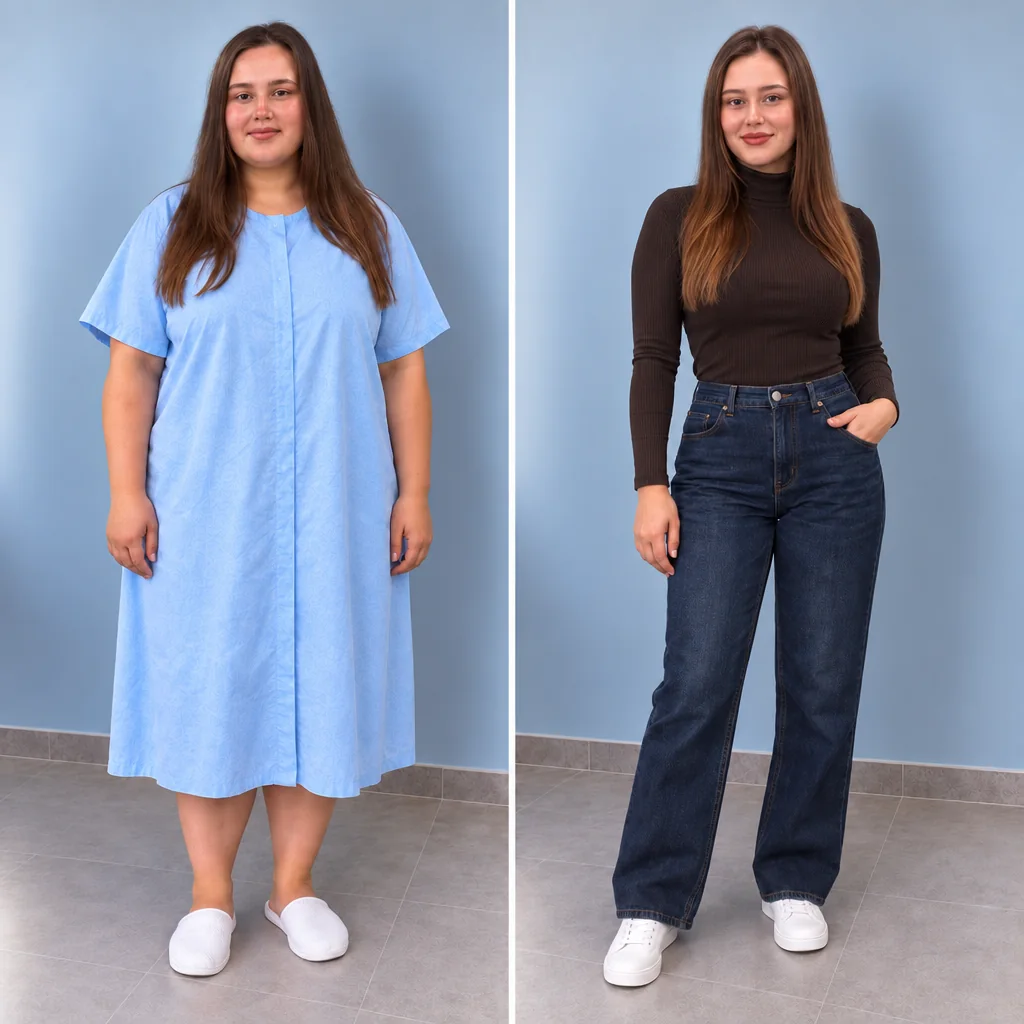
 beforeafter
Irina, 26
Bariatric surgery
Bariatric surgery
$3,600
$4,800 · First consultation — Free
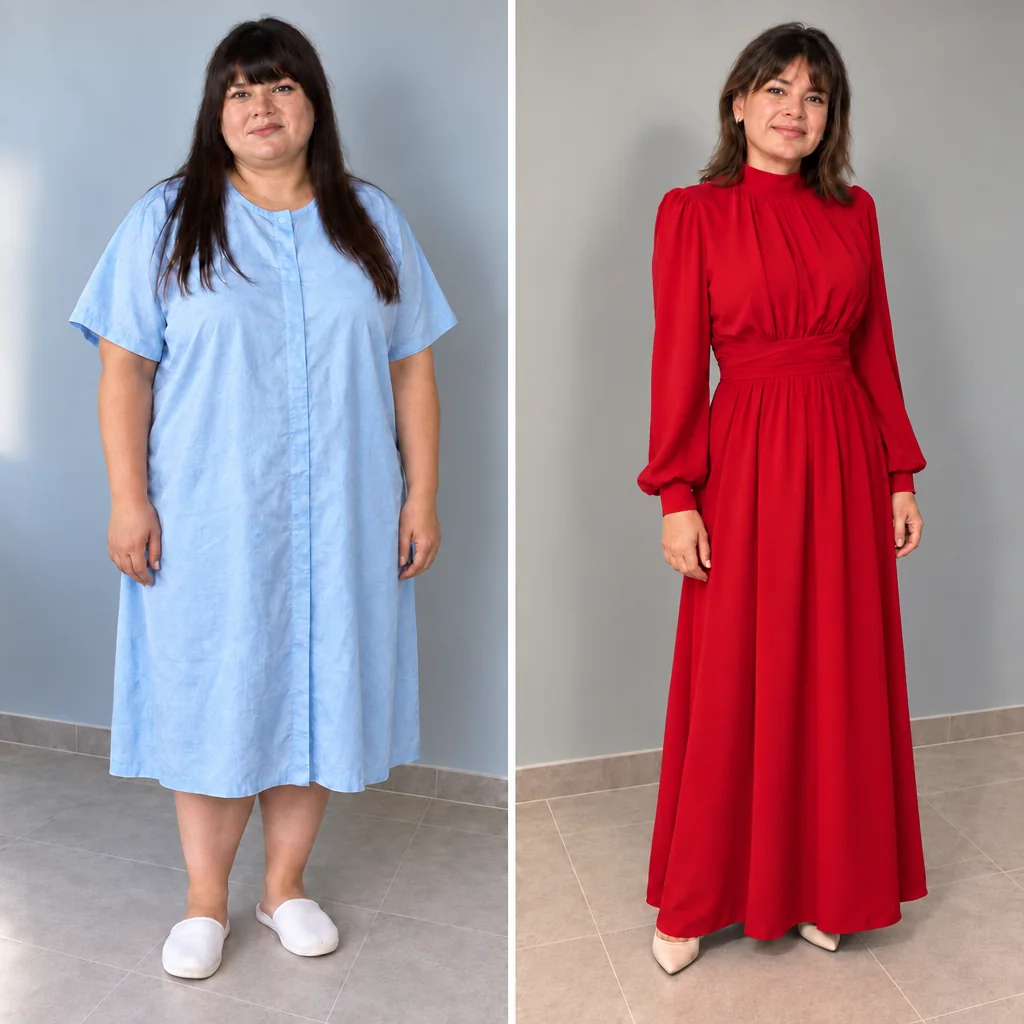 before
after
Message our coordinator
Free online consultation · Reply within 15 minutes
Message us on TelegramMessage us on WhatsAppBy messaging us, you agree to our Privacy Policy
Results
Each result belongs to a real patient of the clinic.
beforeafterBariatric surgery
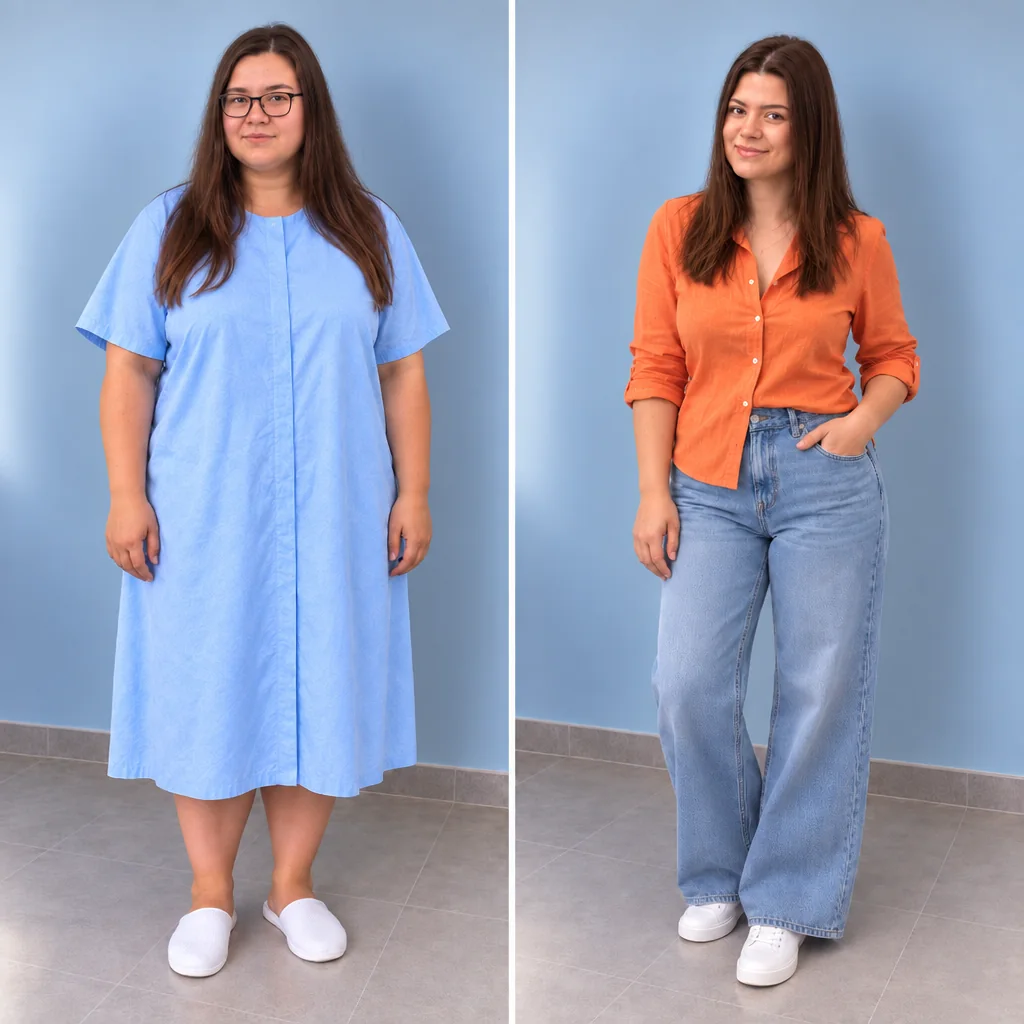 beforeafter
Bariatric surgery
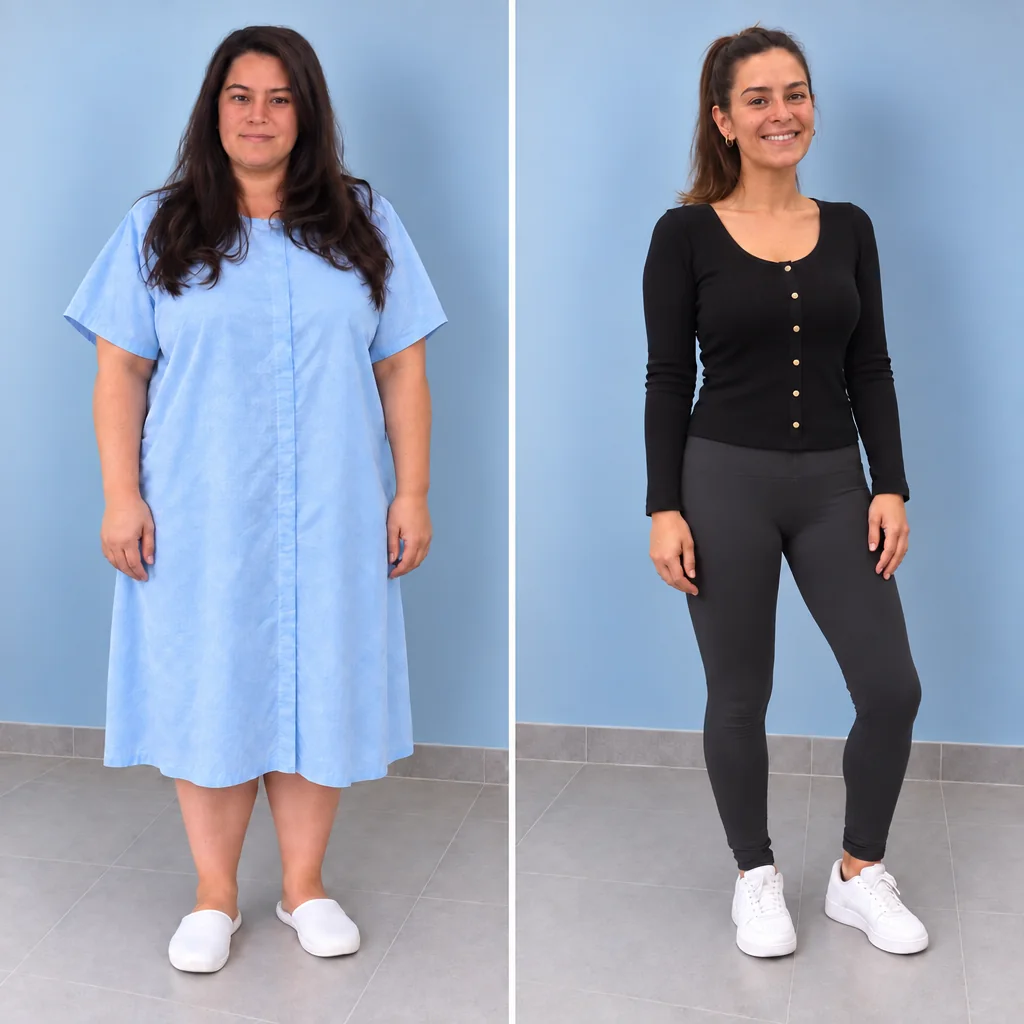 beforeafter
Bariatric surgery
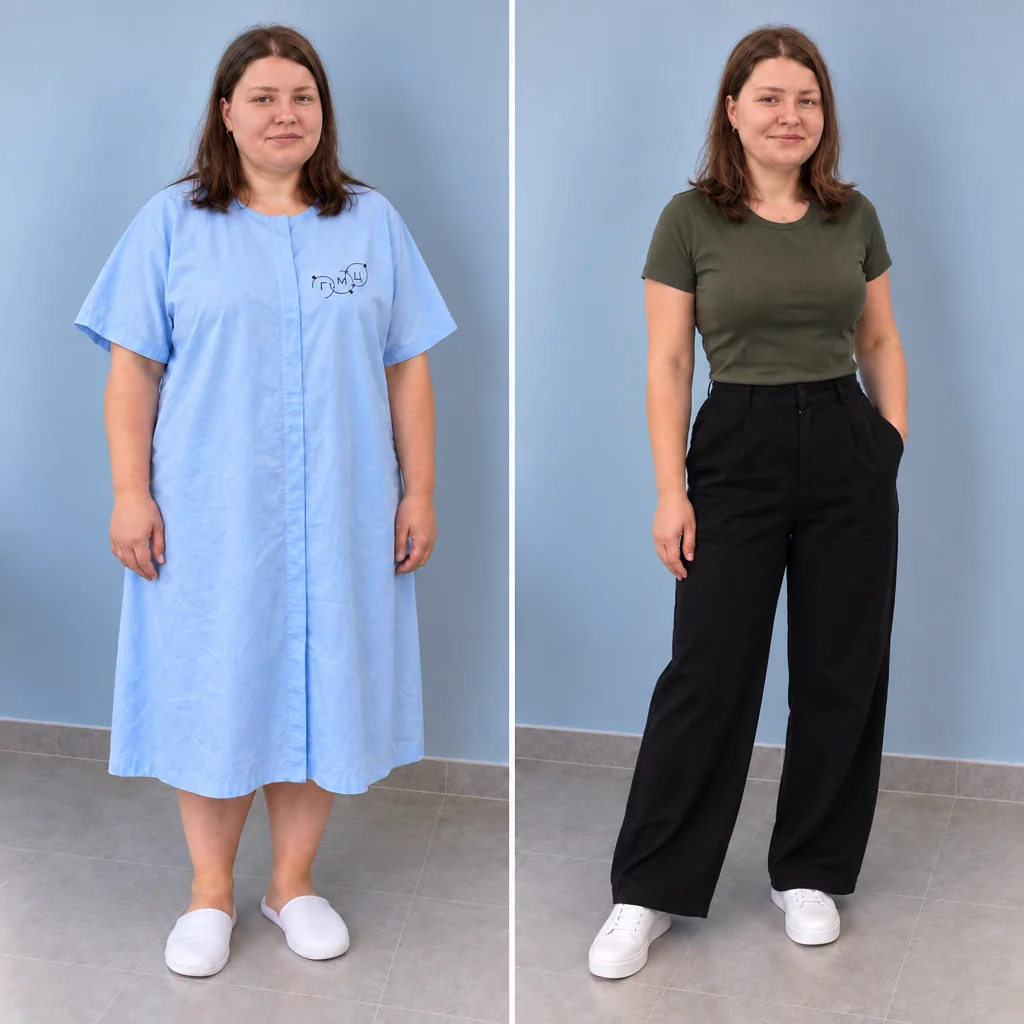 beforeafter
Bariatric surgery
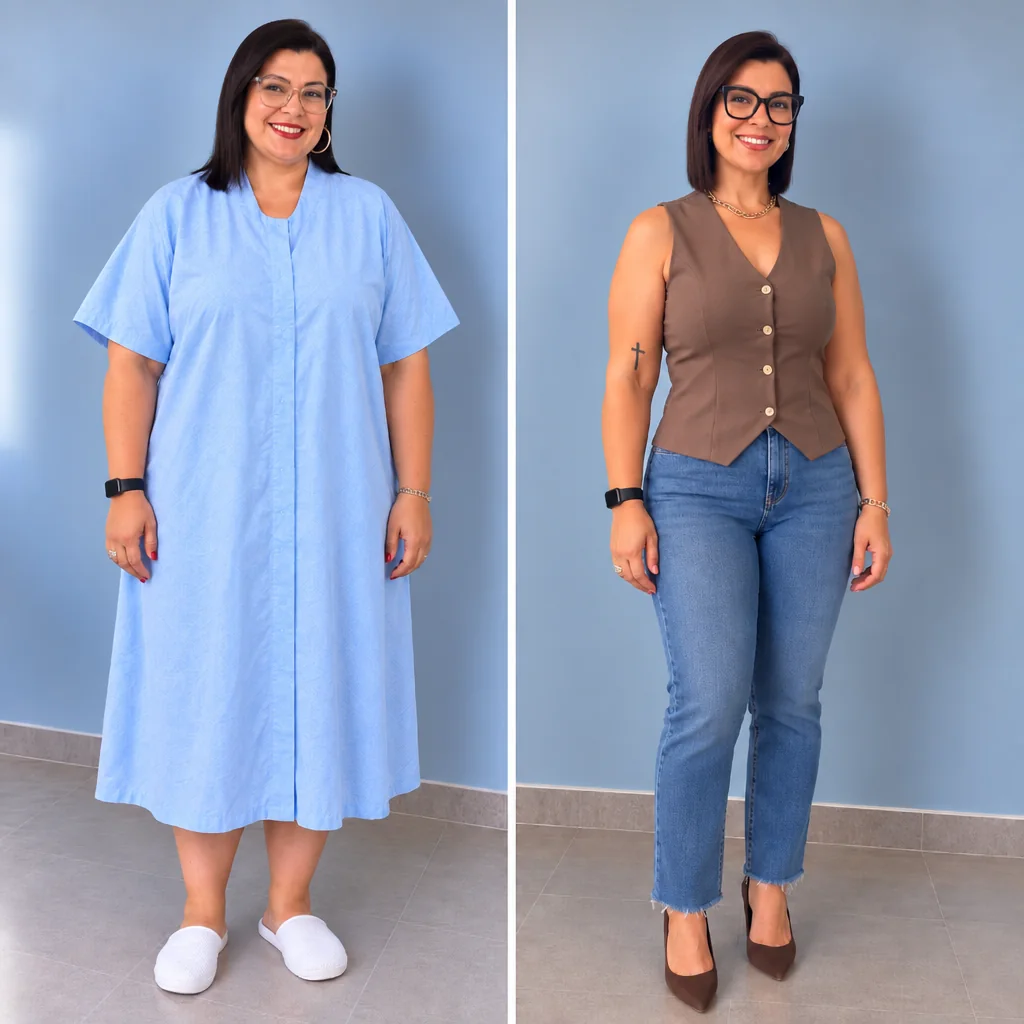 beforeafter
Bariatric surgery
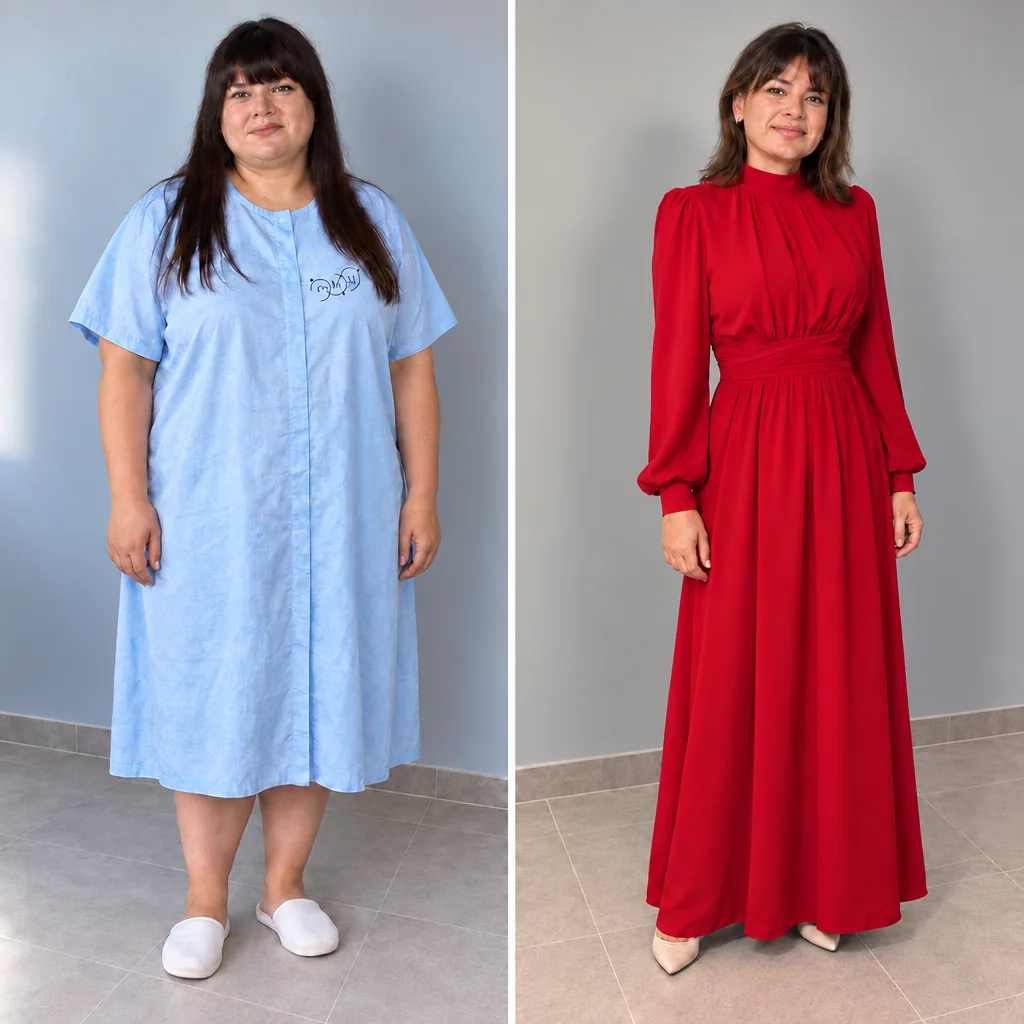 beforeafter
Bariatric surgery
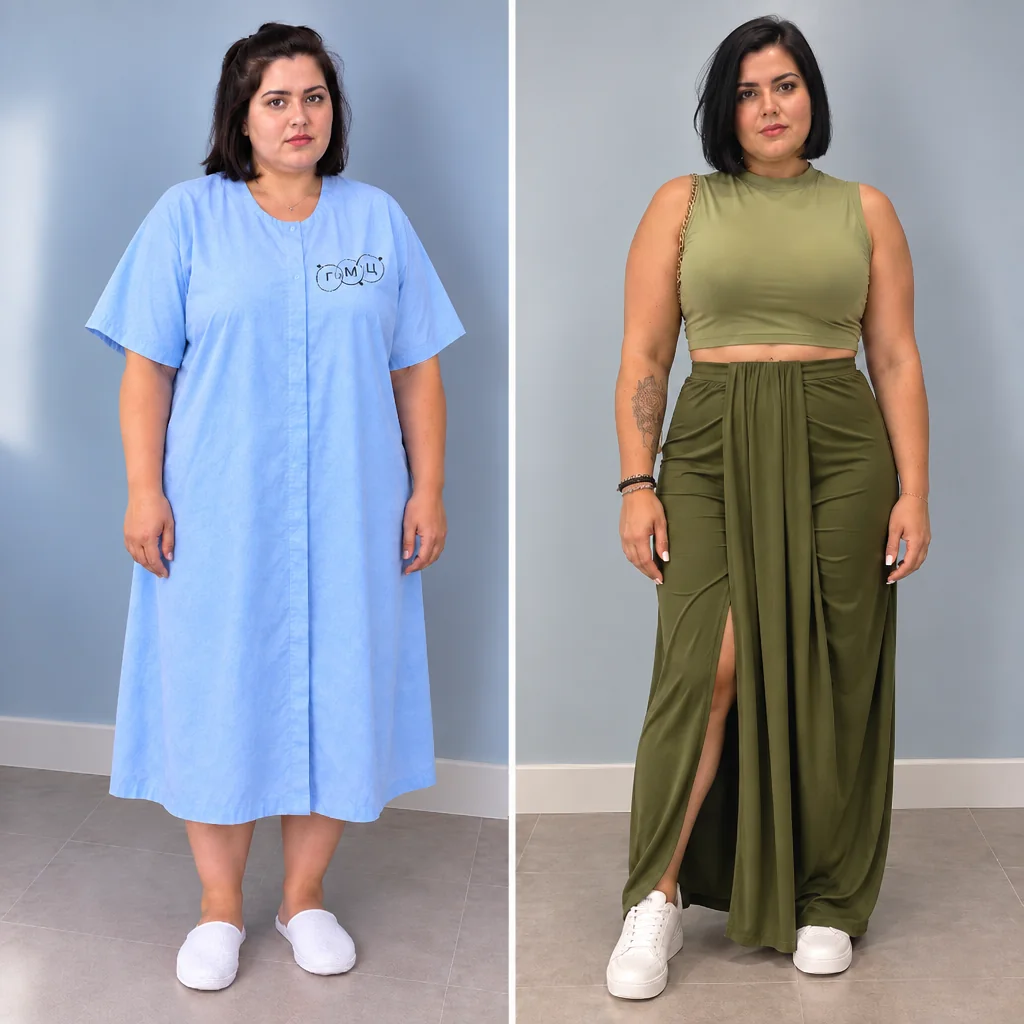 beforeafter
Bariatric surgery
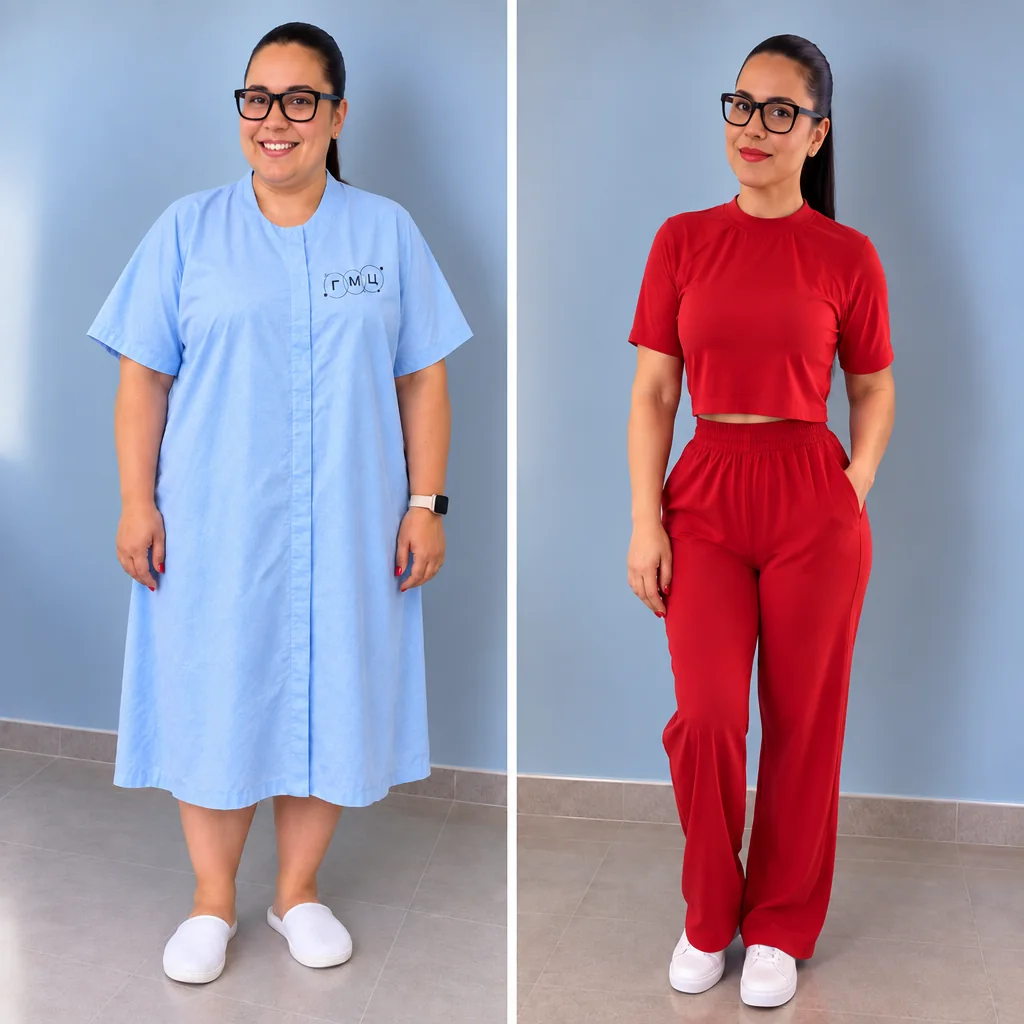 beforeafter
Bariatric surgery
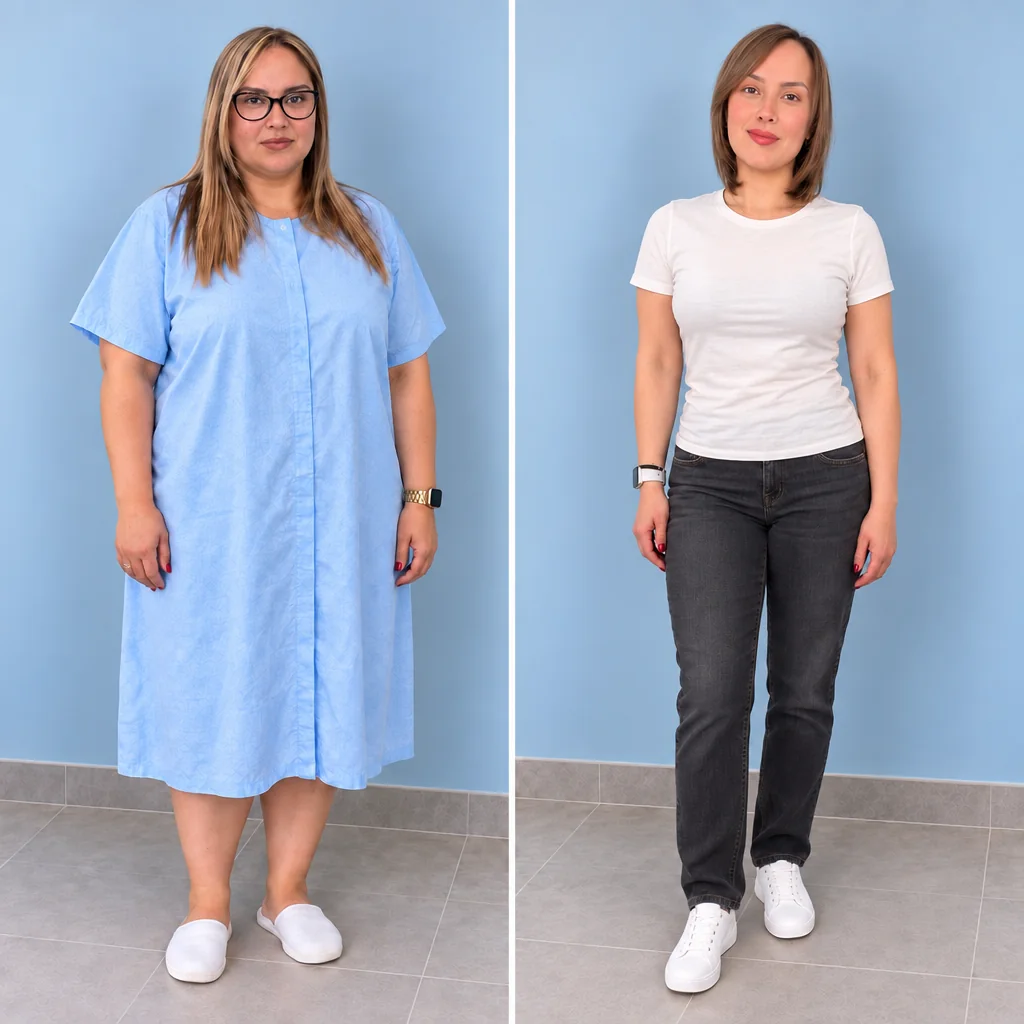 beforeafter
Bariatric surgery
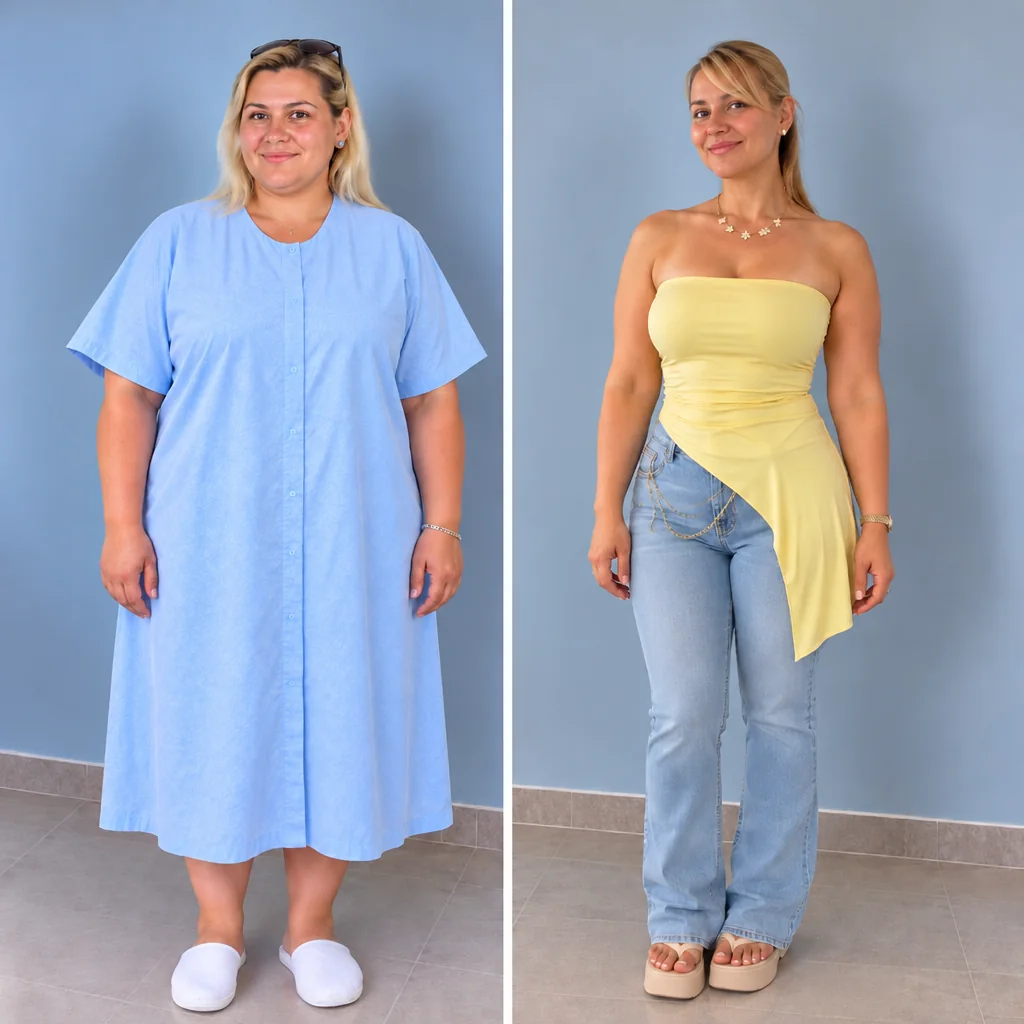 beforeafter
Bariatric surgery
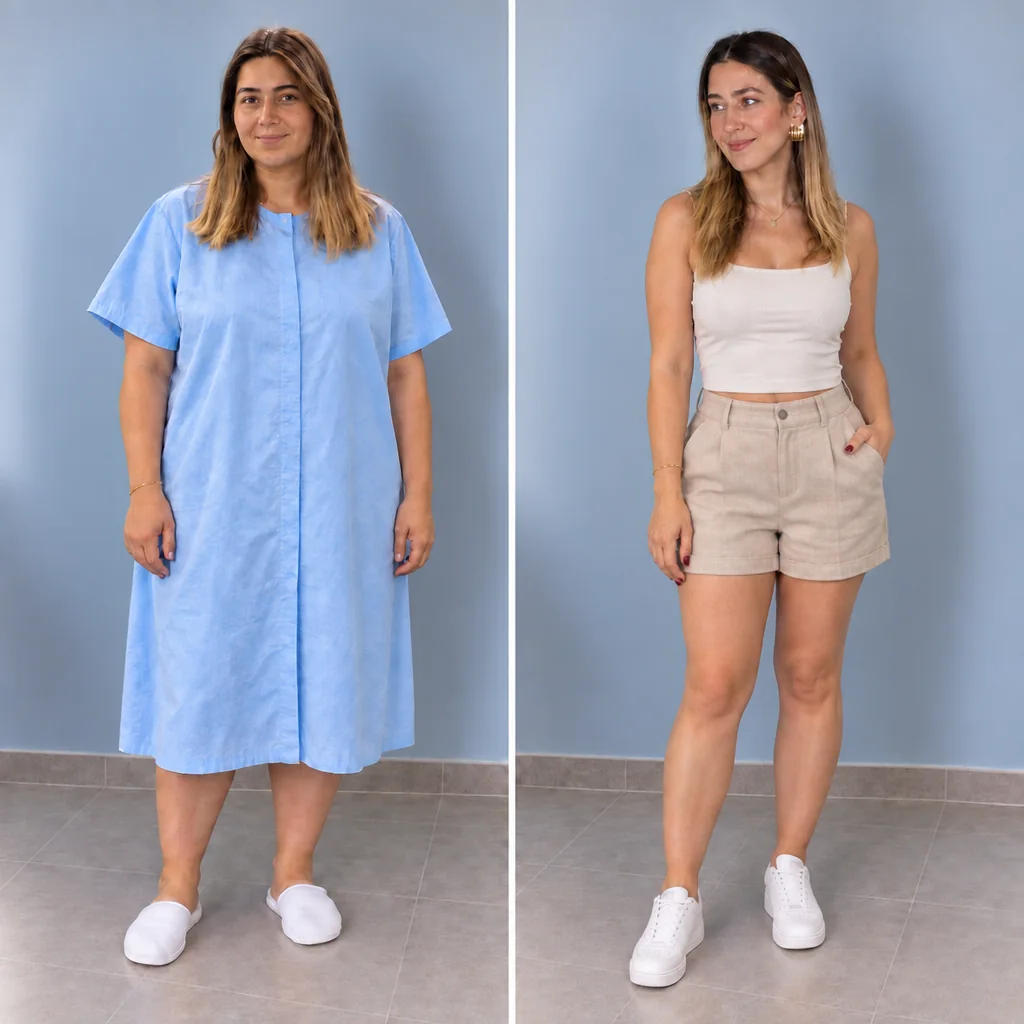 beforeafter
Bariatric surgery
Comparison
Sleeve gastrectomy and gastric bypass are the two main operations we perform. Compare their mechanism, goals and indications to make a confident choice of method.
Less stomach volume
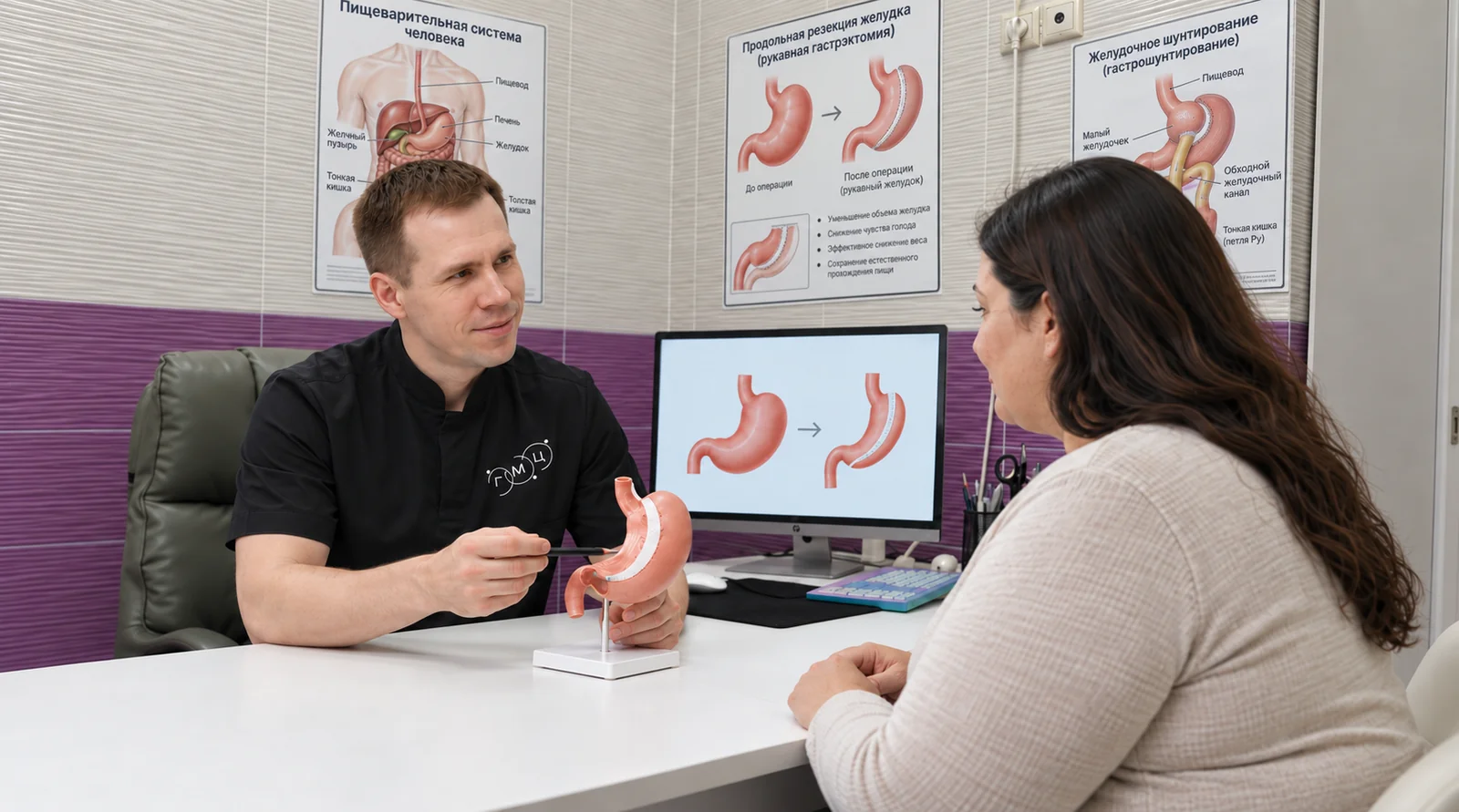
Discounted price
$3,600 $4,800
Stomach volume is reduced and the food path is changed
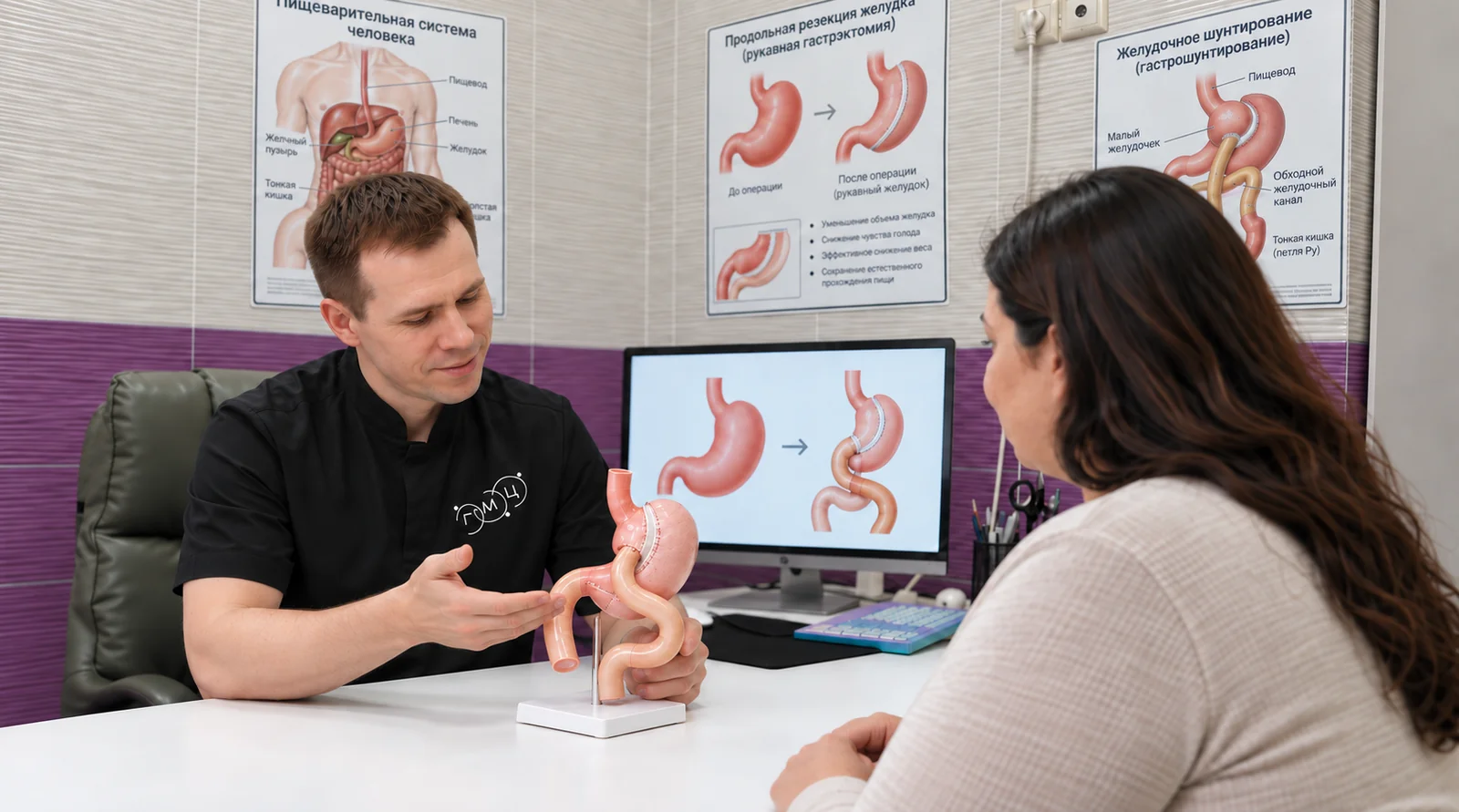
Discounted price
$4,000 $5,200
We show average benefits and recovery times for each method as a guide only: the extent of the operation and recovery are individual, set by your anatomy and features, and confirmed by the surgeon at the consultation.
Book a consultationInside the clinic
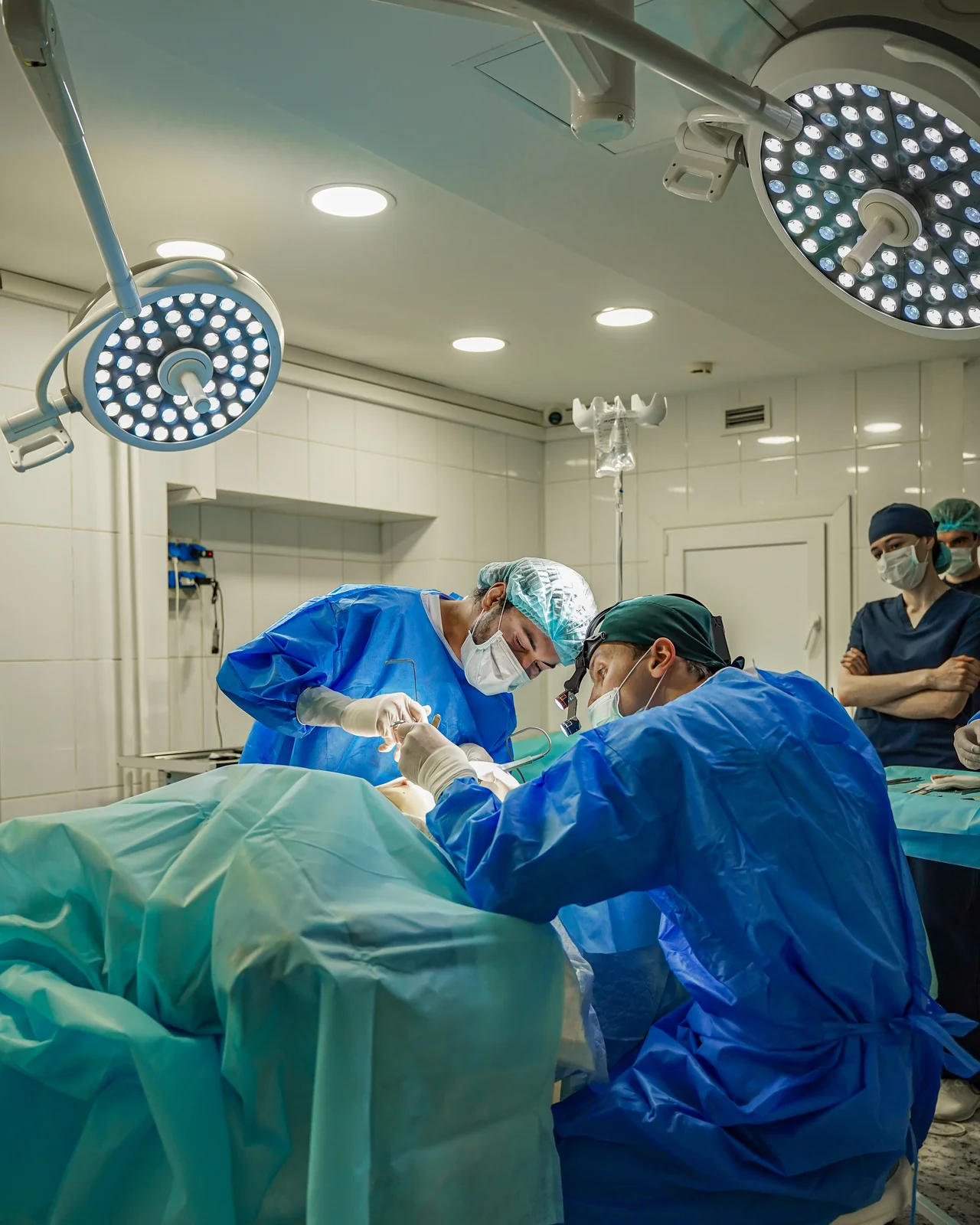
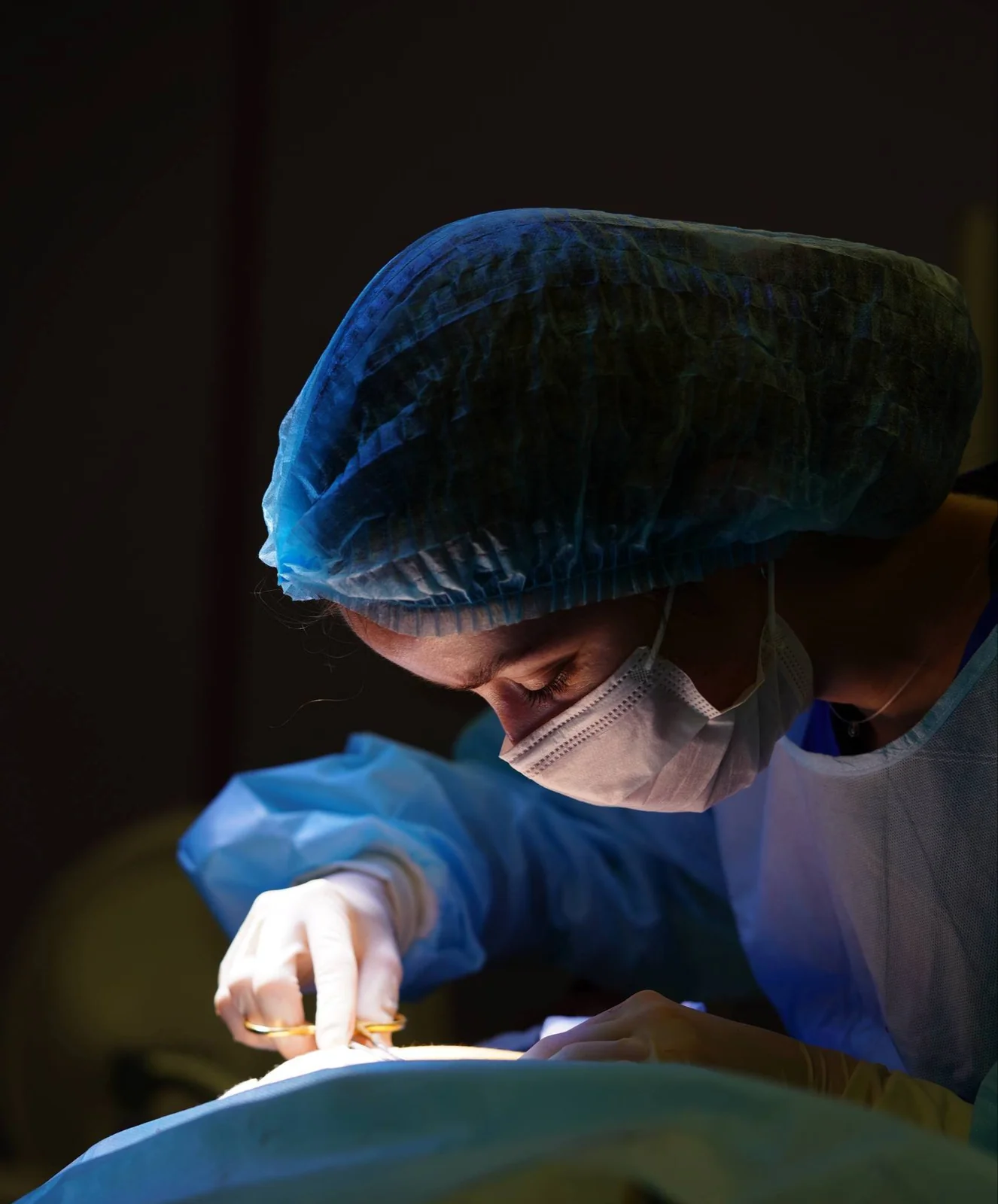
Modern equipment, comfortable rooms and care for every patient
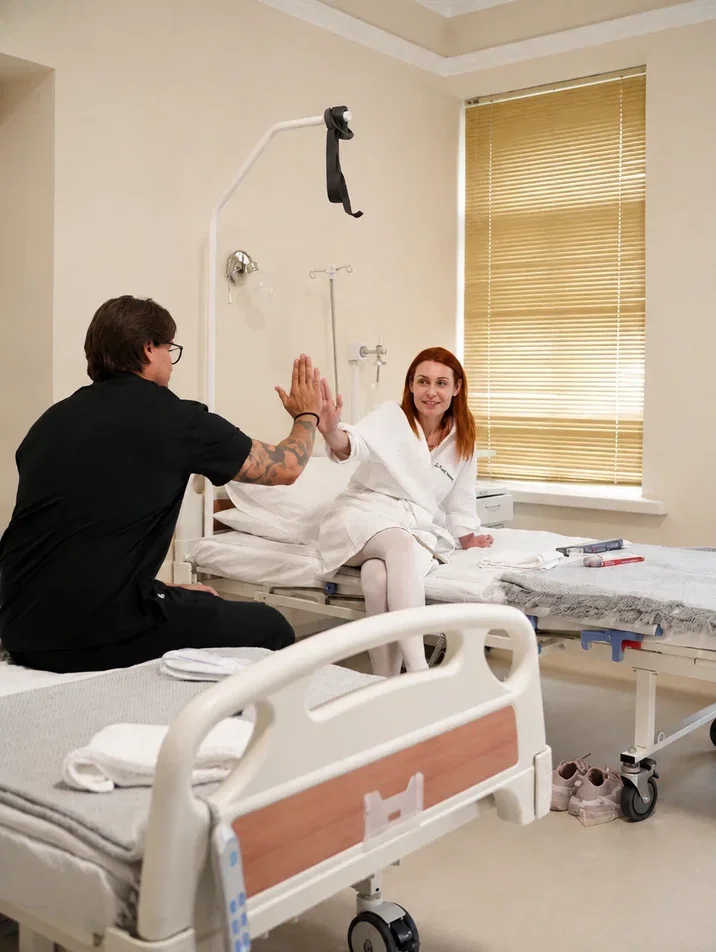
We answer your questions and pick a convenient consultation time
Get a consultationThe choice to operate is made jointly with your surgeon following a consultation and check-up.
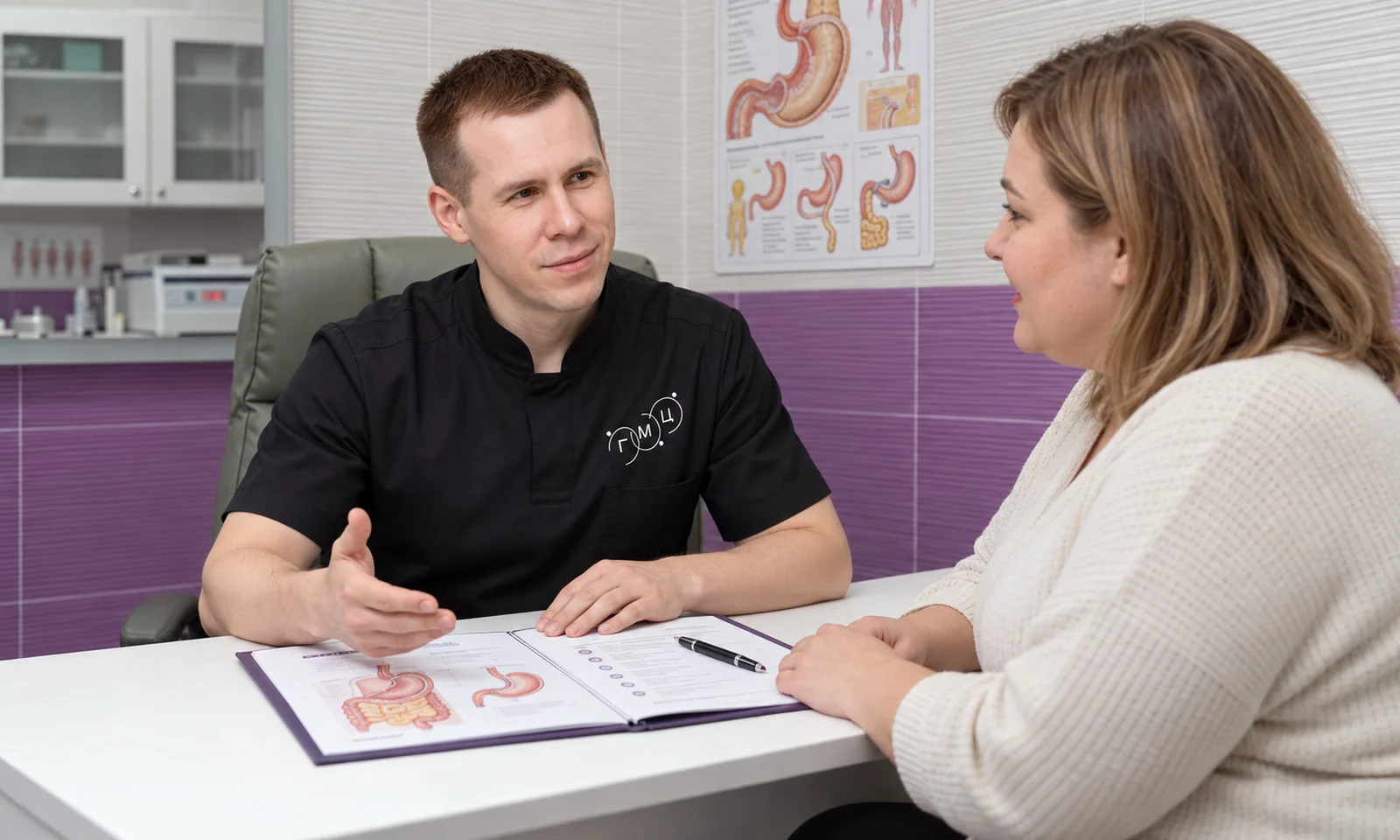
Can't tell which column fits your case?
Message us on Telegram to learn from our coordinator whether bariatric surgery fits your case. The surgeon consultation is free of charge and does not bind you to surgery.
Find out if it suits me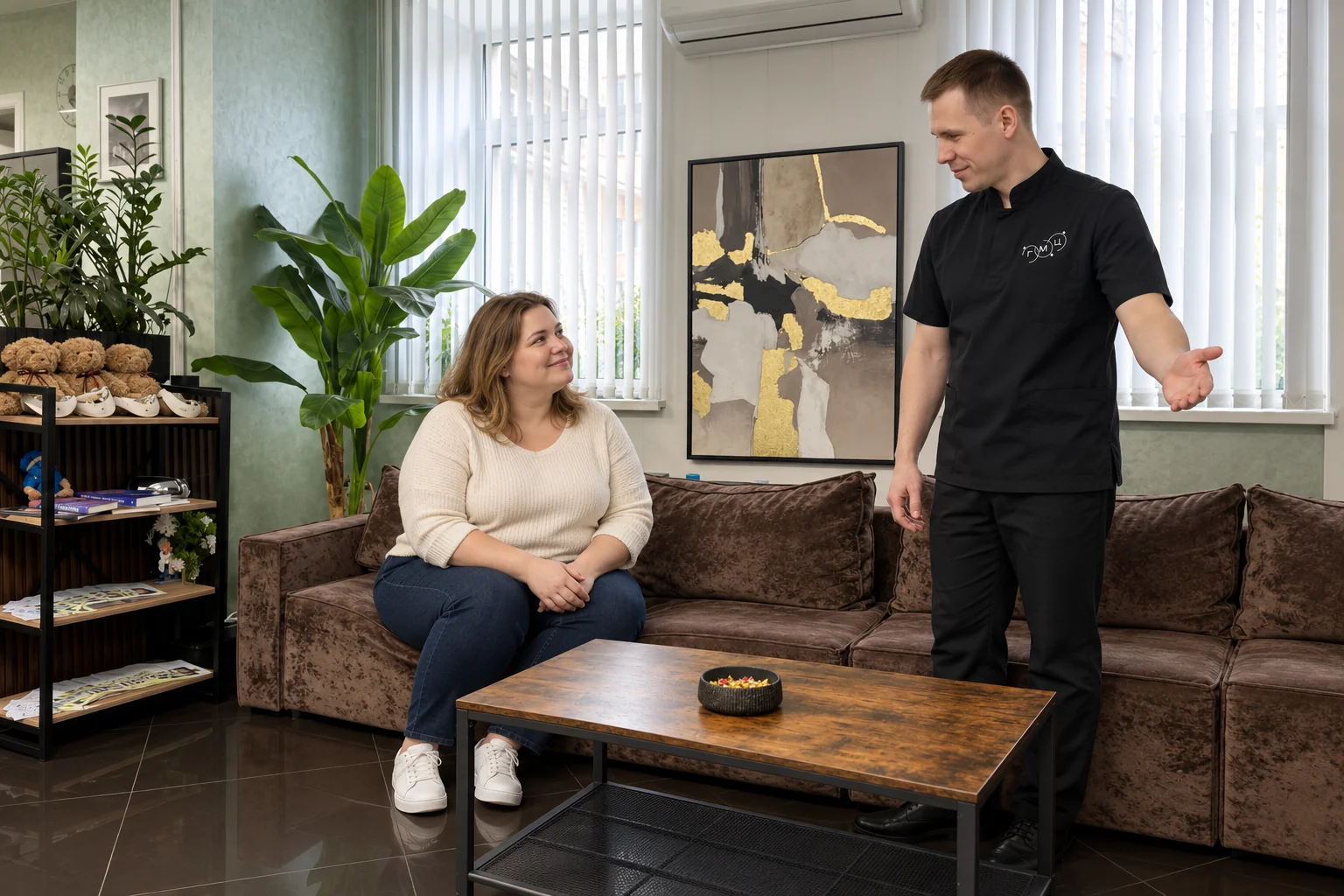
Prices
The cost becomes known at the consultation after your plan is ready, and the contract fixes it.
Discounted price
Less stomach volume
$3,600$4,800
Discounted price
Weight loss and a new route for food
$4,000$5,200
Free
Your treatment plan follows the surgeon's examination

Free
the price of surgery is confirmed
and fixed in your contract
Your goals are discussed, your health is assessed and the right bariatric method is chosen by the doctor. The price is given at the consultation and fixed in the contract.
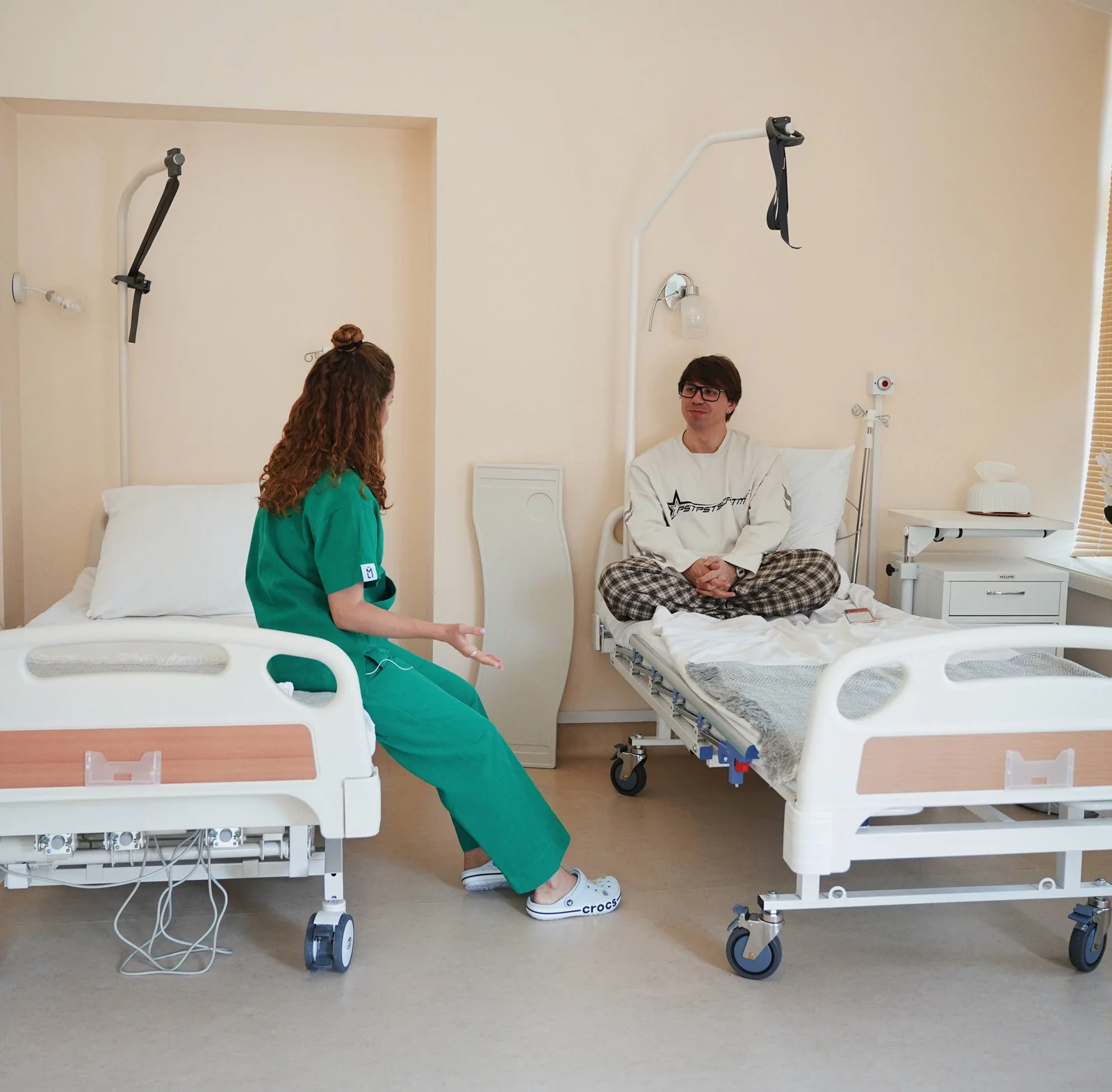
Message our coordinator
Free online consultation · Reply within 15 minutes
Message us on TelegramMessage us on WhatsAppBy messaging us, you agree to our Privacy Policy

price
A complete package: preparation plus 12 months of support, without any extra charges.Everything from surgery preparation
to support over 12 months.
How it goes
An agreed plan of treatment, in-hospital monitoring and a year of support.
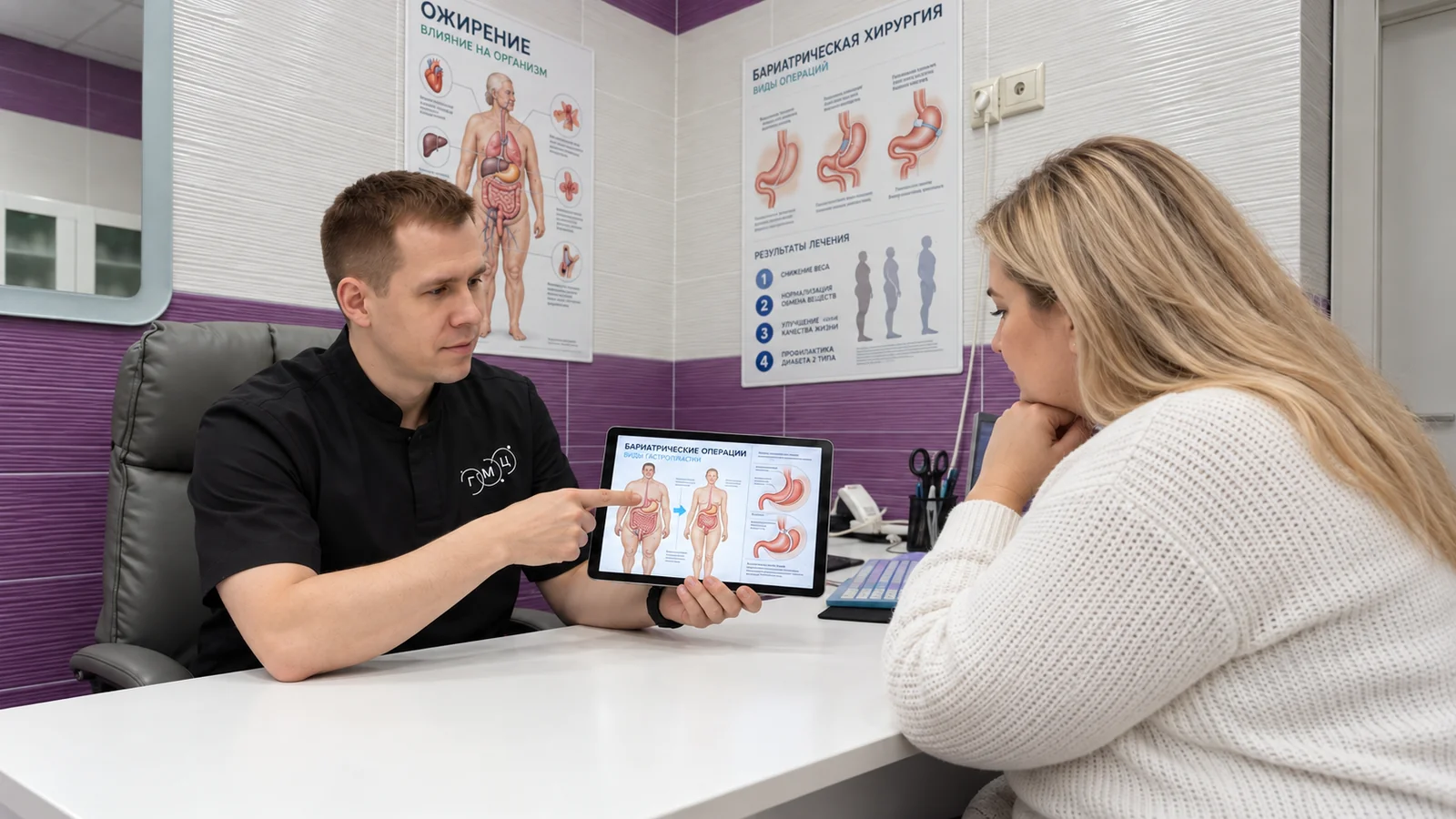 1
The doctor assesses your health, discusses your goals and orders the tests needed to choose the right bariatric surgery method.
2We reserve a surgery date for you: the deposit can be paid by card at the clinic or online by bank transfer. The terms are fixed in the contract for medical services
 3
You see the specialists and have blood and urine tests, an ECG, an ultrasound and a gastroscopy before surgery. The doctor gives you the precise list at the consultation.
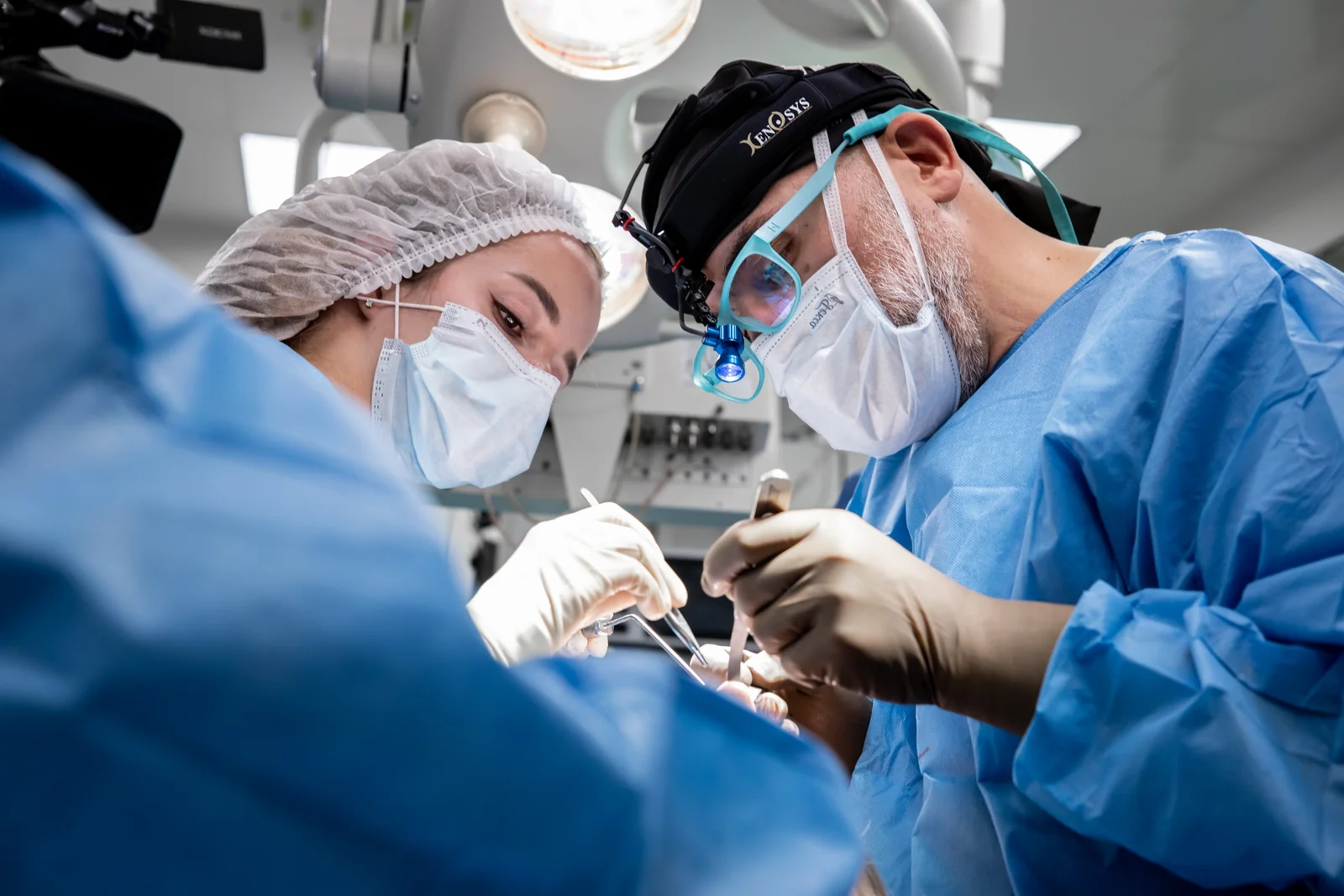 4
The bariatric operation is performed by the surgeon under general anaesthesia with the selected method. Afterwards the patient is monitored by the medical team.
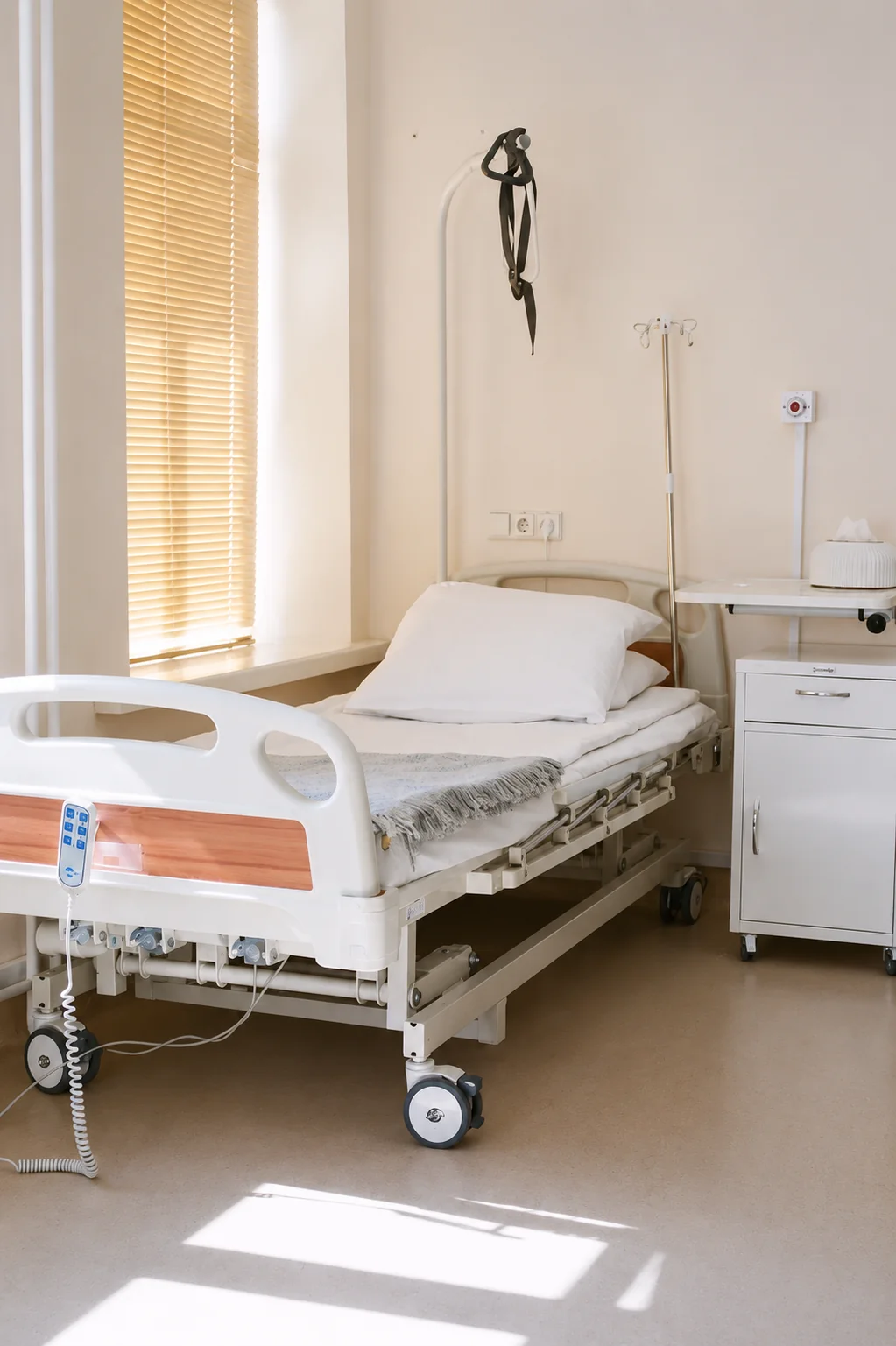 5
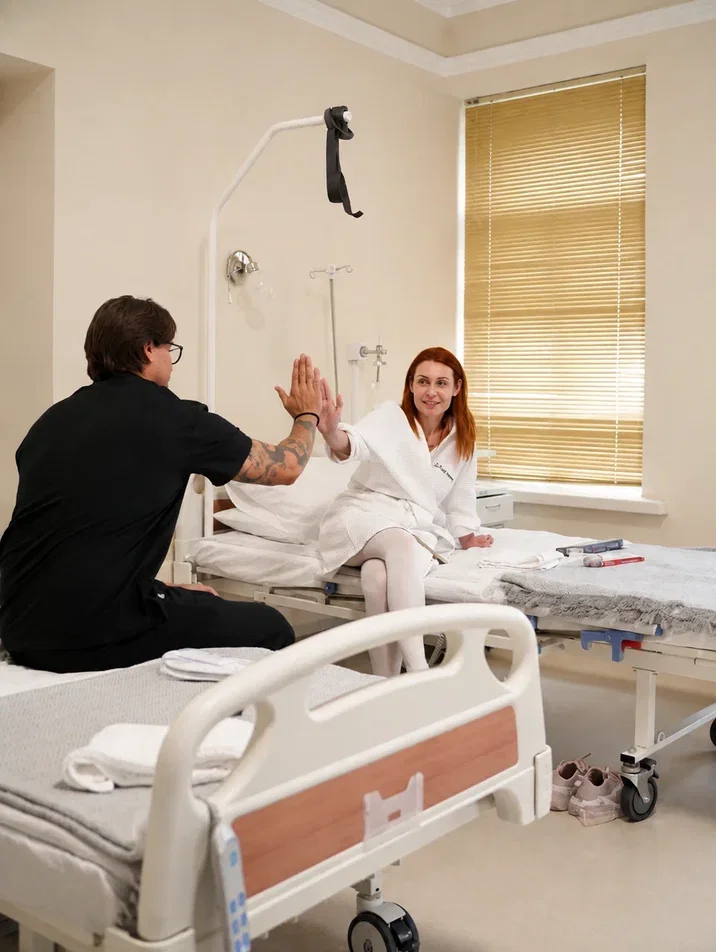
After surgery you remain in hospital under doctors' supervision. Expect a stay of 1–3 to 4–5 days, depending on the complexity of the operation and how you feel.
 6
When you are discharged, you get diet and recovery advice. Regular scheduled check-ups track your well-being, weight and test results, and the clinic team supports you for a year.
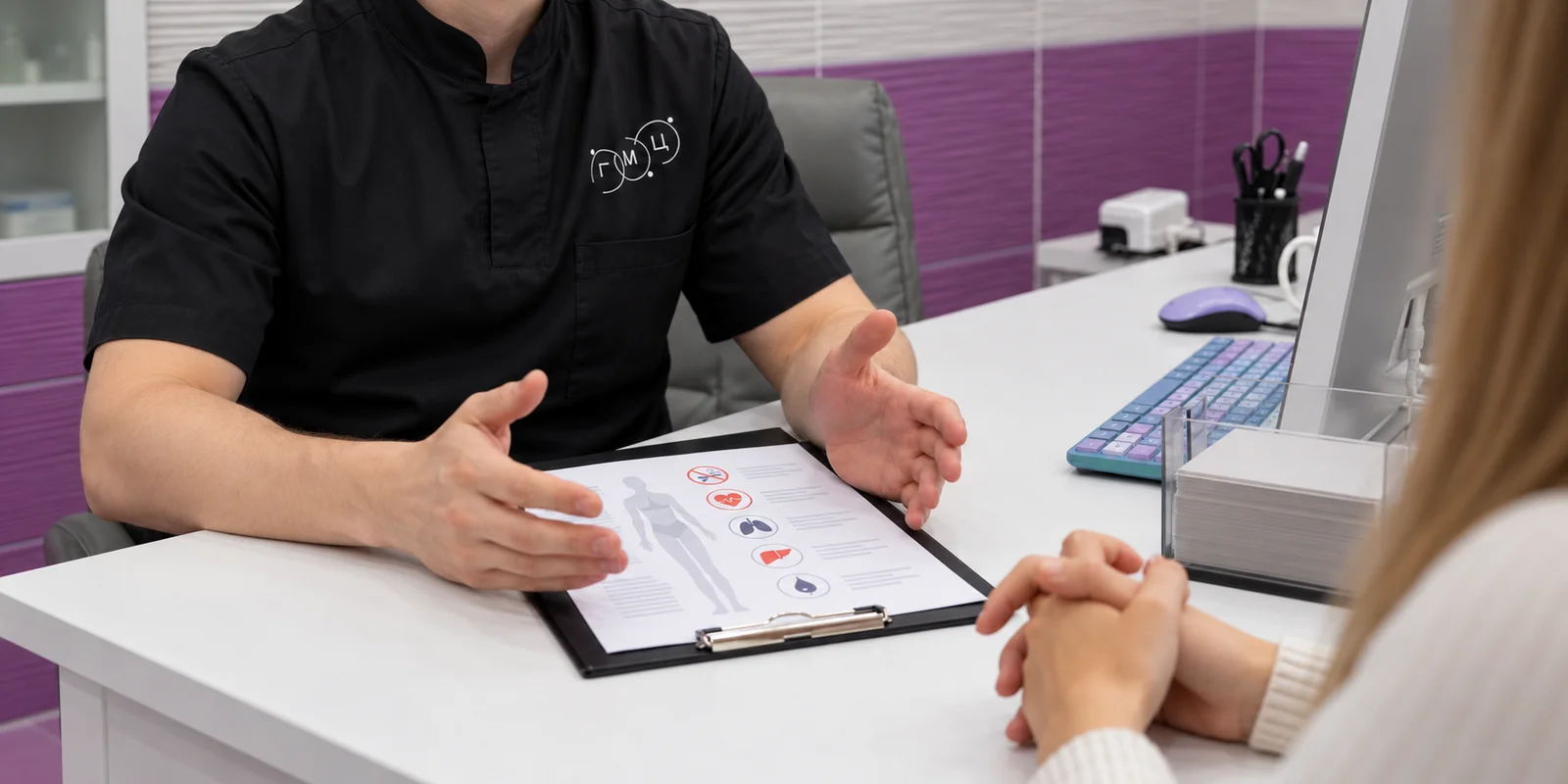
At the consultation the doctor draws up a plan and explains how the surgery will go
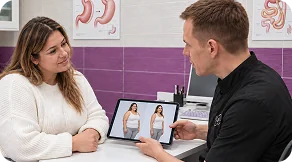
There is no fee for the consultation, is held before surgery and carries no obligation.
Book a consultationDoctors
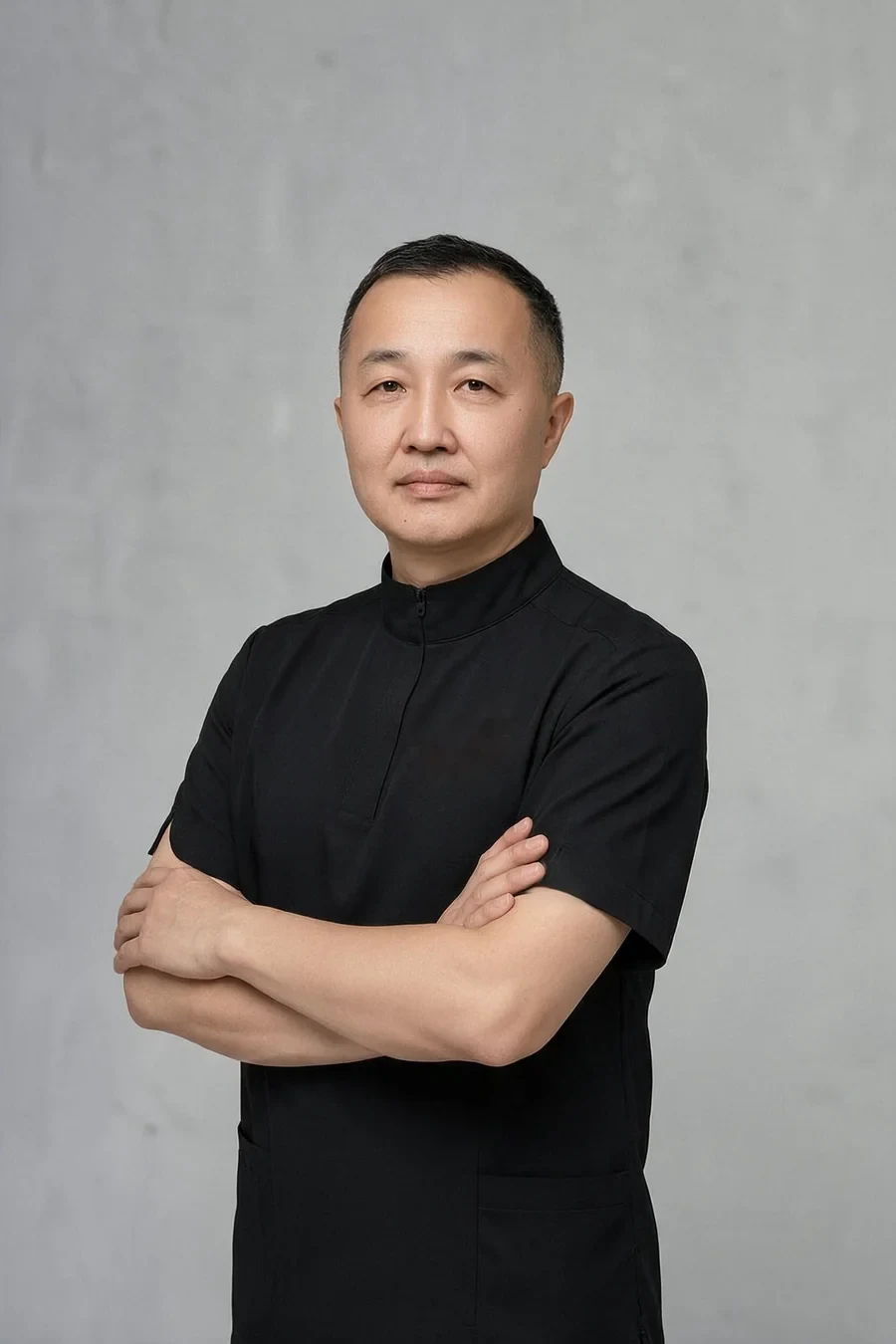
27 years of experience
Head bariatric surgeon
Surgeon
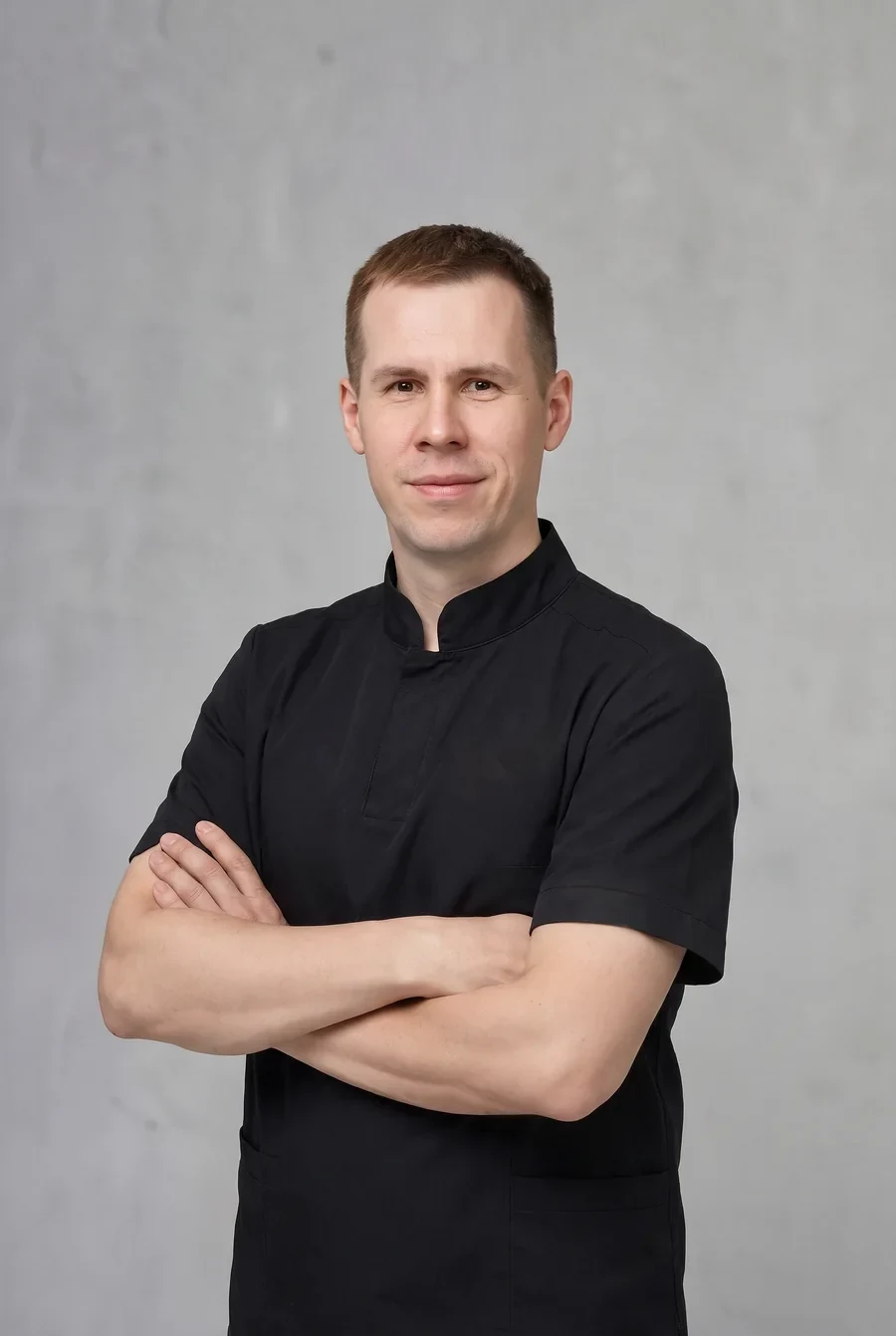
9 years of experience
Bariatric surgeon
Surgical oncologist
One surgeon operates and follows you all the way, from the first consultation to the result.
Free of charge, the first consultation with our patient care manager covers calculating your BMI, explaining the methods and booking you in with the surgeon.
Book a consultationCoordinators
You have our support at every step

Your first contact at the clinic — from your first message to the consultation
Patient support
Helps you choose a convenient date and answers your questions before the first consultation

From booking to discharge — with you before and during your stay
Patient support
Helps prepare you for surgery and remains in touch during your stay at the clinic

From the day of discharge to your final check-up — with you through recovery
Patient support
Books your follow-up visits with the surgeon and keeps in touch during recovery
Advantages
We choose the best method for your health, lifestyle and goals. Our team is with you all the way.
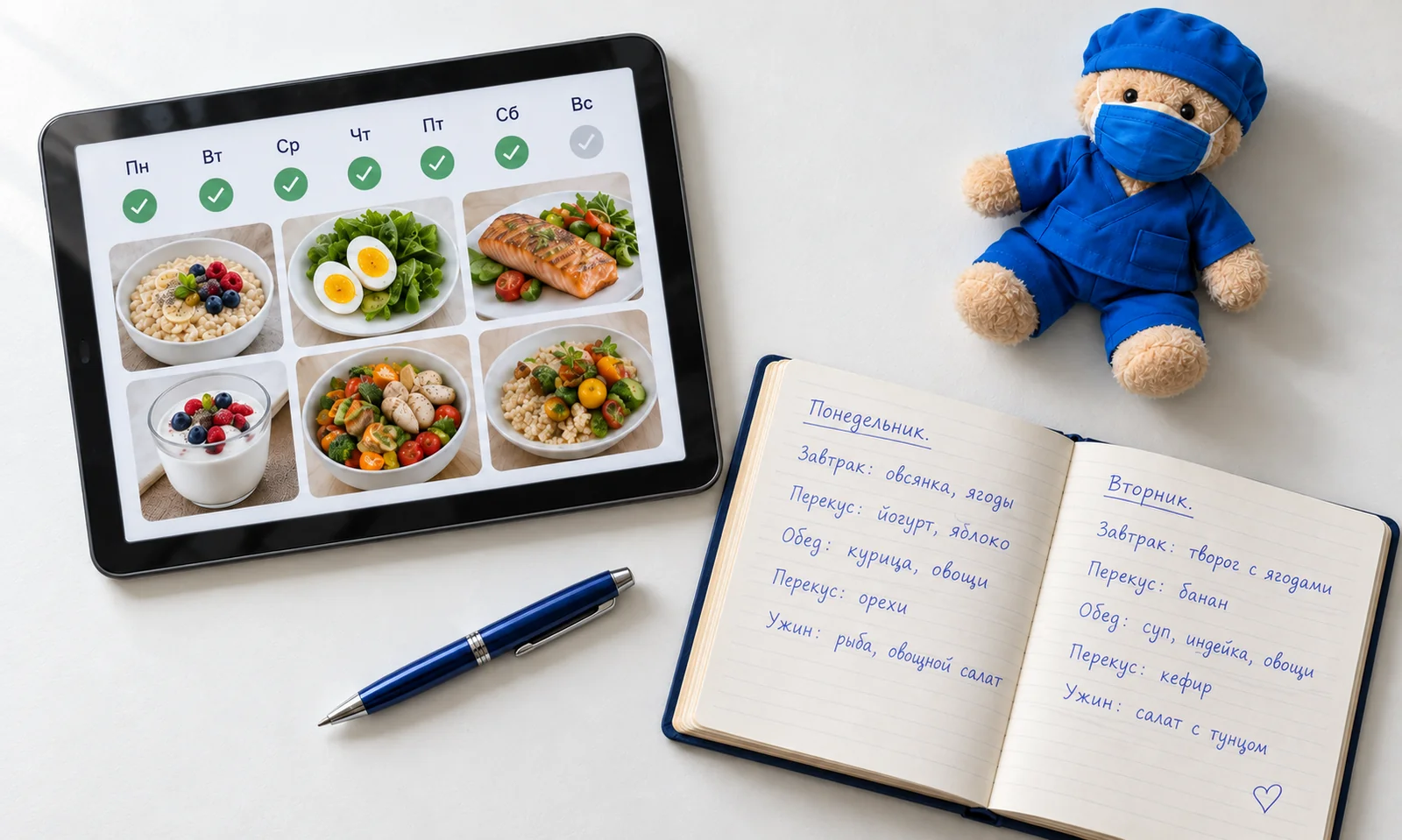
Our help covers adapting to new eating habits, tracking your results and maintaining them.
Weight loss that is steady, better well-being and a higher quality of life.

We respect your time — open 24/7, easy booking and a personal approach that follows your pace.
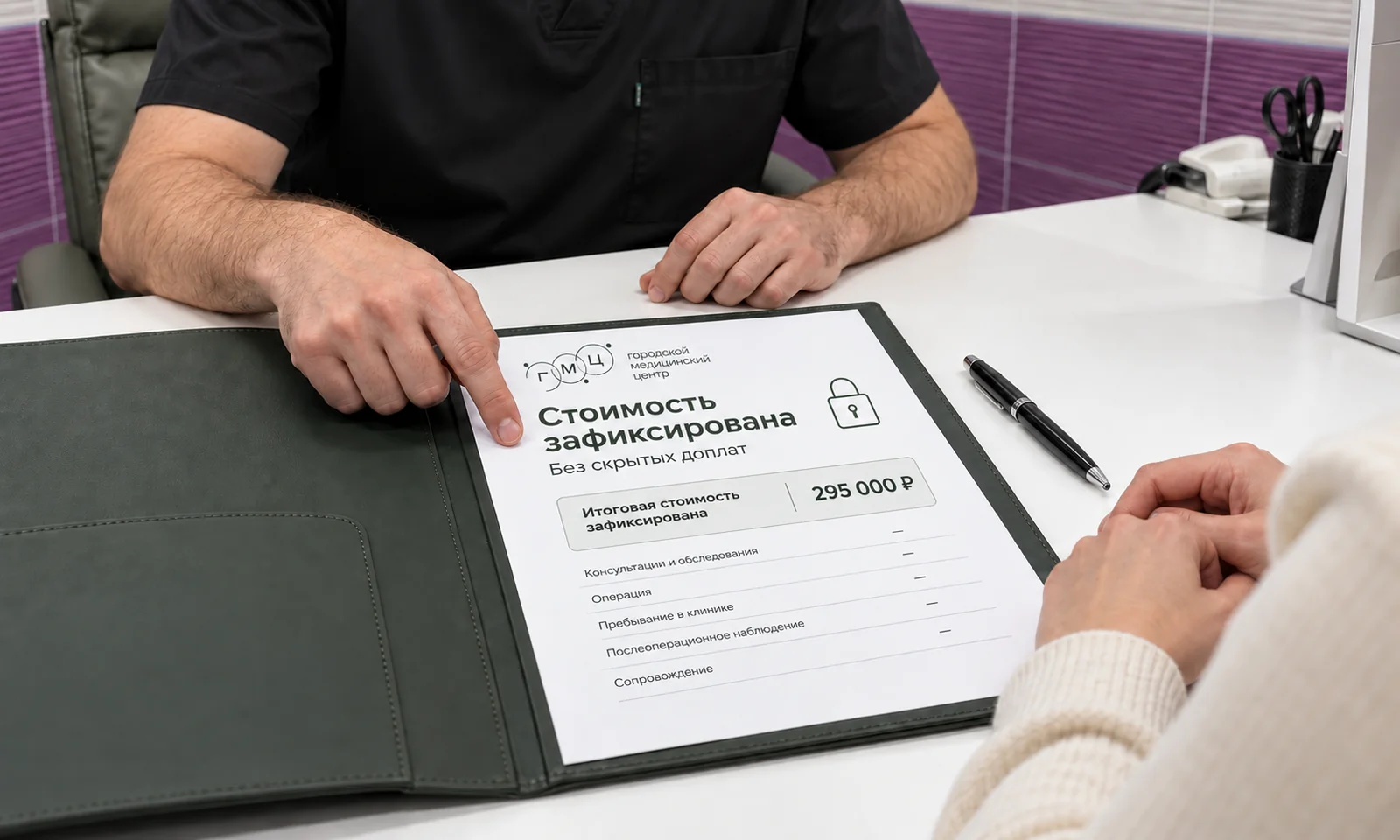
After the consultation you know the method the surgeon has chosen and the clear price, with no hidden fees and no surprises on the way to your result.
FAQ
Experienced bariatric surgeons perform the bariatric operations at the clinic:
Drop us a message and our coordinator will get back to you shortly to book your consultation. The bariatric surgeon consultation is free.
Surgery is prescribed only when clear criteria are met
BMI is the primary tool for judging obesity. The formula: body weight (kg) divided by height squared (m²). Surgery is typically justified at a BMI above 40, or above 35 if there are serious related conditions. At times surgery is also considered with lower figures — provided non-surgical treatment has failed.
Many confuse the two, yet their purposes are fundamentally different. Bariatric surgery is medicine's treatment for obesity and related diseases: it changes how the digestive tract operates and addresses the causes of excess weight and metabolism. Plastic surgery reshapes outer contours of the body without treating obesity or affecting metabolism.
At City Medical Centre there are four main types of bariatric surgery — sleeve gastrectomy, Roux-en-Y gastric bypass, mini gastric bypass (MGB) and SADI-S duodeno-ileal bypass. Every method is chosen individually from BMI, related conditions and the patient's goals.
Modern laparoscopic technique is what we use. Just 4 small punctures of 5 to 15 mm are needed for the operation. Cosmetic sutures mean the marks are nearly invisible after healing.
Your recovery depends on your activities. Office work: in 2–4 weeks. Physical work: in 1.5 months. Sport and activity: swimming after 30 days, with other exercise introduced gradually as weight drops. Travel and holidays: plan them a month or more after surgery.
Your meals progress in stages: liquid food, soft food, then solid. The stress is on protein and on reducing high-calorie, fatty food.
Pregnancy is an option after bariatric surgery, but doctors advise waiting at least 12–18 months. By then the body has stabilized, weight has reached target values and nutritional status has normalized.
Yes, taking vitamins after bariatric surgery is mandatory. Because digestion is anatomically altered, the body absorbs some nutrients poorly, so regular vitamin and mineral supplements stay in the patient's life permanently.
Weight can be regained after bariatric surgery, but this is very unlikely with the doctor's advice followed. Proper nutrition, avoiding high-calorie drinks and regular follow-up with City Medical Centre specialists are crucial.
Prices are in US dollars; the amount in brackets is an approximate conversion to GHS at the rate of 02.10.2026. The final price is fixed in your contract.
Prices start from $3,600 (≈ GHS 42,000). The surgeon sets the final price at the free consultation, and it is fixed in the contract, with no hidden extras.
General anaesthesia, a personal coordinator from day one, monitoring in the hospital and support for one year.
The hospital stay is 1–5 days, depending on the method and how you feel. Office work is possible after 2–4 weeks.
Yes. The first consultation is free and does not oblige you to anything. You can start online by sending a message to the coordinator.
Message us on WhatsApp or Telegram using the buttons below. A coordinator will answer your questions and book a free consultation where the doctor names the exact price.
By messaging us, you agree to our Privacy Policy
Weight that began in childhood, a family history of obesity, shortness of breath on stairs, avoiding photos — these are common reasons people in Takoradi start thinking about surgery. A consultation is warranted not only by a high BMI but also by related conditions. The surgeon reviews your health and weight history and offers the most suitable of the four surgical methods.
Several things are worth planning ahead. Pregnancy is advised no earlier than 12–18 months after surgery, once weight and nutritional status stabilise. Vitamins become a permanent part of life because the body absorbs some nutrients less well. Swimming waits 30 days, strength work longer. Patients from Takoradi discuss these points with the surgeon well before the operation date.
If you are comparing bariatric surgery options in Takoradi, look beyond the operation itself. Here the package bundles the work-up in the centre's own lab, laparoscopic surgery, the stay with meals and nursing, a doctor on hand 24/7 and a year of follow-up. Apply for a free surgeon consultation to see how this applies to your case.
What patients write after this operation. Reviews are translated from the original language.
Irina, 26
For a long time I doubted whether to go ahead with surgery, but after the consultation I felt much calmer. Andrey Georgievich explained in detail how gastric bypass is done, what to expect after the operation and how recovery would go. I especially liked that they talked to me calmly and without pressure. I am now gradually getting used to my new way of life and I am very glad I took this step.
Bariatric surgery
Doctor: Andrey G. Ugay
Angelina, 22
For me the hardest part was deciding to have the operation. At the consultation Ruslan Sergeyevich answered all my questions in detail and explained the specifics of sleeve gastrectomy and recovery. After the operation I always understood what I was doing and why. Thank you to the doctor and the whole team for their attentiveness.
Bariatric surgery
Doctor: Ruslan S. Menzulin
Anna, 31
For a very long time I tried to deal with my excess weight on my own, but I did not get the result I wanted. After the consultation with Andrey Georgievich I finally understood what to do next. I came through the operation well, and my recovery was supervised by the doctors. It was important for me to feel that I was not left alone after surgery.
Bariatric surgery
Doctor: Andrey G. Ugay
Veronika, 25
Before the operation I had many fears, mostly of the unknown. Ruslan Sergeyevich explained every stage of treatment in detail and answered even the simplest questions. Thanks to that I felt much more confident. I keep following the recommendations and I am gradually seeing the changes I had the operation for.
Bariatric surgery
Doctor: Ruslan S. Menzulin
Valentina, 23
The decision to have bariatric surgery was not easy for me. I worried both about the operation itself and about how my life would change afterwards. At the consultation Andrey Georgievich explained everything in detail, so little by little my fear turned into confidence. What matters most to me now is the result and the chance to treat my health and lifestyle differently.
Bariatric surgery
Doctor: Andrey G. Ugay
Anna, 27
I am very grateful to Ruslan Sergeyevich for his attentiveness. Before the operation I had a huge number of questions, and I got a clear answer to every one of them. After the operation it was also clear which recommendations to follow and how to eat. It was important to me that the doctor stayed in touch and I felt supported at every stage.
Bariatric surgery
Doctor: Ruslan S. Menzulin
Takoradi is the Takoradi half of the twin city Sekondi-Takoradi, the capital of Ghana's Western Region and the region's largest city. The 2021 census counted 245,382 people in Sekondi-Takoradi. It is an industrial and commercial centre with a harbour, a railway, timber and cocoa processing, and, since the discovery of oil in 2010, the nickname “Oil City”. A city like this keeps people busy: shifts at the port, long days at the market, work in offices linked to the energy sector, and many hours of sitting, driving and standing.
Many people here reach the point where weight is no longer only a cosmetic worry. It affects joints, sleep, blood sugar, blood pressure and energy for work and family. Bariatric surgery, meaning sleeve gastrectomy and gastric bypass, is a medical tool for this situation. It is not a shortcut and not a substitute for a changed daily routine. It works only together with preparation, a new way of eating and regular follow-up.
This text is written for residents of Takoradi who are weighing the decision. It explains how the remote consultation works from your home city, how the local climate and local rhythm of life affect planning and recovery, and what to ask the surgeon before you agree to anything.
Both operations are performed with a modern laparoscopic technique. The surgeon works through 4 small punctures of 5 to 15 mm. Cosmetic sutures are used, so after healing the marks are barely visible. For someone who spends many days a year in light clothing in a hot coastal climate, this matters: there is no long scar to hide, and the small wounds are easy to keep clean and dry.
Sleeve gastrectomy reduces the size of the stomach. Gastric bypass reduces the stomach and also changes the route food takes through the digestive tract. Which one fits you depends on your weight, your related conditions, your eating habits and your history. That decision belongs to the surgeon, after reviewing your tests, and should not be settled by a friend's story or an internet forum.
The operation is done under general anaesthesia. You are supervised in hospital for a stay of 1–5 days, depending on the method and on how you feel. Doctors supervise you after surgery for a stay of 1–3 to 4–5 days, depending on the complexity of the operation and how you are feeling. Ask the surgeon in advance which end of that range is expected in your case, so your family in Takoradi can plan around it.
BMI is the main tool for assessing the degree of obesity. It is calculated by dividing body weight in kilograms by height in metres squared. Surgery is usually justified with a BMI above 40, or above 35 with serious related conditions. In some cases surgery is considered at lower values too, if non-surgical approaches have failed. The surgeon confirms whether surgery suits you at the consultation.
The World Health Organization describes obesity as a chronic condition linked to many other diseases, which is why a medical assessment looks at the whole picture and not only at the number on the scales. Type 2 diabetes, high blood pressure, sleep apnoea and joint pain are the kind of conditions the surgeon will ask about.
Surgery is not suitable for everyone. Reasons to pause or decline include untreated eating disorders, unstable mental health, heavy alcohol use, certain serious heart or lung problems, and an unwillingness to follow the diet and vitamin plan afterwards. Pregnancy is also a reason to wait. Be fully honest at the consultation about previous operations, medicines and your habits; a good plan depends on accurate information.
You do not need to leave the city to begin. The first consultation is free and online. Coordinators work around the clock, 24/7, on Telegram and Telegram, so a nurse finishing a night shift or a port worker coming off an early one can write at a time that suits them. If you leave a request, a coordinator will call you back 24/7.
You send your height, weight, a short medical history, the medicines you take and any recent test results. The coordinator arranges the consultation with the surgeon, who reviews your data and confirms whether surgery suits you. The approach is personal and the pace is adapted to you, so you can ask for a second conversation, bring a spouse or a parent into the call, and take time before deciding.
The programme runs from preparation to 12 months of support, all in one package. That means preparation tests, the operation, the hospital stay and follow-up support for 12 months are planned as one continuous path rather than separate pieces you have to assemble yourself. Ask the coordinator to describe each stage in writing so you can share it with your family.
Sekondi-Takoradi has a tropical savanna climate and is hot year-round. The average annual high is 28 °C and the average annual low is 22.2 °C. The hottest period runs from January to May, around the time the wet season begins. The dry season is short, from December to March, while the wet season falls around May and June, with June the wettest month at an average of 346 mm of rain.
For recovery this has practical meaning. Heat increases sweating and fluid loss, and after bariatric surgery you must sip fluids steadily in small amounts, because you cannot drink large volumes at once. A very hot, humid week makes this harder, so plan cool, shaded rooms, a fan or air conditioning, and a bottle of water always within reach. Heavy rain in June can make moving around the city tiring and slippery, which matters in the first days when you are still weak.
Humidity in the city is shaped by sea and land breezes; it is highest in August after the rains and lowest in December. A recovery in the drier, less humid months may feel more comfortable at home, but there is no single perfect month. Choose the time when your work, family duties and support at home line up, and discuss with the surgeon whether your health allows a scheduled date to be moved.
Takoradi sits on the coast, and the beach is part of life. After laparoscopic surgery the small wounds need to stay clean and dry while they heal. Salt water, sand and public pools are not suitable at first. Swimming is allowed after 30 days, and other exercise is added gradually as weight goes down. Follow the surgeon's instructions on when a wound is closed enough, and do not rely on how it looks from the outside.
In hot weather, choose loose, breathable cotton clothing that does not press on the abdomen. Ask the surgeon whether any abdominal support garment is advised in your case; do not buy one on your own, and do not assume that tighter is better. Sweat trapped under fabric can irritate the skin around the punctures, so change clothes when they become damp.
Sun on healing skin can darken the marks. Keep the abdomen covered outdoors, wear a hat or carry an umbrella on bright days, and avoid long hours in direct midday sun during the first weeks. Dust from busy roads and construction near the harbour is another reason to keep dressings in place and hands washed before touching them.
Recovery time depends on the activity. Office work is possible after 2–4 weeks, and you are generally back to work after 2–4 weeks. Physical work, which is common in the port, shipyards, the fishing harbour and market trading, is possible after 1.5 months. If you lift crates, carry loads or stand for long hours at the Market Circle, tell the surgeon exactly what your day involves so the plan is realistic.
Students at institutions such as Takoradi Technical University or at the city's senior high schools can talk to teachers about a short absence and a gradual return. Sport matters in Takoradi, with Essipong Stadium and Gyandu Park and local football clubs drawing crowds. Watching a match is fine once you feel strong, but playing or training should wait: swimming after 30 days, then other exercise gradually added as weight goes down.
The city's calendar is full of gatherings. The Ankos and Kundum festivals, church services, weddings, funerals and family celebrations all revolve around shared meals. Most residents belong to Christian communities and a minority to Muslim ones, and many events call for long hours seated at a table with generous plates. Decide before the operation how you will handle these occasions. Tell close relatives about your new eating limits, so that you are supported instead of pressed to eat more.
Fishing is the most common occupation in Sekondi-Takoradi, and fish and seafood from the harbour are part of everyday meals. Fish is a useful source of protein, which is central to eating after bariatric surgery. The surgeon and dietitian will set the stages of the diet: liquids first, then soft foods, then gradual return to solid meals in small portions. Follow their schedule precisely instead of adapting it to what is served at home.
Food in a busy port city is often bought on the move, from stalls, markets and street sellers. Before the operation, think about how you will prepare simple, suitable meals in advance, and what you will say when a colleague invites you to eat. Plan small portions, chew slowly, and stop at the first feeling of fullness. Fizzy drinks, sugary snacks and fried food can cause discomfort and slow progress.
The result develops over a long time. The full effect on weight is usually judged 18–24 months after surgery. During that period the follow-up support for 12 months keeps you in contact with the team, so questions about vitamins, portions, tiredness or a plateau do not wait until your next visit. Many people find it useful to keep a short food and weight diary and share it during consultations.
Sekondi-Takoradi began as two separate towns that grew around Dutch and English forts built in the 17th century. They merged on 2 December 1946. The name Takoradi is usually traced to the ntakor or takore tree, meaning “under the tree”, and that tree is now extinct. Sekondi takes its name from the word “second”, because it was chosen as a second place for a shallow water harbour.
The idea of a fresh start under a shared name fits the decision you may be weighing. Bariatric surgery is a single step, but the real work is the long period of preparation and follow-up around it. Some people find it helpful to treat the day of the first online consultation as their own starting date, and to write it down together with the questions they want to ask.
Many families in the city know their local history well. A grandparent who remembers the old railway days may be the very person who worries most about a major operation. Invite that relative to join the video call, so that they hear the plan from the surgeon directly and not through rumours.
Ghana's first deepwater seaport opened at Takoradi in 1928, and the railway to the interior was built in 1903. Today the harbour, the railway repair yards, shipbuilding, plywood and cocoa processing, and the oil industry that gave the city the nickname “Oil City” all employ residents in shifts. The Albert Bosomtwi-Sam Fishing Harbour in Sekondi keeps fishing households up before dawn.
Shift work affects planning more than most people expect. Ask your employer or supervisor early about leave and about a gradual return. Office work is possible after 2–4 weeks, and physical work after 1.5 months. A dockside or yard worker should describe the real tasks to the surgeon: lifting, climbing, hours in the sun. A fisherman or a trader at Takoradi Market Circle should do the same, so that the return date is realistic.
Because coordinators are available 24/7, a worker finishing a night shift at the port can send documents and questions in the morning without taking a day off to do it.
Takoradi Market Circle is one of the busiest trading places in the city, and the Kundum and Ankos festivals bring families together around large meals. These are the moments when the new eating pattern is tested hardest, and a plan made in advance is worth more than willpower on the day.
Before the operation, practise buying small quantities of fish and simple ingredients rather than large family portions. After surgery your stomach holds far less, so a few spoonfuls of protein may be a full meal. Tell the cook at home that this is a medical limit and not a refusal of hospitality. At a festival meal, take a small plate first, eat slowly and put down your spoon at the first sign of fullness.
Follow the diet stages given by your team, from liquids to soft food and then to solid meals, even if the dish on the table looks light. The full effect on weight is judged 18–24 months after surgery, so there will be many festivals to enjoy along the way.
Takoradi Technical University, the Nurses and Midwifery Training College and schools such as Fijai Secondary School and Ghana Senior High Technical School give the city a large student and teaching population. Students can ask their teachers for a short absence and a gradual return. Staff at the nursing college may find it easier than most to understand the instructions they receive.
Football is a shared passion: FC Takoradi, Sekondi Hasaacas and Sekondi Wise Fighters play in a city with two stadiums, Essipong Stadium and Gyandu Park. Support your team from the stands once you feel strong. For your own sport, swimming is allowed after 30 days and other exercise is added gradually as weight goes down.
Gentle walking is a good way to rebuild stamina. A quiet visit to Fort Sekondi or the local railway museum, taken slowly and in the cooler part of the day, can be a pleasant goal for the first weeks, as long as you carry water and rest when you need to.
The metropolitan area lies near the Anankwari, Kansawura and Whin rivers, and heavy rain has caused flooding in some neighbourhoods in the past. If your home or street is prone to water, arrange the weeks after discharge with this in mind: stock water, food and medicines beforehand, and make sure a relative can reach you.
A 60-bed polyclinic was commissioned in New Takoradi in June 2024. A nearby facility can help with routine checks and blood tests. Keep your discharge papers and test results in one folder, and share them with your coordinator, so that the surgeon can follow your progress through the 12 months of support.
For women in Takoradi planning a family, the timing needs thought. Getting pregnant after bariatric surgery is possible, but doctors advise waiting at least 12–18 months, so the body can stabilize, weight can reach target values and nutritional status can normalize. Discuss contraception with the team before the operation, since rapid weight loss can change fertility.
Prepare a written list of questions for the online consultation. Ask which operation is recommended for you and why; how many days in hospital to expect; what the diet stages look like; which vitamins you will need and for how long; what signs after discharge require an immediate call; how the 12 months of support are organized; and how to reach a coordinator at night. Ask also what to do if a local doctor in Takoradi needs information about your operation.
Local healthcare continues to develop, including a new 60-bed polyclinic commissioned in New Takoradi in June 2024. Having a nearby facility for routine blood tests and general check-ups can make follow-up easier. Share your results with the coordinator so the surgeon can keep an eye on your progress from a distance, and keep copies of every document in one folder.
Yes. The first consultation is free and online. You contact the coordinators on Telegram or Telegram, they are available 24/7, and the surgeon reviews your details remotely.
Surgery is usually justified with a BMI above 40, or above 35 with serious related conditions. In some cases it is considered at lower values too, if non-surgical approaches have failed. The surgeon confirms at the consultation whether surgery suits you.
Divide your body weight in kilograms by your height in metres squared. This is the main tool for assessing the degree of obesity, but the surgeon also considers your health conditions and history.
The stay is 1–5 days, depending on the method and how you feel. Doctors supervise you after the operation, and the length depends on the complexity of the surgery and your condition.
Office work is possible after 2–4 weeks. Physical work, such as port, shipyard or market labour, is possible after 1.5 months. Tell the surgeon what your job involves so the advice fits your situation.
The operation is laparoscopic and is performed through 4 small punctures of 5 to 15 mm. Cosmetic sutures are used, so after healing the marks are barely visible. Protect them from strong sun while they heal.
Swimming is allowed after 30 days. Other exercise is added gradually as weight goes down. Until the surgeon confirms the wounds have healed, avoid sea water and pools.
Not necessarily. The climate is hot year-round, with the hottest period from January to May. What matters is that you can rest in a cool place, drink fluids in small sips and have help at home. Plan with the surgeon and coordinator.
Pregnancy is possible, but doctors advise waiting at least 12–18 months, so the body can stabilize, weight can reach target values and nutritional status can normalize.
The programme goes from preparation to 12 months of support, all in one package. Follow-up support for 12 months helps with diet, vitamins and questions, and a coordinator will call you back 24/7.
Two towns, Sekondi and Takoradi, grew from separate forts and merged on 2 December 1946. Takoradi is traditionally linked to a takore tree that no longer exists.
Physical work is possible after 1.5 months, office work after 2–4 weeks. Tell the surgeon what your tasks involve so the date fits your job.
Plan ahead, tell your family about your medical limits, take a small plate, eat slowly and stop at the first feeling of fullness. Follow the diet stage your team gave you.
It is worth planning for. Prepare water, food and medicines before your hospital stay and make sure someone can reach you. Discuss timing with the coordinator.
Page medically reviewed by Andrey G. Ugay, lead bariatric surgeon. Review date: .