





























pre-op
12 months in
2,800 grafts
FUE method
City Medical Centre
0% instalments
from $367/mo
Work-up and a number — $0.
Real client
pre-op
12 months in
FUE method, cuts and stitches excluded. Grafts and the forecast added up, nothing to pay — before you decide.
No charge, ever, no surgery booking required
Message our coordinator
Free online consultation · Reply within 15 minutes
Message us on TelegramMessage us on WhatsAppBy messaging us, you agree to our Privacy Policy
results
Every photograph shows a genuine CMC patient.
pre-op
12 months in
2,800 grafts
FUE method

pre-op
12 months in
3,500 grafts
FUE method

pre-op
12 months in
2,600 grafts
FUE method

pre-op
12 months in
3,000 grafts
FUE method

pre-op
12 months in
2,700 grafts
FUE method

pre-op
12 months in
3,300 grafts
FUE method

pre-op
12 months in
2,900 grafts
FUE method

pre-op
12 months in
2,500 grafts
FUE method

pre-op
12 months in
3,400 grafts
FUE method

pre-op
12 months in
2,500 grafts
FUE method

pre-op
12 months in
3,100 grafts
FUE method

pre-op
12 months in
3,600 grafts
FUE method

pre-op
12 months in
4,000 grafts
FUE method

pre-op
12 months in
3,200 grafts
FUE method

pre-op
12 months in
3,000 grafts
FUE method

pre-op
12 months in
3,700 grafts
FUE method

pre-op
12 months in
2,700 grafts
FUE method

pre-op
12 months in
3,800 grafts
FUE method

pre-op
12 months in
3,300 grafts
FUE method

pre-op
12 months in
2,800 grafts
FUE method

pre-op
12 months in
2,500 grafts
FUE method

pre-op
12 months in
3,900 grafts
FUE method

pre-op
12 months in
3,500 grafts
FUE method

pre-op
12 months in
3,800 grafts
FUE method

pre-op
12 months in
2,900 grafts
FUE method

pre-op
12 months in
3,600 grafts
FUE method

pre-op
12 months in
2,600 grafts
FUE method

pre-op
12 months in
2,700 grafts
FUE method

pre-op
12 months in
3,700 grafts
FUE method

pre-op
12 months in
3,200 grafts
FUE method

pre-op
12 months in
3,000 grafts
FUE method

pre-op
12 months in
2,800 grafts
FUE method

pre-op
12 months in
4,000 grafts
FUE method

pre-op
12 months in
3,400 grafts
FUE method

pre-op
12 months in
2,900 grafts
FUE method

pre-op
12 months in
3,100 grafts
FUE method

pre-op
12 months in
2,600 grafts
FUE method

pre-op
12 months in
3,300 grafts
FUE method

pre-op
12 months in
3,900 grafts
FUE method

pre-op
12 months in
3,500 grafts
FUE method

pre-op
12 months in
2,700 grafts
FUE method

pre-op
12 months in
3,800 grafts
FUE method

pre-op
12 months in
3,200 grafts
FUE method

pre-op
12 months in
3,000 grafts
FUE method

pre-op
12 months in
2,800 grafts
FUE method

pre-op
12 months in
3,100 grafts
FUE method

pre-op
12 months in
3,600 grafts
FUE method
Comparison
Three technologies of graft transfer are open to you: classic FUE, suture-free DHI and a combined protocol. Judge each by implantation technique, tissue trauma and graft survival, then choose knowingly.
Classic technique without incisions or stitches

$2,200
$2,700
Graft implantation technique
ForcepsGraft trauma
MinimalNatural hair growth angle
NaturalGraft survival
98–100%Suitable for
Androgenetic alopeciaSuture-free implantation with a Choi pen

$2,500
$2,900
Graft implantation technique
DHI pen (Choi implanter)Graft trauma
MinimalNatural hair growth angle
NaturalGraft survival
98–100%Suitable for
DensificationFUE for extraction, DHI implant

$2,700
$2,900
Graft implantation technique
FUE extraction, DHI implantationGraft trauma
MinimalNatural hair growth angle
NaturalGraft survival
98–100%Suitable for
Densification for androgenetic alopeciaFigures for survival and trauma are method averages and serve as a guide: the exact numbers rest on the transplant area and the patient's individual features, and the doctor explains them at the consultation.
Reserve an appointment


















about the clinic
Modern equipment and comfortable rooms, care for every patient

We answer your questions and agree a consultation time that suits you
Message us on WhatsApp Write to usThe consultation gives you a straight answer, including that an operation may be pointless, so nothing is spent needlessly. The situations in which a transplant is genuinely justified are listed below.
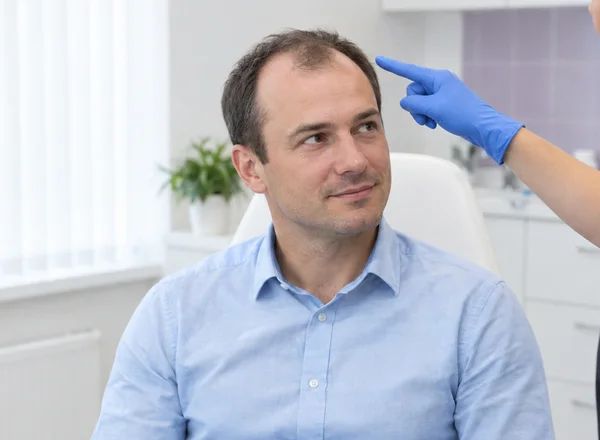

Write to us in Telegram or WhatsApp. A coordinator collects photos, the doctor says if a transplant suits you. Free of charge, no surgery booked.

services
Your price comes from the graft count made at the free consultation and is recorded in the contract.
suture-free graft extraction

$2,200$2,700
or $367/mo — 0% instalments for 6 months
Nail down the priceimplantation without channels

$2,500$2,900
or $417/mo — 0% instalments for 6 months
Nail down the pricecombined technique

$2,700$2,900
or $450/mo — 0% instalments for 6 months
Nail down the price| The opening review | Free |
|---|---|
| Eyebrow transplant, FUE | |
| Beard transplant, FUEinstalments $467/mo | |
| Hair trichopigmentation | |
| PRP therapy / session | $200 |
all included
From readiness for surgery to 12 months of follow-up.
No unexpected costs on the day of surgery.
two extra zones
A hair transplant is not only for the scalp. Same grafts from the back of the head, same FUE method — only the area changes.
FUE method, no incisions or stitches

Grafts are taken from the back of the head, the donor area, and moved through micro-punctures of about 1 mm, so no scars are left. The doctor discusses the shape with you before the operation, taking your facial features into account. Transplanted hair grows for life: trim and style the beard as usual.
$2,800$3,000
or $467/mo — 0% instalments for 6 months
Nail down the priceFUE method, no incisions or stitches

The surgeon draws the eyebrow shape at the first consultation: you look through references together and the design takes your facial features into account. Each hair is implanted at the right angle, so the eyebrows look natural. It also helps where hairs stopped growing after years of plucking.
$1,600$1,700
a day-case operation done under local anaesthesia
Nail down the priceA check of the donor zone, a graft number, and a frank answer about the outcome. The price you are quoted at the consultation is the price in the contract.

Message our coordinator
Free online consultation · Reply within 15 minutes
Message us on TelegramMessage us on WhatsAppBy messaging us, you agree to our Privacy Policy
Process
From consultation to going home — all in one day

At no cost, the doctor uses the initial consultation to explain FUE and DHI, answer your questions, and outline an individual surgical plan.

Reserving a day means putting down a deposit, and there are two routes for that: using a card in the clinic or paying online.

The clinic gives you everything needed to prepare — a list of required tests and instructions — before the transplant takes place.

The surgeon works on a numbed scalp, thanks to a local anaesthetic, without causing pain.

For patients in Mbeya, grafts are harvested from the donor zone at the back of the head or temples, without stitches.

Surgeons install each extracted graft in the part of the scalp lacking hair.
The necessary items are given out by the clinic, with instructions that cover the whole healing period.

Scabs drop away, the swelling eases, the skin heals bit by bit

It is a normal stage: the hairs fall, the follicles stay in place

New hairs surface gradually, the result shows

Hair density climbs, the principal volume and outline are clear

A natural hairline and the final density take shape

Free, before the surgery and with no ties at all.
Reserve an appointmentdoctors

Hair transplant doctor, trichologist, surgeon
10 years of experience

Dermatovenereologist, trichologist, surgeon
11 years of experience

Plastic surgeon
9 years of experience

Plastic surgeon
9 years of experience

Assistant
9 years of experience
The doctor assesses your donor zone, gives a graft figure and explains the outcome that can be reached.
Reserve an appointmentcoordinators
One coordinator stays with you the whole way, from your first question until recovery is finished.

Patient liaison officer
Will accompany you before and after surgery
Manages all your documents and your slots
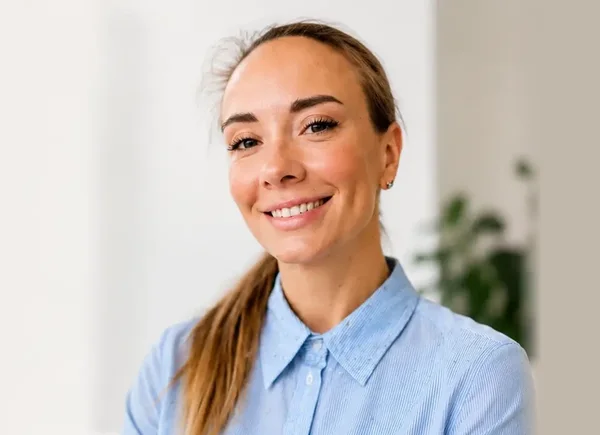
Patient liaison officer
Will accompany you before and after surgery
Manages all your documents and your slots

Patient liaison officer
Will accompany you before and after surgery
Manages all your documents and your slots
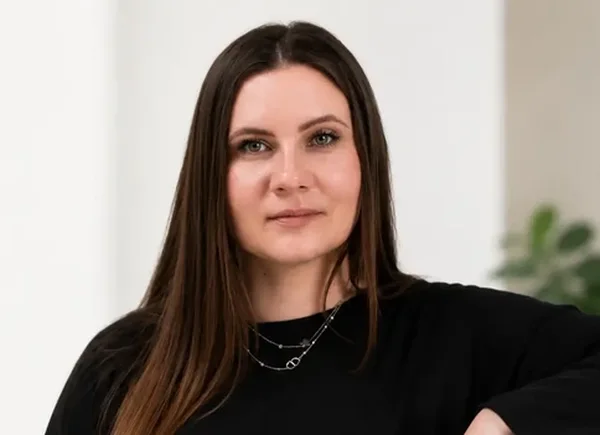
Patient liaison officer
Will accompany you before and after surgery
Manages all your documents and your slots













We answer your questions and agree a consultation time that suits you
Message us on WhatsApp Write to usAsked all the time

This is possible, yes. The clinic treats people from other regions and other countries, and an online meeting comes before you commit.
FUE costs $2,200 (≈ TZS 5,900,000), DHI costs $2,500 (≈ TZS 6,700,000), and the combined DHI+FUE method costs $2,700 (≈ TZS 7,200,000). The exact amount is confirmed at a free consultation after your grafts are counted, and it is fixed in the contract.
It occupies a single day and patients then head home.
Pain is not part of it; local anaesthesia is applied first.
FUE means tweezer-based, incision-free graft harvesting. DHI means channel-free implantation with a Choi pen. Combined DHI+FUE uses FUE for harvesting and the DHI pen for implanting.
Expect the doctor to count grafts at the free consultation, taking the donor area as the starting point.
Give it 0–10 days for healing. Transplanted hairs fall at 2–4 weeks and that is meant to happen. Growth resumes by 3–4 months, density shows at 6–9 months, while the finished head arrives at 12–18 months.
You get a lifetime hair growth guarantee, written into the contract.
The clinic works under a medical licence, care is provided to the standards and clinical guidelines
under Ministry of Health.

The diplomas and training papers of the operating doctors
Look at the documentsAKC POMOSHCH LLC
the clinic's legal name
1057746096924
OGRN
7728536872
INN
The two methods offered to a patient in Mbeya, FUE and DHI, leave no cuts and no stitches, work under local anaesthesia and finish within one day. Graft survival is 98-100 %, and a price from $2,200 (≈ TZS 5,900,000) is fixed in the contract after a free graft count.
You can get started in Mbeya from the kitchen table. The online consultation is free, the doctor reviews photographs of the area and says whether a transplant is likely to help. The line is open 24/7.
Recovery runs 0-10 days; the transplanted hairs shed at 2-4 weeks and this frightens nobody who was warned; growth returns at 3-4 months, density at 6-9, the finished result at 12-18. A personal coordinator keeps photo control at 1, 3, 6, 9 and 12 months, and the growth guarantee is for life.
Prices are in US dollars; the amount in brackets is an approximate conversion to TZS at the rate of 02.10.2026. The final price is fixed in your contract.
By messaging us, you agree to our Privacy Policy
What patients write after this operation. Reviews are translated from the original language.
Andrey M.
I had the operation a month ago. Before and after surgery they were always in touch and helped with questions about my tests. The operation itself went wonderfully, the staff are polite and masters of their craft, you feel you are in safe hands. I am recovering now, and they answer all my questions. I am happy and I recommend them!
DHI hair transplant
Pavel Sinitsyn
The best clinic of all the ones I was choosing from. No regrets at all! The result is simply amazing, I am thrilled. I recommend it to everyone: these people do great work and make people happy. Once again, a huge thank you to everyone. Roman, the head of the clinic, is the best: he was personally in touch with me and looked after my recovery. Thank you for making my dream come true.
FUE hair transplant
Maria Akopyan
I thought about an eyebrow transplant for a long time and finally went for it. At first I was afraid the result would look unnatural, but when I saw my new eyebrows I was delighted! They came out full and in harmony with my face. I can hardly believe that now I just wash my face and go, I have never felt so free. For anyone tired of constant make-up, a transplant is a real lifesaver!
Eyebrow transplant (FUE)
Alexander M.
I really wanted a thick beard, but I had problems with it. I tried every home remedy and minoxidil, and nothing helped. After a long search for the best clinic I settled on this one. Thank you so much for the service, I liked everything and now I am happy! I had the beard transplant 10 months ago and I am very pleased with the result. By the way, the music in the clinic was great, as far as I remember. A friend of mine has already come to you for a transplant on my advice and was also happy with the result. I wish you every success!
Beard transplant (FUE)
Vladimir Z.
I went to the clinic to see a trichologist and had a hair transplant. I really liked the doctor's approach, and all the recommendations helped. I want to point out that nobody tries to sell you extra services: they tell you things as they are, and if some treatment is not needed, they do not push it. Cosy and clean.
DHI hair transplant
Artem Popov
This may sound obvious, but a head of hair really changes everything in your life. You feel much more confident and go through life like a winner. And it is all thanks to the doctor at this clinic and to the staff who take care of their patients. Many thanks to the clinic for a happy life with new hair, for the comfortable conditions and for the professionalism during the hair transplant.
FUE hair transplant
Page medically reviewed by Anastasia A. Kolesnik, hair transplant doctor. Review date: .
Mbeya is a city in south west Tanzania with an urban population of 649,000 in 2023, and it is the capital of the surrounding Mbeya region, which together with the city totals approximately 2 million people. It sprawls through a narrow highland valley surrounded by a bowl of high mountains, at an altitude of 1,700 metres. People here are used to planning life around the weather, the harvest and the school year, and a hair transplant fits into that planning better when it is prepared in advance.
Patients from Mbeya most often ask about thinning at the temples and crown, a receding frontal hair line, and patchy beards. Many want to know whether the result will look natural in a city where people see each other daily at work, at church, at the market and at university. The answer depends on the planning: the doctor discusses the shape with you before the operation, taking your facial features into account.
The method matters as well. Grafts are taken from the back of the head, the donor area, and moved through micro-punctures of about 1 mm, so nothing scars over. Both FUE and DHI follow this principle, and your consultation will explain which one suits your hair type and the area to be covered.
Mbeya has a subtropical highland climate with humid summers and dry winters. Temperatures range from −6 °C on highland mornings to 29 °C on lowland afternoons. This is a real advantage for healing: the air at altitude is cooler than on the coast, and heavy sweating on the scalp is less of a problem than in hot lowland towns.
The same altitude means strong sun at midday and cold mornings and evenings. During the first days the treated area should be protected from direct sun and from cold wind. Choose a loose, clean, soft head covering recommended by your doctor, and avoid anything tight that rubs the grafts. Your coordinator will explain when you may go back to ordinary hats.
Dust is the other factor. On dry days in the cold season, dust rises from roads and fields, so keep the scalp clean exactly as instructed and avoid dusty work in the early period. Swimming in lake or pool water, and long sessions in strong sun, should wait until the doctor allows them.
The weather from June until October is dry and cold. The heaviest rainfall occurs from December to April, and annual rainfall averages approximately 900 millimetres. For many people in Mbeya the dry months are more comfortable for the first weeks: roads are passable, and there is less damp and mud on your way to check-ups or errands.
The rainy months are not a barrier, but they ask for more care. Wet weather means umbrellas, a clean covering and attention to hygiene. Cold dry mornings call for a soft warm covering that does not press on the head.
When choosing a date, count backwards from the events you care about. Hair goes through normal changes: 2-4 weeks — transplanted hairs let go, as expected; 3-4 months — hair comes back; 6-9 months — visibly thicker; 12-18 months — settled look. If you want a wedding, graduation or family celebration to find you with good density, plan the operation well before it.
Mbeya is a working city. The surrounding region produces maize, rice, bananas, beans, potatoes, coffee and tea, and the city hosts banks, bottling and brewing companies, and a referral hospital serving the Southern Highlands. Office staff, traders, farmers, drivers and teachers all have different needs after surgery.
For desk and shop work, the early days are mainly about swelling and the look of the scalp. For farm work, loading or any job with dust, sweat and sun, ask the surgeon how long you should stay away from them. The healing period is 0–10 days, so plan your leave around that stretch and give yourself some margin.
Students at the city's colleges and universities have a simple advantage: the timetable. A break between terms lets you pass the early stage without lectures, group work or exams. Whatever your job, tell your employer or family only what you want to, and arrange cover in advance.
Football is part of the city's culture, with Mbeya City FC and Prisons FC playing at the Sokoine Stadium, and many men play on local pitches. Contact and heading the ball can harm fresh grafts, and sweat and dust add to the problem. Ask the surgeon exactly when you may return to running, gym work and team games, and follow the schedule rather than how you feel.
Hiking is also popular in the Poroto Mountains and on trails in the highlands. Long walks in strong sun and wind are best postponed in the early period. When you do return, take a suitable head covering and keep the scalp clean.
Swimming at Lake Nyasa or in a pool should be agreed with the doctor first. Water, sand and sun all need to be avoided until the grafted area has healed.
Food in Mbeya is rich in local produce: maize, beans, potatoes, bananas and rice. A balanced diet supports healing, and your doctor will tell you if anything should be avoided in the early days, for example alcohol or very salty food that can increase swelling.
Family gatherings, church events and weddings are important in Tanzanian life, and many patients ask whether they can attend. In the first days it is usually easier to rest at home, since crowds, close contact and long hours in the sun are not good for the scalp. Plan the operation so that there is a calm interval before such events.
If you are a man with a thin beard, the same applies to beard transplants. Transplanted hair grows for life: trim and style the beard as usual. One patient wrote: from about the 4th month active, even growth began, the transplanted hair took very well, and the beard now looks as natural as possible, with no bald patches left.
A good candidate has enough healthy hair in the donor area at the back of the head and a stable pattern of loss. Younger patients whose loss is still progressing may be advised to wait or to start other treatment first. The doctor decides after reviewing photos and your history.
Some conditions call for caution or postponement: uncontrolled chronic illness, active scalp infection, blood clotting problems, and unrealistic expectations. Tell the doctor about every medicine you take, including herbal remedies, and about any previous operations or allergies.
Body weight and general health also matter for any operation. If you are unsure about your general condition, the WHO information on overweight and obesity gives a useful background for the conversation with your doctor.
People in Mbeya tend to write in practical terms. They ask how many days they should stay at home, whether a cap will hide the scalp on the bus or at the market, and whether colleagues will notice. These are sensible questions, and the coordinator answers them one by one in the chat, in plain Swahili or English, whichever you prefer.
Another frequent question is about family. A husband or wife often takes part in the decision, and an elder relative may have an opinion too. It helps to show the planned frontal hair line to the people close to you before the operation, so that nobody is surprised during the months when the hair is still changing.
Many also ask whether the result will look the same in cold mountain air as in warm weather. Hair simply grows as hair does, and the doctor shapes the hair line with your facial features in mind, so the look does not depend on the temperature outside.
Mbeya evenings in the dry season are cold, and houses at altitude are not always warm. Before the operation, prepare a clean place to sleep, fresh pillowcases and a quiet corner where the head can rest without pressure. Ask the doctor which sleeping position is advised in the first nights, and follow it strictly.
Arrange simple things in advance: who will cook, who will collect children from school, who will cover your shift. In a city where many families depend on farming, trading or daily wages, a few days of rest need real arrangements, not only good intentions.
Keep the coordinator's chat open on your phone. Because a coordinator will be on the phone 24/7, a small worry at night, such as itching or a question about washing, does not have to wait until morning.
The most difficult time for many patients is not the operation but the weeks after it. Between 2-4 weeks the transplanted hairs let go, as expected, and the scalp can look thinner than before. This is a normal stage and not a failure.
In Mbeya, where people meet often at church, at work and at the stadium, this stage can feel awkward. Choose a soft covering that the doctor approves, and remember that new growth comes back after 3-4 months, with visibly thicker hair at 6-9 months.
Use the check-ups at months 1, 3, 6, 9 and 12 as fixed points. Send photos taken in the same light each time, so that you and the doctor can compare progress honestly instead of judging by a single mirror glance.
Mbeya is a farming region first of all. The rains normally start in October and end around May, followed by a dry and cold spell between June and September. Families who grow maize, beans, potatoes, coffee or tea organise the whole year around these seasons, and a patient who works the land will want to place the operation in a quieter stretch of the farming year.
Planting and harvest are the busiest periods, with long hours outdoors, dust, sweat and strong midday sun. These are exactly the conditions that fresh grafts dislike. If you can, choose a time when someone else in the household can take over the heavy tasks, and ask the surgeon which activities to give up in the early days and for how long.
Traders, drivers and shop owners have a different calendar, built around market days and the steady stream of transit passengers who stop in the city for food or a night's lodging. If your work puts you in front of many people, plan the operation so that the first weeks of visible change fall in a calmer period, and arrange for a relative or colleague to cover your place.
At an altitude of 1,700 metres, Mbeya has cold mornings, and the dry season from June brings chilly nights. Cold air does not damage the grafts, but a scalp that is sore and sensitive reacts badly to wind and to rough fabric. A soft, clean covering that the doctor approves is more useful than a thick woolen cap that presses on the head.
Washing is another point. In many homes hot water takes time to prepare, and there can be a temptation to wash quickly or skip a wash on a cold morning. Follow the washing routine given by the doctor exactly, use clean water, and prepare it in advance so that you do not rush.
Humid summers bring a different kind of care: damp pillowcases, sweat and mosquito nets that touch the head. Change bed linen often, keep the sleeping area clean and dry, and ask the coordinator in the chat if you are unsure about any product you plan to put on the scalp.
Mbeya has several colleges and universities, among them Mbeya University of Science and Technology, Mzumbe University Mbeya Campus and the Catholic University College of Mbeya. Students and young staff often worry most about how the scalp looks in class or at the lab. A semester break is the calmest moment for the operation, because the early stage then passes without lectures or group work.
Church is also a regular part of the week for many families in the city, and Teofilo Kisanji University, a Moravian institution, shows how closely community and learning are linked here. Services mean a crowd, close contact and sometimes a long time in a closed room. In the first days it is easier to rest at home and return to these gatherings when the doctor says the scalp is ready.
If you hold a role in the community, such as a teacher, a pastor or a team leader, think about what you will say when people ask. A short, honest and calm answer is enough. You do not owe anyone a long explanation, and most people soon stop noticing once the hair starts to grow back.
Many patients in Mbeya live far from the main roads or travel for work, so it helps that the follow-up is organised by phone and chat. We stay with you from pre-op planning to 12 months later, with check-ups at months 1, 3, 6, 9 and 12.
Before each check-up, prepare a short list: what has changed, what worries you, what you have done in terms of washing and covering, and what you plan to do in the coming months, such as heavy work, sport or a family event. Send clear photos in daylight, from the same angles each time.
Keep a simple note in your phone about the date of the operation and the stages. Hair follows the same pattern for everyone: 2-4 weeks for shedding, 3-4 months for new growth, 6-9 months for visible thickness and 12-18 months for the settled look. A written record keeps you calm when the mirror seems to say otherwise.
You contact the centre from Mbeya, and the online consultation is free. Coordinators are available 24/7 on Telegram and WhatsApp, so you can write after work or in the evening, whatever your schedule. Send clear photos of the front, top, crown and back of the head, and describe how long the loss has lasted and what you have already tried.
The doctor reviews the photos, discusses the shape of the hair line and the number of grafts in general terms, and explains the method. We stay with you from pre-op planning to 12 months later, and a coordinator will be on the phone 24/7. Check-ups take place at months 1, 3, 6, 9 and 12.
The overall timeline is: 0–10 days for healing, 2–4 weeks for normal shedding of transplanted hair, 3–4 months for new growth to start, 6–9 months for real density, and 12–18 months for the final result.
Yes. The online consultation is free, and coordinators are available around the clock on Telegram and WhatsApp. You send photos and questions and receive a reply from the comfort of your home.
Transplanted hairs let go after 2-4 weeks, which is expected. New hair comes back after 3-4 months, looks visibly thicker at 6-9 months, and the settled look comes at 12-18 months.
Grafts are taken from the donor area and moved through micro-punctures of about 1 mm, so nothing scars over. The doctor will explain what to expect in your own case.
Cool air actually suits healing better than heat. Protect the scalp from cold wind in the mornings and evenings and from strong sun at midday, using the soft covering your doctor recommends.
The healing stage is 0–10 days. Desk work usually resumes sooner than dusty or heavy physical work, so discuss your job with the surgeon in advance.
Ask the surgeon for a precise date. Contact, sweat, dust and sun are all things the new grafts need to be protected from, so do not return to sport early.
Only after the doctor gives permission. Water, sand and sun should be avoided until the treated area has healed.
Yes, beard transplants are done. Transplanted hair grows for life: trim and style the beard as usual. The doctor discusses the shape with you before the operation.
We stay with you from pre-op planning to 12 months later. Check-ups are at months 1, 3, 6, 9 and 12, and a coordinator will be on the phone 24/7.
Ask about the method (FUE or DHI) for your hair type, the planned hair line, the donor area, care in the first days, return to work and sport, and what to do if something worries you.
In the first days the scalp shows signs of treatment, and for the first weeks the transplanted hairs fall out as expected. After that the growth looks natural because the doctor plans the hair line to suit your face.
It is your choice, but most patients find it easier to share the plan with a husband, wife or close relative, who can help at home during the healing days.
Write to the coordinator. A coordinator will be on the phone 24/7, and we stay with you from pre-op planning to 12 months later.
Many patients prefer it, because the weather from June until October is dry and cold, roads are passable and there is less mud and damp. The rainy months are still possible if you take more care with hygiene and a clean covering.
Yes, but not at once. Dust, sweat and strong sun are hard on new grafts, so ask the surgeon when heavy outdoor work is allowed, and plan the operation for a quieter time in the farming year.
Prepare a clean place to sleep, fresh pillowcases, clean water for washing and arrangements for cooking and childcare. Keep the coordinator's chat open, because a coordinator will be on the phone 24/7.

 Forceps
 Minimal


