





























start
12 months along
2,800 grafts
FUE method
City Medical Centre
0% instalments
from $367/mo
Meeting and a quote — $0.
Real patient
start
12 months along
FUE method, cuts and stitches excluded. Grafts and the forecast sized up without any cost — before you decide.
Free, no catch, no surgery booking required
Message our coordinator
Free online consultation · Reply within 15 minutes
Message us on TelegramMessage us on WhatsAppBy messaging us, you agree to our Privacy Policy
results
Every result here comes from a genuine patient.
start
12 months along
2,800 grafts
FUE method

start
12 months along
3,500 grafts
FUE method

start
12 months along
2,600 grafts
FUE method

start
12 months along
3,000 grafts
FUE method

start
12 months along
2,700 grafts
FUE method

start
12 months along
3,300 grafts
FUE method

start
12 months along
2,900 grafts
FUE method

start
12 months along
2,500 grafts
FUE method

start
12 months along
3,400 grafts
FUE method

start
12 months along
2,500 grafts
FUE method

start
12 months along
3,100 grafts
FUE method

start
12 months along
3,600 grafts
FUE method

start
12 months along
4,000 grafts
FUE method

start
12 months along
3,200 grafts
FUE method

start
12 months along
3,000 grafts
FUE method

start
12 months along
3,700 grafts
FUE method

start
12 months along
2,700 grafts
FUE method

start
12 months along
3,800 grafts
FUE method

start
12 months along
3,300 grafts
FUE method

start
12 months along
2,800 grafts
FUE method

start
12 months along
2,500 grafts
FUE method

start
12 months along
3,900 grafts
FUE method

start
12 months along
3,500 grafts
FUE method

start
12 months along
3,800 grafts
FUE method

start
12 months along
2,900 grafts
FUE method

start
12 months along
3,600 grafts
FUE method

start
12 months along
2,600 grafts
FUE method

start
12 months along
2,700 grafts
FUE method

start
12 months along
3,700 grafts
FUE method

start
12 months along
3,200 grafts
FUE method

start
12 months along
3,000 grafts
FUE method

start
12 months along
2,800 grafts
FUE method

start
12 months along
4,000 grafts
FUE method

start
12 months along
3,400 grafts
FUE method

start
12 months along
2,900 grafts
FUE method

start
12 months along
3,100 grafts
FUE method

start
12 months along
2,600 grafts
FUE method

start
12 months along
3,300 grafts
FUE method

start
12 months along
3,900 grafts
FUE method

start
12 months along
3,500 grafts
FUE method

start
12 months along
2,700 grafts
FUE method

start
12 months along
3,800 grafts
FUE method

start
12 months along
3,200 grafts
FUE method

start
12 months along
3,000 grafts
FUE method

start
12 months along
2,800 grafts
FUE method

start
12 months along
3,100 grafts
FUE method

start
12 months along
3,600 grafts
FUE method
Comparison
We offer three graft transfer technologies: classic FUE, suture-free DHI and a combined protocol. Set them side by side by implantation technique, tissue trauma and graft survival, and choose knowingly.
Classic method requiring no cuts or sutures

$2,200
$2,700
Graft implantation technique
ForcepsGraft trauma
MinimalHair's natural angle
NaturalGraft survival
98–100%Suitable for
Androgenetic alopeciaSuture-free implantation with a Choi pen

$2,500
$2,900
Graft implantation technique
DHI pen (Choi implanter)Graft trauma
MinimalHair's natural angle
NaturalGraft survival
98–100%Suitable for
DensificationFUE extraction, DHI pen implant

$2,700
$2,900
Graft implantation technique
Extraction by FUE, DHI implantGraft trauma
MinimalHair's natural angle
NaturalGraft survival
98–100%Suitable for
Androgenetic alopecia and densificationAveraged for each method, the survival and trauma figures are a guide only: the exact numbers depend on the transplant area and the patient's individual features and are clarified by the doctor at the consultation.
Plan the next step


















about the clinic
A calm room, good equipment, nobody rushing you

The coordinator answers everything and agrees a suitable slot with you
Message us on WhatsApp Fill in the formWhere your case can be resolved without surgery, the doctor will say so at the consultation — and you will not waste your money. Below are the conditions in which a transplant works.
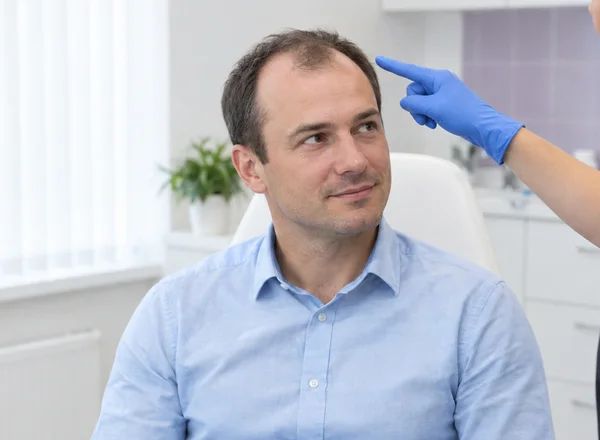

Write to us in Telegram or WhatsApp: a coordinator asks for photos in a messenger, then a doctor says whether a transplant would help. Free.

services
The price becomes clear at the free consultation, right after the graft count, and the contract confirms it.
suture-free graft extraction

$2,200$2,700
or $367/mo — 0% instalments for 6 months
Pin the price downimplantation without channels

$2,500$2,900
or $417/mo — 0% instalments for 6 months
Pin the price downcombined technique

$2,700$2,900
or $450/mo — 0% instalments for 6 months
Pin the price down| Talking to a doctor | Free |
|---|---|
| Eyebrow transplant, FUE | |
| Beard transplant, FUEinstalments $467/mo | |
| Hair trichopigmentation | |
| PRP therapy / session | $200 |
all included
From preparation for surgery to 12 months of follow-up.
No additional charges on the day of surgery.
two added areas
A hair transplant is not only about the scalp. Grafts from the back of the head, the FUE method — only the area changes.
FUE, no incisions and no stitches

The donor area is the back of the head; grafts move from there through micro-punctures of about 1 mm and no scars are left. The shape is decided together with the doctor before the operation, taking your facial features into account. Transplanted hair grows for life: the beard can be trimmed and styled as usual.
$2,800$3,000
or $467/mo — 0% instalments for 6 months
Pin the price downFUE, no incisions and no stitches

Contour first: the surgeon draws it at the first appointment, references are lined up for comparison, and the design follows your facial proportions. Hairs set at the growth angle make the brows look natural up close. Where years of plucking stopped growth, this is the answer.
$1,600$1,700
an op you walk out of, under local anaesthesia
Pin the price downThe doctor will review your donor area, count the grafts and show what result is achievable for you. The cost is quoted at the consultation and fixed in the contract.

Message our coordinator
Free online consultation · Reply within 15 minutes
Message us on TelegramMessage us on WhatsAppBy messaging us, you agree to our Privacy Policy
Process
From consultation to going home — all in one day

Patients in Lubango start with a talk through the FUE and DHI methods, an answer to each question raised, and an examination of the donor area.

Book the operation by leaving a deposit; it can be paid by card during a clinic appointment or sent as an online transfer.

The clinic names every analysis required before surgery and gives you directions so the preparation goes without trouble.

This stage applies local anaesthesia, which keeps the entire operation painless.

For patients in Lubango, extraction happens at the back of the scalp or the temples, and the donor zone needs no stitches.

Every graft collected earlier finds its place in the balding zone.
The clinic ensures recovery goes smoothly by providing everything needed along with full instructions.

Scabs clear off, the swelling settles, the skin returns to normal

This stage is normal. Only the hairs fall out, follicles stay put

Little by little the area fills in, and the difference shows

The hair becomes thicker, the main volume and contour show

Final density is reached and the hairline natural

Free, before the operation while you owe nothing.
Plan the next stepdoctors

Hair transplant doctor, trichologist, surgeon
10 years of experience

Dermatovenereologist, trichologist, surgeon
11 years in practice

Plastic surgeon
9 years of experience

Plastic surgeon
9 years of experience

Assistant
9 years of experience
The doctor checks the donor area, counts the grafts and says what result is achievable.
Plan the next stepcoordinators
You are given a personal coordinator who guides you from the first enquiry to recovery.

Your patient adviser
Will care for you before and after surgery
Looks after the papers and the booking
Your patient adviser
Will care for you before and after surgery
Looks after the papers and the booking

Your patient adviser
Will care for you before and after surgery
Looks after the papers and the booking
Your patient adviser
Will care for you before and after surgery
Looks after the papers and the booking













The coordinator answers everything and agrees a suitable slot with you
Message us on WhatsApp Fill in the formWhat people ask

Certainly — the clinic is used to patients from cities far apart and other countries, and a doctor gives an online opinion first.
FUE costs $2,200 (≈ AOA 2,050,000), DHI costs $2,500 (≈ AOA 2,350,000), and the combined DHI+FUE method costs $2,700 (≈ AOA 2,550,000). The exact amount is confirmed at a free consultation after your grafts are counted, and it is fixed in the contract.
Everything is done within a day; no one stays overnight.
Local anaesthesia means patients sit through it feeling nothing.
FUE is cut-free graft extraction by tweezer. DHI is direct implantation with a Choi pen, skipping channel-making. The combined technique takes grafts by FUE and places them using the DHI method.
It differs from person to person. The doctor counts grafts free of charge after examining the donor zone.
The wounds heal across 0–10 days. The drop-out of grafted hairs near 2–4 weeks is normal. Hair grows again from 3–4 months, looks heavy at 6–9 months, and the outcome is settled at 12–18 months.
A lifetime guarantee of hair growth is included, confirmed in your contract.
The clinic works under a medical licence, care follows the standards and clinical guidelines
of Ministry of Health.

Diplomas and certificates of those who will operate
Browse the documentsAKC POMOSHCH LLC
the clinic's legal entity
1057746096924
OGRN
7728536872
INN
Someone in Lubango needs no hospital stay for this: FUE and DHI go without cuts or stitches, under local anaesthesia, and the whole operation takes one day. Graft survival is 98-100 %, and a price from $2,200 (≈ AOA 2,050,000) is set in the contract after a free graft count.
The beginning is remote and free for a patient in Lubango: photographs of the area, a look from the doctor, and a clear word on whether a transplant will help. The clinic responds 24/7.
Healing is a matter of 0-10 days, the transplanted hairs shed at 2-4 weeks and that is expected, growth resumes at 3-4 months, density is obvious at 6-9 and the result is complete at 12-18. The clinic checks in at 1, 3, 6, 9 and 12 months by photo, and the growth guarantee lasts a lifetime.
Prices are in US dollars; the amount in brackets is an approximate conversion to AOA at the rate of 02.10.2026. The final price is fixed in your contract.
By messaging us, you agree to our Privacy Policy
What patients write after this operation. Reviews are translated from the original language.
Andrey M.
I had the operation a month ago. Before and after surgery they were always in touch and helped with questions about my tests. The operation itself went wonderfully, the staff are polite and masters of their craft, you feel you are in safe hands. I am recovering now, and they answer all my questions. I am happy and I recommend them!
DHI hair transplant
Pavel Sinitsyn
The best clinic of all the ones I was choosing from. No regrets at all! The result is simply amazing, I am thrilled. I recommend it to everyone: these people do great work and make people happy. Once again, a huge thank you to everyone. Roman, the head of the clinic, is the best: he was personally in touch with me and looked after my recovery. Thank you for making my dream come true.
FUE hair transplant
Maria Akopyan
I thought about an eyebrow transplant for a long time and finally went for it. At first I was afraid the result would look unnatural, but when I saw my new eyebrows I was delighted! They came out full and in harmony with my face. I can hardly believe that now I just wash my face and go, I have never felt so free. For anyone tired of constant make-up, a transplant is a real lifesaver!
Eyebrow transplant (FUE)
Alexander M.
I really wanted a thick beard, but I had problems with it. I tried every home remedy and minoxidil, and nothing helped. After a long search for the best clinic I settled on this one. Thank you so much for the service, I liked everything and now I am happy! I had the beard transplant 10 months ago and I am very pleased with the result. By the way, the music in the clinic was great, as far as I remember. A friend of mine has already come to you for a transplant on my advice and was also happy with the result. I wish you every success!
Beard transplant (FUE)
Vladimir Z.
I went to the clinic to see a trichologist and had a hair transplant. I really liked the doctor's approach, and all the recommendations helped. I want to point out that nobody tries to sell you extra services: they tell you things as they are, and if some treatment is not needed, they do not push it. Cosy and clean.
DHI hair transplant
Artem Popov
This may sound obvious, but a head of hair really changes everything in your life. You feel much more confident and go through life like a winner. And it is all thanks to the doctor at this clinic and to the staff who take care of their patients. Many thanks to the clinic for a happy life with new hair, for the comfortable conditions and for the professionalism during the hair transplant.
FUE hair transplant
Page medically reviewed by Anastasia A. Kolesnik, hair transplant doctor. Review date: .
Lubango, formerly called Sá da Bandeira, is the capital of Huíla Province. It is a municipality of 890,384 people in 2024, and the city centre had 805,272 inhabitants that year. That makes it the second most populous city in Angola after Luanda. In a city this size, people notice each other's appearance at work, at university, at church and at family gatherings. Many men and women here start thinking about a hair transplant when thinning at the temples or crown becomes visible in everyday photographs, or when a beard has patches that do not fill in.
City Medical Centre works with patients from Lubango through a free online consultation. You do not need to arrange anything in advance. You write to the coordinators on Telegram or WhatsApp, and a coordinator will be on the phone 24/7. You can send questions late in the evening after work or early before classes and still get an answer. The first conversation is only about your situation: what you want to change, how your hair behaves now, and what the next steps would be.
Everything below is about FUE and DHI hair transplantation as it fits the life of Lubango: the cool highland weather, the working week, sport and the calendar of family events.
Lubango stands at 1,760 metres above sea level and has a subtropical highland climate. Days are warm and humid, and nights are cool to cold. The annual average temperature is 18.6 °C, with extremes from 0 to 34.4 °C. June and July are cold, and frosts are possible though rare. The heaviest rains fall between December and March, and September and October are the warmest months.
For a person recovering after a hair transplant, this mix means two different kinds of care. In the warm months, especially September and October, the main concerns are strong highland sun and sweat on the scalp. Wear a loose, clean, breathable cap when the doctor allows it, stay in the shade in the first days and do not let the treated area burn. In the cold months the concern is different. Cold wind and the habit of pulling a tight woollen hat over the head can irritate the fresh grafts. Ask the surgeon which headwear is acceptable and for how long.
The first period of healing is short: 0–10 days for healing. During it, keep your routine calm and your head clean and protected, and follow the written instructions you receive. Your coordinator will go through them with you by message so that you can reread them at home in Lubango at any hour.
There is no single correct month, but Lubango's seasons give a useful frame. The rainy period from December to March brings humidity, mud and a lot of time spent between car, shop and home. For some people this is a quiet time that suits staying indoors in the early days. Others dislike damp, crowded shared taxis and wet streets while the scalp is sensitive.
The cold dry months of June and July keep sun exposure low, which is a clear advantage for the first weeks. The disadvantage is cold mornings and evenings, when you will want a hat. The warm months of September and October are the most demanding for sun protection, so plan more shade and less time outdoors if you choose them.
Think backward from the dates that matter to you: a wedding, a graduation, a church celebration, a family reunion at the end of the year. Transplanted hairs let go after 2-4 weeks, as expected, and the new growth comes back at 3-4 months. If you want a visible result for a particular event, count 6-9 months for visibly thicker hair, and 12-18 months for the settled look. The coordinator will help you place the operation on that calendar.
Lubango's economy rests on agriculture, meat products, cereals, fruit and vegetables from the surrounding fertile region, as well as food processing, leather tanning and consumer goods. Many residents work outdoors or in workshops where there is dust, heat from machinery or long hours in the sun. Others work in offices, banks, shops and schools, or study at the Mandume ya Ndemufayo University, the Higher Institute of Education Sciences of Huíla or the polytechnic institute.
If your job is physical or dusty, tell the surgeon in the consultation. Dust, sweat and friction on the scalp are exactly what the early days should avoid, and you may need a few days away from the workplace. For office work and study the break is usually easier to arrange, but visible redness and small scabs in the first period are something to plan for if you meet clients or teach.
Talk with your employer or your department in general terms and set the dates ahead of time. Before the operation, ask the surgeon in writing when a person in your kind of work can safely go back, and what to avoid in the first days. Because the remote consultation takes place from home, you can ask these questions without taking a day off.
Football is the most popular sport in Lubango, with well-known local clubs and a large national stadium. Judo has also drawn growing interest, and the hills around the city are used for hiking, climbing and rappelling. Volleyball, basketball, athletics, cycling and boxing are all practised. Many patients ask when they can return to a Sunday match, training or a hike.
The honest answer is to follow the surgeon's plan, not a general rule. Sweat, head contact, heading the ball, helmets, and strong sun on a mountain trail all affect a healing scalp. Contact sports and sports with head impact need a clear go-ahead from the doctor. Ask specifically about football, judo and boxing, and about cycling with a helmet.
Swimming and the pool also need guidance. Chlorinated water and shared changing rooms are not something to improvise with in the early period. Ask the surgeon for the exact timing for the pool and for sport, and write it down. The same applies to hiking at altitude, where sun is strong and weather can change quickly, so a plan for headwear is useful.
Lubango is a city of markets, family tables and gatherings. The surrounding region supplies meat, cereals, fruit and vegetables, and meals are often shared among several generations. Good everyday nutrition supports healing, and there is no need for a special diet beyond what the doctor advises. Do ask whether alcohol, very spicy dishes or heavy smoking at gatherings should be limited in the early period.
Family events are the real planning challenge. In a close community, a new look attracts questions. Some patients prefer to have the operation well before a major celebration, so that redness is gone and the shedding phase of 2-4 weeks is behind them. Others choose a quiet period and tell only close relatives.
Crowded places, smoky kitchens and shared taxis can all expose a fresh scalp to dust and touch. Plan to avoid the busiest hours, keep your head from being bumped, and sleep in the position the surgeon recommends. If a relative will help you in the first days, show them the written instructions so that they understand what to do and what not to do.
A hair transplant is suitable for people who have a stable donor area at the back of the head and a clear, realistic goal. Grafts are taken from the back of the head, the donor area, and moved through micro-punctures of about 1 mm, so nothing scars over. The doctor discusses the shape with you before the operation, taking your facial features into account. For men this means a natural frontal hair line, and for others it may mean the beard, eyebrows or thin areas.
Some conditions call for caution or delay: active skin disease of the scalp, unstable chronic illness, hair loss that is still changing quickly, or unrealistic expectations of density. Send the coordinator clear photographs of the front, top, crown and back of your head in daylight, and tell them about medicines, past surgery and illnesses. The doctor will say whether to go ahead, to wait, or to try treatment first.
Be open about family history of hair loss and about habits such as smoking, since they matter to planning. A good consultation will sometimes end with advice not to operate yet. That is a sign of a careful medical team, not a refusal.
A remote consultation from Lubango works best when you arrive with a written list. Ask how many grafts the plan involves and whether the density will be spread across the front or the crown. Ask which technique, FUE or DHI, suits your hair and why. Ask how the donor area at the back of the head will look afterwards, and what to expect in the first days when you wake up at home.
Ask how the frontal hair line will be drawn and how your facial features were taken into account. Many people in Lubango want a result that looks natural next to relatives and colleagues who see them every week, so a soft, slightly irregular hair line is usually the better aim than a sharp, straight one.
Also ask what you must stop doing before the operation, which medicines to mention, and whom to message if something looks unusual during healing. Keep the answers in one chat thread so you can find them again.
Beyond the cold months, Angola has a dry season, called cacimbo, which is often marked by heavy morning mist. In the southern highlands the air in the dry season can be dusty on roads and building sites, and in the rainy season it can be damp and muddy. Both conditions matter for a scalp that is healing.
Keep your head clean as the instructions say, avoid rubbing it with a towel or touching the grafts with dirty hands, and do not stand in dust or smoke longer than you need to. If you walk or use a shared taxi, think about the route in advance so that you are not waiting for long periods in the sun or wind.
Mornings in Lubango can be cool and misty while midday is warm. Dress in layers, but keep what touches your head loose and clean. This small habit does more for comfort during the weeks of shedding, 2-4 weeks after the operation, than any special product.
The hardest part is rarely the operation itself. It is the waiting. After the shedding at 2-4 weeks, the head can look thinner than before the operation, and that is expected. New hair begins to come back at 3-4 months, becomes visibly thicker at 6-9 months, and the settled look comes at 12-18 months.
In a lively city where people meet often, it helps to decide in advance what you will say to curious friends. Many patients simply say they are taking care of their hair and leave it there. Photographs taken in the same light at the same angle each month make progress easier to see, and they are what you send at the check-ups at months 1, 3, 6, 9 and 12.
If you doubt something at any stage, write to the coordinator instead of waiting. Someone will be on the phone 24/7, and a short message with a photograph is often enough to put your mind at rest.
The process starts with a message to the coordinators on Telegram or WhatsApp. You send photographs and answer questions about your hair, health and goals. A doctor reviews them and discusses the technique, FUE or DHI, and the planned shape. A coordinator will be on the phone 24/7, so a network gap or a power cut at home need not delay your questions: you can write again when the connection returns.
We stay with you from pre-op planning to 12 months later. Check-ups take place at months 1, 3, 6, 9 and 12, and you can send photographs of your progress each time. The expected course is: 2-4 weeks, transplanted hairs let go, as expected; 3-4 months, hair comes back; 6-9 months, visibly thicker; 12-18 months, settled look.
One patient described it this way: from about the 4th month active, even growth began, the transplanted hair took very well, and the beard now looks as natural as possible, with no bald patches left. The beard became much thicker and denser, with the shape he had thought about for a long time. Transplanted hair grows for life, so you can trim and style the beard as usual.
Lubango is a municipality with 890,384 inhabitants in 2024, and the city centre had 805,272. Anyone in the city can use the free online consultation, as long as they have a phone with Telegram or WhatsApp. Coordinators are available around the clock.
It can. Nights are cool to cold, and June and July can bring frost, so you may want a hat. A tight woollen hat can irritate fresh grafts, so ask the surgeon which headwear is acceptable and when. In the warm months the main concern is sun on the scalp.
There is no single answer. June and July give low sun exposure but cold mornings. September and October are the warmest months and need more sun protection. December to March is rainy and humid. Choose according to your work, your events and your comfort, and discuss it with the coordinator.
Transplanted hairs let go after 2-4 weeks, as expected. New hair comes back at 3-4 months, becomes visibly thicker at 6-9 months, and the settled look appears at 12-18 months. The first healing takes 0–10 days.
It depends on your job and on the surgeon's instructions. If you work outdoors in dust and sun, or in a workshop, tell the doctor so that a safe plan can be set. Ask for the return date in writing before the operation.
Ask the surgeon for exact timing. Head contact, heading the ball, helmets, sweat and strong sun all affect a healing scalp. Contact sports need a clear go-ahead from the doctor.
Grafts are taken from the donor area at the back of the head and moved through micro-punctures of about 1 mm, so nothing scars over. The doctor also discusses the shape with you before the operation, taking your facial features into account.
We stay with you from pre-op planning to 12 months later, with check-ups at months 1, 3, 6, 9 and 12. You can send photographs and questions through Telegram or WhatsApp at any time.
Yes. Transplanted hair grows for life, so trim and style the beard as usual. Ask the surgeon how soon after the operation it is safe to shave or trim for the first time.
Ask which technique suits you, FUE or DHI, how the frontal hair line will be shaped, how the donor area will look, and which headwear and activities are allowed in the first days. Keep the answers in writing in your chat.
Yes, it can irritate the healing scalp. Avoid dusty places, smoke and touching the grafts in the early days, keep your head clean as instructed, and ask the surgeon how long to take these precautions.
Transplanted hairs let go after 2-4 weeks, as expected. New growth starts at 3-4 months and becomes visibly thicker at 6-9 months, with the settled look at 12-18 months.

 Forceps
 Minimal


