





























Before
12 months after
2,800 grafts
FUE method
City Medical Centre
0% instalments
from $367/mo
A look and a figure — $0.
Honest case
Before
12 months after
FUE avoids cutting and sewing altogether. Grafts and a result forecast sized up without any cost — before you decide.
You pay nothing, no surgery booking required
Message our coordinator
Free online consultation · Reply within 15 minutes
Message us on TelegramMessage us on WhatsAppBy messaging us, you agree to our Privacy Policy
results
Genuine patients only, with nothing staged.
Before
12 months after
2,800 grafts
FUE method

Before
12 months after
3,500 grafts
FUE method

Before
12 months after
2,600 grafts
FUE method

Before
12 months after
3,000 grafts
FUE method

Before
12 months after
2,700 grafts
FUE method

Before
12 months after
3,300 grafts
FUE method

Before
12 months after
2,900 grafts
FUE method

Before
12 months after
2,500 grafts
FUE method

Before
12 months after
3,400 grafts
FUE method

Before
12 months after
2,500 grafts
FUE method

Before
12 months after
3,100 grafts
FUE method

Before
12 months after
3,600 grafts
FUE method

Before
12 months after
4,000 grafts
FUE method

Before
12 months after
3,200 grafts
FUE method

Before
12 months after
3,000 grafts
FUE method

Before
12 months after
3,700 grafts
FUE method

Before
12 months after
2,700 grafts
FUE method

Before
12 months after
3,800 grafts
FUE method

Before
12 months after
3,300 grafts
FUE method

Before
12 months after
2,800 grafts
FUE method

Before
12 months after
2,500 grafts
FUE method

Before
12 months after
3,900 grafts
FUE method

Before
12 months after
3,500 grafts
FUE method

Before
12 months after
3,800 grafts
FUE method

Before
12 months after
2,900 grafts
FUE method

Before
12 months after
3,600 grafts
FUE method

Before
12 months after
2,600 grafts
FUE method

Before
12 months after
2,700 grafts
FUE method

Before
12 months after
3,700 grafts
FUE method

Before
12 months after
3,200 grafts
FUE method

Before
12 months after
3,000 grafts
FUE method

Before
12 months after
2,800 grafts
FUE method

Before
12 months after
4,000 grafts
FUE method

Before
12 months after
3,400 grafts
FUE method

Before
12 months after
2,900 grafts
FUE method

Before
12 months after
3,100 grafts
FUE method

Before
12 months after
2,600 grafts
FUE method

Before
12 months after
3,300 grafts
FUE method

Before
12 months after
3,900 grafts
FUE method

Before
12 months after
3,500 grafts
FUE method

Before
12 months after
2,700 grafts
FUE method

Before
12 months after
3,800 grafts
FUE method

Before
12 months after
3,200 grafts
FUE method

Before
12 months after
3,000 grafts
FUE method

Before
12 months after
2,800 grafts
FUE method

Before
12 months after
3,100 grafts
FUE method

Before
12 months after
3,600 grafts
FUE method
Comparison
Three technologies of graft transfer are open to you: classic FUE, suture-free DHI and a combined protocol. Judge each by implantation technique, tissue trauma and graft survival, then choose knowingly.
Classic method requiring no cuts or sutures

$2,200
$2,700
Graft implantation technique
ForcepsGraft trauma
MinimalA natural angle for hair
NaturalGraft survival
98–100%Suitable for
Androgenetic alopeciaSuture-free implantation with a Choi pen

$2,500
$2,900
Graft implantation technique
Choi implanter, DHI penGraft trauma
MinimalA natural angle for hair
NaturalGraft survival
98–100%Suitable for
DensificationFUE extraction, DHI pen implantation

$2,700
$2,900
Graft implantation technique
FUE extraction, DHI implantationGraft trauma
MinimalA natural angle for hair
NaturalGraft survival
98–100%Suitable for
Androgenetic alopecia and densificationThe survival and trauma figures shown are method averages, a guide only: exact numbers depend on the transplant area and the patient's individual features, and the doctor clarifies them at the consultation.
Meet a specialist


















about the clinic
Modern equipment, comfortable rooms, care for every patient

Our team explains the details and books the consultation at a convenient time
Message us on WhatsApp Send your detailsThe doctor will not send you for surgery you do not need and says so at the consultation, sparing your money. Below are the situations in which a transplant truly helps.
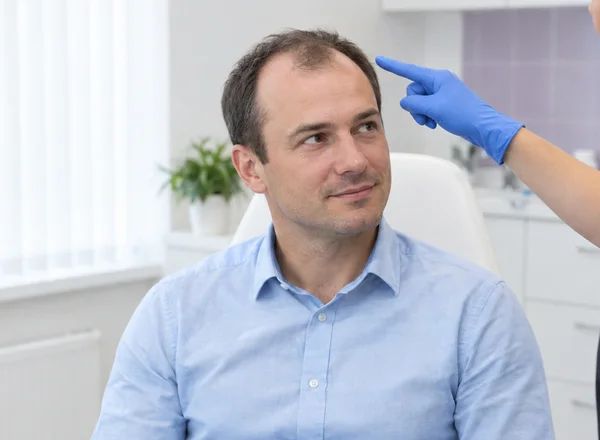

Write to us in Telegram or WhatsApp and we take it from there: the coordinator asks for photos of the thinning area in a messenger, then a doctor tells you whether a transplant would help. Free, no operation booked.

services
The figure is set at the free consultation once the grafts have been counted, and the contract keeps it that way.
suture-free graft extraction

$2,200$2,700
or $367/mo — 0% instalments for 6 months
Secure the priceimplantation without channels

$2,500$2,900
or $417/mo — 0% instalments for 6 months
Secure the pricecombined technique

$2,700$2,900
or $450/mo — 0% instalments for 6 months
Secure the price| The doctor's first look | Free |
|---|---|
| Eyebrow transplant, FUE | |
| Beard transplant, FUEinstalments $467/mo | |
| Hair trichopigmentation | |
| PRP therapy / session | $200 |
all included
From the earliest planning to the 12-month follow-up.
You pay no extra charges on the day of surgery.
two further spots
A hair transplant is not only for the scalp. Same grafts from the back of the head, same FUE method — only the area changes.
FUE method, no cuts or stitches

Grafts are drawn from the donor area at the back of the head and moved through micro-punctures of about 1 mm, and no scars are left behind. The shape is agreed with the doctor before the operation, taking your facial features into account. Transplanted hair grows for life: trim and style the beard as usual.
$2,800$3,000
or $467/mo — 0% instalments for 6 months
Secure the priceFUE method, no cuts or stitches

The eyebrow shape is drawn by the surgeon at the initial consultation; references are looked through together and the design takes your facial features into account. The hairs are implanted at the right angle, so the eyebrows look natural, and it helps where plucking stopped hair growth.
$1,600$1,700
a procedure done with local anaesthesia only
Secure the priceThe doctor works through your donor zone, establishes a graft number and shows the outcome it supports. The consultation gives you the figure, and the contract keeps it fixed.

Message our coordinator
Free online consultation · Reply within 15 minutes
Message us on TelegramMessage us on WhatsAppBy messaging us, you agree to our Privacy Policy
Process
From consultation to going home — all in one day

This first meeting is for understanding. FUE and DHI are explained, questions are answered, and the doctor examines what the donor area holds.

To pin down a day for the operation, leave a deposit. Card payment on the spot works, and so does an online transfer.

Getting ready involves laboratory tests, with the clinic providing both the roster of what is needed and how to do it.

The scalp receives a local anaesthetic first, leaving the operation pain-free.

The grafts come from the donor area, located at the back of the head or by the temples, and nothing needs sewing up.

Grafts are carefully implanted into the area of hair loss by the surgeons.
Everything required afterwards comes from the clinic, together with a complete set of directions.

Crusts come off, swelling goes down, and the area gradually recovers

A normal stage. Only hairs fall out, the follicles stay in place

First sprouts come through, the difference starts showing

Coverage improves, the main volume and the shape stand out

You see the full volume and a convincingly natural edge

Free, before the operation and with nothing owed.
Meet a specialistdoctors

Hair transplant doctor, trichologist, surgeon
10 years in practice

Dermatovenereologist, trichologist, surgeon
11 years of experience

Plastic surgeon
9 years of experience

Plastic surgeon
9 years of experience

Assistant
9 years of experience
The doctor assesses the donor zone, counts the grafts and explains the outcome you can expect.
Meet a specialistcoordinators
From your very first message until the last days of recovery, one coordinator looks after you.

Your care specialist
Will support you ahead of and after surgery
Gets the forms done and the times fixed
Your care specialist
Will support you ahead of and after surgery
Gets the forms done and the times fixed

Your care specialist
Will support you ahead of and after surgery
Gets the forms done and the times fixed
Your care specialist
Will support you ahead of and after surgery
Gets the forms done and the times fixed













Our team explains the details and books the consultation at a convenient time
Message us on WhatsApp Send your detailsThe usual queries

Yes. People from scattered cities and other countries are taken on without difficulty, and everything can be settled online beforehand.
FUE: $2,200 (≈ XAF 1,300,000). DHI: $2,500 (≈ XAF 1,500,000). Combined: $2,700 (≈ XAF 1,600,000). A free consultation and graft count gives you the final, contract-fixed price with no hidden extras.
Surgery is done in one day, and patients go home the same day it's finished.
Not at all — you feel nothing, because local anaesthesia is used.
FUE means tweezer-based, incision-free graft harvesting. DHI means channel-free implantation with a Choi pen. Combined DHI+FUE uses FUE for harvesting and the DHI pen for implanting.
A doctor will count them during the free consultation, using the donor zone as the basis for the total.
First comes 0–10 days of healing, then shedding at 2–4 weeks (a normal stage). Growth starts at 3–4 months, density is clear by 6–9 months, and the final outcome shows at 12–18 months.
You get a lifetime hair growth guarantee, written into the contract.
The clinic works under a medical licence, and care meets the standards and clinical guidelines
per Ministry of Health.

Papers proving the qualifications behind every operation
Browse the documentsAKC POMOSHCH LLC
our clinic's legal entity
1057746096924
OGRN
7728536872
INN
The transplant fits a patient from Libreville because it is short and light: FUE and DHI, no cuts, no stitches, local anaesthesia, one day. Graft survival is 98-100 %, and a price from $2,200 (≈ XAF 1,300,000) is fixed in the contract after a free count of the grafts.
Getting an answer in Libreville takes no appointment at all: the online conversation is free of charge, the doctor reviews pictures of the thinning area and tells you whether a transplant helps. The clinic works 24/7.
You heal over 0-10 days. Later on, at 2-4 weeks, the transplanted hairs shed; it is normal and it undoes none of the work already done. Growth begins at 3-4 months, and what grows then is yours to keep.
Prices are in US dollars; the amount in brackets is an approximate conversion to XAF at the rate of 02.10.2026. The final price is fixed in your contract.
By messaging us, you agree to our Privacy Policy
What patients write after this operation. Reviews are translated from the original language.
Andrey M.
I had the operation a month ago. Before and after surgery they were always in touch and helped with questions about my tests. The operation itself went wonderfully, the staff are polite and masters of their craft, you feel you are in safe hands. I am recovering now, and they answer all my questions. I am happy and I recommend them!
DHI hair transplant
Pavel Sinitsyn
The best clinic of all the ones I was choosing from. No regrets at all! The result is simply amazing, I am thrilled. I recommend it to everyone: these people do great work and make people happy. Once again, a huge thank you to everyone. Roman, the head of the clinic, is the best: he was personally in touch with me and looked after my recovery. Thank you for making my dream come true.
FUE hair transplant
Maria Akopyan
I thought about an eyebrow transplant for a long time and finally went for it. At first I was afraid the result would look unnatural, but when I saw my new eyebrows I was delighted! They came out full and in harmony with my face. I can hardly believe that now I just wash my face and go, I have never felt so free. For anyone tired of constant make-up, a transplant is a real lifesaver!
Eyebrow transplant (FUE)
Alexander M.
I really wanted a thick beard, but I had problems with it. I tried every home remedy and minoxidil, and nothing helped. After a long search for the best clinic I settled on this one. Thank you so much for the service, I liked everything and now I am happy! I had the beard transplant 10 months ago and I am very pleased with the result. By the way, the music in the clinic was great, as far as I remember. A friend of mine has already come to you for a transplant on my advice and was also happy with the result. I wish you every success!
Beard transplant (FUE)
Vladimir Z.
I went to the clinic to see a trichologist and had a hair transplant. I really liked the doctor's approach, and all the recommendations helped. I want to point out that nobody tries to sell you extra services: they tell you things as they are, and if some treatment is not needed, they do not push it. Cosy and clean.
DHI hair transplant
Artem Popov
This may sound obvious, but a head of hair really changes everything in your life. You feel much more confident and go through life like a winner. And it is all thanks to the doctor at this clinic and to the staff who take care of their patients. Many thanks to the clinic for a happy life with new hair, for the comfortable conditions and for the professionalism during the hair transplant.
FUE hair transplant
Page medically reviewed by Anastasia A. Kolesnik, hair transplant doctor. Review date: .
Libreville is the capital and largest city of Gabon, on the Gabon Estuary near the Gulf of Guinea. At the 2013 census the city had a population of 703,904, and it is home to about one third of the country's inhabitants. It is a city of offices, ministries, banks, schools, markets and a busy waterfront, where people are seen every day and appearance matters at work, at church, at weddings and at family gatherings. That is one reason questions about thinning hair, a receding frontal hair line or a patchy beard come up so often in local conversations.
Hair transplantation by the FUE or DHI method is a planned procedure, not a quick fix. Grafts are taken from the back of the head, the donor area, and moved through micro-punctures of about 1 mm, so nothing scars over. In Libreville the practical questions are mostly about timing: when to book the operation, how it fits around work and family, and how the tropical climate affects the first weeks of healing.
City Medical Centre works with patients in Libreville through a free online consultation. You send photos, describe your history and goals, and a coordinator answers on Telegram or WhatsApp. The coordinators are available around the clock, 24/7, so you can write after work or in the evening when the city cools down.
Libreville has a tropical monsoon climate with a long wet season and a short dry one. The wet season lasts about nine months, from September to May. The dry season runs from June to August and is shaped by the cold Benguela Current, which suppresses rainfall. Even then the sky stays very cloudy. Average high temperatures stay near 29 °C all year, so there is no cool season in which to hide the first days of healing.
For the early period after the operation this means a few simple habits. Keep the head out of direct sun even when the cloud cover looks thick, because bright diffuse light still reaches the scalp. Avoid long periods in heat and heavy sweating while the small wounds close; the first stage of healing takes 0–10 days. Ask your surgeon which headwear is suitable and how clean and loose it must be, since tight or dirty caps are a common source of trouble in a humid city.
During the rainy months, heavy downpours and the crowded streets around busy districts create a different problem: wet hair, dust and splashes of dirty water. Plan your first days at home, with a clear routine for washing the head exactly as the doctor describes, and do not improvise with local products unless the doctor has approved them.
Because temperatures barely change through the year, the choice of season in Libreville is less about heat and more about rain, humidity and your own calendar. The dry months of June to August bring less rainfall, which makes the first days easier if you must go outside, but the cloud cover remains. The wet months, September to May, are fine too if you stay at home during the first days and organise your errands in advance.
A sensible approach is to pick a period in which you can stay home for the first stage of healing, 0–10 days, without pressure from work. Then look at the timeline ahead: 2–4 weeks for transplanted hairs to let go, which is expected; 3–4 months for hair to come back; 6–9 months for visibly thicker hair; and 12–18 months for the settled look. If you have an important family event or ceremony in mind, count backward from it and leave plenty of margin, because the result is judged months later, not in the first weeks.
Your coordinator can help you build this calendar in the online consultation, taking into account your work schedule, school terms if you are a student, and any planned celebrations.
Libreville concentrates government, banking, trade, port activity and services. Many residents work in offices, shops, the busy commercial areas around Mont-Bouët and Nombakélé, or in industry around Oloumi. For office work, returning is usually easier once the early healing days have passed, but you should ask the surgeon exactly when the treated area will look presentable and when you can go back to a normal routine. Work that involves dust, heavy sweating or a hard hat needs a separate conversation.
Students at Omar Bongo University or at the international schools of the city should plan the operation around exams and presentations. The shedding phase at 2–4 weeks is a normal part of the process, but it can make some people self-conscious, so choose a calm period rather than the weeks before a major event.
Commuting by road in a large city means exposure to sun, dust and crowds. In the first days, arrange for a lift or a quiet time of day, keep the scalp covered as the doctor advises and avoid contact in packed transport. Tell your family and colleagues in advance so that nobody touches or pushes the head by accident.
Life in Libreville has a strong food culture, from seafood restaurants along the Boulevard du Bord de Mer to home cooking at family tables. Meals and gatherings are social occasions, and refusing an invitation is not always easy. Plan the operation so that the first days of healing do not coincide with a wedding, a funeral gathering or a big family meal. If you cannot avoid it, ask the surgeon what is allowed regarding hats, heat, smoke from cooking fires and alcohol.
Sport is part of life on the coast, with football, running along the seafront and swimming. After the operation you should not return to these activities on your own schedule. Ask your doctor for exact guidance on when to go back to the gym, running and team games, and when the sea or a swimming pool is acceptable. Salt water, chlorine and sun on a healing scalp are all reasons to wait for clear permission.
Sweat is a practical issue in a city with constant warmth. After exercise, the head needs to be kept clean according to the instructions you receive. Do not rely on advice from friends who had a different procedure; the method, the number of grafts and your skin type change the plan.
A good candidate is usually an adult with stable hair loss, enough healthy hair in the donor area at the back of the head and realistic expectations. The same method is used for the scalp, the frontal hair line, the crown, eyebrows and the beard. For men in Libreville who want a fuller beard or a clean line around the cheeks, the doctor discusses the shape with you before the operation, taking your facial features into account. Transplanted hair grows for life, so you can trim and style the beard as usual.
Some people should wait or choose another approach: those with active scalp infections or skin disease, unstable general health, uncontrolled chronic conditions, or hair loss that is still progressing quickly and has not been assessed. A doctor reviewing your photos and history will say honestly whether you are a candidate. Do not conceal medicines you take, previous operations or allergies.
Young patients who have just started to lose hair should know that a transplant does not stop the process in the untreated hair. A long-term plan, including medical treatment if suggested, is part of a responsible consultation.
Prepare a short list before the online consultation. Ask who will plan the hair line and how the shape is chosen for your face. Ask which method, FUE or DHI, is suitable for you and why. Ask how the donor area will look after the procedure, what anaesthesia is used, how long the stay is, and what the first days at home will look like in a warm, humid climate like that of Libreville.
Ask for the timeline in clear terms: 0–10 days for healing, 2–4 weeks for normal shedding of transplanted hair, 3–4 months for new growth to start, 6–9 months for real density, and 12–18 months for the final result. Ask what you should do if something looks wrong at home, and who you can reach quickly. A coordinator will be on the phone 24/7.
Also ask about follow-up. At City Medical Centre we stay with you from pre-op planning to 12 months later, with check-ups at months 1, 3, 6, 9 and 12. Ask how photos are sent, how they are compared and how decisions about further steps are made.
Libreville stretches along the Gabon Estuary, and its districts differ a lot in rhythm. Batterie IV and Lalala are mainly residential, Mont-Bouët and Nombakélé are busy commercial areas, Oloumi is a major industrial area, and Quartier Louis is known for its nightlife. Where you live and where you spend your day decide how much dust, noise and crowd your healing scalp will meet in the first days.
A person who lives in a quiet residential district and works from home has a very different recovery from someone who crosses the city daily to a market stall or a workshop. When you talk to the coordinator, describe your normal day in detail: how you get to work, how long you stay outdoors, whether you wear a helmet or a cap, and who is at home with you. This lets the team suggest a realistic routine for the early stage, which lasts 0–10 days for healing.
The port and the Trans-Gabon Railway station lie in Owendo, south of the main built-up area. People whose work is linked to the port, the railway or timber processing often spend long hours outdoors or in dusty halls. For them it is especially useful to agree with the doctor in advance how long to stay away from such places.
The Komo River passes through the city and empties into the ocean, and Libreville lies on the shores of the South Atlantic. Sea air, humidity and the habit of spending free time by the water are part of local life. After a hair transplant these pleasures need a pause.
Salt water, river water and crowded beaches are not suitable for a healing scalp. Ask the surgeon exactly when the sea or a pool becomes acceptable, and do not rely on what friends say about their own experience. A boat outing to Pointe Denis or a walk along the Boulevard du Bord de Mer in full sun is better postponed until the doctor agrees.
Plan the first weeks so that your free time is calm: reading, family, quiet evenings at home. Then, once the transplanted hairs have let go after 2–4 weeks, which is expected, and new growth begins at 3–4 months, you can return to your usual coastal life with clear permission from the doctor.
In a capital where many people know each other through work, church, school or family, a change in appearance does not go unnoticed. Some patients prefer to tell relatives and close colleagues in advance, so that nobody is surprised by a covered head or by the temporary redness and shedding.
It helps to explain that the shedding at 2–4 weeks is a normal stage and that the real change is judged at 6–9 months, when the hair looks visibly thicker, and at 12–18 months, when the look is settled. This protects you from comments and from your own impatience in the middle of the process.
If your spouse or an older relative has doubts, invite them to read the coordinator's answers with you. A calm, informed conversation at home is often more useful than any advertisement.
The first step is free and online. You write to a coordinator on Telegram or WhatsApp, send clear photos of the front, top, crown and back of the head, and describe how long the hair loss has been going on, any treatment tried and your health background. The coordinator passes this to the medical team, who give an assessment of what is realistic and what the plan could look like.
You can do this from home, from work during a break or late in the evening. No one expects you to decide in the first conversation. Take time to compare, to ask your family and to think about how the operation fits into your life in the city.
After the operation, contact continues through the same channels. Photos at the scheduled check-ups let the team follow your progress, and you can describe what you see as hair sheds, returns and thickens. One patient described it this way: from about the 4th month active, even growth began, the transplanted hair took very well, and the beard looked as natural as possible with no bald patches left.
Yes. The online consultation is free. You write to a coordinator on Telegram or WhatsApp, send photos and receive an assessment of your case without obligation.
Coordinators are available around the clock, 24/7. A coordinator will be on the phone 24/7, so you can write in the evening or at night, when it suits your work schedule in Libreville.
Temperatures stay near 29 °C all year and the wet season lasts from September to May, so humidity and sweat are constant. Protect the scalp from direct sun, keep it clean as instructed, wear only the headwear the doctor approves and avoid heavy sweating in the early days.
It brings less rain, but the sky stays very cloudy and heat remains. The choice depends more on your calendar. Pick a period when you can stay home for the early healing stage of 0–10 days.
Transplanted hairs let go after 2–4 weeks, which is expected. Hair comes back at 3–4 months, looks visibly thicker at 6–9 months and reaches a settled look at 12–18 months.
Grafts are taken from the back of the head, the donor area, and moved through micro-punctures of about 1 mm, so nothing scars over. The doctor will explain what to expect in your case.
Yes. Transplanted hair grows for life, so you can trim and style the beard as usual. The shape is discussed with you before the operation, taking your facial features into account.
We stay with you from pre-op planning to 12 months later. Check-ups take place at months 1, 3, 6, 9 and 12, and you can send photos and questions through the same chat.
Do not decide this yourself. Ask the surgeon for exact guidance on when sport, sea water and swimming pools are acceptable, because sun, salt and chlorine can irritate a healing scalp.
Not for the consultation, which is online. Describe your daily route and surroundings to the coordinator on Telegram or WhatsApp so that the advice on dust, sun and crowds fits your real situation.
Ask the surgeon before the operation. Headwear that is tight, dirty or hot can irritate the healing area, especially in a humid city, so the doctor should approve exactly what you use and when.
It is your choice, but many people find it easier to explain in advance that shedding after 2–4 weeks is normal and that thicker hair appears at 6–9 months, with the settled look at 12–18 months.

 Forceps
 Minimal


