





























before op
12 months along
2,800 grafts
FUE method
City Medical Centre
0% instalments
from $367/mo
Guidance and a total — $0.
True story
before op
12 months along
FUE — no cuts and no stitches. Graft numbers and result forecast done for you, free of fee — before you decide.
No fee at all, no surgery booking required
Message our coordinator
Free online consultation · Reply within 15 minutes
Message us on TelegramMessage us on WhatsAppBy messaging us, you agree to our Privacy Policy
results
All cases are real City Medical Centre patients.
before op
12 months along
2,800 grafts
FUE method

before op
12 months along
3,500 grafts
FUE method

before op
12 months along
2,600 grafts
FUE method

before op
12 months along
3,000 grafts
FUE method

before op
12 months along
2,700 grafts
FUE method

before op
12 months along
3,300 grafts
FUE method

before op
12 months along
2,900 grafts
FUE method

before op
12 months along
2,500 grafts
FUE method

before op
12 months along
3,400 grafts
FUE method

before op
12 months along
2,500 grafts
FUE method

before op
12 months along
3,100 grafts
FUE method

before op
12 months along
3,600 grafts
FUE method

before op
12 months along
4,000 grafts
FUE method

before op
12 months along
3,200 grafts
FUE method

before op
12 months along
3,000 grafts
FUE method

before op
12 months along
3,700 grafts
FUE method

before op
12 months along
2,700 grafts
FUE method

before op
12 months along
3,800 grafts
FUE method

before op
12 months along
3,300 grafts
FUE method

before op
12 months along
2,800 grafts
FUE method

before op
12 months along
2,500 grafts
FUE method

before op
12 months along
3,900 grafts
FUE method

before op
12 months along
3,500 grafts
FUE method

before op
12 months along
3,800 grafts
FUE method

before op
12 months along
2,900 grafts
FUE method

before op
12 months along
3,600 grafts
FUE method

before op
12 months along
2,600 grafts
FUE method

before op
12 months along
2,700 grafts
FUE method

before op
12 months along
3,700 grafts
FUE method

before op
12 months along
3,200 grafts
FUE method

before op
12 months along
3,000 grafts
FUE method

before op
12 months along
2,800 grafts
FUE method

before op
12 months along
4,000 grafts
FUE method

before op
12 months along
3,400 grafts
FUE method

before op
12 months along
2,900 grafts
FUE method

before op
12 months along
3,100 grafts
FUE method

before op
12 months along
2,600 grafts
FUE method

before op
12 months along
3,300 grafts
FUE method

before op
12 months along
3,900 grafts
FUE method

before op
12 months along
3,500 grafts
FUE method

before op
12 months along
2,700 grafts
FUE method

before op
12 months along
3,800 grafts
FUE method

before op
12 months along
3,200 grafts
FUE method

before op
12 months along
3,000 grafts
FUE method

before op
12 months along
2,800 grafts
FUE method

before op
12 months along
3,100 grafts
FUE method

before op
12 months along
3,600 grafts
FUE method
Comparison
Grafts are transferred by one of three technologies: classic FUE, suture-free DHI and a combined protocol. Compare implantation technique, tissue trauma and graft survival and choose with open eyes.
Classic method requiring no cuts or sutures

$2,200
$2,700
Graft implantation technique
ForcepsGraft trauma
MinimalA natural growth angle
NaturalGraft survival
98–100%Suitable for
Androgenetic alopeciaStitch-free implantation with a Choi pen

$2,500
$2,900
Graft implantation technique
DHI pen, Choi implanterGraft trauma
MinimalA natural growth angle
NaturalGraft survival
98–100%Suitable for
DensificationFUE for extraction, DHI implant

$2,700
$2,900
Graft implantation technique
FUE extraction, DHI implantationGraft trauma
MinimalA natural growth angle
NaturalGraft survival
98–100%Suitable for
Androgenetic alopecia and densificationSurvival and trauma figures are method averages and only a guide: the exact numbers depend on the transplant area and the patient's individual features, and the doctor clarifies them at the consultation.
Have a consultation


















about the clinic
Clean, well-equipped rooms and staff who notice you

Anything unclear will be explained, and a suitable consultation slot arranged
Message us on WhatsApp Contact us nowIf your case can be solved without surgery, the doctor says so right at the consultation — and you keep your money. Below are the conditions in which a transplant really works.
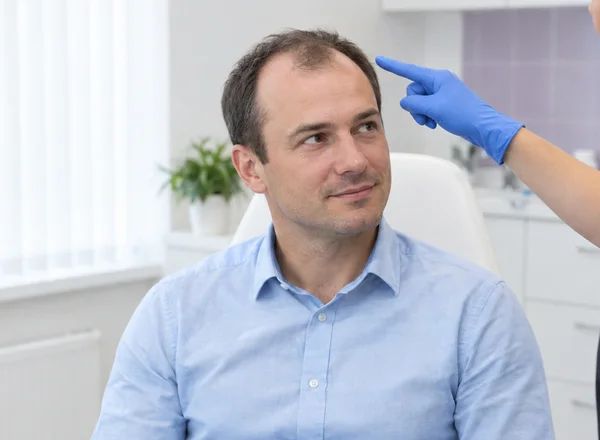

Write to us in Telegram or WhatsApp and a coordinator will ask for photos of the affected area in a messenger; a doctor reviews them and tells you whether a transplant would help. It is free and commits you to nothing.

services
The free consultation gives you a graft count and a firm figure that the contract records.
suture-free graft extraction

$2,200$2,700
or $367/mo — 0% instalments for 6 months
Freeze your quoteimplantation without channels

$2,500$2,900
or $417/mo — 0% instalments for 6 months
Freeze your quotecombined technique

$2,700$2,900
or $450/mo — 0% instalments for 6 months
Freeze your quote| First medical check | Free |
|---|---|
| Eyebrow transplant, FUE | |
| Beard transplant, FUEinstalments $467/mo | |
| Hair trichopigmentation | |
| PRP therapy / session | $200 |
all included
Support spans the pre-op stage and the next 12 months.
No surprise extra charges on the day of surgery.
two more sites
It is not only about the scalp. The same grafts from the back of the head, the same FUE method — just the area changes.
FUE method, no cuts or stitches

Grafts taken from the back of the head, the donor area, move through micro-punctures of about 1 mm, with no scars left. The doctor discusses the shape with you before the operation, taking your facial features into account. The hair grows for life once transplanted; the beard can be trimmed and styled as usual.
$2,800$3,000
or $467/mo — 0% instalments for 6 months
Freeze your quoteFUE method, no cuts or stitches

The first appointment is when the surgeon draws the brow contour, compares references with you and matches the design to your facial proportions. Each hair takes the natural growth angle, giving brows that hold up to a close look. It also helps where years of plucking stopped growth.
$1,600$1,700
a same-day procedure with the scalp area numbed
Freeze your quoteThe donor zone is examined and measured in grafts, and the realistic outcome is described to you. The figure comes at the end of the consultation and goes straight into the contract.

Message our coordinator
Free online consultation · Reply within 15 minutes
Message us on TelegramMessage us on WhatsAppBy messaging us, you agree to our Privacy Policy
Process
From consultation to going home — all in one day

This free initial meeting with the doctor is where FUE and DHI are explained, your questions get answered, and a personal plan for the operation takes shape.

The date is yours after a deposit; pay with a bank card on site if that is convenient, or handle it online.

Preparation is guided by the clinic, which supplies a list of necessary tests and instructions to complete them ahead of the operation.

The scalp is numbed locally, and the operation passes without pain.

Grafts come from the donor area — the back of the head or temples — collected in a way that avoids stitches entirely.

Surgeons carefully implant the grafts into the balding zone.
Nothing about healing is left vague: the clinic provides the supplies and explains their use in full.

Scabs disappear, the swelling goes down, the skin returns to normal

The visible hair goes, the root underneath is untouched

Growth picks up slowly, and the result becomes visible

Thickness picks up, and the body of the volume and shape emerge

The final thickness and natural hairline take shape

Free, before surgery, with no obligations at all.
Have a consultationdoctors

Hair transplant doctor, trichologist, surgeon
10 years in practice

Dermatovenereologist, trichologist, surgeon
11 years in practice

Plastic surgeon
9 years in practice

Plastic surgeon
9 years in practice

Assistant
9 years in practice
The doctor examines the donor zone, counts what is available and explains the outcome you can expect.
Have a consultationcoordinators
The same coordinator answers you before, during and after, all the way through recovery.

Your care coordinator
Answers questions on both sides of the operation
Manages all your documents and your slots
Your care coordinator
Answers questions on both sides of the operation
Manages all your documents and your slots

Your care coordinator
Answers questions on both sides of the operation
Manages all your documents and your slots
Your care coordinator
Answers questions on both sides of the operation
Manages all your documents and your slots













Anything unclear will be explained, and a suitable consultation slot arranged
Message us on WhatsApp Contact us nowRegular questions

It is possible. Requests reach the clinic from cities near and far, and a doctor will consult you online before you decide anything.
FUE costs $2,200 (≈ CDF 5,100,000), DHI costs $2,500 (≈ CDF 5,800,000), and the combined DHI+FUE method costs $2,700 (≈ CDF 6,300,000). The exact amount is confirmed at a free consultation after your grafts are counted, and it is fixed in the contract.
One day in surgery, then straight back to your own home.
Not at all painful — local anaesthesia works for the full session.
FUE relies on tweezer harvesting with no incisions or stitches. DHI relies on Choi-pen implantation without channels. The combined DHI+FUE approach harvests by FUE and implants by DHI.
You will learn the exact figure from the doctor at the free consultation, which rests on the donor area.
0–10 days: healing. 2–4 weeks: the transplanted hairs shed, which is normal. 3–4 months: growth resumes. 6–9 months: density becomes noticeable. 12–18 months: the result is complete.
A lifetime guarantee of hair growth is included, confirmed in your contract.
The clinic works under a medical licence, care follows the standards and clinical guidelines
per Ministry of Health.

Certificates and diplomas open for you to check
Open the documentsAKC POMOSHCH LLC
the firm's legal entity
1057746096924
OGRN
7728536872
INN
The procedure is built to fit a working life in Kisangani: FUE and DHI need neither cuts nor stitches, local anaesthesia is enough, and everything fits into one day. Graft survival is 98-100 %, and a price from $2,200 (≈ CDF 5,100,000) is fixed in the contract after a free count.
A patient in Kisangani can start on any evening, because the online consultation is free and needs only pictures of the thinning area for the doctor to judge whether a transplant helps. Daily contact, 24/7.
The skin settles in 0-10 days, the transplanted hairs drop out at 2-4 weeks as part of the process, growth appears at 3-4 months, thickness at 6-9 and the final result at 12-18. Follow-ups at 1, 3, 6, 9 and 12 months with photo tracking by a personal coordinator and a lifetime growth guarantee.
Prices are in US dollars; the amount in brackets is an approximate conversion to CDF at the rate of 02.10.2026. The final price is fixed in your contract.
By messaging us, you agree to our Privacy Policy
What patients write after this operation. Reviews are translated from the original language.
Andrey M.
I had the operation a month ago. Before and after surgery they were always in touch and helped with questions about my tests. The operation itself went wonderfully, the staff are polite and masters of their craft, you feel you are in safe hands. I am recovering now, and they answer all my questions. I am happy and I recommend them!
DHI hair transplant
Pavel Sinitsyn
The best clinic of all the ones I was choosing from. No regrets at all! The result is simply amazing, I am thrilled. I recommend it to everyone: these people do great work and make people happy. Once again, a huge thank you to everyone. Roman, the head of the clinic, is the best: he was personally in touch with me and looked after my recovery. Thank you for making my dream come true.
FUE hair transplant
Maria Akopyan
I thought about an eyebrow transplant for a long time and finally went for it. At first I was afraid the result would look unnatural, but when I saw my new eyebrows I was delighted! They came out full and in harmony with my face. I can hardly believe that now I just wash my face and go, I have never felt so free. For anyone tired of constant make-up, a transplant is a real lifesaver!
Eyebrow transplant (FUE)
Alexander M.
I really wanted a thick beard, but I had problems with it. I tried every home remedy and minoxidil, and nothing helped. After a long search for the best clinic I settled on this one. Thank you so much for the service, I liked everything and now I am happy! I had the beard transplant 10 months ago and I am very pleased with the result. By the way, the music in the clinic was great, as far as I remember. A friend of mine has already come to you for a transplant on my advice and was also happy with the result. I wish you every success!
Beard transplant (FUE)
Vladimir Z.
I went to the clinic to see a trichologist and had a hair transplant. I really liked the doctor's approach, and all the recommendations helped. I want to point out that nobody tries to sell you extra services: they tell you things as they are, and if some treatment is not needed, they do not push it. Cosy and clean.
DHI hair transplant
Artem Popov
This may sound obvious, but a head of hair really changes everything in your life. You feel much more confident and go through life like a winner. And it is all thanks to the doctor at this clinic and to the staff who take care of their patients. Many thanks to the clinic for a happy life with new hair, for the comfortable conditions and for the professionalism during the hair transplant.
FUE hair transplant
Page medically reviewed by Anastasia A. Kolesnik, hair transplant doctor. Review date: .
Kisangani is the capital of Tshopo Province, on the Congo River in the eastern part of the central Congo Basin. It is the country's fifth-most populous urban area, with an estimated population of 1,602,144 as of 2016. It is also the largest of the cities in the tropical woodlands of the Congo. For a city of this size, hair loss is a quiet but common topic. Men notice a receding frontal hair line or a thin crown, and many are unhappy with patchy beards. Women sometimes notice thinning at the parting.
Many residents work in trade, river transport, education, media or the service sector. Kisangani is an important commercial hub, so people meet clients and colleagues every day, and appearance matters. People here are often practical. They want to know how the operation works, how many weeks of adjustment to plan for and what it means for their working week. This text covers those questions for FUE and DHI hair transplantation, using the realities of life in Kisangani.
In both methods, grafts are taken from the back of the head, the donor area, and moved through micro-punctures of about 1 mm, so nothing scars over. FUE is the technique in which grafts are extracted one by one and then placed in prepared channels. DHI places them with a special implanter pen. Your surgeon will explain which method suits your case, density goals and the size of the area to be covered.
The shape of the new hair line is not a matter of chance. The doctor discusses the shape with you before the operation, taking your facial features into account. Bring photographs of yourself from earlier years. They help the team understand what looks natural on you, rather than copying a template.
The same logic applies to the beard and the moustache. A patient who shared his experience wrote that from about the 4th month active, even growth began. The transplanted hair took very well, and the beard now looks as natural as possible, with no bald patches left. The beard became much thicker and denser, with the shape he had thought about for a long time. Transplanted hair grows for life, so you trim and style the beard as usual.
Kisangani lies about 80 kilometres from the equator and has a tropical monsoon climate. Temperatures are uniformly high throughout the year, averaging around 25 °C with little daily variation. Humidity is high, averaging 86%, and annual rainfall of 1,620 millimetres falls fairly regularly. There is no cold season to wait for, so recovery planning here is about heat, humidity and rain rather than winter and summer.
In the first days after surgery, the scalp is healing. Sweat, damp air and dust from the streets are all things to keep away from the treated area. Choose a loose, clean, breathable cap or head covering that your surgeon approves, and avoid tight hats that rub the grafts. Do not wear a helmet or any tight headwear without asking the team first. Change pillowcases often, because humid nights favour irritation.
Strong equatorial sun also matters. Direct sun on a freshly treated scalp is something to avoid in the early period, so plan outdoor errands for shaded hours and carry an umbrella. Your coordinator can give you a day-by-day care routine suited to a hot, humid city. The cool breeze that often blows off the Congo River is pleasant, but it does not replace sensible protection from sun and dust.
Because Kisangani has no cold season, the choice of month depends on your own calendar more than on the weather. Rainfall occurs fairly regularly, and even the driest month, January, brings rain. So you will not find a fully dry window. Instead, think about what is easiest for you: a quieter period at work, a period without large family ceremonies and a time when you can stay in a calm, clean environment for the first days.
The healing phase is short compared with the whole result: 0–10 days for healing, 2–4 weeks for normal shedding of transplanted hair, 3–4 months for new growth to start, 6–9 months for real density, and 12–18 months for the final result. Count backwards from the date of an important event, such as a wedding, a graduation or a festival season. Give yourself generous time before a big photo or public appearance.
If your job keeps you outdoors, for example in river loading, market work or fieldwork, choose a period when you can limit sun and sweat during the first stage. Discuss this directly with your coordinator during the online consultation.
Kisangani is a working city. It is a major marketing and distribution centre for the north-eastern part of the country, and its economy includes trade, industry, agriculture, brewing, textiles and media. Many people cannot disappear from their duties for long. For office, shop and desk work, the early days require mainly care of the scalp and a discreet head covering. For heavy manual work or work in dust, plan a longer pause or lighter tasks until your surgeon agrees.
Students at the University of Kisangani and other institutions have their own timetable questions. Exams and presentations are best planned after the first healing days. Explain to teachers and relatives that small crusts and redness belong to normal healing, so you do not have to hide at home out of embarrassment.
Remember the shedding stage. 2-4 weeks — Transplanted hairs let go, as expected. Many people are alarmed when this happens. It is part of the cycle, not a failure. After that, 3-4 months — Hair comes back, and the change is gradual. Tell colleagues and family little, or as much as you like; this is a personal decision.
Sport matters in Kisangani. Football draws large crowds, and the city has several stadiums, including Stade Lumumba. Many men play on neighbourhood pitches or follow the local teams. After a hair transplant, heavy exertion, heat and sweating are not advised during the early healing, and a ball to the head is a clear no. Ask your surgeon for a specific date before you return to training, contact sport or swimming. Do not decide this by yourself or by what a friend did.
The same applies to the river and to pools and hotel bathing areas. Fresh grafts should not sit in river water, chlorinated water or sea-type immersion until your team gives permission. Treat the first weeks as a protected period. Showering with the products and technique recommended by the team is the rule.
Social life is rich here. The city's culture includes music, with rumba, soukous and ndombolo, and events such as the Cercle Boyoma Culture festival and the Kisangani Jazz Festival. Dancing in a crowd, sweating and being jostled are not ideal during the first days. Plan the operation so that you are not obliged to attend such an event in the early stage, or attend in a calm way, with a protective head covering and shade.
Kisangani's food culture is diverse. The local table includes manioc, river prawns known as kosa kosa and Kisangani coffee, which is still main street fare. Nothing in this traditional diet forbids a hair transplant. Still, your body heals better with regular meals, enough water, protein and rest. In hot, humid weather, drink water regularly.
Ask your surgeon about alcohol, smoking and strong stimulants in the first days. Ask also about spicy food and whether any medicine you take, including traditional remedies and supplements, could interfere with healing. Bring a list of everything you take. Be honest about it with the doctor; this is for your safety.
Family meals and celebrations are important in the city, and refusing food or drink can seem rude. A simple sentence to relatives such as «I am following my doctor's plan for a few weeks» is enough. Do not let social pressure push you to go back to heavy habits too early.
Good candidates are generally adults with stable hair loss and enough healthy donor hair at the back of the head. Others may need to wait or choose a different approach: people with active scalp disease, unstable or rapidly progressing hair loss, certain chronic illnesses, uncontrolled conditions or unrealistic expectations. Only an individual assessment can answer this. Photographs and a medical history, sent online, are the first step.
Prepare questions in advance. Which technique, FUE or DHI, is better for me and why? How will the new hair line fit my face? How many grafts can be taken from my donor area without making it look thin? What will the first days look like? Which medicines should I stop or continue? Whom do I contact if I see swelling, bleeding or fever? What does the follow-up look like?
On follow-up: We stay with you from pre-op planning to 12 months later. There are check-ups at months 1, 3, 6, 9 and 12. Photographs at each stage allow you and the doctor to compare progress honestly, because the final result takes time: 12–18 months after surgery.
Kisangani sits on the Congo River at the furthest navigable point upstream, and the city's days follow the rhythm of the port, the markets and the river traffic. For a hair transplant this means practical planning. Think about who will run your shop, stall, office or errands in the first days, and who can help you at home so that you can rest in a clean, shaded room.
The city is a commercial hub for the north-eastern part of the country, so many people combine several activities in one week. Write down your commitments for the coming months before you speak to the coordinator. A clear calendar makes it easier for the medical team to suggest a realistic schedule, including the check-ups at months 1, 3, 6, 9 and 12.
Moving around the city is part of daily life, often on motorbikes, in shared vehicles or on foot. Dust, sun and rain can all meet the scalp on a single short journey. Ask the coordinator how to protect the treated area in the first days, and arrange transport that keeps you out of the sun and the rain.
Hair transplantation rewards patience, and the timeline is the same for every resident of Kisangani: 0–10 days for healing, 2–4 weeks for normal shedding of transplanted hair, 3–4 months for new growth to start, 6–9 months for real density, and 12–18 months for the final result.
It helps to take a photograph on the same day each month, in the same daylight and from the same angles. In a city with high humidity and constant warmth, the scalp can look different from day to day, so a regular photo routine gives you an honest comparison rather than a daily impression.
Do not compare your progress with a friend or relative. Growth speed varies from person to person, and a delay in the early months is not a sign of failure. If something worries you, write to the coordinator, who is on the phone 24/7, and send a photograph so that the doctor can judge it.
Kisangani is a city of many cultural communities, with strong family ties and lively neighbourhoods. News travels quickly, and a visible change in appearance can prompt questions at work, at church, at the market or at a family gathering. Decide in advance how much you want to say.
Some patients prefer to explain simply that they are treating hair loss. Others say nothing until the new hair is visible. Both choices are fine. What matters is that someone close to you knows your care plan and can remind you of it when you are tempted to skip a rule.
If you are deciding for a son, a brother or a husband, include him in the conversation from the start. A person who understands the stages and the limits of the result is calmer during the shedding phase and more disciplined with aftercare.
You start from your own city. The consultation is free and online, and coordinators are available 24/7 on Telegram and WhatsApp. You send clear photographs of the front, top, crown and back of the head, and of the beard if relevant, and describe your history: how long the loss has lasted, family history, chronic illnesses and medicines. The medical team studies your case and answers your questions.
The coordinator explains the plan step by step and stays in touch. At every stage a coordinator will be on the phone 24/7. This is useful in a city where working hours differ and where you may want to write in the evening after work. Ask as many questions as you need, in the language you are most comfortable with.
You decide without pressure. Compare what you hear with your own priorities, discuss it with your family and take time. A reliable medical team will not rush you, and will tell you if the operation is not yet suitable for you.
No, but it changes your care. High humidity, sweat, dust and strong sun need attention during the early healing. Use breathable head covering approved by your surgeon, avoid direct sun and keep the scalp clean as instructed.
The usual stages are 2-4 weeks for shedding of the transplanted hairs, 3-4 months for hair to come back, 6-9 months for visibly thicker hair, and 12-18 months for the settled look.
Yes. Transplanted hairs let go after 2-4 weeks, as expected. The follicles remain and new hair grows later.
Grafts are taken from the back of the head and moved through micro-punctures of about 1 mm, so nothing scars over. Your doctor will still assess your donor area individually.
Yes, the same approach is used for the beard. One patient reported that from about the 4th month active, even growth began, and the beard became much thicker and denser. Transplanted hair grows for life, so you trim and style it as usual.
The healing phase is 0–10 days, but sport, heavy work and swimming in the river or pool need your surgeon's permission. Ask for a clear date based on your job and activity.
You contact the coordinators on Telegram or WhatsApp, send photographs and medical details, and receive a free online consultation. Coordinators are available around the clock, 24/7.
We stay with you from pre-op planning to 12 months later, with check-ups at months 1, 3, 6, 9 and 12. A coordinator will be on the phone 24/7.
People with active scalp disease, very unstable hair loss, certain chronic conditions or unrealistic expectations may need to wait or choose another treatment. An individual online assessment will clarify this.
Yes, but tell the coordinator exactly what your work involves. Sun, sweat and dust are the main concerns in the early days, so you may need lighter duties or a pause until the surgeon agrees to a return.
In the first days there may be small crusts and redness that fade as healing goes on. A loose, clean head covering approved by the surgeon helps. How much you tell others is your own choice.
Take photographs monthly in the same light and from the same angles, and share them at the check-ups at months 1, 3, 6, 9 and 12. The final result is judged at 12–18 months after surgery.

 Forceps
 Minimal


