





























the start
12 months out
2,800 grafts
FUE method
City Medical Centre
0% instalments
from $367/mo
A chat and a costing — $0.
Real patient
the start
12 months out
FUE method, no cuts or stitches. Grafts and the result forecast totted up at no cost to you — before you decide.
No bill for it, no surgery booking required
Message our coordinator
Free online consultation · Reply within 15 minutes
Message us on TelegramMessage us on WhatsAppBy messaging us, you agree to our Privacy Policy
results
All cases are real patients of the clinic.
the start
12 months out
2,800 grafts
FUE method

the start
12 months out
3,500 grafts
FUE method

the start
12 months out
2,600 grafts
FUE method

the start
12 months out
3,000 grafts
FUE method

the start
12 months out
2,700 grafts
FUE method

the start
12 months out
3,300 grafts
FUE method

the start
12 months out
2,900 grafts
FUE method

the start
12 months out
2,500 grafts
FUE method

the start
12 months out
3,400 grafts
FUE method

the start
12 months out
2,500 grafts
FUE method

the start
12 months out
3,100 grafts
FUE method

the start
12 months out
3,600 grafts
FUE method

the start
12 months out
4,000 grafts
FUE method

the start
12 months out
3,200 grafts
FUE method

the start
12 months out
3,000 grafts
FUE method

the start
12 months out
3,700 grafts
FUE method

the start
12 months out
2,700 grafts
FUE method

the start
12 months out
3,800 grafts
FUE method

the start
12 months out
3,300 grafts
FUE method

the start
12 months out
2,800 grafts
FUE method

the start
12 months out
2,500 grafts
FUE method

the start
12 months out
3,900 grafts
FUE method

the start
12 months out
3,500 grafts
FUE method

the start
12 months out
3,800 grafts
FUE method

the start
12 months out
2,900 grafts
FUE method

the start
12 months out
3,600 grafts
FUE method

the start
12 months out
2,600 grafts
FUE method

the start
12 months out
2,700 grafts
FUE method

the start
12 months out
3,700 grafts
FUE method

the start
12 months out
3,200 grafts
FUE method

the start
12 months out
3,000 grafts
FUE method

the start
12 months out
2,800 grafts
FUE method

the start
12 months out
4,000 grafts
FUE method

the start
12 months out
3,400 grafts
FUE method

the start
12 months out
2,900 grafts
FUE method

the start
12 months out
3,100 grafts
FUE method

the start
12 months out
2,600 grafts
FUE method

the start
12 months out
3,300 grafts
FUE method

the start
12 months out
3,900 grafts
FUE method

the start
12 months out
3,500 grafts
FUE method

the start
12 months out
2,700 grafts
FUE method

the start
12 months out
3,800 grafts
FUE method

the start
12 months out
3,200 grafts
FUE method

the start
12 months out
3,000 grafts
FUE method

the start
12 months out
2,800 grafts
FUE method

the start
12 months out
3,100 grafts
FUE method

the start
12 months out
3,600 grafts
FUE method
Comparison
We work with three graft transfer technologies: classic FUE, suture-free DHI and a combined protocol. Compare the implantation technique, tissue trauma and graft survival to choose your method with open eyes.
Classic technique without incisions or stitches

$2,200
$2,700
Graft implantation technique
ForcepsGraft trauma
MinimalHair's natural angle
NaturalGraft survival
98–100%Suitable for
Androgenetic alopeciaSuture-free placement with a Choi pen

$2,500
$2,900
Graft implantation technique
DHI pen (Choi implanter)Graft trauma
MinimalHair's natural angle
NaturalGraft survival
98–100%Suitable for
DensificationExtraction by FUE, DHI implant

$2,700
$2,900
Graft implantation technique
FUE extraction, DHI implantationGraft trauma
MinimalHair's natural angle
NaturalGraft survival
98–100%Suitable for
Androgenetic alopecia and densificationSurvival and trauma figures are averages for each method, given as a guide: the precise numbers depend on the transplant area and the patient's individual features, and the doctor clarifies them at consultation.
Book an appointment


















about the clinic
Rooms you can rest in, equipment that works, attentive care

Put your questions to us and we will settle on a suitable consultation slot
Message us on WhatsApp Send detailsIf your case can be solved without surgery, the doctor will say so right at the consultation — and you will not waste your money. Below are the conditions in which a transplant really works.
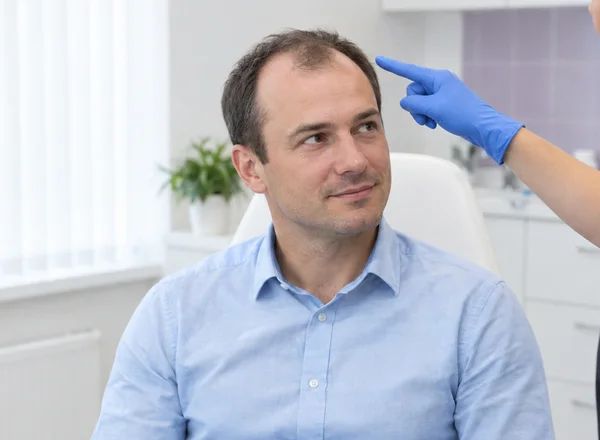

Write to us in Telegram or WhatsApp: the coordinator asks for photos in a messenger, and a doctor says whether a transplant would help. Free.

services
The price is named at the free consultation, after the grafts are counted, and fixed in the contract.
suture-free graft extraction

$2,200$2,700
or $367/mo — 0% instalments for 6 months
Hold the priceimplantation without channels

$2,500$2,900
or $417/mo — 0% instalments for 6 months
Hold the pricecombined technique

$2,700$2,900
or $450/mo — 0% instalments for 6 months
Hold the price| The first assessment | Free |
|---|---|
| Eyebrow transplant, FUE | |
| Beard transplant, FUEinstalments $467/mo | |
| Hair trichopigmentation | |
| PRP therapy / session | $200 |
all included
From the first pre-op steps to 12 months of aftercare.
On surgery day the price stays where it was.
another two zones
A hair transplant works beyond the scalp: same grafts from the back of the head, same FUE method — only the area changes.
FUE method, free of cuts or stitches

The grafts are taken from the donor area at the back of the head and moved through micro-punctures of about 1 mm, leaving no scars. Before the operation the doctor discusses the shape with you, taking your facial features into account. Transplanted hair grows for life: the beard is trimmed and styled as usual.
$2,800$3,000
or $467/mo — 0% instalments for 6 months
Hold the priceFUE method, free of cuts or stitches

Drawing the brow is part of the first consultation: the surgeon does it, sample images are examined with you, and the design follows the proportions of your face. Angled to match natural growth, the hairs make the brows look natural. Growth stopped by years of plucking is no barrier.
$1,600$1,700
a procedure you go home from, numbed locally
Hold the priceYour donor area is assessed, the grafts counted and the achievable result shown. The cost is quoted at the consultation and fixed in the contract.

Message our coordinator
Free online consultation · Reply within 15 minutes
Message us on TelegramMessage us on WhatsAppBy messaging us, you agree to our Privacy Policy
Process
From consultation to going home — all in one day

At this first meeting, the doctor walks you through both the FUE and DHI methods, addresses any questions you have, and designs a surgical plan built around your case — at no cost.

A deposit reserves the day. Bring a card to the clinic if you prefer paying on site, or complete the payment online.

A list of required tests reaches you from the clinic, together with the instructions needed to complete them all.

Local anaesthetic means the surgery passes without discomfort of any kind.

The donor supply lies behind the head or around the temples, and grafts come from there without any stitching.

Grafts that were taken earlier are implanted into the bald zone.
For patients in Beira, the final step is recovery, fully supported by the clinic's supplies and instructions.

Crusts clear, swelling recedes, the treated skin slowly mends

Expected, not a setback: the hair shafts go, the roots remain

New hairs emerge gradually, the result shows

Coverage builds, the main volume and the hairline come through

You see the full volume and a convincingly natural edge

Free, before the operation, and you owe nothing.
Book an appointmentdoctors

Hair transplant doctor, trichologist, surgeon
10 years of experience

Dermatovenereologist, trichologist, surgeon
11 years in practice

Plastic surgeon
9 years of experience

Plastic surgeon
9 years of experience

Assistant
9 years of experience
The doctor will assess the donor area, count the grafts and say what result is achievable.
Book an appointmentcoordinators
A personal coordinator guides you from your first enquiry all the way to recovery.

Aftercare coordinator
Stays close through preparation and recovery
Gets the forms done and the times fixed

Aftercare coordinator
Stays close through preparation and recovery
Gets the forms done and the times fixed

Aftercare coordinator
Stays close through preparation and recovery
Gets the forms done and the times fixed
Aftercare coordinator
Stays close through preparation and recovery
Gets the forms done and the times fixed













Put your questions to us and we will settle on a suitable consultation slot
Message us on WhatsApp Send detailsUsual things asked

Yes, they are accepted. City Medical Centre works with people from places large and small, and the case is discussed online before a decision.
FUE: $2,200 (≈ MZN 145,000). DHI: $2,500 (≈ MZN 160,000). Combined: $2,700 (≈ MZN 175,000). A free consultation and graft count gives you the final, contract-fixed price with no hidden extras.
It runs for one day only, and nobody stays the night.
No. Everything happens under local anaesthesia, without pain.
In FUE, grafts are harvested with a tweezer, no cuts or stitches involved. In DHI, a Choi pen implants grafts without opening channels first. The combined method pairs FUE harvesting with DHI implantation.
There is no fixed answer; the doctor works it out at zero cost from the condition of your donor zone.
Skin healing: 0–10 days. Then, at 2–4 weeks, transplanted hairs shed as expected. Regrowth is evident from 3–4 months, density is apparent by 6–9 months, so the outcome is final at 12–18 months.
You get a lifetime hair growth guarantee, written into the contract.
The clinic runs on a medical licence, care follows the standards and clinical guidelines
of Ministry of Health.

Diplomas and certificates of the operating surgeons
See the paperworkAKC POMOSHCH LLC
the clinic's legal entity
1057746096924
OGRN
7728536872
INN
FUE and DHI are built around convenience, which is what a patient in Beira usually needs: no cuts, no stitches, local anaesthesia on its own, and an operation that finishes the day it starts.
Everything starts with a photograph for a patient in Beira: the online consultation carries no fee, the doctor looks at the thinning area and answers whether a transplant helps in your case. The clinic works 24/7.
The skin settles in 0-10 days, the transplanted hairs drop out at 2-4 weeks as part of the process, growth appears at 3-4 months, thickness at 6-9 and the final result at 12-18. Follow-ups at 1, 3, 6, 9 and 12 months with photo tracking by a personal coordinator and a lifetime growth guarantee.
Prices are in US dollars; the amount in brackets is an approximate conversion to MZN at the rate of 02.10.2026. The final price is fixed in your contract.
By messaging us, you agree to our Privacy Policy
What patients write after this operation. Reviews are translated from the original language.
Andrey M.
I had the operation a month ago. Before and after surgery they were always in touch and helped with questions about my tests. The operation itself went wonderfully, the staff are polite and masters of their craft, you feel you are in safe hands. I am recovering now, and they answer all my questions. I am happy and I recommend them!
DHI hair transplant
Pavel Sinitsyn
The best clinic of all the ones I was choosing from. No regrets at all! The result is simply amazing, I am thrilled. I recommend it to everyone: these people do great work and make people happy. Once again, a huge thank you to everyone. Roman, the head of the clinic, is the best: he was personally in touch with me and looked after my recovery. Thank you for making my dream come true.
FUE hair transplant
Maria Akopyan
I thought about an eyebrow transplant for a long time and finally went for it. At first I was afraid the result would look unnatural, but when I saw my new eyebrows I was delighted! They came out full and in harmony with my face. I can hardly believe that now I just wash my face and go, I have never felt so free. For anyone tired of constant make-up, a transplant is a real lifesaver!
Eyebrow transplant (FUE)
Alexander M.
I really wanted a thick beard, but I had problems with it. I tried every home remedy and minoxidil, and nothing helped. After a long search for the best clinic I settled on this one. Thank you so much for the service, I liked everything and now I am happy! I had the beard transplant 10 months ago and I am very pleased with the result. By the way, the music in the clinic was great, as far as I remember. A friend of mine has already come to you for a transplant on my advice and was also happy with the result. I wish you every success!
Beard transplant (FUE)
Vladimir Z.
I went to the clinic to see a trichologist and had a hair transplant. I really liked the doctor's approach, and all the recommendations helped. I want to point out that nobody tries to sell you extra services: they tell you things as they are, and if some treatment is not needed, they do not push it. Cosy and clean.
DHI hair transplant
Artem Popov
This may sound obvious, but a head of hair really changes everything in your life. You feel much more confident and go through life like a winner. And it is all thanks to the doctor at this clinic and to the staff who take care of their patients. Many thanks to the clinic for a happy life with new hair, for the comfortable conditions and for the professionalism during the hair transplant.
FUE hair transplant
Page medically reviewed by Anastasia A. Kolesnik, hair transplant doctor. Review date: .
Beira is the capital and largest city of Sofala Province, in the central region of Mozambique, at the place where the Pungwe River meets the Indian Ocean. It is the fourth-largest city in the country by population, after Maputo, Matola and Nampula. The city had 397,368 inhabitants in 1997 and 530,604 in 2019. A port city with many students, traders, office workers and families tends to have a steady stream of men and women who start looking at their hair line, their crown or their beard in the mirror and want a plain answer about what can be done.
People in Beira usually ask us the same practical things. Will it look natural once it grows? How long until I can show up at work without anyone noticing? Can I plan around the rainy season? Is FUE or DHI better for my case? This text answers these questions with Beira's climate and daily rhythm in mind, so that you can prepare calmly before the first conversation with the surgeon.
You do not need to leave the city to begin. The consultation is free and online, and coordinators are available around the clock, 24/7, on Telegram and WhatsApp. You send clear photos of the front, the top, the crown, both sides and the back of the head, or of the beard area if that is what you want to restore, and you describe how long the thinning has been going on, which medicines you take and what chronic conditions you have.
The doctor then looks at the donor area at the back of the head, discusses the shape with you and takes your facial features into account before the operation. You can write in the evening after work or early in the morning, and a coordinator will be on the phone 24/7. We stay with you from pre-op planning to 12 months later, so the same conversation continues after the procedure and is not a one-time contact.
With both methods, grafts are taken from the back of the head, the donor area, and moved through micro-punctures of about 1 mm, so nothing scars over. The difference lies mainly in how the grafts are placed. Ask the surgeon which technique suits your density, hair type and the area to be covered, and why. A good answer is specific to your photos and not a general sales line.
Transplanted hair grows for life, so you can trim and style the beard as usual. For many men in Beira, where a neat beard or a short, clean cut is part of daily presentation, this matters: the result is meant to behave like your own hair at the barber, not like something that needs special handling.
Beira has a tropical savanna climate. The average temperature is 27.6 °C in January and 20.3 °C in July, the coldest month, and the rainy season runs roughly from November to April. Heat, humidity and strong coastal sun are the main factors to plan around in the first days after surgery, when the treated area is healing. The first stage is 0–10 days for healing.
In general terms: avoid direct sun on the scalp and ask the surgeon what headwear is suitable and when. A loose, clean, breathable cap is usually more comfortable than a tight one in humid weather. Sweating, dust from the road and sea or pool water are things to discuss with the doctor before you choose a date, because the sea is close to the whole city and many people spend weekends on the coast. Follow the written aftercare instructions, and keep your coordinator informed if the area looks unusual.
Because the rainy season runs roughly from November to April, many patients prefer the cooler, drier months for the first weeks of healing, when it is easier to stay comfortable and avoid heavy sweating. July is the coldest month, with an average of 20.3 °C. That does not mean the rainy months are impossible: it means you should plan time at home, a clean route to work and a plan for heavy downpours.
Think also about the calendar of your own life: exams at the university, a busy period at the port or in trade, family celebrations, church events or a wedding. Choose a window in which you can rest for the first days and not be photographed at close range. Your coordinator will help you pick a date after the doctor confirms the plan.
The stages are clear and worth writing in your phone calendar. 0–10 days for healing, 2–4 weeks for normal shedding of transplanted hair, 3–4 months for new growth to start, 6–9 months for real density, and 12–18 months for the final result. In the first 2-4 weeks the transplanted hairs let go, as expected, and this is not a failure. Between 3 and 4 months the hair comes back. At 6-9 months it looks visibly thicker, and at 12-18 months the look has settled.
One patient who restored his beard described it like this: from about the 4th month active, even growth began, the transplanted hair took very well, the beard looks as natural as possible, no bald patches are left, and it became much thicker and denser, with the shape he had thought about for a long time. Your own pace will differ, so compare yourself with the stages above and not with other people.
Beira has three public university campuses, including Zambeze University and the Higher Institute of Health Sciences, as well as the Catholic University of Mozambique and the Jean Piaget University. Students and young professionals often ask how soon they can attend lectures or meetings. Plan the first days for rest, and talk with the surgeon about when visible signs will fade, remembering that shedding in weeks 2–4 is normal.
Sport is part of local life, with Clube Ferroviário da Beira known for basketball, and many people play or watch football and basketball. Ask the doctor when you can return to running, team games, the gym and swimming in the sea or a pool, and do not guess. For work in the port or outdoors in the sun, ask specifically about protecting the scalp and about dust, since the schedule of an office worker and of someone working outside will differ.
Beira holds the Port of Beira, which acts as a gateway for the central interior of Mozambique and for the land-locked nations of Zimbabwe, Zambia and Malawi. Port work, trade and transport shape the weekly rhythm of many families in the city. If your own job follows busy shipping periods, look at your calendar first and mark the weeks in which you can step back without pressure.
Tell the coordinator what your working week looks like: long shifts outdoors, office hours, lectures or shop work. With that picture the team can suggest how to arrange the first days of healing, which are 0-10 days, and when the normal shedding of 2-4 weeks will fall in relation to important meetings or events.
The city sits where the Pungwe and Buzi rivers meet the Mozambique Channel, so the air is often damp, and in the rainy season, roughly from November to April, humidity stays high for long periods. Damp weather makes a tight cap or a sweaty collar unpleasant on a healing scalp, so ask the surgeon which clean, loose headwear you can use and how often to change it.
Beira's coast is close, and a day by the water is a normal weekend plan. Do not decide this on your own: ask the doctor when the sea, a pool or a river outing is acceptable, and keep sand, dust and sweat away from the treated area until you have clear permission. Wash your hands before any contact with the area and follow the written instructions you receive.
Weddings, church services, birthdays and family gatherings are central in Beira, and many patients want their hair to look settled before a big date. Remember the stages: 2-4 weeks of shedding, hair coming back at 3-4 months, visible thickness at 6-9 months and a settled look at 12-18 months. A wedding in two months is therefore a different case from a wedding in a year.
Shared meals and crowded events also mean close contact and photographs. Decide with your family whom you will tell, and plan quiet days for the early healing. Ask the doctor about eating, alcohol and smoking during recovery, and agree these rules before the day of the operation, so that the household can help you rather than guess.
Many people in Beira are used to sending voice notes and photos on Telegram, and the same habit works well for a hair consultation. Take pictures in daylight near a window, without a cap, with the hair dry and combed in the usual way. Keep the same distance for every angle so that the doctor can compare the front, the top, the crown, both sides and the back of the head.
Add a short written note: when the thinning began, whether relatives have the same pattern, which medicines you take, and what you hope to see in the mirror. If you speak Portuguese at home, write in the language you find easiest and ask the coordinator to repeat any medical term you do not understand. A clear file saves time and makes the doctor's reply more precise.
Beira is a warm, lively place, and evenings are often spent outside with family and neighbours. In the first nights of the healing stage, which lasts 0–10 days, a calmer routine is more useful. Ask the surgeon how to sleep, which pillow position is suitable and how to keep the treated area clean when the room is warm and the air is damp.
A fan, a clean pillowcase and a quiet room can make the first days easier, but do not improvise with creams, home remedies or herbal rinses. Everything that touches the scalp should be approved by the doctor. If something looks unusual, send a photo to the coordinator instead of waiting, since a coordinator will be on the phone 24/7.
Haircuts and neat beards are a visible part of social life in Beira, and many people plan the result around a favourite barber. Talk to the surgeon about the shape you want, because the doctor discusses it with you before the operation and takes your facial features into account. Bring photos of styles you like and also photos of what you consider too much.
Remember that the first look is not the final one. The transplanted hairs let go in 2-4 weeks, as expected, and the real change comes later: 6-9 months for visible thickness and 12-18 months for a settled look. Ask the doctor when it is reasonable to visit a barber again, and tell the barber that you have had a transplant so that the clippers are handled gently.
In general terms, a good candidate has enough healthy hair in the donor area, realistic expectations and stable general health. Some conditions, such as active scalp disease, unstable chronic illness or ongoing hair loss that has not been assessed, may need treatment or a delay first. Be honest about your medicines and history in the online consultation. Age, family history and the speed of hair loss all affect the plan.
Questions to ask the surgeon: How many sessions might I need? What shape do you propose for my face? How will the donor area look after? What care do I follow in a hot, humid climate? When can I wear a cap, work outside and play sport? What does the follow-up look like? You will have check-ups at months 1, 3, 6, 9 and 12, and the final result is judged at 12-18 months after surgery.
Yes. The consultation is free and online, and coordinators answer 24/7 on Telegram and WhatsApp. Send photos of the head and describe your history, and the doctor will give an opinion on the plan.
It depends on your hair type, density and the area to cover. Grafts are taken from the back of the head and moved through micro-punctures of about 1 mm. The doctor will explain which technique fits your case.
Because the grafts are moved through micro-punctures of about 1 mm, nothing scars over. The doctor also discusses the shape with you before the operation.
Transplanted hairs let go in 2-4 weeks, as expected. Hair comes back in 3-4 months, looks visibly thicker at 6-9 months and has a settled look at 12-18 months.
It needs planning. Avoid direct sun on the treated area, ask about suitable headwear, and avoid sweating heavily and sea or pool water until the doctor allows it. The first stage is 0–10 days for healing.
The rainy season runs roughly from November to April, and July is the coldest month at an average of 20.3 °C. Many patients prefer cooler months, but the right date depends on your work and family calendar.
Yes, beard restoration uses the same principle. Transplanted hair grows for life, so you can trim and style the beard as usual.
We stay with you from pre-op planning to 12 months later, with check-ups at months 1, 3, 6, 9 and 12, and a coordinator will be on the phone 24/7.
The timing is set by the surgeon according to your healing. Ask this directly during the consultation, and follow the written instructions for the first days.
It depends on your healing and on how much sun, dust and sweat the job involves. The first stage is 0-10 days for healing. Describe your work to the coordinator and ask the surgeon for a clear return plan.
The timeline is the same in any season: 2-4 weeks for shedding, 3-4 months for new growth, 6-9 months for density and 12-18 months for the final look. Humidity affects comfort and care during the first days, not the stages themselves.
Write to the coordinators on Telegram or WhatsApp. A coordinator will be on the phone 24/7, and we stay with you from pre-op planning to 12 months later, with check-ups at months 1, 3, 6, 9 and 12.
Send clear daylight photos of the front, top, crown, both sides and back of the head, or of the beard area. Add a note on how long the thinning has lasted and which medicines you take.
Ask the surgeon for a date based on your healing. The first stage is 0–10 days for healing, and the transplanted hairs let go in 2-4 weeks, as expected.
Do not use creams, rinses or herbal products unless the doctor approves them. Send a photo to the coordinator if the area looks unusual.

 Forceps
 Minimal


