
















Get in touch with our coordinator
Free online consultation · Reply within 15 minutes
Message us on TelegramMessage us on WhatsAppBy messaging us, you agree to our Privacy Policy

Facelift and neck lift in Adelaide: price and key facts
Facelift for patients from Adelaide at City Medical Centre starts at A$3,500 (from $2,400). The first online consultation is free; the doctor names the final price and it is fixed in the contract.
- Price
- A$3,500 (from $2,400)
- Anesthesia
- general (inhalation)
- Recovery
- about 2 months to full recovery
- Final result
- 3–6 months after surgery
- How it works
- Send photos on WhatsApp or Telegram, get a free doctor assessment and the price, then confirm the plan and dates before anything is booked.
How it works · Facelift prices
Information current as of 5 November 2026

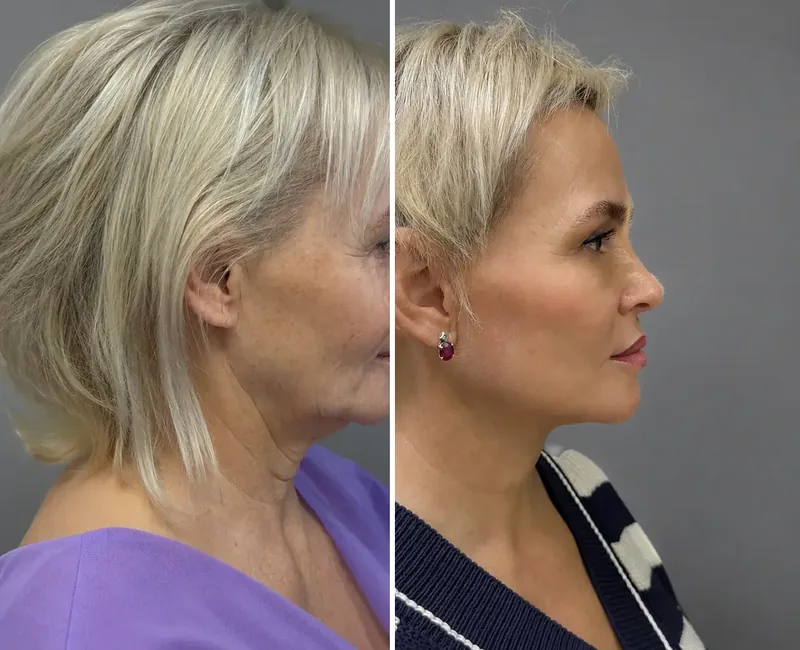
50 years
9 months
SMAS facelift
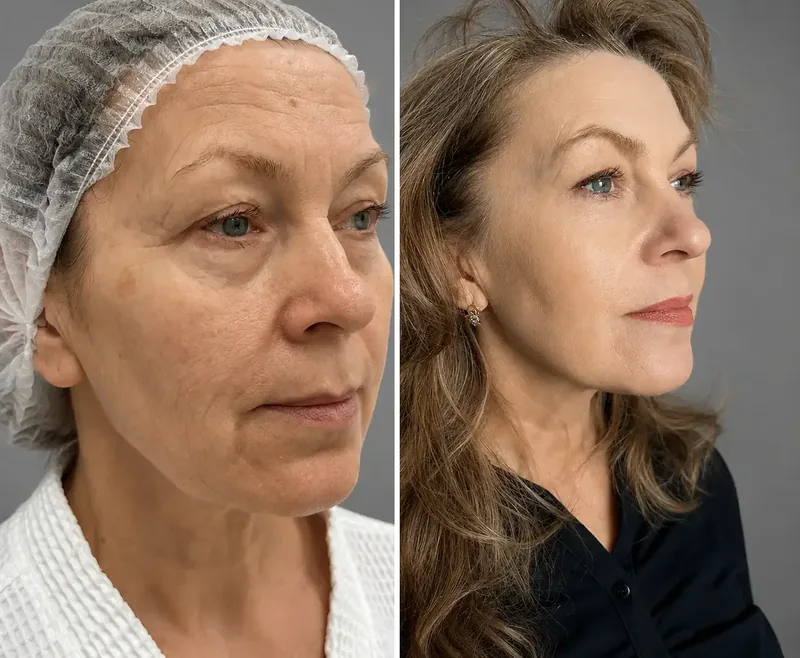
58 years
8 months
SMAS facelift
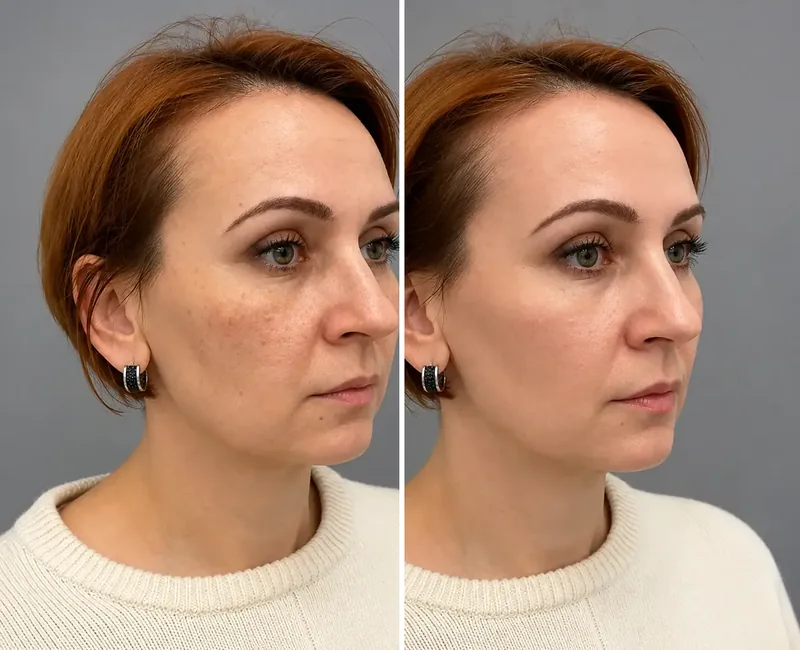
34 years
5 months
SMAS facelift
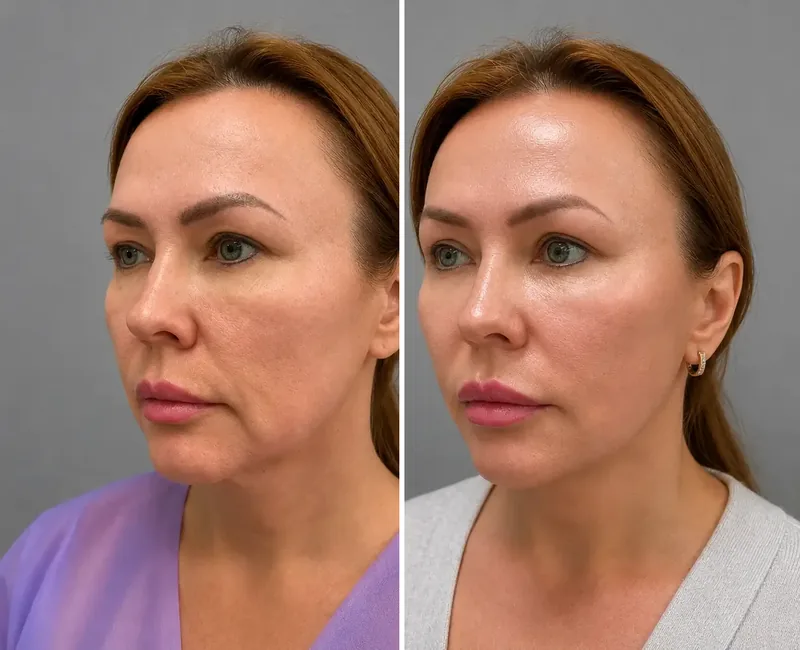
32 years
7 months
SMAS facelift
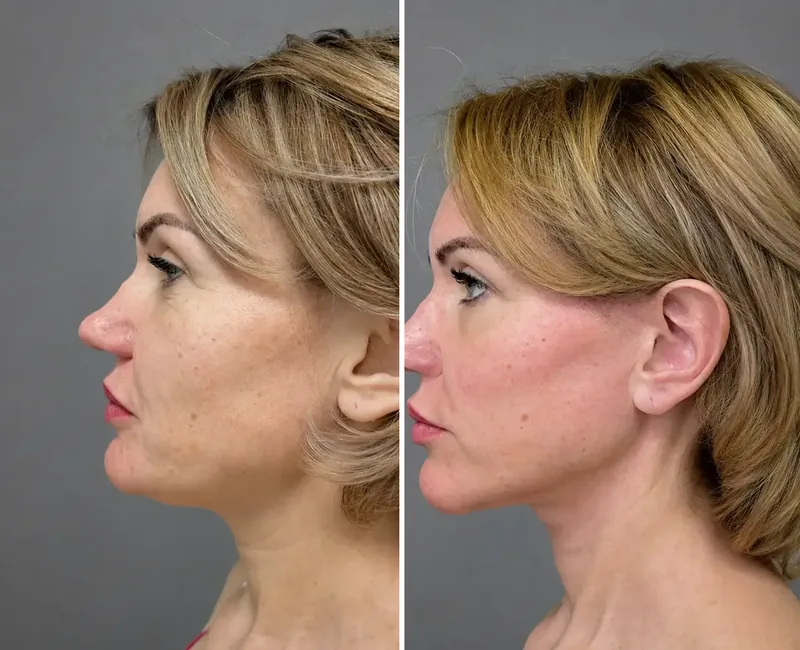
40 years
6 months
SMAS facelift
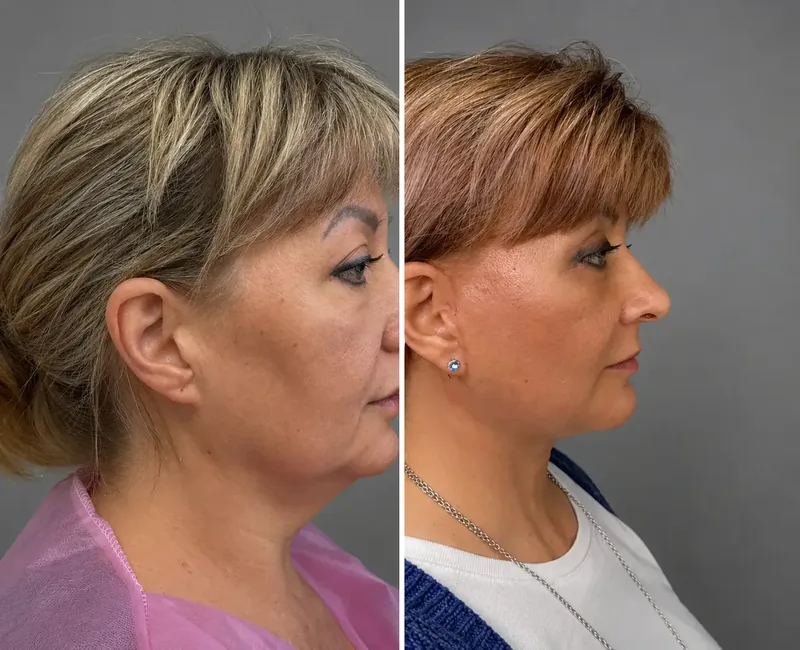
45 years
8 months
SMAS facelift
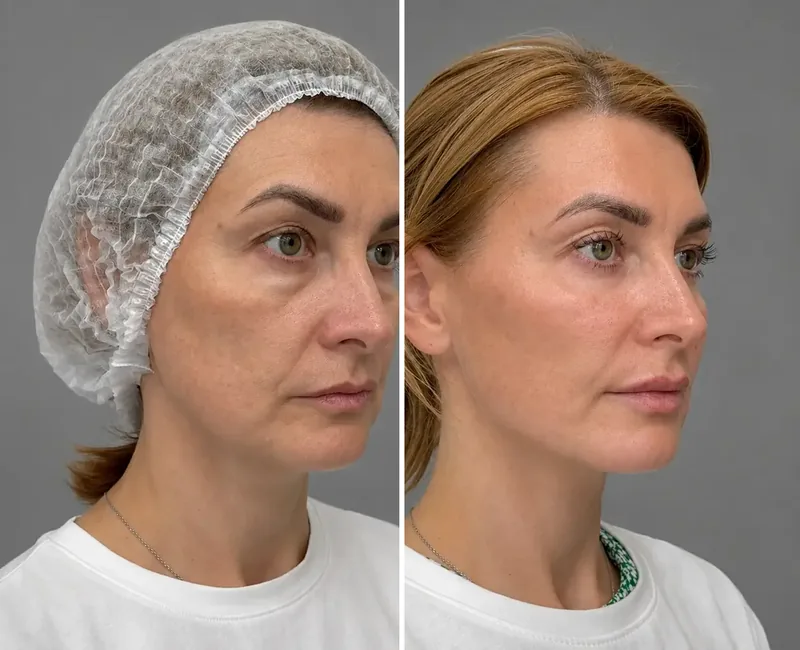
38 years
5 months
SMAS facelift
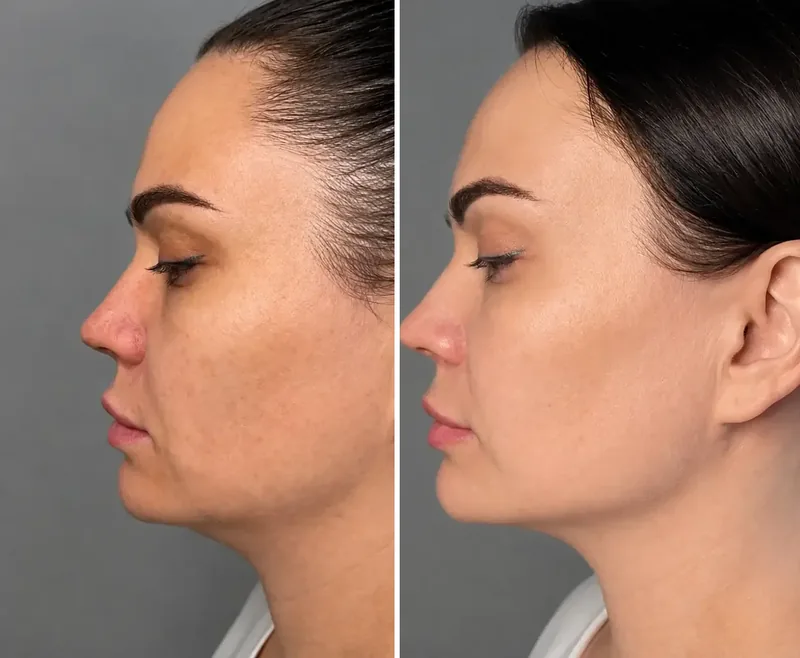
33 years
6 months
SMAS facelift
50 years
9 months
SMAS facelift
58 years
8 months
SMAS facelift
34 years
5 months
SMAS facelift
32 years
7 months
SMAS facelift
40 years
6 months
SMAS facelift
45 years
8 months
SMAS facelift
38 years
5 months
SMAS facelift
33 years
6 months
SMAS facelift
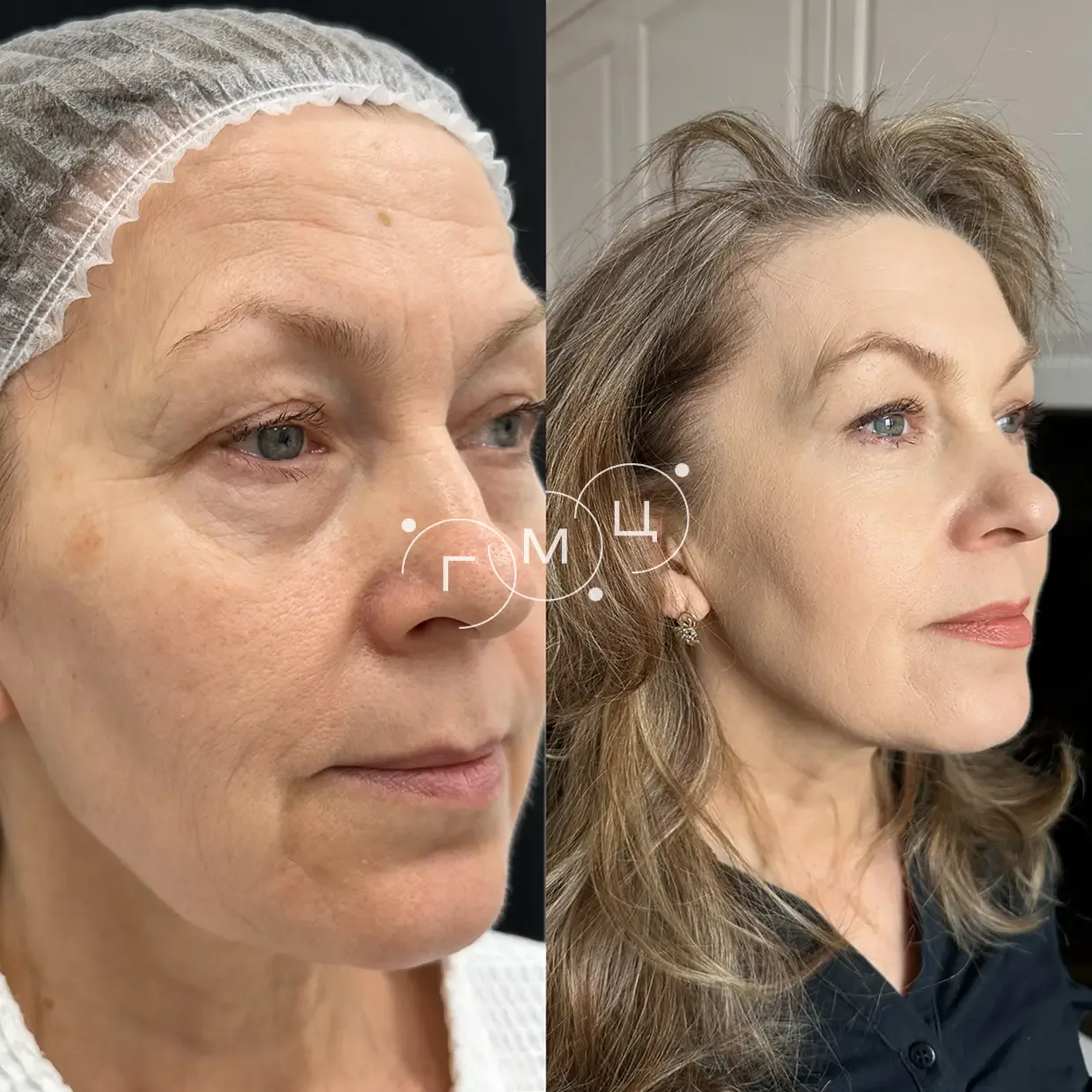

Marked sagging of the face and neck
A blurred jawline, jowls
Loose skin on the neck, a double chin
Deep marionette lines and nasolabial folds
A heavy, tired look from drooping brows
A significant drop in skin firmness after 40
Looking for a result that lasts (7–10 years)

Being under 30
Acute skin inflammation
Being pregnant or breastfeeding
A severe disease of the cardiovascular system
Problems with blood clotting
Cancer
Decompensated diabetes
How a SMAS facelift works for Adelaide residents
After 40–50 the skin gradually loses firmness: tissues sag, jowls form, the jawline blurs and the cheeks droop. A surgical SMAS facelift works deeper than cosmetology, repositioning the muscle and fascia layer so it treats the cause of sagging rather than its effects. For patients from Adelaide, this gives a lasting result even when changes are significant, with the effect holding for 7–10 years.
Timing is easier to plan when you know the milestones: a week to ten days of rest, two to four weeks until swelling and bruising fade, about two months to full recovery and three to six months for the final look. The clinic offers flexible booking and a personal approach, so Adelaide patients can fit the consultation, surgery and check-ups around a busy schedule.
Start with a free, no-pressure consultation: you get an assessment of your ageing type, an explanation of the expected result and answers on recovery. If you decide to proceed, a facelift costs from $2,400 (≈ A$3,500), with anaesthesia, the inpatient stay, meals and a year of follow-up included, and 0% instalments available. People in Adelaide can send a request online or message a coordinator.
A city named for a queen, built on Kaurna land
Adelaide sits on the Adelaide Plains, between Gulf St Vincent and the Mount Lofty Ranges, on country the Kaurna people call Tarndanya. The city's English name comes from Queen Adelaide, consort of King William IV.
By 2024, Greater Adelaide had grown to 1,469,163 residents, Australia's fifth-largest city, growing at a pace similar to Sydney and Hobart; 77% of the entire population of South Australia lives within the Adelaide metropolitan area, among the most centralised concentrations of any Australian state capital. Overseas-born residents made up 31.3% of Greater Adelaide's population at the 2021 census, led by people born in England, India, mainland China, Vietnam and Italy.
Colonel William Light, the colony's first surveyor-general, designed the city centre in 1836 as a grid of streets around five public squares, ringed by a belt of parkland now listed as national heritage and still known today as Light's Vision; that same original layout still shapes how traffic, parking and foot access around the city centre actually work. Unlike most of the other Australian colonies, South Australia was founded entirely through free, planned settlement rather than as a penal colony, a distinction locals still mention when explaining the city's orderly, deliberately laid-out core. Adelaide has also repeatedly placed among the world's more liveable cities in the Economist Intelligence Unit's annual global rankings, a reputation built partly on exactly this kind of planned, walkable layout rather than organic, unplanned growth.
Hot, dry summers and a 'cold monsoon' winter, against a facelift's recovery calendar
Adelaide has a hot-summer Mediterranean climate: several days most summers reach 40°C or more, while June, the wettest month of the year, averages around 80mm of rain, a pattern distinctive enough that local meteorologists have taken to calling it a 'cold monsoon'. Recorded extremes for the city range from -2.6°C in June 1982 to 47.7°C in January 2019, a swing of more than fifty degrees across the full recorded history of the Adelaide weather station.
The stages of recovery don't bend to Adelaide's weather: rest and a compression bandage for the first 7-10 days, swelling and bruising working themselves out over the following 2-4 weeks, the face reaching its settled shape somewhere between three and six months on. What the climate changes is the daily experience of living through that window: timing the earliest, most sun-sensitive days away from the hottest run of January heat makes shade and sun protection easier to keep up, while the wetter, windier winter months call for extra attention to keeping healing skin properly moisturised. The Australasian College of Dermatologists advises that a fresh surgical scar stays more prone to visible sun damage for up to twelve months, which in Adelaide's case means the scar's first full summer, not just the first few weeks, is the period that matters most for sun protection.
A biomedical precinct built around a relocated public hospital
Adelaide's two largest hospitals are both public teaching institutions: the Royal Adelaide Hospital, affiliated with the University of Adelaide, and the Flinders Medical Centre, affiliated with Flinders University at Bedford Park. In 2017 the Royal Adelaide Hospital moved into a purpose-built facility on former railyards in the city's West End, forming the core of a cluster known as BioMed City, which also houses the South Australian Health and Medical Research Institute.
Private surgical care in the city runs on a separate track: Adelaide's largest private hospital operators are the not-for-profit Adelaide Community Healthcare Alliance, which runs three hospitals, and Calvary Care, which runs four. That split, large public teaching hospitals concentrated in one research precinct, and private operators running their own network, is the structure elective surgical practice in the city sits inside. South Australia's own medical regulator sits apart from both tiers: the state publishes its own public health workforce data through SA Health, separate from the national licensing register, giving Adelaide a second, state-level source for checking how its medical workforce is actually distributed between the public and private sides.
AHPRA holds the one register that matters nationwide
Australia keeps licensing out of state hands entirely: AHPRA, working alongside the Medical Board of Australia, holds one national database covering every registered practitioner. A name search there settles the registration question in minutes, well beyond anything a clinic's own brochure can confirm. Where the Medical Board has imposed conditions on a practitioner or suspended their registration following a formal complaint, that outcome appears on the same public register, so the check covers disciplinary history as well as whether a licence is simply current.
The Australian Charter of Healthcare Rights, adopted nationally by the Australian Commission on Safety and Quality in Health Care, also sets out a patient's right to a clear explanation of their options and to keep asking questions until an answer actually makes sense, a right worth invoking directly if a surgeon's explanation of tissue layers, SMAS included, or the roughly year-long follow-up schedule feels rushed or vague.
Where Medicare's rebates stop
Australia's Medicare runs on an itemised list, the Medicare Benefits Schedule, and changing how a healthy face looks simply isn't one of the items on it; a facelift chosen for its own sake, without a medical justification such as repairing accident damage, carries no MBS number to claim against.
A patient in Adelaide ends up with one real number either way: the figure agreed at the consultation, procedure and months of follow-up included, regardless of a Medicare card, private cover, or both, since Australian private insurers generally draw the same line around elective cosmetic work. The Australian Competition and Consumer Commission's general guidance on cosmetic procedure pricing is equally direct on a related point: any practitioner advertising a facelift is expected to quote in a way that lets a patient understand the full cost upfront, rather than discovering add-on fees for anaesthesia, theatre time or aftercare only after already agreeing to the headline figure quoted at the first consultation.
Can I ask questions before deciding on anything, in advance?
A coordinator is on Telegram and WhatsApp around the clock, and the surgeon looks at your case and gives a final figure at that first consultation before anything is committed to.
Is Adelaide's summer heat a real problem for facelift recovery?
Not medically, but with several days most summers topping 40°C, many patients would rather time the earliest, most sun-sensitive days of recovery to miss the worst of January and February.
How long do swelling and bruising take to fade after a facelift?
Most of it clears within 2-4 weeks, and the face finishes settling into its final shape somewhere in the three-to-six-month range.
How can I go about checking that a surgeon is properly registered?
Search AHPRA's national register by name; one database covers every doctor in the country, so the check is identical no matter which state the surgeon practises in.
Will Medicare or my own private insurance plan cover any part of a facelift?
Not for a procedure chosen for its own sake: cosmetic work of this kind generally sits outside the Medicare Benefits Schedule, and most private Australian policies hold the same line.
How long does the result of a facelift usually last?
A surgical SMAS facelift tends to hold for around 7-10 years before a repeat procedure becomes worth weighing up, if a patient wants one at all.
Why is Adelaide's climate sometimes called a 'cold monsoon'?
Because its rain falls mainly in winter rather than summer, the reverse of what 'monsoon' usually implies, with June averaging around 80mm while summer stays largely dry.
Is Adelaide's medical care mostly public or private?
Both exist side by side: the Royal Adelaide Hospital and Flinders Medical Centre are large public teaching hospitals, while private surgical care runs through separate operators such as Adelaide Community Healthcare Alliance and Calvary Care.
Sources and further reading
- NHS — Facelift
- American Society of Plastic Surgeons — Facelift
- MedlinePlus — Face lift
- PubMed / NCBI — Systematic Review and Comparative Analysis of Reconstructive Rhytidectomy (Cureus, 2024)
- PubMed / NCBI — Rhytidectomy: current concepts, controversies and the state of the art (2012)
How we prepare and review medical content · Medical disclaimer
Page last updated:
Facelift in Adelaide: price and what is included
Prices are in US dollars; the amount in brackets is an approximate conversion to AUD at the rate of 02.10.2026. The final price is fixed in your contract.
- Faceliftfrom $2,400 (≈ A$3,500)
What is a SMAS facelift?
It is a face lift that tightens the deep SMAS layer under the skin, not only the skin itself, so the lower face, jawline and neck stay firmer for longer. The result lasts about 7–10 years.
How much does a facelift in Adelaide cost?
Prices start from $2,400 (≈ A$3,500). The surgeon sets the final price at the free consultation, and it is fixed in the contract, with no hidden extras.
What is included in the price?
A one-to-one consultation, the medical team, anaesthesia, inpatient care with meals, 24/7 monitoring and twelve months of follow-up by the surgeon.
How do I get my exact price?
Message us on WhatsApp or Telegram using the buttons below. A coordinator will answer your questions and book a free consultation where the doctor names the exact price.
By messaging us, you agree to our Privacy Policy
Facelift in Adelaide: questions patients ask
Can I get a facelift consultation without leaving Adelaide?
Yes. The first consultation is free and starts online: send your details and photos on WhatsApp or Telegram, and the doctor reviews them and explains the options and the price.
How do I book a facelift for a date that suits me?
Message the coordinator with your preferred dates. The first consultation is free, and you can start it online; the clinic then confirms which dates are open, and only after that is anything booked.
Which photos does the surgeon need to assess me for a facelift?
Three photos of your face and neck: front, profile and three-quarter, no filters or make-up. Add your age and previous cosmetic procedures; the price is confirmed after the review.
When can I get back to normal life in Adelaide after a facelift?
The first 7–10 days are for rest with a compression bandage and reduced activity. The doctor sets the check-ups.
I have an event coming up. When should I have a facelift?
Book it so that 3–4 weeks remain before the date: bruising and swelling take 2–4 weeks to fade, and changes become visible after 3–4 weeks. The final result takes 3–6 months.