





























at first
12 months later
2,800 grafts
FUE method
City Medical Centre
0% instalments
from $367/mo
Review and the figure — $0.
True result
at first
12 months later
No scalpel, no sutures — the FUE method. Graft count and forecast assessed with no fee at all — before you decide.
At no cost to you, no surgery booking required
Message our coordinator
Free online consultation · Reply within 15 minutes
Message us on TelegramMessage us on WhatsAppBy messaging us, you agree to our Privacy Policy
results
Not one image is stock: only genuine patients.
at first
12 months later
2,800 grafts
FUE method

at first
12 months later
3,500 grafts
FUE method

at first
12 months later
2,600 grafts
FUE method

at first
12 months later
3,000 grafts
FUE method

at first
12 months later
2,700 grafts
FUE method

at first
12 months later
3,300 grafts
FUE method

at first
12 months later
2,900 grafts
FUE method

at first
12 months later
2,500 grafts
FUE method

at first
12 months later
3,400 grafts
FUE method

at first
12 months later
2,500 grafts
FUE method

at first
12 months later
3,100 grafts
FUE method

at first
12 months later
3,600 grafts
FUE method

at first
12 months later
4,000 grafts
FUE method

at first
12 months later
3,200 grafts
FUE method

at first
12 months later
3,000 grafts
FUE method

at first
12 months later
3,700 grafts
FUE method

at first
12 months later
2,700 grafts
FUE method

at first
12 months later
3,800 grafts
FUE method

at first
12 months later
3,300 grafts
FUE method

at first
12 months later
2,800 grafts
FUE method

at first
12 months later
2,500 grafts
FUE method

at first
12 months later
3,900 grafts
FUE method

at first
12 months later
3,500 grafts
FUE method

at first
12 months later
3,800 grafts
FUE method

at first
12 months later
2,900 grafts
FUE method

at first
12 months later
3,600 grafts
FUE method

at first
12 months later
2,600 grafts
FUE method

at first
12 months later
2,700 grafts
FUE method

at first
12 months later
3,700 grafts
FUE method

at first
12 months later
3,200 grafts
FUE method

at first
12 months later
3,000 grafts
FUE method

at first
12 months later
2,800 grafts
FUE method

at first
12 months later
4,000 grafts
FUE method

at first
12 months later
3,400 grafts
FUE method

at first
12 months later
2,900 grafts
FUE method

at first
12 months later
3,100 grafts
FUE method

at first
12 months later
2,600 grafts
FUE method

at first
12 months later
3,300 grafts
FUE method

at first
12 months later
3,900 grafts
FUE method

at first
12 months later
3,500 grafts
FUE method

at first
12 months later
2,700 grafts
FUE method

at first
12 months later
3,800 grafts
FUE method

at first
12 months later
3,200 grafts
FUE method

at first
12 months later
3,000 grafts
FUE method

at first
12 months later
2,800 grafts
FUE method

at first
12 months later
3,100 grafts
FUE method

at first
12 months later
3,600 grafts
FUE method
Comparison
There are three graft transfer technologies to pick from: classic FUE, suture-free DHI and a combined protocol. Compare the implantation technique, the tissue trauma and the graft survival of each.
Classic method requiring no cuts or sutures

$2,200
$2,700
Graft implantation technique
ForcepsGraft trauma
MinimalA natural growth angle
NaturalGraft survival
98–100%Suitable for
Androgenetic alopeciaSuture-free implantation with a Choi pen

$2,500
$2,900
Graft implantation technique
Choi implanter, DHI penGraft trauma
MinimalA natural growth angle
NaturalGraft survival
98–100%Suitable for
DensificationFUE extraction, DHI pen implantation

$2,700
$2,900
Graft implantation technique
FUE extraction plus DHI implantGraft trauma
MinimalA natural growth angle
NaturalGraft survival
98–100%Suitable for
Androgenetic alopecia and densificationSurvival and trauma data are averaged by method and offered as a guide: the exact numbers depend on the transplant area and on the patient's individual features, which the doctor clarifies at the consultation.
Meet a specialist


















about the clinic
Current equipment, cosy rooms, attention for every patient

Your questions are answered and a suitable appointment time is agreed
Message us on WhatsApp Submit the formThe doctor speaks plainly at the consultation when an operation is unnecessary, so your budget stays intact. Set out below are the situations where a transplant genuinely delivers.
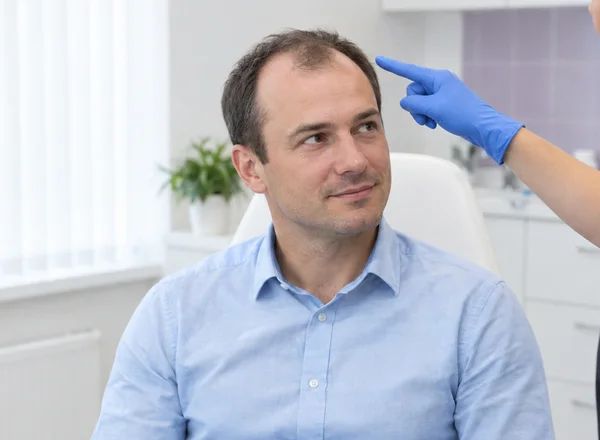

Write to us in Telegram or WhatsApp and a coordinator will ask for photos of the thinning area in a messenger; a doctor then says whether a transplant would help you. Free, with no obligation to book an operation.

services
No figure is named until the grafts have been counted; this happens at the free consultation and is recorded in the contract.
suture-free graft extraction

$2,200$2,700
or $367/mo — 0% instalments for 6 months
Hold your priceimplantation without channels

$2,500$2,900
or $417/mo — 0% instalments for 6 months
Hold your pricecombined technique

$2,700$2,900
or $450/mo — 0% instalments for 6 months
Hold your price| First hair check-up | Free |
|---|---|
| Eyebrow transplant, FUE | |
| Beard transplant, FUEinstalments $467/mo | |
| Hair trichopigmentation | |
| PRP therapy / session | $200 |
all included
From readiness for surgery to 12 months of follow-up.
The agreed amount is final on surgery day.
two extra patches
The list is wider than the scalp. Donor grafts still come from the back of the head, and FUE is still the method.
FUE method, no cuts or stitches

The back of the head serves as the donor area: grafts move from there through micro-punctures of about 1 mm and leave no scars. The doctor discusses the shape with you before the operation, taking your facial features into account. Transplanted hair grows for life and the beard is trimmed and styled as usual.
$2,800$3,000
or $467/mo — 0% instalments for 6 months
Hold your priceFUE method, no cuts or stitches

At the first consultation the surgeon draws the shape of the eyebrows: references are looked through together and the design respects your facial features. The hairs are implanted at the right angle, so the brows look natural. It also helps where plucking over years has stopped hair growth.
$1,600$1,700
a day-case operation done under local anaesthesia
Hold your priceAssessment of the donor area, a graft count and the result achievable in your case. The cost is quoted at the consultation and fixed in the contract.

Message our coordinator
Free online consultation · Reply within 15 minutes
Message us on TelegramMessage us on WhatsAppBy messaging us, you agree to our Privacy Policy
Process
From consultation to going home — all in one day

An opening conversation with the doctor covers the way FUE and DHI are carried out, leaves room for every question, and includes an assessment of the donor area.

Placing a deposit takes the date out of circulation. Card at the clinic and online payment are both accepted.

Surgery is preceded by laboratory tests; every one of them appears on a list the clinic gives you, with guidance attached.

This stage applies local anaesthesia, which keeps the entire operation painless.

The donor area, located at the back of the head or the temples, provides the grafts, collected without any stitching.

Once harvested, the grafts are put in place across the area of hair loss.
You leave with all the required items and thorough guidance, so healing moves along quickly.

Scabs disappear, the swelling goes down, the skin returns to normal

It is a normal stage: the hairs fall, the follicles stay in place

Hairs break through one by one, the difference shows

The hair gains body, and the volume and hairline become clear

Everything is in place: volume and a natural hairline

Free, prior to surgery, and it binds you to nothing.
Meet a specialistdoctors

Hair transplant doctor, trichologist, surgeon
10 years of experience

Dermatovenereologist, trichologist, surgeon
11 years in practice

Plastic surgeon
9 years in practice

Plastic surgeon
9 years in practice

Assistant
9 years in practice
The doctor will go over your donor area, count the grafts and name the achievable result.
Meet a specialistcoordinators
One named coordinator works with you from the moment you write until recovery is over.

Patient services lead
Stays with you through the whole process
Looks after the papers and the booking
Patient services lead
Stays with you through the whole process
Looks after the papers and the booking

Patient services lead
Stays with you through the whole process
Looks after the papers and the booking
Patient services lead
Stays with you through the whole process
Looks after the papers and the booking













Your questions are answered and a suitable appointment time is agreed
Message us on WhatsApp Submit the formStandard questions

Yes — the practice regularly handles people from a variety of cities and several countries, and you talk to the doctor online first.
The base prices are $2,200 (≈ AOA 2,050,000) (FUE), $2,500 (≈ AOA 2,350,000) (DHI) and $2,700 (≈ AOA 2,550,000) (combined). The precise cost is determined at a free consultation and graft count, then fixed in your contract.
A day's work, and then everyone heads back to their own bed.
No. The scalp is numbed by a local anesthetic and stays pain-free.
FUE is cut-free graft extraction by tweezer. DHI is direct implantation with a Choi pen, skipping channel-making. The combined technique takes grafts by FUE and places them using the DHI method.
There is no fixed answer; the doctor works it out at zero cost from the condition of your donor zone.
Healing lasts 0–10 days. When transplanted hairs shed at 2–4 weeks, nothing is wrong. Regrowth starts by 3–4 months, real density arrives at 6–9 months; 12–18 months gives the final outcome.
Hair growth is covered by a lifetime guarantee, fixed in the signed contract.
We hold a medical licence, and care is provided to the standards and clinical guidelines
per Ministry of Health.

Certificates that back up the surgeons' qualifications
View the detailsAKC POMOSHCH LLC
the clinic's own entity
1057746096924
OGRN
7728536872
INN
A hair transplant by FUE or DHI works for a resident of Cabinda exactly as it does for anyone else: no cuts, no stitches, local anaesthesia, one day. Graft survival reaches 98-100 %, and a price from $2,200 (≈ AOA 2,050,000) is written into the contract after a free graft count.
You can begin in Cabinda without leaving home: the online consultation is free, and the doctor looks at photos of the thinning area and counts how many grafts it will take. The clinic is reachable 24/7, so a message fits your schedule.
Plan on 0-10 days of healing, then a normal shedding of the transplanted hairs at 2-4 weeks, then patience until 3-4 months, which is when growth begins and the whole undertaking starts to look worthwhile.
Prices are in US dollars; the amount in brackets is an approximate conversion to AOA at the rate of 02.10.2026. The final price is fixed in your contract.
By messaging us, you agree to our Privacy Policy
What patients write after this operation. Reviews are translated from the original language.
Andrey M.
I had the operation a month ago. Before and after surgery they were always in touch and helped with questions about my tests. The operation itself went wonderfully, the staff are polite and masters of their craft, you feel you are in safe hands. I am recovering now, and they answer all my questions. I am happy and I recommend them!
DHI hair transplant
Pavel Sinitsyn
The best clinic of all the ones I was choosing from. No regrets at all! The result is simply amazing, I am thrilled. I recommend it to everyone: these people do great work and make people happy. Once again, a huge thank you to everyone. Roman, the head of the clinic, is the best: he was personally in touch with me and looked after my recovery. Thank you for making my dream come true.
FUE hair transplant
Maria Akopyan
I thought about an eyebrow transplant for a long time and finally went for it. At first I was afraid the result would look unnatural, but when I saw my new eyebrows I was delighted! They came out full and in harmony with my face. I can hardly believe that now I just wash my face and go, I have never felt so free. For anyone tired of constant make-up, a transplant is a real lifesaver!
Eyebrow transplant (FUE)
Alexander M.
I really wanted a thick beard, but I had problems with it. I tried every home remedy and minoxidil, and nothing helped. After a long search for the best clinic I settled on this one. Thank you so much for the service, I liked everything and now I am happy! I had the beard transplant 10 months ago and I am very pleased with the result. By the way, the music in the clinic was great, as far as I remember. A friend of mine has already come to you for a transplant on my advice and was also happy with the result. I wish you every success!
Beard transplant (FUE)
Vladimir Z.
I went to the clinic to see a trichologist and had a hair transplant. I really liked the doctor's approach, and all the recommendations helped. I want to point out that nobody tries to sell you extra services: they tell you things as they are, and if some treatment is not needed, they do not push it. Cosy and clean.
DHI hair transplant
Artem Popov
This may sound obvious, but a head of hair really changes everything in your life. You feel much more confident and go through life like a winner. And it is all thanks to the doctor at this clinic and to the staff who take care of their patients. Many thanks to the clinic for a happy life with new hair, for the comfortable conditions and for the professionalism during the hair transplant.
FUE hair transplant
Page medically reviewed by Anastasia A. Kolesnik, hair transplant doctor. Review date: .
Cabinda, also known as Chioua, is the administrative capital of Cabinda Province, an exclave of Angola. The city of Cabinda had a population of 550,000 at the 2014 Census, and the municipality had 624,646. People here have a busy, outward-facing way of life. Many work in trade, services, the port, construction and fishing, and appearance matters in all of these settings, from the office to the family gathering.
Patients from Cabinda who ask about hair transplantation (FUE or DHI) usually raise the same points. They want to know how natural the hair line will look, how long the shedding phase lasts, when they can go back to work, and how to protect the scalp in a hot, humid coastal setting. This text answers those questions with Cabinda's daily rhythm in mind.
The method is the same whether it is FUE or DHI. Grafts are taken from the back of the head, the donor area, and moved through micro-punctures of about 1 mm, so nothing scars over. The doctor discusses the shape with you before the operation, taking your facial features into account.
Under the Köppen classification, Cabinda has a tropical savanna climate. The city lies on the Atlantic coast, on the right bank of the Bele River, at an altitude of 24 metres. For someone healing after a hair transplant, this means warmth, humidity and strong sun for much of the year, and these conditions shape the first weeks.
Sweat, dust from the street and direct sun are the main irritants for a freshly treated scalp. General advice is to avoid long hours in the open during the early healing period, to keep the scalp clean as your surgeon instructs, and to choose a loose, clean, breathable head covering only if the surgeon allows it. Tight caps rub the grafts and trap heat.
Rainy and dry spells change the practical side of recovery. In wetter weather, plan how you will get home without soaking the scalp. In drier weather, plan for dust and bright light. Your coordinator can help you match the surgeon's aftercare instructions to the weather you actually have in Cabinda.
The Bay of Cabinda covers almost the entire coastal strip of the city, and the sea is part of life for many families. Salt water, sand and sun are exactly what a healing scalp should be kept away from in the early period. Ask your surgeon when swimming in the sea or a pool is acceptable, and follow that answer rather than the calendar of a weekend outing.
The city has a swimming center and an Olympic swimming pool, though these are described as currently abandoned and deteriorated, so many people swim in the sea or in private pools. The same rule applies everywhere: do not return to water until the doctor confirms the scalp is ready.
For fishermen and others who work by the water or on boats, sun and salt spray are part of the job. Discuss with the surgeon how long you should stay away from this work and what head protection is suitable when you return.
Cabinda has a strong commercial and service base, a port, public-sector offices, hospitality and construction. Students attend institutions such as the Instituto Superior Politécnico de Cabinda and the Universidade Lusíada de Angola campus. Each of these groups plans leave differently, so it helps to know the stages of healing.
The full timeline is: 0–10 days for healing, 2–4 weeks for normal shedding of transplanted hair, 3–4 months for new growth to start, 6–9 months for real density, and 12–18 months for the final result. Transplanted hairs let go at 2-4 weeks, as expected, so do not be alarmed when this happens.
Office workers often plan the operation so that the first healing days fall on leave or a quiet period. Those whose work is outdoors, on construction sites or at the port, should discuss with the surgeon how long to avoid dust, heat and heavy sweating. Students may prefer a break between terms.
Football is a strong tradition in Cabinda, with local teams that play in provincial competitions and in the Girabola. Many men play on the weekend or follow matches at the Estádio do Tafe. Contact, heat and heavy sweating are not welcome in the first period after surgery.
Ask the surgeon exactly when you can return to jogging, the gym, football and swimming, and ask what to do about headers and contact with the ball. The answer depends on how your scalp heals, so do not copy the plan of a friend.
If you take part in motocross or other activities where a helmet is worn, ask when a helmet can be worn safely over the treated area.
Life in Cabinda has a rich calendar. The Corpus Christi procession is held every year in June, and the Feast of Saint Joseph of Cabinda is held in March. Traditional ceremonies and family gatherings also matter. Many patients prefer to be fully presentable at such events, so they choose a date for surgery that leaves enough time before them.
Because transplanted hairs shed at 2-4 weeks and new growth starts at 3-4 months, it is wise not to schedule the operation immediately before an important photo or ceremony. Plan for a visible but healing scalp in the first weeks.
Local food such as quizaca with beans, chicuanga de pau, moqueca de peixe and cocada is part of family meals. A balanced diet supports healing in general terms, and there is no need to change your food culture. Ask the surgeon whether anything specific should be limited in the first days.
In general terms, a good candidate has enough healthy hair in the donor area at the back of the head and realistic expectations. Men with a receding frontal hair line, thinning on the crown or gaps in the beard often ask about the procedure. The doctor evaluates the donor area, the pattern of loss and your general health during the online consultation.
Some conditions call for caution or postponement: active scalp disease, unstable chronic illness, a tendency to poor healing, or hair loss that is still changing quickly. Be frank with the doctor about medicines you take and any past illness.
Body weight and general health also influence recovery and surgical planning. The WHO publishes general information on overweight and obesity, and it is reasonable to mention your weight and any related conditions during the consultation.
A good consultation from Cabinda is a two-way conversation. Prepare a short list before you write to the coordinators. Ask how the doctor plans the frontal hair line for your face, how many grafts the donor area can safely give, and what the plan is if you need a second session later. Ask also how the doctor sees your pattern of loss changing as the years pass.
Think about your own daily setting as well. A man who spends long hours near the port, on a building site or on a boat has different needs from someone in an office. Tell the doctor how many hours a day you spend in sun and dust, and ask what aftercare plan fits that routine. Write the answers down so that your family can read them too.
Ask what photos the doctor wants, what can be judged remotely and what cannot, and how the coordinators will answer your questions between check-ups. Clear answers before the operation make the months of waiting easier to bear.
Cabinda is warm and humid, so the first nights after surgery need thought. Sleeping position, a clean pillowcase and good airflow in the bedroom all matter for a healing scalp. Ask the surgeon how to sleep during the first period and whether a fan is acceptable, since a strong draught of dusty air is not ideal.
Many people in Cabinda wear a cap or hat for sun protection or style. Do not choose one on your own after the operation. Ask the surgeon what type of covering is acceptable and from when, because a tight or dirty cap can irritate the grafts.
Keep the scalp clean exactly as instructed. Avoid touching the treated area with unwashed hands, especially after using public transport or working outdoors. If something looks unusual, send a photo to your coordinator at any hour, since someone is available 24/7.
The hardest part for many patients is the waiting. After the shedding phase at 2-4 weeks, the scalp may look thinner for a while, and this is expected. New growth begins at 3-4 months, density becomes real at 6-9 months, and the settled look comes at 12-18 months.
Use the check-ups at months 1, 3, 6, 9 and 12 as milestones. Take photos in the same light each time, perhaps at home in daylight, so that you compare like with like. Changes are slow, and photos show progress that the mirror hides.
Another patient described it well: from about the 4th month active, even growth began, the transplanted hair took very well, and the beard became much thicker and denser, with the shape he had thought about for a long time. Your own timeline will be individual, so keep asking your coordinator when you have doubts.
Cabinda is one of Angola's main oil ports, and the economy of the city leans on transport logistics, the passenger and food-cargo port, construction, beverages, cooking oils and a large public sector. Shift patterns in these jobs are rarely flexible, so a man from Cabinda who is considering a hair transplant (FUE or DHI) should start with a calendar rather than with the mirror.
Write down your working weeks for the coming year and mark the periods when you can stay away from dust, heavy sweating and long hours in the sun. Then ask the surgeon how these early healing days fit your schedule. The first stage is 0–10 days for healing, and the shedding of transplanted hair, 2–4 weeks, is a normal part of the process.
If your employer runs rotating shifts, tell the coordinators in advance. Because they answer around the clock, 24/7, you can write after a night shift and still receive a clear reply. Planning in this way avoids the common mistake of booking the operation first and thinking about work afterwards.
The population of Cabinda is mostly Kongo, living alongside Ambundu, Ovimbundu and Chokwe communities, Luso-Angolan groups, migrants from the Kinshasa and Brazzaville areas and Chinese communities. Portuguese is the main language in the city, together with Ibinda, also called Fiote. Hair texture, curl and density differ widely in such a mix.
This matters for planning. The doctor looks at your own donor area, the direction in which your hair grows and the way it curls, and discusses the shape with you before the operation, taking your facial features into account. Do not compare your case with a friend who has a different hair type, because the same number of grafts may look quite different on two heads.
When you send photos during the free online consultation, take them in daylight, from the front, both sides, the crown and the back of the head. Clear images let the doctor judge the donor area, and they help you write your questions in Portuguese or in your own language with confidence.
Cabinda has a tropical savanna climate, and the municipality combines the Atlantic coast with savanna and woodland. In practice this means that a trip to the market, to the port or to a lecture can bring sun, dust, rain and crowded transport within a single morning.
For the first days, plan short and simple movements. Arrange a lift or a calm route home, avoid crowds where someone may knock your head, and keep unwashed hands away from the treated area. If your work takes you along the main highway or through busy parts of town, ask the surgeon how long you should limit this exposure.
Keep your instructions in your phone and share them with your family. If a question arises in the evening or at weekends, send a photo to the coordinators on Telegram or WhatsApp, and a coordinator will be on the phone 24/7.
Many men in Cabinda ask about the beard rather than the scalp: patchy areas, gaps along the cheeks or a shape that never filled in. The same method applies, with grafts taken from the donor area at the back of the head and moved through micro-punctures of about 1 mm, so nothing scars over.
Transplanted hair grows for life, so you can trim and style the beard as usual. A patient who described his own result wrote that active, even growth began from about the 4th month, that the hair took very well and that no bald patches were left. He also noted that the beard became much thicker and denser, with the shape he had thought about for a long time.
Before the operation, decide on the shape you want and bring photos to the consultation. The doctor will tell you what is realistic for your face and your donor area.
The consultation is free and online. You contact the coordinators from Cabinda on Telegram or WhatsApp, and a coordinator is available around the clock, 24/7. You send photos of your scalp or beard from several angles and describe your history.
The doctor then discusses the shape with you before the operation, taking your facial features into account. We stay with you from pre-op planning to 12 months later. Check-ups take place at months 1, 3, 6, 9 and 12, and a coordinator will be on the phone 24/7.
Since Cabinda is an exclave and many residents move between provinces and neighbouring countries for work, you can send questions at whatever hour suits your shift or schedule.
The final result settles at 12–18 months. Hair comes back at 3-4 months, becomes visibly thicker at 6-9 months, and the settled look comes at 12-18 months.
Yes. Transplanted hairs let go at 2-4 weeks, as expected. New growth starts later, at 3-4 months.
Grafts are taken from the back of the head and moved through micro-punctures of about 1 mm, so nothing scars over.
Not early on. Salt water, sand and sun can irritate a healing scalp. Ask your surgeon when it is safe, and follow that advice.
It depends on your job. Healing takes 0–10 days. Office work usually allows an earlier return than outdoor work in dust and heat, so discuss it with the surgeon.
Ask the surgeon for a specific date. Heat, sweating and contact are best avoided in the early period.
Yes. The same method is used for the beard. Transplanted hair grows for life, so trim and style the beard as usual.
We stay with you from pre-op planning to 12 months later, with check-ups at months 1, 3, 6, 9 and 12.
Write to the coordinators on Telegram or WhatsApp. The consultation is free and online, and a coordinator is available 24/7.
Ask the surgeon first. A loose, clean, breathable covering may be allowed at some stage, but tight caps can rub the grafts and trap heat.
Write to the coordinators on Telegram or WhatsApp. A coordinator is available around the clock, 24/7, so you can send a photo or a question at any hour.
Yes. The doctor discusses the shape with you before the operation, taking your facial features into account.
Yes. Tell the coordinators your shift pattern during the free online consultation. They are available 24/7, so you can write at any hour. Remember that healing takes 0–10 days and shedding at 2–4 weeks is normal.
Yes. The doctor looks at your donor area and discusses the shape with you before the operation, taking your facial features into account. Hair texture differs between people, so avoid comparing with a friend.
Hair comes back at 3-4 months, becomes visibly thicker at 6-9 months, and the settled look comes at 12-18 months. Transplanted hair grows for life, so you can trim and style the beard as usual.

 Forceps
 Minimal


