





























earlier
12 months along
2,800 grafts
FUE method
City Medical Centre
0% instalments
from $367/mo
Your first chat and sum — $0.
True story
earlier
12 months along
Under FUE nothing is cut or sewn. Graft numbers and outcome forecast sized up without any cost — before you decide.
No fee at all, no surgery booking required
Message our coordinator
Free online consultation · Reply within 15 minutes
Message us on TelegramMessage us on WhatsAppBy messaging us, you agree to our Privacy Policy
results
Nothing staged: genuine CMC patient results.
earlier
12 months along
2,800 grafts
FUE method

earlier
12 months along
3,500 grafts
FUE method

earlier
12 months along
2,600 grafts
FUE method

earlier
12 months along
3,000 grafts
FUE method

earlier
12 months along
2,700 grafts
FUE method

earlier
12 months along
3,300 grafts
FUE method

earlier
12 months along
2,900 grafts
FUE method

earlier
12 months along
2,500 grafts
FUE method

earlier
12 months along
3,400 grafts
FUE method

earlier
12 months along
2,500 grafts
FUE method

earlier
12 months along
3,100 grafts
FUE method

earlier
12 months along
3,600 grafts
FUE method

earlier
12 months along
4,000 grafts
FUE method

earlier
12 months along
3,200 grafts
FUE method

earlier
12 months along
3,000 grafts
FUE method

earlier
12 months along
3,700 grafts
FUE method

earlier
12 months along
2,700 grafts
FUE method

earlier
12 months along
3,800 grafts
FUE method

earlier
12 months along
3,300 grafts
FUE method

earlier
12 months along
2,800 grafts
FUE method

earlier
12 months along
2,500 grafts
FUE method

earlier
12 months along
3,900 grafts
FUE method

earlier
12 months along
3,500 grafts
FUE method

earlier
12 months along
3,800 grafts
FUE method

earlier
12 months along
2,900 grafts
FUE method

earlier
12 months along
3,600 grafts
FUE method

earlier
12 months along
2,600 grafts
FUE method

earlier
12 months along
2,700 grafts
FUE method

earlier
12 months along
3,700 grafts
FUE method

earlier
12 months along
3,200 grafts
FUE method

earlier
12 months along
3,000 grafts
FUE method

earlier
12 months along
2,800 grafts
FUE method

earlier
12 months along
4,000 grafts
FUE method

earlier
12 months along
3,400 grafts
FUE method

earlier
12 months along
2,900 grafts
FUE method

earlier
12 months along
3,100 grafts
FUE method

earlier
12 months along
2,600 grafts
FUE method

earlier
12 months along
3,300 grafts
FUE method

earlier
12 months along
3,900 grafts
FUE method

earlier
12 months along
3,500 grafts
FUE method

earlier
12 months along
2,700 grafts
FUE method

earlier
12 months along
3,800 grafts
FUE method

earlier
12 months along
3,200 grafts
FUE method

earlier
12 months along
3,000 grafts
FUE method

earlier
12 months along
2,800 grafts
FUE method

earlier
12 months along
3,100 grafts
FUE method

earlier
12 months along
3,600 grafts
FUE method
Comparison
Grafts are transferred by one of three technologies: classic FUE, suture-free DHI and a combined protocol. Compare implantation technique, tissue trauma and graft survival and choose with open eyes.
Classic technique without incisions or stitches

$2,200
$2,700
Graft implantation technique
ForcepsGraft trauma
MinimalThe natural growth angle
NaturalGraft survival
98–100%Suitable for
Androgenetic alopeciaImplantation with a Choi pen, no sutures

$2,500
$2,900
Graft implantation technique
DHI, a Choi implanterGraft trauma
MinimalThe natural growth angle
NaturalGraft survival
98–100%Suitable for
DensificationFUE for extraction, DHI implant

$2,700
$2,900
Graft implantation technique
FUE extraction with DHI implantGraft trauma
MinimalThe natural growth angle
NaturalGraft survival
98–100%Suitable for
Androgenetic alopecia and densificationPer method, survival and trauma figures are averaged and given for guidance: the exact numbers depend on the transplant area and the patient's individual features, and the doctor clarifies them at the consultation.
Get expert advice


















about the clinic
Everything in the room is set up for the patient's comfort

We will answer your questions and find a convenient time for your consultation
Message us on WhatsApp Submit the formIf your case can be solved without surgery, the doctor will say so right at the consultation — and you will not waste your money. Below are the conditions in which a transplant really works.
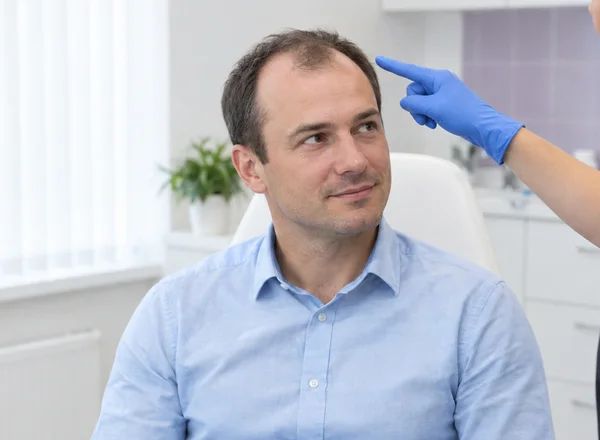

Write to us in Telegram or WhatsApp. The coordinator requests photographs of the affected area in a messenger, a doctor examines them and reports whether a transplant would help. It is free and commits you to nothing.

services
You hear the cost at the free consultation, after the grafts are counted; it is fixed in the contract.
suture-free graft extraction

$2,200$2,700
or $367/mo — 0% instalments for 6 months
Pin your priceimplantation without channels

$2,500$2,900
or $417/mo — 0% instalments for 6 months
Pin your pricecombined technique

$2,700$2,900
or $450/mo — 0% instalments for 6 months
Pin your price| First medical check | Free |
|---|---|
| Eyebrow transplant, FUE | |
| Beard transplant, FUEinstalments $467/mo | |
| Hair trichopigmentation | |
| PRP therapy / session | $200 |
all included
Pre-op groundwork and a full 12 months of follow-up.
Nobody hands you a new invoice on surgery day.
two extra areas
A hair transplant works beyond the scalp: same grafts from the back of the head, same FUE method — only the area changes.
FUE method, free of cuts or stitches

Grafts are taken at the back of the head, from the donor area, and moved through micro-punctures of about 1 mm — scars are not left. The shape is worked out with the doctor before the operation, with your facial features in mind. Transplanted hair grows for life: the beard can be trimmed and styled as usual.
$2,800$3,000
or $467/mo — 0% instalments for 6 months
Pin your priceFUE method, free of cuts or stitches

At the initial consultation the surgeon draws the eyebrow shape, you look through references together, and the design takes your facial features into account. The hairs are implanted at the right angle, so the eyebrows look natural. It also helps where plucking has stopped hairs growing.
$1,600$1,700
a day procedure done under local anaesthetic
Pin your priceBefore anything else the donor zone is inspected and the grafts counted, and a realistic outcome is shown. After that, the cost is named and the contract makes it final.

Message our coordinator
Free online consultation · Reply within 15 minutes
Message us on TelegramMessage us on WhatsAppBy messaging us, you agree to our Privacy Policy
Process
From consultation to going home — all in one day

For patients in Bangui, the starting point is a talk about DHI and FUE, answers to their questions, and an examination of the donor zone.

The day of surgery becomes yours once a deposit has been placed, either by card at the reception desk or through an online payment.

Before the transplant is due to begin, the tests are completed according to the clinic's written list and directions.

Anaesthesia at this stage is local, which keeps the operation painless for the patient.

The donor zone, at the rear of the head or beside the temples, yields the grafts, and stitches are never needed.

Surgeons work the extracted grafts into the part of the scalp that has thinned.
All the supplies for healing come from the clinic, and so does a thorough explanation of their use.

Crusts clear, swelling recedes, the treated skin slowly mends

Normal. Only the hairs fall out, the follicles remain in place

New hairs show gradually, the result begins to show

The hair gains fullness, the volume and the contour are evident

Thickness finishes filling and the edge looks convincing

Free, before surgery, with no commitment.
Get expert advicedoctors

Hair transplant doctor, trichologist, surgeon
10 years in practice

Dermatovenereologist, trichologist, surgeon
11 years in practice

Plastic surgeon
9 years in practice

Plastic surgeon
9 years in practice

Assistant
9 years in practice
Examination of the donor zone, calculation of the grafts, and an explanation of the outcome.
Get expert advicecoordinators
You are assigned a personal coordinator: with you from the first enquiry to recovery.
Recovery care manager
Will assist you before and after the surgery
Helps with the forms and the arrangements
Recovery care manager
Will assist you before and after the surgery
Helps with the forms and the arrangements

Recovery care manager
Will assist you before and after the surgery
Helps with the forms and the arrangements
Recovery care manager
Will assist you before and after the surgery
Helps with the forms and the arrangements













We will answer your questions and find a convenient time for your consultation
Message us on WhatsApp Submit the formStandard questions

Yes — this happens often. Treatment is given to people from all sorts of cities and countries, and a doctor's opinion is given online to begin with.
Prices start at $2,200 (≈ XAF 1,300,000) for FUE, $2,500 (≈ XAF 1,500,000) for DHI, and $2,700 (≈ XAF 1,600,000) for the combined method. Your final price is set after a free graft count and locked into the contract.
Reckon on a single day, ending with a return to your home.
You stay numb the whole time, so pain is never an issue.
FUE is the classic method: grafts are harvested with tweezers, with no cuts or stitches. DHI implants grafts without channels, using a Choi pen. A combined method harvests grafts by FUE and implants them with the DHI pen.
Your donor reserve sets the number, which the doctor calculates during a consultation charged at nothing.
After 0–10 days the skin is fine. At 2–4 weeks a shed occurs, which is expected. Growth resumes from 3–4 months, thickness shows by 6–9 months, and the final result is seen at 12–18 months.
Hair growth is covered by a lifetime guarantee, fixed in the signed contract.
The clinic works under a medical licence, care meets the standards and clinical guidelines
of the Ministry of Health.

Training certificates earned by the operating surgeons
Go through the papersAKC POMOSHCH LLC
the clinic's legal name
1057746096924
OGRN
7728536872
INN
Someone in Bangui needs no hospital stay for this: FUE and DHI go without cuts or stitches, under local anaesthesia, and the whole operation takes one day. Graft survival is 98-100 %, and a price from $2,200 (≈ XAF 1,300,000) is set in the contract after a free graft count.
A free online consultation is open to anyone in Bangui, and it needs only pictures of the affected zone: the doctor looks and says whether a transplant will help. Contact runs 24/7, without days off.
Timeline after surgery: healing 0-10 days, shedding of the transplanted hairs 2-4 weeks and it is normal, growth 3-4 months, density 6-9, final result 12-18. A personal coordinator tracks it all by photo with check-ups at 1, 3, 6, 9 and 12 months, and the contract gives a lifetime growth guarantee.
Prices are in US dollars; the amount in brackets is an approximate conversion to XAF at the rate of 02.10.2026. The final price is fixed in your contract.
By messaging us, you agree to our Privacy Policy
What patients write after this operation. Reviews are translated from the original language.
Andrey M.
I had the operation a month ago. Before and after surgery they were always in touch and helped with questions about my tests. The operation itself went wonderfully, the staff are polite and masters of their craft, you feel you are in safe hands. I am recovering now, and they answer all my questions. I am happy and I recommend them!
DHI hair transplant
Pavel Sinitsyn
The best clinic of all the ones I was choosing from. No regrets at all! The result is simply amazing, I am thrilled. I recommend it to everyone: these people do great work and make people happy. Once again, a huge thank you to everyone. Roman, the head of the clinic, is the best: he was personally in touch with me and looked after my recovery. Thank you for making my dream come true.
FUE hair transplant
Maria Akopyan
I thought about an eyebrow transplant for a long time and finally went for it. At first I was afraid the result would look unnatural, but when I saw my new eyebrows I was delighted! They came out full and in harmony with my face. I can hardly believe that now I just wash my face and go, I have never felt so free. For anyone tired of constant make-up, a transplant is a real lifesaver!
Eyebrow transplant (FUE)
Alexander M.
I really wanted a thick beard, but I had problems with it. I tried every home remedy and minoxidil, and nothing helped. After a long search for the best clinic I settled on this one. Thank you so much for the service, I liked everything and now I am happy! I had the beard transplant 10 months ago and I am very pleased with the result. By the way, the music in the clinic was great, as far as I remember. A friend of mine has already come to you for a transplant on my advice and was also happy with the result. I wish you every success!
Beard transplant (FUE)
Vladimir Z.
I went to the clinic to see a trichologist and had a hair transplant. I really liked the doctor's approach, and all the recommendations helped. I want to point out that nobody tries to sell you extra services: they tell you things as they are, and if some treatment is not needed, they do not push it. Cosy and clean.
DHI hair transplant
Artem Popov
This may sound obvious, but a head of hair really changes everything in your life. You feel much more confident and go through life like a winner. And it is all thanks to the doctor at this clinic and to the staff who take care of their patients. Many thanks to the clinic for a happy life with new hair, for the comfortable conditions and for the professionalism during the hair transplant.
FUE hair transplant
Page medically reviewed by Anastasia A. Kolesnik, hair transplant doctor. Review date: .
Bangui is the capital and largest city of the Central African Republic. It began as a French outpost in 1889 on the northern bank of the Ubangi River and today has an estimated population of 889,231 as of 2020. It is the administrative, trade and commercial centre of the country, with government buildings, banks, hospitals, hotels and the main markets. People who work in offices, shops, schools and public life here are seen every day, and many of them think about hair loss or a thin beard with the same practical question: will the result look natural, and how will I manage the weeks of recovery?
A hair transplant by the FUE or DHI method is planned in advance, not on impulse. Grafts are taken from the back of the head, the donor area, and moved through micro-punctures of about 1 mm, so nothing scars over. The doctor discusses the shape with you before the operation, taking your facial features into account. For a resident of Bangui, this means you can discuss everything from your own home before any decision is made.
The City Medical Centre offers a free online consultation to patients in Bangui. Coordinators are available around the clock (24/7) on Telegram and WhatsApp, so you can write after work or in the evening when the day is calmer.
You start with a message to a coordinator on Telegram or WhatsApp. You send clear photos of the head or beard from several angles and describe how long the hair loss has been going on, which medicines you take and which illnesses you have had. The doctor studies this material and discusses with you the area to be covered and the shape that suits your face.
We stay with you from pre-op planning to 12 months later. A coordinator will be on the phone 24/7. This matters in a city where schedules are busy and the day often starts early: you choose the time to ask, and you do not wait for a reception desk to open.
Prepare your questions in advance. Ask which method, FUE or DHI, is suitable for your case, how the donor area will be assessed, how many stages may be needed and what the plan for check-ups looks like. Keep the answers in the chat so that you and your family can read them again calmly.
Bangui lies close to the equator on the Ubangi River, with lush green hills in the background. The rainy season runs from March to November, and the river discharge is much higher then. For a person recovering after a transplant, the climate means heat and humidity for much of the year, so the first days need a quiet routine at home.
General advice only: during the healing period, which lasts 0–10 days, avoid strong sun on the head, do not wear tight caps or helmets, and avoid dusty places. In the rainy months, keep the head dry and clean, and avoid crowded, damp transport. Sweating, dust from unpaved streets and direct sun are the main irritants, so plan your first days indoors and follow the washing instructions given by the doctor.
Swimming in the river or in a hotel pool is not part of the early period. Ask the surgeon when water, sea or pool and sport are allowed in your particular case, and follow that answer rather than the habits of friends.
Residents of Bangui often ask whether the dry or the rainy season is better. Both have advantages. In the dry months there is less mud and dust is a concern, while in the rainy months there is less direct sun but more moisture. What matters most is that you can spend the first 10 days calmly at home without long journeys across the city.
Check your calendar: school terms, work deadlines, church celebrations, weddings and family gatherings. Transplanted hairs let go after 2–4 weeks, as expected, and this shedding is normal. If you have an important event in that period, tell the coordinator, so that the plan is made around it.
The full timeline is simple: 0–10 days for healing, 2–4 weeks for normal shedding of transplanted hair, 3–4 months for new growth to start, 6–9 months for real density, and 12–18 months for the final result. Count the dates from the day of the operation and mark them on your calendar.
Bangui is a city of administration, trade and study. The University of Bangui, banks, markets and offices keep people busy, and the French language and Sango are used in daily life. Someone who works with the public may prefer to rest during the first days of healing, while someone who works at a desk may return sooner. The doctor and coordinator will say what is realistic for your job.
Students and young professionals should plan around exams and presentations. Do not choose the week before an important event: redness and scabs are normal at the beginning, and shedding comes later. Wearing loose, clean headwear approved by the doctor can help in public, but tight caps should be avoided.
If you work outdoors, in a market or on the river, tell the doctor in the consultation. Sun, dust and sweat affect the recovering skin, and a plan to limit them is part of good preparation.
Basketball and football are popular in Bangui, and boat races on the Ubangi River draw large crowds. If you play sport, ask the surgeon when you can return to training and what to avoid in the first weeks: heavy sweating, contact, helmets and swimming need a clear answer for your case.
Local food is built on cassava, rice, plantains, okra, peanuts, fish and grilled meat. A balanced diet supports healing, so there is no need for a special menu, but ask the doctor about alcohol, which is often part of gatherings with locally brewed beer or palm wine, and about smoking, which can disturb recovery.
Weddings, funerals and church events bring many people together, with handshakes, hugs and long days in the heat. Plan the operation so that the first days of healing do not coincide with such events, and tell your family in advance so that they can help you rest.
In general terms, a good candidate has enough healthy hair in the donor area and a stable pattern of hair loss. The doctor assesses the density at the back of the head, the shape of the frontal hair line and your expectations. Some conditions, such as active skin disease on the scalp, uncontrolled chronic illness or unrealistic wishes, may be reasons to wait or to refuse.
Be honest about your health. Tell the coordinator about medicines, allergies, blood disorders and infections you have had, including malaria and other illnesses common in the region. The doctor needs this information to decide whether the operation is suitable and how to prepare.
For beard transplants the same logic applies. Transplanted hair grows for life: trim and style the beard as usual. One patient wrote: «But now the result truly makes me very happy) From about the 4th month active, even growth began. The transplanted hair took very well, the beard now looks as natural as possible, no bald patches are left. The beard became much thicker and denser, with the shape I had thought about for a long time.»
Bangui consists of eight urban districts, 16 groups and 205 neighbourhoods. Daily life can look very different from one part of the city to another: some people live near the river and the central market, others in the residential area further north, where the largest market and much of the nightlife are found. When you plan a hair transplant, think about where you will actually spend the first days of healing and how much movement through the city they will require.
The best plan is a quiet one. Arrange food, water, clean bedding and a comfortable place to sleep before the operation, and ask a family member to help with errands. Many residents of Bangui live in family compounds, and this is an advantage: someone is nearby who can remind you of the washing routine and keep visitors away while the scalp is healing.
Send your coordinator a short description of your home routine through Telegram or WhatsApp. Mention whether you share a room, whether there is a fan or shade, and how you usually get around town. The coordinator can then adapt the preparation advice to your real situation instead of giving general instructions.
French and Sango are the official languages of the Central African Republic, and Sango is spoken by about 90% of the population. In daily life many people switch between them without noticing. For a medical plan, the practical consequence is simple: ask the coordinator to repeat any instruction that is unclear, and write the answers in the chat so that you can read them again.
Share the written care instructions with the person who will help you at home. Washing, sleeping position, headwear and the dates of check-ups are easier to follow when two people understand them. This is especially useful during the weeks when transplanted hairs let go, because shedding can worry a family that has not been told it is expected.
Keep one folder of photos on your phone: before the operation, then at the check-ups at months 1, 3, 6, 9 and 12. Comparing the same angles in the same light is the most honest way to see progress, and it gives the doctor a clear basis for advice.
Healthcare in the city is uneven, and many people are used to deciding about their health carefully and with limited support. For this reason, prepare for a remote consultation as seriously as for any medical step. Write down your medicines, allergies and past illnesses, including malaria, which is common in the region, and give the coordinator the full picture.
Do not start or stop any medicine on your own because of the operation. Ask the doctor what to continue and what to discuss first. Also ask what to do if you develop a fever, a headache or a wound that looks different from what you were told to expect during recovery, and keep the coordinator's chat easy to reach, since a coordinator will be on the phone 24/7.
A transplant is a cosmetic and planned procedure, so there is no reason to hurry. If your health is not stable at the moment, the right decision may be to wait. A responsible doctor will say so openly, and this is a sign of good care, not a refusal to help.
The result develops slowly. After 2–4 weeks, transplanted hairs let go, as expected. After 3–4 months, hair comes back. After 6–9 months it is visibly thicker, and after 12–18 months the look is settled. Do not judge the result in the first weeks.
Check-ups take place at months 1, 3, 6, 9 and 12. You can send photos from Bangui and discuss them with the coordinator and doctor, so the follow-up does not depend on your daily schedule.
Questions to ask the surgeon: which method is right for me, how many grafts are planned, how will the hair line look on my face, what care do I need in the heat and rainy season, when can I work and train, and what should I do if I have a concern during recovery. A good doctor answers clearly and does not rush you.
Yes. The online consultation is free, and coordinators are available around the clock (24/7) on Telegram and WhatsApp.
Clear photos of the head or beard from several angles, a short description of how long the loss has lasted, your medicines and past illnesses. The doctor uses them to plan the shape and area.
Grafts are taken from the back of the head, the donor area, and moved through micro-punctures of about 1 mm, so nothing scars over.
The rainy season in Bangui runs from March to November. It is not a reason to refuse by itself, but the first days of healing, 0–10 days, are best spent at home, dry and away from dust and crowds.
After 2–4 weeks the transplanted hairs let go, as expected. This is normal shedding, and new hair follows.
Hair comes back after 3–4 months, becomes visibly thicker after 6–9 months, and the look settles at 12–18 months.
Transplanted hair grows for life: trim and style the beard as usual, after the doctor allows it.
We stay with you from pre-op planning to 12 months later, with check-ups at months 1, 3, 6, 9 and 12. A coordinator will be on the phone 24/7.
It depends on your job and sport. Ask the surgeon during the consultation, and plan the first 0–10 days of healing without heavy sweating, sun and dust.
Distance does not matter for the consultation, because it is online. Send photos and questions in the chat and the coordinator will adapt the preparation advice to your home situation.
Yes. It is useful when a family member reads the care instructions with you, so that washing, headwear and check-up dates are clear to both of you.
Yes. Mention all past and current illnesses, medicines and allergies. The doctor uses this to decide whether the operation suits you and how to prepare.

 Forceps
 Minimal


