



the start
12 months elapsed
2,800 grafts
FUE method
City Medical Centre
0% instalments
from $367/mo
A look and a figure — $0.
Our case
the start
12 months elapsed
FUE method without cuts or stitches. Grafts and result forecast done for you, free of fee — before you decide.
Costs nothing, no surgery booking required
Message our coordinator
Free online consultation · Reply within 15 minutes
Message us on TelegramMessage us on WhatsAppBy messaging us, you agree to our Privacy Policy
results
Genuine City Medical Centre patients, every one.
the start
12 months elapsed
2,800 grafts
FUE method

the start
12 months elapsed
3,500 grafts
FUE method

the start
12 months elapsed
2,600 grafts
FUE method

the start
12 months elapsed
3,000 grafts
FUE method

the start
12 months elapsed
2,700 grafts
FUE method

the start
12 months elapsed
3,300 grafts
FUE method

the start
12 months elapsed
2,900 grafts
FUE method

the start
12 months elapsed
2,500 grafts
FUE method

the start
12 months elapsed
3,400 grafts
FUE method

the start
12 months elapsed
2,500 grafts
FUE method

the start
12 months elapsed
3,100 grafts
FUE method

the start
12 months elapsed
3,600 grafts
FUE method

the start
12 months elapsed
4,000 grafts
FUE method

the start
12 months elapsed
3,200 grafts
FUE method

the start
12 months elapsed
3,000 grafts
FUE method

the start
12 months elapsed
3,700 grafts
FUE method

the start
12 months elapsed
2,700 grafts
FUE method

the start
12 months elapsed
3,800 grafts
FUE method

the start
12 months elapsed
3,300 grafts
FUE method

the start
12 months elapsed
2,800 grafts
FUE method

the start
12 months elapsed
2,500 grafts
FUE method

the start
12 months elapsed
3,900 grafts
FUE method

the start
12 months elapsed
3,500 grafts
FUE method

the start
12 months elapsed
3,800 grafts
FUE method

the start
12 months elapsed
2,900 grafts
FUE method

the start
12 months elapsed
3,600 grafts
FUE method

the start
12 months elapsed
2,600 grafts
FUE method

the start
12 months elapsed
2,700 grafts
FUE method

the start
12 months elapsed
3,700 grafts
FUE method

the start
12 months elapsed
3,200 grafts
FUE method

the start
12 months elapsed
3,000 grafts
FUE method

the start
12 months elapsed
2,800 grafts
FUE method

the start
12 months elapsed
4,000 grafts
FUE method

the start
12 months elapsed
3,400 grafts
FUE method

the start
12 months elapsed
2,900 grafts
FUE method

the start
12 months elapsed
3,100 grafts
FUE method

the start
12 months elapsed
2,600 grafts
FUE method

the start
12 months elapsed
3,300 grafts
FUE method

the start
12 months elapsed
3,900 grafts
FUE method

the start
12 months elapsed
3,500 grafts
FUE method

the start
12 months elapsed
2,700 grafts
FUE method

the start
12 months elapsed
3,800 grafts
FUE method

the start
12 months elapsed
3,200 grafts
FUE method

the start
12 months elapsed
3,000 grafts
FUE method

the start
12 months elapsed
2,800 grafts
FUE method

the start
12 months elapsed
3,100 grafts
FUE method

the start
12 months elapsed
3,600 grafts
FUE method
Comparison
Three ways of transferring grafts are used here: classic FUE, suture-free DHI and a combined protocol. Weigh the implantation technique, tissue trauma and graft survival before you settle on one.
Classic method requiring no cuts or sutures

$2,200
$2,700
Graft implantation technique
ForcepsGraft trauma
MinimalA natural growth angle
NaturalGraft survival
98–100%Suitable for
Androgenetic alopeciaStitch-free implantation with a Choi pen

$2,500
$2,900
Graft implantation technique
DHI pen, Choi implanterGraft trauma
MinimalA natural growth angle
NaturalGraft survival
98–100%Suitable for
DensificationFUE extraction, DHI pen implantation

$2,700
$2,900
Graft implantation technique
Extraction by FUE, DHI implantGraft trauma
MinimalA natural growth angle
NaturalGraft survival
98–100%Suitable for
Androgenetic alopecia and densificationSurvival and trauma values are average figures for each method, shown as a guide: the exact numbers depend on the transplant area and the patient's own features, and the doctor confirms them at the consultation.
Speak to a specialist


















about the clinic
A calm room, good equipment, nobody rushing you

All your questions get answered and a convenient consultation time is found
Message us on WhatsApp Get in touchIf your case can be solved without surgery, the doctor says so right at the consultation — and you keep your money. Below are the conditions in which a transplant really works.
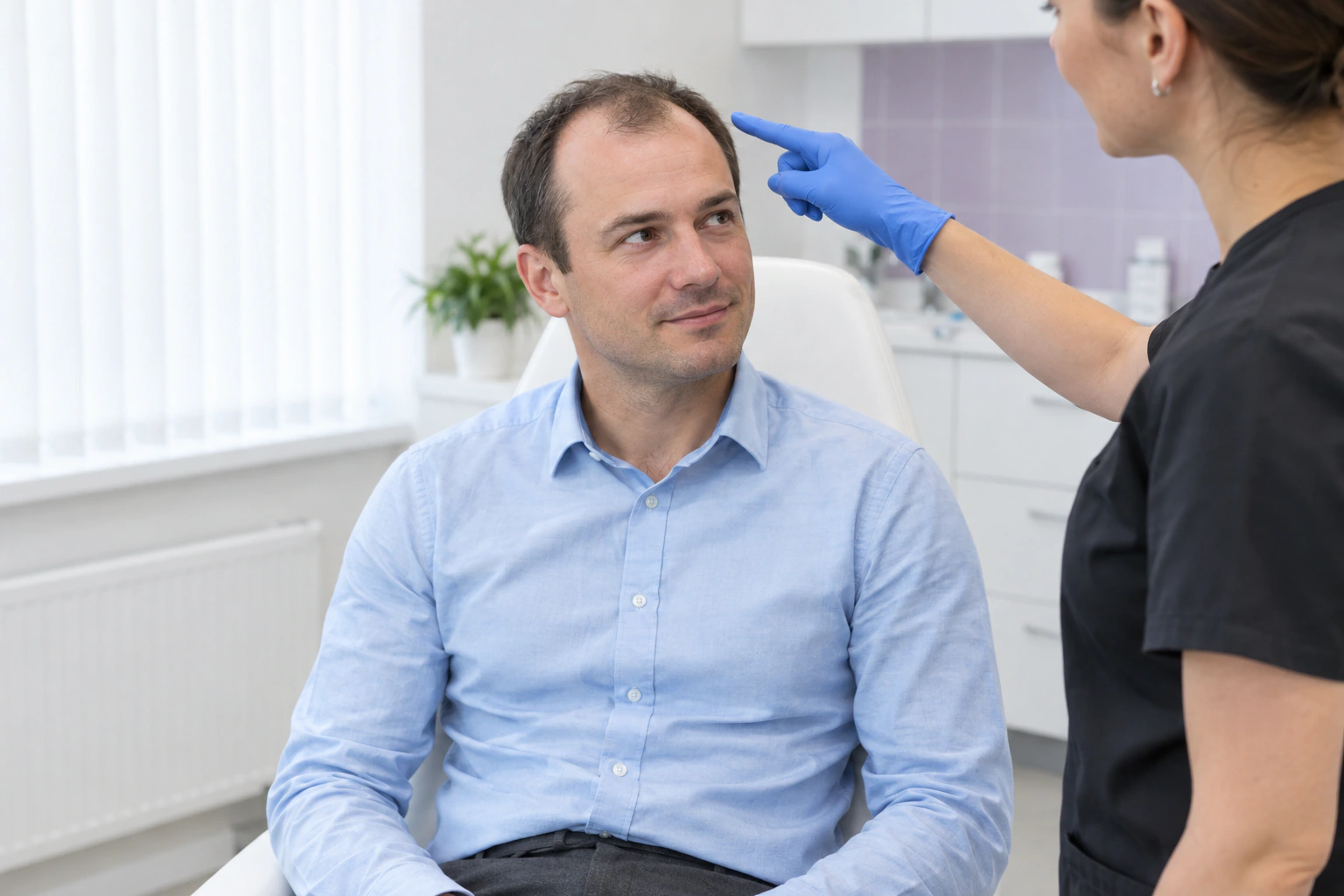

Leave your number. A coordinator asks for photos in a messenger, the doctor looks and says if a transplant helps. Free, no surgery booking.

services
The consultation is free, the grafts are counted there, and the price you hear is the one in the contract.
suture-free graft extraction

$2,200$2,700
or $367/mo — 0% instalments for 6 months
Pin your priceimplantation without channels

$2,500$2,900
or $417/mo — 0% instalments for 6 months
Pin your pricecombined technique

$2,700$2,900
or $450/mo — 0% instalments for 6 months
Pin your price| Your first meeting | Free |
|---|---|
| Eyebrow transplant, FUE | |
| Beard transplant, FUEinstalments $467/mo | |
| Hair trichopigmentation | |
| PRP therapy / session | $200 |
all included
Pre-op groundwork and a full 12 months of follow-up.
Nothing is added to your bill on surgery day.
two more patches
Only the zone is different from a scalp case. Donor grafts from the back of the head, the FUE method, everything else identical.
FUE, no incisions and no stitches

Grafts are collected from the donor area at the back of the head and moved through micro-punctures of about 1 mm, which leaves no scars. The doctor discusses the shape with you before the operation, taking your facial features into account. Transplanted hair grows for life and can be trimmed and styled as usual.
$2,800$3,000
or $467/mo — 0% instalments for 6 months
Pin your priceFUE, no incisions and no stitches

The surgeon draws the brow outline at your first meeting: you leaf through reference images together and the design respects the proportions of your face. Hairs go in at the natural growth angle, so the brows look entirely genuine. Where years of plucking stopped growth, this is the solution.
$1,600$1,700
a procedure you go home from, numbed locally
Pin your priceThe doctor will look at your donor area, count the grafts and show the result achievable in your case. The cost is quoted at the consultation and fixed in the contract.

Message our coordinator
Free online consultation · Reply within 15 minutes
Message us on TelegramMessage us on WhatsAppBy messaging us, you agree to our Privacy Policy
Process
From consultation to going home — all in one day

At the very first step, the doctor explains FUE and DHI free of charge, answers whatever questions you bring, and prepares a surgical plan designed around you.

The date is yours after a deposit; pay with a card at the clinic if that is convenient, or handle it online.

The clinic gives you everything needed to prepare — a list of required tests and instructions — before the transplant takes place.

The scalp receives a local anaesthetic first, leaving the operation pain-free.

Extraction is done from behind the head or from the temples, and stitches play no part in it.

The collected units are implanted by surgeons into the thinning scalp.
Nothing about healing is left vague: the clinic provides the supplies and explains their use in full.

Scabs disappear, the swelling goes down, the skin returns to normal

A normal stage. Only the hairs fall out, the follicles stay in place

Fresh hairs push up slowly, the difference becomes clear

Thickness is gained, and the volume with its outline is evident

Final density arrives, the hairline looks natural

Free, before surgery, with no obligations at all.
Speak to a specialistdoctors

Hair transplant doctor, trichologist, surgeon
10 years in practice

Dermatovenereologist, trichologist, surgeon
11 years of experience

Plastic surgeon
9 years of experience

Plastic surgeon
9 years of experience

Assistant
9 years of experience
The doctor will look at your donor area, count the grafts and say what result you can get.
Speak to a specialistcoordinators
The same coordinator stays on your case from the opening message until recovery is complete.

Patient support officer
Will guide you before and after the surgery
Sees your papers through and books slots

Patient support officer
Will guide you before and after the surgery
Sees your papers through and books slots

Patient support officer
Will guide you before and after the surgery
Sees your papers through and books slots
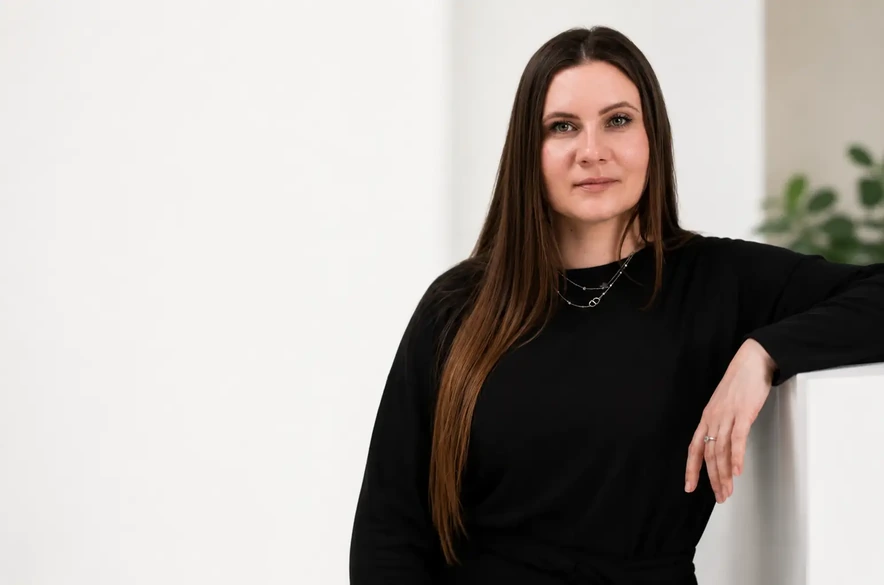
Patient support officer
Will guide you before and after the surgery
Sees your papers through and books slots













All your questions get answered and a convenient consultation time is found
Message us on WhatsApp Get in touchThings people ask

Certainly. The clinic takes on patients from different cities and different countries, and a doctor can advise you online beforehand.
The base prices are $2,200 (≈ ₦2,950,000) (FUE), $2,500 (≈ ₦3,350,000) (DHI) and $2,700 (≈ ₦3,600,000) (combined). The precise cost is determined at a free consultation and graft count, then fixed in your contract.
The procedure runs across one day, and you are home that night.
Local anesthesia is standard, and that keeps the work pain-free.
FUE relies on tweezer harvesting with no incisions or stitches. DHI relies on Choi-pen implantation without channels. The combined DHI+FUE approach harvests by FUE and implants by DHI.
Your donor reserve sets the number, which the doctor calculates during a consultation charged at nothing.
Wounds close within 0–10 days. At 2–4 weeks the transplanted hairs drop out, which is expected. Regrowth begins around 3–4 months, thickness becomes obvious over 6–9 months, and 12–18 months brings the finished result.
Hair growth is covered by a lifetime guarantee, fixed in the signed contract.
Medical licence in place, care provided to the standards and clinical guidelines
under Ministry of Health.

Diplomas and certificates of the operating doctors
View the detailsAKC POMOSHCH LLC
the clinic's legal entity
1057746096924
OGRN
7728536872
INN
The two methods offered to a patient in Umuahia, FUE and DHI, leave no cuts and no stitches, work under local anaesthesia and finish within one day. Graft survival is 98-100 %, and a price from $2,200 (≈ ₦2,950,000) is fixed in the contract after a free graft count.
Home is a fine place to begin in Umuahia. No fee is charged for the online consultation, the doctor inspects photographs of the area and answers the main question - will a transplant help. Open 24/7.
Expect healing inside 0-10 days. The transplanted hairs shed at 2-4 weeks, which is normal and passes on its own. From 3-4 months the growth begins, and the difference grows clearer with every passing week.
Prices are in US dollars; the amount in brackets is an approximate conversion to NGN at the rate of 02.10.2026. The final price is fixed in your contract.
By messaging us, you agree to our Privacy Policy
What patients write after this operation. Reviews are translated from the original language.
Andrey M.
I had the operation a month ago. Before and after surgery they were always in touch and helped with questions about my tests. The operation itself went wonderfully, the staff are polite and masters of their craft, you feel you are in safe hands. I am recovering now, and they answer all my questions. I am happy and I recommend them!
DHI hair transplant
Pavel Sinitsyn
The best clinic of all the ones I was choosing from. No regrets at all! The result is simply amazing, I am thrilled. I recommend it to everyone: these people do great work and make people happy. Once again, a huge thank you to everyone. Roman, the head of the clinic, is the best: he was personally in touch with me and looked after my recovery. Thank you for making my dream come true.
FUE hair transplant
Maria Akopyan
I thought about an eyebrow transplant for a long time and finally went for it. At first I was afraid the result would look unnatural, but when I saw my new eyebrows I was delighted! They came out full and in harmony with my face. I can hardly believe that now I just wash my face and go, I have never felt so free. For anyone tired of constant make-up, a transplant is a real lifesaver!
Eyebrow transplant (FUE)
Alexander M.
I really wanted a thick beard, but I had problems with it. I tried every home remedy and minoxidil, and nothing helped. After a long search for the best clinic I settled on this one. Thank you so much for the service, I liked everything and now I am happy! I had the beard transplant 10 months ago and I am very pleased with the result. By the way, the music in the clinic was great, as far as I remember. A friend of mine has already come to you for a transplant on my advice and was also happy with the result. I wish you every success!
Beard transplant (FUE)
Vladimir Z.
I went to the clinic to see a trichologist and had a hair transplant. I really liked the doctor's approach, and all the recommendations helped. I want to point out that nobody tries to sell you extra services: they tell you things as they are, and if some treatment is not needed, they do not push it. Cosy and clean.
DHI hair transplant
Artem Popov
This may sound obvious, but a head of hair really changes everything in your life. You feel much more confident and go through life like a winner. And it is all thanks to the doctor at this clinic and to the staff who take care of their patients. Many thanks to the clinic for a happy life with new hair, for the comfortable conditions and for the professionalism during the hair transplant.
FUE hair transplant
Umuahia is the capital of Abia State in southeastern Nigeria, a city of railway and market life. It has a population of 359,230 according to the 2006 Nigerian census. For people who live and work here, a hair transplant is a practical decision about timing, family commitments and daily routine as much as a cosmetic one. This text explains how FUE and DHI planning fits the rhythm of life in Umuahia.
The whole process starts remotely. You contact City Medical Centre from your own city through a free online consultation, and coordinators are available around the clock (24/7) on Telegram and Telegram. You send photos of the donor area and of the areas you want to restore, describe your history of hair loss, and receive a first assessment without leaving home.
The stated principle of the service is simple: we stay with you from pre-op planning to 12 months later. For someone in Umuahia, that means the questions that come up after the operation, during the shedding phase or a heavy rainy week, do not have to wait for a visit. A coordinator will be on the phone 24/7.
Umuahia has a tropical climate, classified as Am in the Köppen-Geiger system. The average annual temperature is 26.0 °C, and precipitation averages 2153 mm. There is significant rainfall in most months and only a short dry season. These conditions shape how you look after the scalp during the first days of healing.
March is the hottest month of the year, at an average of 27.5 °C. August is the coolest, at 24.5 °C. Heat and humidity mean sweating, and sweat on a fresh transplant is a nuisance. In hot weeks, plan to stay in shade or in a cool room during the early healing period and avoid anything that makes you sweat heavily. Direct sun on the recipient area should be avoided while the skin is still healing, and your surgeon will tell you when a loose, clean, breathable cap is acceptable.
Rain is the other factor. September brings the most precipitation, an average of 322 mm, while December is the driest month at 15 mm. Getting caught in heavy rain, wearing a wet cap or walking through muddy, dusty roadsides are all things to plan around. Keep the scalp clean and follow the washing instructions you are given. Do not improvise with local remedies on the grafts.
Because the rainy season is long and the dry season short, there is no perfectly dry window. The choice is between two kinds of discomfort. The driest months, with December averaging only 15 mm of rain, make it easier to move around and keep a dressing or cap dry. The hottest weeks around March make sweating and sun the bigger concern.
A practical approach is to pick a period when you can stay at home for the first days of healing: the medical timeline gives 0–10 days for healing. Choose these days so they do not collide with market deadlines, exams, harvest-related work or large family events. Discuss the date with your coordinator, who will ask about your schedule and build the plan around it.
Whatever month you choose, remember that the final look takes time. The result settles over 12–18 months after surgery, so the season of the operation matters mainly for comfort in the first weeks, not for the final outcome.
Umuahia is known as a railway and agricultural market centre. Traders and farmers from neighbouring towns come to sell yams, cassava, maize, taro, citrus fruits, and palm oil and kernels. If your work involves loading, long hours in the sun, dust or physical effort at a market or on a farm, tell the coordinator in advance. Dust and sweat are the main concerns for the recipient area, so heavy outdoor work is better postponed until your surgeon allows it.
The city also has a brewery, a palm-oil-processing plant and a student population around institutions such as Michael Okpara University of Agriculture, Umudike, and the National Root Crops Research Institute next door. Office workers, lecturers and students have an easier time, since desk work usually fits the first days of healing. Plan the 0–10 days of healing around lectures, shifts and deadlines.
The next phase should also be expected. In the first 2–4 weeks the transplanted hairs let go, which is normal shedding. Many patients prefer to be discreet at work during this time. Ask your coordinator what to expect so that the shedding does not come as a shock when you are back among colleagues, classmates or customers.
Football is part of the sporting identity connected with Umuahia, and many people in the city play, coach or follow it. If you play regularly, ask your surgeon exactly when you may return to training and contact sport. Heading a ball, helmets, tight caps and sweat all matter for the grafted area. Do not decide on your own; get the clearance in writing from your doctor and coordinator.
Family occasions are another planning point. Weddings, church events and community gatherings involve crowds, heat, photographs and sometimes head coverings. Schedule the operation well before an important event, bearing in mind that the shedding stage lasts 2–4 weeks and that hair comes back at 3–4 months. For a major occasion, the better approach is to allow many months, since the result looks visibly thicker at 6–9 months.
Food culture here is built on staples such as yams, cassava and palm oil. There is nothing to change in a normal balanced diet, but ask the surgeon about alcohol, smoking and any medicines you take. Eat regular meals, drink enough water in the heat and follow the written instructions you receive.
The first step is free. You write to the coordinators on Telegram or Telegram at any hour, since they are available 24/7. You send clear photos of the front, top, crown and back of the head, and tell us about your age, how long hair loss has been going on, family history, current medicines and any skin conditions.
The doctor then reviews the material and discusses with you the design of the hair line and the density that is realistic for your donor area. The doctor discusses the shape with you before the operation, taking your facial features into account. This works the same for a man restoring his temples or for a patient who wants a beard transplant.
Then you receive a plan with the stages of the process and the follow-up schedule: check-ups at months 1, 3, 6, 9 and 12. Because it is all arranged remotely, you can discuss it with your family in Umuahia and take the time you need before deciding.
Grafts are taken from the back of the head, the donor area, and moved through micro-punctures of about 1 mm, so nothing scars over. In FUE the grafts are extracted individually and then placed; in DHI they are implanted with a special pen-like tool. Your doctor will explain which technique suits your case and why.
The timeline is the same for everyone and worth memorising: 0–10 days for healing, 2–4 weeks for normal shedding of transplanted hair, 3–4 months for new growth to start, 6–9 months for real density, and 12–18 months for the final result. Transplanted hair grows for life: trim and style the beard as usual.
One patient described it this way: the result truly made him very happy. From about the 4th month active, even growth began, the transplanted hair took very well, the beard looked natural, no bald patches were left, and it became much thicker and denser, with the shape he had thought about for a long time. Individual experience varies, so treat this as an example, not a promise.
The name Umuahia is popularly traced to the Igbo words Ama Ahia, meaning market place. The original market town stood at Afor Ibeji near Olokoro and was later called Old Umuahia. The trading post that grew around the railway was named Umuahia-Ibeku Station. In precolonial times it was one of the central marketplaces of the region, and merchants of produce, pottery, crafts, textiles, palm wine and tools travelled from towns such as Ohafia, Arochukwu, Bende and Uzuakoli to trade here.
A town built on trade has a particular attitude to appearance: people meet customers, suppliers and relatives face to face every day. If you are a trader, a hair transplant is easiest to plan around the quieter stretch of your trading week. The 0–10 days of healing are best spent away from crowded stalls, and your coordinator can help you choose the dates on Telegram or Telegram at any hour, since the team is available 24/7.
Remember also that the shedding stage, 2–4 weeks, is normal. A market seller who knows this in advance will not be alarmed when transplanted hairs let go, and can simply wait for new growth at 3–4 months.
Umuahia consists of two local government areas, Umuahia North and Umuahia South. The communities belong to clans such as Ibeku, Ohuhu, Ubakala, Olokoro and Umuopara. Many residents live close to extended family in these clan communities, so a visible change to the hair line is quickly noticed and discussed.
Some patients like to tell relatives beforehand and some prefer privacy. Either is fine, but it helps to decide before the operation, because the recipient area looks different during healing and shedding. Because the consultation is remote, you can talk it through at home in Ubakala, Ibeku or Ohuhu without hurry, and the doctor will discuss the shape with you, taking your facial features into account.
If you live in one community and work in another, ask the coordinator to plan the check-ups at months 1, 3, 6, 9 and 12 around your usual movements, so that follow-up never feels like an extra burden.
Umuahia has a strong school and university tradition. Michael Okpara University of Agriculture, Umudike, and the National Root Crops Research Institute sit next to the town, and well-known schools include Government College Umuahia, Holy Rosary Girls Secondary School and Trinity College. Students, lecturers, researchers and teachers form a large part of the city.
For a student or young lecturer, the calendar is the main issue. Field practicals at Umudike mean time in open sun and soil, which is not suitable during early healing. Choose a break between semesters, keep the 0–10 days for healing free of practicals and examinations, and expect shedding at 2–4 weeks to overlap with the next term.
Young men in their twenties often ask whether early hair loss should be treated at once. That is a question for the doctor after reviewing photos of the donor area. Stability of the loss and enough donor hair matter more than age alone.
Industry in the city includes a brewery and a palm-oil-processing plant, and the Federal Medical Centre, formerly Queen Elizabeth Hospital, is a major local health employer. Shift work, heat near processing equipment and protective headgear are common in such workplaces.
If you wear a helmet, hairnet or tight cap at work, tell your coordinator early. Pressure and sweat on a fresh transplant are a concern, so ask the surgeon exactly when you may return to your usual headgear and what to wear until then. Nurses and plant workers can often arrange a short leave around the healing days more easily than people paid by the day, so plan the date well ahead.
Because coordinators answer around the clock, night-shift workers can ask their questions in the middle of the night and get a reply, rather than waiting for a daytime appointment.
Umuahia lies on the rail line between Port Harcourt to the south and Enugu to the north, and many people commute to neighbouring towns. Crowded vehicles, open windows, dust and long waits in the sun are part of such trips. In the early days, keep journeys short, protect the scalp as instructed and avoid leaning the head against rough seats.
The city is proud of its footballers, among them Samuel Chukwueze and Michael Emenalo, and of athletes, boxers and powerlifters connected with it. Local pitches and training grounds are busy, but sweat, heading the ball and contact are best avoided until your surgeon gives written clearance.
Weather matters here too. Clouds are heaviest in April, with the sky overcast or mostly cloudy 85% of the time, and the clearer season runs roughly from late November to early February. Cloud does not remove the need for sun care on the recipient area, but a clearer December is easier for planning movement.
In general terms, a good candidate has stable hair loss, enough healthy hair in the donor area and realistic expectations. Contraindications can include active scalp disease, certain blood or healing disorders, uncontrolled chronic illness, and very limited donor hair. Only a doctor can judge this after reviewing your photos and medical history.
Questions worth asking: Which technique is right for me, FUE or DHI? How will the hair line be designed for my face? How much donor hair is realistic to use? What should I avoid in the first days given Umuahia heat and rain? When can I return to work, to the field or to football? What is the follow-up plan?
Ask also what happens if growth is slower than expected. With check-ups at months 1, 3, 6, 9 and 12, and a coordinator by phone 24/7, you have a structured way to monitor progress, from the first weeks until 12 months later.
Yes. The online consultation is free. Write to the coordinators on Telegram or Telegram, available around the clock, and send photos of the donor and recipient areas.
Heat, humidity, sweat, dust and heavy rain all matter for a fresh transplant. The average annual temperature is 26.0 °C and rainfall is high, so follow the washing and sun-protection instructions closely.
There is no perfect month. December is the driest, with about 15 mm of rain on average, while March is the hottest at 27.5 °C. Choose a time when you can rest at home for the healing days.
The medical timeline is 0–10 days for healing, then 2–4 weeks of normal shedding of transplanted hair.
New growth starts at 3–4 months, the hair looks visibly thicker at 6–9 months, and the settled look comes at 12–18 months.
Grafts are taken from the back of the head and moved through micro-punctures of about 1 mm, so nothing scars over.
Heavy work in dust, sun and sweat is best postponed. Ask your surgeon for a clear date for your type of work.
Return to sport depends on your doctor's clearance. Do not return to contact sport or heading the ball until you have approval.
We stay with you from pre-op planning to 12 months later, with check-ups at months 1, 3, 6, 9 and 12, and a coordinator on the phone 24/7.
Yes. Transplanted hair grows for life, so you can trim and style the beard as usual.
The name is popularly linked to the Igbo Ama Ahia, meaning market place, and the city is still known for railway and agricultural trade. For traders this means planning the healing days away from crowded stalls.
A break between semesters is usually best. Keep the 0–10 days of healing free of field practicals and exams, and expect shedding at 2–4 weeks.
Tell the coordinator in advance. Ask your surgeon when you may return to your usual headgear, because pressure and sweat matter for the grafted area.
No. The consultation is remote and free, and check-ups at months 1, 3, 6, 9 and 12 can be planned around your usual movements.
Page medically reviewed by Anastasia A. Kolesnik, hair transplant doctor. Review date: .

 Forceps
 Minimal


